Outfitted with anthemic romps, tongue-in-cheek pastiches, and percussions that pivot from rolling adventures to rain hitting the windowpane, Intimacy's 'Across the Bridge' marks the artist's fifth release on vinyl and first release on Bouquet.
A grab bag of fun, dancefloor-ready tracks written across 2019, the EP delivers his aesthetic of old computers, sci-fi movies, and science class educational videos configured into deep, spacey line-toting bedroom techno and melancholic house.
The title track features a catchy electroclash-esque (!!!) saw wave bassline, complete with emo Roland D50 strings and bells, all laid over a very beefy electro beat. It crossbreeds a Drexciya strain of low-end thump with a chewy, Eurotrash bassline evoking that time you lost your wallet at Tresor in '98. Strings and bells from the Roland D50 introduce the same euphoric high found in most of the products crawling out of Perdue's lab these days.
'Angelo's House' is a full-forced banger built around a well-traveled sample of Angelo Badalamenti's theme from Twin Peaks, recorded from an Intimacy live set early last year.
The flipside leads with the spiritual acid techno masterpiece 'Datalore 66'. Bubbling basslines hit a boiling point when placed in sequence with flutes showing genetic linkage to the Hartnoll family. Highly reactive material.
'Eternal September' opens a portal to the earliest hours of morning via synthesis of swirling pads and snapping drums. Closing the EP in introspective fashion, the track shows just how much emotional range Intimacy can pull out of decades-old disciplines.
ABOUT THE ARTIST
Parks Perdue is a Memphis-born electronic musician. A culmination of internet research and home listening in the club-barren Tennessee city, his style draws from stoned out Dutch West Coast concept albums, video game soundtracks, and old-school midwest house and techno. Perdue made his vinyl debut under the alias Intimacy in 2016 on the short lived UK, DJ Haus-run label Vector Works. Perdue is now based in Los Angeles, California.
Поиск:space coast
Все
Siti of Unguja tells the story of pioneering women, of the ‘golden
voice’ of Siti Muharam, heiress to the singular legacy of her great
grandmother, the mother of taarab, Siti Binti Saad.
On the Corner teases this first taste of a landmark recording that the
label embarked upon two years ago on Zanzibar. Siti of Unguja has a
transformative atmosphere, brimming with romance, passion and
protest.
Zanzibar is an Island archipelago that lies 6 degrees South of the
equator and 30 miles off the East African coast out in the Indian
Ocean. Known for its spices, traditional Dhow sailing boats and being
a mercantile trading capital of Swahili culture.
The modern history of Zanzibar can be animated through the life and
legacy of one artist, Siti binti Saad. Born in 1890 in the small fishing
village of Fumba, on Unguja (Zanzibar’s largest island), she became
the first Zanzibari recording artist and her recordings sold in tens of
thousands across the swahili world.
The tracks recorded for Siti of Unguja demonstrate Siti Binti Saad’s
eclectic influence on Zanzibari taarab and her great granddaughter,
Siti Muharam imbues the compositions with feeling. Siti Muharam’s
golden voice carries the poetry and invects a timeless passion. It is
Muharam’s deep humility and love that brings the spirit of these two
women together.
With Sam Jones at the controls, taarab’s conservative layers were
opened up and given more than a little wiggle room. Under the
direction of Matona, the recording of this album paid homage to Siti
Binti Saad’s innovations by bringing back the percussive Kidumbak
style of music that originated on the streets of Zanzibar. By strippping
back the typically dense string section of taarab a space was created
for Muharam’s beguiling timbre that is gilded with emotion.
Kohib is an important member of the Tromsø electronic music scene, equally as a club organizer, DJ, and producer. His debut was on the Prima Norsk 3 compilation in 2005, followed by an album, a remix-album, and a string of highly regarded EPs and singles. Kohib has had success both with his electronica-style releases (the track "Hear This" from his debut album was licensed to the Buddha Bar XIV compilation) as well as his dance floor releases for Beatservice, Sprechen, Cibicaldi, and SpinSpin NYC.
In Mountains is a desire to seek horizon. The album was written and recorded in November, December and January. A time when the sun is absent in Tromsø. However, the origin of lots of the rhythms in the music, are harvested during summer, from the same area. Sound samples are taken from Kohib's surroundings, from creaking in worn-out doors, to ambient silence along the coast. An electronic album, yes. But all the rhythms and instrumentation are analog. The goal has been to give leeway to all elements, by limiting the amount of information. So, if it follows a dogma with this album, it has been to limit the number of tracks to each song to the bare minimum. A sound weighs the most when alone.
The album will be promoted in UK / worldwide by Shine PR (UK) + social media marketing by Beatservice Records.
- A1: Fists Of Fury
- A2: Can You Hear Him
- B3: Hub-Tones
- B4: Connections
- C5: Tiffakonkae
- C6: The Invincible Youth
- D7: Testify
- D8: One Of One
- E1: The Space Travelers Lullaby
- E2: Vi Lua Vi Sol
- F1: Street Fighter Mas
- F2: Song For The Fallen
- G1: Journey
- G2: The Psalmnist
- H1: Show Us The Way
- H2: Will You Sing
- I1: The Secret Of Jinsinson
- I2: Will You Love Me Tomorrow
- J1: My Family
- J2: Agents Of Multiverse
- J3: Ooh Child
Kamasi Washington's wide-reaching double album Heaven & Earth arrives on Young Turks. Much like his previous releases, Heaven & Earth once again finds Kamasi setting out to expand the minds and horizons of all who encounter his music. Recorded as a double album, this expanded canvas gives his trademark tones the opportunity to offer a wider than ever before selection of fully immersive, freestyling psychedelic jazz that carries a distinctly spiritual edge.In an instant, Heaven and Earth really burrows deeper into the external cosmos that we were left circling around the edge of with his debut long-player, The Epic (released in 2015 via Flying Lotus's Brainfeeder label), yet it also carries us further into the distance of the deeply cinematic overtones that his debut Young Turks EP, Harmony of Difference pointed us in the direction of. While it is both instantly recognisable as a Kamasi Washington recording, Heaven and Earth's luxurious running time matched with a searching narrative sees Kamasi breaking out of any sounds or scenes he may be associated with, smoothly transcending into new, dynamic and sonically experimental levels and counterpoints of his now widely praised signature sound.
Washington convened his band, The Next Step, as well as members of the long running collective The West Coast Get Down at Henson Studios in Los Angeles to record the 16 tracks on Heaven & Earth. The music was composed, written and arranged by Washington, with new arrangements of jazz and bebop legend Freddie Hubbard's 'Hubtones' and iconic kung fu film theme 'Fists of Fury,' as well as one song by bandmate Ryan Porter. Thundercat, Terrace Martin, Ronald Bruner, Jr., Cameron Graves, Brandon Coleman, Miles Mosley, Patrice Quinn, Tony Austin and many more contribute to the album.Stretching out at two and a half hours of entirely newly recorded music, Kamasi Washington paints a vision of Heaven and Earth that is spread across two sections with eight movements apiece. It sees him wrestling with and attempting to make sense of the meaning of both Heaven and Earth within his mind and his place within the wider universe as a whole, with the Heaven side representing the world Kamasi sees inwardly, the world that is a part of him, while the Earth side represents the world he sees outwardly, the world that he is a part of. An existential experiment with saxophones that's set to take you on a journey that is as widely thrilling as it is deeply searching.
In 2017 Brooklyn's Bryce Hackford spent a week at the PRAH Foundation in Margate (UK) recording rhythmic foundations and the environment around him. After his residency, eleven musician friends contributed their performances to what would become Safe (Exits). All of these contributions, however, were made in isolation and the task of mixing them together became the crux of the production.
Bryce's records largely explore improvisation with electronics, using recording as the compositional medium, and feature the occasional contributing musician. Eleven make Safe (Exits) more of a chance ensemble record, with players in unlikely combinations, from disparate backgrounds both personal and musical, pushing a collage aesthetic beyond sampling. The poetics of these sounds is the focus of this album.
Safe (Exits) attempts to create a rare space where rhythms get propulsive enough to make one dance yet become subtle enough to make them nod into the serene vistas of distant, contemplative waves.
Safe (Exits) is Bryce's first album since 2015 and second release with Spring Theory.
Featuring: Gabi AsFOUR, Brian Close, Matt Evans, Adrian Knight, Kiki Kudo, David Lackner, Frank Lyon, Camilla Padgitt-Coles, Bernardo Risquez, Viktor Timofeev and Justin Tripp
Andras’Joyful is a cornucopic vision rooted in the decay of dance music from one of Australia’s most distinct yet understated voices. Cutting a path through an overgrowth of nostalgia around 70's acid folk and 90's acid house, Joyful is an invitation to till a n old garden in a glistening new light.
A thirteen year old Andrew Wilson sits in the back of his parents’ sedan, driving down the coast from Melbourne. Headphones covering his awkwardly aged ears and connected to a jam-packed mp3 player, he experiences an intense synchronicity when the car careens over a mountain crest in the Otway Ranges right as the track in his ears peaks. A momentary vision of a “first rave rush,” in which Australia’s lauded party history dances tellingly with this dreamer’s destiny.
Not so much later but perhaps more worldly and certainly more aware, Wilson returns home from touring, now a “veteran” of the dance world, to realize a different synchronicity in his record collection. Finding Ian Van Dahl nestled next to John Fahey, William Orbit spine-to-spine with Shira Small, the harmony between folk music of the early 70's and dance music from the 90s becomes perfectly audible in unimaginable ways.
Through an afterglow from both summers of love seeped in shared sonic soil, on Joyful, Wilson cultivates melodic drama and tenderness, memorable hooks and rapturous arpeggios; sentimental strings summon both joyful aspirations and the shadows of faded dreams. Using folk songs as fodder—lyrics, samples, note progressions—each entry of Wilson’s debut album under his Andras moniker is a return to a different springtime of the mind.
Many artists working in Australia can relate to the feeling of “not quite being there,” as Wilson describes it. Always a couple years behind trend. Turning up at the party as it’s winding down. Fearing that in many ways the culture is looking backwards, confirming the narrow outlook of a parochialism that many have worked tirelessly to disprove. Using this disconnect as an invitation to dream another dream, Joyful becomes the soundtrack of early teen Andrew’s fantasy of Utopic parties past, specifically the late discovery of a bygone warehouse rave scene, as well as a return to a guileless chapter of personal history as heard through plain, sane, and simple folk melodies. Joyful is a homecoming, a testament to the evolving euphoria of a flower garden rooted in earth’s tender rot, of birds and bees flying free but not without a changing landscape in sight.
Andras’Joyful is available on LP and digital formats on January 31, 2020 via Beats In Space. On behalf of Andras, a portion of proceeds from this release will benefit the Invasive Species Council on the recommendation of Tim Low, author of the book Feral Future and Where Song Began.
Since relocating from Amsterdam to Bergen on the Netherlands’ north west coast, Tom Trago has gone back to basics. Every day he jams out tracks in his home studio using a small selection of electronic instruments, drum computers and effects units, a process that allows him to quickly capture ideas, emotions and the intense moments he experiences while making music.
It’s these diverse and sometimes surprising musical moments that will be showcased on Trago’s new DIY record label, Jong Nederland. The imprint is named after the building where he now lives and works, an historic and storied place that has been home to artists of all descriptions since the 1960s. Each vinyl release will feature tracks made by Trago using his improvised, straight-to-tape technique, packaged in handcrafted sleeves illustrated by internationally renowned Dutch artist – and fellow Bergen resident – Pieter Bijwaard.
The Jong Nederland story begins with two tracks of undulating, slowly shifting dancefloor voodoo rich in crunchy drum machine hits, lilting electronic melodies and instinctive dancefloor warmth. On the A-side you’ll find “Whisper”, a hypnotic but fluid affair where hushed melodies tumble down over off-kilter polyrhythmic machine drums, spaced out effects and bubbly, ever-changing analogue electronics.
B-side “Belltower” sees Trago up the tempo a little and bounce us towards the farthest reaches of the galaxy. Utilizing a rubbery rhythm track full of sturdy but supple kick-drums and hissing cymbals, Trago layers up fizzing synthesizer lines, poignant minor key chords, wiggling acid-style motifs and starburst electronics to fire the synapses and stir the senses. Like its’ A-side companion, “Belltower” gently twists and turns throughout, reflecting the real time, hands-on changes made by its creator during the spontaneous sessions that led to its creation.
- A1: Pinta Manta - António Sanches
- A2: Dia Ja Manche - Dionisio Maio
- A3: Morti Sta Bidjàcu - José Casimiro
- A4: Pontin & Pontin - Bana
- B1: That Day - Fany Havest
- B2: Odio Sem Valor - Pedrinho
- B3: Mino Di Mama - Quirino Do Canto
- B4: Mundo D'margura - Tchiss Lopes
- C1: Po D'terra - Joao Cirilo
- C2: Corre Riba, Corre Baxo - Abel Lima
- C3: Ilyne - Os Apolos
- C4: Sintado Na Pracinha - Americo Brito
- D1: Capchona - Elisio Vieira
- D2: Djal Bai Si Camin - Antonio Dos Santos
- D3: Stebo Cu Anabela - Abel Lima
repress
2LP 140G VINYL + 12 PAGE BOOKLET.
"Space Echo - The mystery behind the "Cosmic Sound" of Cabo Verde finally revealed!" is the 20th release by the fabulous Analog Africa Label.
In the spring of 1968 a cargo ship was preparing to leave the port of Baltimore with an important shipment of musical instruments. Its final destination was Rio De Janeiro, where the EMSE Exhibition (Exposição Mundial Do Son Eletrônico) was going to be held.
It was the first expo of its kind to take place in the Southern Hemisphere and many of the leading companies in were all eager to present their newest synthesisers and other gadgets to a growing and promising South American market, spearheaded by Brazil and Colombia.
The ship with the goods set sail on the 20th of March on a calm morning and mysteriously disappeared from the radar on the very same day.
One can only imagine the surprise of the villagers of Cachaço, on the Sao Nicolau island of Cabo Verde, when a few months later they woke up and found a ship stranded in their fields, in the middle of nowhere, 8 km from any coastline.
After consulting with the village elders, the locals had decided to open the containers to see what was inside - however gossip as scintillating as this travels fast and colonial police had already arrived and secured the area.
Portuguese scientists and physicians were ordered to the scene and after weeks of thorough studies and research, it was concluded that the ship had fallen from the sky. One of the less plausible theories was that it might have fallen from a Russian military air carrier. The locals joked that again the government had wasted their tax money on a useless exercise, as a simple look at the crater generated by the impact could explain the phenomena. "No need for Portuguese rocket scientists to explain this!" they laughed.
What the villagers didn't know, was that traces of cosmic particles were discovered on the boat. The bow of the ship showed traces of extreme heat, very similar to traces found on meteors, suggesting that the ship had penetrated the hemisphere at high speed. That theory also didn't make sense as such an impact would have reduced the ship to dust. Mystery permeated the event.
Finally, a team of welders arrived to open the containers and the whole village waited impatiently.
The atmosphere, which had been filled with joy and excitement, quickly gave way to astonishment. Hundreds of boxes conjured, all containing keyboards and other instruments which they had never seen before: and all useless in an area devoid of electricity. Disappointment was palpable. The goods were temporarily stored in the local church and the women of the village had insisted a solution be found before Sunday mass.
It is said that charismatic anti-colonial leader Amílcar Cabral had ordered for the instruments to be distributed equally in places that had access to electricity, which placed them mainly in schools.
This distribution was best thing that could have happened - keyboards found fertile grounds in the hands of curious children, born with an innate sense of rhythm who picked up the ready-to-use instruments. This in turn facilitated the modernisation of local rhythms such as Mornas, Coladeras and the highly danceable music style called Funaná, which had been banned by the Portuguese colonial rulers until 1975 due to its sensuality!
The observation was made that the children who came into contact with the instruments found on the ship inherited prodigious capabilities to understand music and learn instruments. One of them was the musical genius Paulino Vieira, who by the end of the 70s would become the country´s most important music arranger. 8 out of the 15 songs presented in this compilation had been recorded with the backing of the band Voz de Cabo Verde, lead by Paulino Vieira, the mastermind behind the creation and promulgation of what is known today as "The Cosmic Sound of Cabo Verde".
The field of electronic music were involved. Rhodes, Moog, Farfisa, Hammond and Korg, just to name a few.
Coming into orbit late November PS001.2 continues the dancefloor focussed explorations of one of Australia’s most loved new labels, Pure Space. Just in time for the Aussie summer the release highlights the sound of the new generation of electro and broken-beat producers emerging from the countries east coast.
On the A-side Point Guard returns to the label with his razor-sharp electro outing ‘Odyssey’. An emotional expedition that harnesses dancefloor euphoria with a powerfully burning bassline. Joining forces to complete the A side is Melbourne producer Disrute and label head Andy Garvey. Here an ever-evolving synthline propels you forward throughout the track that builds infinitely but pauses just to release Garvey’s mesmerising vocal, ‘NRG’.
Flip the axis and you will find swirling synths and scattered percussion that creates the murky club weapon that is emerging Sydney producer PMA’s ‘Hek’. Completing the release, Roy Mills brings you to a full rotation with ‘Aquatic Pressure’. His jittery breakbeat cut that slows to a half step mid way and returns with odd-ball synth mayhem.
When acclaimed South African musician Guy Buttery first sought out Dr. Kanada Narahari in late 2016, it was as his patient.
“It was a dark time.” Buttery recalls, “I had been bedridden for months and had been suffering from debilitating bouts of fatigue which no diagnosis or medication could help me get to the bottom of. When I first met Kanada, I was at the stage where even picking up my guitar to make music had become a joyless and taxing exercise.”
As Buttery’s searched for a cure, a family member recommended he see Kanada an Ayurvedic doctor who had relocated to South Africa from India and set up a practice in Durban. It was during this consultation, that the musician first experienced how Narahari infused the healing properties of Indian Classical music into his practice. Rather than treating him with a smorgasbord of pharmaceuticals, Narahari played his sitar and set Buttery on a strict daily diet of Raga’s to fast track his recovery.
Buttery was not only struck by his doctor’s musical talents but by the powerful healing properties inherent in his sitar compositions. When he left Narahari’s doctors room that afternoon, he asserts he was feeling decidedly clearer, lighter and stronger.
“Diving into Kanada’s music was definitely one of the reasons I'm still here today.” he admits. “The consistent tonal centre at the heart of Indian Classical Music, literally became my support pillar over this period. A central core of sorts in which to fall back on, strengthen and discover.”
Narahari as it turned out, was not only a prominent music therapist (and one of the only Ayurvedic doctors practicing in South Africa) but like Buttery, a highly accomplished musician with a devoted following back in his homeland.
Born in a small village along the Western Ghats in Karnataka, India, Narahari, at the age of nine, had enrolled to study Carnatic classical vocal and developed an interest in Hindustani Classical music with a particular passion for the sitar. While Buttery had secured his reputation as one of South Africa’s musical treasures, a multi-instrumentalist who commands sold-out performances both locally and internationally and more recently had been awarded the prestigious 2018 Standard Bank Young Artist for Music.
From this consultation, a friendship developed between the two musicians with Buttery soon inviting Narahari to join him in his studio. But it wasn’t all plain sailing in the beginning. While Buttery and Narahari’s sensibilities were very much aligned, there were a range of cultural and musical influences, nuances and inflections that first needed to be navigated and understood.
“I suppose we had to find a common ground.” Buttery says, before adding, “Which in the end turned out to be pretty "uncommon ground" for the both of us.”
It was after a few intensive sessions together that something exhilarating began to emerge. What began as a few idle improvisations soon evolved into feverish and lengthier jams. Whenever time permitted, the musicians would meet, descending deeper into the emerging sounds, while reimagining the realms that existed between their African and Indian heritages.
Over the next few months, the duo would rack up over fifteen hours of recordings in studio, and it was up to Buttery to shape the material into an album which they collectively titled Nāḍī, which Narahari translates from the Sanskrit as "The Channel" or "An Internal River".
During this period, Narahari bestowed upon Buttery, the moniker Guruji while Guy would refer to him, in affectionate return, as Panditji. Each time the musicians would meet, the studio space would be cleared by an impromptu ritual, with Guruji burning African Imphepho while Panditji would chant a Sanskrit mantra dusting Indian Agarbatti clouds over their instruments.
Once the room had been made hazy with this aromatic alchemy (with the ancestors welcomed in) the musicians would pick up their instruments and plunge into shimmering tides of sound. Reflecting on these sessions, Narahari recalls the immense creative freedom he felt throughout: “Guy and I tried to wander as much as possible, without any speculative, preoccupied ideologies or limitations. Love remained at the forefront of our journey together.”
“Those evenings we spent together in the studio” adds Buttery, “felt incredibly rich with purpose and a profound sense of freedom. While improvising, anything could happen and mostly did.”
On a first listen, the tracks on Nāḍī emerge as salty, humid invocations to the inscrutable depths and misty myths of the Indian ocean-- that vast body of water that stretches between, and laps the shorelines, of the artists’ respective homelands.
When asked to describe the sound him and Narahari refined, Buttery prefers to relay a series of evocative images.
“For me” he explains, “Nāḍī is a lighthouse, a beacon that resides at the bottom of the ocean.” As Buttery envisions it, “what once offered light to guide ships to safety, has been submerged and re-purposed by marine life as a coral-reef temple. Similarly, this sunken lighthouse exists as a concealed cenotaph, memorializing the ancient sea-routes and passages that once connected the two distant lands.”
On paper this may sound obscure but listening to the songs, it serves as an apt metaphor.
Across each meditative movement, listeners are able to relive the journey, immersing themselves in a series of incantations, replete with high dynamics, delicate African-Indian inflections and virtuoso string playing of an entirely new order. Further complimenting the fusion of musical dialects are a range of guest artists including Shane Cooper on bass, Thandi Ntuli on vocals, Chris Letcher on organ, Ronan Skillen on tabla and percussion and Julian Redpath on guitar, synth and backing vocals.
Now like the submerged lighthouse, the recordings stand as a monument, a marker and snapshot of this fortuitous meeting, a tribute to the healing gifts of Guruji and Panditji in performance. It’s a process that already, both musicians look back on with reverence and nostalgia.
Buttery ruminates in closing, that when he first met Kanada his illness correlated with the biggest drought South Africa had experienced in many years “…for whatever reason, whenever we would connect and make music together, the sky would tend to open. Even if it was just a few drops. This went on for months, until finally the drought dissipated and my health had been restored.”
By the time the heavens did open across the East Coast, a deep friendship had been forged and with it abundant musical offerings poured down. A treasured sample of which we able to share in every time we press play and immerse ourselves in the sacrosanct musical universe that is Nāḍī.
Intrepid, hard-hitting steppers from London producer Junior Loves. Self-released 4-track 10" with hand-drawn artwork, cut by Leon at Music House, Very limited press.
Sinewy, hard-hitting steppers from London way. Junior Loves has a bit of form, last seen on Tabernacle in 2018, but this new, self-released, hand-scribed 10", with two tracks served up discomix style, is very much its own thing: a timeless, unpretentious cry-tuff encounter that combines deeply rooted, meticulous production with a rawness and vulnerability in a manner that is properly compelling. 'Banner' and its more stripped, spatial version set the tone - propelled by Shaka-ish 4/4 drum-murderation and bolshy, corkscrewing, blue-going-on-purple synth lines that shrink the distance between early Ruff Sqwad/Rapid instrumentals and melancholic ambient techno. The grimy forward-lean is there also in both excursions of 'The Nore', but this one drifts further into ethereal cold-space, recalling John T. Gast's druidic soundboy cuts, dizzyingly psychedelic but precise and uncluttered, mashing up brain/dance/everything with perfectly judged patterns of attack and decay. Very limited press, cut by Leon at Music House. Massive tip on this one!
Pumping West Coast electro in a new jacket, with bouncing 808's, driving acid, and old school futuristic vocoders.. Kleptocracy's are taking over the planet and humans are getting entangled in their own web. We need some extraterrestrial help. In the Thee J Johanz remix a bunch of oversexed electro disco aliens are coming to save the planet by love and destruction. Justin Cudmore (Bunker NY) is taking it to a darker space in his more abstract and highly effective remix. Three massive 808 floor fillers!
Shape-shifting left
coast producer Sage Caswell likens his latest full-length to a surrealist
architectural space: "I walk up to a building and Evil Twin is playing. A copy of
me is at the door and I let myself in. Inside the house is inside my head; each
room is a different song and emotion." A distinct dream sequence logic threads
together these nine nuanced tracks, which swerve from vaporous melancholy to
ecstatic motion to nocturnal wanderlust, alternately lucid and opaque.
Last year's relocation
from his beloved home base of Los Angeles to Madison, Wisconsin certainly played
a role, as pulling up roots inevitably does: "I love L.A. more than I can
properly articulate, but I saw an opportunity to leave so I took it." The
experience prompted an exploratory set of recordings inspired by notions of separation,
vulnerability, and "how it feels to identify the things in your life that don't
feel like you." Evil Twin captures
Caswell at his most fluid and dualistic, mapping a multi-hued maze of twisted rhythms
and refracted textures, fluctuating between beatific expanse and amniotic
bangers.
Previous releases for
Spring Theory and Far Away showcased Caswell's capacity for innerspace club
voyaging but here his vision skews even more vividly elusive, immersive and
immaterial, lost and found. The record's contradictions were deliberate and,
most importantly, therapeutic: "Evil Twin was intended to be as much a visual idea
as a soundtrack to feeling out of control. I didn't really want to talk about
it, so I made this album."
Amazing and unique private soul/jazz-funk fusion LP, 'New York To L.A.: Coasting' is the first release (1980) on Andrew Scott Potter and David Eric Tillman's PO/ET label. Sublime from the beginning to the end, it has become, just like their second and final release '...Space...Rapture...', a sought-after collector's item.
Andrew and Eric both come from Chicago. They met in the early 70's, shortly after Eric's discharge from the U.S. Air Force. They played together on the local jazz scene for several years (among others, with Maulawi). During that period, Andrew also toured with Minnie Riperton and Eric toured with The Dells, Linda Clifford and others. In the late 70's Eric left Chicago for Los Angeles, when he began touring with The Temptations. Since moving to California Eric has played and/or recorded with a variety of artists, including, Willie Bobo, Justo Almario, Alex Acuna, Norman Connors, Billy Paul, GAP Band, Linda Hopkins, Billy Higgins, O.C. Smith, and many others.
Parallel Minds Is A Group Of Like-minded Musicians, Djs, And Graphic Artists Working Together To Bring Compelling, Progressive Electronic Music From Toronto, Canada To The Rest Of The World. Spearheaded By Ciel, And Newcomers Daniel 58, And Yohei S.—who Have Variously Released Music On Labels Like Shanti Celeste's Peach Discs, Allergy Season, Coastal Haze, And Neo Violence—the Collective Offers On Its Inaugural Va Release Four Diverse Cuts Of House, Breakbeat, And Hardcore To Energize Your Body And Comfort Your Soul. The A Side Features Two Slamming House Cuts, With The A1 Offering By Discwoman Signee Ciel And A2 By Yohei S. Clocking In At A Frenetic 134bpm, "hind Sight Is 360" Is A Peak-time Dancefloor Banger Featuring What Has Become Trademark Characteristics Of Ciel's Productions: Intricate Drum Programming And Lush, Jungle-inspired Pads. "eastern Rankin" Is A Slower, More Hypnotic Percussion Track That Demonstrates Incredibly Effective Use Of Space And Delay. Its Minimalist Structure And Echoing Drums Would Sound Ideal In A Dark Warehouse. The B Side Opens With An Even Bigger Bang, With A Track That Would Best Be Described As Indian Hardcore. "mana Sadhana" By Raf Reza Under His New Alias, Radiant Aural Faculty, Is A Vibrant Mixture Of Hindi Vocal Samples Layered Meticulously In Between Freaked-out Synths And Thumping Breakbeat Drums. Completing The B Side Is The Aptly-titled "space Bubble" By Daniel 58. Drawing On Influences From Ambient, Trance, And Breaks, The Promising Toronto Artist Closes Out The Release On A Dreamy Note, Employing Nostalgic Melodies On Top Of Tough-as-nails Drums And Deep Rolling Sub-bass. As First Releases Go, Parallel Minds One Offers A Taste Of Something For Everyone, From A City That Has Perhaps Been Overlooked But Deserves A Second (third, And Fourth) Listen.
Swazi Gold have created a debut album that shimmers like the coast. There are six songs, two created by each member; through pure collaboration and participation. Swazi Gold are a true democracy.
Formed by the chief songwriters from Melbourne bands Crepes, Dreamin' Wild and Sagamore, this new band brings old friends together. Chris Jennings and Sam Cooper grew up in the Victorian coastal towns of Barwon Heads and Ocean Grove, while TimKarmouche was an inland man, hailing from Ballarat in the state's north-west
"We've been playing together for so long; in different mediums and in different bands. We've played our own key roles, but now we know what each other wants. Swazi Gold shows off our relationship from over the years, which is really cool," says guitarist and bassist Jennings.
Swazi Gold's other guitarist and bass player, Cooper, has a theory about the unifying power of their regional origins:
"It's this kind of small town thing where you strive to be different and creative. Because you're more isolated, you focus on your creativity and align yourself to similar people. I think growing up down the coast has meant I've continued to be drawn to people from other isolated places," he says.
It's this togetherness that's at the heart of Swazi Gold's debut album,Jehovah's Whispers.Recorded in a single weekend in 2017 at the Cooper's family home in Ocean Grove (affectionately termed the "Cooper Ranch")Jehovah's Whisperscaptures a musical intimacy and deep friendship between the three members.
"The bond with all the tracks on the album isn't necessarily lyrical, but it's 100% sonic. The simplicity of the instruments we use and the set-up we have is what's really rad," says Jennings.
"It's a fantasy of what we imagined Jehovah might be whispering in your ear," he adds, grinning.
Drawing from their collective love of African music, American funk, and quirky, melody-driven pop music, the album explores the space between conventional genres and styles of production.
"Using drum machines has made the song-writing process a lot quicker and opened up a whole new avenue stylistically.
Coasting into the nebula from parts unknown, Admiral takes the helm with a debut LP release coming on Panoram's Wandering Eye Imprint. Ommitting rhodes licks, cosmic lunar drones and warbled space-funk, it exists in an ameobic state between the past, future and present, distilling down ideas of genres and musical innovation once played in clubs across the 9th planet. Alien terms such as "jazz", "brazillian music", "boogie and "left-field pop" could be said to grace it's bows - past ideas and innovations that would be eventually lost to glacial shifts, pacific waste dumps and rise of industrialised states.
Coming 14th October, it's the last ride out, with the final destination The tumescent aural seascape of the inner mind
Back in 1995 while living on the West Coast, at the peak of the Rave Experience, Dj Spun and Dhyan Moller recorded a bunch of live tracks, without any sequencer, all direct to cassettes.
Spun aka Jason Drummond, reached out last spring after rediscovering all the cassettes and asked us if we'd be interested in releasing some of the tunes.
Jason shipped us the cassettes and after a good transferring session, we decided we had to release all the tracks under a 3LP set. This stuff is fire. We still love DJ SPUN - and Dhyan Moller!
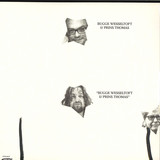
A long time ago, in a Norway far far away in time, keyboardist Bugge Wesseltoft introduced his New Conception of Jazz to the world. We're talking about the late 90s, when Bugge's cosmopolitan blend of jazz, hiphop and techno beats was pretty much the coolest music coming out of Norway at that moment. That was a golden time for Norwegian music, in fact, when the rest of the world began to sit up and take notice that something was stirring up north, and realised the music was more than just glacial tones hurtled from icy mountaintops and frozen lakes. This was the sound of urban Scandinavia.
A few years later came the electronic dance genre 'space disco'. Along with Todd Terje, Bjørn Torske and Lindstrøm, Prins Thomas was at the epicentre of this next big wave to surge out of Norway. Now, the two generations have come together in this exclusive collaboration between Bugge and Prins Thomas on the Smalltown Supersound label. Jazz and electronics combine for that energising vitamin D shot of Nordic sunshine.
The Rainbow Studio in Oslo is a familiar name to anyone who follows the ECM label - many of its classic 1970s jazz albums were recorded there under the eye of resident producer Jan Erik Kongshaug. Bugge and Thomas booked a couple of sessions at the legendary space with Kongshaug at the controls, and improvised some tunes in the style and spirit of some of their favourite ECM moments, like the fresh, open sounds of Codona, Egberto Gismonti, Oregon and Kenny Wheeler. Bugge had previously done a remix of Thomas's 'Bobletekno' in 2015 but this is the first time they have worked together as active musicians. The results - also partly taped at Thomas's home studio - fuse programmed rhythms, live synths and percussion, all captured in a sumptuously spacious acoustic.
For an even more authentic touch they called up one of their all time local heroes and one of Norway's most famous jazz drummers, Jon Christensen, who's been the go-to guy for Jan Garbarek, Terje Rypdal, Keith Jarrett and many more. At 75 years he's still pretty spry behind the kit, as you'll hear on several tracks here.
Make no mistake, though, this is not retro pastiche but contemporary music, coasting on gently insistent programmed grooves and bubbling basslines. The whole thing feels not so much like a consciously hip fusion of DJ and jazz musician, more like two great musicians totally enjoying themselves. Which is exactly what it is.
Key facts:
Bugge Wesseltoft is one of Norway's leading jazz figures. He set up Jazzland Recordings in 1996. His solo Christmas LP It's Snowing On My Piano remains Norway's best selling jazz album!
Prins Thomas's real name is Thomas Hermansen. His label, Full Pupp, means 'full breast'. He's released several albums under his own name, as well as collaborations with Bjørn Torske and Lindström. Check out his amazing Paradise Goulash mixtapes.
"For the final part of SchleiBen 5 - 8, Emotional Response welcomes two Scottish based artists to close out the series. In Jon Keliehor you have a world and music traveler with history from psychedelic rock to fourth world exposure, alongside one of the best electronic producers of the last decade, Lord Of The Isles. As the drummer of West Coast folk rock / psychedelic band The Daily Flash, Keleihor spent much of the mid-60 based in and out of Seattle and Los Angles, playing alongside the likes of Jefferson Airplane, Cream and The Doors, before an increasing interest in meditation and philosophies outside of the 'rock' realm led him to England in the early 70s where he become involved in dance theatre. Teaching Advanced Rhythmic Music Studies at the London Contemporary Dance School, his music composition style became influenced by his studies of world music. Finally settling in Glasgow for over 20 years, while running the Luminous Music label and Gamelan Naga Mas, his earlier recordings for labels like Indipop, Touch and Bruton have seen a recent revival, with music appearing recently on contemporaries Optimo Music and Invisible Inc. The wonderful recordings included here span over 3 decades, from sessions at the Luminous Studio at The Diorama Theatre, London in the early 80s, through to recent field-work based recordings in the Cairngorms. Reconfigured and updated, a common thread appears through the pieces - a sense of longing and appreciation - as Jon's knowledge of outer-national instrumentation alongside equally extensive travels around the globe gives the recordings a seamless blend of organic craft. The tonal consonances within unlikely combinations of instruments, with tuned glasses (tarang), tabla, jaw harps, clay flutes and ocarinas, Chinese instruments that include Xiao-Bo and Xiao-Ping, large Noah bells, small and larges gongs all employed, the recordings have been reconstructed, edited and updated via sampling and digital processing. Featuring the playing of John "Jhalib" Millar - the extraordinarily gifted musician and tabla player - who has appeared with an EP on sister label, Emotional Rescue (ERC029), sadly recently deceased, the contribution acts as a tribute and more. To close, the music of Lord Of The Isles is an excellent companion to Jon's work. Neil McDonald's list of club-based releases on labels CockTail D'Amor, Ene, Firecracker, Permanent Vacation, ESP Institute and Phonica is comprehensive and exemplary, however within his productions has often been an other-worldly element, a space between the beats and occasional fully ambient pieces. Approached originally for series one of SchleiBen, the 7 pieces included were worth the wait, a journey in themselves and the perfect completion. Spanning almost 5 years, the majority were written during an extended exile in the Cairngorms. The lifting, ethereal, but melodic nature of the music fits that aesthetic. Blue skies, snow, long walks, space to think, but with a longing and appreciation of family and friends. The solitary nature found in SchleiBen 8 and the geographical incidence of both artist's recordings including sessions in the Scottish Highlands fits the series ideals and is a nice closure. Enjoy and listen. "