On A side, electronic music wizards Kompozyt team up with a Dub Legend Lee 'Scratch' Perry to bring you a heavy-hitting and instant bounce-inducing Dub Techno track 'Hidden Force'. Lee Scratch Perry's amazing and charismatic Dub poetry blends superbly with the neat fusion of spacey and subterranean sounds of Kompozyt productions. The single is not to be missed this summer.
On B side, Kompozyt brings you a 7' version of 'Homesick' - Dub and Trip-hop inspired Experimental Electronica with Olgierd Dokalski on the trumpet. Olgierd's incredible performances of real haunting beauty further reinforce the analog, live and improvisational aspect of Kompozyt's music.
Both tracks come from Kompozyt's debut album: 'Synchronicity' - out everywhere now on CD and DL.
Selected Reviews of Kompozyt's Debut Album and the Single
5/5 Decoded Magazine: 'Incredible album 10/10'
4/5 Lars Berhenrot (Deepershades): 'LOVE THIS .. never-ending deepness ..'
5/5 Pierre Ravan: 'Amazing work from the heart'
5/5 Queensradio.org: 'I'll definitely be playing these guys on air'
4/5 Garth Trinidad (KSRW Radio) 'Exquisite score without a film'
5/5 Hoxton FM (London): 'Incredible release!'
4/5 Stereo MCs: 'Nice vibes refreshing'
4/5 Robert Babicz: 'I love dub. in all forms'
5/5 Adam Hannibal (Balanced) : 'Neat fusion of spacey and subterranean sounds. Reminiscent of the Beyond Recs Ambient Dub compilations with some freshness... Well done'
5/5 Al Bradley (3amrecordings): 'This needs full love because it's excellent :) I can really picture myself just letting this play from the first sound to the last & becoming utterly immersed as it flows through! Gorgeous.'
5/5 Bartlomiej Blesznowski- 'One of the best electronic music albums this year'
4/5 Neil Brown (RMFM; Pro Mobile Magazine): 'Some nice tunes to get your head in gear to.'
5/5 Jorn Kirk (DJ Jay Kay) (Faith Sundays): 'very nice album !!! a joy to listen to'
Buscar:space dj z
In its second venture into reissuing hidden gems of electronic music produced in Eastern Europe in the 20th Century, LITTLE BEAT DIFFERENT ISSUES focuses on the work of a Czech composer, musician and producer, Alexander Goldscheider. Born in Prague in 1950, Goldscheider started as a music orrespondent in New York in 1968/69, went onto reading Music at Charles University whilst continuing as a music critic and radio/club DJ, before becoming a record producer at the top Czech label, Supraphon. As a composer, he pioneered the use of synthesizers in his songs for major Czech pop/rock singers as well as in his own instrumental tracks. After moving to London in 1981, he first recorded two albums at the renowned Red Bus Studios, then proceeded to work at the legendary BBC Radiophonic Workshop, before co-founding and establishing Romantic Robot, a software and hardware design and manufacturing company which later moved into music recording and publishing. Of the many original products, THE MUSIC TYPEWRITER was ground-breaking software enabling the writing and printing of real notation on the Sinclair ZX Spectrum. Similarly TEREZÍN: THE MUSIC 1941-44 was the first ever release of CDs with music written in the Theresienstadt Concentration Camp during World War II. Goldscheider's 1980s LPs THEMES FOR A ONE-MAN BAND Vol I & II reflect his work as a solo artist, always writing, recording and producing single-handedly. He had, though, a team of technical aficionados and inventors back in Prague, who adapted and developed his electronic music equipment incl. synthesizers, sequencers and even a Studer multitrack recorder, thus creating a revolutionary set-up, on par with the much later MIDI.This LP samples Alexander Goldscheider's music produced for records, films, TV and even an art exhibition in the space of 25 years starting from 1975.
Who Do You Go To For Your Very First Session When You Have Just Been Gifted Your Very Own Top-flight 'stradivarius Of Synth Based Studios' Enter 'the Grid' ...mr David Ball: One Man Band Of Pioneering Electro-pop Distorters Soft Cell, Part Time Psychic Tv Personality, Film Soundtrack Composer And All Round Synth Afficionado & Richard Norris: Eclectic Beat-meister & Ambient Dj, Record Producer, Commited Psychedelicist From 'beyond The Wizard's Sleeve'. The 1990's Saw Worldwide Commercial Success As The Grid Scored 10 Uk Chart Hits, Many A Euro Hit Including 1994's International Mega-hit 'swamp Thing' Featuring A Twisted Use Of Sampled Banjos Lifted From The 1970's Okie Shocker Movie 'providence. In 1996 The Grid Went On A Holiday And They Didn't Return Till 2005. In The Initial Week Of The Moog Sound-lab In Early 2015 As The Studio Was Literally Put Together Around Them, Our Abiding Memory Was Their Absolutely Delighted Grins As Each Moog Unit Was Added To The Lab. Dave & Richard Created This Benchmark Album Of Deluxe 'tronic Trax That Showcased Their Prarie Wide Knowledge Of Electronica & Their Ocean Deep Skills As Both Technicians & Original Soundscapers - Kraftwerk-ian Werk-outs, Space Noise Jams, And Slinky Grooves With Subtle Pop-tones.
Extremely hot on the heels of 'A Library Excursion', Earl Jeffers teams up again with Don Leisure, his partner-in-beats for another EP of Darkhouse Family goodness. Following on from their highly acclaimed debut album 'The Offering' from late last year on First Word, the Cardiff duo have hand selected a group of friends, dons and legends (including DJ Spinna & Kaidi Tatham) to serve us up 'An Extra Offering'. Five remixes curated by the crew.
For the refix of 'The Accession' (which originally featured Kamaal Williams, Dave Newington and Daf Davies from Boy Azooga), label-mate Kaidi Tatham kicks off with some down-low bottom-heavy boom bap, before switching up the tempo mid-way for a blast of his inimitable jazz-funk bruk boogie.
Next up we're honoured to have not one, but TWO tracks from the Brooklyn legend, DJ Spinna. His Galactic Soul rub of 'Another World' flips the original into a deep soulful 4/4 house cut, featuring the lush vocals of Esther (and one Charlotte Church on backing vocals, pop fact fans).
Then there's DJ Spinna's Galactic Funk take on 'Just So You Know' with the marvellous Vanity Jay on vocals. This one is on the same mid-tempo tip as the original, but with that unmistakable Polyrhythm Addict flavour of big kicks, crisp snares, hench bassline and sweet spacey synths.
For the 'GAEA' remix we keep it Cardiff and introduce the man like Alfie Swan. Doubling up the tempo of the original, this adds some seriously wavy sonics and flips the groove entirely, creating a seriously innovative cocktail of riddims. One for those not shy of some jazz ethics in the dance.
And to close out this offering, Andromeda Jones lays down a ridiculously delectable broken beat mix of 'Journey To Love', this one again featuring Vanity Jay. No messing with this one, this is straight dancefloor fire, transforming the hip hop soul track into a future boogie heater. One for the ravers.
This EP illustrates once again Darkhouse Family's wide range of influences and sounds, as selectors and as music makers themselves, and is no doubt one that will stay in your box for a very long time...n
Following 2017's 'Path of Ruin', DJ Richard returns to Dial with his much-anticipated sophomore LP, 'Dies Iræ Xerox'. Undoubtedly one of the most distinctive and fully-formed electronic producers in recent memory, DJ Richard imprinted the sound of a bubbling US underground with his label, White Material, founded in 2012 alongside Young Male. His first solo LP for Dial, 2015's 'Grind', found DJ Richard delicately establishing a discipline between his East Coast noise heritage and a physical, emotive tradition of house music, mastered during an extended stay in Berlin. Now firmly settled once more in his hometown of Providence, 'Dies Iræ Xerox' is a personal and uncompromising journey that finds the Rhode Island native in reflective form, journeying without compromise into both his creative influences and personal psyche. In part adapting its title from the Latin hymn 'Dies irae', otherwise known as 'Day of Wrath', 'Dies Iræ Xerox' melds the physical and psychological aspects of DJ Richard's production ethos in sharper, more widescreen vision than before; the oceanic swells of ambience yet more powerful, and the rigid basslines sharper still. With the chaos of the Berlin club scene an increasingly distant memory, the album is enriched with a contemplative, even brittle tone, as informed by film soundtracks and literature as the pulse of city living. Still, this is new material from DJ Richard, a touring DJ as distinctive as any other to be found behind the decks at some of the world's finest clubs and festivals. On 'Dies Iræ Xerox', the artist finds the space to write 'the records I really want to play', and each suggests a template for genuine dancefloor transcendence, beginning with the electrifying 'Vanguard' . The sludgy yet sophisticated crawl of 'Tunnel Stalker' sets the tone for the menacing yet somehow melancholy EBM of 'In Broad Daylight', while the record draws to a breathless close with the affecting, drum machine lethargy of 'Gate of Roses'. Drawing little distinction between his more physically rousing material and searching soundscapes, 'Dies Iræ Xerox' instead finds a passage of catharsis throughout both. 'Dissolving World', the album's breathtaking centerpiece, is a choral feature hypnotically overwhelmed by walls of electronic feedback, forging a dramatic link between old ways and new. On the bold and near-beatless 'Ancestral Helm' and 'Final Mercy', DJ Richard seems to grant both music and raw emotion the ability to simply float in the air, brilliantly, poignantly unresolved. If 'Grind,' inspired by the weathered coastlines of Rhode Island, was a record concerning "the border between civilization and the ocean," then 'Dies Iræ Xerox' is an unapologetic follow-up concerning that between macabre obsessions and fear of death. Produced during a murky, transitional period, DJ Richard found himself particularly drawn to Medieval European art and mysticism, fascinated by depictions and philosophies of the antichrist and end-times. Greatly influencing the uncompromising, apocalyptic tone of the album, these investigations have created an engaging and personal vision of the 'Day of Wrath.'
The remarkable thing about BELP's new album is its two-dimensional function. It works both on a loud and a quiet volume. Some tracks would go down well as a club track, like opener 'Travelling Thru Galaxies'. This track brings back memories of the best work released on the Hyperdub label, with it's fine combination of synths and irresistible, dubby beats. Elsewhere, 'Off Ending' might start off as 'dancehall-but-not-quite dancehall' track but when half way the synths kick in they change the feeling of the track to a more cerebral level.
BELP is the artist name of Sebastian Schnitzenbaumer. Born in Munich, he partially grew up on the Seychelles islands off the coast of East Africa. Educated in classical piano, those two gravitational poles, European and African influences, form the basis for his musical development. Currently he has close ties to the (dub) Sausage Studio in Hackney, London. In his hometown Munich, the Bavarian capital, BELP took a central role in a series of discussions and events aiming to improve the image and possibilities of Munich, which to his regret is a predominantly posh and hedonistic city where optimistic and uplifting music take central role.
In different guises Schnitzenbaumer works as a much needed antidote. Since 2013 he runs the Schamoni label, focusing on supporting local artists like Leroy and Protein. Its sublabel Jahmoni is responsible for recent works by international artists like Aaron Spectre and DJ Marcelle/Another Nice Mess.
BELP's music is dark, serious and layered. His love for dub and dancehall shines through in his broken beats. At the same time the synth layered tracks give the album an atmospheric feeling.
This also is what makes this album essential: it's refusal to be pigeonholed. The last track on side A, 'By Beauteous Softness', is an a cappella rendition of a 17th century Henry Purcell piece, beautifully sung by Alexander Schneider. This track is preceded by 'Transmission', which is a brilliant abstract work, sounding like wind closing on you from all sides. And you can sip a cocktail whilst listening to the jazzy 'Time And Again' (BELP once worked as a jazz pianist).
It's clear to hear BELP took a long time recording this album. Every note, synth, drum beat, is carefully placed. But what the album might lack on spontaneity it more than compensates this with its sheer musical beauty. This also reflects on the abstract sleeve, like 'Elephants' designed by BELP himself.
Enjoy this album on big speakers, as background music or simply on headphones. There will always be new sounds and layers to be discovered!
Katharsis was originally a regular party organized at the infamous Contact, Tokyo, the home of the electronic music scene in Japan.
In 2017 Katharsis Recordings was launched, with the first release being touted by many in the Japanese techno scene and played by the
likes of DJ Nobu at Dekmantel.The second release will be scripted with another compilation of 4 Japanese artists.
The first on the A side, Mikuni Kaido by head honcho Masafumi Take, is a fresh track that combines nostalgic arps and analogue bass.
The other main member Kannabi's track 'Shoka' on the B side is an abstract rhythmical piece that evolves slowly.
The second track on the A side 'Kirisame' is by a new member O-Ma. A modular synth enthusiast, his unique analogue sounds are a trademark
of his tracks.
The last track on the EP is 'Yoake' by veteran Ryogo Yamamori. The rolling beat and spacey synth sound gradually build up to a climax and
makes this track perfect for the dance floor.
All 4 tracks are distinctly different showcasing the identity of each artist. This new movement represents a fresh approach to the Japanese
techno scene.
For its seventh offering, Sol Power Sound taps into the pulse of the French Antilles for Tambours de Martinique, a blistering EP of original and remixed versions of rare, drum-centric dance floor workouts. Licensed directly from the legendary Martiniquan label Hibiscus Records, the EP features cuts by Eugène Mona and Max Ransay, two of Martinique's most storied musicians. With reworks by Spanish DJ and producer Kiko Navarro and the Sol Power All-Stars, this one will be in the record bags of discerning DJs all summer long.
The A side features 'Lizo' by Eugène Mona, an essential figure in the folkloric music of Martinique based on the bamboo flute, bèlè drums, and the island's specific variant of Antillean creole. Lizo was originally released in 1990 on Mona's Blanc Mangé Blan Manjé LP and is anchored by frenetic percussion, a driving bassline, and house-evocative key stabs. Kiko Navarro's remix takes an already dynamic cut to deep Afro-space with thumping drums and a bubbling synth-bass groove that will put dancers through their paces.
With its powerful combo of urgent brass and ensemble vocals, Max Ransay's 1988 recording of the traditional Martiniquan folk song 'Ti Kanno' fills the B-side. 'Ti Kanno' was previously recorded by Ti Émile, Ransay and Mona's legendary forebear. Full of surprises, Ransay's version is a sonic melting pot of hand percussion, horns, unexpected synth lines, and bass. The Sol Power All-Stars edit fills out the low-end thump and teases out the groove for maximum impact.
Having debuted with a fine EP by Job Sifre, Artificial Dance has returned to the source for release number two. The 12' pays tribute to one of the most influential figures of original DIY electronic music scene of Holland, Hanjo Erkamp.
During the first half of the 1980s, Erkamp had a hand in some of the most experimental and forward-thinking releases on the now legendary cassette label, Trumpett. Famously, he was a member of two of the label's key bands - industrial outfit Doxa Sinistra and new wave combo Ende Shneafliet - but during the period he also recorded a swathe of solo tracks as C. Stein, most of which only saw the light of day decades later.
La Bombe Plastique', a thrillingly spacey and futurist cut rich in proto-techno rhythms, intergalactic electronic motifs and drowsy choral vocals. For this timely reissue, the superb original version comes accompanied by a fresh re-edit created primarily for DJ use.
- A1: A Min We Vo Nou We - Les Sympathics De Porto Novo
- A2: Asaw Fofor - Ignace De Souza & The Melody Aces
- A3: Dja Dja Dja - Stanislas Tohon
- B1: L´enfance - Elias Akadiri & Sunny Black´s Band
- B2: Mé Adomina - Picoby Band D´abomey
- B3: Nounignon Ma Klon Midji - Antoine Dougbé
- B4: Moulon Devia - Orch. Poly-Rythmo De Cotonou
- C1: Paulina - Black Santiago
- C2: Glenon Ho Akue - Lokonon André Et Les Volcans
- C3: Sadé - Sebastien Pynasco And L´orchestre Black Santiago
- C4: Baba L´oke Ba´wagbe - Super Borgou De Parakou
- D1: Gangnidodo - Cornaire Salifou Michel Et L´orchestre El Rego & Ses Commandos
- D2: How Much Love Naturally Cost - Gnonnas Pedro And His Dadjes Band
- D3: Idavi - Orchestre Poly-Rythmo De Cotonou
African Scream Contest 2
A great compilation can open the gate to another world. Who knew that some of the most exciting Afro-funk records of all time were actually made in the small West African country of Benin Once Analog Africa released the first African Scream Contest in 2008, the proof was there for all to hear, gut-busting yelps, lethally well- drilled horn sections and irresistibly insistent rhythms added up to a record that took you into its own space with the same electrifying sureness as any favourite blues or soul or funk or punk sampler you might care to mention.
Ten years on, intrepid crate-digger Samy Ben Redjeb unveils a new treasure- trove of Vodoun-inspired Afrobeat heavy funk crossover greatness. Right from the laceratingly raw guitar fanfare which kicks o Les Sympathics' pile-driving opener, it's clear that African Scream Contest II is going to be every bit as joyous a voyage of discovery as its predecessor. And just as you're trying to get o the canvas after this one-punch knock out, an irresistible Afro-ska romp with a more than subliminal echo of the Batman theme puts you right back there. Ignace De Souza and the Melody Aces' Asaw Fofor" would've been a killer instrumental but once you've factored in the improbably-rich-to-the-point-of-being-Nat-King-Cole-influenced lead vocal, it's a total revelation.
The screaming does not stop there, in fact it's only just beginning. But the
strange thing about African Scream Contest II's celebration of unfettered Beninese creativity is that it would not have been possible without the assistance of a musician who had been trained by the Russian secret services to "search and destroy" enemies of the country's (then) Marxist-Leninist president Mathieu Kerekou.
Already familiar to fans of the first African Scream Contest as a mainstay of ruthlessly disciplined military band Les Volcans de la Capitale, Lokonon André vanished in a cloud of dust at Ben Redjeb's behest with a list of names and some petrol money, only to return a few days later having miraculously tracked down every single name he'd been given. The source of this Afrobeat bounty-hunter's impressive people-finding skills - his training with the KGB - highlights the tension between encroaching authoritarian politics and fearless expressions of personal creative freedom which is the back-story of so much great African music of the 60s and 70s. Happily, in this instance, Lokonon was tracking the artists down to oer them licensing deals, rather than to arrest them.
Where some purveyors of vintage African sounds seem to be strip-mining the
continent's musical heritage with no less rapacious intent than the mining companies and colonial authorities who previously extracted its mineral wealth, Samy Ben Redjeb's determination to track this amazing music to its human sources pays huge karmic dividends.
Like every other Analog Africa release, African Scream Contest II is illuminated by meticulously researched text and eortlessly fashion-forward photography supplied by the artists themselves. Looming large - alongside Lokonon André - in the cast of biopic-worthy characters to emerge from this seductive tropical miasma is visionary space-nerd Bernard Dohounso, who laid the foundations for Benin's vinyl predominance by importing and assembling the turntables that would play the products of his Bond villain-acronymed pressing plant SATEL, a factory that would revolutionise the music industry in the whole region.
The scene documented here couldn't have been born anywhere else but in the Benin Republic , and the prime reason for that is Vodoun. It's one of the world's most complex religions, involving the worship of some 250 divinities, where each divinity has its own specific set of rhythms, and the bands introduced on the African Scream Contest series and other compilations from that country were no less diverse than that army of dierent Gods. At once restless pioneers and masters of the art of modernising their own folklore, the mystic sound of Vodoun was their prime source of inspiration.
One especially irascible Vodoun-adept was Antoine Dougbe, who styled himself The devil's prime minister' while turning ancestral rhythms into satanically alluring modern beats. As Orchestre Poly-Rythmo songwriter Pynasco has observed sagely, Evil is not elsewhere, evil extends into the house'. And African Scream Contest II is a gloriously cinematic road-trip through an undiscovered realm of music lore whose familiarity is every bit as thrilling as its otherness.
Written by Ben Thomson, March 2018
The artist run gallery Schloss, inhabiting the space of a defunct Porsche repair shop in Oslo, has birthed a record label under the same name. Run by the visual artist Ida Ekblad and the DJ/ producer Karima Furuseth. The first release is by Londoner Max Fowler,who has a certain affinity for ageing samplers and dusty samples.The B-side features a remix by Stockholm mainstay and, among other, The Trilogy Tapes-affiliate Samo DJ.
Mixed and mastered by Matt Karmil.
First time on 45 additionally containing world exclusive unreleased instrumental version
File under Hip Hop/ Breaks/ Funk/ Nu Soul
The latest single from Mukatsuku is from Australian DJ/Producer Katalyst who was one of the winners at Australian Dance Music Awards in 2002. 'How Bout Us' originally came out on Australian label Invada as part of an album ''What's Happening ' in 2007 before receiving a global release for BBE a year later in 2008 but up till now has never been out as a single in it's own right. The track 'How Bout Us' features vocalist Steve Spacek with an exclusive unreleased instrumental version on the flipside. Killer production with massive string lines and charismatic vocals to ignite your dancefloor.
Scottish producer & DJ Graeme Clark AKA The Revenge releases his second album 'When The Thrill Comes' on his own Roar Groove imprint on 11th May 2018.
'When The Thrill Comes' is a demonstration of a producer achieving a point of maturity in their work, able to exercise a sense of restraint, to allow for their sound to have space. It is also the opportunity for The Revenge to explore his own electronic music roots with a deeper pared-back sound more in touch with his earliest production experiences in house and techno.
Clark is no novice to the art of production and the sweaty alchemy of animating bodies on dance floors. He has been producing and playing electronic music since 1995, in many forms, though is well known for 'some of finest modern disco dubs and re-edits on the block' (DJ Mag). This passion for dusty disco and deep cuts is reflected in his long-standing collaboration with Craig Smith as 6th Borough Project which has yielded 3 albums and provided the foundation for the influential but now defunct Instruments Of Rapture label.
2015 was a momentous year for Clark with the release of his debut album 'Love That Will Not Die' on his own Roar Groove imprint. The LP picked up 'Best British Album' from DJ Mag, was shortlisted for Scottish Album Of The Year and drew support from leading DJs including Jackmaster, John Talabot, Solomun, Craig Richards, Axel Boman amongst others. Recent production work has both cemented and extended his reputation; with his future-facing remix for Auntie Flo being re-touched by Dixon for the Philomena label and his two EP's for Berlin's Dirt Crew Recordings reinforcing his love for solid club jams
Over the course of four unforgettable EPs released on Throne of Blood since 2013, Hardway Brother Sean Johnston has cultivated a broad international following for his singular brand of dancefloor fodder.
Best known as one half of legendary DJ team A Love From Outer Space alongside the one-and-only Andrew Weatherall, Johnston's roots in the dance music scene include a clutch of leftfield 90's era bangers on labels like Sabres of Paradise and Flashcomm. Beyond his original output, Johnston has also remixed the likes of Man Power, The Asphodells, Museum Of Love, Split Secs, Clandestino and many more.
The Laser EP is peaktime Hardway Bros business. 'Friedman Feedback Loop Revision' (a nod to TOB boss James Friedman's highly-valued opinions) is a masterclass in efficient simplicity, elevating a few basic loops into an exhilarating 8 minute monster. 'The Laser' rounds out the a- side with a classic electro rhythm/bass/vocal sample combo could easily have landed in retro territory. Instead, Hardway Bros easily flips a clutch of oldschool tricks into an utterly modern execution. The b-side finds TOB's label manager Max Pask injecting 'Friedman Feedback Loop Revision' with his love for all things analog and Italo. With his impressive collection of synths brought to life by Chinatown Records' Brennan Green, the song is transformed into an epic set- closer that's already devasting dancefloors like Berlin's Panorama Bar. The EP closes with 'Afro Sirene,' a midtempo groover with melodic arpeggios built for the discerning DJ's warm-up set.
AZZUR owner, Melokolektiv returns on Galaktika with his first solo vinyl Ep on the imprint 'Where Are You Earth '.
A side brings three amazing original tracks to the table made of synthetic melodies, spacey beat and acid basslines. "Control the Night" and "How to be Drawn" will, with no doubt, pleased the dancefloor while "Where are You Earth" presents something deeper and melancholic.
On the B side, we are happy to welcome two of our all time favorite producers.
First, Langenberg, who offers us a sublime reinterpretation in the line of his deep and organic releases on Liebe*Detail, Drumpoet Community and Poker Flat.
Then, UK legend Mark E who delivers a functional, raw and hypnotic reinterpretation. Definitely something which will please Dj's. Timeless!
Truly nuts and really kind of essential... the Starship Commander had his whole approach to the Synthesiser Voice technique. B-Boys/Girls delight. Check the instrumental cut, Mastership - a head nod synth voyage of the highest order. Limited copies. TIP!
.
'How are you doing, Earthling' That's how Omer Coleman, Jr. addressed his public in the 80s, driving around Kansas City, Missouri in the electric space-car built especially for his alter ego Starship Commander Wooooo Wooooo.
Left Ear Records went back to Coleman's original master tapes for their vinyl reissue of the Commander's 1981 private press album Mastership, a lost electronic funk classic. Coleman performs in an alien voice that comes not from electronic filtering but from his own natural vocal distortions. This visitor from Mars wants people to be happy and, like his song goes, 'Laugh and Dance.' It's an endearing and very personal space-age funk that blends George Clinton and Kraftwerk in a vision of a better and happier world.
Born and raised in Kansas City, Coleman was musically inclined from an early age. His parents couldn't afford to buy him a real drum for orchestra, so he took up electrical wiring and wood shop instead, which fed his muse in a different direction. Omer built enormous speaker cabinets. In the late '70s he was a DJ, and ran a Mobile Disco business that took him across the country, hosting parties. After a trip to California, he came back to Kansas City inspired to dress up as Commander Wooooo Wooooo.
The future commander began working at the Armco Steel Mill in Kansas City when he was 18. He was inspired by older machinists who demanded perfection in their work and in their character. It was while he was working at the steel mill that Coleman came up with Starship Commander Wooooo Wooooo. One day coworker John Manley came up to Coleman with a vision of an electric car, and built it. His coworkers built all of his equipment, from lighting and fog machines to big steel eyeglasses. Coleman's sister, a seamstress, created his outfits.
Coleman started his own label in 1985 but took some time off from music to raise his children, and when they came of age his son recorded with Coleman as a gospel vocalist. When his son was killed in an auto accident in 2004, it took something out of him, and he stopped making music. But he's starting to get the feeling again.
Now 62, he's currently enjoying his retirement from a long stint with the IRS. The former Commander is in the middle of a house project where he's using metal ceiling tiles to line his walls. It's starting to look like a spaceship. Coleman promises, 'There is a real good possibility that we have not seen the last of Starship Commander Wooooo Wooooo!
Pat Padua'
Ryuji Takeuchi provides Instruments Of Discipline with an EP of noisy, hypnotic tracks, ranging from giddy, stomping, left-field techno to melancholic ambience; the EP's title 'One's Sentiment' provides a thoughtful angle to this at times cacophonous collection, for while they are bristling with noise there is something contemplative about the pieces, expressed in a way that suggests more than one thought trying to take life at the same moment, Ryuji finds space for conflicting voices both spatially and in terms of mood, the first three tracks, 'Ambivalence', 'Sadness' & 'Sorrow' crawl with competing elements, synth lines drool over and meld with throbbing kick patterns, anxiety & excitement are tightly wound in focus as tracks build and develop, leaving the listener to navigate these abstract planes, intoxicated; while the final track 'Regret' is a compelling piece of noisy, ambient minimalism that allows for an austere pause after the eruption of the initial works. It becomes evident that Ryuji's journey as a producer, through periods of hard-techno, deep-minimalism and the more abrasive ventures on HueHelix, has created a powerful and nuanced voice that is fully on display in 'One's Sentiment'.
Ryuji Takeuchi - Artist Bio
Ryuji Takeuchi (Local Sound Network / LSN, HueHelix) was born in Osaka, in the late 90s, he moved to the United States where he discovered Techno, House and Electro Music, influencing his desire to produce & DJ. His first wave of releases on LK Records, Arms, Mastertraxx, FK Records, SWR, Innervate, I.CNTRL, Impact Mechanics, Silent Steps, GSR & Brood Audio to name a few, were straight-up, hard techno,
In 2011, Ryuji started his own imprint, 'Local Sound Network / LSN', a platform for a new generation of both Japanese & global electronic music & later on, in collaboration with Tomohiko Sagae, Go Hiyama & Kazuya Kawakami, the label, 'HueHelix / HHX', developing further the voice of Japanese techno & experimental electronics, with a focus on distorted, industrial sounds.
In 2012, Ryuji launched the 'Local Sound Network Digital Solutions / LSNDS' series born from a desire to both discover and introduce a wider range of electronic music to the world.
Ryuji Takeuchi provides us with an EP of noisy, hypnotic tracks, ranging from giddy, stomping, left-field techno to melancholic ambience; the EP's title 'One's Sentiment' provides a thoughtful angle to this at times cacophonous collection, for while they are bristling with noise there is something contemplative about the pieces, expressed in a way that suggests more than one thought trying to take life at the same moment, Ryuji seems to find space for conflicting voices both spatially and in terms of mood, the first three tracks, 'Ambivalence', 'Sadness' & 'Sorrow' seem to crawl with competing elements, synth lines drool over and meld with throbbing kick patterns, anxiety & excitement are tightly wound in focus as tracks build and develop, leaving the listener to navigate these abstract planes, intoxicated; while the final track 'Regret' is a compelling piece of noisy, ambient minimalism that allows for a pause after the . It is testament to Ryuji's journey as a producer through periods of hard-techno, electronic minimalism
For Alan Oldham, artistic expression is a way of life, taking multiple forms and medi-ums throughout his lifetime. Before he was ever known as DJ T-1000, he was a published car-toon artist and radio DJ in Detroit writing press releases for Underground Resistance to get by. One day, Underground Resistance was in need of a last minute DJ for their tour in Aus-tralia, and a door flew open for Alan Oldham. With passport in hand he departed on his jour-ney as a DJ, which little did he know would eventually span continents. Influenced by every-thing around him, his work has dynamically changed and evolved along with his life. Currently as an international DJ living in Berlin, his latest creation is the ACIDSPACE EP, released by Elypsia Records under the DetroitRocketScience name. The traveler himself takes us on an intergalactic adventure, beginning with ACIDSPACE (8:48). With a steady beat and a unique blend of serene space sounds, this jam excites the imagination for the journey to come. It is followed by ROCKET TO BERLIN (7:20), a subtle and intricate mix that entices one to enter the unknown. VESTA SYSTEM (6:22) finishes the EP off on a note that leaves lis-teners grooving and enjoying the ride. Creativity and sweet sounds are what it's all about for Alan Oldham. With his recent musical shift to mellower, sci-fi inspired jams, he continues to let listeners see for themselves.
It's taken almost 3 years to get the man like Medlar back on Delusions fol- lowing his 2015 release with Dan Shake but finally it's come together. That release, along with his regular output for Wolf, Riverette and For Discos Only has helped cement Medlar's reputation as one of the leading UK un- derground house producers and led to official remixes and approved edits for legendary labels TK Disco and West End no less! The Medlar seal of quality has led to support from such influential heavyweight selectors as DJ Harvey, Gilles Peterson and DJ Koze.
Kicking things off we see Medlar in straight up dance floor mode on title track NRG, coming through with a drum-heavy workout that utilises a gnarly bassline, echoing synth stabs and rasping hats to excellent effect.
Flip over for his own Dub Version which strips things back further placing all the emphasis on the bassline and going heavy on the Space Echo for a tripped out, dubby warehouse vibe tailor made for the freaky hours.
Closing the EP we have the aptly named Tripped which drops the BPM's for a low-slung mood-setter to warm up the floors with. A simple groove lays the foundation for a rolling bassline while chiming synths weave in and out of the spacious mix.
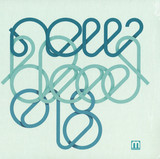
Med School's most innovative release series returns. Responsible for delivering the drum & bass scene early stories of Etherwood, Royalston, Stray and Whiney, 'New Blood' is definitive of Med School's ethos when it comes to discovering and nurturing quality talent. With artists constantly redrawing the boundaries of 170BPM, this '018' edition breaks the mould showcasing the weird and wonderful sounds from the genre's most promising new talent.
Interdimensional waveman Lakeway has mustered up a jukey-jungle hybrid in the form of 'Lock Off'. Panpipe synths and some big beat steps combine to make the ultimate banger. Keeping things correct is Bristolian serpent Constrict. Choppy snares and flirty 8-bit synth stabs slither together to create 'Tight Coil'. Both choice cuts for any DJ looking for that D&B curveball.
This internationally spread line-up also features some of Russia's best D&B exports. A.Fruit's 'Tender Love' is a delectable fusion of footwork and techno rolled into one and Soela's 'I Wish You Would Come' is an ambient spaced out down tempo number.
A myriad of styles from across the globe are the key ingredients for the 'New Blood 018' LP. Med School has once again proven its A&R prowess, signalling to the world there is no better home for fresh talent.