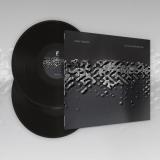
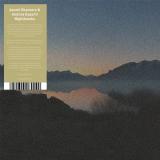
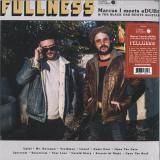
Slowly yet firmly blooming into focus, An Unfinished Rose is the new album from Australian duo Troth.
This is their first since relocating to Hobart, Tasmania and their introduction to Night School Records. With a detailed web of past releases on labels A Colourful Storm, Mammas Mysteriska Jukebox, Knekelhuis and Bowman’s own Altered States Tapes imprint, An Unfinished Rose is the group’s most realised and composed work thus far. While still drawing on the improvisatory and DIY practices that informed Troth’s beginnings, it points to a new incarnation of the duo’s music; an intentional language emerging from the fog of obfuscation and mists of uncertainty.
Over these 9 meditations on change, acceptance, renewal and rebirth, An Unfinished Rose finds Amelia Besseny and Cooper Bowman peeling back some of the roughhewn architecture that defined their earlier releases to reveal a masterful - if auto-didactic - use of space and melody. Composition and improvisation compliment and feed each other throughout, with locked-loop earworms providing the springboard for lines of clarinet or synth melody, and the negative space between chord clusters giving ample room for Besseny’s most confident vocal performances to date. Shaving off a little of the defining dissonance and tape compression of old reveals Troth’s music in radiant daylight, humbly accepting of its place in the world while yearning for better, more sympathetic modes of living. Leaning more heavily on acoustic instrumentation and post-production processes than previously, the result is a transcendent body of work infused with an almost zen-like presence.
Troth’s music exists in the border between forming and becoming, its goal to project a kind of preternatural beauty, leaving interpretation open to the listener. Field recordings, happenstance and improvisation may provide seeds for the duo’s compositions, particularly on Side A, but there is a deft touch of songcraft on show. Loam Loom Leaf Litter opens An Unfinished Rose, directly referencing natural cycles of life, death and regeneration, before the blissed-out drum machine groove of Gold Plum continues a discussion concerning the totality of nature and one’s place in it. Besseny’s vocal, swelling like an ocean churn in duet with itself is adorned with synthesised harp and a revolving synth pattern, conjuring plumes of medieval smoke. Thistle’s rounded, bass-heavy drums, nodding to the vast echo of dub, is a relatively new terrain for Troth. It’s propulsive and thumping, pulsing with a meaning and symbolism consistent with Troth’s past work, referenced overtly in Bessey’s lyrics - “Say it too much and it loses its meaning…”. Similarly, the sprawling modern-classical suite, Tides Reflected In Her Eyes, is intentional in its lyrical themes while traversing new ground, revelling in layers of bowed cello and vocal intonations. Side B’s 4 tracks feel like Troth’s most thoroughly accessible and affecting music to date. Leaning into their own detoured version of Synth Pop, Cocoonist explores downtempoisms via a crunchy low frequency synth, and dream-like, fuzzy trip-hop modalities, not unlike Besseny and Bowman’s other group, Th Blisks. Following on, Myrtle Mystes is an open and searching DIY pop song, forged out of drum machine, bass guitar and cello. (An) Unfinished Rose’s title-track is a clear stand-out, built upon an evocative rhythm sample that appears to change emotional resonance with each undulating repetition. Its cascading waves of affect, interjected with a subtle breeze of synth, bowed instrumentation and soaring, densely-layered vocals.
An Unfinished Rose is enveloping, warm, forgiving. Difficult, yet retaining a unique beauty. Troth’s music aims to celebrate the duo;s shared experiences of being in the world, despite the complexity often surrounding us all. Theirs is a message of hope and perseverance, learning and patience.
Search:space echo
To coincide with the second birthday of Echo Chamber Recordings, it was right that we returned to the series that kickstarted it all in the summer of 2023 - with the fourth instalment of the “Boogaloo Lessons”. The Latin Brothers dig even deeper in their crates of original late 1960s vinyl from New York - to sample dozens of tunes for these next instalments. As ever, these are cut and pasted into a dancefloor party style and updated with extra beats ‘n’ FX for clubwise satisfaction - in homage to the classic Hip Hop Lessons series
The first two releases in the series sold out immediately…
This edition is only 300 worldwide - in order to move quickly and get more space on the shelves for the forthcoming releases on the way on ECR and it’s sister labels ECHO LABS and ECHO EDITS - which are queuing up right now at the pressing plant !
The writer Max Sebald often pondered over the nature of human memory, specifically, how our thoughts and desires - and their results - overlap and mutate over time. In A Place in the Country, he writes of the significance of what see as “similarities, overlaps and coincidences”. Are they the “delusions” of the self and senses, or manifestations of “an order underlying the chaos of human relationships, ... which lies beyond our comprehension”?
Song of the Night Mists, the new album by post-classical composer Stefan Wesołowski, often feels it draws on Sebald’s premise.
On a simpler plane, the one where the market dictates the neatly ordered information we consume, Song of the Night Mists can be described thus: recorded in the main by Stefan Wesołowski in Gdańsk, both in his studio and in Saint Nicholas' Basilica, the album incorporates acoustic instruments - piano, violin, double bass - and classic synthesizers such as the Roland Jupiter-8, the Soviet Polivoks. A Roland Space Echo RE-150 tape delay was also pressed into service as an instrument. We also hear the basillica’s organ and field recordings from the Tatra Mountains. Other musicians were Maja Miro, who played the flute parts on ‘Glacial Troughs’ and brother Piotr Wesołowski, who played the organ on ‘Wilhelm Tombeau’. Sound engineer was Marcin Nenko, who was also on hand to record the basilica organ parts. The album was mixed in New York by Al Carlson (Oneohtrix Point Never, Jessica Pratt, Zola Jesus, Lady Gaga, and Liturgy) and Rafael Anton Irisarri handled the mastering.
Ostensibly, Song of the Night Mists is the last in a trilogy, following on from albums Liebestod (2013) and Rite of the End (2017). All three deal with existential matters such as love, death, decay and “an ultimate end”; apocalyptic and Promethean in spirit, and betraying very human conceits. The Sebaldian nature of the new record starts to make itself felt when Wesołowski talks of how he used sampling. One element is unexpected, that of sampling himself: “I go back to dozens of my own unused sketches and recordings, treating them as raw material to cut, slow down, reverse, and transform in every possible way.” Memory as sound, to be reemployed by the listener through their own imaginings.
Another set of samples made by Wesołowski plays another role. These are field recordings, originally created for an audio illustration of the formation of the Tatra Mountains, and used in a film by sound designer Michał Fojcik. Wesołowski: “You can hear cracking ice, streams, footsteps in the snow and the wind, and a real avalanche, recorded from the inside.” The “Tatra connection” on the album is also found in samples referencing composer Karol Szymanowski. The album’s title alludes to a poem about the mountains by Polish poet, Kazimierz Przerwa-Tetmajer.
Wesołowski’s Tatra recordings are “about a world without humans - about the fact that the world existed, was beautiful, and had meaning long before people arrived, and for the vast majority of its history, it was a place without us.” Wesołowski, using one iteration of the natural world, plays out in sound Sebald’s idea of another order, underlying the chaos of human relationships lying beyond human comprehension.
These feelings play themselves out on the five album tracks. Sonorous and rich, they illustrate tectonic shifts we have no control over. Wesołowski hints that the overall sound is a “meditation on the metaphysics of the non-human set against the spirituality that human presence has brought into it.” In that light, the opening number, ‘Core’, with its slow build, and crackling and straining sound effects, create an effect of the earth groaning into life in a creation myth. Once the piano part raps out a simple melody and modulated tonguing trumpet samples add to the overall atmosphere, the listener can certainly find a cue in the “spiritual”, or “human” side of the story. Human versus nature: from the strains and harmonic muscle stretches of the second number, ‘Glacial Troughs’, through to the powerful and filmic ‘Stalagmite’ and heart-on-sleeve romance expressed in closer, ‘Wilhelm Tombeau’, we listeners are cast as Friedrich’s wanderer, looking out over a landscape that will appear only if we engage with it.
Formations of melody appear incrementally, almost appearing by chance - like hidden footings in the rock shelves to give us something to grasp onto. Rhythms are used sparsely: the prolonged percussive taps on ‘Glacial Troughs’ are an anomaly and maybe there to give pace to the album to come; essentially to keep the listener strapped in. Elsewhere, percussion is used as an aid to mood, the two thudding, timpani-style passages on ‘Peak’ there to offset the short, beautiful, kosmische passage that splits them.
Elements of the borderline religious spirit that drove German electronic music in the late 1960s and 1970s also find a place on Song of the Night Mists. The swells and recessions of the organ find their emotional climax on ‘Wilhelm Tombeau’, a track which summons up echoes of the “mountain magic” vistas created by Popol Vuh or Tangerine Dream, especially with the slightly atonal wobble of the Mellotron that counters it.
This is a dramatic album, but it does feel a strangely short, or curtailed listen on ending, evoking the feeling one gets when waking from a dream, and, for all its incipient grandeur, a track like ‘Stalagmite’, for instance, ends on a minor note. Wesołowski admits that Song of the Night Mists is born of the all too human process of temptation, doubt and recalibration - Sebaldian overlaps and coincidences forming something that must live another life, away from its creator. In Wesołowski’s words, the album is “a newborn foal must stand up and walk right after birth.” Now it is yours to ponder.
The landscapes of Orlan 19 resembled the dream of a mad cartographer: cliffs were floating above the surface, horizons were bending and vanishing into infinity, and energy vortices were flaring up beneath their feet in psychedelic patterns. The familiar laws of physics didn’t apply here — gravity shifted chaotically, and time flew with unpredictable intensity. As Spacelunch, absorbed in thought, stroked the ground which distorted like a mirage under his touch, Cat’s grumbling echoed simultaneously from the past and future:
— Doc, don’t you think we’re just walking in circles?
— No wonder. That’s how inverse modelling works. Every action we take reshapes the surrounding space.
— Can you explain it in simpler terms? There’s only one genius here.
— Ever heard of the Philadelphia Experiment?
— Of course! You know how much I love sushi rolls!
— Well, I set myself up for this predicament… Back in my university days, we experimented with magnetic fields trying to program them by thought. You get where I’m going, don’t you? The planet is reacting to our intentions. So, focus on visualizing the portal.
The confusion on Cat’s face gave way to a mask of detachment. Clusters of matter began to tremble pulling the threads of reality to their breaking point before finally forming a vortex. Having devoured as much as it could, the vortex snapped shut with a loud pop and dissolved in a blinding flash.
As the scene began to take shape, silhouettes emerged under the soft glow of a desk lamp, evoking an overwhelming sense of nostalgia. A worn desk and a small bed stood by the wall adorned with faded photographs, while the floor let out a gentle creak underfoot. The clearer the interior came to be, the more paralyzing the realization, and the more elusive the explanation for what had happened became.
— Holy…! Cat, are we looking at the same thing?
— Yeah, but… This can’t be real.
Spacelunch slowly approached the window and froze still. A single thought raced through his mind: “The only force strong enough to pull me this far… was love.”
Emotional Especial reaches a landmark with its 50th release. Started in 2012 as a “dancier & trippier”, club friendly spin off, sub label to Emotional Response, it has gone on to forge a path, releasing a myriad of artists including the opening release by Jamie Paton (Cage & Aviary / ESP Institute) to Richard Sen (Bronx Dogs), the debut of Khidja (Malka Tuti / DFA) and on to unearthing the breaks masters Alphonse (Klasse Wrecks) and Junior Fairplay (Crimes Of The Future), the uplifting Italo influenced Lauer (Robert Johnson), the new wave anthem of Sfire (featuring Sophie), plus perfect remixes bt Kris Baha (CockTail D’amore) and INHALT (Dark Entries), the NYC pop-rave-vox of Kim Ann Foxman, through to showcasing upcoming artists like Berlin’s Giraffi Dog (Aiwo Recs) and the global acid adventures of Akio Nagase (Chill Mountain) to most recently, the slo-mo trance muscle of 53X and post-rave uplighters of Remotif (Space Lab) and DJ 1985.
As with every 10th release on the label, the label present a various artists “Showcase” of what and where the label is. Aptly it is recent signing 53X who opens Gracias Especial with the bounce of Radar. Finland’s Jonne Lydén debut EP on Especial, Zen ’23 came out of nowhere, more than simply riding a zeitgeist of the “Trance Revival”, his all-live analogue symphonies drop the bpms, presenting widescreen beats, darkroom bass, sirens and tripped out vox all mix to propel a singularly driven.
Taking things much deeper has been the hallmark of Jamie Paton’s remixes for the label. As well as providing the opening EP in 2013, designing every sleeve and producing 20 remixes and counting another 2 for the label here, it’s impossible not to associate Especial with Jamie’s music. First, he reworks rising star DJ, but recent break out producer Chez De Milo, with a trademark dub excursion that takes the ethnic origins of Kremer to a space echo wonderland. Space is the place, the lulling beats, see you falling through the gaps, true dub style.
Alphonse makes a rightful return to Especial, with Raze Rave highlighting the allusive producers’ unique understanding of the varied history of rave culture via a techno-suite of soundscapes, perfectly mixing uplifting breaks, memory inducing vocal samples and dub bass, with a nod to the pop sensibility that rave encompassed, while being that allusive “lost chord” moment of man and machine.
The finale returns to the trance acid expanse of 53X, with the mastery of label stalwart Jamie Paton. An apt marriage, Paton takes the title cut from Lydén’s debut EP and crafts a trademark durge-dub, where TB303 and space echo intertwine with the De Witte vocal, hinting at touches of dub, new wave, trance and acid house all in one melting pot of sound the label optimistically termed “Protoid” back at inception of summer 2013.
Efficient Space honours trailblazing Australian imprint Volition Records with Volition Cuts Vol. 1. Evolving from Andrew Penhallow’s time at GAP Records, which smuggled Cabaret Voltaire, The Fall and the Factory catalogue into the region, Volition shifted focus to homegrown talent over imported sounds. Echoing its precursor’s blend of indie friction and electronic curiosity, the label wired itself into the pulse of club and rave culture, linking city scenes and amplifying them for the mainstream. With retina-scorching design, uncompromising packaging and top-tier remixes, Volition consistently bent the major label machine to its will.
No Volition retrospective would be complete without Sisters Underground’s intergenerational anthem ‘In the Neighbourhood’. Otara teenagers Brenda Makamoeafi and Hassanah Iroegbu brought their Pasifika perspective to Proud (An Urban-Pacific Streetsoul Compilation), a commercial success that platformed NZ rap and R&B with a clarity that outshone its overseas counterparts. The quiet architect of Volition’s sound, producer prodigy Robert Racic flipped the classic as a hip-house dub before his untimely passing in 1996.
Its A-side companion comes from Brisbane synth-pop unit Boxcar, who signed to Volition after frontman Dave Smith handed a cassette to Tom Ellard of Severed Heads during a school newspaper interview. That unlikely handoff led to their 1990 debut Vertigo. Here, their ritual-laced, body-jacking industrial is retooled by Miami freestyle maverick Tony Garcia.
Further cherry-picking from the VOLT vaults, Sexing The Cherry unleash a bleep-addled meltdown from Brisbane’s Edwin Morrow and Cherryn Lomas. ‘This Is A Dream’ was recorded exclusively for High (A Dance Compilation), the first all-Australian V/A to top the ARIA charts, propelling the local movement into national consciousness.
Closing the sampler, Sydney’s Single Gun Theory joined Volition as they moved from post-punk abstraction and electronic collage toward downtempo, sample-based mysticism. Their 1994 ambient-pop reverie ‘Fall’ is reimagined by Stuart Crichton and Apollo 440’s Norman Fisher-Jones as full-throttle Goa trance, a final surge that channels the label’s relentless push into new terrain.
Volition Cuts Vol. 1 is dedicated to the loving memory of Volition’s visionary founder Andrew Penhallow, and key contributors Robert Racic and Edwin Morrow.1
Big Disco Dub 12″ on the obscure Jahtari spin-off Jahmiga, exploring the sweet spot between funk bass and echo chamber with two certified heaters produced by LA axe master Dubsworth and disrupt.
UK dancehall veteran Speng Bond spins a big heart-shaped tale with ‘Empress’ on the A side, meshing his signature ragga-comedy flow with uplifting lofi jazz funk vibes into a sexy anthem that will put a big smile on faces and Reggae sound systems alike.
On the AA-side the enigmatic voice of Domino Slims takes you to an all too familiar scene: the DJ drops your favourite song – but suddenly someone tries to chat you up! ‘Don’t Talk To Me Now!’ can be the only answer when this thumping slap bass epic hits the floor.
Also watch out for the hypnotic Dub cuts, two groove-focused percussive workouts layered with mystical vocal haze by Kimchi Shocka and plenty of Space Dust sparkled on top.
2025 Repress
Forest Drive West returns to Livity Sound with the 'Dualism' EP, a tour de force of stripped dub aesthetics and swirling psychedelic rhythms.
One of the finest breakthrough UK producers of recent years, in a short space of time Forest Drive West has created an enviable catalogue across labels such as Livity Sound, Rupture, Echocord, Whities and Mantis. This new EP marks some of his best work to date.
The final track on the EP, 'Scorpion', features Melbourne based percussionist Lucky Pereira whose frenetic but tightly locked drums add a fizzing energy to Forest Drive West's deep atmospheric rhythm track.
Livity Sound is a label set up by Peverelist in 2011 as a vehicle for a raw and exploratory strain of UK techno, rooted in the heritage of UK dance music and sound system culture. It has since become one of the UK's foremost protagonists for cutting edge underground electronic music.
MY NAME IS DJ K-1 (Original Mix)
Keith Tucker Aka DJ K-1 comes back with his original minimalistic electro style with vocals and vocoder loveliness. The ep harkens back to his original K-1 Agenda ep days of the classic Direct Beat label which spawned the first of Tuckers many aliases. Tucker takes this first original mix into a more Kraftwerking style with his infections and Unforgettable vocoder work.
MY NAME IS DJ K-1 (DMX Krew Mix)
DMX Krew’s Ed Upton takes his stab at a more sample bass mix in step with Tuckers seminal work In the Detroit Techno Bass group Aux88. The DMX Krew never disappoint Upton’s bassline ads a dark menacing mix.
MY NAME IS DJ K-1 (Beat Mix)
A Loop bass mix of straight funk and vocal to blend and create that funky Detroit funk that mixes with anything.
MY NAME IS DJ K-1 (Detroit Jit Mix)
Detroit Jit mix has full vocal rap track with a message. Detroit Jitters and DJ’s will eat this up.
MY NAME IS DJ K-1 (SPOCK Mix)
Spacey minimal bassline with that eerie string that makes the floor move as SPOCK would say it’s logical…
MY NAME IS DJ K-1 (NAVI Mix)K-1’s takes this mix more in a bonus beat montage of echoes from the ever-present synth bassline that moves the beat in a hypnotic state with the help of NAVI
A1 - Tried So Hard
Intensely atmospheric from the outset, Tried So Hard sees ASC explore a more minimal approach to breakbeats with sparse drums and kicks tentatively held at arm's length by imposing hi hats. Dripping with depth and a dense layer of synthwork enveloping the landscape, this unique track develops continually with a suite of interlocking effects while the vocal yearns "I've tried so hard" - both haunting and thought provoking.
A2 - Parallel Seas
Cheery synths and lively bongos introduce us to Parallel Seas, which quickly becomes a glorious, powerful amen workout providing that perfect blend of atmospheric bliss alongside crunchy, analogue amens programmed with ASC's exquisite attention to detail - crashing triumphantly to an upbeat rhythm, littered with rousing vocal hits, elegant synthwork and nods to yesteryear galore.
AA1 - Alacrity
An energetic, surging breakbeat powers Alacrity as ASC utilises breaks reminiscent of classic driving atmospheric tracks of the past from scene legends including Intense and Artemis. Uniquely constructed with a pulsating, fluid energy, the break pattern utilises relentless kicks, cymbals and a wonderful long snare primed to move the dancefloor as synths wash and a lush vocal whooshes along in ecstasy.
AA2 - Glimmer Of Hope
Jumping straight in with a DJ-friendly beat intro, ASC selects a crisp, definitive selection of old school cuts for Glimmer of Hope, chopped and served with a barrage of sci-fi effects, micro melodies, a bellowing, rumbling bassline and a serene intensity driven by dreamy pads resulting in a perfect patchwork of elements, offering endless layers of detail for your ears to pick through with each listen.
Words by Chris Hayes (Spatial / Red Mist)
A1 - Symbiotic Link
Kicking off another stellar, varied EP, ASC opens Symbiotic Link with an eerie introduction telling of a tense interaction between orcas in open waters before a thunderous break with immensely sharp venom-fueled snares often used by the likes of Photek back in the day aggressively seizes the attention, jolting and stabbing as the juddering bassline rumbles below - as synthy melodies provide respite in the mix.
A2 - A Single Emotion
Serving up another raucous, nostalgia-driven treat for any breakbeat fan, ASC channels his old-school mastery with a thoroughly absorbing journey through a variety of breaks, edited, chopped and filtered to perfection with dense, earthy basslines lying beneath. Lifted by a soundscape filled with light horn melodies, echoing vocal hits and washes of pads, you'll experience more than a single emotion here.
AA1 - Whirl
Time for a Hot Pants break serenade through swathes of atmospheric synths as Whirl expands ASC's diverse repertoire further still - an earworm melody at the forefront is provided by the bassline on this occasion - simple yet immensely effective. The bass intertwines with the breaks effortlessly while sci-fi effects and samples whoosh and fall with several tonal changes keeping things fresh till the curtains close.
AA2 - Frontier
A rousing cymbal kicks off a curious, deep introduction punctuated by melodic keys and a simmering undertone of suspense. Chunky old school breaks suddenly enter the mix with a continuous, enveloping bassline as the atmosphere builds steadily via micro melodies, noir vocal samples and delicate bells, as ASC closes another Spatial EP in his inimitable, unpredictable engaging style.
Words by Chris Hayes (Spatial / Red Mist)
Italian DJ Plant Texture drops ambitious techno odyssey 'Mondo Nuovo' on Mutual
Rytm sub-label, X.
Bari-based underground mainstay Dona Basile, aka DJ Plant Texture, has been crafting forward-thinking techno for a decade, releasing on leading labels from Ilian Tape to Tresor Berlin. Adding to his rich catalogue, his label debut on SHDW's Mutual Rytm sub-label X is a homage to the spirit of space travel. With the label boss already a long-time fan and having dropped tracks from this EP in his sets for a while, the partnership creates an ideal match for an artist and label looking to push the boundaries of the genre. With Basile's distinctive style perfectly fitting with the label's vision, each of the productions provides a tribute to space exploration - fusing analogue hardware and deep rhythmic invention while channelling everything from early sci-fi cinema to the 80s ambient soundtracks. "Space exploration is the ultimate metaphor for creative freedom. This album is my way of sonically mapping the cosmos, not through melody but through mood, modulation and motion", notes Basile.
Opener 'Wormhole' is a raw, driving sound with synth pulses and jacked-up drums for peak time chaos, while 'Echoes' evokes ramps it up further with panel-beating percussive loops, earth-shattering bass and twisted stabs. The title track pairs more physical and booming drums with introspective synth craft that encourages deep thought. 'Flex The Beat' is the first of two digital only cuts and offers a chaotic collision of overdrive percussion, manic vocal loops and reversed stabs for utter dance floor carnage, before 'Let It Go' (Jungle Mix) provides a dark exploration of
frenzied jungle breakbeats with drilling bass to close the offering.
ANIMA's Third Adventure - 'ORBIT' is inspired by outer space, star dust and cycles. The trajectory of moons around planets, planets around suns. Creating an eternal cycle. An ethereal dance. Like molecules and atoms spinning endlessly the same way. Beautiful bleeps, polyrhythms, and polymeters were encouraged and delicately disguised within the orbital nature of each track in this galactic release.
A nocturnal ride through the magnetic waves of an imaginary club that never sleeps, where groove becomes ritual and the dancefloor an extension of the body. Francisco & Cosmo Dance – aka Francesco De Bellis and Cosimo Mandorino – orchestrate a mechanical and naif dance between man and machine, where synths chase each other and drum machines dictate tight, unrelenting beats. “Go Go Dance” is a concentrated dose of analog groove, electronic funk, no-wave pulses, and retro-futurism.
The Extended Mix transcends radio boundaries, diving into a hypnotic, fluid, body-driven dimension: a sonic tide echoing cosmic italo, primitive house, and off-kilter disco, shaping a soundscape for dancefloors from another dimension.
The House Mix, finely edited by Whodamanny, is a manifesto for the floor: pure rhythmic dynamite, made to ignite bodies and let them vibrate freely. A shared and refined vision of house music, where instinct and style fuse into a single voice.
“Go Go Dance” doesn’t aim studio perfection; it craves sensory truth – the kind born of urgency, space, and the pleasure of repetition. An anthem to the most authentic and lived-in club culture, where music becomes sweat, fantasy, and freedom once again.
Spanish techno titan Andres Campo is the latest artist to join the DCLTD ranks with his ‘Domaine’ four tracker. Conte Bleu: Full-on high speed techno attack with occasional industrial stabs, alternating with mysterious snatches of melody and echoing vocal heard as if through distant space, especially in the breakdown. Nuit Blanche: Fast breaksy beats with fluttering metal motifs and otherworldly vocal FX, all with a jazzy feel, and a long breakdown with a compulsive vocal riff crescendo. Ligne Jaune: Merciless beat with rattling, hissing percussive layers, with a muffled monotone processed vocal strand dominating the breakdown echoing, reverberating, up to the massive drop - before insane techno bombardment takes over once more. Pois Gris: merciless techno beats create a dystopian soundscape of spacey stabs and a repeated vocal ululation. Radio signal FX punctuate the invincible stomping percussion. Something dark is happening
SKYLAX RECORDS proudly unveils the final chapter in its monumental 4-part saga — SKYLAX BLACK 4: Enlightenment Theory. This visionary series, bringing together two of France’s most iconic electronic artists — ARNAUD REBOTINI and ACID WASHED — was never just a collection of records. It was a journey through the deepest layers of the underground — a conceptual project where each release was a coded message, each track a fragment of a greater whole. On the A-side, Enlightenment Theory explodes with fierce urgency — an anthem forged in the spirit of Underground Resistance, echoing the soulful intensity of early ’90s Detroit without imitation. It’s bold, emotional, and militantly underground — a future classic cloaked in defiance and elegance. On the B-side: B1. Space Is The Place channels the weightless gravity of dub techno at its purest — all echo chambers and endless delay, a direct line to the Berlin school of Basic Channel, Maurizio, and Deepchord. B2. Beyond Current Biological Constraints closes the chapter in deep space — an electro masterwork evoking Drexciya, full of aquatic melancholy and cybernetic funk. It’s not retro — it’s timeless. With this last installment, the puzzle is complete. The meaning is revealed: R.A.V.E. — four records forming one powerful word. One timeless idea. A tribute to everything this culture stands for: raw energy, emotional truth, sonic innovation, and spiritual depth. This project could only be born on SKYLAX RECORDS — a label that has always stood apart. Uncompromising. Devoted to physical formats. Fiercely loyal to the culture. While others chase trends, SKYLAX continues to chart a different course — one rooted in the sacred codes of house, techno, electro, and beyond. It is no exaggeration to say that SKYLAX is one of the last true purist strongholds of underground music — and this series, with its layered meanings and fearless artistry, is proof. From Redshifts to Blueshifts to Artificial Darwinism then Vision Quest, every chapter has pointed toward this moment. Now, with Enlightenment Theory, the full vision is revealed. RAVE is not just a word — it is the truth. A philosophy. A myth reborn. The circle is complete. The message endures. The legacy lives on.
MCRV019 – VA – Phase Drift. Passage is a graceful and emotionally nuanced four-track journey through modern deep tech house. Blending reimagined echoes of early 2000s deep sounds with forward-thinking production, the release moves between moods and textures with surgical control and quiet sophistication. It’s an EP that balances warmth and restraint, melancholy and motion — built for selectors who appreciate finely tuned emotional arcs.
A1. Stephano Franca – Arriving opens with a fluid, introspective piece. Gentle and melancholic, it glides with cinematic poise, drawing listeners into a state of suspended reflection.
A2. Dot – Distance Call introduces a percussive, tribal undercurrent — earthy and grounded, yet full of bounce. It energizes the space while maintaining depth and groove.
Flipping over, B1. Reenday – Last Call (Nicolas Barnes Remix) brings a refined sense of cold elegance. Dubby and atmospheric, it’s a minimalist piece that evokes distance and stillness — a cool breath in the night.
Closing the release, B2. Jeronimo Watson – On The Prowl is a deep tech gem — emotive, seductive, and sharply detailed. With a slow-burning energy, it brings the record to a confident and composed close.
From Brazilian talent Stephano Franca to Dot and Nicolas Barnes, two of the label’s most precise and consistent producers, and rising standout Reenday, a finalist of the ANTS: NEXT GEN Artist Program 2025, this release represents the current essence of MixCult. It is sealed by the distinct touch of Jeronimo Watson, whose Los Angeles–rooted sound closes the circle with style.
Phase Drift. Passage is not just a collection of tracks — it’s a refined toolkit for navigating emotional shifts and dancefloor narratives, framed by elegance and intention.
Limited Edition.
With the title "Treatise On A Narcissist" hinting at the EP's thematic exploration, the four originals by Shaleen are a masterclass in atmospheric, driving techno-built on powerful basslines, intricate percussion and an unnerving emotional intensity. This formidable body of work is then subjected to four distinct and high-calibre reinterpretations, each pushing the originals into new sonic territories.
Fiedel delivers a masterclass in raw, functional Berlin Techno. His "Treatise on a Narcissist" Remix builds on a foundation of caustic percussion and echoing metallic textures to create a journey into the machine's heart, powered by monolithic kick drums and pulsating, hypnotic sequences. This is peak-time, strobelit intensity-a dark, unforgiving lesson in rhythm and propulsion.
Mareena's sophisticated version of Shaleen's "Treatise On A Narcissist" strips the original back to its essential hypnotic core. It locks into a precise, relentless rhythm with characterizing sharp hi-hats, a focused, pulsating kick drum and creates a sense of deep,
foreboding atmosphere by utilizing subtle, filtered synth drones and echo effects.
Rosati's Remix of Shaleen's "Nymphomaniac" layers hypnotic elements, leading to a massive, euphoric breakdown and creates a captivating, almost obsessive mood. This track demands movement. It's an unrelenting sonic journey characterized by a hard-thumping rhythm section that maintains relentless forward momentum.
JakoJako steps up to deliver a nuanced and immersive re-imagining of Shaleen's "Fused in Desire". Moving away from high-impact euphoria, this remix focuses on dark, driving Techno.
The textural soundscape features a powerful low-end as well as lush, evolving pads and shimmering, modulated synth textures that create a vast, emotional space to establish a profound, steady pulse. Designed for total immersion, this track serves as both a
high-energy peak-time weapon and a hypnotic journey for early-morning dancefloors.
A Side – Peg (Smoove Multitrack Rework)
Smoove gets his hands on the ultimate multitrack studio separates and goes to town peeling back the layers, revealing crisp drums and iconic slap bass from Chuck Rainey, rearranging the structure to spotlight the lush backing vocals -A fresh spin on a classic, with every nuance shining through.
B Side 1 – Baby Be Mine (Smoove Multitrack Rework)
Smoove dives in from the start, isolating Rod Temperton’s iconic parts, showcasing the synth bass line with groove-heavy drums while drawing out every breath and detail in MJ’s vocals. A loving, funk-infused rework.
B Side 2 – This Time (Smoove Multitrack Rework)
Smoove takes a bold approach, stripping the track down to its essentials, creating an extended live drum intro section dubbed in space echo effects. Original vocal samples and acoustic guitar breakdowns with additional fender rhodes piano provide contrast, while the string section steals the spotlight in a stunning finale.
AN ATLAS OF LOSS
Do minerals dream of becoming semiconductors? Do they yearn to carry charges, amplify, switch, and convert energy into emotions comprehensible to humans? And what if, from the darkness of the underground, they had been listening to us sing in caves before the emergence of the first flute? Could they have guided us, through the course of history, to find them, extract them, and create new sounds through sinusoidal waves, to form valves and bend circuits?
If so, minerals would transition from what philosopher Eugene Thacker defines as the ‘planet’—that virginal and unreachable realm for humans that we study through geology, paleontology, and environmental sciences—to the ‘world,’ the space we inhabit, interpret, and synthesise in our daily lives. Sadly, we only remember the world when it erupts violently, through climate catastrophes or when a new virus emerges. Sometimes a tsunami collides with a nuclear plant, or viruses are cultivated as biological weapons in high-security laboratories, provoking a deep biological anxiety, hard to quell, which we all feel beneath our skin.
There exists a third realm, disconnected from both the world and the planet: the ‘earth’, an immense, dense rock floating in space alongside other planets, situated in the cosmological dimension. Relating to the earth is so complex that we only do so through theoretical speculations of a scientific nature or through science fiction, interweaving until one becomes the prophecy of the other, in an infinite, pendular dance. Beyond the darkness of space and Lovecraft’s cosmic horror, the fantasy of human extinction is the most recurrent: to reach a collapse so devastating that we do not survive it, even though the earth does, without us.
In a world where we quantify everything through body sensors, financial algorithms, nanometre-scale robots, and surveillance drones—a world in which everything that can be domesticated and controlled can also be commodified—a superior artificial intelligence would survive the collapse of the species (some speculate it might even cause it) and learn from our mistakes, thanks to our obsessive gathering of data.
Long after our voices fade, minerals will persist in the darkness of screens, in the silicon of chips, and in their pure form, still unexploited underground. Over the millennia, this intelligence might piece together fragments of our reasoning, as if an alien civilization finally connected with one of our spacecrafts loaded with messages cast into the void. It would sort through endless streams of data, unable to grasp the depths of emotion behind what it quantified, recreating simulations of our past, stripped of the nuance that once defined us and conducting experiments in sandboxes.
Some remnants of our existence—faint echoes of forgotten beauty—would be pieced together in an atlas of loss, buried beneath layers of numbers, decayed bots, and corroded hard drives. What will follow? Perhaps bison will once again roam—trotting to the strange pulse of techno, their ancient forms framed by the ruins of our cities.
Buildings will crumble, slowly dissolving under the soft touch of ambient music, and a thousand flowers will bloom with that ancient music created through electrical signals and computation. 7 songs for a future both improbable and inevitable—a final message from a world lost to itself, from planet Earth to planet Earth.
Alfons Pich, 2025
interloot returns with a stellar compilation, assembling a cadre of versatile heads to deliver a bulletproof warehouse set for your gear bag. kicking off the a-side is »once again« by stuttgart's jakob mäder. known for his eclectic blend of ambient, disco, house and techno, mäder crafts a heavy opener boosted by a propulsive rhythm, seamlessly melding forceful chords with swirling acid echoes. »tick« by bristol-based fella thrilogy screws down the force and untwines the groove with a more mellow, bass-driven foundation and intricate percussive patterns to a subtle yet weighty synth journey through space and time. flipping to the b-side, »back on back« by renowned duo decent rides instantly slaps your face and unfolds its raw energy with a stomping infectious vibe urging forward unchecked. supplemented by delicate vocal rollbacks this guy’s a real peak-time pusher. rounding out the little concrete jungle voyage, »groove got me« by vienna’s moff & tarkin proves the name’s the product. A massive breakbeat blast tenderly detailed and beautifully arranged builds up to a complex raw and punchy climax leaving no one’s body parts unmoved. savour this collection poised to satiate the appetites of discerning nightlife buds and sistas.
Hitting release number three, Slush Records remaster and reissue Spacer IV aka James Zeiter’s sought-after 1997 EP on Pleasure Records. The man behind a slew of lauded records under a variety of different aliases, his sound is one that is cherished for orbiting the spheres of progressive trance and atmospheric dub techno. This four-track EP, however, saw James venture into unchartered territory, exploring a more melodic, house-tinted spectrum, before flipping back into the progressive techno-trance underbelly.
Having started life in 1995, Spacer IV had already gone from the leagues of limited white labels, to being the name stamped on one of Pleasure’s biggest-selling records by the time this EP came out. With only 195 white labels of his first record ARC 1/ARC 2 pressed, a copy was passed to Pete Robinson at Robs Records. ‘ARC 2’ was plucked from that release, supplemented with a new cut ‘ARC 3’ and given a proper pressing on Robs Records offshoot label Pleasure to notable success.
Fast forward to 1997 and James chose to depart the trance-infused techno sound of those first releases. Absorbing elements by osmosis, this EP sees James dipping his toes into fresh waters. Using what limited hardware he had available, including an Akai S950 sampler, Ensoniq ESQ-1 and Novation Bass Station 1, James laid down four distinctive and versatile club cuts.
‘Sirocco’ opens the EP, a tingling hit of endorphins that only the most timeless of tracks can elicit. Echoing pads feed acid murmurings, that sit atop dusty breakbeats and rattling sub-bass. An aural exploration, that is equal parts ethereal and empowering, taking cues from breaks, ambient, chill out and house. It’s one of those rare tracks that has the power to float you away or fuel your buzz, giving a healthy tug on the heartstrings in the process.
‘Mono’ follows, merging heads-down dancefloors with the embrace of warmer climates. It’s deep and Detroit-infused yet bolstered by a dream house bassline straight out of the Italian riviera. A dose of eyes-closed euphoria that hits just right.
The flipside sees James in more familiar territory with ‘Jetson’ and ‘Dust’. The former is a hit of space-age progressive house. Trippy, hypnotising, driving goodness, showcasing James’ ability to lock your body into a groove, yet send your mind to another world. The latter rounds out the EP, serving up an acid-swirling club stomper, forever building in intensity before dropping you into the vacuum of deep space.
2025 Repress
Jim Coles once again turns the tide towards a new horizon and travels further into the echo chamber. Leading on from the much-lauded ‘Secret Location’ mini-album with Seekersinternational, one-offs such as ‘Open Palms dub’ (Dub Stuy) and other teasings, ‘Acid Dub Studies’ is the fully-fledged result of the merging of the calligraphic expression of the 303 Acid bassline with the stern sway of Dub Reggae and the hazier edges of Dub Techno and Ambient music.
For those who have been paying close attention, this project will come as a welcome return to the vulnerability and playfulness of early Om Unit records such as his sub-radar single from 2010 ‘Lightgrids/Lavender’ (All City Records) or the unearthed chugging ambience of ‘Friend of Day’ (Idle Hands) and indeed in some sense draws from similar wellsprings as moments on 2013’s Bass classic ‘Threads’.
Whilst being perhaps an ‘interim project’ this is still a vital and important expression of exploration and playfulness. A study in the true sense and borne out of a subtle but pervasive frustration with the rigidity found in musical words he has up to now been cohabiting, Acid Dub Studies comes from the pressing need to break with perceived expectation and to explore an honest and natural space away from the genre labels and tags that had been often lazily applied to his sizeable catalogue of music.
With no desire to reinvent the wheel, rather to paint pictures in an honest framework, the LP was crafted using a medley of classic analogue mixing techniques inspired as much by the adventurous dubbing of Adrian Sherwood as by the inward-delving haze of Scott Monteith’s Deadbeat project. Created during a period of lonely introspective walks through his home town of Bristol, the cover art is a photograph of some of the iron kerbstones that are found almost exclusively in the characterful and hardy city which were installed in the late 1800’s to protect pavements from cart wheels. Something about the permanence of those iron slabs and cobblestones inspired a sense of comfort and determination.
Acid Dub Studies is due for release as yet another self-released label-free project leading on from recent EP titles ‘Violet’ and ‘Submerged’ both of which hinted at some of the shapes found in this full length album.
Once again Jim has shown a rare convincing adaptability that few electronic artists can embody. Another step on the journey of personal and creative curiosity that fans are sure to appreciate.
Two years after releasing the acclaimed Crash Recoil, Anthony Child aka Surgeon returns to Tresor with new LP, Shell~Wave. Retaining the minimal equipment list and studio-version-of-live-show-sets approach of the previous album in order to focus on the work itself, Shell~Wave is a deeply personal document of both where Surgeon is and has been, converging three decades of experience with a continued curiosity in the untested.
“To make this project, I had to dig really deep in terms of what my relationship was to techno; I’ve been involved with it for a really long time and there’s a lot about it I feel dislocated from, so I had to really think hard about what techno is to me. I often get asked “what is techno to you?” but I can’t answer that with words; this album is the answer.” From the complex, twisting track Infinite Eye to the caustic Soul Fire, the eight tracks that make up the body of the album are single-take explorations of the vast, hard yet minimal techno Child is synonymous with.
Neatly dividing the record in two, the emotional centre of the record comes in the form of Dying, a vibrating, beatless piece that with a mantra-like vocal loop steeped in reverberating effects. Further echoes of dub production appear throughout the record as tracks like Divine Shadow, and Empty Cloud have an almost ever-present mist of reverberation, driven by the appearance of a new delay unit in the equipment list; while much of the philosophy of Crash Recoil’s creation is present, the process and the instruments have changed as Child again switches up his approach to studio work.
This insistence on trying novel techniques doesn’t preclude returning to old ones, as this use of modern digital machines with live, hands-on takes that are as inspired by 60s producer Joe Meek and 70s reggae as they are by this year’s synthesiser expos.
“For me, it’s an interesting experience returning to old techniques again after 30 years. I’m always exploring and finding myself back at the beginning. Connecting the present with the past.”
This philosophy of ‘time travel’ is inherent to the music itself as the synchronised loops repeat while the delay and effects branch out, forming unique eddies; distinct quantum moments within the circular whole; the future leaking through the spaces between the sounds. All of the concepts on the album are perfectly communicated through the painting by Taiwanese artist Jazz Szu-Ying Chen which suggests the movement of water, sound waves, and the chitinous shells of sea creatures.
"Acid Floresta" is the result of a process of sonic recognition and translation. A term that has taken shape over the past few years to name a search that, in reality, began more than a decade ago: the intersection between foreign rhythms and the music that inhabits the streets, with its social dynamics and its irreducible vitality.
This album is born from the observation and listening of the everyday sounds that shape the sonic identity of the neighborhood: the corner store, the metro, the billiard hall, the street corner. Spaces where music is not a choice but a constant pulse of life. The percussion of the street, the echo of a distant radio, the spontaneous phrasing of a conversation—these become raw material. From there, the process moves to the studio, where bass, synthesizers, drum machines, and samplers serve as tools of translation: what begins as a documentation of reality transforms into a musical interpretation.
At this point, a tension emerges between what is learned and what is felt. For years, tropical music and vallenato were part of a sonic landscape that coexisted with external influences, generating both distance and affinity. But within that push and pull—between the familiar and the unknown—a common thread was revealed: sabor. Not as a genre, but as an essence, a vital and irreplace able force.
"Acid Floresta" is structured in three and the performative stage, where music returns to the streets, closing the cycle. It is in this final moment that its true nature emerges: in the shared vibration, in danceability, in what connects beyond geography and context.
The album proposes a dialogue between intimacy and collective experimentation, between latineo and electronic music, between the raw and the processed. A space where the music of the streets and the music of the floresta converge to create a new sonic memory.
Flower Storm returns with Seh, the third chapter in its unfolding mythos. If Yek was the first winds and Do the deepening of the spell, Seh is where the storm fully takes shape--five slabs of sonic metal, smithed in rhythm and ritual. Sepehr and Kasra V continue their excavation of Iranian folklore through contemporary club mutations, where thunderous percussion and hypnotic cycles push deeper into a space where myth becomes motion. The rhythms continue forward, but the past lingers in the echoes--deities flicker between pulsing machine sequences, time loops and fractures, and tension builds like an incantation. Trance-inducing polyrhythms collide with shadowy textures and melodies stretch and distort like time folding in on itself; the storm rages on. When it rains, it pours.
Burnski's high-quality Constant Black is back with more essential club-ready sounds. Donnie Cosmo and Pascal Benjamin step up for one side of action each. Cosmo's 'Holo Glitch' is first and pairs balmy synth work that is colourful and silky with some punchy tech drums and rolling bass that pulls you in deep. 'Echo Drift' is another lithe and lively one to get you on your toes while the groove flows and 'Airplane Mode' is another stylish mix of lush synth design and great rhythm. Benjamin's trio on the flip is a little more gritty with industrial-space-tech many the most fitting way to describe these curious cosmic cuts.
- A1: Bo Harwood & John Cassavetes - No One Around To Hear It
- A2: Chen Ming Chang - Rainwater
- A3: Bhairavi Raman & Nanthesh Sivarajah - Bittersweet Reflections
- B1: The King Of Luxembourg - Poptones
- B2: Slapp Happy - Is It You
- B3: O.g. Jigg - Jesus Is My Jam
- B4: Klang - As It Is
- C1: Scala - Fuser
- C2: Soft Location - Let The Moon Get Into It
- C3: Gyeongsu - Yzobel (Feat. Croche)
- C4: Omertà - Moments In Love
- D1: Kasumi Trio - Cabbage Butterfly
- D2: Un - Fast Money Blues
- D3: Delphine Dora - V
- D4: Harry Plunket-Greene - The Hurdy-Gurdy Man
2025 Repress
Searchlight Moonbeam is the new narrative compilation from Time Is Away (Jack Rollo and Elaine Tierney) whose eponymous monthly NTS Radio shows, tinctured fusions of fugitive sounds and reverie-inducing archival speech, have won them an ardent following. It follows from the London-based duo’s Ballads, a remarkable driftwerk released on A Colourful Storm in 2022.
Searchlight Moonbeam is an autumnal dreamscape, intimate and vespertine, pensive and irresolute. An imagined community where differences drop off and resonances emerge – between Maher Shalal Hash Baz affiliates Kasumi Trio, Taiwanese score composer Chen Ming Chang whose ‘Rainwater’ (written for Hou Hsiao-Hsien’s 1986 film Dust In The Wind) is exquisitely heartbroken, and the plangent improvisations of self-taught French pianist Delphine Dora.
Revelations are frequent: the bedsit isolationism of Bo Harwood and John Cassavetes’ ‘No One Around to Hear It’ (from The Killing of a Chinese Bookie); the narked minimalism of Klang (an early 2000s band formed by ex-Elastica guitarist and featuring prize-winning experimental novelist Isabel Waidner on bass); the etude-grooves and echoic wobble of below-the-radar French avant-gardists Omertà ; the beautiful, plaintively dubby ‘Is It You?’ by Slapp Happy; a psych-tinged reimagining of PiL’s ‘Poptones’ by Simon Fisher Turner (one half of Deux Filles, and here, recording for él as The King of Luxembourg) that's as perverse as the cover of Throbbing Gristle’s 20 Jazz Funk Greats.
Searchlight Moonbeam is the musical analog of an Italo Calvino novel or a medieval fable. Associative, intuitive, borderless. Emotional and mysterious. Endowed with the tactility of Braille. A private language that is both unknowable and understood. It is a record of the seasons, for the seasons.
2023 marks the tenth anniversary of Time Is Away’s first broadcast. Featuring an evocative essay by writer Jeremy Atherton Lin and disarming cover art by Penny Davenport, Searchlight Moonbeam showcases Rollo and Tierney’s still-unrivalled talent for gloaming melodies, disques du crépuscule, ensorcelled storytelling.
Good friends and Record Mission co-captains, Dan Tyler (one half of the Idjut Boys) and Nick The Record, take the reins for the third volume of the Mr Bongo Edits 12" series. With previous editions coming courtesy of Danny Krivit and Luke Una, Dan and Nick set their sights on a hand-picked selection of iconic ‘70s Cuban recordings for this three-track cosmic whirlwind. Across the A side, Dan picks out two Juan Pablo Torres tracks, with Nick taking on Grupo Los Yoyi on the B. Tweaking, extending and reworking the recordings with a dose of extra magic they remould the tracks to fit the sounds and structure of today’s dancefloors.
Having formed the Idjut Boys in the early ‘90s, Dan and Conrad McDonnell have crafted a dubbed-out, disco-tinged style that permeates their countless productions, remixes and DJ sets. Speaking of the two tracks Dan has chosen to rework for this EP he mentions, “Having been caught under an avalanche of good music from Mr Bongo, I took it upon myself to extend and add effects to a couple of the fantastic tracks from the Juan Pablo Torres LPs they recently re-issued. Just for disco jockey and barn dance use.”
First, Dan looks to Cuban maestro Juan Pablo Torres’ 1978 album 'Algo Nuevo', taking one of the standout tracks ‘Cacao’ and giving it more space to breathe. Teasing out the scatting vocal line and percussive climax that nods to George Kranz's ’83 electronic disco anthem 'Din Daa Daa', whilst adding more cosmic tripped-out synths and space echoed dubs, Dan builds the tension to fine effect. This track sounds immense on a big club system and the swirling synths felt like they were lifting the ceiling off when we played it at the amazing La Paloma ballroom in Barcelona.
Dan then turns his attention to Torres’ 1977 'Super Son' album, giving the psych-Latin-funk track 'Pastel En Descarga' a dub makeover. Rich in delay and drama, whilst maintaining and extending the breakers funk intro, he juices it up into a punchy, no-nonsense, cosmic-funk delight.
On the B side, Tangent co-founder, long-standing Life Force resident and seasoned rework master, Nick The Record, revisits an edit that he originally constructed in 2009. Clocking in at over double the length of the original cut, Nick’s edit of Grupo Los Yoyi’s 1977 cut 'Paco La Calle', is made with dancers firmly in mind. This secret weapon builds and simmers, with the drums and percussion pushing and pulling before the psychedelic synth lines return in a sweltering fashion. In this new 2025 version, Dan is drafted in to work some brilliant new synth lines into the mix.
- Also available on black vinyl - First ever official reissue - Produced in full cooperation with Hiroshi Yoshimura's estate - Liner notes by contemporary music writer and professor Junichi Konuma - Remastered from original sources by John Baldwin - First time on vinyl, cassette, and streaming - 2xLP vinyl housed in gatefold jacket - Discs cut at 45 rpm for optimal sound quality // Following their 2024 reissue of Hiroshi Yoshimura's classic album, Surround, Temporal Drift proudly presents the first-ever reissue of FLORA, Yoshimura's underappreciated ambient classic. FLORA was originally recorded and completed in 1987, and remained unreleased until 2006, nearly three years after Yoshimura's passing in 2003. The album is chronologically and stylistically a follow-up to his acclaimed 1986 works GREEN and SURROUND, wherein Yoshimura continues to play with the ambience of sound and the sound of ambience, underscoring his mastery in the field of environmental music. Yoshimura's other recorded works include Music For Nine Post Cards (1982), originally produced to be played back inside a museum space, and Pier & Loft (1983), commissioned as accompaniment to a contemporary fashion show.
The album’s title deftly gestures to the sheer vastness of astronomical dimensions, while simultaneously capturing the musical breadth within, where the eight planets are imagined as the eight notes of an octave. The work draws inspiration not only from earlier compositions —most notably Gustav Holst’s The Planets—but also from the rich astronomical and cultural contexts surrounding these celestial bodies. Here, the focus transcends direct citation of melodic motifs, instead embracing an intriguing conceptual approach on a meta level, unfolding in a series of vividly contrasting soundscapes. These contrasts shape a sweeping sonic journey, one that fully embraces the album format with both arms, inviting the listener to venture into realms both strange and wondrous, feeling the immensity of the interstellar space that lies between them. Contrast, after all, is the brushstroke that enriches our world.
Embarking on an auditory voyage, "Astral Guide" establishes the sonic framework that propels us into the boundless expanses of the cosmos. Its ethereal tones evoke the vastness of space, crafting a mood ripe for exploration within the realms of sci-fi. The subsequent tracks unfold like constellations, weaving a rich tapestry of sound that seamlessly marries cinematic soundscapes with pulsating, club-oriented rhythms. This album invites listeners to traverse its immersive landscapes, whether nestled in the comfort of home or dancing under the starlit sky, each note a guide through the transcendent experience of a nocturnal journey.
"Solar Flares" draws its inspiration from the awe-inspiring expanse of solar phenomena, capturing the majestic power of the sun as it reaches into the cosmos. This track resonates with the idea that energy, while vital, can also be a force of destruction when unleashed with overwhelming intensity. The composition beautifully mirrors the sun’s duality, where brilliance and devastation coexist, inviting listeners to reflect on the delicate balance between creation and annihilation. Through its rich textures and dynamic shifts, "Solar Flares" serves as both a homage to the celestial and a poignant reminder of nature's formidable power.
"Mercury – The Winged Messenger" embodies a meticulously crafted soundscape where artistry meets astronomy. The tempo of 173.6 BPM, derived from precise astronomical data, propels the composition into a vibrant realm that resonates with cosmic energy. Synthwave sound design intertwines seamlessly with the fluid rhythms of Drum’n’Bass, imbuing the piece with an uplifting dynamism that evokes the ethereal grace of Mercury itself. In this sonic exploration, listeners are invited to ascend on wings of sound, navigating the celestial tapestry of the universe with each invigorating beat.
"Venus, The Bringer of Peace" strikes a decidedly cozy note, presenting a poignant contrast to the more tempestuous themes often found in cosmic narratives. This composition evokes a nostalgic vision of an optimistic era, one in which humanity transcended borders and embraced the infinite possibilities of space exploration, where no destination felt too distant. The dense, languid atmosphere envelops the listener, creating a tangible sense of serenity that unfolds gradually, allowing for a meditative journey through sound. Each note serves as an invitation to linger in this tranquil embrace, reflecting on the harmonious potential of our collective aspirations and the beauty of connection in a vast universe.
The central theme of „Gaia, The Bringer of Life“ —originally not part of the planetary cycle— is the profound enabler of life on Earth. The arrangement delicately mirrors the slow, tentative unfolding of this potential, marked by an initially sparse orchestration that gradually builds in momentum. This progression crescendos, embodying the explosive dynamism of the Cambrian burst of life, ultimately culminating in a euphoric fanfare—a triumphant, celebratory flourish echoing life’s victorious emergence.
"Blue Moon" unfolds as a contemplative reverie on the tranquil clarity of a night sky, now seldom glimpsed in its natural purity, unclouded by the relentless haze of urban light. The listener is drawn into the vast embrace of the star-strewn firmament, a journey that sways between euphoric awe at nature’s sublime beauty and a profound melancholy for its fragile and imperiled state. Musically, this duality finds expression in the delicate interplay of modal mixtures, while an ever-shifting triplet groove, poised at the intersection of Outrun and melodic house, lends a pulse that is both nostalgic and forward-looking—echoing the beauty and transience of a world on the brink.
Rather than replicating the original composition of „Mars, The Bringer of War“, this interpretation seeks to evoke its profound, foreboding atmosphere. Cyberpunk emerges here as an ideal genre, channeling the dark, relentless march synonymous with Mars, the ancient god of war. The piece reverberates with intensity, as distorted vocalizations rise, embodying the anguish and visceral torment that shadow war’s violent crescendo. This auditory descent into conflict captures the relentless pulse of warfare, where sound itself becomes an embodiment of suffering and fury.
Majestically, "Jupiter, the Bringer of Jollity" emerges on the celestial stage, sweeping away the somber tones with its radiant vigor. Drawing inspiration from the triumphant strains of the original, and borrowing a melodic motif in the refrain, the piece expresses joy and buoyancy through a shift to a major key and the lilting sway of a danceable 12/8 meter. Spirited and exuberant, it leaps boldly from major to minor and back again, playfully shifting time signatures to capture a mood of unbridled festivity and jollity.
Here, a more conciliatory concept is chosen than in the original inspiration. „Saturn“ aligns with the number six, being the sixth planet from the Sun and bearing the iconic hexagonal pattern at its northern pole. What, then, could be more fitting than to render this piece in a 6/8 time signature? The arrangement unfolds with a multifaceted richness, mirroring the countless stones and ice fragments that form the foundations of Saturn’s majestic rings.
„Uranus“ adopts the theme of a light-footed, dancing instrumentation, giving the impression of perpetual motion, never quite settling. This musical choice harmonizes with the planet’s own orbit, as it spins with breathtaking velocity, teetering and swaying, seemingly unable to attain rest or stability.
The chill and vastness of the cosmos find expression in „Neptune, The Mystic“. At its core, an electronic soundscape envelops a classical arrangement, its unreachability intensified by an ethereal, otherworldly choir. Hovering at the outermost boundaries of the solar system, where warmth is but a distant memory, the composition lingers in a slow, contemplative tempo, evoking a realm where space for speculation stretches wide and silence reigns supreme.
Though Pluto may have lost its planetary status, and its companion Charon never achieved one, this shift in classification subtly aligns with the cosmic scale invoked here—one that mirrors the musical tradition of an eight-note sequence. Fittingly, the album closes with „Kuiper Belt“, a composition emblematic of the turbulence and vitality of countless smaller
celestial bodies that, though diminutive, find their rightful place within the vast architecture of the solar system.
They say nature is the greatest composer, shaping the universe with a symphony of chaos and order, beauty and danger. It is this duality that fuels the artistic vision of Edictum—a producer who, armed with a doctorate in chemistry, delves as deeply into the mysteries of molecules as he does into the depths of sound. In the tension between the vastness of the cosmos and the microscopic processes that dictate life’s rhythm, Edictum creates sonic landscapes that dissolve the boundaries between science and art.
His music is a story of contrasts—a sonic tale where the raw forces of nature clash with the intricate structures of human culture. Opposites intertwine to form a harmonious whole: the primal rhythms of the earth meet the celestial melodies of the cosmos, the rigid laws of physics blend with the boundless freedom of art. Edictum explores these polarities with meticulous devotion, each composition an expedition into uncharted soundscapes—a quest to give voice to the unfathomable.
With over 20 years immersed in the realms of electronic music, Edictum has honed a keen sense for rhythm and movement. His driving beats compel both body and mind into a hypnotic flow. Yet beyond the pulse of dance lies a complex framework of conceptual thought. Today, his creative focus revolves around holistic album projects—self-contained worlds with overarching narratives that embrace contrast and complexity. Each track stands alone as a fragment of the whole, but together, they weave a cohesive tapestry, much like the chapters of a novel that guide the listener on an emotional and sonic journey.
Edictum’s distinctive musical signature has earned him international recognition. With over 150 releases, many on prestigious platforms like the iconic *NewRetroWave* label, and collaborations with artists such as Jan Johnston, Azumi Inoue, Powernerd, and Turbo Knight, he has solidified his place in the global electronic music scene. His latest work, *A Cosmic Scale*, marks his seventh vinyl album and is released under his own label, *Echoes of Expanse*. The label’s name is no coincidence—it captures the essence of his art: echoes of infinity, the vibrations of the universe distilled into a singular sonic experience that carries the listener ever further into the boundless expanse of sound and space.
Archeo Recordings serve a special delight with two extended and alternate reworks from the all star cast behind the recent AR025 Aqua Cheta remix 12”. Dipping into the cool waters of Infradisco’s original LP once again, Hear & Now and Manu Archeo look to the horizon and channel the horizontal with a couple of ambient suites, new age dreamscapes and day trippers, each awash with positive vibrations and healing frequencies.
Perugia's peerless Hear & Now open the 12", cultivating pulsing chords, hazy reverb and elegiac fretwork for a White Isle romance steeped in the sunset lineage of the Café Del Mar. Heart-swelling piano and restrained bass throbs conspire to see the rest of the world melt away, with occasional percussion the only reminder that time is still passing. Though radically different from their dance-floor driven revision on the 12", this is no less impactful, swapping the club sonics for the sensation of sheer beauty.
Not content with making a spectacular production debut via his dubbed out diversion of "Dulcis" last time out, Manu Archeo makes further waves with a meditative masterpiece - spaced out and sprawling through a sultry thirteen minutes. An echo drenched meditation script gradually sinks into the immersive ripple of balmy horn, delicate hand percussion and watery pads, making room for a succession of stunning lead-lines and glistening sequences. If you thought the new age of New Age was over, it's time to open your mind.
Fabio Caria is pleased to announce the launch of his new label, Hoops, a project designed to explore the intersection of house and techno through a minimalistic lens. The label's debut release, "Fabble Part One" (HOOPS001), sees Fabio collaborate with Hubble, a long-time friend and creative partner, under the moniker Fabble. This EP features three meticulously crafted tracks that fuse hypnotic rhythms and introspective textures, offering a bold sonic experience for the dancefloor, with a special guest appearance by Claudio PRC.
Catharsis (A1) opens the EP, centering a 3-note Rhodes piano atop a broken beat. Here, elements ebb and flow like a living organism, gradually filling the sonic space with psychedelic synthesizers and ominous sub-basses. Donald (A2) adopts a 4/4 framework, with a persistent kick driving the rhythm, complemented by somber pads and delicate, high-pitched pianos. Powerful sub-basses cut through the mix, establishing a groove with profound character. Persignis (feat. Claudio PRC) (B1) emerges as the EP's most dancefloor-friendly track. Its steady groove provides a foundation for a broad palette of heavily processed piano stabs, reverbed and echoed throughout the entire sonic space, evoking a profoundly emotional yet introspective atmosphere.
"Fabble Part One" establishes a compelling vision for Hoops, signalling the label's commitment to producing immersive music that resonates both on and off the dancefloor. Breaking down conventional boundaries, the release reflects the longstanding collaborative history of Fabio and Hubble, known for their ability to craft deep, atmospheric, and experimental soundscapes of timeless appeal.
- A1: Gamelan Guru, Transglobal Underground - Go South (The Karahi King Remix By Tgu)
- A2: Sam Dodson - Bj In Space
- A3: Mad Jym - Groove Of The Muddyman
- B1: Zion Train - Zula
- B2: Prior State - No World (Orcan Cerulean Mix)
- B3: Voyetra - Bird Of Paradise
- C1: 601 - Let Yourself Go (Orcan Cerulean Mix)
- C2: Banco De Gaia - Qurna (Haj Ali's Birthday Mix)
- C3: The Mighty Zulu Nation (Mzn), Lv - Abantu (Lv Raw Remix)
- D1: Ret Frem Ensemble - Unusual(Ly) Light (2023 Revision)
- D2: Echoflex, Transglobal Underground - Flight Pattern 3 (Transglobal Underground Remix)
- D3: Zyklen - Hidden Amulet
The second release on Between Stations (proceeding the «rst BETWEENTAPES release by DOOM TV), sees label head Cowper kicking off the «rst in the BETWEENEDITS series. Possessing atom-splitting heft at a tectonic pace, A1 writhes around on a French Kiss theme, tantalising FX swirls and thundering bass before sensual pads slowly begin to caress the central nervous system, taking us off into hypnotic revelry.
B1 grasps onto a swirling and mesmerising, opiated version of Larry Heard. A spine-tingling concoction of elements and drifting echoes transporting us to a blissful ocean, ebbing with the sonic currents in a suspended state of glee. B2 pulls on the space cord, bringing us back from our temporary drift with a slow and steady hand. This one lets the machines do the talking whilst we concentrate on keeping stable as the «nal remnants of euphoria are squeezed from our serotonin glands.
Memoria Recordings proudly presents its latest vinyl release, MEM059, featuring three original tracks from the talented Romanian artist Lumieux. Known for his deep, hypnotic soundscapes and intricate rhythms, Lumieux delivers his signature blend of minimal and groove-driven house music across these new productions. His meticulous attention to detail and evolving sonic textures make this a must-have for fans of his work.
Adding an extra layer of brilliance, Argentinian maestro Alexis Cabrera joins the release with a stunning remix, infusing his unique flair to elevate the record even further. A true collectors item for vinyl lovers!
10, 9, 8, 7, 6… the countdown to blastoff has started! Paris-based band Setenta is preparing for their upcoming 20th anniversary by releasing their sixth album, Apollo Solar Drive. The record is poised to be their best yet and is the culmination of an odyssey of artistic discovery. Setenta has been constantly striving for illumination through the years, yet also exploring the dark side of the human condition along the way. As the band describes it, this record is an Afro-Latin retro-futurist tribute to the sun. If their previous album, Materia Negra, launched the Setenta space shuttle crew into the void of “dark” matter and black holes, they now change course and valiantly approach the sun at full warp speed, taking us from darkness into the light. Miraculously, Setenta manage to bring some of the rhythmic and harmonic material they’ve explored on Earth with them, yet boldly dare to go where no one has gone before, challenging themselves to take their music, and their audience, to uncharted dimensions and new realms of existence.
In keeping with the themes of Materia Negra, FIP (Radio France) selection in 2020, Setenta’s sixth mission to explore “the great beyond” of “inner space” is aptly titled Apollo Solar Drive, emphasizing the band’s turning to the life-giving light of the sun for inspiration while playfully echoing the title of Eddie Palmieri’s Latin funk and social commentary masterpiece, Harlem River Drive. The overall vibe is warm and positive, propelled by the dual energy thrusters of funky, fierce beats and deceptively complex arrangements, yet going down smooth in the best sense of the word, like your favorite tropical cocktail or classic jazz dance fusion record of the 1970s. Of course this delicious treat is served with a special Setenta flavor all its own.
This time around, Apollo Solar Drive celebrates the trajectory of the band’s unique interstellar journey by deploying a resolutely jazzy, “funkadelic” angle to their beloved Afro-Latin music. Setenta’s band members tell their truths as a collective, with an emphasis on instrumental sections, focusing on the interweaving of multiple keyboards and guitars, while condensing the vocals to group choruses, as opposed to the solo voices of the past. The overall approach is more futuristic in its conception and realization, from the arrangements to the sonic engineering, although the rhythmic base still remains rooted in Afro-Cuban traditions as well as those of other Caribbean nations.
Pablo E. Yglesias (DJ Bongohead) of Peace & Rhythm (USA)
- A1: Vajolet (Feat Lukas Lauermann, Wolfgang Pfistermüller & Flip Philipp)
- A2: Autostrada Del Brennero (Feat Diggory Kenrick)
- A3: Latzfonser Kreuz (Feat Mamadou Diabate & Hamidou Koita)
- A4: Lago Di Garda (Feat Roger Robinson)
- A5: Alfa Romeo 145 (Feat Kwame Yeboah)
- A6: Feltuner Hütte (Feat Osman Murat Ertel)
- A7: Avrupa Köprüsü (Feat Osman Murat Ertel)
- A8: Europabrücke (Feat Susanna Gartmayer)
- B1: Ancient Atoll (Feat Reinhilde Gamper, Martin Mallaun & Flip Philipp)
- B2: Latemar (Feat Reinhilde Gamper & Martin Mallaun)
- B3: Brennerautobahn (Feat Taka Noda)
- B4: Echoes Part I (Feat Flip Philipp)
- B5: Echoes Part Ii (Feat Flip Philipp)
- B6: Transit Tribe (Feat Didi Kern)
- B7: Latemar (Reprise)
12"[23,49 €]
Ulrich Troyer has been producing music now solidly for over twenty years within a largely genre free framework, but whilst navigating forms such as avant-garde, techno, leftfield, field recording, electronica, glitch and ambient it is the aesthetics of dub that guide his creative direction. Not really recognisable in an orthodox form as remixed versions of roots reggae songs but in the way sonics are manipulated with space, the application and layering of delay, reverb and echo that fixes his output well within the scope of what might be called futurist dub.
The nearest comparisons to his new album TRANSIT TRIBE can only be established by a synthesis of some of the more adventurous explorations in modern music such as African Head Charge, Jon Hassell, Pole (Stefan Betke), Bill Laswell or even Miles Davis; featuring a diverse selection of artists and friends not only from Vienna and environs but also from around the world, sounds are not so much fused but allowed to float along the continuous flowing tide of warm waves of bass.
Rather than to allow the names of Ulrich Troyer's collaborators be merely listed in the album credits, what they bring to this joyful affair needs to be outlined, albeit briefly: Co-producer credits go to Osman Murat Ertel from Istanbul, who employed a variation on the old foolproof Nick Lowe method for checking out the impact quality of his own sound productions by playing tracks through his car sound system speakers!
Murat is a member of the electro-psych-folk group Baba Zula where he plays electric saz, oscillators and theremin and played a key part in the creative development of the album. Mamadou Diabate, the balafon master originally from Burkina Faso and now resident in Vienna, has developed his own unique technique of playing solos that replicate the sound of three instruments playing in unison; however the multi-talented Mamadou is engaged here on singing and playing the talking drum. From South Tyrol Reinhilde Gamper is a member of the experimental trio Greifer who are bringing the sound of the zither into the twenty-first century using new playing techniques and electronic gadgets. Susanna Gartmayer is an Austrian composer and bass clarinetist specialising in improv and multimedia sound research. Diggory Kenrick has been engaged with creating new dub fusions and also re-energising classic rocksteady and roots reggae classics, renowned for his interventions on flute. Didi Kern is an electronic dance musician and drummer from Vienna with a focus on free improvised music. Hamidou Koita, a singer and multi-instrumentalist, is from a traditional Griot family in Burkina Faso but now resident in Vienna and a regular musical partner of Mamadou Diabate playing drums and calabash. Austrian Lukas Lauermann is both a studio and live musician playing cello, also working on electronic sound design and writing string arrangements. He has recorded extensively and appeared on stage with both Mark Lanegan and Hans-Joachim Roedelius. Martin Mallaun is a Tyrol-born specialist in both the development of the zither in modern music and also as a researcher in the effects of climate change on the vegetation of Alpine ecosystems. Mystica Tribe is the musical alias of Tokyo-based dub/techno producer Taka (Takafumi) Noda. He collaborated with Vienna's own Vegetable Orchestra on 2020's "Transplants (Mystica Tribe Version)". After studying classical percussion Flip Philipp is now a jazz vibraphone player and member of the Vienna Symphony Orchestra. Wolfgang Pfistermüller is a member of the Vienna Trombone Quartet and the developer of the incredible bass-trombone Aurora with its uniquely warm and resonant sound. Roger Robinson is a renowned British poet, winner of many contemporary poetry prizes and member of the experimental music group King Midas Sound. Kwame Yeboah is a Ghanaian born UK based keyboard wizard who tours regularly with Yusuf / Cat Stevens, Ms. Dynamite and Pat Thomas.
So contained on the album is an astonishing mix of musicians and instruments: sounds of cowbells recorded in the South Tyrolean alps processed by modular synthesizers and heavy analogue bass synths combined with instruments such as zither, bass-zither, electro saz, flute, talking drum, trombone, cello, vibraphone, marimba, djembe, contra-alto clarinet, melodica, Farfisa - all bound together by organic live-drums and dub effects.
Liner notes by Steve Barker
Ambient explorers SWIMS come up trumps with the debut record by London musician and visual artist Loz Keystone, and Glaswegian electronics tamperer and jazz trumpeter Christos Stylianides.
"Craobh Haven" is the dreamlike product of a week's residency in a little cabin in the Scottish village of the same name. Driving around the surrounding countryside each day to gather field recordings, evenings were spent by the duo assembling their findings into tape loops. These little rotating sculptures - containing stones and the rushing waters of the Craignish peninsula, the voices of locals and the cabin's oven timer - formed the basis for one track per night.
While Keystone's whirling touches of Moog, guitar and space echo suggest the murky, placid vastness of the record's setting, the pitch-shifted, probing trumpet of Stylianides soars and stacks countermelodies like vapour trails braided in the atmosphere.
For a record made out of loch water, Hebridean slate and mud - it is surprisingly tuneful and sometimes almost groovy. Recommended if you like Jon Hassell, Roméo Poirier, Spillage Fete.