Pushing his sound further into leftfield-leaning horizons and textured atmospheric reliefs, Pfirter highly-anticipated debut long-player 'The Empty Space' finds the Argentinian-born, Barcelona-based producer steering across shape-shifting sonic rapids with poise and panache. Inspired by a fractal of elements including physics, sci-fi and Lovecraftian flicks, amongst many other things, 'The Empty Space' is a record that revolves around the experience of the voyage itself rather than the destination, throbbing with a vital pulse that acutely transcends all categories and genres, as Pfirter adroitly recombines techno's DNA into something truly and definitely his own. From the false quiet of gloomy lakeshores and riverbanks to post-industrial cityscapes, through barren no-go zones and tiny basements packed to the rafters, welcome into Pfirter's personal "empty space".
This is MindTrip!
quête:space matters
- 1
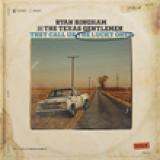
- 1: The Lucky Ones
- 2: Let The Big Dog Eat
- 3: I Got A Feelin
- 4: Twist The Knife
- 5: Americana
- 6: Cocaine Charlie
- 7: Blue Skies
- 8: Relevance
- 9: Ballad Of The Texas Gentlemen
- 10: I'm A Goin' Nowhere
Black Vinyl[22,65 €]
They Call Us The Lucky Ones is a road-worn portrait of modern Americana — songs about movement, memory, love, and survival, exploring the space between freedom and consequence where highways replace homes and connection becomes the true measure of success. The album tells stories of outsiders and drifters, chosen family and lost friends, broken systems and restless ambition — and the ghosts we carry no matter how far we run. Yet for all its hard-earned perspective, the record carries an undeniable sense of hope: a clarity that comes from a life lived in motion, the humor found along the way, and the simple joy of playing music with people you trust. It’s a record that knows how to have a good time without losing its soul. This collection of ten songs finds Ryan Bingham at his best — where life isn’t always about perfection or redemption, but about connection. Because no matter how far you go, how fast you run, or how loud the music gets, all that matters is the people and stories you carry with you along the way.
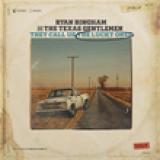
- 1: The Lucky Ones
- 2: Let The Big Dog Eat
- 3: I Got A Feelin
- 4: Twist The Knife
- 5: Americana
- 6: Cocaine Charlie
- 7: Blue Skies
- 8: Relevance
- 9: Ballad Of The Texas Gentlemen
- 10: I'm A Goin' Nowhere
Electric Smoke Vinyl[22,65 €]
They Call Us The Lucky Ones is a road-worn portrait of modern Americana — songs about movement, memory, love, and survival, exploring the space between freedom and consequence where highways replace homes and connection becomes the true measure of success. The album tells stories of outsiders and drifters, chosen family and lost friends, broken systems and restless ambition — and the ghosts we carry no matter how far we run. Yet for all its hard-earned perspective, the record carries an undeniable sense of hope: a clarity that comes from a life lived in motion, the humor found along the way, and the simple joy of playing music with people you trust. It’s a record that knows how to have a good time without losing its soul. This collection of ten songs finds Ryan Bingham at his best — where life isn’t always about perfection or redemption, but about connection. Because no matter how far you go, how fast you run, or how loud the music gets, all that matters is the people and stories you carry with you along the way.
Details marks SCHiLLiNG's return after years of research, above all on himself. It brings together the practices that have become essential to him: composition, sampling, sonic patchworks, and a palette that mirrors the full spectrum of his musical identity, from Rock'n'Roll to Trip-Hop and Ambient. Details is rich in small edits, hidden layers, fragile textures, and fragments that reveal themselves slowly. Yet the word carries a deeper meaning: what truly matters is often the smallest element, what doesn't appear clearly at first glance or on first listen, yet quietly holds the core of everything. The detail as the very pulse of one's inner world. Across 14 tracks, the album unfolds as a diverse journey, carefully shaped yet open enough to allow unexpected elements and subtle imperfections to remain part of its flow. The structure is not binding, you can begin from any track and embark on your own path through it. Each piece contributes to a wider arc without overpowering the others. The album includes collaborations with several artists who lent their talent to the project; their names appear in the credits of the physical release. In many ways, they embody the very idea behind the title: individual presences, each bringing their own nuance, forming a whole together. After all, fragments, in their union, shape the larger totality. Details doesn't ask to be consumed in a specific way, fast or slow, close or distant. It simply is what it is
- 1: Lake Walk
- 2: Lazy Daisy
- 3: Ups & Downs
- 4: Silently
- 5: There Was A Nice Sunset
- 6: Somewhere Good
- 7: Slow Island
- 8: Movin’ On
If – in some parallel universe (or perhaps a not-so-distant-future version of the one we’re already sentenced to living in) – the evil overloads of artificial intelligence were actually successful in their attempts to create convincingly enjoyable “original music,” more specifically tasked with wholly encapsulating my own personal tastes by data-chugging some cocktail of – oh, I don’t know – the posters on my wall, the records in my “most listened to” pile, the mixtapes I made for others, intensive physical scans of my auditory cortex, amygdala, hippocampus, heart strings, whatever else they have splayed out on their autopsy table with the intention of generating one all-encompassing “perfect band” based on the fruitful sum of their findings – that band, for me, would be (or would at least sound exactly like) the Tara Clerkin Trio. It is, quite simply, without exception, the music I wish to hear.
Formed in Bristol UK (where none of them are from yet all of whom are deeply engrained) in 2020, the Tara Clerkin Trio – as it somewhat democratically exists today, despite the singular authority implied by its name – consists of the titular Tara Clerkin, her partner Sunny Joe Paradisos, and Sunny’s brother, Patrick Benjamin. I’ll confess, I don’t know what their respective roles are within the operation and there’s only a very small part of me that cares to learn, as one of my favorite qualities in an objective listening experience is the mystery of who is playing what, which sounds are “authentic” versus synthesized, which chunks are performed “live” in a room together versus meticulously Frankenstein’ed from measure to measure, or how exactly the overall sound is so (seemingly) effortlessly achieved. Though, I suspect, if and when I do witness a live performance by this band at any point, my enjoyment of the music will not be lost in my better understanding of it.
With two extraordinary mini-albums – In Spring (2021) and On The Turning Ground (2023) – making a splash on London’s formidable World of Echo label in wake of their self-titled 2020 debut, this upcoming Somewhere Good LP is, in many ways, the band’s most realised work. In running their usual gauntlet of idiosyncratic (*an overused adjective for which here there is regrettably no sufficient alternative) approaches, Clerkin & co. colour in and outside of compositional lines over the course of 40+ celebratory minutes - never wallowing, despite inherently somber subject matters of self-defeat, disease, displacement, restlessness, gentrification - allowing their arrangements and improvisations ample space and time to situate, stretch out, breathe, cross-pollinate, and ultimately take deeper hold on the listener’s imagination – all while somehow sounding more like themselves than ever before.
Of course, there are traceable influences herein, if one felt that such comparisons were necessary to properly examine and enjoy this music (they aren’t)… Being the big dumb American from the small boring town that I am, cornfed on ‘90s alternative radio with the enchantingly exotic sounds of Maxinquaye and Mezzanine emanating from my chunky tube television, I can’t help but to make a blatantly obvious reference to a “Bristol sound”, ie the whole trip-hop trip, the pastoral crooning over the suggestive urban grime of cracked electro/piano treatments, the digitally-yet-primitively reconstructed James Bond soundtrack string-beats, etc.. But the Tara Clerkin Trio is so infinitely much more than that. There are elements of avant-pop, modern classical, kraut-folk, audio verité, dare I say indie rock (and not of the beer guzzling, masturbatory fuzz-flex variety but perhaps more like a Trish Keenan-fronted Faust, Adrian Sherwood at the mixing desk of If You’re Feeling Sinister, or – in expanding on our alternate reality – a world in which High Llamas cut a full-length for Warp Records with Andrew Weatherall on coffee duty).
The hazy, unmappable skyline-mirage of droning harmonium, upright bass, peculiarly accentuated wind instruments, acoustic guitar, hushed yet literally mighty keys combine to hypnotizing effect. The band may make underlying nods to jazz, sure, but it’s not appropriation, it’s that they have the actual chops to build it out. Beneath the janky samples and oddball percussive embellishment lies actually great drumming. Beyond the manipulated vocal witchery and woefully reflective plain-spoke moments are Tara’s subtly inspired melodies, sung with what might honestly be the glue to the whole crazy equation. A calming consistency throughout the otherwise unpredictably dynamic, boldly intuitive, uniquely British exploration of this (their own) universe in song. – Ryan Davis (Chicago, February 2026)
- 1: No Me Jodas
- 2: The City Begins
- 3: Sirena
- 4: Yellow Sun
- 5: Viva La Rosa
- 6: Enemy Without
- 7: You're A Ghost
- 8: Albuterol
- 9: Mi Concha
- 10: Public Works
- 11: Public Luxury
Downtown Boys have pushed relentlessly forward as an artistic and political project since their founding. Singer Victoria Marie and guitarist/singer Joey La Neve DeFrancesco first met at union meetings while working together at a hotel in Providence, RI, writing many of the band's early songs about labor organizing and exploitative workplaces. The quintet is completed by Joe DeGeorge (sax/synth), Mary Jane Regalado (bass), and Joey Doubek (drums). Over years of touring, and three acclaimed albums, Downtown Boys have continued to grow as artists, musicians, and organizers. Now, the band has arrived with Public Luxury, an enthralling album that keeps politics front and center while summoning the band's most urgent and powerful sound to date. The definition of Public Luxury falls very much in line with that of the title of the second Downtown Boys LP, Full Communism. Straight up, Public Luxury means, "everything for everyone." It's the stubborn insistence that a better world is possible, while fully recognizing the horrors we witness daily, and the individual and collective responsibility to resist the nihilism and hopelessness we all feel. Sentiments like "everything for everyone," and "we will have it all" perfectly represent the cathartic, communal live experience this cadre of multi-instrumentalists create. These sentiments also encapsulate the inclusive, joyful sonic fusion that defines the album: anthemic punk and indie rock mix with Latin traditions, drum machines blend with acoustic drums, saxophones punctuate riffs, and layers of synths add flourishes from new-wave to industrial. The amount of ground covered on Public Luxury can't be overstated, and yet the album feels totally vital and cohesive. Public Luxury is a revisitation of the band's past for the sake of their future. It was co-produced by DeFrancesco with recording engineer and longtime Downtown Boys supporter Seth Manchester (Lambrini Girls, Lightning Bolt, Model/Actriz) at the Pawtucket, RI studio and arts space Machines With Magnets, not far from the band's first home of Providence, RI. Victoria Marie's grandmother-a monumental figure for the band throughout their existence-passed away in May of 2025, and her influence looms large over the album; the songs "No Me Jodas" and "Sirena" are crystallized representations of the love between a woman and her ancestor. Beyond the loss, rage and frustration of the present, Public Luxury points boldly towards a vibrant, open-hearted vision of both music and the world: "Our music is simply for anyone and everyone who believes in the new future we can make together," Victoria Marie declares. "A world that will be awkward, inconsistent, yet truly free when it comes to all that matters."
London label Only Music Matters rolls out more mysterious goodness here from another unknown artist. On this evidence, they like the afters and the moments in the night when time and space dissolve and subtly rule. 'AAA001A' is an elastic, dubby minimal tech cut with liquid pads and trippy vocal twist while the next cut is speedier but no less supple. This cosmic odyssey is marbled with vocal fragments, prickly acid and deft percussion and it all weaves endlessly while hypnotising perfectly. 'BBB002B' is more sparse and roomy, with grubby bass ripples and glitchy electronics colouring the groove. Priku and Arapu have already dropped this one to great receptions at Sunwaves 36 so if it's good enough for them...
Some records are answers to questions no one asked out loud. With Where is Acid Eric, Cornelius Doctor & Tushen Raï deliver a psychedelic missive from a parallel timeline — a time-traveling tribute to Goa’s golden age, filtered through their unmistakable signature.
Returning to their home base, Hard Fist, the duo steps into new territory with this release, and yet, it feels like they’ve been heading here all along. This isn’t a retro-fetishist trip, nor a copy-paste homage. It’s a reimagination of a sound, a space, and most of all, a spirit.
The EP is rooted in the mythic nights of late-80s and early-90s Disco Valley, where British acid house collided with Indian hedonism, where freedom wasn’t a pose but a necessity, and where dancefloors became temporary utopias. But in the hands of Cornelius Doctor & Tushen Raï, this past gets warped, stretched and reanimated with 2025’s tools and sensitivities.
Across three extended tracks, the duo summons a sound that’s dense yet breathable, tribal yet precise, nostalgic yet futuristic.
They weave Goa’s swirling trance lines with broken rhythms, analog squelches, and post-industrial textures. The acid lines are sharp, but never cliché — more mantra than gimmick. Voices float in and out like half-remembered chants. Basslines slide, hypnotize, and then vanish in a cloud of smoke. It’s not a flashback. It’s a vision.
The title, Where is Acid Eric, feels like a lost broadcast — part question, part invocation. Eric is a symbol. IS Eric a ghost ? The true legend of a forgotten raver on a dusty Anjuna morning. What matters is the search. The longing. The dance.
Hard Fist, true to its form, continues to blur the lines between ritual and rave, tradition and invention. And with this record, Cornelius Doctor & Tushen Raï don’t just revive a genre — they reconnect with an ideal: dance music as exploration, as transcendence, as resistance.
One foot in the dust, one foot in the cosmos. The answer isn’t important. The trip is.
- 1: Cat’s In The Cradle
- 2: I Wanna Learn A Love Song
- 3: Shooting Star
- 4: 30,000 Pounds Of Bananas
- 5: She Sings Songs Without Words
- 6: What Made America Famous?
- 7: Vacancy
- 8: Halfway To Heaven
- 9: Six String Orchestra
How enduring is the signature song from Harry Chapin’s Verities & Balderdash? So timeless that it became the subject of a 2025 documentary in which artists from multiple generations weigh in on its impact on their lives and craft. “Cat’s in the Cradle” doubtlessly remains the main event on the singer-songwriter’s 1974 album. The legendary opening track also serves as a guidepost for the bold personal and social material that follows — as well as the gorgeous folk-rock arrangements that underpin the New York native’s most commercially successful work.
Sourced from the original master tapes, pressed at Fidelity Record Pressing, housed in a Stoughton jacket complete with a four-page insert, and strictly limited to 3,000 numbered copies, Mobile Fidelity’s 180g 33RPM LP of Verities & Balderdash presents Chapin’s fourth full-length in audiophile quality for the first time on vinyl. Captured during a golden era for sonics and production, the Top 5 effort features remarkable tonal balance, instrumental separation, and organic naturalism. Those valued aspects come into supreme focus on this reissue, which plays with dead-quiet surfaces and a low noise floor.
The newfound clarity, openness, and imaging underscore the lasting appeal of Chapin’s tender deliveries, soulful timbre, and careful phrasing. Every word comes across with incredible realism, while his underrated guitar playing occupies its own distinctive space. Also notable: The extension of the tasteful string accents; airiness of the backing vocals; depth and shape of the spare bass lines; and width and depth of the soundstaging. When on “Six String Orchestra” Chapin calls out names of instruments, they appear like magic, the band performing feet from you. Chapin has never sounded so lifelike on record.
Certified double platinum, Verities & Balderdash resonated with the times and public. “Cat’s in the Cradle” reached No. 1 on the chart on its way to being inducted into the Grammy Hall of Fame. The romantic ballad “I Wanna Learn a Love Song” flirted with the Top 40 and wrapped listeners in the equivalent of a cozy blanket. The record’s other single, the mini-epic “What Made America Famous?,” helped establish Chapin as one of the country’s most incisive and insightful commentators.
Verities & Balderdash teems with situational devices and topical matters. Chapin observes everything from the polarization of the nation to changes in moral standards and cultural priorities. He investigates pressing themes without ever turning preachy or elevating himself above the matters at hand. On “Halfway to Heaven,” whose coda races to the finish and ranks as the most urgent moment on the record, Chapin inhabits the mind of his frustrated protagonist akin to an eagle-eyed novelist.
Conveying emotions that range from melancholic to carefree, Chapin is as much of a singer as a storyteller. He assumes the voice of multiple characters within a single narrative. During the quirky “30,000 Pounds of Bananas,” a tale based on a delivery-truck accident in 1965, Chapin alters his delivery, pronunciation, and diction to become an old man reflecting on the mishap and mess. The tempo, too, adjusts to match the speed of the vehicle Chapin describes.
Adorned with timely laugh tracks to reinforce the bittersweet humor, the stripped-down “Six String Orchestra” takes everything up another notch, with Chapin intentionally missing guitar notes or playing a broken passage to illustrate the failures of the hopeful protagonist who doesn’t have what’s required to make it as an artist.
Chapin, of course, did not have any such problem. The lynchpin of a career cut short by a tragic traffic incident, Verities & Balderdash is Exhibit A of the savvy craft, feeling, and perspective he lent to American music.
Gladstone Deluxe is one of the most exciting musicians in the US right now. They make futuristic, deep, percussive yet smooth techno, deep house and electro. They also play timbales in NYC queer and trans salsa band Las Mariquitas, and are a frequent collaborator with fellow East Coast sonic trailblazers Kiernan Laveaux, Johnny Zoloft, and Mira Mira. They have released on Black Techno Matters, Data Disk, Misc, Innocent Music, How Things Are Made, and now Fixed Rhythms is excited to add to the Gladstone lore with their new offering, “No Haterade EP”.
A1 “Cleanse” is zippy tech-y house…think groovy, up-beat, sexy, like something you’d hear in a Titonton Duvante set. A2 is a remix, “Teakup – Where’s My Snare (Gladstone Deluxe Remix)”. Now the EP takes a turn towards psychedelic electro. Spacey trippy vocal manipulations, swelling deep space gravitational waves swelling and resolving. The B side opens with the “No Haterade” track. Arpeggiated electro that slaps with swagger. The final track is a longer, 9 minute driving deep housey techno tune. A bass line that you never want to stop, luscious pads, brain-tingling pings, melodic percussive synth runs, and a touch of acid.
If Gladstone is not already on your radar, take heed! Big tunes here!
The writer Max Sebald often pondered over the nature of human memory, specifically, how our thoughts and desires - and their results - overlap and mutate over time. In A Place in the Country, he writes of the significance of what see as “similarities, overlaps and coincidences”. Are they the “delusions” of the self and senses, or manifestations of “an order underlying the chaos of human relationships, ... which lies beyond our comprehension”?
Song of the Night Mists, the new album by post-classical composer Stefan Wesołowski, often feels it draws on Sebald’s premise.
On a simpler plane, the one where the market dictates the neatly ordered information we consume, Song of the Night Mists can be described thus: recorded in the main by Stefan Wesołowski in Gdańsk, both in his studio and in Saint Nicholas' Basilica, the album incorporates acoustic instruments - piano, violin, double bass - and classic synthesizers such as the Roland Jupiter-8, the Soviet Polivoks. A Roland Space Echo RE-150 tape delay was also pressed into service as an instrument. We also hear the basillica’s organ and field recordings from the Tatra Mountains. Other musicians were Maja Miro, who played the flute parts on ‘Glacial Troughs’ and brother Piotr Wesołowski, who played the organ on ‘Wilhelm Tombeau’. Sound engineer was Marcin Nenko, who was also on hand to record the basilica organ parts. The album was mixed in New York by Al Carlson (Oneohtrix Point Never, Jessica Pratt, Zola Jesus, Lady Gaga, and Liturgy) and Rafael Anton Irisarri handled the mastering.
Ostensibly, Song of the Night Mists is the last in a trilogy, following on from albums Liebestod (2013) and Rite of the End (2017). All three deal with existential matters such as love, death, decay and “an ultimate end”; apocalyptic and Promethean in spirit, and betraying very human conceits. The Sebaldian nature of the new record starts to make itself felt when Wesołowski talks of how he used sampling. One element is unexpected, that of sampling himself: “I go back to dozens of my own unused sketches and recordings, treating them as raw material to cut, slow down, reverse, and transform in every possible way.” Memory as sound, to be reemployed by the listener through their own imaginings.
Another set of samples made by Wesołowski plays another role. These are field recordings, originally created for an audio illustration of the formation of the Tatra Mountains, and used in a film by sound designer Michał Fojcik. Wesołowski: “You can hear cracking ice, streams, footsteps in the snow and the wind, and a real avalanche, recorded from the inside.” The “Tatra connection” on the album is also found in samples referencing composer Karol Szymanowski. The album’s title alludes to a poem about the mountains by Polish poet, Kazimierz Przerwa-Tetmajer.
Wesołowski’s Tatra recordings are “about a world without humans - about the fact that the world existed, was beautiful, and had meaning long before people arrived, and for the vast majority of its history, it was a place without us.” Wesołowski, using one iteration of the natural world, plays out in sound Sebald’s idea of another order, underlying the chaos of human relationships lying beyond human comprehension.
These feelings play themselves out on the five album tracks. Sonorous and rich, they illustrate tectonic shifts we have no control over. Wesołowski hints that the overall sound is a “meditation on the metaphysics of the non-human set against the spirituality that human presence has brought into it.” In that light, the opening number, ‘Core’, with its slow build, and crackling and straining sound effects, create an effect of the earth groaning into life in a creation myth. Once the piano part raps out a simple melody and modulated tonguing trumpet samples add to the overall atmosphere, the listener can certainly find a cue in the “spiritual”, or “human” side of the story. Human versus nature: from the strains and harmonic muscle stretches of the second number, ‘Glacial Troughs’, through to the powerful and filmic ‘Stalagmite’ and heart-on-sleeve romance expressed in closer, ‘Wilhelm Tombeau’, we listeners are cast as Friedrich’s wanderer, looking out over a landscape that will appear only if we engage with it.
Formations of melody appear incrementally, almost appearing by chance - like hidden footings in the rock shelves to give us something to grasp onto. Rhythms are used sparsely: the prolonged percussive taps on ‘Glacial Troughs’ are an anomaly and maybe there to give pace to the album to come; essentially to keep the listener strapped in. Elsewhere, percussion is used as an aid to mood, the two thudding, timpani-style passages on ‘Peak’ there to offset the short, beautiful, kosmische passage that splits them.
Elements of the borderline religious spirit that drove German electronic music in the late 1960s and 1970s also find a place on Song of the Night Mists. The swells and recessions of the organ find their emotional climax on ‘Wilhelm Tombeau’, a track which summons up echoes of the “mountain magic” vistas created by Popol Vuh or Tangerine Dream, especially with the slightly atonal wobble of the Mellotron that counters it.
This is a dramatic album, but it does feel a strangely short, or curtailed listen on ending, evoking the feeling one gets when waking from a dream, and, for all its incipient grandeur, a track like ‘Stalagmite’, for instance, ends on a minor note. Wesołowski admits that Song of the Night Mists is born of the all too human process of temptation, doubt and recalibration - Sebaldian overlaps and coincidences forming something that must live another life, away from its creator. In Wesołowski’s words, the album is “a newborn foal must stand up and walk right after birth.” Now it is yours to ponder.
- A1: Allysha Joy & Finn Rees - Murmuring
- A2: Chip Wickham - Last Day On Earth
- A3: Amanda Whiting - The Other Side
- A4: Emanative - Space Is The Place
- B1: Edbl & Raelle - Enough
- B2: Matt Wilde & Miranda Joan - Like You
- B3: Blue Lab Beats - Item
- B4: Melodiesinfonie - Sa Ka Fête (Ft. Keza)
- B5: Matters Unknown - Dream Of The Contest (Ft. Megiapa)
- C1: Opek - Delight
- C2: E. Lundquist - Yellow
- C3: Isolde Lasoen - Things Left Unsaid
- C4: Sholto - Manzana
- C5: Momo. - Cavalo Marinho
- C6: Charif Megarbane - The Cartesian Joint
- D1: Yarni - Smile
- D2: Bamia
- D3: Teymori - Manu Vision
- D4: Divorce From New York - Merzouga (Ft. Arturo Martin)
- D5: Marla Kether - Morning Light (Ft. Naima Adams)
RE:WARM Records are very pleased to announce their next release 'Rituals', a new compilation series from the curator and DJ, Josh Mason-Quinn, aka Somewhere Soul.
For Volume 1 Josh takes us on a journey through the various shades of his ritualistic listening habits across twenty-four hours. From rising first thing in the morning, radiating positive energy throughout the day, retreating into the evening before finally releasing your inhibitions on the dancefloor.
The compilation spans four sides of vinyl and is presented in a double gatefold sleeve. The release will also be available on CD and digital formats.
The album is a celebration of new and emerging talent from the underground Jazz, Soul, World and House Music spheres, sitting neatly alongside artists already carving their way into the collective conscience of those who have been curious enough to dig deep.
The record is due for release on 25th July 2025 with the pre-order available 23rd April 2025 via the Warm Agency Bandcamp and selected record stores.
Introducing Fleur Sauvage: A New Chapter Rooted in Emotion and Community
The idea for Fleur Sauvage first took shape in 2022, quietly evolving and shared only with a select few. It began with a desire to give new life to the spellbinding improvisations experienced at La Nature—those rare, unrepeatable instants that move us deeply and stay with us long after the sound has faded.
In the spirit of that beginning, the label will open space for a variety of releases: expect intimate solo works, carefully curated compilations, and other sonic offerings from artists close to our he(art).
More than just adding a new label to the world, our purpose is to grow with our community. Community is everything. At the end of the day, what matters most to us are the relationships we cultivate—with artists, supporters, collaborators, and the many spirited souls who help us create these rare and radiant gatherings.
Katatonic Silentio – Live at La Nature 2023
Captured in the immersive cocoon of the Hypnose Room during the 2023 edition of La Nature, this debut release on Fleur Sauvage is a raw transmission of Katatonic Silentio’s improvisational live ritual.
Split into four parts across two 12” records, this work moves between experimental abstraction, textured noise, and cinematic ambient. Tension runs like a thread through each piece—sometimes humming beneath the surface, sometimes rupturing into visceral sonic peaks that leave you breathless. Deep low-end pulses and granular ruptures twist through fleeting moments of stillness, creating a sense of instability that is both electrifying and intimate.
The recording documents more than a performance—it holds space for something elemental, unpredictable, and deeply embodied. As always with Katatonic Silentio, the sound is not just heard—it is inhabited.
As 2024 unfolds, DBB008 emerges like a breath of clarity amidst the noise. “Fresh Air” by Ober Dada—an alter ego of Keyn Acid—is a journey between the mechanical and the organic, the familiar and the unexplored. Out both digitally and as a 200-limited vinyl edition, “Fresh Air” invites listeners into a world where space expands, time is unbroken and every beat matters.
Limited 200 copies!
If there’s one thing we know at International Feel, it’s that good things take time. But sometimes, just sometimes, they take a little longer than expected. Enter IFEEL088, a split remix 12” that stitches together two albums, two projects, and a collection of kindred spirits who understand the delicate art of sonic transformation.
Charlie Charlie (the Swedish duo of Chords and Bella Boo) have been long-time admirers of Mondag, ever since their ears first met the melancholic splendor of Sad Soup. When it came time to create Save Us, they had one request: a sax solo from Kristian (of Mondag fame). A beautiful idea, but as the fates (and studio schedules) would have it, the horns never made it onto the album.
Fast forward, and what began as a missed opportunity has now come full circle. Mondag, still taken with Save Us, took matters into their own hands and offered up a remix – a shimmering, unexpected rework of a track that already carried so much weight. Charlie Charlie obliged. And, because there’s no such thing as too much of a good thing, Bella Boo herself offers a tight and nimble edit, while Gerd Janson drapes the track in an ambient mist for those more horizontally inclined.
Hypernatural exists in some liminal space between waking life and dreamstate, it makes sense that its remixes should play with perspective. The trio—Dan Whitford (Cut Copy), Mirko Vogel, and Mike Gamwell (a.k.a. Knightlife)—crafted their album between the Swedish coast and the Scottish highlands, capturing the sublime and the surreal in equal measure. Now, it’s time to hand things over to new guides.
Mike Gamwell himself steps up, delivering a fresh take that bends and stretches time, while Gerd Janson follows, offering another piece for the puzzle—one that slots seamlessly into the hazy, transportive nature of the Hypernatural sound.
One record, two projects, three perspectives, and infinite interpretations. IFEEL088 is a reminder that sometimes the best things in life are worth the wait.
- A1: A Beautiful & Idiosyncratic Luminescence (++)
- A2: Assisting Sirens Escaping Velocity
- B1: While Patterns Unfold
- B2: Made Of Broken Glass & Astonishing Mirrors
- C1: Perpetuated On Canvas That Sets Us Apart
- C2: Fighting Against Legions Of Pricks
- C3: Cut A Sketch To Survive
- D1: Death By 9 To 5
- D2: Diving Solo
"Diving Solo" is the debut album of an artist who, after years of recognition under a different alias, has now redefined himself as "sr²." Central to this project is a deliberate departure from self-staging—shifting the focus entirely onto the art itself.
The album emerges from a deeply rooted vision that took shape over a decade ago. It navigates the fundamental questions of existence: the inevitability of impermanence, the search for meaning, and the quest to carve one's own path. Each track draws from formative experiences—from the electrifying pulse of countless club nights to the quiet, introspective moments that challenge our understanding of everyday life.
The tracks on this 9-track double LP transcend mere functionality; they evoke profound emotions and offer space for personal reflection. "Perpetuated on Canvas..." delves into how the first encounter with mortality can profoundly shape one's perception of life. "Diving Solo" inspires a break from conventions to seek what truly matters—even if that journey must sometimes be taken alone.
While the album weaves a coherent narrative, every listener is invited to discover their own nuances and shades of meaning within it. For, in the end, the artwork always extends beyond the artist.
A guitar stands alone in Wedding, that metropolitan biotope in the western center of Berlin, caught in constant transformation between idyll and abyss. It lets its gaze wander, unsettled, almost shy, until it encounters a trumpet, with which it begins a cautious, then ever more intimate pas de deux.
Welcome to the second studio album by the Berlin-based band Conic Rose.
The album title Wedding is no coincidence. The story of Conic Rose is closely intertwined with the Berlin neighborhood that gives the record its name. The band's studio is located here, and both studio albums were created in the immediate vicinity of the small river Panke. This place settles over the music like a warming patina. The album feels as though the musicians and the neighborhood have invited one another to get to know each other. Not least because Wedding also means marriage. These marriages between a band and an urban landscape, a fading past and an emerging future, fear and hope - unfold in every single song on Wedding.
For their second album, Conic Rose repositioned themselves completely. Not in terms of personnel, but in the question of how to move forward. Conic Rose still sound like Conic Rose; their distinctive blend of cinematic jazz, ambient textures and guitar-led contemporary music remains untouched. And yet Wedding is, in many ways, the conceptual counterpart to their debut album Heller Tag. Where the debut documented movement within an urban setting, Wedding describes a state of being. Behind every piece seems to hover a large question mark.The group opens up its palette, allowing more influences, becoming at once more subtle, more profound, more filigree. It is less about definition than about the spaces in between. The most immediately striking difference from the previous album is the strong presence of the guitar. In Bertram Burkert's playing, many voices seem to converge. His yearning openness forms an equal counterpoint to Döben's trumpet and flugelhorn. Blurred and layered sounds occasionally make the ground seem to slip away beneath one's feet, while Döben's gliding lines create both closeness and distance. Together, the band express in a deeply subtle way a sense of life that corresponds precisely to our time. Something lurks in the background, omnipresent yet still unnameable. Conic Rose need no words to convey this feeling of uncertainty with remarkable eloquence. Perhaps this has something to do with Wedding being a place of confrontational introspection, but Conic Rose confront the escape from escape itself. With the recording and release of Wedding, this process is far from complete. The seed only begins to grow in the listener's ear. With every listen and the echo it leaves behind in memory, the studio bud continues to bloom. The album is merely the point of departure. What ultimately matters is what it sets in motion within those who encounter it.
1. Special remarks: 116 pages A5 format, risograph printing with thread binding, exposed spine
2. GENRE/S: Poetry/Art/Photography
3. SHORT INFO:
Period Music is a research process involving Susanna Gonzo, Merma Suelo, Tuce Alba, Elizabeth Gallon Droste, Agnese Menguzzato, and Farah Hazim. The six artists aim to attune to the different temporalities experienced through our bodies, drawing from multiple meanings of period – from the menstrual cycle to musical repetitions and astronomical revolutions.
r'tu
A central meaning of the Sanskrit word for ritual, r'tu, is menstruation, the original ritual. The root of r'tu is in arithmetic and rhythm1.
1Judy Grahn, Blood, Bread, and Roses: How Menstruation Created the World (Boston: Beacon Press, 1993), 45.Period Music has been staying with essential matters on how we listen to time and rhythms in our bodies and in the world. Questioning the tempo of everyday life in an accelerated system like that of modern society, the group has opened up co-creation spaces to listen to embodied memories.
Through dialogue, improvisation and jam sessions, the six artists attuned to each other’s processes, composing music, word scores and drawings – ultimately sounding together.
This work embodies other notions of community through archetypes, embracing the impermanence that reveals the countless rhythms of life. Period Music speaks of friendship and connection, and invites you to take on a journey of interconnectedness between our rhythms and the broader social structures influencing our lives.
The project emerges from conversations that began in Berlin in the fall of 2023, including a one-week residency at Atelier Josepha in Ahrenshoop by the Baltic Sea in April 2024. The first physical iteration of this project will consist of a book and a vinyl. The album features looping improvisational compositions encoded with messages about multiple temporalities. The accompanying book gathers poetic memories, letters, photographs, symbols, and drawings that emerged during the process
Period Music is a research process involving Susanna Gonzo, Merma Suelo, Tuce Alba, Elizabeth
Gallon Droste, Agnese Menguzzato, and Farah Hazim. The six artists aim to attune to the different
temporalities experienced through our bodies, drawing from multiple meanings of period – from the
menstrual cycle to musical repetitions and astronomical revolutions.
r'tu
A central meaning of the Sanskrit word for ritual, r'tu, is menstruation, the original ritual. The root of
r'tu is in arithmetic and rhythm/.
Period Music has been staying with essential matters on how we listen to time and rhythms in our
bodies and in the world. Questioning the tempo of everyday life in an accelerated system like that of
modern society, the group has opened up co-creation spaces to listen to embodied memories.
Through dialogue, improvisation and jam sessions, the six artists attuned to e ach other’s processes,
composing music, word scores and drawings – ultimately sounding together.
This work embodies other notions of community through archetypes, embracing the impermanence
that reveals the countless rhythms of life. Period Music speaks of friendship and connection, and
invites you to take on a journey of interconnectedness between our rhythms and the broader social
structures influencing our lives.
The project emerges from conversations that began in Berlin in the fall of 2023, including a one-week
residency at Atelier Josepha in Ahrenshoop by the Baltic Sea in April 2024. The first physical iteration
of this project will consist of a book and a vinyl. The album features looping improvisational compositions encoded with messages about multiple temporalities. The accompanying book gathers poetic memories, letters, photographs, symbols, and drawings that emerged during the process
Zelienople frontman Matt Christensen returns to Miasmah with Constant Green - a record of reverberant country inspired songs that puts the weight somewhere between Johnny Cash and Slowdive. Matt pours out his soul through flashes of life - small and large. His voice roaming over the guitars in a way which feels like a floating poetic deluge.
Appearing fresh from last years Zelienople album Hold You Up, Matt has made a very personal record that arrives as perfectly as it could be. It is full of beautiful sparse moments that capture the feeling of time standing still while simultaneously flashing in front of your eyes. As a child of the 70ies, growing up with country influenced AM rock on the radio, riding around in cars without seatbelts, Matt creates this nostalgic feeling of free riding through the city streets at dusk : a dream world where one can see green as a symbol for humanity and optimism. Not to say the album doesn't have it's share of darkness. Christensen always lingers deep in melancholy, driving his fears and anxieties out through music.
Visions of being able to move anywhere, picking his mother up from jail, family matters, change, the small things in life - all outtakes from what he sings about. Although it's hard to pick up on unless you really listen, as his ramblings can at one moment be fully clear while in the next drowned or muffled - becoming a mere meditative element to the music. Steady collaborators Brian Harding and Eric Eleazer from Zelienople accompanies on pedal steel and keys to further fill the sound into a warm dream, following in the footsteps of Matt ́s previous Miasmah album Honeymoons (2016). That said, while Honeymoons used drum machines and vast open spaces, Constant Green is another step closer towards the classic singer-songwriter folklore. Timeless gold from an artist that never stops creating.
- Last Chance
- Wait For Us To Be Home
- Prayers And Pollen
- Transparent Towns
- Who You Thought I Was
- Jump The Gun
- Regret Without Reason
- Door Of No Return
- Sierra Dawn
- Cardinal Direction
John Calvin Abney rises again from the Oklahoman prairies with his latest album Transparent Towns. The ten songs focus on how we remember, and ultimately accept, though he is not always certain the memories we carry adequately mark the moments that make us. "This record is wrapped around the passage of time, whether or not we can trust the memories that we swear on, how we forgive ourselves and others as seasons turn, and how we define what is important as we roll the boulder back up the hill," Abney says of Transparent Towns. "We build these routines and live our stories, we rely on our histories and our memories - spoken and recorded. Now, we're relying on copies of copies, memories of memories, all packed like sardines into our phones, and we're losing the ability to tell our own stories. I have to constantly remind myself, as well as redefine what matters at the end of a day." Transparent Towns is the seventh studio album for Abney, and his first since 2022's Tourist, which he crafted after spending the pandemic as an itinerant writer. In contrast Abney penned most of the album's 10 tracks during a period of introspection and convalescence while recovering from vocal cord surgery in 2023. The time to himself - "I didn't sing for nearly a year, and after surgery, I couldn't talk for a month, and couldn't sing for over three months," he says, left him contemplating how to trace his experiences in the silence. The album's title track is Abney's take on the inaccessible past, witnessing loss and grief through the years, damning the "days we let go left unsaid", and accepting the uncontrollable circumstances we are sometimes placed in. "The troubles and the joys exist vibrantly in your memory, but you're wondering if you remember correctly," Abney remarks. "I've sometimes had this sort of confusion between memory and dreams - you crafted this ideal in your head of how things were or might be, in order to soften the blow of a harsher reality." The places we inhabit dictate how our memories form, and for Abney, there is one place to which he is constantly drawn: Oklahoma. Although he was born in the biggest little city in America, Reno, Nevada, he grew up learning guitar and piano in Tulsa, playing bars and DIY spaces from Norman to Stillwater. His affinity for the land that raised him is evident in the production of Transparent Towns. Abney self-produced the record, tracking most of it at Cardinal Song outside of Oklahoma City, with Michael Trepagnier handling mixing and engineering. The band was comprised mostly of Sooner State musicians too, along with Lydia Loveless and John Moreland contributing harmony vocals. His signature vulnerable voice and lyrical handiwork comes through in each of the songs, along with his penchant for alternative pop melodies set against colorful chords and subtle soundscapes. Having toured for years backing up artists like Moreland, Wild Child, Ben Kweller, and S.G. Goodman, Abney embraces a lead role again, as he presses forward with the loving lament and defiant joy throughout Transparent Towns, calling us to leave behind the pressures we place on our ourselves and recognize that just because there is an ending, it doesn't mean it's the end.
- A1: Paz - Kandeen Love Song
- A2: Santino Surfers - Freedom Surfers
- B1: Saint Etienne - Alone Together (Cosmodelica Remix)
- B2: Paqua - Akaliko
- C1: Tar Blanche - Iguana
- C2: Bryony Jarman-Pinto - Moving Forward (Cosmodelica Remix)
- C3: Troy Kingi - Chronophobic Disco
- D1: Ilya Santana - Cosmovision (Disco Version)
- D2: Gloria Ann Taylor - Love Is A Hurtin' Thing (12" Version)
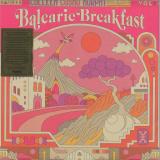
Colleen ‘Cosmo’ Murphy presents ‘Balearic Breakfast’ Volume 4
Heavenly Recordings, limited edition 9 track double 12” vinyl
Released 29th August 2025
“There are curators, and then there's Colleen 'Cosmo' Murphy.” Resident Advisor
The sun has finally come out. It’s the first time something like this has happened for months and months; the first glow of an approaching summer, whatever date the calendar is currently saying it is. The whole thing acts as a curative meditation, miraculously wiping away all the greyness of the past few months. Right now, optimism abounds, outlooks change and your daily soundtrack has shifted from spiky and uptight into a kind of cosmic space where songs ebb and flow and drift on like rivers run on forever towards the glimmering sea. Bliss, right?
If you’re reading this, we’re assuming that you’re the kind of person who views summer as a state of mind rather than a good looking day on the BBC Weather app. With that in mind, we reckon you already know all about Heavenly Recordings’ series of untouchable, utterly essential Balearic Breakfast compilations, each one lovingly compiled by visionary DJ, producer and broadcaster Colleen ‘Cosmo’ Murphy - the genius club legend whose radio show of the same name (broadcast 10am to high noon every Tuesday via Mixcloud) began as an escape route from the pandemic before rapidly building a global community of dedicated Balearican listeners.
Each Balearic Breakfast album has provided a spiritual getaway from the greyness of the everyday through a handpicked selection of glorious, psychedelically coloured, expansive music. It doesn’t matter where on the planet the music hails from, or when it was made, it just matters that it fits like a jigsaw piece into the musical whole. Be it off world jazz music or vocoder led robo-disco music; whether decades old or pressed to vinyl for the first time, everything on these flawless Balearic Breakfast collections just needs to flow together and bring the listener into the sunshine, whatever time of year they’re listening.
Due for release this August, the fourth Balearic Breakfast compilation sees Cosmo take this head trip further than ever before. From the opening track’s swoop and glide that nods to Vangelis’ Blade Runner soundtrack before gliding into it’s own expansive voyage to the stars (Kandeen Love Song) to Cosmo’s own glorious Parisienne stroll through Saint Etienne’s recent Alone Together to Ilya Santana’s Spanish space disco anthem Cosmovision - a track that rolls through like a turbo powered Supernature - and the phenomenal 2015 disco version of Gloria Ann Taylor’s early ’70s classic Love Is A Hurtin’ Thing, this Balearic Breakfast offers the perfect soundtrack to the summer, whether it’s actually happening outside or just taking place in your head. After all, they don’t call breakfast the most important meal of the day for nothing.
- Raised On Graves
- Strings Of Red
- Clean
- No Good Things
- Alt Vi Kan Ge Ar Upp
- Copper + Dirt
- Through Veils Of Glass And Silica
Blodsträngen, the third from Gothenburg's inimitable fourpiece Blessings, begins and ends in the same space: the safety and familiarity of their rehearsal room. In between these moments however, the album knows no boundaries; it rampages through your inner sanctum, upending everything it can, razing everything you hold dear and drawing on the walls whilst panting, drooling and muttering to itself in strange tongues_ Blodsträngen is Blessings fine-tuning their deliberately dissonant sound whilst simultaneously casting their net wide for ever more left-field, experimental influences; a disparate collection of idiosyncrasies that the band somehow manage to pull into something cohesive, captivating and empowering. The band leave the messages and meanings behind their music open to interpretation as a means of sharing this attitude of openness with their audience because, when all is said and done, all that matters is all playing disgustingly loud music together in a room. FOR FANS OF Unsane, Breach, Young Widows, Black Flag, Trap Them, Converge, Old Man Gloom, At The Drive In, Swans, The Jesus Lizard
- 1: Intro
- 2: I Was Disconnected Feat Sam Castell Ward
- 3: Mystery Man Feat Sebastian Golgiri
- 4: Intense Love
- 5: Credits Side A
- 6: On Connection
- 7: We Are All Human
- 8: Are You A Lost Sock? Part 3 ( K Edit)
- 9: Credits Side B
- 10: All Aboard (Digital Only)
- 11: The Aliens Have Arrived (Digital Only)
- 12: New York Shuffle (Digital Only)
- 13: We Are Connected (Digital Only)
Robyn is doing brilliant and important work - the world needs more music like this. Just one word: listen!" Giles Peterson “Even aside from her skills on her instruments and unique approach to music, Robyn devoted an immense quantity of emotional resources to the delivery of this record, and seemed to take its challenges on as a chance for personal growth. It was consistently clear that the personal input of the players was welcome in a fundamental way, and we all responded to Robyn’s efforts that went to the limits of her capacity and her love for bringing her project to you, the listener” Alabaster DePlume “It has been such a joy to work with Robyn, especially when entering the fascinating world of Robyn’s Rocket and Avant Garde jazz. We had our fun moments, like when the fire alarm went off during our recording session of Mystery Man, and we just rolled with it and kept it in. It’s like nothing matters. It’s such an honour to be part of the world of Robyn’s Rocket and to listen to the many stories, expressions and colours that shine throughout the album.”Sebastian Golgiri What happens when you bring together familiar faces at London experimental music venue Café OTO, Charles Hayward (drummer Abstract Concrete, This Heat) and John Edwards (double bass), and the Total Refreshment Centre (hub of new london jazz scene recording studio ) like Alabaster DePlume (singer and saxophonist) and Danalogue (synths from Soccer96, The Comet is Coming), and the learning disability autism art scene like singers/spoken word artists Sebastian Golgiri and Dean Rodney Jnr (Fish Police), on a magic carpet with space trumpeter Robyn Rocket? The answer materialises in the groundbreaking collaboration 'Robyn Rocket and People You May of Heard of'. Recorded across three days in three different studios connected to the three communities Robyn Rocket calls home, each session brought together musicians from these diverse backgrounds—many meeting for the first time. Together, they improvised and created a musical journey that transcends conventional boundaries.
This cosmic voyage features more than 20 musicians and a dog ( Taz from lost socks), gliding through free jazz, danceable tunes, loopy vistas and spoken word doors into different ways of seeing the world. At its heart lies a profound message about community as a vital part of existence and difference as something to embrace and value. The project culminates in the final single and focus track 'We Are All Human', featuring a poignant speech by Rocket from her night 'Robyn's Rocket - a residency at cafe OTO featuring experimental music and live visuals by artists with and without Learning Disabilities/ autistic and non autistic artists ' in the speech rocket talks about supporting each other—words she actively lives by and encourages others to embrace. Like many autistic people, Rocket has experienced abuse, bullying, isolation and feeling unwelcome in the world. “This project is like my nights but you can carry it around with you”, she explains. “I started my own night to share my work. I also recognised, it was a privilege to have my own night, I wanted to help other artists share their work too, and create an environment where people with and without learning Disabilities/Autistic and non autistic people as audience and performers could come together and get to know each other”. Historical Context
The compositions of Miłosz Kędra (b. 2001) explore synthetic sound, electroacoustic music, and self-built acoustic instruments, seeking diverse timbres, tunings, and textures. His main field of work is the pipe organ. Through minimalist motifs, he has transported the instrument’s sound beyond the church space by synthetically processing its tones. He is currently pursuing a Master’s degree in New Media Music at the Academy of Music in Poznań and recently completed a Bachelor’s degree in Electroacoustic Composition, during which he built his own pipe organ from scavenged pipes.
~ Liner notes ~
Miłosz Kędra - "their internal diapasons"
The pipes that Miłosz Kędra used to craft his own organ emulator have lived many lives. They come from churches scattered across Greater Poland—some trimmed for a more presentable façade, others left to gather dust in parish houses until, stripped of purpose, they were cast away. Their first voices have faded, their inner resonance unsettled, yet with patience, one can teach them to sound again—to sing in their altered state, to be gently coaxed out of silence.
Audiomancy—the conjuring of lost sounds—is the word that lingers when I try to grasp the lore crystallizing with Kędra’s second album.
The resolve with which the musician and composer has inhabited his self-built instrument recalls Witold Szalonek and his search for “unexploited properties of wind instruments in classical music.” Szalonek sought to map these hidden voices into a system of multiphonics, revealing over 160 on the oboe alone by 1968. Some sound eerily alike, yet emerge through distinct gestures—“a particular breath, a precise choreography of levers and apertures, the seamless fusion of the two.”
The splitting of a single note into its spectral fragments—allowing a melodic instrument to speak in two, three, even four voices at once—enabled Szalonek to bend the rigid structures of Western music. "their internal diapasons" follows a similar path: an aesthetic bypass through which Kędra taps into the sacred gravity of the church organ, only to reveal it as a domesticated echo of something far older—the primal theater of transformation. To listen closely to an instrument is to learn its flaws, to turn its imperfections into a new way of speaking.
Each of the nine compositions on "their Internal diapasons" is an invitation—to approach the material world with the intent of letting it speak beyond expectation. An instrument that is at once a sculpture, a performance, and a manifesto of voicing the discarded suggests that its creator—following the path of Didier Eribon (Returning to Reims)—might take as his motto, a principle of asceticism, Sartre’s words: “What matters is not what is made of us, but what we ourselves make of what is made of us.”
Filip Szałasek
- Pharaoh's Dance
- Bitches Brew
- Spanish Key
- John Mclaughlin
- Miles Runs The Voodoo Down
- Sanctuary
Listen to This.” As the original working title for Bitches Brew, the instruction and invitation remains to this day as the best way to approach a record that shattered conventions, altered music history, and, 55 years later, still sounds far ahead of its time. The template for jazz fusion, Bitches Brew is rightly ranked by virtually every significant outlet among the 100 greatest albums ever made. Sewn together with vibrant colors, voodoo textures, and ethereal moods, the 1970 landmark emerges with supreme detail and nonpareil feeling on Mobile Fidelity’s UltraDisc One-Step 180g 33RPM 2LP vinyl set.
Sourced from the original master tapes, strictly limited to 5,000 numbered copies, and pressed at Fidelity Record Pressing in California, this definitive-sounding 55th anniversary reissue enhances every element of a double album that established new possibilities for studio recording techniques. You’ll hear wide and deep soundstages, separation between instruments, and an extremely broad dynamic range. If ever a jazz album can be said to have gone to outer space and back, this is it.
Davis conceived Bitches Brew by having the musicians stand in a semi-circle. There, he pointed at them with vague directions for tempo, solos, and cues. The collective improvisation and interplay spawned a galaxy of melodies and grooves that were later spliced together by producer Ted Macero. Benefitting from the ultra-low noise floor and superb groove definition of this pressing, these distinct creations take shape with utmost realism. Compositions stretch across jet-black backgrounds and paint canvases laden with millions of colors and shades. Juxtaposed percussion, loose jams, and melodic segues explode with impressionistic verve.
Bitches Brew also boasts visionary artwork. By design, the lavish packaging and gorgeous presentation of the UD1S Bitches Brew set call attention to such matters. Housed in a deluxe slipcase, it features special foil-stamped jackets and faithful-to-the-original graphics that illuminate the splendor of the recording. It is made for discerning listeners who desire to fully immerse themselves in everything surrounding the album, from the images to the tones. And this is one effort where every last detail matters.
Gathering a Hall of Fame-worthy lineup of musicians and tweaking it according to his desires, Davis follows through on his idea to “put together the greatest rock and roll band you ever heard.” Central to his proposition is the presence of two (and sometimes three) drummers and two bassists, a tactical move that makes rhythms a central focus. Akin to the futuristic album cover art, the drum-driven suites head toward distant universes and uncharted territories. At once hypnotizing and grooving, they chart maverick adventures via quixotic rock, funk, and R&B elements.
A without-a-net experiment involving interchangeable double-quintet lineups, Bitches Brew explores the previously unimaginable with electrified instruments — Fender Rhodes piano, processed trumpet, dissonant guitars, and bass among them — and an emphasis on feeling over composition. Mesmerizing and soothing, jarring and smooth, overt and subtle: The music seemingly covers an entire map of emotions and sensations, and like no record before, ties together the groundbreaking creativity of the multiple disciplines that were changing popular culture at the end of the 1960s and dawn of a new decade.
Conceptually, Davis described Bitches Brew as “a novel without words” and “an incredible journey of pain, joy, sorrow, hate, passion, and love.” The vast psychedelic expanses of warped echoes, liquid reverb, and tape loops confirm such ambitious contrasts of light and dark, fear and hope. Yet the most absolute characteristic of the watershed effort lies in how it resists definitive interpretation and encourages free thought — the very principles Davis used to conceive Bitches Brew.
More About Mobile Fidelity UltraDisc One-Step and Why It Is Superior
Mobile Fidelity Sound Lab’s UltraDisc One-Step (UD1S) technique bypasses generational losses inherent to the traditional three-step plating process by removing two steps: the production of father and mother plates, which are created to yield numerous stampers from each lacquer that is cut. For UD1S plating, stampers (also called “converts”) are made directly from the lacquers. Since each lacquer yields only one stamper, multiple lacquers need to be cut. Mobile Fidelity's UD1S process produces a final LP with the lowest-possible noise floor. The removal of two steps of the plating process also reveals musical details and dynamics that would otherwise be lost due to the standard multi-step process. With UD1S, every aspect of vinyl production is optimized to produce the best-sounding vinyl album available today.
The Crystal Hum is the debut vinyl release by Taiwan-based artist Yuching Huang and her first release for Night School.
A beguiling dreamscape of crackles, spluttering, love-struck Casios presided over by the the spectral vocal and guitar work of Huang, Yuching sings love songs at the end of this world and the beginning of the next. Recorded during a hiatus from her group Aemong (a duo with artist Henrique Uba) in Berlin, these songs elevate Huang’s unique vocal style and grasp of atmospherics. The Crystal Hum deconstructs balladry, Garage, guitar music and reforms it into a
unified ghostly otherworld version of these languages.
The Crystal Hum thrums with buried desire, trails of nocturnal reverb seeping out of apartment windows, diaristic vocal performances and deeply emotive, evocative Western-style strings. Formulated by Yuching Huang after periods of frustration and experimentation, the album is an exercise in minimalism and paring back, with some tracks like JohnJohn featuring little else than an elastic bass, spring reverb trails, an interjecting vocal and swelling, dislocated synths. The effect is spellbinding, the soundtrack to getting lost in the labyrinthine, closed streets of Venice, Taipei, Hong Kong, or mirror versions of them in the imagination.
On opener Fly! Little Black Thing, a subterranean funk bassline roots Huang’s singing, a rudimentary, unreliable beat floundering in whimsy underneath. Demure, dream Dance music, Huang references classic lo fi experimenters Suicide and Arthur Russell as well as Night School label mates The Space Lady and Ela Orleans. In fact, after the release of Aemong’s third album Crimson, Huang credits the direction of The Crystal Hum to being enchanted by The Space Lady’s Greatest Hits,
the landmark lo-fi recording made by Susan Dietrich Schneider in 1990. The new, minimalist approach to her sound world reveals and shrouds in equal measure. On the heart-melter Love, a sultry mid-tempo Casio + bass backing drops into the ether with Huang’s vocal swimming in preternatural void before emerging anew, in awe at the world. Every chord change heralds new perspectives, every guitar flurry swells and drips emotion, nothing is wasted and space billows out from between the grooves.
Huang never reveals more than necessary, making this an in-between love album: the right amount of mystery and darkened mirror shines wanely on The Crystal Hum while remaining fragile and vulnerable in the sweet spots. Turning over in pillowing smoke and night in the dark corners, Huang sings in both Mandarin and English. The songs speak of earthly matters seemingly at the edge of dissipating into nothing. Distorted, beguiling Sambas warble like sweating dancehalls in an imagined Lynchian 60s, as on Thoughts. Closer You, An Illusion warps a classic 60s Girlgroup bassline beloved of the likes of Les Rallizes
Denudes into a slight ballad on the edge of the void, held back by the teary-eyed, wistful and enveloping vocal cooed by Huang. Each song feels like a love song dedicated to the bits between worlds, between beats, the negative space between people where desires, feelings and loss hangs in the air, resolute and unresolved.
- A1: Pink Lady
- A2: Pray Like A Fool
- A3: Wise Guy
- B1: Racist Man - Remix
- B2: Isolation
- B3: Pennywise (Hologram Cowboy Remix)
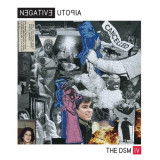
After releasing their accomplished debut album “NEW AGE PARANOIA” in 2023, THE DSM IV are following up with this limited edition, vinyl only EP “NEGATIVE UTOPIA”. Formed by Guy McKnight of the critically acclaimed and cult favourite The Eighties Matchbox B-Line Disaster, THE DSM IV has a dark sound that blends hypnotic noise-rock with synth-pop industrial aesthetics. “NEGATIVE UTOPIA” features six more synth-pop-acid-house-goth-rock-new-wave bangers. The A-Side consists of three new songs by the band. Meanwhile on the B-Side there are remixes of two tracks from “NEW AGE PARANOIA” (‘Racist Man’ and ‘Pennywise’) plus a cover of Joy Division’s iconic ‘Isolation’. Shimmering synth lines meet heavy guitar riffs in a kaleidoscopic sonic sound space where McKnight’s shamanic vocal acts as a guiding force. This EP, like their debut album, demonstrates that THE DSM IV are a band with a social conscience and are unafraid to speak truth to power on matters of injustice. Their music is a reflection of the what is around them, it grapples with the consequences of a cruel and unjust planet with an optimism and belief that a better world is possible.
With Human Drift, TUKAN continues to explore human connections through music. This album marks a new phase in their journey, after years of performing on international stages and resonating with an ever more diverse audience. Human Drift embodies this collective movement, this human drift where the individual is swept away by a force larger than themselves.
In a world leaning towards isolation and individualism, Human Drift is a celebration of connection. Each track blends electronic grooves with instrumental melodies to highlight how music can transcend language and create authentic bonds between people. They want their audience to feel, through every note, the raw and organic energy they experience on stage.
Echoing their music, the visual universe of this album also focuses on the human element. It's all about bodies in motion, imperfections that reveal the authenticity of the moment. Just like on stage, they aim to capture sweat, emotions, and communion. Every detail matters: wrinkles, smiles, flashes of light in the dark. They seek to show the beauty of disorder and the unexpected.
Human Drift was composed with the idea of what music can provoke in a collective space: transformation. It's an album that encourages letting go, immediate connection, where each sound is an invitation to surrender and drift together towards unforeseen horizons.
Human Drift is a human experience, an album that embodies the spirit of community, celebration, and sharing. They hope that, like them, you'll let yourself be carried away by the drift.
- 1: Arndale (Part )
- 2: Arndale (Part ) Back Patches
- 3: Arndale (Part ) Gm Bus 184
- 4: Minut Men Totems
- 5: Hole In The Road
- 6: Salford Shopping City
- 7: St Peter’s Precinct
- 8: The Education Shop
- 9: Hole In The Road (Part 2)
- 10: Armada Way (Pt. 1 Freedom From Fields)
- 11: Pond Street (Urban Studies)
- 12: Luminous (Plymouth Market)
- 13: Space Age (Merseyway Shopping Centre)
- 14: Outdoor Electronic Escalators
- 15: Oldham C&A In Winter
"This record explores the relationships between mid century architecture, consumerism and community. The gradual or sometimes brutal removal and change of places in the name of progress. These changes leave traces that people have to deal with on a psychological level but probably never really acknowledge. This record explores loss of community and loss or unsympathetic altering of shopping spaces. When something is unceremoniously knocked down or altered and something else replaces it then the thing before it becomes ghost like and is at risk of being forgotten. Not dissimilar to when the Christian faith built their buildings upon Pagan sites. It has a similar purpose (to pray or to shop in this case) but the older thing becomes dreamlike and is confined to folklore. The community is always fed the propaganda of progress but looking back, I certainly cannot deny the beauty of what has now gone. Maybe there is a sense of dissolution and denial about such matters. The record is also interested in the sense of community of these past spaces and how shopping centres have generally declined mainly due to the rise of neo liberalism and tech giants. When you see old footage of these spaces in their prime, you get a sense of a space age future, everything looks new but paradoxically the people look to be from an older time. Today I can see real poverty and complete disenfranchisement from being in these new spaces. It's not all doom and gloom though as spaces, especially the ones in Plymouth are not that much altered and could be brought back to the architects original dreams."
David A.
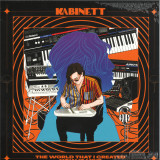
Colombian artist Kabinett brings a soul and harmonic proposal in the many forms of alternative disco and house through embellished productions and DJ sets finding himself every time as medium for all possibilities.
Involved in music from an early age through classical music, while being exposed and inspired by his older brothers in the many forms of what electronic music was developing, Nicolás, his given name, knew that his future and purpose was only going to be around what matters him the most, music. After learning different instruments in the early years and through a mix of self-education and formal education in contemporary music and music production, as well his first steps as a DJ, at age 20 he was ready to get involved in Colombia's capital electronic music scene as curator, DJ, label owner and music producer.
Founder of vinyl house label Nómada Records next to established artist such as Felipe Gordon & Joint4nine, his mentors, Kabinett have been fed enough to developed a full curation career working for Kaputt Club, El Coq & W Hotels, and more recently Casa Cruxada where he has helped to develop an identity for each which as of today has only enriched the local scene.
More recently as head of Kaputt.wav, his new label, which is now house of artist such as Curses, Iñigo Vontier, Theus Mago, Dombrance, Damon Jee, among many more, promises to keep growing and develope music overseas.
As of his personal artist career, have count on releases in labels such as Glitterbox, Midnight Riot Records, Partyfine, Platino Records, Duro, Playground, Sonido Moderna and more recently in Prins Thomas own label, Intersnajonal which will release his third solo EP in summer 2024.
With a deep understanding and experience on the music scene and a strong influence on dance genres, Kabinett and his music transcends the listeners souls and dive deep into a conscious dance.
Rediscovered and compiled for release shortly before her death in November 2023, Further Selections from the Electric Harpsichord presents a never-before-heard recording of composer and artist Catherine Christer Hennix's early magnum opus. Originally debuted in 1976 at the festival Brouwer's Lattice at Stockholm's Moderna Museet, The Electric Harpsichord has steadily mystified fans and students of Western minimalist music for its implacable, transformative qualities, and the long-held, relative obscurity of its creator. Like the work of Hennix's close friend La Monte Young, the piece is set in just intonation and focuses on the transcendental potentials of precise tuning, inspired by their studies with Pandit Pran Nath. Composed of bursts of oscillating, synthetic tones using a carefully retuned synthesizer and a tape-based system for feedback delay, the sounds swirl, twinkle, and appear to bend time, space, and perception. Additional, sustained chords on the sheng, most likely played by her Deontic Miracle bandmate Hans Isgren, are present at the opening of the piece and reemerge towards the end of the recording. The release of Further Selections constitutes the most comprehensive original recording of this foundational work to date. Originally billed as The Well-Tuned Organ during its debut in Sweden, The Electric Harpsichord has developed a legendary reputation, predicated on a twenty-six minute fragment salvaged and circulated by Hennix's friend Henry Flynt. Promoting its importance on multiple occasions, Flynt aired the work on WBAI radio, organized a pair of tape concerts at New York alternative arts spaces in 1970s, and later penned a 1998 essay which served as the liner notes to its eventual CD release in 2010. For him, this work not only represented a sterling milestone in minimal sonic aesthetics, but also spawned a new genre that he dubbed "hallucinogenic/ecstatic sound environments (HESE)," which in turn inspired his own drone-like compositions. Gradually, interest in the recording led to a spate of archival projects, public performances, and new compositions by Hennix in the 2010s, in turn drawing into focus her multifarious practice, which includes serious contributions towards mathematics, poetry, sculpture, Noh drama, philosophy, and light art. Since 2018, Blank Forms has spearheaded a comprehensive publication effort in support of her work, including the writing collection Poësy Matters and Other Matters (2018); archival recordings like Selected Early Keyboard Works (2018) and The Deontic Miracle's Selections from 100 Models of Hegikan Roku (2019); and recent compositions such as Blues Alif Lam Mim (2021) and Solo for Tamburium (2023).
Sasu Ripatti presents the fourth volume in his "Dancefloor Classics" series with five 10" releases coming throughout 2023. Music for imaginary dancefloors, released on Ripatti's own label "Rajaton".
”Look up, into the light” she said, while the camera shutter clicked. ”Like this? Does it look holy?” His neck felt stiff. Her reply: ”Yes, just like that. What do you mean holy? Like religious? ”No, more like trying to look very far, somewhere beyond what we can see.” ”Okay, stand still, I’m going to come close to you now. The light hits your face great.” click, click, click.
He noticed her fingernails. They were not polished. Natural. Even somewhat rugged, as if something wore out the fingers slightly. What had these hands held besides the camera? What made the edges of her fingernails drift off?
He thought it’s weird to look straight into the camera. The photographer had closed her left eye, the one not looking into the lens. Then it opened, she looked up, perusing the surroundings, then she closed her eye again, then looked up, closed, looking up, very quickly. It all seemed very professional. Maybe she calculated the light, making sure it’s close to perfect. ”What will these photos look like?” – the thought popped into his head briefly. It was liberating to think it wouldn’t matter.
”What’s that song playing?” he asked. ”Wait a sec, Ol’ Dirty Bastard?” she replied. ”Oh yeah, right. But the sample?” ”Hey, could you look up again, like that. No, lower.”
New directions: ”Look out from the window, turn left.” ”My left or yours?” ”Yours, I always try to think from the direction of my model.” How professional! This is a good shoot, so natural. Should I worry about how the photos look like? No, I don’t want to. His thoughts bounced around. What would the story be like? It’s a big newspaper, everyone will read it. Maybe someone drinks coffee and eats a stroopwafel while they do it. Will they place the waffle on top of the mug for a brief while, so that it gets hot and the syrup melts a little? Then it feels wet, and you can bend the cookie.
She broke his train of thought off midway through: ”Now turn right, but look left, and slightly up, but don’t turn your face right.” ”Umm, like this? Sounds like a set of pilates instructions.” she laughed ”You do pilates?” ”Yeah, it’s hard sometimes. Have you tried?” ”No”, she said. ”I’m not good for sports that are done in groups.” ”Yeah, but in pilates you can just be inside your mind, drowning in your private thoughts.”
”What are you thinking in pilates?” she asked, taking more photos. ”Well, mostly just which way is right. And which left.” click, click.
Q&A with Sasu Ripatti:
1) Tell us something about the EP series ”Dancefloor Classics”, what’s the idea and what can we expect?
I’ve been slowly writing these sort of dance music pieces and finally curated them together for a conceptual release. I like to create music for a dancefloor that exists only in my imagination and doesn’t try to suck up to the standardized reality.
2) Your vinyl format is 10” which is quite special (as opposed to LP / 12”). Why did you choose it?
It’s my favourite format, absolutely. The size is perfect, and you can make it sound really good @ 45 rpm. And you still can make great artwork.
3) You seem interested in sampling/repurposing, what does it mean to you as an artist to approach something already existing from a new angle? How does the source material inform you about the approach to take?
I guess i could flip it around and just say I’ve outgrown synths or electronic sounds to a great extend, and having gotten rid off all my synths already good while ago I’ve used samples as my main source material a lot. It’s obvious on this series that i’ve sampled existing music, but I also sample instruments and things in the studio and resample my own library that I have built over the years, it’s quite large. To me the end result matters, not so much how I get there. Once I have something on my keyboard and play around, it’s all an instrument, though with sampling other music it becomes a really interesting and complex one as you’re possibly playing rhythm, but also harmonic content and maybe hooks or whatever, all at once.
I never sample premeditadedly, like listening to records and looking for that mindblowing 3 sec part. I just throw the cards in the air and see what lands where, just full intuition and hopefully zero mind involved, playing tons of stuff, trying things, just recording hours of stuff. Then comes the interesting part to listen to hours of mostly crazy stuff and finding that mindblowing 3 sec part.
4) What is your relationship with the dancefloor (conceptually and/or in experiences / as a performer)?
Very complicated. I have never really felt comfortable on a dancefloor but have always wanted to. There’s something in club music, in theory, that really speaks to me. It has never really materialized for me – speaking mainly from a performer’s point of view who goes to check on a dancefloor for a moment after a concert. I never have DJ’d or felt much interest towards it. But again, I love the idea and concept of DJing. As well as producing music for imaginary DJs. Lately, as in the past 10+ years, I haven’t even performed in any sort of club spaces. So my relationship to the dancefloor is quite removed and reduced, but there’s quite a bit of passion and interest left.
All tracks composed and produced by Sasu Ripatti.
Artwork & photography by Marc Hohmann.
Mastering by Stephan Mathieu for Schwebung Mastering.
Vinyl cut by SST Brueggemann.
Publishing by WARP Music Ltd.
Dive into the pulsating depths of the electronic cosmos with "Star Travel," the groundbreaking double album vinyl release from the visionary techno maestro Orlando Voorn. Renowned for his innovative soundscapes and masterful command of the genre, Voorn takes listeners on an electrifying journey through the uncharted realms of techno music. Across two meticulously crafted vinyl records, "Star Travel" delivers an immersive sonic experience that transcends boundaries and defies expectations. Each track is a sonic odyssey, meticulously designed to ignite the senses and propel listeners into a state of euphoria. From the hypnotic rhythms of "Aerosol Waveforms" to the relentless energy of "Extraterrestrial" Voorn's mastery is on full display as he seamlessly blends intricate melodies with driving basslines and hypnotic beats. With a keen sense of experimentation, he pushes the boundaries of the genre, infusing elements of ambient, acid, and industrial techno to create a truly immersive sonic tapestry. As the needle glides across the vinyl grooves, listeners are transported to a dimension where time and space dissolve, and the only thing that matters is the pulsating rhythm of the music. Each track unfolds like a sonic revelation, inviting listeners to lose themselves in the hypnotic vibrations of Voorn's musical universe. With its lush artwork and meticulous attention to detail, "Star Travel" is not just an album, but a testament to the enduring power of techno music to inspire, uplift, and transcend. Whether experienced on the dancefloor or in the solitude of a dimly lit room, this double vinyl release is sure to leave a lasting impression on all who dare to embark on its exhilarating journey. Experience the future of techno music with "Star Travel" - a testament to Orlando Voorn's boundless creativity and unwavering commitment to pushing the boundaries of electronic music.
The Sun-kissed songwriting, deft guitar work, and lush vocal harmonies that have been at the core of The HawtThorns' sound are exponentially magnified through the lens of their new record, 'Zero Gravity'
KP and Johnny Hawthorn, have had celebrated careers that started in LA's singer- songwriter and Alt- Country scenes. Between the two, they have hundreds of recordings heard on network and cable TV, and film. KP co-founded LA's CALICO the band while Johnny fronted his own band and played in legacy acts, Toad the Wet Sprocket and Everclear. Their common ground has been the starting point for a sum greater than it's parts, an inspired combination of top- notchsongwriting, vocals and guitar work.
"Dynamite duo who aim to pull up their roots, stick by their guns and bring back the sounds of the Laurel Canyon in the 1960's, the British invaders of the '70's and the cosmic cowboys still twirling through time and space" - Pop Matters
"A perfect blend of melody and magic, one that incorporates the sunny sounds of classic California Rock blended with the rich resonant sounds of today's Americana musical environs" -The Alternate Root
"Already a leading light in L.A.'s independent country scene, the HawtThorns swing for the heartland country-rock fences with "Shaking," whose brightly- strummed guitars and sunny harmonies channel the warmth of the band's west coast home." -Rolling Stone
Zero Gravity by Hawtthorns, released 5 April 2024, includes the following tracks: "Hands On A Clock", "Faking It", "Don't Plan To Lose", "Don't Wait By The Phone" and more.
Ivy Falls, the alias of singer-songwriter Fien Deman, will release her first full album in the spring of 2024. 'Sense & Nonsense' sounds mature, with a clear vision and direction. Fien wrote the album after a breakup and leaving her home; she witnessed cracks appearing in her life and found herself in a whirlpool of insecurities. Writing turned out to be the way to reorient herself and discover what she could fill her empty 'house' with. Everything changed: a new life, a new place, new people, and a new view of herself as a musician and writer. Bram Vanparys, aka The Bony King of Nowhere, makes his debutas a producer on Ivy Falls' first release. This unreleased duo impresses with 'the best coda for the confusing time that your twenties can be.'
Sometimes hitting a wall is inevitable. This occurred, partly even literally, in 2020: a broken nose, a painful breakup, and a series of chaotic events shook Fien's foundations. Losing her job, ending her relationship, leaving her home, and returning to her parental home, she hit rock bottom and started her quest to rebuild everything from scratch. After the tumult, Fien decided to shed the oppressive norms and ideas learned as a child and wholeheartedly pursue her own choices and projects.
In the years that followed, each aspect of her life gradually fell into its right place. This extended to her musical identity, themes, and sound. Acquiring some guitars and an upright piano, she endeavored to master them as a self-taught artist. Devoting ample time to her self-made home studio, she returned to the essence, distancing herself from the polished pop sound of her initial work and reconnecting with her first musical love - the singer-songwriters who had colored her teenage years. This rediscovered inspiration marked the first time in her musical career that everything felt perfectly aligned.
The album's artistic approach aligns with a fresh, expansive outlook on life and the future. Fien aims to challenge rigid societal concepts, including the notion of 'golden years.' She questions what and when exactly should be considered the most significant, joyful, and vibrant moments of life. The album delves into topics like the perceived superiority of extroverts, narcotic materialism, and toxic positivity. It's not a lament but rather an ode to what truly matters-the essence, love, and beauty. Fien's perspective encourages finding your inner child and immersing yourself in timeless and profound feelings.
Musically, Fien discovered her perfect match in Bram Vanparys (The Bony King of Nowhere), her newfound love. She wrote the songs, and he took on the role of album producer and co-arranger. Together, they crafted a metaphorical space where every small musical idea has room to flourish, and each insight and effort carries significance. Influenced by indie folk luminaries such as Julia Jacklin, Amen Dunes, Feist, Sharon Van Etten, Sufjan Stevens, and Nick Drake, Ivy Falls has set a high standard for her sound.
The main constant? Fien's distinctive voice commands every song, now revealing greater depth and nuance than ever. In live performances, Ivy Falls is joined by a talented ensemble: Trui Amerlinck (Tsar B, Mayorga), Jasper Morel (Black Box Revelation), Simon Raman (Steiger), and Anton De Boes (Philemon).
In the past, Ivy Falls has launched two EPs, received airplay on Studio Brussels and Radio 1, and shared the stage as supportfor artists like Balthazar, Jessie Ware, Sigrid, and Mabel.
400 copies purple wax! Fold Out Poster, remastered & remixed by Eroc Welcome to the definitive Vortex. The LP you're holding has been on a journey, and no, not just shipping. Mouth's second after 2009's Rhizome, Vortex was mostly recorded in 2011 and 2012 over five sessions in a small space where the band rehearsed. Material was pieced together intermittently over a period of 11 months with Chris Koller handling guitar, keys and bass and Nick Mavridis on drums. That's where it started. Two construction projects: the studio and a recording that would help define the course of the band in classic and melodic progressive rock, happening almost simultaneously in a creative meta-narrative that could easily stand as analog for the depth of pieces like "Into the Light" or the sprawling "Vortex" itself, which opens the record (new and old editions) in an encompassing display of impulse and fluidity Through experiments in atmosphere like "March of the Cyclopes" and toward the finish of "Epilogue," Mouth married sounds that in other contexts would come up disparate, like finding a hidden magnetism between two north poles. Most of the Vortex songs were created on the spot in the studio.There would be no way to know it at the time, but this process would result in a collection of songs with a broad range, within as well as between the component tracks. "Parade" taps Sly Stone on the shoulder and asks if he wants to party (he does), while the penultimate "Soon After_" resonates with its smoky, mellow-jazz vibe. "Vortex" itself happens over six movements and was put together across different sessions, while "Epilogue" happened in a day. Dissatisfaction with the original mix - and when an album has as much put into its arrangements as Vortex, that balance matters - would lead Mouth to offer Out of the Vortex in 2020 as a collection of alternate versions of pieces like "Mountain" and "Parade," as well as the unreleased "Ready" and "Homagotago's Paddle Boat Trip," the latter an apparent successor to a cut from Floating. But sometimes a thing nestles itself into the back of your head and just won't leave, and Mouth's pursuit of a finished Vortex would lead them into the studio again. Koller handled the remix himself in Oct. 2023, and in addition to helming the new master, krautrock legend Eroc (who drummed in Grobschnitt) brought a gong to mark the beginning of "March of the Cyclopes." Like a lot of the finer touches on this Vortex, be it a hashed-out stretch in the title-track built on a drum/bass jam or just pulling the vocals and Hammond down a bit in "Epilogue," the result is a stylistic flourishing that was there all along throughout the journey and now can finally shine as the band intended. - JJ Koczan / Dec. 2023
- A1: Armin Van Buuren - Am I Ai? (A State Of Trance Year Mix 2023 Intro)
- A2: Gareth Emery - Missing You (Feat Maria Lynn)
- A3: Above & Beyond - 500
- A4: Armin Van Buuren - Love Is A Drug (Feat Anne Gudrun)
- A5: Dim3Nsion - Stronger Now
- A6: Armin Van Buuren & Matoma - Easy To Love (Feat Teddy Swims - Tanner Wilfong & Assaf Remix)
- A7: Estiva - Via Infinita
- A8: Aname - Escape
- A9: Super8 & Tab & Crowdplusctrl - Incomplete (Feat Jess Ball)
- A10: Miss Monique & Avira - Subterranean (Feat Luna)
- A11: Laura Van Dam - Needing You
- A12: Maor Levi & Magnificence - Let You Go
- A13: Kasia - Universal Nation
- A14: Hel Slowed & Amber Revival - If You Only Knew
- A15: Aname - Anywhere (Road Trippin’) (Road Trippin’)
- A16: Armin Van Buuren - Dayglow (Feat Stuart Crichton)
- B1: Dekkai - Firmament
- B2: Armin Van Buuren - In & Out Of Love (Feat Sharon Den Adel - Innellea Remix)
- B3: Orjan Nilsen - 9910
- B4: Armin Van Buuren - Motive
- B5: Chicane - Saltwater (Feat Moya Brennan - Ilan Bluestone Remix)
- B6: Seven Lions & Above & Beyond - Over Now (Feat Opposite The Other)
- B7: 7 Skies - Tokyo777
- B8: The Blizzard - Kalopsia (Matt Fax Remix)
- B13: Dim3Nsion - Adagio In G Minor
- B14: Giuseppe Ottaviani Vs Alex Sonata & Therio - Tears Of The Kingdom (Feat Tishmal)
- B15: Giuseppe Ottaviani & Ilan Bluestone - Futuro
- B16: Hel Slowed & That Girl - Hold Onto This
- B17: Gareth Emery - Vertigo (Feat Sarah De Warren)
- C1: Ahmed Helmy - Glitch
- C2: Ferry Corsten - Mind Trip
- C3: Cubicore - Bifrost
- C4: Lostep - Burma (Aname Am Remix)
- C5: Armin Van Buuren - Vulnerable (Feat Vanessa Campagna)
- C6: Ahmed Helmy - R4Ve 201
- C7: Achilles & Wintersix - Night Vision
- C8: Fergie - Here Comes That Sound
- C9: Dod - So Much In Love (Armin Van Buuren Remix)
- C10: Ferry Corsten - Yes Man
- C11: Ahmed Helmy & D72 - Analogy
- C12: Ben Gold & Ruben De Ronde - Bliksem
- C13: Bryan Kearney Vs Karney - Compromise
- C14: Achilles, Semblance Smile & Sharon Valerona - Never Lost
- C15: Orjan Nilsen - Xiing (Nilsix Remix)
- C16: Maarten De Jong, Frank Spector & Luca Morris - Minuetto
- C17: Asteroid - Free
- C18: Murzo - Kiss The Night
- C19: Xijaro & Pitch - Invisible (With Adara)
- B9: Luke Bond Vs M6 - Nexus
- C20: Bryan Kearney & Bo Bruce - Shine A Light
- B11: Eelke Kleijn - Time Machine
- C21: Paul Van Dyk & Ciaran Mcauley - Someone Like You
- D1: Paul Van Dyk, Marc Van Linden & Sue Mclaren - Beautiful Life (Shine Ibiza Anthem 2023)
- D2: Miyuki - Love Again Like That (Feat Tara Louise)
- D3: Xijaro & Pitch - Chasing Dreams
- D4: Binary Finary - 1998 (Victor Ruiz Remix)
- D5: Emma Hewitt Vs Roman Messer - Fallen
- D6: Will Rees Vs Asteroid - Exhilarate
- D7: Artento Divini Vs Davey Asprey Presents Adda & Ontune - Divas
- D8: Whiteout - Adsr
- D9: Mhammed El Alami - Healing
- D10: Ciaran Mcauley & Susie Ledge - You’re Never Alone (Uplifting Mix)
- D11: Driftmoon - Feel The Waves
- D12: Allen Watts & Rene Ablaze - On My Way (Feat Cari)
- D13: Xijaro & Pitch - Time (With Cari)
- D14: Trance Wax - Artificial Intelligence
- D15: John O’callaghan - Riverside
- D16: Alex Morph & Amy Wallace - Surrender
- D17: Allen Watts - Set Me Free
- D18: Giuseppe Ottaviani - Angel (Feat Faith - Yelow Remix)
- D19: Aly & Fila Vs Chapter 47 Vs Richard Bedford - Edge Of Tomorrow
- D20: Sneijder Vs Cari - You Take My Breath Away
- D21: Ben Gold - Follow The King (Feat Madelyn Monaghan - David Forbes Remix)
- D22: Solarstone - Solarcoaster (Maarten De Jong Remix)
- D23: Daxson - Who We Are
- D24: Giuseppe Ottaviani - To The Stars (A Dreamstate Anthem) (A Dreamstate Anthem)
- B10: Uufo - Energize
- B12: Armin Van Buuren & Punctual - On & On (Feat Alika)
- D25: Haliene - Reach Across The Sky (Ben Gold Remix)
- E1: Trance Wax - Ascend
- E2: Emma Hewitt Vs Xijaro & Pitch - Everlasting
- E3: Craig Connelly & Christina Novelli - Black Hole (Giuseppe Ottaviani Remix)
- E4: Andrew Rayel - One More Memory
- E5: Craig Connelly - Nathan’s Song
- E6: Armin Van Buuren, Ferry Corsten, Rank 1 & Ruben De Ronde - Destination (A State Of Trance 2024 Anthem)
- E7: Ardi - Mystical
- E8: John Askew - Aces Hi
- E9: Giuseppe Ottaviani - Conscious Mind
- E10: Armin Van Buuren & Just Us - Make It Count
- E11: Bk - Xtc Nation
- E12: Bryan Kearney - Encanta
- E13: Somna & Sarah De Warren - Satellites (Will Atkinson Remix)
- E14: Emma Hewitt Vs Daxson - Warrior
- E15: Craig Connelly & Haliene - Other Side Of The World
- E16: Ram & Cari - What Matters
- E17: Sneijder Vs Nat Conway - Everybody’s Free
- E18: John Askew - Running In The Dark
- F1: Ben Gold - Ultrasonic (Maarten De Jong Remix)
- F2: Armin Van Buuren - Computers Take Over The World (Maddix Remix)
- F3: Will Atkinson - Cosmic Heartbreak
- F4: Armin Van Buuren Vs Xoro - God Is In The Soundwaves (Feat Yola Recoba)
- F5: Armin Van Buuren & Vini Vici - When We Come Alive (Feat Alba)
- F6: Bk - You Are The Master
- F7: David Forbes - Dreamstate
F8 . Liam Melly - Energy
F9 . Armin Van Buuren - Space Case
F10 . The Obsessed - Free Yourself
F11 . Ie Shuuk & B Stylezz - Konje
F12 . Armin Van Buuren - Lose This Feeling (Maddix remix)
F13 . Armin Van Buuren - Lose This Feeling (Dimension remix)
F14 . Armin Van Buuren - AI Vs Humanity (A State Of Trance Year mix 2023 outro)
- A1: Main Title
- A2: The Giant Tail
- A3: Facing Fear
- A4: A Close Call
- A5: Godzilla Appears In Nemuro
- A6: In The Ocean Depths
- A7: A Sleeep Of 60 Million Years
- A8: The Object From Outer Space / Unusual Phenomenon
- A9: The Self Defence Force Mobilizes
- A10: Godzilla’s Theme 2000
- A11: End Title – The Feared God Godzilla
- B1: The Object From Outer Space Flight
- B2: Eerie Silence
- B3: Eerie Silence Ii
- B4: Ominous Premonition
- B5: The Wonder Of G Revealed
- B6: The Flight Of The Giant Ufo
- B7: The Earth Invasion
- B8: Before The Explosion
- B9: Millennium
- B10: Thinking Of Dad
- B11: Millennial Kingdom
- C1: Miraculous Survival
- C2: Organizer – Godzilla’s Theme
- C5: Extraterrestrial Life/The Metamorphosis
- C6: Astonishing Resurrection
- C7: Millennial Kingdom
- C8: G’s Decision
- C9: The Space Monster Ironic Fate
- C10: End Title – The Feared God Godzilla
- C11: End Title – The Feared God Godzilla Ii
- C3: Extraterrestrial Life /The Birth
- C4: Rising Tension
He's back - again! Years after the end of the Heisei era, the big G came back to film in 1999 with the first of a new era: GODZILLA 2000: MILLENNIUM. Directed by Takao Okawara (GODZILLA VS. DESTOROYAH), a new look Godzilla is still harassing Tokyo, with the Godzilla Prediction Network out there trying to figure out where he'll show up next. To make matters worse, the government's Crisis Control Intelligence care more about firing missiles, but everything changes when they discover a mysterious meteor has a UFO inside. All of this results in Orga, a kaiju made from Godzilla's DNA, and of course it's up to the Big G to kick its ass back to space. Scoring GODZILLA 2000 was Takayuki Hattori, who had previously composed 1994's GODZILLA VS. SPACEGODZILLA. Hattori's music is very much about mood; the composer brings a sense of lyricism to proceedings, but of course, he also knows how to get us excited for Godzilla's appearances. Hattori does that with a spectacular new theme for the Big G that perfectly captures the creature's grandeur and immense power. There's also a fantastic piece for the UFO that has a wonderfully primevil beat, and of course, Akira Ifukube's classic theme for Godzilla returns in a big way. A perfect start to the Millennium era! (Charlie Brigden)
Artwork by Matt Ryan Tobin
2X 140gram Eco-Vinyl
- A1: Please Come Out
- A2: Wicked
- B1: Working With
- IB2: N My Head
- C1: Got Your Money
- C2: Didn't You Know
- D1: Two-Door
- E1: Memory Lane
- E2: Good Girls And Boys
- F1: All I Want From You
- F2: Don't Sell Rock
- G1: What Yours
- G2: Tweets
- H1: You Check
- H2: Hero Forever
- I1: Don't Pick Up
- I2: You Don't Know Me Anymore
- J1: Tenderly With You
- J2: Now Let's Wait
Sasu Ripatti's complete "Dancefloor Classics" series. Music for imaginary dancefloors, released on Ripatti's own label Rajaton.
”Look up, into the light” she said, while the camera shutter clicked. ”Like this? Does it look holy?” His neck felt stiff. Her reply: ”Yes, just like that. What do you mean holy? Like religious? ”No, more like trying to look very far, somewhere beyond what we can see.” ”Okay, stand still, I’m going to come close to you now. The light hits your face great.” click, click, click.
He noticed her fingernails. They were not polished. Natural. Even somewhat rugged, as if something wore out the fingers slightly. What had these hands held besides the camera? What made the edges of her fingernails drift off?
He thought it’s weird to look straight into the camera. The photographer had closed her left eye, the one not looking into the lens. Then it opened, she looked up, perusing the surroundings, then she closed her eye again, then looked up, closed, looking up, very quickly. It all seemed very professional. Maybe she calculated the light, making sure it’s close to perfect. ”What will these photos look like?” – the thought popped into his head briefly. It was liberating to think it wouldn’t matter.
”What’s that song playing?” he asked. ”Wait a sec, Ol’ Dirty Bastard?” she replied. ”Oh yeah, right. But the sample?” ”Hey, could you look up again, like that. No, lower.”
New directions: ”Look out from the window, turn left.” ”My left or yours?” ”Yours, I always try to think from the direction of my model.” How professional! This is a good shoot, so natural. Should I worry about how the photos look like? No, I don’t want to. His thoughts bounced around. What would the story be like? It’s a big newspaper, everyone will read it. Maybe someone drinks coffee and eats a stroopwafel while they do it. Will they place the waffle on top of the mug for a brief while, so that it gets hot and the syrup melts a little? Then it feels wet, and you can bend the cookie.
She broke his train of thought off midway through: ”Now turn right, but look left, and slightly up, but don’t turn your face right.” ”Umm, like this? Sounds like a set of pilates instructions.” she laughed ”You do pilates?” ”Yeah, it’s hard sometimes. Have you tried?” ”No”, she said. ”I’m not good for sports that are done in groups.” ”Yeah, but in pilates you can just be inside your mind, drowning in your private thoughts.”
”What are you thinking in pilates?” she asked, taking more photos. ”Well, mostly just which way is right. And which left.” click, click.
Q&A with Sasu Ripatti:
1) Tell us something about the EP series ”Dancefloor Classics”, what’s the idea and what can we expect?
I’ve been slowly writing these sort of dance music pieces and finally curated them together for a conceptual release. I like to create music for a dancefloor that exists only in my imagination and doesn’t try to suck up to the standardized reality.
2) Your vinyl format is 10” which is quite special (as opposed to LP / 12”). Why did you choose it?
It’s my favourite format, absolutely. The size is perfect, and you can make it sound really good @ 45 rpm. And you still can make great artwork.
3) You seem interested in sampling/repurposing, what does it mean to you as an artist to approach something already existing from a new angle? How does the source material inform you about the approach to take?
I guess i could flip it around and just say I’ve outgrown synths or electronic sounds to a great extend, and having gotten rid off all my synths already good while ago I’ve used samples as my main source material a lot. It’s obvious on this series that i’ve sampled existing music, but I also sample instruments and things in the studio and resample my own library that I have built over the years, it’s quite large. To me the end result matters, not so much how I get there. Once I have something on my keyboard and play around, it’s all an instrument, though with sampling other music it becomes a really interesting and complex one as you’re possibly playing rhythm, but also harmonic content and maybe hooks or whatever, all at once.
I never sample premeditadedly, like listening to records and looking for that mindblowing 3 sec part. I just throw the cards in the air and see what lands where, just full intuition and hopefully zero mind involved, playing tons of stuff, trying things, just recording hours of stuff. Then comes the interesting part to listen to hours of mostly crazy stuff and finding that mindblowing 3 sec part.
4) What is your relationship with the dancefloor (conceptually and/or in experiences / as a performer)?
Very complicated. I have never really felt comfortable on a dancefloor but have always wanted to. There’s something in club music, in theory, that really speaks to me. It has never really materialized for me – speaking mainly from a performer’s point of view who goes to check on a dancefloor for a moment after a concert. I never have DJ’d or felt much interest towards it. But again, I love the idea and concept of DJing. As well as producing music for imaginary DJs. Lately, as in the past 10+ years, I haven’t even performed in any sort of club spaces. So my relationship to the dancefloor is quite removed and reduced, but there’s quite a bit of passion and interest left.
All tracks composed and produced by Sasu Ripatti.
Artwork & photography by Marc Hohmann.
Mastering by Stephan Mathieu for Schwebung Mastering.
Vinyl cut by SST Brueggemann.
Publishing by WARP Music Ltd.
But after collectively moving across the country from Burlington, VT to Seattle, WA, the scrapped tracks transformed substantially into florid, at times entrancing compositions.
The pulsating "Circles" opens the album with lilted reflections on empathy, breathing in midtempo syncopation with subdued guitar tip- toeing around melodic drumming. supernowhere's cast of Meredith Davey (bass, vocals), Kurt Pacing (guitar, vocals), and Matt Anderson (drums) share a collective ambition for maximum interplay and collaborative writing, materializing cleanly knotted compositions that evoke vivid dreamscapes and the profound epiphanies drawn from them ("The Hand", "Ecdysis"). On upbeat "Dirty Tangle" Davey's voice glides through Pacing's angular arpeggiations, carving her own rhythmic lane with her distinctive, descanting singing style.
"Skinless Takes A Flight" notably would not have come to fruition without the help of engineer Dylan Hanwright (mix. Gulfer, mem. Great Grandpa, I Kill Giants), whom the band met shortly after relocating to Seattle. Hanwright offered up the studio where the album was recorded as a temporary rehearsal and writing space during the pandemic, which in turn gave him intimate familiarity with the music, resulting in an album that was recorded as intimately as it was written. Hanwright helped make the little moments shine too, as heard in the fleeting vocal harmonies on "Augury", or the spiraling chaos in "Basement Window," a further testament to the collaborative, everyone's-input-matters nature that characterizes supernowhere's dizzying yet meditative sophomore record.
A fresh chapter takes soft, sure shape for Cape Town-based singer songwriter Wren Hinds on his new album. Released through Bella Union, ‘Don’t Die In The Bundu’ follows Bella Union’s vinyl releases of Wren’s first three Bandcamp LPs. A gleaming set of gently dappled and poetic songs about fatherhood and fortitude, the album roots its restrained strength in an innate understanding of what matters most to us.
Wren’s own life began on the southeast coast of Kwazulu-Natal, South Africa. His father was a musician, his mother a landscape painter. While his dad inspired Wren to record whenever and wherever he could, his mother’s artform coloured his approach to songwriting: “painting with sound” is Wren’s description, a methodology illustrated by his use of light, shade and space to communicate powerful impressions and feelings.
Debut album recorded for launch of new record label by award-winning mastering engineer Kevin Gray!
Recorded all-analogue/all-tube at Gray's new studio, Cohearent Recording, for Cohearent Records!
Shapes and Sound from jazz saxophonist Kirsten Edkins is the debut LP release from Cohearent Records — the new record label companion to famed mastering engineer Kevin Gray's latest enterprise, an all-valve (vacuum tube) recording studio (Cohearent Recording) adjoining his home-based mastering facility in California.
"It's the 'essence of an era' we are trying to recapture with today's musicians, not the sound of specific spaces, engineers or recordings," Gray told music reviewer Michael Fremer.
This album was produced all-analogue/all-tube at Gray's Cohearent Recording on December 10 and 11, 2021. Dave Connor produced, while Gray and Ryan Wirthlin co-engineered. Edkins on sax was joined by Gerald Clayton (courtesy of Blue Note) on piano, Ahmet Turkmenoglu on bass, Lemar Guillary on trombone and Chris Wabich on drums.
Edkins, a composer and saxophonist from Los Angeles, graduated from Eastman School of Music on scholarship. She studied composition and arranging with Bill Dobbins, as well as Walt Weiskopf and the legendary Ray Ricker. Before her time at Eastman she studied with Bob Sheppard, a jazz recording artist and woodwind specialist. Edkins is a sought-after improviser who has performed with Arturo Sandoval (Al "Tootie" Heath), Tim Hagans, Clay Jenkins, John Beasley, and Geoffrey Keezer.
She has performed with the Clare Fischer Big Band, Bill Holman Big Band, Bernie Dresel Big Band (The BBB), Sara Gazarek and others. She's appeard on television shows such as American Idol, Duets, Knight Rider, Glee, and Bones, plus The Tonight Show. She's also a music educator whose associations include Cal State Fullerton, Stanford Jazz Workshop, Saddleback College and Golden West College. She also direct the American Jazz Institute's community outreach program and teaches saxophone at Occidental College in Eagle Rock.
The album is an excellent showcase for Gray's new recording studio. Cohearent Recording was born from Gray's relentless passion to create the best sound recordings. It was that passion that has inspired Gray's long career cutting lacquers for such noted labels as Blue Note, Music Matters and Analogue Productions.
He spent 15 years building gear for the project. "I had a novel idea: In order to get the vintage sound we all love, (I'd) design and build an all-valve (vacuum tube) recording system from microphones through to the disc cutting head, NO transistors or IC's anywhere in the signal path. That took much longer than anticipated but it is finally complete."
Gray was inspired to use his own living room as the studio space when he realized it was similar in size and shape to legendary jazz recording engineer Rudy Van Gelder's Hackensack N.J. parents' home. Many classic jazz albums were recorded there by Gelder.
Some of the same microphones used on those earlier Gelder recordings are in use in Gray's setup. The custom vaccum tube electronics are different and for Shapes and Sound Gray used a tube-based Studer C37 rather than an Ampex.
Gelder's Hackensack recordings for both Blue Note and Prestige, Gray says, are "some of my favourite jazz records, and they are also exceptionally good sonically."
While the theme of the four elements has been a constant source of inspiration in the arts, its setting to music using electroacoustic techniques seems highly auspicious, since the notion of matter and its transformation is consubstantial with the concrete approach. In »Sphæra«, Daniel Teruggi precisely addresses this question, transcending matter with the help of novel digital audio techniques so as to draw out forms, trajectories, layers, and musical objects, all of which result from the merging or sublimation of primordial sounds. Indeed, this is where Daniel Teruggi’s music and compositional approach stand out: by engaging sounds, with strength, will and inspiration, in a close encounter with energies, whether tectonic or electrical. Such collisions, such metamorphoses, are then appeased in the whole space of the composition, a fascinating landscape, the final destination of all transmutations. (François Bonnet, Paris, 2021)
"Between 1984 and 1989, my acousmatic work was focused on processing and merging the four fundamental substances. Each 'element' gradually became articulated with the others, thus crystallizing my subjective perception of their materiality. Over the years, helped by the enthusiasm of a Greek friend who propelled me into the Socratic universe, what started out as an exploratory path has become a circular, spherical unity, in which each occurrence simultaneously belongs to one of the four substances as well as the whole.
These four sections, of uneven durations, embody the different resonances of each 'element' upon my imagination. The movements are ordered compositionally and range from the intangibility of the air to the extreme density of the earth.
In Eterea, the dual nature of air, a space for the dissemination of sounds and an environment for mobile masses, shaped the work and the development of its forms. Whether it be the vast expanse of particles as organised movement or the displacement of sources in our three-dimensional perception, ethereal air fills the space and drives the immaterial motions and gestures.
Aquatica locates the materiality of water in relation to its amazing extremes: from the drop to the ocean, an extensive journey unfolds through the various phases of the reinvented liquid. Still waters, deadly waters, raging waters follow one another, leading to the aerial fusion of a primordial equilibrium eventually retrieved.
Then comes Focolaria and the unsteady fires, the elusive and wild will-o’-the- wisps that open and adorn the gates leading to the depths of the earth.
The land of Terra is devoid of atmosphere, a land of matters before the advent of life. The sounds of the original matter merge and evolve into purer forms. The motions trigger progressions towards new equilibriums of forces, the ultimate fusion, the very last attempt, needed for the emergence of life.
The sphere is now complete, the world ready for creation..." (Daniel Teruggi)
What Are People For? make the perfect kind of dystopic dance music for our times. Born from a collaboration between artist Anna McCarthy and musician/producer Manuela Rzytki, the band could be the illicit lovechild of Tom Tom Club and Throbbing Gristle, displaying the ideal balance of hip shaking vibes and dark provocative content.
On their collaborative debut, McCarthy and Rzytki share songwriting duties. The album was produced by Rzytki herself. They are joined by Paulina Nolte on backing vocals and Tom Wu on drums, while Keith Tenniswood mastered the record.
The whole project stems from a publication and exhibition by McCarthy laying the foundations for the content and lyrics of the album, which is humorous, poetic and political. As a lyricist, McCarthy uses her storytelling ability to explore anxieties and desires, digging into free surreal word associations reminiscent of Su Tissues’ tongue in cheek experiments with Suburban Lawns, but also explosive and gripping like a Kae Tempest rap.
Rzytki’s precise sonic palette and talent at penning structured bangers perfectly complement McCarthy’s playful and subversive language manipulations. Rzytki's beats are rooted in old school Hiphop loop principles and an authentic love for the analog. Her use of an array of synthesizers and other "real" instruments adds to WAPF's depth, soul and sincerity.
The album opens with a joyful anthem, full of energy and melodic hooks. The audience is confronted with the quintessential titular question What Are People For? and told that they are just a mere disposable commodity. Throughout the album, lyrical themes revolve around underground aspects of society, violence, political ideologies, sexuality and mysticism. The content is deep but the album is as danceable as it is biting.
73, with its drum machine hysteria and hypnotic synth basses is a a text collage written on the 73 bus through London, consisting of situations and conversation snippets encountered along the way. Drones indulges in the narrator’s paranoia as they feel they are being watched by cigarette machines, whilst the haunting choir is half spoken, half sung, ending on the orgasmic chanting of the word “mummy”. Nursery Rhyme brings more soothing incantations. There is definitely an affinity for fairytales, albeit adult ones and especially the anarchistic ones such as The Moomins, who were a consistent influence on the band. The artwork for the record, created by McCarthy, is a beautiful children's book-style painting of the group in a forest, seemingly about to engage in a magical encounter to which we are invited.
WAPF? have absorbed and digested a variety of influences. Trip hop, Punk and Techno are rubbing shoulders on Party Time. 1977 was coined “Summer of Hate” in the UK and unsurprisingly in WAPF?’s Summer of War, ethereal singing alternates with a powerful marching Garage/Grime chorus reminiscent of street protests and UK culture.
Mz. Lazy starts like an invitation to meditation and references Gertrude Stein’s book Ida in which she develops the idea that publicity is a new religion and people are now famous for being famous. Repressed anger explodes into violence and freedom at the end of the song as our heroine eventually grabs an axe to destroy her oppressors.
Fantasize, on its part, is raw, sexual and liberating while the closing track Bring Back the Dirt is a welcome hymn into a world that is becoming more and more sanitised.
While exploring deep subject matters throughout their album, WAPF? manage to remain satirical, exciting and funny. Each and everyone of their songs have a cathartic quality.
The visual identity of the band is intrinsic to their appeal. Live, they are eccentric, wild and unapologetic, wearing see-through costumes, bright miniskirts and intricate headpieces while delivering their songs with sharp intensity. Their performances radiate queer sexiness and transcend B52's thrift store aesthetics, creating a space for collective dreaming.
WAPF? is a rare combination of contemporary punk energy, irresistible groove, absurdist dry humour and astounding depth of field. They have the mighty power to create a party with their music and soon you will find yourself lifting your arms as if controlled by an external force, to chant: WAPF? WAPF? WAPF?
– Marie Merlet (Malphino, Little Trouble Girls, London)
"The beauty of Jiha's work lies in the spaces she leaves" - The Guardian
The highly acclaimed Korean multi-instrumentalist and composer Park
Jiha, returns with a luminous third album
A deep meditation on the intersection of music and light, The Gleam further
extends Jiha's reputation for uncompromising sonic explorations. Pop Matters
called her musical art "a near flawless fusion of folk tradition and new
composition."
How often do we consider light? We revel in the soft wonder of a sunrise or the
majesty of a glorious sunset, but all through the day its quality and texture is
continually changing, second by second, in ways we rarely register. That beauty is
the inspiration for The Gleam.
"The Gleam continues Park Jiha's solo expedition into experimental Korean
neoclassical braindance. Once again, she plays all the instruments herself – piri
(an oboe), saenghwang (a multi-pipe mouth organ), yanggeum (a dulcimer) and
glockenspiel – overdubbing multiple parts to build songs that shimmer with
levels and degrees of light." - The Wire: Adventures In Modern Music Upcoming
live shows
CLASSIC BLACK LP[23,82 €]
Anteloper is the electric brain child of jaimie branch (fly or die, high life) and Jason Nazary (little women, helado negro, bear in heaven). Branch and Nazary have been playing together as trumpeter and drummer for years, since meeting at the New England Conservatory of Music in 2002, but in this duo both musicians include synthesizers to push further into the spectral space ship ether. With deep rhythmic passages, telepathic improvisations and effortless melodic negotiations, Anteloper pushes forward, swinging its horns all the while. Originally released on cassette only, Anteloper's debut album Kudu was named one of the 'Best Albums of 2018' by Rolling Stone, Pop Matters, Nextbop, and Bandcamp. In his piece for Rolling Stone, Hank Shteamer said: "The album's collision of fractured beats and pealing, effects-heavy brass suggests a punk-minded update of Miles Davis' most thrillingly weird Seventies explorations, heard on albums like Get Up With It. This is music for serious immersion."
The new album by the Peruvian-born / Berlin-based experimental artist Ale Hop was conceived in a context of immobility and provides six sonic vignettes that wonder about location, circularity, rootedness and experience. In collaboration with Ana Quiroga,
Concepcion Huerta, Daniela Huerta, Elsa M'balla, Felicity Magan, Fil Uno, Ignacio Briceño, KMRU, Manongo Mujica, Moises Horta, Nicole L'huillier, Raul Jardín, Sukitoa Onamau, Tomas Tello.
Following her explorations on music's inherent fixation to geographic space and time, be it through the longing of home ("Apophenia" 2019) or scientific magnification of invisible worlds ("The Life of Insects" 2020), Berlin-based Peruvian-born experimental composer Ale Hop's fourth album, "Why Is It They Say a City Like Any City?", was conceived in a context of immobility. During the lockdown
months, she started a process of remote collaboration, by sending messages, posted from various cities along a South American trip, to thirteen musicians from around the world. She journaled her impressions upon these places to an intimate fictional character while reflecting on matters of time,
sound, space, cosmology and colonial memory. The thirteen musicians dialogued with this voice by taking upon the challenge of responding to the messages with sound collaborations.
Field recordings, mouth drumming, drone cellos, electronic loops, arrhythmic rhythms and voices came back from this experiment. Ale assembled them, by layering, twisting and turning, into sonic vignettes that wonder about location, circularity, rootedness and experience, making it the first time she's set her guitar aside. Expect no answers to the album's title question, but an innermost psychedelic rumination.
"Despite the technological resources that appear to dilute distances, the simulation of closeness mirrored on the digital space is an emptied body, a state of precarity, a flat surface; unable to withhold an experience of exchange," Ale states. "So, I began this project by asking myself, how can we escape from the reduced experience of the virtual? The idea behind this experiment was that my messages and the places they describe could drive the composition, be a catalyzer, a
score. Thus, to use geography as a tool to remember and imagine, to allow new soundscapes to emerge."
"Memory, diffuse and divergent, sometimes reaches out to the future in its search for form, taking shape from the reflections and echoes that come back … like throwing a rock in a pond and having a rock thrown back at you."
DEEP BLÜ KUDU COLOR VINYL[25,84 €]
Anteloper is the electric brain child of jaimie branch (fly or die, high life) and Jason Nazary (little women, helado negro, bear in heaven). Branch and Nazary have been playing together as trumpeter and drummer for years, since meeting at the New England Conservatory of Music in 2002, but in this duo both musicians include synthesizers to push further into the spectral space ship ether. With deep rhythmic passages, telepathic improvisations and effortless melodic negotiations, Anteloper pushes forward, swinging its horns all the while. Originally released on cassette only, Anteloper's debut album Kudu was named one of the 'Best Albums of 2018' by Rolling Stone, Pop Matters, Nextbop, and Bandcamp. In his piece for Rolling Stone, Hank Shteamer said: "The album's collision of fractured beats and pealing, effects-heavy brass suggests a punk-minded update of Miles Davis' most thrillingly weird Seventies explorations, heard on albums like Get Up With It. This is music for serious immersion."
Cardinal Fuzz / Acid Test are proud to present to you the debut LP from Black Holes Are Cannibals – ‘Surfacer’.
Formed around the uber talent of Chris Jude Watson (founder of ‘Snakes Don’t Belong In Alaska’) who in BHAC found a band to take his vision to the outer most limits. BHAC are a collective with a varying line and each time they record all the music is improvised as they let their collective and innate abilities guide them, but what does bind them are the touchstones of Drone and Minimalism that runs through the music they create or just plain HEAVY. Call them Drone Metal or Psychedelic it matters not as the music created is an immersive, all consuming and thought-provoking transcendental listening experience that awaits those brave enough to take the ride with BHAC.
‘Surfacer’ was recorded at First Avenue Studios in Newcastle by the band using a TASCAM DR40 and is the embodiment of pent-up emotions gathered and endured during lockdown as they zap out every ounce of feeling and anguish into this recording.
‘Surfacer’ is not an album for the faint of heart with 2 long tracks of transcendence that will challenge and push you to lose yourself in the sonic experience of the timbre / vibrations of droning instruments and throat vocalisations as BHAC weave together mesmerizing waves of sonic texture.
‘Surfacer’ draws influence from bands like Neptunian Maximalism, Qujaku, Neurosis and the visual work of Andrei Tarkovsky, Kenneth Anger and Larisa Shepitko which influence the energy and darker sounds of the music while still taking influence from more traditional psychedelic sounds and experimental places like Taj Mahal Travellers, Suzuki Junzo, Pauline Oliveros, Vahvistusharha, and Tōru Takemitsu aurally and visual energies from occult works like Jodorowsky's 'Holy Mountain', Helena Blavatsky and Hilma Af Klint's Alterpieces 1-3.
As Terence McKenna might have said – BHAC are best experienced when listened to in complete solitude in a dark room while you are doing nothing else. To experience this album to the fullest, you must not have any distractions. Just sit down, relax, plug in, and let this album take you up into outer space.
‘Surfacer’ is pressed on Heavy Black Vinyl and presented in a 350gsm Outer Sleeve with artwork that perfectly matches the music drawn by James Watts (Inspiration coming to James from an article on beaked whales being "more surfacer than diver" before we had that jam and thats what inspired his drawing of an abstract beaked whale skull for the cover).
Following their critically acclaimed eponymous debut in 2018, international
jazz quartet SCOPES bring their blend of accessibility and adventure to
Whirlwind Recordings for their second album, ‘Age of Reason’.
Led by Austrian drummer Mathias Ruppnig, German bassist Tom Berkmann
and French pianist Tony Tixier, American altoist Matt Chalk makes his debut
with the quartet on this their second full-length release.
The group’s second release is a personal and philosophical reflection on the
pressing matters of a time, when all generations need to come closer together
and become more aware of their surroundings. That feeling of maturity emerges on Age of Reason too - it’s the first SCOPES recording to feature the compositional skills of each member, delivering some thrilling results.
Age of Reason opens with ‘Deep Water’, a Tixier composition that carefully balances drive and expansion in a “dive into the depths of our biggest unacknowledged dreams.” For Ruppnig, the album’s aims are encapsulated by this tune
“the songs have an easy feel, and they’re not too specific - every musician has
the space to have his own voice speak.”
The title track follows with its combination of melodic ease and structural
space, whilst other tracks include ‘Gift of Time’, a tune born from the idea of
how precious time is. Unable to tour or perform, SCOPES used that time constructively to create and explore the new sounds heard on Age of Reason.
Summarising, Ruppnig describes Age of Reason as a “transportation of feelings.
“It’s a very emotional album, and I hope listeners will find their own stories
when listening to it.” SCOPES make that task a pleasant one for audiences of
all dispositions.
Repress!
When the award-winning producer, and an internationally beloved DJ, Guy Mantzur, started a new concept, he promised to open his new label with his work. It was worth it to wait! Guy intended to create a series of events under the same name as the label releasing the music by the artists performing at those events. Moments! After Amsterdam, Tel Aviv, and Ibiza parties, Guy started a platform with the releases going hand in hand with the concept. Mantzur wanted a repertoire with artists respecting and expanding the musical identity of Moments. The first release on the label represents its manifesto!
Guy manages to keep the elementary basis of his signature sound but makes a quantum leap into the future. The audio quality of his two-track release delivers a technical precision of scientific research. However, Mantzur achieves to make over 15 minutes of hypnotic journey exceptionally thrilling. Both tracks fuse percussive and tribal influence, spiced by the Middle-Eastern melodic flavors. The material is more than just a powerful dancefloor launcher stimulant but an intelligent and highly efficient doorway to emotional inner space.
Moments! Every one of them matters, but only the first one makes history!
Available again on vinyl for the first time in seven years, ‘The Fact Facer’ is
now pressed on jaundice vinyl (clear with hi-melt green and yellow).
Holy Sons is Emil Amos, a musician whose chameleonic tendencies and
technical versatility has lead to him becoming an in demand multiinstrumentalist as a founding member of Grails and Lilacs & Champagne, as
well as a member of Om and a hired gun for Jandek, to name a few.
Holy Sons is at the centre of his many musical personalities and is his
longest standing project, acting as an outlet for some of his most personal
and direct songs. In Holy Sons, Amos puts his restless imagination to work
using a variety of inventive home recording methods to turn melodic slowburners into multi-layered, atmospheric missives.
While his methods and prolificacy provide a kinship with Sebadoh, Ariel Pink
and other musicians who have offered countless transmissions from their
bedroom floor, Holy Sons comes from the mind of someone who has
internalized the minutia of 70s rock music and eschews the stereotypical lofi sound for a much deeper and more varied palate.
‘The Fact Facer’, his Thrill Jockey debut, bathes Amos’ thoughtful and even
at times philosophical, songs in Technicolor darkness and reinforces Holy
Sons as his musical centrepiece. The album is a collection of home recorded
atmospheric slow-burners steeped in 70s rock with an experimentalist edge.
The songs on ‘The Fact Facer’ creep up on the listener, their fiercely
addictive melodies unravelling slowly and purposefully. Jumping smoothly
between many facets of Amos’ songwriting, the album does much to
establish him as a talented multi-instrumentalist.
From the lysergic leads of ‘Selfish Thoughts’ to the Danny Kirwan
referencing solos of ‘Transparent Powers’ and the skilful acoustic flourishes
of ‘The Fact Facer’, Amos proves himself as adept and creative a guitarist as
he is a drummer.
It is telling that Amos has built up two Holy Sons bands simultaneously: one
based in Portland and one based in New York. Wherever the wind takes
him, there are musicians willing to pick up their instruments and follow his
lead.
“The most admirable thing about Amos’s songwriting is his willingness to
leave empty space in his songs, even though multiple tracks of vocals and
instruments go into each composition” - Pop Matters
“‘The Fact Facer’ is easily Amos’ most focused offering yet, and a perfect
entry point into a back catalogue that’s sure to have listeners drinking the
Kool-Aid again and again.” - Exclaim
From co-founder of the Lumineers, Jeremiah Fraites, Piano Piano is a collection of songs that’s been in the works for the better part of a decade, featuring gorgeous, intimate piano-centric instrumental songs capturing Fraites’ reflective moments from his Denver home. Piano Piano is an achingly gorgeous set of songs, emotionally direct yet profoundly revealing. Fraites’ songwriting reaches into deeply personal spaces with moving grace and stark elegance, retaining the folk-inspired melodicism so familiar from his work in The Lumineers, transported into a more classically sophisticated setting. In addition to piano, Fraites plays nearly every instrument on the album, including guitar, drums, synths, and programming. It was co-produced and engineered by David Baron (Jade Bird, Vance Joy, Shawn Mendes) and features other collaborators such as The Lumineers’ violinist Lauren Jacobson, cellists Rubin Kodheli and Alex Waterman, and Macedonia’s 40-piece FAME’S Orchestra.
In 1978 Pharoah Sanders went into the studio with pianist, Ed Kelly, who was an important figure in the local San Francisco and Oakland jazz scene. The two of them recorded six tracks which ranged from covers of standards, through soul jazz through to two real gems. The album was originally released as Ed Kelly and Friend due to Pharoah being contracted to Arista Records at the time. Indeed, as you can see, the cover shows Kelly playing next to Pharoah’s hat, shoes and Selmer tenor saxophone.
Rainbow Song, a Kelly composition, opens matters in a manner far removed from Pharoah’s work on his Impulse albums (although there had been a dramatic change of course when he signed with Arista and recorded). This is firmly in Grover Washington Junior territory with a liberal sprinkling of oh so tasteful strings. The Master’s sound is full and mighty as ever.
With the radio track out of the way it is business as hoped for and Newborn is a Sanders composition that burns with intensity. The power of his solo is as good as anything he has produced and he runs over the full span of the tenor’s range and onwards into territory lesser known or explored by 99% of sax players.
Sam Cooke’s You Send Me is treated with reverence and respect, with Pharoah delivering a sensitive and heartfelt rendition and ending with some extraordinary phonics, which we will meet again on later albums. Kelly’s accompaniment complements Sander’s playing before he receives his own space for a shimmering yet restrained solo which discloses what this non-pianist assumes to be an agile right hand.
Answer Me My Love is an early 50’s ballad with a fascinating back story. On its initial release in post-war Britain, covers of this fine melody stirred sufficient controversy for the song to be banned by the BBC. What led to it being barred from broadcast on the Light Programme and treated like Anarchy For The UK, Wet Dream and Give Ireland Back To The Irish? I can reveal that the reason for this draconian action was that the original version was entitled ‘Answer Me, My Lord’. In the olden days, it seems that a direct appeal to God was considered to be blasphemous- especially if set in a secular or selfish. Further research indicates that Nat King Cole made the most celebrated recording and that Bob Dylan used to sing it live in the 1990’s, presumably during his overtly Christian phase. Anyway, it is a grand tune.
Pharoah went on to record at least three studio versions of his great anthem You’ve Got To Have Freedom but the one here is the earliest incarnation that I am aware of. It is also the most restrained treatment of the theme, although Pharoah’s solo shows his ability to play with fire and power over the entire range of the horn. There’s plenty of space for Kelly’s piano too and he provides an elegant setting for Sanders’ exploratory work.
Flippen Disks follows up their much acclaimed label-debut with an intriguing second release by Yuto Takei.
Throughout the Bells From The East EP, Yuto Takei’s first vinyl release, displays a wide array of sounds with a particular interest in rhythmic experiments and the negotiation of sonic space.
The Tokyo-based producer and DJ takes the listener onto a trip through deep spheres, percussive workouts, jammy compositions and electronic psychedelia, leaving the listener at times startled as to whether humans are manipulating machines here, or vice-versa.
Having worked as an electronic music composer for video games such as Gran Turismo, this uncanny valley is known territory for the artist. It is, however, further explored on this four tracker, staying true to Flippen Disks paradigm of releasing club-oriented music, non-functional enough to not only be danced but also listened to.
While the title track Bells From The East is an 8 minute jam, in which the krauty psych attitude pairs up perfectly with the goofy lead melody, Eclectic Matters is an intense percussive workout, refined with a pinch of Digi-Dub.
On the flip, Karma Fuchi feels like a paraglide through a landscape of tree tops, curious winds passing and entrancing synths and percussion stabs leading the way. Mostica closes the EP beautifully and spaciously, allowing for deep dives into its detailed soundscape and waving the listener peacefully goodbye.
Unbegrenzt is the third in an ongoing series of archival records of the unheard music of Swedish composer Catherine Christer Hennix, co-released by Blank Forms Editions and Empty Editions. It follows Selected Early Keyboard Works and Selections from 100 Models of Hegikan Roku (named the #1 archival release of 2019 by The Wire), in addition to a two-volume collection of Hennix’s writing titled Poësy Matters and Other Matters.
Recorded in February of 1974 and featuring Catherine Christer Hennix (recitation, percussion, and electronics) and Hans Isgren (bowed gong), Hennix’s realization of Karlheinz Stockhausen’s “Unbegrenzt” (German for “unlimited”) from Aus den Sieben Tagen is an elaboration both rigorous and radically different from the canonical 1969 recording issued by Shandar. The collection of 15 text pieces written in Paris during May of 1968, Aus den Sieben Tagen, denies its performers notated direction and instead provides poetic cues that hinge upon Stockhausen’s conception of “intuitive music,” a Eurocentric perspective on improvisation antithetical to the vernacular forms Hennix had engaged with as a young drummer performing in Stockholm jazz clubs with musicians like Bill Barron, Cam Brown, Hans Isgren, Lalle Svenson, Allan Vajda, Bo Wärmell, and many others. While both Hennix and Isgren saw the formal prospect of Aus den Sieben Tagen as a productive development of and beyond La Monte Young’s event scores, she here steadfastly counters his rationalization of intuition with the Principle of Sufficient Reason. (Cf. Brouwer’s Lattice.) Eschewing the busy, conservatory-addled lapses into idiomatic citation of Stockhausen’s 1969 recording, Hennix’s alternative realization of the “Unbegrenzt” score’s instructions to “play a sound with the certainty that you have an infinite amount of time and space” is based on her concept of Infinitary Compositions, the trademark of her ensemble The Deontic Miracle which, at one time, considered adding Stockhausen, La Monte Young and Terry Jennings scores to its repertoire. Taking a mature, minimal iteration of Stockhausen’s compositional method of “moment-forming” to heart, her version’s dark, controlled feedback and amplified bowed gong subtly shift through an immanent sequence of formative moments, step by step. Its bubbling computer noise, percussion, and repeated ominous transient sounds of temple blocks over the bowed gong terminate with the integrated recitation of exotic text fragments from Hevajra Tantra which faithfully take Stockhausen’s score into deeper vistas of the unconscious and a more devastating opening to the unlimited time and space of a dreaming mind.
Audio restoration and mastering by Stephan Mathieu, with an essay by Bill Dietz.
Catherine Christer Hennix (b. 1948) started her creative life playing drums with her older brother Peter, growing up in Sweden where she heard jazz luminaries, such as John Coltrane, Eric Dolphy, Dexter Gordon, Archie Shepp, and Cecil Taylor perform from 1960 to 1967. Directly after high school, Hennix went to work at Stockholm’s pioneering Elektronmusikstudion (EMS), where she developed early tape music, incorporating computer generated speech done at the Royal Technological University (KTH), where she was an undergraduate student. After traveling to New York In 1968, she met artists Dick Higgins and Alison Knowles who invited her to stay at the Something Else Press Town House where she had the opportunity to meet, among others, composers John Cage, James Tenney, and Phil Corner. During the following years she developed fruitful collaborative relationships with many composers in the burgeoning American avant-garde, including, most significantly, Henry Flynt and La Monte Young. Young introduced Hennix to Hindustani raga master Pandit Pran Nath and she would later study intensively under him as his first European disciple. While Hennix continued to make music performing alongside Arthur Russell, Marc Johnson, Henry Flynt, and Arthur Rhames, she also served as a professor of Mathematics and Computer Science at SUNY New Paltz and as a visiting Professor of Logic (at Marvin Minsky’s invitation) at MIT’s Artificial Intelligence Laboratory. In recent years Hennix has led the just-intonation ensemble the Chora(s)san Time-Court Mirage, which has featured musicians Amelia Cuni, Amirtha Kidambi, Chiyoku Szlavnics, Hilary Jeffrey, Amir El-Saffar, Benjamin Duboc and Rozemarie Heggen. She currently resides in Istanbul, Turkey pursuing studies in classical Arabic and Turkish makam.
180g black vinyl Star Birth and downloadcode for "Star Birth" and "Star Death". Gatefold.
'Star Birth' is a flung fisherman's net, mighty in scope, irrevocable as looking up from the stone floor of a cathedral – there is space, yet there is profound intimacy from the immediacy of the lyrics, our thoughts rattling around like panicky goldfish. Race has taken aspects of areas
previously explored, and made a quantum leap into the unknowable. With opening track Can't Make This Up, the gauntlet is flung down – 'what is need, what is greed / it's a new crush, the brain trust/ hive mind rewrite rewind/ falsehood streaming'
'Star Birth' is international maverick and music icon Hugo Race's 15th album with his band of True Spirits. It's a double album and the twin album's name is 'Star Death'. Star Birth was recorded during Australia's bushfire summer apocalypse of 2019 and mixed as the 2020 covid-19 pandemic hit. When the stars align it all makes sense, Hugo explains, adding that one oceanic evening while writing the album a bright star exploded right before his eyes, the sign of a sudden end and a new beginning...
Hugo's writes of trials, tribulations, hopes, fears, heartaches, loves, losses, highs and lows – 'everyday I die a little bit more, in a thousand ways I fight my little wars – and he sings with exquisite pathos and depth, like he's singing just for you about the times in which we live –
political disasters, our planet, the absence and the presence of spiritual values, broken promises, cracked hearts and if any of it really matters anyway. With hell raising lyrics like,Expendable, you'd have to wonder if anyone of us will make it through alive – 'hey sister, are
we all expendable? nobody wins, but so many of you think they do / don't try to fool yourself people, deep down you know the truth - everybody gets their one hot shot but no one's bullet proof'. But then The Rapture reminds us that there will always be stars dying in the glory of
new life – 'give us this day comfort and bread / implant in us the living word / empower us with divine love and deliver us from evil / for you are the one true light / the power and the glory / forever /amen'
Hugo's True Spirit deliver a lush, sonic love letter of rock, electronica and dramatic orchestration, based in blues, hypnotic repetition and sonic exhilaration. Michelangelo Russo is a huge part of this atmosphere; his approach to music is that of an artist with a palette of
mysterious implements and machinery, but the entire band and production is incredible from start to finish. Star Birth is 48 minutes of mind expanding, mind blowing, heel tapping tunes, with its sister album 'Star Death', a dub version of remixes that will send you searching for
your own exploding star somewhere in the sky…
ADULT. make a triumphant return after their 2018 album "This Behavior", dubbed "_one of the best records of their career_" by Ryan Lathan of Pop Matters. This chilling continuation takes the form of "Perception is/as/of Deception", an anxiety fueled cyclone of pandemonium that only ADULT. would know how to harness. While "This Behavior" was recorded in the isolated snowcovered woods of northern Michigan, "Perception is/as/of Deception" was given life in a temporary space the duo created by painting their windowless basement entirely black, with the sole intention to deprive their senses, question their perceptions, and witness the resulting ramifications. With over 23 years and a sprawling discography left in their wake, Adam Lee Miller and Nicola Kuperus have spent their entire career as ADULT. obscuring any defined genre or style. With a history as uncanny as ADULT., the pieces that making up "Perception is/as/of Deception" might be perceived as their most punk-infused and introspective work to date. The elements of frustration and apprehension that have consistently woven throughout their material are at full mast, although augmented by a strident and more "head-on" approach. Tracks like "Have I Started at the End" successfully maintain the duo's classic EBM signatures and synthesized aggression, cradled by a suspicious mantra that questions_.what's the point? "Why Always Why" offers a disorienting mutation of the heralded sounds of classic dance music, like a remix that escaped prison and is on the run. The dystopian anthem, "Total Total Damage", comes in full force with an frantic energy which jolts any bystanders to attention, with only the defiant chants of Kuperus' vocals outlining the ever-degenerating state of societal affairs. The dramatically glam synth parts scattered throughout the album, while at times ominous in nature, seem to also act as a merciful reminder that through the journey of "Perception is/as/of Deception", one can still enjoy the chaos. With the rampant sense of emptiness on the minds of many these days, there continues to be few attempts at scoring these common, unfortunate human qualities with pure sincerity. Thankfully, ADULT. has a long-standing reputation for creating the soundtrack for our insecurities, and "Perception is/as/of Deception" further solidifies their apprehensive position.
LTD. GREEN VINYL
ADULT. make a triumphant return after their 2018 album "This Behavior", dubbed "_one of the best records of their career_" by Ryan Lathan of Pop Matters. This chilling continuation takes the form of "Perception is/as/of Deception", an anxiety fueled cyclone of pandemonium that only ADULT. would know how to harness. While "This Behavior" was recorded in the isolated snowcovered woods of northern Michigan, "Perception is/as/of Deception" was given life in a temporary space the duo created by painting their windowless basement entirely black, with the sole intention to deprive their senses, question their perceptions, and witness the resulting ramifications. With over 23 years and a sprawling discography left in their wake, Adam Lee Miller and Nicola Kuperus have spent their entire career as ADULT. obscuring any defined genre or style. With a history as uncanny as ADULT., the pieces that making up "Perception is/as/of Deception" might be perceived as their most punk-infused and introspective work to date. The elements of frustration and apprehension that have consistently woven throughout their material are at full mast, although augmented by a strident and more "head-on" approach. Tracks like "Have I Started at the End" successfully maintain the duo's classic EBM signatures and synthesized aggression, cradled by a suspicious mantra that questions_.what's the point? "Why Always Why" offers a disorienting mutation of the heralded sounds of classic dance music, like a remix that escaped prison and is on the run. The dystopian anthem, "Total Total Damage", comes in full force with an frantic energy which jolts any bystanders to attention, with only the defiant chants of Kuperus' vocals outlining the ever-degenerating state of societal affairs. The dramatically glam synth parts scattered throughout the album, while at times ominous in nature, seem to also act as a merciful reminder that through the journey of "Perception is/as/of Deception", one can still enjoy the chaos. With the rampant sense of emptiness on the minds of many these days, there continues to be few attempts at scoring these common, unfortunate human qualities with pure sincerity. Thankfully, ADULT. has a long-standing reputation for creating the soundtrack for our insecurities, and "Perception is/as/of Deception" further solidifies their apprehensive position.
"The first series comprises six related movements, usually organised in pairs, electronic sounds with instrumental and more rarely, concrete sounds: Incidences/resonances brings into play controlled resonances akin to sounds of concrete origin in a process that helps to expand the variable electronic sound sources.
Here, 'incidents' are opposed to one-off 'accidents' in the second movement: Accidents/Harmoniques (Accidents/Harmonics). In the second movement, very short events of instrumental origin change the harmonic tone of the continuum they interrupt or overlap.
Moreover, the high notes are underplayed, which stimulates the attention given to other phenomena generally hidden by the melodic form applied to the instrumental play. Géologie sonore (Sound Geology) is similar to a flight over an area where different 'sound' layers come to the surface one after the other.
When seen from high above, instrumental and electronic sounds seem to fuse ... Dynamique de la resonance (Dynamics of Resonance) is a microphonic exploration of a single sound resonating through different forms of percussion. L'Etude élastique (Elastic Study) places together various sounds produced by 'touching' elastic or instrumental skins (baloons, doumbeks) or vibrating strings and a number of instrumental gestures close to this 'touch', using electronic processes to generate white noise.
Conjugaison du timbre (Conjugated Tone), the last movement in the series, uses the same substance to apply rhythmic forms onto a perpetually varying tone continuum. "The second series of movements draws its inspiration from concrete and electronic sources rather than instrumental ones. Incidences/battements (Incidences/Beatings) is a reminder of the first movement in the first series which then quickly moves into Natures éphémères (Ephemeral Natures): ephemeral play on instrumental and electronic sounds, singled out by their internal trajectory rather than by the material itself. Matières induites (Induced Matters): just as molecular effervescence triggers a changes of state, it seems that the different states of these sound materials can be generated by each other or through induction processes.
In Ondes croisées (Crossed Waves), the pizz vibrations interfere with somehow 'visible' water drops on the surface of a similar material. Pleins et déliés (Downstrokes and Upstrokes) can be listened to as the energies absorbed in the motion of bouncing bodies, while hollow 'bubbles' and points bring together some people's gravity and others' downwards movements. The work finishes with Points contre champs (Reverse Angle Points).
Here, the notion of perspective of the different sound threads weaving a kind of network, or field, traps the occasional iterative elements in the foreground and progressively absorbs them, giving more space for the angle - and the chanted sound - to grow." (B.P.).
After their 2015 debut Skymax are back with another cosmic disco trip on 12“.
An extended space adventure featuring the fabulous Vilja Larjosto on vocals.
Music that is truly High On Time, heavily influenced by modern theories of the free spirit and
extraterrestrial life.
Skymax are Stiletti-Ana (of finnish groups Jesse & Tähtiportti),
Feater (Running Back) and Sam Irl (Jazz & Milk / Freerange).
Independent record label YGAM presents "Les Bergers du Galetas", Magnétisme Animal's debut EP, in which they share their intimate view of society. Formed by brg and Catartsis, the French duo invites the listeners to dive into a journey through the density of the modern metropolis. In a time of materialistic fetishism, where superficial occurrences and capitalism rule, the 4-track EP acts in opposition to these current matters. However, rather than trying to create a contrasting sonic landscape, Magnétisme Animal use sounds recorded in their environment to elaborate pieces that bear the heavy and frenetic industrial atmosphere of our urban sceneries. All sorts of clanging metal, steam discharge, electromagnetic static noise, train rails frictions, sirens and distant traffic, are combined with breathing, footsteps and vocal humming to create an oddly industrial as much as organic soundscape. The EP starts with a noise track that recalls some of the compositional processes of musique concrète, to then slowly drifts towards rhythmically oriented pieces. "Être c’est être coincé", with its ponderous bass and distortion work, appears as a peculiar blending of noise and techno, while "L’Enthousiasme des statues" displays a more traditional and dance floor approach to rhythm and drums, but still leaves space for an uncanny sound decor to unfold. The project ends with "La Toute-Toute", a repetitive ambient track filled with subtle sounds, where one can wander as spoken words underline a sense of melancholy. "Les Bergers du Galetas" is an unsettling industrial tapestry, a strange study of noises, that depicts the contemporary frenzy of the artists’ environments they referred to as the urban jungle. A landscape where one is a witness of the disparity of human conditions, where mind and body coexist with difficulty, where one is subject to conformism, where one is lost in the smog while carried by the masses through the cemented maze.
After the solo album Paths Of The Errant Gaze in 2016 Reinier van Houdt returns to Hallow Ground with Igitur Carbon Copies - an album based on the unfinished gothic tale Igitur, a collection of texts that eventually was abandoned by its author Stéphane Mallarmé in 1869.
Connecting with Mallarmé's obsessions about chance and destiny, Igitur Carbon Copies is the fragmentation of all the roots that ran under its predecessor Paths Of The Errant Gaze and brings these to a provisional close: guided by David Tibet's voice reading the reworked text we descend through spheres of deserted anthems, disembodied voices, morse signals, crank calls, corroded tapes, radio statics, stones, while doing counting games. Here the acoustical spaces are manifold, blended or shifted in a heartbeat, where far and near, up and down are relative, where Riemann's god is pointless and angels are enjoying their space. Here perception is a vice that constantly hallucinates realities.
Reinier van Houdt started experimenting with taperecorders, radio's and objects at a young age. Later he studied piano at the Liszt Academy in Budapest and the Royal Conservatory in The Hague. He developed a fascination for all matters that defy notation: sound, timing, space, physicality, memory, noise, environment - points beyond composition, interpretation and improvisation. He has built himself an unusual repertoire that consistently resulted from personal quests; from composing with non-musical sources, from collaborations with composers and musicians, from research in archives or from unorthodox studies of classical music. He has collaborated with artists like Francisco López, Maria de Alvear, Robert Ashley, Luc Ferrari, Annea Lockwood, Alvin Curran, John Cage, Christian Marclay, Walter Marchetti, Charlemagne Palestine and joined the legendary outsider-collective Current 93 in 2012.
Friend and supporter of the Bass Cadet team, Jenifa Mayanja steps up for the new chapter of the Orbits series. She offers three very personal tracks, carefully crafted, evolving in their own space-time, showcasing a crossbound vision of deepness and soulfulness. Partner in life, DJ Jus-Ed is also here on the remix duty. This release definitely wraps up a family affair about good vibes !
Dark Matters label head Amirali returns with the expertly crafted Odyssey EP, employing his vital understanding of
space and texture to construct a highly emotive release featuring a remix from Fort Romeau. The three track
package is out digitally on May 14th followed by the vinyl release a few weeks later.
Leading on from his critically acclaimed discography and curatorial work with the inimitable Dark Matters imprint,
Amirali enters 2018 with grand plans for the future. He is currently conceptualising a live stage show whilst
continuing to provide a platform for all manner of weird and wonderful music.
'Odyssey' is a striking example of Amirali's penchant for songwriting, as well as a testament to his sonic identity,
merging memorable harmonies with heartfelt vocals and complex soundscapes. 'Hidden Past' veers more towards
the dancefloor, brandishing vast sonic explorations and levitating pads amongst detailed drum patterns. For the
'Hidden Past' remix, Fort Romeau mutates the delicacy of the original into a spaced out dose of peak time house,
gradually building rich harmonies around a fierce rhythmic motif.
On the creation of this forthcoming EP, Amirali states:
"Nothing is more important than my craft which is the main reason I'm here. There's no better satisfaction than to
create an amazing piece of music, that's my happiest point in life. I don't want my work to just be good or ok and that
takes a lot of effort and sacrifice in life. I got to a point where I said to myself I have to go and disappear for a while,
go be normal and do normal things. Instead of being on the road all the time, stay home, create an environment I
like to write music. There have been many experimentations involved in my upcoming material. I wanted to try and
push myself to the limit and I believe I've succeeded. For me, it's all about evolving and exploring areas I haven't
touched. That's why sometimes it takes a bit longer than expected, I don't just want to meet people's expectations,
sometimes I want to blow them away. There is so much music coming out week in and week out, the music is
evidently becoming more disposable and I would like to stay out of that chaos. When you stay true to your heart and
try to do something different you put yourself in an uncomfortable situation, that's when you grow as an artist and
also as a person, but the satisfaction you get when you finish a work cannot be put into words.
2x12"
Losoul returns to action with his first long player in almost ten years, and delivers a stunning collection of compositions for the Hypercolour released 'Island Time'. Otherwise known as Peter Kremeier, the German producer has mesmerized us for many years with his organic and emotive house music, largely released on the influential Playhouse label, but of late has seen him release singles for Karat and Tardis Records, as well as his very own Another Picture label. Fans of Losoul won't be disappointed, as a diverse yet utterly familiar sound aesthetic pours out over the album's seven tracks in his own inimitable style. The jazzy broken beats of 'Gold Tooth' shine with their micro-sample chops, whilst 'Mean Time' is a dense and dubby slow stomp, teasing the drums with space echo and injecting sparse bass work where it matters. Inventive, spongy house grooves are delivered on 'Boppin Lower' and 'Square Down Smoother' whilst the album closer, 'Lava In You' is a master class in ambient sonics and shimmering keys over a lo-fi swinging groove. It's been over 20 years since Losoul's signature single 'Open Door', and the German producer continues to pour out honest and rewarding music.
Alien Ensemble's trombone man Mathias Goetz caused quite a splash when he released his eponymous debut LP under his Le Millipede moniker back in 2015: The multi-instrumentalist's initial offering was clearly something else, impossible to grasp, a musical vessel beyond genre, beyond style or era, seemingly beyond space and time even, a vessel that carried an almost cosmic kind of song-craft - music with no fixed stamp of origin, though it did somehow feel like an Alien Transistor release. Followed by remix album Mirror Mirror, which comprised reworks by 1115, Protein, LeRoy, Olaf Opal, and Saroos, to name a few, it's now time for album #2: The Sun Has No Money.Let's face it: There's nothing as majestic as the sun. At least not in our world. If it runs out of juice one day, it's game over: The End. Light's out. For everyone. At that point, it wouldn't even matter if you're rich or poor. We're all equal under the sun. Same level. And yeah, this might not be major news, but then again... we're talking about the sun. The sun! Guess it's about time to acknowledge its power and superiority, right In fact, you can feel it on your bicycle: pedaling at night, when it's on duty in other hemispheres, and you're working hard at the dynamo, sweating, you can actually feel how powerful it is. In the end you get off the bike all recharged, a tune on your lips - and somehow feeling like a miniature version of the sun yourself. And whenever you feel like that, that's exactly the right moment to grab a melodica and get to work.Following an initial warm-up round sans electricity, this new album soon begins to glow: Mathias Goetz aka Le Millipede doesn't need pedals, he boosts circulation by single-handedly* playing tons and tons of different instruments - it actually feels like thousands, easily. And thus begins a show that has countless levels to it: There are various sonic illusions... and yet Le Millipede doesn't hide anything: He's also willing to show the inner workings, the actual recording process and everything else. In short: he goes meta. Makes songs about making songs. That's right: why not use all these beautiful means to address the issue of money It's not the sun that casts shadows, all it does is recharge, fuel: growth & thriving, that's the sun's area of responsibility. And yet there came a man whose plan was simple: steal the fruit from your garden, only to sell it right back to you, for money. We can hear the sea gulls crying in the distance, as somebody is throwing breadcrumbs up into the wind that carries their voices...It's not the sun that casts shadows - all it does is radiate light. And yet there came a time when someone blocked those rays of light. Now if you're some kind of Diogenes, you'll simply say, Move at least a little out of the sun.' But if you're a teacher, you'll maybe light up your pipe and use that to lighten up. What matters is that the percussion parts, in this case, resemble some serious musique concréte. The sun doesn't know shadows - all it knows, is itself. And yet somebody entered the picture and built an entire city. A city full of streets, so that houses can cast shadows into these avenues. Plus, there's music in the streets, music originally written inside the walls of said houses.One of those streets is known as the Tin Pan Alley: a place that got its name from a music writer who compared the sound of so many pianos to the banging of tin pans. That sound: that's one side of the road that is this album. Some of these melodies appear to be shadows of earlier tunes, dating back to, say, 1898 or even before that, melodies that were first registered in the Tin Pan Alley publishers' offices back in 1912 or 1917. We actually get to see this Alley at that point in time. We see the ropes, the workings. How things come together, the actual act of creation. Suddenly, we can hear the shadows!
Okay, so one side of this street is America. The US of A. The opposite side: Russia. And smack dab in the middle: Europe. A pothole in the center. All the back-and-forth that occurs between these two poles ultimately depends on the movement of the sun. Night and day, taking turns, commuting in and out of sight. We get to meet Prokofiew's and Scriabin's ghost, among other spirits, reframed and published by Le Millipede's own imaginary label imprint on the historic Tin Pan Alley. Indeed there are moments on this album when Le Millipede seems to be playing Scriabin's clavier a` lumie`res (tastiera per luce), when his performance seems to be based on synesthesia, a wild cross-pollination of colors and sounds. In case you didn't know this: In the States, Prokofiew goes by the name Brian Wilson, and Scriabin's also known as Sun Ra - yet another guy who's usually broke, but gets to spend a lot of time out in the sun. Together, these assorted protagonists ask the people of the Antilles for Mutabor dance-tokens and send postcards to Moondog in Germany, right back into the darkness. On the postcards you can see people dancing the Biguine...Firing foreign fossil fuels from all pipes (Brennelementsteuer!), Le Millipede controls the very center of this hustle and bustle: going as far as to employ some southern Chopped & Screwed styles, he's 100% current and zeitgeisty! Houston, we've got a problem: there's some kind of myriapod, centi- or millipede on the loose! Well, give me another sip of lean, sizzurp, dirty Sprite, and on goes the journey in the Pullman coach. Let's follow the sun! Keep on moving, keep things motorik! Here comes the Trans-Eureka-Express. Cherish the backpacking days! A piercing rhapsody of sound (bohrende Rhapsodie), we'll remember them fondly! And thus things move on, the sun, the days, the earth: rise, set, action, round and round... onwards eternally. The sun: the biggest loop known to mankind. As if it was some kind of sonic Rube Goldberg contraption, time seems to be stretching out while listening to that hmmm. After all: time is a lot (a lot!) more than just money. And yeah, the sun is the real big shot on (or rather: above) Planet Earth. Le Millipede's live line-up also includes Markus & Micha Acher (The Notwist etc.), Nico Sierig (Joasihno), and Manuela Rzytki (G. Rag & die Landlergschwister, Kamerakino etc.).
*sole exception: Evi Keglmaier (Zwirbeldirn, Hochzeitskapelle) plays the viola. Words/sun worship: Pico Be
With The Object Isn't There UK guitar player and producer Jack Allett has made a deeply personal masterpiece based around cyclical guitar parts and electronic percussion. Playing like a half remembered fever dream with an aesthetic that is ragged, hypnotic and spacey, its two side-long pieces touch on minimalism, kraut-infused dub and euphoric dance floor optimism. As comfortable being played after Manuel Göttschings E2-E4 as right before a Terekke lo-fi house anthem, it is laced with the melancholy of an early morning post-rave comedown. Yet for all the references and name-checking, it's a record that is hard to compare to anything else, past or present.
BIOGRAPHY
Jack Allett works as a producer in London and has been active for many years as an experimental guitar player, releasing a solo record on Blackest Rainbow and collaborating with UK avant-guitar player Cam Deas. The Object Isn't There was written, recorded, and mixed in Camberwell and Camden, London, UK. 2012-2016.
INFO
This record is about - insofar as instrumental music need be about anything - hallucinations. The title The Object Isn't There serves as a concise definition, derived from the quote 'An hallucination is a strictly sensational form of consciousness, as good and true a sensation as if there were a real object there. The object happens to be not there, that is all.' (William James, The Principles Of Psychology, 1890)
Having experienced constant tinnitus - a form of auditory hallucination - for the last 13 years, Jack has long questioned the distinction of something experienced as being either there or not-there. Even if, strictly speaking, an hallucination is something that's not there, if the reality of how it affects day-to-day existence is undeniable then to any extent that matters, it is there. But The Object Isn't There is no tale of woe, nor simply a response to this one condition, and tinnitus need not be considered only as distressing or distracting. Allett sees it merely as one example of many things in life that cross this uncertain terrain:
There are obvious parallels here with the notion of active listening. There is room for emotion too, particularly the kind of overwhelming, -all-consuming emotion that, once it fades, is hard to believe was actually how you felt. Essentially the music here is concerned with being overwhelmed by a sensation, never really being sure to what extent you are conjuring it up yourself, to what extent it exists independently of you, but ultimately deciding that it doesn't much matter; the sensation itself was undeniable.
— Jack Allett
A swirling haze with a plenitude of sounds bobbing to it's surface it's a heartfelt
"Berlin based Cocktail d'Amore Music and Ene Tokyo join forces for Greenvision's debut - The Italo-American duo formed by Trent and Juan Ramos. pENE d'Amore Pt.1 is the name of their first 12 inch. This is one of those records that makes you start questioning matters of genre and music construction. Sit back, press play and enjoy this ultra-cosmic adventure. The different rhythm patterns included in Surdinia melt organically with the acid lines, the high UFO whistles and spaceship-like sound effects, exploding into an unexpected and comfortable piano house line, solving the puzzle and leaving you thirsty for more. Meccanica is a slow tempo gem, It combines elements of industrial and Balearic with a touch of submarine-like soundscapes. Ramos and Trent's music-making philosophy is as special as unique. The multitude of elements that compose each track has its own life cycle, its own ecosystem.
Kool Keith, is an American rapper from The Bronx known for his surreal, abstract and often profane or incomprehensible lyrics. Kool Keith has recorded prolifically both as a solo artist and in group collaborations. After being part of the legendary hip hop formation Ultramagnetic MC's he debuted in 1996 as a profound solo artist. He is generally considered to be one of hip-hop's most eccentric and unusual personalities.
By the big audience Kool Keith is mostly known as the voice of the number Smack My Bitch Up' by the Prodigy, a fragment used without his consent.
Black Elvis/Lost in Space is the fourth studio album by mc Kool Keith, but recorded under the alias of Black Elvis. This is the first album performed under this alias.
Kool Keith uses very complex rhymes on various subject matters from Black Elvis' viewpoint on half of the album and on the other half elaborates on space travel and being lost in space. This is the first album for which Keith handled all of the production, although drum programming was done by Kutmasta Kurt and Marc Live.
Home Records is the musical output for Marcus Henriksson aka Nobody Home, Minilogue, Son Kite on which he writes:This vinyl is a monument for the discoveries in the search for the Self. Contemplating and exploring the questions; Who and what am I Where do I come from And what is this 'I' that we all are refering to These two musical pieces and the artwork is the outcome of these matters in mind. Mastered by Marcus 'Nobody Home". No limiting! No digital plugins!!! Little compression and some analogue EQ'ing to keep the original space and dynamics in the music.
- 1