Kindred spirits Passepartout Duo and Inoyama Land embody the essence of play - charting a new chapter and reinvigorating the environmental music and electronic landscape.
Passepartout Duo is formed of Nicoletta Favari (IT) and Christopher Salvito (IT/US), who since 2015 have been on a continuous journey travelling the world's corners, engaged in a creative process they term "slow music". Having been guests of many notable artist residencies and with live performances in cultural spaces and institutions, their evocative music escapes categorisation. With no fixed abode their musical pilgrimage brought them to Japan first in 2019, which prompted a deep connection to Kanky? Ongaku 'environmental music', a genre in which Inoyama Land is often associated with, soundtracking the duo's first immersive experience. In 2023 the duo revisited Japan and set out to reconnect in particular with the music of Inoyama Land, performed by Makoto Inoue and Yasushi Yamashita. The highly revered album 'Danzindan-Pojidon' (1983) produced by Haruomi Hosono amongst other well publicized and acclaimed reissues (Light in The Attic Records' Grammy-nominated compilation 'Kanky? Ongaku'), produced a global resurgence and admiration of the environmental music movement. Nicoletta took the lead to seek out Inoyama Land and in making contact successfully their intrigue and eagerness to meet was warmly reciprocated, and the group scheduled to meet in the form of a spontaneous improvisation session. "We're deeply concerned with what it means to be a duo, and what it means for people to connect through music."
Radio Yugawara is a unique one-off transmission from a specific place and point in time, unlikely to ever occur again. The respective duo's approach can really be described as "tuning in", a tuning into each other, to themselves, and to the surrounding nature of Yugawara. Like waves that travel off-world, sounds travel through the universe and can be lost forever if we don't seek them out. In finding a harmonic affinity within their instruments and a spiritual kinship in their interwoven performance, Radio Yugawara at its core is an interpretation of feeling, of close human interaction and the true essence of discovery.
"The album is both a transmission from a location, but also a tuning into the surroundings and to each other. Music in this kind of ephemeral moment is much less about active creation and more about discovering something which is already there in the air."
Cerca:spaces
An architect of acoustic spaces, Fedo doesn't explore genre boundaries - he bypasses them, carving his own path between the familiar and the unexpected. Here, minimalism is no longer a synonym for austerity but an art of precision.
Four tracks, four expressions of the same artist. Without losing their individuality, they come together as a seamless whole - like fragments of a single narrative.
Since 2021, FLUPKE counts nine releases, seven self-made music videos, a video game, many stages set on fire, collaborations and remixes with Vonfelt, Émile Londonien, Ouai Stéphane, DJ Earl, amongst others. Time has come for FLUPKE to compile the best of his colorful and pixelated universe on solid wax. LE BEST OF is a manifesto of the French producer’s duality between high and low resolutions, crunchy and textured sounds, that has been fueling his spaceship to explore cosmic and electronic soundscapes.
- Orchid Mantis
- Breach
Orchid Mantis, by Michelle Helene Mackenzie and Stefan Maier, is a work that draws its inspiration from the history of the Sanzhi Pod City, in northern Taiwan. Sanzhi Pod City was built from 1978 onwards, made up of buildings constructed from assemblages of `pods' inspired by the futuro houses of Finnish architect Matti Suuronen. The project was abandoned in 1980, following a number of accidents during construction and persistent rumours that the site was haunted. However, this wasteland of a city has allowed insects to proliferate, in particular five species of orchid mantis. It is this strange environment, made up of utopian buildings, proliferating insects and vegetation reclaiming the site, that serves as the imaginary space for Michelle Helene Mackenzie and Stefan Maier's music, a music of carefully designed pace and progression, drawing, through resonance and stridulation, subtle sonic materials that guide and accompany us into multiple worlds with admirable ease and grace. Breach, by American composer Olivia Block, engages in a dialogue between field recordings and synthesised sounds, creating a vibrant plea for wild spaces that face an ever-growing threat to their survival from human activities. The work is based on recordings collected in the San Ignacio lagoon in the Mexican part of Southern California. This lagoon is known as a breeding ground for eastern Pacific grey whales. With the help of precise electronics, the music unfolds like a drift, depicting the subjective soundscape of whales caught up in the noise of the Anthropocene. The composer uses otoacoustic emissions in particular, representing the sound saturation caused by humans in the habitat of these large marine mammals. Going beyond a merely descriptive dimension, Olivia Block manages to transcend her subject to offer a fascinating musical form that engages the listener in a constantly renewed way.
Two years after releasing the acclaimed Crash Recoil, Anthony Child aka Surgeon returns to Tresor with new LP, Shell~Wave. Retaining the minimal equipment list and studio-version-of-live-show-sets approach of the previous album in order to focus on the work itself, Shell~Wave is a deeply personal document of both where Surgeon is and has been, converging three decades of experience with a continued curiosity in the untested.
“To make this project, I had to dig really deep in terms of what my relationship was to techno; I’ve been involved with it for a really long time and there’s a lot about it I feel dislocated from, so I had to really think hard about what techno is to me. I often get asked “what is techno to you?” but I can’t answer that with words; this album is the answer.” From the complex, twisting track Infinite Eye to the caustic Soul Fire, the eight tracks that make up the body of the album are single-take explorations of the vast, hard yet minimal techno Child is synonymous with.
Neatly dividing the record in two, the emotional centre of the record comes in the form of Dying, a vibrating, beatless piece that with a mantra-like vocal loop steeped in reverberating effects. Further echoes of dub production appear throughout the record as tracks like Divine Shadow, and Empty Cloud have an almost ever-present mist of reverberation, driven by the appearance of a new delay unit in the equipment list; while much of the philosophy of Crash Recoil’s creation is present, the process and the instruments have changed as Child again switches up his approach to studio work.
This insistence on trying novel techniques doesn’t preclude returning to old ones, as this use of modern digital machines with live, hands-on takes that are as inspired by 60s producer Joe Meek and 70s reggae as they are by this year’s synthesiser expos.
“For me, it’s an interesting experience returning to old techniques again after 30 years. I’m always exploring and finding myself back at the beginning. Connecting the present with the past.”
This philosophy of ‘time travel’ is inherent to the music itself as the synchronised loops repeat while the delay and effects branch out, forming unique eddies; distinct quantum moments within the circular whole; the future leaking through the spaces between the sounds. All of the concepts on the album are perfectly communicated through the painting by Taiwanese artist Jazz Szu-Ying Chen which suggests the movement of water, sound waves, and the chitinous shells of sea creatures.
- I
- Ii
Sediment is an assemblage of field recordings made in the Swiss canton of Jura on a single day in August 2022. Jura's rock and limestone formations create a complex topology which hosts a diversity of sound spaces; human, more-than-human, geophonic, subterranean and extra-terrestrial. By walking and driving through this landscape curious pockets of activity are revealed to the listener. The layers of strata that make up Jura; earth, rock, forest, cables, pipes, factories, planes and radio towers inform the sound strata. These recordings incorporate and embrace these many layerings; the acoustic, radio, magnetic, vibrational, tectonic, resonant.
Over the course of a day Tim Shaw and Laurent Güdel followed their ears, they visited forests, mountains, rivers, hydroelectric plants, caves, radio broadcast towers, wind turbines, train tracks, sacred wells, man made tunnels and abandoned factories, harvesting sounds from this tangled and ever-changing soundscape. Using various listening devices they attempted to listen into the full spectrum of activity, hydrophonic, geophonic, air-pressure, electromagnetic and radio.
Sounds harvested include pieces of limestone being submerged into water, electromagnetic fall out from cell towers, the resonance of a limestone processing factory, VLF radio, the mechanisms of infrastructure, radio controlled airplanes and acoustic signals. These files are mixed and blended together to create a new stratification.
The final compositions were separately pieced together in each of the artist's studios using the collective corpus of recordings. The result is two different sonic interpretations of this layered, ancient and complex landscape.
Tim Shaw works with sound, light, and communication media to create performances, installations, and site-responsive interventions. His practice spans environmental sound art, digital media, media archaeology and walking. He frequently presents his work at festivals, in forests, caves, warehouses, up mountains, and in museums and art galleries all over the world.
Laurent Güdel explores analogue synthesis, phonography, and sound archives through multi-channel electroacoustic compositions, live performances, installations, and audio publications. His work explores the politics of sound, the means of production of early electronic music, and the archaeology of audio technologies, their infrastructures and institutions. He is also co-curator of Kopfhörer, a series dedicated to live experimental music.
'Back in 1975 Parliament found the perfect groove releasing two seminal albums in the same year. First up was “Chocolate City” that celebrated the love for Clinton and his troops in the Washington DC black community and this was followed up by “Mothership Connection” widely considered to be the perfect example of P-Funk. George Clinton led his Funkadelic/Parliament troops into the galaxy long before Star Wars came along to join in on the fun. Featuring a galactic line-up that included Bootsy Collins, Bernie Worrell, Maceo Parker, Fred Welsey, Gary Shiner, Glen Goins and even the Brecker Bothers on horns this album kicks funky butt from the opening blast of ‘P-Funk (Wants To Get Funked Up)’ right to the very last drop of ‘Night Of The Thumpasorus Peoples’. It’s a joyous album and as well as spawning the ‘Star Child’ character on the title track saw the band start to tour with a spaceship as a stage prop paid for by record label Casablanca. “Mothership Connection” went top 20 and platinum stateside. Three singles were taken from the album including an edit of ‘Give Up The Funk (Tear The Roof Off That Sucker)’ that sold a million copies.
As time has passed and the legend of Funkadelic, Parliament, George Clinton and the entire P-Funk stable has grown new generations of fans and musicians have bought, enjoyed and sampled “Mothership Connection.” Today it is seen as a classic and essential album.'
Detroit house and techno staple DJ Holographic launches her new label, Through The Veil, with the release of her newest 12” EP with influences that trace back to the Detroit funk of the ‘60s. ‘House In The Dark’ part of a new body of work that will channel Holographic’s deep ties to astrology.
DJ Holographic’s spiritual journey has taken her deep into the practice of shadow work, a type of psychotherapy that allows her access to repressed parts of herself, finding answers about everything from her childhood experiences to romantic relationships to creative blocks. Born and raised in Detroit, this experience of inner exploration has educated and empowered her and serves as the inspiration behind her new project.
Holographic will debut this extremely personal work fully uninhibited on her new label. The releases correspond to each zodiac sign and will arrive monthly alongside her busy tour dates as she bears the flag of Detroit through global electronic music’s most regarded spaces/parties.
Following the much-lauded trio of meditations, from Woo, Davis Galvin and Graintable, that launched the series, "Cosmos" continues the label's gentle exploration of music to accompany moments of nurture and patience. This composition from E Ruscha V, once again mirrors the quiet and satisfying tending of the season ahead, creating space for contemplation and the witnessing of gradual transformation.
A multi-disciplinary artist rooted in Los Angeles, E Ruscha V approaches instruments as living entities, each with their own organic character. On Cosmos, his synthesizers breathe and pulse with natural rhythms, creating textures that emerge and recede like early morning mist in a garden. Echoing his work as a visual artist and much like gardening itself, there’s an innate understanding of when to tend and when to let things just be and evolve.
‘Cosmos’ follows a path that Ruscha began exploring with his 2018 release, "Who Are You", on Beats In Space and continued through recent works like ‘Green Mirror’ under his alias Secret Circuit and ambient pieces for the "Slow Show" performances. Each project has been a cultivation season that invites listeners to pause, observe, and connect with cycles of natural
emergence.
His work in both galleries and performance spaces – including MOCA Los Angeles, Lafayette Anticipation in Paris, and LUMA Arles – reflects this understanding of how the environment shapes experience.
A synthesis of where space, sound, and organic movement find their natural home.
- A1: Clickbait (Intro)
- A2: Mexico
- A3: The Prize
- A4: Oats (Ain't Gonna Beg)
- A5: Ugly
- A6: Flying Ant Day
- B1: Meryl Streep
- B2: Spaceship
- B3: Fool
- B4: Woman And Child
- B5: Sunshine Song
- B6: More Credit
Clear Vinyl[27,69 €]
Die Musik von Prima Queen ist offen, mitreissend, charismatisch und eine Welt für sich. Wenn man sich ihr grossartiges Debütalbum "The Prize" auf Submarine Cat anhört, möchte man in all seinen überschwänglichen, einfühlsamen Melodien eintauchen und in der Wärme der beneidenswerten Verbindung zwischen den beiden Musikerinnen baden, die den Kern der Platte bildet. Die 12 Songs von Louise Macphail und Kristin McFadden greifen auf das schillernde Pop-Gefühl von HAIM und Jenny Lewis zurück und sind von der Offenheit des Geistes geprägt. Sie sind von der Euphorie inspiriert, die Prima Queen im vergangenen Jahr auf der Bühne erlebte, als sie mit Olivia Dean, Dream Wife und Swim Deep tourten. Die beiden Frauen etablieren sich als scharfsinnige, erfrischend offene Songwriterinnen, die übergrosse Gefühle mit Anmut und Witz zum Ausdruck bringen.
Annie A, the one-off collaborative project between Félicia Atkinson, Time is Away, Christina Petrie and Maxine Funke, arrives on A Colourful Storm with an inquisitive, exploratory composition evoking questions of inconstancy and reconciliation, vastness and finitude and the sometimes cruel deception of human perception. Who will conduct our dreams if we never wake?
It is a geographically diverse yet like-minded ensemble whose seeds were sown during an A Colourful Storm show in London, where time on stage was shared by Atkinson, Time is Away and Petrie. Atkinson had previously found solace in Time is Away's Ballads (ACOLOUR041), Funke's Seance (ACOLOUR035) and particularly the voice of poet Petrie, whose delivery drifts from a wide-eyed stream of consciousness to crystalline sensory expression. It is the perfect accompaniment to Atkinson's hushed tones, spoken sensitively like a mother to a resting child.
Atkinson's evocative sonic landscapes are formed from keyboard, voice and organic materials collected from life on the dramatic coast of Normandy, as well as field recordings from places far and wide. She breathes life into liminal spaces, the sound of wind, whispers and the distant clatter of rocks conjuring visions of places both beautiful and eerily familiar. Time is Away delicately arranges the field of sounds, their weaving and layering likened to the assembly of an Anni Albers textile. The spirit of Albers guides the piece, Petrie's recounting of her loom and thread a symbol of her endurance, vitality and seeking wonder in intricacies. The piece also features an exclusive concluding track by Maxine Funke, whose meditation on vulnerability confronts and surrenders herself to the enchanting natural world.
Isabelline curator and label head Practitioner reveals a stunning selection of his own archival productions with 'Portobello Innocent', the third release on the mysterious and acclaimed Berlin-based imprint. Recorded between 2016 - 2024, these «ve selected works offer a broad look into Practitioner’s sonic sphere. Introspective club re¬ections that cover a grand scope of machine-translated human emotions. The EP feels like a dug-up lost tape, timeless tracks untouched by current modes or trends, each composition progressively digging deeper into unknown chasms of the enigmatic producers' distinct sound.
Raisina - A hypnotic club track featuring sharp drum machine rhythms and a prominent vocal sample from a 1960s North African love song, creating an alluring and surreally beautiful opener. Well-Behaved Boys - Pulsating, shu®ing techno drums take front and centre, as warped frequencies from raves of a bygone era tune in and out, ¬ickering between past and present with frenetic rhythms and spoken fragments. Form & Emblem - An effervescent ambient interlude, its shimmering textures and layered atmospheres provide a meditative pause amidst the EP’s harder edges. Kala - Hazy and dreamlike, this track layers a wandering dub bassline under a steady house beat, glimmering jazz chords and ethereal textures surround the sonic sphere, evoking ¬ickering memories and lingering mystery. Council - A relentless, bassheavy techno groover with sharp vocal cuts and infectious energy. Council feels like a culmination of all that camebefore, resulting in a hypnotic and kinetic underground offering that feels in«nite. With 'Portobello Innocent', Practitioner offers a rare glimpse into his abstract realm, crafting magnetic spaces between memory and rhythm, the ancient and the future, the human and machine.
Few albums evoke a sense of place as vividly as Desire!, the third offering from Friend of a Friend. The duo—Claire Molek and Jason Savsani—craft music that feels cinematic and immersive, threading themes of yearning, transformation, and resilience through a palette of lush synths, tactile rhythms, and haunting vocals. Recorded in a sprawling Victorian mansion in rural Illinois, with a history steeped in spiritualism and the paranormal, Desire! not only embodies the environment where it was created but also reflects the duo’s evolution as musicians and sonic architects.
Producer Jordan Lawler (M83), who also worked with the duo on FACILITIES, played a pivotal role in shaping the album’s sound. His approach seamlessly integrates analog and electronic elements, from shimmering synth pads to deep, tactile rhythms. The result is a record that feels both vast and grounded, inviting careful listening to its intricate details.
With Desire!, Friend of a Friend captures their evolution as musicians and storytellers, offering a record that lingers in the spaces between tension and beauty. The result is an immersive and deliberate work, one that showcases their musical innovation and their ability to create a vivid, otherworldly sense of place—haunting and cinematic, like stepping into a film where every sound carries a story.
The band has been named an artist to watch by Rolling Stone, an “American visionary” group by Mesmerized, an “indie rock band taking the scene by storm" by Wonderland Magazine, a "cultural phenomenon" by Extravafrench, "sonic visionaries" by Plastic Magazine, "the next huge thing in indie rock" by Each Measure, and "seamlessly intriguing" by Obscure Sound.
Die Musik von Prima Queen ist offen, mitreissend, charismatisch und eine Welt für sich. Wenn man sich ihr grossartiges Debütalbum "The Prize" auf Submarine Cat anhört, möchte man in all seinen überschwänglichen, einfühlsamen Melodien eintauchen und in der Wärme der beneidenswerten Verbindung zwischen den beiden Musikerinnen baden, die den Kern der Platte bildet. Die 12 Songs von Louise Macphail und Kristin McFadden greifen auf das schillernde Pop-Gefühl von HAIM und Jenny Lewis zurück und sind von der Offenheit des Geistes geprägt. Sie sind von der Euphorie inspiriert, die Prima Queen im vergangenen Jahr auf der Bühne erlebte, als sie mit Olivia Dean, Dream Wife und Swim Deep tourten. Die beiden Frauen etablieren sich als scharfsinnige, erfrischend offene Songwriterinnen, die übergrosse Gefühle mit Anmut und Witz zum Ausdruck bringen.
For their second album 'The Foel Tower', Quade holed up in an old stone barn in the cradle of a Welsh mountain valley.
The valley was a stark and windswept backdrop with little daylight, as the band would huddle around crackling fires each evening. “There was very much a feeling of being on the complete fringes of society,” the band says. “The last vestiges of settlement before the unrelenting barren moors that loomed over us.”
It was an environment that would shape the band – a Bristol four piece made up of Barney Matthews, Leo Fini, Matt Griffiths and Tom Connolly – and the record they have made. It’s an album that is as dreamy as it is melancholic, and as quiet and tender as it is forceful and potent – gliding across genres like winds blowing over those wide-spanning Welsh hills – to arrive at something the band half-jokingly, yet somewhat accurately, describe as “doomer sad boy, ambient-dub, folk, experimental post-rock.”
Quade is a band but it’s also a very close-knit group that have been friends since childhood who use this musical vehicle for interpersonal explorations and connections. “We’ve individually experienced a lot of difficulty over the last several years and Quade has represented a space to shelter from these,” the band says. “This means we often communicate extensively with each other about the issues affecting us individually and collectively. These conversations and concerns are central to The Foel Tower.”
In many ways, the making of this record – or any Quade record – goes way deeper than the simple writing, construction and recording of music. It is a profoundly deep and meaningful experience. “A key theme of the album relates to why we connect with specific places in the way that we do,” the group says. “We often remove ourselves to isolated valleys, sheltered from some of the painful personal struggles that we have experienced as a band. These become spaces in which we collectively purge ourselves of some of these difficulties hoping to make Quade a physical and emotional place of solace. This album celebrates these places that we’ve been able to retreat to and recuperate.”
It is a deep, dense record that is stuffed with musical, cinematic and literary influences – from Ursula La Guin and Cormac MacCarthy through to RS Thomas and Yeats – but despite the heavy, introspective and anxious nature of some of the material, it is also a record that is remarkably deft, agile and considered.
Made with producer Jack Ogborne and mixer Larry ‘Bruce’ McCarthy, there is a pleasing duality to the final sound of the record. One that feels fragile and intimate but also powerful and forceful, as introspective as it is expansive, and a record that is as detailed and textured as it is wide open and spacious.
The album title also pays homage to the place that shaped it so greatly. Within this remote Welsh valley stands the Foel Tower, a stone structure filled with valves and cylinders that can raise and lower the level of the reservoir to draw off water. Which it can then send as far as 70 miles to Birmingham. However, in the late 1800s this land was occupied by local farmers and families in the hundreds until the British Government acquired the land, cleared the valleys, and promptly displaced them in order to begin serving the vastly expanding industrial English city. The band dug into the history and politics of this and wove it into the themes they were already thinking about, using what the Foel Tower stands for as something of a contemporary metaphor. “This tension was something that we wanted to explore without the haughty judgement of our more metropolitan lifestyles,” they say. “And to explore how this specifically relates to ourselves: how can we envisage a genuinely ecological future for ourselves – one that is accessible, affordable and in harmony with endangered rural practices.”
What makes The Foel Tower such an incredible record is that it feels born of a time, place and situation that only existed in that very moment. It’s a snapshot of those 10 days spent in rural Wales and all the feelings and anxieties the band were experiencing at that specific time, magically caught on tape. “The album very much feels tied to this valley for us and the conversations and experiences we shared there,” they say. “It brings up a great deal of poignancy for us, an emblem of some fleeting respite from the strains we all have to experience. But there’s also deep sadness knowing how transient these moments are – in fact, there’s just a great deal of sadness in this album. But it’s also a record that while personal, resigned, and emotionally burdened, is ultimately hopeful.”
Japanese pianist Yumiko Morioka initially released Resonance, her first and only solo recording, on Akira Ito's ‘Green & Water’ imprint in 1987. Whilst by no means a commercial failure, the album was mostly found in the background of Japanese TV documentaries, maternity clinics and healing shops before drifting into relative obscurity.
By 1994, Morioka had relocated to America and her solo music career had given way to the joys of starting a family and her new life in California. It was, and still is, a shock for her to learn that Resonance had gained the attention of a new audience outside of Japan through blog posts and YouTube album uploads.
After hearing Resonance for the first time ourselves back in early 2017, we tried for months to track Morioka down about a reissue. This news reached her at a particularly trying time in her life following the devastating loss of her home in the 2017 California wildfires.
Her home had recently been razed, destroying all of her possessions, musical equipment, scores and recordings. Morioka was lucky to escape with her life; her quick thinking neighbour raised the alarm in the middle of the night giving her just enough time to escape safely before then tragically watching her home burn to the ground.
In the aftermath, Morioka returned to Japan in an attempt to rebuild her life. She found work writing music for commercial projects and pop acts before recently opening her own chocolate shop in the Jiyugaoka neighbourhood of Tokyo - back where it all began.
‘’Space and time moved at a different speed than now’’ – Yumiko Morioka
A lifelong student of the piano, Morioka was born in Tokyo in 1956. A child prodigy, she took up the instrument under her mother’s tutelage at just three years old and by her teens she had won multiple piano scholarships. Her talent was so obvious that she was invited to train in America, eventually graduating from the San Francisco Conservatory of Music with a piano major during John Adams’ reign as head of composition.
After graduation, Morioka returned to Japan but struggled to find her place musically, working mostly on commercial songwriting assignments. Frustrated, and at times embarrassed by her musical output, she turned to the works of Brian Eno and the surroundings of her coastal home in the Izu Peninsula south of Tokyo for inspiration. It was here that she began to work on the compositions that would eventually become Resonance.
Recorded on a Bösendorfer grand piano, much of Resonance was made in an attempt to soothe her creative soul. Constructed from unwritten improvisations with additional instrumentation added later, Resonance explores the space between notes. As such, it's a record that feels open and inviting, permeated throughout with a sense of confident serenity.
The sparse, delicately played notes are allowed to reverberate and echo through the spaces between themselves, giving each track a feeling of both grandeur and intimacy. Like the great pioneers of classical and ambient music, there's a timelessness to Resonance - a comforting, familiar feeling, as if these melodies have always existed.
Resonance drew influence from the popular environmental music culture prevalent in Japan during the late 80s, but it was also heavily inspired by Western musicians such as the avant-garde Parisian composer Erik Satie. Listening today, it still feels fresh and pertinent; a warm, contemplative reflection of a travelled woman.
Resonance has been lovingly remastered by Séance Centre's Brandon Hocura and given new artwork by Métron Records’ label head Jack Hardwicke.
- A1: Scattered Cipher
- A2: Divagation With Pavel Milyakov & Mizu
- A3: Take It All With Dorothy Carlos & Muein
- A4: Residue With Mizu
- A5: Greg's Thesis With Kevin Eichenberger
- B1: Chimera With Scott Li
- B2: Surrender Your Will With Mizu
- B3: Quake
- B4: Trace With Ryan Easter
- B5: Image / Player
- B6: Splinter With Sarilou & Aliya Ultan
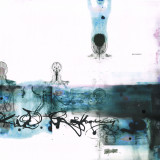
H.D. Reliquary is the first eponymous release from Ben Shirken a.k.a. Ex Wiish, and finds him returning home to his own label, 29 Speedway. The songs sparked during sessions with close collaborators - across 11 pieces, artists such as Pavel Milyakov, MIZU, Dorothy Carlos, Kevin Eichenberger and Muein breathe personality into the record. H.D.R. coaxes beauty from a serrated, raw, yet subdued palette drawn from improvised recordings of trumpet, violin, upright bass, cello, and modular synthesis.
The title references the hard drive as a sacred container for relics, contemplating how digitally archived fragments of one’s existence can burn eternally after death. Archives, and in this case recordings, splinter and warp. Some distort what they contain. Some vanish, and others are eternally preserved, immune to deletion. Your information on these digital drives becomes archival shrapnel, the music that survives the remnants of collaboration. Pieces of recordings were fed into a series of proprietary neural networks, generating MIDI information and audio that reacted to on-the-fly soloing, imaginary sessions between players and algorithms invented posthumously (in post).
Shirken will release H.D. Reliquary alongside a sound installation on April 11. Where his prior work was geared towards dissociation, H.D. Reliquary invites us to contemplate how our tools for understanding and containing the world fundamentally alter our relationship with it. He has performed in spaces such as The New Museum, Pioneer Works, Public Records and Nowadays in New York City; Dripping Music And Arts Festival in New Jersey; La Station in Paris; and Cafe Oto in London.
- Red
- Haunted Water
- Hard To Please
- Golden Numbers
- Melted Wings
- Under The Sun
- Real Fun
- Hard To Please (Reprise)
- Afterlife
- Dirty Desert Dreams
- Secret Thread
- Falling Asleep
Mazy Fly, the second full-length by the Bay Area artist SPELLLING, explores the tension between the thrill of exploring the unknown and the terror of imminent destruction. Chrystia Cabral spent the summer of 2018 in her Berkeley studio reflecting on the thresholds of human progress and longing for a new and better tomorrow. She was struck by the way the same technologies that have given humans the ability to achieve utopian dreams of discovery have also brought the world to the precipice of dystopic global devastation. Despite the darkness of this reality, Mazy Fly is defiantly optimistic. It is a celestial voyage into the unknown, piloted by Cabral. Mazy Fly musically traverses the spaces between languid, honey-soaked vocals and distant angelic whispers, from thumping 808 club beats to crunching tape loops, and from silky, smooth R&B to whirling organ sonatas. Cabral became enamored by the idea of flight as a harbinger of both progress and apocalypse, and that was expressed in the textures and compositional techniques she utilized. Swarms, flocks, flies, angels, spaceships, flying saucers - all are represented sonically by Cabral and her Juno-106 synthesizer.
- 1: #4
- 2: #7
- 3: #
- 4: #
- 5: #2
- 6: #10
- 7: #11
- 8: #
- 9: #
The work of each of these powerfully creative & exceptionally perceptive individuals - poet and scholar Fred Moten and jazz bassist Brandon Lopez - concerns itself with how one might navigate the ascending reign of longinstitutionalised madness while simultaneously keeping humanity and sanity intact The synergistic mesh of these two voices in Duo is here presented on record for the frst time, following two acclaimed works on the Reading Group label in trio with Gerald Cleaver. Inimitable poet, cultural theorist, author, 2020 MacArthur Fellow, Fred Moten creates new conceptual spaces that accommodate emergent forms of Black cultural production, aesthetics, and social life. Moten is a professor of performance studies and comparative literature at New York University concerned with social movement, aesthetic experiment, and Black study. He is also a United States Artists Rockefeller Fellow and was elected to the American Academy of Arts and Sciences. Puerto Rican- American bassist Brandon Lopez is the son of a gravedigger who himself put time in doing the same, developing muscles that serve him well in his thorough command of the upright bass. On moving to NYC, Lopez made himself indispensable within numerous realms of creative music. As the Cleveland Review of Books noted, "This is virtuosity as vocabulary, a total command of texture, subtlety, and a depth that can be reached into."
On their previous work in trio with Gerald Cleaver:
"Best Jazz Albums of 2022: Moten is after nothing less than a full interrogation of the ways Black systems of knowledge have been strip-mined and cast aside, and yet have regrown." - New York Times
"8.0 - A conceptually rich, politically weighty album that asks timeless questions without over-explaining...breathlessly complex" - Pitchfork
Fred Moten: texts, voice
Brandon Lopez: bass
Electronic music at its best offers a tantalising glimpse of the future, capturing the moment of conception where new worlds and genres are brought into being. Amsterdam-via-Berlin label Q1E2 (standing for “quality first, ego second”) embodies this expansive promise on their new various-artists compilation, a thrilling speed-run through the cosmic outer-reaches of contemporary club sounds that highlights the work of essential emerging producers from around the globe.
Milan producer Jack Bags opens the proceedings with “Natural Thing”, an astral deep-dance immersion with zero-gravity synthesizer pads and skeletal dub percussion that echo out through the void, sensuous vocal samples arriving like scattered transmissions from the stereo of some long-lost spacecraft. datSIM’s “Influx” races through kaleidoscopic sci-fi spacescapes, presenting a futuristic reimagining of UK bass sounds with dextrous organ melodics and widescreen atmospherics. Mike Riviera and Marco Ohboy bring us back down for a more earthly kind of ecstatic experience, cranking up the humidity and coaxing out the endorphins with the appropriately-titled “Euphoria” - a rugged, rave-adjacent heater that cleverly rearranges elements of classic house and garage into a decidedly modern club workout.
Elsewhere there’s a distinctive undercurrent of jazz flowing through the compilation, mapping out thrilling new evolutions of the music on and off the dancefloor. Dr Sud’s mesmeric rhythm excursion “Zaffiro” unfurls like the coils of a cosmic serpent, tessellating percussion and slinking subs tracing intricate beat geometries. A Soft Mist Production’s “Upside Down Rainbows” settles in for the afters with smoked-out soulful atmospherics, syrupy vocals curling and turning in the air like smoke vapors from the last vestiges of a still-lit cigarette. The Rabbit Hole’s “Tail Groove” closes out the proceedings with a surprising bait-and-switch - opening on lustrous lounge piano that could have been comped straight from a Bill Evans record, the track quickly gives way to interstellar bass ‘n’ breaks. The producer’s canny use of cello licks adds a grounded, organic feel, jazz futurism that recalls Photek or LTJ Bukem’s sampling experiments.
Taken together, the label’s new compilation provides a snapshot of a scene in constant evolution, taking the temperature of the modern electronic scene and finding it to be in rude health.
Written by Matthew Fidler