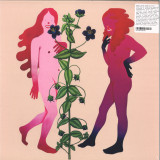
Club music culture necessarily shifted gears in many ways during and after the course of the pandemic. Older participants found their way into other interests and younger participants took new reigns to orient spaces they felt good inside of. The agenda for the music, and the cultural industry surrounding it at large, took a more frivolous and “fun” turn. Clubs needed to recoup lost money, people needed more refreshing catharsis for their nightlife escape, and in some pockets scattered around the globe a newer and younger cadre of producers/promoters/DJ’s pulled optical cues from a scattering of “darker” influences to give an alternate aesthetic to the aforementioned “vibes” culture. In the midst of this, a large polarization of conceptual energy shifted within the compositional and utilitarian machinations of the club music culture leaving behind the brooding and cerebral placeholders for different kind of enjoyable hedonism. Terrestrial Paradise’ “Artificial Hell” harkens to another prescient time before that shift occurred. “Artificial Hell’ might just be an illustration of what all of this fun escapism encapsulates.
Terrestrial Paradise is the latest moniker from Montreal come Los Angeles based producer Jaclyn Kendal. Having developed and cemented her sonic positionality with releases on North American labels like Ascetic House and Summer isle over the years, as well as a series of monolithic live sets, Bank is pleased to announce Kendal’s Terrestrial Paradise first full length album “Artificial Hell”. Over the course of nine recordings, “Artificial Hell” gives a master class in pressurized industrial techno of the slower variety. Fitting with the legacy of Bank’s output since it’s inception, Terrestrial Paradise’s aesthetic sensibilities sit within the canon of a certain tinge of club music imbued with a sense of natural grit, sans pretense.
“Artificial Hell” nods to artists like Scorn, Regis, and 400 PPM while maintaining it’s own territory in the landscape of cerebral and brooding rhythmic techno. Ominous, mechanistic drones sit above succinctly exacted percussion composition and sound design. Throughout “Artificial Hell”, Kendal shows her proficiency with the push and pull of building and releasing tension. On tracks like “Salvation” and “Relativity” she melds her synth wash wallscapes with driving percussion, serving as both a hint and counterpoint to the the entirety of the latter part of the album taking on spartan ambient compositions as a way to keep the listener in a subdued stasis. This album is a statement piece from a long time participant in the North American underground music sectors. It reminds the listener through perilous, considered rhythms and darker drone impositions to cement themselves back into a place where not
everything is always a good time.
Cerca:sparta
The Guardian wrote “the Canadian songwriter has one of the all-time great singing voices in popular music, an intensely romantic Chet Baker-ish instrument that seems to float with piercing direction, like a paper aeroplane thrown hard through mist.” With Uncut describing his songcraft “as delicate and lovely as a rare orchid” and Record Collector praising the album’s “sublime alien balladry” such are the accolades that have accrued throughout Chenaux’s unique and consummately uncompromising solo music for well over a decade now. Delights Of My Life opens a new chapter for the singer/guitarist and formally introduces the Eric Chenaux Trio, with Toronto-based musicians Ryan Driver on Wurlitzer organ and Phillipe Melanson on electronic percussion. Driver is a longtime collaborator, appearing on several of Chenaux’s solo albums (even embedded into the very title of the 2010 masterpiece Warm Weather With Ryan Driver). Melanson has a long list of involvements that include Bernice, Joseph Shabason, and U.S Girls, and a recent release with his Impossible Burger project on Chenaux’s own experimental label Rat-drifting, but this marks the first fulsome involvement between the two as players on a recording. In many ways Delights Of My Life also picks up right where Chenaux’s previous album left off, in its subversions of a classic, timeless jazz-inflected balladry, while the interplay of the trio formation indeed unfurls many new delights. Recording together at Chenaux’s spartan home studio in rural France, Driver’s harmonically warped organ and Melanson’s electroacoustic sampling and percussion hold time in newfound ways. Where previously Chenaux relied on a freeze/sustain pedal and minimalist rhythmic triggers to generate both pulse and chordal foundations, Melanson now paints timekeeping with expressive and intricate colourations, through live deployments of fluid sampled percussion (including orchestral timbres like timpani, kettle drums, and woodblock) that blur the boundaries between acoustic and electronic. Driver also ramps up his role in the song arrangements (prefigured in his support playing on Say Laura), teasing out chords and melodic filigree on Wurlitzer that percolate more prominently with Chenaux’s signature fried guitar solos and succulent singing. Both trio members add dulcet backing vocals, most notably on the 10-minute tour-de-force of fuzzed and ring-modulated swing “This Ain’t Life” that opens the record. All seven songs on the album groove and sway, simmer and sparkle, like nothing in the inestimable Chenaux discography to date. Chenaux’s tunes have the uncanny ability to sound like jazz standards; songs you feel you’ve heard before, though certainly never quite like this. Yet these are of course all originals, compositionally and interpretively, bent through an inimitable avant/out-music lens. Delights Of My Life conveys warm familiarity, shot through with the exuberantly experimental subversion and playful, even mischievous, iconoclasm that continues to mark Chenaux as defiantly, virtuosically, and genially one-of-kind
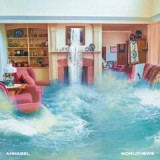
"On “We Are Where We Are,” a glimmering mid-tempo highlight from Annabel’s new album, Ben Hendricks sings of “a modern way to fill the empty space.” Worldviews, the band’s fourth LP and first in nine years finds the band reconciling with the ways the world has changed in the decade since they’ve been away. His protagonists are trying to determine the boundaries between what’s real and imagined, navigating their worldviews and the dominant ones around them, fighting for an escape or at least a distraction, wondering where the time goes, “going through the motions, running in a circle.” That could’ve been Annabel’s fate, too. But the core of the Ohio band is brothers Ben and Andy Hendricks, and as long as they’ve got each other, we’ve still got Annabel. In a world that feels so uncertain and so disconnected, where else is there to turn but back to Annabel? Think of Worldviews less like a comeback and more as the product of years spent gestating.
Hendricks spends the chorus of “All Time” promising to “make up for all the lost time,” and Annabel makes good on that promise for the next half hour. Worldviews is the most locked in the band has ever sounded, perfecting and building on their indie-emo sound. The title track and “Dog” are classic Annabel, sprightly and jangly midwestern rock songs, while “Defense Mechanism” is a rougher-edged update; when they go in the opposite direction, it results in some of their best work: “Every Home Needs a Ghost” is spartan and spectral, worthy of its title, and the beautiful “Small Victories” dabbles in downtempo electronics. They don’t sound like a band returning after nearly a decade; they sound at the same time hungry and lively like scrappy upstarts and wizened and seasoned like they never left."
SAM MORTON, das musikalische Duo, bestehend aus der Sängerin, Songwriterin und jüngst mit dem BAFTA (dem britischen Äquivalent zum Oscar) ausgezeichneten Schauspielerin und Regisseurin Samantha Morton und dem Musikproduzenten und Co-Songwriter Richard Russell, veröffentlichen ihr gemeinsames Debütalbum. Das Album trägt den Titel "Daffodils & Dirt" und wird am 14. Juni über XL Recordings veröffentlicht. In zwölf atmosphärischen Tracks bauen die beiden eine zutiefst persönliche musikalische Welt auf, die gleichzeitig intim und zart, aber auch kraftvoll und mitunter schroff wirkt. In der teilweise autobiografischen Songfolge bilden Russells spartanische Klanglandschaften das fragile Gerüst für Mortons wunderschönen wie ätherischen Gesang. Unterstützt werden sie dabei von einer Reihe musikalischer Freunde. Darunter Alabaster DePlume, Laura Groves, Jack Peñate und als zusätzliche Sängerin Ali Campbell (bei "Broxtowe Girl"). Obwohl Samantha Morton schon ihr ganzes Leben lang Musik liebt und sich mit ihr beschäftigt, ist dies ihr erstes Projekt als Musikerin überhaupt. Die Zusammenarbeit kam zustande, nachdem sie im Oktober 2020 in der BBC-Sendung "Desert Island Discs" auftrat und Russell zufällig zuhörte. Er war nicht nur von ihrer Songauswahl beeindruckt (einschließlich der gemeinsamen Vorliebe für ein bestimmtes Lied: "I Remember" von Molly Drake), sondern auch von der Art und Weise, wie die Musik ihre Lebenserfahrungen verwebt. Die beiden nahmen Kontakt auf und tauschten Ideen, Skizzen und Gedankenströme aus. Schließlich trafen sie sich Monate später im Studio und begannen eine spontane wie intensive und ergebnisoffene Zusammenarbeit, die sich für beide Künstler als kathartischer musikalischer Prozess erwies. "Daffodils & Dirt" wurde schließlich 2023 fertiggestellt und zeigt, wie es klingt, wenn Sound-Kosmen miteinander zu einer wunderschönen Fusionen verschmelzen. "Daffodils & Dirt" ist digital und als CD, LP und exklusive gelbe Indie-Vinyl erhältlich. Das Cover des Albums zeigt ein Archivfoto des renommierten britisch-amerikanischen Fotografen und bildenden Künstlers Nick Waplington, der das Leben in Nottinghams Broxtowe Estate zur gleichen Zeit dokumentierte, als Morton dort Mitte der 1980er Jahre aufwuchs. Bereits heute erscheint die neue Single "Let"s Walk In The Night" aus dem Album. "Let"s Walk In The Night" ist eine gespenstische, jenseitige Neuinterpretation des britischen Street Soul und wird von einem Video begleitet, bei dem Samantha Morton selbst Regie führte. Das Video wurde auf der jährlichen Goose Fair in Nottingham gedreht und ist das zweite Musikvideo, bei dem Morton Regie geführt hat, nach dem Video zu "Cry Without End", in dem sie auch die Hauptrolle spielte Anfang des Jahres.
The Shadow Ring (1992-2002) presents a comprehensive overview of the work produced by British musicians Graham Lambkin, Darren Harris, and later Tim Goss over the course of a decade. Throughout their legendary ten-year run, this shambolic rock outfit, formed by a group of teenagers in the port town Folkestone, were an enigmatic force on the international musical sub-underground. The group have left behind a mighty run of eight LPs, a handful of 7-inches, and a spate of raucous live shows and cryptic zine appearances on both sides of the Atlantic. Collected here for the first time are The Shadow Ring's live cuts, rarities, and complete commercial releases, spread out across eleven CDs and a DVD, accompanied by an nearly five-hundred-page book that includes a monographic biographical survey, more than one hundred color photos, a comprehensive discography with transcribed lyrics, and a selection of zine appearances, fliers, postcards, and other miscellanea. In aggregate, this significant collection not only plums the depths of the band and its attendant lore, but reveals a vivid minor history of mail-order networks, bedroom recording sessions, cross-USA couch-surfing, and encounters with fellow travelers such The Dead C, Harry Pussy, Charalambides, Richard Youngs and the No-Neck Blues Band. Where is the connecting thread between Ralf Wehowsky and Squirrel Nut Zippers? Inquire within. The roughly 200 songs in this set trace the band from its earliest days recording in Lambkin's parents' house (SHP Studios), through its brooding mid-period, garnering word-of-mouth notoriety that peaked with the trio turning down an invitation to tour with Pavement, to a string of increasingly uncompromising experiments with electronics, voice, and tape. Although the band's sound morphs considerably during this time period, from spartan beginnings using pots and pans as a drum set to their ultra-deconstructed latter-day approach, certain core sensibilities are apparent throughout: brash youthful rawness, wry and morbid lyricism, stripped-down angularity, and a penchant for atmospherics. This boxset, featuring every record and single, and buttressed by twenty-nine rarely-heard recordings, including proto-Shadow Ring projects such as the Cat & Bells Club and Footprint cassettes, and their unearthed final CD-R Darren Harris Reads Graham Lambkin, presents the first opportunity to hear this arc in full. The ebbs and flows of the band_their schoolboy beginnings, initial successes, first shows and tours, life milestones, and Lambkin's gradual development as a solo artist_are painstakingly detailed in a sizable band history-cum-Künstlerroman by Blank Forms artistic director Lawrence Kumpf, illustrated with candid photos, sketches, letters, newspaper clippings, and other ephemera. The music and videos can speak for themselves, but taken as a mass, this collection makes sense of the group's utter uncanniness without comprising one iota of their mystique, bringing something new to the table for completionists and the uninitiated alike.
Following the release of Eric Chenaux's last album Say Laura (2022), The Guardian wrote "the Canadian songwriter has one of the all-time great singing voices in popular music, an intensely romantic Chet Baker-ish instrument that seems to float with piercing direction, like a paper aeroplane thrown hard through mist." With Uncut describing his songcraft "as delicate and lovely as a rare orchid" and Record Collector praising the album's "sublime alien balladry" such are the accolades that have accrued throughout Chenaux's unique and consummately uncompromising solo music for well over a decade now. Delights Of My Life opens a new chapter for the singer/guitarist and formally introduces the Eric Chenaux Trio, with Toronto-based musicians Ryan Driver on Wurlitzer organ and Phillipe Melanson on electronic percussion. Driver is a longtime collaborator, appearing on several of Chenaux's solo albums (even embedded into the very title of the 2010 masterpiece Warm Weather With Ryan Driver). Melanson has a long list of involvements that include Bernice, Joseph Shabason, and U.S Girls, and a recent release with his Impossible Burger project on Chenaux's own experimental label Rat-drifting, but this marks the first fulsome involvement between the two as players on a recording. In many ways Delights Of My Life also picks up right where Chenaux's previous album left off, in its subversions of a classic, timeless jazz-inflected balladry, while the interplay of the trio formation indeed unfurls many new delights. Recording together at Chenaux's spartan home studio in rural France, Driver's harmonically warped organ and Melanson's electroacoustic sampling and percussion hold time in newfound ways. Where previously Chenaux relied on a freeze/sustain pedal and minimalist rhythmic triggers to generate both pulse and chordal foundations, Melanson now paints timekeeping with expressive and intricate colourations, through live deployments of fluid sampled percussion (including orchestral timbres like timpani, kettle drums, and woodblock) that blur the boundaries between acoustic and electronic. Driver also ramps up his role in the song arrangements (prefigured in his support playing on Say Laura), teasing out chords and melodic filigree on Wurlitzer that percolate more prominently with Chenaux's signature fried guitar solos and succulent singing. Both trio members add dulcet backing vocals, most notably on the 10-minute tour-de-force of fuzzed and ring-modulated swing "This Ain't Life" that opens the record. All seven songs on the album groove and sway, simmer and sparkle, like nothing in the inestimable Chenaux discography to date. Chenaux's tunes have the uncanny ability to sound like jazz standards; songs you feel you've heard before, though certainly never quite like this. Yet these are of course all originals, compositionally and interpretively, bent through an inimitable avant/out-music lens. Delights Of My Life conveys warm familiarity, shot through with the exuberantly experimental subversion and playful, even mischievous, iconoclasm that continues to mark Chenaux as defiantly, virtuosically, and genially one-of-kind.
- A1: Dead Already
- A2: Arose
- A3: Power Of Denial
- A4: Lunch W/ The King
- A5: Mental Boy
- A6: Mr. Smarty-Man
- A7: Root Beer
- A8: American Beauty
- A9: Bloodless Freak
- A10: Choking The Bishop
- B1: Weirdest Home Videos
- B2: Structure & Discipline
- B3: Spartanette
- B4: Angela Undress
- B5: Marine
- B6: Walk Home
- B7: Blood Red
- B8: Any Other Name
- B9: Still Dead
With 14 Academy Award nominations, seven Grammy awards, and an Emmy to his credit, Thomas Newman has a track record second to none among modern screen composers (and even among his family, which is saying a lot considering he is son to Alfred, brother to David, and cousin to Randy Newman)! But among all his Academy Award-nominated scores—to classics like The Shawshank Redemption, Wall-E, Finding Nemo, Saving Mr. Banks, and The Road to Perdition—his score to the 1999 Academy Award-winning Best Picture American Beauty (the first of his many collaborations with director Sam Mendes) remains his most distinctive. That’s because Newman made the bold choice of composing a score almost entirely with percussion instruments, brilliantly intuiting that the lack of melodic resolution in the film’s themes would echo and amplify what he termed the “moral ambiguity” of the script. The result was a haunting and wholly original film score that is instantly recognizable to anyone who has seen the picture. Real Gone Music is very, very proud to present this work of genius on blood red rose vinyl to match the original album art (here used for the first time on a vinyl release) and the film’s shattering conclusion!
- A1: Sharkey - Someone Like Me
- A2: Lynne Ann Kingan - If You Love Me - Hate Me
- A3: James Thornbury - So Tan
- A4: Jim Huxley - Only A Song
- A5: Charlie Webster - Snodland
- B1: The Bob Hughes Band - You Broke My Heart
- B2: Goldrust - Going Yesterday
- B3: Jim Kennedy - You Are The Reason
- B4: Jon Betmead - Marie Elene
- C1: Charles Murphy - The Foot That's Holding Me Down
- C2: Remnant - I Will Set You Free
- C3: Fred Potts - Following Rainbows
- C4: The Superwomen - Lowlands
- D1: Robison Kaplan Ltd - Don't Say Goodbye
- D2: Gary Ramey - You Are His
- D3: John Agostino - Loss Of Love
- D4: Ritchie Tierney - Please Stop Breaking Me Down
A humanity-reminding suite of miracle moments, Someone Like Me unites a geographically unbound cast of real people in pursuit of a meaningful connection. Taping their lived experience in economic studios in quiet English counties, Pacific Northwest woodland retreats and the big city bustle of Sydney and Los Angeles, these kindred spirits rendered sheer beauty in the process. Custom pressed folk songs of love, loss and the lord saviour.
Illuminating minor works from seasoned players such as former Syndicate Of Sound chart-topper Sharkey and late-era Canned Heat lynchpin James Thornbury, the collection simultaneously honours the fleeting amateurism of hobby musicians. With their one shot at tangible vinyl, freshman Lynne Ann Kingan realised her loose bubblegum rocker on campus time, while U.S. Navy recruit Fred Potts cut his unconditionally serene ballad remotely stationed on a Spanish naval base. Spartan production continues to reign with Jon Betmead’s hair-raising gospel, howling into infinite space, and Goldrust’s stripped back garden hymn.
Throughout the hour-long reflection, faith has an intermittent yet revelatory presence, most overtly with the divine choral soul of Seventh-day Adventist quartet Remnant. More subtly, Gary Ramey and Jim Kennedy both turned to song in their spiritual quests, offering their all to a universal power. An irrefutable compilation cornerstone, the National Office For Black Catholics showcased Charles Murphy’s lionhearted account of the Black experience at a 1971 concert. Five years earlier, high school seniors The Superwomen would use their hauntingly angelic harmonies to address racial inequity with a breathless take on ‘Lowlands’.
Reaching the furthest corners, Someone Like Me secures the inaugural licence of three homespun masterpieces. Discovered by fluke in the digital haystacks of Youtube and Soundcloud, Jim Huxley’s bedroom pop earworm melds peacefully into Charlie Webster’s synthesized reverie. Meanwhile, Hollywood’s John Agostino introduces us to the bizarre world of tax scam records, with the artist only now learning that his tender psych-folk demos were leaked via a 1977 bootleg.
Compiled and lovingly restored by armchair digger Mikey Young (Eddy Current Suppression Ring/The Green Child), Someone Like Me pays due service to seventeen rarefied journals of truth and devotion. Adorned with visual artist Chris Fallon’s figure and flora dream extractions, the uniting songbook is further detailed by expansive track-by-track liner notes and a forward from San Franciscan poet Rod Roland.
Cryovac is a family of artists that work as one machine. Individual style bands together and moves, as cogs, this machine forward. A.Garcia maintains and manages production on every level, even the pressing at the world famous Archer Record Press. Cryovac is a collaboration between artists and craftsmen to make a quality product. Each project Cryovac champions is meant as a gift for the true believer.
Cryovac #28 starts out with Jason Garcia's frantic head banger “Trapped in purgatory”. This classic 4/4 rocker builds intensity by layering screaming tones to crescendo in a steady drive. “Ichabod”, Garcia’s second track on the A side, is a spartan groove with a stoic delivery of minimalism; a stripped down rhythm with a serious attitude.
A.Garcia and M.Kretsch begin the B side with a reggae-punk techno experiment that delivers a rowdy funk.“Rock the dance bah” is Clash inspired minimal with a walking bassline, texas style percussion, and a guitar twack on the up beat. Garcia and Kretsch collab again on the B2 with “Stillgar”; a blend of synths working around each other as one storm guiding a rambunctious beating to a mystic reverie. These tracks illustrate the duo's production method and approach to the techno sound.
Our artwork for this release was provided by Nick Retzlaff. He is an artist and stand-up comic living with autism, and expressing his unique view of the world.
Cryovac 27 opens with the driving sounds of Max Watts. Max has a brash commitment to a spartan drive of bass and kick. Watts captures a sense of urgency by making use of his synth stabs and eclectic, erratic melodies. “Watts Groove” is a rambunctious tool for the competitive DJ. “Santa ana” smoothes out the ride with an electro groove that pulls an elegant funk into a freaky shakedown. Watts adds emotion to a classic break style while staying firmly grounded in space.
The B side hosts, A.Garcia and M.Kretsch, continue their lab work on a couple of well rounded bangers that blend the talents of this duo into an effective sound collaborative. Infectious percussion moves a tasteful mix of rich silky synth lines manifesting “Layhee”. Diving in on a heroic bop through the confusion of synth and breakdown is "indianagiver". A rugged rocker with spacious atmosphere held together by a backbone of bass and hi hat. Garcia and Kretsch put forth a well built product for a disposable age.
'Farewell to Faraway Friends' finds Lauvdal at her Wurlitzer, captured by two mics in the room, with no additional overdubs or edits. Her set of hushed, jazzy flourishes and pregnant pauses is so well realised that it’s hard to believe they were improvised, while the “kitchen feel” of the room recording (as Marhaug describes it) enhances a sense of brittle intimacy. Much in the same way that Dominique Lawalrée imbued his ostensibly naive music with glimpses into a multifaceted inner life, Lauvdal explores an ocean of feeling through the most humble components, transporting us through some alchemical act of emotional teleportation.
Lauvdal avoids meandering flights of fancy, instead exposing a filigree level of detail and beauty through the cracks of her spartan recordings. There are no arbitrary found sounds, no sound design or overdubs, just Lauvdal and her Wurlitzer, occasionally singing at a barely perceptible volume in the background. If there's melancholy, it's not self absorbed or effacing, but trapped behind sunny rays and poetic, romantic phrases.
One of those effortlessly impactful records we’ve not been able to stop listening to for a while now, ‘Farewell to Faraway Friends’ is apparently the first in an ongoing series. Here’s hoping.
Terry Callier was an American soul, blues, folk and jazz guitarist, and singer songwriter born in Chicago. His debut album was recorded in
1964 but due to problems it was eventually released in 1968 as The New Folk Sound of Terry Callier. His soul, jazz, folk influences were prominently featured on the albums in the following years, which were released on different major labels. Callier continued to perform and tour until 1983, when he gained custody of his daughter and retired from recording music, working for the University of Chicago and obtained a degree in sociology. In the late 1980s British DJ’s discovered his old recordings and the famous rare-groove/jazz label Acid Jazz released his unknown track “I Don’t Want To See Myself (Without You)” in 1983. Timepeace was recorded in 1998 after a 15 year long career break and won the United Nations’s Time For Peace award for outstanding artistic achievement contributing to world peace.
The album features “People Get Ready/Brotherly Love” composed by Curtis Mayfield, the title song “Timepeace” featuring Pharoah Sanders on tenor-saxophone and 7 more tracks.
Jamie Jones and Lee Foss’ label Hot Creations will deliver a combined EP by Aix en Provence-based DJ and producer MALIKK and Marseille-born duo Chicks Luv Us in August. Bridging chunky tech house with dub techno, Can We Dance displays their collective love for bright and playful beats.
On the title track, the producers work in symbiosis to create a club-driven chunker with chopped-up vocal samples and a squishy bassline. Bouncy ‘til the last beat. On the B-side, Chicks Luv Us drop a Balearic-flavoured banger with Makelene. High-pitched vocals pulsate throughout the track, as huge kickdrums and playful sound FX amp up the energy. MALIKK offers a quirky closing track on Walkie Talkie, packed with punchy drums, bleepy percussion and techy vocals—perfectly aligned with Hot Creations’ colourful aesthetic.
Chicks Luv Us are two Marseille-born pals with a penchant for groovy house and minimal techno. Their back catalogue echoes the textures that bring them together as producers, with releases on Loco Dice’s Desolat, Steve Lawler’s Viva Limited and many more. They cut their teeth in DJing during their residency at Spartacus Club in Cabriès in the south of France from 2009 and 2018. Today, the pair continue to grow a legion of international fans while finessing their craft in the studio, and soundtracking dancefloors worldwide. MALIKK is an Aix en Provence-based artist whose early appreciation for 80’s disco, funky and soul still occasionally seeps into his current club-focused music. Previous releases on Hot Creations, Hottrax, Toolroom, and Solotoko display his multi-dynamic palette, nodding to several genres and moods. Having played in Brazil, Argentina, Spain, Belgium, Netherlands and his native France, MALIKK’s DJ sets reflect his fun and explorative approach, marking him as one of Aix en Provence’s finest exports.
Clear Vinyl
SoiSong is the stunning but short-lived partnership of Coil co-founder Peter "Sleazy" Christopherson and veteran Russian electronic experimentalist Ivan Pavlov. Though friends since 1997, the project birthed roughly a decade later in Bangkok, where Christopherson relocated following the death of his Coil collaborator John Balance in 2004. Named after the Thai word for `two' along with a notorious red-light district street nearby, the duo dialed into a cryptic language of lurching synthetics, Eastern minimalism, and interdimensional glitch, oscillating between elegance and mayhem. qXn948s collects some of their earliest recordings, and remains as transgressive and transcendent a listen now as it was upon its release a decade and a half ago. Pavlov characterizes SoiSong as less a musical group than a "utopian, semi-alien platform for collaboration, devoid of pronounced personality or centralized authority_ more like a message from elsewhere that anyone is welcome to participate in and spread." Every facet of the project was disruptive and oblique: self-released CDs packaged in elaborate origami that had to be destroyed to be accessed; a website with password protected sections, where different passwords were provided for different events, objects or releases; performance merchandise of headphones and a Walkman melted shut so the music can only be heard as long as the set of batteries last. Theirs was a muse as unprecedented as it was uncompromising, equal parts pranks and profundity. qXn948s began with samples and software composed intuitively in tandem before a large monitor, then progressively processed and scrambled into bewildering arrangements of digital frequencies, alternately spartan and claustrophobic, uneasy and uncanny. Vignettes of small melody emerge and are obliterated; gamelan-esque tones spiral above cybernetic pulse programming and funereal didgeridoo; skeletal piano meanders in the distance while flickering circuitry pummels patterns of white noise. Pavlov describes his and Christopherson's chemistry as "unspoken and sincere, and very efficient." That music this aggressively disorienting and complex congealed in a smoothly organic fashion is testament to the rare vision of its creators.
"WARKINGS Warriors beware, the mighty warriors are back with an unexpected ally – none other than the legendary Sorceress Morgana le Fay! The sister of Arthur and mistress of the lost souls has joined the four kings on the fourth chapter of the WARKINGS saga, Morgana, to be unleashed on November 11, 2022 via Napalm Records! Forging their musical steel in the tradition of Powerwolf, Sabaton, HammerFall and Running Wild, the WARKINGS burst onto the battlefields in 2018. They gathered their Warriors around the world and entered the Official German Album Charts 2021 at #13 with Revolution. Gathered in the golden halls of Valhalla, the four ancient kings – a roman Tribune, a wild Viking, a noble Crusader and a martial Spartan – are now back with Morgana, having already escaped from the underworld, fought the Monarchs of the dusk and called for Revolution. Back in the realms of the dead, they were captivated by the eerie and extraordinary chanting voice of “evil” sorceress Morgana La Fey. Obsessed with the idea of telling humanity her own version of her story, the witch inspired the WARKINGS to include Morgana in their circle as they fought their next battles – a covenant made for eternity! In their trademark manner, the WARKINGS – armed with weapons made of pure Heavy Metal – tell their stories in songs forged of pure steel. Morgana's haunting voice rises to tell her story in four acts: The first chapter ""Hellfire"", tells of her love-hate relationship with King Arthur, ""Monsters"" of the dark side in each of us, and ""Heart of Rage"" of her desire to grant forgiveness to all who have hurt her, before revealing in ""Immortal"" how she and Arthur's immortal souls are reborn again and again. In the last two chapters of the battle, Arthur himself speaks out and implores Morgana not to give up, before he himself narrates the Arthurian saga in the crowning finale! Of course, the WARKINGS themselves raise their voices to tell their stories – recounting their battles with Hereward the Wake, the naval battle of Salamis and a man unjustly enslaved. As a special gift, the WARKINGS offer “To The King” – a hymn in honor of the most loyal of the faithful WARKINGS Warriors, who stand side by side with the mighty kings in all battles! Raise your swords and join the next fight in the WARKINGS saga with Morgana!"
WARKINGS Warriors macht euch bereit! Die mächtigen Krieger kehren mit einer sagenumwobenen Verbündeten zurück! Keine Geringere als die legendäre Zauberin Morgana le Fay, Schwester von Artus und Herrin
der verlorenen Seelen, hat sich den vier Königen für den vierten Teil der WARKINGS-Saga angeschlossen.
Das neue Studioalbum, Morgana, erscheint am 11. November 2022 über Napalm Records. Vier mächtige
Könige – ein römischer Tribun, ein wilder Wikinger, ein edler Kreuzritter und ein kriegerischer Spartaner
– versammelten sich in den goldenen Hallen von Walhalla, entkamen aus der Unterwelt, bekämpften die
Herrscher der Finsternis und haben zur Revolution gerufen. Zurück im Totenreich wurden sie von der
unheimlichen und außergewöhnlichen Stimme der „bösen“ Zauberin Morgana La Fey in ihren Bann gezogen. Besessen von der Idee, der Menschheit ihre eigene Version der Geschichte zu erzählen, überzeugte
die Hexe die WARKINGS, den nächsten Schlachten gemeinsam entgegen zu treten und Morgana in ihren
Kreis aufzunehmen – ein Bund gemacht für die Ewigkeit!
In der Tradition von POWERWOLF, HAMMERFALL und Running Wild schmieden die WARKINGS ihre
Musik hart wie Stahl und erobern seit 2018 die Schlachtfelder der Welt. Sie versammelten ihre Warriors
ltweit und stiegen 2021 mit Revolution auf Platz 13 in die offiziellen deutschen Albumcharts ei
(Cargo Collective Title) RIYL: Barker, burger/ink, Andy Stott, Shackleton, Monolake, Jan Jelinek, Perila, Fax. 180gLP in 350gsm jacket + 190gsm inner + DL. CD in custom mini-gatefold paperboard jacket. T. Gowdy has kept up a productive albeit mostly virtual pace since the release of Therapy With Colour (his third full-length album and first for Constellation) which dropped just as things were locking down back in spring 2020: performances at numerous festivals including MUTEK Montréal, Node Festival and NEW NOW; audiovisual pieces exhibited at various European galleries and events; a track and video for Constellation’s Corona Borealis Longplay Singles Series; sound design for the documentary Atalaya by filmmaker Emma Roufs. Gowdy now returns with Miracles, his second full-length for Constellation, which draws on source materials originally performed in 2018 for an unreleased audio/visual project based around surveillance footage—a precursor to video1capped, monitor-based horizons that soon took on new meanings. Re-immersing himself in those recordings, Gowdy disassembles and deploys them as raw source material for new experiments with vactrols, noise gates and analog-to-digital triggering and aliasing, the original recordings juxtaposed anew amidst their successive textural and rhythmic treatments. Gowdy keeps this re-composition process stripped down, elemental and purposive, guided by an ascetic Aufhebung: synthesis as sublation—subjecting a temporal material/theme to analysis and transformation, reintegrating to form a whole that overcomes what it preserves without erasure, reshaping and intrinsically carrying its origins forward. Where Therapy With Colour was strictly and rigorously a set of stereo live performances, Miracles fuses iterative—though still spartan—layers of performance. “Therapy With Colour was about healing through self-hypnosis; Miracles is about forging a future with memory through subjection to trigger mechanisms” notes Gowdy. The result is a captivating collection of minimal IDM and oscillated electronics from the Montréal/Berlin producer, working primarily in a 120-140 BPM zone of tonal percussion and corrugated pulse. Gowdy’s sensibility and sound palette gets deeper and dirtier, summoning new pathways of alluvial flicker and abraded euphoria. As the album progresses, low-pass gate vactrols coalesce into a clear and vital theme, conveying immanence through woody timbres at times reminiscent of the Shinrin-yoku aesthetic (Japanese ‘forest bathing’), though always with a grainy transcendence rather than invoking any clean pure sheen. Gowdy consistently heats and heightens the presence of each component in the mix, balancing different elements in democratic compression/distortion, attaining an unornamental and earnest form of mantric-industrial majesty. Miracles is live, corporeal, activated electronic music of the highest caliber, deployed with monastic and meditative focus. Tracklist: 1 350J 2 Miracles 3 Déneigeuse 4 Transcend I 5 U4A 6 Vidisions 7 Clipse 8 Transcend II
(Cargo Collective Title) RIYL: Silver Mt Zion, Rachel’s, Grails & Do Make Say Think. 180g LP, custom window-cut letterpress jacket with artworked 300gsm inner + DL. Esmerine presents Everything Was Forever Until It Was No More, its first album in five years, following a celebrated run of Juno Award winning and nominated records throughout the preceding decade. Founded by ex-Godspeed You! Black Emperor percussionist Bruce Cawdron and cellist Rebecca Foon (Saltland, Silver Mt Zion, Set Fire To Flames), the acclaimed instrumental music ensemble and has long embroidered emotive chamber works using threads of post-classical, post-rock, Minimalism, neo-Baroque, jazz, pop and a wide array of folk traditions. Esmerine conjures a distinctive and immediately identifiable sound that consistently defies the trappings of “fusion”, forging emotive cinematic soundtracks under the overriding sonic sensibilities of postpunk grit, Wall-of-Sound, drone and dark ambient. Recorded by longtime co-producer Jace Lasek (The Besnard Lakes), the new album manifestly carries on in this fine tradition. Everything Was Forever Until It Was No More completes Esmerine’s “Anthropocene” triptych: a series of album-length meditations that began in 2015. The album title itself has minor meme status in eco-artistic circles, appropriated from its original context Alex Yurchak’s 2005 book about the collapse of Soviet Russia by several exhibitions and works interrogating artistic production in the age of environmental crisis. (Foon is also well-known for her climate activism as co-founder of Pathway To Paris.) The album grapples with existential tensions between atmosphere and airlessness, seclusion and claustrophobia, forbearance and satiation, scarcity and abundance; it is one of Esmerine’s most restrained and wistful works. Instrumental densities ebb and flow, melding into each other with gauzy timbral warmth, sometimes tracing fleeting tendrils outwards, but always rotating around the saturnine gravitational force of a darkly glowing sonic center. Everything Was Forever Until It Was No More is like a somber forest lit by a closely-orbiting opalescent planet; it could be the alternate score to Von Trier’s Melancholia or Cormac McCarthy’s The Road.Esmerine planted these compositional seeds before pandemic rooted everyone in place, under the auspices of a grant from the Canada Council for the Arts and a 2019 residency at Le Château de Monthelon in France. Lasek then began documenting the band between lockdowns in various stripped-down configurations with spartan remote equipment at the rural Québec homesteads of Cawdron and Foon, culminating in final sessions at Foon’s converted barn in summer/fall 2021, notably with extensive use of the barn’s resonant acoustic piano. Brian Sanderson appears on his fourth Esmerine album since joining in 2012, continuing to expand the ensemble’s ethnomusicological sensibility and melodic sound palette with guitars, ngoni, ekonting, hulusi, and brass horns of all sorts. Everything Was Forever… also signals the full integration of bassist Philippe Charbonneau, who joined Esmerine as a touring member pre-pandemic and plays throughout the new album, along with sound design contributions via synth, tape echo and other processing. Everything Was Forever Until It Was No More features the pandemic collage artwork of Maciek Sczcerbowksi, in a second Esmerine album art collaboration following their Juno award for Album Package of the Year for Lost Voices in 2015.
Deluxe 180gram vinyl edition comes in a foil-embossed and die-cut cardstock jacket with printed inner sleeve and additional 12x12 art cards featuring the collages of Maciek Szczerbowski. All the art interacts with the die-cut jacket framing. Edition of 300. Rooted in a distinct and immediately identifiable sound_with the cello of Rebecca Foon (Saltland, Set Fire To Flames, Thee Silver Mt Zion) and the marimba of ex-Godspeed You! Black Emperor percussionist Bruce Cawdron at its core_Esmerine has long embroidered emotive chamber works using threads of post-classical, post-rock, Minimalism, neo-Baroque, jazz, pop and a wide array of folk traditions. Multi-instrumentalist Brian Sanderson, who joined the group in 2012, has furthered Esmerine's melodic and ethnomusicological sensibility ever since, expanding the ensemble's palette as its third core member with guitars, ngoni, ekonting, hulusi, brass horns of all sorts, and more. Since 2003, six stately and filmic instrumental albums have inscribed compositional landscapes through epigrammatic miniatures, longform multi-movement chronicles, and all manner of evocative musical prosody between. Marked by an inimitably turbid yet tempered pastoralism, alternately lit by dappled dawn and disquieted dusk, Esmerine's musical narratives balance asceticism and romanticism, melancholy and hope, stillness and wanderlust. Esmerine now shares Everything Was Forever Until It Was No More, its seventh full-length album and first in five years. The band surprise-dropped the full album digitally on 06 May 2022, with the CD and Deluxe 180gram LP editions hitting stores on official release date 26 August 2022. Following an acclaimed run of mid-career records on Constellation through the 2010s_the last three of which have all been finalists or winners of Juno Awards for Instrumental Album of the Year and/or Album Packaging of the Year_Esmerine began working on new music at decade's end. Under the auspices of a grant from the Canada Council for the Arts, and a summer 2019 residency at Le Château de Monthelon (an artist commune in France where the band has cherished long-standing spiritual, creative, and personal connections), compositional seeds were planted_and then pandemic rooted everyone in place. In between lockdown waves, at the respective rural Québec homesteads of Cawdron and Foon, longtime co-producer Jace Lasek (The Bernard Lakes) began capturing the band in various stripped-down configurations with spartan remote equipment. More fulsome arrangement and overdub sessions at Foon's converted barn during the summer of 2021 brought the album to full fruition_where a notable increase in the use of acoustic piano also poured forth, with just about every band member having a go. The record also signals the definitive integration of bassist Philippe Charbonneau_having joined Esmerine as a touring member pre-pandemic, he plays throughout the album on upright and electric bass, with turns on piano and synth, as well as sound design contributions via tape echo and other processing. Everything Was Forever Until It Was No More grapples with the existential tensions between atmosphere and airlessness, seclusion and claustrophobia, forbearance and coalescence. In many ways it is one of Esmerine's most restrained records. Only a few passages are driven by full percussion. There is palpably less Sturm and Drang or overt crescendos compared to its recent predecessors. The new album roils with a different sort of dynamic intensity, where instrumental densities ebb and flow within an overtonal centre, melding into each other with gauzy timbral warmth, sometimes tracing fleeting tendrils outwards, but always rotating around a saturnine gravitational force. Everything Was Forever Until It Was No More is like a dark forest lit by a closely-orbiting opalescent planet; it could be the alternate score to Von Trier's Melancholia or Cormac McCarthy's The Road.
Single sleeve, 12” 45rpm EP. 'Avocet Revisited' is a four track EP, commissioned by Earth recordings as a companion piece to Bert Jansch’s 1979 avian-themed masterstroke ‘Avocet’. Again drawing inspiration from the resplendence of birds native to British waters (Bert himself was a keen ornithologist), Earth invited this quartet of artists to each choose a species that particularly speaks to them, and base a track around it. The results have been universally graceful, evocative, and majestic - much like the creatures themselves. Fulmar - Drifting low and gliding high, the flight patterns of this gull-like creature are echoed in Edwyn Collins and Carwyn Ellis’s paean to the bird that spends most of its life airborne. Part waltz, part lullaby, ‘Fulmar’ is exquisite in its simplicity, with Carwyn’s elegant arrangements providing the perfect foil for Edwyn’s unmistakeable intonation. // Curlew - The opening of Modern Studies’ track - the call of the Curlew itself - is as recognisable as the looping feathered frame of its namesake. Perfectly showcasing the handsome orchestral arrangements that have become the group’s signature style, there is a lightness of touch here that evokes Virginia Astley’s ‘From Gardens Where We Feel Secure’. // Goosander - Another Scottish resident, both artist and avian. Unmistakably Alasdair Roberts, ‘Goosander’ is at once refined and somewhat feral; Alasdair’s picking supplemented by sighing organ drones and spartan electric guitar. // Golden Plover - Playing us out, Trembling Bells’ contribution has a Harvest feel - the last days of summer invoked by the warm refrain and gentle orchestration found on 'Golden Plover’. In another lifetime, this song - infused with the sounds of yesteryear - could very easily have made it onto the Wicker Man soundtrack… which should tell you all you need to know. A pagan hymn reimagined for the Scarfolk era! The band is joined by Callum Calderwood (violin), Rory Haye (vocals), Andrew Pattie (vocals) and Belle & Sebastian’s Stevie Jackson (12 string guitar). // Notes come courtesy of musician and keen twitcher, Karine Polwart, whose lyrical, prosaic turn of phrase brings the creatures here to life, as effortlessly as the songs themselves. Artwork again comes from Earth collaborator Hannah Alice (recently nominated for the Art Vinyl 2016) who has gifted each bird magnificent new plumage in her unique style.
T. Gowdy has kept up a productive albeit mostly virtual pace since the release of Therapy With Colour (his third full-length album and first for Constellation) which dropped just as things were locking down back in spring 2020: performances at numerous festivals including MUTEK Montréal, Node Festival and NEW NOW; audiovisual pieces exhibited at various European galleries and events; a track and video for Constellation's Corona Borealis Longplay Singles Series; sound design for the documentary Atalaya by filmmaker Emma Roufs. Gowdy now returns with Miracles, his second full-length for Constellation, which draws on source materials originally performed in 2018 for an unreleased audio/visual project based around surveillance footage_a precursor to videocapped, monitor-based horizons that soon took on new meanings. Re-immersing himself in those recordings, Gowdy disassembles and deploys them as raw source material for new experiments with vactrols, noise gates and analog-to-digital triggering and aliasing, the original recordings juxtaposed anew amidst their successive textural and rhythmic treatments. Gowdy keeps this re-composition process stripped down, elemental and purposive, guided by an ascetic Aufhebung: synthesis as sublation_subjecting a temporal material/theme to analysis and transformation, reintegrating to form a whole that overcomes what it preserves without erasure, reshaping and intrinsically carrying its origins forward. Where Therapy With Colour was strictly and rigorously a set of stereo live performances, Miracles fuses iterative_though still spartan_layers of performance. "Therapy With Colour was about healing through self-hypnosis; Miracles is about forging a future with memory through subjection to trigger mechanisms" notes Gowdy. The result is a captivating collection of minimal IDM and oscillated electronics from the Montréal/Berlin producer, working primarily in a 120-140 BPM zone of tonal percussion and corrugated pulse. Gowdy's sensibility and sound palette gets deeper and dirtier, summoning new pathways of alluvial flicker and abraded euphoria. As the album progresses, low-pass gate vactrols coalesce into a clear and vital theme, conveying immanence through woody timbres at times reminiscent of the Shinrin-yoku aesthetic (Japanese `forest bathing'), though always with a grainy transcendence rather than invoking any clean pure sheen. Gowdy consistently heats and heightens the presence of each component in the mix, balancing different elements in democratic compression/distortion, attaining an unornamental and earnest form of mantric-industrial majesty. Miracles is live, corporeal, activated electronic music of the highest caliber, deployed with monastic and meditative focus.
- A1: Suzanne Ciani - Rain
- A2: Harold Budd - La Casa Bruja
- A3: Bryce Dessner - Lullaby (Song For Octave)
- A4: David Lang - Spartan Arcs
- A5: Brian Eno, Roger Eno - Celeste
- B1: Julia Wolfe - Earring
- B2: Nico Muhly - Etude N 3 Running
- B3: Caroline Shaw - Gustave Le Gray
- C1: Melaine Dalibert - 6+6*
- C2: Moondog - Prelude N 1 In A Minor
- C3: Timo Andres - Wise Words
- C4: Peter Garland - Nostalgia
- C5: Philip Glass - Etude N 6
- D1: Sylvain Chauveau – Mineral*
- D2: Philip Glass - Etude N 16
- D3: Ezio Bosso - Before 6
- D4: Ryuichi Sakamoto – Solitude*
- D5: Melaine Dalibert – Epilogue
France pianist Vanessa Wagner continues her exploration of the minimalist repertoire by introducing her audience to pieces, many rare or unpublished, by acclaimed composers, young pianists, and genre-bending personalities from the ambient and electronic scenes. In France or even Europe, Vanessa Wagner is practically the only "classical" pianist to tackle this contemporary and timeless repertoire. Study of The Invisible features interpretations of pieces by a spectrum of composers that includes Suzanne Ciani, Harold Budd, David Lang, Bryce Dessner and Phillip Glass.
Described by Le Monde as ‘the most delightfully singular pianist of her generation’, and by Libération as ‘one of the most curious and captivating pianists on the French scene, Vanessa Wagner is able to balance parallel careers. As well as performing a classic solo, chamber and concert repertoire on stages all over the world, through her output on InFiné she is continuously exploring paths that are equally personal, but perhaps more intimate. Study Of The Invisible sees her breaking new ground in a musical tradition, in a way that no other ‘classical’ pianist in France and Europe currently does. Often described as ‘minimalist’, it’s a musical tradition that covers a multitude of singular styles and musical personalities and that spans generations.
Study Of The Invisible seeks out the mysterious world that lives behind the score, the imperceptible links that unite these silences and harmonies, but also the inner resources that this music can bring to light. With this record and this journey, whose apparent melancholy ultimately proves to be powerfully comforting, Vanessa Wagner continues to give a new scale to a music which proves to be above all radiant and luminous.
*are Vinyl exclusive tracks
>>>>Cryovac Recordings is allowed to exist by artists and craftsmen that take up the cause and come together to share their skillset. A Cryovac artist is a master of their own style. They are heros that represent the best of Detroit’s spirit. From Dietrich to Desmond to the house of Archer, Cryovac is a product that is crafted at each step by years of know-how. The Cryovac machine continues its course through an ever changing technosphere.
>>>>James “jit” Pennington a.k.a. The Suburban Knight has the honor of techno nobility; with a warrior ethos he loyally defends Detroit around the world. The Knights tracks are legendary and his service to the underground code compels him to come to the aid of Cryovac. ”Lectrasonic” activates a hypersensitive conga rattling the night air and through swelling synth predatory melody becomes prey to a breaking kick.
>>>>Mike Petrack is a cool customer with an easy style and his tracks are the same. Petrack’s Info Lines record label is the latest concoction from this ever innovating techno collaborator. “Holy Redeemer '' rises with an infectious melody through bossa nova rhythm to a point of spiritual awareness inside a natural funk.
>>>>a.garcia & M. kretsch are a team that have learned to work in unison to develop all parts of a space with sound. Their construction and deconstruction of the techno sound is a reflection of a spartan Detroit ethos. “invasion” is a 4/4 minimal rocker that rings to life with an eerie synth attacking with waves of effect bringing a tone of other worldly dread.
>>>>Mollison folson a.k.a. Body Mechanic brings his gregarious personality to all genres he delves into. He is a musician of instrument and computer with a focus on freeky love music. “Everything” is a smooth and jazzy minimal mover that harmonizes synth over a funky bass line.
The new record by Eric Chenaux is his most immaculate and pristine. Say Laura perfectly incarnates the counter-intuitive interplay of instrument and voice that Chenaux has been revealing and revelling in throughout the past decade: his gently unhinged juxtaposition of resplendently smooth, seductively assured singing and puckish, frazzled, thoroughly destabilized guitar could come from no other musician. The five wandering, wondering ballads on Say Laura bring Chenaux's semi-improvised but keenly intentional songwriting to its fullest, clearest, warmest and coolest articulation; uncompromising and generous, hyper-specific and loose, spartan and luxurious, elemental and ornate. Say Laura might as well be a jazz record_certainly as much as his previously acclaimed albums Slowly Paradise and Skullsplitter tread that genre-adjacent territory_though it also features moments and melodies that come as close to pop flirtation as Chenaux is likely to get. But above all, Say Laura breathes like no other Chenaux album. Voice and guitar are inscribed with elemental clarity in a wondrously open, symbiotic sonic space. His pure tenor croon glides through a crisp, reverberant ether while his fried guitar careens dizzily and giddily, every gesture and timbre captured in unflinching detail by engineer Cyril Harrison. Chenaux has also made his most minimal, controlled, regulated and rhythmic record.
- A1: The Frost Giant's Daughter Part I: Riddle Of Steel
- A2: The Frost Giant's Daughter Part Ii: Behind The Veil
- A3: The Frost Giant's Daughter Part Iii: When Giants Fall
- B1: Out Of The Ashes Part I: The Fall Of Iliam
- B2: Out Of The Ashes Part Ii: Imperious Rise
- C1: Out Of The Ashes Part Iii: Rome
- C2: Gates Of Fire Part I: Stand Of The Spartans
- D1: Gates Of Fire Part Ii: Betrayal
- D2: Gates Of Fire Part Iii: Epitaph To The King
High Roller Records, reissue 2022, black vinyl
- A1: The Frost Giant's Daughter Part I: Riddle Of Steel
- A2: The Frost Giant's Daughter Part Ii: Behind The Veil
- A3: The Frost Giant's Daughter Part Iii: When Giants Fall
- B1: Out Of The Ashes Part I: The Fall Of Iliam
- B2: Out Of The Ashes Part Ii: Imperious Rise
- C1: Out Of The Ashes Part Iii: Rome
- C2: Gates Of Fire Part I: Stand Of The Spartans
- D1: Gates Of Fire Part Ii: Betrayal
- D2: Gates Of Fire Part Iii: Epitaph To The King
High Roller Records, reissue 2022, black vinyl
Docile Recordings continues with part three of a five cat series. Docile #30, the Alpha Cat ep, was produced, arranged, and crafted on vinyl by Andy Garcia at Archer Record Press in Detroit Michigan U.S.A.. This Docile is a reaction to the stimulus of sight and sound; experiences, people and places inspire a sonic approach steeped in the realization of a moment. Docile aims to capture and release this moment in a minimal style that is its own. The Docile style appropriates noise of any sort to weave into its mello brand of 4/4 digi-o-log techno. Docile will continue until it can not; to shape sound into a spartan beauty.
hese arrangements speak soulfully, whether disruptive or smooth they define a struggle.
A1- brian wilson rides again----- this tribute to a master reflects a studio awareness theory in the breakdown of a minimal “good vibration” . a bass line scales down leading waves of synth and effect to crash upon an ambling kick shifting steady through a western soundscape.
A2-too jada ta’ trotta---the trash can of audio is thrown down the stairs with this haughty mover rocking a rolling crash through digi-glitch symposium.
B1-bumper car cocktail party--- a patchwork rhythms stutter and form together in a ruff and tumble jaunt soothed by a sexy sax that brings the assembly into line.
B2----pong-----crisp hi-hats rotate next to a steady clap complimenting a ponging in various forms under a cloud of dramatic synth calming the animal spirit.
I tend to exist in the darker parts of the psyche, Jim Ward admits. “That’s where I’ve always been.” And yet what makes the musician so unique and downright compelling is how exactly at the moment when the world joins him in the darkness — take, for example, the ultra-challenging year that was 2020— it’s then Ward is able to claw his way back into the light. “All I was doing was basically meditating with a guitar,” Ward says of how every night during the pandemic,armed with a guitar as well as a bit of time and purpose, this prolific musician was able to churn out several riotous riffs that ultimately transformed into one of his most personal and profound albums to date. “I’ve always used music as an outlet for anxiety and frustration,” notes Ward, who has played in a slew of monumental bands, from the iconic post-hardcore band At The Drive-In to Sparta, aswell his alt-country project, Sleepercar. In fact, it’s this healing power of music, Ward offers, that led him to Daggers, the lauded musician’s new solo record set for release in 2021 via Dine Alone. “When my world has upheaval, it becomes about doing the work in front of me,” he adds. “And this record was pure joy: talking to my friends on the phone, swapping ideas with them, going into my head for a while, coming out with something.” So while Daggers is officially credited as a solo work, and Ward never entered the room with any of his collaborators due to the COVID-19 pandemic, he’s effusive in his praise for them: notably the twin team of Incubus bassist Ben Kenney and Thursday drummer Tucker Rule, both of whom took Ward’s guitar riffs and helped propel them into fully fleshed-out songs. For Fans of: Sparta, At The Drive-In, The Mars Volta, Thursday, Incubus, Frank Eiro, Bear vs Shark, Glassjaw, ...Trail of Dead, Deftones, Jimmy Eat World, Taking Back Sunday, Queens of the Stone Age, Thrice, The Smashing Pumpkins Key marketing highlights: - Jim Ward is the lead singer and guitarist of Sparta and co-founder of post-hardcore band At The Drive-In. - Ward has toured with the likes of My Chemical Romance, Deftones, mewithoutyou and many more - Ward has received acclaim from Pitchfork, Consequence of Sound, Brooklyn Vegan, Alternative Press, Guitar World, Billboard and more. - Ward has performed on the late night TV programs of Conan and David Letterman. - Ben Kinney From Incubus playing bass on record and Tucker Rule from Thursday playing drums on record
300: Rise of an Empire is a 2014 American epic action film written and produced by Zack Snyder and directed by Noam Murro. It is a sequel to the 2007 film 300, taking place before, during, and after the main events of that film, and is loosely based on the Battle of Artemisium and the Battle of Salamis.
Its score was created by Dutch DJ and composer Junkie XL. This was made possible because in 2013, Hans Zimmer became responsible for the creation of the score to Snyder’s Man of Steel, for which he asked Junkie XL to collaborate with him and Snyder loved the end result. The score to 300: Rise of an Empire was performed by the Hollywood Studio Symphony, led by Nick-Glennie Smith. The vocals were provided by Hilda Örvarsdóttir and MC Rai. Junkie XL himself added the guitar, bass, drums, piano and synthesizer parts and mixed the full soundtrack at the Computer Hell Cabin studio.
- 1: Bad Man Feat. Million Teeth (Rob Smith Aka Rsd Version)
- 2: Cuss Cuss (Subatomic Sound System Version)
- 3: Wicked Babylon Must Go Down (Dub Spencer & Trance Hill
- 4: Skylarking (Oliver Frost - Eva Be's Dub Version)
- 5: Do You Love My Music (Black Star Liner "Special" Versio
- 6: Money Money (Dreadzone Version)
- 7: Skylarking (Noiseshaper Version)
- 8: Money Money (Dubblestandart Version)
Horace Andy's voice is an instrument that once heard is never forgotten, regardless of whether you first hear it on one of the numerous Jamaican reggae singles that he recorded during the 70s or - like most people - on one of the Massive Attack albums he collaborated on as a vocalist. His falsetto and his characteristic slow-motion vibrato breathed life into tracks like "Spying Glass", "Cuss Cuss", "In The Light", "Skylarking" or "(You are My) Angel", ensuring that they still continue to resonate deeply with listeners. His vocal style influenced countless root singers and the combination of his timbre with Massive Attack's spartan hip hop beats still inspires legions of fans and copyists all over the world. Echo Beach has now picked up on this tradition - and the much older tradition of versioning - by asking friends of the label to rework Horace Andy's classic tracks in their own sound outfit. But this time the label hasn't trawled old Studio One tapes for historic vocal snippets - that would sooo nineties; no, Horace Andy personally put in an appearance to sing new versions of his classic tracks on top of timeless and contemporary riddims. Age may have deepened his voice, but it is by no means weaker, as can be heard on this album, on which Echo Beach welcomes old friends and new faces: there's Rob Smith, who as part of More Rockers and Smith & Mighty was just as crucial for Bristol's musical reputation as Massive Attack or DJ Krust & Roni Size. Today, he ensures continuity by working under the label and producer name.
• BGP’s contribution to Ace’s 45th Anniversary are these two perfect examples of modal jazz in their super-rare 7-inch versions, both fine examples of the genius of saxophone great Yusef Lateef.
• First up is his incredible arrangement of Alex North’s ‘Love Theme From Spartacus’. Released on his “Eastern Sounds” album, it has long been a favourite of collectors and DJs. The rare 7-inch edit is incredibly expensive to buy on original release and is reissued here for the first time.
• Equally difficult to track down is the studio version of Lateef’s ‘Brother John’, which he recorded whilst he was a member of the Cannonball Adderley Quintet and which was only released as the B-side of the single ‘Tengo Tango’. Lateef’s own version from his live LP for Impulse is a jazz dance classic; this version is an under-appreciated gem.
A fresh but already affirmed face, Joannes likes his techno solid. With Noordster he gives us a showcase of a certain aesthetic, which on a certain day, for a certain ear, on a certain floor is simply the shit. Spartan in his sparsity, varied in diversity, Joannes knows what he wants. With 3030 he takes us into a Millsian orbit warp, Whisper lands us on Hoth where ice and wind abound. Tripyness is the chugger here, deep and beautiful, like the sea in a storm. Wake goes down the quirky path, with small audio-phonic nuances piercing the air and the riddim holding the groove. And then, out of nowhere comes Ghetto bird, as soft and gentle as the Nightingale and the Rose. Wilde stuff. To top off the package, we go south, to the lands of sun, sea and dance with Housey Yo! Nice tribal atmospherics and smart Four Tet-like melodies. This one has that B-side moment. Let’s make it happen. All in all, a welcome addition to the label, bring on the sounds Johnny boy.
Sam Gendel’s Nonesuch Records debut, Satin Doll, was recorded in Gendel’s native California, and is a futuristic homage to historical jazz. The album features three musicians — Gendel on saxophone, Gabe Noel on electric bass, and Philippe Melanson on electronic percussion — engaging in simultaneous synchronized sonic construction/deconstruction of jazz standards, including Miles Davis’ ‘Freddie Freeloader’, Charles Mingus’ ‘Goodbye Pork Pie Hat’, and Duke Ellington’s ‘Satin Doll’.
Sam Gendel is a musician and producer living in Los Angeles, CA. He is most known for his work with the saxophone, though he is proficient on multiple instruments. His work is diverse and includes significant collaborations with a wide range of artists including Ry Cooder, Blake Mills, Sam Amidon, Perfume Genius, Moses Sumney, Knower, Vampire Weekend, and inc. no world. Gendel’s previous discography includes the critically praised Music for Saxofone & Bass Guitar with bassist Sam Wilkes and 4444.
Iron & Wine performed and recorded an absolutely captivating live set of songs in the Blue Room venue at Third Man Records in Nashville. Armed with spartan set-up of a guitar, microphone and his minimal backing band in front of a soldout audience, Iron & Wine’s Sam Beam ambled through his discography, on touchstones like Naked As We Came from classic album Our Endless Numbered Days, The Trapeze Swinger from Around the Well and Winter Prayers from Ghost on Ghost. It was a heartfelt experience without sacrificing any charm, personality or gestalt crowd connection.