
Buscar:speaker

KOOL KEITH is the most legendary trailblazer of hip hop music. With characters spanning from Dr. Octagon to Tashan Dorsett to Black Elvis to Dr. Dooom, Keith is always delivering realness, spectacles in word and sound, and creating new worlds with his many auras. SCORN is the electronic beat project of acclaimed exNapalm Death drummer Mick Harris, the Dark Lord of ambient dub. Mick Harris' prolific ventures across numerous projects include Painkiller (with John Zorn and Bill Laswell), Quoit, Lull, Monrella, and many more. SUBMERGED is the King of Underground Drum n Bass DJs, having pioneered the scene for the hard sound from Astana to Sao Paulo to Kiev to Brooklyn. He is the founder of Galactic Enterprise that is Ohm Resistance. DISTORTION is a collaborative single with some of the 100% certified dopest Kool Keith verses. He is tuned into his co-authors, dropping lines about "Power sources, Mediterranean bosses", going "52 states, European, Worldwide", discussing "more power to explore", and knowing how to "stick my hand out the speaker and reach y'all". A massive energy liftoff occurs as Keith joins his multiverse with that of the Ohm Resistance artists. Mick Harris' instantly recognizable bludgeoning beat carries the weight, as he trades off bass blast duties with the organic overdriven bassline of Submerged. A warning shot fired in advance of Scorn's album, "The Only Place", this single adds the missing element to Scorn that brings out the richness and flavor of Mick Harris behind the mixing desk. "I'm so happy to be working with a great voice - I could do more of, it adds another dynamic to Scorn." says Harris. Submerged explains his usual streak of unusual luck - "I had a bassline I had written and wanted to send to Mick Harris for Scorn. When the opportunity came to work with Kool Keith, Mick made his beat, and my riff fit exactly - so we coordinated the forces to put this record together". With Kool Keith being one of the most-named influences by many of the Ohm Resistance artists, his arrival to the label couldn't have come at a better time - a integrated circuit across 4 dimensions, connecting 3 legendary musicians around the globe. Mixed by MJ Harris in the Lad's Old Room B14; Vocals by Kool Keith Recorded at Studio G Brooklyn; Engineered by Tony Maimone, Assisted by Ross Colombo; Bass Guitar by Submerged at Blue Site I, Saaremaa; Mastered by Daniele Antezza for Dadub Mastering Studio; Artwork by Sagana Squale, Layout by MachineÖ

4
The concluding chapter of Jamaica Suk’s 17-track ‘Uncertain Landscape’ series arrives with a bang, with another four explosive tracks to round it off.
Milton Bradley — aka Alien Rain — begins proceedings with a hammering assault in the form of ‘Driving Force’. Detuned, ravey synths produce a cacophonous barrage of sound as the rubbery kick groove intones more hardcore vibes. There’s a touch of John Carpenter vibes in the spooky arpeggios that permeate the more stripped back sections. Bone-crushing groove abounds throughout.
Italy’s Kill Ref delivers a distorted thumper on ‘Subbaculta’, slowly eeking out a rasping groove from the underbelly of his pummeling drums. The track keeps building throughout, the shuffling rhythm
bolstering some seriously raw machine funk in the latter half that emerges almost imperceptibly.
The ringmaster herself, Jamaica Suk, makes her contribution to the series on ‘Escape’. She conjures up a tripped-out soundscape where layers stack in potent combination. Squelchy acid licks do battle
with the stomping bass groove and heavily-reverbered sustained textures. It sounds as if there are monsters loose in the speakers.
Nicolas Bougaïeff closes this momentous four-part release with his second contribution, ‘Nocturne 3’. Rocking a stuttered kick pattern, it revolves around grunting swathes of industrial noise, on-beat
clap patterns and all manner of weird and wonderful sounds that pitch-bend, tweak and freak to delightful levels of intensity. It’s a very well arranged and sequenced track that keeps you guessing.

Sam Interface (formerly known as SNØW) returns to the seminal R&S Records following the success of last year’s R&S Presents: More Time Records Vol 1, which was a 4 track compilation featuring Ahadadream, Bala Bala Boyz, Bryte & SNØW.
He is the co-founder of London’s More Time Records, on which he has released much of his own music as SNØW (including collaborations with Zed Bias, Fox, Dread MC & more) and can also be found monthly on Rinse FM and Reprezent Radio playing a range of percussive genres including UK Funky, GQOM, Kuduro, Afrobeats and more.
The name change takes him closer to his first alias Interface, under which he had DnB hits with the likes of DJ Die and more, he explains: “When i first released music back in my early DnB days I used the alias “Interface” and so many people still call me Sam Interface - it feels like the most natural name for me.”
The lead track “Underground” (which samples an announcement from the tube) references a range of London-centric genres, combining polyrhythmic percussion with an extremely upfront bass sound which draws influence from and exxagerates recent drill productions.
“Finally”, a collaboration with an old friend & prolific DnB producer Break follows, bringing frantic motion to the release. The third track “Crud” utilises Sam’s signature gully bass production, flooding the speakers with low end on the drop. The EP wraps up with “Pink Dolphins” - a euphoric dancefloor moment which channels the energy and emotion of jungle, drawing on some of Sam’s earliest rave influences.

Italian Duo Souldynamic have been turning the heat up considerably over the last couple of years. Releasing a steady stream of original track, remixes and their well loved disco reworks they have popped up on some of the most respected labels out there from King Street and Tribe to BBE. Consequently their remixes have adorned the releases of some of the most legendary performers from across the electronic scene including Louie Vega and Dennis Ferrer.
Their latest release the ‘West Side of Afrika’ EP see’s them land on the irrepressible Samosa Records. They are having a glorious couple of years with one sell out chart topping release after another so it’s a well made match.
Comprising four tracks of afro centric house music it’s a wonderfully warm and inviting release if you love your percussive African disco.
Lead track Guinée fuses easy going percussion with an effervescent bassline and a wonderfully expressive vocal. It’s a track which is easy to get lost in, one for those communal loved up dancefloor moments.
Faranah is a more laid back affair again leading off with layers of percussion its swirling dual vocals and brass stabs give it tons of feel-good zest
Over on the flip Bamako is the deepest cut on the release. It’s pounding bassline cuts through the speakers, creating immeasurable straight to the dancefloor energy. Wonderfully succinct playing and a ridiculously hooky vocal top matters off perfectly..
Final track Beyla is the perfect way to see the release out. Energetic brass stabs power the track. Couple those with some brilliant looped up percussion and it’s a track which will fit a variety of situations from the more laid back to the peak time. Indeed the percussive break down midway through is worth buying two copies for.
Another powerful release from the Samosa stable!

5
A « virage » is a curve more or less dangerous depending on the way you negotiate it! The 2020 virage, I took it while trying to shelve 40 years of musical culture and productive muddle, so as to compose these two tracks - and their extended version designed for club’s powerful speakers - in the most simple way.
In the "LVSP001" Vinyl, you can find House-Music (Regular, Mainstyle) & Acid for it's Substyle. This is a taste of Techno Culture! The French voice, it’s mine. I talk about sex – which is still the second best topic after love – without really talking about it.
These new tracks are for my old friend – who is probably getting a tan up there – so he knows that I am not giving up and that there are more surprises to come. In 2020 with le virage, I am going the distance...
- Hubert Blanc Francard.

Cause we love Vinyl..... Here is the first Vinyl from the Label JACKFRUIT RECORDINGS, a new label founded in 2017. Label Owner is the Berlin based Artist, DOMPE, known for good arranged House Sounds. He releases a lot, a real creative mind. Four handmade tracks can be found on the Vinyl. THE JOKER: Do you need a Joker Deep and warm Techhouse-Bassline So who is you favourite Buffoon now Risky grinning attitudes sounds you have to hear loud. After that bomb it's time for an new experience: It's time to Boogie. 1,2,3,4 what are you waiting for Move your Body to the Groove. CRY: snappy sounds, a necessary amount of percussions and a beat that makes you teeter along. FREE BIRD: Here are some very new House Beats for you! It is really time for some spring feelings, so the sounds go fresher! And it feels like hearing the bird singing, sitting in the sun meanwhile. Real Groove comes through your Speakers - turn is loud! Percussions make you hooo. So shake your body once again and dance until the spring is coming. JACK BROWN: Hey Sweetheart you are such a hot fruity! Another brilliant cooperation between AGENT! and DOMPE and as it is common: never change a winning team! These both guys living in Berlin are not only Friends; they got a perfect match with their sounds and ideas. Soundaholics with playful whims in their heads. There is a rumour that JACK BROWN gives his Name to JACK FRUIT. Not really just kidding. JACK BROWN makes you dance, drags u to the middle of the floor. Charming Bassline, Vocal and a direct urge for snipping your fingers.

Finally, the long awaited third part of the EXTRAWELT trilogy on Cocoon Recordings is on the way, and with this advance 12 release of 'Fear Of An Extra Planet (Blackout)' and 'Hail The Whale' we are given an incredibly strong first impression of EXTRAWELT's third Album. "Fear Of An Extra Planet (Blackout)' in particular, has the potential to become a monumental club hit. The title track from the new EXTRAWELT album is, strictly speaking, more than just a maxi-version, it's almost a separate EXTRAWELT remix of the original, fully optimized for the clubs. Arne Schaffhausen and Wayan Raabe have let loose a real bass and drum monster on us. From the very first second, the doubled-up kick bursts from the bassbins to signal the journey into this new EXTRAWELT adventure is underway. The acid-heavy bassline completes the pressure-packed arrangement until the track suddenly stops dead. Sometimes it's just so simple and effective to completely hit the brakes before re-energizing and building up to full speed again. The 12 version of 'Fear Of An Extra Planet (Blackout) 'is a powerful techno bomb and for us - one of the highlights of the year! The exclusive, non-album cut 'Hail the Whale", starts off a little more subdued. However, the cool old-skool cowbell intro with light Chicago house touches soon develops an energy through a driving electro bassline that shakes us from the initial calm. Although 'Hail the Whale' doesn't appear on the album, it perfectly represents the science fiction sound aesthetics on EXTRAWELT's new LP. Sci-fi FX, distorted vocals and dramatic synth lines envelop us in an extremely intense soundtrack atmosphere. From warp speed space travel to misty wastelands on strange planets and breathtaking pursuit scenes, 'Hail the Whale' conjures up all manner of images as it hammers from the speakers. To be honest, the notion of 'grand cinema' has already been used too

- A1: Keep The Family Close
- A2: 9
- A3: U With Me
- A4: Feel No Ways
- A5: Hype
- B1: Weston Road Flows
- B2: Redemption
- B3: With You Ft Partynextdoor
- B4: Faithful Ft Pimp C & Dvsn
- B5: Still Here
- C1: Controlla
- C2: One Dance Ft Wizkid And Kyla
- C3: Grammys Ft Future
- C4: Childs Play
- C5: Pop Style
- D1: Too Good Ft Rihanna
- D2: Summers Over Interlude
- D3: Fire & Desire
- D4: Views
- D5: Hotline Bling
20
With immaculate vocal turns and sleek production, Views is Drake's tour through the city that made him. A meticulous contrast to the off-the-cuff brilliance of recent mixtapes, he taunts adversaries with speaker-rattling anthems ('Hype,' 'Still Here'), revisits his humble beginnings ('Weston Road Flows'), and rekindles the seductive chemistry with Rihanna ('Too Good'). Those extremes—the Caribbean warmth of 'One Dance' and the icy lament of 'Fire & Desire,' the unflinching vulnerability and unapologetic self-assurance—make Views a riveting victory lap from Toronto's game-changing MC.
10
2x180g vinyl plus download code!
We are very happy to present our first album on Ilian Tape. At the beginning of 2014 we moved our two separate bedroom studios into one and soon after started working on the album. All the tracks were made in about 6 months in our new Ilian Tape Space Studio in Munich. The time felt right to focus on this adventure, but without any pressure. Therefore the process became very natural and we felt free to go wherever the vibe led us. Our intention was to create a very personal and honest sound without any limitations or guidelines. It's a reflection of all the years we've been growing up, working, traveling and playing together and it means a lot to us. But enough said music is not supposed to be described with words, so sit back, close your eyes, light one up and turn up the speakers!

- A1: The Lisu Mix A Side
- B1: The Lisu Mix B Side
One of the longest standing figures amidst the Discrepant wolfpack, the unstoppable alias of sound collector Laurent Jeanneau returns to the fold 2 years after 'Tanzania II' with this 2.0 update of the celebrated 'The Lisu' sort-of-mixtape released way back in 2014.
Based on recordings of music from the Lisu communities in China and Thailand captured on site, this mix shows Gong more like a selector or dj, restricting electronic processing to a bare minimum in order to convey different histories, places and timeframes within the same mesmerising continuum. A respectful and deeply vivid evocation of all the richness and diversity found among the different strands of lisu music, from ceremonial vocal incantations through a chibeu string instrument "processed" in loco through saturated street speakers to moments of pure poetic radiance, 'The Lisu' flows gracefully with the keen sense of wonder and knowledge of one of this century's most thoughtful and insightful sonic travellers.

8
4/5 Mojo review: ‘Sparse, hypnotic big-room techno that builds from the bass drum up
Double LP is released on 140gm black vinyl in a transparent gloss foil sleeve, artwork and design by Ian Anderson for Designers Republic. Circuitry Electronic launches with a release that stands as a statement of intent - an artist with few true peers within English electronic music, with an album that jumps out of the speakers and slaps you around the chops. G-Man is Gez Varley - one half of Sheffield pioneers LFO, and thirty years into his solo career, with his first vinyl album release since Avanti on Force Inc way back in 2002. Speaking to DJ magazine in 2014 Gez recalled his early days working with Mark Bell as LFO: “We were influenced by groups like 808 State. Unique 3, Nightmares On Wax and also stuff like Kraftwerk, Detroit techno and early electro. So when we first hooked up and made tunes together we just wanted to rock the dancefloor at our local club The Warehouse”.
Their eponymous track ‘LFO’ – a classic of the bleep and bass techno movement – was one of the first releases on the Warp label, gate- crashing the UK’s Top 20 whilst annoying Simon Mayo along the way. Having worked with the likes of Richie Hawtin, Karl Bartos, Laurent Garnier, Art of Noise, Radiohead, YMO and Alan Wilder, in addition to the LFO output, you'd expect Gez to know his way around a techno dancefloor rhythm and drum pattern, and this is an inventive funk-filled journey that never veers too far into experimental territory yet avoids the cliches and generic tropes that too often lose the listener when techno manifests in album form.

12
UILTY RAZORS, BONA FIDE PUNKS.
Writings on the topic that go off in all directions, mind-numbing lectures given by academics, and testimonies, most of them heavily doctored, from those who “lived through that era”: so many people today fantasize about the early days of punk in our country… This blessed moment when no one had yet thought of flaunting a ridiculous green mohawk, taking Sid Vicious as a hero, or – even worse – making the so-called alternative scene both festive and boorish. There was no such thing in 1976 or 1977, when it wasn’t easy to get hold of the first 45s by the Pistols or the Clash. Few people were aware of what was happening on the fringes of the fringes at the time. Malcolm McLaren was virtually unknown, and having short hair made you seem strange. Who knew then that rock music, which had taken a very bad turn since the early 1970s, would once again become an essential element of liberation? That, thanks to short and fast songs, it would once again rediscover that primitive, social side that was so hated by older generations? Who knew that, besides a few loners who read the music press (it was even better if they read it in English) and frequented the right record stores? Many of these formed bands, because it was impossible to do otherwise. We quickly went from listening to the Velvet Underground to trying to play the Stooges’ intros. It’s a somewhat collective story, even though there weren’t many people to start it.
The Guilty Razors were among those who took part in this initial upheaval in Paris. They were far from being the worst. They had something special and even released a single that was well above the national average. They also had enough songs to fill an album, the one you’re holding. In everyone’s opinion, they were definitely not among the punk impostors that followed in their wake. They were, at least, genuine and credible.
Guilty Razors, Parisian punk band (1975-1978). To understand something about their somewhat linear but very energetic sound, we might need to talk about the context in which it was born and, more broadly, recall the boredom (a theme that would become capital in punk songs) coupled with the desire to blow everything off, which were the basis for the formation of bands playing a rejuvenated rock music ; about the passion for a few records by the Kinks or the early Who, by the Stooges, by the Velvet mostly, which set you apart from the crowd.
And of course, we should remember this new wave, which was promoted by a few articles in the specialized press and some cutting-edge record stores, coming from New York or London, whose small but powerful influence could be felt in Paris and in a handful of isolated places in the provinces, lulled to sleep by so many appalling things, from Tangerine Dream to President Giscard d’Estaing...
In 1975-76, French music was, as almost always, in a sorry state ; it was still dominated by Johnny Hallyday and Sylvie Vartan. Local rock music was also rather bleak, apart from Bijou and Little Bob who tried to revive this small scene with poorly sound-engineered gigs played to almost no one.
In the working class suburbs at the time, it was mainly hard rock music played to 11 that helped people forget about their gruelling shifts at the factory. Here and there, on the outskirts of major cities, you still could find a few rockers with sideburns wearing black armbands since the death of Gene Vincent, but it wasn’t a proper mass movement, just a source of real danger to anyone they came across who wasn't like them. In August 1976, a festival unlike any other took place in Mont-de-Marsan – the First European Punk Festival as the poster said – with almost as many people on stage as in the audience. Yet, on that day, a quasi historical event happened, when, under the blazing afternoon sun, a band of unknowns called The Damned made an unprecedented noise in the arena, reminiscent of the chaotic Stooges in their early adolescence. They were the first genuine punk band to perform in our country: from then on, anything was possible, almost anything seemed permissible.
It makes sense that the four+1 members of Guilty Razors, who initially amplified acoustic guitars with crappy tape recorder microphones, would adopt punk music (pronounced paink in French) naturally and instinctively, since it combines liberating noise with speed of execution and – crucially – a very healthy sense of rebellion (the protesters of May 1968 proclaimed, and it was even a slogan, that they weren’t against old people, but against what had made them grow old. In the mid-1970s, it seemed normal and obvious that old people should now ALSO be targeted!!!).
At the time, the desire to fight back, and break down authority and apathy, was either red or black, often taking the form of leafleting, tumultuous general assemblies in the schoolyard, and massive or shabby demonstrations, most of the time overflowing with an exciting vitality that sometimes turned into fights with the riot police. Indeed, soon after the end of the Vietnam War and following Pinochet’s coup in Chile, all over France, Trotskyist and anarcho-libertarian fervour was firmly entrenched among parts of the educated youth population, who were equally rebellious and troublemakers whenever they had the chance. It should also be noted that when the single "Anarchy in the UK" was first heard, even though not many of us had access to it, both the title and its explosive sound immediately resonated with some of those troublemakers crying out for ANARCHY!!! Meanwhile, the left-wing majority still equated punks with reckless young neo-Nazis. Of course, the widely circulated photos in the mainstream press of Siouxsie Sioux with her swastikas didn’t necessarily help to win over the theorists of the Great Revolution. It took Joe Strummer to introduce The Clash as an anti-racist, anti-fascist and anti-ignorance band for the rejection of old-school revolutionaries to fade a little.
The Lycée Jean-Baptiste Say at Porte d’Auteuil, despite being located in the very posh and very exclusive 16th arrondissement of Paris, didn’t escape these "committed" upheavals, which doubled as the perfect outlet for the less timid members of this generation.
“Back then, politics were fun,” says Tristam Nada, who studied there and went on to become Guilty Razors’ frontman. “Jean-Baptiste was the leftist high-school in the neighbourhood. When the far right guys from the GUD came down there, the Communist League guys from elsewhere helped us fight them off.”
Anything that could challenge authority was fair game and of course, strikes for just about any reason would lead to increasingly frequent truancy (with a definitive farewell to education that would soon follow). Tristam Nada spent his 10th and 11th unfinished grades with José Perez, who had come from Spain, where his father, a janitor, had been sentenced to death by Franco. “José steered my tastes towards solid acts such as The Who. Like most teenagers, I had previously absorbed just about everything that came my way, from Yes to Led Zeppelin to Genesis. I was exploring… And then one day, he told me that he and his brother Carlos wanted to start a rock band.” The Perez brothers already played guitar. “Of course, they were Spanish!”, jokes their singer. “Then, somewhat reluctantly, José took up the bass and we were soon joined by Jano – who called himself Jano Homicid – who took up the rhythm guitar.” Several drummers would later join this core of not easily intimidated young guys who didn’t let adversity get the better of them.
The first rehearsals of the newly named Guilty Razors took place in the bedroom of a Perez aunt. There, the three rookies tried to cover a few standards, songs that often were an integral part of their lives. During a first, short gig, in front of a bewildered audience of tough old-school rockers, they launched into a clunky version of the Velvet Underground's “Heroin”. Challenge or recklessness? A bit of both, probably… And then, step by step, their limited repertoire expanded as they decided to write their own songs, sung in a not always very accurate or academic English, but who cared about proper grammar or the right vocabulary, since what truly mattered was to make the words sound as good as possible while playing very, very fast music? And spitting out those words in a language that left no doubt as to what it conveyed mattered as well.
Trying their hand a the kind of rock music disliked by most of the neighbourhood, making noise, being fiercely provocative: they still belonged to a tiny clique who, at this very moment, had chosen to impose this difference. And there were very few places in France or elsewhere, where one could witness the first stirrings of something that wasn’t a trend yet, let alone a movement.
In the provinces, in late 1976 or early 1977, there couldn’t be more than thirty record stores that were a bit more discerning than average, where you could hear this new kind of short-haired rock music called “punk”. The old clientele, who previously had no problem coming in to buy the latest McCartney or Aerosmith LP, now felt a little less comfortable there…
In Paris, these enlightened places were quite rare and often located nex to what would become the Forum des Halles, a big shopping mall. Between three aging sex workers, a couple of second-hand clothes shops, sellers of hippie paraphernalia and small fashion designers, the good word was loudly spread in two pioneering places – propagators of what was still only a new underground movement. Historically, the first one was the Open Market, a kind of poorly, but tastefully stocked cave. Speakers blasted out the sound of sixties garage bands from the Nuggets compilation (a crucial reference for José Perez) or the badly dressed English kids of Eddie and the Hot Rods. This black-painted den was opened a few years earlier by Marc Zermati, a character who wasn’t always in a sunny disposition, but always quite radical in his (good) choices and his opinions. He founded the independent label Skydog and was one of the promoters of the Mont-de-Marsan punk festivals. Not far from there was Harry Cover, another store more in tune with the new New York scene, which was amply covered in the house fanzine, Rock News (even though it was in it that the photos of the Sex Pistols were first published in France).
It was a favorite hang-out of the Perez brothers and Tristam Nada, as the latter explained. “It’s at Harry Cover’s that we first heard the Pistols and Clash’s 45s, and after that, we decided to start writing our first songs. If they could do it, so could we!”
The sonic shocks that were “Anarchy in the UK”, “White Riot” or the Buzzcocks’s EP, “Spiral Scratch” – which Guilty Razors' sound is reminiscent of – were soon to be amplified by an unparalleled visual shock. In April 1977, right after the release of their first LP, The Clash performed at the Palais des Glaces in Paris, during a punk night organised by Marc Zermati. For many who were there, it was the gig of a lifetime…
Of course, Guilty Razors and Tristam were in the audience: “That concert was fabulous… We Parisian punks were almost all dressed in black and white, with white shirts, skinny leather ties, bikers jackets or light jackets, etc. The Clash, on the other hand, wore colourful clothes. Well, the next day, at the Gibus, you’d spot everyone who had been at this concert, but they weren’t wearing anything black, they were all wearing colours.”
It makes sense to mention the Gibus club, as Guilty Razors often played there (sometimes in front of a hostile audience). It was also the only place in Paris that regularly scheduled new Parisian or Anglo-Saxon acts, such as Generation X, Siouxsie and the Banshees, the Slits, and Johnny Thunders who would become a kind of messed-up mascot for the venue. A little later, in 1978, the Rose Bonbon – formerly the Nashville – also attracted nightly owls in search of electric thrills… In 1977, the iconic but not necessarily excellent Asphalt Jungle often played at the Gibus, sometimes sharing the bill with Metal Urbain, the only band whose aura would later transcend the French borders (“I saw them as the French Sex Pistols,” said Geoff Travis, head of their British label Rough Trade). Already established in this small scene, Metal Urbain helped the young and restless Guilty Razors who had just arrived. Guitarist for Metal Urbain Hermann Schwartz remembers it: “They were younger than us, we were a bit like their mentors even if it’s too strong a word… At least they were credible. We thought they were good, and they had good songs which reminded of the Buzzcocks that I liked a lot. But at some point, they started hanging out with the Hells Angels. That’s when we stopped following them.”
The break-up was mutual, since, Guilty Razors, for their part, were shocked when they saw a fringe element of the audience at Metal Urbain concerts who repeatedly shouted “Sieg Heil” and gave Nazi salutes. These provocations, even still minor (the bulk of the skinhead crowd would later make their presence felt during concerts), weren’t really to the liking of the Perez brothers, whose anti-fascist convictions were firmly rooted. Some things are non-negotiable.
A few months earlier (in July 1978), Guilty Razors had nevertheless opened very successfully for Metal Urbain at the Bus Palladium, a more traditonally old-school rock night-club. But, as was sometimes the case back then, the night turned into a mass brawl when suburban rockers came to “beat up punks”.
Back then, Parisian nights weren’t always sweet and serene.
So, after opening as best as they could for The Jam (their sound having been ruined by the PA system), our local heroes were – once again – met outside by a horde of greasers out to get them. “Thankfully,” says Tristam, “we were with our roadies, motorless bikers who acted as a protective barrier. We were chased in the neighbouring streets and the whole thing ended in front of a bar, with the owner coming out with a rifle…”
Although Tristam and the Perez brothers narrowly escaped various, potentially bloody, incidents, they weren’t completely innocent of wrongdoing either. They still find amusing their mugging of two strangers in the street for example (“We were broke and we simply wanted to buy tickets for the Heartbreakers concert that night,” says Tristam). It so happened that their victims were two key figures in the rock business at the time: radio presenter Alain Manneval and music publisher Philippe Constantin. They filed a complaint and sought monetary compensation, but somehow the band’s manager, the skilful but very controversial Alexis, managed to get the complaint withdrawn and Guilty Razors ended up signing with Constantin with a substantial advance.
They also signed with Polydor and the label released in 1978 their only three-track 45, featuring “I Don't Wanna be A Rich”, “Hurts and Noises” and “Provocate” (songs that exuded perpetual rebellion and an unquenchable desire for “class” confrontation). It was a very good record, but due to a lack of promotion (radio stations didn’t play French artists singing in English), it didn’t sell very well. Only 800 copies were allegedly sold and the rest of the stock was pulped… Initially, the three tracks were to be included on a LP that never came to be, since they were dropped by Polydor (“Let’s say we sometimes caused a ruckus in their offices!” laughs Tristam.) In order to perfect the long-awaited LP, the band recorded demos of other tracks. There was a cover of Pink Floyd's “Lucifer Sam” from the Syd Barrett era – proof of an enduring love for the sixties’ greats –, “Wake Up” a hangover tale and “Bad Heart” about the Baader-Meinhof gang, whose actions had a profound impact on the era and on a generation seeking extreme dissent... On the album you’re now discovering, you can also hear five previously unreleased tracks recorded a bit later during an extended and freezing stay in Madrid, in a makeshift studio with the invaluable help of a drummer also acting as sound engineer. He was both an enthusiastic old hippie and a proper whizz at sound engineering. Here too, certain influences from the fifties and sixties (Link Wray, the Troggs) are more than obvious in the band’s music.
Shortly after a final stormy and rather barbaric (on the audience’s side) “Punk night” at the Olympia in June 1978, Tristam left the band ; his bandmates continued without him for a short while.
But like most pioneering punk bands of the era, Guilty Razors eventually split up for good after three years (besides once in Spain, they’d only played in Paris). The reason for ceasing business activities were more or less the same for everyone: there were no venues outside one’s small circuit to play this kind of rock music, which was still frightening, unknown, or of little interest to most people. The chances of recording an LP were virtually null, since major labels were only signing unoriginal but reassuring sub-Téléphone clones, and the smaller ones were only interested in progressive rock or French chanson for youth clubs. And what about self-production? No one in our small safety-pinned world had thought about it yet. There wasn’t enough money to embark on that sort of venture anyway.
So yes, the early days of punk in France were truly No Future!
8
What's the point of the howl of string to speaker, the hammering of stick-on skin? Is it transcendence, elevating the human spirit by catharsis in sound? Or is it summoning chaos, a purgatory in which to bask in all that’s unclean, the better to feel alive?
Why not both? Because that’s what’s on offer on Diet Of Worms, the second Rocket release by The Shits, Leeds via Newcastle’s titans of disgust and deliverance. This is a feast for the senses in the worst way possible - primal rock boiled down to its essence and flung full in your face. Using repetition, tortured vocal invective and heads-down intensity as blunt instruments, these eight tracks are an unprecedented torrent of acidic salvation. Whilst lurking somewhere on the decadence-destruction axis between the nihilism of prime Stooges and the bloody blackout of Braimbombs, Diet Of Worms is possessed of a legitimately uncompromising hostility that both elevates and debases it to co-ordinates unknown.
There are revelations here in the riffage and the rancour, even if they are the kind that occur in the bleary miasma of the lock-in, or witnessing the streetlight blur of the subsequent stagger home. Even more single-minded and remorseless than the band’s Rocket debut ‘You’re A Mess’, this is a record that demands full immersion. Whether it’s ‘Then You’re Dead’ hammering on a pulverising garage-stinking riff until it begs for mercy, or ‘Change My Ways’, whose Creedence-In-Hell swagger and lurch is that of abjection transmuted into joy, this is psychedelia forcibly removed from its comfort zone of pastiche, and thrust into a bad-trip realm of the vivid and nightmarish.
But rarely has the process of making beauty and horror indivisible seemed like so much fun. If Werner Herzog was right, and the only harmony in the universe is that of overwhelming and collective murder, then The Shits are the true music of the spheres.

4
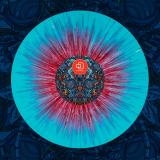
4
Steve Bug and Pornbugs team up on Behind The Glass / On The Swing with remixes from Mihai Popoviciu and Markus Homm.
Unsung House hero, Steve Bug has been there and done it all. Arguably Germany’s most important pioneer, his label Poker Flat has been an epoch-defining imprint. Celebrating 20 years of Bondage Pornbugs are mixing in different circles with recent releases for Selador and Acker Dub, showcasing their crossover appeal with a new generation of DJs.
Opening with ‘On The Swing’ we are delighted by classic deep vibes with a modern twist. Grooevsome and warm, this will get the floor going anywhere in the world. On remix duties, Mihai Popoviciu drops his trademark style, smoothing out the bumps for a deeper ride.
Next up, ‘Behind The Glass’ takes a similar path. Soulful warmth exudes from the speakers as the bumpy bass and echoing keys mark time. Reaching a crescendo with muted acid undertones in the second half keeps attention high and the dancefloor full and happy. For his remix, Markus Homm takes it deeper with shades of Detroit. Liquid cool for the later floors.

Internal Battle sees Indra MC and Jman united over the riddim, each bringing their own unmistakable lyrical fire to the table. This is a heavyweight steppa built for the soundsystem!
Opening with an epic, cinematic intro that builds tension bar by bar before dropping into a thunderous steppa style and pattern. Deep subs, militant drums, and razor sharp flows collide as both vocalists dive into both the chaos and clarity of the mind’s internal war.
Internal Battle captures that raw clash between doubt and determination, shadow and strength. Crafted for late night sessions, stacked speaker boxes, and conscious crowds, this one hits with purpose and power.
- A1: Warm Slime
- A2: I Was Denied
- A3: Everything Went Black
- B1: Castiatic Tackle
- B2: Flash Bats
- B3: Mega-Feast
- B4: Mt Work
The ridiculously prolific Bay Area band Thee Oh Sees are back with another full-length long-player. Warm Slime is guaranteed to please fans of their whacked-out garage / psych / punk jams. Recorded by Sacramento sultan of sound Chris Woodhouse, Warm Slime carries on in the same tradition as the group's previous In The Red release, Help, showcasing their more electrified and rocking side, in comparison to other recent home-recorded releases. The centerpiece is undoubtedly the mind-bending title track, which clocks in at nearly 14 minutes and takes up the entirety of the album's first side. It's a psychedelic epic of "Inna Gadda Da Vida" proportions! John Dwyer's guitar playing is at its quadraspazzed best here, and the vocal interplay with Brigid Dawson gives it a B-52s-at-their-least-cheesy-crossed-with-the- Troggs vibe. The results are stunning. "Thee Oh Sees incorporate the oft-referenced Nuggets stuff in a way that feels reverential. With grinding guitars and bah-bah-bah vocals, but with the punk and new-wave elements also at play, they don't feel trite or plagiarized. This is like meat and potatoes prepared by a master chef-totally familiar but utterly delicious." -Pitchfork Recorded by Chris Woodhouse (Mayyors' guitarist and producer for The A-Frames, Hospitals, Coachwhips, Erase Errata, etc.) This is one of the best sonic blasts you will trash your speakers with this year....Raw, and real! Opening track is 13 minutes long, yes, we'll take it...
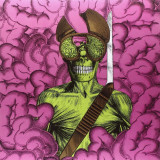
- 1: Carrion Crawler
- 2: Contraption / Soul Desert
- 3: Robber Barons
- 4: Chem-Farmer
- 5: Opposition
- 6: The Dream
- 7: Wrong Idea
- 8: Crushed Grass
- 9: Crack In Your Eye
- 10: Heavy Doctor
What's the first thing you think of when someone mentions Thee Oh Sees? Probably their riot-sparking live show, right? Visions of a guitar-chewing, melody-maiming John Dwyer careening across your cranium, rounded out by a wild-eyed wrecking crew that drives every last hook home like it's a nail in the coffin of what you thought it meant to make 21st-century rock 'n' roll? Yeah, that sounds about right. But it misses a more important point-how impossible Thee Oh Sees have been to pin down since Dwyer launched the project in the late '90s as a solo break from such sorely missed underground bands as Pink and Brown and Coachwhips. (While Dwyer still records songs on his own, Thee Oh Sees is now a five-piece featuring keyboardist / singer Brigid Dawson, guitarist Petey Dammit, drummer Mike Shoun and multi-instrumentalist / singer Lars Finberg.) That restlessness extends to everything from the towering, thirteen-minute title track of 2010's Warm Smile LP to the mercurial moods of 2008's The Master's Bedroom Is Worth Spending a Night In. Now, Thee Oh Sees chase the home-brewed symphonies of Castlemania with the scrappy, high-wire hooks of Carrion Crawler / The Dream. Originally envisioned as two EPs, it was cut live to tape in less than a week at Chris Woodhouse's Sacramento studio in June, reflecting the battering-ram bent of the band's live show better than any bootleg ever could. "As I'm sure most would agree," explains Dwyer, "Castlemania was more of a vocal tirade. This one's meant to pummel and throb." That it does, whether one blasts the slow, speaker-bruising build of "The Dream," the sunburnt organs and dovetailing guitars of "Crack in Your Eye" or the interstellar instrumental "Chem-Farmer," a perfect example of what happens when one takes a well-oiled machine-a gang of rabid road warriors, really-and adds a second, groove-locked drum set to the mix. To listen is to realize that Dwyer's music is as manic as the underground comic inclinations of his artwork; colorful and confusing in a way that's more than welcome. It's downright refreshing, like a slap in the face at 5:00 in the morning. Or, as Dwyer puts it, "You have to leave a mark somehow."

The 100th 7” on Partial Records!
* A portion of sound system niceness from the mighty Vibronics with their trademark digital steppers sound with a bassline that can serious cause damage to speakers.
* `Highstep Dub’ originally surfaced on a Jah Tubbys 10” in 2012. The dubplate cut appears on vinyl for the first time.
