Most of Gen X-ers who grew up in the mid-1980s Indonesia must have seen Soedjarwoto Soemarsono, known with his nom de guerre “Gombloh” performing on a state-run television station, playing some of his biggest hits from that era, pop gems like “Kugadaikan Cintaku (I Pawn Off My Love)”, “Setengah Gila (Half-Crazy).”
But of course, it is not fair to judge Gombloh only from these hits. Dig deeper and you will find buried treasure in his early stuff from Indra Records, and there are many of them.
His album with the band Lemon Tree’s Anno ‘69 (yes, that’s the name of the band) is all remarkable, but what he did for Chandra Records was no less spectacular. How can you go wrong with songs like “Kebyar-Kebyar”, the unofficial national anthem for Indonesia, dan “Berita Cuaca” one of the better epic songs in a catalogue full of epochal songs? These were all long out of print and in our journey to source the original master for these albums we met Bob Djumara of Nirwana Records, the Surabaya, East Java-based label which broke Gombloh into the mainstream in the mid-1980s. Almost all albums Gombloh recorded for his early labels, Indra Records and Chandra Records were critically acclaimed, but commercially they bombed, big time. Nirwana Records came up with an ingenious plan. What if they recorded Gombloh performing live and release it as is. After all, the first song in Gombloh debut record Nadia & Atmospheer is him strumming on his guitar backed by the cheering of a crowd, who could be heard going wild when he hurled that epithet “bastard” at the end of the song
The end result is a brilliant recording which despite being recorded live the sound quality so pristine leading many to doubt the claim of being live. Regardless, Nirwana shipped a decent number of units and Gombloh could buy his first car, a Katana Jeep, with money from the royalty.
One of the best things about Live Gila is its perfect sequencing, beginning with Gombloh’s social commentary on the rich’s debauched lifestyle of preying on young boys and girls, one of the most popular subjects allowed by the censoring machine of the New Order authoritarian government. The second song “Untuk Persada” is a soaring ode to the nation. For this song, Gombloh could be heard drawing his inspiration from The Police, which was undoubtedly popular in the early 1980s, even in a faraway port city like Surabaya.
Listening to this record as a whole (we omitted the last song from the original master tape “Bagimu Negeri” which sounds too jingoistic), we could not help but point to some of similarities it has with Bob Dylan’s Blood on the Tracks. Not a single composition in this record sound indigenous (the Malay-influenced rock of Panbers or Koes Plus come to mind); they all sound modern and effortlessly catchy, and had it not been for the language, this album could be mistaken for a musical output from someone growing up in Laurel Canyon or Southern France.
There are only limited copies of vinyl records in the second-hand market today available for Gombloh music, if at all. For his ardent fans, they have to scavenge for old cassettes to continue to be able to enjoy his music and have to pay top dollar for that. In Indonesia, where he was a superstar in the early 1980s, Gombloh was largely forgotten. With this project, we can only hope that the time is ripe for Gombloh to reemerge and now, more than ever, his music could speak to a bigger audience.
Поиск:spec
Все
Das neue Album der Outlaw-Alt-Folk-Band Tejon Street Corner Thieves, Juxtaposition, vereint Americana, Bluegrass, Folk und Punk in einem selbstbewussten Werk. 'Das Album handelt von Leben und Tod, Liebe und Verlust, Party und Nüchternheit. Es umfasst die große Bandbreite an Emotionen, die wir im Laufe des Lebens unserer Band erlebt haben“, sagt Sänger/Banjo-Spieler Connor O'Neal. 'Wir haben die Unterschiede in unseren Schreibstilen erkundet und sie auf eine Art und Weise kombiniert, die ein Auf und Ab lustiger Party-Jams und ernsthafter und manchmal herzzerreißender Americana-Hymnen erzeugt. Inspiriert von unseren Freunden und unserer Familie war die ganze Welt unsere Leinwand für Juxtaposition.'
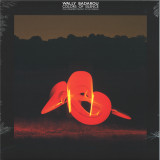
Synth pioneer and musical polymath, Wally Badarou is a genius. But you know that already. A vinyl version of his majestic Colors Of Silence has been craved by the Balearic cognoscenti ever since its low-key 2001 release. Indeed, when we first started work on Be With, we asked some pals with exquisite taste what their dream release would be. We asked Balearic legend Moonboots and, without hesitation, he said Colors Of Silence by Wally Badarou. We didn't know Wally had made this album. And most still don't. But that's about to change.
Colors Of Silence is ostensibly a new age album. As ever though, Wally's sophisticated synth textures and expressive keyboard runs are so full of character, so full of life, that this work of art transcends any easy genre categorisation. It's simply stunning, throughout. It sounds like A.r.t. Wilson or Suzanne Kraft, with traces of CFCF and Jonny Nash. But it was made a good decade earlier than the work of these modern giants. Sometimes, it doesn't seem far from some Larry Heard albums.
Island Records founder Chris Blackwell's friend Nathalie Delon asked Wally to provide music for the yoga DVD she was to release. Lack of time on both sides made them agree on using "quality demos" Wally had in his ideas bank. It's understandable why Colors Of Silence remains somewhat of a lost gem. As Wally explains: "Total lack of promotion made it an 'intimate' release, which was exactly what I was looking for: just a buzz-maker and time-buyer that would allow me to concentrate on the real thing as soon as I'd have time, which could also turn into a rare collecting item later, once the final versions made their way to success. You never know."
Over the years, Colors Of Silence has become a true cult record for the ambient/Balearic heads.
The beguiling but brief "Dance In The Dust" is the shuffling, hyper-percussive, hypnotic opener. It gives way to the deep serenity of "Amber Whispers". It's a gliding, divine, mini melodic masterpiece. It'll make you swoon in its extreme beauty. The bright and breezy "Where Were We" follows, a tropical, reggae-tinged bounce through the islands.
The uptempo groove is maintained on the keys-drizzled soca-funk of "The Lights Of Kinshasa" before Side A is rounded out with "Pictures Of You". It starts with stately, melancholic, unadorned piano and this alone would make for a beautiful song. But Wally always gives us that bit extra and he effortlessly introduces warm, dreamy pads and minimal, slo-mo percussion to augment a frankly stunning piece of work.
Ushering in Side B, Wally's mesmeric piano playing is to the fore again, in the intro to uber-chilled "Serendipity For Two". The playing becomes more mellifluous as the track progresses and adds warmth through exotic percussion, woodwind, sweeping synths and digi-drums. It has echoes of, er, Echoes. It segues seamlessly into the more propulsive, wavy "Smiles By The Millions". If you're not nodding and grinning along widely to the gently throbbing bassline underpinning this, we can't help you. The meditative "Higher Still" follows, cinematic in feel and ever so slightly sinister with the strings. It sounds particularly Badalamenti-esque, if you ask us.
That unmistakable, almost peculiar Badarou funk - so lyrical, so texturally rich and so rhythmically spacious - is all over "Oriental". Next up, "Days To Wonder" brings the serenity back, insistent yet melodic keys, as if played in a place of worship, coupled with birdsong, conjure a kind of instant nostalgia for halcyon days of youth. The contemplative "Dawn Of Europa" is a sombre, beatless, ambient journey whilst the glorious, too-brief "Crystal Falls" features soft percussion and sparkle before fully glistening with some gentle head-nod beats. Wally brings this incredible collection to a mellow, tender close with the graceful "Purple Lines".
There can be few artists more under-appreciated given their vast influence than Wally Badarou. His solo work practically defined the sound of the Balearic DJs of the 1980s, and thus the more sophisticated sound of dance culture thereafter. A synth specialist, Badarou was the long-time associate of Level 42. He was one of the Compass Point All Stars (with Sly and Robbie, Barry Reynolds, Mikey Chung and Uziah "Sticky" Thompson), the in-house recording team of Compass Point Studios responsible for a series of albums in the 1980s recorded by Grace Jones, Tom Tom Club, Mick Jagger, Black Uhuru, Gwen Guthrie, Jimmy Cliff and Gregory Isaacs. Badarou's keyboard playing could also be heard on albums by Robert Palmer, Marianne Faithfull, Herbie Hancock, M (Pop Muzik), Talking Heads, Manu Dibango and Miriam Makeba. He also produced Fela Kuti. Phew!
Meticulously remastered and cut by both Simon Francis and Cicely Balston respectively, it has been pressed to the highest possibly quality at Record Industry in Holland. Special thanks must go to Apiento from Test Pressing who first introduced us to Wally and facilitated all those early zoom meetings. It couldn't have happened without his help. Not least on pulling the art together, too, which features striking original photography by Mads Perch. Benji Roebuck of Roebuck Press did his thing brilliantly in art working the whole package to completion. All in all: essential.
An introduction to our next release that we name DOUBLE JOURNEY.
Featured When we are all truly Free composed by Kuniyuki Takahashi. Taken from the forth coming Translate Pt 2 by Joe Claussell. When we are all Free takes one on a journey into cosmic landscapes and deep though provoking sounds. Residue I Believe by Joaquin Joe Claussell of deep tech house that continues to tap into and express the darker side of Joe Claussell
SORA
It is times such as these that further supports our choice of remedy and why our pursuit to delve deeper into the creative process remains relentless and of profound importance. Due to the unfortunate and dangerous constant overlooking the special gift bestowed upon all of us by the higher power, it calls upon us to continue forward with our mission for productive change which has become ever more crucial to reach. What we're referring to isn't exactly in plain sight for all to see, but obvious enough to those who care to pay attention. However, what has become undeniably apparent to us; is the powerful moving vibration that emits from sound and art and how we connect with them. It is a higher calling that cannot be neither denied nor questioned, and we can only praise the wisdom, truth and love that they bestow upon us. Thoughts like the aforementioned is how and why SORA; an extension of Sacred Rhythm Music & Cosmic Arts, came into existence. Enjoy the Double Journey…
- A1: Emmanuel Feat Little David & Big Youth
- A2: Greater David Feat Big Youth
- A3: Sizzle Bud
- A4: Higher Than High
- B1: Not A Word
- B2: Dubbing Is A Must
- B3: Wake Up Feat Big Youth
- B4: Health Food
- C1: Each Breath I Take
- C2: Hey Geoff
- C3: Higher Than High (Version 2)
- C4: Emmanuel (Version 2)
- D1: Hey Geoff (Extended Loop Mix)
- D2: Dubbing Is A Must (Extended Loop Mix)
- D3: Health Food (Extended Remix)
25th anniversary release of the album from 1998 as expanded special limited edition. It is the eighth Dub Syndicate studio album mixed by Adrian Sherwood. Originally released as catalogue number Lion & Roots 002 in 1998 on Style Scott"s own label here"s the expanded and remastered collector"s limited edition as 2LP-set including six additional tracks not available on the original vinyl release and also as 18-track CD release, with the booklet including excerpts from an unpublished interview. Main vocal contributor is the legendary artist Big Youth plus Little David courtesy J.R. Productions (Junior Reid"s camp), backing vocals by Skip McDonald and Style Scott"s inimitable laughter. The basic tracks were recorded in Jamaica, with some of the pals from the Roots Radics days (i.e. Flabba Holt, Steely Johnson) at Studio 2000 (Steely & Clevie"s studio) and the legendary Tuff Gong Recording Studio, followed by overdubbing in the USA at Greenpoint Studios (Bill Laswell"s studio) and Playroom Studios in New York, with additional overdub and final mix at On-U Sound (London) by Adrian Sherwood.
Frozen reeds presents the only recorded duo playing of two legendary musical figures. Derek Bailey and Paul Motian – two longstanding pioneers of distinct strains of improvised music – came together for a brief period of collaboration in the early 1990s. Tapes of their two known live performances (one at Groningen’s JazzMarathon festival in the Netherlands, the other a year later at New Music Cafe, NYC) were recently unearthed in the Incus archives, and their contents will surprise and delight fans of both supremely idiosyncratic musicians.
The Groningen concert (1990) is released on vinyl, while the New York date (1991) is included with the digital download, free of charge for all purchasers. A conversation between Bill Frisell and Henry Kaiser on Bailey, Motian, their intertwined backgrounds, and the significance of these recordings is included as sleeve-note insert.
“This is one of those moments that we’re always hoping for, and it's so rare. And it's so hard to talk about, because it's so beautiful. It's like you're seeing some new species of plant that you never knew existed or something.” – Bill Frisell
Each player bringing decades of crucial experience to their encounters – with histories taking in vast swathes of the development of jazz and free improvisation – these fleeting shared moments provide some of the most riveting playing in the career of either.
There is precious little recorded evidence of Motian as a free improviser, but his mastery is beyond any doubt in these recordings. From knife-edge precision to textural haze, Motian’s palette is astounding, but perhaps even more impressive is his confidence in the non-idiomatic conversation itself. Pushing far beyond the established vocabulary of free percussion, his playing allows a measured degree of repetition to take form, giving rise to almost song-like structures. The covert influence of the drummer’s work on the post-rock genre (just taking its first nascent steps in the early 1990s) is made overt here.
In turn, Bailey allows some of his most unashamedly melodic passages to unfold without a mote of his trademark contrariness or antagonism. Patterns that would be acerbically disrupted elsewhere are allowed to settle, with variations of note and timbre introduced more gradually than is typical of his playing. When forceful changes in dynamics or tone do arrive, they do so in such close tandem with Motian’s rhythmic and textural transitions as to beggar belief. The guitarist’s duos with percussionists (Jamie Muir, Han Bennink, John Stevens…) arguably provide some of the highlights of his discography. ‘Duo in Concert’ represents a strong addition to the list.
An elegant sense of construction pervades the sets, as the duo ably fulfil the promise of free improvisation: carving out hugely compelling, expertly balanced, and thrillingly paced music as if from thin air.
Taipan Tiger Girls’ third and final LP is a hypnotic, cosmic freakout that combines analogue electronics, drums, guitar and the mammoth drones of the Melbourne Town Hall Grand Organ. Recorded live at Melbourne Music Week in 2017 in front of an ecstatic sold out hometown crowd, this record marks the zenith of the short but incendiary career of an extraordinary band. An instrumental outfit with a relentless drive to experiment, Taipan Tiger Girls are composer, producer and all-round electric statesman Ollie Olsen (WhirlyWirld / Max Q / NO / Third-Eye / Psy-Harmonics), experimental drummer and synth obsessive Mat Watson (Boredoms BoaDrum / E.S.G / ULMD / Other Places), and feedback guitar droner and organist Lisa MacKinney (Mystic Eyes / Hospital Pass / Super-Luminum). On Live At the Melbourne Town Hall they are joined by very special guest guitarist Bonnie Mercer (Grey Daturas/Hospital Pass/Breathing Shrine) with MacKinney commanding the historic Melbourne Town Hall pipe organ. Live at the Melbourne Town Hall is a monument to the combined talents of a group of phenomenal musicians whose fusion created a magic elixir made all the more precious by its temporary nature. Showcasing the improvisatory prowess of the band at the peak of their powers and bolting off into the stratosphere in a thrilling surge of psychedelic expansion. GENRE: EXPERIMENTAL, DRONE, ELECTRONIC, ANALOGUE SYNTH, LIVE, PSYCHEDELIC, IMPROVISED Released in conjunction with Heavy Machinery Records
2LP - 180 Gram Vinyl When Losing A Dream To Reality is the debut album from Swedish alto saxophonist and composer Hannes Bennich. Bennich is one of the most interesting new voices on the Scandinavian scene and presents all-original compositions for his first outing written for his band of pianist Britta Virves, double bassist Tomas Sjödell and drummer Emil Norman. Special guest vocalist Helen Salim joins for one track. The album is based around dream narratives: "I wrote music with different versions of dreams ending up perhaps not the way you want to. Like a winding path that can go in any direction," explains Bennich.
A Flor de Piel, the new album from singer-songwriter and composer Maria Monica Gutierrez (aka Montañera), is a meditative journey of self-discovery across oceans, time, and the traditional confines of genre. Originally from Bogota, Colombia, Gutierrez began the album as a way to explore her identity after a difficult move to London left her feeling untethered in a strange new place. The result is an examination of the immigrant's experience through a rich sonic lens of ambient pop textures, inspired by sources as disparate as Colombian traditional music, traditional Senegalese music, and whalesong from the depths of the Atlantic. The album begins with the title track "A Flor de Piel," Gutierrez's indelible vocals floating above a vast expanse before being joined by deep, silky bass and the plucks of a koto-like stringed instrument. "The song was inspired by traditional Japanese music," Gutierrez explains, "It's about making my heart a little lighter; I know that inside of me I can be as light as mist in heat, I can be fragile as the song of a sparrow." That sentiment perfectly encapsulates much of what makes A Flor de Piel so special. The album comes with a message of healing for all people, without forgetting the centuries of struggle and hurt that form the bedrock of modern society. The track "Santa Mar," for instance, is inspired by the musical traditions of afro-pacific women in Colombia, and the crucial role that they play as peacebuilders in the region. Backed by a hypnotic beat, the song features contributions from marimba player Cankita, alongside Las Cantadoras de Yerba Buena, an all-female vocal group that utilizes traditional Afro-Colombian music to preserve their history and promote peace. Standout track "Como Una Rama" is a futuristic take on bullerengue, a traditional style of music and dance originally developed by Maroon communities on Colombia's Caribbean coast. Deeply affecting, the song combines Gutierrez's indomitable voice with electronics that recall Steve Reich's rhythmic minimalism. "Cruzar," the final track on the album, feels almost like a lullaby, with a meditative harmonic style and trance-like vocal melody. "The lyrics," Gutierrez explains, "are a personal reminder of what is important to me: healing, letting go, breathing, evaporating, forgetting, changing, crystallizing." Across the 40-odd minutes of A Flor de Piel, Gutierrez triumphs at recontextualizing traditional sounds and sentiments into a modern form using synth-based and electronic textures. It's a fitting representation for the personal struggles that the artist endured during her move to London. Rather than dwelling solely on the past Guitierrez uses A Flor de Piel to summon the strength of past generations, and forge a new path forward. As she describes it, "The album has accompanied me through inner journeys of finding myself in a new territory _ of redefining myself, of remembering who I am _ in a strange place." As we drift towards an increasingly frightening and uncertain future, perhaps Montañera's A Flor de Piel is exactly what we need: something to give us strength, to bring us peace, and to accompany our journey into a strange new place.
- Demons Are Real (1:39)
- Pimple Zoo (1:33)
- M Not Looking) (3:27)
- Exit Flagger (2:14)
- Sleep Over Jack (3:00)
- Girls Of Wild Strawberries (2:33)
- Navigating Flood Regions (2:46)
- Gold Star For Robot Boy (1:58)
- Window Of My World (3:08)
- Redmen And Their Wives (4:06)
- Dayton, Ohio - 19 Something And 5 (2:11)
- My Impression Now (2:23)
- Do The Earth (3:22)
- Game Of Pricks (2:23)
- Secret Star (7:31)
- My Kind Of Soldier (3:29)
- Sad If I Lost It (3:33)
- Cut Out Witch (3:33)
- Gonna Never Have To Die (2:32)
- Best Of Jill Hives (2:50)
- Watch Me Jumpstart (2:51)
- Tractor Rape Chain (2:56)
- Buzzards And Dreadful Crows (1:57)
- Pendulum (2:03)
- Murder Charge (2:53)
- Fair Touching (3:33)
- Teenage Fbi (2:57)
- Glad Girls (3:59)
- I Am A Scientist (2:48)
- Echos Myron (2:44)
The latest release from the acclaimed Live From Austin, TX series of releases from the vaults of the award-winning PBS Austin City Limits TV show. Guided By Voices are one of indie rock s most loved and prolific bands. On their 2004 farewell tour they performed one of their final concerts on Austin City Limits. Recorded on live on 24 tracks, this special 2CD set features 30 songs from their entire performance. Many of the songs were never aired on the TV broadcast.
Matt Berry releases a unique collaboration with esteemed Library Music label KPM. KPM is renowned for providing the musical bedrock for so many classics of British TV and international cinema, using the best British composers such as Keith Mansfield, Alan Hawkshaw, John Cameron and Alan Moorhouse to do so. ‘Simplicity’ follows in the footsteps of these giants and is a worthy successor to them. Alongside his formidable acting career, Matt Berry has released a series of acclaimed albums on the Acid Jazz label. Ranging from the folk stylings of ‘Kill The Wolf’, the ambient electronica of ‘Music For Insomniacs’, to the psych rock of ‘Blue Elephant’, these have marked Berry out as an impressive musician and recording artist in his own right. Embodying the form of KPM’s original LPs geared towards film and television pitching, the album consists of 11 sharp and vibrant instrumentals, which will no doubt be heard in productions for many years to come. Released in special collaboration with Acid Jazz, the album is presented in a beautiful graphic sleeve, with notes that allude to the original KPM releases, for something that is instantly hip and familiar, yet unmistakably new.
Neroli release n. 60 and is indeed a special one…Dominic Stanton aka Domu is back! Not much else to add really, as a return of a Domu release after more than 10 years of absence from the scenes should already say it all! These brand new songs still have all his signature elements but with a modern twist, and feature the vocals of Hiatus Kaiyote’s Lori on the breathtaking ‘On The Line’, the skills of K15 on ‘Ya Nah Gonna Get It’ and the help of long time collaborator
Marin on bass! A unique sound that we missed so much….
- A1: Viers - The Club Is My House (Hardspace Mix)
- B1: Resist 101 - Impulse 101 (Hardspace Mix)
- B2: Viers - Some Weird Drum Shit (Hardspace Mix)
- C1: Perry & Rhodan - The Beat Just Goes Straight On And On (Hardspace Mix)
- D1: Helena Hauff - Rupture (Hardspace Mix)
- D2: Ectomorph - The Haunting (Hardspace Mix)
Len Faki recently put out his mammoth LP Fusion, but his new moniker Hardspace finds him harking back to his signature style of specifically editing tracks for his personal club usage.
Working on the album may have helped open him up creatively, but this new project has him investing countless hours and a lot of passion into building the most efficient club tracks imaginable.
Long-time fans of Faki know that he's always edited all of his sets' tracks to uniquely suit his personal mixing style, making his sets sound as tight and cohesive in a way that stands out from the rest. Decades of experience as a producer and DJ for the dancefloor have gone into these edits, re-arranging and re-mixing sometimes forgotten tracks for a new audience. Incorporating his singular understanding of frequencies and floor dynamics, Hardspace is meant to express this side of his musical personality, while Len Faki will continue to explore a more varied approach to producing.
Swapping a lot of weekends away busily touring for much more studio time, the result marks both a technical and also personal achievement for Faki. Improved production skills, tears and emotions all have been poured into Hardspace, which will see a slew of releases in the forthcoming months.
The first volume includes a total of six reworks, both previously unreleased tools of colleague Viers or Helena Hauff's modern acid chug, as well as some 90's classics from Perry & Rhodan, Resist 101 and Ectomorph. All of these tunes have been meticulously pieced together to keep the originals' flavor and ideas, but infuse them with the undeniable power and presence that all Faki produtions have come to hold.
Faitiche releases the album Improvisations And Edits, Tokyo 26.09.2001 on vinyl for the first time. For the original 2002 CD on Soup-Disk and Sub Rosa (Audiosphere), Jan Jelinek and the Japanese trio Computer Soup (Satoru Hori – trumpet, Osamu Okubo - toys & electronics, Kei Ikeda - toys & electronics) presented eight tracks all recorded one afternoon in the trio’s living room in Tokyo. They are excerpts from a joint group improvisation that subsequently underwent rudimentary editing, on which Jelinek and Computer Soup worked separately.
Jelinek met the three musicians at his first concert in Japan in 2001, at Tokyo’s Yellow club, where Computer Soup performed as the support act. Delighted by their free improvisation on pocket-sized electronic toys, trumpet and oscillators, he arranged to meet Hori, Okubo and Ikeda a few days later for a session at their apartment. The resulting three-hour recording, made on their living room floor, formed the basis for Improvisations and Edits. A few days later, Jelinek returned to Berlin. Over the following months, they separately chose passages from the recording that were then edited and assembled into an album.
Formed in Tokyo in 1996 as a quintet (including Shusaku Hariya and Daisuke Oishi), Computer Soup began by performing with acoustic instruments on the streets of Shibuya. Ikeda und Okubo soon switched instruments, and from then on the group’s minimalistic but densely woven sound was defined by electronic toys, oscillators and Satoru Hori’s trumpet. Their first album was released in 1997 on the Japanese label Soup Disk. Eight further releases followed.
From the reviews of Improvisations and Edits, Tokyo 26.09.2001 in 2003:
"The mind-blowing first track Straight Life is perhaps the best example of what the album has to offer. Jelinek's trademark smears and washes occupy the midrange, like ghosted images of Joe Zawinul's electric piano floating quietly in the wind. DSP jazz modes are set against a walking bassline (possibly computer generated) and a gently tooted trumpet complete with Harmon mute, a dead ringer for Miles Davis' Prestige-era ballads. The effect is something like a three-dimensional film, with different realities on each layer; images of what jazz was manage to interact with a real-time demonstration of all it could be."
pitchfork, 2003
"Improvisations and Edits is a warm and mellow Ambient release with beautiful glitch fragments, static noise bursts and real trumpet intersections. However, there are times where it is the exact opposite, mainly effect-laden, overdriven and bouncy with a lack of melodies and focus, so be aware of these specific tracks."
ambientexotica, 2003
"Often deliciously dreamy and hazy, Improvisations and Edits is like listening to an exceptional instrumental jazz performance while half-conscious or under some sort of chemical influence. Computerised blips and bleeps, loops and treatments and murky sonic skips curl up around desolate horn notes and scattered instrumental noises that culminate in elegant music."
exclaim.ca, 2003
180g virgin vinyl pressing, limited edition of 1000 copies only - the complete album + 1 bonus track With her intriguing, smoky voice and her graceful, behind-the-beat phrasing and ironic interpretations of song lyrics, Carmen McRae (1922-1994), who started her career as a pianist, became one of the most memorable vocalists in jazz. McRae sang in jazz clubs throughout the United States - and across the world - for over fifty years. 'After Glow' presents Carmen accompanying herself on piano on four tracks backed by a trio that includes her husband Ike Isaacs on bass, and Specs Wright on drums. For the remaining tracks, Carmen gives way to pianists Ray Bryant and Ronnell Bright joining the trio, each taking four songs apiece
Teramo, Italy's Inutili, return with their fifth full-length album, "A Love Supreme." It's a departure from the band's last albums After a long lockdown, Inutili discovered the pure pleasure of playing music together. In their own words: The album was made simply and naturally through free and psychedelic jam sessions in the band's rehearsal room. A declaration of love for music, just a holy respect for music without schemes: A Love Supreme! Inutili is Alessandro Antinori (bass, guitar), Pietro Calvarese (guitar, vocals), Giancarlo Di Marco (guitar, bass) and Lorenzo Mazzaufo (drums, percussion, vocals). Special Guest: Francesco Gaspari (synthesizer, programming)
This brand new EP from the Cornish improv noise / post-rock / shoegaze trio is their first release since their acclaimed second album Sleepover, which came out at the end of 2021. It features two long tracks and vocals from their Sonic Cathedral bandmate Lorena Quintanilla from Lorelle Meets The Obsolete. “One of our recording sessions resulted in a couple of tracks that had a very different energy to what we’ve recorded to date because there was less of a motif-based approach to them, which made them kind of scenic,” explains Mildred Maude guitarist Matt Ashdown. “We felt like they were the best opportunity we’ve had for doing a collaboration. We’ve played a few shows with Lorelle Meets the Obsolete and really clicked – we love what she does in that band and also as J. Zunz – so we asked her to do both tracks. It feels completely right – a natural pairing.” “I love collaborations and this one was really special,” adds Lorena. “I feel honoured to be part of this EP. I always enjoy seeing Mildred Maude, I feel that one can grasp eternity during their sets. With ‘Half The Sky’, the vocal melody and lyrics came out immediately, I felt like I was in a room jamming with them and everything was slowly flowing and growing. As for ‘Shifting’, it was another story. It is such a beautiful song, and I didn't want to mess it up. They liked one of the takes I sent, so I kept on that track for the first part and for the end I looped vocals on my DL4.” “Vocals change everything and give it a different air of completeness, but Lorena understands our music, so she was able to maintain its looseness,” concludes Matt. “We’re stunned by what Lorena has done; she’s given both tracks a different life
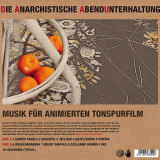
"Musik für animierten Tonspurfilm", the twelfth album by Die Anarchistische Abendunterhaltung (or DAAU, as they are commonly known), is the soundtrack to a series of short, abstract animation films by Rudy Trouvé, who also acted as a creative director during the recording process.
The music originates from acoustic improvisation sessions by accordionist Roel Van Camp, clarinetist Han Stubbe, double bass player Hannes D'Hoine and percussionist Jeroen Stevens. These took place according to conceptual guidelines set by Trouvé. Sometimes the starting point was a play on words or a random chord sequence, sometimes a specific atmosphere, but the playing field was always kept deliberately limited. Hence, the musicians were forced to build a musical structure with minimal means. The result was cut on cassette, after which the Antwerp enfant terrible - Rudy Trouvé-, known from his work with dEUS, Kiss My Jazz, Gore Slut and I H8 Camera among others, happily hit the tracks with a virtual sledge hammer. DAAU's pieces were cut up, sampled, drastically restructured and pasted together again, a method that had been applies earlier on the retrospective album 'Hineininterpretierung' (2017). On top of that audio collage, the musicians added new electronic layers, using a digital accordion, synths, digital bass and marimba. DAAU says: 'On the soundtrack, like on the older record, we were looking for a symbiosis between an acoustic and electronic sound. And there too we messed around with dub and Krautrock references'.