Newcomer Hekla releases her uniquely beautiful debut album for solo theremin and voice Á through Phantom Limb Records - run and curated by former FatCat Records, Thrill Jockey and Royal Albert Hall execs James Vella, Ken Li and Mark Pearse.
A Berlin-residing Icelander, Hekla's sparse, delicate, fractal music exists within these two worlds: dark and magical as Iceland's permanight folklore; and (though beatless) as deeply sonic and intense as Berlin's electronic scene. A long-term scholar of solo theremin, Hekla (shortened from her own name Hekla Magnúsdóttir) uses her instrument as an otherworldly and highly evocative Siren-call. A spectral, wailing, howling, lamenting yearning second-voice that underpins a soft vocal delivery, as if her studio had been haunted with a chorus of ghostly backing singers.
While a handful of reference points share a similar ground to Á - Colleen's interplay of voice and instrumentation; the richly immersive filmscore work of sadly passed fellow Icelander Jóhann Jóhannsson's; 'grandmother of theremin' Clara Rockmore's close relationship with such a singular instrument; Julia Holter's intelligent and classically-aligned songwriting - Hekla's music still exists singularly. A one-off talent, emerging from no particular scene, ascribing to no particular rules.
As a creative tool, the theremin - bizarre, unique, rarely heard - can be expressive, intuitive and highly adaptable. In Hekla's hands, her instrument covers an enormous range, from skittering birdsong of high frequency chirrups and chirps, to grinding, tectonic sub-bass. We are given the throbbing, apocalyptic dread of 'Muddle' and the baroque beauty of traditional Icelandic hymn 'Heyr Himna Smiur' in sequential tracks on the album's a-side. Appropriately, she also writes that the album title - Á - is similarly multifaceted in her native Icelandic: 'a river is an á and also it means ouch like when you hurt yourself, and also when you put something on top of something you put it á (on) something.'
The album was written and self-recorded by Hekla in her home studio in Berlin around her son's daycare schedule. Icelandic super-musician Mr Silla (a part-time múm member) guests on a number of tracks. Tallinn-based engineer Jose Diogo Neves - a stalwart of Icelandic and Portuguese music - mixed and mastered Á.
James Vella formed Phantom Limb in June 2017 after eight years in A&R for FatCat Records. Mark Pearse (formerly head of contemporary music programming at the Royal Albert Hall) and Ken Li (formerly of Thrill Jockey, now of Nettwerk) joined the team shortly after.
quête:spectral records
Fusing dexterous hand-percussion, hypnotic guitar riffs & soaring melodies, Waaju rise from London’s rich cultural palette with their latest album ‘Grown’, proving UK Jazz doesn’t have to sound the way we expect it to. Led by drummer and percussionist Ben Brown (Alfa Mist, Dizraeli, Ashley Henry), the band comprises percussionist Ernesto Marichales (Jordan Rakei, Sigala), guitarist Tal Janes (Nubiyan Twist, Bahla), Sam Rapley (Fabled, Maria Chiara Argiro) and Joe Downard (China Moses, Judi Jackson), each with their own strong presence on the UK’s extensive music scene. Waaju’s refined and divergent sound connects the dots between the likes of Ali Farka Touré, Alain Peters, Los Muñequitos de Matanzas, Oscar D’Leon and Beth Carvalho. Waaju formed as a means of exploring music’s hidden connections, from trance-inducing Moroccan Gnawa to Caribbean carnival music, and embracing them to reflect different shades of London’s own musical culture. It was the band’s love for Mali’s folk music – and Ali Farka Touré’s stylistic prowess in particular – that first set the project in motion. London’s Jazz Cafe invited Waaju to reinterpret classic tracks from Farka Touré’s catalogue to sold-out audiences in 2018 and 2019. According to Brown: “Ali’s one of the best. He has such a unique sound. His playing is so gnarly. His spirit and attitude are things I always think of when making music.” Waaju (meaning ‘to urge, inspire or influence to take action’ in Malian language Bambara) blends pulsing Latin polyrhythms, psychedelic Malian blues licks and cinematic textures. Following the group’s 2018 self-titled debut record, Grown presents a group more unified and distinctive-sounding than ever with six fresh, bold compositions. The record begins with Moleman, a potent reminder of the intricacy and energy Waaju’s become known for. Gritty, clattering metal defines the landscape for sizzling builds, hinting at rave culture styles like Bashment and Jungle. Listening Glasses follows and it’s clear why this is the album’s lead single – its Afrobeat-like energy and joyful interplay between guitar and tenor sax lies somewhere between Tony Allen’s grooves, Chimurenga guitar and Headhunters’ funk. On late night jam Rollando, Joe Downard’s skulking bass frequencies rule and wonkiness reaches new heights as heavy dub grooves almost tear themselves apart. Time’s Got a Hold was co-written by Waaju and Jordan Rakei for a show together in November 2018. Kicking off side B, this version features special guest vocalist Will Heard over bouncing triplets evocative of 1970’s Sega from La Reunion. A kind of looseness found only at night, the quiet drive of Wassoulou is sparse yet purposeful. Pulling back the tempo and dimming the lights, cavernous percussion fills each corner of the room, springing back as spectral reverbs. The title and final track shows the many dynamic sides of the outfit’s far-reaching sound, with its expansive harmonies and explosive psychedelia, spanning Yoruba Andabo to Hendrix, signing off an exciting and energetic second LP from Waaju at their most scintillating.
Iconic cultural engineer and prolific music pioneer Daniel Miller, aka The Normal responsible for the timeless post-punk / wave classic “Warm Leatherette” and founder of Mute Records, collaborates with avant-techno artist Nicolas Bougaïeff to instigate another revolution with the inaugural release as Populist on Avi Caspi’s newly founded imprint The Temple and The Low Dive. Miller and Bougaïeff provide four purist modular techno explorations that are prepared to carry the listener into stellar dimensions. Introductory A1 track “Center” is a sophisticated, minimalist, stripped down piece with dynamic elements and a cinematic aesthetic that introduces the mood of the entire EP, defined by spectral micro movements and a touch of liquid textures.
Further navigation through the EP reveals more of the aesthetic intent while, at the same time, retaining a specific uniqueness found in each track. There is a definitive interstellar cosmic feeling throughout that brings the future back to the present and with B2 track “Temple” we discover that Miller and Bougaïeff are no strangers to a provocative and discerning dancefloor. “Temple” guarantees ecstatic dance floor moments that define experience. The digital bonus track “Dogma” continues to keep up the pace and here is what will be imminently essential for any serious purveyor of explorative techno to include in their repertoire.
This first installment on The Temple And The Low Dive gives us something that is as special as it is unique, paying homage to one of electronic music culture’s most admired artists and icons, and introducing the world to new artists and proponents of the global electronic scene, Caspi and Bougaïeff. TIP!
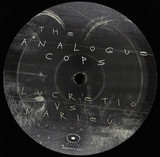
After the successful first volume of their split collection, Lucretio
and Marieu a.k.a. The Analogue Cops come back on Memento with a
breathtaking four tracks E.P..
Lucretio delivers two cuts written and produced with the extraordinary
Kyma workstation: “Ghetto Stab” is an heavy DanceMania influenced
party banger while “Any Idea” is a deep techno journey into the realms of spectral manipulation.
Marieu brings in all the hardware horsepower romanticism with “Tab and Rub” and “The Restored Text”; the first being acid excursion into the memories of the earl From days, the second interpolating massive kick drums and saturated harmonics with frantic vocal samples.
A record not to be missed!
Supported by: Rhadoo, Ame (Kristian), Dj Ralf, Marco Faraone, Arnaud Le Texier, Ilario Alicante, The Wasp, Shlomi Aber, Richie Hawtin, Joseph Capriati, Maceo Plex, Marco Carola, Francesco Farfa..
New asset on the granted Future Me Records: up-to-date hostile trio project, nomads from the unknown suburb. 4 grungy ritualistic tunes building up a hedonistic code for the dancefloor.
Spectral fog on “Tuxedo” opening the EP, increasing the voodoo environment with “Lebabon”. It falls to the slow-erosion beat “Ancient Prog” to shut the A side.
An obscure timbre marks the B side: it’s the stabbed rough track “Torpedo”!
Ending with the very radical Kluentah’s imprint assaulting “Torpedo” — crafting a nasty remix which whips out the deranged flesh of the original track.
Ryan Crosson takes care of the fifth EP on tastemaking Detroit label My Baby Records with a fantastically forward-looking four-track vinyl offering. Ryan Crosson is a complex artistic creature who has roamed far and wide in his storied career. His always innovative music has come on groundbreaking labels including Wagon Repair, M_nus, Spectral Sound, and of course his own Visionquest. Each time he explores a new sound world and draws on things as diverse as musique concrète, Downtown New York funk, and East African jazz. Now he cooks up more beguiling brilliance on this fresh new EP. Opener ‘Speaker Dubs’ is a deep, bubbly rhythm track with dub chords rippling out to infinity. It’s a stylish track full of far-sighted reverence and supple groove that locks you in a trance. ‘Ogilvie’ is a piece of absorbing ambient with found sound recordings of muffled voices that sounds like you’re in an underground station. B-side opener ‘FutureTheory’ is another minimal masterpiece with glitchy sound design and eerie chords peeling off a tight, kinetic groove. Ghoulish voices add more late-night atmosphere and the whole track grows ever darker and more consuming as it unfolds. The excellent ‘OortCloud’ takes you back to the heart of a dance-floor with futuristic menace: the smooth drum loops are militant, the voices are dehumanised and the searching synths speak of a desolate landscape. It’s heady, brilliantly bleak stuff that is utterly infectious. This is another hugely inventive EP from one of the underground’s most consistent talents
Tripeo collaborates with fellow Dutch artist Cadans on his self-titled imprint with three original cuts entitled ‘Non Perfect Drone Replication’.
Over the years, Darko Esser aka Tripeo has become a truly respected figure within the techno world. Widely known for helming his acclaimed Wolfskuil Records, BALANS and self-titled label where he’s released an array of his own impressive productions, Darko continues to edge out a corner of the techno sphere through a regular gig and release schedule that’s been of consistent quality for over 20 years. ‘Non Perfect Drone Replication’ marks Tripeo’s first release of the new decade seeing him link up with Dutch producer Cadans who has releases on Clone, Neighbourhood and Hardgroove (when not producing drum and bass as Icicle).
‘Drone’ begins with tense atmospheres and haunting leads underneath the humming percussion and oscillating synths that surge as the track progresses before ‘Non PC’ employs energetic rhythms underneath wavering modulations and spectral tones that keeps this peak-time cut enticing through till the end. To finish, ‘Perfect Replication’ offers up an electro cut that’s peppered with a nostalgic yet modern feel through breaky grooves, alleviating pads and stabbing tones.
“We shan't have any more trouble from that meddling Doctor!” Demon Records presents a double bill of unique full-cast BBC radio adventures for Jon Pertwee as the Third Doctor, based on the enduringly popular BBC TV series. The Paradise of Death reunites the Doctor, Sarah Jane Smith and the Brigadier for an adventure that takes them from Hampstead Heath to the far-flung planet of Parrakon, where they face dangers aplenty from the hostile Freeth and Tragan.
In The Ghosts of N-Space, which features Jon Pertwee’s final performance as the Doctor, the Time Lord is in Sicily where he discovers trouble in the form of spectral monsters from another dimension. Presented across 3LP x 12” 180g Heavyweight Blue Vinyl & 3LP x 12” 180g Heavyweight Yellow Vinyl, these two fast-paced adventures were specially written for radio by former Doctor Who
producer & writer Barry Letts. Co-starring Elisabeth Sladen and Nicholas Courtney, both also feature the incidental music and Doctor Who theme arrangement of Peter Howell of the BBC Radiophonic Workshop. Among the supporting cast for the stories are Maurice Denham, Sandra Dickinson, Harold Innocent, Peter Miles, Richard Pearce, Harry Towb and Stephen Thorne. Accompanying the coloured vinyl LPs are full episode billings, cast and credits, and six illustrated
sleeves that form a superb double-sided artwork montage. Dummedy-dum, Dummedy-dum, Dummedy-dum, Dum-dum…
As electronic musician Lorenz Brunner sketched his vision for the first Recondite full-length on Ghostly in five years he took a step back to assess who and where he was as an artist. 2013’s Hinterland accelerated a progression — he’s since been touring around the world and releasing music with labels such as Hotflush and his own Plangent Records — yet, for him, the album cast a shadow of pressure that widened over time. As with most art forms, perhaps especially music, there is an expectation to change, to creatively pivot elsewhere with each project. After careful consideration, Brunner rejects this notion with his new work, opting alternately to use the icy Hinterland as an aesthetic and tonal template for a like-minded map of evocative compositions aptly titled after the German word “stillstand,” now presented as Dwell.
“I am coherent with what I do, even if I’m not reinventing myself,” Brunner says contentedly. In regards to the album title, he adds, “It’s like when you’re on a hike and you stop and look at the scenery; you may know which path you want to go next but right now you are dwelling.” The title also doubles as a reference to everyday domestic life, a restorative haven for Brunner between tours. Like Hinterland, he incorporates a subtle range of field recordings to intensify the textural atmosphere. While he worked at home on “Mirror Games,” Brunner noticed the buzz coming from across the room, where his wife was using an electric toothbrush, naturally harmonized with the track. He decided to push that frequency further and record the device directly, syncing vibrations for added urgency across the propulsive piece as well as parts of the ambient “Interlude 2.”
Windswept, moody, and melodic, moments on Dwell linger with emotional resonance. The title track sends an eerie synth loop through a field of techno kicks. The beats recede for a breather four minutes in as if to survey the surroundings. If Brunner pivots anywhere — possibly just a new perspective afforded by being confidently stationary in his craft — it’s by leaning more into hip-hop structures. He’s an avid rap fan and his love for those production techniques is notably present on “Nobilia,” a queasy shuffler (titled in reference to the Super Nintendo game Secret of Evermore), “Interlude 1,” which skitters in lockstep with contemplative synth chords, and “Surface,” an isolatory, ruminative sequence. The closer “Moon Pearl” soothes and shimmers like its namesake, a cherished gem in The Legend of Zelda series that allows carriers of the gem to retain their shape and essence in the Dark World.
In an era where constant reinvention and highly self-reflexive brand awareness reigns supreme in the music industry, Brunner as Recondite does something many artists try to avoid, he dwells in his own established identity, one that has garnered him a devoted fanbase. His murky electronic productions, built around mirage-like pads and clipped drum programming, have proven to be highly functional and spectrally enveloping; Dwell is not a return to form, it is a further study of the shapes, it is the modes, and the structures Brunner has trademarked.
As electronic musician Lorenz Brunner sketched his vision for the first Recondite full-length on Ghostly in five years he took a step back to assess who and where he was as an artist. 2013’s Hinterland accelerated a progression — he’s since been touring around the world and releasing music with labels such as Hotflush and his own Plangent Records — yet, for him, the album cast a shadow of pressure that widened over time. As with most art forms, perhaps especially music, there is an expectation to change, to creatively pivot elsewhere with each project. After careful consideration, Brunner rejects this notion with his new work, opting alternately to use the icy Hinterland as an aesthetic and tonal template for a like-minded map of evocative compositions aptly titled after the German word “stillstand,” now presented as Dwell.
“I am coherent with what I do, even if I’m not reinventing myself,” Brunner says contentedly. In regards to the album title, he adds, “It’s like when you’re on a hike and you stop and look at the scenery; you may know which path you want to go next but right now you are dwelling.” The title also doubles as a reference to everyday domestic life, a restorative haven for Brunner between tours. Like Hinterland, he incorporates a subtle range of field recordings to intensify the textural atmosphere. While he worked at home on “Mirror Games,” Brunner noticed the buzz coming from across the room, where his wife was using an electric toothbrush, naturally harmonized with the track. He decided to push that frequency further and record the device directly, syncing vibrations for added urgency across the propulsive piece as well as parts of the ambient “Interlude 2.”
Windswept, moody, and melodic, moments on Dwell linger with emotional resonance. The title track sends an eerie synth loop through a field of techno kicks. The beats recede for a breather four minutes in as if to survey the surroundings. If Brunner pivots anywhere — possibly just a new perspective afforded by being confidently stationary in his craft — it’s by leaning more into hip-hop structures. He’s an avid rap fan and his love for those production techniques is notably present on “Nobilia,” a queasy shuffler (titled in reference to the Super Nintendo game Secret of Evermore), “Interlude 1,” which skitters in lockstep with contemplative synth chords, and “Surface,” an isolatory, ruminative sequence. The closer “Moon Pearl” soothes and shimmers like its namesake, a cherished gem in The Legend of Zelda series that allows carriers of the gem to retain their shape and essence in the Dark World.
In an era where constant reinvention and highly self-reflexive brand awareness reigns supreme in the music industry, Brunner as Recondite does something many artists try to avoid, he dwells in his own established identity, one that has garnered him a devoted fanbase. His murky electronic productions, built around mirage-like pads and clipped drum programming, have proven to be highly functional and spectrally enveloping; Dwell is not a return to form, it is a further study of the shapes, it is the modes, and the structures Brunner has trademarked.
As electronic musician Lorenz Brunner sketched his vision for the first Recondite full-length on Ghostly in five years he took a step back to assess who and where he was as an artist. 2013's Hinterland accelerated a progression he's since been touring around the world and releasing music with labels such as Hotflush and his own Plangent Records. His new album uses the icy Hinterland as an aesthetic and tonal template for a like-minded map of evocative compositions aptly titled after the German word "stillstand," now presented as Dwell. Windswept, moody, and melodic, moments on Dwell linger with emotional resonance. The title track sends an eerie synth loop through a field of techno kicks. The beats recede for a breather four minutes in as if to survey the surroundings. If Brunner pivots anywhere - possibly just a new perspective afforded by being confidently stationary in his craft - it's by leaning more into hip-hop structures. He's an avid rap fan and his love for those production techniques is notably present on "Nobilia," a queasy shuffler (titled in reference to the Super Nintendo game Secret of Evermore), "Interlude 1," which skitters in lockstep with contemplative synth chords, and "Surface," an isolatory, ruminative sequence. The closer "Moon Pearl" soothes and shimmers like its namesake, a cherished gem in The Legend of Zelda series that allows carriers of the gem to retain their shape and essence in the Dark World. Recondite does something many artists try to avoid, he dwells in his own established identity, one that has garnered him a devoted fanbase. His murky electronic productions, built around mirage-like pads and clipped drum programming, have proven to be highly functional and spectrally enveloping; Dwell is not a return to form, it is a further study of the shapes, it is the modes, and the structures Brunner has trademarked.
London’s Axe On Wax Records have been coordinating a quality stream of house since 2014, a trend that continues with their latest release from Zopelar vs Brothermartino. Creating a fraternal connection between Brazil and Italy, these are six tracks of woozy, charismatic house funk of the finest pedigree.
Zopelar - one half of Apron Records associates My Girlfriend - takes the first-side easing in with 'Fin', a starry-eyed and expansive instrumental that let us know immediately what his synths can do. Taking this shimmering sound, he adds distinct pressure funk on the bubbling, West Coast groove of the tellingly titled, ‘Funky Juno’, which delights with sensual vocoder and tough drums. ‘Thamis’ is left to take things in a more psychedelic direction, with Zopelar pushing his studio into fizzy, almost anti-gravitational territory.
On the flip, Brothermartino (Money $ex Records) establishes a sensual atmosphere with the lo-slung slap of ‘For 8 Freakin' Hours’, followed by ‘Dem Type Stars’, which stretches out the acidic funk, creating wormholes of spectral grooves. The release closes with the warm and nostalgic ‘We All Love People Who Die’, a cool, beatless interjection loaded with the charm of a cult film soundtrack.
Carla dal Forno announces her second full-length album, Look Up Sharp , on her own Kallista records.
Dal Forno beckons a bold new era in her peerless output pushing her dub-damaged DIY dispatches to the limits of flawless dream-pop. In a transformative move towards crystal clear vocals and sharpened production, Look Up Sharp is an evolutionary leap from the thick fog and pastoral stillness of her Blackest Ever Black missives, You Know What It’s Like (2016) and The Garden EP (2017). Three years since her plain-speaking debut album, the Melbourne-via-Berlin artist finds herself absorbed in London’s sprawling mess. The small-town dreams and inertia that preoccupied dal Forno’s first album have dissolved into the chaotic city, its shifting identities, far-flung surroundings and blank faces. Look Up Sharp is the story of this life in flux, longing for intimacy, falling short and embracing the unfamiliar. Dal Forno connects with kindred spirits and finds refuge in darkened alleys, secret gardens and wherever else she dares to look.
In her own territory between plaintive pop, folk and post-punk dal Forno conjures the ghosts of AC Marias, Virginia Astley and Broadcast through her brushwork of art-damaged fx and spectral atmospheres. The first half of the record is filled with dubbed-out humid bass lines, which tether stoned hazes of psychedelic synth work as on ‘Took A Long Time’ and ‘No Trace.’ These are contrasted with songs like ‘I’m Conscious and ‘So Much better’ that channel the lilting power of YMG and are clear sequels-in-waiting to dead-eyed classics like ‘Fast Moving Cars.’
The B-side begins with the feverish bass and meandering melody of ‘Don’t Follow Me,’ which takes The Cure’s ‘A Forest’ as its conceptual springboard. It’s the clearest lyrical example since ‘The Garden’ of dal Forno’s unmatched ability to unpick the masculine void of post-punk and new wave nostalgia to reflect contemporary nuance. Look Up Sharp reaches its satisfying conclusion with ‘Push On’ - dal Forno’s most explicit foray into an undiscovered trip hop universe between Massive Attack and Tracey Thorn. The album’s last gasp finds personal validation in fragility: ‘I push on / I’m the Place I’m Going,’ a self discovery lifted by reverberant broken beats and glass-blown vocals.
Adding further depth to Look Up Sharp are the instrumentals, which flow seamlessly between the vocal-led pieces. ‘Hype Sleep’ and ‘Heart of Hearts’ drink from the same stream as The Flying Lizard’s dubbed-out madness and the vivid purple sunsets of Eno’s Another Green World. While ‘Creep Out of Bed’ and ‘Leaving for Japan’ funnel the fourth-world psychedelia of Cyclobe’s industrial-folk into the vortex of Nico’s The Marble Index.
Conceived as a whole, Look Up Sharp is a singular prism in which light, sound and concept bend at all angles. A deeply personal but infinitely relatable album its many surfaces are complex but authentic, enduring but imperfect, hard-edged but delicate. A diamond. Look up sharp or you’ll miss it.
We are honored to release the debut album from Violet, the alias of Inês Borges Coutinho, Lisbon born and raised DJ, producer boss of Naive records, co-founder of Rádio Quântica, and mina resident. Violet began producing music in 2012 and has released music on One Eyed Jacks, Love on the Rocks, Paraíso and Naive. Inês uses her seemingly boundless energy to amplify other artists all the while progressing her own creative practice.
‘Bed of Roses’ contains 10 songs made as a sort of childhood-teenage memories diary, a return to things Inês liked then and also the difficult things she’s been through. The feeling behind the album is self forgiveness in an optimistic way but also in an adult way, aware of the bruises (thorns) but also of the invaluable love and life experiences (roses). The title comes from the Bon Jovi song that Inês loved as a 9-year old and doubles as an intent of positivity paired with the inescapable darkness of life. Inês says, “I wrote this music as a healing device that I hope can somehow help heal others too.” All songs have been mastered by George Horn at Fantasy Studios. The jacket features an original design by Eloise Leigh that incorporates themes of self-inspection and hope mixing a teen bedroom girly vintage scrapbook aesthetic with contemporary 3D mapping techniques. Each LP contains a postcard featuring a childhood photo of Inês with notes.
(Limited edition of 300 copies on clear & black marbled vinyl with full printed sleeve and textured coloured printed insert)
This is the 1st vinyl release on a quiet RIOT, an independent electronic music label based in Scotland.
Following his Interferenza cassette for Osiris Music, Berlin-based sound artist Adam Winchester returns with a new body of work that sees him embracing ever more forthright rhythms while adhering to his established lines of sonic enquiry.
With roots in the Bristol dubstep scene and a long-standing partnership with Christopher Jarman in Dot Product, Winchester has spent the past few years investigating alternative methods of sound generation that deal in hidden electromagnetic frequencies and spectral tones found lurking in circuitry. Bringing these extremities back to a more structured focus, Muutto is a highly personal work that captures the period of transition as he moved from Bristol to Berlin.
While the finely sculpted tonality and artful distortion of his recent work is plain to hear throughout, Muutto is also grounded in arrangement and melody, weaving a tangible narrative that pivots around steely rhythmic architecture, nodding to his roots in club music without expressing anything explicitly 'dancefloor.' Even at its most physical, as on the weighted march of 'Hold,' the emphasis is on atmosphere and mood, no matter how heavy the drums fall. In the distant murmurs of pads and poignant vocal threads, the bittersweet emotional backdrop to the record comes through in abundance.
There's space afforded for the more avant-garde tendencies in Winchester's music too. 'Metaphors' is caked in guttural feedback that comes on like a particularly noisy Albini studio session strapped to a chassis of the swampiest blues rock lurch you're likely to hear all year.
In its needlepoint detail, broad scope of sound palettes and potent expression, Muutto is an accomplished offering, but more significant is the way these facets are bound together by immediacy and form that transcend the freeform experimentation many of Winchester's traits are drawn from.
'a quiet RIOT' is an electronic music label based in Livingston, Scotland orchestrated by Nomad and is the sub-label of the highly renowned 'RIOT Radio Records.'
Since 20th February 2015, Nomad has run his own very successful fortnightly internet techno radio show called the "RIOT Radio Show.' Each show has a resident warm up set then a further hour with a wicked guest, the majority of whom are among the world's top electronic artists. The show gets thousands of listeners on each transmission with every set recorded exclusively for it. You will not hear them anywhere else.
A hoard of very well-known and simply stunning acts always feature on the show along with a whole host of very talented local music makers.
This was the build up to the record label being launched in April 2016 that will show-case major acts and amazing local talent.
Deep'a & Biri curate a bevy of much-respected underground techno specialists to further unravel and reimagine the vital and sophisticated sounds of 'Dominance', their full-length LP released earlier in 2018.
Midnight Operator, the collaborative project of Mathew and Nathan Johnson, begin the set with their trippy and transcendent take on 'False Memories'. A rare remix from the pair, their return has been worth the wait; an expertly executed techno excursion, it simultaneously burrows deeper into the psychedelic textures of the original, while providing a club-centred kick.
Further blending the experimental and the physical, Peter Van Hoesen provides a typically complex and compelling take on Voltage, deconstructing the original and expanding each element in myriad, rave-specific directions.
Deep'a & Biri enlist rising Dutch DJ-producer Deniro contributes a rolling, hypnotic version of Dominance's spectral centrepiece, 'Alpha Cephei', while Z.I.P.P.O. charges down a tense, big-room industrial tunnel for his interpretation of 'Seeking Solace', hitting on a cathartic groove after a passage of uncompromising noise.
Concluding the EP, Steinlac'h Records founder Wice reimagines 'Theories of Loneliness' in dubby but propulsive fashion.
In line with the release of Blackfilm's new album "Zero One Seven", Denovali release the 2010 collaboration masterpiece "Along the Corridor" with Eraldo Bernocchi for the first time on vinyl.
"(...) From its heavy stone dropping bass to cinematic orchestration, beautiful piano melodies, and progressive dowtempo electronic beats, this collaboration between Eraldo Bernocchi and Blackfilm is an amazing find. Designed as a soundtrack for those lonely nights, walking through abandoned streets and skeleton buildings, Along The Corridors will keep you on the edge of your seat, with your imagination as the only projector for the cinema of your mind.
Italy's heavy dub producer Eraldo Bernocchi is not a new face to the scene. Starting out his career in the 90s, Bernocchi produced under many aliases. ... But it is the works under his real name that deserve the most attention. In 1999 he released Charged recording with Tashinori Kondo and Bill Laswell. In 2005 he appeared alongside Harold Budd in Music For 'Fragments From The Inside' on Sub Rosa. And in 2007 he recorded Manual together with Thomas Fehlmann for 21st Records. There are also numerous EPs with Bill Laswell under Apollo's Re-charged series....
Blackfilm, who continues to remain anonymous, is a Hungarian artist that was first introduced to us through his self-titled debut on the now defunct Spectraliquid Records. Since then, the album has been picked up by Denovali Records and repressed in 2010 on compact disc and vinyl. His dark atmospheric soundscapes and a bricolage of modern classical samples and instrumental hip-hop beats reminded me of my favorite works by Amon Tobin and Future Sound of London, for a brooding soundtrack enveloping your mind with heavy fog of penetrating sound. Since the release, Blackfilm has relocated to London where he has embedded himself with the heavyweights of dub and even darker journeys in the underground ..." Headphone Commute
An Invitation To Disappear is the debut LP by British electronic musician Inland aka Ed Davenport - and his first release for A-TON. Based on his soundtrack for a video installation by conceptual artist Julian Charrière, Davenport has recast the material and field recordings into eight tracks of rhythmically intricate electronics and spectral, ambient techno, inspired by Charrière's visually striking, 76-minute tracking shot through a palm plantation toward a totemic soundsystem on full blast.
Both the album and original soundtrack were created in response to the 200th anniversary of the eruption of Indonesia's Tambora volcano in 1815, which plunged the world into darkness and caused a series of extreme weather conditions. At the time, the natural climate change crisis resulted in numerous global famines and is known throughout the northern hemisphere as 'The Year Without Summer', with global communities forced to adapt to sudden radical changes in temperature and weather.
An Invitation To Disappear offers a contemporary parallel, leading viewers - and listeners - down a seemingly endless direct path of gridded palms from dawn to dusk; a bio-commercial monoculture where ancient jungle once flourished. Light flickers between rows of fruit-laden trees and a distant fire burns in the undergrowth where the border between natural image and computer simulation breaks down. At the same time, formerly incoherent rumblings of sub-frequencies begin to transform into the contours of rhythm. This is reflected sonically in eight perspectives on the lush, synthetic jungle, made of myriad buzzing fauna, morphing melody and colossal bassweight. All paths lead toward an apocalyptic dancefloor, though speeds vary widely; rhythms dissolve from straight to broken, synth tempos operate by their own internal clocks (and logic). Juxtaposing industrial agriculture with rave culture, the album explores the industrialization and refinement of nature, and the new strange forms emerging from the synthetic grids of both.
As Inland, Davenport has previously contributed soundtracks to other installations by the Swiss-born Charrière, whose artistic practice focuses on bridging environmental science and cultural history, often taking place in remote geophysical locations, including ice fields, volcanos and radioactive sites.
Julian Charrière is a French-Swiss artist based in Berlin. A former student of Olafur Eliasson at the Institut für Raumexperimente, Charrière's art explores post-romantic constructions of nature, staging tensions between deep or geological timescales and those relating to mankind. His work has previously been shown across the globe, including at the main exhibition of the Venice Biennale in 2017, a solo show at Kunsthalle Mainz this past Spring and an upcoming solo show at the Berlinische Galerie opening September 26.
Inland (real name Ed Davenport) is a British producer, DJ and founder of Counterchange Records based in Berlin. Known for his detailed and explorative house and techno releases on his own label, Infrastructure, Naïf and more, Davenport has recently gravitated toward the contemporary art world, finding inspiration in the cross-pollination between Berlin's art and music scenes. Previous sound design collaborations with Charrière have been exhibited in institutions such as the Musée des Beaux-Arts de Lausanne in 2014 and Thyssen- Bornemisza Contemporary in Vienna in 2017.
The gallery version of An Invitation To Disappear premiered this past April at the Kunsthalle Mainz and will be on display at the Berlinische Galerie as part of Charrière's solo exhibition As We Used to Float, opening September 26, 2018. The LP will premier live together with the video installation during a special presentation in Berghain the same day for Berlin Art Week.
This is the first reissue of Tim Hecker's classic 2003 album. The original recordings were remixed by Tim Hecker and mastered by Matt Colton at Alchemy Mastering.
- Reissue of classic 2001 album by renowned ambient / noise / electronic artist.
- Received acclaim upon release, including Pitchfork giving it a 8.3.
- Originally released on Alien8 and now long out-of-print.
press quotes for Radio Amor:
"Hecker at his most painterly and evocative.' Pitchfork
"Radio Amor has a simultaneous tangible/intangible quality that is both miraculous and enigmatic.' Tiny Mix Tapes
"Tim Hecker may be the finest sonic photographer around, the re-release of Radio Amor being further evidence for this claim.' Brainwashed
"Hecker's 2003 standout is a stirringly emotional narrative, without the slightest aid of a single voice.' Treble
"A slow-shifting mix of steely headrush and protracted morse code dispatches from the bottom of the ocean.' Dusted
""Brilliant new duo from South London" Gilles Peterson BBC Radio 6 Music. South London electronic duo VTR release their alluring debut EP Soul to Skin on Brixton's Dream Diary Records. The five track EP veers from the melodic to the abstract as sensual lyricism occupies a distinct space amidst spectral sound design, striking a balance between haunting depth and inviting warmth. Soul to Skin was co-produced by recent R&S Records signee Afriqua, whose SLAP EP and Chronic Cool 12" out on Dream Diary brought considerable attention to the label.
The final offering on the EP is a Soul to Skin REMIX by INXEC (Crosstown Rebels, Get Physical, Cocoon and Leftroom and Culprit) Clash music were quick to premiere Soul to Skin describing VTR's sound as an "entrancing mixture- reminincent of those early James Blake EPs, or even the hushed intensity of Portishead." "