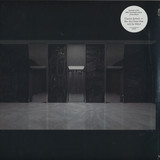
First-time reissue of Aroma Di Amore's 3rd EP, originally released in 1985.
Aroma Di Amore is/was Belgian’s premier cult band. Since the early eighties ADA innovatively combined electronics with rock. With a mix of razor-sharp Flemish lyrics and unconventional song structures the group earned a cult status in Belgium and abroad. 40 years later they conclude their career with a few last concerts and a vinyl box set spanning the years 1983-1987.
At the notorious Rock Rally of 1982 Aroma Di Amore stands out with their wonderful handling of the Flemish language, a deep bass, typical cold new wave drums, biting guitar riffs with the occasional flavor of absolute madness. Frontman Jos Verlooy adopts the stage name Elvis Peeters. The explanation for this remarkable pseudonym choice: in 1977 – the period of the singer's musical awakening – one of the two famous rocking Elvises (not Costello, but Presley) succumbs to his pill addiction. So, dixit Verlooy, there is an Elvis vacant. A banal surname belongs next to that exotic first name. A combination that breathes rock 'n' roll, according to the singer.
His companion Gerry Vergult – who very much determines the sound with his metallic riffs, somewhat indebted to Jean-Marie Aerts – adopts the stage name Fred Angst. Completely in line with the depressing zeitgeist of the 1980s. Gerry eats and breathes music. Besides composing most of ADA’s songs, he records & self-produces a few fantastic dark en loner solo minimal wave tracks as Fred Angst. He is still musically active, more towards the electronic leftfield nowadays under the moniker Zool.
It is clear from an early age that companion Elvis Peeters possesses the gift of the word. As an adolescent he published the punkzine “Dus”. The punk spirit stimulates Peeters. He begins to transform the poetry that he has been entrusting to paper for some time into song lyrics. It is on a whim and without any stage experience that punk friends Peeters and Angst register for the Rock Rally as Aroma di Amore. On a bed of post-punk and cold wave (Joy Division, Wire and Sisters of Mercy are the main influences), they initially let out playful, minimalist and nonsensical slogans such as "Doe De Mafia" (1982) and "Gorilla Dans De Samba" (1983). Later on, the tone becomes more serious, although Peeters' choice of words continues to show a penchant for absurdism and sarcasm. No one in Dutch songwriting imitates this verbal elasticity, certainly at that time.
The numerous songs about war are downright horrifying. In the 1980s, an arms race is underway. When the Belgian government decides to install nuclear missiles in 1981, Aroma di Amore asks for one minute of silence in the hall during performances. In "Lauwe Oorlog" (1983), Peeters exposes the core of his unrest: “paraat voor de parade / de vrede wordt begraven / met militaire eer”. To this day, the frontman of AdA still proudly wears his at least 30 year old 'atomic energy, no thanks!' button.
In 1984 Aroma releases Koude Oorlog on the new and independent Brussels label Play It Again Sam. The traditional press and radio ignore the record, but in the alternative circuits the mini-album does not go unnoticed, and the group starts to build a solid fan base, resulting in more and more offers for gigs. There's also interest in the Netherlands, and due to the international contacts of PIAS, the record also ends up in France, Switzerland, Spain and Canada.
Encouraged by this modest success, the group returns to the studio for a 12" single. With new group member Frits De Cauter on sax, they record "Voor De Dood". To this day, Voor De Dood remains the most popular AdA song, as evidenced by the countless compilations on which the song has appeared.
AdA goes to the Netherlands to record their next album “De Sfeer Van Grote Dagen”. The people from Nasmak have built a new studio in Eindhoven and one of the members, Theo Van Eenbergen (later Henry Rollins), will be the producer. “De Sfeer Van Grote Dagen” is the group's most adventurous album, and the reviews are again unanimously favorable. However, sales are disappointing and PIAS proposes to recruit Chris Reed of Red Lorry Yellow Lorry and record a new single with him. "Zonder Omzien" is recorded at the prestigious Pyramid Studio. However, PIAS is waiting to release the album and in the meantime AdA is recording a number of extra tracks with producer Ludo Camberlin, including "Koekoek In De Stad". Towards the end of the year, Lo and Elvis travel to Africa for a few months and as a result the group comes to a standstill. In this period, Zonder Omzien is released.
At the beginning of 1986, Peeters and Meulen return, and Andrea Smits leaves the group. Luc Pillards is hired as a replacement, and when Ludo Camberlin presents himself as a new label boss and producer (Anything But Records), they start recording their first full album for the label. “Harde Feiten" kicks in immediately, and the group is back up to cruising speed. In the first week of release, the record even appears in the bestseller list of the record stores.
At the beginning of 1987 the recordings for the second album start, this time in a production by Peeters and Angst themselves. Shortly after the shooting, AdA goes to Switzerland for a short but successful tour, with Men 2nd and Cas & Organized Crime as support act. "Koudvuur" is published in the autumn and considered to be their strongest record so far by the group, the reactions are rather low. Both the reviews in the press and the sales are disappointing and put a damper on the joy. Nevertheless, the group is invited to perform in Valencia, Spain, where they have an unexpected success.
MUTANT SOUNDS BLOG
Aroma Di Amore have always been outsiders, even within the confinement of the alternative rock circuit. Their peculiar blend of raw guitars, electronics, Dutch lyrics and unconventional song structures was too hybrid for many. Those howewer who, without prejudice, would lend an ear to the band's music, discovered an energetic, authentic and uncompromising collective that stood above all trends. While so many Belgian "connaisseurs" had their doubts about the possibilities of international recognition for a band singing in Dutch, Aroma Di Amore toured France, Switzerland and Spain; their records figured in alternative charts from Poland to Canada.
From beginning to end the nucleus of Aroma Di Amore consisted of Elvis PEETERS, who in a inimitable, possessed way delivered his highly original lyrics, and Fred ANGST, guitarist mastering the heaviest riffs as well as refined tapestries of sound. Furthermore, the line-up varied throughout the band's carreer with:- H.K. (Guitarist from 1982 until 1983)- Andrea SMITS (Organ from 1982 until 1985)- Luc PILLARDS (Synthsizer in 1986)- Jan WANDELAAR (Guitar and synthesizer in 1986)- Pulcherie (Saxophone in 1983)- Wout DOCKX (Bass from 1987 until 1988)and especially- Lo MEULEN (Bass from 1983 until 1987)and the late Frits DE CAUTER (Saxophone from 1984 until 1986)contributing to the music
quête:speed sound
First-time reissue of Aroma Di Amore's 4th EP, originally released in 1986.
Aroma Di Amore is/was Belgian’s premier cult band. Since the early eighties ADA innovatively combined electronics with rock. With a mix of razor-sharp Flemish lyrics and unconventional song structures the group earned a cult status in Belgium and abroad. 40 years later they conclude their career with a few last concerts and a vinyl box set spanning the years 1983-1987.
At the notorious Rock Rally of 1982 Aroma Di Amore stands out with their wonderful handling of the Flemish language, a deep bass, typical cold new wave drums, biting guitar riffs with the occasional flavor of absolute madness. Frontman Jos Verlooy adopts the stage name Elvis Peeters. The explanation for this remarkable pseudonym choice: in 1977 – the period of the singer's musical awakening – one of the two famous rocking Elvises (not Costello, but Presley) succumbs to his pill addiction. So, dixit Verlooy, there is an Elvis vacant. A banal surname belongs next to that exotic first name. A combination that breathes rock 'n' roll, according to the singer.
His companion Gerry Vergult – who very much determines the sound with his metallic riffs, somewhat indebted to Jean-Marie Aerts – adopts the stage name Fred Angst. Completely in line with the depressing zeitgeist of the 1980s. Gerry eats and breathes music. Besides composing most of ADA’s songs, he records & self-produces a few fantastic dark en loner solo minimal wave tracks as Fred Angst. He is still musically active, more towards the electronic leftfield nowadays under the moniker Zool.
It is clear from an early age that companion Elvis Peeters possesses the gift of the word. As an adolescent he published the punkzine “Dus”. The punk spirit stimulates Peeters. He begins to transform the poetry that he has been entrusting to paper for some time into song lyrics. It is on a whim and without any stage experience that punk friends Peeters and Angst register for the Rock Rally as Aroma di Amore. On a bed of post-punk and cold wave (Joy Division, Wire and Sisters of Mercy are the main influences), they initially let out playful, minimalist and nonsensical slogans such as "Doe De Mafia" (1982) and "Gorilla Dans De Samba" (1983). Later on, the tone becomes more serious, although Peeters' choice of words continues to show a penchant for absurdism and sarcasm. No one in Dutch songwriting imitates this verbal elasticity, certainly at that time.
The numerous songs about war are downright horrifying. In the 1980s, an arms race is underway. When the Belgian government decides to install nuclear missiles in 1981, Aroma di Amore asks for one minute of silence in the hall during performances. In "Lauwe Oorlog" (1983), Peeters exposes the core of his unrest: “paraat voor de parade / de vrede wordt begraven / met militaire eer”. To this day, the frontman of AdA still proudly wears his at least 30 year old 'atomic energy, no thanks!' button.
In 1984 Aroma releases Koude Oorlog on the new and independent Brussels label Play It Again Sam. The traditional press and radio ignore the record, but in the alternative circuits the mini-album does not go unnoticed, and the group starts to build a solid fan base, resulting in more and more offers for gigs. There's also interest in the Netherlands, and due to the international contacts of PIAS, the record also ends up in France, Switzerland, Spain and Canada.
Encouraged by this modest success, the group returns to the studio for a 12" single. With new group member Frits De Cauter on sax, they record "Voor De Dood". To this day, Voor De Dood remains the most popular AdA song, as evidenced by the countless compilations on which the song has appeared.
AdA goes to the Netherlands to record their next album “De Sfeer Van Grote Dagen”. The people from Nasmak have built a new studio in Eindhoven and one of the members, Theo Van Eenbergen (later Henry Rollins), will be the producer. “De Sfeer Van Grote Dagen” is the group's most adventurous album, and the reviews are again unanimously favorable. However, sales are disappointing and PIAS proposes to recruit Chris Reed of Red Lorry Yellow Lorry and record a new single with him. "Zonder Omzien" is recorded at the prestigious Pyramid Studio. However, PIAS is waiting to release the album and in the meantime AdA is recording a number of extra tracks with producer Ludo Camberlin, including "Koekoek In De Stad". Towards the end of the year, Lo and Elvis travel to Africa for a few months and as a result the group comes to a standstill. In this period, Zonder Omzien is released.
At the beginning of 1986, Peeters and Meulen return, and Andrea Smits leaves the group. Luc Pillards is hired as a replacement, and when Ludo Camberlin presents himself as a new label boss and producer (Anything But Records), they start recording their first full album for the label. “Harde Feiten" kicks in immediately, and the group is back up to cruising speed. In the first week of release, the record even appears in the bestseller list of the record stores.
At the beginning of 1987 the recordings for the second album start, this time in a production by Peeters and Angst themselves. Shortly after the shooting, AdA goes to Switzerland for a short but successful tour, with Men 2nd and Cas & Organized Crime as support act. "Koudvuur" is published in the autumn and considered to be their strongest record so far by the group, the reactions are rather low. Both the reviews in the press and the sales are disappointing and put a damper on the joy. Nevertheless, the group is invited to perform in Valencia, Spain, where they have an unexpected success.
MUTANT SOUNDS BLOG
Aroma Di Amore have always been outsiders, even within the confinement of the alternative rock circuit. Their peculiar blend of raw guitars, electronics, Dutch lyrics and unconventional song structures was too hybrid for many. Those howewer who, without prejudice, would lend an ear to the band's music, discovered an energetic, authentic and uncompromising collective that stood above all trends. While so many Belgian "connaisseurs" had their doubts about the possibilities of international recognition for a band singing in Dutch, Aroma Di Amore toured France, Switzerland and Spain; their records figured in alternative charts from Poland to Canada.
From beginning to end the nucleus of Aroma Di Amore consisted of Elvis PEETERS, who in a inimitable, possessed way delivered his highly original lyrics, and Fred ANGST, guitarist mastering the heaviest riffs as well as refined tapestries of sound. Furthermore, the line-up varied throughout the band's carreer with:- H.K. (Guitarist from 1982 until 1983)- Andrea SMITS (Organ from 1982 until 1985)- Luc PILLARDS (Synthsizer in 1986)- Jan WANDELAAR (Guitar and synthesizer in 1986)- Pulcherie (Saxophone in 1983)- Wout DOCKX (Bass from 1987 until 1988)and especially- Lo MEULEN (Bass from 1983 until 1987)and the late Frits DE CAUTER (Saxophone from 1984 until 1986)contributing to the music.
In hugo, there’s a central question that Loyle Carner keeps coming back to: “I’m young, Black, successful and have a platform - but where do I go next?” The answer is explored in this epic scream of a third album. With urgent delivery and gloriously widescreen production, Carner confronts both the deeply personal (“You can’t hate the roots of a tree, and not hate the tree. So how can I hate my father without hating me?) and the highly political (“I told the black man he didn’t understand I reached the white man he wouldn’t take my hand”). Cinematic in scale and scope, hugo is both a rallying war cry for a generation forged in fire and a study of the personal internal conflict that drives the rest of the album - as a mixed-race Black man, as an artist, as a father and as a son. With Mercury and Brits nominations, NME Awards and appearances in global brand campaigns (Nike, YSL, Timberland), Carner has undoubtedly had a meteoric rise to the top, culminating with his second album Not Waving, But Drowning charting at number 3 in the UK albums chart in 2019. However, hugo sees Carner taking a sharp detour from his previous work, putting it down to lockdown and the “hedonistic side of career being stripped away. There were no shows, no backstage, no festivals, no photoshoots”. By continuing to write in these tumultuous times with a renewed clarity and sense of artistic freedom, Carner reached deeper beneath the surface than he ever had before. The result is his most cathartic and ambitious record yet, a coruscating journey into the heart of what it means to be alive in these tumultuous times, and one which looks set to neatly cement his position as one of the most potent and vital young talents around today. Working alongside renowned producer kwes. (Solange, Kelela, Nao), Carner leaves no stone unturned on this album, in both its sound and its stories. In a 10-track album that moves from gorgeous neo-soul moments to thundering hip hop, with immediate, infectious bangers and sampled interludes from non musicians (mixed-race Guyanese poet John Agard and youth activist and politician Athian Akec) Carner shifts seamlessly from micro to macro, confronting everything from strained relationships with family to the societal tears caused by class stratification. It also lays bare bruises in his personal life that he has never revealed before – often in painful, deeply uncomfortable ways, focusing on Carner's experience of becoming a father in the context of growing up without contact with his biological father. With the song “Polyfilla”, against the backdrop of a warm melodic beat, Carner explores his desire to “break the chains in the cycle” of dysfunctional Black fatherhood, commenting on the narrative of fatherhood in the genre, and saying a key part of the process was realising that his father “grew up in a world where nobody showed him how to love or nurture”. The follow up track “A Lasting Place” is an exploration of the MC’s failure and inability to be perfect in this mission. The album closer is a powerful statement of love and forgiveness; with his signature lyrical dexterity, Carner declares his relentless commitment to his son and sees forgiving his father as a key part of this. The song closes with an emotional ending of Carner telling his dad “still I’m lucky yo that we talk”. There’s a striking duality of hugo’s bold, multilayered tracks and its often starkly intimate and tender lyricism, and that dichotomy is deliberate - it is a message for young Black men, but really, anyone, who is listening. Cognizant of the immense pain and fear and confusion that we are faced with everyday, Carner has thrown down the gauntlet, defying us not to rise above the fray, wake up each day and be ambitious. Ambitious in building strong personal relationships. Ambitious in our pursuit of our goals. Ambitious in never refusing to back down against injustice. Rejecting the title of leader, Loyle Carner sees himself “as holding up a mirror”, and that clearly translates into the album's universal messages.
Strut present 3 separate reissues of the 1970s album trilogy from Idris Ackamoor & The Pyramids. As students at Antioch college, Ohio, alto saxophonist Idris Ackamoor, flautist Margaux Simmons and bass player Kimathi Asante created three lasting monuments in sound — Lalibela, King of Kings, and Birth / Speed / Merging, a trio of albums produced without any label backing or distribution between 1972 and 1976. Their music is unique among the varied canon of avant-garde and experimental music of 1970s America: high intensity African-styled percussion topped with songs, chants, and horns, laced with African instruments and arranged into long, flowing suites that surge and roll.
The debut album by the Pyramids was inspired by the group's visit to the Lalibela monastery in Egypt, and was recorded in Yellow Springs Ohio in early 1973. Drawing on the teachings of Cecil Taylor and the influence of John Coltrane, combined with a barrage of intense percussion, the album evolves over several long-form pieces, Initially only 500 copies were pressed and sold to friends and followers in the local area.
The Berlin based duo Itchy Spots combine falling words with tricky rhythms. Their music concerns the simultaneity of intensity and nonchalance, feverish high speed drumming, static sounds and tribal hypnosis. The vocal performance seems to stand alone, it is independent from whats happening rhythmically, yet it all melts together perfectly. Grooving skeletons of songs, rituals and shamanism. Itchy Spots are James Main (former singer and lyricist with Wild Daughter) and Ansgar Wilken (Ilse Lau, Feedbackorchester, Happy Zloty).
Mr Projectile, one of our favorite IDM producers from back in the day, has given La Luna the chance to share some of his unreleased IDM tracks from the early 2000’s. The album is an eclectic blend of ambient, IDM and experimental electronics.
These sounds are a time machine to simpler, less chaotic times and have become essential listening these days. We envision this album spinning on a sunny Sunday afternoon, filling your room with the delicate and deep textures of electronic music and soothing your uncertainty. Enjoy a nice cup of coffee and explore your thoughts as you speed through time and space. Hopefully serving as a special reminder that we are all in this madness together.
Not only is the music stellar, but we are honoured to have Marcello Raeli, an Italian artist and car designer, accompany the music with his wonderfully mind bending artwork. Marcello is an artist who has designed some of the most insanely beautiful/fast cars on the planet. Here we get to take a deep look into his mind and marvel at the incredible interconnectedness created in this piece and appreciate the sense of depth and space created for this album.
2022 Repress
.For this from that will be filled is the debut album by Clarice Jensen, artistic director of the American Contemporary Music Ensemble (ACME). The album explores the variable differences between acoustic and electronic sound as well as depiction of the simulated and the unconscious. It was originally conceived as a collaboration between Jensen and the artist Jonathan Turner as an audio-visual work, but is here presented in it´s pure audible form.Building on a long and romantic tradition of solo cello repertoire, Jensen expands and confuses the familiar sound of the cello through the use of effects pedals, multi-tracking, and tape loops recorded at variable speeds, presented in works she has written for herself as well as a piece she conceived together with Icelandic composer Jóhann Jóhannsson. Also featured is Michael Harrison's Cello Constellations for multi-tracked cello and sine tones, written for Jensen, which meditates on long, sustaining tones.With For this from that will be filled, Jensen has made an incredibly strong first album that feels like a surreal and futuristic journey through an alternate timeline.
The story about the lost recordings of Ghia continues: Following the recently released "At The Hilton" single, our label is extremely proud to present "Curaçao Blue", the band's first full-length album. And it is simply mind-blowing, to say the least! The LP features 10 unreleased tracks in a similar Balearic vein as featured on the single.
Incredibly, it was only just a few months ago that these tracks were rediscovered on some old tapes by band members Lutz Boberg and Frank Simon. Could anyone imagine that two physics students from a small German town could create such beautiful, thrilling music in their home studio? Although the technical aspects in the creation of the band's earliest tracks may have been straightforward, the outcome is high-quality, creative, modern jazz-funk, with one step in the electro-funk genre due to the use of a drum machine and synthesizer basslines. The album features mostly 4-track recordings, based mainly on the musicians' weapons of choice: a DX21 keyboard (later updated to the legendary DX7) and a guitar. Many things had to be done live in just one take, though the artists were unafraid of using overdubbing techniques to weave their instrumental journeys. The DIY aesthetics just add more beauty and uniqueness to the songs and compositions, and the result is an extremely harmonic work of undeniable musicality. Ghia delivers Balearic jazz-funk at its finest.
Though the music was recorded in Germany, Ghia had a true relationship with the Balearic region and effortlessly applied the vibes to their compositions. As a side note, one track on their earliest demo tapes was called "3 AM at Moëf Gaga" and we did not know what it meant. The band explained that Moëf Gaga is a nightclub on the Spanish coast that is actually still active today. Boberg and Simon, the two original band members of Ghia, visited the club in the early 80s and spent their holiday close to the sea. With their music, they intended to create a summery vibe, capturing a relaxed and soulful view of the seashore, likely with a drink in hand... Perhaps a Blue Curaçao?
The album starts with a revised version of the title track. The drums in this take are much punchier, and we thought that it would fit just perfectly as an introduction. We continue with the already classic "Down At The Hilton" that was featured on the single, but like us, we are sure you could happily listen to this track on repeat. Next up, "Jump In The Water" opens with a catchy delayed melody, which develops into another perfect jazz-funk piece with an extended guitar solo. Another remarkable song might be "In The Fast Lane". As the name suggests, an uptempo number, now with an electro-funk beat combined with speedy keyboard solos that almost sounds like a marimba. On side B, the album keeps the relaxed seaside vibes flowing. To round out the album, we are treated to two pieces that originated after the return home, with memories of the Spanish coast fading but still lingering, likely recorded between 1986 and 1988. Both are instrumental versions of songs to be used later for studio sessions with their new band member, singer Lisa Ohm (who you will hear on Ghia's next album!). On "Crystal Silence In Dub" we get a perfect downtempo groove, positively reminding us of the sound of the 1980s UK funk scene. The album ends with "Keep Your House In Disorder", here as an earlier, rougher, and funkier take than on the final vocal version, which could be found on the B-side of the "What's Your Voodoo" single.
We hope you love this album as much as we do! Nothing like this has yet been released out of Germany. We hardly can recall any privately produced, home recorded jazz-funk/fusion from the 1980s as free, creative, and uninhibited as Ghia's Curaçao Blue. The playful and creative approach, coupled with those nostalgic tones should make this LP an essential pick for any record collection, whether you are a DJ, a home listener, a music lover, or a modern jazz-funk/synth-funk aficionado.
The album is out now on The Outer Edge, the new label by record collector DJ Scientist, aka John Raincoatman. We also want to thank Frederic Stader for his awesome work mastering and sound restoration of the material on this LP.
"The box set contains all eleven studio albums, researched extensively from all the very best available master tapes. I worked with renowned mastering engineer Miles Showell at Abbey Road studios to have the albums remastered at half speed which achieves the best quality possible" Alan Parsons Originally released in 2014 on CD, The Alan Parsons Project – The Complete Albums Collection is now being made available in a beautifully packaged deluxe vinyl 11LP box set and is limited to 1,500 copies worldwide. It includes the 11 original studio albums including The Sicilian Defence album that they originally recorded in 1979 and was previously unreleased until 2014 when it was included within The Complete Album Collection 11CD box set. - All albums half speed remastered at Abbey Road and cut from hi-res files transferred from the best available master tapes where analogue was originally used and from the original digital master tapes for all albums from 1983 onwards with everything approved by Alan Parsons. - Pressed on heavyweight 180gm vinyl, and beautifully replicated sleeves including original text and imagery. - Beautifully packaged in a ‘cigarette type’ hardback outer box with the outer design containing the words that Eric Woolfson felt best described The Alan Parsons Project. - Includes 60 page 12” x 12” hardback book containing full lyrics, brand new sleeve notes and essay from Miles Showell, Abbey Road Studios on the half speed remastering process. - Also includes giant A1 size poster The Alan Parsons Project was a progressive rock music entity comprised of engineer/ producer Alan Parsons and songwriter, musician and manager Eric Woolfson. They released 10 concept albums which focused on subject matter such as science fiction, supernatural, literary and sociological themes between 1976 – 1987 and have sold in excess of 55 million albums world-wide. Their focus was on very high-quality studio sound production and they recorded most of their work at Abbey Road Studios in London. They used a variety of different lead vocalists and musicians on every album but did employ some relatively consistent session players such as guitarist Ian Bairnson, arranger Andrew Powell, bassist and vocalist David Paton, drummer Stuart Elliott, and vocalists Lenny Zakatek and Chris Rainbow – choosing who they felt was the best for each song rather than being constrained to moulding the material for one specific artist.
SEMI-ACOUSTIC INTERPRETATIONS OF CLASSIC ANATHEMA TRACKS,
NOW MASTERED HALF-SPEED AT AIR STUDIOS, LONDON FOR A
SUPERIOR, SHARPER, MORE DIRECT & ENGAGING SOUND
"The pastoral introspection of Nick Drake & Radiohead with moments of sublime
beauty" – Metal HammerReleased in 2008, 'Hindsight' was the first release of
new studio recordings from Anathema since 2003's acclaimed conceptual album,
'A Natural Disaster'.
Featuring selected favourites from the band, as well as new track, 'Unchained
(Tales Of The Unexpected)', Hindsight featured sensitive semi- acoustic
arrangements - utilising acoustic, electric & orchestral instruments - that further
develop the deep, emotional landscapes that Anathema has become justly
renowned for.
Arranged by guitarist Danny Cavanagh, engineered by Les Smith & performed &
produced by Anathema, 'Hindsight' also features cellist Dave Wesling, who
previously toured with the band.
Mastered Half- Speed & pressed on Single LP for the first time, available via
Kscope.
orange vinyl
As &on&on, DJ's Noni and Worth Way have been making some serious waves over the past year, being named one of DJ Mag top artists to check out in 2022 and also featured on Disclosure's DJ Kicks compilation.
On their first release on the label, the duo boast their prowess in composing uplifting, melodic dance music which draws on myriad influences to create unique and innovative sounds. Whilst every track on Mentalphysics has fun and festivity at its core, some take their inspiration from disco ('Mid Valley'), whilst others from groovy deep house ('All Day') or breakbeat ('Delta T'). Finally, 'Melted' subtly evokes speed garage in the way the bass dips, giving the track lots of depth and 'Samo' brings things to an anthemic close with reverberating cymbals filling any space with body and movement.
With I was born by the sea, Richie Culver brings to a close a period of intense introspection and emotional reckoning with a debut album that serves as both an optimistic statement of intent and a final glance back at the painful places it explores. Following recent work with Blackhaine and Pavel Milyakov, I was born by the sea picks up where Culver’s EP for Italian label Superpang, Post Traumatic Fantasy, leaves off, painting an unabashed portrait of contemporary malaise, detailing a life lived behind closed doors, pinned under the crushing weight of austerity, sapped of the strength to do anything other than gaze out to sea and all the grey possibilities it represents. Where Post Traumatic Fantasy saw Culver returning to his hometown of Hull after a period spent entangled in London’s relentless sprawl, his first full length project reaches further back to his formative years working in a caravan factory and going to raves in and among Hull’s outskirts. Unspooling like a fever dream, I was born by the sea is the anxious clutter of a racing mind spoken clearly, a stark reflection on how it feels to have too many ideas and too much time to act on them.
Though unquestionably a snapshot of a time of significant difficulty, Culver reflects on this period with tender empathy and pitch-black humour, stitching together unflinching observations from England’s neglected corners, ‘there’s more mobility scooter repair shops and bookies than there are bookshops,’ and devastating vignettes of everyday struggle, ‘tears on the tin foil’, with surreal depictions of industrial grit, ‘skimming stones in a small pond by the slaughterhouse’. His DIY approach to production stretches the rough sinew that connects these fragments of memory, a process he describes as using a paired back collection of synths and drum machines to the best of his ability, ‘but to the least of their capabilities,’ wringing out visceral sound with self-taught urgency. During the album’s most impressionistic passages it’s as though Culver has transposed past internal turmoil into powerfully resonant noise, the Sisyphean sonics of ‘Create A Lifestyle Around Your Problems’, which evokes in its concrète clatter and MRI machine barrage the sound of making the same mistake again and again, or the stuttered jumble of ‘Its Hard To Get To Know You,’ its garbled vocal modulation and frayed edges of distortion channeling the paranoia of somebody listening to muffled voices through thin plaster, climbing the walls of their bedroom with the curtains closed, a nervous breakdown in stereo.
In counterpoint to this glides the ever-present spirit of the dance floor, which haunts the record from the moment it is invoked in its first few seconds. Opening onto a sea wall of bright synthesis, the stuttering vocals and bass tone chops of ‘Nervous Energy’ dump us directly into post rave ecstasy, the echoing cry of a voice amplified by loudspeaker carrying the loose energy and surge of crowds moving in darkness. The incessant, dead phone line beep of ‘Pigeon Flesh’ builds to a pulse that suddenly swells into an anxious technoid surge, shapeshifting at lysergic speed into head shrinking audio hallucinations, a descent into the void of the present via machine music hypnosis. Even ‘Its Hard To Get To Know You’ summons the ego death drive of hardcore techno within its scorched textures, flickering indiscernibly between attritional noise and frazzled hardware stomp. Paying homage to both the parties of his youth and a countless succession of Sundays spent offering himself up within Berghain’s hallowed architecture, Culver’s experiments in addressing his formative relationship with rave provide an energetic glimpse at where he might take his sound next.
Between spikes of propulsive energy and grim mood pieces Culver returns to suspended passages of aching, glacial drift, the cold swell of the North Sea, accompanied by some of his heaviest testimonials. The gauzy ebb of ‘Daytime TV,’ its tumbling loops reminiscent of boats bobbing off a distant shore, sees the artist at his most checked out, slumped in front of his television, seven days a week. ‘I used to dream of doing something,’ he admits, ‘anything to get out of this town.’ ‘Love Like An Abscess’ pairs swirling currents of ambient shimmer with violent images of baseball bats lying next to beds and blood-stained mattresses, next to which Culver pleads in a desperate mumble, ‘let our love grow, like a broken abscess.’ Yet it’s with the album’s final word and title track that Culver reveals a glimmer of cautious optimism, a parting gesture of exposition and closure. ‘I knew I had to get away,’ he asserts, ‘so I did and I never looked back.’ What follows builds from a low throb, the flutter of a tiny heartbeat, to a resonant glow, embellished with unfurling synthetic burbles, oil rigs sparkling in the distance, golden light spilling across the sea. In reckoning with the place he had to escape, Richie Culver is now free to look towards the promise of something new, something hopeful.
Charbel Haber is Lebanese musician, performer, visual artist and composer from Beirut. His work has seen him collaborate with artists from a wide range of disciplines - film, video art, visual art, theatre, dance - both in Lebanon and abroad.
As a solo artist and as a member of post-punk band Scrambled Eggs, he has composed music for directors Khalil Joreige and Joana Hadjithomas, Ghassan Salhab, Mohamad Malas, video artists Lamia Joreige and Akram Zaatari, Maqamat dance company and playwrights Rabih Mroueh and Lina Saneh, to name but a few. His prolific and collaborative career includes free improv group Johnny Kafta Anti-Vegetarian Orchestra, psychedelic Arabic music ensembles Malayeen and Orchestra Omar, cold wave band The Bunny Tylers and minimal ambient duo Good Luck In Death. He is the founder of Those Kids Must Choke and co-founder of Johnny Kafta's Kids Menu - two experimental record labels - and he has recorded and collaborated with notable artists from the fields of free rock and improv such as Oiseaux-Tempête, Radwan Moumneh, Tarek Atoui, Jean Francois Pauvros, The Ex, Michael Zerang, Mats Gustafson, Eddie Prevost, Xavier Charles and Tony Buck.
And once again, here I am telling you to go look for the truth and its beauty in the words of dead poets, in the little tales of ravaged cities, in aborted dreams, in the melancholy of the ruins of tomorrow, in meaningless plastic totems, in the enigmatic end of restless fools.
I'll be here long after you all disappear.
These are the first and last sentences from Charbel Haber's latest offering, A Common Misunderstanding of the Speed of Light: a multi-media musing on the chronic and the chronological, the subversive nature of time. This combination of a record and book observes the slow passing of life and the illusion of retrogradation in his every day. Simply by documenting - via image, text and tune - Haber assigns value to everything that is cast in amber by this project. There's an acceptance and appreciation of the destitution he witnesses, it is an homage given in overlapping forms.
ACMOTSOL has two parts. The book, hardcover in an embossed orange, features photographs and texts taken from Haber's personal digital diary spanning from 2020 to the start of 2022. Broken into six chapters - named for the six tracks on the record - the entries are an artist's log of sorts during a peculiar period of global hyper stagnation and navigating the aftermath of the Beirut explosions. The 96 pages highlight Haber's interest in decay, negative space and the temporality of the human condition. Instead of presenting the images and texts as they were originally paired online, they're reordered and recontextualized in the book. New connections are formed, as tenuous and fleeting as the content they surround. The images interrupt the texts in many instances, forcing pauses and inviting distraction.
At the center of the book is a sudden burst of orange pages, with stylized pluckings of the text framing a QR-code that grants access to the record. With the brilliant orange covers and matching innards, pregnant with the music at the core, it's almost as if these central pages act as a way to turn the book inside out. There, the book's purpose is altered, fixated on a mirror image of itself. It forms a self-completing arc for the project, a loop.
ACMOTSO's second half is that mirrored album. Six tracks totalling just under 52 minutes. The music could be a continuation of his solo albums Of Palm Trees and Decompositions (2016) and It Ended Up Being a Good Day Mr. Allende (2012), an exploration into the expansiveness of seemingly simple loops of a lilting guitar. Careful electronic effects add dimensions or reground the listener. There's a swelling of sound, the illusion of the push of space before it retracts back into itself or fades into the distance. Much like the images and texts the music complements, the songs challenge the purity of cycles. Endings are beginnings, beginnings are endings or is everything just the middle? Haber is quietly and elegantly grappling with the troublesome act of place-making. In music, in words and in visual storytelling.
ACMOTSOL is a work that can be calming or disorienting, depending on what is requested of it. Similar to the way loops and cycles can signify both meditation and mania. The tendrils of Haber's past - his home of Beirut, fictional and real characters encountered, authors read, films watched, composers listened, walks taken - knit themselves together for a presentation of our immediate present. An evidence of a happening. A considered project of time.
All photographs, texts and music by Charbel Haber. Album mixed by Radwan Ghazi Moumneh. Design by Maziyar Pahlevan. Printed by Albe De Coker in Belgium.
This dual-part project will be released on XX XXX 2022 on 'Other People.'
Description by Nereya Otieno.
- 2022 repress / comes in label sleeve -
We launch our rocket number 057 by the expert hands of Tensal, three pieces of direct to the floor operational techno, faster, heavier and darker than the previous outcome by Hector.
On the A-side, the first cut is "Civil Defense", sharp continuous sequences showing up right from the beginning, solid kicks and a memorable break. This one is gone make some damage in sound systems out there.
B1 "Collapse", again starting with no remorse, white noises, distorted textures, heavy sub bass action and hi speed tempos, another to the bone exercise.
B2 is "Bihotxak", solid grooves, percussive panned details, on a linear and tooly arrangement excellent for long mixes and build-ups.
Composed, designed and recorded by Tensal. Mixed by Oscar Mulero.
Unholy Black Metal from the Holy Land, drenched in Middle-Eastern tones and mystique! An invocation of thousands of years of Darkness! Hailing from the urban Israeli settlement called Ma’ale Adummim in Israel, Arallu is a five-piece Black/Death Metal act that has been around the metal underground for twenty-five years. The band got the name Arallu from the Mesopotamian mythology, as it is the name of the underworld kingdom ruled by the goddess Ereshkigal and the god Nergal, where the dead are judged. Arallu’s music revolves around the traditional ancient Middle Eastern melodies of fellow countrymen Melechesh, the high speed savagery of bands like Angelcorpse and Absu, and the atmospheric feel of legendary acts like before mentioned Melechesh and Absu. In 2019 the band had released the record called “En Olam”, and that opus has solidified Arralu’s already known talent to the underground extreme metal community. “Death Covenant” is the band’s seventh full-length studio offering and the album offers the listeners a very stunning infusion of occult Black Metal music with the ancient Sumerian and Middle Eastern sound. The riffs found in here will satisfy the listeners with its frenzy of melodic tremolo picked riffs that is intertwined with some eerie folk instrumentation. The elements in the guitar department, thrown in with a few folk instruments such as a saz and a darbuka, reveals how the band had successfully stripped metal down to its core and added a personal touch of their own special flair. them and it provides that extra punch and low-end heaviness to the overall outcome of Arallu’s music. It basically lies steadily beneath the guitars as it backs them up with some thick lines that give a more deep feel to the strings and dispenses an ominous atmosphere to the tracks. The drum section also catches the audience’s attention with a variety of destructive pummeling double bass blasting to some Middle Eastern tribal drumming that helps a lot in terms of keeping the atmosphere intact. The record is filled with high-pitched piercing shrieks and screams which create a dark and raw soundscape. These vicious shrieks are sometimes jacked up with some uncanny backing vocals that tie together the brutality of extreme death and Black Metal music to the ancient Middle Eastern scales of the material. “Death Covenant” also parades the band’s strongest production to date in their twenty-five years of existence. Arallu had created a menacing and atmospheric beast in this style of metal with their release of “Death Covenant”. These Israelis had put out a savage album that is hardly comparable to its predecessors.
Repress !
Heavy 180g black vinyl. Expanded Edition w/ liner notes, obi tag & photographs. Sirio Ultra Black debossed sleeve. Half Speed Mastering) 25th anniversary audiophile edition. Sublime and perfectly produced cutting-edge ambient techno masterpiece made in 1996, an album as underrated as it is essential. A true timeless and unique classic that exists within its own genre and which still pushes the envelope of electronic music that transcends the club experience.
- 1: Aomawa
- 2: Birth / Speed / Merging - Part 1
- 3: Birth / Speed / Merging - Part 2
- 4: Birth / Speed / Merging - Part 3
- 5: Birth / Speed / Merging - Part 4
- 6: Reaffirmation - Part 1
- 7: Reaffirmation - Part 2
- 8: Reaffirmation - Part 3
- 9: Reaffirmation - Part 4
- 10: Jamaican Carnival - Part 1
- 11: Jamaican Carnival — Part 2
- 12: Black Man And Woman Of The Nile
Strut present 3 separate reissues of the 1970s album trilogy from Idris Ackamoor & The Pyramids. As students at Antioch ollege, Ohio, alto saxophonist Idris Ackamoor, flautist Margaux Simmons and bass player Kimathi Asante created three lasting monuments in sound — Lalibela, King of Kings, and Birth / Speed / Merging, a trio of albums produced without any label backing or distribution between 1972 and 1976. Their music is unique among the varied canon of avant-garde and experimental music of 1970s America: high intensity African-styled percussion topped with songs, chants, and horns, laced with African instruments and arranged into long, flowing suites that surge and roll.
Birth/Speed/Merging was recorded in 1976 after the band's move to San Francisco. The album closes the Pyramids' 70s trilogy and makes more use of studio technology: adding overdubs and other effects, a marked departure from the previous two releases, though at no cost to the urgent message and energy of their earlier works.
Strut present 3 separate reissues of the 1970s album trilogy from Idris Ackamoor & The Pyramids. As students at Antioch ollege, Ohio, alto saxophonist Idris Ackamoor, flautist Margaux Simmons and bass player Kimathi Asante created three lasting monuments in sound — Lalibela, King of Kings, and Birth / Speed / Merging, a trio of albums produced without any label backing or distribution between 1972 and 1976. Their music is unique among the varied canon of avant-garde and experimental music of 1970s America: high intensity African-styled percussion topped with songs, chants, and horns, laced with African instruments and arranged into long, flowing suites that surge and roll.
King Of Kings was recorded in 1974 and features a wider array of instruments including Ugandan Harp and Balafon. Perhaps best known for the expansive "Nsorama (The Stars)" a seminal work of Spiritual Jazz.
Serbia's Disco Fruit crew has been putting out lush sounds that take in funk, breaks and soul influences on top of their bread and butter disco grooves for years now. This time they welcome back a label regular, Loshmi, who has put out plenty of edits here before now. His new one 'Dark Night' is a 60s-tinged high speed spy theme with funky brass and bristling drums all overlaid with rock-styled vocal yelps. The instrumental on the flip is a more paired back but just as hustling groove.
- A1: Good Life
- A2: Mecca & The Soul Brother
- A3: Go With The Flow Side
- B1: The Creator
- B2: All Souled Out
- B3: Good Life (Group Home Mix)
Pressed On Clear Vinyl! 1991 was the year that it all broke loose for producer Pete Rock and his rhyme partner, CL Smooth. But the duo was far from an overnight sensation. The two friends had been on the grind since high school in Mt. Vernon, NY in the mid-'80s, and Pete had been building up to his big moment since he first manned the decks on WBLS's hugely influential 'In Control With Marley Marl' radio show, starting in 1987. In '91, Pete's talent finally forced him from the studio shadows into the spotlight, and after remixes and co-productions for Heavy D (1989's Big Tyme album); Johnny Gill ('Rub You The Right Way,' 1990); and Elektra label-mates Brand Nubian ('Slow Down,' 1990); it was time for top billing. As Pete's rep skyrocketed with a revolutionary remix to Public Enemy's 'Shut 'Em Down' in 1991, the stage was set. The duo's debut EP, 'All Souled Out', was the perfect set-up - and bridge to - their flawless LP, Mecca & The Soul Brother, which appeared only one year later. Fans new (thanks to a recent revival, resulting from the song's use in a Google / Android commercial) and old are sure to know the EP's only single, 'The Creator.' The cut is a perfect slice of early '90s hip-hop - jumpy, funky and rolling along at a sprinter's pace, with killer horns that sew up the chorus. Interestingly, it's the only song on the EP where Pete Rock rhymes (and solo at that, with lines written by Brand Nubian's Grand Puba). The remaining five of the EP's songs, with CL Smooth in full charge of the mic, are no less impressive. The sleeper is perhaps 'Go With The Flow,' a kinetic groover with an egregiously thick, muted bassline, surgical cuts and never-endingly captivating lines by the liquid-tongued CL. 'All Souled Out' boasts all of the Pete Rock trademarks - a jumpy, filtered bassline; beautifully stitched horn samples on the hook; and this time with a faster tempo. CL has no issues with Pete's BPM challenge, proving he can drop knowledge at any speed. And of two different versions of 'Good Life' on the platter, the EP's final cut, the 'Group Home Mix,' is perhaps the winner, with an abundance of musical action to back up CL's lyrical musings on ways to achieve success and comfort in life. 25 years after its initial impact, 'All Souled Out' sounds as heavy and essential as ever, and will remind fans how important this duo was to the artform.