Orange Vinyl
Kero & Steph’s landmark collaboration Syndrome now sees a sumptuous release on vinyl and evocative music video, spinning data into densely layered visual treats.
Steph’s coolly ethereal voice and poignant writing drift in harmonies atop the sliced-up, glitched, hard-hitting precision of Kero’s productions. The unforgettable directness of her compositional sense is here, as her long resume of scores and placements would suggest. It finds an urban-technological counterpart in Kero’s frenetic sounds. The DU label boss is in full force straight from the chilling post-pop of the opening titular cut. “Walk in the park” is a production masterwork, punchy organic percussion against grinding bass. “Who am I to complain” is at once arresting and vulnerable with vocals, but still packs an emotional gut-punch in the accompanying instrumental. “Count down from 7” is more stripped down and urgent, melodic hooks propelled by lo-fi rhythmic mechanism’s menace.
For the remixes, Oberman Knocks unleashes utter digital destruction - computer memory banks dropped through a wormhole. That thoroughly deconstructs Mtch into composite textures -- and opens “Walk in the Park” to near-unrecognizable, yet somehow danceable mayhem.
The new physical and motion elements find a visual language for these sonic strata of imagination and digital construction. From designer Christoph Grünberger, known for his tome The Age of Data: Embracing Algorithms in Art & Design, we get the packed outer sleeve and 2D design. These enshroud a calm-looking Steph in a Shibuya Crossing-style trip inside Defasten’s geometries, opposite a catalog of branching visualizations and glyphs.
Defasten, known for his live AV work fusing virtual reality and performance, here explodes faceted 3D cubes, in the cover and further in the music video. These pulsing crystalline hyper-geometries delve into data as expressive medium, shifting and vibrating with the glowing tones and crisp percussive hits of Kero and Steph’s composition. It’s a rare music video that matches the music in intricacy and form - a world that can only exist in virtual space, but that feels as immersively dreamy as the sound score.
“Sugar coated fabric … in braided covers” and “silver linings” were never so tempting.
Cerca:spinnin elements
Repress
Palms Trax signals the arrival of his new label CWPT with ‘Petu’, a new single featuring South African vocalist, Nonku Phiri. Originally debuting in dub form during the Berlin-based DJ and producer’s set at The Music Locker as part of Grand Theft Auto Online, ‘Petu’ re-emerges here as a soulful collaboration, neatly complimented by a wide-eyed take from Masalo.
Initially written as a slow-heating instrumental to connect the various musical dots across a DJ set, Palms Trax nonetheless had a vocalist in mind throughout, a fresh voice to lend ‘Petu’ universality and energy. Introduced through mutual friend Esa, Johannesburg’s Nonku Phiri draws on her signature style influenced by vintage Afropop styles and folk traditions, delivering a smooth and vulnerable tale of desire. Triumphant brass recorded by instrumental collective Jungle By Night adds to the depth of instrumentation and feeling throughout, each element driven by Palms Trax’s ebullient percussion and an altogether celebratory energy felt across both the original and dub cuts.
Closely associated with Dutch dance music staple Rush Hour Records, Masalo subtly raises the tempo on his high-energy rework of Petu, spinning off the interconnected elements of the original into a memorable and gloriously Italo-tinged house trip.
Established in 2021, CWPT will play home to Palms Trax original productions alongside collaborations, mixtapes, new-generation artists and vital reissues. An online blog will feature interviews, reportage and charts exploring the stories past and present at the fringe of Palms Trax’s wide-reaching record collection.
- A1: Roulette Dares (The Haunt Of)
- A2: Son Et Lumière (Unfinished Original Recordings Of De-Loused In The Comatorium)
- A3: Inertiatic Esp (Unfinished Original Recordings Of De-Loused In The Comatorium)
- A4: Drunkship Of Lanterns (Unfinished Original Recordings Of De-Loused In The Comatorium)
- A5: Eriatarka (Unfinished Original Recordings Of De-Loused In The Comatorium)
- B1: This Apparatus Must Be Unearthed (Unfinished Original Recordings Of De-Loused In The Comatorium)
- B2: Televators (Unfinished Original Recordings Of De-Loused In The Comatorium)
- B3: Take The Veil Cerpin Taxt (Unfinished Original Recordings Of De-Loused In The Comatorium)
Landscape Tantrums Lost for two decades, the recent rediscovery of Landscape Tantrums the first attempt at recording the music that would become The Mars Volta’s De-Loused In The Comatorium revealed an important and hitherto missing chapter in the group’s evolution. Selfrecorded by Omar (assisted by Jon DeBaun) at Burbank’s Mad Dog Studios within a head spinning four days, Landscape Tantrums captures De-Loused in somewhat embryonic form, though much of what would make The Mars Volta’s debut album such an electrifying, sublime experience was already in place: the fearless invention, the fusion of futurist rock elements and traditions from outside of the rock orthodoxy, the sense of virtuosity working in service of emotional effect. From a distance, The Mars Volta must have seemed as if they were on a high when they walked into the studio to record what they expected to be their debut album (“I didn’t think of it as demos or a dry run,” Omar says). The group had recently played the Coachella festival to rave reviews, a vindication of the quixotic risk Omar and Cedric had taken, quitting At The Drive In to lead such an uncompromising musical proposition.
Their debut EP, Tremulant, had similarly signalled their singular vision, and been rewarded with similarly positive feedback. But the truth was that The Mars Volta entered Mad Dog in tatters, scarcely believing anything other than failure lay within their reach. They’d recently lost their bassist, Eva Gardner, and parted ways with keyboard play Ikey Owens. Tensions were brewing with drummer Jon Theodore, too himself a replacement for founding drummer Blake Fleming Omar questioning Theodore’s commitment to the group. And sound manipulator Jeremy Michael Ward’s drug problem had gotten so far out of hand that he’d been sent to rehab, and wouldn’t return until two days into the Landscape Tantrums. The pressure upon Omar was intense, and it began to manifest in the form of physical and emotional breakdowns. His art was his life, but now he began to wonder if it was actually going to kill him. Under such heavy manners, miracles occurred at Mad Dog. Surely that’s the only way to describe the music contained on Landscape Tantrums, as Omar fashioned early versions of Inertiatic ESP, Drunkship Of Lanterns and Eriatarka that rivalled the Rick Rubin produced versions that ended up on De- Loused for intensity, precision and immediacy, as Cedric delivered a powerfully intimate reading of Televators, and as a bare bones version of the group sketched out the peaks of what would become their debut masterpiece in barely half a week, on a shoestring, and believing they wouldn’t last long enough to see it hit the shelves. Listening to Landscape Tantrums now, with the benefit of hindsight and the knowledge of what these songs will become, one notices Cedric has yet to fully find the voice that will lend The Mars Volta their devastating authority, that Eriatarka will evolve even further under Rick Rubin’s watch, and that the lyrics to De-Loused’s climactic chapter, Take The Veil Cerpin Taxt, have yet to be penned. But one also notices how lithe the group sound here, how hungry, and one appreciates the raw edge that Rubin would later polish to a venomous sharpness. More than mere historical curiosity, Landscape Tantrums is an essential text for the dedicated Mars Volta aficionado, and a breathtaking album in its own right.
[a] a1. Roulette Dares (The Haunt Of) [Unfinished Original Recordings Of De-Loused In The Comatorium]
- A1: Sampuesana - Los Dinners
- A2: La Borrachita - Junior Y Su Equipo
- A3: Paga La Cuenta Sinverguenza - Manzanita
- A4: Infinito - Hugo Blanco Y Su Arpa Viajera
- B1: El Jardinero - Manzanita Y Su Conjunto
- B2: Feito Parrandero - Los Feos
- B3: Bien Bailadido - Junior Y Su Equipo
- B4: Saturno 2000 - Los Santos
- C1: La Danza Del Mono - Lucho Gavilanes
- C2: Capricho Egipcio - Conjunto Tiupico Contreras
- C3: El Chacarero - Los Gatos Blancos
- C4: Pa Oriente Me Voy - Los Atomos De Paramonga
- D1: Alegrate - Junior Y Su Equipo
- D2: Todo Lo Tengo De Ti Menos Tu Amor - Grupo Celeste
- D3: La Fuga Del Bandido - Los Ecos
Analog Africa delves deep into the scene of the Mexican's sonideros (sound-system operators) to present the "Rebajada" movement they've created using locally made pitch controls, speakers and sound effects.
"In 2010, I had asked Eamon Ore-Giron - aka DJ Lengua - if he would be interested in compiling a Latin project for Analog Africa, and if so, if he had a theme in mind. He replied, “Have you ever heard of rebajada?“ The question mark above my head, together with the wall of China, must have been the only other object visible from out of space because Eamon, probably noticing I got paralysed, continued, “Rebajada in Spanish means “to reduce, to lower”. It’s basically Mexican sonideros (soundsystem operators) slowing down the beat of a Cumbia to create a much more tangible music to dance to. I’ll send you a mix I made last year and let me know what you think.“ And so he did.
That mix was called Rebajada Mota Mix and I began listening to it on a loop. Although I was not immediately hooked it was intriguing from the get-go, and so I kept listening until magic began unfolding. Slowed down music allows you enough time to hear right through it, revealing itself in ways I had rarely experienced before. Everything became more transparent and I was noticing sounds normally only perceptible by bats. A near psychedelic experience. That mysterious mix included a few Ecuadorian songs by Junior y su Equipo - aka Polibio Mayorga (a cult figure in the sonidero scene), a couple of Mexican tunes, one Colombian, and various Peruvian songs, undoubtedly the driving force behind this project.
The sonidero who brought Peruvian and Ecuadorian music to Mexico was the legendary Pablo Perea from Sonido Arco-Iris, and although his fingerprints are all over the compilation Saturno 2000, this selection of songs in rebajada is exclusive to DJ Lengua. With the exception of a few classics from Polibio Mayorga and La Sampuesana – the queen of all rebajadas – most of these songs were probably never performed as such before, let alone released.
So how did rebajada come to be? In a nutshell; Rebajada started with two families of brothers – the Pereas and the Ortegas – who travelled all over Latin America and returned to Mexico with heavy loads of records which they would sell to the various sonideros always on the lookout for new tunes. Colombian beats especially seemed to fit almost perfectly with the Mexican dance steps – but they were just a bit too fast. As a result some sonideros began experimenting with equipment, and Marco Antonio Cedillo of Sonido Imperial created a revolutionary pitching system that could slow records down to an extent other players could only dream about. And so rebajada was born . . . or so we thought.
At the same time in north of the country, in Monterrey, sonidero Gabriel Dueñez almost got electrocuted by a short circuit that nearly set his record player on fire. As a result the platter started spinning in slow motion for the rest of the party, turning Cumbia into a different affair altogether. The youngsters went crazy for it and started harassing the sonidero with requests to record cassettes for them. Reluctant at first, Dueñez finally began recording a series of pirated cassettes called “Rebajada” which included mainly Colombian cumbia and porro in slow-mo exclusively. Those tapes took the city by storm and turned rebajada into a celebrated and defiant movement of the youth.
Of course it would not be a Mexican urban legend if it didn’t include dramaturgical elements, and so for nearly 30 years, until this day and probably for ever, both cities have been arguing and claiming ownership the creation of rebajada for themselves. But sonidera Joyce Musicolor, who never has time for such trivial arguments, got straight to the point: “Rebajada, and the equipment to perform it, is from here Mexico City but it was Monterrey that popularised it.“
- A1: Holographic (Carl Craig's Ride Or Die Anthem)
- A2: (Re)Evolution (Jon Dixon Remix)
- B1: Second Wave (Steve Rachmad Remix)
- B2: Universal Language (Claude Young Remix)
- C1: Immersion (Stephen Brown Remix)
- C2: Second Wave (John Beltran's Pan Am Remix)
- D1: Second Wave (Stephen Lopkin Remix)
- D2: Metamorphosis (Shawn Rudiman Remix)
All Detroit Techno, taken from the album DnA
After a monster year for Vince Watson, with releases on Get Physical, Tronic, SushiTech, All Day I Dream alongside his own Everysoul Audio and a host of remixes, he now ends 2021 brining his label’s biggest and most adventurous release to date: ‘DnA reSequenced’.
After the massive response to his 18 track ‘DnA’ album in 2019, Vince had a vision of having some of the tracks remixed by his favourite Detroit ‘flavoured’ artists from the 3 places that musically have made it all possible for him: Scotland, Amsterdam, Detroit.
So it is with great pleasure that Everysoul can announce remixes by none other than Carl Craig, Claude Young, John Beltran, Jon Dixon, Shawn Rudiman, Stephen Lopkin, Steve Rachmad and Stephen Brown.
Planet E boss Carl Craig is no stranger to Vince’s work, having released 4 of his singles on Planet E and previously remixing his track ‘It’s Not Over’. His remix of ‘Holographic’ takes the heavy synth lines into typical C2 remix territory, building and building with layers into a crescendo.
Jon Dixon may be one of Detroit’s rising stars as a solo artist, but as a band member of Underground Resistance and Timeline, he plays with some of the best Detroit Techno groups around: Galaxy2Galaxy and is a classically trained pianist. Jon’s releases over the last few years now showcase his personal styles and Vince was desperate to work with him, with a keen respect for his musicianship. His Remix of
John Beltran has been one of Vince’s favourite producers for over 25 years and his Pan Am remix is a journey of blissful Beltran fusion styles.
Claude Young takes his remix into a completely new and different direction, moving from the Electro of the original into an experimental masterpiece, respecting the tricky chord programming of the original and adapting into sounds that only Claude Young is able to extract.
Steve Rachmad is one of Vince’s closest allies in Amsterdam and having worked together on many projects over the years, Steve was the first name on the list. His 4/4 edition of Second Wave takes the deep Detroit chords and harmonies into a much darker and groovier direction, with early Transmat character and the funk that Steve Rachmad is known for.
Shawn Rudiman’s remix is a no nonsense straight to the floor banger, taking all the elements of the original into a much more streamlined and live improv version for the floor rather than the head.
Stephen Lopkin is one of Vince’s favourite Scottish producers and his remix takes the original into his own unique style and identity. The original had very unique chord progressions and timing and Lopkin was able to successfully extend this to make it even more complex but with a seamless flow that keeps the groove flowing.
Stephen Brown is also a top Scottish producer who Vince has been supporting and spinning for over 20 years, and his remix of Immersion removes the fluffy jazzy elements from the original and opts directly for the dancefloor, taking Immersion into new territory.
DnA
With 10 years in the 'biz' firmly under his belt, Jiah Wells is poised to release the first full-length LP of his Galtier project, Pulchra Es Elementis. Whilst Galtier is arguably one of the originators of the percussive style that would eventually fall under the Hard Drum label, the heightened theatrics of his recent output have seen him channel Blade Runner-styled sonics and move further away from absolute club functionality. Whilst Galtier's output often seems to soundtrack hypothetical, off-planet words, Pulchra Es Elementis turns the focus inwards: towards Wells' own emotional constellation, his evolving spirituality and his attempts to tap into planes of existence beyond the tangible. The album's Latin title translates to 'Elements are Beautiful' and encapsulates the artist's belief that there is grace in all of life's aspects; pushing past what we deem as good or bad, minuscule or massive.
Pulchra Es Elementis begins with Crystalised Larva, a brooding opener of breathy pad synths and expansive kick drums which reverberate through the mix as if the hits originate from the bottom of a valley. There's an indistinct sense of tension on this track, in part due to a central melody, which never resolves but only descends lower in pitch. This tension turns to explorative wonder on Wilfull Saviour, where a mirage of musical ideas come in and out of focus. Although the sonic worlds Galtier explores are internal to him, Wilfull Saviour still possesses that sense of a cosmic journey we've come to expect from Wells; an ardent fan of dystopian films and literature.
Continuing this emotional odyssey, Bruised, But Not Broken sees the artist push deeper into the psychological undergrowth; its murky tonality juxtaposes crisp, Reggaeton-inspired drum patterns with a heavily compressed one-note synth line that modulates wildly - cutting through the mix like a nagging thought that won't leave your mind. Next up is U Were, U Are & What U Will Be, one of the more club-ready tracks of the LP, which gets us moving with a snarling bassline and layers upon layers of percussive hits and inflections.
At Pulchra Es Elementis' mid-point is the LP's title track, a drumless interlude where blissful, shimmering synths create a patchwork of intensities. Galtier's approach to songwriting shines through here; ignoring musical pragmatics, he opts to feel his way through his compositions without knowing where they might end up. Following on from that weightless breather, Phantasiai turns up the freneticism with its head-spinning mix of drum programming and a glitched-out synth line that yo-yos up and down octaves. Things get even more furious on the Superficie-featuring Cavernam, a hollow Hard Drum banger inspired by Eskibeat sensibilities and designed to create a sense of self-implosion.
The album's penultimate track, (U Are) Beautiful, is a tale of two halves: beginning with a moment of serenity as synthesizers swell like an ocean tide before evolving into a marching crescendo of raw energy. Rounding off the album, Shine Forth hurtles through pacey drum work and all manner of strange zaps and klaxons before giving way to a final dose of nebulous ambience.
A musical journey unlike any other 'club music' albums, Pulchra Es Elementis is an LP that demands to be consumed in one sitting. Reflecting on his place within the universe and the musical landscape, the album could be viewed as a musical exorcism which sees Galtier working through and shedding huge chunks of his ego that stuck to him out of fear of the unknown. Pulchra Es Elementis begins on an insecure, overwhelming or, even, existential note before rounding off with a related sense of vastness seen with new, more positive eyes. It's a voyage we hope you will join him on.
Premieres from Data Transmission and Bolting Bits. Early support from Hospital, Huey Morgan, Rupture, Fanu, Rob Luis, Anthony Kasper (Fokuz), Red Rack'em, Bandcamp Weekly, etc.
150 copies pressed on 180 gram vinyl. Picture shows the HF021VFELT edition which comes with 'Nuthin' But a Jungle Thang' die-cut felt sleeve insert (in assorted colours), with Heard and Felt embroidered fabric tag. HF021V edition is the same 180g vinyl without the felt sleeve insert.
With music from Jonny Faith's recent Night Lights EP appearing in Grand Theft Auto and best of 2020 lists including Gilles Peterson's, you might think Jonny would continue to mine his take on hip hop and broken beat. Well, all in good time. He's been ready to enter the jungle for 20 years, and he's not waiting any longer.
Now based in Melbourne, Jonny first got involved in music in Edinburgh as a DJ and turntablist in the 90s, getting hooked on jungle, drum & bass, hip hop and the hybrids of these championed by the Mo'Wax label. Formative experiences included hearing DJ Hype spinning in Newcastle, seeing the Roni Size/Reprazent live show with two drummers and hanging out at cult Edinburgh club night Manga, where residents G-Mac and DJ Kid hosted the likes of Marky, Grooverider and J Majik.
Jonny was keen to start making his own sounds, signing up for an electronic music production course. But it wasn't quite what he was after.
'The course turned out to be more house-oriented,' Jonny recalls. 'Sampling wasn't on the curriculum, and the students weren't allowed to touch the Akai S900, the sampler used in lots of the early jungle classics.'
When Jonny did start releasing his own productions a few years later, he was starting to explore the experimental beat scene around the time Flying Lotus and Hudson Mohawke (another Scottish turntablist) were starting to make their mark.
Jonny continued to widen his sonic palette, adding elements of dub, jazz, funk, electronica and broken beat, and picking up fans like Radio Nova Paris, KCRW, Vice and Clash Magazine along the way. But he's never been more than one degree of separation from his jungle/D&B roots. He continued to buy and play the music, did the odd D&B remix and snuck sonic elements and techniques into his tracks at various tempos. Over the years his releases have shared labels with the likes of Peshay, Om Unit, Drumagick, Reso, Kid Drama and Danny Scrilla.
Now, more than 20 years after those early experiences in Edinburgh, Jonny unveils his first jungle/D&B EP, On Lock. And it sounds like he's been making this music the whole time. In a way, he has.
The single 'Open My Eyes' bursts out the gate, chopping not only the breaks and the soul for a tune that sounds like Amerie's '1 Thing', or some Just Blaze chipmunk soul, reimagined for the 174 BPM crew. Jonny started this one as a hip hop beat for a live routine on his MPC, but it only really came together when he reframed the groove around a D&B rhythm. Next up, Jonny tries a similar trick on his own boom bap tune 'Stay in Your Lane' from the 'Night Lights' EP. His new Step Off Mix totally recontextualises US MC Lady K's slinky soulful rap and hooks with a tough and funky junglist groove. One for fans of the old Roni Size/Bahamadia collab. 'Create' then spaces things out just a touch, with atmospheric but propulsive drumfunk. Vinyl bonus track 'Nuthin' But a Jungle Thang' layers cascading amen breaks, timestretched vocals and a massive double bass-line over the wah guitars and synth whistling of a G-funk era classic.
With early support for Jonny Faith's take on jungle/D&B coming from Hospital Records, Rupture (Rinse FM) and Fanu (Metalheadz), Jonny is ready to be welcomed (back) into the scene.
b A2: Stay in Your Lane (Jonny Faith Step Off Mix) feat. Lady K
Philadelphian multi-instrumentalist, producer and engineer SWARVY makes his solo debut on Kamaal Williams's imprint Black Focus with a stunning new EP entitled ‘Sunny Days Blue’, his first release as
the primary vocalist.
Smoked-out sound beds and lofi guitars sit gently with SWARVY’s voice, creating a juxtaposition of melancholic, yet sweet, melodies that loop in your mind’s ear long after the record stops spinning.
‘Bones’ opens with a stripped back rhythm section and existential observations referencing the human condition of overthinking, a recurring theme throughout the EP. ‘Cool’, ‘No Compute’ and ‘Smile’
subtly infuse jazz, funk and hip hop elements, while ‘New Moon’ plays out as a low slung hypnotic hymn echoing gracefully into the record’s closer ‘Ginger’ - a meditative ambient spiritual for solo piano.
Since relocating to Los Angeles in 2015, SWARVY produced a variety of records via DJ House Shoes’ Street Corner Music, Leaving Records and Fresh Selects. His writing and engineering credits extend to dozens of tracks by artists such as Maxo, Earl Sweatshirt, Nia Andrews, Mndsgn, Liv.e and the late, legendary Tony Allen.
Green vinyl includes digital download card.
Paella Hair Sex is the beginning of a new chapter in Alexis Raphael’s musical story. The first two EPs will be from the label boss himself, kicking off with ‘Digital Music Almost Killed Me EP’. Then attention turns to new artists joining the PHS family - please email demos to paellahairsex
Alexis came to prominence in 2011 with his seminal track ‘Spaceship’ and followed with a series of lush, sexy and warm house records that gained universal praise and put Alexis’ sound all around the world with fans from Australia to Peru. As the music and scene evolved, so too did Alexis’ sound becoming somewhat harder whilst still retaining some of his signature elements; references to acid house, hardcore and jungle, deep pads and sweet vocals.
However, by 2016, Alexis had become somewhat disconnected with the path of the music and scene he was involved in. It took a long time to put together what was wrong, but what followed was a three year path to this point now of launching PHS.
A return to and playing vinyl at the end of 2016 was the first step to finding his love again and feeling good about the music. This was followed by a halt to gigs where the music expected from him was different from what he wanted to play and a feeling of disconnect from the crowd. Then came the gradual move away from constant social media output.
The final and most important part of this transition was going back to making music simply without any thought of where it can fit or who can play it, or what label it will go into. In essence this is a return to how Alexis started - making music solely from the feeling inside.
And so PHS returns to some of that more sexy, emotive house music that Alexis was originally known for, but with a fresh sound for the new decade.
Paella Hair Sex is set to be a representation of the music Alexis loves, both his own and other artists.
The first EP: PHS001 – Digital Music Nearly Killed Me kicks off with the main room groover ‘Respect & Belief’ . A jazz-infused bass line underpins chunky rolling beats, punctuated with vocal samples calling for unity and love and laden with floating classical pianos and warm pads. A definite party banger !
.
The second A side track “Sex Appeal” references back to Alexis’ original signature House sound. An emotive and sexy track bound to get temperatures rising on the dance floor .
Flip to the B-side and find the after party brother of Respect & Belief - ‘Liberty’. A seminal minute long speech paves the way to the single breakdown moment of the track when lush Jupiter-8 chords make way for an epic moment as the beats drop back in. A unique piece of minimalistic House music for the after hours .
The bonus track, House of Chorge. ends the EP with a bang. An upbeat cheeky groove that stays in your head long after the turntable stops spinning. But who is Chorge.?
2x12"
A stunningly accomplished work, ‘Deep Rave Memory’ is an insight into Fearless’ worlds – both metaphysical and geographical. Pulsating in unison with the heartbeat of a modern metropolis, it was recorded at the Metal Box’ – his studio located on the peninsula of land where the River Lea meets the Thames.
The haunting and wistful blue ambient ‘Vision of You’ leads into the bracingly chilly ‘New Perspective’, which evokes a heavy rush where perceptions are blurred and vision is freeze framed, via elements of techno-soul, Sheffield Bleep and Mika Vainio.
A snarling beast of a track, the relentless machine funk of ‘Devil on Horseback’ perfects the pure cathartic release of dark ‘n’ hot body music, whilst ‘Acid Angels’ is a throbbing low-fi 303 requiem, which encapsulates that perfect dancefloor moment, when the first light breaks through the shutters.
A future classic and the album’s modus operandi, title track ‘Deep Rave Memory’’s discordant filter passes sweep across a hypnotic melody, communicating a deep sense of warm nostalgia and taking you on an epic journey – stretching out a single riff over 12 minutes – akin to the krautrock greats of which Fearless is so fond.
‘Atlas of Insanity’ is big room techno with pounding kicks, death-whip metallic snares and head spinning, spiralling synth lines that drill into your core. This is raw, impulsive and frantic music that sizzles with electric effervescence.
The Germanic kosmische idyll of ‘Driving with Roedelius’ is a homage to one of Richards’ heroes – Hans-Joachim Roedelius – and was inspired by his experience playing a set consisting solely of the electronic pioneer’s music, at a festival celebrating his life and career.
On the album's closer, Fearless recounts, “‘Broken Beauty’ is something I’ve always strived for in my art. It’s inspired by Robert Frank, William Eggleston and the way they could take the most inane object a turn it into something of beauty. It’s equally schooled by the aggressive simplicity of King Tubby’s dubbing and the transcendence of Joy Division’s ‘Decades’. The sparse allure of the best dub and techno is something I’m always striving for; being able to conjure emotion with the fewest possible elements; to not fix what’s broken, but to make it shine.
Limited to 500 copies.
Hailing from Cardiff, Elmono has previously released on Cold Recordings, launching the label with it’s first release and following up with a twisted take on Swamp 81 style UK bass 4/4 music. His debut on Tectonic shows off a different flavour altogether, combining all the classic elements of old school UK rave music - and giving them a fresh twist. Tempos run around 128-130bpm while the mood captures the essence of 92-94, as hardcore mutated into jungle.
We kick off with ‘Cooper’s Dream’ which filters upward from a muted position, dropping into a jungle-tech format, building up to a strange melodic bass line as we are taken further and further into the void of Cooper’s hallucinogenic dream space!
‘For The Future’ begins with a short, gentle intro before dropping wildly out of the blue into a tearing bass drop that will rip apart the walls of any dance. Harking back to the old school ways, the track develops with sample snippets and ‘ardcore synth stabs.
Flip then for ‘Endorfiend’ which runs with the theme of jungle/hardcore ingredients, reworked for 2019. Swooping bass hits and melodic chimes leave one foot in 1992 and the other in the here and now.
‘Shermi Paradox’ closes up the EP with splashing drum breaks, dissonant chords and synths, spinning acid like elements alongside Detroit-esque bass patterns.
Following on from big recent releases from Neue Grafik & Oliver Night, CoOp Presents Sivey, with an all-new double-header of heat, 'Nobody Else' and 'Somebody Samebody'.
For those that don't know, Manchester-based Sivey became a player in the future beats scene a couple years back, releasing music with the LA-based collective Soulection, as a solo artist and via collaborations with Evil Needle, which came to fruition after a series of online beat battles, as well as releases and remixes with labels like Astral Black and Ninja Tune.
His last wave of output was greeted with enthusiasm by fans of soulful beats championed by artist collectives such as HW&W and Darker Than Wax, and saw Sivey subsequently spinning at events across the UK, and perform shows as far afield as Los Angeles and Tokyo.
Rooted in hip hop production, Sivey's largely instrumental tracks have brought together elements of millennial R&B, neo-soul, UK garage, jazz and 80s funk. In the few years since his previous releases, Sivey has continued to experiment with new ways of exploiting his diverse influences in his productions. As his listening habits became increasingly orientated around jazz and obscure 70s fusion records, his own productions began to reflect the shift.
The recent resurgence of the broken beat movement was something that also inspired him, admiring the balance between musicality and danceability of the genre. He made his first experiments with bruk in 2017 and found that it mixed perfectly with what he'd already been creating. Eager to share the results with the world, it made perfect sense for his first offerings of this ilk to find a home here with us at CoOp Presents.
These two tracks exemplify the ever-evolving progression of Sivey's sonics; the familiar deep keys and synth sounds of his previous productions are there, but nestled alongside more uptempo grooves, and the lush rhythmic complexity of bruk. Tied in with his love for jazz fusion, 'Somebody Samebody' sees Sivey reinterpret a late 70's track by Japanese guitarist, Kazumi Watanabe; this one also enlisting the help of Trian Kayhatu on keys. As well as the original tracks, prolific Selectors Assemble crew member Danvers adds in his own tasty heads-down version of 'Nobody Else', and label co-founder IG Culture (who recently received a Worldwide Award for 'lifetime achievement'!) provides a dope bruk-funk flip of 'Somebody Samebody' to close out the set.
DJ Overdose is back again on your favorite record label, Dalmata Daniel, this time sharing a record with an old-school legend from the land of Dalmatas and Daniels, Sematic4.
Both sides are full of great tunes of hard-hitting electro, but both are a bit different in mood and sounds.
The style and sound of DJ Overdose is so distinctive, you can spot it from miles away. The first track has a groovy title, with a car symbol and silly characters. Great music for driving your white convertible in the Detroit sunset, it's dark, repetitive, the usual genius with impressive drums. The title of Funky Mess is no lie, it's a funky song with a Japanese telecom sampler resembling the Detroit underground scene. The last track RZ-1-DMX is classic electro with some nice slow melodies, that you can nod to.
Sematic4 is operating with more classic electro elements on Dream Creator with some spacey tunes, while North Star '78 is a rather hard-hitting club music with a nice groove, interesting drums and some super melodies. One Nite In Heaven recalls the atmosphere and soundscape of the golden days of the Hague electro scene - a way of showing respect to the era.
Sematic4 is an oldschool dj and producer from Hungary, who started spinning records in the 90s, a well-made and active dj, who started buying his own gear and all kinds of gadgets, and producing music on his own. A real music geek, who lives for music with releases on Bass Agenda, Tropical Underground and legendary Dave Clarke plays his songs.
And you all know DJ Overdose.
LP in printed innersleeve + download code. STUFF.'s highly anticipated new album is a cross genre groove, spanning broken hip-hop, electronica and jazz-influenced future funk, bringing forth a completely different and exciting sound.
STUFF.'s highly anticipated new album is a cross genre groove, spanning broken hip-hop, electronica and jazz-influenced future funk, bringing forth a completely different and exciting sound.
With fans that include Plaid, Kev Beadle, Kutmah, Lefto and Gilles Peterson, STUFF. began life in 2012 when drummer Lander Gyselinck was asked to play live music in-between DJ sets. Collecting together like-minded musician friends, they would keep the vibe of the room bubbling, with spaced-out jams and improvisation, taking elements of funk, RNB, electronica, jazz and hip-hop, forming their own compositions as a result.
Hotly tipped in Belgium as one of the country's brightest new hopes, they released their first EP the same year, which included the track D.O.G.G. and it caught the attention of bloggers, 22tracks and DJs across Paris and Brussels. Supports slots with D'Angelo and Robert Glasper soon followed and the band would go on to share the stage at the Dour Festival with Hiatus Koyote, Flying Lotus and Lefto.
In 2014, STUFF. were invited to perform a Boiler Room session for the prestigious global, online music broadcasting platform, the first European live band to do so.
The band's self-titled debut album, released in 2015, received critical acclaim, with the Belgian press citing the release as the "record of the year" and "the best thing that happened musically in Belgium since the last 25 years". Mastered by Daddy Kev (Flying Lotus, Thundercat, Jon Wayne), several tracks from the album received airplay on leading dance and electronica radio stations across Europe, and included support from Gilles Peterson on BBC Radio 6 Music and Phil Taggart on BBC Radio 1.
STUFF. have performed sold out shows across Europe and have gained a growing reputation for their explosive eclectic live sets, playing over 150 shows on such diverse stages as the North Sea Jazz Festival (Netherlands), Pukkelpop (Belgium), Secret Garden Party (UK), Shambala festival (UK), Dimensions (Croatia) and Fusion (Germany). The band were also personally invited by Gilles Peterson to perform at On Blackheath, London.
Accolades in Belgium include two MIA's (Belgian Music Industry Awards) for 'Best Musician' (Lander Gyselinck) and 'Best Artwork' (Rinus Van de Velde).
STUFF. are Andrew Claes (ewi/sax), Lander Gyselinck (drums), Joris Caluwaerts (keyboards), Dries Laheye (bas), Mixmonster Menno (turntables)
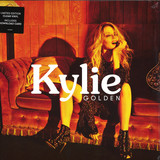
Limited Edition Clear Vinyl
Includes 12' Vinyl and Deluxe CD album, 30 page hard back book
Now that I've been to Nashville,' Kylie Minogue says with audible affection, I understand. It's like some sort of musical ley-line...'
Golden, Kylie's fourteenth studio album, is the result of an intensive working trip to the home of Country music, a city whose influence lingered on long after the pop legend and her team returned to London to finish the record: We definitely brought a bit of Nashville back with us,' she states. The album is a vibrant hybrid, blending Kylie's familiar pop-dance sound with an unmistakeable Tennessee twang. It was Jamie Nelson, Kylie's long-serving A&R man, who first came up with the concept of incorporating a Country element' into Kylie's tried-and-trusted style. That idea sat there for a little while, with Minogue and her team initially unsure about how to bring it to life. Then, when Grammy-winning songwriter Amy Wadge's publisher suggested Kylie should come over to collaborate in Nashville, a city Kylie had previously never visited, something clicked. You know when you're so excited about something,' she recalls, that you repeat it an octave higher and double the decibels I was like that. 'Nashville! Yes! Of course I would!'. I hoped it would help the album to reveal itself. I thought 'If I don't get it in Nashville, I'm not going to get it anywhere.''
Kylie's Nashville trip involved working alongside two key writers, both with homes in the city. One was British-born songwriter Steve McEwan (whose credits include huge Country hits for Keith Urban, Kenny Chesney and Carrie Underwood), and the other was the aforementioned Amy Wadge, another Brit (best known for her mega-selling work with Ed Sheeran). It was then a truly international project: Golden was mainly created with African-German producer Sky Adams and a list of contributors including Jesse Frasure, Eg White, Jon Green, Biff Stannard, Samuel Dixon, Danny Shah and Lindsay Rimes, and there's a duet with English singer Jack Savoretti.
However, the album's agenda-setting lead single Dancing was, significantly, first demoed with Nathan Chapman, the man who guided Taylor Swift's transition from Country starlet to Pop megastar. If anyone knows how to mix those two genres, Chapman does. Nathan was the only actual Nashvillean I worked with. He's got a huge studio in his house, which is probably due to his success with Taylor... there's plenty of platinum discs of her, and others on his walls.' There's something of the spirit of Peggy Lee's Is That All There Is, of Dylan Thomas' Do Not Go Gentle Into That Good Night, even of Liza Minnelli's Cabaret about Dancing, a song which not only opens the album but sets out its stall, providing a microcosm of what is to come. You've got the lyrical edge, that Country feel, mixed with some sampling of the voice and electronic elements, so it does what it says on the label. And I love that it's called 'Dancing', it's immediately accessible and seemingly so obvious, but there's depth within the song.'
The experience of simply being in Nashville was an overwhelming one, before Kylie had even arrived. Once I knew I was going to Nashville, people talked about the place with such enthusiasm. They said without doubt I would love it and, I would come back with songs. They were sending lists of restaurants, coffee shops and bars. It really was a beautiful and genuine response and it felt like I was about to have a life changing experience and in a way, I did.' The reality came as something of a surprise, when she found a far more modern metropolis than the vintage one she'd envisaged. I thought it would be like New Orleans: little houses and bars, with music spilling out onto the street. It reminded me more of Melbourne: apartment blocks going up everywhere! The main strip, Broadway, where the honky tonk bars are, that's where the street was filled with music and it was just amazing.' Mainly, Minogue remembers the heat and humidity. It was 100 degrees. It was like it was raining with no rain.' She also relished the chance to wander around unrecognised, visit a few venerable music bars and soak in the atmosphere. I didn't get to the Grand Ole Opry or the music museums but I managed to go to a couple of the institutions there like The Bluebird Cafe and The Listening Room, and just by being there, through some kind of osmosis, you get this rejuvenated respect for The Song, and the writing of The Song. There's no hoo-hah around it. There's a singer-songwriter there, talking about the song and singing the song, to an audience who are there to listen. Although, I have to confess I was guilty of starting to clap too soon during a long pause at the end of one of the songs. The guy made a bit of a joke out of it and got a laugh from it, but I thought 'Of all people in the audience, no...''
It's probably no coincidence, therefore, that every track on Golden is a Kylie co-write, making it arguably her most personal album to date. The end of 2016 was not a good time for me,' she says, referring to well-documented personal upheavals, so when I started working on the album in 2017, it was, in many ways, a great escape. Making this album was a kind of saviour. I'd been through some turmoil and was quite fragile when I started work on it, but being able to express myself in the studio made quick work of regaining my sense of self. Writing about various aspects of my life, the highs and lows, with a real sense of knowing and of truth. And irony. And joy!'
The songwriting process allowed Kylie to get a few things out of her system. Initially, she admits, it was cathartic, but it also wasn't very good. I think I was writing too literally. But I reached a point where I was writing about the bigger-picture, and that was a breakthrough. It made way for songs like Stop Me From Falling and One Last Kiss. It also meant I had enough distance to write an autobiographical song, like A Lifetime To Repair, with a certain amount of humour. The countdown in that song: 'Six-five-four-three, too many times...'. I don't know if that will be a single, but I can just imagine a girl with framed pictures of past boyfriends, and kind of going 'Oh god, when am I going to get this right'' When she listens back to Golden, Kylie can vividly hear the Nashville in it. It is, she'll agree, probably the first time that a Kylie album has sounded like the place it was made. You wouldn't normally relate my songs to the cities. Can't Get You Out Of My Head sounds more like Outer Space than London. But Shelby '68, for example, was written in London but it was done with Nashville in mind. It's about my Dad's car, and my brother recorded Dad driving it! I don't think I'd have written a number of the songs, including Shelby '68 and Radio On without having had that Nashville experience.'
The latter, she says, is about music being the one to save you.' Throwing herself into the making of the record, she says, crystallised that idea. If there's one love that will always be there for you, it's music. Well, it is for me, anyway.' That song, in particular, carries nostalgic echoes of the golden age of Country, as heard through Medium Wave transistors and tinny home stereos in the distant past. Like any child of the Seventies, Kylie had a basic grounding in Country music, mainly absorbed from older family members. My Step-Grandfather was born in Kentucky and though he lived most of his adult life in Australia, he never stopped listening to his beloved Country artists.' If there's any classic Country singer whose imprint can be heard on Golden, it's Dolly Parton.
Kylie saw Dolly live for the first time at the end of 2016, at the Hollywood Bowl. It was like seeing the light,' she beams. It was incredible. Everyone, whether they know it or not, is a Dolly Parton fan. When I was in Nashville, I did pick up a T-shirt that said 'What Would Dolly Do' Maybe that should be my mantra.' And, whether consciously or otherwise, there's a timbre and trill to Kylie's vocals on Radio On that is distinctly Parton-esque. My delivery is quite different on this album,' she says. A lot of things are 'sung' less. The first time I did that was with Where The Wild Roses Grow. On the day I met Nick Cave, when I recorded my vocals, he said 'Just sing it less. Talk it through, tell the story.' This album wasn't quite to that extreme, but a lot of the songs were done in fewer takes, to just capture the moment and keep imperfections that add to the song. I remember on my last album, a lot of producers were trying to take out literally every vibrato they heard. And that's not natural to my voice. I mean, I can make myself sound like a robot, but it's nice to sound like a human!' Working within the Country genre also gave Kylie permission to write in the Nashville vernacular. Because we were going there, I wasn't afraid to have lines like 'When he's fallen off the wagon we'd still dance to our favourite slow song', 'Ten sheets to the wind, I was all confused', 'I'll take the ride if it's your rodeo'. The challenge of bringing a Country element to the album made the process feel very fresh to me, kind of like starting over. I started to look at writing a different way, singing a different way.'
If ever Kylie lost confidence in the Country-Pop concept, and found herself pondering This is great, but back in the real world - my real world - how will this work', Jamie Nelson was there to badger her into sticking to the path. We found a way to make it a hybrid with what we'll call my 'usual' sound. It had to stay 'pop' enough to stay authentic to me, but country enough to be a new sound for this album. The closer we zoomed in, and the more we honed it, I knew Jamie was right. We sacrificed good songs that weren't right for this album, because we wanted it to be as cohesive as possible. The songs that were hitting the mark were these ones, so we decided to be strong, and that's how we wrapped up the album. What he said, that stuck with me, was that 'I'd hate to get to the end of this and really wish we'd gone for it.'' Having worked with Kylie for so long, Nelson was able to put this latest shift of direction into perspective. He said 'You've traditionally done it throughout your career. You had your PWL time, then you did a complete turn when you went to deConstruction, then another complete turn with Spinning Around, and R&B dance-pop, and then another turn with Can't Get You Out Of My Head, icy synth-pop, and this is another one.' He was right. It felt like the right time to have a change sonically. New label, new stories to tell, and a new decade almost upon me.'
Kylie Minogue will, it's scarcely believable, turn 50 this year. This looming milestone is partly behind the album's title, and title track. I had this line that I wanted to use: 'We're not young, we're not old, we're golden' because I'm asked so often about being my age in this industry. This year, I'll be 50. And I get it, I get the interest, but I don't know how to answer it. And that line, for my personal satisfaction, says it as succinctly as possible. We can't be anyone else, we can't be younger or older than we are, we can only be ourselves. We're golden. And the album title, Golden, reflects all of this. I liked the idea of everyone being golden, shining in their own way. The sun shines in daylight, the moon shines in darkness. Wherever we are in life, we are still golden.' One of the album's shiniest moments is Raining Glitter, an exuberant banger which ventures closest to Kylie's traditional dance-pop comfort zone. Eg White, who is one of the producers and writers and a great character, was talking about disco one day. I said 'I love disco, but you know the brief.' We needed to be going down the Country lane, so to speak. But we managed to bring them both together. When I wrote it, I was thinking about the Jacksons video for Can You Feel It where they're sprinkling glitter over everyone. And I think there's a Donna Summer record that's got that feel to it. I think that's my job: I basically leave a trail of glitter after every show I do anyway.'
Kylie is looking forward to the challenge of incorporating the Golden material into her live shows. Mixing these songs in with my existing catalogue is going to be fun. And it could be fun to do some of those songs with just a guitar. It'll make my acoustic set interesting...'Her incredibly loyal fans - to whom one Golden song, Sincerely Yours, is intended as a love letter' - will, she believes, have no problem with her latest stylistic shift. My audience have been with me on the journey, so I shouldn't be afraid that they won't come with me on this part. I've had fun with it, and I'm sure they will too.'
The time spent making Golden has, Kylie says, been a time of creative and personal renewal. I've met some amazing people, truly inspiring writers and musicians. My passion for music has never gone away, but it's got bigger and stronger.' And if there's an overriding theme to the record, it is one of acceptance. We're all human and it's OK to make mistakes, get it wrong, to want to run, to want to belong, to love, to dream. To be ourselves.'
I was able to both lose and find myself whilst making this album.'
Marco Bailey's 5th full-length album, one that he personally claims to be the best overall representation of his sound. With seventeen tracks comprising almost an hour and a half of music, he has ample room to stretch out and to give listeners an excellent portable version of his potent live show.
By maintaining a consistently high-quality output that does not merely ride the wave of current trends, multi-faceted producer Marco Bailey has managed to survive through decades of mercilessly shifting adjustments to popular taste in dance music. From his beginnings in the late '80s spinning eclectic sets comprised of everything from punk to old school hip-hop, to his present interest in pure unadulterated techno, the Belgium-based DJ and producer has won over audiences with his keen knowledge of how to squeeze the greatest physical and emotional impact out of a few well-placed elements, along with his instinct for seeking out the most innovative and resilient kindred spirits (his impressive number of professional friendships includes artists as diverse as Markus Suckut, Jonas Kopp, Alex Bau, Edit Select, Speedy J, Steve Rachmad and many more). These combined talents have led to his formation of several different labels: MB Electronics in 2001, the 'limited edition' label MBR in 2013, and lastly the new Materia Music label begun last year. His similiarly named event series, Materia, has also been a truly worldwide 'state of the art' summit for advanced techno artists.
The full-length personal releases by Marco Bailey, which stretch back to his mid-'90s period as a trance producer, have been gracefully arcing and anthemic affairs composed of individual tracks that follow that same blueprint. He is now about to drop his 5th full-length album overall, one that he personally claims to be the best overall representation of his sound. With seventeen tracks comprising almost an hour and a half of music, he has ample room to stretch out and to give listeners an excellent portable version of his potent live show. Of course, an epic running time alone is not the marker of a great audio experience, but an epic running time in which one loses track of time completely is - Bailey accomplishes this feat by never rushing the payoff; by organically building up each track until listeners are fully immersed in his alternate universe.
This skill can be heard on banging, sweat-saturated tracks like 'Ash', 'Genetix' and 'Hasai,' but also on comparitively gentle pieces like 'Klauth' (which straddles the line between disciplined electro and something more dreamlike and weightless), or the blissed out 'Suoh,' which feels like a fresh snowfall in audio form. Low-key cuts like 'Rex,' driven by echo FX and other windswept sounds, form natural counterparts to busier tracks like 'Ruth,' with its spring-loaded sequencer attacks, or 'Reboot That Device,' which is ingeniously driven by a psychedelic organ whose sound evolves with various filter settings. Minimalist vocals are occasionally injected into the mix - i.e. on the 'The Darkness' - to impart a subtle message of constant, ongoing expansion into unexplored galaxies without and within. It's as good a definition of the artist's musical mission as any.
Matthew Dear's Audion project stands proudly at the intersection between art and hedonism, realised over a decade long dedication to powerful and relevant dance music. Growing out of the vibrant DIY Detroit underground, Audion and his contemporaries were free to feed off the energy reverberating from UK and European dancefloors, but singular in their desire to create their own sound and spirit. An Audion release is techno in it's purest sense - whether it's pushing the bombastic limits, spinning the dancefloor out of control or elegantly toying with just a few sonic elements. 'Alpha' is Audion's first artist album in 10 years and comes at the end of a period of fevered activity. The collective body of work standing as a marker in time and a defining moment in the life of the artist. Drowning out the noise of the outside world, 'Alpha' was a puzzle pieced together sonically in the shadows and wildly brought to life in a matter of weeks. The artwork for 'Alpha' has again been realised by Will Calcutt, Dear's long time collaborator, who has a visual plan for the music that matches the sonic vision, completing the final critical piece of the puzzle. Taken from the album, Gut Man Cometh and Destroyer get the remix treatment from UK producers Matthew Herbert and FOLD
Alex Font is a serious guy who knows that now is his time. A multi-instrumentalist, as well as a producer and DJ, he can sometimes be seen on stage in trademark shirt and bow tie. He declares himself a lover of vinyl and, above all, what he calls real house. I think that says it all.
'NOW IS MY TIME' is the fifth release on the Oblack label and is available in black vinyl and digital. It is undeniable proof that Alex Font has arrived and is now a permanent force on the House scene, mainly in soul and dance, but who also knows how to reinvent his sound using new tech. Always with an eye on the future of sound innovation, he still manages to keep hold of his roots and respect his great influences. Well, nothing less would do. On this EP you can tell that Alex Font (remember, this is one serious guy) knows what he has in his hands and spinning on his turntable. His knowledge of musical composition, harmony and engineering skills jump out at you as soon as the first beat of 'Now is my time' hits the speakers: darkness, sophistication, soul and groove. There's a perfect command of tempo, of where, when and how. You pick up on the instrumental skills which allow him to do what he wants, when he wants. That's what's so great about this: you're struck by the ease of how such perfect technique and astoundingly good taste come together. Digitally analogical (or is it the other way round), this is the deeply profound vs. the dancefloor. It fascinates and liberates, carrying you off through different dimensions before breaking out of itself, with no need for artificial fanfares as it's so perfectly defined by Chicagoan pianos, hi-hats, funkoid vocals, etc. He's simply extraordinary: Alex Font signed by Oblack 005.
The remix by Martinez gives this track a technical edge and club splendor. Leaving out the more classic elements of house that are present in the original, the Swedish producer slows things down so that it doesn't lose any of its elegance, but at the same time the track gains punch on the dancefloor, and there's no doubt that it works. As cool as it is effective at inciting dance and everything else that comes with gyrating your pelvis in the early hours of the morning.
Finally, the Argentinian Shall Ocin plays the scoundrel here by adding diverse electronic elements that take the track into a new dimension. By giving the vocal more prominence, here it takes centre stage, and over a well-layered tech-house base, it makes the tremendous savoir faire of the original literally surf, while at the same time respecting and completing it.
In the end, it's great that you know that this is your time and that you want to share it, through Oblack and on vinyl, with all of us. Thanks comrade.
the second part of the in-demand " Cero" by Galarude ( DJ Kent and homies from Sly Moongose and Tokyo No. 1 Soulset ) that had been a secret weapon of a selected few DJ glitterati since it's original Japan-only release in 2004 delievers another set of knockout mixes: Prins Thomas flatens the originals tribal elements with hard whiping beats and a forceful steamroller of a bassline yet keeps the headmessing ingredients intact with all those swirling, spinning soundparts that one can also enjoy in higher dosage with the "ambient miks" for daytripping on your homecouch. Tuff City Kids aka Lauer and Gerd Janson corrborate how they persistently tweaked themselves to the a-list of remixing teams with two expertly constructed, infectiously swinging house mixes that keep the acid purity level high and carry the promise of a neverending summer of love.