Cerca:spirit id

Generi
Tutto
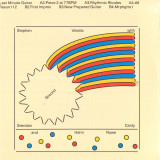
Stephen Vitiello with Brendan Canty and Hahn Rowe - Second

When you’re running a label, a demo occasionally comes across your desk that makes you reconsider everything you thought your label was all about. For Balmat, such was the case with this stunning album from Stephen Vitiello, Brendan Canty, and Hahn Rowe. It sounds like nothing we’ve released so far—and that very otherness opened up a whole new world of possibilities for us.

Fans of ambient, experimental electronic music, and sound art will be familiar with Vitiello, a New York native, long based in Virginia, who has collaborated with a cross-generational list of greats: Taylor Deupree, Steve Roden, Lawrence English, Tetsu Inoue, Nam June Paik, Ryuichi Sakamoto, Pauline Oliveros, and many more. On labels like 12k, Room40, and Sub Rosa, he has explored a wide range of minimalism, microsound, lowercase, ambient, improv, and other styles. But this album is something different. It may begin in ambient-adjacent territory, but it quickly veers off, and it just keeps zigzagging, taking on elements of krautrock, post-punk, dub, and the groove-heavy interplay of groups like Natural Information Society and 75 Dollar Bill.

This stylistic turn is thanks in large part to Vitiello’s choice of collaborators. “We’re coming from three different schools,” Vitiello says: “sound art, art rock, and punk rock.”

Active since the early 1980s, Rowe—a violinist, guitarist, and producer/engineer—has played with, or manned the boards for, a frankly jaw-dropping list of musicians: Herbie Hancock, Gil Scott-Heron, the Last Poets, Roy Ayers, John Zorn, Glenn Branca, Swans, Live Skull, Brian Eno, David Byrne, Anohni, R.E.M., Yoko Ono, and many more. But he might be most closely associated with Hugo Largo, a one-of-a-kind New York quartet—two basses, vocals, and Rowe’s violin—that in the late 1980s helped lay the groundwork for what would eventually become known as post-rock.

Canty, of course, is the legendary drummer of Fugazi, the visionary DC post-hardcore group, as well as Rites of Spring before them, and, currently, the Messthetics, a Dischord-signed instrumental trio with guitarist Anthony Pirog and Fugazi bassist Joe Lally.

Vitiello’s trio first collaborated on First, a 17-minute piece released on the Longform Editions label in 2023. Second picks up where the freeform drift of First left off, channeling the trio’s exploratory energies into more intentionally structured tracks and—in a real first for Balmat—some almost shockingly muscular grooves. “Sometimes my projects are more conceptually driven,” Vitiello says, “but I think this was more musically geared. I just wanted to open up the references and bring in an incredible drummer, bring in some melodies, and I’m sort of the center.” But his collaborators, he stresses, are “vastly creative in making anything I might suggest better.”

Like its predecessor, Second took shape in phases, shifting between improvisation and collage. Vitiello laid down the skeleton of the music at home, sketching out initial ideas on Rhodes keyboard and acoustic and electric guitar; he then fed the parts through samplers and his modular system, recording 10- or 20-minute jams. Once he had edited them into more structured forms, he hit the studio with Canty, who added not just drums but also bass and piano; finally, Vitiello took the results of those sessions to Rowe, who played violin, viola, electric bass, and 12-string acoustic and bowed electric guitar, and assisted in some of the final structuring and mixdown.

A few more surprises along the way: Reanimator’s Don Godwin, the studio engineer where Vitiello recorded with Canty, contributed what he calls “resonant dustpan”; and none other than Animal Collective’s Geologist, who just happened to be in the studio that day, sits in on hurdy gurdy on “Mrphgtrs1,” the album’s gorgeous, stunningly atmospheric drone closer. “I love these chance encounters,” Vitiello says. “Somebody I admire, a group I admire—that was an unexpected gift.”

An unexpected gift is a great way of describing Second as a whole: three veteran musicians venturing outside their usual zones and finding a new collaborative language together. The results can’t be neatly slotted into any given genre; they belong not to any given category, but to the spirit of conversation itself.

In Stock

Disponibile in Stock e pronto per la spedizione

25,17
SON OF CHI - WE CARRY EDEN

An immersive long-form composition in two parts that seamlessly blends a collage of spoken word, field recordings and drones with elements of dub, jazz, fourth world and ambient music.

Son Of Chi is the latest project of Rotterdam-based multi-instrumentalist, composer and producer Hanyo van Oosterom. Van Oosterom’s prolific career spans multiple decades and genres; among countless projects he has been involved in, he is known for founding the Dutch ambient collective CHI in the early eighties, and in recent years for his prolific collaboration with CHI co-founder Jacobus Derwort as Chi Factory. Following Derwort’s passing in 2019, van Oosterom decided to close the CHI circle with the birth of Son Of Chi.

Sonically, the world of ‘We Carry Eden’ is fully immersive; it ripples with depth and shimmers in detail. Motifs, ideas and fragments, arise and disappear like passing thoughts, drawing the listener deeper and deeper inwards. For those familiar with Oosterom’s work as Chi Factory, the depth and meditative nature of the work will come as no surprise; however it is Oosterom’s skill with grooves that shines equally bright here; his infectiously dubby basslines and percussion rise up from the ether, grounding the listener to the earth. ‘We Carry Eden’ at times invokes the fourth world landscapes of Jon Hassell, (with whom Oosterom has collaborated) but as a whole, it remains the unique work of an artist fully in tune with their vision.

Thematically, storytelling traditions lie at the heart of ‘We Carry Eden’, with van Oosterom’s long-time collaborator Omar Ka playing a central role. Ka, who hails from the West African nomadic Fulani tradition of storytelling, responds to the collage of field recordings and sounds collected by Oosterom. His voice is woven throughout ‘We Carry Eden’, creating a narrative that binds the multiple sound sources of the album together.

As with much of van Oosterom’s musical output, inspiration is drawn from the Greek Island of Patmos and the wisdom and prophecies of the Native American Hopi Tribe. Since his work with CHI in the early eighties, van Oosterom has often incorporated quotes from Hopi Elders into his music. Gods, spirits, animals and humans, all existing in one unchangeable relationship tied to nature; ‘We Carry Eden’ is rooted in this philosophy, serving as a peaceful message of beauty, harmony and respect for the wisdom of the Elders and ancient traditions.

Sleeve art and design by Michael Willis.

In Stock

Disponibile in Stock e pronto per la spedizione

22,65
QUELZA - PENSA POETICO

QUELZA

PENSA POETICO

12inchDKMNTL-UFO16
Dekmantel Records
30.05.2025

In a blizzard of breaks and surrounded by towering slabs of icy atmospherics, Quelza comes spinning into the Dekmantel UFO orbit with an EP of grandiose proportions.

Anyone who caught Quelza at Dekmantel Ten last summer will be well aware of the breakthrough producer's affinity for evocative soundscapes — amongst his keen instinct for dancefloor propulsion its his richly rendered atmospheres that have made him such a vital new talent in the industry and club scene. The curious, extraterrestrial quality to his sound is the perfect fit for the resurgent UFO series, and Quelza has more than risen to the occasion with four tracks that take in the widest spectrum of his sound to date.

The title track 'Pensa Poetico' is a dramatic, 11-minute epic that moves beyond dancefloor rigidity into a fractured zone where rhythms splinter and shudder around immersive dub chords pulses and IDM infused rhythms . There might be the anchor of an insistent, staggered kick drum, but it's a simple tool to allow the freedom of movement for intricate layers of steel, glass, ice and dust before the second half erupts in a powerful display of breakbeat science. It's the most adventurous expression from Quelza to date — a track he credits with unblocking his creative process on the path towards a more honest expression within his production.

This spirit of adventure maintains throughout the EP, balancing cathartic compositional shifts with hyper-detailed scene-building and energy shifts that push and pull with your expectations. Quelza's well-established affinity for dancefloor physicality holds true as he twists and turns through these constantly surprising, nail-biting arrangements. Even when everything seems to fall apart, he'll sense the perfect moment to return to a pinpoint groove. Toying with minimal, modernist 2-step and complex organic percussion as well as choppy breaks, this is the sound of Quelza breaking out into a new phase where anything feels possible and his production vocabulary allows him to land audacious moves with mind-blowing finesse.

In Stock

Disponibile in Stock e pronto per la spedizione

12,56
LUC-HUBERT SEJOR - MIZIK FILAMONIK: SPIRITUAL SOUND

180 G. BLACK VINYL WITH LINER NOTES IN CREOLE, FRENCH, ENGLISH

Originally released in 1979, "Spiritual Sound" lives up to its name, a soaring, triumphant album, six tracks of spirit magic from Guadeloupe.

Telluric, intense, terribly alive, the gwoka drums of Guadeloupe carry the identity of a painful and fervent island. Marked forever by the crime of slavery, Guadeloupe's créolité cherishes the ka drums and their natural environment: the low-pitched boula drum with male goatskin, the high-pitched soloist makè drum with female goatskin, the chacha, ti bwa, triangle, calabash and other percussion instruments that surround them, and the voices - the fiery, proud, timbred, urgent voices of the gwoka.


This album is also a legend for its voices: in his then dazzling youth, singer Lukuber Séjor was one of the first gwoka artists to largely feminize the chorus of répondè, who converse with his text delivered in a straight and powerful voice.

And everything here sets new standards. In 1979, Mizik Filamonik - Spiritual Sound proclaimed a spiritual patriotism of ferocious intensity. The album by Lukuber Séjor - whose spelling alone is a battle - sets out to give Guadeloupe the intangible weapons of self-respect and self-knowledge, through a singular practice of traditional music.

The genesis of gwoka music is less straightforward than one might imagine... The drums performed the servile task of accompanying the work of slaves in the fields and during the “corvées” imposed by the administration, before being freely practiced by the common people after the abolition of 1848. At the heart of the conviviality of the Guadeloupeans furthest from the cities - geographically and socially - the gwoka drums come out for carnival, funeral wakes and neighborhood celebrations, but also during strikes, fits of anger and armed vigils of the riots and revolts that have punctuated the island's history. For generations, governors of the colony and then the prefects of the overseas department of Guadeloupe have been viewing the gwoka as a potential for turbulence and a threat to public order.

But as the Beatlesmania, “chanson engagée” and rock revolutions unfolded in Europe, young people turned to the drums of mizik a vié nèg (“bad negro music”, in Creole), which Guadeloupeans had learned to despise by following the “assimilation” process advocated by the school system and most of the political class. At the end of the sixties, in a Guadeloupe mourning the deadly repression of the May 1967 social movement, they played traditional music, refusing to wrap it up in tourist prettiness and madras folk costumes. Instinctively, they played a rough and contemporary gwoka, led by the incendiary Guy Konkèt. This was the era of decisive 45 rpm records such as Robert Loyson's Kann a la richès, which brought to light the fieriest words of union rallies.

At his home in Sainte-Anne, Lukuber Séjor played with flautist Olivier Vamur and his brother Claude Vamur, who cobbled together a drum kit from tin crockery and became, a few years later, the most influential drummer in Kassav'.

These were the years of the Bumidom program, when young Guadeloupeans were encouraged to emigrate to mainland France. At the age of twenty, Lukuber Séjor embarked on the liner Irpinia, disembarking at Le Havre and taking the train to the Gare Saint-Lazare - the route taken by thousands of young West Indians who went on to study or looked for work, all the while trying to maintain a link with their homeland. In this case, it's at the Antony university residence, where Lukuber played the drum and participated in a thousand gwoka updates and aggiornamentos, while exile reinforced the need for a spiritual link with the native land.

In 1978, Guy Konkèt played at the Salle Wagram, a historic event for West Indian music. After serving as répondè - i.e. backing vocalist - on one of his home-recorded albums, Lukuber joined his live band. Little by little, he became one of the key artists on a circuit parallel to French show business. At a student party in Caen, he met a young woman from Martinique who, at the time, was more motivated by her ambitions as a visual artist than by her vocation as a musician. Her name was Jocelyne Béroard and, a few years before she plunged into the Kassav' adventure and became the greatest West Indian singer of her generation, she designed the cover of Lukuber Séjor's LP.

This ambition was obvious and imposed its will. A more or less regular band was formed, with Roger Raspail, Rudy Mompière and Éric Danquin on ka drums, Claude Vamur on ti bwa, Olivier Vamur and Françoise Lancréot on flutes and Annick Noël on keyboards. Lukuber Séjor is set on wanting to extend the gwoka palette to other instruments, as the jazz-rock revolution opens a thousand new doors. Annick Noël will play a wide range of timbres and textures on electric piano and synthesizer. Another novelty: the répondè are two men and two women, Roger Raspail, Olivier Vamur, Françoise Lancréot and Maryann Mathéus ...

Mizik Filamonik - Spiritual Sound is a self-production in which the singer and leader sank all his savings, allowing him no more than a single day in the studio. The first side is more of a musical manifesto, with the first two tracks, Éritage and Penn é plézi, being instrumentals. The third, Son, forcefully celebrates the need for Guadeloupeans to connect with the gwoka. In fact, Jocelyne Béroard's cover shows a tambouyé in the shadow of a cloudy sky, against which a radiant sun is rising and whose light will soon flood the entire landscape. The silhouette and face of this man strongly evoke the immense Vélo, master of the ka, rejected at the time on the fringes of society.

The second side of the LP is surprising. Formally, three tracks are explicitly linked like the three parts of a triptych. Primyé voyaj evokes the appalling tribulation of Africans deported as slaves to Guadeloupe; dézyèm voyaj speaks of the Bumidom program and the economic, political and social forces driving young Guadeloupeans towards the mirage of prosperity in France; twazyèm voyaj closes the cycle with the emigrants' return from Europe after years away from their island...

This gwoka, obsessed with the need to save Guadeloupe spiritually, appeals far beyond the politicized audience. Mizik Filamonik - Spiritual Sound instantly became a classic, although Lukuber Séjor never really made a career for himself as a musician.

After all, the album was released in 1980, with no promotional resources in France or Guadeloupe - and therefore no concerts. The thirty-two-year-old author, composer and performer made his own third trip back to Guadeloupe. He set up a small woodworking business, which he lost in Hurricane Hugo in 1989. His other activity, teaching in a medical-educational institute, became the core of his professional life. He continued to be an active campaigner - a campaigner for the Creole language, a campaigner for the reawakening of identity, a campaigner for special education, a campaigner for a thousand causes that he ignited with his generous and perceptive enthusiasm, such as the defense of breadfruit fries...

The echoes of his 1979 album have not died down. Of course, the use of Penn é plézi as the theme tune for Radio Guadeloupe's funeral notices from 1980 to 1992 kept him in the collective memory, but he continues to sing and compose sporadically, as with his all-female

vocal group Vwapoulouéka... Still convinced that music is a means of liberating the spirit, he continues the journey of a young man eager to deploy the power of Creole music and language.

Bertrand Dicale

In Stock

Disponibile in Stock e pronto per la spedizione

19,75
Various - YEAR VI EP

Various

YEAR VI EP

12inchYR06
Bonkers Music
29.04.2025

The annual Bonkers Music compilation returns, delivering another round of high-energy bangers. This year, the release explores a slightly evolved musical style while staying true to its signature sound. Celebrating its sixth edition, “Year VI” will be available on 12” vinyl, accompanied by a few exciting surprises.

A1. Neskeh’s “106 Cabrel” revolves around a melodic yet hypnotically repetitive lead sequence, crafted to evoke a trance-like state on the dance floor and radiate positive energy. The foundation of big, punchy kicks and a robust bassline gives it a quintessential club vibe.

A percussive break in the middle shifts the mood entirely, paying homage to Goa rhythms and shamanic rituals, immersing listeners in a more primal atmosphere. The drop reignites the momentum, enhanced by the warm tones of the beloved Minilogue, adding an almost epic dimension to the journey.

A2. Berlin’s Mike Sacchetti and Madrid’s David Meyer unite on “Agria Pachanga,” a dance energy piece that pulses with percussive drive and a subtle touch of Latin identity.

Acid-inspired arrangements swirl around classic drum machine sounds. The syncopated rhythms and pumping basslines push the track towards an agitated club atmosphere, building this song into a bold declaration of fiesta.

A3. Two friends from Guadalajara, Mexico, Leonor & Ludviq, now living in different European cities, (Barcelona & Lyon) join forces to bring you Capybara Trance, This electrifying track combines dark, driving energy with intricately sequenced melodies, a hard-hitting chugging bassline, and the unique touch of capybara-inspired sounds. Anchored by a commanding kick drum that sets an unrelenting tempo.

B1. “Nebula” is a deep, atmospheric journey through cosmic sounds and pulsating rhythms. The track blends hypnotic melodies with dark synthetic textures, evoking a sense of drifting through endless galaxies. With a strong groove and intricate arrangements, it delivers energy that fits perfectly in both morning sets and more conceptual playlists. The collaboration between Radial Gaze, Ducati Flux, and Persona RS captures the spirit of exploration, creating a versatile track that can be the highlight of any set

B2. Intruso hailing from Bogota, now based in Barcelona brings “Somos Acido” this track draws inspiration from the early 2000’s House and Trance, capturing the nostalgia and emotional resonance of his first experiences with electronic music as a child. A driving Acid bassline injects dynamic energy, making it perfectly suited for the dance floor.

B3. Argentinian born, Australia based producer Poulper teams up with Mexican maestro Hugo Vallejo to kick off this intergalactic adventure. This track weaves together acid-laced elements and an infectious rhythm, layered with haunting post-dark vocals that narrate the fiery, cosmic tale of love burning in the vast expanse of space. A bold and immersive journey into the unknown, perfect for this stellar compilation.

In Stock

Disponibile in Stock e pronto per la spedizione

15,34
Narciss & Gerd Janson - No Maze Like Heaven

Running Back is delighted to introduce RB Studio Sessions, a new sub-imprint of music envisioned, recorded and fully realised at Running Back’s in-house studio.
Built on the promise of unfettered creative freedom and aided by agreeable local autobahn connections in the Hesse region, the RB Studio Sessions project is christened with the work of Running Back’s founder, chief dreamer, and Geschäftsführer, Gerd Janson.
For this debut edition, he is joined for a momentous jam by the new-school hero of the house, good friend and kindred spirit, Narciss.
Just as Running Back’s earliest releases dropped a stylus to preserve timeless ideals of club culture, the four tracks on ‘No Maze Like Heaven’ further this continuum by turning back the sonic clock just a decade or so. Picture, if you will, a nascent Narciss, youthfully club
hopping and deeply inspired by the selections of Gerd himself, alongside a selection of DJs coaxing the Panorama Bar blinds open with exquisite, mid-tempo precision.
As such, new light immediately floods in for ‘Chicco’s Chips’, which captures many of those irresistible elements—Italo-tinted synths, hooky vocals, and perfect percussion— regenerated with the wide-eyed, high energy of Narciss’s own solo productions. ‘Elka,
meanwhile, is a richer, deeper dish, masterfully interlocking multiple heavenly melodies under layers of optimistic analogue fuzz.
Narciss and Gerd then look to the Netherlands for further collaboration with one of electronic music’s best-loved vocalists and another fine producer, Coloray, who fills ‘Look For You’ with a yearning performance in the vulnerable, synth-pop tradition. Finally, ‘No
Maze Like Heaven’ builds on this mood and melody for a finale that hits the sweet spot between machine power and oh-so-human emotion.
Featuring labyrinthian artwork from the mighty Gasius., via a sleeve that appears to blend M.C. Escher with MC Hammer, ‘No Maze Like Heaven’ proves to be a divine foundation of RB Studio Sessions. For Narciss, “a memory they will cherish forever.”
For Gerd, a taxdeductible working lunch. For DJs and dancers? Four ebullient hits-in-waiting, sounding great and meaning more.

In Stock

Disponibile in Stock e pronto per la spedizione

11,72
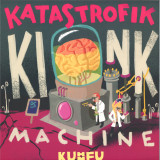
KUHN FU - KATASTROFIK KINK MACHINE

Der Waffle House Index bemisst in den USA seit 2011 die Wucht von Katastrophen: Grün = vollständiges Menü - Restaurant hat vollen Strom, Speisen unbegrenzt, Schaden schlimmstenfalls begrenzt. Gelb = eingeschränktes Menü - kein Strom, Verfügbarkeit von Speisen ist begrenzt. Rot = Restaurant zu - ernsthafte Schäden oder Überflutungen. Übertragen auf den freigeistigen Jazzrock der Band Kuhn Fu: Die Musik auf dem neuen Album "Katastrofik Kink Machine" springt mit Begeisterung und Verve zwischen Grün und Rot hin und her, und lässt die laue Mitte aus. Dem Wort Jazzrock haftet etwas Altbackenes an: Musik, in der seelenlose Virtuosität den Spirit und die Unmittelbarkeit ersetzt hat. Der Gitarrist und Komponist Christian Achim Kühn allerdings spielt mit seiner Band Kuhn Fu einen mit E-Gitarre infizierten Jazz, dem die Spielfreude und der Spaß am tiefschürfenden Unsinn (und eben dann doch auch: die Virtuosität) aus jeder Pore dampfen. Spaß an den Extremen nicht zuletzt, Grün und Rot, kein Gelb.

In Stock

Disponibile in Stock e pronto per la spedizione

26,88
Edictum - A Cosmic Scale

The album’s title deftly gestures to the sheer vastness of astronomical dimensions, while simultaneously capturing the musical breadth within, where the eight planets are imagined as the eight notes of an octave. The work draws inspiration not only from earlier compositions —most notably Gustav Holst’s The Planets—but also from the rich astronomical and cultural contexts surrounding these celestial bodies. Here, the focus transcends direct citation of melodic motifs, instead embracing an intriguing conceptual approach on a meta level, unfolding in a series of vividly contrasting soundscapes. These contrasts shape a sweeping sonic journey, one that fully embraces the album format with both arms, inviting the listener to venture into realms both strange and wondrous, feeling the immensity of the interstellar space that lies between them. Contrast, after all, is the brushstroke that enriches our world.

Embarking on an auditory voyage, "Astral Guide" establishes the sonic framework that propels us into the boundless expanses of the cosmos. Its ethereal tones evoke the vastness of space, crafting a mood ripe for exploration within the realms of sci-fi. The subsequent tracks unfold like constellations, weaving a rich tapestry of sound that seamlessly marries cinematic soundscapes with pulsating, club-oriented rhythms. This album invites listeners to traverse its immersive landscapes, whether nestled in the comfort of home or dancing under the starlit sky, each note a guide through the transcendent experience of a nocturnal journey.

"Solar Flares" draws its inspiration from the awe-inspiring expanse of solar phenomena, capturing the majestic power of the sun as it reaches into the cosmos. This track resonates with the idea that energy, while vital, can also be a force of destruction when unleashed with overwhelming intensity. The composition beautifully mirrors the sun’s duality, where brilliance and devastation coexist, inviting listeners to reflect on the delicate balance between creation and annihilation. Through its rich textures and dynamic shifts, "Solar Flares" serves as both a homage to the celestial and a poignant reminder of nature's formidable power.

"Mercury – The Winged Messenger" embodies a meticulously crafted soundscape where artistry meets astronomy. The tempo of 173.6 BPM, derived from precise astronomical data, propels the composition into a vibrant realm that resonates with cosmic energy. Synthwave sound design intertwines seamlessly with the fluid rhythms of Drum’n’Bass, imbuing the piece with an uplifting dynamism that evokes the ethereal grace of Mercury itself. In this sonic exploration, listeners are invited to ascend on wings of sound, navigating the celestial tapestry of the universe with each invigorating beat.

"Venus, The Bringer of Peace" strikes a decidedly cozy note, presenting a poignant contrast to the more tempestuous themes often found in cosmic narratives. This composition evokes a nostalgic vision of an optimistic era, one in which humanity transcended borders and embraced the infinite possibilities of space exploration, where no destination felt too distant. The dense, languid atmosphere envelops the listener, creating a tangible sense of serenity that unfolds gradually, allowing for a meditative journey through sound. Each note serves as an invitation to linger in this tranquil embrace, reflecting on the harmonious potential of our collective aspirations and the beauty of connection in a vast universe.

The central theme of „Gaia, The Bringer of Life“ —originally not part of the planetary cycle— is the profound enabler of life on Earth. The arrangement delicately mirrors the slow, tentative unfolding of this potential, marked by an initially sparse orchestration that gradually builds in momentum. This progression crescendos, embodying the explosive dynamism of the Cambrian burst of life, ultimately culminating in a euphoric fanfare—a triumphant, celebratory flourish echoing life’s victorious emergence.

"Blue Moon" unfolds as a contemplative reverie on the tranquil clarity of a night sky, now seldom glimpsed in its natural purity, unclouded by the relentless haze of urban light. The listener is drawn into the vast embrace of the star-strewn firmament, a journey that sways between euphoric awe at nature’s sublime beauty and a profound melancholy for its fragile and imperiled state. Musically, this duality finds expression in the delicate interplay of modal mixtures, while an ever-shifting triplet groove, poised at the intersection of Outrun and melodic house, lends a pulse that is both nostalgic and forward-looking—echoing the beauty and transience of a world on the brink.

Rather than replicating the original composition of „Mars, The Bringer of War“, this interpretation seeks to evoke its profound, foreboding atmosphere. Cyberpunk emerges here as an ideal genre, channeling the dark, relentless march synonymous with Mars, the ancient god of war. The piece reverberates with intensity, as distorted vocalizations rise, embodying the anguish and visceral torment that shadow war’s violent crescendo. This auditory descent into conflict captures the relentless pulse of warfare, where sound itself becomes an embodiment of suffering and fury.

Majestically, "Jupiter, the Bringer of Jollity" emerges on the celestial stage, sweeping away the somber tones with its radiant vigor. Drawing inspiration from the triumphant strains of the original, and borrowing a melodic motif in the refrain, the piece expresses joy and buoyancy through a shift to a major key and the lilting sway of a danceable 12/8 meter. Spirited and exuberant, it leaps boldly from major to minor and back again, playfully shifting time signatures to capture a mood of unbridled festivity and jollity.

Here, a more conciliatory concept is chosen than in the original inspiration. „Saturn“ aligns with the number six, being the sixth planet from the Sun and bearing the iconic hexagonal pattern at its northern pole. What, then, could be more fitting than to render this piece in a 6/8 time signature? The arrangement unfolds with a multifaceted richness, mirroring the countless stones and ice fragments that form the foundations of Saturn’s majestic rings.

„Uranus“ adopts the theme of a light-footed, dancing instrumentation, giving the impression of perpetual motion, never quite settling. This musical choice harmonizes with the planet’s own orbit, as it spins with breathtaking velocity, teetering and swaying, seemingly unable to attain rest or stability.

The chill and vastness of the cosmos find expression in „Neptune, The Mystic“. At its core, an electronic soundscape envelops a classical arrangement, its unreachability intensified by an ethereal, otherworldly choir. Hovering at the outermost boundaries of the solar system, where warmth is but a distant memory, the composition lingers in a slow, contemplative tempo, evoking a realm where space for speculation stretches wide and silence reigns supreme.

Though Pluto may have lost its planetary status, and its companion Charon never achieved one, this shift in classification subtly aligns with the cosmic scale invoked here—one that mirrors the musical tradition of an eight-note sequence. Fittingly, the album closes with „Kuiper Belt“, a composition emblematic of the turbulence and vitality of countless smaller

celestial bodies that, though diminutive, find their rightful place within the vast architecture of the solar system.

They say nature is the greatest composer, shaping the universe with a symphony of chaos and order, beauty and danger. It is this duality that fuels the artistic vision of Edictum—a producer who, armed with a doctorate in chemistry, delves as deeply into the mysteries of molecules as he does into the depths of sound. In the tension between the vastness of the cosmos and the microscopic processes that dictate life’s rhythm, Edictum creates sonic landscapes that dissolve the boundaries between science and art.

His music is a story of contrasts—a sonic tale where the raw forces of nature clash with the intricate structures of human culture. Opposites intertwine to form a harmonious whole: the primal rhythms of the earth meet the celestial melodies of the cosmos, the rigid laws of physics blend with the boundless freedom of art. Edictum explores these polarities with meticulous devotion, each composition an expedition into uncharted soundscapes—a quest to give voice to the unfathomable.

With over 20 years immersed in the realms of electronic music, Edictum has honed a keen sense for rhythm and movement. His driving beats compel both body and mind into a hypnotic flow. Yet beyond the pulse of dance lies a complex framework of conceptual thought. Today, his creative focus revolves around holistic album projects—self-contained worlds with overarching narratives that embrace contrast and complexity. Each track stands alone as a fragment of the whole, but together, they weave a cohesive tapestry, much like the chapters of a novel that guide the listener on an emotional and sonic journey.

Edictum’s distinctive musical signature has earned him international recognition. With over 150 releases, many on prestigious platforms like the iconic *NewRetroWave* label, and collaborations with artists such as Jan Johnston, Azumi Inoue, Powernerd, and Turbo Knight, he has solidified his place in the global electronic music scene. His latest work, *A Cosmic Scale*, marks his seventh vinyl album and is released under his own label, *Echoes of Expanse*. The label’s name is no coincidence—it captures the essence of his art: echoes of infinity, the vibrations of the universe distilled into a singular sonic experience that carries the listener ever further into the boundless expanse of sound and space.

In Stock

Disponibile in Stock e pronto per la spedizione

22,90
Charlie Charlie / Hypernatural - Remixes

If there’s one thing we know at International Feel, it’s that good things take time. But sometimes, just sometimes, they take a little longer than expected. Enter IFEEL088, a split remix 12” that stitches together two albums, two projects, and a collection of kindred spirits who understand the delicate art of sonic transformation.
Charlie Charlie (the Swedish duo of Chords and Bella Boo) have been long-time admirers of Mondag, ever since their ears first met the melancholic splendor of Sad Soup. When it came time to create Save Us, they had one request: a sax solo from Kristian (of Mondag fame). A beautiful idea, but as the fates (and studio schedules) would have it, the horns never made it onto the album.
Fast forward, and what began as a missed opportunity has now come full circle. Mondag, still taken with Save Us, took matters into their own hands and offered up a remix – a shimmering, unexpected rework of a track that already carried so much weight. Charlie Charlie obliged. And, because there’s no such thing as too much of a good thing, Bella Boo herself offers a tight and nimble edit, while Gerd Janson drapes the track in an ambient mist for those more horizontally inclined.
Hypernatural exists in some liminal space between waking life and dreamstate, it makes sense that its remixes should play with perspective. The trio—Dan Whitford (Cut Copy), Mirko Vogel, and Mike Gamwell (a.k.a. Knightlife)—crafted their album between the Swedish coast and the Scottish highlands, capturing the sublime and the surreal in equal measure. Now, it’s time to hand things over to new guides.
Mike Gamwell himself steps up, delivering a fresh take that bends and stretches time, while Gerd Janson follows, offering another piece for the puzzle—one that slots seamlessly into the hazy, transportive nature of the Hypernatural sound.
One record, two projects, three perspectives, and infinite interpretations. IFEEL088 is a reminder that sometimes the best things in life are worth the wait.

In Stock

Disponibile in Stock e pronto per la spedizione

11,72
Various - Say Cheeze! EP

This vibrant musical compilation captures the ideal balance of groove and depth, showcasing the creative energies of Andrey Djackonda, Etzu Mahkayah, and TooRare. Radiating joy and positivity, this release is filled with intricate sounds designed to create a feeling of uplift.

Boasting diversity, each track has a character of its own, yet aligns and contributes to the overarching narrative of the compilation—a voyage through emotive rhythms and audible expressions that ignite the soul. With its infectious grooves and immersive depth, the record radiates a refreshing energy and stands as a celebration of music’s power to connect and uplift.

Perfect for welcoming 2025 in style and with spirits high, Say Сheeze is more than just a collection of tracks. It delivers a resonant message of positivity and energy, making it a must-have for anyone on the hunt for tunes that inspire movement and joy.

Panna Cotta Music, a division of MixCult Records.

In Stock

Disponibile in Stock e pronto per la spedizione

14,24
Dominic Waxing Lyrical - Diminuet LP

RIYL: Sufjan Stevens, Pearls Before Swine, Richard Dawson, Incredible String Band, Scott Walker. When Dominic Harris started work on the follow up to 2017’s “Rural Tonic”, he had a different kind of landscape in mind than the bucolic inspiration he’d mined for that album and its predecessor (2013’s “Woodland Casual”). Instead it was nostalgia for winters of a youth (mis)spent in 90’s Berlin.

With a lucky find of a Hohner Guitaret, (a 1960s electric thumb piano), Harris began writing lyrics around its sparse and austere accompaniment. And after reconnecting with an old friend from Edinburgh, Ricky White, now living in the USA, the plan became clearer: a winter-journey to the rural Mid-West to write and record an LP. Convening in White’s new hometown of Bloomington IN, Harris would work each morning in the county library, the pair then venturing out on long, aimless drives down country roads before returning to put their ideas and conversation into music. With songs written over two weeks, Harris and White headed to a small studio space in a derelict strip mall in Indianapolis, to capture the album in as minimalistic a form as was fitting to the wintry feel of much of the music; glimmers of pedal steel and recorder shining out amid the dual acoustic guitars and piano arrangements. After the pandemic cut its swathe through all plans, the recording sessions decamped to Scotland.

By then Harris’s longtime collaborator Robert McFall had written string arrangements for each song, effortlessly capturing the spirit of the original vision whilst elevating each song towards the universal. Still there were the frosty hedgerows and abandoned factories of the rural Rust Belt. But also now the sandstone architecture and cobwebs of Edinburgh, and the cold grey of the Firth of Forth. Diminuet, the cover artwork showing a catheter transformed into a flower, captures that fragile moment where the world seems forever frozen in time, even as the Spring prepares to transform us all once again

In Stock

Disponibile in Stock e pronto per la spedizione

24,33
El Maquinista Hypnotica - Chakra EP

Join El Maquinista Hypnotica on a sonic voyage to the bygone era of electronic dance music with his latest release, "Chakra EP". This 4-track collection encapsulates the spirit of the late 80's and early 90's, drawing inspiration from New Beat, Techno, and Acid House.

Infused with the universal energies and the golden ratio concept, each track corresponds to the seven chakras, tapping into the ancient wisdom woven into the fabric of our being.

Utilizing genuine vintage hardware, El Maquinista Hypnotica brings four unadulterated techno sounds, embracing the origins of sonic creation with these timeless and potent machines, delivering a raw energy that echoes the purity of the original techno movement.

Chakra's EP visual approach serve as a testament to the fusion of technology and art. P2T has created an immersive experience that reflects the 'trippy', otherworldly artwork of the era using Bryce 3D (version 2.0), a program that was first commercially available in 1995. This antiquated tool was brought back to life via emulation technology, creating a universe that both musically and visually symbolizes the seven chakras and realigns the human body with it's ideal golden ratio.

El Maquinista Hypnotica is not only a producer, he's a magician, who hypnotically manipulates frequencies to light up dance floors. Every song combines the cosmic with the physical in an audio journey that is an alchemical fusion of the past, present, and future.

Get ready to be enthralled and invigorated by the mystical power of El Maquinista Hypnotica and his Chakra EP.

In Stock

Disponibile in Stock e pronto per la spedizione

10,88
Acusmouse / Ab Show - Line Conductor

After a two-year silence, the Russian imprint Goodbye Royalty returns with a 12-inch Line Conductors EP. The release is only for vinyl media and embodies the eclecticism of dance, creative minimalism, and the conceptual idea of the album is in a positive experience and purity of spirit. "Line Conductors" and "Topass" have a different set of sound solutions, but the psychedelic shades characteristic of Acusmouse are quite intelligent. Ab Show takes another step forward without departing from its usual sound, offering absolutely two different scenarios. With the frivolous, atmospheric "Antithese" and the deeper and hypnotic "Subminimal Message", where the protracted development of the composition allows you to immerse yourself in the associative images of the new time.

In Stock

Disponibile in Stock e pronto per la spedizione

11,72
Ana Frango Eletrico - Little Electric Chicken Heart LP

Here at Mr Bongo we have been inundated with people asking us to reissue this release. Ana Frango Elétrico's petit cult classic masterpiece 'Little Electric Chicken Heart' from 2019, which was only ever released on vinyl and CD in Brazil and Japan, has fast become a collector's item.

Well received by fans, DJs, and reviewers on release, The Needle Drop expressed "Ana Frango Elétrico's authentically vintage fusion of chamber pop, rock, samba and jazz is a real blast!" listing it as one of its Top 50 Albums of 2019. The album's reputation has been slowly building ever since, gaining a Latin Grammy nomination in 2020, and now solidly cementing itself as a gem of contemporary Brazilian music.

Across the albums nine tracks, Ana blends elements and influences from MPB, Tropicália, indie rock, punk and pop, forging them together with a sumptuous dose of her signature style. The finesse of 'Saudade' kicks off the LP, one of Ana's most known tracks to a non-Brazilian audience. A sublime opener, beginning with a spellbinding piano solo before transcending into a beautiful dream-laden slice of warmth, complete with luscious jazzy horns and deft vocal delivery. ‘Promessa e previsões’ follows, the only track on the album not to be written by Ana, instead being penned by Chico França. It’s a swelling and sweeping twilight groover, building and breaking across absorbing peaks.

Other highlights on the album include the anthemic 'Chocolate', which was a firm favourite with a packed sing-along crowd when we heard Ana perform it live. Elsewhere, 'Se No Cinema' hits with its quirky allure, charm and catchy melodies before transforming into a carnival spirit.

Tapping into the richness of Brazil’s new wave of musical energy, the album also includes a heavyweight lineup of collaborations with artists such as Dora Morelenbaum (Bala Desejo), Tim Bernardes, Antonio Neves and Guilherme Lirio to name but a few.

A short, sweet and refreshing record, that leaves nothing to waste, marrying playful ideas with poignant themes. 'Little Electric Chicken Heart' is a future classic and will beguile fans of ‘70s Brazilian recordings, Gal Costa, Mac DeMarco, Stereolab, Superorganism, Caetano Veloso and more.

In Stock

Disponibile in Stock e pronto per la spedizione

28,53
Androo - Tribute To Jackie Mittoo

Hybrid is a word used indiscriminately in our daily lives. This record isn't a hybrid; it's beyond hybrid, post-hybrid, so to speak. Does this phrase sound complicated to you, and are you never overly convinced by music theory and its caricatural aspect? Then forget what you’ve just read and listen to both sides of this record. You'll soon realise that these tracks are deliciously deft, drawing their essence from dub while leaving room for some skillful jazz writing. For those of you intrigued by melodies, the art of musique concrète or the exploration of dub music’s deviant angles, this record will easily find its place on your turntable.

The two sides of the record are cut with play, improvisation and effects, while leaving room for themes and ideas. If this record’s first chapter was born from a request to remix and pay homage to Jackie Mittoo, its themes tell another story. They have been declined and even reduced to an explosion point. The tracks are also driven by subtle details of musique concrète, giving the record the effect of an intimate musical production – but, above all, one of uncategorisable beauty.

In Androo’s case, this is hardly surprising. He is a craftsman who is unassailable in every respect, a poetic dynamiter and, for this reason, one of the most unpredictable musicians in Geneva (and beyond). His appetite for dynamite is perhaps an indication of his conception of music as, first and foremost, an experience. His highly personal and inventive tribute to figures from free jazz and contemporary music proves the point. But perhaps it is also an indication of his attachment to Jean-Luc Godard. You'd have to imagine Androo at his mixing desk without a pre-written script. The idea of editing infuses the record. The two sides are very much in this style and spirit: (un-)shot, meticulous, (ir-)reverent. In this respect, this record is a formidable proposition, and perhaps difficult to understand, but not striving to be understood.

Its combination of improvisation and composition is underpinned by a razor-sharp precision and dexterity that's hard to ignore, especially if you're curious about the art of sound mixing and the romantic accidents. It has a dexterity that transforms musical grids into romantic essays and sketches. A romanticism in which Androo takes us on a liberating musical experience that makes us forget the inertia of the ramping formatting of the record industry. In any case, this record is an invitation to (un-)think the category, and will delight any ear curious to wander into territories of intuition where the word hybrid no longer makes sense.

Text by Carl Åhnebrink

In Stock

Disponibile in Stock e pronto per la spedizione

24,33
DJ Persuasion - Jameela EP

Ulterior Motives launch their main label with a single from DJ Persuasion, featuring a Liftin’ Spirits remix from Ant Miles. The label, which is helmed by DJ and producer Noah Tucker, began life in 2021 with an anonymous edit of a much-loved underground hip hop gem. Two further 12”s in the white label series followed along similar lines, joining the dots between jungle, footwork and r’n’b in UM style. Since then, they have also launched their cassette series with a Metrist mix covering golden era tech step and d’n’b.

DJ Persuasion is principally known for A History Of Hardcore, a series of ten mixes covering ’88-’98 which appeared across a number of platforms between 2015 and 2020. Certain entries in the series appeared on cassette via The Trilogy Tapes, Blackest Ever Black (Id Mud) and Tape Echo. Persuasion also hosted the NTS Demon Poetry show (now the Drum Poetry show) for some years, and contributed In Focus sessions covering the work of Dillinja and LTJ Bukem, alongside Dev:Null.

Jameela EP covers four contrasting, but also concentric areas of the hardcore continuum, featuring a remix from Liftin’ Spirits aka Ant Miles of Origin Unknown. The title track rolls out at bleeding edge jungle hardcore tempo, taking in a mixture of familiar and unfamiliar references. Liftin’ Spirits contributes a standout remix which reframes Jameela as a drum’n’bass epic, opening with a panoramic intro and a quaking bass drop, then building to soaring strings. Robin Gets Revenge is an audial intervention into one of the last remaining unsolved mysteries in acid house, and a stomping 89’-’90 style jammer to boot. The B2 finds Jameela in a slower guise, offering something for after the club and the warm up.

In Stock

Disponibile in Stock e pronto per la spedizione

14,08
Michael Mayer - The Floor Is Lava LP 2x12"

Michael Mayer albums don’t come round too often, which is one of many reasons why his fourth collection, The Floor Is Lava, is a genuine event. It’s been eight years since his last one, the collaborative & released on !K7; its predecessors, Mantasy (2012) and Touch (2004), took their sweet time, too. It’s no real surprise, given the many hats Mayer wears – globetrotting DJ, revered remixer, inveterate collaborator, and boss of both Kompakt and Imara – that his solo productions are relatively sparing. But this also speaks to their quality: Mayer’s name on a record sleeve is a sign of quality, of music that’s both looking to the future and calling back to the past, that balances the imperatives of the dancefloor and the loungeroom, that’s as exploratory as it is functional.

On The Floor Is Lava, Mayer seems to be taking the temperature of both the music that surrounds him (past and present), and the ides of the industry he works within. There’s that iconic album title, for a start. “The album’s mindset,” he says, reflecting on those four words together. For Mayer, it’s partly a critique of the way the industry boxes in both producer and listener, focuses them on genre, on market, on the next new thing: “Being a free minded spirit that transcends genres has become an uphill battle.” A battle worth fighting, though, and with The Floor Is Lava, the result is an album that’s varied, quixotic, idiosyncratic, charming, and deeply, addictively listenable.

Throughout, Mayer finds thrills in exploration and juxtaposition, allowing unexpected things to blossom and giving them their life, their platform, throwing the listener exciting curveballs: “It’s a DJ album by a DJ that’s easily bored.” Either easily bored, or endlessly curious, The Floor Is Lava is rich with ideas. It opens with “The Problem”, which looks back to look forward, embracing the rickety way early house productions threw samples together with gleeful abandon. Mayer mentions Pal Joey, and the scene around Rockers Hi-Fi and their Different Drummer imprint, as reference points, and you can hear that freewheeling spirit throughout.

It’s followed by “Vagus”, a slinky, sensual minimal house number that Mayer describes as his “musical catnip”. The flow of these two opening cuts defines the dynamic of The Floor Is Lava, defining the dialectical drive at its core: thesis and antithesis leads to synthesis, but with a welcome prickliness that means you’re always excited, always engaged. It’s also productive in the way it derives energy from rubbing genres and sounds against each other, in unexpected ways, for maximum musical frisson. There’s psychedelic techno on “Feuerstuhl”, more minimal techno with “Ardor” (Mayer mentions ‘Immer 1’ era 90s minimal as inspiration), slippery, Shepard-tone breakbeat through “Sycophant”, a lovely, lush vocal turn on the poppy “The Solution”.

The album closes with the melancholy “Süßer Schlaf”, where Mayer sets a poem by Goethe to one of his most haunted, moving pieces of music yet, in abstract tribute to a lost friend. It’s one of the most affecting moments on The Floor Is Lava. There’s also an update on 2020’s wild Brainwave Technology EP, with the surrealist glitter-stomp of “Brainwave 2.0” (check out those handclaps!),where Mayer’s thinking about the socio-political precipice of the now: “I’m reading with great interest about this whole complex of how humanity is about to cross so many lines and the implications that the resulting financial and educational inequality will bring.”

That’s The Floor Is Lava: then and now, brainwaves and nerve structures, problems and solutions, genres on fire; the real, the unreal, and the surreal. An album for the easily bored and the endlessly curious. Mayer has the last word, telling us all you need to know about the album’s spirit: “Burning for the cause, being zealous, being addicted to the heat of the night, the exuberant powers of music.”

Michael Mayer veröffentlicht nicht oft Alben, was einer von vielen Gründen ist, warum ‘The Floor Is Lava’ ein echtes Ereignis ist. Es sind acht Jahre vergangen seit seinem letzten Werk, dem Kollaborationsalbum &, das auf !K7 erschien; seine Vorgänger, Mantasy (2012) und Touch (2004), ließen ebenfalls auf sich warten. Es überrascht nicht wirklich, da Mayer viele Rollen gleichzeitig erfüllt – weltreisender DJ, vielbeschäftigter Remixer, unermüdlicher Kollaborateur und Chef von sowohl Kompakt als auch Imara – weshalb seine Solo-Produktionen eher sparsam ausfallen. Doch das spricht auch für deren Qualität: Ein Album mit Mayers Namen auf dem Cover steht für Qualität, für Musik, die sowohl in die Zukunft blickt als auch auf die Vergangenheit verweist, die das Gleichgewicht zwischen den Anforderungen des Dancefloors und des Wohnzimmers hält, die genauso erforschend wie funktional ist.

Auf The Floor Is Lava scheint Mayer sowohl die Musik um ihn herum (vergangen und gegenwärtig) als auch die Strömungen der Branche, in der er arbeitet, zu reflektieren. Da wäre zunächst der ikonische Albumtitel. „Die Grundhaltung des Albums“, sagt er, drückt sich in diesen vier Worte aus. Für Mayer ist es teilweise eine Kritik daran, wie die Industrie sowohl Produzenten als auch Hörer in Schubladen steckt, sie auf Genres, auf den Markt und auf das nächste große Ding fokussiert: „Ein freier Geist zu sein, der Genres überschreitet, ist zu einem steinigen Weg geworden.“ Ein Kampf, der sich jedoch lohnt, und mit The Floor Is Lava ist das Ergebnis ein Album, das vielfältig, eigenwillig, charmant und tiefsinnig, aber auch süchtig machend ist.

Im gesamten Album findet Mayer Freude an der Erforschung und Gegenüberstellung von Stilen, lässt unerwartete Dinge erblühen und gibt ihnen Raum, überrascht den Hörer mit spannenden Wendungen: „Es ist ein DJ-Album von einem DJ, der sich schnell langweilt.“ Entweder langweilt er sich schnell oder er ist unendlich neugierig – The Floor Is Lava ist reich an Ideen. Es beginnt mit „The Problem“, das in die Vergangenheit blickt, um nach vorne zu schauen, und die wilde Art, wie frühe House-Produktionen Samples mit fröhlicher Unbekümmertheit zusammenwarfen, aufgreift. Mayer nennt Pal Joey und die Szene um Rockers Hi-Fi und ihr Label Different Drummer als Referenzpunkte, und dieser freie Geist zieht sich durch das gesamte Album.

Es folgt „Vagus“, eine sinnliche Minimal-House-Nummer, die Mayer als seine „musikalische Katzenminze“ beschreibt. Der Fluss dieser beiden Eröffnungstracks definiert die Dynamik von The Floor Is Lava und den dialektischen Antrieb im Kern: These und Antithese führen zu einer Synthese, jedoch mit einer willkommenen Schärfe, die dafür sorgt, dass man immer aufgeregt und engagiert bleibt. Zudem gewinnt das Album Energie, indem es Genres und Klänge auf unerwartete Weise aneinanderreibt, um maximalen musikalischen Nervenkitzel zu erzeugen. Es gibt psychedelischen Techno in „Feuerstuhl“, mehr Minimal Techno mit „Ardor“ (Mayer erwähnt ‘Immer’ Ära Minimal als Bezugspunkt), gleitenden Shepard-Ton-Breakbeat in „Sycophant“ und einen lieblichen, üppigen Vocal-Auftritt im poppigen „The Solution“.

Das Album schließt mit dem melancholischen „Süßer Schlaf“, in dem Mayer ein Gedicht von Goethe vertont und eine seiner bisher eindringlichsten und bewegendsten musikalischen Kompositionen schafft, als abstrakten Tribut an eine verschiedene Freundin. Es ist einer der ergreifendsten Momente auf The Floor Is Lava. Ebenfalls gibt es ein Update der wilden Brainwave Technology-EP von 2020, mit dem surrealistischen Glitzer-Stampfer „Brainwave 2.0“ (hör dir diese Handclaps an!), in dem Mayer über den sozio-politischen Abgrund der Gegenwart nachdenkt: „Ich lese mit großem Interesse über diesen ganzen Komplex, wie die Menschheit dabei ist, so viele Grenzen zu überschreiten und welche Auswirkungen die daraus resultierende finanzielle und bildungstechnische Ungleichheit haben wird.“

Das ist The Floor Is Lava: Damals und heute, Gehirnwellen und Nervengeflechte, Probleme und Lösungen, brennende Genres; das Reale, das Unreale und das Surreale. Ein Album für die schnell Gelangweilten und die unendlich Neugierigen. Mayer hat das letzte Wort und sagt uns alles, was wir über den Geist des Albums wissen müssen: „Brennen für die Sache, leidenschaftlich sein, süchtig nach der Hitze der Nacht, den überschwänglichen Kräften der Musik.“

In Stock

Disponibile in Stock e pronto per la spedizione

22,65
Various - TONY THORPE PRESENT POST PUNK THEORY - ALPHA LP 2x12"

(incl 40p fanzine written by Matt Annis with photographs by Simon Pyke and Ian Brodie) Postpunk Theory is a meticulously curated compilation by the legendary Tony Thorpe, known for his work with The Moody Boys, 400 Blows, and The KLF. These classic tracks were played at parties by Thorpe at the time, making them his personal classics. The compilation features 16 rare and sought-after tracks from the post-punk era, including works by Mark Stewart and The Maffia, Basement 5, 23 Skidoo and more.


Defining post-punk is no easy task. While punk was defined by a raw, rebellious simplicity, post-punk (1978-1986) expanded into a diverse array of sounds and ideas. It maintained punk's independent spirit but embraced experimentation, incorporating influences from various musical and cultural traditions, resulting in a movement far more eclectic and fragmented than its predecessor.

At its core, post-punk broke away from traditional rock structures, blending genres like industrial, goth, and punk-funk with emerging dance music cultures. This era's spirit of innovation and defiance against musical norms continues to inspire, making post-punk a pivotal moment in music history that defies easy categorization.

Tony Thorpe presents Postpunk Theory - Alpha ? is a meticulously curated compilation by the legendary Tony Thorpe, known for his work with The Moody Boys, 400 Blows, and The KLF. These classic tracks were played at parties by Thorpe at the time, making them his personal classics. The compilation features 16 rare and sought-after tracks from the post-punk era, including works by Mark Stewart and The Maffia, Basement 5, 23 Skidoo, African Headcharge, and more.

Growing up in a vibrant musical environment in South London, Thorpe was deeply influenced by the eclectic sounds around him, from jazz-funk to Brit-Funk, and later, the post-punk records he discovered. As Thorpe recalls, "Post-punk was a mishmash of different cultures and ideas. Out of post-punk came dance music culture. That period was the most creative time because the culture was in its experimental phase." This compilation captures that innovative spirit, offering a glimpse into the era that shaped Thorpe's musical journey.

The album comes as a limited 2xLP set, accompanied by an extensive 40-page fanzine. The fanzine, written by Matt Annis (Join The Future), dives deep into the post-punk movement, offering insight and context enriched with striking photographs by Simon Pyke and Ian Brodie.

In Stock

Disponibile in Stock e pronto per la spedizione

27,69
Various - Quantum Flux

Various

Quantum Flux

12inchLAB005
Lab Music
11.10.2024

Lab Music’s latest release presents an EP from various artists, each offering a unique perspective on electronic music. This release showcases the label’s commitment to experimentation and innovation, allowing artists to freely explore their sound. Side A sets the stage with “Cylinder,” a collaborative effort between Slak and Stephanie Sykes. This track takes listeners on a journey into ambient-rooted breaktechno, featuring cinematic pads and powerful drums. Appleblim follows with “Every Blade Of Grass,” a wild break-electro beat that combines ferocious reese bass and solid synths. Side B begins with Datafive’s “My PC Is Not Political Correct,” delivering his personal take on low-tempo drum and bass merged with wistful idm melodies, and the usual dose of sound design. The compilation concludes with Anna Kost “W03 X” delves into the world of futuristic electro, with accurate sound design and drum programming combined with spiritual atmospheres. This EP offers a diverse listening experience, showcasing the talent and creativity of the artists involved. Mastered by Beau Thomas at Ten Eight Seven. Artwork by Geso.
All lights reserved. Lab Music 2024

In Stock

Disponibile in Stock e pronto per la spedizione

12,40
Various - 29 Speedway: UltraBody LP

29 Speedway is a record label and performance series based in Brooklyn, NY featuring forward-thinking improvisational music and live multimedia. Founded in 2020 by Ben Shirken a.k.a. Ex Wiish (‘Shards Of Axel’, Incienso 2023), 29S serves as a platform for artists exploring the fringes of interdisciplinary art and music. Hosting D.I.Y-guerrilla style sound and performance art concerts at Pioneer Works (NYC), Public Records, and in Europe in partnership with Index Records, they have worked with artists such as James Hoff, J. Albert, Yolabmi, Robert Aiki Aubrey Lowe, AceMo, Flora Yin Wong, Nexcyia, Young Boy Dancing Group, UMFANG, Color Plus, Poncili Creación, Special Guest DJ, Arushi Jain, Drumloop, Isabella Koen, Ben Bondy, Kamran Sadeghi, Yawning Portal, James K., Syndey Spann, Debit, Pent and many others.

Resident Advisor called their most recent compilation record ‘Channel Plus’ “one of the most stunning documents of the ‘modern ambient-techno movement pioneered by labels such as Motion Ward and West Mineral’, with a focus on New York as well as a global outreach that encompasses chilled-out trap, electro, downtempo and even early '00s electroacoustic music”. Their debut solo artist release from J. Albert and Will August Park, entitled “Flat Earth” (2023), was based on free improvisation and ambient jazz, receiving praise from Philip Sherburne, Shawn Reynaldo, and was included in RYMs top EPs of the year. 29S has been written about on ID, Bandcamp Daily: Best Ambient, Boomkat, Paper Mag, Artnet, Dazed, Clot Mag, Nina Protocol, and Document Journal.

The newest release from 29 Speedway, UltraBody, is a compilation record featuring the music of Jake Muir, Pent & Dylan Kerr, Nexcyia & Mu Tate, James K, Flora Yin-Wong, Ex Wiish & Dorothy Carlos, Kamran Sadeghi, Tati au Miel, James Hoff, Eric Frye, Muein and Maxwell Sterling. The record is emblematic of the artists who have performed at 29 Speedway shows in New York and Europe during the past two years, and is the third in a series released by the label.

The record was born out of a desire to investiage how the self, spirituality, and language are intertwined with the intervention of subjectivity by new technologies. With increasingly sophisticated tech, and the supposed ability to remake the world and ourselves, what differentiates our individual discretion from the will imposed upon us by software? Quoting Walter Chaw from his piece on David Cronenberg’s Videodrome, “Decades of rampant, unregulated and ill-considered technological leaps have begun to evolve, to mutate, humans at a biological level”. This haphazard acceleration towards a techno-utopic transformation of humanity has faulted, and as William Gibson put it, is leading us to live in a “half assed singularity”. In this reality, artistic processes are influenced by excessive access to computational tools and assistance, but not utterly controlled.

This in-between state of dominion is explored in 29 Speedway: UltraBody. “Incoherences” samples the utterances of Dylan Kerr’s voice processed between Pent’s percolated glazes, muddying the gulf between vaporous ambient and reflexive sound design. The voice on James Hoff’s “A... ...Cha.... A... I feel l” was created by trying to get voice cloning technology to sing a gps data stream, the music an extrapolation from an earworm he got stuck in his head while shopping in Kyoto. On “Plogue Chain”, Eric Frye’s most speculative sci-fi observations spiral into a glazed pool of digital cacophony, while Kamran Sadeghi’s “Formula Fiction” is an experiment in (un)controlled generativity. Incorporating minimal pings from a 3D simulation scene based on gravitational interaction, cello bits evolve on “Assimilation”, a collaboration between Ex Wiish & Dorothy Carlos.

On UltraBody, sound has no separate existence from space.

In Stock

Disponibile in Stock e pronto per la spedizione

26,01
Articoli per pagina:
N/ABPM
Vinyl