Asmaa Hamzaoui stands out as a pioneering female figure in the traditionally male-dominated realm of Gnawa music. With her group, Bnat Timbouktou, she brings a dynamic and spiritual dimension to the genre, infusing it with the vibrant energy of desert blues. Despite the essential role women have played in Gnawa rituals, female musicians have historically been underrepresented. Hamzaoui, however, is at the forefront of changing this trend. Born into a family deeply entrenched in Gnawa traditions in Casablanca, Hamzaoui was immersed in this musical heritage from a young age. Her father, a master musician, and her mother, a dancer, provided a rich environment for her early education in music. She learned to play the guembri, a three-stringed lute central to Gnawa music, and began performing with her father's band on the qraqeb, metal castanets used in Gnawa music, and in the choir. Encouraged by her father, she eventually formed her own group, Bnat Timbouktou. The group's debut album, "Oulad Lghaba," recorded in collaboration with the Swedish label ajabu! Records, was critically acclaimed and nominated for a Songlines Music Award. This album, along with their upcoming release "L'bnat," showcases Hamzaoui's commitment to preserving and revitalizing Gnawa music. "L'bnat," will emphasize the female traditions and spiritual aspects of Gnawa culture. Hamzaoui's performances are characterized by her powerful voice and the rhythmic, percussive playing of the guembri. Her music not only pays homage to the spiritual and healing qualities of Gnawa but also aims to keep the tradition alive by introducing it to new audiences worldwide.
Cerca:spiritual emphasi
Beautiful, soulful jazz record by Jimetta Rose and The Voices of Creation, a Los Angeles-based community choir, a mainstay of the local scene. Highly recommended!!
The Voices of Creation are a community-based choir led by vocalist, songwriter, arranger, producer and mainstay of the Los Angeles scene Jimetta Rose. Made up of a multigenerational group of mainly non-professional singers backed by some of the city’s finest musicians,their music marries hip strains of gospel with layers of jazz, soul and funk. While aspects of their music might recall Kamasi Washington, The Staple Singers or Sly Stone, Jimetta’s unique vision has resulted in new spiritually-charged forms of music whose whole-hearted embrace of love, joy and peace act as sonic healing balms for the soul.
For Jimetta - whose resume includes collaborations with Miguel Atwood Ferguson, Georgia Anne Muldrow, Sa-Ra Creative Partners, Angel Bat Dawid, Shafiq Husayn, MED and Blu - the very act of creation was part of a healing process: “I was very low at the time and I wrote most of the songs going through hardship. But I found comfort in the songs and a way to adjust my mindset to where things got better. So I thought ‘if this music works for me, maybe it will work for other people’ I believe that every person has their own voice and their own note and that we can use our voices to heal ourselves. That’s the intention behind creating the project.”
After putting out a call on social media for people interested in joining her choir she was met with a sea of replies. Members were chosen in less-than conventional fashion: “I recruited people based on their interest in healing themselves and others, not necessarily on their musical experience or being seasoned performers” she says. Among those accepted into the ever-evolving collective, which was begun initially as a community choir, were the likes of Sly Stone’s daughter Novena Carmel, better known as a radio DJ for KCRW’s flagship breakfast show. Jimetta’s upbringing in the Pentecostal church, where she was a youth choir director, fed into her otherwise intuitive teachings of her songs and arrangements to the inexperienced members with help from the group’s seasoned organ player/co-musical director Jack Maeby.
Produced by Mario Caldato Jr. (Beastie Boys, Seu Jorge) and his wife Samantha Caldato the results show the incredible sense of togetherness and communal spirit that the group had built up over time in the rehearsal sessions. The six tracks of their debut album, a mixture of originals and rearranged covers, are performed in a wide-eyed mix of styles that reflect Jimetta’s vision for borderless music: “It’s new black classical music,” she explains. “It’s all the hodgepodge of being an African American but also with creativity and vision for the future. It has a taste of what is to come and what we can do. What we have gone through and who we are now.”
The group’s propensity for warm and buoyant sonics finds representation on album opener Let The Sunshine In, a sparkling rework of the Sons and Daughters of Lite’s deep jazz classic. Their version finds the group’s dynamic group harmonies offset with Allakoi Peete’s nimble afro-percussive touches and plenty of soul- drenched keys courtesy of pianist Quran Shaheed and organ player Jack Maeby. A similarly uplifting take on Rahsaan Roland Kirk’s choral jazz classic Spirits Up Above follows, with Maeby’s groove-laden organ lines inspiring some gorgeous group harmonies as well as prime solo turns from the likes of Kellye Hawkins, Zavier Wise, Tamara Blue, and Khalila Gardner.
Another Sons and Daughters of Lite cover follows as Jimetta leads the choir in the groove-drenched ode to self-affirmation Operation Feed Yourself. Written as a series of mantras for everyday living, the Jimetta-penned composition How Good It Is harnesses the full transformative power of music to generate a stirring and joyful ode to positivity - it’s chanted declarations bringing out some of the group’s most deeply-felt and affecting vocal performances over some superlative piano and organ accompaniment with a surprise feature vocal from Novena Carmel.
Jimetta’s talent for re-imagining songs in her own light is highlighted in Answer The Call, her vivid re-telling of Funkadelic’s Cosmic Slop: “When I listened to the original song, the Mom in the story was really going through it. I thought of how I could turn this into a song that can encompass the glorification of all mothers and I thought of the Egyptian cosmic goddess Nut. To that mother we’re all the seeds planted in the garden. Answering the call in your life is literally that. Finding out exactly what you’re here for through your heart.”
The album finishes with the standout original gospel number Ain’t Life Grand. Over swaying organs and clapped percussion Jimetta’s lyrical mantras serve to emphasise the good feelings that come to those with a grateful heart. Good feeling is an apt descriptor for the mood of the album as a whole. Its shining positivity provides a welcome ray of light in an increasingly dark world. “It’s a shortcut if you will to the better feelings” Jimetta says. “The hope that we need to keep pressing forward. We are saturated and inundated with images of chaos and destruction, death and hatred. There’s so much we can witness. So, I want to make sure that there is a representation sonically of the other parts that are still there to witness so that we can continue to build those things. So that the systems we support actually reflect what we want to experience. So it’s like: “Don’t give up and Let The Sunshine Into You” and then find out what your purpose is and answer the call.”
Landing on Cosmocities right on cue for the summer season ahead, Japanese producer Masumi Nishimura alias Inner Science deals out a new entry into his shimmering, shape-shifting mindset. Flying us off to a soothingly dreamy and colourful headspace, bristling with vibrant sound design minutiae to wrap your ears around, Inner Science exhibits the elevating power of his music through three original joints, complemented by two exquisite remixes from multi-faceted British genius Joe Goddard and Giegling staple, Map.ache. The acid-infused glitter of “Unfold” paves the way with understated bravura; a piece of squelchy yet dazzling nature, organically making the rounds between propulsive club music territories and exotica-laced cascades of sound. “Quiet Track 3” follows a similar course with its phantasmagoric landslides of chimey melodies and driving bass traction on stealth mode, all scudding and mingling with haiku-esque spiritual balance, while “Never Fade Away” blows the winds of poetic transcendence through a finely engineered mix of forward-racing groove and a honey-dripping, rainbow-like shower of elementally lush textures and envelopes.
Flip it over and here’s Joe Goddard taking “End of the Beginning" for a slower, slightly less sign-busy jaunt across sun-soaked clearings and pastures. Laying further focus and emphasis on the synth work and build-up here, Goddard channels Inner Science's many facets and wildland-like exuberance through a more directed, further orchestrated pathway. Tackling “Momentary Spread”, map.ache treats us to a further dynamic, floor-friendly approach, routing its listener onto proper functional, gridlocked tracks. Bleached-out pads evaporating into aether as the bass etches into your mind with durable effect, it’s a proper oneiric roller that engulfs you down its gushing throat of faded escapism and brittle, post-discoid melancholy
Repress !
Sudi Wachspress returns to Tartelet Records with Dance Planet, a third LP of emotionally-charged house music to welcome us back to the dancefloor. The spirit of true house runs deep in the sound of Space Ghost. Oakland native Sudi Wachspress is intuitively plugged into the romantic, mystical energy of 4/4 club music as a unifying force of empowerment and liberation, carrying the torch from vital forebears like Larry Heard, Alton Miller, and Blaze.
His new album, Dance Planet, carries a greater responsibility to spread spiritual affirmations. As the global dancefloor community emerges from a mentally-taxing recess and confronts their social self like it’s the first day of school, Space Ghost’s message couldn’t be more supportive.
“Don’t be afraid to be yourself, don’t be afraid to let go,” he intones on “Be Yourself.” More than just a beat and a hook, his music is pointedly created to heal and energize. “I’m a big fan of old-school house vocals that have a positive message,” says Space Ghost, “tracks that can perhaps enhance your mood or strengthen your confidence in yourself.”
Wachspress has always represented a beacon of musical uplift, both on his previous Endless Light and Aquarium Nightclub LPs for Tartelet and on his swathes of self-released music and last year’s Free 2 B on Apron. Compared to most house-oriented artists, he places emphasis on the long-player format to create an encircling experience for the listener, smoothing out psychic wrinkles and massaging areas of tension for a fully holistic hit.
- A1: Mercy (Feat Laurel Halo)
- A2: Marilyn Monroe's Leg (Beauty Elsewhere) (Beauty Elsewhere)
- A3: Noise Of You
- B1: Story Of Blood (Feat Weyes Blood)
- B2: Time Stands Still (Feat Sylvan Esso)
- B3: Moonstruck (Nico's Song)
- C1: Everlasting Days (Feat Animal Collective)
- C2: Night Crawling
- C3: Not The End Of The World
- D1: I Know You're Happy (Feat Tei Shi)
- D2: The Legal Status Of Ice (Feat Fat White Family)
- D3: Out Your Window
Violet Vinyl[25,84 €]
For nearly 60 years, John Cale has been reimagining how his music is made, sounds, and even works. MERCY, Cale’s first full album in a decade, moves through true dark-night-of-the-soul electronic torment toward vulnerable love songs and hopeful considerations for the future with the help of some of music’s most curious young minds. Cale has always searched for new ways to explore old ideas of alienation, hurt, and joy; MERCY is the latest transfixing find of this unsatisfied mind.
John Cale announces MERCY, his first new album of original songs in a decade, out January 20th via Double Six / Domino. For nearly 60 years, or at least since he was a young Welshman who moved to New York and formed The Velvet Underground, Cale has been reinventing his music with dazzling and inspiring regularity. There was the bewitching chamber folk of Paris 1919 followed instantly by the gnarled rock of Fear, the provocative and spare song cycle Music for a New Society followed more than 30 years later by mighty and unabashed electronic updates. Once again, here is Cale, reimagining how his music is made, sounds, and even works. His engrossing 12-track MERCY moves through true dark-night-of-the-soul electronics toward vulnerable love songs and hopeful considerations for the future.
On MERCY, Cale enlists some of music’s most curious young minds: Animal Collective, Sylvan Esso, Laurel Halo, Tei Shi, Actress. They’re only some of the astounding cast here, brilliant musicians who climb inside Cale’s consummate vision of the world and help him redecorate there. Cale turned 80 in March, and he’s watched as many peers have passed away, particularly during the last decade. MERCY is the continuation of a long career’s work with wonder. Cale has always searched for new ways to explore old ideas of alienation, hurt, and joy; MERCY is the latest transfixing find of this unsatisfied mind.
The writings and recordings that shaped MERCY piled up for years, as Cale watched society totter at the brink of dystopia. Trump and Brexit, Covid and climate change, civil rights and right-wing extremism—Cale let the bad news of the day filter into his lines, whether that meant contemplating the sovereignty and legal status of sea ice melting near the poles or the unhinged arming of Americans. Lessons from a life (still being) richly lived floated to the fore, too, nodded to on the previously released “NIGHT CRAWLING.” If we’re always regretting our past, aren’t we conscripting ourselves to permanent disappointment?
During “STORY OF BLOOD,” after the piano prelude gives way to a frame-rattling beat and synthesizers that feel like sunshine splashed across a snowfield, the voices of Cale and Weyes Blood’s Natalie Mering slide past one another, two phantoms trying to find a partner amid the modern din. “Swing your soul,” they both sing in aspiration. In the final verse, Cale remembers this existence is not just about himself. “I’m going back to get them, my friends in the morning. Bring them with me into the light.” The accompanying video by Emmy-winning director Jethro Waters is a mix of disturbing and serene featuring both Cale and Weyes Blood. Its deep tones and religious images emphasize the track’s dark, spiritual mood.
Cale elaborates: “I’d been listening to Weyes Blood’s latest record and remembered Natalie’s puritanical vocals. I thought if I could get her to come and sing with me on the ‘Swing your soul’ section, and a few other harmonies, it would be beautiful. What I got from her was something else! Once I understood the versatility in her voice, it was as if I’d written the song with her in mind all along. Her range and fearless approach to tonality was an unexpected surprise. There’s even a little passage in there where she’s a dead-ringer for Nico.”
Stemming out of an offer from Roadburn Festival organizer Walter Hoeijmakers, mutual acquaintances, and a shared love of each other's output, May Our Chambers Be Full is the first recorded document of collaboration between Emma Ruth Rundle and Thou. While their solo material seems on its face to be quite disparate, both groups have spent their respective careers lurking at the outer boundaries of the heavy metal scene, the artists having more in common with DIY punk and its spiritual successor, grunge. May Our Chambers Be Full straddles a similar, very fine line both musically and thematically. While Emma Ruth Rundle's standard fare is a blend of post-rock-infused folk music, and Thou is typically known for its downtuned, doomy sludge, the conjoining of the two artists has created a record more in the vein of the early '90s Seattle sound and later '90s episodes of Alternative Nation, while still retaining much of the artists' core identities. Likewise, the lyrical content of the album is a marriage of mental trauma, existential crises, and the ecstatic tradition of the expressionist dance movement. "Excessive sorrow laughs. Excessive joy weeps." Melodic, melancholic, heavy, visceral. The visual art accompanying this work was created in collaboration with preeminent New Orleans photographer Craig Mulcahy. The faceless, genderless models are meant to emphasize this pervasive state of ambiguity and emotional vacillation, the images falling somewhere between modern high fashion and classical Renaissance.
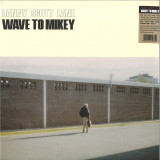
Wave to Mikey, the fourth album from the Los Angeles-based actor, musician and photographer Danny Lane is a nocturnal, neon-lit ode to the friendships that shape us. “I made this album for my friend Mikey from back home,” Danny explains. “We were pretty much inseparable for a large part of our lives, and our musical and social minds were always in sync in a special way. Then with age, we drifted apart, especially since I moved to Los Angeles. This album is just a little wave hello to an old friend and a kindred spirit.”
Equal parts avant-garde composition, instrumental city-pop, ambient, Kankyō Ongaku (environmental music) and Fourth World music, Wave to Mikey is an impressionistic and reflective cycle of eleven richly detailed memory portraits. Throughout the album, the influence of Jon Hassell, Arthur Russell, Hiroshi Yoshimura and Yellow Magic Orchestra hangs in the air like late-night mist, adding character but never overshadowing the rhythmic ambience of Danny’s musical visions.
Wave To Mikey began as a series of sketches on analog synthesisers, guitar, sample and found percussion sketches, initially recorded in Danny’s home studio. Once he’d located the vibe, Danny called on his friends E Talley II, Solange collaborator John Carroll Kirby and Destroyer session musician Joseph Shabason, who respectively added flute, spiritual synth textures and saxophone to the record.
For Glossy Mistakes founder Mario G.R., who originally discovered Danny through his photography, Wave To Mikey captures a vivid feeling of melancholy and peace. “He's able to encapsulate emotions in a very straightforward way, either in his portrait or songs,” Mario says. “I think that's a kind of virtue or skill given to talented artists, no matter the field.”
Born and raised in Staten Island, New York, Danny began playing music with his friends when he was thirteen, before putting that passion on pause to study Fine Arts (Theatre) at Rider University in Lawrence Township in pursuit of an acting career. Acting led him to photography, after playing a photographer in a film, he was inspired to pursue the medium. Danny began shooting photos on film for magazines and lifestyle brands, spent a stint living in New York’s Chinatown neighbourhood, and eventually relocated to Los Angeles in 2017.
Four years ago, Danny started recording and releasing music under his own name, leading to the trilogy of releases that preceded Wave To Mikey, How To Empty A Cup (2019), Memory Record (2019) and CAPUT (2021). Over the course of these releases, he’s revealed himself to be a sophisticated composer and producer with a studied ear from years spent digging through record bins for ambient, experimental, new age, jazz and electronica records from around the globe, with a particular emphasis on Japan.
“Music is something that’s always been involuntary for me,” Danny reflects. “It’s unconditional, always there. It’s something I just have to do. I’ve taken breaks and it’s always gloomy when I’m not playing. I just want to get better and better and understand more and more.”
Here at Glossy Mistakes, Wave To Mikey marks our second contemporary album release, following on from Evenings by Japanese composer Metoronori. We’re proud to be able to present Danny, Metoronori and other modern musicians' work alongside reissues of classic works from Stevia aka Susumu Yokota, Akira Ito, Yuji Toriyama & Ken Morimura, and Takashi Kokubo.
Mastered by Damian Schwartz, Wave To Mikey will be released on Vinyl LP Glossy Mistakes on June 27 2022. Besides the regular black vinyl, a limited clear vinyl will be available in an edition of 100 copies. Both editions come packaged with original cover art photography shot by Danny.

Architect by day and musician by night, Jaime Tellado picks up as Skygaze, and returns to the fold of Flumo Recordings with his brand new 12”, the ‘Astral Trip’ EP; combining his knowledge of architecture with a love for sound to construct and merge acid house, broken beat and atmospheric melodicism.
The 'Astral Trip' EP follows releases on Guayaba records, Riverette and Thirty Three Circular. And remixes for Ed is Dead and Contours & Yadava, earning support/plaudits from the likes of Mr. Scruff, Simbad, k15, Andrew Jervis, Gilles Peterson, amongst others.
The common denominator throughout the release is the balance and combination of various elements, exploring a multifaceted contemporary dance sound whilst paying homage to the foundations of the sounds that we listen to today.
‘Minor Mood’ pays tribute to Chicago and Detroit with its high paced house rhythm, acid synths, and piano lines, whilst ‘City Cathedratics’ slows the tempo down to lay the groundwork for a dreamy synth-laden soundscape.
Whilst the majority of the project is a solo exploration in dance music and its multi-layered context and history, the contributions of vocalist Ruben Ondina lift the high-paced, synth house grooves of ‘Gimme Five’ to another level. Meanwhile, the broken beat influence of London is keenly felt on ‘Nigh Heat’ and ‘Wagwan’, their rhythms emphasised further by harmonic and melodic exploration via atmospheric synths, melodic improvisation and irresistible synth bass lines.
Skygaze reconstructs the rhythms and synths into his own fresh and unique package to paint a picture of spiritual wonder, richness and excitement.
DJ Support:
Severino / Horse Meat Disco
Ashley Beedle
Fouk
Just Her
John Digweed
Oliver Dollar
DJ Feedback:
Ashley Beedle - Fantastic EP and difficult to pick one track! 'Wagwan' will be ft. on my April 'Heavy Disco Spectacular' radio show on Worldwide FM.
Michel De Hey - Very nice release
Diynamic / Connaisseur - Very nice cosmic vibes!
Xinobi - serious knowledge of groove on this release.
Lex Ludlow - Super nice!!!
Joshua James - Groove on this...
Just Her - Gimme five is really nice
Fouk - Loving this!
Tom Simpson - some good stuff ....summer is coming.
Junior Simba - peng !
Willie Rosado - nice soulful sound
Even in trying times, “there is no love without electricity.” Electricity is the fourth and most progressive album from Ibibio Sound Machine, and like all good Afrofuturist stories, it begins with an existential crisis. “It’s darker than anything we’ve done previously,” says Eno Williams, the group’s singer. “That’s because it grew out of the turbulence of the past year. It inhabits an edgier world.”
Electricity was produced by the Grammy Award and Mercury Prize nominated British synthpop group Hot Chip, a collaboration born out of mutual admiration watching each other on festival stages, as well as a shared love of Francis Bebey and Giorgio Moroder. The fruits of their labor reveal a gleaming, supercharged, Afrofuturist blinder. Electricity is the first album Ibibio Sound Machine have made with external producers since the group’s formation in London in 2013 by Williams and saxophonist Max Grunhard. True, 2017’s Uyai featured mixdown guests including Dan Leavers, aka Danalogue, the keyboard jedi in future-jazz trio The Comet Is Coming, but Hot Chip and Ibibio Sound Machine worked together more deeply throughout the process, collaborating fully. Along the way, the team conjured a kaleidoscope of delights that include resonances of Jonzun Crew, Grace Jones, William Onyeabor, Tom Tom Club, Kae Tempest, Keith LeBlanc, The J.B.’s, Jon Hassell’s “Fourth World,” and Bootsy Collins.
The hook of opener “Protection From Evil” has Williams wielding a massive synth line from Hot Chip’s Al Doyle like a spiritual shield against unspecified, malign forces unspecified because Williams is speaking in tongues. Her lyrics are onomatopoeic: their meaning is defined in her energetic delivery. As Electricity takes off, so do Williams’ words towards a brighter future, alternating between English and Ibibio, sometimes within verses, and propelled by Joseph Amoako’s unabating afrobeat. She digs into this sentiment further on single “All That You Want,” coolly assuring her romantic interest while also requesting reciprocity. Meanwhile, Scott Baylis’ playful Juno synth guides the listener’s feet along the dancefloor.
Electricity is a deep and seamless realization of Williams’ and Grunhard’s ambitious founding manifesto to combine the singularly rhythmic character of the Ibibio language which Williams spoke growing up in Nigeria with a range of traditional West African music and more modern electronic sounds. While the band enjoys veering further into electronic territory with the help of mutuals like Hot Chip, Grunhard emphasizes, “For us, it’s not just a matter of embracing new technology. What’s key is to keep the music grounded in African roots.” Ibibio Sound Machine best exemplify this on Electricity’s “Freedom.” That track was inspired by the water-drumming rhythms of Cameroon’s Baka women, which in turn fueled its lyrics, which in turn prompted Hot Chip and Ibibio Sound Machine to layer joyfully kinetic electronic counterparts on top in the studio. As the track culminates with the mantra of “rage, hope, cope, soul,” it’s clear that Ibibio Sound Machine have channelled, harnessed, and distilled these words as guiding principles, both for the album and for the turbulent world that awaits it.
It was certainly unpredictable that a legendary jazz drummer would record one of spiritual disco's most revered songs twenty-three years into his career, but that's exactly what happened when Idris Muhammad laid down the epic "Could Heaven Ever Be Like This" in 1977. Hailing from New Orleans, Muhammad always had more than a touch of funk to his rhythms, and by the late '70s his collaborations with master engineer Rudy Van Gelder on recordings for the CTI and Kudu labels had gelled perfectly with the reigning jazz-funk sound of the day. Arranger Dave Matthews (famously part of the James Brown stable) collaborated with lyricist and former Long Island record store clerk Tony Sarafino on writing the song, which on the original recording unfolds over a nearly 9-minute build. Appearing at the crest of the disco movement, "Could Heaven Ever Be Like This" was an immediate hit with David Mancuso and the attendees of his loft parties, quickly spreading to other venues and even making a small climb up the Billboard R&B charts. For this new issue on Most Excellent Unlimited, Danny Krivit, whose own career as a dancefloor orchestrator from the DJ booth has paralleled the timeframe of the song's existence, has replaced the original loose introduction with a mix-friendly steady groove that maintains the unstoppable pulse of the song while maintaining the cathartic mid-song break and giving the track potential for even more momentum.
Another percussionist is responsible for our flip side track, "Magic's in the Air." Vince Montana was not only an in-house arranger and producer for Philadelphia International and other Philly soul labels, but was an accomplished vibraphone player. His talents are on display and doubly emphasized by Mr. K in this overlooked cut from Ronnie Walker, a falsetto singer who draws a rather strong comparison to the best songs of fellow Philadelphians Blue Magic with this uptempo, subtly synthy 1975 track. Never having appeared on a 12-inch, and indeed never having appeared even on a full-length album, Krivit's edit is the first extended mix of "Magic's in the Air" to date. Alongside "Could Heaven Ever Be Like This," itself notoriously difficult to find in 12-inch form, this latest from MEU's long running series with Mr. K is a bonafide must-have for the discerning DJ.
Sudi Wachspress returns to Tartelet Records with Dance Planet, a third LP of emotionally-charged house music to welcome us back to the dancefloor. The spirit of true house runs deep in the sound of Space Ghost. Oakland native Sudi Wachspress is intuitively plugged into the romantic, mystical energy of 4/4 club music as a unifying force of empowerment and liberation, carrying the torch from vital forebears like Larry Heard, Alton Miller, and Blaze.
His new album, Dance Planet, carries a greater responsibility to spread spiritual affirmations. As the global dancefloor community emerges from a mentally-taxing recess and confronts their social self like it’s the first day of school, Space Ghost’s message couldn’t be more supportive.
“Don’t be afraid to be yourself, don’t be afraid to let go,” he intones on “Be Yourself.” More than just a beat and a hook, his music is pointedly created to heal and energize. “I’m a big fan of old-school house vocals that have a positive message,” says Space Ghost, “tracks that can perhaps enhance your mood or strengthen your confidence in yourself.”
Wachspress has always represented a beacon of musical uplift, both on his previous Endless Light and Aquarium Nightclub LPs for Tartelet and on his swathes of self-released music and last year’s Free 2 B on Apron. Compared to most house-oriented artists, he places emphasis on the long-player format to create an encircling experience for the listener, smoothing out psychic wrinkles and massaging areas of tension for a fully holistic hit.
GALATHEA is the new project by DJ Massimo Napoli, and the title of his first solo album. Borrowing the name from the homonymous Nereid from the Greek mythology, the album is a deep dive into dub, spiritual jazz and African surroundings. Over 12 tracks, the LP conceals a strong personality. Departing from club culture with particular emphasis on electronic dub, Galathea unfolds into many influences and styles, making it a unique listening experience. Mediterranean culture, afro and cinematic melodies, jazz, spiritual echoes, and soothing beats lead the listener into a subliminal escape, where the fluidity and the convergence of genres freely progress into a dream-like journey.
MASSIMO NAPOLI is a DJ from Catania with a passion for jazz and black music. He began his musical career in the early 90s playing funk, hip hop, and acid jazz in clubs, contributing to the spreading of the most eclectic and refined sounds in Sicily.
Departing from club culture with particular emphasis on electronic dub, Galathea unfolds into many influences and styles, making it a unique listening experience. Mediterranean culture, afro and cinematic melodies, jazz, spiritual echoes, and soothing beats lead the listener into a subliminal escape, where the fluidity and the convergence of genres freely progress intoa dream-like journey.
b A2: Afrique (Vocal Video Version) feat. Kadi Koulibaly
Honing your skills is under-appreciated in times of instant gratification and the continuous stream of music. Rotterdam-based producer Kofi The Unknown subverts this idea and took time for spiritual introspection, studying rhythms and sound production. Where being a late bloomer normally is seen as a sobriquet, the producer, composer and beatmaker wears it as a badge of honour and solidifies it as an honorary title by pinning it to his debut EP on Wicked Wax: The Late Bloomer. Wearing his heart on his sleeve, Kofi The Unknown shares his journey that led to The Late Bloomer, an emotional journey through sophisticated dance music, straight from the heart, aimed at the soul and feet.
Highly influential to Kofi’s sound and this EP is London’s Broken Beat scene. Syncopated drums, soulful chords and heavy bass lines work in tandem to emphasise the danceability the genre is known for. This is further solidified by the track Kofi released leading up to this release: One for Motet, an ode to the Broken Beat MC and Jazz Refreshed host Jason Hicks. The Late Bloomer further develops Kofi’s ode, but provides his Rotterdam flavour and brings his Hip Hop and Funk lineage into the mix.
Embrace Mistakes sets the stage for what’s to come in various ways. It is a textbook case of how dance music can tell a story and be introspective. Kofi’s honesty shines bright on the entire EP and strikes from the first kick drum on. It also shouldn’t be hard to recognise and feel the emotion the producer shares on the title track The Late Bloomer. The emotionally-laced chords and crushing drums are reminiscent of late nights at a warehouse or emotional sequences from a dystopian movie.
Staying true to his ethos ’exploring the university that music holds’, Kofi finds this beyond music production as The Late Bloomer provides an audible experience through creative mixing. Stuttering analog synths, enveloping leads, multiple percussion rhythms and off-beat snare rolls hit from all directions of the stereo spectrum, further underlining the sophistication of his merit. While the EP follows the Broken Beat accents on dance, it is an equally mindful listening experience.
Kofi The Unknown is a Rotterdam native producer with a knack for rhythms. His keen ear is informed by mentor and Dutch enigma Trian Kayhatu. While Kofi has taken the time to perfect his skills under the guidance of Trian, the two are simultaneously working on the exciting follow-up project to this debut EP. Without looking too far ahead, enjoy The Late Bloomer. It’s not only a crown jewel Kofi proudly wears, it is also establishing him as a future household name in the sophisticated dance scene. "
In his essay ‘The Meaning of My Avant-Garde Hillbilly and Blues Music’, Henry Flynt talks about how his music should be analysed as an intellectual tribute to the music of the autochtone, setting aside plain folk references, but adopting academic insights to mold the music one makes as a folk creature. Much of Flynt’s discourse applies to the music of Glen Steenkiste’s Hellvete. Over the past twenty years he has been thoroughly investigating both the ethnic musical language of various regions as well as the contemporary pioneers that preceded him as a drone musician, internalizing concepts such as e.g. deep listening or just intonation. Casting off any redundant ideas or sounds, and stripping down the focus to develop singular concepts, his working method lead to pieces such as ‘Droomharmonium’, in which he shapes the endless variations on a theme, emphasizing detail and nuance rather than multitude. The Indian harmonium here serves as the main device to worship ancient ghosts and masters, and to preserve a continuum in a tradition that touches both folk and avant-garde culture. The materialisations are sustained tone compositions which become a means of appreciation of the people and cultures that paved the way for forms of mutual escapism. This might well be the core of what Hellvete’s music is about. As much as it is a form of self-entertainment – like folk music in the old days – it also invites the listener to a shared experience of sonic reverie, it is a casual gift to the community.
This is certainly true for the pieces presented on this album. They were first presented in a smoke filled and darkened art space in Ghent, Steenkiste surrounded by only a couple of candles and just enough stage light to see him erratically moving to the rhythm of the piece, occasionally twiddling the knobs of a Doepfer synth that processed the prerecorded harmonium tracks. Unlike most of his other performances this piece embraced the audience in a trance that was similar to that of an old-school rave club. Flynt writes: ‘The music should be intellectually fascinating because the listener can perceive and participate in its rhythmic and melodic intricacies, audacity of organization, etc. At the same time, the music should be kinesthetic, that is, it should encourage dancing.’ ‘Voor Harmonium’ does exactly that; it builds on the artistic ideas that have long been established in Hellvete’s oeuvre, but the ecstatic nature of these pieces merges the usual spiritual transcendence with one of determined physical bliss. It encourages both mind and body to step into the sound, to be enraptured, to celebrate.
- A1: Ode To Saint Cecile - Mary Lou Williams
- A2: The Time Of This World Is At Hand - Billy Gault
- A3: Jean Marie - Sam Jones
- A4: Aida - Rene Mclean
- A5: Tipe Tizwe - Jim Mcneely
- A6: Magwaza - Johnny Dyani
- B1: De I Comahlee Ah - Jackie Mclean & Michael Carvin
- B2: Miss Priss - Ken Mcintyre
- B3: Dark Warrior - Khan Jamal
- B4: Camel Driver - Jackie Mclean & The Cosmic Brotherhood
- B5: Naima - Michael Carvin
Founded in 1972, SteepleChase Records is one of the most significant and prolific European jazz record labels. With a catalogue running to well over 200 titles, the Copenhagen-based imprint has recorded and released music from some of the greatest names in jazz, including Dexter Gordon, Andrew Hill, Jackie McLean, Horace Parlan, Chet Baker and Stan Getz.
Starting out by recording visiting Americans when they performed at the legendary Café Montmartre, founder Nils Winther was encouraged to start the label by none other than the great Jackie McLean, who was the first artist to release a record on the new imprint. From there, Steeplechase rapidly grew into one of the foremost labels to document European jazz with all its distinctive originality and style.
With a particular emphasis on recording front rank American artists who had chosen the expatriate life in Europe, Steeplechase was first in line to document the sounds of the greats as they developed in exile. Featuring in-demand tracks from the likes of Billy Gault, Johnny Dyani and Khan Jamal, and unearthing deep cuts from greats like Jackie McLean and Mary Lou Williams, our Spiritual Jazz 11: Steeplechase pays tribute to one of Europe's most important jazz labels.
Legacy Chicago craftsman Mark Nelson’s latest offering as Pan. American is less a distillation or divergence than it is a return to his musical and spiritual beginnings. Spare, subdued, and largely acoustic, A Son unfurls like late summer dusk on the edge of town, expansive but intimate.
Motivated by notions of “moving backward” and tracing roots – as well as a couple years of hammered dulcimer lessons – the album’s nine songs were written and recorded in his home in Evanston, Illinois, and honed during a recent solo tour in Europe. The emphasis on uncluttered arrangements and the centrality of the guitar and vocals reveal these songs as the most direct and emotional statement of his career.
Nelson cites everything from June Tabor, The Carter Family, Suicide and Jimmy Reed as oblique inspirations, though his truest muse was creative self-inquiry: “What does music do, Where does music start? How simple can it be? How honest can it be?”
After decades of mining post-rock pathways and latticework electronics in Labradford and early Pan. American, A Son strips away ornament and distraction in favor of a direct gaze into the heart of what is.
Moonshoe Records has bowled over first listeners by presenting this new side of their sphere - Air Space Ark’s debut, “All Rivers Lead” charts the course of divergent streams of contemporary ambient music, downtempo rhythms, and electroacoustic experimentation, arriving at a calming confluence of these sources. Across the 6 songs on these two sides, they evoke a calming and contemplative headspace
333 is an exquisite study in balance - the intermingling of bird song water sounds that could equally be field recordings or synthesized foley - the ambiguity adding a delightful trompe l'oreille effect - and crystalline keys ; these airy sounds weighted by washes of subbass.
BLANK PAGE is almost like a version of the previous track, retaining the nimble birdsongs and heavy sub, but foregrounding a lolling, stumbling hip-hop beat and placing more emphasis on the effects wizardry as abstract sounds careen across the track in wipes and wisps, before stripping down to a beautiful coda of birdsong, piano plinks and a textured backdrop.
The celestial keys, flute-like thrums and gentle chimes of WORDS BETWEEN SELF evoke the golden age of spiritual jazz, but the hazy ambiance and shuffling beats transmute the other elements around them into something more introspective and personal than jubilant praise. Lyrics aside, the subtle funk coupled with the pensive, meditative air channels the spirit of Stanley Cowell’s classic TRAVELLIN’ MAN.
LOFT IN 7 Is the most “out” moment here. It has echoes, literally, of jazz. Like decaying tape reels disintegrating in real time, we feel the tape buckling and warping under the weight of time as the sounds of a synthetic band warp and shift against electronic impulses and glitches, eventually leaving just a lingering, ghostly imprint. .
DUST SONG veers the closest towards a straightforward instrumental hip hop cut - a submerged sounding breakbeat coupled with a tender piano melody - but is buoyed by drifting pads and a dense, hallucinatory bed of effects.
CONCRETE closes proceedings. Charged with a crepuscular energy, it’s all-together as mercurial and magical as the transition from day to night. Different elements swirl and coalesce, honing in on dense, textural moments across a horizontal drift. The end effect is hypnotic yet captivating, so much so that when the track eventually blooms into silence at the end you’re struck by the brevity of the whole experience. Thankfully you can listen to it again!
raw, soulful and agitating: glenn astro, the humble house sorcerer from berlin, produced four tunes and a sweet interlude for mule musiq that point out: house music is still heading for the future.
with countless eps, album's and collaborations for labels like ninja tune, tartlet or his own co-owned imprint money $ex records, the dj and producer already emphasized that he thinks house counter to the trend.
his new ep shows this anew with unpolished, speedy, even techno-like rhythms and deep gentle melodies. dance music for jagged movers that have enough of high gloss sounds.
if house music is a spiritual, a body, a soul thing, then glenn astro delivers some real fresh groov-ing prayers.
"AntiDEEPressant records, where Fusion Deep Space House meets NuDisco, Deep Techno and creates the eclectique spiritual grooves for your mind, body & soul. There are a 4 tracks EP that emphasise on the musical side, the instrumental parts, the atmosphere ... a gem! Most of you would say this is ""Deep"", but we say it's freakin' great deep influenced house. "