In this space between chaos and conformity disorderly moments welcome new phases into existence, leading to the awakening of an elevated version of the self. Between highs and lows, Transitions of Life remain; the concept behind Synthek's first solo full length sound narrative on his Natch Records imprint. Unfolding across a vexing two-year transformation phase, Synthek's crossings along rough roads are the tribulations to reveal this intimate personal journey of reve- lation through emotional downshift, spiritual upheaval and cerebral quandary. In this dominion, Synthek shapes the eleven track escapade along a sophisticated array of synths and warm analog drums, while contrasting the build and decline of atmosphere through deep bass soundscapes.
Pivotal turning points execute the programming of the album's three part sound design; beginning from darkness and repression, evolving to a more colourful aerial majesty of lucid dream state, morphing into the developed nature of life lessons learned; Transitions of Life making its incarnation into the discovery of the self and re-entry into reality.
*Transitions of Life is a 2x12' release made available through Natch Elements, intro- spective extension to the Natch Records imprint. Visual embodiment of the project artfully presented with photographic time capsule by Salar Kheradpejouh of Berlin, Germany with graphic work curated by Jacopo Saveritano, co-founder of Natch Records.
'This is a journey into sound...,' These familiar words, accompanied by the rumble of a distant train, signal the opening of 'Let's Take A Trip', the sophomore album from Terrel Wallace aka Tall Black Guy. Since 2013's '8 Miles To Moenart' TBG has cemented his position as a standard bearer for the current hip-hop / beats scene. Born in Detroit and now residing in the UK, Wallace's signature style of incredibly clever sample flips and deft production chops has won fans across the globe including Gilles Peterson, Lefto, Jazzy Jeff and House Shoes.
Since his debut release in 2011 (a daring and addictive flip of Fela Kuti), TBG has become revered for his unique take on soulful hip-hop production. The swing of the drums, the textures of the instrumentation as well as a fearlessness in taking on the classics (his Soundcloud page includes flips and chops of tracks from James Brown, De La Soul and Michael Jackson) have marked him out from the crowd. One of the best-kept secrets in the scene, his singular talent is now beginning to get the recognition it deserves. In the last 12 months he has remixed Little Dragon and been invited to take part in Jazzy Jeff's Playlist Retreat alongside the likes of Eric Lau, James Poyser, Ali Shaheed Muhammed, Questlove and countless others.
For this album Wallace had a simple inspiration: 'This album is all about taking a journey. As simple as that. Be it physical, emotional or spiritual. It's asking and answering personal questions from myself within some of the tracks and also touching on social issues i.e. racism, inequality and privilege...that have been at the forefront of my mind over last three years.' Sonically there is also a shift: 'Jazz has definitely been more of an influence in this project, as I have been really inspired by so many up and coming musicians who I've been blessed to connect with'. Some of these musicians, including Kenny Keys, Miles Bonny, Diggs Duke and Dee Jackson feature on the project as well as regular collaborators Ozay Moore and Mario Sweet and fellow Playlist alumni Daniel Crawford and Masego. But this is one man's vision, and for Tall Black Guy this trip is just the beginning...,.
Paula Chalup is one of the most important figures of the underground Brazilian electronic scene, and has been at the epicentre of each of the revolutions throughout these almost 20 years down the road.
In a musical symbiosis with producer and multi - instrumentalist Lucas Parisi, a member of "São Paulo Laptop Orchestra" - an experimental electronic music project, which was presented at the Virada Cultural in 2011 and FILE (International Festival of Electronic Language).
Together they form the IAO Yoruba word that stand for 'initiate'. Building soundscapes that lead to a spiritual journey.
Since more than ten years close friends and metal heads Phillip Tielsch (von Spar) and Mario Katz (Cologne Tape) met for guitar sessions, trying to " nd the essence of their favourite metal records* and digest in their own sound". Quite ambitious but without any release plans so far... Magazines Jens-Uwe Beyer found out about their project and pushed them to produce an uncompromising condensate of their raw material. Beyer cut here and there, contributed some additional production and also got John Stanier (Battles) in the boat for the drums.
So ZON became a band and "Palace" became the most intense and sharp edged instrumental metal set you probably heard in years!
Crato's B-side counterpart, a 27min drone ambient interpretation of the ZON material, completes this literally thrilling album and makes it - wrapped up by John Harten's unique artwork series - another MAGAZINE release at its best.
Mastered by Matt Karmil. - 45 min playtime
- Endless loop on side A; B-side cut inside out
*
Death - Spiritual Healing
Entombed - Morning Star
Ministry - Psalm 96
Earth - Hex, Or Printing In The Infernal Method Autopsy - Mental Funeral
Napalm Death - Words From The Exit Wound Terrorizer - World Downfall
Misery Index - The Killing Gods
Morbid Angel - Domination
Sepultura - Beneath The Remains
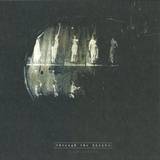
Michigan's ambient and soundtrack specialist John Beltran introduces a new LP that will be co-released by Delsin and his digital only label Dado Records. Entitled Through the Blinds, it features ten tracks by Blair French (who also appeared on his Music For Machine compilation on Delsin last year) and will be released on January 18th 2016. Blair French aka Dial.81 is an experimental producer and visual artist who won an award for his score of Detropia--a documentary about his home city of Detroit--and now makes his ambient debut. As you would expect of such a project, it boasts suspensory and near spiritual pieces of ambient music with angelic chords and glassy textures. There are also more frosty cuts that sound like a chilly Autumn walk, tracks that feature emotive neo-classical piano pieces and suggestively rhythmic compositions that sooth your mind. The second half of the record touches on church like passages of synth heavy sounds, strikingly sad violins and lo-fi arrangements that sound, one hopes, a little like what you might hear as you pass from this life to the next.
This EP was made during a period where my whole outlook on everything was transforming. The Voidloss project started as an investigation, I was conducting a lot of research and study on the mind, the occult, on different thought modes, and the Voidloss project represented this. The idea was about a leap in to the void. A leap of abandonment into the dark, with total acceptance, total commitment. The idea was to lose myself to the void. This was mainly a spiritual journey for me, and could be best explained by 3 things, the void of Miyamoto Musashi from Go Rin No Sho, The concept of the Tao from the writings of Lao Tzu, and the concept of the abyss from the works of Aleister Crowley. Part of this journey deep inside the self was frightening and horrific, the total loss of self, of all identity and ego, and part of it was beautiful and enlightening. I wanted the music to reflect this, and I wanted the music to change as I changed, as I went to and through all these interesting places. In essence this was about freedom. So fast forward some years and I felt I had sharpened my mind quite effectively, the music had twisted and changed and flowed with me. At the point I began making the music for this EP, I had grown quite angry with the amount of conformity I was perceiving in life. Politically, socially, musically, there was this drive of conformity in the world. I think part of it, and only a part, comes from the prevalence of social media, the need to belong and to be liked, the idea of judging yourself and your works through the perception of others. Musically I felt that within techno there was a tendency for the music to fit within a set of confines dictated by fashion and hype, and this was reducing the diversity of the music, it seemed also that the practices of commercial music were seeping in to techno as the music became more popular. Hype and business driven decisions, brand building and so on. I always felt techno was more about art, and I began to get frustrated. Equally I felt that politically there was less and less choice, as all decisions seemed to lead to the same outcomes. I became more interested in the concept of anarchism, of the idea that government was no longer needed. I have always in my life had a drive to question everything. I've always been 'naughty' and rebellious and done things my way, to my advantage or my disadvantage, I could never accept being anything other than myself all the way. If everyone walks in one direction, I will walk the other way, even if it takes me over the edge of a precipice, just to see what is there. All this stuff influences my music, and during the period of making this EP I was angry, kicking against the things I no longer liked or wanted, screaming dissent. There is a lot of anger and rage, and of course rebellion. I wanted the music to capture that unbridled fury you have when you are in your late teens, when you just start learning about yourself and you start rebelling and questioning things around the time the world is really pushing you to conform. I was soundtracking my own philosophical riot. Previous to this my Voidloss stuff had been more introverted, more pensive and melancholy, more self destructive, more cerebral. For this new music I wanted something more immediate but without being too obvious. In terms of the choices I made I still leaned more towards broken rhythms for beat structure. I find it very difficult to do anything interesting with 4x4 kicks any more, it's too rigid for me, it limits my freedom. I like the looseness you get from more 'drummer' like beats, I guess probably because I have been playing drums all my life. The challenge is to get the same rolling power from broken rhythms as you get from 4 to the floor. It's not easy, there is a ridiculous amount of trial and error and the rejection percentage is high. I also was trying to use less 'synthy' sounds. I wanted to try to take a more acousmatic approach to sound design. With the current modular synth revival in techno I was hearing a lot of 'old' synth sounds re-emerging, and this didn't seem like a progression to me. I wanted to make sounds that were hard to source for the listener, where they weren't sure if it was synth or real world sample, digital or analogue. This involved a lot of experimentation. My process involved a lot of field recording, especially with contact microphones, which open up a whole new world of interesting sounds. You are effectively recording sounds through objects in the environment, 'hearing' the world as these objects hear them, I was using guitars, feedback loops, handmade instruments as well. So I was combining this with different synthesis, granular synthesis, sample synthesis, physical modelling, FM synthesis and of course analogue. Everything was reprocessed and re-synthesised, I tried hard to obscure the source and make something new as much as possible. The stuff on this EP was part of my live PA for some time, so as I learned how the music worked live I could go back and make changes, sometimes the environment I was playing in transformed the sound as well, and so I would try to go back an incorporate this in to the music. For remixes I wanted to choose artists that I respected for their vision as well as for their output, so my list of people I wanted was extremely short. Inigo Kennedy has always been an artist I have respected greatly. His music has always been unique to himself, he remains outside of fashions and trends even though his name has become very big recently. He takes risks with his work, experimenting and exploring, yet remaining relevant to the club, and just tirelessly forging ahead, seemingly for the sake of art above all else. And he's just a really nice guy to deal with. His remix is everything I expected it to be in that it is the unexpected. Regis is another artist who forges his own path in music, you cant really even begin to discuss the avantgarde in techno without including his name, he is one of the foundation stones for artistry and the outsider mentality in techno. His music is always unique to his own vision, and along with it comes an interesting artistic philosophy taking in situationism, post punk and industrial ideology and a good dose of tricksterism ala PT Barnum, all of which comes out in his music and the way it is presented. The man is a truly singular force and it is an honour to have him on this record. Overall the concept here is that of rebellion and dissent. Of asking questions, following your own path, of maintaining some place in yourself that burns like a forest fire.
Whether or not I have succeeded I guess is down to the listener, I'm never happy with my music, I keep wanting to move forwards, or somewhere else, and am constantly trying and failing to capture some essence of perfection. But like Bukowski said
'It's the only good fight there is'