LOSOUL is back on SLICES OF LIFE with two minimal house gems!
Frankfurt-based DJ and producer legend LOSOUL is renowned for his unique sonic language and deep, captivating grooves.
On his latest release for the Berlin imprint, the tracks take us on a journey back to the roots of minimal house - raw, stripped-down, and deeply immersive.
"Post Service Pop" on the A-side flows deep and funky, spreading pads like hot oil, topped with subtly modulated vocal snippets.
"Modesty Bump" on the B-side dives into rawer territory with high-energy sounds and edgy sonic sparkles, while maintaining that minimalistic, steady, driving groove we all love in Losoul’s work: groovers and grinders for the long-distance runner’s soundtrack.
Search:spread love
- 1: Dirty Water
- 2: Destroyer
- 3: Scream Out Loud For Love
- 4: Police Bastard
- 5: More!
- 6: Hole In The Ground
- 7: We Take All
- 8: Eazy
- 9: Spring That Never Ends
- 10: Sad Song Man
- 11: Chevy Van
- 12: Tail Down
- 13: Leather
- 14: All Right, All Night
Sweatmaster releases a new full-length album after a 15-year hiatus via Svart Records Sweatmaster, one of the aristocrats of Finnish garage rock, is making a big comeback with the release of their fifth album More! in January 2026. After the release of their 2010 album Dig Up the Knife, the band took a long break, which ended a few years ago with live performances both domestic and abroad. At the same time, new material began to emerge in the rehearsal room, and the band quickly found a common strategy for working on it. "We were unanimous about the strengths of our band and decided to get to the heart of the matter. The main idea was to make straightforward songs carried by the vocals. The kind that would work well live with our aggressive playing style," says the band's drummer Matti Kallio. Svart Records will release Sweatmaster's fifth album early next year. More! is a sharp package of fourteen songs that has not been polished to death. "We wanted a raw and electric sound for the new album, built tightly around the three of us playing. The aim was to stick to Sweatmaster's original energy and not spread ourselves too thin. However, despite our efforts, the intervening years brought some new tones with them," guitarist Mikko Luukko explains the background of the new album. The album's first single will be released on Friday, September 19th, and according to singer-bassist Sasu Mykkänen, Destroyer is the essence of Sweatmaster. "The drum fill draws you into the pull of the electric triangle. The guitar taps at the ballads and wants nothing more than to drive the rhythm until the passionate vocals take over. The song doesn't lead anywhere, it's already there. 2 minutes, 37 seconds. Wham bam. Here you go." More! is available for pre-order now at Svart’s webstore on Svart exclusive vinyl, limited coloured vinyl, classic black vinyl, and CD. Release date January 30th, 2026.
A chopped-and-screwed love letter to the sounds of rebajada – half-speed cumbia, pioneered by Sonido Dueñez in the 1990s, and born from an overheated turntable motor that didn’t make the crowd stop dancing. With Debit’s treatment, rebajada becomes an ethereal, at times intense ambient tapestry that’s also a history lesson.
Spend any amount of time pacing the streets of Monterrey, the bustling city in the north of Mexico where Delia Beatriz, aka Debit, grew up, and you’ll be sure to catch traces of cumbia echoing from Bluetooth speakers, DIY soundsystems, or car stereos. An Afro-Latin dance form and »practica cultural« originating in Colombia in the early 19th century, cumbia evolved rapidly in the early 1900s, as a localised sound played on drums and flutes quickly modernised to integrate European instrumentation like the accordion. When it reached Mexico in the 1940s, the sound shifted again, fusing with mariachi styles and integrating further vallenato folk elements. Eventually, cumbia spread across the entirety of Latin America, splintering into a spectrum of different musical styles such as chicha in Peru, and cumbia villera in Argentina. And over in Monterrey, cumbia inadvertently found its own idiosyncratic groove.
From the 1950s to the 1970s, waves of immigrants from across Mexico and Latin America headed to Monterrey to find work, making a home in Colonia Independencia. Colombian cumbia records, shipped in from Mexico City, Houston, and Miami, became the soundtrack of the neighbourhood, relaying familiar stories to a rural working class adjusting to their new industrial reality. The sound struck a chord with locals, and huge street parties hosted by ramshackle soundsystems known as sonideros unified the diverse community. So when cumbia rebajada materialised serendipitously in the 1990s, it emphasised and highlighted the memory distortions at the heart of the immigrant experience. Local record collector, selector, and sonidero Gabriel Dueñez had been playing cumbia for hours one night when disaster struck: his turntable’s motor overheated and slowed down, turning the music into a warped groan, with half-speed voices echoing over wobbly accordion drones and splashy drums. But the crowd kept dancing, and Sonido Dueñez realised he’d struck gold – cumbia rebajada was born.
Over the next few years, he dubbed a popular series of mixtapes, hawking them at the flea market on the dried-up Santa Catarina riverbed beneath El Puente del Papa, the bridge that links downtown Monterrey with Independencia. These woozy archives became the stuff of legend, poetically but subconsciously shadowing DJ Screw’s series of epochal cassettes that appeared over the border in Houston. Beatriz uses Sonido Dueñez’s first two tapes as the starting point for »Desaceleradas«, entering into a dialogue with time, culture, and geography as she recalls the sonic ecosystem that surrounded her decades ago, long before she emigrated to the USA. If 2022’s acclaimed »The Long Count« was an attempt to recover concealed pre-Columbian history in the face of colonisation, »Desaceleradas« jumps forward, figuring out how memory and shared celebration can resist a more contemporary form of cultural erasure. As AI systems scrape, blend, and decontextualise culture around us, leaving vapid slop, »Desaceleradas« proposes a slower, more careful, and ultimately more human kind of engagement. It’s an archive with a pulse.
- 1: Blue (6:09)
- 2: Get Me (5:08)
- 3: Stand (5:0)
- 4: Dragonflies (5:56)
- 5: Inside (7:24)
- 6: Parasomnias (10:32)
"Huntress" by She Spread Sorrow (Alice Kundalini) is the story of a huntress and her morbid and psychotic relationship with her prey. The protagonist is Blue, a girl whose existence is marked by obsession with another woman of the same age and by nightmares that leave her without peace. Between love and psychosis, a tragic story is consumed, which vibrates in the stomach, like the music that accompanies it - dark and hypnotic death industrial, with moments of dark ambient, power electronics and noise.Inspired by Kundalini’s nightmares and her fervent world of dreams, "Huntress" was born after 3 years of intense recordings. It pursues the need to whisper secret, forbidden tales and to stimulate the deepest shadows of the human being, exploring the boundaries between the delicate and the violent; between love and obsession; between fantasy and madness."Huntress" is the soundtrack of a tragic game between opposites in a reality of total solitude.
- Grace 00:58
- Ladida 03:43
- Sum 04:09
- The Boy 03:34
- Doing It Too 03:26
- Never Enough 04:00
- Words 2 Say 03:50
- Bite The Bait 04:06
- ON 2: Something 02:23
- Ttw 03:57
- Crave 03:27
- Get It Off 04:00
- Sweet Sensation 03:43
- Eyes Shut 03:09
- Close 2 Me 04:01
- I'm Your Muse 03:35
- Around 03:50
Rochelle Jordan is proudly stepping into her diva era. To those in the know, the Los Angeles-based British-Canadian singer and songwriter has long been an underground force coaxing together the mutually flirtatious scenes of daring alt-R&B and heart-pumping electronic music. With her longtime creative director/producer KLSH, she’s cultivated a singular marriage of sound — mixing soulful sensuality, house bump, DnB wildness, hip-hop swagger, and pure experimentalism — that’s spread not only through certain circles, but also to the mainstream. At the same time that her gauzy 2014 single “Lowkey” was going viral in 2023 — racking up 21 million streams on Spotify alone — she was in the studio cooking with tastemaking beatsmiths like KAYTRANADA and Sango, quietly preparing to melt dance floors and headphones alike.
Now, as the timelines merge, Jordan is approaching success with the sparkle of a brand new star and the stance of someone who’s earned everything she has. Her new musical chapter aims to carry forward the magic that fans feel in her coquettish vocals and bold soundscapes even as she reaches deeper into her pop bag. The fact that her first single of 2025, the darkly dazzling “Crave,” was produced by Chicago house legend Terry Hunter (Janet Jackson, Mariah Carey, Beyoncé) speaks volumes to this exact moment in Jordan’s ascendent trajectory.
“My goal when I first started making music was to bring back something that I felt had started to fade away for me,” says Jordan. “That certain essence or sound that would give me butterflies in my stomach when I’d listen to music — it would unleash some kind of chemical that would make me feel happy and excitable and curious, something that would make my soul shine. My number one goal is always: How do I give people that feeling when they listen to my music?”
Jordan grew up in Toronto raised by British-Jamaican parents. She remembers hearing one of her older brothers cycling through a variety of music at maximum volume in the room next to hers. “Reggae to soul to drum and bass to garage music to gospel,” Jordan recalls. “It was all intertwining for me at such a young age.” She developed her own sound quietly, and soon met KLSH through MySpace. They traded multiple songs back and forth daily until he flew her out to L.A. to record what would become her debut project, 2011’s R O J O. That collaboration hasn’t faltered since, resulting in sonically surprising, subtly infectious sets like Jordan’s breakthrough 2014 album 1021 (with “Lowkey”) and 2021’s dance-steeped revelation, Play with the Changes.
“If you’re talking about Rochelle Jordan, you’re talking about KLSH,” she says. “It’s one and the same. We come from the same inspiration source.” With him at her side to this day, Jordan is crafting new listening experiences as radiant as refracted light glimmering through a prism — an incredible space from within which to explore love in all its iterations — from romantic infatuation to self-affirmation, and strength in womanhood to pride for what she’s accomplished thus far.
More than a decade into her career, Jordan has arrived at a new stage of life and creativity — she’s a seasoned professional, a fully realized woman, and she’s excited to continue growing. “I know my story isn’t necessarily a new one,” she says. “I look at 2 Chainz, who became 2 Chainz way later on in his life. I look at Tina Turner, who became Tina Turner at 40. I want to be another story of resilience for people.” As she prepares to unveil more of her vision, and fans clamber for a long-awaited fourth album, Rochelle Jordan is casting aside self-doubt, and appreciating and underlining her status as a verifiably influential reigning diva in her one-of-one sonic space.
Eddie Kendricks was the falsetto voice of The Temptations during the group’s heyday years at Motown Records. Signed as a solo artist with the Tamla label he achieved further success with an array of hits (including the No.1 single “Keep On Truckin’”) and popular album tracks that remain in demand today. “Date With The Rain” was originally released in 1972 (from the album “People…Hold On”), “Intimate Friends” later in 1977 (from the album “Slick”), a song written by Garry Glen who would go on to write for Al Hudson (“Spread Love”), Phyllis Hyman (“Be Careful How You Treat My Love”) and Anita Baker (“Caught Up In The Rapture”) among many. More. “Intimate Friends” has also been sampled over 80 times by artists including Alicia Keys (in “Unbreakable”), Erykah Badu and a significant number or r&b/hip hop artists. “Date With The Rain” has also been much sampled and covered most notably by Jamie Principle in 1990.
- 1: The Last Race - Jack Nitzsche
- 2: Trash - Duane Eddy & The Rebels
- 3: Boo Boo Stick Beat - Chet Atkins
- 4: Comanche - Link Wray & The Wraymen
- 5: Jungle Fever - Dick Dale & The Del-Tones
- 6: Mumblin' Guitar - Bo Diddley
- 7: Put The Blame On Me - Elvis Presley With The Jordanaires
- 8: Baby I Go For You - The Blue Rondos
- 9: Parchment Farm - Billy Lee Riley
- 10: I'm Not Your Stepping Stone - The Flies
- 11: Mountain - Sunshine Theatre
- 12: Gotta Find A New Love - The Yo Yo's
- 13: Man From Nowhere - Jet Harris
- 14: Watermelon - Frank Minion
- 15: I'm Out - The Surf Riders
- 16: Fuzzy And Wild - The Ventures
- 17: Baby - Tracy Rogers
- 18: Mail Train - Billy Joe Tucker
- 19: The Day The World Turned Blue - Gene Vincent
- 20: Listen To The Drums - Richard Caiton Gnp
- 21: Tracks To Your Mind - The Sounds Of Lane
- 22: My Baby - The Girls
- 23: I'm A Nothing - The Magic Plants
- 24: Little Joe - The Sounds
- 27: Sleepy Hollow - The Last Word
- 28: Cycle-Delic - The Arrows Featuring Davie Allan
- 25: Pink Cadillac - Johnny Todd
- 26: Fast Freight - Arvee Allens
In 2023 Ace Records released the album “28 Little Bangers From Richard Hawley’s Jukebox” where the acclaimed Sheffield musician, singer and songwriter compiled together some of his favourite records. These were instrumentals and vocals records that he had collected over the years and found musically addictive. The album received fantastic reviews and allowed his
extensive fanbase to discover and enjoy tracks like Ronny Kae’s ‘Swinging Drums’ and King Curtis’ ‘Hot-Rod’ that were on the juke box in his home.
Now, three years later, Richard has lifted the lid, taken those 7” out and replaced them with another favoured selection. One again, this second version of “Little Bangers” is full of cracking records such as Chet Atkins ‘Boo Boo Stick Beat’, Frank Minion’s ‘Watermelon’, Johnny Todd’s ‘Pink Cadillac’, Sunshine Theatre’s ‘Mountain’, Jet Harris’ ‘Man From Nowhere’, Tracy Rogers ‘Baby’ and the Ventures ‘Fuzzy And Wild’.
A with the first album there are 28 tracks spread across two albums or shoehorned onto one CD. The extensive liner notes see Richard discussing each and every track and what the record or artist meant to him. As he states himself in the introduction, “the record you hold in your hand is the result of a lifetime obsession.”
Listen for yourself and you will discover that this was time well spent.
Swan Song
The vinyl LP at the heart of this éthiopiques 31 tracks 2 to 11 was one of the very last vinyl records ever released in Ethiopia. But above all it represents, we felt, the absolute masterpiece of the Ethiopian Groove – the Swan Song of Swinging Addis. The album leaves a clear idea for posterity of the level of sophistication and mastery that modern Ethiopian music had achieved, before being crushed under the Stalino-military heel of the Derg – as the bloody revolution that was unfolding came to be called.
Ethiopia1976.
The Revolution that broke out in February 1974 rolled on in a ruthless march. The whole of Ethiopian society was utterly stunned. The bouquets of flowers handed joyfully to the first tanks of the coup d'état were to wilt very rapidly. From September 1976 to February 1978, 18 months of Red Terror (the name given by the junta itself) spilled blood throughout the country. This fratricidal conflict took its heaviest toll among students and youth. The shift from feudalism to a cruel and primitive Stalinism left the country's citizens deeply traumatised, and snuffed out any pretence of activism, whatever the sector of society. This ice age was to last for seventeen long years.
ሙሉቀን፡መለሰ Mulukèn Mellèssè Muluqän Mälläsä
It was three tracks by Muluken that served as the opener for éthiopiques-1 more than 25 years ago. Seven more tracks appeared on éthiopiques-3 and 13, all accompanied by The Equators, which was soon to become the Dahlak Band.
The first track, Hédètch alu, also the very first piece that Muluken ever recorded, left audiences both unsettled and amazed. Reflecting the singer's extremely young age (he was just 17 at the time), this angelic voice mystified many, who thought they were in fact listening to a feminine voice. He was not yet 22 when he released his last vinyl record in 1976 with Kaifa Records (KF 39LP), one of the very last to be issued in Ethiopia, before the cassette tape became the dominant medium for music distribution – and before the new revolutionary regime put a stop to all independent musical life, via an unspeakable barrage of prohibitions and other persecutions.
Mulu qèn, literally, “A well filled day”. This tender maternal intention wasn't enough to ward off the cruelty of fate. His mother's premature death drove Muluken to leave his native Godjam, in northeast Ethiopia, to live with an uncle in Addis Ababa. Born Muluken Tamer, he took his uncle's last name – Mèllèssè.
The spelling Muluken appeared in his administrative records. Transcription of Amharic to the Latin alphabet, both in Ethiopia and for scholars, gives rise to controversies and quibbles that can never be neatly settled. French allows for a closer approximation of the original pronunciation, thanks to its battery of accent marks, confusing as they may be to anglophones.
Between rather accommodating administrative record-keepers and the various versions that pop up in interviews given by the artist, Muluken's year of birth oscillates between 1953 and 1955…
1954? One thing is certain: the artist's talent made itself known very early indeed, because he got his start in 1966-67, at the age of 13 or 14. Photos from the period attest to his extreme youth. It's a strange sort of initiation for a very young teenager to become a sensation in the heart of Addis's nightlife at the time, Woubé Bèrèha – the Wilds of Woubé. And what's more, in the club of the Queen of the Night, the Godjamé Assègèdètch Alamrèw herself, the very same that was portrayed by Sebhat Guèbrè-Egziabhér in his novel-memoir Les Nuits d’Addis Abeba2… The legendary female club owner who is remembered to this day by the capital's ageing boomers.
Muluken first tried his hand at the drums, before he grabbed the microphone. He emigrated briefly to the Zula Club, across the street from the old Addis Post Office, one of the ground-breaking bars of the burgeoning musical scene, before joining the Second Police Band in 1968, for around three years. He spent a few months with the short-lived Blue Nile Band founded by saxophonist Besrat Tammènè. As the musical scene grew increasingly successful, and pulled slowly but decisively away from its institutional ties, Muluken released his first 45rpm single in February 1972 (Amha Records AE 440). It was included in two LP Ethiopian Hit Parade compilation albums in September of the same year. All in all, Muluken released eight two-track 45s and the same number of original cassette tapes between February 1972 and 1984, the year that he departed for permanent exile in the USA. After converting to Pentecostalism in 1980, Muluken gradually abandoned all secular musical activity. In 1985, at the end of a concert in Philadelphia, he decided to quit concerts and recording for good. Mèlakè Gèbré, the historic bass player from the Walias band who was playing with him that night, recalls that everything appeared so irredeemably diabolical in Muluken's eyes, that it was to be the end of his contribution to Ethiopian Groove.
The end of the story, the beginning of a legend.
Dahlak Band, forgotten by History
Aside from his personal history and vocal talents, it must be remembered that Muluken Mèllèssè was one of the biggest names in the musical innovations that marked the end of the imperial period. These éthiopiques aim to convince those who are just discovering this hidden gem... As for Ethiopians themselves, they are to this day captivated by this singular and atypical figure in the Abyssinian pop landscape – even though he withdrew from public life some 40 years ago. Incorrigible devotees of poetic twists, of more or less hidden meanings, Ethiopians appreciate above all the care Muluken took in choosing his lyrics and the writers who penned them, such as Feqerte Haylou, Alemtsehay Wodajo and, here, Shewalul Mengistu (1944-1977). Love songs, written by women, a far cry from the conventional drivel that pleases sappy sentimentalists.
Muluken is equally acclaimed for his perfectionism when it came to music, the opposite of the overly casual approach that is all too common. He remained a faithful partner of musicians who came from a lineage that borrowed from several inventive and pioneering bands (Venus, Equators, Dahlak). Amongst them were certain artists who began their musical lives with Nersès Nalbandian at the Haile Sellassie Theatre and who come of age in around 1973 – at just the wrong time, you might say. Among them were the pillars Shimèlis Bèyènè (trumpet), Dawit Yifru (keyboards) and Tilayé Gèbrè (sax & flute). Most notably Tilayé Gèbrè, certainly one of the most important musicians, composers and arrangers of his generation, of the end of the imperial era, and of the early years of the Derg.
It was only in 1981 that a miraculous opportunity arose for Tilayé to escape the Stalinist paradise of the dictator Menguistou Haylè-Maryam. Once again it was Amha Eshèté (1946-2021) who provided a solution. The spirited and courageous producer, who had been in exile in Washington since 1975, succeeded, thanks to his incredible perseverence, in bringing the Walias Band to the USA. It was, in fact an extended Walias Band comprising ten musicians3, six of whom chose to slip away after a few concerts and the recording of an LP (The Best of Walias, WRS 100). Tilayé Gèbrè was one of these. He has been living in the USA ever since. There he joined the then-nascent Ethiopian diaspora, which lived largely unto itself, and was making only very modest headway in the American musical market. It seems unfair that Tilayé Gèbrè and the Dahlak Band were not able to benefit earlier from the public recognition that they do deserve.
A similar draining away of the top-rate talents would lead to the reorganization of the major groups of the “Derg Time”. The remaining artists spread themselves around between Ibex Band (renamed Roha Band), Ethio Star Band and a remodeled Walias Band. That spelled the end of the Dahlak Band.
With this record, produced by the essential Ali Abdella Kaifa a.k.a. Ali Tango, we can appreciate everything that the Derg not only destroyed, but also prevented from flourishing. This gem of Ethiopian-style afrobeat came out in 1976 (and, by way of a parenthesis, before the FESTAC 1977 in Lagos, which was attended by an impressive delegation of Ethiopian musicians — although Fela was already personna non grata in his own country). Despite everything that might distinguish this ethio-groove from Fela’s music – no colonial axe to grind, no question of political confrontation with the authorities, no claims to negritude or Africanism for the Ethiopian musicians, and less extrovertion! –, this LP fits beautifully into the saga of intense and electrified soul of the new “African” groove that Fela and Manu Dibango embodied so well from that point onwards.
In restoring this record to its place in the afrobeat epic, it can be seen that, if nothing else, the timeline bestows a legitimate pedigree and a historical primacy to works that had no international impact when they were originally released.
Warning! Masterpiece!
KEG announce new EP Girders set for release September 2nd on Alcopop! Records/BMG. The band also share the frenzied and whip-smart new single Kids. The band, who have been hotly tipped across the board for 2022, will also play their debut UK headline tour plus festivals which include Green Man, End Of The Road, Latitude and more. Kids strides into the deep lineage of British art-punk songwriting that is both self-referencing and outward-facing - while being consistently innovative. Few singles manage to take aim at both the restaurant chain Itsu and the comedian Michael McIntyre, but KEG somehow pull it off.
Following a widely successful debut single release Heyshaw in the summer of 2021, KEG saw major support from publications such as NME, DIY, Dork, So Young, Clash etc. Leading into their debut EP Assembly, released October 2021, KEG toured with contemporaries such as Squid and Talk Show.
KEG are a seven piece. Albert (vocals), Joel (bass) & Will (synth) grew up together around the seaside Yorkshire town of Bridlington; and like many artists growing up in removed quarters of the country, they shared a yearning to leave. Spreading to different parts of the country after leaving school, they found their bandmates in their respective cities and found one another once again on the southern shores of Brighton.
Frank (guitar), whose background resides mostly in hip-hop, afforded a unique pulse with a guitar sound which is manic, discordant but firm. Jules (guitar) whose songwriting sensibilities come from a love of cadence and craft of beautiful soul ballads, imbued the band with his structured sense of composition. Both Charlie (trombone & shell) and Johnny (drums) come from classically trained Jazz backgrounds.
The announcement will receive digital marketing support and will launch with new tour dates announced (below) with pre-order for presale access available.
- A1: Soulsearcher - Can't Get Enough! (Vocal Club Mix)
- A2: Fish Go Deep & Tracey K - The Cure & The Cause (Dennis Ferrer Remix)
- B1: Shakedown - At Night (Original)
- B2: Soul Central - Strings Of Life (Danny Krivit Re-Edit)
- C1: Spiller Ft. Sophie Ellis-Bextor - Groovejet (If This Ain't Love) (Extended Vocal Mix)
- C2: The Shapeshifters - Lola's Theme
- D1: Kings Of Tomorrow Ft. Julie Mcknight - Finally (Original Extended Mix)
- D2: Pete Heller's Big Love - Big Love
- E1: Noir & Haze - Around (Solomun Vox)
- E2: Dennis Ferrer - Hey Hey (Df's Attention Vocal Mix)
- F1: Camelphat & Elderbrook - Cola (Club Mix)
- F2: Louie Vega & Jay 'Sinister' Sealee Starring Julie Mcknight - Diamond Life (Dance Ritual Mix)
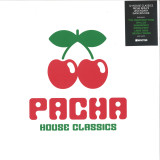
Pacha Ibiza is steeped in dance music history. Originally a playground for the rich and famous during the 70’s and 80’s, the club has transformed into a mecca for music lovers the world over. Pacha is to Ibiza what Studio 54 was to New York, encapsulating glamour and hedonism while regarded as an institution that turns underground hits into global house anthems.
Pacha House Classics compiles twelve undisputed anthems from the vaults of Defected Records’ vast catalogue, all of which have been championed year after year at the legendary nightclub. Spread across three individual records are classics from The Shapeshifters, Kings of Tomorrow, CamelPhat, Shakedown, Spiller and more; Pacha House Classics is the ultimate house soundtrack for Pacha Ibiza’s rich history.
- 1: Main Title
- 2: A Gift Of A Thistle
- 3: Wallace Courts Murron
- 4: The Secret Wedding
- 5: Attack On Murron
- 6: Revenge
- 7: Murron's Burial
- 8: Making Plans/Gathering The Clans
- 9: Sons Of Scotland
- 1: The Battle Of Stirling
- 2: For The Love Of A Princess
- 3: Falkirk
- 4: Betrayal & Desolation
- 5: Mornay's Dream
- 6: The Legend Spreads
- 7: The Princess Pleads For Wallace's Life
- 8: Freedom/The Execution/Bannockburn
- 9: End Credits
- A1: Oasis - Fade Away
- B1: The Boo Radleys - Oh Brother
- A1: The Stone Roses - Love Spreads
- B1: Radiohead - Lucky
- A1: Orbital - Adnan
- B1: Portishead - Mourning Air
- A1: Massive Attack - Fake The Aroma
- B1: Suede - Shipbuilding
- A1: The Charlatans & The Chemical Brothers - Time For Livin
- B1: Stereo Mc's - Sweetest Truth (Show No Fear)
- A1: Sinéad O'connor - Ode To Billy Joe
- B1: The Levellers - Searchlights
- A1: Manic Street Preachers - Raindrops Keep Fallin' On My Head
- B1: Terrorvision - Tom Petty Loves Veruca Salt
- A1: The Massed Pipes And Drums Of The Children's Free Revolutionary Volunteer Guard & The One World Orchestra - The Magnificent
- B1: Planet 4 Folk Quartet - Message To Crommie
- A1: Terry Hall & Salad - Dream A Little Dream
- B1: Neneh Cherry & Trout - 1, 2, 3, 4, 5
- A1: Blur - Eine Kleine Lift Musik
- B1: The Smokin' Mojo Filters - Come Together
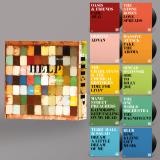
Zum 30-jährigen Jubiläum des legendären HELP-Albums veröffentlicht War Child Records eine streng limitierte 7”-Box-Edition (nur 500 Exemplare, einzeln nummeriert, mit bislang unveröffentlichten Fotos).
Das 1995 in nur einem Tag aufgenommene und von Brian Eno gemischte Album gilt bis heute als bedeutendstes Charity-Album aller Zeiten. Es vereinte Größen wie Oasis, Blur, Radiohead, Massive Attack, Portishead, Neneh Cherry sowie das Superprojekt The Smokin’ Mojo Filters (Sir Paul McCartney, Paul Weller & Noel Gallagher).
Das Album entstand als Reaktion der Musikindustrie auf den Jugoslawienkrieg und brachte mehr als £1,25 Mio. für die Kinder in Bosnien ein.
Ein unverzichtbares Sammlerstück – Musikgeschichte und Charity vereint in einer einzigartigen Edition.
pictured cover sealed in shrink wrap (first time ever on Samosa)
Samosa Records comes back with a real summer bang in the form of the ‘Afro-Ritmo EP’ – a four-track journey into afro soaked vibes courtesy of Anura & Sr. Lobezno and featuring label boss De Gama!
First up on side A is the EP’s title track, the mesmerising ‘Afro Ritmo’. Anura & Sr. Lobezno announce their arrival on Samosa Records with this spicy West African rhythm bomb. Kakaki trumpet fanfares meld with intricate synth stabs and ethereal Oja flute, whilst the solid tribal beats and rolling bass dictate the dance moves. And dance you must…
Track 2 is the deliciously glitchy, conga bonanza ‘Sungu Sa’. Make no mistake, ‘Sunga Sa’ is out to get you from the very first beat – tempting you to go behind the curtain as the haunting guitar lures you ever closer to its secret door. Dark, uplifting and ritualistic, the chant of ‘Sunga Sa’ will live in your head rent free well after the sun has gone down. Don’t say you weren’t warned.
Over on Side B De Gama takes the title track ‘Afro-Ritmo’ and applies his unique sonic rubs, balms and enhancers to create a pulsating after hours jam full to the brim with Afrotropic sparkle and magic dust. Like an unstoppable chugging train steaming through a savanna, De Gama is the conductor supreme as the raspy synth, bluesy guitar riff and uplifting brass fanfares entwine around that pounding beat.
Finally, Track 4 gives us the seriously powerful Javier Morrilas remix of ‘Afro-Ritmo’. The original is stripped right down and given the Big Beat treatment for this insanely good take – a peak time switcheroo of a track that keeps you guessing as to where it’s taking you. As the flutey breakdowns and broken beat madness get you, you will fall in love with this one instantly.
The ‘Afro Ritmo’ EP is a powerful, masterful four tracker from Anura & Sr. Lobezno which is well at home in the Samosa Records cooking pot. Spread the word, buy the vinyl. You won’t be disappointed.
• Reviewed with love by The Black Light Disco
Written, Produced, Arranged and Mixed by Anura & Sr. Lobezno.
Keyboards & Percussions: Anura.
Trumpet: Jimmy Garcia
Sax & Flute: Carlos Ligero
Trombone: Prudencio Valdivieso
*Remix and Additional Productions by Stefano Gamma aka De Gama for De Gama Rec - Rome.
Jazz Guitar & Acoustic Bass by Pietro Nicosia.
** Remix and Additional Productions by Javier Morillas.
All tracks mastered by Francesco Pierguidi at L’n’P Studio – Rome.
Artwork and computer graphics by Nerina Fernandez.
SMS038
Jackie Mittoo’s ‘Reggae Magic’ is a new collection from the great Jackie Mittoo. The album features a mixture of classic tunes and rarities from the period 1967-74, when Mittoo was at the height of his musical powers. Mittoo’s solo career began after the end of The Skatalites in 1965. He began pushing new musical boundaries, creating a uniquely identifiable organ-led funky reggae sound that owed as much to Booker T and The MGs, Jimmy Smith, Stax and Motown as to the post-ska and emergent rocksteady island rhythms of Kingston, Jamaica. His solo work at the legendary Studio One spanned seven albums and hundreds of singles.
Aside from producer and founder Clement ‘Sir Coxsone’ Dodd, it’s hard to think of anyone more central to the sound and success of Studio One than Mittoo; keyboard player extraordinaire, songwriter, arranger, musician, truly the Keyboard King at Studio One. Jackie Mittoo had been the youngest founding member of The Skatalites (at age 16), probably the most important group in Jamaican music. After they split, he became leader of the three pivotal groups at Studio One – The Soul Brothers, The Soul Vendors and Sound Dimension. He also became musical director for Studio One, helping create countless hits for singers Ken Boothe, Bob Andy, The Wailers, John Holt, Delroy Wilson and more – unforgettable tunes like Alton Ellis’ ‘I’m Still in Love with You’, Marcia Griffiths’ ‘Feel Like Jumping’, The Heptones’ ‘Baby Why’ and others. Between 1965 and 1968, many of the tunes created at Studio One can be attributed to Mittoo – timeless instrumental tracks, recorded either under his own name or those of The Soul Brothers, Soul Vendors and Sound Dimension, that have become the basis for literally 1000s and 1000s of Jamaican songs over many decades, giving the music an unsurpassed longevity.
The endurance of his music was as a direct result of significant developments in Jamaican music in the 1970s, namely the creation of three important new styles: Dub, Deejay and Dancehall. In the early 1970s Mittoo’s instrumental tracks were used as the musical source for a series of classic Studio One dub albums. At the same time Deejays at Studio One, including Dillinger, Prince Jazzbo and Dennis Alcapone, began toasting over these same popular rhythms to create their own new songs. In the mid-70s, a new generation of Studio One singers and deejays, including Sugar Minott, Freddie McGregor, Johnny Osbourne, Michigan & Smiley and others, began once again creating new melodies over these original instrumentals, signalling the birth of a new Jamaican style that became known as ‘dancehall’.
As dancehall swept across the island, rival producers copied these now classic rhythms. These original Jackie Mittoo-driven tunes spread like a virus throughout Jamaican music; be they the instrumental cuts to tunes such as Alton Ellis’ ‘Mad Mad’ , ‘I’m Just A Guy’, Larry Marshall’s ‘Mean Girl’, Slim Smith’s ‘Rougher Yet’, and instrumentals such as Mittoo’s classic ‘Hot Milk’ or ‘One Step Beyond’, The Sound Dimension’s ‘Real Rock’, ‘Heavy Rock’, ‘Full Up’, ‘Drum Song’, ‘Rockfort Rock’ … and the list goes on. These tracks became a constant soundtrack to the island, emitting from the ever-present sound of speaker boxes strung up around dancehalls. This recycling travelled even farther afield; The Sound Dimension’s instrumental ‘Real Rock’, updated by Willie Williams on his classic ‘Armageddon Time’ was in turn covered by The Clash. Lily Allen sampled Mittoo’s debut solo single ‘Free Soul’ for number one hit ‘Smile’; Dawn Penn’s ‘You Don’t Love Me (No, No, No)’, accompanied by The Soul Vendors, was revived by Penn and producers Steely & Cleevie in 1994, since covered by Rihanna, Ghostface Killah, Stephen Marley, Damian Marley and Beyonce. And so it goes; an endless time-leaping, continent-hopping diasporic musical map of the world with all roads essentially leading back to one man – Jackie Mittoo.
Essential Liverpool psychedelic folk collective mapping their territory with a record rooted in place and memory.
For fans of: CSNY, Tim Buckley, Talk Talk, The Byrds, Sufjan Stevens and Love.
Like Tame Impala doing Nick Drake covers.
Professor Yaffle have created their most focused and expansive work yet. Following acclaimed previous releases, ‘Everyone Wants to Dream’ finds the band at their creative peak.
The album turns on Everton Brow - an unremarkable Liverpool hill offering the city's finest view. Rogers returns to this vantage point throughout eight tracks, using it as both setting and metaphor for looking back on life without nostalgia. From here, you can see the Mersey stretch toward Snowdonia, the city spread below like a living map.
'Lost in a Dream (On Everton Brow)' weaves Lee Roger’s lyrics as an eighteen-year-old lyrics with newly composed music. 'Everyone Wants to Dream' confronts the disorientation when your children grow and your role shifts. 'On Top of the World' becomes what Rogers calls 'a stoned love letter to Liverpool'.
This is Professor Yaffle's first release with Violette Records, marking the beginning of a partnership between two Liverpool entities who've circled each other for years before finding their moment.
Featuring a 1979 Karl Hughes photograph of a policeman surveying Liverpool from Everton Brow, capturing something essential about the record: that those who maintain order might dream the biggest dreams of all.
"Songs that speak clearly about things that are difficult to articulate - the changing nature of purpose, the ways we dream our fears away, the view from unremarkable hills."
Because sometimes you need to be above it all to see what's been right in front of you.
- A1: Elephant Stone
- A2: The Hardest Thing In The World
- A3: Going Down
- A4: Mersey Paradise
- B1: Standing Here
- B2: Where Angels Play
- B3: Simone
- C1: Fools Gold
- C2: What The World Is Waiting For
- D1: One Love
- D2: Something’s Burning
Originally released in 1992 (as a single LP), Turns Into Stone pulled together many of the Stone Roses finest non album tracks - early singles, B-sides and extended versions – into one compelling collection. It begins with their first release from their ultimately turbulent tenure at Silvertone Records, ‘Elephant Stone’ and includes perhaps the bands finest moment, ‘Fools Gold.’ An essential companion to their timeless debut album, like the latter it contains some of best British guitar-driven pop/rock of the era, here spread over four sides of vinyl, the better to showcase the stretched-out grooves that helped them to become, for a time, probably the most exciting and influential band in the country.
- Glamour Girl
- On The Street Of) New York City
- Independency
- I Want To Apologize
- Ten Thousand Years
- The Clock
- Every Step Of The Way
- Can’t Have Me
- Love That One
- Canadian Sunset
- Midnight Til We Meet
- Forever Crying
- Outcast (Gypsy Girl)
- Yesterday
- Broadway Freeze
- (It’s Too Good) Too Good To Be True
- Trackdown
- Get Down
- Love-Itis
- Don’t You Ever Let It End
- Trying To Survive
- Bump Your Thang
- Rock The World
- Groove On Sexy Lady
- Welcome Home
- Love Thief
- Follow The Disco Crowd
Broadway Freeze Vinyl[42,23 €]
From his early-’60s days as hip shaker Twistin’ Harvey to his late-’70s nights on the light up dance floor in search of a “Disco Lady,” Harvey Scales survived scrapes with the pop charts, bankrupt record companies, walk outs, sit ins, strikes, price hikes, lay offs, and under table payoffs over a 40 year career. Compiled here for the first time are Scales’ Cuca and Magic Touch recordings, 27 slabs of cracker jack R&B, stomping northern soul, divorce-ridden deep soul, feverish funk, and hustling disco spread across 2 LPs and housed in a deluxe gatefold jacket.. Bill Dahl’s in depth notes document the entire sordid affair, with dozens of period photos and ephemeral bits illustrating the accompanying 20 page book. So necessary.
- Glamour Girl
- On The Street Of) New York City
- Independency
- I Want To Apologize
- Ten Thousand Years
- The Clock
- Every Step Of The Way
- Can’t Have Me
- Love That One
- Canadian Sunset
- Midnight Til We Meet
- Forever Crying
- Outcast (Gypsy Girl)
- Yesterday
- Broadway Freeze
- (It’s Too Good) Too Good To Be True
- Trackdown
- Get Down
- Love-Itis
- Don’t You Ever Let It End
- Trying To Survive
- Bump Your Thang
- Rock The World
- Groove On Sexy Lady
- Welcome Home
- Love Thief
- Follow The Disco Crowd
Black Vinyl[39,71 €]
From his early-’60s days as hip shaker Twistin’ Harvey to his late-’70s nights on the light up dance floor in search of a “Disco Lady,” Harvey Scales survived scrapes with the pop charts, bankrupt record companies, walk outs, sit ins, strikes, price hikes, lay offs, and under table payoffs over a 40 year career. Compiled here for the first time are Scales’ Cuca and Magic Touch recordings, 27 slabs of cracker jack R&B, stomping northern soul, divorce-ridden deep soul, feverish funk, and hustling disco spread across 2 LPs and housed in a deluxe gatefold jacket.. Bill Dahl’s in depth notes document the entire sordid affair, with dozens of period photos and ephemeral bits illustrating the accompanying 20 page book. So necessary.
Repress!
In the mid-1970s, a force of nature swept across the continental United States, cutting across all strata of race and class, rooting in our minds, our homes, our culture. It wasn’t The Exorcist, Goodbye Yellow Brick Road, or even bell-bottoms, but instead a book called The Secret Life of Plants. The work of occultist/former OSS agent Peter Tompkins and former CIA agent/dowsing enthusiast Christopher Bird, the books shot up the bestseller charts and spread like kudzu across the landscape, becoming a phenomenon. Seemingly overnight, the indoor plant business was in full bloom and photosynthetic eukaryotes of every genus were hanging off walls, lording over bookshelves, and basking on sunny window ledges. The science behind Secret Life was specious: plants can hear our prayers, they’re lie detectors, they’re telepathic, able to predict natural disasters and receive signals from distant galaxies. But that didn’t stop millions from buying and nurturing their new plants.
Perhaps the craziest claim of the book was that plants also dug music. And whether you purchased a snake plant, asparagus fern, peace lily, or what have you from Mother Earth on Melrose Avenue in Los Angeles (or bought a Simmons mattress from Sears), you also took home Plantasia, an album recorded especially for them. Subtitled “warm earth music for plants…and the people that love them,” it was full of bucolic, charming, stoner-friendly, decidedly unscientific tunes enacted on the new-fangled device called the Moog. Plants date back from the dawn of time, but apparently they loved the Moog, never mind that the synthesizer had been on the market for just a few years. Most of all, the plants loved the ditties made by composer Mort Garson.
Few characters in early electronic music can be both fearless pioneers and cheesy trend-chasers, but Garson embraced both extremes, and has been unheralded as a result. When one writer rhetorically asked: “How was Garson’s music so ubiquitous while the man remained so under the radar?” the answer was simple. Well before Brian Eno did it, Garson was making discreet music, both the man and his music as inconspicuous as a Chlorophytumcomosum. Julliard-educated and active as a session player in the post-war era, Garson wrote lounge hits, scored plush arrangements for Doris Day, and garlanded weeping countrypolitan strings around Glen Campbell’s “By the Time I Get to Phoenix.” He could render the Beatles and Simon & Garfunkel alike into easy listening and also dreamed up his own ditties. “An idear” as Garson himself would drawl it out. “I live with it, I walk it, I sing it.”
But as his daughter Day Darmet recalls: “When my dad found the synthesizer, he realized he didn’t want to do pop music anymore.” Garson encountered Robert Moog and his new device at the Audio Engineering Society’s West Coast convention in 1967 and immediately began tinkering with the device. With the Moog, those idears could be transformed. “He constantly had a song he was humming,” Darmet says. “At the table he was constantly tapping.” Which is to say that Mort pulled his melodies out of thin air, just like any household plant would.
The Plantae kingdom grew to its height by 1976, from DC Comics’ mossy superhero Swamp Thing to Stevie Wonder’s own herbal meditation, Journey Through the Secret Life of Plants. Nefarious manifestations of human-plant interaction also abounded, be it the grotesque pods in Invasion of the Body Snatchers or the pothead paranoia of the US Government spraying Mexican marijuana fields with the herbicide paraquat (which led to the rise in homegrown pot by the 1980s). And then there’s the warm, leafy embrace of Plantasia itself.
“My mom had a lot of plants,” Darmet says. “She didn’t believe in organized religion, she believed the earth was the best thing in the whole world. Whatever created us was incredible.” And she also knew when her husband had a good song, shouting from another room when she heard him humming a good idear. Novel as it might seem, Plantasia is simply full of good tunes.
Garson may have given the album away to new plant and bed owners, but a decade later a new generation could hear his music in another surreptitious way. Millions of kids bought The Legend of Zelda for their Nintendo Entertainment System back in 1986 and one distinct 8-bit tune bears more than a passing resemblance to album highlight “Concerto for Philodendron and Pothos.” Garson was never properly credited for it, but he nevertheless subliminally slipped into a new generations’ head, helping kids and plants alike grow.
Hearing Plantasia in the 21st century, it seems less an ode to our photosynthesizing friends by Garson and more an homage to his wife, the one with the green thumb that made everything flower around him. “My dad would be totally pleased to know that people are really interested in this music that had no popularity at the time,” Darmet says of Plantasia’snew renaissance. “He would be fascinated by the fact that people are finally understanding and appreciating this part of his musical career that he got no admiration for back then.” Garson seems to be everywhere again, even if he’s not really noticed, just like a houseplant.