Disco re-edit master Moplen sprinkles his magic on the golden grooves of Jackie Moore’s classic, ‘Holding Back’ for the third release on A’s and Bees backed with the original Breakdown and Chin-Mental mixes from the mighty John Morales and Sergio Munzabai (M&M).
Continuing their run of heavyweight pressings that marry remastered originals with new interpretations of those prized cuts, A’s and Bees look to ’83 with this sensuous slice of disco heat, blending beefy slap bass with a soaring string section and Jackie’s soulful vocal tones. A cover of David Simmons’ 1979 classic ‘Holdin' Back’ penned by Gregg Diamond and Steve Love, Moore’s interpretation is a high energy disco hit from across the Atlantic.
Opening up the release, re-work whiz Moplen was graced with the stems to the original recording, tweaking, finessing and squeezing out all the best bits of the original building the tension across 7 sublime minutes, that balances deftness with full frontal power. Taking the A2, the original vocal mix in all its glory, produced and arranged by MFSB’s Bobby Eli.
On the B side two masterful M&M mixes from the legendary duo of John Morales and Sergio Munzabai in the form of the Breakdown and Chin-Mental versions.
50% of the profits from this release will be donated towards the British Beekeepers Association.
quête:st david
- A1: The Last Of Us 00 01:07
- A2: Get Out 00 07:13
- A3: All Gone 00 01:34
- A4: The Quarantine Zone 00 01:45
- A5: Don't Look 00 02:07
- A6: Forsaken 00 00:42
- A7: Breaching The Wall 00 03:44
- A8: Hope 00 00:41
- A9: Haven 00 01:33
- A10: Resolve 00 01:48
- B1: The Swarm 00 02:08
- B2: Long Long Time By Nick Offerman 00 01:12
- B3: It Can't Last (Sunset) 00 01:48
- B4: Raiders 00 01:46
- B5: Longing 00 00:56
- B6: All Gone (Affliction) 00 01:22
- B7: Vanishing Grace 00 01:25
- B8: All Gone (Purpose) 00 01:21
- B9: All Gone (Isolation) 00 00:51
- B10: Warning Signs 00 02:45
- B11: Salvation 00 01:25
- B12: Subterranean 00 02:49
- B13: The Last Of Us (Prevail) 00 00:48
- B14: Bravery 00 01:26
- C5: Left Behind (Together) 00 01:08
- C6: Fleeting 00 00:54
- C7: Vanishing Grace (Devotion) 00 00:51
- C8: Never Let Me Down Again By Depeche Mode 00 04:48
- C9: The Choice 00 01:23
- C10: Left Behind 00 03:11
- D1: All Gone (Embrace) 00 01:30
- D2: Complications 00 02:32
- D3: Collateral 00 01:08
- D4: Resolve (Isolation) 00 01:19
- D5: Unbroken 00 01:28
- D6: All Gone (Elegy) 00 00:44
- D7: Wounds 00 01:23
- D8: The Last Of Us (Vengeance) 00 02:59
- D9: All Gone (In Vain) 00 01:05
- D10: All Gone (Ephemeral) 00 01:48
- D11: The Path 00 01:40
- D12: All Or None By Pearl Jam 00 04:37
- C1: Survive 00 04:32
- C2: A Great Man 00 01:58
- C3: All Gone (Flashbacks) 00 01:10
- C4: Never Let Me Down Again By Jessica Mazin 00 03:29
Der Soundtrack zur HBO-Serie "The Last of Us" basiert auf der beliebten Musik und Klangwelt des gleichnamigen Videospiels. Geschrieben wurde der Soundtrack vom mit einem Academy Award ausgezeichneten Komponisten Gustavo Santaolalla und von David Fleming.Die intime, gitarrenbetonte Klanglandschaft spiegelt die Emotionalität der Serie wider und nimmt die Hörer mit auf die ungewisse Reise durch die USA in einer postapokalyptischen Welt, zwanzig Jahre nach der Zerstörung der modernen Zivilisation durch eine, von einem Pilz verursachte Epidemie.
Based on the critically acclaimed video game of the same name developed by Naughty Dog for the PlayStation® platforms, The Last of Us is written and executive produced by co-creators Craig Mazin (Emmy® Award-winning creator of HBO’s “Chernobyl”) and Neil Druckmann (creator and writer of the award-winning “The Last of Us” franchise and Naughty Dog Co-President).
The Last of Us takes place twenty years after modern civilization
has been destroyed by a viral outbreak. Joel, a hardened survivor, is hired to smuggle Ellie, a 14-year-old girl, out of an oppressive quarantine zone. What starts as a small job soon becomes a brutal, heartbreaking journey, as they both must traverse the U.S. and depend on each other for survival.
The vinyl release to the acclaimed series contains soundtrack
highlights from the show. Featured are score tracks by composer Gustavo Santaolalla, with additional music by David Fleming as well as songs by Depeche Mode, Pearl Jam, Jessica Mazin & Nick Offerman.
The package contains 2x vinyl, standard weight at 140g, 1x green and 1x clear, a double-sided poster of the show’s key art, spot gloss and soft touch on the gatefold and an insert featuring liner notes by Neil Druckmann, Craig Mazin, Gustavo Santaolalla & David Fleming and images from the show.
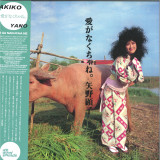
Wewantsounds continues its Akiko Yano series with the reissue of her cult classic 'Ai Ga Nakucha Ne' recorded in 1982 and co-produced by Ryuichi Sakamoto. Featuring Japan, the album includes additional recording in Tokyo with YMO and is mixed by Steve Nye and Shinichi Tanaka. It is the first time the album is released outside of Japan and the deluxe LP features the original artwork with gatefold sleeve and a lavish 24-page colour booklet with sessions photos by Pennie Smith (famous for The Clash's London Calling photo). The reissue also includes a new introduction by Mac DeMarco and a dual interview with Akiko Yano and Steve Jansen by journalist Paul Bowler. The audio remastered from the Original tapes by Mitsuo Koike.
'Ai Ga Nakucha Ne' ('there must be love' in Japanese) is Akiko Yano’s 6th studio album and follows 'Tadaima' in 1981. It continues exploring the electro-pop sound of its predecessor, hot on the heels of her touring with Yellow Magic Orchestra between 1979 and 1980. For this album, Akiko decided to try something new; she enrolled English fellow musicians Mick Karn, Steve Jansen and David Sylvian from Japan and booked the Air Studios in London under the supervision of engineer Steve Nye. Over a couple of weeks, the musicians created a fascinating soundscape full of catchy pop tunes, sung in both Japanese and English. Reminiscing about the studio sessions, Steve Jansen notes "Our music’s different but we maybe had a similar process of working. It was a great environment because the studio was a great place to work. It was very insular. There were four studios and there were always groups working in there 24/7."
The eleven tracks featured on "Ai Ga Nakucha Ne," mostly composed by Akiko - are a great collection of catchy tunes featuring her distinctive vocals and accompanied by the Japan musicians. As Akiko explains about the creative process, "I didn’t think to imitate or to make another Tin Drum. But I had Steve Jansen and Mick Karn, these excellent musicians. They were eager to understand the songs, then they put in everything they had. I knew the material was different from what they usually played in Japan. But it was a great experience working with them.
There are many highlights on the album, from the pop edge of "Aisuru Hito Yo" to the avant groove of "Another Wedding Song", each song is memorable and the album ends with the superb “Good Night” sung by Akiko and David Sylvian.
The original 1982 LP release included a 24 page booklet featuring many photos by Pennie Smith and Japanese photographer Bishin Jumonji. The booklet is reproduced in its entirety here and the album on top of contributions by Mac DeMarco, a longtime fan of the album, Akiko and Steve Jansen making this release of 'Ai Ga Nakucha Ne' a unique testament to Akiko Yano's greatness.
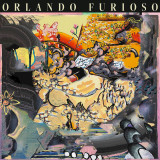
“Orlando Furioso is a haunting, one-of-a-kind statement, from an important new voice in improvised music.” - Steve Lehman
“…imagining instruments that haven’t been invented yet: space harps, cosmic gamelan, Venusian banjo. It’s the purest distillation of Atria’s musical language, simultaneously grounded and unearthly.” - Stewart Smith for The Wire (November 2022)
“Making liberal use of microtonal harmony and hypnotic, ostinato rhythms – as well as the occasional stylistic smash-cut, reminiscent of John Zorn – Orlando Furioso announced itself on Wednesday as a punchy, creative force on the New York scene. (…) Atria’s rhythms had a welcoming, social propulsion, and the microtonality of his writing for keyboard proposed an individual – even insular – language.” - Seth Colter Walls for The New York Times.
Early European composers felt that their work reflected in its structure the divine nature of the material world. Via tuning, form, and contrapuntal alchemy, these musicians sought to illuminate and edify the complex and perfect order of existence. The music recorded here also reflects the contours of an ordered world, but it is no place any of us has ever visited. By assembling far-flung building blocks from the detritus of a 21st-century musical vocabulary, Orlando Furioso brings the listener into a bizarre new cosmos. The result is deeply expressive music that speaks not with the voice of a narrator or memoirist, but with that of a cartographer.
Like a science-fiction Dante, the listener is taken on a tour of many diverse and colorful provinces of an alien world. Though each composition references its own set of real-world musical locales (from the Andes to Indonesia to Italy to New Orleans), they are bound by stylistic consistency into a coherent, continuous geography. Permeating this world is an uncompromising commitment to microtonal harmony, rhythmic intensity, and an ability to deploy the esoteric (Nicola Vicentino's notorious 31-tone temperament) and the head-smackingly obvious (a surprise djent breakdown) with equal conviction. Though Vicente's compositions are steering the ship, serious recognition is due to all the players on the record for their ability to meet these demands.
Our omnivorous musical diets offer real abundance. They enrich our craft by providing access to limitless approaches from which to choose - more masters to study, traditions to absorb, and techniques to hone than is possible in multiple lifetimes. They can also inflict heavy and often contradictory burdens of influence. When every corner of the map has been charted, it becomes difficult to find a new direction in which to travel. One solution I hope to see more often is the one pursued on this record: breaking down distinct musical worlds into component parts and reassembling them into a language. When completed with precision and with no stone left unturned, the seams between the pieces vanish and the listener is deposited somewhere beautiful and strange, left to assign their sensations meanings of their own. - Mat Muntz
Orlando Furioso is led by Vicente and features David Acevedo, David Leon, Andrew Boudreau, Alec Goldfarb, Daniel Hass, Simón Willson, and Niña Tormenta. Orlando Furioso celebrated its release at Roulette Intermedium in Brooklyn, NY, as a part of Wet Ink Ensemble's 24th Season opening concert, a performance which The New York Times heralded as "virtuosic", "punchy, creative" and "even revelatory."
Winner of the Deutscher Jazz Preis: Best International Debut Album 2023
YMO DRUMMER YUKIHIRO TAKAHASHI'S SOPHISTICATED CITY FUNK CLASSIC FROM 1978 CO-PRODUCED BY RYUICHI SAKAMOTO AND FEATURING HARUOMI HOSONO, MINAKO YOSHIDA AND TATSURO YAMASHITA. RELEASED FOR THE FIRST TIME OUTSIDE OF JAPAN - WITH REMASTERED AUDIO, LP COMES WITH OBI AND FOUR PAGE INSERT
Wewantsounds is delighted to announce the release of Yukihiro Takahashi's debut solo album 'Saravah!'. One of the key Japanese albums of the 70s, it was released in 1978 at a key time when, following his tenure with Sadistic Mika Band, Takahashi had just joined the nascent line up of Yellow Magic Orchestra. A sophisticated mix of Disco Funk, synth Pop, Ambient, French Exotica and Bossa Nova, the album has the stylish feel of a night out clubbing in Paris circa 1978. It’s the missing link between the City Pop scene of the late 70s and the synth sound of YMO which was about to revolutionise the world. Newly remastered by renowned engineer Mitsuo Koike, the LP features original artwork with photos by Masayoshi Sukita (David Bowie's Heroes), a 4-page insert and a new Introduction by Benjamin Barouh (Saravah records).
The month before recording the YMO debut album that would help alter the course of music, Yukihiro Takahashi entered the studio with his fellow band-members Ryuichi Sakamoto and Haruomi Hosono to record 'Saravah!' together with the cream of the Japanese scene. He drew his inspiration from globe-trotting French musician Pierre Barouh who had introduced Bossa Nova in France in 1966 with "Samba Saravah" (featured in soundtrack the Oscar Winner A Man And A Woman which he co-wrote) and subsequently launched Saravah Records.
'Saravah' starts off with a couple of French and Italian exotica classics ('Volare' and 'C'est Si Bon') with delicious touches of synth while 'Saravah!' a nod to Pierre Barouh, is a languid Bossa Nova with beautiful soulful strings arranged by Ryuichi Sakamoto. The album gets hotter with 'La Rosa' a superb mid tempo ambient funk featuring Takahashi's beat backed by Haruomi Hosono's bumping bass line, Sakamoto's Hammond Organ and Shigeru Suzuki's fluid guitar.
The first side ends with an amazing exotica-synth version of the standard 'Mood Indigo', announcing the midi revolution that was to come before things get funkier on Side Two starting with Ryuichi Sakamoto's superb up-tempo Disco instrumental ‘Elastic Dummy’ featuring soulful strings and horns with solos by Sakamoto and guitarist Tsunehide Matsuki. The album then moves on to the ambient synth pop of ‘Sunset’ before switching back to Disco Funk with 'Back Street Midnight Queen’ which. like 'Elastic Dummy' has become a dancefloor cult classic over the years.' Saravah! ends on a perfect note with the beautiful 'Present' a perfectly crafted pop song which Takahashi wanted to do in a City Pop mode, featuring a superb melody and high-class arrangements. The perfect soundtrack to an early morning stroll in the Paris streets as illustrated by Masayoshi Sukita's photos featured on the album cover.
A sophisticated album full of glitz and fun, 'Saravah!' gives a unique insight into the versatility the YMO musicians and how funky they could play under Yukihiro Takahashi's influence. This was a key time when the three musicians were just transitioning to a sound that would be dominated by synthesizers and 'Saravah' catch them just at that fascinating moment.
RYUICHI SAKAMOTO'S LANDMARK 1981 ALBUM REISSUED FOR THE FIRST TIME IN DECADES OUTSIDE OF JAPAN. THE ALBUM WILL BE REISSUED IN ITS RARE JAPANESE EDITION TOGETHER WITH A 2-LP LIMITED EDITION FEATURING THE ALBUM PLUS A 2ND LP FEATURING ITS NEVER-RELEASED FULL INSTRUMENTAL MIX, ALL REMASTERED BY BERNIE GRUNDMAN.
Wewantsounds is proud to announce the reissue of Ryuichi Sakamoto's third solo album "Hidari Ude No Yume" (Left Handed Dream), originally released in 1981 on the Alfa label. Save for a small-scale Dutch vinyl release in 1981, it is the first time the album's original Japanese edition is released outside of Japan (the European release on Epic Records included significantly different tracks and mixes). Newly remastered from the original tapes by renowned engineer Bernie Grundman, this LP edition comes with original artwork featuring a striking cover shot by famous photographer Masayoshi Sukita (sourced from the original negative), OBI strip and 4-page insert with new introduction by journalist Anton Spice. The album will also be released as a 2-LP limited edition gatefold including the album's full instrumental mix.
Ryuichi Sakamoto's third album, "Hidari Ude No Yume" was recorded at the legendary Alfa Studio 'A' in Tokyo during the Summer of 1981. it came after "B-2 Unit" in 1980 and his debut album "Thousand Knives Of" in 1978, the very year Sakamoto was invited by Haruomi Hosono to join Yellow Magic Orchestra alongside Yukihiro Takahashi. In the process, they became global stars as the group rewrote the rules of electronic pop and toured around the world, yet Sakamoto was keen to remain active as a solo artist.
?In 1981, the musician decided to record an album rooted in Pop, following "B-2 Unit" which had a more of an experimental edge and his landmark electro debut from 1978. For this new album entitled "Hidari Ude No Yume," Sakamoto invited British producer Robin Scott, who had had huge hit with 'Pop Muzik,' to co-produce. They entered the Alfa studio in July 1981, accompanied by a handful of musicians. These included his fellow YMO musicians Haruomi Hosono and Yukihiro Takahashi, keyboard programmer extraordinaire Hideki Matsutake who'd been on Sakamoto's first two albums and became YMO's unofficial fourth member, violinist Kaoru Sato, saxophonist Satoshi Nakamura and American guitarist Adrian Belew who'd played with David Bowie, The Talking Heads' "Remain In Light" and more recently, Tom Tom Club’s debut (co-writing 'Genius Of Love').
?Together, they created a fascinating mix of pop, ambient and electronic music with elements of avant garde and traditional Japanese music, the whole firmly rooted in a solid groove. Sakamoto wanted to give the album a spontaneous feel and decided to let ideas flow and evolve organically during the sessions as musicians would develop them together. From the funk of 'Relâché' to the new wave feel of 'Venezia' and the ambient minimalism of 'Slat Dance,' the album is remarkably consistent while displaying a wealth of global influences as shown by the diversity of instruments featured on the credits: Marimba, didgeridu, traditional Japanese instruments such as the Sho and Hichiriki flutes.
?The album was released in Japan in 1981 and Epic Records picked it up for Europe a year later but decided to release it in a significantly altered version. The sequencing was completely reshuffled and two tracks, 'Saru No Ie' and 'Living In The Dark' were completely dropped while three others, ‘Relâché’, ‘Tell 'em To Me’, ‘Venezia’ were heavily remodelled with english lyrics and became 'Just About Enough', 'Once In A Lifetime' and 'The Left Bank'. Last but not least, a new English-sung track, 'The Arrangement,' was added, making the album nine tracks instead of ten for the Japanese edition.
Altogether this International version called "Left-Handed Dream" was a very different album from the Japanese one and although both were successful at the time and further established Ryuichi Sakamoto as a global solo artist, the Japanese edition of "Hidari Ude No Yume" remains largely unknown to international ears.
Wewantsounds is now delighted to release this original Japanese edition for the first time in decades as a single LP together with a 2-LP limited-edition set adding, as a bonus, its fascinating instrumental mix, discovered in the label's vaults a few years ago (Note that 'The Garden Of Poppies', 'Slat Dance' and 'Saru No Ie' are instrumentals but for the consistency of the album we kept them on the Instrumental Mix). "Hidari Ude No Yume" is an essential album in Ryuichi Sakamoto's rich discography. It is now available in its purest original Japanese form.
Acoustic Bass, Bass Fender – Buster Williams
Composed By – Harold Land (tracks: A1 to A3, B2)
Design Cover – MPI*
Drums – Ndugu (Leon Chancler)*
Electric Piano, Piano – Bill Henderson*
Flugelhorn, Trumpet – Oscar Brashear
Oboe, Tenor Saxophone – Harold Land
Photography By – David Shepard
Producer – Bob Shad
Supervised By – Ernie Wilkins
Originally released: 1972
Black Truffle is pleased to announce The Leisure Principle, a new solo LP from London-based bassist and sound artist Otto Willberg. A key player in the London underground, Willberg is often heard on acoustic and electric bass in free improv settings and bands with Laurie Tompkins (Yes Indeed) and Charles Hayward (Abstract Concrete), as well as the fractured No Wave unit Historically Fucked. His previous solo releases have ranged from extended technique double bass to explorations of the acoustics of a 19th century artillery fort. But nothing Willberg has committed to wax so far prepares a listener for The Leisure Principle, six unashamedly melodic improvisational workouts created almost entirely with heavily filtered bass harmonica and electric bass. On the opening ‘Reap What Thou Sow’, a single-note bass harmonica loop pulses along underneath a roaming bass solo, the side-chained envelope filtering (where the dynamic behaviour of the bass determines the filter for both bass and harmonica) fusing the two instruments into a single stream of burbling shifts in resonance. After several minutes of patient exploration of this low-end landscape, the music suddenly opens up in widescreen with the entrance of Sam Andreae’s graceful melodica chords, spreading out across the stereo field. From this epic opener, each of the remaining pieces goes on to explore a slightly different aspect of the terrain. On ‘Shadow Came into the Eyes as Earth Turned on its Axis’, a similarly buoyant harmonica bass line provides the foundation, but this time playing a soulful descending riff, its almost R&B feel abstracted and half-obscured by the filtering. On ‘Mollusk’, echoed bass arpeggios skitter between elegiac chords somewhat reminiscent of the opening of John Abercrombie’s ‘Timeless’, before settling into a hypnotic groove. On the record’s second half, Willberg pushes further into the possibilities of his idiosyncratic instrumentation. On ‘Wetter’, bass and harmonica come together into a monstrous, growling jaw harp; on ‘Had we but world enough and more time’, the subtly shifting pulsating patterns start to feel almost like a kind of evaporated, drum-less dub techno until an eruption of wheezing bass harmonica gives the piece a comically folkish turn. Willberg’s melodically inventive and virtuosic bass performance calls to mind any number of fusion touchstones, from Jaco Pastorius to Mark Egan’s singing tone in the early Pat Metheny Group—even Anthony Jackson’s work with Steve Kahn. But with its radically reduced instrumentation, The Leisure Principle is also an exercise in minimalism, and the absence of percussion gives even its funkiest moments a strangely abstracted quality. At times, its uncanny blend of the abstruse and the immediate suggests the fried pop experiments of David Rosenboom or the skewed but deeply musical DIY of 80s underground groups like De Fabriek. Both easy on the ear and profoundly strange, The Leisure Principle proudly takes its place among the most eccentric offerings on the Black Truffle menu.
Following on the somnambulant heels of When I See The Sun, our massive, near-complete Codeine overview, comes What About The Lonely?, an eight-track LP recorded at the group's live zenith. Captured direct from the mixing board at a stop on Codeine's November 1993 swing through the Midwest, opening for Mazzy Star, this document finds Stephen Immerwahr, John Engle, and Doug Scharin running through their hits at Chicago's notorious Lounge Ax for a crowd of chatty "120 Minutes" fans. Gastr Del Sol's David Grubbs adds his guitar to two songs, slinking on and off the 24-inch stage with little fanfare, but leaving his signature indelibly on the performance.
- 1: Dignity
- 1: 2When Will You (Make My Telephone Ring)
- 1: 3Chocolate Girl
- 1: 4Real Gone Kid
- 1: 5Wages Day
- 1: 6Fergus Sings The Blues
- 1: 7Queen Of The New Year
- 1: 8Love And Regret
- 1: 9I'll Never Fall In Love Again
- 1: 0Your Swaying Arms
- 1: Twist And Shout
- 1: 2Closing Time
- 2: 1Cover From The Sky
- 2: Your Town
- 2: 3Will We Be Lovers
- 2: 4Only Tender Love
- 2: 5Hang Your Head
- 2: 6I Was Right And You Were Wrong
- 2: 7Everytime You Sleep
- 2: 8Bigger Than Dynamite
- 2: 9The Hipsters
- 2: 10A New House
- 2: 11The Believers
- 2: 1City Of Love
"All The Old 45s - The Very Best of Deacon Blue" coincides with the band"s UK and Ireland tour of the same name, and charts their multi-million selling history - from bringing "Chocolate Girl" and "Dignity" to life in the corner of a Glasgow basement, to skyscraping, stadium-filling hits like "Wages Day" and "Real Gone Kid", via their swoon-inducing tribute to Bacharach and David ("I"ll Never Fall In Love Again"), their collective favourite single ("Your Swaying Arms"), and one of the most significant songs in the Deacon Blue canon, which followed a split in 1994 and the loss of two original members: 2012"s comeback single "The Hipsters" heralded a new lease of life for the group, and jump-started a second act that"s seen them more fired up, and prolific, than ever.
Originally released on may 29, 1969, Crosby, Stills and Nash remains one of rock 'n' roll's most impressive debuts. It was big news in 1969 when former key members of the Byrds, Buffalo Springfield, and the Hollies - three of the finest bands of the '60s - splintered off to form their own trio. Despite their already-proven talents, few could have imagined the gossamer vocal blend that would become the trademark of supergroup Crosby, Stills and Nash. The band's debut effectively provided the soundtrack to the summer of '69. For his part, Steve Stills keeps exploring the progressive folk-rock sound that he'd pioneered with Buffalo Springfield; signature tune Suite: Judy Blue Eyes is an expansive, multi-section affair that makes full use of the group's vocal skills. Fresh from the Hollies, Graham Nash adds an accessible pop sensibility, epitomized by the effervescent ditty Marrakesh Express. David Crosby, always the wild card in the Byrds, here adds rough edges and flashes of mystery with his cutting protest rocker Long Time Gone and the exquisite art-folk of Guinnevere. With this kind of firepower under its belt, it's no wonder csn quickly became one of the biggest groups of their era.
- A1: Kentucky Skank - The Upsetters
- A2: Double Six – U Roy
- A3: Just Enough To Keep Me Hanging On - David Isaacs
- A4: In The Iaah - The Upsetters
- A5: Jungle Lion - The Upsetters
- A6: We Are The Neighbours - David Isaacs
- B1: Soul Man - The Upsetters
- B2: Stick Together - U Roy
- B3: High Fashion - I Roy
- B4: Long Sentence - The Upsetters
- B5: Hail Stones - The Upsetters
- B6: Ironside - The Upsetters
- B7: Cold Weather - The Upsetters
- B8: Waap You Waa - The Upsetters
This classic album from 1973 saw its creator, Lee ‘Scratch’ Perry exploring synths and starting to develop his Black Ark sound - the enigmatic producer was at the time in the process of building his famous studio and honing his ideas about dub as a musical form.
The LP opens with the eerie “Kentucky Skank”, Perry’s ode to KFC, complete with frying chicken sounds, spliced between winding tapes, a ghostly trumpet, and futuristic moog synthesizer, overdubbed at London’s Chalk Farm studios.
U Roy’s “Double Six” and I Roy’s “High Fashion” & “Hail Stones” illustrate just how strong The Upsetter’s deejay material had become, while versions of the Chi-Lites’ “We Are Neighbours”, Sam & Dave’s “Soul Man” and a re-working of Al Green’s “Love and Happiness” (retitled “Jungle Lion”) all betray the funky soul influence that was increasingly shaping his work.
The backing tracks illustrate the producer at his best; the audio spectrum is fully differentiated while spatial placement an important component - something it would take years for him to achieve at the Black Ark.
Double Seven is available as a limited edition of 750 individually numbered copies on silver coloured vinyl
- 03: Love Me Madly?
- 01: All I Ever Wanted
- 02: Nervous 2:04
- 04: Shameless 3:55
- 01: 122.3 Bpm 1:39
- 02: Never Give Your Heart 3:48
- 03: Ran 0:49
- 04: The Snake 4:25
- 05: Ringinglow 3:23
- 01: Liar 3:21
- 02: Lament 1:12
- 03: Reflections 6:37
- 01: Brute 2:26
- 02: Sin City 4:23
- 03: Release 1:58
- 04: You'll Be Sorry 4:00
Following a greatest hits compilation in the late 90s the Human League signed to the Papillon label. The line-up
of Philip Oakey, Susan Sulley and Joanne Catherall recorded the “Secrets” album, with keyboard player Neil
Sutton, who co-wrote most of the songs with Oakey, and programmer David Beevers providing the trademark
Human League sound.
• The album’s release in 2001 was preceded by the single “All I Ever Wanted”, but both the single and album lost
promotion and sales when Papillon ran into financial difficulties and was closed shortly after the album’s release.
• This 2LP new edition has been expertly mastered by Cicely Balston at AIR Mastering from the original stereo
tapes using precision half-speed mastering. Half-speed mastering is a vinyl cutting technique that improves
groove accuracy and transient information creating an incredibly detailed stereo image with a natural high
frequency response.
• Presented in its original sleeve, pressed on 2 x 180 gram heavyweight black vinyl, featuring an obi strip and
housed in a poly-lined inner sleeve, with all the lyrics and credits on the 4 page insert.
a 01. All I Ever Wanted Dave Bascombe Mix 3:31
[c] 03. Love Me Madly? [Dave Bascombe Mix] 4:08
When picturing the German techno scene, one likely imagines the concrete monoliths of its capital city Berlin rather than the vineyards and valleys of the enchanting city of Stuttgart in the southwest. But small cities lack the oversaturation and noise of the metropolis, allowing them to develop their own inspired and distinctive subcultural visions. Stuttgart’s David Löhlein exemplifies this potential, manifesting a singular style of sight and sound through his Vision Ektase project and residency at Lehmann Club. Now, Löhlein’s warm-blooded techno is slinking, slithering and seducing its way through BNR, with the upcoming Hotel Pool EP release.
There’s no hesitation before plunging into the EP’s titular track, with its rushing fingered basslines and rolling polyrhythms. Löhlein cites solo travels in Columbia as the source of his Latin influences, and one hears them throughout “Hotel Pool” in vocal and percussive samples. Elements more commonly found in Latin and tribal house feel uncommonly fresh once Löhlein recontextualizes them within a 144 bpm techno foundation. The words “groovy” and “sexy” are usually reserved for the stuff of Buddha Bar compilations, but “Hotel Pool” is exhilarating because it serves both of the former and none of the latter.
A stream of hedonism flows beneath all of the four-tracker, but if the opener is erotic, A2 “La Piscina” is psychedelic. The bass flutters like a mescaline come-up, as infinite loops of chattering voices and deep bamboo pipe notes mesmerize. Again, Löhlein takes certain genre tropes - in this case from psytrance - and transposes them through his own stylistic signature with thrilling results. Ask Löhlein if he likes psytrance and the answer might be “Yes, when it’s techno.”
Leading the flip, “Cuando Vengas” heats up around a dark and sticky loop of ambiguous, organic origin. Here Löhlein’s masterful sample and drum programming is clearly on display, with vocal chops and subtle rhythmic variations leading the dancefloor to shivering bliss. The EP closes with “I Just Want,” a sparse, cold, and bitcrushed stalker of a track that seems to answer Baudrillard’s famed question “What are you doing after the orgy?” That the Hotel Pool EP’s wild romp ends in the Berlin oeuvre perhaps proves the city’s primacy in the German techno scene, but after a few listens one begins to wonder what rare pleasures they’ve been missing in David Löhlein’s Stuttgart.
RAWAX welcomes Ferdinand Steinbacher aka Brevis Bounce to the artist family! We are very happy to present you this great talent HOUSEWAX. After joining a RAWAX micro GARDEN FESTIVAL with Move D, Ferdinand went home and started (impressed from David's set) to jam. He uploaded the video on social media. Luckily we saw it and asked him to make us some tracks - the result is his first vinyl release called "Vibrant Remedy" which will be out in January.
Highly recommended!
- A1: Bring Me Closer
- A2: Another Lost Look
- A3: Love To Stay
- A4: Now That You’re Here
- B1: Don’t Talk To Me About Love
- B2: Stand So Quiet
- B3: Change Of Heart
- B4: Thinking About You
Das dritte und letzte Album von Altered Images erschien im Juni 1983 und präsentierte einen anspruchsvolleren Klang und als die beiden vorherigen Alben. In einem ungewöhnlichen Schachzug waren zwei etablierte Produzenten für jeweils vier Songs des Albums verantwortlich. Vorausgegangen waren die Hitsingles 'Don't Talk To Me About Love', ein UK-Hit produziert von Mike Chapman (Blondie), und 'Bring Me Closer', produziert von Tony Visconti (David Bowie, T-Rex). In dem brandneuen 2CD-Set zum 40-jährigen Jubiläum enthält CD1 das Originalalbum, während die Bonus-CD drei Non-Album-B-Seiten, zwei erweiterte 12inch-Versionen, einen Live-Track und drei Single-Edits enthält. Die beiden CDs werden in einer brandneuen 7inch-Deluxe-Gatefold-Verpackung präsentiert, inkl einem 8-seitigen Booklet, das alle Texte (einschließlich der drei B-Seiten) und die Credits enthält. Die Vinyl Version kommt als 180Gr. Halfspeed-Master mit OBI-Strip an der Seite und einem 4-seitigen Booklet!
- A1: The Word Around Town
- A2: She Grew And She Grew
- A3: Rings On Her Fingers
- A4: Talk Like That
- A5: Dream Come True
- A6: Everlasting
- B1: Faithful To 3 Lovers (Bbc Session)
- B2: Everlasting (Bbc Session)
- B3: The Word Around Town (Bbc Session)
- B4: Dream Come True (Bbc Session)
- B5: Take Me To Your Heart (Demo)
- B6: Never Grow Up (Demo)
Described as a ‘minor classic’ by Luke Haines.
Available on vinyl for the first time in 36 years. and CD for the first time in 30 years.
12-Track LP compilation pressed on Clear Vinyl with printed innersleeve.
CD in digipack with 8 page booklet. Sleeve notes by Luke Haines.
Band features Luke Haines, Martyn Casey (The Triffids/Nick Cave & The Bad Seeds ) & Alsy Macdonald (The Triffids).
Includes: DW’s ‘Westlake’ album from 1987; BBC session recorded with members of The Go-Betweens plus two studio demos of unused songs.
David Westlake’s first album finally gets a new day in the sun in the wake of his brilliant current LP ‘My Beautiful England’. 36 years after it first appeared in 1987 on Creation Records
David Westlake formed The Servants in 1985, who released 2 excellent singles and appeared on the NME compiled C86 LP.
Searching for a stable Servants line-up to release an album he recruited Luke Haines (The Auteurs/Black Box Recorder) via an NME advert , who came on board, and stayed for five years. After failing to find a committed rhythm section, he enlisted the help of Martyn Casey (The Triffids/Nick Cave & The Bad Seeds ) & Alsy Macdonald (The Triffids)and recorded the 1987 ‘Westlake’ album for Creation. Overlooked at the time, the record was later described as a minor classic by Luke Haines himself. It is included here on Side One of the album, available on vinyl for the first time in 36 years. and CD for the first time in 30 years
Side Two contains the previously unreleased Janice Long BBC session recorded in the summer of 1987 featuring Go Betweens members Robert Forster, Amanda Brown & Robert Vickers
As chronicled in an interview in US music magazine The Big Takeover (issue 53, 2004), Belle and Sebastian frontman Stuart Murdoch was a huge Westlake fan and tried to locate him in the early 1990s in hope of forming a band with him, before launching Belle and Sebastian in his school class instead
Gitarrenkoryphäe und Tuareg-Folkheld Bombino ist zurück mit einem neuen Studioalbum - 'Sahel'. Es handelt sich um Bombinos erstes komplettes Album seit über fünf Jahren und folgt auf das 2018 erschienene Album 'Deran'. Die New York Times bezeichnete ihn damals als 'Sultan des Shreds'. Vice ging sogar noch einen Schritt weiter und verlieh ihm den Titel des 'besten Gitarristen der Welt'. Es folgte eine GRAMMY®-Nominierung. Die erste für einen Künstler aus Niger überhaupt. 'Sahel' wurde von David Wrench (David Byrne, Frank Ocean, Caribou, The xx) produziert und im Studio HIBA in Casablanca, Marokko, aufgenommen.