Cerca:st francis hotel

Generi
Tutto
  • 1
Billy Idol - Vital Idol: Revitalized

Billy Idol

Vital Idol: Revitalized

2x12inch6786282
UMC
16.11.2018
  • 1: White Wedding (Cray Remix)
  • 2: Dancing With Myself (Rac Remix)
  • 3: Eyes Without A Face (Tropkillaz Remix)
  • 4: Rebel Yell (The Crystal Method Remix)
  • 5: (Do Not) Stand In The Shadows (Moby Remix)
  • 6: Flesh For Fantasy (St. Francis Hotel Remix)
  • 7: Catch My Fall (Juan Maclean Remix)
  • 8: One Breath Away (Paul Oakenfold Remix)
  • 9: To Be A Lover (Djds Remix)
  • 10: Don't Need A Gun (Shiba San Remix)
  • 11: Hot In The City (Shotgun Mike Remix)

Los Angeles - September 7, 2018 - Billy Idol's 1980's remix collection, Vital Idol, is getting a modern-day upgrade with Vital Idol: Revitalized, set for release on CD and digital by Capitol/UMe on September 28. A 2LP 180-gram black vinyl in addition to a limited edition, color variant will follow on November 16.
More than 30 years after his groundbreaking Vital Idol compilation cemented the vibrancy of the dance-rock remix genre in the second half of the 1980's, Idol's Revitalized collection features 11 brand-new remixes of his most classic and enduring hits. Lending their hands to the Revitalized proceedings are electronic dance luminaries Moby, The Crystal Method and Paul Oakenfold as well as current innovators including Tropkillaz, Shiba San, Juan Maclean, CRAY and RAC, who's remix of 'Dancing With Myself' debuts today.
Vital Idol, initially released in Britain in 1985 and subsequently issued in the United States in 1987, was the first remix record released by a rock superstar. Besides being certified platinum, Vital Idol was accompanied by a version of 'Mony Mony' that reached No. 1 on the Billboard Hot 100 Singles chart, as well as hitting the Top 10 on the U.K. Singles chart.
Highlights found within the grooves of Revitalized include The Crystal Method's percussive, explosive stab at 'Rebel Yell,' CRAY's bass-and-keyboard-blessed 'White Wedding,' Tropkillaz's trop-house framing of 'Eyes Without A Face,' St. Francis Hotel's shimmering stop/start caress of 'Flesh For Fantasy,' and RAC's retro-harmonic, fist-pumping 'Dancing With Myself.'
Meanwhile, the digital version of Revitalized features four additional exclusive remixes, namely the brand new Billy Idol/Steve Stevens Remix of 'Mony Mony,' Paul Oakenfold's Extended Remix of 'One Breath Away,' Moby's 'Half Time Version' of his take on '(Do Not) Stand In The Shadows' and 'Save Me Now (Lost Dog Remix),' reworked by Billy Idol's son, Willem Wolfe with Brandon Rauch and Ed Bedrosian.

non in magazzino

Ordina ora e ordineremo l'articolo per te presso il nostro fornitore.

29,37

Last In: 7 years ago
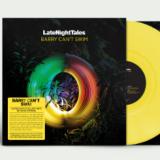
Barry Can’t Swim - Late Night Tales: Barry Can’t Swim (2x12")
 
19
disponibile anche

Black Vinyl[24,58 €]

Yellow Vinyl[25,84 €]


In the last two years, Barry Can’t Swim has released two albums – When Will We Land? and Loner. The debut was nominated for a Mercury Music Prize, winning 2024’s Best Dance Act on BBC Radio 1 and being nominated for Best Dance Act at the BRIT Awards in the same year. The latest album, 2025’s Loner, hit the top ten in the UK charts and was number one in the dance charts. This summer, Barry Can’t Swim cemented his position as one of the most singular new voices in electronic music with a gangbusting performance as a headliner at All Points East in London’s Victoria Park, building on his back-to-back performance with Bonobo at Coachella in 2024. Barry’s Late Night Tales mix brings together disparate styles and forms them into a coherent narrative. The powerful house tracks, like Lance DeSardi’s ‘Power of Suggestion’ and Daniel Avery’s remix of Factory Floor, intertwine with the abstract grooves of Freddie Da Stupid or Ronald Langestraat’s leftfield reading of Boz Scaggs’ ’70s smash ‘Lowdown’. There are exclusive tracks from Barry Can’t Swim himself (in the form of new single ‘Chala’ and an exclusive edit of Superpitcher’s ‘Yves’) and from friends and contemporaries, like Ninja Tune labelmate O’Flynn. Leaving aside the obvious quality of the mix, with its serpentine twists and dramatic turns, you can tell Josh is a fan of this series by bringing in his own personal poet, the brilliant Seamus, for the spoken word section right at the end. He’s a one-man Late Night Tales programmer.

In Stock

Disponibile in Stock e pronto per la spedizione

23,49
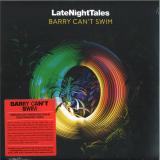
Barry Can’t Swim - Late Night Tales: Barry Can’t Swim (2x12")
 
19
disponibile anche

Black Vinyl[24,58 €]

Yellow Vinyl, Defektes Cover[23,49 €]


In the last two years, Barry Can’t Swim has released two albums – When Will We Land? and Loner. The debut was nominated for a Mercury Music Prize, winning 2024’s Best Dance Act on BBC Radio 1 and being nominated for Best Dance Act at the BRIT Awards in the same year. The latest album, 2025’s Loner, hit the top ten in the UK charts and was number one in the dance charts. This summer, Barry Can’t Swim cemented his position as one of the most singular new voices in electronic music with a gangbusting performance as a headliner at All Points East in London’s Victoria Park, building on his back-to-back performance with Bonobo at Coachella in 2024. Barry’s Late Night Tales mix brings together disparate styles and forms them into a coherent narrative. The powerful house tracks, like Lance DeSardi’s ‘Power of Suggestion’ and Daniel Avery’s remix of Factory Floor, intertwine with the abstract grooves of Freddie Da Stupid or Ronald Langestraat’s leftfield reading of Boz Scaggs’ ’70s smash ‘Lowdown’. There are exclusive tracks from Barry Can’t Swim himself (in the form of new single ‘Chala’ and an exclusive edit of Superpitcher’s ‘Yves’) and from friends and contemporaries, like Ninja Tune labelmate O’Flynn. Leaving aside the obvious quality of the mix, with its serpentine twists and dramatic turns, you can tell Josh is a fan of this series by bringing in his own personal poet, the brilliant Seamus, for the spoken word section right at the end. He’s a one-man Late Night Tales programmer.

In Stock

Disponibile in Stock e pronto per la spedizione

25,84
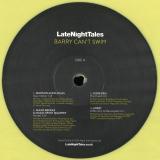
Barry Can’t Swim - Late Night Tales: Barry Can’t Swim (2x12")
  • A1: Jackson Mico Milas - Sea, Interior
  • A2: Majid Bekkas & Magic Spirit Quartet - Annabi
  • A3: Jesse Bru - The Coast
  • A4: Loket - Afternoon At Barenquell
  • B1: Superpitcher - Yves (Exclusive Lnt Edit)
  • B2: Scott Orr - Scott B3 Barry Can't Swim - Sometimes I Feel So Alone
  • B4: Marigold Sun - Here Lies Love
  • B5: Barry Can't Swim - Chala (My Soul Is On A Loop)
  • B6: Freddy Da Stupid - Back To Pangea Part Ii (Jazzapella Version)
  • C1: Factory Floor - How You Say(Daniel Avery Remix)
  • C2: Ronald Langestraat - Lowdown
  • C3: Lance Desardi - The Power Of Suggestion
  • D1: O'flynn - Kola
  • D2: Accelera Deck - This Bliss
  • D3: Pépe - Goma (A-Mix)
  • D4: This Mortal Coil - The Lacemaker
  • D5: St Francis Hotel - Dawn
  • D6: Barry Can't Swim - Ferdinand Magellan (Exclusive Felt Cover Version)
  • D7: Seamus - Ultrasound (Exclusive Lnt Spoken Word Track)
disponibile anche

Yellow Vinyl[25,84 €]

Yellow Vinyl, Defektes Cover[23,49 €]


In the last two years, Barry Can’t Swim has released two albums – When Will We Land? and Loner. The debut was nominated for a Mercury Music Prize, winning 2024’s Best Dance Act on BBC Radio 1 and being nominated for Best Dance Act at the BRIT Awards in the same year. The latest album, 2025’s Loner, hit the top ten in the UK charts and was number one in the dance charts. This summer, Barry Can’t Swim cemented his position as one of the most singular new voices in electronic music with a gangbusting performance as a headliner at All Points East in London’s Victoria Park, building on his back-to-back performance with Bonobo at Coachella in 2024. Barry’s Late Night Tales mix brings together disparate styles and forms them into a coherent narrative. The powerful house tracks, like Lance DeSardi’s ‘Power of Suggestion’ and Daniel Avery’s remix of Factory Floor, intertwine with the abstract grooves of Freddie Da Stupid or Ronald Langestraat’s leftfield reading of Boz Scaggs’ ’70s smash ‘Lowdown’. There are exclusive tracks from Barry Can’t Swim himself (in the form of new single ‘Chala’ and an exclusive edit of Superpitcher’s ‘Yves’) and from friends and contemporaries, like Ninja Tune labelmate O’Flynn. Leaving aside the obvious quality of the mix, with its serpentine twists and dramatic turns, you can tell Josh is a fan of this series by bringing in his own personal poet, the brilliant Seamus, for the spoken word section right at the end. He’s a one-man Late Night Tales programmer.

In Stock

Disponibile in Stock e pronto per la spedizione

24,58
LINTD - Funeral Rites on Planet Saturn

FUMU christens the promising new label Return To Zero (RTZ) with »Funeral Rites on Planet Saturn«, the surrendering sophomore album from Nigerian artist, self-described »negro-producer«, hedonist, and iconoclast LINTD. With production collaboration from Porter Brook and features from Samrai (Swing Ting), Porter Brook, Sam Scott Francis (GOMID), Rizmi, and Imani Jendai.

LINTD’s work emerges as a call and response between the tender, dynamic sounds of Black music across history and the surreal reality of contemporary, vulnerable Black life – a haunting dialogue. These themes are catalysed in the Black Impossible LP Trilogy, reclaiming Black utopia through sound technologies via »Smooch Soundsystem Live at The White Hotel« for Second Born (Kop-Z, Porter Brook), and »DOGTOOTH. And Other Such Tales of the Macabre« on The White Hotel’s HEAD II outlet.

While earlier works engaged with the mania, joy, and paranoia of this impossible experience, »Funeral Rites on Planet Saturn« arrives at a soulful conclusion, allowing grief to tell a truer story. In the vein of Sun Ra, Alice Coltrane, and Octavia Butler, LINTD introduces the speculative planet Saturn as a site where impossible Black being across the world can come and rest: a site for liberation and emancipation.

»This one is an act of care towards myself, and hopefully others like me. I have proven everything I want to prove this year; this one is my elixir from all the lonely grief, a place of rest.«

pre-ordina ora20.03.2026

dovrebbe essere pubblicato su 20.03.2026

28,15
Various - Wizzz! French Psychorama Volume 5 (67-75)

The journey through French-speaking pop archives continues with this fifth volume, packed with fuzz, gimmicks, and dissent. Far from the charts, the selected tracks display a great creative freedom, often backed by corrosive humor. Welcome to the surprising, kaleidoscopic, and colorful world of the late sixties and early seventies, Wizzz!
Born in Montauban, Robert Pico stumbled into music by chance when he met René Vaneste, then artistic director at Pathé-Marconi. René brought him to Paris to record his first 45 RPM EP in 1964. A year later, Pierre Perret introduced him to Vogue, where he recorded his second album with Claude Nougaro’s orchestra. Sylvie Vartan then introduced him to RCA, where he recorded four singles, including the astonishing "Chien Fidèle," a track backed by a hair-rising fuzz guitar. Alongside his solo career, he also composed for other artists like Alain Delon (the song was recorded but remains unreleased), Magali Noël, Bourvil, and Georges Guétary. In the Paris of the sixties, he mingled with Mireille Darc, Elsa Martinelli, Marie Laforêt, France Gall, Françoise Hardy, Petula Clark, Régine, Dani, Serge Gainsbourg, Joe Dassin, Franck Fernandel, Charles Level, and Roland Vincent. Despite his efforts and winning a Grand Prix Sacem for his final record, Robert Pico didn’t achieve the expected success in show business and decided to leave Paris and return to the Southwest, where he devoted himself to writing. He is the author of 23 books (including Delon et Compagnie, Jean-Marc Savary Editions 2025, a memoir about his youth and his many encounters). Today, he is relieved to never have become a celebrity and devotes himself to his work with passion.
In 1969, the Franco-Italian movie Erotissimo was released, directed by Gérard Pirès (who later directed Taxi in 1998, written and produced by Luc Besson). This pop comedy features Annie Girardot, Jean Yanne, Francis Blanche, Serge Gainsbourg, Nicole Croisille, Jacques Martin, and Patrick Topaloff. The soundtrack was written by Michel Polnareff and William Sheller, with lyrics by Jean-Lou Dabadie. "La Femme Faux-cils," performed by Annie Girardot. It recounts the feelings of a rich CEO's wife who seeks to develop her sex appeal under the influence of advertisement and magazines. Groovy, sparkling and light, this track, with ITS lush arrangements humorously critiques consumer society and feminine beauty standards.
“Je suis l’Etat” (1967) is the flagship track of the first EP by singer-songwriter Spauv Georges, aka Georges Larriaga, better known as Jim Larriaga (1941-2022). Born into a family of bakers, the young man was initially planning to become a hairdresser when he discovered English-speaking music through Elvis Presley and the Beatles. After this revelation, he decided he would become a songwriter and gave himself five years to succeed. He recorded his first two EP’s independently for RCA under the pseudonym Spauv Georges; meaning “that poor George”, a nickname given to him by the mother of her friend Jean-Pierre Prévotat (future drummer of the Players, Triangle, or Johnny Hallyday). Portraying a depressed and eccentric young man, Spauv Georges created corrosive and amusing songs that didn’t reach a wide audience, despite a TV appearance with Jean-Christophe Averty.
Supported by his loyal friend and fellow songwriter Jean-Max Rivière, Georges Larriaga met the future singer Carlos in the early '70s, then Sylvie Vartan’s assistant. He wrote songs for Carlos, including the popular "La vie est belle," "Y’a des indiens partout," and "La cantine", which went onto become a huge hit in 1972. He also composed for Claude François (“Anne-Marie”, 1971), Charlotte Julian (“Fleur de province”, 1972), helped launch child singer Roméo (who sold 4 million records), and later wrote the hit "Pas besoin d’éducation sexuelle" (1975) for the young Julie Bataille. In 1971, Jim recorded an album for Disc'Az: “L’univers étrange et fou de Jim Larriaga”, which featured pop gems like “La maison de mon père”.
The story of the song "Zoé" began when Pierre Dorsay, artistic director at Vogue Records, asked Swiss singer and musician Pierre Alain to write a song for a new female singer. The inspiration came when he realized that Zoé (the artist's name) was also the name of France's first atomic battery, created in 1948, which consisted of uranium oxide immersed in heavy water! The lyrics reflect a bubbling energy that must be handled with caution, while the instrumentation echoes this atomic theme, notably with the use of a theremin.
Zoé’s career lasted only as long as a single 45 RPM, but it seems Christine Fontane was the vocalist behind this pseudonym, who is known for several EPs, a good "popcorn" album in 1964, and a handful of children’s singles in the '70s. Regardless, the photograph on the cover is of a different girl entirely.
Later, Pierre Alain continued his career, writing songs for himself, Marie Laforêt, Danièle Licari, Alice Dona, Arlette Zola (3rd place in Eurovision 1982), and achieving multiple gold and platinum records in Canada. Also an inventor with several patents, president of the Romande Academy, and head of the French Alliance in Geneva, he now composes atonal music, books, and poetry. Moreover, he is also the host of "Les Mardis de Pierre Alain" at "Le P'tit Music'Hohl" in Geneva.
Filled with oriental choruses and fuzz guitar, "Fou" is from Jacques Da Sylva's only EP released by Vogue in 1967. Despite the quality of this recording, all traces of this singer disappear after this first effort.
Valentin is a baroque pop singer born in Belgium. He is the songwriter and composer of most of the tracks on his three singles released in the late 60s in Canada. A legend says that he reincarnated himself as Jacky Valentin during the 1970s for a rock'n'roll revival career in Belgium, but his older brother sadly debunked this story. Valentin's first two singles were arranged by Claude Rogen, a Parisian session pianist who had come to Canada to promote the song “Mister A Gogo”, a cover of David Bowie’s “Laughing Gnome”, adapted by singer Delphine, his wife at the time. Far from his usual network, Claude Rogen arranged music for Polydor, including the arrangements for “Je suis un vagabond” in 1969, a jerk tune with string arrangements and a furious optimism.
Jacques Malia wrote, composed, and recorded his only 45 EP for Festival in 1966. “Histoire de gitan” is an incredible beat track with bohemian scat that tells the story of a gypsy musician who came to Paris to make it in the Music-Hall, to no avail. The hero of the song and its author probably shared a similar fate, as Jacques Malia faded into anonymity after this remarkable attempt.
Bernard Jamet recorded two EPs for Barclay in the late sixties and co-wrote several songs with Christine Pilzer, Pascal Danel, and prolific songwriters Michel Delancray and Mya Simile. The track “Raison Légale” (1968), his masterpiece, immerses the listener in a courtroom right when a murderer is being judged, with jerk rhythm and free arrangements. A unique, paranoid, judicial, and psychedelic oddity.
Jean-Pierre Lebrot-Millers started his career in show business in 1967 as a singer and songwriter for the Philips label. After three singles, he wrote several songs of a new kind with his friend Pierre Halioche, in the midst of the sexual liberation movement and the democratization of drugs. With provocative lyrics, “Les filles du hasard” and “Barbara au Chapeau Rose” were released on a Philips singles in 1968. The character of Barbara was inspired by a queen of Parisian nightlife during the psychedelic years: model Charlotte Martin, who dated Eric Clapton from 1965 to 1968, then Jimmy Page from 1970 to 1983. Jean-Claude Petit’s arrangements, with a table-filled intro, soul brass, and Hendrixian guitar, emphasize the flamboyance of a hedonistic and sexy character, whose dog is named Junkie because “Junkie est un nom exquis”! The track was recorded live in three takes with a full orchestra.
Upon its release, the record was censored by Europe 1 and RTL due to its references to drug use. Jean-Pierre Lebrot was then banned from the airwaves and later dismissed by his record label. He changed his artist name to Jean-Pierre Millers, while his companion Pierre Halioche became D. Dolby for a new dreamy composition, “Chilla”, which Jean-Pierre produced himself with arrangements by Jean Musy. Once again, the song was immediately censored everywhere. After this setback, he decided to stop singing and started taking on odd jobs to support his Swedish wife and their son until the day he met Jean-Pierre Martin, then production manager at Decca, who had worked with Manu Dibango. Martin offered Jean-Pierre Lebrot-Millers, then employed at Rank Xerox, the position of artistic director at Decca. He accepted and became, a year later, promotion director (radio, press, TV). He worked on Julio Iglesias’s first album for Decca, which became a massive hit and allowed him to meet Claude Carrère. The latter asked him to write new songs and find their performers, much like a “talent scout.” It’s through him that Jean-Pierre discovered Julie Pietri and Corinne Hermès. He composed “Ma Pompadour” for Ringo, Sheila’s husband, and took the microphone again for the syncope hit “Rendez-Vous” in 1982.
That same year, Jean-Pierre Lebrot-Millers tried to release a track for which he had heavily gone into debt: “Si la vie est un cadeau”. Having recorded it in London, he presented it to numerous professionals, all of whom refused to get involved. The same thing happened with Antenne 2 and the Sacem when he proposed the song as France’s entry for Eurovision. He then met Haïm Saban, who was producing cartoon soundtracks and had just launched the Goldorak theme song. Saban, having listened to the song, declared it had the potential to become a hit. He sent Jean-Pierre and Corinne Hermès to meet the CEO of the Luxembourg radio and television network. The latter received them, asked to hear a verse and chorus a cappella in his office, and immediately hired them to represent Luxembourg at Eurovision 1983. They reworked the arrangements and recorded a new version with Haïm Saban as co-producer. The song ended up winning Eurovision 1983, a great comeback for our hero. He continued producing and hung out with the band Nacash in Belgium when a couple came to introduce their daughter for an impromptu audition in a hotel room. The girl sang “Les démons de minuit” while dancing to a radio cassette. Impressed, he had her take singing lessons for a year and composed a song for her (for which he had the melody and title, but no lyrics). This required him to go on the hunt for a lyricist, who ended up being Guy Carlier. They recorded the song, which was initially a ballad, at Bernard Estardy’s CBE studio, and gave the singer a new name: Melody. They showed the song around their industry network without success. Later, Estardy called Jean-Pierre to suggest changing the rhythm and making it pop-rock. Orlando, Dalida’s brother, liked the result and decided to co-produce the track. “Y’a pas que les grands qui rêvent » became a classic hit. The song has since been covered by Juliette Armanet (as a ballad, like the original) and Valentina.

Born into an aristocratic Breton family, Hervé Mettais-Cartier worked as a DJ at Queen Kiss, a nightclub in Poitiers, where he formed the band Les Concentrés with Michel (an actor) and Christian (a radio technician). Together, they created a repertoire of whimsical songs (“Ma bique est morte”, “J’suis un salaud”, “Fils de dégénéré”...) that they performed on stage dressed in white (in homage to “concentrated milk”). They performed at Bliboquet and Olympia in 1968 for the 10th edition of the “Relais de la chanson Française” organized by L’Humanité-Dimanche and Nous les Garçons et les Filles, sponsored by Pepsi Cola. Winners in the author-composer category, alongside Danish singer Dorte, their visibility allowed them to record a 45, and appear on television in Jean-Christophe Averty’s show. The A-side of the disc features Bruno le ravageur, a casatchok dedicated to Bruno Caquatrix, the director of Olympia, nicknamed in the song “Coq Atroce” or “croque-actrices”. The B-side is dedicated to “Fils de dégénéré”, a quirky tribute to Hervé's aristocratic roots, mixing absurdity with sophisticated vocal harmonies.
After Les Concentrés, Hervé Mettais-Cartier formed the duo La Paire et sa Bêtise with his friend Olivier Robert. They performed in Parisian cabarets and toured with Pierre Vassiliu. In the late 1970s, Hervé began a solo career. He recorded two albums for the Motors label in 1978 and 1979, which did not achieve their anticipated success due to lack of promotion. In 1980, he met Bernadette, with whom he started a family and created a “Chansons à voir” (songs to see) show that he performed until his death at the end of 2024.

Publicité comes from the final EP by the Missiles (Ducretet Thomson, 1966), a disc that also includes “La (nouvelle) guerre de cent ans”, featured on Volume 4 of our Wizzz! series. Please refer to the booklet for the story of the band.

“He’s 1.82 meters tall, 28 years old, weighs 135 kg, is black and Belgian”: this is the description of singer Hegesippe on the back of his sole single (Decca, 1967). He appears on the album cover wearing a Greek toga, like a hippie gag – we are at the end of the year 1967. In “Le crédo d’Hegesippe”, this former bodyguard of Antoine and the Charlots plays the delightful card of the thick brute converted to Flower-Power and non-violence, with arrangements by Jean-Daniel Mercier, aka Paul Mille.
“Ethéro-disco” was released on a promotional record for clients of the Maréchal company (Liège, Belgium) for the New Year 1979. Over a funky rhythm, celebrity impersonations (Brigitte Bardot, Jacques Dutronc, Fernandel…) deliver an enigmatic text about pharmaceutical products like ether, bismuth, and aspartate. The track was composed by Dan Sarravah (responsible for Joanna's “Hold-up inusité” featured on Wizzz! Volume 3) and Tony Talado, who was also a singer (one 45 in 1967), songwriter (with over a dozen credits between 1964 and 1985 in various styles from surf music to disco), author (Devenez Végétarien, Dricot Editions, 1985), ad designer, and psychologist.

Décollez-les is on the A-side of Mamlouk's only single, a pseudonym for Marsel Hurten, who is known for his work on several EPs in the late sixties, as well as composing music for Hervé Vilard’s “Capri, c’est fini”, Claude Channes' “La Haine”, Annie Philippe’s “On m’a toujours dit”, and Nancy Holloway’s “Panne de Cœur”.
This strange song, with Afrobeat horns and absurd dialogues between a chef and his kitchen staff, is the result of a collaboration between Marsel Hurten and one of his neighbors, a photographer from Pavillon-sous-Bois (93), where the musician settled after returning from the Algerian War. A music video was shot to promote the record.
Marsel Hurten was born in Tourcoing (59) into a musical family. At a young age, he joined the brass band founded by his grandfather, playing the piston before studying trumpet at the conservatory, as well as teaching himself how to play the guitar. As an orchestra musician, he toured in France, Belgium, Germany, and England. He released a series of solo 45’s between 1965 and 1968 for the DMF and Az labels before stopping recording to focus on working for other artists (Gilles Olivier, Noëlle Cordier…).
“L’amour nu” (Vogue, 1971) is the work of the short-lived Belgian band Mozaïque. The track, written by singer Jacques Albin, closely resembles another of his compositions, “Carré Blanc”, which he recorded in 1969 for Disc’AZ.
Represented by the Lumi Son micro-label based in Marignane (Côte d'Azur), Jean-Marc Garrigues released two 45 RPMs in the late sixties, defending the French jerk sound. The song “Je dis Non” is a short, joyful ode to youth, pop music, and rebellion.
Songwriter and performer Jacques Penuel released three singles. The first one, “Astronef 328” (Fontana, 1969), features a dizzying series of chords punctuated by sound effects, a sci-fi story, and arrangements by Jean-Claude Vannier.

We would like to sincerely thank Pierre Alain, Moon Blaha, Marsel Hurten, Bastien Larriaga, Jean-Pierre Lebrot-Millers, Bernadette Mettais-Cartier, Robert Pico, Olivier Robert, Claude Rogen, Micky Segura.

non in magazzino

Ordina ora e ordineremo l'articolo per te presso il nostro fornitore.

23,11

Last In: 76 days ago
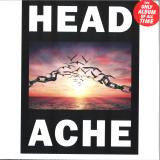
HEADACHE (VEGYN) - THANK YOU FOR ALMOST EVERYTHING LP 2x12"

Thank You For Almost Everything is the sophomore album for Headache, a collaboration between writer and poet Francis Hornsby Clark and music-producer Joseph Thornalley aka Vegyn. This new album follows on the surprise underground success of their debut: The Head Hurts But The Heart Knows The Truth (released 31 May 2023) releasing on Vegyn's own PLZ Make It Ruins label. The debut record has streamed over 19.4 million times on Spotify alone and sold over 8,000 physical copies worldwide. The debut gained its popularity entirely organically with zero marketing or PR spend. Since its release, Headache has built a dedicated global fanbase, with several fans even going so far as to get lyrics or the project's logo tattooed on themselves. Thank You For Almost Everything continues the original's distinct style of Trip-Hop / Downtempo Electronica but combining with its own unique (and now imitated) AI-voiced spoken word. For this new album, Headache steps away from the hum-drum of Blighty and instead focuses his gaze to sunnier shores. Recalling personal histories of ruffled hair and school cafeterias, ancient unsolved Albionic riddles, Rome's changing seasons and its poignant graffiti, arguments with girlfriends at luxury hotel beachfront restaurants, and what it truly feels like to be alive in this inscrutable but beautiful world. The project features a further collaboration with artist Cali Thornhill DeWitt who returns to design the packaging and cover for this new album. This double 12" vinyl release, like the first, includes the instrumental versions exclusive to the vinyl version. The album, mixed and mastered by Margo Broom at RAK Studios, will use a similar surprise drop strategy as with the first album. "Follow up to the 2023 debut that gained its popularity entirely organically with zero marketing or PR spend. "Total Streams Since Release (31 May 2023): 19,413,173 (Spotify alone) "Previous vinyl album sold over 8,000 physical copies worldwide. "2nd Disc contains instrumental versions exclusive to vinyl format

non in magazzino

Ordina ora e ordineremo l'articolo per te presso il nostro fornitore.

32,35

Last In: 3 months ago
Francis Lai - Play It Like Francis
  • A1: Robert & Robert (Mother Remix By Play Paul)
  • A2: London Airport (Remix Xavier Jamaux)
  • A3: Dans La Poussière Du Soleil / Un Amour De Soleil (Remix Kid Loco)
  • A4: L’amour D’aimer (Remix Marc Collin – Nouvelle Vague)
  • A5: L’aventure C’est L’aventure (Remix Alex Revox Jr)
  • B1: Child Under A Leaf (Remix Vicarious Bliss)
  • B2: Saint-Tropez (Remix Jazzy By Alex Revox Jr)
  • B3: Retour De Lourdes (Remix Dj Cam)
  • B4: Concerto Pour La Fin D’un Amour (Remix Play Paul)
  • B5: Plus Fort Que Nous (L’amour Est) {Remix Philippe Cohen Solal (Gotan Project)
  • B6: Young Freedom (Remix The Breathin’ Canyon)

Thierry Wolf und Frédéric Lai (Sohn des Komponisten) wählten rund zehn DJs aus, darunter bekannte Vertreter der French Touch-Szene, die für Sammlungen wie Hôtel Costes bekannt sind. Diese Künstler wurden mit der Aufgabe betraut, die Werke von Francis Lai neu zu interpretieren. Die DJs, die oft weniger bekannte Stücke auswählten, überraschen mit persönlichen Entscheidungen. So wählte Play Paul (Bruder von Guy-Manuel von Daft Punk) „Robert & Robert“, da es das letzte Stück war, das er mit seinem Vater hörte. Auch Philippe Cohen Solal von Gotan Project wählte „L’Amour est bien plus fort que nous“ als Epigraph auf dem Grabstein seiner Eltern.

Dieses Projekt verbindet musikalisches Erbe, Emotion und Innovation. Durch die Remixe erhält die Musik von Francis Lai eine frische Perspektive, während gleichzeitig seinem Pioniergeist gehuldigt wird.

pre-ordina ora17.10.2025

dovrebbe essere pubblicato su 17.10.2025

23,32
Kumio Kurachi - Open Today LP

Kumio Kurachi

Open Today LP

12inchBIS013LP
Bison
06.12.2024
  • 1: Kitaro Rides A Boat
  • 2: Daily Hotel
  • 3: Slowly Walking
  • 4: Piggyback
  • 5: Castle Ruins
  • 6: In The Can
  • 7: Came To Sell Water Meter By Measure
  • 8: Eiji Mitooka’s Arrangements
  • 9: Cheap Flat
  • 10: Year One And Public

Kumio Kurachi is a Japanese singer-songwriter who has been active since the 1980's.

This is his 11th solo album and only the second to be released outside of Japan following ‘Sound of Turning Earth’ (2018) on bison. Though his songs are written and performed primarily on guitar, “Open Today” is a return to Kurachi’s full, multi-instrumental recording style - featuring drums, bass, strings, keys and Kurachi’s rich, distinctive vocals in multiple voicings. Incredibly, all instrumental performances and arrangements were performed and recorded by Kurachi himself - marking a brilliant return to the fully fleshed out visionary world we fell in love with on Supermarket Chitose (Enban, 2006). The super fine detail and dense landscapes of ‘Open Today’ should come as no surprise really - Kurachi is an illustrator by trade and it bleeds right through to his music. Even to the non-native speaker Kurachi’s vocals hold centre stage - at times enormous and thundering over urgent guitar and toms, then switching to softly spoken words amongst keys. Frequently Kurachi multiplies, whether multitracking himself or summoning voices for the characters he writes from sightings on train platforms or supermarkets. His lyrics - translated to English for both formats - are more like poetry, and though written about the mundane they quickly become surreal, bringing the quality of dreams into the everyday. The hours spent on buses, trains or walking home towards a cheap flat - familiar to us all - are catalysts for microcosms of detail.

Again, we shouldn’t be surprised - Kurachi is well known in Japan for winning the national championship of NHK's "Poetry Boxing" in 2002, which also might explain his amazing Discogs photo. Poet, illustrator, multi-instrumentalist - Kurachi is thought of by many as a genius. He’s worked with Jim O’Rourke, Tori Kudo, Eiko Ishibashi and Taku Unami (who did the mastering on this LP). There are lines to be drawn between Kurachi and Kazuki Tomokawa or Kan Mikami, but also Francis Plagne and Fairport Convention.

Ultimately though there is nothing else like it - it’s a brand of strange songcraft that’s totally captivating.

pre-ordina ora06.12.2024

dovrebbe essere pubblicato su 06.12.2024

26,01
Film School - Field LP

Film School

Field LP

12inchFLTLP99
Felte
27.09.2024

Black Vinyl. In Rumi's poem A Great Wagon he writes of a place of total acceptance. "Out beyond ideas of wrongdoing and rightdoing, there is a field. I'll meet you there," It is a boundless, liminal space where we can release the judgments we make and carry of ourselves, and the comparisons to others. When we think of this field, there is a sense of tranquility that only comes when we are undisturbed by the shadow self and see existence as neither bright nor dim, white nor black. But as lead singer Greg Bertens explains, arriving there is a whole different story. "This is a poem I've returned to over the years, and I love the idea of this place, but getting there is life's journey." Bertens adds "I think the longing for and elusiveness of this field is a recurring theme in our music." Field is enveloped by themes of regret, disconnection and frustration but with the space to understand that these feelings are a natural part of the struggle between reconciling the inner and outer self. The Los Angeles/San Francisco-based group have been indie shoegaze stalwarts since their formation in 2001. After two decades and a handful of line-up changes, their extensive discography presents a dynamically textural, lush psychedelic rock that has featured guest appearances by members of Pavement, My Bloody Valentine, and Snow Patrol, among others. 2021's LP We Weren't Here (Sonic Ritual) was hailed for its dense instrumental blanket, where unrelenting hi-hats and heavy kicks exist alongside dreamy drone guitar. This propulsive nature permeates Field, as members Bertens, Noël Brydebell (vocals), Nyles Lannon (guitar), Jason Ruck (synths), Justin LaBo (bass), and Adam Wade (drums) produce a kaleidoscopic sonic landscape. Patient, sprawling instrumentation builds a foundation in which Bertens' themes of endurance, perseverance and clarity can bloom with a considered poise. As a lyricist who writes in response to the instrumental arrangements, rather than a focus on a specific theme or person, Field is a testament to Film School's ability to create in the moment, and to showcase the magic that stems from when we are truly present. With over two decades in the industry, Field cements Film School as a distinct, dominant force in the shoegaze scene. Soaked in an emotionally open, imaginative atmosphere, the album is both singular and expansive, and leaves the door open for a constantly evolving interpretation. Film School have never confined themselves to the rigidity of specifics, and it's on Field that they urge us to look beyond the binary of certainty, and to take a second look.

pre-ordina ora27.09.2024

dovrebbe essere pubblicato su 27.09.2024

22,27
Chime School - The Boy Who Ran the Paisley Hotel

Guided by San Francisco musician Andy Pastalaniec, Chime School pays homage to the formative jangle of The Byrds by way of early Primal Scream and The Springfields; the production and pop sensibility of Biff Bang Pow! and The Razorcuts; and the spirit of great singles labels like Creation, Postcard and Sarah. Although it would have fit with any of those labels, Chime School found a natural home with Bay Area indie stalwart Slumberland Records, releasing a self-titled debut in 2021, and a follow-up 7” single in 2023, to broad acclaim.

The anticipated follow-up LP "The Boy Who Ran The Paisley Hotel" is as stellar as we could have hoped for — deeper, richer and evolved in every way. While still joyfully packed with janglepop gems, "Paisley Hotel" takes a turn toward the winsome melancholy of groups like East Village, The Go-Betweens, and The Loft, and represents a leap forward in production, composition and arrangement. "The first record was a bit manic. I was trying to stuff so many years of influences into thirty brisk minutes. With 'Paisley Hotel' I chose a more condensed palette, and I feel I'm getting closer to the sonic vision I had from the beginning."

pre-ordina ora23.08.2024

dovrebbe essere pubblicato su 23.08.2024

27,94
Lucas Peire & Frank Montasell - Berlin LP 2x12"

"Berlin is the Spanish TV series created by Álex Pina and Esther Martínez Lobato for Netflix. It serves as a prequel to Money Heist/La Casa de Papel, focusing on Andrés de Fonollosa, aka “Berlin”. The story goes back his golden age before the events of Money Heist, where Berlin and a masterful gang gather in Paris to plan one of his most ambitious robberies ever. The series features an original soundtrack by Lucas Peire and Frank Montasell. The album also contains the main theme “Bullets and Flowers” performed by Francis White and Nikki, and tracks by Samantha Siqueiros, Pipo Romero, Pedro Alonso, Tristan Ulloa, GOA, and POL 3.14. The 2LP Berlin is available as a limited edition of 500 copies on turquoise coloured vinyl and includes an insert. "

Berlin by Lucas Peire & Frank Montasell, released 26 April 2024, includes the following tracks: "Dernière Chance", "Racing Point", "No Me Mires (by POL 3.14)", "La Banda" and more.

This version of Berlin comes as a 2xLP. This release comes with (a) Insert(s).

The vinyl is pressed as a turquoise disc. Another vinyl is pressed as a turquoise disc.

pre-ordina ora26.04.2024

dovrebbe essere pubblicato su 26.04.2024

47,48
OTIS REDDING - The Dock Of The Bay LP 2x12"

Analogue Productions (Atlantic 75 Series) Celebrating the 75th Anniversary of Atlantic Records! 180-gram 45 RPM double LP Mastered by Bernie Grundman from the original analog tape Contains Otis Redding's posthumous hit "Sittin' On the Dock Of the Bay" Appeared on Rolling Stone's 500 Greatest Albums of All Time, rated 161/500! Pressed at Quality Record Pressings Gatefold old-style "tip-on" jacket by Stoughton Printing Hybrid Mono SACD Mastered directly from the original master tape by Bernie Grundman The guts of the story are this: While on tour with the Bar-Kays in August 1967, Otis Redding's popularity was rising, and he was inundated with fans at his hotel in downtown San Francisco. Looking for a retreat, he accepted rock concert impresario Bill Graham's offer to stay at his houseboat at Waldo Point in Sausalito, California. Inspired, Redding started writing the lines, "Sittin' in the morning sun, I'll be sittin' when the evening comes" and the first verse of a song, under the abbreviated title "Dock of the Bay." He had completed his famed performance at the Monterey Pop Festival just weeks earlier. While touring in support of the albums King & Queen (a collaboration with female vocalist Carla Thomas) and Live in Europe, he continued to scribble lines of the song on napkins and hotel paper. In November of that year, he joined producer and esteemed soul guitarist Steve Cropper at the Stax recording studio in Memphis, Tennessee, to record the song. Cropper remembers: "Otis was one of those the kind of guy who had 100 ideas. ... He had been in San Francisco doing The Fillmore. And the story that I got he was renting boathouse or stayed at a boathouse or something and that's where he got the idea of the ships coming in the bay there. And that's about all he had: 'I watch the ships come in and I watch them roll away again.' I just took that... and I finished the lyrics. If you listen to the songs I collaborated with Otis, most of the lyrics are about him. ... Otis didn't really write about himself but I did. Songs like 'Mr. Pitiful,' 'Fa-Fa-Fa-Fa-Fa (Sad Song)'; they were about Otis and Otis' life. 'Dock of the Bay' was exactly that: 'I left my home in Georgia, headed for the Frisco Bay' was all about him going out to San Francisco to perform." Redding and Cropper completed the song in Memphis on Dec 7, 1967 with tragedy, unknowingly, looming. Just two days later Redding lost his life on a routine commute to a performance when the small plane he was in crashed. The other victims of the disaster were four members of the Bar-Kays — guitarist Jimmy King, tenor saxophonist Phalon Jones, organist Ronnie Caldwell, and drummer Carl Cunningham; their valet, Matthew Kelly and pilot Fraser. Cropper and bassist Donald "Duck" Dunn completed the music and melancholic lyrics of "(Sittin' On) The Dock of the Bay' which was taken from the sessions — Redding's final recorded work. Cropper added the distinct sound of seagulls and waves crashing to the background. This is what Redding had wanted to hear on the track according to Cropper who remembered Redding recalling the sounds he heard when he wrote the song on the houseboat. One of the most influential soul singers of the 1960s, Redding exemplified to many listeners the power of Southern "deep soul" — hoarse, gritty vocals, brassy arrangements, and an emotional way with both party tunes and aching ballads. At the time of his tragic death he was 26. ‘(Sittin’ On) The Dock of the Bay’ was released just a month following Redding’s death and became his only ever single to reach number one on the Billboard Hot 100 in January 1968. The album, which shared the song's title, became his largest-selling to date, peaking at No. 4 on the pop albums chart. "Dock of the Bay" was popular in countries across the world and became Redding's most successful record, selling more than 4 million copies worldwide. The song went on to win two Grammy Awards: Best R&B Song and Best Male R&B Vocal Performance. With the album, Redding confirmed himself as a talent lost far too soon. All the hallmarks of a top-notch Analogue Productions reissue are here for you to savor: Mastered directly from the original master tape by Bernie Grundman and cut at 45 RPM. Pressed on 180-gram vinyl at Quality Record Pressings, and housed in tip-on old style gatefold double pocket jackets with film lamination by Stoughton Printing.

pre-ordina ora01.02.2024

dovrebbe essere pubblicato su 01.02.2024

91,56
The Still Brothers featuring Marina B - I Wanna Be With You / Sungalz

For fans of Khraungbin, El Michels Affair, Skinshape, The Shacks. Taken from the forthcoming debut EP ‘The Still Brothers’ Firm favourites with BBC 6 Music’s Steve Lamacq, Gilles Peterson, Huey Morgan and Lauren Laverne, Brooklyn’s The Still Brothers return with another double header. ‘I Wanna Be With You’ was created by The Still Brothers in New York much like their previous single ‘Wake Up’. Created in isolation, while much of the world was reeling from the effects of Covid and precautions were still in place, the basic tracks of the instrumental were laid down in a light hearted attempt to impart the joy and excitement of a live concert. The song was sent to collaborator Marina B., whose initial impulse inspired her to write the lyrics and an equally exciting melody. ‘Sungalz’ was created in the Summer of 2021 by The Still Brothers in New York. It began as a jam between Andrew and Evan which gradually evolved into a moody and relaxing piece. Marina B. contributed lyrics and a melody which evoke themes of dreaming and self-reflection. ‘I Wanna Be With You’ produced by The Still Brothers and mixed by St. Francis Hotel ‘Sungalz’ produced and mixed by The Still Brothers.

pre-ordina ora20.10.2023

dovrebbe essere pubblicato su 20.10.2023

11,35
McKowski - Notes From The Boneyard LP

McKowski is pleased to confirm details of his debut solo album: ‘Notes From The Boneyard’, a new release that arrives courtesy of the Deltasonic label.

In anticipation of the record, the Irish songwriter and multi-instrumentalist has unveiled the single “Return of Pygmy Pony”.

“Return of Pygmy Pony” is one of 10 cinematic tracks, alongside previous single “Lake”, that comprise upcoming album ‘Notes From The Boneyard’. Envisioning a fictional world known as ‘The Boneyard’, McKowski’s debut will promise a purely instrumental album of atmospheric folk and otherworldly soundscapes to capture your imagination and seep into your soul.

Utilising a unique blend of acoustic guitars, strings, analog synths, and electronic toys, Mckowski creates a haunting and evocative journey across its transient 35 minutes. Gifted with the talents of some old allies, ‘Notes From The Boneyard’ sees guest musicianship from the likes of Steve Wickham (viola), Howe Gelb (guitar), Laura Mcafadden (cello), Dave Murphy (pedal steel), with St Francis Hotel also adding further elements of atmosphere and production.

With one foot rooted in a dark woodland and the other foot stepping into unknown territory, the end result is a must-listen for fans of soundtracks, the surreal, or simply those searching for the unexpected. Like the wooden beauty of Angelo Badalementi’s ‘Straight Story’ mixed with the dark synth undertones such as Carpenter-esque Moog; it’s the ideal companion for those pensive days and long nocturnal hours.

pre-ordina ora01.10.2023

dovrebbe essere pubblicato su 01.10.2023

30,46
Film School - Field LP

Film School

Field LP

12inchFLT099LPC1
Felte
03.09.2023

In Rumi's poem A Great Wagon he writes of a place of total acceptance. "Out beyond ideas of wrongdoing and rightdoing, there is a field. I'll meet you there," It is a boundless, liminal space where we can release the judgments we make and carry of ourselves, and the comparisons to others. When we think of this field, there is a sense of tranquility that only comes when we are undisturbed by the shadow self and see existence as neither bright nor dim, white nor black. But as lead singer Greg Bertens explains, arriving there is a whole different story. "This is a poem I've returned to over the years, and I love the idea of this place, but getting there is life's journey." Bertens adds "I think the longing for and elusiveness of this field is a recurring theme in our music." Field is enveloped by themes of regret, disconnection and frustration but with the space to understand that these feelings are a natural part of the struggle between reconciling the inner and outer self. The Los Angeles/San Francisco-based group have been indie shoegaze stalwarts since their formation in 2001. After two decades and a handful of line-up changes, their extensive discography presents a dynamically textural, lush psychedelic rock that has featured guest appearances by members of Pavement, My Bloody Valentine, and Snow Patrol, among others. 2021's LP We Weren't Here was hailed for its dense instrumental blanket, where unrelenting hi-hats and heavy kicks exist alongside dreamy drone guitar. This propulsive nature permeates Field, as members Bertens, Noël Brydebell (vocals), Nyles Lannon (guitar), Jason Ruck (synths), Justin LaBo (bass), and Adam Wade (drums) produce a kaleidoscopic sonic landscape. Patient, sprawling instrumentation builds a foundation in which Bertens' themes of endurance, perseverance and clarity can bloom with a considered poise. As a lyricist who writes in response to the instrumental arrangements, rather than a focus on a specific theme or person, Field is a testament to Film School's ability to create in the moment, and to showcase the magic that stems from when we are truly present. Album opener "Tape Rewind" is a swirling rush of color, as sustained guitars, darkened bass lines and urgent, percussive swells dance alongside each other. "This is the newest of all the songs on the record and feels like a new level of heaviness for the band," Bertens explains, noting that its lyrical context of struggling to move past trauma adds to its cathartic essence. Field is bookended by heavier themes, with closer "All I'll Ever Be" taking on the perspective of those we hurt when we embrace our own toxic behaviors. Originally written to be a simple acoustic guitar and vocals song soon turned into an ethereal, effects-laden composition, with Noël's hazy lead vocals ushering in a new-found acceptance. "It's all I want / To be released / And all I can be," she laments, cementing Field's message of accepting ourselves in whatever form we find ourselves in. "Defending Ruins" is a murky relentless underworld, inspired by the freewheeling tones of Texas-based band Holy Wave. "Defending the ruins, defending remains," Bertens spits, among a richly-layered outro. "Don't You Ever" confirms Film School's ability to merge both delicate and growling instrumentation throughout the album, with the song's softly spoken section hovering above sparkling guitar. "Is This A Hotel" bends towards the electronic aspects of the band, with wailing synths accompanying a story of bitter desire. With over two decades in the industry, Field cements Film School as a distinct, dominant force in the shoegaze scene. Soaked in an emotionally open, imaginative atmosphere, the album is both singular and expansive, and leaves the door open for a constantly evolving interpretation. Film School have never confined themselves to the rigidity of specifics, and it's on Field that they urge us to look beyond the binary of certainty, and to take a second look

pre-ordina ora03.09.2023

dovrebbe essere pubblicato su 03.09.2023

28,53
Engelwood - Boardwalk Bumps (Vol 1-3) 3x12"
 
47

OVERVIEW: Engelwood, or Matt Engels, is a viral 24 year-old future funk, lo-fi, hip-hip and electronic music producer from Brooklyn, NY. Drawing on influences from producers like Flamingosis and Vanilla, as well as Japanese Funk and Soul music, Engelwood’s music could best be described as the soundtrack to your trip to the beach. The blends of funk, soul and tropical music, together, creates a unique fusion of sounds you can relax or dance to. Engelwood is also known for his productions for Dillon Francis, bbno$, Cuco, sophie meiers, Mia Gladstone, and Yung Gravy’s biggest hits such as “Knockout” and “Yung Gravity.”

pre-ordina ora05.05.2023

dovrebbe essere pubblicato su 05.05.2023

48,32
Schuttle - BH006

Schuttle

BH006

12inchBH006
Bakk Heia Records
02.05.2023

Born from the party of the same name held at Manchester’s storied White Hotel, the increasingly essential Bakk Heia label has consistently put out thrilling 12”s from co-founders schuttle and low-key cult favourit Jorg Kuning since 2019.

Stepping up for the imprint’s sixth release, schuttle brings four tripped-out cuts of contemporary dance music, showcasing his production chops across four stellar tracks, already getting an airing from Ben UFO on the Hessle Audio Rinse FM show, as well as support from Joe Delon, Kiernan Laveaux, Om Unit, K Means, Barker, Pariah & Terry Francis.

“schuttle’s latest offering begins with ‘Shadout’. Fractured celestial voices materialize from a mist of frosted percussion while a merciful kickdrum splutters above the surface, bringing with it the viscous, swampy murk. ‘Souvlaki’ follows with playful impish chatter that stumbles over the moss-covered bassline, whilst cascading snare hits tumble down abandoned wells, a gentle guiding presence through the forest.

‘Swords Dance’ is a 10-minute display of cosmic glory, where conventional momentum is abandoned in favour of complete ecstatic, unbridled chaos. After the dust settles on this fiendish bacchanalia, ‘Junkman’ creeps into the fore. Caustic mire oozes into focus, mist rising sluggishly from the reeds while an elemental pad sweeps across the terrain.”

non in magazzino

Ordina ora e ordineremo l'articolo per te presso il nostro fornitore.

12,48

Last In: 2 years ago
The Plastik Beatniks - All Those Streets I Must Find Cities For

Sounds like supergroup. Rarely have outstanding figures of such a variety of musical styles collaborated on one album to pay homage to a nearly forgotten artist, one of the few black Beatnik poets, Bob Kaufman.

"All Those Streets I Must Find Cities For" by The Plastik Beatniks is an attempt to acoustically reanimate Bob Kaufman, to return the Beat to him in a transatlantic collaboration. It is a shimmering psychedelic, at times jazzy concept album, sometimes reminiscent of Krautrock or hip hop, about a Beat-era poet who was as great as he was forgotten. It takes spoken word to a new level, as a transatlantic showcase of musical avant-gardes and a joyful "sound archaeology" of modernity, in which the tracks of the "Plastik Beatniks" meet the best voices of America.

The 12 wildly different songs and audi collages, on the transatlantically-produced album, "All the Streets I Must Find Cities For," is based on lyrics by Beat author Bob Kaufman. They were originally part of the radio play "Thank God for Beatniks," for which author Andreas Ammer ("Ammer & Einheit"), Notwist‘s Markus Acher and Micha Acher and loop maker Leo Hopfinger ("LeRoy") formed "The Plastik Beatniks." On the eastern side of the Atlantic they composed music and crafted soundscapes. On the west side of the ocean, they asked three of the most renowned singers, activists and producers in the U.S. to recite or sing Bob Kaufman's poetry.

Punk-pop icon Patti Smith immediately signed on to read Kaufman's poem "Ginsberg (For Allen)". Free jazz vocalist Moor Mother passionately performed Bob Kaufman's "War Memoir". American jazz clarinetist, composer, singer and “International Anthem” labelmate Angel Bat Dawid, a legitimate successor to Sun Ra, polyphonically read and sang such poems as "The Sun is a Negroe" and "West Coast Sound 1956" and included some clarinet solos on top. Also on the album, Bob Kaufman himself recites his previously unknown poems "Hollywood Beat", "Would You Wear My Eyes", and the "Jail Poem" "All Those Streets I Must Find Cities For". Beat chronicler Raymond Foye, who still lives at the Chelsea Hotel in New York, contributed an interview he conducted with late beatnik Allen Ginsberg about Bob Kaufman. Completing the circle was hip-hop artist Adam "DoseOne" ("13&God"), who once gave Markus Acher a well-thumbed volume of Bob Kaufman, whom he admired. He contributed some raps. Thus 12 tracks emerged, as diverse as the artists, poets and musicians who contributed to it. More than an album. An epitaph. A work for the eternity of Beat.

Regarding Bob Kaufman - of course the FBI kept a file on him – first as a sailor, then a communist, and finally a Beat poet. As one of the mainstays of the movement, he edited the literary magazine "Beatitude" in San Francisco and defined "Beatnik" to Allen Ginsberg: half rhythm, half sputnik. Bob recited his poetry loudly on the streets (when he wasn't sunk into years of silence in protest of the Vietnam War) and in the bars and bagel shops of North Beach. Once, he almost landed a pop hit ("Green Green Rocky Road"), which then made Dylan's companion Dave van Ronk famous. That Kaufman is today less known than his friend Allen Ginsberg may be because he was a black Beat poet, and also a Jew. This was not compatible with fame in the US of the 1950s. Though Kaufman had the same publisher, City Lights, as Ginsberg, he was frequently arrested and jailed, and was treated with electric shocks until he developed serious mental heath issues. There he wrote his "Jail Poems". The seventh of these lent this album its name:

"Someone whom I am is no one / Something I have done is nothing Someplace I have been is nowhere / I am not me What of the answers / I must find questions for? All these strange streets I must find cities for, Thank god for beatniks."

non in magazzino

Ordina ora e ordineremo l'articolo per te presso il nostro fornitore.

21,64

Last In: 3 years ago
The Mallory-Hall Band - Song Of Soweto

Outernational Sounds very proudly Presents The Mallory-Hall Band "Song of Soweto" & "The Last Special".
Limited, fully licensed digital and vinyl reissues of two crucial South African sessions led by Charles Mallory and Al Hall, Jnr., featuring Kirk Lightsey, Marshall Royal, Rudolph Johnson, Billy Brooks and more! Essential companion pieces to Kirk Lightsey’s legendary ‘Habiba’.
Featuring tracks:
Song Of Soweto: Side A – ‘Song of Soweto’, ‘Hamba Samba’; Side B – ‘Cape Town Blues’, ‘Moroka Rock’, ‘The African Night’
The Last Special: Side A - ‘The Last Special’, ‘Princess of Joh’Burg’; Side B - ‘Amafu (Clouds)’, ‘Blue Mabone’
Never released outside South Africa, and out of print since 1974, Outernational Sounds presents two long-lost Johannesburg sessions from the Mallory-Hall Band – an all-star review of West Coast jazz stars who toured apartheid South Africa in the mid-1970s.
Sanifu Al Hall, Jnr. is a musician’s musician. During a storied career stretching across six decades, Hall has recorded with the greats of the music including Freddie Hubbard, Doug Carn, and Johnny Hammond, and leads his own Cosmos Dwellerz Arkestra. But until recent years, the only records on which he had appeared as leader were a brace of rich, funky LPs, Song Of Soweto and The Last Special, issued only in South Africa under the moniker of The Mallory-Hall Band (named for Hall and his co-leader, guitarist Charles Mallory – musical director for Martha Reeves and the Vandellas, Mallory was conductor for Dusty Springfield touring bands, and had worked with John Lee Hooker, Stevie Wonder, and many others). Neither LP had any wider release, and both have remained out of print since 1974. How did a young stalwart of the Los Angeles jazz scene end up in a recording studio in apartheid South Africa?
Al Hall, Jnr. and Charles Mallory had arrived in South Africa as part of the touring band for the singer Lovelace Watkins. Sometimes billed as ‘the Black Sinatra’, the Detroit-born Watkins sang standards and ballroom classics on the Las Vegas circuit. He never made it big in the US, but in his 1970s heyday he was a huge star in southern Africa, and 1974 he hired a jazz big band to accompany him on a tour of South Africa – Hall and Mallory were part of the line-up, alongside Mastersounds bassist Monk Montgomery, pianist Kirk Lightsey, tenorist Rudolph Johnson, drummer Billy Brooks, and Marshall Royal, musical director of the Count Basie band. The tour was a huge success, and during downtime from performing, members of the group managed to independently record no fewer than three albums. Lightsey and Johnson’s stunning Habiba was the first (reissued as Outernational Sounds OTR.013), and it was followed by two crucial sessions led by Hall and Mallory – Song of Soweto and The Last Special, issued on the local IRC imprint.
Visiting apartheid South Africa in 1974 was a controversial choice for any artist. Numerous artistic and cultural bodies around the world had already announced that their members would boycott the country in solidarity with the struggle against apartheid, and working in South Africa was severely frowned on by anti-apartheid activists everywhere. For a Black band, touring the country to play to mostly white audiences could have been seen by many both inside and outside South Africa as a questionable decision. ‘It was a batch of mixed reactions when I choose to visit South Africa whilst apartheid policies were in place,’ Hall recalls. ‘To me the choice was a simple one – “I wanna see for myself!” I also wanted to be a part of breaking down racial barriers, having been down some of the same roads in my own country.’
The albums were recorded by a twelve-piece band at Johannesburg’s Video Sounds Studios in December 1974, and feature the legendary pianist Kirk Lightsey, Black Jazz recording artist Rudolph Johnson, and the rest of the touring band. Both records are superbly arranged slabs of peak 1970s funky big band soul jazz, with tasteful Latin inflections and more than a nod to South Africa’s upful township jazz sound. They are the sonic traces left by a seasoned African American band who were touring South Africa in the depths of the apartheid era, and who immediately moved beyond the segregated hotels and ballrooms to build links with local South African players and audiences.
Never previously available outside South Africa, Outernational Sounds’ new editions of Song of Soweto and The Last Special (alongside our edition of Kirk Lightsey’s Habiba) represents the first time these albums have been in print for nearly fifty years. Fully licensed from Gallo Records and pressed at Pallas in Germany from Gallo’s original masters, they feature new sleeve notes from Francis Gooding (The Wire) based on interviews with Al Hall, Jnr., and a reminiscence from pianist Kirk Lightsey.

non in magazzino

Ordina ora e ordineremo l'articolo per te presso il nostro fornitore.

20,13

Last In: 4 years ago
Liv Landry, Sean McCann & Eric Schmid - St. Francis

LP edition of the sold out CD/Pamphlet from 2016. The score by Schmid, reading by Landry, and edited/produced by McCann. Includes a big poster of The St. Francis List.

Emily Martin and Derek Baron on St. Francis (Feb. 2021):

What does it mean to pray? To address someone, to plead for something, to welcome humiliation and failure: Please, let me forget about the China Chalet parties, please let there be no countries and no war, please let me love you. Is prayer iteration, or just repetition: My god, my god, my god, my god… To know spleen you just have to be down to be humiliated. But do we know for sure that we are miserable? How do we know?

This is how it has to go. We listened to this for the first time together in May 2017, while driving from Chicago to New York along the I-80 in Pennsylvania, stopping at the rest area that I later mistook for the famous picture of American “culture.” We stayed at a hotel and may have ordered a pizza. Content first, then, content again. Went inside and drank wine in relative silence, burping. Recognizing the sacredness in the plot of Friends. A choral melisma representative of holy Joy.

The dreams of moving through a convoluted space of passages, staircases, open courtyards, rooms just glimpsed past a door. It doesn’t seem possible that you can get from one place to the next but according to the logic of the dream you do. I think this has to do with how each little unit of ‘content’ happens at a different distance from your ear. The holiness of the periphery. That you can catch a shard of history if you only find the right distance to stand from the painting.

But prayer is also like the magic language we were talking about — faith that words do something more than just mean — they have the capacity to effect change in the world, and not just in the like, “words change ppl’s minds” kind of way, but in that the words themselves actually have agency. Form: sing-along.

pre-ordina ora04.06.2021

dovrebbe essere pubblicato su 04.06.2021

24,33
Ukandanz - Yeketelale

Ukandanz

Yeketelale

12inch260308
Buda Musique
23.07.2019

Yeketelale is the third album from Franco-Ethiopian group uKanDanz, combining a heady brew of rock energy, saxophone zigzags and Ethiopian melodies, all fronted by veteran singer Asnake Gebreyes grooving harder than ever.

In Ethiopia, sons follow fathers and, together, their names tell a story. Some discographies are the same way. After Yechelal (''It's Possible''), Awo (''Yes!''),here's Yeketelale (''It Continues''), the third album from Ukandanz.
The adventure that links Damien Cluzel (guitars) and Lionel Martin (tenor sax), the two founders of the group, with the Ethiopian singer Asnake Guebreyes continues and, with this album, takes on new colors and a new dimension. It is a polished synthesis that keeps the rock energy of their first recordings and gives even more space to the subtle vocal ornamentations that mark great Ethiopian singers. Add to that a groove that is more danceable than ever, carried by Adrien Spirti's synth bass and Yann Lemeunier's drums, and you have the magic formula of Yeketelale.

This came about slowly over the course of a dialogue that began in the early 2000s when Damien Cluzel, arriving with a circus in Ethiopia, met up with the occupant of the next room in their hotel. A stroke of luck: this was Francis Falceto, high priest of the Ethiopiques collection (Buda, 30 volumes to date) which had introduced to the West the treasures of swinging Addis, the capital that vibrates to the sound of big brass orchestras. With him, he dives into the capital's nightlife and meets a galaxy of musicians. The singer Asnake Guebreyes is among them.

Recruited by the famous Police Orchestra at the tender age of 16, he already had all the power, energy and class of his role model, Tlahoun Guessessé ''the Ethiopian James Brown''. He began his solo career at the beginning of the 1990s with several major successes, most famously an explosive duo with the singer Fekker Addis.

This experience made a big impact on the French guitarist. Having learned how to blend in with a uniquely Ethiopian groove, he was now ready to take it to other places and in other directions. In his old friend Lionel Martin, he found an ideal partner to engage in such experiences. But they needed a singer. The idea of Asnake Guebreyes was mentioned. Then Francis Falceto called and suggested going to see him at the Addis Music Festival. Ukandanz, a rock version of Ethiopian groove, was born.

Some pieces, like the disturbing Yene Hassab, call to mind Herbie Hancock's experiments in the seventies, as well as the Juju guitars of the Gulf of Guinea. Others, like the dark Fetsum Deng Ledj Nesh, allow Asnake's voice to soar above the synthetic waves, like a siren song for a freighter in distress. Dance and trance are not left out, with inspiration from the inexhaustible Ethiopian traditional repertoire. In a nod towards Asnaké's first album (Ahadu, also reissued by Buda) Ukandanz returns to its track Ajiré, transfigured by the guitar, claps and synthetic bass and takes us back to the glory days of breakdancing. Listening to the two versions gives the key to understanding the unique touch of Ukandanz and of the rich musical colours of Yeketelale (''It Goes On''), a fusion musical journey that brings the electric spark of the Frendj (Westerners) to Ethiopian lyricism.

non in magazzino

Ordina ora e ordineremo l'articolo per te presso il nostro fornitore.

22,40

Last In: 6 years ago
Lalo Schifrin - Bullitt - Ost

A high-speed car chase between a Dodge Charger and a Ford Mustang, with super-cop Bullitt at the wheel, who forces the hitman off the road and into a petrol station, which explodes and incinerates him. Prior to that, harsh clashes of metal, hubcaps flying all over the place, and the chief character Steve McQueen, who grimly changes gears and hurtles through the streets of San Francisco, wheels screaming and rubber burning. That was how Hollywood staged one of the longest and most dramatic car chases, long before the days of the Anti-Blocking-System and Anti-Slide-Control.

Very up-to-date and just as exciting as the screenplay is the music Lalo Schifrin wrote for the film, which embeds the characters, places and events in a musical context. For example, "Bullitt": the metrically angular main theme portrays a mysterious, cool character who sums up a situation with keen alertness and then makes his attack with the speed of lightning.

Initially the music travels through easy-going Latin terrain. But gradually the rhythmic texture changes and takes a rougher path, with clicks, knocks and hammering. Legendary flute lines create a compensatory placidness with airy clouds floating above the sharp mix. A really special track is "Shifting Gears": here you can listen to Schifrin tuning the car, how he manipulates a jammed springy bossa to take on the sound of clean, smooth-running rock.

This Speakers Corner LP was remastered using pure analogue components only, from the master tapes through to the cutting head. All royalties and mechanical rights have been paid.

non in magazzino

Ordina ora e ordineremo l'articolo per te presso il nostro fornitore.

28,53

Last In: 4 years ago
Crys Cole & Oren Ambarchi - Hotel Record

2024 Repress

Hotel Record is the second release from the duo/couple of crys cole and Oren Ambarchi, following on from Sonja Henies Vei 31 (Planam, 2014). Where their debut recording presented a disquieting portrait of the erotic dimension of romantic intimacy, the follow-up continues to explore the pair's simultaneously musical and romantic relationship in a more subtle fashion, presenting four long-form pieces that touch on the variety of forms the life of this couple takes: as a musical duo, as a pair of travelers to exotic locations, as opponents in a game of cards...
Each of the double LP's four sides presents a distinct sound-world, yet each manages to attain the same suspended, half-sleeping feeling, outlining a space where improbable combinations of the electronic and the acoustic, of extreme closeness and amorphous distance, occur with the gentle insistence of a dream.
The opening Call Myself calmly unfolds a fabric of long tones from electronic organ and guitar, combining the sliding, aleatoric effects of classic David Behrman with a more hands-on feel. Over the top of this slowly shifting tonal bed, cole's voice mutters unintelligibly into a Buchla synth, teasing the listener by suggesting a meaning that remains always out of the ear's reach. Francis Debacle (Uno) builds on the foundations of a heavily amplified session of the titular card game, overlaying vocal murmurs and exhalations and mysterious room-sounds to create an impossible aural environment. On Burrata, a palette of vintage 1980s digital synthesizer sounds combined with guitars create an irregular texture of lush chords and bubbling melodic details, into which cole's voice processed by a vocoder, is interwoven, reading fragments of romantic correspondence. Finally, on Pad Phet Gob, field recordings made in Thailand become an ambiguously acoustic/electronic rainforest, eventually giving way to a mysterious, wavering electronic tone-field punctuated by sibilant, popping mouth-sounds.
Carving out an intimate and human sonic space across a diverse array of compositional approaches, sound sources, fidelities and textures, Hotel Record is the latest dispatch from the continuing explorations of a unique duo. Ambarchi and cole reimagine electro-acoustic music, not simply as 'abstract' sound, but as a diary, a love poem, a dream.
Deluxe gatefold sleeve with photography by crys cole and LP design via Stephen O'Malley
Mastered and cut by Rashad Becker at D&M, Berlin February 2017

non in magazzino

Ordina ora e ordineremo l'articolo per te presso il nostro fornitore.

31,05

Last In: 8 years ago
  • 1
Articoli per pagina:
N/ABPM
Vinyl