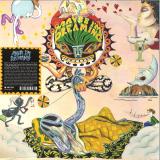
Miles ’55: The Prestige Recordings ist eine 16-Track-Retrospektive, die eine Reihe von wegweisenden Aufnahmen aus dem Jahr 1955 präsentiert, die in Rudy Van Gelders legendärem Studio in Hackensack, New
Jersey, für Prestige Records aufgenommen wurden. Mit einer Auswahl aus Miles: The New Miles Davis
Quintet, Miles Davis and Milt Jackson Quintet/Sextet und The Musings of Miles präsentiert Miles ’55
eines der wichtigsten Ensembles des Jazz: das „First Great Quintet“, bestehend aus damals noch relativ unbekannten Musikern wie dem Tenorsaxophonisten John Coltrane, dem Pianisten Red Garland, dem
Bassisten Paul Chambers und dem Schlagzeuger Philly Joe Jones sowie Milt Jackson, Ray Bryant und
Oscar Pettiford. Dieses Jahr markierte einen entscheidenden Wendepunkt für Davis, da er begann, seine
Stimme als Trompeter und sein Selbstvertrauen als Bandleader zu finden, wobei seine Live-Auftritte bereits
einen Vorgeschmack auf die mythische Figur gaben, zu der er bald werden sollte. Diese grundlegenden
Aufnahmen legten nicht nur den Grundstein für die zukünftigen Klassiker des Trompeters, sondern zeigten
auch das aufkeimende Genie seiner bald legendären Bandkollegen.
Alle Audioaufnahmen wurden vom GRAMMY-preisgekrönten Engineer Paul Blakemore von den originalen
Analogbändern remastert. Die physischen Ausgaben der Sammlung enthalten einen neuen Essay des mit
einem GRAMMY ausgezeichneten Musikhistorikers Ashley Kahn (Autor von „Kind of Blue: The Making
of the Miles Davis Masterpiece“) sowie
ULTRA LIMITED EDITION - Cassette/Tape - Consits of 4 DIFFERENT ARTWORKS (BUY, OBEY, WATCH TV, SLEEP) - NO REPRESS!
FULL soundtrack of John Carpenter's cult sci-fi/action/horror cult film They Live (1988) in never released on vinyl before expanded edition from legendary composer Alan Howarth.
Blues riffs surf on ambient synth, saxophone and harmonica mingle with sparse alien electronics and abstract soundscapes - Alan Howarth's score perfectly matches the eerie paranoid urban Western meets corporate sci fi vibe of John Carpenter's iconic movie.
This version, officially licensed from Alan Howarth, includes all 29 tracks from the soundtrack - the true complete music scores of They Live!
Points of interests
- For fans of soundtracks, horror, cult, sci fi, synth, Western, VHS, John Carpenter, bubble gum, conspiracies, cowboy boots, sunglasses, very rare editions of vinyl records.
- Full EXPANDED version of the They Live soundtrack on vinyl for the first time!
out of Stock
Last delivered 13 months ago available to reorder, subject to availability
When we did the first ever vinyl reissue of this 1972 masterpiece back in 2012 it sold out so fast and so many lost the chance to grab a copy has translated into continuous messages asking us to do a repressing of this marvel - which we did and, again, it sold like hot bread. So here is a new edition of this UK jazz masterpiece, this time with a twist :
- Silk-screened cover art : we respect the original design, but have upgraded the printing from regular offset to silk screen to give it an artistic touch!
- In adition to the limited black vinyl edition (400 copies), we offer an ultra limited clear vinyl version (100 copies-only!)
One of the big names in UK Jazz, Neil Ardley was offered the leadership of the seminal New Jazz Orchestra in 1964. Under his direction the Orchestra moved though different styles and changes of personnel, bringing in musicians such as Mike Gibbs (trombone), Harry Beckett andHenry Lowther (trumpets) or even Jack Bruce (bass), some of them also contributed with the writing of some original compositions, making the NJO the root from which the UK's 70's jazz scene was to blossom.
By 1972 the NJO was already defunct, but his legacy remained in the works of its members. Ardley's 'A Symphony Of Amaranths' is a perfect example of what was boiling in the UK jazz scene. It was Ardleys tribute to his idols Duke Ellington and Gil Evans, and featured the skills of some great musicians of the scene including Don Rendell,Stan Tracey, Henry Lowther, Harry Beckett, Jeff Clyne & Jon Hiseman. Side B is inspired by the words of Edward Lear, W. B. Yeats, James Joyce and Lewis Carroll that are musicated by Ardley and feature, among other highlights, Ivor Cutler's narration of 'The Dong With A Luminous Nose' and Norma Winstone's vocals on 'Will You Walk A Little Faster'.
Musicians that participated in the recording session :
- Derek Watkins, Nigel Carter, Henry Lowther, Harold Beckett (trumpets)
- Derek Wadsworth, Ray Premru (trombones)
- Dick Hart (tuba)
- Barbara Thompson, Dave Gelly, Don Rendell, Dick Heckstall-Smith (woodwind, saxes)
- John Clementson (oboe)
- Bunny Gould (bassoon)
- Dave Gelly (glockenspiel)
- Neil Ardley (prepared piano)
- David Snell, Sidonie Goossens (harp)
- Stan Tracey (piano, celeste)
- Karl Jenkins (electric piano)
- Alan Branscombe (harpsichord)
- Frank Ricotti (vibraphone, percussion)
- Chris Laurence, Jeff Clyne (bass)
- Jon Hiseman (drums, percussion)
- Eric Gruenberg, Jack Rothstein, Kelly Isaacs (violin)
- Ken Essex (viola)
- Charles Tunnell, Francis Gabarro (cello)
- Ivor Cutler (narrator)
- Norma Winstone (vocal)
- Jack Rothstein, Neil Ardley (conductors)
out of Stock
Last delivered 13 months ago available to reorder, subject to availability
When they performed a handful of concerts as a duo in the summer of 1998, Kristen Noguès and John Surman had already worked a lot on the interweaving of genres: Noguès had confronted traditional Breton music with contemporary music and Surman had changed his jazz into atmospheric numbers that would be amongst the finest recording on the ECM label. As a duo, the harpist and the saxophonist would go on to invent something different: free folk, traditional ambient, modal ‘fest- noz’ … it is difficult to label, because the duo Noguès / Surman is one of a kind.
Diriaou, means “Thursday” in Breton. It is also the title of the first piece that Kristen Noguès and John Surman played together in 1991. Noguès learned the Breton language as a child, at the same time as the Celtic harp, – taking lessons with Denise Mégevand, who would go on to teach others, notably Alan Stivell. At the beginning of the 1970s, Noguès discovered Breton singing (soniou and gwerziou) At the beginning of the 1970s, she discovered the Breton song tradition (soniou and gwerziou) and became involved in Névénoé, a cooperative of traditional expression founded by Gérard Delahaye and Patrick Ewen. She recorded a single with the two musicians in 1974, then her first album, two years later.
Everyone who has listened to Kristen Noguès debut Marc’h Gouez, is now aware of her mysterious plucked strings. Her art, leaving Brittany, would go on to take in all landscapes and folklores, in the same as that of John Surman, conceived a little further north including vernacular jazz, international fusion with Chris McGregor or Miroslav Vitouš, and exploring more personal territory. Remember the Cornish landscapes in one of the best albums on the ECM label : Road To Saint Ives.
Kristen Noguès and John Surman thus shared an ‘extra-Celtic’ inspiration infused with free improvisation. On this recording, made in 1998 by Tanguy Le Doré at the Dre Ar Wenojenn festival, the duo uses original compositions which refer back to traditional songs (Maro Pontkalek, Le Scorff). The musicians then create fantastic impressions: Baz Valan, on which Noguès and Surman have a heavenly exchange; Kernow, on which the shared theme slowing disappears into the mist; Maro Pontkalek and Diriaou which move from the storm to the calm. Elsewhere, there is singing, first with Surman (Kleier) and then moving on to Noguès (Kerzhadenn and her signature song Berceuse). On a canvas of traditional music, the two musicians weave countless memorable landscapes.
out of Stock
Last delivered 13 months ago available to reorder, subject to availability
Born in 1981 in Detroit, MI, Negative Approach were the undisputed champs of Midwestern hardcore in the early to mid-'80s. Led by John Brannon's hoarse wail, with OP Moore on drums and brothers Rob and Graham McCulloch playing guitar and bass respectively, the band concocted an extreme sound devoid of frills. This was first documented on their 10 Song 7" released on Touch and Go Records in 1982. The band released the more metallic-sounding Tied Down in 1983. After disbanding Negative Approach in 1985, John Brannon went on to form Laughing Hyenas. For over three decades, Negative Approach's minimalist and aggressive brand of punk has inspired countless hardcore bands around the globe. Their classic LP, Tied Down, is still considered paramount by most hardcore fans new and old.
Deluxe heavyweight sleeve with leather laminate finish Includes insert with liner notes by Steven Spielberg Movie directed by Steven Spielberg, loosely based on Spielberg’s adolescence and first years as a filmmaker Film stars an ensemble cast including Michelle Williams, Paul Dano, Seth Rogen, Gabriel LaBelle and Judd Hirsch Golden Globe nominated score composed by John Williams Film won the People’s Choice Award and nominated for five Golden Globe Awards Exclusive limited edition of 333 numbered copies on turquoise coloured vinyl This is a new colour variant – sales notes and tracks are as the previous version, note new cat number and barcode
Mutant is proud to present Academy Award®-winning composer Michael Giacchino’s latest installment of his Exotic Themes for the Silver Screen series - Featuring more iconic scores from Giacchino’s career that have been exclusively rearranged and re-recorded for this series in the retro lounge style of the 1950s.
Volume 2 spans the period of 2012 to 2022 and features not only his work with Marvel Studios (including their iconic Marvel Studios Fanfare, Spider-Man, Doctor Strange and more!) but also more career defining music for Disney • Pixar (Inside Out, Coco and Lightyear) as well as smaller, cult classics like John Carter, and Tomorrowland, more personal films such as Jojo Rabbit and The Book of Henry. He has taken these iconic themes and transformed them into soothing, beautiful 60’s lounge-inspired reworks.
Other highlights include ‘The Batman Suite’, taken from Matt Reeves' 2022 blockbuster The Batman, ‘Jyn Erso’s Theme’ from Rogue One: A Star Wars Story, as well as themes for War For The Planet Of The Apes, Jurassic World and two selections taken from his directorial debut Werewolf By Night
"We are thrilled to continue exploring Michael’s storied career with this incredible collection of some of his most beloved themes reworked for warm summer nights with a cocktail (or mocktail) in hand," says Mutant co-founder Spencer Hickman. "Michael is a rare composer who is comfortable with superheroes, horror, action, or intimate drama. He always manages to create incredibly beautiful earworms that have been further highlighted by these stripped-back downtempo versions of his award-winning themes.’
Featuring liner notes by Charles Phoenix, artwork by Luke Insect, and pressed on limited edition color vinyl (also available on CD)
“So much was rooted in the big orchestral sound, so it was really about scaling it back. The real trick is figuring out the little fun hooks and things you can add along the way. There were no rules; I was up for anything. It was a way to re-engage with the material and be creative in a new way.”
Exotic Themes for the Silver Screen – Volume 1 includes an array of reinterpreted pieces from Michael Giacchino’s career. Highlights include ‘Primordial Forest’ from the 1997 video game The Lost World: Jurassic Park, ‘Life and Death’ from Lost, the theme from Ratatouille, ‘Roar!’ from Cloverfield, ‘Enterprising Young Men’ from Star Trek (2009), ‘A Man, A Plan, A Code, Dubai’ from Mission: Impossible - Ghost Protocol, and a Super 8 suite.
Featuring package design by Luke Insect, and liner notes by Charles Phoenix.
Bret McKenzie ist ein Grammy- und Oscar-prämierter Künstler, der vor allem durch seine Band Flight of the Conchords und die gleichnamige Fernsehshow bekannt wurde. "Freak Out City" ist sein zweites Album mit geistreichen, anspruchsvollen Solosongs und baut auf den Stärken seines Debüts "Songs Without Jokes" auf (das vom FarOut Magazine als "musikalische Version eines Kurt Vonnegut-Romans" beschrieben wurde) und wird sicherlich Fans von nachdenklichen Singer-Songwritern wie Harry Nilsson, Elvis Costello, Father John Misty und klassischem Pop-Rock der 70er Jahre Freude bereiten. McKenzie ist international bekannt dafür, witzige, seltsame und einzigartige Songs zu singen und zu schreiben, vor allem für Film und Fernsehproduktionen. Bret McKenzies Lieder wurden bereits von Kermit dem Frosch, Celine Dion, Lizzo, Benedict Cumberbatch, Brittany Howard, Homer und Lisa Simpson, Fred Armisan, Miss Piggy, Amy Adams, Jason Segal, Ricky Gervais, Benee, Isabela Merced, Spongebob Schwammkopf, Tony Bennett, Mickey Rooney und vielen anderen gesungen. Das selbstbetitelte Debütalbum von Flight of the Conchords wurde 2025 mit Gold ausgezeichnet und ging prompt in einer limitierten Gold-Vinyl-Variante über den Ladentisch.
Delving into the Great American Songbook of Howe Gelb, Sandworms is a new collection that rephrases and rephases the legacy of Giant Sand acrossgenerations. This release offers bold reinterpretations from Water From Your Eyes, Deradoorian, Jesca Hoop & John Parish, Lily Konigsberg, Holiday Ghosts, Ella Raphael, Monde UFO, The Golden Dregs, and Gently Tender. The ever-present Giant Sand and their one-man cerebral traveller, Howe Gelb, are anchored by a reputation for idiosyncratic storytelling. A "natural storyteller," Gelb's multifarious musical delivery adds an enduring sense of wonder as he extols the virtues of happenstance. This collection celebrates the esoteric and singular journey Giant Sand have taken, through alt-country, jazz, lo-fi experiments, and beyond, while their legacy is reimagined here by a new generation of artists paying tribute to their lasting influence. Brooklyn duo Water From Your Eyes, known for their stoner humour, fatalistic undercurrents, and art-pop flair, bring a delicate balance of punk riffing and dream-pop escapism to Warm Storm, first heard on Giant Sand's Ramp (1991). Whitney K takes on Happenstance (from 1994's Glum), unravelling its existential puzzles with a whispering baritone that recalls the hushed intensity of Leonard Cohen. Drifting further into orbit, Angel Deradoorian reinterprets Center Of The Universe, the title track from the band's 1992 album, transforming its desert-fried rock into a spaced-out Sun Ra-paced drama. Elsewhere, Yer Ropes, a jaw-dropping highlight from Glum, is taken on by The Golden Dregs, blurring sentimentality and relationship mismanagement into something truly strange and moving. A special collection for both long-time fans and the newly curious, Sandworms: The Songs of Howe Gelb and Giant Sand is released via Fire Records and includes liner notes from Dave Henderson (Mojo).
Das erste Album von Lionmilk auf Stones Throw ist ein Gegenmittel gegen Depressionen und Herzschmerz.
Der aus Los Angeles stammende Lionmilk ist für seine Arbeit als Pianist, Komponist und Produzent bekannt.
Als unabhängiger Künstler schrieb, produzierte und spielte Lionmilk alle Instrumente auf dem neuen Album und erzählt seine Geschichten in verschiedenen Musikstilen.
Er spielte in den Live-Bands von Mndsgn und John Carroll Kirby.
Für Fans von: Toro y Moi, CARRTOONS, Thundercat, Washed Out, Neil Francis, Khruangbin.
out of Stock
Last delivered 8 months ago available to reorder, subject to availability
Ahead of a full-length album coming on Glitterbox Recordings, the king of disco re-edits Dr Packer presents the second instalment of this 12' series. 'Different Strokes Part 2' features four Dr Packer versions of soulful house favourites, giving a flavour of what's to come from the LP. Kicking off with a bonafide classic, Dr Packer's take on Soulsearcher's 'Can't Get Enough!' maintains all its most iconic elements, the euphoric vocals and timeless groove given a fresh-sounding elasticity. Next up is Dr Packer's remix of The Shapeshifter's evergreen 'Lola's Theme Recut' appearing for the first time on vinyl. An exclusive to this vinyl release, a remix of Johnny Corporate's 'Sunday Shoutin'' picks up the pace with a funking bassline to suit any dynamic disco set. Rounding off this foursome of impeccable remixes is Cleptomaniacs featuring Bryan Chambers 'All I Do', a vocal house classic from the early noughties, reinterpreted masterfully for today's Glitterbox dancefloor,r which was originally featured on the label's A Disco Hï compilation. Dr Packer has done it again, breathing new life into your most beloved dance records so you can fall in love with them all over again.
‘Maybe I’m Dreaming’ is the latest collection selected by Mikey Young (Total Control, EddyCurrent Suppression Ring) and Keith Abrahamsson (Founder and Head of A&R at AnthologyRecordings), the mangled minds behind the beloved ‘Follow the Sun’, ‘Sad About the Times’,and ‘…Still Sad’ compilations. The twenty tracks of ‘Maybe I’m Dreaming’ make a conscious(and unconscious) detour from its predecessors, sourced entirely from private press releases,spanning new decades and production modes within homespun folk, soft rock and otherwise70s and 80s FM radio adjacent music. The magic of ‘Maybe I’m Dreaming’ is the untold story of the artists behind these songs; thosewho missed the big time, but whose song craft and unrequited care hit the right notes, bothhigh and low.
Where ‘Follow the Sun’ and ‘Sad About the Times’ introduced us to the fame chasing, ambitioncrashing crooners who missed their shot in the mainstream, ‘Maybe I’m Dreaming’ delvesdeeper into the isolated wilds - a private world where production quirks, late-night tape hiss andone-man studio dreams were not necessarily a choice but the hand that was dealt.
With the parameters set to ‘private press only’, Young and Abrahamsson follow a circuitous trailof invention and emotion, documenting a spirit that’s more homespun, sometimes lonelier andoften a little weirder. The guitars still strum, but the keyboards’ hum is more prevalent andprecious; wistful harmonies brush up against lo-fi drum machines; a bittersweet fog lingeringover even the brightest melodies.
As with their previous collaborations, Young and Abrahamsson weren’t interested inconstructing a museum or drafting a historical survey. ‘Maybe I’m Dreaming’ is a sentimentalmixtape, assembled late at night when the mind wanders and old memories blur with imaginedfutures, those within reach and those far too mysterious to ever encounter. Songs wereunearthed in personal collections, deep YouTube burrows, dilapidated web archives and thedim corners of Discogs, with many selections tied not only to intuition but to personalconnection. Some tracks arrived via friends - Kelley Stoltz, a frequent guide for Young, tipped him off toboth Peter Kraemer’s lost gem ‘Let the Light Slip’ and Awakening’s revelatory closer - addingan unseen but deeply felt thread of camaraderie to the compilation.
The journey takes in a wide, strange sweep: The Watson Brothers Band’s ‘Just Whistle’ opensthe collection with a sigh and a shrug, a song that feels like it’s been waiting for decades to beheard again. Jim Huxley’s ‘Tessa on a Magazine’, rediscovered after a long and winding searchby Young, shimmers with a distinctly Australian melancholia. The heartbreak of Rick Penta’s‘My Story Changes’ and Twice As Nice’s delicate ‘Thoughts of You’ float easily alongside themore buoyant, radio-dream sheen of Barracuda’s ‘Baby I Love You’ and MAK’s sunshinedappled ‘That’s Life’.
Widening the aperture to the late 1970s and early 1980s allows for a deeper exploration intoevolving production techniques and musical technologies. The Squad’s ‘D.L.M.H.I.M.A.’ andChristoph Spendel Group’s ‘Forever’ crackle with the kind of bedroom synth warmth that couldonly come from the analogue age, while the soulful, yearning undercurrent of Awakening’s‘Gotta Do Somethin / Might As Well Cultivate’ caps the collection with a call for action - ormaybe just acceptance - in an accidental Brian Eno ‘Here Come the Warm Jets’ parroting.
While ‘Maybe I’m Dreaming’ moves away from the ‘sad man with guitar’ archetype that hoveredover its predecessors, it remains tethered to a familiar emotional gravity - a balance of longingand lightness that defines this corner of the musical universe. Each track shuffles gentlybetween resignation and hope, sadness and serenity, as if the artists themselves were chasinga dream just beyond reach, recording not for fame but for the simple act of getting it, thatprimal, creative itch, out into the world.
Available on CD and 2LP, featuring the third eye-opening artwork of Dang Wayne Olsen. Thedouble LP set arrives in an outrageous double-wide spine jacket with printed inners and adream journal entry by Pacific Northwest artifactual authority Josh Lewellen.
out of Stock
Last delivered 14 months ago available to reorder, subject to availability
Featuring waves of neon synths, pristine machine funk, scorched ambient drones, gnarled bass lines, playful radiophonics & industrial percussion, this thrilling selection of obscure 1980's electronica is compiled by Zyklus (Alan Gubby / Revbjelde) and presented on 10" white vinyl. "On a teaching placement during the pandemic, I found a dusty cupboard above our college theatre holding 200+ library music CDs. Most of the discs were from the Arcadia Cosmos library, a prolific production house active during the late 1980s and early 1990s. I spent the next few weeks working through the discs and found several interesting electronic pieces although, pseudonym or not, I didn't recognise any of the composers involved. Further research kept leading to dead ends with Arcadia's owners having long vacated their last known address and web links either broken or abandoned. So more questions than answers remain about the library's provenance. For instance, who was / is the brilliantly named David Beast? Did Kraftwerk engage trans-european lawyers after hearing Endurance Test? Was Sylvia Sommer deliberately channelling vintage 1960's radiophonics by John Baker? What studio gear was used to create the distinctive Arcadia sound? And, for what appears to have been a UK-based company, why are so many of the album titles, tracks and composer names distinctly Germanic? If anyone has the answers please get in touch." Zyklus / Winter 2024
John McLaughlin feiert sein Comeback mit "Live at Montreux Jazz Festival 2022". Dieses unverzichtbare Live-Album gibt den einzigartigen Auftritt von John und seiner langjährigen Band "The 4th Dimension" in Musik und Film wieder.
Am 11. Juli 2022 kehrten John und The 4th Dimension gemeinsam mit der preisgekrönten Künstlerin Jany McPherson, die den Auftritt mit ihrem Gesang und ihrer Klavierkunst bereicherte, zum Montreux Jazz Festival zurück. Zusammen boten sie dem Publikum im Stravinski Auditorium eine beeindruckende Show und spielten Fan-Favoriten wie "New Blues Old Bruise", "El Hombre Que Sabia" und Pharoah Sanders' "The Creator Has a Master Plan".
For five decades, Harold Budd stood on the forefront of the West Coast avant-garde. Born in Los Angeles, he studied with Schoenberg-pupil Gerald Strang and began teaching at CalArts in 1970. While searching for his own voice, he was influenced as much by abstract expressionist painters as by John Cage and Morton Feldman. In his work, Budd brought delicate, slowing-moving melodies to the foreground – creating a new musical language based on “eternally pretty music” and smooth surfaces.
In the early ’70s, Budd started an extended cycle of compositions that would comprise The Pavilion Of Dreams. For Budd, the album was a signpost for a new direction in thinking about music: “The Pavilion Of Dreams erased my past. I consider that to be the birth of myself as a serious artist. It was like my Magna Carta.”
Produced by Brian Eno in 1978, The Pavilion Of Dreams stands toe-to-toe with another minimalist masterpiece also released that year, Steve Reich’s Music For 18 Musicians. Budd’s gorgeous pieces reveal a lightness of touch that draws the listener in, while sublime voices float in and out as if in a recurring dream. Featuring saxophonist Marion Brown and multi-instrumentalists Gavin Bryars and Michael Nyman, The Pavilion Of Dreams remains a master class in exquisite timbre and shimmering texture.
The Pavilion Of Dreams was both the final release on Eno’s Obscure imprint and a transition point towards his seminal ambient series. This first-time reissue is recommended for fans of Ryuichi Sakamoto, Jon Hassell and Mark Hollis.
out of Stock
Last delivered 11 months ago available to reorder, subject to availability
Horace Silver’s 1962 tour of Japan had a deep impact on the pianist who dedicated his album The Tokyo Blues to his Japanese fans. With his quintet of Blue Mitchell, Junior Cook, Gene Taylor, and John Harris Jr., Silver combined a “Japanese feeling in the melodies with the Latin feeling in the rhythms.” This stereo Tone Poet Vinyl Edition was produced by Joe Harley, mastered by Kevin Gray from the original analog master tapes, pressed on 180g vinyl at RTI, and packaged in a deluxe gatefold tip-on jacket.
Classic black 2LP in gatefold! "Her darkest, heaviest and most personal album yet . . . a haunting, doomy exercise in loud-quiet dynamics." Rolling Stone Sleep paralysis plagues singer/songwriter Chelsea Wolfe, and that strange intersection of the conscious and the unconscious has inadvertently manifested itself within her work. Across the span of her first four albums, there is an underlying tension, a distorted and nebulous territory where dark shadows hover along the edges of the sublime and the graceful. But until now, Wolfe's trials and tribulations with the boundaries between dreams and reality have only been a subconscious influence on her work. With her fifth album, Abyss, she deliberately confronts those boundaries and crafts a score to that realm she describes as the "hazy afterlife. an inverted thunderstorm. the dark backward. the abyss of time." Chelsea Wolfe's material has always felt intensely private, from the almost voyeuristic bedroom-production aesthetic of her debut album The Grime and the Glow to the stark themes and atmospheres of 2013's Pain Is Beauty. "Abyss is meant to have the feeling of when you're dreaming, and you briefly wake up, but then fall back asleep into the same dream, diving quickly into your own subconscious," says Wolfe. To conjure this in-between world, Wolfe continued her ongoing collaboration with multi-instrumentalist and co-writer Ben Chisholm and drummer Dylan Fujioka, with Ezra Buchla brought on board to play viola and Mike Sullivan (Russian Circles) enlisted to contribute guitar. The ensemble traveled to Dallas, TX to record with producer John Congleton (Swans, St. Vincent). In the back of her mind burned the words of designer Yohji Yamamoto: "Perfection is ugly. Somewhere in the things humans make, I want to see scars, failure, disorder, distortion." The resulting eleven songs reflect that philosophy as they smoulder with human frailty, intimacy, quiet passion, anxiety, and deep longing. "Sleep and dream issues have followed me my whole life," remarks Wolfe as she revisits notes from the writing and recording sessions. In a way, these issues have become a part of Chelsea Wolfe's identity, for whom the notion of sleep as an escape has been subverted. Abyss captures this dichotomy, this battle between the soothing and the upsetting, and demonstrates why Chelsea Wolfe has become one of the most intriguing songwriters of the decade.
Let There Be Cello finds 2CELLOS exploring a diverse catalogue with their signature boundary- breaking playing style. Co-produced by Šulić and Hauser themselves as well as Filip Vidovic, Let There Be Cello is a showcase of their exceptional talent for reinventing the music of any genre. The collection includes their take on Ed Sheeran’s “Perfect” and “Despacito” by Luis Fonsi, a fan-favorite rendition that has garnered over 39 million views on 2CELLOS’ YouTube alone. Known for bringing their explosive playing style to some of rock’s biggest anthems, they make
no exception on this album, which features favorites “Eye of the Tiger” by Survivor and The White Stripes’ iconic “Seven Nation Army,”. Taking their classical instrumentation to new heights, 2CELLOS rounded the album with everything from celebrated classics (“Imagine” by John Lennon, “Hallelujah” by Leonard Cohen) to never- before-heard original compositions (“Concept2,” “Cadenza”) for a listening experience unlike any other.
2025 Repress, New Colour variant, Apricot colour vinyl. Led by vocalist Amy Boone (The Damnations, TX), Cory Gray on keyboards, & horns, Tucker Jackson (The Minus 5) on pedal steel, as well as former Richmond Fontaine members: Sean Oldham, Freddie Trujillo, and Willy Vlautin. Vlautin, the acclaimed novelist and songwriter for Richmond Fontaine, has penned all ten tracks. Recorded in Portland, Oregon and produced by John Morgan Askew, The Imperial shows us again why songwriter, Willy Vlautin became so enamored with Amy Boone"s voice. The combination of Vlautin"s songs and Boone"s voice creates a late night country soul world full of hopefulness and heartbreak.
2025 repress in a new colour variant (Pearl White colour vinyl) with printed innersleeve. The third album proper for "Country-got-Soul"s finest, The Delines, on Decor Records sees them exploring the US Gulf Coast, not far from where Amy Boone grew up. The songs in this cinematic opus all focus around this area and are inspired by when Amy asked Willy Vlautin to write her a song like Tony Joe White"s "Rainy Night In Georgia" after her tragic accident being hit by a car in 2016 and her 3 year recovery. This follows on from 2019"s The Imperial which was number one in the UK official AMA charts for two weeks. Written and partially recorded before lock down the rest of the album was finished last Summer, produced by John Morgan Askew at his Bocce studios just outside of Portland, Oregon.
In recent years, Blackploid has come to be one of Central Processing Unit's signature artists. The German producer has averaged more than a record a year for the Sheffield imprint since he first landed on CPU in 2021. This prolific run continues withCosmic Drama, Blackploid's second LP for the label. The album takes the baton from its predecessorEnter Universein style, delivering twelve tracks of top-quality machine-funk that draw down from electro's classic artists while also imbuing proceedings with a playfulness that very much gives things a signature Blackploid-ish flavour.
Cosmic Dramasets its stall out from the off. The opening run of 'Alien', 'World Construction' and 'Virtual State' all deliver piston-snapping beats which anchor pleasing melanges of B-movie synth lines. Alongside this, Blackploid adds little flourishes which add buoyancy to each joint - a syncopated bassline reminiscent of I-f's late-90s classic 'Space Invaders Are Smoking Grass', crackling robo-voiced commands, skittering synth chords which wash across the mix and so on. It's the work of someone completely at ease with their craft, comfortable enough to take risks without upsetting the apple cart of their sound's core appeal.
Blackploid's idiosyncratic approach to synth work is something which distinguishesCosmic Dramafrom the pack. Electro has long been a genre which prides itself on innovation on the keys, but few producers are willing to push their sonics as far as Blackploid does - take the seasick churn of pads and processors on 'Multiverse', for instance, or the way John Carpenter-esque single-note lines dovetail with gurgling synthetic pulses and eerie, spacious chords on 'The Lab', a highlight ofCosmic Drama's midsection.
Cosmic Dramaskips along at club tempo throughout - every one of these joints will get bodies moving in dark rooms across the galaxy. However, even when tracks maintain their single-minded pursuit of machine-funk perfection, they never forget to deliver on the hooks. Blackploid has lead lines (and counter-melodies) to burn here, and each track knots them together in ever-more intriguing ways as they plough onwards. Drexciyan heads will be thrilled by the sci-fi delights of 'Species', for instance, while Blackploid brings melodies as cold as they are catchy on the aptly-named 'Polar Dunes'. By the timeCosmic Dramahits upon the vroom-vrooming bassline line of closer 'Contact', you're fully enthralled to the album's combination of broken-beat heft and synthetic melodiousness.
Central Processing Unit mainstay Blackploid comes through with another delightful dozen of electro heaters for the Sheffield label.
RIYL:Drexciya, I-f, Cygnus, AFX
out of Stock
Last delivered 6 months ago available to reorder, subject to availability
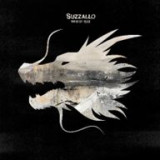
Suzzallo (pronounced Süe-zahh-Lōw) is a new Seattle based rock band fronted by Rocky Votolato. After the devastating loss of his child in a tragic car accident, Votolato created an entire new world inside of aggressive anthemic rock songs to transmute extreme grief and loss into something healing and beautiful. This is a return to form for Votolato, who for the past 2 decades has had a successful career as an Indie-rock solo artist, but who started out playing in heavier bands - most well known for his work in Waxwing.
With Rudy Gajadhar on drums (ex-Waxwing), Steve Bonnell on bass (ex-Schoolyard Heroes) and teaming up with legendary producer John Goodmanson, Suzzallo recently finished recording their debut album “The Quiet Year” at Robert Lang Studios in Seattle, WA. Ben Gibbard (Death Cab For Cutie / The Postal Service) is featured on several tracks on the album, adding some levity to the songs with beautifully placed backing vocals, electric guitar, bass 6, and piano.
Funded via a crowdsourcing campaign that raised over 100K dollars, Suzzallo’s highly anticipated debut is due to be released on Thirty Something Records in the spring of 2025.
John Carroll Kirby brings his signature sound tofilm scoring with the official soundtrack album forfeature film ‘The Luckiest Man in America’, whichpremiered at the Toronto Film Festival andreceived a wide theatrical release.
John Carroll Kirby’s background is steeped in jazz,but his signature sound blends genres and styles.He has collaborated with artists ranging fromsuperstars Solange, Frank Ocean, Harry Stylesand Steve Lacy (earning him a GRAMMY nod forthe smash hit ‘Bad Habit’) to beloved indiemusicians like Connan Mockasin, Yves Tumor,Eddie Chacon and Liv.e.
John Carroll Kirby has released several recordswith Stones Throw, most recently ‘Blowout’ in2023, which Pitchfork called “endlessly vibey… hismost energetic and immediately enjoyable releaseyet.”
His records have received previous support fromPitchfork, The FADER, LA Times, The Guardian,BBC Radio 1, BBC 6 Music, MOJO, Clash andVICE, among many others.
Kirby has toured extensively across NorthAmerica, Europe, Australia / NZ and Asia, and ison tour throughout Summer 2025 with Khruangbinin the US.
For fans of Duval Timothy, Sam Gendel, AlabasterdePlume
'Maybe I'm Dreaming' ist die neueste Sammlung von Mikey Young (Total Control, Eddy Current Suppression Ring) und Keith Abrahamsson (Gründer und Leiter A&R bei Anthology Recordings) - den Köpfen hinter den beliebten Kompilationen 'Follow the Sun', 'Sad About the Times' und '...Still Sad'. Die zwanzig Tracks von 'Maybe I'm Dreaming' weichen von ihren Vorgängern ab. Sie stammen vollständig aus privaten Pressungen und umspannen neue Jahrzehnte und Produktionsmodi innerhalb der Genres Homepunk-Folk, Softrock und sonstiger FM-Radio-Musik der 70er und 80er Jahre. Die Magie von 'Maybe I'm Dreaming' liegt in den unerzählten Geschichten der Künstler:innen, die hinter diesen Liedern stehen - diejenigen, die den großen Durchbruch verpasst haben, deren Songhandwerk und unerwiderte Sorgfalt aber die richtigen Töne treffen.
'Maybe I'm Dreaming' taucht tief in die isolierte Wildnis ein - eine private Welt, in der Produktionsmacken, nächtliches Bandrauschen und Ein-Mann-Studio-Träume keine Wahl waren, sondern das ausgeteilte Blatt.
Die Songs wurden in persönlichen Sammlungen, in den Tiefen von YouTube, in verfallenen Webarchiven und in den düsteren Ecken von Discogs ausgegraben. Die Auswahl vieler Stücke basiert dabei nicht nur auf Intuition, sondern auch auf persönlichen Verbindungen. Einige Tracks wurden über Freunde entdeckt und fügen der Zusammenstellung einen unsichtbaren, aber tief empfundenen Faden der Kameradschaft hinzu.
Zwar entfernt sich 'Maybe I'm Dreaming' vom Archetyp des „traurigen Mannes mit Gitarre“, der über den Vorgängern schwebte, aber die vertraute emotionale Schwere bleibt erhalten - eine Balance aus Sehnsucht und Leichtigkeit, die diese Ecke des musikalischen Universums definiert. Jeder Track schwankt sanft zwischen Resignation und Hoffnung, Traurigkeit und Gelassenheit, als würden die Künstler selbst einem unerreichbaren Traum hinterherjagen und die Aufnahmen nicht wegen des Ruhmes, sondern aus dem einfachen Bedürfnis heraus machen, diesen ursprünglichen, kreativen Drang in die Welt hinauszutragen.
'Maybe I'm Dreaming' ist eine Einladung, noch ein wenig länger mit halb geschlossenen Augen im Grenzbereich zwischen Erinnerung und Vorstellung zu schweben. Vielleicht träumst du. Vielleicht bist du wach. Vielleicht spielt es keine Rolle.
- 2LP: (Das Doppel-LP-Set mit dem Artwork von Dang Wayne Olsen wird in einer breiten Kartontasche mit bedruckten Innenhüllen geliefert. Zudem enthält es einen Traumtagebucheintrag von Josh Lewellen, dem Experten für Artefakte aus dem pazifischen Nordwesten.)
For most members of the band it's the best album. But, tragically, the release of Operation Heavenly in 1996 was overshadowed by the sudden death of drummer Mathew Fletcher. The promotional tour was cancelled, the surviving members of the band went into emotional hibernation and no-one could bring themselves to celebrate these vibrant, upbeat songs. So, this release by Skep Wax Records, nearly thirty years on, is more like an album launch than a re-issue. Time has healed most wounds, and the songs on Operation Heavenly feel like they can finally emerge onto the stage, with Mathew's spirit very much alive: his effervescent witty drumming sounding as fresh now as it did then. These tracks are gleeful, melodic, sophisticated and knowing. The tough riot grrrl edge that Heavenly had developed a year before with seminal singles P.U.N.K. Girl and Atta Girl, has been blended with a deliberate quantity of Britpop styling. Heavenly were clearly listening to what was going on, liked the energy, but didn't necessarily feel the need to join in. Some of the tracks (eg Ben Sherman) are as jaunty as early Blur, but the lyrics, mocking a narcissistic boyfriend for his obsession with hair, clothes and his own erections, show that Heavenly didn't need or want to be part of the la - or even ladette - herd. Operation Heavenly was the band's first release on a label other than Sarah Records. Matt Haynes and Clare Wadd had brought that exceptional label to a deliberate and dramatic end. The liaison with US punk label K Records continued - as did the duets with Calvin Johnson: Pet Monkey is a moving duet between a growling Calvin Johnson and a sweet-voiced Cathy Rogers, as they dramatize another complex, maybe doomed relationship, with another self-centred boy finding himself frustrated by a girl who won't take any shit. But in the UK, Heavenly needed to find a new home - and Wiija Records were welcoming hosts, ushering the band into a brasher, less cloistered world: the production on this album is brighter than before, the artwork is colourful and upbeat. With tracks as catchy and as complete as Fat Lenny, Trophy Girlfriend and Space Manatee there was an expectation that Heavenly might finally emerge from the indiepop shadows and trouble the charts. And who knows if this might have happened. Mathew was lost before the album was released, and the band had no choice but to bring things to an end. This reissue also contains two tracks that appeared on the B side of the 7" single of Space Manatee. They are both cover versions, and along with Serge Gainsbourg's Nous Ne Sommes Pas Des Anges on the main album, these vivacious assaults on Art School by The Jam and You Tore Me Down by The Flamin' Groovies show that the band, briefly in its prime, could happily embrace any variant of pop music and make it something Heavenly.
Major Keys work their magic once more with the release of two iconic tracks by celebrated Jazz musician, Donald Byrd. Known for being one of the few jazz artists who successfully explored funk and soul music in the 70s, whilst remaining a leading figure in Jazz (much to the disgruntlement of purists)
This 2-track EP salutes 2 records from that exploratory era with the official license and 12 inch reissue of ‘Think Twice’ & ‘Where Are We Going’
Think Twice - Taken from his 1975 LP ‘Stepping into Tomorrow’ released in 1975 on Blue Note Records and produced by the legendary Mizell Brothers, responsible for producing other artists including Gary Bartz, Johnny Hammond, Bobbi Humphrey, as well as Michael Jackson and Marvin Gaye. One of Byrd’s most recognisable records and a highly sampled song amongst a wealth of hip hop and house artists in recent years.
Where Are We Going – Taken from the 1973 album Black Byrd, the very first release of Byrd’s on Blue Note Records and was released in collaboration with Motown Records. Produced by Larry Mizell and Larry Gordon, then later performed by Marvin Gaye. The album still stands amongst some of Blue Note’s bestselling releases
out of Stock
Last delivered 10 months ago available to reorder, subject to availability
Brady Corbets "The Brutalist" wurde für 10 Oscars nominiert, darunter "Best Original Score". Dass der Film, der im Vintage VistaVision-Format gedreht wurde, von der Musik lebt, wird direkt am Anfang klar: er beginnt mit einer fesselnden 10-minütigen Ouvertüre, komponiert von Daniel Blumberg. Die Erzählung folgt dem ungarischen Architekten László Toth (Adrien Brody), der sein Leben im Nachkriegsamerika neu aufbaut.Die Filmmusik umfasst eine Mischung aus groß angelegten Blechbläser-Orchestrierungen, lyrischen Klaviermelodien und improvisiertem Jazz und verkörpert die Brutalismus-Designästhetik mit ihrem reichen und resonanten Klang. Dafür arbeitete Blumberg mit Musikern in Großbritannien und Europa zusammen, darunter Axel Dörner (Trompete), Evan Parker (Saxophon), Sophie Agnel (Klavier) und John Tilbury (Klavier).Für die Jazzclub-Szene des Films stellte Blumberg ein Quartett zusammen, das live am Set auftrat und eine der dynamischsten Nummern des Films schuf. Im Epilog des Films, das in den 1980er Jahren spielt, ist zudem Synth-Pop-Pionier Vince Clarke (Depeche Mode, Erasure) zu hören, der das Hauptthema des Films in einen Synth- und Drum-Machine-getriebenen Track verwandelte.
Emotional Especial reaches a landmark with its 50th release. Started in 2012 as a “dancier & trippier”, club friendly spin off, sub label to Emotional Response, it has gone on to forge a path, releasing a myriad of artists including the opening release by Jamie Paton (Cage & Aviary / ESP Institute) to Richard Sen (Bronx Dogs), the debut of Khidja (Malka Tuti / DFA) and on to unearthing the breaks masters Alphonse (Klasse Wrecks) and Junior Fairplay (Crimes Of The Future), the uplifting Italo influenced Lauer (Robert Johnson), the new wave anthem of Sfire (featuring Sophie), plus perfect remixes bt Kris Baha (CockTail D’amore) and INHALT (Dark Entries), the NYC pop-rave-vox of Kim Ann Foxman, through to showcasing upcoming artists like Berlin’s Giraffi Dog (Aiwo Recs) and the global acid adventures of Akio Nagase (Chill Mountain) to most recently, the slo-mo trance muscle of 53X and post-rave uplighters of Remotif (Space Lab) and DJ 1985.
As with every 10th release on the label, the label present a various artists “Showcase” of what and where the label is. Aptly it is recent signing 53X who opens Gracias Especial with the bounce of Radar. Finland’s Jonne Lydén debut EP on Especial, Zen ’23 came out of nowhere, more than simply riding a zeitgeist of the “Trance Revival”, his all-live analogue symphonies drop the bpms, presenting widescreen beats, darkroom bass, sirens and tripped out vox all mix to propel a singularly driven.
Taking things much deeper has been the hallmark of Jamie Paton’s remixes for the label. As well as providing the opening EP in 2013, designing every sleeve and producing 20 remixes and counting another 2 for the label here, it’s impossible not to associate Especial with Jamie’s music. First, he reworks rising star DJ, but recent break out producer Chez De Milo, with a trademark dub excursion that takes the ethnic origins of Kremer to a space echo wonderland. Space is the place, the lulling beats, see you falling through the gaps, true dub style.
Alphonse makes a rightful return to Especial, with Raze Rave highlighting the allusive producers’ unique understanding of the varied history of rave culture via a techno-suite of soundscapes, perfectly mixing uplifting breaks, memory inducing vocal samples and dub bass, with a nod to the pop sensibility that rave encompassed, while being that allusive “lost chord” moment of man and machine.
The finale returns to the trance acid expanse of 53X, with the mastery of label stalwart Jamie Paton. An apt marriage, Paton takes the title cut from Lydén’s debut EP and crafts a trademark durge-dub, where TB303 and space echo intertwine with the De Witte vocal, hinting at touches of dub, new wave, trance and acid house all in one melting pot of sound the label optimistically termed “Protoid” back at inception of summer 2013.
out of Stock
Last delivered 4 months ago available to reorder, subject to availability
Horace Silver’s 1962 tour of Japan had a deep impact on the pianist who dedicated his album The Tokyo Blues to his Japanese fans. With his quintet of Blue Mitchell, Junior Cook, Gene Taylor, and John Harris Jr., Silver combined a “Japanese feeling in the melodies with the Latin feeling in the rhythms.” This stereo Tone Poet Vinyl Edition was produced by Joe Harley, mastered by Kevin Gray from the original analog master tapes, pressed on 180g vinyl at RTI, and packaged in a deluxe gatefold tip-on jacket.
Die Bewaffneten sind zurück und präsentieren "The Future Is Here and Everything Needs to Be Destroyed", dem Nachfolgewerk des von der Kritik hochgelobten Albums "Perfect Saviors" von 2023. The Armed sind Post Hardcore Non-Conceptual Alternative Metalpop! Nach der Fertigstellung der Alben-Triologie, die sich auf die Analyse der künstlerischen Authentizität im Informationszeitalter konzentrierte, begannen The Armed mit der Arbeit an neuem Material, ohne vorher festgelegte Regeln oder Konzepte, sondern nur mit neuem Druck und Dringlichkeit, um eine neue Ära für das Post-Hardcore-Kollektiv einzuläuten. Das Ergebnis ist ein wütendes und konfrontierendes Album, ein ungefilterter Ausdruck von Weltschmerz, ein deutscher Begriff, der den Schmerz über die Realität der Welt im Gegensatz zu unseren idealisierten Visionen von dem, was sie sein sollte, beschreibt. "Diese Platte ist eine Absage an sanierte, für den Geschmack der oberen Mittelschicht kuratierte Rebellion", erklärt Sänger Tony Wolski. "Es ist Musik für eine statistisch wohlhabende Bevölkerung, die sich irgendwie kein Essen oder keine Medikamente leisten kann und endlos durch Urlaubsfotos, Fitnessstudio-Selfies und Bilder von amputierten Kindern im selben Feed scrollt. Sie spiegelt die Abgrenzung wider, die man braucht, um in dieser Realität zu existieren." Die Waffen von The Armed sind weiterhin ihr Kanalisierung von Wut über die unfassbaren Umstände in ungewöhnliche Songs mit innovativen Sounddesign und ihr fester Glaube an das Miteinander, was sich im Gedanken des Kollektivs, aber auch an den vielen Kollaborateur*innen festmachen lässt. Mit Beiträgen von Ken Szymanski, Patrick Shiroishi, Urian Hackney, Kurt Ballou, Troy Van Leeuwen, Meghan O'Neil, Cara Drolshagen, Tony Wolski, Brian Wolski, Justin Meldal-Johnsen, Ben Chisholm, Prostitute, Zach Weeks, Mark Guiliana, Kayleigh Goldsworthy, and Derek Coburn. Inklusive der Singles "Well Made Play", "Kingbreaker" und "Sharp Teeth" LP & LP Ltd im Gatefold mit bedruckten Innenhüllen & 44seitigem Booklet, CD als 6-panel-digipak!
Limitiertes Cloudy clear with yellow, green and pink splatter Vinyl mit 44-Seiten-Booklet! Die Bewaffneten sind zurück und präsentieren "The Future Is Here and Everything Needs to Be Destroyed", dem Nachfolgewerk des von der Kritik hochgelobten Albums "Perfect Saviors" von 2023. The Armed sind Post Hardcore Non-Conceptual Alternative Metalpop! Nach der Fertigstellung der Alben-Triologie, die sich auf die Analyse der künstlerischen Authentizität im Informationszeitalter konzentrierte, begannen The Armed mit der Arbeit an neuem Material, ohne vorher festgelegte Regeln oder Konzepte, sondern nur mit neuem Druck und Dringlichkeit, um eine neue Ära für das Post-Hardcore-Kollektiv einzuläuten. Das Ergebnis ist ein wütendes und konfrontierendes Album, ein ungefilterter Ausdruck von Weltschmerz, ein deutscher Begriff, der den Schmerz über die Realität der Welt im Gegensatz zu unseren idealisierten Visionen von dem, was sie sein sollte, beschreibt. "Diese Platte ist eine Absage an sanierte, für den Geschmack der oberen Mittelschicht kuratierte Rebellion", erklärt Sänger Tony Wolski. "Es ist Musik für eine statistisch wohlhabende Bevölkerung, die sich irgendwie kein Essen oder keine Medikamente leisten kann und endlos durch Urlaubsfotos, Fitnessstudio-Selfies und Bilder von amputierten Kindern im selben Feed scrollt. Sie spiegelt die Abgrenzung wider, die man braucht, um in dieser Realität zu existieren." Die Waffen von The Armed sind weiterhin ihr Kanalisierung von Wut über die unfassbaren Umstände in ungewöhnliche Songs mit innovativen Sounddesign und ihr fester Glaube an das Miteinander, was sich im Gedanken des Kollektivs, aber auch an den vielen Kollaborateur*innen festmachen lässt. Mit Beiträgen von Ken Szymanski, Patrick Shiroishi, Urian Hackney, Kurt Ballou, Troy Van Leeuwen, Meghan O'Neil, Cara Drolshagen, Tony Wolski, Brian Wolski, Justin Meldal-Johnsen, Ben Chisholm, Prostitute, Zach Weeks, Mark Guiliana, Kayleigh Goldsworthy, and Derek Coburn. Inklusive der Singles "Well Made Play", "Kingbreaker" und "Sharp Teeth" LP & LP Ltd im Gatefold mit bedruckten Innenhüllen & 44seitigem Booklet, CD als 6-panel-digipak!
LTD BRIGHT GREEN VINYL W/ 4 PAGE INSERT** **JEWEL CASE CD W/ 12 PAGE BOOKLET** A gloriously off-kilter yet deeply personal record that mixes absurdist punk theatre with an unexpectedly tender dive into mental health, Catholic guilt, and the surreal poetry of everyday life. “It’s more personal than the previous ones,” frontman Pete explains, “but not in a heavy way – more like Mortimer & Whitehouse than The Bell Jar”, succinctly summing up the Dinner Ladies’ approach: taking the kitchen sink, giving it a saxophone solo, and letting it spill over with charm, wit, and a fair helping of existential unease. Parody and poignancy runs through every song. Tracks like ‘Is There Life in Rhyl?’ and ‘Holy Pictures’ explore personal trauma and social conditioning through an unmistakably British filter; Catholicism, childhood fear, seaside holidays, and haunted toilet trips included. For fans of: The Fall, The Kinks, John Cooper Clarke, X-Ray Spex, Madness, cabaret, collage, chaos, and joyfully honest punk.
Back On My Feet Again ist das 1961er Album von Furry Lewis, das ursprünglich bei Prestige Records
erschien. Mit seinem charakteristischen Finger-Picking- und Slide-Gitarren-Stil lässt Lewis auf diesem
Album seine frühen Klassiker wie „John Henry“ und „Big Chief Blues“ sowie traditionelle Songs und neuere
Kompositionen wieder aufleben. Dieses neu gemasterte Album wurde bei QRP in Zusammenarbeit mit
Acoustic Sounds auf 180-Gramm-Vinyl gepresst und ist in einer Replik mit Tip-On-Hülle untergebracht.
The discovery of Doris Dennison's score represents a genuine musicological breakthrough—what once would have been "a tree falling in the woods" thirty years ago now holds the potential to render "a thunderous clap in our minds." While researching Anna Halprin's lesser-known collaborators, scholar Tom Welsh uncovered the archives of AA Leath, one of Halprin's principal dancers. Buried within these materials was Dennison's handwritten score for Earth Interval, dated May 1956. Born in Saskatchewan, Canada, in 1908, and raised near Seattle, Dennison (1908-2009) encountered John Cage while teaching Dalcroze eurythmics at the Cornish College of the Arts. She joined Cage's earliest percussion quartet—alongside Margaret Jansen, the composer and his wife Xenia—in the group widely regarded as having performed the first complete concert of percussion music in the United States. This historic December 1938 concert was followed by tours and the landmark May 1941 performance at the California Club, comprising Cage and Lou Harrison's Double Music, the premiere of Cage's Third Construction, and Harrison's 13th Simfony.
As Bradford Bailey observes in his extensive liner notes, Earth Interval demonstrates "an extraordinary balance of elements that imbues the piece with a sense of clarity, directness, and constraint that is both distinct and ahead of its time." The work's most remarkable innovation lies in its approach to extended techniques, particularly Dennison's notation for the central movement: "In 2nd movement, 1st player lowers + raises a gong into a tub of water while beating." This technique, absorbed from Cage's experimental vocabulary, generates what Bailey describes as "fields of acoustic abstraction that bend and warp time through sustained resonances, beat, and space." The temporal sophistication of these manipulations anticipated Karlheinz Stockhausen's Mikrophonie I (1964) and Annea Lockwood's water-based sound investigations by over a decade. After joining Mills College as dance accompanist, Dennison maintained crucial connections to the Bay Area's experimental scene, collaborating with figures like Merce Cunningham and programming Cage's music throughout the 1950s.
Comprising three movements—Land Form, Air Tide, and Earth Play—Earth Interval is scored for recorder, drums, gongs, maracas, muted gongs, and bowl gongs. In total, the piece is just under eight minutes: "a fleeting glimmer of moment in time, a life spent at the cutting edge, and a singular creative vision that packs a powerful punch." When viewed in historical context, placed in contrast to roughly contemporaneous avant-garde percussion works by Cage, Harrison, Louis Thomas Hardin (Moondog), and Harry Partch, or important precursors like Edgard Varèse's Ionisation (1931) and Henry Cowell's Ostinato Pianissimo (1934), it's clear that Dennison was following her own path. Earth Interval is not derivative. It is a precursor to what was yet to come, alluding to developments of avant-garde and experimental music that wouldn't begin to appear on the cultural landscape until the 1970s and '80s, with the emergence of Post-Minimalism and more idiosyncratic artists and ensembles like Midori Takada, Ros Bandt, Peter Giger, Frank Perry, Christopher Tree, Michael Ranta, Gamelan Son of Lion, and Niagara.
This recording by Chicago's Third Coast Percussion, captured in March 2022, represents the first complete documentation of this pioneering work. The ensemble's interpretation reveals the piece's remarkable contemporaneity while maintaining its historical specificity. Where Cage, Harrison, and Partch employed "self-consciously off-kilter polyrhythms," Dennison's rhythmic sensibility anticipates minimalist developments by nearly a decade, yet integrates "forceful rests, as well as sharp shifts in sonic character, tempo, and meter, that break the momentum and breathe a sense of life into the piece's structure." This positions her work closer to Post-Minimalism decades before its emergence. The architectural approach demonstrates Dennison's understanding that "the composer almost entirely disappears" in favor of phenomenological listening experience, creating what might be called an egoless music that places its realities and meaning entirely in the ear of the beholder. The present recording, realized by Chicago's distinguished Third Coast Percussion ensemble, represents a significant achievement in experimental music scholarship and performance practice. As specialists in the Cage tradition and contemporary percussion repertoire, Third Coast Percussion approached Earth Interval with the historical sensitivity and technical precision required to illuminate Dennison's subtle compositional innovations. The March 2022 recording sessions, engineered by Colin Campbell, capture both the work's intimate chamber music qualities and its bold exploration of extended techniques. The ensemble's interpretation reveals the piece's remarkable contemporaneity—its ability to speak directly to current musical concerns while maintaining its historical specificity.
This recording serves multiple scholarly functions: it provides the first complete documentation of Dennison's compositional voice, offers insight into the broader network of experimental music practitioners surrounding Cage and Harrison, and demonstrates the sophisticated level of compositional thinking that was occurring within the Bay Area's dance-music collaborations of the 1950s. The work's emphasis on phenomenological listening—what might be called an "egoless" approach to musical experience—places it within a lineage of American experimental music that prioritizes perceptual process over compositional personality. The work's original obscurity—limited to AA Leath's performances at venues like the 1957 Pacific Coast Arts Festival at Reed College—paradoxically allowed it to remain "entirely on its own terms," free from the constraints of historical categorization. Drawing on Jacques Derrida's Archive Fever, the argument emerges that "the archive can acknowledge, celebrate, and resurrect" overlooked voices, transforming our understanding of experimental music history. The present Blume edition, featuring Third Coast Percussion's authoritative interpretation, includes a lavishly illustrated 16-page booklet designed by Bruno Stucchi / dinamomilano, containing complete scholarly apparatus, historical photographs, and detailed production notes. This recording enables "cross-temporal intersectionality," allowing Dennison to "belong to a newly formed and more dynamic understanding of the present and past," demonstrating how forgotten voices can reshape entire historical narratives when given proper scholarly attention and performance advocacy.
Since its founding back in 2014, Blume has carved a unique place in cultural landscape, issuing free-standing works, spanning the historical and contemporary, that represent singular gestures of creativity within the field of experimental sound. Joining their broad efforts in building networks of context and understanding that already includes the works by Werner Durand, Sarah Hennies, Bruce Nauman, John Butcher, Jocy de Oliveira, Mary Jane Leach, Valentina Magaletti, Alvin Curran, Julius Eastman, Alvin Lucier, and following the first ever vinyl release to attend to James Tenney's legendary Postal Pieces, the label now presents the first LP published by the visionary Swiss composer Jürg Frey. Drawing from the transformative power of breath and resonance, this release represents one of the most profound explorations of musical metamorphosis to emerge from the contemporary experimental landscape.
The completed work represents a "conjunction of these two artists" that has "activated a transformative form of experimentalism." These renderings "dance with an airy lightness, humour, and play, imbuing them with a beauty and emotiveness that can be rare within experimental music." They exist as "breaths, carrying the curiosities of life, belonging to no time and all time, to no one and everyone: a human music to be inhaled and pondered, for which the outcome remains unknown." In this liminal space between composition and interpretation, between breath and resonance, Zurria and Frey have created something that transcends the boundaries of experimental music itself, offering what might be called a metaphysical cartography of sound in its most essential form. As Bradford Bailey observes in his penetrating liner notes, "music is rarely a fixed entity," existing instead in a state of perpetual flux, "taking on the influences of its interpreters and performers." This fundamental truth finds its most eloquent expression in the transformative collaboration between Italian flutist Manuel Zurria and Frey, longtime member of the Wandelweiser Group. Where conventional recordings might preserve a definitive version, this release activates what Bailey calls "states of unknowing and continued experimentation," allowing Frey's compositions to evolve into entirely new dimensional territories. The original string quartet and piano works dissolve into breath-carried architectures of sound, where "the original remains in a constant dialogue with its transformation." This is not mere arrangement but ontological metamorphosis - an alchemical process through which crystalline harmonies are reborn as atmospheric phenomena.
The metaphysical dimensions of this transformation become clear through detailed analysis of the musical result. Where Frey's original compositions operate through what he calls "basic confidence in the clear and restricted material," Zurria's interpretation activates entirely new perceptual territories. Space holds almost atomic sense of weight against the airy punctuations of timbres, textures, and tones, creating "suspensions of time within which questions and identities posed by instrumentation fade." The Extended Circular Music pieces - each comprising "a small number of bars to be repeated an undetermined number of times" - become organizations of sound that defy being definitive or fixed. Originally scored for different combinations of violin, viola, cello, and piano, these works now exist as pure phenomena of breath and resonance, where "hanging, breath-length utterances dance and intertwine amongst complex harmonic clusters and conjunctions."
The philosophical implications of this transformation illuminate a lineage of composers who have moved "away from abstraction and responding to the need to create" something beyond mere technique. Drawing parallels to Morton Feldman's understanding of non-functional harmony, Zurria's approach represents "a transformative form of experimentalism" that activates what Frey calls the "thaumaturgic power" of music - its capacity to heal and transform consciousness itself. The result is "a radical reimagining of ambience: sprawling sonorities and resonances adrift in space, carrying the liberated traces of the work's former incarnations and their truths." In Zurria's interpretation, Frey's String Quartet n.3 becomes something approaching "an organ played in slow motion, its seals leaking," while the Extended Circular Music pieces transform into "glacial chords from a diverse palette of voicings, harmonies, timbres, and tones."
Performed by Manuel Zurria. Recorded and mixed by Zurria at BigCardo, Catania between 2022-2024, with mastering by Bruno Germano at Vacuumstudio, Bologna, this Blume release represents a profound exploration of musical transformation.
Was kann und darf Musik? Auf diese Frage gibt Scott Walker eine Antwort. "Bish Bosch" ist ein düsterer, aber zugleich funkelnder Monolith. Um 2009 herum begann das ehemalige Mitglied der Walker Brothers damit, an diesem Material zu arbeiten. Zusammen mit seinem Co-Produzenten Peter Walsh und einem festen Stamm aus Musikern wie Ian Thomas (Schlagzeug), Hugh Burns (Gitarre), James Stevenson (Gitarre), Alasdair Malloy (Percussion) und John Giblin (Bass) nahm er die Tracks in den folgenden Jahren auf. Nach "Climate Of Hunter" (1984), "Tilt" (1996) und dem tiefdunklen "The Drift" (2006) kreieren die orchestralen Arrangements auf "Bish Bosch" eine aufgeregte Stille. Pointierte klassische Musik trifft auf Breakbeats und verzerrte Gitarren und macht "Bish Bosch" zu einem der wohl intensivsten Hörerlebnisse des Jahres. Unter der Leitung des musikalischen Direktors Mark Warman nahm Scott Walker dieses außergewöhnliche Album in den Londoner Air-Studios auf.
The Making Of Five Leaves Left tells the story of how Nick Drake’s debut album ‘Five Leaves Left’ came to be released in 1969. This Nick Drake Estate authorised 4LP edition comprises over 30 previously unheard outtakes from the sessions, compiled across three discs. The final disc to complete the package is the original Joe Boyd produced album. The whole set has been mastered by John Wood. Accompanied by a 60 page book printed on special textured paper stock, written by Neil Storey in collaboration with Richard Morton-Jack, complete with full track recording details, charts and recording history. This Nick Drake Estate authorised 4CD edition comprises over 30 previously unheard outtakes from the sessions, compiled across three discs. The final disc to complete the package is the original Joe Boyd produced album. The whole set has been mastered by John Wood.
Accompanied by a 60 page book printed on special textured paper stock, written by Neil Storey in collaboration with Richard Morton-Jack, complete with full track recording details, charts and recording history.
The extroverted blend of attitude, energy, and ostentatiousness that spills from the New York Dolls’ self-titled debut can be seen in full view on the album cover. Depicting the quintet in its hallmark flash-and-trash apparel and in drag appearance, the 1973 album scared away a considerable amount of potential listeners while capturing the attention of a sizable audience that recognized the band for what it was: zeitgeist pioneers who helped develop the punk and glam rock movements.
Named by Rolling Stone the 301st Greatest Album of All Time and by Mojo the 49th greatest album of all time, New York Dolls receives long-overdue audiophile treatment on Mobile Fidelity’s numbered-edition 180g 45RPM 2LP set. Sourced from the original master tapes, pressed at Fidelity Record Pressing in California, and housed in a Stoughton gatefold jacket, this collectible version marks the first time the group’s career-making statement is available to be experienced in audiophile quality.
Far from harboring the crude elements that became associated with the punk scene, New York Dolls benefits from keen production overseen by none other than Todd Rundgren. Though more accustomed to working far higher-caliber musicians, Rundgren — taken by the New York Dolls’ charisma and cool, if not their instrumental approach — fully understood the ensemble’s aesthetic. He captured what went down at New York City’s Record Plant with an astute blend of live-on-the-floor feel, raw authenticity, and professional acumen.
On Mobile Fidelity’s definitive-sounding reissue, you can hear those facets as well as key details, dynamics, and textures with previously unimaginable insight. Rundgren preserved generous degrees of grit, grime, and grease while bestowing the raucous music with elevated levels of separation, solidity, and impact every landmark recording deserves. His vision extends to introducing choice accents — barroom piano notes, Moog synthesizer passages, Buddy Bowser’s honking saxophones — that add to the songs’ appeal without interfering with the primary architecture.
Afforded extra groove space on this pressing, the tenor, presentation, and attack of both vocalist David Johansen and now-iconic guitarists Johnny Thunders and Sylvain Sylvain come across with stunning vibrancy and vitality. The New York Dolls often seem headed off the rails and into the red, but somehow, the strut, swagger, and sloppiness — and the associated sleaze and scruff, scrape and snarl, frenzy and feverishness those characteristics entail — remain together as a whole that shakes its collective fist at the frustrations, isolation, disarray, and disillusionment of youth chaos and urban decay.
Kicking off its debut with “Personality Crisis,” cited by Rolling Stone as one of the 500 Greatest Songs of All Time, the band makes obvious its grasp of alienation, deviance, displacement, and suburban disaffection — as well as its capacity to play hanging-by-a-thread boogie, noisy rock ‘n’ roll, and Brill Building-inspired pop. The lipstick-kissed New York Dolls possesses traits many of its harsher predecessors would overlook: joyfulness and melody, topped with a knack for knowing how and where to take a song inside of three-and-a-half minutes.
Dive and dash with the belligerent “Looking for a Kiss”; stomp your feet and clap your hands to the big choruses of “Jet Boy”; surrender to the demands and provocations of the coded “Vietnamese Baby”; decide whether “Bad Girl” yearns to explode or implode. It’s one of several tunes here that allude to the world coming to end. Of course, that doesn’t mean there isn’t time for a fling before everything burns. “There’s no place I gotta go,” yowls Johansen. And he means it.
Adorned with tonal crunch, glitter, and gristle, New York Dolls takes pride in its brashness and brattiness. The rambunctious effort, which earned the band the distinction of being voted both “Best New Group of the Year” and “Worst New Group of the Year” in the pages of Creem, displays knowing reverence for the blues without calling attention to the style. The folk-laden “Lonely Planet Boy” is nothing if not a collision of heart-on-the-sleeve emotions and the desire in the face of challenges to maintain a tough-skinned exterior. An interpretation of Bo Diddley’s “Pills,” complete with shivering harmonica and clattering rhythms, announces there’s no cure for what infects this band. It’s that contagious. And how.
His deliveries gushing with campy fun, playful irreverence, and sheer decadence, Johansen doubles as the equivalent of an open fire hydrant that spouts at will. He’s at once tender and vicious, serious and tongue-in-cheek. On arguably his finest hour on the album, Johansen’s phrasing, passion, and lyrical ambiguity alone turn “Trash” into an insistent glam-rock gem whose echoing harmonies and girl-group references stamp it a pop classic.
Too much, too soon? Only for those averse to some of the finest rock ‘n’ roll ever put on tape.
Mobile Fidelity's UltraDisc One-Step 180g 45RPM 2LP Set Plays with Authoritative Tonality, Airiness, and Clarity:
Pressed on MoFi SuperVinyl and Strictly Limited to
3,000 Numbered Copies
1/4” / 15 IPS Dolby A analogue master to DSD 256 to analogue console to lathe
Joni Mitchell is the only artist who could’ve made Hejira. The legendary singer-songwriter said as much when discussing the album decades after its release. Yet that fact seemed obvious from the moment the gold-certified effort streeted in fall 1976. An adventurous travelogue, probing narrative, and offbeat homage to freedom, Hejira remains an inimitable entry in the catalog of recorded music — a spare, gorgeous, meditative series of sonic vignettes comprised of floating harmonic pop, cool jazz, soft rock, and sensitive vocal elements that beckon feelings of motion, discovery, and self-examination.
Sourced from the original analog master tapes, pressed at Fidelity Record Pressing on MoFi SuperVinyl, and strictly limited to 3,000 numbered copies, Mobile Fidelity's UltraDisc One-Step 180g 45RPM 2LP set presents the record ranked the 133rd Greatest of All Time by Rolling Stone with definitive detail, richness, accuracy, and directness. Marking the first time the revered LP has received audiophile treatment, it's one of six iconic 1970s Mitchell records Mobile Fidelity is reissuing on vinyl and SACD.
Playing with a virtually nonexistent noise floor, dead-quiet surfaces, and superior groove definition, this collectible reissue reproduces in enveloping fashion the tones, textures, and craftsmanship that help Hejira function as the equivalent of a liberating trip down an open road with nothing but blue sky, natural landscape, and fresh air in the immediate vicinity. Passages bloom, carry, decay as they do amid an acoustically optimized environment. Soundstages extend far, wide, and deep, with black backgrounds and pinpoint images adding to the realism.
The reference-grade immediacy, airiness, and presence put in transparent perspective Mitchell’s dense strings of words, stream-of-conscious-like phrasing, and unhurried albeit forward momentum. Likewise, the instrumental contributions of her A-list support musicians — a cast that includes L.A. Express members John Guerin, Max Bennett and Tom Scott, plus Neil Young, Victor Feldman, and Abe Most — emerges with breathtaking clarity and dimensionality.
While Mitchell, whose intimate vocals and abstract guitar parts center everything, Mobile Fidelity's restoration of Hejira further reveals the visionary breadth of guitarist Larry Carlton and bassist Jaco Pastorius. Though heard on only four tracks, Pastorius' fretless bass epitomizes the fluid, subtle, flexible, roomy, and shape-shifting characteristics of songs that often appear to transpire out of nowhere akin to the formation of a puffy cumulus cloud overhead. In sync with Mitchell’s voice, Pastorius’ fusion hovers and floats, suspended in a fog you want to deeply inhale. The "grace notes" Mitchell desired on Hejira can now be heard in full. Ditto the luxurious tapestries of alinear lines, fills, and supplements unreeled on Carlton’s six-string.
Visually, the packaging of this UD1S set complements its identity as the copy to own. Housed in a deluxe slipcase, the LPs come in foil-stamped jackets with faithful-to-the-original graphics. This version is for listeners who desire to become immersed in everything about Hejira, including the unforgettable album cover — a pastiche of 14 different photos Mitchell used a Camera Lucida to assemble into one image that’s anchored by a portrait of her in a stoic pose — and the interior shots of Mitchell skating on a frozen Wisconsin lake wearing a pair of black skates, black shirt, and fur cape.
The notion of skating, feeling an awakening wind whipping against your face, and losing yourself to the surroundings are extremely apt for Hejira, which Mitchell wrote after a sequence of trips and relationships prompted her to reflect on the complicated conflicts between independence and marriage, success and satisfaction, duty and desire — and, more specifically, “the cost of being a woman.” The Canadian native delved into such themes before. But never as she does on Hejira, whose liberating, running-away aura doubles as another of Mitchell’s rejections of tradition as well as a suggestion of a better alternative.
At once observational and personal, expansive and insular, cheerful and poignant, Hejira spans a sea of human conditions, emotions, and circumstances. It addresses drifting, isolation, pleasure, place, time, and surroundings with strikingly poetic discourse matched with music that, save for the crooned ballad “Blue Motel Room,” forgoes conventional structures and choruses.
The jazz-based arrangements, marked by scaled-down percussion and all manner of bent, rounded, and unsettled notes, hint that Mitchell has no exact destination in mind. Excursions such as the moody “Furry Sings the Blues,” funky “Coyote” and edgy “Black Crow” throw open previously locked doors to possibility and journey. They signal it’s time for a welcome departure from norms and the past, one that leads to a heightened sense of clarity and perspective. Or, as Mitchell said upon choosing the album title, it’s time for “leaving the dream, no blame.”