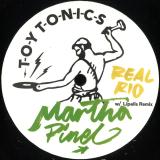
A new Toy Tonics artist! Brazilian DJ, vinyl collector, party promoter, and style aficionado Martha Pinel has joined the Toy Tonics family.
Originally from Rio de Janeiro, where she is a well-established DJ and a prominent figure in the lifestyle scene, Martha also resides in Berlin, where she became friends with the Toy Tonics crew.
She is the creator of Assembleia, a celebrated party in Rio de Janeiro known for its laid-back and unpretentious atmosphere. Assembleia has also become a Carnival sensation, hosting unforgettable annual editions that are now a highlight of the season. In Brazil, she is also known as the co-founder of the Croma project, where fashion and music merged to revolutionize Rio de Janeiro's alternative scene. She has been featured on the cover of GQ Brazil, which named her one of the "13 artists giving voice to the generation that is changing the world."
Martha has been DJing worldwide at festivals such as KALA Festival, Paris Fashion Week, DGTL, and Boiler Room. She has made a name for herself in the diggers scene, sharing the stage with DJs such as Hunee, Antal, Yusu, Sam Ruffillo, Prins Thomas, and many others.
Martha is passionate about discovering music daily and crafts dynamic, non-linear sets that play with the audience's emotions. Known for her bold approach, her sets are always powerful and brimming with personality. They seamlessly blend ethnic musical influences with cutting-edge productions from Brazil and beyond, incorporating African and Middle Eastern sounds, space disco, Italo disco, Balearic beats, house, and its subgenres.
Martha Pinel's debut EP, Real Rio, was born during a moment of rediscovery in her hometown, Rio de Janeiro, after spending a long time abroad. This project is a celebration of that reconnection, capturing the city's most authentic and visceral aspects-a place where beauty and chaos coexist, with dramatic highs and lows.
In the track "Uber Moto," Martha reflects on the urban phenomenon of app-based motorcycles, which have become a symbol of the city.
"Espírito de Estado," on the other hand, is a track that embodies the spirit of the Carioca Carnival, the greatest party in the world.
Finally, "Assim" offers a personal reinterpretation of Marcos Valle's classic Estrelar. In this track, Martha and Gabto leave their mark on this Brazilian music icon, reflecting on the concept of Body Culture-it's often said that it's impossible to walk along Ipanema Beach without noticing the Carioca cult of the body.
Поиск:st thomas
Все
- The Voice Of Water
- Lake Of Sphinxes
With »Roto«, Derek Piotr revisits the aqueous terrain first explored in his 2016 album »Drono«, where the paradox of water’s stillness and perpetual motion was refracted into looping voices and glitching textures. Conceived as a »spiritual successor« and recorded in 2019, the album has lain dormant for six years before surfacing on Discreet Archive. That stretch of silence seems to have deepened its charge – the sound feels unearthed rather than made, like a whirlpool biding its time in obscurity until now.
Unlike »Drono«’s mosaic of shorter pieces, »Roto« unfurls as two expansive half-hour tracks, allowing Piotr to probe repetition with greater intensity. Vowels accumulate until they shimmer with alien sentience, drones grow dense and psychoacoustic, and the smallest digital artifacts flicker like neural sparks. The result is a work that denies familiarity; recurrence here only breeds strangeness, unspooling into a procession of hidden pulses and altered voices that resist prediction, drawing the listener deeper into a submerged, otherworldly space.
Derek Piotr is a folklorist, researcher and performer whose work focuses primarily on the human voice. His work covers practices including fieldwork, vocal performance, preservation and autoethnography; and is primarily concerned with tenderness, fragility, beauty and brutality. He has collaborated with artists including Scott Solter, Nathan Salsburg and Thomas Brinkmann across various disciplines.
He is lead archivist and creative director of the Fieldwork Archive.
- Flying North
- Commercial Breakup
- Weightless
- Europa And The Pirate Twins
- Windpower
- The Wreck Of The Fairchild
- Airwaves
- Radio Silence
- Cloudburst At Shingle Street
"The Golden Age of Wireless is the debut album by English musician Thomas Dolby. The album was originally released in May 1982. Several tracks have a submerged, barely audible layer of almost random sound that serves as a constant (and disturbing) subtext, occasionally erupting into a song. This sonic underworld is all part of Dolby's mechanical wizardry. Rolling Stone magazine awarded The Golden Age of Wireless four stars out of five, calling it ""one of the most impressive debuts"" of 1982. They compared the album's melodicism to the works of Paul McCartney and concluded that ""unlike many synthesizer bands from England, Dolby eschews morbid, droogy drones."" Musician magazine said the album was ""the best damned record to come out of Europe's current fascination with synth-pop. Period."" Theye added, ""Dolby is purely amazing. And best of all, he writes songs.""
The Golden Age Of Wireless is available as a limited edition of 1000 individually numbered copies on silver coloured vinyl and includes an insert. "
glinted’s first release pairs Copenhagen based producer gab_i with Amsterdam newcomer GATELESS. Across 43 minutes of shimmering sound, glinted 01 puts into dialogue the rawness of illbient low-ends & electroacoustic experiments, with the precision of contemporary ambient electronics. Let it wash over you.
glinted 01 is for fans of 3XL, Sferic, Asphodel & Mille Plateaux.
Mixed & Mastered by Michael James Thomas at Studio Moonchord
Vinyl distribution by One Eye Witness
Artwork by James Crossley
a A1: gab_i – June (unvoiced) [3:40]
[b] A2: gab_i – Amber1 [4:22]
[c] A3: gab_i – Missing Are My Two Hands [4:10]
[d] B1: GATELESS – GtoX [4:36]
[e] B2: GATELESS – Outer Rail [4:43]
[f] B3: GATELESS – In Light [4:20]
A Side: Er Mar (Submarine Mix) "Maracaibo, dance to the barracuda, yes but dance naked, zà zà! " So sang Maria Luisa Colombo, known to all of us as Lu Colombo. It was 1982, the meteoric song became and still is today a worldwide Hit that everyone has sung at least once in their life and almost never sober. Let's make a leap in time, we are in 1993 the track is taken up and remixed in several versions between Latin and Euro House, we have taken up the track Er Mar (Submarine Mix), dreamy, lustful, psychedelic, evocative, Summer in its purest form. To dance on the beach, preferably in company of Miguel and naked
B Side: FeelFly – Onda Erotica Remix A Cosmic sabba in the forest. You’ll get lost with this hypnotic sound and a minute later you’re ready for a proper trip into your hidden Erotic Dreams. With this almost ten minutes long and original version, Feel Fly delivers to all of us a signature track of the highest order. Feel Fly is an Italian electronic musician and DJ. Defined by Gerd Janson as a linchpin of the underground scene, he recently released some Balearic trance tracks on International Feel and Internasjonal by Prins Thomas, as well as transversal EPs on New Interplanetary Melodies and Hell Yeah.
- IN 10: Jahren
- Pas De Deux
Siebdruckcover, gedruckt in der Küche des Labelbosses. Plus Sticker. Nach 4 Livekonzerten Anfang des Jahres als Gästeband der Antilopengang fassen "Die Benjamins" die ihnen eigene Live-Energie in zwei neue Songs: "Wer liebt dich in 10 Jahren" und "Pas de deux". Folgerichtig wurde im Proberaum alles live eingespielt, aufgenommen von Moses Schneider. "Wer liebt dich in 10 Jahren" Annette Benjamin, ehemalige Sängerin der legendären Punkband "Hans-A-Plast", fragt: Wer liebt dich in 10 Jahren? In einer Gesellschaft, in der viele eine nicht enden wollende Jugend anstreben. Was bleibt? Mit Zeilen wie "heute underground - morgen schlecht gelaunt" stellt sie die Halbwertszeit der Szene infrage. "Deine Freundin ist jung, küss ihren Mund, kauf einen Hund". Dass solche Textzeilen nicht ins schlagerartige Abrutschen, sondern extrem bissig funktionieren, ist Verdienst des Zusammenspiels aller Bandmitglieder. Thomas Götz und Julian Knoth zurren den Song auf eine postpunkige Art zurecht, Max Grubers geschmackvolle Knochenbrechergitarre setzt die Akzente, und Charlotte Brandis 80's-Synthesizer rundet ab - fertig ist der Sound von DIE BENJAMINS. "Pas de deux" ist eine Hetzjagd.Durch die fest verzahnten Riffs pflügt Annette Benjamins helle Stimme, die von Gewalt, von Dominanz und wahrscheinlich auch von Liebe erzählt: "Schnell bist du ihm zuwider / dein König zwingt dich nieder". Ein Männerchor, der "pas de deux" brüllt, die souveräne Aufteilung der einzelnen Bandmitglieder zu einem knurrenden Ganzen - das ist Punk in Bestform. Mitglieder: Annette Benjamin, Max Gruber (Drangsal), Julian Knoth (Die Nerven), Thomas Götz (Beatsteaks), Charlotte Brandi
Multi-Platin Sänger und Songwriter Rob Thomas veröffentlicht sein sechstes Studioalbum „All Night Days“
und erreicht somit einen neuen Meilenstein seiner beeindruckenden Karriere. Getreu seinem Stil, schreibt
er auch in diesem Projekt darüber, dass man sein Leben in vollen Zügen genießen soll, auch wenn die
typischen „All Night Days“ immer seltener kommen als damals.
Vor dem Albumrelease hat der Künstler seinen Fans bereits mit den beiden Songs „Hard To Be Happy“
und „Thrill Me“ einen Vorgeschmack auf sein neustes Werk gegeben, welche den Facettenreichtum seines
Projektes widerspiegeln.
„All Night Days“ ist als Vinyl und CD erhältlich.
"After two EPs and an illuminating start to his career, Grammy Award-winning saxophonist Venna releases his debut album, Malik. Not wanting to be rooted in jazz alone, Malik embodies the melting pot of sounds that
reflects Venna’s environment. Bossa Nova influences can be heard across the album, as well as a deep love for Soul, R&B, and Rap. Venna’s broad range shines bright in his choice of collaborators, including vocalists Jorja Smith, Leon Thomas, MIKE, and Smino, as well as instrumentalists such as Yussef Dayes and Marco Bernardis.
It’s a beautiful rarity when an artist sees themselves as a vessel of the music, and though Malik is a manifestation of his experiences and how he sees the world and years of craft, Venna wants Malik to be an invitation. An invitation to let go, be present and submit to sensory experiences."
- A1: Major Tom (Völlig Losgelöst) (Single Version)
- A2: Irgendwie, Irgendwo, Irgendwann
- A3: Goldener Reiter
- A4: Da Da Da Ich Lieb Dich Nicht Du Liebst Mich Nicht Aha Aha Aha
- A5: Der Mussolini
- A6: Ein Jahr (Es Geht Voran)
- B1: Monotonie
- B2: Bruttosozialprodukt
- B3: Der Kommissar
- B4: Skandal Im Sperrbezirk
- B5: Hurra, Hurra, Die Schule Brennt
- B6: Sternenhimmel
- C1: Fred Vom Jupiter
- C2: Carbonara
- C3: Ich Will Spaß
- C4: Hohe Berge
- C5: Sommersprossen
- C6: Codo ( ..Düse Im Sauseschritt)
- D1: Computerliebe (Die Module Spielen Verrückt) (Single Version)
- D2: Zauberstab (Single Edit)
- D3: 99 Luftballons
- D4: Herz Ist Trumpf (Dann Rufst Du An ..)
- D5: Sonderzug Nach Pankow
- D6: Geschrien Im Schlaf
- E1: Katharine, Katharine
- E2: Heißkalter Engel
- E3: Fanfanfanatisch (Remastered 2005)
- E4: Ca Va!
- E5: Schweine Im Weltall
- E6: Besuchen Sie Europa (Solange Es Noch Steht)
- F1: Kleine Taschenlampe Brenn
- F2: Tretboot In Seenot (Single Version)
- F3: Hey Matrosen
- F4: Der Knutschfleck
- F5: Schickeria
- F6: König Von Deutschland
- G1: Rosemarie
- G2: Blaue Augen
- G3: Dreiklangsdimensionen (Single / Remastered 2005)
- G4: Terra Titanic
- G5: Japan Ist Weit
- G6: Taxi
- H1: Neue Männer Braucht Das Land
- H2: Duo Infernal
- H3: Als Wär's Das Letzte Mal
- H4: Blauer Engel (Original Demo / Remaster)
- H5: Total Normal
- H6: Fkk
Die FETENHITS-Folge NDW Neue Deutsche Welle wurde neu aufgelegt - mit verändertem Tracklisting.
Einige Titel, die auf der früheren Folge fehlten, sind nun endlich mit dabei, wie z.B. ”Der Mussolini” und
”Als wär’s das letzte Mal” von DAF sowie ”Der Kommissar” von Falco. Des weiteren finden sich einige
tolle Raritäten von Michael Cretu, Alphaville und Thomas Anders wieder. Man darf gespannt bleiben...
Als 3CD & Download und im September dann auch als 4-fach Vinyl!
Students of Decay presents The Dip, a new full-length recording by Berlin-based artist and composer Thomas Ankersmit, marking his debut with the label and sixth album to date. Comprised of two expansive, sidelong pieces composed entirely on the Serge Modular synthesizer, it signals a subtle yet significant shift in Ankersmit’s trajectory, imbuing the hyper-physical, psychoacoustic intensities of his live performances with introspective, atmospheric, and even melodic elements.
Primarily known for a site-responsive approach to sound, often realized in the moment of performance, Ankersmit’s turn toward the studio in the last few years has opened up a new dimension within his practice. It is in this quiet rupture that The Dip emerged, a study in internality and suspended states, rich with cinematic undercurrents and ghostly spatial suggestion. Here, electricity itself feels transfigured – becoming supple, even organic – within an environment shaped entirely by analog signals.
Over the past two decades, Ankersmit has established himself as one of the foremost practitioners of the Serge, the notoriously idiosyncratic and expressive instrument that has remained central to his work. On The Dip, he harnesses its potential not for brute force or disorientation, but for spaciousness, resonance, and lyrical abstraction. Without resorting to additional processing or effects, he draws out tones that feel simultaneously raw and refined, articulated and blurred – intricate structures that seem to breathe and evolve of their own volition.
The result is a kind of auditory hallucination, a “cinema for the ears,” wherein impressions, emotional arcs, and imagined topographies unfold. Each side of The Dip plays like a single gesture unfolding in time – a spatial narrative constructed through vibration, density, and the movement of air.
The Dip follows acclaimed works on PAN, Touch, and Shelter Press, and reaffirms Thomas Ankersmit’s position as one of the most focused and probing voices in contemporary experimental music. Quietly radical and meticulously constructed, it is less a departure than a deepening – a descent into a more private sonic world, where the boundaries between perception, memory, and pure signal dissolve.
- A1: Mbongé 2:58
- A2: Loango With Esther Abrami 3:45
- A3: Intra 2:44
- A4: Résurgence 2:44
- A5: Jour De Pluie 3:06
- A6: Puerto Plata 2:52
- B1: Seuls 2:48
- B2: As It Should Be 2:30
- B3: Amaël With Esther Abrami 2:32
- B4: Rose Bloom With Vienna Radio Symphony Orchestra & Irene D 3:59
- B5: Momentum 3:17
- B6: Umbra 3:13
- B7: The Ascendence 3:07
"Ephemeral Memory" ist das Debütalbum von Hip-Hop-Produzent, Komponist und Multi-Instrumentalist Braths, aka Thomas Horeczko, bei Sony Music. Darauf präsentiert der für seine Zusammenarbeit mit Hip-Hop Stars wie Apache 207, reezy, Nimo und Olexesh, Chapo102, oder Ezhel bekannte Musiker eigene instrumentale Kompositionen. Miniaturen für Soloklavier verbindet er mit gelayerten Streicherklängen und melancholischen Orchesterarrangements zu einer eigenen, atmosphärischen Klangwelt. Viele Instrumente hat Braths dabei selbst eingespielt, als Special Guests sind Esther Abrami und das ORF Radio-Symphonieorchester Wien auf dem Album zu hören. "Ephemeral Memory" ist für den 1998 in Paris als Sohn einer sudanesischen Mutter - einer Cellistin - und eines ukrainischen Vaters - einem Komponisten - geborenen Braths eine Hommage an die Geschichte seiner Familie und Vorfahren. Das Album thematisiert die Migrationserfahrung seiner eigenen Familie und die damit verbundenen, latenten Erinnerungen und komplexen Emotionen, die über Generationen fortbestehen. Erfahrungen wie Sklaverei und die Mühe Grenzen und Nationalitäten zu überwinden, spielen dabei eine Rolle. Braths wurde 1998 in Paris als Sohn einer sudanesischen Mutter, einer Cellistin, und eines ukrainischen Vaters, einem Komponisten, geboren und war von klein auf von Musik umgeben. Sein vielfältiger kultureller Hintergrund, bereichert durch jüdische und muslimische Wurzeln, hat seine mehrsprachige Identität als europäischer Weltbürger geprägt. Als klassisch ausgebildeter Geiger und versierter Musiker begann Braths seine musikalische Reise im Alter von vier Jahren und beherrscht sieben Instrumente, darunter Geige, Gitarre, Saxophon, Fagott und Klavier. Nach seinem Umzug nach Berlin, um Tontechnik und Jazzkomposition zu studieren, machte er sich schnell einen Namen in der europäischen Hip-Hop-Szene und arbeitete mit einigen den größten Künstlern des Genres zusammen, wie Apache 207, reezy, Nimo und Olexesh. In "Ephemeral Memory" kombiniert Braths seine facettenreichen Einflüsse zu einzigartigen, atmosphärischen Instrumentalkompositionen, die die Zuhörer dazu einladen, über ihre eigenen Geschichten und Emotionen nachzudenken.
- Is It Making You Feel Something
- Bruised Lung
- No Hope
- Care Less
- Climb The Walls
- Cue
- Everybody Dies
- Stuck In A Dream
- Train On Fire
- Some Green
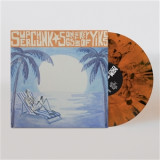
ORANGE & BLACK SWIRL VINYL[23,49 €]
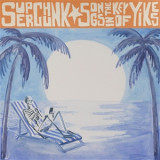
"Songs in the Key of Yikes" ist ein typisches Superchunk-Album: viszeral und zeitlos und verdammt eingängig - ein kathartischer Balsam für diese bedrückenden Zeiten. "Bruised Lung" - "No Hope" - "Care Less" - "Climb the Walls" - "Everybody Dies". Wenn man die Trackliste von "Songs in the Key of Yikes" überfliegt, fragt man sich unweigerlich: Sind Superchunk okay? In einer Welt, die wohl düsterer ist als die, die "Wild Loneliness" (2022) oder "What a Time to Be Alive" (2018) begrüßte, geht es uns da überhaupt noch gut? "Es war schon immer so, dass jeder etwas durchmacht, von dem man vielleicht nichts weiß", bemerkt Mac McCaughan. "Das gilt derzeit mehr denn je - aber es ist auch so, dass wir alle gemeinsam etwas durchmachen. Angesichts dessen, was nützt Kunst und wo findet man Glück? (Spoiler-Alarm: Ich weiß es nicht.)" Auf der Suche nach einer Antwort entfesselt "Songs in the Key of Yikes" einen Sound, der triumphierend und hell in der Dunkelheit ist, "Majesty Shredding" im Overdrive. Die Lead-Single ,Is It Making You Feel Something" gibt früh den Ton an, wobei die Band - McCaughan, Laura Ballance, Jim Wilbur und Laura King - aus dem Potenzial für Freude eine Hymne baut und in schlammverschmutzte Gewässer taucht und mit einer Perle wieder hochkommt. "No Hope" ist ähnlich widerstandsfähig, McCaughans Texte zeichnen ein niederschmetterndes Bild, bevor sie in den titelgebenden Refrain übergehen. Er wiederholt den Satz neun Mal, macht eine Pause und verwandelt die Stimmung vollständig, indem er den Gesang mit der Zeile "and here we are singing" unterbricht. Der Text ist scharf, gleichzeitig eine einfache Beobachtung und eine tiefgründige Aussage über das Sein, die erdrückenden Nächte und endlosen Tage, aber McCaughans Stimme findet eine gewisse Süße darin, durchgehalten zu haben und dies auch weiterhin zu tun. Paradoxerweise grenzt die Energie von "Songs in the Key of Yikes" an Euphorie und bricht manchmal sogar in sie aus, wie in "Stuck in a Dream", das wie eine oasenartige Fata Morgana zwischen "Everybody Dies" und "Train on Fire" auftaucht, ein voller Sprint, der die Menge begeistert und sich zum Pogen im Pit eignet. "Care Less" ist ein düsterer, komischer Spiegel dieser Energie, ein Garage-Jam, in dem ein scharfzüngiger McCaughan Zuflucht vor dem Sturm sucht, indem er so tut, als würde er nicht direkt vor seiner Tür toben. Diese Strategie funktioniert nicht. Natürlich funktioniert sie nicht. Es ist ein Song auf einem Superchunk-Album, und Superchunk-Alben sind Argumente gegen Engstirnigkeit und für Partys, die groß genug sind, um alle zu beherbergen. Dieses Album begrüßt nicht nur Laura King nach zwei Jahren als Tour-Schlagzeugerin in der Band, sondern enthält auch Beiträge von Rosali Middleman ("Bruised Lung" und "Everybody Dies"), Bella Quinlan und Holly Thomas von Quivers ("Cue") und der Tour-Bassistin Betsy Wright ("Care Less"). Das Album wurde von Paul Voran (The Menzingers, Hurray for the Riff Raff) und Eli Webb produziert und von Mike Montgomery (The Breeders, Protomartyr) gemischt. Gemeinsam kommen sie zu keinem Ergebnis darüber, was gute Kunst in Krisenzeiten ausmacht und schaffen gleichzeitig großartige Kunst.
- A1: Geronimo's Cadillac (Thomas' Version) 3 19
- A2: Riding On A White Swan (Thomas' Version) 3 55
- A3: Give Me Peace On Earth (Thomas' Version) 4 07
- A4: Sweet Little Sheila (Thomas' Version) 3 23
- A5: Ten Thousand Lonely Drums (Thomas' Version) 3 30
- A6: Lonely Tears In Chinatown (Thomas' Version) 3 33
- B1: In Shaire (Thomas' Version) 3 46
- B2: Stranded In The Middle Of Nowhere (Thomas' Version) 4 34
- B3: The Angels Sing In New York City (Thomas' Version) 3 35
- B4: Princess Of The Night (Thomas' Version) 4 05
- B5: Cherokee Highway (New Bonus Track) 3 41
- B6: Voodoo Love (New Bonus Track) 3 20
- C1: Geronimo's Cadillac (Thomas' Version - In The Mix) 2 40
- C2: Riding On A White Swan (Thomas' Version - In The Mix) 2 55
- C3: Give Me Peace On Earth (Thomas' Version - In The Mix) 2 21
- C4: Sweet Little Sheila (Thomas' Version - In The Mix) 2 53
- C5: Ten Thousand Lonely Drums (Thomas' Version - In The Mix) 2 46
- C6: Lonely Tears In Chinatown (Thomas' Version - In The Mix) 3 02
- D1: In Shaire (Thomas' Version - In The Mix) 3 10
- D2: Stranded In The Middle Of Nowhere (Thomas' Version - In The Mix) 3 18
- D3: The Angels Sing In New York City (Thomas' Version - In The Mix) 2 59
- D4: Princess Of The Night (Thomas' Version - In The Mix) 3 25
- D5: Cherokee Highway (New Bonus Track - In The Mix) 2 55
- D6: Voodoo Love (New Bonus Track - In The Mix) 2 47
THOMAS ANDERS SINGS MODERN TALKING: THE ULTIMATE ALBUM COLLECTION Brandneue Aufnahmen plus neue Bonustracks. Die ersten drei Alben aus der Jubiläumsreihe haben die Fans mehr als gefeiert und hoch in die Charts gebracht.
Album #4 "In The Middle Of Nowhere" ist der nächste Streich für die ultimative Sammelbox! Inkl. des Mega-Songs "Geronimo's Cadillac" und alle Songs als "In The Mix" + "Instrumentals", plus der neuen Songs "Voodo Love" und "Cherokee Highway", zu der es auch wieder einen Musikclip geben wird. Eine besondere Hommage an die unvergessliche Ära der 80er Jahre und den unvergesslichen Modern Talking Sound. Über 125 Millionen Tonträger hat das Kult-Duo bis dato in aller Welt verkauft.
Coastal County II marks the fifth release from Oslo-based Lomas Productions, the long-running collaboration between musicians and producers Lars Mellgren and Thomas Hauge. Following the underground success of their 2019 Coastal County, the duo returns with a new installment that expands their instrumental universe. Coastal County II continues the sonic explorations of its predecessor, expanding the palette with a rich blend of cinematic moods and classic soundtrack grooves. Across eight tracks, the album moves from noir-infused symphonics and beat-driven progressions to Anatolian-inspired rock, jazz-tinged vignettes, and mountainous melodies. While steeped in the traditions of composers like David Axelrod and Alessandro Alessandroni, Coastal County II adds a Nordic sensibility – rich in details with shadows around the edges. This is not just a follow-up. It's a continuation.
- A1: Booker T. & The M.g.’s – Green Onions
- A2: Booker T. & The M.g.’s – Boot-Leg*
- A3: Booker T. & The M.g.’s – You Can’t Sit Down
- A4: Booker T. & The M.g.’s – Summertime
- B1: Booker T. & The M.g.’s – Soul Twist
- B2: David Porter – Just Be True*
- B3: David Porter – Can’t See You When I Want To*
- B4: The Astors – What Can It Be*
- B5: Wendy Rene – Bar-B-Q*
- C1: The Mar-Keys – Last Night
- C2: The Mad Lads – Don’t Have To Shop Around
- C3: The Astors – Candy
- C4: William Bell – Any Other Way
- C5: William Bell – You Don’t Miss Your Water
- D1: Carla Thomas – Every Ounce Of Strength
- D2: Booker T. & The M.g.’s – Boot-Leg
- D3: Wilson Pickett – In The Midnight Hour*
- D4: Rufus Thomas – Walking The Dog
In 1965 in the face of social unrest, legendary Memphis label Stax Records put on two pulsating shows at the 5-4 Ballroom in Los Angeles, featuring Rufus Thomas, Booker T. and the M.G.’s, William Bell, Carla Thomas, Wilson Picket and more. 60 years later the recordings, newly mastered by Joe Tarantino, with lacquers cut by Jeff Powell at Take Out Vinyl, have been collected with a bonus set of performances recorded at Club Paradise, Memphis to form Stax Revue – Live In ’65!.
- A1: Time Wounds All Heels
- A2: If You Were Really My Woman
- A3: Chrissy
- A4: I'm Walking Away
- A5: Hope She'll Be Happier
- A6: There's No Use Hiding
- B1: Medley - I'm Her Daddy / Daddy Don't You Walk So Fast
- B2: Color Me Black
- B3: The Impossible Dream
GENE TOWNSEL’ is an accomplished singer/performer and internationally recognised vocal coach from Los Angeles. He majored in music at Florida A&M University and currently runs his own studio The Source in Deerfield Beach, Florida. His debut album Time Wounds All Heels was released on Jeff Lawrence’s Dobre label in 1978 and has long been a highly prized and much sought after original LP by soul collectors worldwide. A little-known fact that is appreciated on the Northern Soul scene is Gene’s arrangement of the iconic 1973 dancefloor hit “Come On Train” by Don Thomas (also available from Charly Records).
Gene’s philanthropic life choices have intertwined with his music career. He founded the Gene Townsel’ Studio of Theatrical and Musical Arts, Singers Workshops and The Artists Against Drug Abuse Program in Los Angeles. In 1997 Broward County Florida declared a “Gene Townsel’ Appreciation Day” in his honor.
- 1: My Sweet Potato
- 2: Jericho
- 3: No Matter What Shape
- 4: One Mint Julep
- 5: In The Midnight Hour
- 6: Summertime
- 7: Working In The Coal Mine
- 8: Don’t Mess Up A Good Thing
- 9: Think
- 10: Taboo
- 11: Soul Jam
- 12: Sentimental Journey
Initially serving as the house band for Stax Records, organist Booker T. Jones, guitarist Steve Cropper, bassist Lewie Steinberg (later replaced by bass monster Donald ‘Duck’ Dunn), and drummer Al Jackson Jr. were instrumental in creating the “Memphis Sound.’ They recorded the basic tracks for well over a hundred records, including backing some of the greatest artists of all time: Otis Redding, Sam & Dave, Rufus Thomas, and Albert King, all the while breaking barriers as one of the South’s first integrated acts. 1966’s And Now!’ is the first to feature long-term bassist Duck Dunn, who helps create a nightclub feel that alternates between some of their most aggressive recordings and most sultry. No stranger to being in the U.S. and U.K. music charts (in both the Hot 100 & R&B categories), the jazzy first single off the record, “My Sweet Potato,” landed them yet another top 40 placement.
The discovery of Doris Dennison's score represents a genuine musicological breakthrough—what once would have been "a tree falling in the woods" thirty years ago now holds the potential to render "a thunderous clap in our minds." While researching Anna Halprin's lesser-known collaborators, scholar Tom Welsh uncovered the archives of AA Leath, one of Halprin's principal dancers. Buried within these materials was Dennison's handwritten score for Earth Interval, dated May 1956. Born in Saskatchewan, Canada, in 1908, and raised near Seattle, Dennison (1908-2009) encountered John Cage while teaching Dalcroze eurythmics at the Cornish College of the Arts. She joined Cage's earliest percussion quartet—alongside Margaret Jansen, the composer and his wife Xenia—in the group widely regarded as having performed the first complete concert of percussion music in the United States. This historic December 1938 concert was followed by tours and the landmark May 1941 performance at the California Club, comprising Cage and Lou Harrison's Double Music, the premiere of Cage's Third Construction, and Harrison's 13th Simfony.
As Bradford Bailey observes in his extensive liner notes, Earth Interval demonstrates "an extraordinary balance of elements that imbues the piece with a sense of clarity, directness, and constraint that is both distinct and ahead of its time." The work's most remarkable innovation lies in its approach to extended techniques, particularly Dennison's notation for the central movement: "In 2nd movement, 1st player lowers + raises a gong into a tub of water while beating." This technique, absorbed from Cage's experimental vocabulary, generates what Bailey describes as "fields of acoustic abstraction that bend and warp time through sustained resonances, beat, and space." The temporal sophistication of these manipulations anticipated Karlheinz Stockhausen's Mikrophonie I (1964) and Annea Lockwood's water-based sound investigations by over a decade. After joining Mills College as dance accompanist, Dennison maintained crucial connections to the Bay Area's experimental scene, collaborating with figures like Merce Cunningham and programming Cage's music throughout the 1950s.
Comprising three movements—Land Form, Air Tide, and Earth Play—Earth Interval is scored for recorder, drums, gongs, maracas, muted gongs, and bowl gongs. In total, the piece is just under eight minutes: "a fleeting glimmer of moment in time, a life spent at the cutting edge, and a singular creative vision that packs a powerful punch." When viewed in historical context, placed in contrast to roughly contemporaneous avant-garde percussion works by Cage, Harrison, Louis Thomas Hardin (Moondog), and Harry Partch, or important precursors like Edgard Varèse's Ionisation (1931) and Henry Cowell's Ostinato Pianissimo (1934), it's clear that Dennison was following her own path. Earth Interval is not derivative. It is a precursor to what was yet to come, alluding to developments of avant-garde and experimental music that wouldn't begin to appear on the cultural landscape until the 1970s and '80s, with the emergence of Post-Minimalism and more idiosyncratic artists and ensembles like Midori Takada, Ros Bandt, Peter Giger, Frank Perry, Christopher Tree, Michael Ranta, Gamelan Son of Lion, and Niagara.
This recording by Chicago's Third Coast Percussion, captured in March 2022, represents the first complete documentation of this pioneering work. The ensemble's interpretation reveals the piece's remarkable contemporaneity while maintaining its historical specificity. Where Cage, Harrison, and Partch employed "self-consciously off-kilter polyrhythms," Dennison's rhythmic sensibility anticipates minimalist developments by nearly a decade, yet integrates "forceful rests, as well as sharp shifts in sonic character, tempo, and meter, that break the momentum and breathe a sense of life into the piece's structure." This positions her work closer to Post-Minimalism decades before its emergence. The architectural approach demonstrates Dennison's understanding that "the composer almost entirely disappears" in favor of phenomenological listening experience, creating what might be called an egoless music that places its realities and meaning entirely in the ear of the beholder. The present recording, realized by Chicago's distinguished Third Coast Percussion ensemble, represents a significant achievement in experimental music scholarship and performance practice. As specialists in the Cage tradition and contemporary percussion repertoire, Third Coast Percussion approached Earth Interval with the historical sensitivity and technical precision required to illuminate Dennison's subtle compositional innovations. The March 2022 recording sessions, engineered by Colin Campbell, capture both the work's intimate chamber music qualities and its bold exploration of extended techniques. The ensemble's interpretation reveals the piece's remarkable contemporaneity—its ability to speak directly to current musical concerns while maintaining its historical specificity.
This recording serves multiple scholarly functions: it provides the first complete documentation of Dennison's compositional voice, offers insight into the broader network of experimental music practitioners surrounding Cage and Harrison, and demonstrates the sophisticated level of compositional thinking that was occurring within the Bay Area's dance-music collaborations of the 1950s. The work's emphasis on phenomenological listening—what might be called an "egoless" approach to musical experience—places it within a lineage of American experimental music that prioritizes perceptual process over compositional personality. The work's original obscurity—limited to AA Leath's performances at venues like the 1957 Pacific Coast Arts Festival at Reed College—paradoxically allowed it to remain "entirely on its own terms," free from the constraints of historical categorization. Drawing on Jacques Derrida's Archive Fever, the argument emerges that "the archive can acknowledge, celebrate, and resurrect" overlooked voices, transforming our understanding of experimental music history. The present Blume edition, featuring Third Coast Percussion's authoritative interpretation, includes a lavishly illustrated 16-page booklet designed by Bruno Stucchi / dinamomilano, containing complete scholarly apparatus, historical photographs, and detailed production notes. This recording enables "cross-temporal intersectionality," allowing Dennison to "belong to a newly formed and more dynamic understanding of the present and past," demonstrating how forgotten voices can reshape entire historical narratives when given proper scholarly attention and performance advocacy.