2026 Repress
Here's to a special one..
Ashtar Afterhours is Kenneth Graham - originally from Los Angeles, he has been a defining presence in electronic music ever since the 90s. Buying his first classic synthesizer, a Yamaha CS01, in 1984, he delved into music production at an early stage. Kenneth put out over 40 releases over the years- under his own name as well as stepping up under various aliases- Estelle Montenegro, KG Beat, Exit Strategy and many others. Kenneth also formed some super-groups together with friends, his Sun Children / Sunkiss project- together with David Alvarado- put out highly influential music on legendary Peacefrog Records.
Body Music was originally released on Plastic City in 2001 and it has been a Smallville favourite since a long time, so we are super happy to present this beauty as a repress, as always with a full cover artwork by Stefan Marx.
All tracks written & produced by Kenneth Graham, B3 w&p by Kenneth Graham & Gabriel Ortega
Vinyl cut by Helmut Erler at Lathesville
Suche:stage 7
The Goblin Walk is an invitation to trace the footsteps of the eponymous creature through five swampy, dubby, liquid techno interpretations from four different artists. Label head Caldera opens with the gently underlapping space chug of 'Today', followed by Traevor's 'Reef' which turns marimba into a dubbed-out bass meditation. Caldera then features again under his Loop LF alias with 'Tiz', which pairs spectral sonic sketches with whimsical melodies that drift and float as if in a gravity-free zone. Streetfaxx then unearths a long-lost 2013 Cologne track, its patient rhythmic progression untouched by the passing years, before ambient textures take centre stage in Nightwaif's 'Xmas1 (vocal dub)' as tape experiments float over deep sub-bass, caught somewhere between 1980s new age and modern ambient minimalism. A compelling, exploratory world of sound.
BLACK VINYL[25,84 €]
Following the reissue of The Pocket of Fever, Ambient Sans presents the second chapter in Masahiro Sugaya’s visionary work for the avant-garde performing arts company Pappa TARAHUMARA.
Founded by Hiroshi Koike in 1982, Pappa TARAHUMARA blended dance, theater, music, and visual art into abstract, immersive stage worlds. Sugaya’s compositions became the sonic counterpart to this radical aesthetic—minimal yet deeply evocative, combining electronics, ambient textures, and delicate melodic gestures into a sound language both intimate and expansive.
Music From Alejo marks his first original stage score for the company: a work where repetition and silence intertwine with shimmering synthesizers and dreamlike motifs, conjuring atmospheres that feel suspended between reality and reverie. More structured than The Pocket of Fever yet equally poetic, the album reveals Sugaya’s gift for translating movement into sound, balancing modern composition with subtle echoes of Japanese tradition.
Reissued for the first time on vinyl, Music From Alejo includes a printed insert featuring an exclusive interview with the artist, alongside photographs from our visit to his home in Japan. Essential listening for anyone drawn to the ambient minimalism of Hiroshi Yoshimura, Midori Takada, or Brian Eno—reimagined here through the lens of Tokyo’s experimental scene of the 1980s.
- A1: Orphans
- A2: Timejump
- A3: In Captivity Of Soldiers
- A4: Way To America
- A5: Filmset
- A6: Way To Kurdish People
- A7: With Kurds
- B1: Meeting Shepard And Way To Uncle
- B2: Uncle First Part
- B3: Uncle Second Part
- B4: Leaving Cousin
- B5: Hotel Lamar
- B6: Jump To Freedom
- B7: Mother's Death
- B8: Swimming
- B9: Train To Tbilisi
- C1: Newspaper Brother
- C2: Shepard
- C3: Betrayal
- C4: Aurora In School
- C5: Devastation
- C6: Aurora's Theme Gathering For Brother
- C7: Finding The Gun
- C8: River
- D3: Memories Train
- D4: Aurora's Piano Theme Silk Cocons
- D5: Aunt's Killing
- D6: Stage Collaps
- D7: Crucifixion
- D1: House Mrs. Harrimann
- D2: Memories Jump
WRWTFWW Records is proud to announce a super limited vinyl release of Christine Aufderhaar and City of Prague Philharmonic Orchestra's original soundtrack for the critically acclaimed, multiple award-winning 2022 animated-documentary film Aurora's Sunrise. The release comes as a 45rpm double LP in a heavyweight sleeve with inside out print.
Aurora's Sunrise is directed by Inna Sahakyan, and tells the extraordinary true story of Aurora Mardiganian, a survivor of the Armenian genocide who later became an actress in the United States. The film combines animated storytelling, archival footage, interviews, and rediscovered scenes from the 1919 silent film, and one of Hollywood's first blockbusters, Auction of Souls, in which Aurora starred. Aurora's Sunrise was Armenia's official submission for the 95th Academy Awards for best international feature film. It has won over 20 international prizes.
The composer, Christine Aufderhaar, is an accomplished German composer based in Berlin and Los Angeles, with over 20 years of experience and more than 50 films to her name. Her background spans classical, jazz, film scoring, and contemporary orchestral work, and she has been the recipient of numerous awards for her work.
The soundtrack performed by the City of Prague Philharmonic Orchestra is deeply emotional, blending intimate melodies and majestic orchestral work, and weaving together themes of memory, survival, loss, and hope. A perfect fit for collectors of film scores, contemporary classical music, and limited vinyl releases.
- A1: Champion Feat Super Star
- A2: Diddy Bop Feat Super Star & Rhyme Va-Lore
- A3: Fake It Feat A-F-R-O & Super Star
- A4: Fight And Fuck Feat Super Star, Rhyme Va-Lore & 2Timez
- A5: I Need A Beat Feat Super Star
- B1: Keep Making It Feat Super Star, Rhyme Va-Lore, Big Sha & Chris Addison
- B2: Legacy Feat Super Star
- B3: Life In Times Feat Super Star & Rhyme Va-Lore
- B4: Rock The Stage Feat Super Star & Rhyme Va-Lore
- B5: Too Bold Feat Super Star
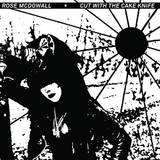
Cut The With The Cake Knife was recorded by Rose McDowall in 1988/89 following the break up of her group Strawberry Switchblade. Produced with the aid of several musicians in several studios, the album features songs written for the fabled second Strawberry Switchblade album. More importantly perhaps it showcases the honest, direct and life-affirming songs of one of the greatest unsung songwriters of the modern pop era at a tumultuous time in her career.
Tibet opens the set and could be one of the best pop songs you've never heard. The innate sadness of the songs' content - the loss of a friendship, impending sorrow - is heightened to heart-melting level by McDowall's pop nous and melodic sensibility. Choruses and hooks are everywhere on Cake Knife, from the outsider take on stadium 80s pop in Wings Of Heaven to the spiraling, ecstatic So Vicious, a glorious anthem that highlights the human fragility in McDowall's vocal performance, an instrument that has never lost the naïve purity it first exemplified in Strawberry Switchblade's early 80s recordings. The centerpiece of the album, the title-track, is the greatest Switchblade pop chart hit that never was. Like the veiled melancholy of her former group's hits, Cut With The Cake Knife hints at a darkness beneath the gloss, a darkness that saw McDowall delve into more esoteric territory with her subsequent recordings and collaborations. Cut With The Cake Knife serves as the bridge between the pop music McDowall had been making with her friends Jill Bryson, Lawrence from Felt and Primal Scream to what became a more extreme, deep sound informed by neo-folk and post industrial music.
Rose McDowall's role in the canon has always been one of an outsider. Beginning in Glasgow's East End in the avant proto-noise group The Poems, achieving fame briefly in the 80s and then disappearing into counter-cultural folklore, the emphasis in the internet-age has been skewed towards her image and cultural significance. Unseen to many, her solo work, her groups Sorrow and Spell and her collaborations with a whole host of underground luminaries have still touched lives. As McDowall elucidates: 'They're real sad songs, about real life. I've had people come up to me to say I'd connected with them and helped them. I remember a gig in America when we made a whole room cry. It was bizarre. A couple at the front of the stage started crying and then these two boys beside and suddenly everyone was crying. And I thought, "that's power."
Night School's issue of Cut With The Cake Knife includes unpublished photographs, extensive sleeve notes from Rose McDowall and 2 bonus tracks culled from the bootleg 7' 'Don't Fear The Reaper.' First vinyl pressing is Clear w/ Black swirl; 500 only / has DL card and booklet, with a poster
CD has extensive booklet and is packaged in anO-Card.
In spring 2025, Abul Mogard and Rafael Anton Irisarri created the source material for their second album, Where Light Pauses in the Silence of the Sun, during a three-day residency at Morphine Raum in Berlin. Functioning as both recording studio and performance venue, the space has no stage, with the audience gathered around the performers. Working within an open framework, the duo reshaped the music each evening while recording the performances live to multitrack. Rotary speakers, modular synthesizers and bowed guitar formed the core of their sonic language, captured through a 1970s mixing console and microphones placed around the room.
Back in Mogard’s studio in Rome, the material was further crafted as motifs were stretched, fragments isolated, and tempos dissolved. Irisarri recorded additional guitar textures and treatments in New York, while passages recorded by Martina Bertoni and Andrea Burelli in Berlin reinforced the harmonic centres and brought breath, refinement and a new sensibility to their compositions. The process continued as Mogard’s layering and subtraction reassembled everyone’s parts into the final arrangement.
The album opens with “In the Eastern Wild,” building from a sparse outline into a monumental formation of low-frequency weight, its internal motion shaped by the rotating Leslie speaker. “Over the Domes” widens into a broader acoustic field, where sustained modular tones meet waves of softly plucked guitar. The music then turns inward with “A Blue Descent,” centred on Bertoni’s cello, whose growling timbre introduces a melancholic depth.
At the album’s centre, “In a Quiet Radiance” unfolds around a slow guitar ostinato, its luminous stillness opening into a more expansive and reflective state. Across its ten-minute span, Burelli’s violin lines and Bertoni’s lower cello phrases gradually surface, weaving through the harmonic field. Mogard brings Burelli’s processed voice to the fore, its emotive, operatic presence becoming one of the record’s pivotal moments. “Of Blessed Ages” suspends the sonic flow, shifting between parallel major and minor chords as lingering, slowly decaying melodies shape the music’s internal drift. The closing “Among Shadows” settles into a darker resonance as layered textures recede.
Mogard and Irisarri’s shared language balances restraint and maximalism. UK magazine Crack describes the music as “a tidal wave held in suspension,” while Dutch newspaper de Volkskrant writes, “What a colossal sound, and how this music strikes at the emotions.” Reflecting on the residency sessions, Irisarri recalls: “At moments I genuinely couldn’t tell if a sound was coming from me or from Abul. It stopped feeling like two people making decisions and began to feel like we were inside a system moving on its own."
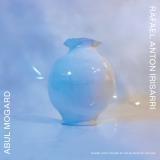
Marja de Sanctis’ cover artwork revisits the vessel sculpture from the duo’s first album, Impossibly Distant, Impossibly Close. There it appeared as raw, unfired clay. Here it has been fired in the kiln and finished with a glaze. Light gathers on its polished surface and spills into the surrounding space. As she explains, “I wanted to convey the idea of continuity within the duo, and the vessel became a kind of container for that idea. However, their music felt different this time, and with the collaboration of Martina and Andrea, I felt it should have a sleeker, softer, more glamorous look, very distant from the first raw appearance.” The transformation of the vessel from raw clay to fired form suggests a passage from immediacy toward permanence, mirroring the music’s gradual expansion.
In spring 2025, Abul Mogard and Rafael Anton Irisarri created the source material for their second album, Where Light Pauses in the Silence of the Sun, during a three-day residency at Morphine Raum in Berlin. Functioning as both recording studio and performance venue, the space has no stage, with the audience gathered around the performers. Working within an open framework, the duo reshaped the music each evening while recording the performances live to multitrack. Rotary speakers, modular synthesizers and bowed guitar formed the core of their sonic language, captured through a 1970s mixing console and microphones placed around the room.
Back in Mogard’s studio in Rome, the material was further crafted as motifs were stretched, fragments isolated, and tempos dissolved. Irisarri recorded additional guitar textures and treatments in New York, while passages recorded by Martina Bertoni and Andrea Burelli in Berlin reinforced the harmonic centres and brought breath, refinement and a new sensibility to their compositions. The process continued as Mogard’s layering and subtraction reassembled everyone’s parts into the final arrangement.
The album opens with “In the Eastern Wild,” building from a sparse outline into a monumental formation of low-frequency weight, its internal motion shaped by the rotating Leslie speaker. “Over the Domes” widens into a broader acoustic field, where sustained modular tones meet waves of softly plucked guitar. The music then turns inward with “A Blue Descent,” centred on Bertoni’s cello, whose growling timbre introduces a melancholic depth.
At the album’s centre, “In a Quiet Radiance” unfolds around a slow guitar ostinato, its luminous stillness opening into a more expansive and reflective state. Across its ten-minute span, Burelli’s violin lines and Bertoni’s lower cello phrases gradually surface, weaving through the harmonic field. Mogard brings Burelli’s processed voice to the fore, its emotive, operatic presence becoming one of the record’s pivotal moments. “Of Blessed Ages” suspends the sonic flow, shifting between parallel major and minor chords as lingering, slowly decaying melodies shape the music’s internal drift. The closing “Among Shadows” settles into a darker resonance as layered textures recede.
Mogard and Irisarri’s shared language balances restraint and maximalism. UK magazine Crack describes the music as “a tidal wave held in suspension,” while Dutch newspaper de Volkskrant writes, “What a colossal sound, and how this music strikes at the emotions.” Reflecting on the residency sessions, Irisarri recalls: “At moments I genuinely couldn’t tell if a sound was coming from me or from Abul. It stopped feeling like two people making decisions and began to feel like we were inside a system moving on its own."
Marja de Sanctis’ cover artwork revisits the vessel sculpture from the duo’s first album, Impossibly Distant, Impossibly Close. There it appeared as raw, unfired clay. Here it has been fired in the kiln and finished with a glaze. Light gathers on its polished surface and spills into the surrounding space. As she explains, “I wanted to convey the idea of continuity within the duo, and the vessel became a kind of container for that idea. However, their music felt different this time, and with the collaboration of Martina and Andrea, I felt it should have a sleeker, softer, more glamorous look, very distant from the first raw appearance.” The transformation of the vessel from raw clay to fired form suggests a passage from immediacy toward permanence, mirroring the music’s gradual expansion.
In spring 2025, Abul Mogard and Rafael Anton Irisarri created the source material for their second album, Where Light Pauses in the Silence of the Sun, during a three-day residency at Morphine Raum in Berlin. Functioning as both recording studio and performance venue, the space has no stage, with the audience gathered around the performers. Working within an open framework, the duo reshaped the music each evening while recording the performances live to multitrack. Rotary speakers, modular synthesizers and bowed guitar formed the core of their sonic language, captured through a 1970s mixing console and microphones placed around the room.
Back in Mogard’s studio in Rome, the material was further crafted as motifs were stretched, fragments isolated, and tempos dissolved. Irisarri recorded additional guitar textures and treatments in New York, while passages recorded by Martina Bertoni and Andrea Burelli in Berlin reinforced the harmonic centres and brought breath, refinement and a new sensibility to their compositions. The process continued as Mogard’s layering and subtraction reassembled everyone’s parts into the final arrangement.
The album opens with “In the Eastern Wild,” building from a sparse outline into a monumental formation of low-frequency weight, its internal motion shaped by the rotating Leslie speaker. “Over the Domes” widens into a broader acoustic field, where sustained modular tones meet waves of softly plucked guitar. The music then turns inward with “A Blue Descent,” centred on Bertoni’s cello, whose growling timbre introduces a melancholic depth.
At the album’s centre, “In a Quiet Radiance” unfolds around a slow guitar ostinato, its luminous stillness opening into a more expansive and reflective state. Across its ten-minute span, Burelli’s violin lines and Bertoni’s lower cello phrases gradually surface, weaving through the harmonic field. Mogard brings Burelli’s processed voice to the fore, its emotive, operatic presence becoming one of the record’s pivotal moments. “Of Blessed Ages” suspends the sonic flow, shifting between parallel major and minor chords as lingering, slowly decaying melodies shape the music’s internal drift. The closing “Among Shadows” settles into a darker resonance as layered textures recede.
Mogard and Irisarri’s shared language balances restraint and maximalism. UK magazine Crack describes the music as “a tidal wave held in suspension,” while Dutch newspaper de Volkskrant writes, “What a colossal sound, and how this music strikes at the emotions.” Reflecting on the residency sessions, Irisarri recalls: “At moments I genuinely couldn’t tell if a sound was coming from me or from Abul. It stopped feeling like two people making decisions and began to feel like we were inside a system moving on its own."
Marja de Sanctis’ cover artwork revisits the vessel sculpture from the duo’s first album, Impossibly Distant, Impossibly Close. There it appeared as raw, unfired clay. Here it has been fired in the kiln and finished with a glaze. Light gathers on its polished surface and spills into the surrounding space. As she explains, “I wanted to convey the idea of continuity within the duo, and the vessel became a kind of container for that idea. However, their music felt different this time, and with the collaboration of Martina and Andrea, I felt it should have a sleeker, softer, more glamorous look, very distant from the first raw appearance.” The transformation of the vessel from raw clay to fired form suggests a passage from immediacy toward permanence, mirroring the music’s gradual expansion.
- A1: Intro + Colors (Feat. Nic Hanson) (Live À L'olympia)
- A2: Love On Me (Feat. Later.) (Live À L'olympia)
- A3: Tiger Teeth (Feat. Nic Hanson) (Live À L'olympia)
- B1: Djon Maya Maï (Feat. Victor Démé) + Bensema (Feat. Lass) (Live À L'olympia)
- B2: Danse (Feat. Sirius Trema) (Live À L'olympia)
- B3: Nuit Blanche (Feat. Clou) (Live À L'olympia)
- B4: Les Hommes C'est Pas Des Mecs Bien (Feat. Clou) (Live À L'olympia)
- C1: Intemporel (Live À L'olympia)
- C2: Manyé (Avec David Walters)(Synapson Remix)(Live À L'olympia)
- C3: Toujours (Feat. Tim Dup & Lass) (Live À L'olympia)
- C4: Breathe (Feat. Thaïs Lona) (Live À L'olympia)
- C5: Guess What (Feat. Nic Hanson) (Live À L'olympia)
- D1: All In You (Feat. Anna Kova) (Live À L'olympia) + Going Back To My Roots (Feat. Tessa B) (Live À L'olympia)
- D2: Between The Lines (Dub Version) (Live À L'olympia)
- D3: Together (Feat. Beat Assailant) + Superfinal (Feat. Tbow, Thaïs Lona, Sirius Trema, Pierre Mirabeau) (Live À L'olympia)
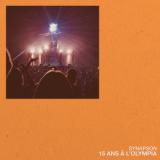
On October 16, 2025, Synapson took over the Olympia for a sold-out anniversary concert, celebrating 15 years of their career. A symbolic night in an iconic venue, in front of a crowd that came to relive the tracks that shaped their journey.
Today, the duo unveils “15 ans à l’Olympia”, a live album recorded during this unique show, a vibrant testament to their stage energy and the evolution of their project.
The evolution of Andreas Tilliander's moniker TM404 has reached its third stage. The first TM404 album was a heavily self-restricted concept album, live recorded with classic Roland machines. The subsequent album had a more playful vibe, shaped by Tilliander's extensive live touring. This third TM404 album on Kontra-Musik simply tells the story of what he's been up to since. The third part of a musical diary, initiated in 2013. The TM404 venture might have started out as a dreamy acid dub project, more suited for the chill-out than the main floor. But by popular demand Tillander found himself touring big clubs around the globe and the TM404 sound adapted organically. As a result, the album features tracks like Vactro and Rymdeko: fast paced acidic techno tracks in the same vein as classic Plus 8 releases, but with more space echo. Much more. But never fear, fans of the classic warm and bubbling TM404 sound. You'll certainly get yours as well. A substantial portion of this album was recorded in a studio flat in Berlin as part of an artist residency. For obvious reasons, Tilliander could only bring a small portion of his studio gear to this German sanctuary. As a consequence, this album has a more stripped down vibe than its predecessors, which creates more space for Tilliander's glowing melodies. The last track on the album, a loving homage to Kontra-Musik's label boss, is a sublime example. And for the Instagram generation, here's the short version: The album is called Syra. That translates to Acid. You're welcome.
RED VINYL VERSION[29,37 €]
Following the reissue of The Pocket of Fever, Ambient Sans presents the second chapter in Masahiro Sugaya’s visionary work for the avant-garde performing arts company Pappa TARAHUMARA.
Founded by Hiroshi Koike in 1982, Pappa TARAHUMARA blended dance, theater, music, and visual art into abstract, immersive stage worlds. Sugaya’s compositions became the sonic counterpart to this radical aesthetic—minimal yet deeply evocative, combining electronics, ambient textures, and delicate melodic gestures into a sound language both intimate and expansive.
Music From Alejo marks his first original stage score for the company: a work where repetition and silence intertwine with shimmering synthesizers and dreamlike motifs, conjuring atmospheres that feel suspended between reality and reverie. More structured than The Pocket of Fever yet equally poetic, the album reveals Sugaya’s gift for translating movement into sound, balancing modern composition with subtle echoes of Japanese tradition.
Reissued for the first time on vinyl, Music From Alejo includes a printed insert featuring an exclusive interview with the artist, alongside photographs from our visit to his home in Japan. Essential listening for anyone drawn to the ambient minimalism of Hiroshi Yoshimura, Midori Takada, or Brian Eno—reimagined here through the lens of Tokyo’s experimental scene of the 1980s.
a1. Straight Line Floating In The Sky
a2. Oldfashioned
b1. An Afternoon When Fish Appeared
b2. Mistral
b3. Alejo's Theme
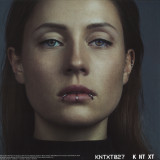
Belgian techno tastemaker Charlotte de Witte is back with the brand new Sanctum EP containing vocals of Marion Di Napoli. The release arrives the week after this year's Amsterdam Dance Event from October 16th - 20th and just ahead of her return to LA on November 2nd, where she will play a much anticipated all night long set at City Market.
Thanks to her truly distinct sound, de Witte sits at the frontline of the global electronic music scene. She is a DJ, producer and label head who has reshaped the underground with her blend of hard, dark and driving beats and trance tinged synths. Because of this, she is in demand on all the world's biggest stages, has picked up millions of global streams, established her label and its events art as a leading source of cutting edge sounds, and hosted her own KNTXT Turbo Club during Amsterdam Dance Event this year having already played across Europe, the US, UK all summer long.
Her own productions continue to stand out with fresh ideas and spectacular sun designs defining each one. She proves that once more with this new EP which features the alluring vocals of French singer, DJ and producer Marion Di Napoli. "I fell in love with Marion's voice years ago”, Charlotte explains. “She adds a very mystical touch to all her productions that have the power to bring you in a certain trance on the dance floor. I'm beyond excited about this release, on which every track her angelic voice is present.”
Sanctum kicks off with hard and heavy drums that will rattle warehouse walls as the searching synths add a futuristic feel next to twisted acid lines and the spell bound vocals of the angelic Marion. Fourth Dimension is a moody and driving techno roller with the vocals worked into hypnotic, soulful loops that add human warmth to the hypnotic drums and icy hi-hats. It's a warm and mystical world of sound then Fugato is an evocative ambient piece with soothing and exotic vocal coos and great cinematic tension.
This is another innovative EP from the one and only Charlotte de Witte.
Epicentre was an R&B/funk group formed in Seattle, Washington by keyboardist Ric Ulsky. The band developed a loyal following, playing the extensive NW club, concert and dance venues throughout the mid-to-late 1970s. Their sound was a blend of melodic R&B and powerhouse funk that dependably filled music venues throughout the Western US. Bernadette Bascom was the lead vocalist, who captivated audiences with her powerful yet velvet-smooth voice and commanding, magnetic stage presence.
In 1978, Epicentre worked with Seattle producer Don McKinney to record their music in Seattle's now legendary Kaye-Smith studios. The result was seven strong, fully -produced R&B songs, with occasional horn and string orchestrations tastefully added to the final versions.
Their music quite literally sat on a shelf for decades until McKinney decided that all the hard work and talent should no longer remain undiscovered and it needed to find its audience. He restored and digitized his copies of the master tapes and looked for an opportunity. A chance call to the former leader of the group, Kell Houston, led to a serendipitous introduction to UK boutique/funk/R&B label founder Russell Paine. The result was an agreement to release their music, starting with two songs, "When You Were In Love With Me", and "Magic Carpet."
Footnotes: Lead singer Bernadette Bascom became a protegé of Stevie Wonder, and was the first artist to be signed to his label Black Bull , starting a period of collaboration between the two. Bermadette is the daughter of Reverend Dr. Marion C. Bascomb (1925-2012), one of Baltimore's major civil rights voices and pastor emeritus of Baltimore's Douglas Memorial Community Church. Ric Ulsky eventually left the group to play keyboards and tour extensively with The Association. You can also find Epicentre's music on the compilation album "Seattle Funk, Modern Soul & Boogie: Volume II 1972-1987." In addition to Bernadette, the musicians on the 1978 sessions are Kell Houston, keyboards, Michael Cox, bass, John Carmondy, guitar, and Ricky Lynn Johnson, drums and vocals. While their recorded material is primarily original, Stacy Christensen from Seattle's Gabriel contributed two of his compositions. Label credits: Epicentre featuring Bernadette Bascom. Recorded at Kaye-Smith Studios, Seattle, Washington, August 1978"When You Were in Love With Me" and "Magic Carpet" written by Bernadette Bascom. Produced for Epicentre by Don McKinney
- A1: Jonathan Kaspar – Her
- B1: Robag Wruhme – Ratibor Numida
- B2: Ja Ck - Neverland
- A1: Butch – Straight Tripping
- B1: Josh Wink – Self Acceptance
- B2: Raxon – Believe In Mi
- A1: Dino Lenny – Sayonara Chicago
- B1: Extrawelt – Mindwear
- B2: Frank Sonic & Dist_42 – Silberschwein
- A1: Guy J – Alive Again
- B1: Riccardo De Polo – Melancholia
- B2: Johannes Volk – Vaporized Memories
- A1: Harvey Mckay – Tears In Rain
- B1: Damiano Von Erckert - Mad Man (I Told You What I Know)
- B2: Fedele - Zommerfest 25
Vol.2[89,03 €]
For its 25th anniversary, Cocoon Recordings returns to its roots with an elaborate vinyl LP box set, marking the first part of a two-volume anniversary project. 25 Years Cocoon Recordings – Volume
One brings together exclusive contributions from international artists who have defined the sound and diversity of the label over the past two decades, complemented by fresh talents who are helping to shape its future.
Over the span of 25 years, Cocoon Recordings has created a catalog that now comprises hundreds of releases, 12-inches, albums, mix CDs, and iconic compilation box sets, always bridging past, present, and future. While firmly rooted in techno and house, the label has also provided space for electronica,
ambient, and other evolving genres.
25 Years Cocoon Recordings – Volume One is more than just a compilation. It is both a homage to the label’s history and a glimpse into what lies ahead. With exclusive tracks that embody the Cocoon sound in all its depth and complexity, this release marks a milestone in the legacy of one of electronic
music’s most influential labels, arguably the strongest compilation in Cocoon’s history. To mark this special occasion, Sven Väth’s label presents the first of two carefully curated volumes, uniting 15 exclusive tracks from international artists in celebration of nearly three decades of Cocoon
Recordings. The luxurious 5x12" box set features a spectral-reflective foil finish and includes contributions from renowned names such as Butch, Robag Wruhme, Josh Wink, Guy J, and Dino Lenny, alongside longtime companions of the label including Extrawelt, Harvey McKay, Johannes
Volk, and Raxon. New discoveries of recent years, Jonathan Kaspar and Riccardo De Polo, enrich the release in their own distinctive ways. The compilation is completed by the unmistakable talents of Damiano von Erckert, Fedele, and ja:ck, who provide the perfect conclusion to the first of two parts.
This release sets the stage for what's next: a daring diptych where musical voices emerge, shining with originality and passion, carrying the spirit forward. The story is just beginning. Something special is on the horizon. One can only wonder which artists will shine on the second chapter.
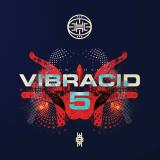
In a dystopian universe where elites manipulate memory to control the population. Vibracid emerges as a technique of liberation through sound: a method for erasing induced memory.
THE RHYME marks the counterattack phase. The insurgents infect the system used by the elites for control and reprogram it from within: patterns, voices and sequences as active code.
Contemporary bass, electro, breaks, acid and rave converge as transmission vectors. Each track operates as a unit of intervention within this science fiction scenario.
At this stage, new signals are incorporated. Power, with a solid trajectory within the underground circuit, opens the EP in a forceful way, with an acid, surprising and spectacular impact. Exieve, a young producer from Chernihiv, continues the attack with a raw tension where vocals cut through the signal like sharp fragments. Alongside them, Lups Digga, Atix, Parand and Calagad 13 continue expanding the system’s reach.
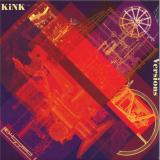
Say what you want, but Strahil Velchev has never been one to sit still — not on stage, not in the studio, and certainly not on Versions. Here, KiNK turns his own material inside out, upside down, and somehow still lands on his feet, grinning. His return to Running Back arrives as four slices of KiNK logic and mischief: A1. Comin, A2. Pump Version A, B1. Pump Version B, and B2. Pump Version C.
- A1: Seki Taneko - Akemi&Apos;S Poems
- A2: Kusunoki Shigeo - Longing For The Shadow
- A3: Yayoi Tanaka - Sad Gull
- A4: Akasaka Koume - Please Forgive Me
- A5: Ichimaru - If You Go Down The Tenryū
- A6: Mitsuko Nemoto - Cosmos Elegy
- A7: Ichirō Fujiyama - Tokyo Daughter
- A8: Chiyako Sato - Skyscraper
- A9: Yayoi Tanaka - The Dream Is Short Lived
- B1: Ichirō Fujiyama &Amp; Masao Koga - Is Sake Tears Or Sighs?
- B2: Otomaru - Yoneyama Sanri
- B3: Hamako Watanabe - I Don&Apos;T Forget
- B4: Akasaka Koume - Asama Smoke
- B5: Yoshio Tabata - Farewell Ship
- B6: Ichirō Fujiyama - Farewell Youth
- B7: Kouta Katsutaro - Stand Up Tomorrow
DEATH043[10,04 €]
Emerging during the early stages of the recording industry in Japan, the ryūkōka style adopted western classical, blues & jazz elements into traditional and classical Japanese music.
This collection of 1920s & 30s ryūkōka recordings follows on from the Kouta Katsutaro tape we put out a couple of years back, and further captures the hauntingly unique sound of a cultural merging that was starting to reflect itself via popular song, ahead of the widespread influence of western pop music during post-war US occupation.
"Death Is Not The End are on a mission to expand the musical archive, with compilations of everything from Jamaican doo wop to pirate radio idents and adverts weaving new threads into the history of music. Longing For The Shadow: Ryūkōka Recordings, 1921-1939 goes back to the beginnings of the recording industry in Japan, and a style merging traditional Japanese forms with western pop and classical. Swooning orchestrations and prominent vocals capture some of the melodrama and bombast found in US and European music of the time, but beds of plucked and strummed instruments give an ordered elegance, tying it firmly to Hogaku tradition. Not much has been written about Ryūkōka, and a 2017 book by Hiromu Nagahara gives some clue as to why, arguing that although popular with the public, it was dismissed by critics both for its adoption of western sounds and its dwelling on Japanese traditional styles. Close to a century later, those are some of the qualities that make this compilation so fascinating." - The Quietus
X-IMG presents “SEARCHING HELL” the new album by industrial body music producer SARIN, this 12” full-length LP marks his first release in six years.
SARIN (aka Emad Dabiri) has spent the last years sharpening his teeth on numerous collaborations and dozens of remixes. His evolution and development is displayed in the Gesamtkunstwerk that is “SEARCHING HELL” a nine track cybernetic joyride into oblivion; featuring his distinct militant drumwork, heat-seeking bass lines and surgically interlaced sampling, augmented by deceptively serene atmospheric pads & bloodied vocals. All this composed and assembled with an array of analog, digital and software based weaponry. “SEARCHING HELL” seeks to find meaning in an increasingly meaningless & subjugated world while maintaining a subversive & defiant autonomy.
Comes with download code.