James Taylor's best-selling record since 1970's hallmark Sweet Baby James, the triple-platinum JT takes its permanent place as one of the singer's most enduring albums — an affair that gorges on country, blues, and rock styles as well as incisive songwriting. As the pre-eminent singer-songwriter's Columbia debut, it catapulted Taylor back into the limelight and re-established his place as the era's leading-edge folk-rock troubadour.
Sourced from the original analog master tapes and pressed at RTI, Mobile Fidelity's numbered-edition 180g LP possesses a warmth, immediacy, and intimacy absent from other pressings. The singer's comforting voice, breath control, and enchanting guitar lines sound as if they pour right out of the studio control room. Similarly, the splendid array of backing instrumentation is balanced, vivid, and dynamic. Taylor should always sound this realistic, warm, and lively.
More than any other of his records, JT features all sides of Taylor's lyrical persona. Optimistic, content material fills half of the 1977 set while Taylor reveals a darker, moodier identity on a number of songs that keep the 12-track set alternating between shade and light, shadow and sun. He turns romantic and blissful on the touching ballad "There We Are," praises the power of love on "Your Smiling Face," and enchants with the graceful "Secret O'Life."
In addition to channeling domestic bliss, Taylor expresses surprise and cynicism on "Honey Don't Leave L.A.," delves into despair on "Another Grey Morning," and invites sardonic tones on "Bartender's Blues." The result is a complete picture of an extraordinary songwriter and an accurate sketch of the mixed emotions many of us feel when it comes to romance. Taylor's ability to capture deep-seated feelings and set them to lyrical and musical poetry explains why we relate to him on such a meta-level. It's also why his music, including JT, remains timeless.
Taylor doesn't do it all alone. JT benefits from an all-star support cast. Carly Simon and Linda Ronstadt supply background vocals, saxophone great David Sanborn plays the horn, Russ Kunkel mans the percussion, and arranger David Campbell oversees the strings and woodwinds. It's no wonder why many fans consider this gorgeous collection of Laurel Canyon pop-rock Taylor's finest.
Whether you've never heard this record or know it inside and out, this reissue will open your ears to previously hidden details ranging from pedal-steel guitar accents to honky-tonk tonalities. Taylor's funky rhythms, too, gain in stature, as does his command of pace and tempo.
Suche:star baby
Surprise Color Edition, with 500 copies on black, 300 on Red vinyl and 199 on Clear vinyl. The baby steps of the Violent Pop Revolution - the Blind Channel debut album presented in a definitive edition with gatefold covers and liner notes. Svart Records enters into a vinyl partnership with Ranka Kustannus and will in the future release select albums from their ever growing catalog on vinyl. The co-operation starts with Blind Channel, who've by now become a household name and one of the most important music export items currently out of Finland. Svart Records will release definitive vinyl editions of all three albums Blind Channel released on Ranka - Revolutions, Violent Pop and Blood Brothers. All three shall be presented in a limited edition of 999 copies, split into classic black vinyl and two color editions, which are randomly available to customers. All three feature extensive liner notes and interviews by James Hickie.
- A1: Aretha Franklin - Kissin' By The Mistletoe
- A2: Billie Holiday - God Bless The Child
- A3: Doris Day - Here Comes Santa Claus (Down Santa Claus Lane)
- A4: Eartha Kitt - Santa Baby
- A5: Edith Piaf - Le Noel De La Rue
- A6: Ella Fitzgerald - Santa Claus Got Stuck In My Chimney
- A7: Peggy Lee - I Like A Sleighride (Jingle Bells)
- B1: Evelyn Freeman - Didn't It Rain
- B2: Judy Garland - Have Yourself A Merry Christmas
- B3: Mahalia Jackson - O Little Town Of Bethlehem
- B4: Marie Knight - Gospel Train
- B5: Nina Simone - He's Got The Whole World In His Hands
- B6: Rosemary Clooney - Suzy Snowflake
- B7: The Andrew Sisters - Merry Christmas Polka
Celebrate Christmas with an array of stars and the best diva talent the world has ever known. Featuring classic songs and festive favourites from Aretha Franklin, Billie Holiday, Eartha Kitt, Ella Fitzgerald, Judy Garland, Nina Simone and many more, this LP is the perfect seasonal soundtrack.
Robbie Williams remains one of the most successful British pop stars of his generation many years after he put out his most notable albums. Life Thru a Lens was one of them and it now turns a frankly hard to believe 25 years old. This special anniversary edition comes on limited clear vinyl and takes you right back to the end of the last millennium. The songs are big singalongs with plenty of Williams's swaggering confidence shining through each one as he muses on growing old, love and of course loss with his biggest single of all, 'Angels.'
- Dj | Premier - Instrumental World 39
- A1: Big L - Platinum Plus Feat Big Daddy Kane)
- A2: Gangstarr - Code Of The Streets
- A3: Gangstarr - Dwyck Feat Nice & Smooth)
- A4: Nas - Nas Is Like
- A5: Gangstarr - Mass Appeal
- A6: Gangstarr - Take It Personal
- B1: Gangstarr - Speak Ya Clout
- B2: All City - The Actual
- B3: Gangstarr - Full Clip
- B4: Gangstarr - The Militia Feat Big Shug & Freddy Fox)
- B5: Black Eyed Peas - Bep Empire
- B6: Jay Z - So Ghetto
- B7: Macy Gray - I've Commited Murder (Gangstarr Remix)
- C1: Ditc - Thick
- C2: Gangstarr - 1/2 & 1/2 Feat Mop)
- C3: Big Shug - The Jig Is Up
- C4: Gurus Jazzmatazz & Donell Jones - Hustlin Daze
- C5: D&D Allstars - 1, 2 Pass It
- C6: Tony Touch - The Piece Maker Feat Gangstarr)
- D1: Rakim - When I Be On Tha Mic
- D2: Pitch Black - It's All Real
- D3: Royce Da 5'9 - My Friend
- D4: Limp Bizkit - N 2 Gether Now
- D5: Limp Bizkit - Getcha Groove On Feat Xzibit (Dirt Road Remix)
- D6: Royce Da 5'9 - Boom
- D7: Jeru The Damaja - Come Clean
- E1: Lord Finesse & Dj Mike Smooth - Baby, You Nasty
- E2: Lord Finesse & Dj Mike Smooth - Track The Movement
- E3: Gangstarr - You Know My Steez
- E4: Da Ranjaz 7 Cee - Io-Insp-Her-Ation
- E5: Snoop Dogg - The One & Only
- E6: Gangstarr - Discipline Feat Total)
- E7: Notorious B I.g. - Kick In The Door
- F1: Kool G Rap - First Nigga (Dj Premier Remix)
- F2: Gangstarr - So Wassup
- F3: Christina Aguilera - Ain't No Other Man
- F4: Gangstarr - Doe In Advance
- F5: Craig David & Mos Def - 7 Days (Dj Premier Remix)
- F6: Lina & Gangstarr - It's Alright (Gangstarr Remix)
- F7: Rah Digga - Lessons Of Today
V.39 here you have, 40 special cuts and tracks of the most aclaimed deejay-producer of all the times, DJ PREMIER, helped for someones of the more importants stars of Hip Hop like NAS, SNOOP DOG, GANGSTARR,... This is a special and powerful weapon for all the Hip Hop creators and DJ's.
In 1998 The Wave Pictures started carving out their own path in search of the lost essence of British Indie, since their acclaimed “Instant Coffee Baby” -nominated for The Guardian New Album Award and present in many lists of the best albums of the last 15 years– , until the most recent “When The Purple Emperor Spreads His Wings”, always giving their best in countless electrifying performances. Now The Wave Pictures are once again allied with Acuarela to release an exclusive double 7” with five songs (one, “French Cricket” included on their new album and the other four totally exclusive) and show that they are still an indie rock band without indie rock influences, a trio with its own style that doesn't want to be a blues group, but with blues –and soul, and country, and folk-, as the invisible core of everything they do. The Wave Pictures began their career in 1998. Since then the British trio hasn't stopped: at the frenetic pace of their concert schedule, they add a stakhanovist record production, which advances at the rate of almost one album per year. Example: “Great Big Flamingo Burning Moon”, which came out in February 2015, was already their thirteenth official LP (without forgetting that they have also released a large number of singles, EPs, rarities and unofficial material). But it is that in February 2016 the fourteenth album, “A Season In Hull” was released -which they recorded with a single microphone and only released on vinyl-, and in November of that same year its successor, “Bamboo Diner In The Rain” came out. In June 2018 they returned to the fray with another LP, “Brushes With Happiness”, and that November also dropped “Look Inside Your Heart”. The pandemic has made them slow down a little bit until May 2022 when they finally returned with "When The Purple Emperor Spreads His Wings". “When The Purple Emperor Spreads His Wings” is a double album dedicated to the cycle of life and in which each of its four sides (in the old fashioned way) is focused on one of the seasons of the year. The title refers to spring and its splendor. The result is pop in the style of The Wave Pictures, with all the essence of the band: those intense guitar solos by Dave, his acoustic plucking, the solid writing… in addition to the mandolin, the bluesy harmonica...you name it! All the band members, David Tattersall (vocals, guitar), Franic Rozycki (bass) and Jonny “Huddersfield” Helm (drums), are avid fans of rock'n'roll, classic country, 70s rock, soul and folk, and this album celebrates with joy all those musical loves of them, some rediscovered in recent times. Moreover, they have pointed out that Guided By Voices have also been a great source of inspiration on this recording, as well as re-listening to Sun Records’ rockabilly, African guitar records, the more country side of Neil Young, the crazy fun of The Who and some moments from The Yardbirds. The Wave Pictures are still playing what Modern Lovers did back in the day -and then Herman Dune or Hefner-, only they play it as if Rory Gallagher was their lead guitar. With the lo-fi pop-rock label as an amicable stigma, they never deny the maxim that places attitude before technique and they are always vaccinated against fashion. Years go by and they are still the same sly alley-cats, only sounding more and more classic. Tracklist: 1. French Cricket/ 2. From A Buick 6/ 3. Porcupines/ 4. Rufus Thomas/ 5. Cincinatti Flow Rag
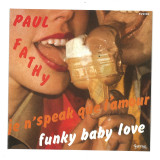
Favorite Recordings proudly present a new series of 7" reissues with a simple concept: each side dedicated to one French funky track coming with its original artwork. You just have to flip it!
Starting with "Funky Baby Love" by Paul Fathy, it could not get funkier! The French boogie track originally compiled by Charles Maurice on French Disco Boogie Sounds Vol. 3, is your perfect tool for the dancefloor. It brings together all the ingredients of a great production with irresistible disco strings, a catchy chorus supported by beautiful backing vocals and its final climax will bring the dancers to a point of no return.
On the other side, you get an exclusive reissue of West-Indies band Corail', with their song "Karukera C'est Comme Ça" taken from their eponymous album. This under-the-radar, zouky and funky track will surprise every listener with its appealing arrangement and lyrics: "Ça va danser / Sur l'île aux oiseaux". Soon, you won't be able to get it out of your head. The bass is groovin', the rhythmic guitar is infectious and digital keyboards are on point: we're pretty much sure this one will become sooner or later a banger of its own.
- A1: Zion Gates- Jacob Miller
- A2: Satta Massaganna- Don Carlos
- A3: Dem Say A Rasta- Johnny Clarke
- A4: Its Gonna Be Dread- Horace Andy
- A5: Decleration Of Rights- Dennis Brown
- A6: Two Faced Rasta- Cornell Campbell
- A7: Every Rasta Is A Star- Bonnie Davis
- B1: This World - Horace Andy
- B2: Man Like Me- Johnny Clarke
- B3: Satta And Praise Jah- Frankie Jones
- B4: Never Conquer Jah- Linval Thompson
- B5: Bightess Rasta Man- Cornell Campbell
- B6: Live On Jah - Wayne Jarrett
- B7: Wicked Babylon - Linval Thompson
Rastafarianism came to prominence in the late 1960's/ 1970's and had a huge influence on the musical culture in Jamaica. The sentiments of the songs reflected the struggles of life, as reggae music always did but now with an added spiritual/conscious element to the lyrics. By the mid 1970's most, if not all the top flight singers were following the doctrine and growing their har to dreadlocks.
Everything was truly 'Dread'.
At the heart of this musical explosion was again Bunny 'Striker' Lee a man who was always at the heart of the action and many times in his career ahead of the musical game. As Bunny Lee's stable of singers were at this time nearly all Rasta's and with the worldwide acceptance of Bob Marley, in especially the foreign territories, this musical style was the way forward for reggae music in the mid 1970's. The visual focal point of this new turn in reggae music would be a call to all things 'Dread'. Add to the mix Bunny Lee's close working relationship with studio wizard King Tubby, again not a Rasta himself, but someone who could sonically bring what was needed to the table and enable the whole musical chemistry to fall into place.
Heavy rhythms were created to match the heavy and serious lyrics and 'Versions Galore' as they say were coming out fast and furious.
We have compiled a set of conscious tunes that not only match the 'Dread' criteria, but also are just great tunes. The great Jacob Miller's 'Zion Gates', Cornell Campbells 'Two Faced Rasta', Horace Andy's 'It's Gonna Be Dread' alongside Linval Thompson's 'Never Conquer Jah'. Two timeless cuts from the 'The Abyssinians' get a fresh outing by two great singers, firstly Don Carlos' cut to 'Satta Massaganna' and the prince of reggae himself, Dennis Brown works 'Declaration of Rights' in fine style. Johnny Clarke's 'Man like Me' and 'Dem Say Rasta' still sound as fresh today as when they were first laid down and Wayne Jarrett's 'Live On Jah' and Frankie Jones 'Satta and Praise Jah' add to this great selection. All great 'Dread' tunes that were cut or voiced at King Tubby's giving them that extra shine.
So if you are Rasta or not this is a great set of tunes to make you move and also like all of the best things in life, make you think.........
Track 14 WICKED BABYLON - LINVAL THOMPSON
Felix Laband’s The Soft White Hand is the masterwork of an artist who expresses himself through musical and artistic collage acting together to reinterpret his sources and to express significant elements of his own personal story.
Released by Munich-based Compost Records, the 14-track album is Laband’s first full-length offering since the critically acclaimed Deaf Safari in 2015. It is heralded by the single “Derek and Me”, and is being pressed on vinyl for distribution globally.
In The Soft White Hand Laband works with source materials that will be familiar to those who know his previous four records – Thin Shoes in June (2001), 4/4 Down the Stairs (2002), Dark Days Exit (2005) and especially Deaf Safari which reached deep into the South Africa scene and its political culture to inspire its vocal and music sampling. However, the disengagement he felt from his homeland during his latest album’s creation – an abiding sense of untethered-ness to place and space, exquisitely rendered in tracks like “Death of a Migrant” – is perceptible in Laband’s desire to illuminate instead aspects of his own life.
“For this album, my source material became almost autobiographical as opposed to African statements I’ve worked with previously,” says the artist. “I have sampled a lot from documentaries from the 80s crack epidemic in impoverished African American communities and believe my work speaks unapologetically for the lost and marginalised, for those who are the forgotten casualties of the war on drugs. In the past, I have had my issues with substance abuse, and I know first-hand about the nightmares and fears, what it feels like to be isolated and abandoned.”
Few artists have managed to air these intimate aspects of their life so luminously as Laband does in tracks like “5 Seconds Ago”, “They Call Me Shorty” and in the strange and meditative “Dreams of Loneliness”. “I’ve been building this weird, autobiographical story using other people talking. It’s kind of humorous but it is also sad and beautiful,” says Laband.
Yet, as in all of Laband’s recorded output, the delineations between emotions are never starkly drawn and The Soft White Hand is also shot through with beauty. Nature appears in recordings made in his garden in the intimate early morning hours, whether as in the calls of the Hadada Ibis and other birdsong in “Prelude” or of the vertical-tail-cocking bird in “Derek and Me”. The last is a wonderful track with Derek Gripper, the South African experimental classical guitarist of international renown, whose 2020 song “Fanta and Felix” imagines a meeting between Fanta Sacko and Laband.
Laband’s eloquence in reinterpreting classical composers such as Beethoven in “We Know Major Tom’s a Junkie” is another thrilling aspect of the new record. “I’ve been properly exploring classical music on this album,” explains Laband, “taking melodies from classical compositions and reinterpreting them”. A fresh quality comes to his work through this sonic adventuring: the tender manipulation of the mundaneness of the computer’s AI voice to reimagine and reinvent iconic lyrics and melodies in strange and unexpected configurations.
The Soft White Hand is Laband’s most cohesive body of work to date. Yet it remains, in its sheer artistic scope, impossible to describe fully. Darkness abuts the gossamer light. A song that summons the sunrise and all the hope of a new day could also be about the final dipping down of the sun that portends a troubled night ahead. Interludes are invitations to expand outwards or shift inwards. Mistakes and “weird fuckups” in the sound are cherished as convincing statements against what Laband calls the “grossness” of perfect sound in modern music.
For this world-leading electronic artist, the boundaries are unfixed. He is inspired by the German Dada artist, Hannah Höch, who memorably declared: “I wish to blur the firm boundaries which we self-certain people tend to delineate around all we can achieve.” His music consequently reflects a primal artistic impulse that is also visible in Laband’s considerable visual art output as seen recently in several solo exhibitions such as that held in the No End Gallery in Johannesburg in 2019 and in the works he produced during his 2018 Nirox Foundation Artists Residency. “My music is always about collage, as is my art,’’ he affirms. “Everything I do is collage. It is a medium I find very interesting because you are taking history and distorting it and changing its meaning and turning it upside down and back to front.” In her book Recollections of My Non-Existence, Rebecca Solnit calls collage “literally a border art”; it is “an art of what happens when two things confront each other or spill onto each other”.
With The Soft White Hand, Laband is confirming his singular ability to achieve this in both art and music, melting the divisions between the two creative disciplines until they become one. He is also affirming his belief that an album of music should be more than a collection of unrelated tracks, but should unfold a fully integrated, cohesive story as in the song cycles of the great classical composers. In doing so, he claims his position as one of the most significant artists working today.
Artist Statement – Felix Laband – August 2022
When the Khmer Rouge took their captives for processing, they identified their class enemies by looking at their hands. If they were sunburned, rough and calloused, they were those of a peasant, a proletarian to be spared. But if they were soft and white, then they were those of a city-dweller, an intellectual or bourgeois, an adversary to be liquidated.
In calling this album The Soft White Hand, I was reflecting on the Cambodian genocide and how it resonates in contemporary South Africa. The apartheid era is over, and gone with it is white political domination. Yet economic and social privilege is still held in soft white hands. But those who grasp it know just how tenuous is their hold, how it singles them out, and my music reflects their subconscious fears, the stress and guilt of clinging on to what others envy and desire.
The soft white hand of the title suggests to me a further image, one that relates to all of postcolonial Africa. In my mind’s eye, I see the soft, duplicitous handshake of the smooth representatives of the superpowers making deals and promising gifts that benefit only them, and not their African dupes.
Yet, soaring above the wailing of sirens sampled from the first day of the invasion of Ukraine, my music is also about love gained and passion lost. It is about the tender caress of a soft white hand that conducts you into a place of dreams to be enfolded by nocturnal melodies.
The Jive Aces are the UK's top jive and swing band and are renowned for their high-energy jump jive and spectacular stage show in their hallmark yellow suits. The band’s repertoire stretches from the timeless tunes of the swing era to the glitz of the Rat Pack, with a dash of rhythm & blues, swinging jazz and the roots of Rock ‘n’ Roll and Elvis.
Originally forming in London the band gained steady success year by year and are the first live band to reach the semi-finals of "Britain’s Got Talent" famously putting grumpy Simon Cowell “in a good mood”. This was followed by a performance to the late Her Majesty The Queen as part of her Diamond Jubilee celebrations. They are unquestionably the UK’s finest band in their genre.
They performed at hundreds of festivals including Glastonbury, Montreux Jazz Festival and The Hop Farm Festival to name a few. They also headlined and sold out the first ever swing dance at the Royal Albert Hall. By popular demand the band will be featuring in their own show in London’s West End at the Aldwych Theatre this December.
During the pandemic, the band performed consecutively for over 500 days with free concerts on line to cheer people up and help get through the tough times.The band has a one month US tour scheduled for 2023 and diary full of shows throughout UK and Europe. They are in constant demand.
FIRST VINYL (VOL. 1)
SIDE 1:
1. I’m Gonna Sit Right Down And Write Myself A Letter
2. On A Slow Boat To China
3. Sweet Sue, Just You
4. On The Sunny Side Of The Street
5. Jeepers Creepers
6. It’s Been A Long, Long Time
SIDE 2:
7. I Can’t Give You Anything But Love
8. It Had To Be You
9. Wrap Your Troubles in Dreams
10. Ain’t She Sweet
11. I’m Confessin’ That I Love You/ It’s Only A Paper Moon
12. Ain’t Misbehavin’
SECOND VINYL (VOL. 2)
SIDE 3:
1. Rock ’n’ Roll Movie Star
2. Feeling Happy
3. Mama, He Treats Your Daughter Mean
4. No. 13 (Fruit Boots)
5. Choo Choo Ch’Boogie
6. Giddy Up A Ding Dong
SIDE 4:
7. Bad News
8. Alright, OK, You Win
9. I Want You to Be My Baby
10. Rock ’n’ Roll Boogie
11. Ain’t Nobody Here But Us Chickens
12. Jump, Jive and Wail
Zucker ist ein Riot-Pop-Duo bestehend aus Chris Schalko (they/them/keine) und Pola Lia Schulten (she/her/hers). Beide haben sich 2012 im Hamburger Pudel Club kennengelernt. Die explosive Energie aus dem Proberaum tragen sie schon kurz darauf und mit 2 1/2 fertigen Songs im Gepäck auf einer legendären Tour mit Trümmer quer durch Deutschland. Die Energie des wütenden, dem Pop verschriebenen jungen Duos ist ansteckend und scheinbar endlos. Zucker rennen los: Sie spielen mit Die Sterne, Carsten "Erobique" Meyer, Frau Kraushaar, Messer, Die Nerven. Doch irgendetwas zwickt und hakt. Das eigene Album bleibt auf der Strecke. 2014 wird Feminismus noch nicht groß geschrieben. 2016 trennt sich die Band. Beide fangen für sich solo nochmal von vorne an und erfinden sich neu. Pola Lia Schulten arbeitet als Gastsängerin und Live-Musikerin, schreibt Chorarrangements u.a. für Carsten "Erobique" Meyer, Stella Sommer und Pantha du Prince Sie komponiert Musik für mehrere Theaterstücke und veröffentlicht als Pola X 2019 zwei Singles. Chris Schalko zieht nach Berlin, gründet das Soloprojekt Gigolo Tears und spielt Konzerte unter anderem auf der Fusion und in der Berghainkantine gemeinsam mit der Live-Band The Crybabies. 2021 ist die eigene Energie plötzlich zurück und die vielen Versuche ihres Albums noch immer zu schade zum Verrotten. Zucker beschließen sich zu reuniten und endlich ihre Debütplatte herauszubringen.
Was als Big Band für Tom Tykwers Babylon Berlin begann,
ist längst ein über die Jahre zusammengewachsenes Ensemble geworden, in dem die besten Jazz Cats Deutschlands ihre musikalische Manege bekommen. Aus einer für
die Serie zusammengestellten Gruppe von talentierten
Musikern wurde ein Orchester mit eigener Identität. Zu sehr
wandelte man bereits mit dem Erstling auf eigenen Wegen.
Die Serie fungierte letztlich vornehmlich als Geburtshelfer.
Telegramm beweist einmal mehr: Die Stärken des Moka Efti
Orchestra kann man nicht einfach kopieren, nicht herbeiwünschen. „Jeder von uns ist Jäger und Sammler“, fasst
Kamien die MEO-Situation mit einem schönen Bild zusammen.
Oder anders: Man sammelt Töne, Noten, Gesänge, Melodien
und schickt das Ergebnis schließlich als Telegramm hinaus
in die Welt.
The third and most seasoned Drugdealer album, Hiding In Plain Sight, almost didn't happen at all. Frustrated and insecure with his own singing voice prior to the pandemic, Drugdealer founder and primary songwriter Michael Collins was nearly ready to throw in the towel. Due to a frequent impulse to hand over the microphone to friends and collaborators like Weyes Blood, Jackson MacIntosh, and his trusty musical companion Sasha Winn, Collins became increasingly unsure of himself as a singer. While attending Mexican Summer's annual Marfa Myths festival, a chance encounter with artist and composer Annette Peacock changed his outlook. Collins says, "I was so inspired by Annette. But similarly to all these other vocalists I'd worked with, I didn't feel like I had it in me." he recalls. "I told her my plight, then I played her a song, and she told me I wasn't singing high enough for my speaking voice. When I returned to LA, I started coming up with new progressions, which I'd modulate up three half steps. It forced me to find a new way to sing." "Madison," is the first song Collins wrote singing in this suggested range. His newfound confidence as a yarn-spinning vocalist in the gruff tenor tradition of Nick Lowe, or even Van Morrison, is readily apparent, with Conor "Catfish" Gallaher's pedal steel adding a dusting of cosmic country to Collins' down-hard love song. When Collins wrote the would-be AM Gold hit, he was summoning an imaginary vision of a love that had eluded him in reality. Tim Presley sings on the second song, "Baby," and Collins had a clear role in mind for the California avant-rock mainstay. "I love White Fence so much, but I also wanted to hear Presley sing a song that sounded like an early '60s sock hop band who had never tried drugs in their life." Meanwhile, Kate Bollinger floats an effervescent lead vocal over the Rhodes-driven groove in “Pictures of You.”. Taking inspiration from a canon of gruff but soulful rock vocalists like Phil Lynott, Collins looks back on his nocturnal meanderings through LA's warrens of bars and clubs ("New Fascination"). He’s right up front in the mix, detailing a search for love in all the wrong places.
Das israelische Duo Lola Marsh releast mit „Shot Shot Cherry“ am 28.10.22 ihr drittes Studioalbum.
Lola Marsh besteht aus der Sängerin Yael Shoshana Cohen und Multi-Instrumentalist Gil Landau. Sie
komponieren Musik, die clevere Texte mit tiefgründigen Harmonien verbindet. 2016 veröffentlicht die IndiePop-Band ihre Debüt-EP „You’re Mine“, wodurch sie in kürzester Zeit international große Bekanntheit
erlangten. Im Sommer 2017 erschien ihr Debütalbum „Remember Roses“, dessen Singles „Sirens“ und
„You’re Mine“ es an die Spitze der Spotify Charts schaffen.
Auch in Hollywood ist das Duo gefragt. Ihre Songs wurden schon in zahlreichen Filmen und Serien benutzt,
darunter Kevin Costners Film „Criminal“, die Serien „Better Call Saul“ und „Station 19“, sowie den Netflix
Produktionen „Purple Hearts“ und „Atypical“.
Über das neue Album sagt Sängerin Yael Shoshanna Cohen: „We don’t have just one direction of emotion.
There will be sad songs, there will be up-tempo song, there will be the cinematic ones.”
Neben den emotionalen und melancholischen Indie – Songs finden auch feine Dance-Floor Vibes mit starkem
Beat und Synthesizer ihren Platz. Das Duo schafft eine gute Balance auf „Shot Shot Cherry“. Der Mix
an Songs reflektiert eine ganz besondere Mischung an Gefühlen und Emotionen der Musiker. Geschrieben
im Lockdown, hatte das Duo mit Ängsten und Sorgen zu kämpfen und gleichzeitig den Wunsch, endlich
wieder tanzen gehen zu können. Das Album wird als CD und Vinyl erhältlich sein.
I[38,53 €]
Black Vinyl[24,50 €]
Black & Orange Pinwheel Vinyl[24,50 €]
Yellow vinyl[26,01 €]
Pink/White Swirl Vinyl[26,01 €]
THERION have always been a band that have challenged themselves to explore new paths, while remaining true to their musical core values. For their 17th studio album, mastermind Christofer Johnsson and his collaborator Thomas Vikström have created something that has been previously unthinkable to the guitarist and the singer. "We have done the only thing that was left of all the different angles to explore", explains Christofer. "We have decided to give the people what they kept asking for. 'Leviathan' is the first album that we have deliberately packed with THERION hit songs."
True to the Swede's words, the album opens with the catchy and swift tune 'The Leaf Of The Oak Of Far' featuring female and male antiphonal singing as well as a choir that seems to have evolved straight out of THERION's breakthrough full-length "Theli" (1996). This is immediately followed by the obvious highlight 'Tuonela', in which Christofer cleverly underscores this hit-track's Finnish vibe by employing NIGHTWISH’s "metal voice" Marko Hietala. Next up in this parade of future fan-favourites is the title track 'Leviathan' that offers classic THERION material with operatic female vocals and a massive choir.
Christofer Johnsson's passion for classic voices, choirs, and orchestral elements as well as his penchant for epic melodies in combination with rock and metal shines clearly through the following sing-along ballad 'Die Wellen Der Zeit', which indicates another nod to German romantic composer Richard Wagner. "Ever since 'Theli', Wagner has been and will always be at the core of THERION", emphasises Christofer. "When we started to combine metal and opera, it was something new and original. Today, symphonic metal has long been a firmly established genre." When THERION came into being in 1988 by changing name from the already existing band BLITZKRIEG, which was founded a year earlier, Christofer had rather taken inspiration from SLAYER's "Reign In Blood" among other classic metal albums.
At the beginning, the Swedes were firmly rooted in death metal, a genre which they helped to define, as witnessed by their debut album "Of Darkness...." (1991). Yet even back then, there were hints of "something else" lurking beneath the rough surface. The use of female vocals is another core ingredient of THERION today, which developed gradually. CELTIC FROST had basically introduced the female element to extreme metal on "To Mega Therion" in 1985. THERION began with both a female and male vocalist emulating a church like choir already in their sophomore full-length 'Beyond Sanctorum' (1992). With Symphony "Masses: Ho Drakon Ho Megas" (1993) and "Lepaca Kliffoth" (1995), Christofer continued to developed his trademark sound by gradually drifting towards cleaner vocals and more keyboards.
With "Theli", the Swedes had firmly established a reputation of pushing the boundaries of metal in the 90s –among such acts as their compatriots TIAMAT, THE GATHERING, and MOONSPELL that were often referred to as "gothic metal" at the time. THERION continued to break new ground leaving inspiration for others to follow in their wake: On "A'arab Zaraq -Lucid Dreaming" (1997), Christofer further explored the use of Near Eastern music in metal which he had already begun in 1992, while "Secret Of The Runes" (2001) dared to have Swedish lyrics in some songs.
While critics were left confused and fans challenged, THERION were often ahead of their times and vindicated in hindsight. Even the band's 25th anniversary excursion "Les Fleurs Du Mal" has by now overcome the initial shock the album caused and is only beaten in terms of streaming by the classic "Vovin" (1998). When Christofer faced the question of where to go next after the dramatic "Beloved Antichrist" (2018) had finally fulfilled his musical mission, his answer is "Leviathan" named after a giant sea monster from Judeo-Christian myth that has roots in Babylonic lore: THERION have created a giant hit album –and for the first time in the history of the Swedes, their fans are not asked to explore something new, but simply to lean back and enjoy the best from their band!
- A1: Rock This Mother
- A2: Talk To Me Girl
- A3: You Can Find Me
- A4: Check This Out
- A5: Jesus Going To Clean House
- A6: Hope You Understood
- A7: Is It What You Want
- A8: Love Is Everlasting
- A9: This Is Hip-Hop Art
- A10: Opposite Of Love
- A11: Do You Know What I Mean
- B1: Saving All My Love For You
- B2: Look Out Here I Come
- B3: Girl You Always Talking
- B4: Have A Great Day
- B5: Take My Hand
- B6: I Need Your Love
- B7: Your Town
- B8: Talk Around Town
- B9: Booty Head/Take A Little Walk
- B10: I Love My Mama
- B11: I Never Found Anyone Like You
Vinyl LP[23,49 €]
As the sun sets on a quaint East Nashville house, a young man bares a piece of his soul. Facing the camera, sporting a silky suit jacket/shirt/slacks/fingerless gloves ensemble that announces "singer" before he's even opened his mouth, Lee Tracy Johnson settles onto his stage, the front yard. He sways to the dirge-like drum machine pulse of a synth-soaked slow jam, extends his arms as if gaining his balance, and croons in affecting, fragile earnest, "I need your love… oh baby…"
Dogs in the yard next door begin barking. A mysterious cardboard robot figure, beamed in from galaxies unknown and affixed to a tree, is less vocal. Lee doesn't acknowledge either's presence. He's busy feeling it, arms and hands gesticulating. His voice rises in falsetto over the now-quiet dogs, over the ambient noise from the street that seeps into the handheld camcorder's microphone, over the recording of his own voice played back from a boombox off-camera. After six minutes the single, continuous shot ends. In this intimate creative universe there are no re-takes. There are many more music videos to shoot, and as Lee later puts it, "The first time you do it is actually the best. Because you can never get that again. You expressing yourself from within."
"I Need Your Love" dates from a lost heyday. From some time in the '80s or early '90s, when Lee Tracy (as he was known in performance) and his music partner/producer/manager Isaac Manning committed hours upon hours of their sonic and visual ideas to tape. Embracing drum machines and synthesizers – electronics that made their personal futurism palpable – they recorded exclusively at home, live in a room into a simple cassette deck. Soul, funk, electro and new wave informed their songs, yet Lee and Isaac eschewed the confinement of conventional categories and genres, preferring to let experimentation guide them.
"Anytime somebody put out a new record they had the same instruments or the same sound," explains Isaac. "So I basically wanted to find something that's really gonna stand out away from all of the rest of 'em." Their ethos meant that every idea they came up with was at least worth trying: echoed out half-rapped exhortations over frantic techno-style beats, gospel synth soul, modal electro-funk, oddball pop reinterpretations, emo AOR balladry, nods to Prince and the Fat Boys, or arrangements that might collapse mid-song into a mess of arcade game-ish blips before rallying to reach the finish line. All of it conjoined by consistent tape hiss, and most vitally, Lee's chameleonic voice, which managed to wildly shape shift and still evoke something sincere – whether toggling between falsetto and tenor exalting Jesus's return, or punctuating a melismatic romantic adlib with a succinct, "We all know how it feels to be alone."
"People think we went to a studio," says Isaac derisively. "We never went to no studio. We didn't have the money to go to no studio! We did this stuff at home. I shot videos in my front yard with whatever we could to get things together." Sometimes Isaac would just put on an instrumental record, be it "Planet Rock" or "Don't Cry For Me Argentina" (from Evita), press "record," and let Lee improvise over it, yielding peculiar love songs, would-be patriotic anthems, or Elvis Presley or Marilyn Monroe tributes. Technical limitations and a lack of professional polish never dissuaded them. They believed they were onto something.
"That struggle," Isaac says, "made that sound sound good to me."
In the parlance of modern music criticism Lee and Isaac's dizzying DIY efforts would inevitably be described as "outsider." But "outsider" carries the burden of untold additional layers of meaning if you're Black and from the South, creating on a budget, and trying to get someone, anyone within the country music capital of the world to take your vision seriously. "What category should we put it in?" Isaac asks rhetorically. "I don't know. All I know is feeling. I ain't gonna name it nothing. It's music. If it grabs your soul and touch your heart that's what it basically is supposed to do."
=
Born in 1963, the baby boy of nine siblings, Lee Tracy spent his earliest years living amidst the shotgun houses on Nashville's south side. "We was poor, man!" he says, recalling the outhouse his family used for a bathroom and the blocks of ice they kept in the kitchen to chill perishables. "But I actually don't think I really realized I was in poverty until I got grown and started thinking about it." Lee's mom worked at the Holiday Inn; his dad did whatever he had to do, from selling fruit from a horse drawn cart to bootlegging. "We didn't have much," Lee continues, "but my mother and my father got us the things we needed, the clothes on our back." By the end of the decade with the city's urban renewal programs razing entire neighborhoods to accommodate construction of the Interstate, the family moved to Edgehill Projects. Lee remembers music and art as a constant source of inspiration for he and his brothers and sisters – especially after seeing the Jackson 5 perform on Ed Sullivan. "As a small child I just knew that was what I wanted to do."
His older brother Don began musically mentoring him, introducing Lee to a variety of instruments and sounds. "He would never play one particular type of music, like R&B," says Lee. "I was surrounded by jazz, hard rock and roll, easy listening, gospel, reggae, country music; I mean I was a sponge absorbing all of that." Lee taught himself to play drums by beating on cardboard boxes, gaining a rep around the way for his timekeeping, and his singing voice. Emulating his favorites, Earth Wind & Fire and Cameo, he formed groups with other kids with era-evocative band names like Concept and TNT Connection, and emerged as the leader of disciplined rehearsals. "I made them practice," says Lee. "We practiced and practiced and practiced. Because I wanted that perfection." By high school the most accomplished of these bands would take top prize in a prominent local talent show. It was a big moment for Lee, and he felt ready to take things to the next level. But his band-mates had other ideas.
"I don't know what happened," he says, still miffed at the memory. "It must have blew they mind after we won and people started showing notice, because it's like everybody quit! I was like, where the hell did everybody go?" Lee had always made a point of interrogating prospective musicians about their intentions before joining his groups: were they really serious or just looking for a way to pick up girls? Now he understood even more the importance of finding a collaborator just as committed to the music as he was.
=
Isaac Manning had spent much of his life immersed in music and the arts – singing in the church choir with his family on Nashville's north side, writing, painting, dancing, and working various gigs within the entertainment industry. After serving in the armed forces, in the early '70s he ran The Teenage Place, a music and performance venue that catered to the local youth. But he was forced out of town when word of one of his recreational routines created a stir beyond the safe haven of his bohemian circles.
"I was growing marijuana," Isaac explains. "It wasn't no business, I was smoking it myself… I would put marijuana in scrambled eggs, cornbread and stuff." His weed use originated as a form of self-medication to combat severe tooth pain. But when he began sharing it with some of the other young people he hung out with, some of who just so happened to be the kids of Nashville politicians, the cops came calling. "When I got busted," he remembers, "they were talking about how they were gonna get rid of me because they didn't want me saying nothing about they children because of the politics and stuff. So I got my family, took two raggedy cars, and left Nashville and went to Vegas."
Out in the desert, Isaac happened to meet Chubby Checker of "The Twist" fame while the singer was gigging at The Flamingo. Impressed by Isaac's zeal, Checker invited him to go on the road with him as his tour manager/roadie/valet. The experience gave Isaac a window into a part of the entertainment world he'd never encountered – a glimpse of what a true pop act's audience looked like. "Chubby Checker, none of his shows were played for Black folks," he remembers. "All his gigs were done at high-class white people areas." Returning home after a few years with Chubby, Isaac was properly motivated to make it in Music City. He began writing songs and scouting around Nashville for local talent anywhere he could find it with an expressed goal: "Find someone who can deliver your songs the way you want 'em delivered and make people feel what you want them to feel."
One day while walking through Edgehill Projects Isaac heard someone playing the drums in a way that made him stop and take notice. "The music was so tight, just the drums made me feel like, oh I'm-a find this person," he recalls. "So I circled through the projects until I found who it was.
"That's how I met him – Lee Tracy. When I found him and he started singing and stuff, I said, ohhh, this is somebody different."
=
Theirs was a true complementary partnership: young Lee possessed the raw talent, the older Isaac the belief. "He's really the only one besides my brother and my family that really seen the potential in me," says Lee. "He made me see that I could do it."
Isaac long being a night owl, his house also made for a fertile collaborative environment – a space where there always seemed to be a new piece of his visual art on display: paintings, illustrations, and dolls and figures (including an enigmatic cardboard robot). Lee and Issac would hang out together and talk, listen to music, conjure ideas, and smoke the herb Isaac had resumed growing in his yard. "It got to where I could trust him, he could trust me," Isaac says of their bond. They also worked together for hours on drawings, spreading larges rolls of paper on the walls and sketching faces with abstract patterns and imagery: alien-like beings, tri-horned horse heads, inverted Janus-like characters where one visage blurred into the other.
Soon it became apparent that they didn't need other collaborators; self-sufficiency was the natural way forward. At Isaac's behest Lee, already fed up with dealing with band musicians, began playing around with a poly-sonic Yamaha keyboard at the local music store. "It had everything on it – trumpet, bass, drums, organ," remembers Lee. "And that's when I started recording my own stuff."
The technology afforded Lee the flexibility and independence he craved, setting him on a path other bedroom musicians and producers around the world were simultaneously following through the '80s into the early '90s. Saving up money from day jobs, he eventually supplemented the Yamaha Isaac had gotten him with Roland and Casio drum machines and a Moog. Lee was living in an apartment in Hillside at that point caring for his dad, who'd been partially paralyzed since early in life. In the evenings up in his second floor room, the music put him in a zone where he could tune out everything and lose himself in his ideas.
"Oh I loved it," he recalls. "I would really experiment with the instruments and use a lot of different sound effects. I was looking for something nobody else had. I wanted something totally different. And once I found the sound I was looking for, I would just smoke me a good joint and just let it go, hit the record button." More potent a creative stimulant than even Isaac's weed was the holistic flow and spontaneity of recording. Between sessions at Isaac's place and Lee's apartment, their volume of output quickly ballooned.
"We was always recording," says Lee. "That's why we have so much music. Even when I went to Isaac's and we start creating, I get home, my mind is racing, I gotta start creating, creating, creating. I remember there were times when I took a 90-minute tape from front to back and just filled it up."
"We never practiced," says Isaac. "See, that was just so odd about the whole thing. I could relate to him, and tell him about the songs I had ideas for and everything and stuff. And then he would bring it back or whatever, and we'd get together and put it down." Once the taskmaster hell bent on rehearsing, Lee had flipped a full 180. Perfection was no longer an aspiration, but the enemy of inspiration.
"I seen where practicing and practicing got me," says Lee. "A lot of musicians you get to playing and they gotta stop, they have to analyze the music. But while you analyzing you losing a lot of the greatness of what you creating. Stop analyzing what you play, just play! And it'll all take shape."
=
"I hope you understood the beginning of the record because this was invented from a dream I had today… (You tell me, I'll tell you, we'll figure it out together)" – Lee Tracy and Isaac Manning, "Hope You Understand"
Lee lets loose a maniacal cackle when he acknowledges that the material that he and Isaac recorded was by anyone's estimation pretty out there. It's the same laugh that commences "Hope You Understand" – a chaotic transmission that encapsulates the duality at the heart of their music: a stated desire to reach people and a compulsion to go as leftfield as they saw fit.
"We just did it," says Lee. "We cut the music on and cut loose. I don't sit around and write. I do it by listening, get a feeling, play the music, and the lyrics and stuff just come out of me."
The approach proved adaptable to interpreting other artists' material. While recording a cover of Whitney Houston's pop ballad "Saving All My Love For You," Lee played Whitney's version in his headphones as he laid down his own vocals – partially following the lyrics, partially using them as a departure point. The end result is barely recognizable compared with the original, Lee and Isaac having switched up the time signature and reinvented the melody along the way towards morphing a slick mainstream radio standard into something that sounds solely their own.
"I really used that song to get me started," says Lee. "Then I said, well I need something else, something is missing. Something just came over me. That's when I came up with 'Is It What You Want.'"
The song would become the centerpiece of Lee and Isaac's repertoire. Pushed along by a percolating metronomic Rhythm King style beat somewhere between a military march and a samba, "Is It What You Want" finds Lee pleading the sincerity of his commitment to a potential love interest embellished by vocal tics and hiccups subtlely reminiscent of his childhood hero MJ. Absent chord changes, only synth riffs gliding in and out like apparitions, the song achieves a lingering lo-fi power that leaves you feeling like it's still playing, somewhere, even after the fade out.
"I don't know, it's like a real spiritual song," Lee reflects. "But it's not just spiritual. To me the more I listen to it it's like about everything that you do in your everyday life, period. Is it what you want? Do you want a car or you don't want a car? Do you want Jesus or do you want the Devil? It's basically asking you the question. Can't nobody answer the question but you yourself."
In 1989 Lee won a lawsuit stemming from injuries sustained from a fight he'd gotten into. He took part of the settlement money and with Isaac pressed up "Saving All My Love For You" b/w "Is It What You Want" as a 45 single. Isaac christened the label One Chance Records. "Because that's all we wanted," he says with a laugh, "one chance."
Isaac sent the record out to radio stations and major labels, hoping for it to make enough noise to get picked up nationally. But the response he and Lee were hoping for never materialized. According to Isaac the closest the single got to getting played on the radio is when a disk jock from a local station made a highly unusual announcement on air: "The dude said on the radio, 107.5 – 'We are not gonna play 'Is It What You Want.' We cracked up! Wow, that's deep.
"It was a whole racist thing that was going on," he reflects. "So we just looked over and kept on going. That was it. That was about the way it goes… If you were Black and you were living in Nashville and stuff, that's the way you got treated." Isaac already knew as much from all the times he'd brought he and Lee's tapes (even their cache of country music tunes) over to Music Row to try to drum up interest to no avail.
"Isaac, he really worked his ass off," says Lee. "He probably been to every record place down on Music Row." Nashville's famed recording and music business corridor wasn't but a few blocks from where Lee grew up. Close enough, he remembers, for him to ride his bike along its back alleys and stumble upon the occasional random treasure, like a discarded box of harmonicas. Getting in through the front door, however, still felt a world away.
"I just don't think at the time our music fell into a category for them," he concedes. "It was before its time."
=
Lee stopped making music some time in the latter part of the '90s, around the time his mom passed away and life became increasingly tough to manage. "When my mother died I had a nervous breakdown," he says, "So I shut down for a long time. I was in such a sadness frame of mind. That's why nobody seen me. I had just disappeared off the map." He fell out of touch with Isaac, and in an indication of just how bad things had gotten for him, lost track of all the recordings they'd made together. Music became a distant memory.
Fortunately, Isaac kept the faith. In a self-published collection of his poetry – paeans to some of his favorite entertainment and public figures entitled Friends and Dick Clark – he'd written that he believed "music has a life of its own." But his prescience and presence of mind were truly manifested in the fact that he kept an archive of he and Lee's work. As perfectly imperfect as "Is It What You Want" now sounds in a post-Personal Space world, Lee and Isaac's lone official release was in fact just a taste. The bulk of the Is It What You Want album is culled from the pair's essentially unheard home recordings – complete songs, half-realized experiments, Isaac's blue monologues and pronouncements et al – compiled, mixed and programmed in the loose and impulsive creative spirit of their regular get-togethers from decades ago. The rest of us, it seems, may have finally caught up to them.
On the prospect of at long last reaching a wider audience, Isaac says simply, "I been trying for a long time, it feels good." Ever the survivor, he adds, "The only way I know how to make it to the top is to keep climbing. If one leg break on the ladder, hey, you gotta fix it and keep on going… That's where I be at. I'll kill death to make it out there."
For Lee it all feels akin to a personal resurrection: "It's like I was in a tomb and the tomb was opened and I'm back… Man, it feels so great. I feel like I'm gonna jump out of my skin." Success at this stage of his life, he realizes, probably means something different than what it did back when he was singing and dancing in Isaac's front yard. "What I really mean by 'making it,'" he explains isn't just the music being heard but, "the story being told."
Occasionally Lee will pull up "Is It What You Want" on YouTube on his phone, put on his headphones, and listen. He remembers the first time he heard his recorded voice. How surreal it was, how he thought to himself, "Is that really me?" What would he say to that younger version of himself now?
"I would probably tell myself, hang in there, don't give up. Keep striving for the goal. And everything will work out."
Despite what's printed on the record label, sometimes you do get more than one chance.
“I wanna wake up brand new” Enumclaw lead-singer / guitarist Aramis Johnson sings to begin Save the Baby, their massive-sounding debut full-length, out via Luminelle Recordings. The album is a swing for greatness; a collection of life-affirming and deeply personal songs about the importance of chasing after your dreams. Enumclaw is Aramis, guitarist Nathan Cornell, drummer Ladaniel Gipson, bassist (and Aramis’ younger brother) Eli Edwards. Working alongside producer Gabe Wax (Soccer Mommy, Crumb, Fleet Foxes), Enumclaw's Save the Baby delivers an album where on each track the band plays with dynamics while taking their songwriting to the stratosphere. Save the Baby is an album about stepping into your purpose, about the determination it takes to not give up on yourself in the midst of heartbreak and setbacks. It’s not a stretch to imagine a younger version of the band getting a glimpse of the future and freaking out by knowing their destiny of making it as a rock star has landed on their doorstep. For fans of all things J Mascis / Dinosaur Jr, Built to Spill and all things 90's Pacific Northwest.
2022 Repress
Junior Ross and The Spears are another great Jamaican Roots group that have been nurtured under the guidance of fellow Jamaican, producer and singer Tapper Zukie.Who not only gave the singer and his band their name but recorded, produced and released their records on his own 'Stars' imprint label.
Junior Ross (Clifford Palmer, b.7 Sept 1953, Kingston, Jamaica) grew up alongside his brothers Frankie Jones and Roy 'Soft' Palmer, who in turn had entered the music business alongside future roots singer Price Alla .
Prince Alla had formed a group called 'The Nazarines' with Roy Palmer and Milton Henry, so music was all around Junior Ross and he would soon follow in their footsteps and start recording some of his songs.
This album you have here had its initial release in 1992...We have added to it various dub versions that were b-sides to the singles and extended recordings again produced by Tapper Zukie.
So you have the Junior Ross and the Spear's classis album and its related musical accompaniments all in one place and sounding better than ever...
We hope you enjoy this classic roots set....
- A1: Delroy Wilson - Cool Operator
- A2: Leroy Smart - Mr Smart
- A3: Ken Boothe - I'm Not For Sale
- A4: Dillenger - Babylon Yard
- A5: Delroy Wilson - Better Must Coome
- A6: Dillenger - Leggo Violence
- A7: Leroy Smart - Mr Rich Man
- B1: Delroy Wilson - (Mash Up Illiteracy) Mash It Up (Mash Up Illiteracy)
- B2: Ken Boothe - You're No Good
- B3: Leroy Smart - God Helps The Man
- B4: Delroy Wilson - Can I Change Your Mind
- B5: Dillenger - Answer Me Question
- B6: Leroy Smart - Pride & Ambition
- B7: Delroy Wilson - You Must Believe Me
2022 Repress
The legendary gig that Joe Strummer, singer from the Punk Rock band 'The Clash' attended and inspired his writing their classic 'White Man In Hammersmith Palais' took place on the 05th June 1977.
At the Hammersmith Palais venue on Shepherd's Bush Road W6, London during the height of Punk Mania. The full line up for the show were all Jamaican artists Dillinger, Leroy Smart, Delroy Wilson (all the first time from Jamaica) and Ken Boothe.
'Ken Boothe for UK pop reggae' who had already scored some hits with 'Everything I own' and 'Crying Over You' in 1974. Joe Strummer was expecting Roots, Rock, Reggae but the Sound System this evening 'Admiral Ken Sound' was playing 'Four Tops all night' as in soul and northern soul that were staple crowd pleasers at the time to warm up the audience, but in Joe's eyes the music should have reflected more Jamaican roots based music. The song also deals with bigger issues of black and white unity, but some people including the Punk Rockers.
'They're all too busy fighting, for a good place under the lighting'. Joe Strummer himself was looking for fun. 'I'm the Whiteman in the Palais....Just Looking for Fun'
The artwork supplied by Punk Artist MAL-ONE has used the two posters that were made for this gig, the reggae promoters 'Star Promotions' poster, that contained a picture of Ken Boothe and the venue's own poster that used text to announce it's line up for that evenings performance. Alongside these lost relics he has also combined the groups own poster for the 'White Man In Hammersmith Palais' single that incorporated the use of rifle target sights, perhaps enhancing the air of violence contained in the songs message.
MAL-ONE has collaged these together joining the two stories as indeed the song lyrics reflected. People often forget that the songs release was in fact as year after the actual gig, we have tied this release to the 40th anniversary of the song's release. Joe Strummer was one of the few voices from the Punk Era that used his lyrics as a weapon to tell the events that were happening around him and their relevance to those times.
The song itsel a Clash Classic and also a Punk Anthem, released on the 16th June 1978. We have compiled this album with songs by these artists, most of which you would have heard that night. As a post script to this story when the Hammersmith Palais sadly closed its doors for the last time after 82 years' service in 1999, the owners thought it fitting to present Joe Strummer with a sign from the venue's entrance. Mr Strummer's understated reply 'I guess I'll have to send a man with a van round to pick it up'.
Hope you Enjoy the set....