The wonderful world of Louis Armstrong All Stars are the cream of the crop of curr
ent New Orleans musicians, paying tribute to the musician who started it all in the Crescent City. The album is comprised of new arrangements and recordings of music assosciated with Louis, featuring a previously unknown Louis Armstrong and the All Stars track, and a touching spoken word private recording made by Louis made near the end of his life. Produced by Wycliffe Jordan, Jackie Harris, and Nicholas Payton, with a rotating cast of key New Orleans players including guest features from Wynton Marsalis, Common, and more. This is the LP release.
Поиск:star city
Все
* taken from the digital version of bio-rhythm 3 and not included on the vinyl version of the album.
Network’s two groundbreaking bio-rhythm albums in 1990 were each accompanied by much loved 12” preview samplers of tracks from the iconic compilations.
For the third release - a mere 31 years after the first sets - Network have added a fresh twist. The sampler this time around contains 2 tracks from the bio-rhythm 3 vinyl release and 2 that will only be otherwise available on digital format.
It makes the sampler a must have for all electronica vinyl junkies.
Nexus 21 “Silicon”, a mainstay of the duo’s much acclaimed live sets, was recorded in 1991 but not released at the time. Memories are thin as it why such a gem was ignored but the most probable explanation is that the transformation of Nexus 21 into Altern 8 took attention away from the track. After being found in the tape vaults it has been remastered for the bio-rhythm 3 project.
It is joined on side A by the Octave One remix of 10th Planet “Strings Of Life” - which is not on the album vinyl. There is a proper labyrinthe story behind this remake of the Rhythim Is Rhythim classic of classics. Kool Kat, the predecessor to Network, arranged for Rhythim Is Rhythim to play live supporting Inner City at a London Town And Country Club concert in September 1989. The label recorded the show which featured Derrick May and his guest Carl Craig.
Fast forward to 1995 and the tapes were handed over to Ashley Beedle to reconstruct and remix for a release on Network under Ashley’s 10th Plane moniker, . On to 2003 and Network’s Neil Rushton was running the suSU label where an attempt to record a vocal of Strings Of Life with none other than Shara Nelson on vocals was made using the 10th Planet parts. That never came to completion, but at the time Neil was working with Octave One and they conjured up this recreation, which has only ever been previously released as a track on a suSU compilation. FIRST TIME ON VINYL ANYWHERE FOR THIS AMAZING VERSION OF “STRINGS OF LIFE”.
“Neurosilence” - Doggy is previously unreleased recording by Birmingham’s Peter Duggal. His bleep classic “Labyrinthine” would have been totally at home on Kool Kat/Network and in recent months both label and artist have both been shaking their heads as to how it didn’t happen. The release of the stark “Neuroslince” finally sees an 0121 alliance bond together.
The 4th track “In The Presence Of Beauty” is taken from the digital release of bio-rhythm 3 and is a truly beautiful “Reprise” take on the version on the vinyl album.
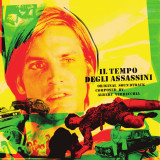
Between the 60s and 80s, Albert Verrecchia played a major role in Italian pop music and on the European disco and Afro-cosmic scene, both under his own name and under the monikers Albert Weyman and Albert Prince. He was the keyboardist of legendary Italian-French r'n'b band I Pyranas, served as a session Hammondist for singer and TV star Raffaella Carrà, and produced the disco trio Belle Epoque as well as the debut album of singer-songwriter Alan Sorrenti. Among his many incarnations, in the early and mid-70s he also composed a few soundtracks for Italian genre cinema, including for movies such as the poliziottesco Roma drogata, la polizia non può intervenire (Hallucinating Trip, 1975, Lucio Marcaccini) and the erotic drama Tecnica di un amore (1972, Brunello Rondi).
The score he wrote in 1975 for Il tempo degli assassini (Season of Assassins, a film about a gang of criminal youths who terrorize the city of Rome in the already violent 70s) is certainly his most accomplished work in the genre. Conceived for a small ensemble, it was written almost entirely on the spot in the recording studio. Verrecchia himself played the Moog, and his dynamic and percussive approach to the instrument resulted in a style midway between funk and proto-disco. A modern rhythmic style - or Ritmico Moderno, which is the title chosen by CAM for the LP containing the soundtrack and released two years later as part of a promotional library music series only distributed to film professionals and radio and TV programmers (CML series, cat. no. 131). One is led to wonder whether it was thanks to that LP that, in 1977, three pieces from the soundtrack found their way into another film about youth gangs, the Spanish Perros callejeros (Street Warriors), written and directed by Jose Antonio de la Loma. On a side but important note, there's the added bonus of popular 70s and 80s entertainer Sammy Barbot singing on Gang Leader alongside female vocal group Baba Yaga. What a pity that Verrecchia's career as a film composer ended here!
- 1: Blackness Of The Night (Feat. Azita)
- 2: Od'd In Denver (Feat. Matt Sweeney)
- 3: I've Made Up My Mind (Feat. Alasdair Roberts)
- 4: Red-Tailed Hawk (Feat. Matt Kinsey)
- 5: Wish You Were Gay (Feat. Sean O'hagan)
- 6: Our Anniversary (Feat. Dead Rider)
- 7: Rooftop Garden (Feat. George Xylouris)
- 8: Deacon Blues (Feat. Bill Mackay)
- 9: I Love You (Feat. David Pajo)
- 10: Sea Song (Feat. Mick Turner)
- 11: I've Been The One (Feat. Meg Baird)
- 12: Miracles (Feat. Ty Segall)
- 13: I Want To Go To The Beach (Feat. Cooper Crain)
- 14: Night Rider's Lament (Feat. Cory Hanson)
- 15: Arise, Therefore (Feat. Six Organs Of Admittance)
- 16: Night Of Santiago (Feat. David Grubbs)
- 17: The Wild Kindness (Feat. Cassie Berman)
- 18: Lost In Love (Feat. Emmett Kelly)
- 19: She Is My Everything (Feat. Sir Richard Bishop)
Cassette[19,96 €]
The Blind Date Party hosted by Bill Callahan and Bonnie ‘Prince’ Billy
and featuring AZITA, Matt Sweeney, Alasdair Roberts, Matt Kinsey,
Sean O’Hagan, Bill MacKay, George Xylouris, Dead Rider, David Pajo,
Mick Turner, Meg Baird, Ty Segall, Emmett Kelly, Cory Hanson, Six
Organs of Admittance, David Grubbs, Cassie Berman, Cooper Crain and
Sir Richard Bishop happened online in the autumn and winter of 2020 -
2021 but the party planning dated back to the spring of 2020.
Stuck at home, with no gigs in the foreseeable future, Bill, Bonnie and
Drag City needed an outreach program to keep themselves busy, not to
mention sane. In the absence of any company or anything on the
calendar, playing songs they loved was an idea; playing with people they
loved, the desire. And making it fun - so pairing someone with someone
else having no say in the matter, the essence of the blind date, was the
plan. Favourite songs were chosen; players from around the Drag City
galaxy were messaged. Pretty soon, songs were flying back and forth -
music in the air.
By autumn, the songs started to appear online: Bill and Bonnie singing a
song by someone they loved and admired; each song cut by another
artist they loved and admired, then sent to Bill and Bonnie to provide the
finishing touches. The spotlight pointed in every direction each week:
toward the singers and writers who’d originally played the songs (Yusuf
Islam, Hank Williams Jr., Dave Rich, The Other Years, Billie Eilish,
Steely Dan, Lou Reed, Bill Callahan, Jerry Jeff Walker, Robert Wyatt,
Lowell George, Johnnie Frierson, Air Supply, Will Oldham, Leonard
Cohen, David Berman, Iggy Pop and John Prine), toward their featured
collaborators, the artists whose artwork adorned each digital single and
videos made by still more collaborators.
Like the best parties, it turned out to be everything and more than they’d
even hoped for. So many more people were involved in the process that
would on the page here. Suffice to say, making records over the years
has required a broad sense of community and an always-surprising mix
of independence and unity, inspiration and utility. Some of the best
memories are those where as many of our folks as possible were
together in one place at one time. The Blind Date Party was one of
these, maybe the most improbable one yet. It’s for everyone who’s here
and it’s in the name of everyone who’s gone but will never go and will
always live with us here. This album will too.

- 1: Blackness Of The Night (Feat. Azita)
- 2: Od'd In Denver (Feat. Matt Sweeney)
- 3: I've Made Up My Mind (Feat. Alasdair Roberts)
- 4: Red-Tailed Hawk (Feat. Matt Kinsey)
- 5: Wish You Were Gay (Feat. Sean O'hagan)
- 6: Our Anniversary (Feat. Dead Rider)
- 7: Rooftop Garden (Feat. George Xylouris)
- 8: Deacon Blues (Feat. Bill Mackay)
- 9: I Love You (Feat. David Pajo)
- 10: Sea Song (Feat. Mick Turner)
- 11: I've Been The One (Feat. Meg Baird)
- 12: Miracles (Feat. Ty Segall)
- 13: I Want To Go To The Beach (Feat. Cooper Crain)
- 14: Night Rider's Lament (Feat. Cory Hanson)
- 15: Arise, Therefore (Feat. Six Organs Of Admittance)
- 16: Night Of Santiago (Feat. David Grubbs)
- 17: The Wild Kindness (Feat. Cassie Berman)
- 18: Lost In Love (Feat. Emmett Kelly)
- 19: She Is My Everything (Feat. Sir Richard Bishop)
Vinyl[42,98 €]
The Blind Date Party hosted by Bill Callahan and Bonnie ‘Prince’ Billy
and featuring AZITA, Matt Sweeney, Alasdair Roberts, Matt Kinsey,
Sean O’Hagan, Bill MacKay, George Xylouris, Dead Rider, David Pajo,
Mick Turner, Meg Baird, Ty Segall, Emmett Kelly, Cory Hanson, Six
Organs of Admittance, David Grubbs, Cassie Berman, Cooper Crain and
Sir Richard Bishop happened online in the autumn and winter of 2020 -
2021 but the party planning dated back to the spring of 2020.
Stuck at home, with no gigs in the foreseeable future, Bill, Bonnie and
Drag City needed an outreach program to keep themselves busy, not to
mention sane. In the absence of any company or anything on the
calendar, playing songs they loved was an idea; playing with people they
loved, the desire. And making it fun - so pairing someone with someone
else having no say in the matter, the essence of the blind date, was the
plan. Favourite songs were chosen; players from around the Drag City
galaxy were messaged. Pretty soon, songs were flying back and forth -
music in the air.
By autumn, the songs started to appear online: Bill and Bonnie singing a
song by someone they loved and admired; each song cut by another
artist they loved and admired, then sent to Bill and Bonnie to provide the
finishing touches. The spotlight pointed in every direction each week:
toward the singers and writers who’d originally played the songs (Yusuf
Islam, Hank Williams Jr., Dave Rich, The Other Years, Billie Eilish,
Steely Dan, Lou Reed, Bill Callahan, Jerry Jeff Walker, Robert Wyatt,
Lowell George, Johnnie Frierson, Air Supply, Will Oldham, Leonard
Cohen, David Berman, Iggy Pop and John Prine), toward their featured
collaborators, the artists whose artwork adorned each digital single and
videos made by still more collaborators.
Like the best parties, it turned out to be everything and more than they’d
even hoped for. So many more people were involved in the process that
would on the page here. Suffice to say, making records over the years
has required a broad sense of community and an always-surprising mix
of independence and unity, inspiration and utility. Some of the best
memories are those where as many of our folks as possible were
together in one place at one time. The Blind Date Party was one of
these, maybe the most improbable one yet. It’s for everyone who’s here
and it’s in the name of everyone who’s gone but will never go and will
always live with us here. This album will too.
- A1: Kumi Nakamura - Kimagure
- A2: Miyuki Maki - Indo No Michibata
- A3: Haruyoshi Yamashina - Osake To Joke
- A4: Sumiko Yamagata - Natsu No Hikari Ni
- A5: Hatsumi Shibata - Party Is Over
- B1: Makoto Iwabuchi - Moonlight Flight
- B2: Hiroshi Sato - Saigo No Tejina
- B3: Arakawa Band - Paradise's Dream
- B4: New Generation Company - I Wander All Alone (Part Iii)
- C1: Kiyohiko Ozaki - Ojosan Oteyawarakani
- C2: Kengo Kurozumi - Juggler
- C3: Ken Nishizaki - Koi No Paradigm
- C4: Jadoes - Simply Another Love
- D1: Midori Hara - Aamar Jabar
- D2: Hitomi 'Penny' Tohyama - Tuxedo Connection
- D3: Mizuki Koyama - Oh! Daddy
- D4: Haruo Chikada & Vibra-Tones - Sofa Bed Blues
- D5: Mitsuko Horie - Chigasaki Memory
A stylish selection of city pop, funk and modern soul from Japanese label Nippon Columbia, selected by DJ Notoya and featuring cult classics and rarities by Hiroshi Sato, Hatsumi Shibata, Hitomi 'Penny' Tohyama & many more.
Annotated by Notoya with journalist Nick Luscombe and artwork by Optigram.
Newly remastered audio.
The selection on ‘Tokyo Glow’ starts with 'Kimugare' a relaxed mid-tempo track by Kumi Nakamura, actually a famous actress who only recorded one album in 1980 for Columbia.
The set continues and flows effortlessly with the sunshine grooves of Miyuki Maki, Hatsumi Shibata and cult keyboard player Hiroshi Sato before the pace starts going faster and funkier with New Generation Company, Kengo Kurozumi - with his superb boogie, 'Juggler'
- and one of the queens of the genre, Hitomi 'Penny' Tohyama with 'Tuxedo Connection'.
Another fine example on the set is the mid-tempo groove of "I Wander All Alone Part III" by New Generation Company, an aggregate group of some of the best Japanese session musicians led by arranger Katz Hoshi and including Hiroyuki Namba (key), Kazuo Shiina (gtr) and Yutaka Uehara (ds) who all played with Tatsuro Yamashita among many others.
There are many other excellent examples in 'Tokyo Glow', showcasing the diversity and specificity of Japanese City Pop during the late 70s and 80s.
Nippon Columbia opened their much-guarded vaults to curator DJ Natoya. Tracks were remastered in Tokyo and the result, ‘Tokyo Glow’, is a unique insight into a most creative period in Japanese music.
- A1: Simon & Garfunkel - Bridge Over Troubled Water
- A2: Bread - Make It With You
- A3: Elvis Presley - Suspicious Minds
- A4: Deep Purple - Black Night
- A5: Free - All Right Now
- A6: Smokey Robinson & The Miracles - The Tears Of A Clown
- A7: The Jackson 5 - I Want You Back
- A8: Stevie Wonder - Signed, Sealed, Delivered (I'm Yours)
- B1: Elton John - Your Song
- B2: Rod Stewart - Maggie May
- B3: Slade - Coz I Luv You
- B4: The Who - Baba O'riley
- B5: Ike & Tina Turner - Proud Mary
- B6: Marvin Gaye - What's Going On
- B7: Diana Ross - I'm Still Waiting
- C1: Don Mclean - American Pie - Pt. 1
- C2: Sly & The Family Stone - Family Affair
- C3: Bill Withers - Lean On Me
- C4: Harry Nilsson - Without You
- C5: Roxy Music - Virginia Plain
- C6: T. Rex - Metal Guru
- C7: Mott The Hoople - All The Young Dudes
- C8: Lou Reed - Perfect Day
- D1: Roberta Flack - Killing Me Softly With His Song
- D4: Sweet - Ballroom Blitz
- D5: Wizzard - See My Baby Jive
- D6: Billy Joel - Piano Man
- D7: Bob Dylan - Knockin' On Heaven's Door
- E1: Queen - Killer Queen
- E2: Paul Mccartney, Wings - Band On The Run
- E3: Mike Oldfield - Tubular Bells
- E4: Suzi Quatro - Devil Gate Drive
- E5: Mud - Tiger Feet
- E6: Sparks - This Town Ain't Big Enough For Both Of Us
- E7: Barry White - You're The First, The Last, My Everything
- E8: The Three Degrees - When Will I See You Again
- F1: John Lennon - Imagine
- F2: 10Cc - I'm Not In Love
- F3: Barry Manilow - Mandy
- F4: Bay City Rollers - Bye Bye Baby
- F5: David Essex - Hold Me Close
- F6: Steve Harley & Cockney Rebel - Make Me Smile (Come Up And See Me)
- F7: The Stylistics - Can't Give You Anything (But My Love)
- F8: Minnie Riperton - Lovin' You
- G1: Abba - Dancing Queen
- G2: Frankie Valli & The Four Seasons - December, 1963 (Oh, What A Night)
- G3: Chicago - If You Leave Me Now
- G4: Joan Armatrading - Love And Affection
- G5: Electric Light Orchestra - Livin' Thing
- G6: Thin Lizzy - The Boys Are Back In Town
- D2: Harold Melvin & The Blue Notes - If You Don't Know Me By Now
- G7: John Miles - Music
- H1: Fleetwood Mac - Don’t Stop
- H2: Meat Loaf - Bat Out Of Hell
- H3: Status Quo - Rockin' All Over The World
- H4: Donna Summer - I Feel Love
- H5: Baccara - Yes Sir, I Can Boogie
- H6: David Soul - Don’t Give Up On Us
- H7: Commodores - Easy
- J1: Kate Bush - Wuthering Heights
- J2: Althea & Donna - Uptown Top Ranking
- J3: Chic - Le Freak
- J4: Boney M. - Rivers Of Babylon
- J5: The Jam - Down In The Tube Station At Midnight
- J6: The Boomtown Rats - Rat Trap
- J7: Siouxsie And The Banshees - Hong Kong Garden
- K1: The Clash - London Calling
- K2: The Police - Message In A Bottle
- K3: Pretenders - Kid
- K4: Blondie - Heart Of Glass
- K5: Earth, Wind & Fire With The Emotions - Boogie Wonderland
- K6: Tubeway Army - Are 'Friends' Electric?
- K7: The Buggles - Video Killed The Radio Star
- D3: Kiki Dee - Amoureuse
Coloured Vinyl[126,01 €]
NOW Music is delighted to introduce our new sub-brand ‘NOW Presents…’. This new series starts with ‘NOW Presents… The 1970s’, the first-ever NOW vinyl boxset featuring 5 LPs uniquely designed to reflect the era.
The boxset is a musical time capsule of the decade that saw so many different genres find chart success. Across its 74 tracks over 10 sides of vinyl, the massive hits sit alongside enduring classics from each year. The set not only includes 5 beautifully designed front covers on the individual albums (that slot into a rigid slip case), but also features track by track annotations with chart positions and facts about the artists and songs.
Each year, 1970-1979 is presented as 1 side of each LP… Kicking off with the iconic ‘Bridge Over Troubled Water’ by Simon & Garfunkel from the biggest selling album of the year, and of the decade. 1970 also includes Motown classics from Stevie Wonder, Smokey Robinson & The Miracles, and the debut hit ‘I Want You Back’ from the Jackson 5.
1971 includes the seminal ‘What’s Going On’ from Marvin Gaye, alongside Elton John’s breakthrough – the timeless ‘Your Song’, Rod Stewart’s breakthrough ‘Maggie May’, and The Who’s defining rock anthem ‘Baba O’Riley’.
The charts in 1972 began to reflect the popularity of ‘Glam Rock’ – and ‘Virginia Plain’ by Roxy Music, and ‘Metal Guru’ by T. Rex are included, as is the David Bowie-produced ‘Perfect Day’ from Lou Reed.
‘Killing Me Softly With His Song’ – one of the most beautiful songs, and vocals ever from Roberta Flack opens 1973’s side – and is joined by, amongst others, Billy Joel’s signature song ‘Piano Man’ and Bob Dylan’s ‘Knockin’ On Heaven’s Door’.
1974 celebrates Queen having their first Top 5 single with ‘Killer Queen’, and title tracks from two of the decades’ biggest selling albums: Paul McCartney & Wings with ‘Band On The Run’, and ‘Tubular Bells’ from Mike Oldfield.
John Lennon released ‘Imagine’ in 1971 – but it became a UK hit in 1975, and so, starts this side… and finds space for some of the year’s perfect pop from Steve Harley & Cockney Rebel, David Essex, 10cc, and the biggest hit ‘Bye Bye Baby’ from Bay City Rollers, at the peak of their popularity.
ABBA enjoyed 7 UK Number 1’s in the 1970s, and their biggest was the enduringly popular ‘Dancing Queen’ which leads into 1976. Electric Light Orchestra had a huge hit with ‘Livin’ Thing’, as did Thin Lizzy with ‘The Boys Are Back In Town’ – plus Joan Armatrading emerged with ‘Love And Affection’.
1977 saw Fleetwood Mac release their mega-selling album ‘Rumours’, and from it ‘Don’t Stop’ is here, as is Donna Summer’s ‘I Feel Love’ – one of the most influential dance tracks of all time – and one of 1977’s favourite TV stars, David Soul, enjoyed a #1 single with ‘Don’t Give Up On Us’.
With ‘Wuthering Heights’, Kate Bush not only had 4 weeks at number 1 in 1978, but became the first female artist to achieve this with a self-written song. The Jam, The Boomtown Rats and Siouxsie And The Banshees all found consistent success as Punk & New Wave established new chart stars.
1979 concludes the set and opens with the iconic ‘London Calling’ from The Clash, and includes two of the biggest bands of the era, The Police and Blondie. A couple of years later the first video played on MTV would be ‘Video Killed The Radio Star’ from The Buggles – and it’s fitting that this is the final track on the collection, a #1 in late 1979 – it signposted the synth-pop wave that would define the early 80s…. (but that’s a different box set).
- 1: Sex And Love
- 2: Be My Hole
- 3: Heavy Breather
- 4: I Guess I'll Just Jerk Off Again
- 5: Wind In My Belly
- 6: Guilt
- 7: Band From France
- 8: Tom
- 9: Womyn
- 10: What Is This Thing Called Love
- 11: Fascist Love Song
- 12: Lullaby On Blow
- 13: Why
- 14: We Back Together
- 15: Young And Alive
- 16: Thanks For The Disco
- 17: A Wig
- 18: Pepper Pot
- 19: Lorenzo The Chef
- 20: Give In
- 21: The People Have Spoken
- 22: What Do I Wear On A Trip To The Moon
- 23: Christopher
- 24: Testicle Delight
- 25: Water Nymph
- 26: A Queen's Lament
- 27: Julie Newmar
- 28: Madamifesto
- 29: Let's Hear It For Show Business
Mouth Congress – friends Paul Bellini and Scott Thompson of Kids In The Hall fame - wrote and recorded hundreds of songs in the ‘80s with - out ever putting out a proper release. Alongside various cohorts and conspirators, the band drew on their experiences as gay men to craft hilariously crude punk songs that run the gamut of strange characters and taboo subject matter. Their rag tag approach to songwriting blended various styles from noisy punk to lo-fi new wave and DIY disco, all with a very gay bent. Without trying, they were surprisingly cutting edge.
Mouth Congress did dozens of live shows through the mid-80s that gained a reputation for being theatrical, combining props, sets, multiple costume changes, unusual song choices, guest stars, and Scott’s stand-up comedy. In 1988, they recorded a 7-song demo tape. The tracks were recorded quickly, as the Kids in the Hall were about to go to New York City to develop their material. Then, caught up in the excitement of the Kids in the Hall being signed to television, Mouth Congress activities slowed to a crawl.
In 2011, Paul dug out an old VHS tape of one of the live shows. The sight of one of the Kids in the Hall covered in sweat, writhing on stage like Iggy Pop, was something he felt comedy fans might enjoy seeing. Naturally, Scott agreed and they uploaded everything - over 600 recordings - onto Bandcamp. One day in 2019, Mike Sniper of Captured Tracks stumbled upon the Bandcamp page, got in touch, and suggested assembling a compilation of the best recordings to be officially released for the very first time.
Waiting for Henry is a collection of 29 tracks over 2 LPs with a booklet of interviews and ephemera from one of the ‘80s
last queercore bands.
Who is Henry? We don’t really know, but we certainly hope he shows up soon.
- A1: Main Title
- A2: Victim
- A3: The Mysterious Creature
- A4: The True Identity Of The Enormous Creature
- A5: Hayashida Research Institute
- A6: Maki And Naoko
- A7: The Soviet Nuclear Submarine’s Crisis
- A8: The Terror In The Ocean’s Depths
- A9: The Ban Is Lifted On The News
- A10: Report 1
- A11: Naoko’s Shorrow
- A12: The Search For The Enemy Begins
- A13: Godzilla Emerges At The Ihama Nuclear Power Plant
- A14: The Destruction Of The Nuclear Power Plant
- A15: Report 2
- A16: The Mt. Mihara Crater
- A17: Us-Soviet Special Envoys Arrive
- A18: To The Prime Minister’s Relief
- A19: Soviet Nuclear Satellite
- A20: Emergency Evacuation Ordered
- A21: The Self-Defense Forces Go To Mt. Mihara
- A22: Coast Lookout Preparations
- B23: Godzilla Appears
- B24: Balashevo
- B25: Godzilla Devastates Yurakucho
- B26: The Guidance Strategy Begins
- B27: Deserted Streets
- B28: The Life Of The Town
- B29: Godzilla And The Magnetic Substance
- B30: The Super-X Mobilizes
- B31: Nuclear Missile Launch
- B32: The Missile Draws Near
- B33: The Giant Beast Collapses
- B34: Super High-Rise Rescue
- B35: The Two Who Were Left Behind
- B36: The Desire To Live
- B37: Nuclear Resolution
- B38: The Red Sky
- B39: Thunder
- B40: The Awakening Of The Giant Beast 1
- B41: The Awakening Of The Giant Beast 2
- B42: The Awakening Of The Giant Beast 3
- B43: The Awakening Of The Giant Beast 4
- B44: Godzilla Vs. The Super-X
- B45: The Terror Of Godzilla
- B46: The Crimson City
- B47: Godzilla Heads To Oshima
- B48: Godzilla Arrives At Oshima
- B49: Godzilla Falls Into Mt. Mihara
- B50: “Godzilla” Ending
He's back! After nine years away from the big screen, the Big G reappeared for his 30th anniversary in THE RETURN OF GODZILLA. Produced by Godzilla's creator Tomoyuki Tanaka and directed by Koji Hashimoto, the picture returns the uber-kaiju to the ultimate antagonist he was always intended to be. Watch as he devastates Tokyo after being resurrected by an underwater volcano and thrill to the dramatic and explosive musical score by Reijiro Koroku!
Having previously worked with Studio Ghibli's Hayao Miyazaki and Isao Takahata, Koroku was the perfect choice to score the Big G's triumphant return, creating no less than three themes for everybody's favourite kaiju. Listen to the rumbling low-frequencies and powerful brass attacks as he ravages a power plant and fights the Japanese Self Defence Forces (JSDF) and swoon to the love theme for Maki and Naoko. Koroku also wrote exciting pieces for the JSDF and the Super-X, a particular machine designed to fight Godzilla. Still, it's his respect and reverence for the Big G that makes THE RETURN OF GODZILLA such a success. The score ends with vocalists The Star Sisters lamenting Godzilla's disappearance, cementing the place he has in our hearts. "Take care now, Godzilla, my old friend."
Whether it’s turning in steamy UKG and house through his alias as M4A4 or shelling out peak-time jungle as DJ Jubilee 1997; the Irish based DJ & producer is known for championing a variation of sounds all with the same attention to detail and magnified personality. The artist's music is always continuous, hitchhiking through eras and parts unknown; now delivering a four-track EP fueled by warehouse raves, neon lights and celestial beauty.
‘Dubgan’ raises its ominous head with rattling kick-drums and sharp percussion as tension and momentum builds with the addition of a deep, bottomless bassline and frightening stabs. ‘Intelligence’ then opens with curious melodies and anomalous patterns, slowly changing gears before a cascade of ineffable energy.
The flip sees a change in mood as ‘Soul Shift’ takes us on a trip through the neon lights of the bustling city, a seductive tension between the allure and dangers that rest ahead. The record comes to a close with ‘Orbital Jazz’ a futuristic cut, Its transcendental nature nestled between the stars, re-charging feelings of endless possibilities.
- A1: Wallpaper For The Soul
- A2: 1,000 Times
- A3: The Other Side
- A4: Separate Ways
- B1: Get Yourself Together
- B2: Happy End
- B3: Fun Fair
- B4: Sould Deep
- B5: Open Book
- C1: The Train
- C2: Don't Look Below
- C3: Memories Of The Past
- C4: Don't Misunderstand
- C5: Silently Walking
- D1: Listen
- D2: Antonelli
- D3: Aftermath
- D4: Strange Thing
- D5: Better Day Will Come
- D6: In My Arms
After the worldwide success of their first album Puzzle (1999), which sold over 200,000 copies and went gold in Japan, Xavier Boyer (vocals, guitars), Pedro Resende (bass), Médéric Gontier (guitars) & Sylvain Marchand (drums) reunited with producer Andy Chase to record the follow-up, Wallpaper for the Soul, in New York City. Starting in November 2001 at Stratosphere Sound, the prolific sessions gave birth to twenty tracks, twelve of which appeared on the original tracklist. The eight outtakes were compiled on the mini albums A Piece of Sunshine (2003) & Extra Pieces of Sunshine (2004). This new vinyl edition will be the first time all these songs appear together.
Almost 20 years on, WFTS is a tour de force of contemporary songwriting with obvious nods to the past somehow revisited in a timeless fashion. Tahiti 80’s second effort can also be seen as an alternative and more sophisticated snapshot of an era often associated with the rebirth of rock (The White Stripes, The Strokes…). This set of songs also established them as stalwarts of the Post French Touch cannon, showcasing both their ability to write catchy songs and their knack for mélanges & experimentation. 1,000 Times or The Train are unique examples of blue-eyed soul augmented with French flair (« Prefab Sprout as produced by Thomas Bangalter » suggested Uncut which listed WFTS in their Top Ten’s albums of 2003). Listen to Don’t Look Below today, and ask yourself who was mixing Destiny’s Child with My Bloody Valentine in 2001? Delicate numbers like Open Book or live favorite Better Days Will Come both demonstrate T80’s songwriting skills and their innate sense of melancholia.
Listening back to WFTS today, one cannot help but think of it as an album recorded in a state-of-the-art fashion. All four members would typically perform together in the same room. Basic takes were printed on a 24-track analog tape machine and then bounced onto a computer for editing. A fine example of this method is the title track itself. Originally written on acoustic guitar, Wallpaper … is the result of three eight minutes synthesizer jams pieced together. The Frenchmen were keen to try out multitude of ideas and had developed a taste for experimentation. The sessions also coincide with a rich outburst of creativity from a band on top of their game after several months of touring around the world.
Another typical WFTS characteristic is Richard Hewson’s orchestration. Veteran string arranger, famous for arranging The Beatles’ The Long And Winding Road or writing RAH Band’s ‘80s classic Clouds Across The Moon Hewson gave the songs a sweeping orchestral touch. Strings, Horns & woodwinds were all performed at the now defunct Olympic Studios in London. Urban Soul Orchestra, a 24-piece ensemble who played on Oasis’ or Spice Girls’ hits can be heard on five songs: the opening trilogy Wallpaper…, 1,000 Times and The Other Side, then on the Northern Soul revival Soul Deep and lastly on the album’s closer Memories Of The Past.
Rouen’s most famous four-piece, now relocated in a house on France’s North West Coast, in the quiet seaside town of Étretat, added more bells & whistles and resumed production on the songs. With one last transatlantic leap during the summer of 2002, the boys flew to Portland, Oregon to attend the mixing sessions held by sound wizard Tony Lash (Elliott Smith, The Dandy Warhols…). Suggested by Sub Pop’s craftsman Eric Matthews, also a guest on trumpet and keyboards, Lash would later become a major collaborator on Tahiti 80’s subsequent albums.
In the meantime, Laurent Fétis, the designer behind Puzzle’s iconic artwork, had started working with artist Elisabeth Arkhipoff on a set of nostalgic photographs transfigured with a soft air-bush technique. Those visuals, like their predecessors, have since become an inseparable companion to Tahiti 80’s music.
Many musical fashions and flavors of the month have come and gone, but twenty years after its release, WFTS still sounds fresh and relevant. And always forward-looking, Tahiti 80 is currently wrapping up the recording of their eighth album, to be released in early 2022.
What do you get when you blend a reverential take on the diverse canon of popular Caribbean music with an all-star cast of seasoned studio musicians from the heart of Brooklyn? The answer lies in Combo Lulo's much anticipated debut studio long-player, Neotropic Dream. The group takes its influence from the deep musical heritage of New York's cultural pedigree, especially the heyday of the city's Caribbean record distribution industry — a culture of music that still bubbles today in the crevices of the city's independent neighborhoods and record communities.
Despite the general scope of the muse, it's hard to precisely pin down this fantastic re-imagining. In some ways, that's why the title for the band's debut album is Neotropic Dream, a nod to the biogeographic region that encompasses the countries along the Afro-Caribbean diaspora, a region intensely diverse in its climate, fauna and flora. This theme manifests musically as you journey through Combo Lulo's original compositions and cleverly chosen covers. More than anything, it's a dreamy storm of styles and musical moments born anew. And just as weather swiftly travels and transforms the Caribbean, so the varied musical styles carry the listener from the album's start to finish. Not just a talented band's showcase of styles, but rather a sumptuous feast of savory and sweet ingredients on display, together. A musical curry roux, if you will, that fits together so harmoniously, it's no wonder the band engenders automatic appreciation both in their studio recordings and in their uproarious live shows.
Whether it's cumbia gone rock steady, or reggae gone chicha, or vocal vs. version, there's a little something for everybody on here, depending on where you drop the needle. With splendid original compositions and horn arrangements from band leader Mike Sarason and saxophonist Anant Pradhan, respectively, Combo Lulo is quickly proving themselves to be a powerhouse of the highest caliber.
Opera Multi Steel was born during the winter of 1983 in Bourges, a city in the center of France. The band started off as a trio with Franck Lopez (Vocals, Keyboards,Recorder, Guitars), his brother Patrick L. Robin (Vocals, Percussion) and Catherine M. Marie (Keyboards, Vocals). They began to record demos utilizing a Elex Keyboard, Casio VL-Tone, Roland TR-606 drum machine, guitars and bass pedals. Layering organ-like keyboards over drum machine snares and a woodwind recorder, they created a unique style of Medieval or Baroque synth pop.
Hearing Dominic Appleton take his voice in quieter, more intimate directions, exploring new textures and strengths, in combination with Matteo Uggeri’s flowing production, makes for a striking experience. Interesting and unexpected." – Ned Raggett (Bandcamp/The Quietus) // "Without exaggeration, Dominic Appleton is by far my favourite living male vocalist. He has such a beautiful, sad voice and comes up with melodies that do the same" – Ivo Watts-Russell (4AD founder). // "This Mortal Coil singer Dominic Appleton's crystalline voice and romantic lyrics set a mood of lonely grandeur” — Mojo (2013)
Hungry Shells, the seventeenth entry in RVNG Intl.’s intergenerational collaborations series FRKWYS, brings together vocalist, multi- instrumentalist, and sound artist Ka Baird with avant-garde composer and radical performance art pioneer Pekka Airaksinen. Recorded six months before Pekka’s passing, Hungry Shells alchemizes separate but similar spiritualistic practices, canvassing Baird’s voice and synthesizer rituals and Airaksinen’s lysergic sound explorations into startling, surreal landscapes.
Pekka Airaksinen, who left this realm for another in May 2019, is recognized as a pioneering composer both in and outside his native Finland’s fringe art community. A founding member of the late 60s art and music collective The Sperm, Airaksinen discovered Buddhism in the early 1970s, eventually establishing a number of meditation centers around Finland. Throughout his career Airaksinen embraced a degree of obscurity and anonymity that was inspired by his Buddhist learnings, and afforded him complete creative freedom. As he explained, “The less success you have, the more time there is to develop things.”
Ka Baird, who found her musical footing in Chicago playing in Spires That In The Sunset Rise before moving to New York to pursue her solo career, has developed a practice based in forms of active and engaged embodiment. Inspired by Charlemagne Palestine’s Body Music, Baird’s performances explore physical extremes as a catalyst for charged immediacy and presence. “I’m interested in the
places between precision and something unrestrained,” she told The Wire in 2019. Drawing on minimalism’s ecstatic deployment of duration and endurance, her recordings explore the outer limit sounds of her voice and its synthesis with developing music technology.
Airaksinen and Baird convened in Utrecht in the fall of 2018 to write, rehearse, and record Hungry Shells ahead of a performance at the Dutch festival institution Le Guess Who? Sessions took place between contemplative walks along the city’s medieval canals, and, for Airaksinen, lengthy meditations in his hotel room. Early on in the trip, Pekka shared ODO with Ka, a collection of Buddhist parables that he divinely received while meditating. After translating several of these texts from Finnish to English the duo used them as text for the album, and a sort of psychic foundation.
Tape
SectorSept’s ‘954’ is a boldly original record, one which announces the arrival of a singular musical mind. Its creator states that he crafted this EP by trying to make tracks that were ‘a representation of how I believe music would sound in some distant land in the future’. On ‘954’ this vision takes flight in the form of eight multifaceted, genre-defying electronic productions.
To unpack this record one must first understand the myriad influences which feed into SectorSept’s style. The producer grew up between the UK and Florida - indeed, the record’s title references the area code he had while in the USA. His formative years were spent soaking in the dancehall sounds he heard around him in his Jamaican household as well as techno, jazz, Miami bass and the city’s ‘Love 94 Smooth Jazz’ radio station.
All of this and more can be heard in the fabric of ‘954’. The drum programming alone reveals SectorSept to be someone with extremely wide-ranging musical tastes. Cuts such as ‘Get Ready For The Programme’ and ‘Be There’ are powered by deft beats that have Miami bass, Jersey Club, juke and more in their make-up. Drexciya-adjacent machine-funk creeps into the mix in ‘954’s mid-section, ‘Golden Third Eye’ touches on trap, and closing duo ‘Tropic Universe’ and ‘Prize’ bring dancehall dembows to the fore.
The productions of ‘954’ are simultaneously driving and chilled, coasting nicely yet still plumbed with enough bite to do damage on the dancefloor. It’s a feeling which is heightened by SectorSept’s gorgeous textural work. Several of the tracks here soften up collages of vocal clips with wistful, dreamy synths - see the way that club-caller snippets orbit Boards Of Canada-esque keys on ‘Get Ready For The Programme’ or how closing cut ‘Prize’ works both the classic Warp/Planet Mu sound and the pitched-down stylings of DJ Screw. It’s a rich and fully-formed artistic aesthetic, something which is all the more impressive when you consider that ‘954’ is SectorSept’s first official release.
That said, while the overall flavour of ‘954’ is SectorSept’s and SectorSept’s alone, one also finds links to Gobstopper’s previous output here. Those dancehall influences on ‘Tropic Universe’ and ‘Prize’ line the record up with Gobstopper drops like Otik’s ‘Thousand Year Stare’ while the emotive, soulful synth work that has long been a Gobstopper calling card is also in evidence here. Perhaps the thing about ‘954’ which makes it feel most at home on Mr. Mitch’s label is SectorSept’s imaginative futurism. SectorSept is a keen scholar of anime composers Kenji Kawai and Joe Hisaishi, and as such it is no surprise that there is a slightly fantastical quality to ‘954’. This is most boldly expressed on ‘Intuition Segment’, a magic-realist vignette which looks to Oneohtrix Point Never.
Blending ethereal textures with hybrid electronic grooves, SectorSept’s ‘954’ EP uses the sounds, influences and cultural experiences that have shaped its creator in order to build a vibrant vision of the future.
- A1: Detroit Rock City (Remastered)
- A2: King Of The Night Time World (Remastered)
- A3: God Of Thunder (Remastered)
- A4: Great Expectations (Remastered)
- B1: Flaming Youth (Remastered)
- B2: Sweet Pain (Remastered)
- B3: Shout It Out Loud (Remastered)
- B4: Beth (Remastered)
- B5: Do You Love Me? (Remastered)
- C1: God Of Thunder And Rock And Roll (Paul Stanley Demo)
- C2: Detroit Rock City (Paul Stanley Demo)
- C3: Love Is Alright (Paul Stanley Demo)
- C4: I Don’t Want No Romance (Gene Simmons Demo)
- C5: Rock N’ Rolls Royce (Gene Simmons Demo)
- C6: Star (Gene Simmons Demo)
- D1: Beth (Acoustic Mix)
- D2: Shout It Out Loud (Mono Single Edit
- D3: King Of The Night Time World (Live Rehearsal Instrumental
- D4: Detroit Rock City (Instrumental)
- D5: Flaming Youth (Early Version)
- D6: Shout It Out Loud (Alternate Mix)
In 1976, KISS dropped the bombshell on the world being DESTROYER, an album that originally received resistancefrom fans due to the band exploring a new sound and has long become the quintessential and all-time best selling KISS studio album. Exploding with concert staples and KISS Army favorites like “Detroit Rock City,” “Shout It OutLoud,” and “God Of Thunder” – the album’s new sounds came from the softer side of songs like “Do You Love Me?,”and songs heavy with orchestral arrangements including “Great Expectations” and their surprise hit single “Beth.”
Have we ever needed great storytellers so badly? Voices to snap us out of our collective grey funk, to pull us out of our narrow, hemmed-in worlds and to lighten our days and enlighten us with their perspectives, Immersing us in their worldview and history. People who can make us laugh, cry, gasp or nod sagely, to see our world anew and not feel so alone. We need stories, vignettes, new windows to look out of, and narrators to help those new visions make sense.
In short, we need Scott Lavene. Born and raised in Essex, but a man of the world who has wandered far and wide, Lavene’s a storyteller who can capture all the madness, joy and frustration of life while singing about worms writhing in the ground. Lavene’s been in bands since his teens, but only really located the voice that makes his new album Milk City Sweethearts so remarkable – that combination of wry observation, humble wisdom, unguarded vulnerability and unpredictable humour – in a music workshop for alcoholics and addicts, long after he’d bid farewell to childhood dreams of pop stardom, and the ghosts and demons that accompany those dreams.
He released an album as Big Top Heartbreak, 2016’s Deadbeat Ballads, and followed it with his first album under his own name, 2019’s droll and marvellous Broke. “I was signed to a little label in Bristol, but then they went skint,” he remembers. This time, however, the disappointment didn’t shake his confidence or his resolve. “I started writing prose, like ‘flash fiction’, and I’ve begun a novel,” he says. “And I’ve started some creative writing workshops for people who’ve come out of my situation.”
Amid all this activity, the songs that became Milk City Sweethearts began to take shape. Lavene noticed the border between his prose and his songwriting beginning to become porous, and the album feels like a clutch of excellent short stories set to music. Without a label, he recorded the album at home, and assembled it in a week in his mum’s garage during lockdown’s heavy manners. It’s a warm, witty, charismatic record with a dark heart at the centre, Lavene sounding dislocated and therefore able to write his everyday stories with a left-handed brilliance and blunt honesty that keeps them so fresh, like classic Kinks, or David Bowie if he’d never had to go to space to feel otherworldly. His songs are talking blues, set to loose and minimal and excellent art-rock with a pop sensibility, the honk of Roxy sax and the guttural weird-funk of Ian Dury’s Blockheads haunting their grooves.
Have we ever needed great storytellers so badly? Voices to snap us out of our collective grey funk, to pull us out of our narrow, hemmed-in worlds and to lighten our days and enlighten us with their perspectives, Immersing us in their worldview and history. People who can make us laugh, cry, gasp or nod sagely, to see our world anew and not feel so alone. We need stories, vignettes, new windows to look out of, and narrators to help those new visions make sense.
In short, we need Scott Lavene. Born and raised in Essex, but a man of the world who has wandered far and wide, Lavene’s a storyteller who can capture all the madness, joy and frustration of life while singing about worms writhing in the ground. Lavene’s been in bands since his teens, but only really located the voice that makes his new album Milk City Sweethearts so remarkable – that combination of wry observation, humble wisdom, unguarded vulnerability and unpredictable humour – in a music workshop for alcoholics and addicts, long after he’d bid farewell to childhood dreams of pop stardom, and the ghosts and demons that accompany those dreams.
He released an album as Big Top Heartbreak, 2016’s Deadbeat Ballads, and followed it with his first album under his own name, 2019’s droll and marvellous Broke. “I was signed to a little label in Bristol, but then they went skint,” he remembers. This time, however, the disappointment didn’t shake his confidence or his resolve. “I started writing prose, like ‘flash fiction’, and I’ve begun a novel,” he says. “And I’ve started some creative writing workshops for people who’ve come out of my situation.”
Amid all this activity, the songs that became Milk City Sweethearts began to take shape. Lavene noticed the border between his prose and his songwriting beginning to become porous, and the album feels like a clutch of excellent short stories set to music. Without a label, he recorded the album at home, and assembled it in a week in his mum’s garage during lockdown’s heavy manners. It’s a warm, witty, charismatic record with a dark heart at the centre, Lavene sounding dislocated and therefore able to write his everyday stories with a left-handed brilliance and blunt honesty that keeps them so fresh, like classic Kinks, or David Bowie if he’d never had to go to space to feel otherworldly. His songs are talking blues, set to loose and minimal and excellent art-rock with a pop sensibility, the honk of Roxy sax and the guttural weird-funk of Ian Dury’s Blockheads haunting their grooves.
- 1: Main Theme
- 2: Steel Thy Shovel
- 3: One Fateful Knight
- 4: Strike The Earth! (Plains Of Passage)
- 5: The Rival (Black Knight - First Battle)
- 6: For Shovelry! (Boss Victory)
- 7: The Starlit Wilds (Campfire Scene)
- 8: The Adventure Awaits (Map Screen)
- 9: In The Halls Of The Usurper (Pridemoor Keep)
- 10: The Decadent Dandy (King Knight Battle)
- 11: High Above The Land (The Flying Machine)
- 12: The Spin Controller (Propeller Knight Battle)
- 13: An Underlying Problem (The Lost City)
- 14: The Claws Of Fate (Mole Knight Battle)
- 15: No Weapons Here (Village)
- 16: Pastorale (Village Interiors)
- 17: The Local Happenstance (Village Basement)
- 18: Watch Me Dance! Spin Ye Bottle (Minigame)
- 19: A Thousand Leagues Below (Iron Whale)
- 20: The Bounty Hunter (Treasure Knight Battle)
- 21: Of Devious Machinations (Clockwork Tower)
- 22: The Schemer (Tinker Knight Battle)
- 23: The Destroyer (Tinker Tank Battle)
- 24: The Donor's Despair (Hall Of Champions)
- 27: Waltz Of The Troupple King
- 28: The Defender (Black Knight Battle)
- 29: Courage Under Fire - Armorer Village
- 30: Bucklers And Bonnets - Armorer Interior
- 31: Fighting With All Of Our Might
- 32: Flowers Of Antimony (The Explodatorium)
- 33: The Vital Vitriol (Plague Knight Battle)
- 34: La Danse Macabre (Lich Yard)
- 35: The Apparition (Spectre Knight Battle)
- 36: A Cool Reception (The Stranded Ship)
Shovel Knight began as a modest, yet highly promising Kickstarter project in March 2013. Billed as “a groundbreaking love letter to 8 bits!” by Indie developer Yacht Club Games, this 2D side-scrolling platform game released in June 2014 to universal praise and accolades.
Fans and industry professionals praised Shovel Knight for its charming retro-2D visuals, humorous story, fun characters and strong gameplay design, which all came together to offer a game that is nostalgic yet very modern. The efforts of Yacht Club Games paid off when Shovel Knight was won the prestigious “Best Independent Game” award at The Game Awards 2014. The game’s chiptune soundtrack, composed by Jake Kaufman and Manami Matsumae, is integral to the game’s modern-retro identity and has been similarly praised for its outstanding arrangements, memorable melodies and strong technical composition. This definitive soundtrack contains all music from the original Shovel Knight game released in June 2014, with a vinyl tracklist crafted by Jake Kaufman himself. The package cover and inner-gatefold have been designed exclusively for the soundtrack by Hitoshi Ariga; an interview with co-composer Manami Matsumae; and character artwork from the game.