Detroit Parties Rock like This......................another repressed Detroit stomper from the Duo Keith Tucker and Blak Tony. Equipped and programmed for the dance floor, K1 and Blak Tony’s acapella is sure to start any set off if you bold enough to do it. “Rock Like this” is A electro rap assault into the Detroit parties of the past. This track is a anthem from the city that gave you some of the funkiest electro ever created. This ep never disappoints a favorite of Dj Stingray.
Cerca:star funk
7" of this funk classic re-issued for the first time from recently discovered Master Tapes.
Funky Soul (originally titled "Going To See The Man") was a routine crowd pleaser during live shows that even had its own dance "rock the ship." This was the part two of the song. It was part one that was created in the studio as a riff off of part two. The raw energy of this song when performed live created hysteria and drove spectators into a frenzy. It didn't take long for word to get around and catch the attention of the famous WYLD DJ Larry McKinley. McKinley wanted to capture this magic onto record and helped arrange the session at Cosimo Matassa's studio. He drove Isaac Hayes down from Memphis to New Orleans in 1968 and organized Issac Hayes to arrange the horn section on this record while he was working with the Okeh label and developing an emerging artist named Margie Joseph. It was during this time that Margie recorded two singles Why Does A Man Have To Lie/See (Okeh, 4-7304) and Show Me/A Matter Of Life Or Death (Okeh, 4-7313).
David Batiste & The Gladiators were a band David Batiste and several of his brothers formed while they were in High School in New Orleans back in 1961. The band won a talent show in 1965 at Harlem's famous Apollo Theater and are the pioneers of what is now known as "Funk." David Batiste & The Gladiators were legendary mainstays of every bar in New Orleans that every band was hustling trying to get booked at.
It's no wonder that this song was famously complied on BBE Records and Ubiquity in the 1990's, rediscovered and performed by Miles Tackett & The Breakestra in the early 2000's. Those compilations contained audio sourced only from the vinyl record originally pressed up twice in the early 1970s and sought after by collectors and DJs for years and years. This version is from a direct master tape transfer from recently discovered NOLA tapes. But wait… The party's just started. An entire album's worth of 1960s previously unreleased David Batiste & The Gladiators material from recently discovered master tapes is in the works and forthcoming on Family Groove Records.
Clear Vinyl
Eugene Synegal's early career as a teenager was the guitarist of Sam & The Soul Machine before moving to Los Angeles to join the group Sage and later in the 1970s recording on Lee Dorsey's Night People and The Neville Brothers records.
These previously unreleased recordings were birthed in the early 1970s, sometime during Eugene's trips back and forth between Los Angeles and New Orleans. A couple years after these recordings were immortalized onto 1/4" reel-to-reel tape an unusual crime scene involving Eugene and his girlfriend reads as if it was a chapter taken directly out of a pulp fiction novel. An Australian socialite named Patrica Galea, remained unsolved for 30 years. The robbers took $400, two diamond rings, a $1,400 cigarette lighter and two mink coats. They failed to collect Galea's $6,402 which was hidden in her freezer. This money was sent from Australia and was being used to fund Eugene's album as well as starting a new music publishing company in Hollywood. This was the life of Eugene. Playboy extraordinaire, jet-setter and guitar chops that would turn the head of Hendrix!! Around 2006 the owner of the West Hollywood apartment expressed a desire to learn more about its history and met with detectives who were unable to locate the file since it was buried in the cold cases section. The files were found, the case was reopened, solved and two men were arrested in 2007.
These recently unearthed 1970s recordings by Eugene are a reflection of his pure soul as well as a blend of psychedelia and funk that the band Sage was experimenting with in Los Angeles during that time period.
From a historical sense, these two recordings are significant because it bridges the historical and influential New Orleans music scene during the early 70's with the psychedelic rock and folk scene that was emerging just walking distance from the West Hollywood apartment that Eugene was living in with Galea during that time.
Eugene's unique guitar style paired with a deep-rooted gospel sensibility is a window into the artistry and songwriting capability of this incredibly talented man.
Repress
Calibre's mighty wind has blown through the drum 'n' bass scene ever since his first tentative forays into production in 1998. As a trained musician and student of the genre, he quickly developed a unique sound that was warm, orchestral and hypnotic. Attracting the attention of tastemakers like Fabio, the Belfast-born producer and DJ was encouraged to work harder and faster on this liquid funk, resulting in what would become his signature sound. By the time his sophomore album, "Second Sun", came into orbit, Calibre was recognised as a shining star of the scene.
One of the few who had realised the potential of the album format, he crafted dubbed out house grooves, jazzier downtempo numbers, and introspective vocal-led tracks amongst the more trad tempos the largely dancefloor single-based genre was known for.
The album is awash with high points, from the anthemic "Drop It Down", to the more reflective MC tracks like "Timeout" and "Blink Of An Eye". Most producers would labour over such delicately balanced arrangements for weeks, but the fact that Calibre can knock such masterworks out in a matter of hours tells you how effortlessly and naturally his music comes to him.
"Working quickly gives me a unique and personal sound," says Calibre. "It also helps that I like to sample my own playing. Any type of instrument I could get my hands on, I'd record it live. Maybe quite badly, but I still did it. It helped create my own sound. If you can play an instrument, and you can play it with a little bit of passion and a little bit of love, it'll give you something back."
In the fourteen years that have passed (Second Sun dropped in October, 2005) Calibre has written more material than quite possibly anyone else in the scene, and this year shows no sign of him slowing up. Besides the usual wealth of remixes in the pipeline, and a forthcoming techno album on Craig Richards' label, a sixth Shelflife compilation of unreleased Calibre material will be dropping on his own Signature Records label. But for now, let's rewind the story, as the man himself takes us, track by track, through Second Sun.
Madrid's Roll Dann keeps up the high quality of his first few releases with a new EP on his Opera 2000 label that offers four fine cuts.
Roll Dann has already impressed with outings on Modularz, Soma and PoleGroup. It is the direct nature of his floor facing techno that appeals, and it comes infused with the inspirations he has picked up from a stint living in Berlin, as well as with the legacy of his teenage love of hardtechno-schranz. The start of Roll Dann & _asstnt's Opera 2000 marks a shift Roll Dann's creative direction where he focuses on an aggressive yet beautifully emotive style which is displayed wonderfully in his first solo release on the imprint entitled "Oppression Dance".
Big opener "When The Hate Goes Away" is a frazzled, over driven techno monster with slamming kick drums and fizzing synths that will rewire any dance floor. The brilliant "Break The Dance" then hammers you over the head with its brutal drums and big synth walls, but a more thoughtful pad also smears over the groove to bring some tenderness. "Oppression" is quick and slick, with a kinetic sense of techno funk getting you on your toes. Last of all "The Club" is another winner, this time with its eerie pads, acerbic textures and rusty hits all racing along on powerful drum programming as a distorted voice is trapped in its midst.
- A1: Africa Is My Root - Osayomore Joseph And The Creative Seven
- A2: Ta Gha Hunsimwen - Akaba Man The Nigie Rokets
- A3: Popular Side - Akaba Man And The African Pride
- B1: Iranm Iran - Victor Uwaifo And His Titibitis
- B2: Sakpaide No 2 - Victor Uwaifo And His Titibitis
- B3: Ta Ghi Rare - Akaba Man The Nigie Rokets
- C1: My Name Is Money - Osayomore Joseph
- C2: Ogbov Omwan - Akaba Man The Nigie Rokets
- C3: Aibalegbe - Victor Uwaifo And His Titibitis
- D1: Who Know Man - Osayomore Joseph And The Ulele Power Sound
- D2: Obviemama - Victor Uwaifo And His Titibitis
- D3: Ororo No De Fade - Osayomore Joseph And The Ulele Power Sound
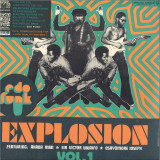
Analog Africa Presents Edo Funk Explosion Vol. 1, available on
2xLP/Gatefold LP with 20-page booklet / CD with 36-page booklet. It was
in Benin City, in the heart of Nigeria, that a new hybrid of intoxicating
highlife music known as Edo Funk was born.
It first emerged in the late 1970s when a group of musicians began to experiment with different ways of integrating elements from their native Edo culture
and fusing them with new sound effects coming from West Africa s night-clubs.
Unlike the rather polished 1980 s Nigerian disco productions coming out of the
international metropolis of Lagos Edo Funk was raw and reduced to its bare
minimum.
Someone was needed to channel this energy into a distinctive sound and Sir
Victor Uwaifo appeared like a mad professor with his Joromi studio. Uwaifo
took the skeletal structure of Edo music and relentless began fusing them with
synthesizers, electric guitars and 80 s effect racks which resulted in some of the
most outstanding Edo recordings ever made. An explosive spiced up brew with
an odd psychedelic note known as Edo Funk.
That’s the sound you’ll be discovering in the first volume of the Edo Funk Explosion series which focusses on the genre’s greatest originators; Osayomore
Joseph, Akaba Man, and Sir Victor Uwaifo: Osayomore Joseph was one of the
first musicians to bring the sound of the flute into the horn-dominated world
of highlife, and his skills as a performer made him a fixture on the Lagos scene.
When he returned to settle in Benin City in the mid 1970s - at the invitation of
the royal family - he devoted himself to the modernisation and electrification
of Edo music, using funk and Afro-beat as the building blocks for songs that
weren’t afraid to call out government corruption or confront the dark legacy of
Nigeria’s colonial past.
Akaba Man was the philosopher king of Edo funk. Less overtly political than Osayomore Joseph and less psychedelic than Victor Uwaifo, he found the perfect
medium for his message in the trance-like grooves of Edo funk. With pulsating
rhythms awash in cosmic synth-fields and lyrics that express a deep personal
vision, he found great success at the dawn of the 1980s as one of Benin City’s
most persuasive ambassadors of funky highlife.
Victor Uwaifo was already a star in Nigeria when he built the legendary Joromi
studios in his hometown of Benin City in 1978. Using his unique guitar style as
the mediating force between West-African highlife and the traditional rhythms
and melodies of Edo music, he had scored several hits in the early seventies,
but once he had his own sixteen-track facility he was able to pursue his obsession with the synesthetic possibilities of pure sound, adding squelchy synths,
swirling organs and studio effects to hypnotic basslines and raw grooves. Between his own records and his production for other musicians, he quickly established himself as the godfather of Edo funk.
What unites these diverse musicians is their ability to strip funk down to its
primal essence and use it as the foundation for their own excursions inward to
the heart of Edo culture and outward to the furthest limits of sonic alchemy.
The twelve tracks on Edo Funk Explosion Volume 1 pulse with raw inspiration,
mixing highlife horns, driving rhythms, day-glo keyboards and tripped-out guitars into a funk experience unlike any other.
Greetings to the new generation of ‘Hip-Hop’ and ‘Shake Your Butt’ music. The man behind ‘Timeless Funk’ ain’t exactly no ‘Spring Funky Chicken’, yet he is still the ‘Funkiest Soul’ to rock this here nation.
Rufus Thomas is the Soul King and Grand Daddy of Funk; as his generation knew him then, as we know him today.
In the beginning, the ‘Power of the Most High’ said: ‘Let it be funky’. Then there was Rufus.
Rufus Thomas was born in 1917 in a small town outside of Memphis, Tennessee. At the age of ten he became a tap dancer. In the 1930s, Rufus worked professionally at the infamous Palace Theatre, Memphis, TN, as M.C., performing comedy and dance routines.
During the early 1940s, Rufus began his singing career. He also continued his M.C. acts at various notable nightclubs and theatres, for amateur nights. He was then considered to be a triple threat: dancer, comedian and singer! The notables he crossed hands with in those days were B.B. King, Bobby Bland and Johnny Ace. In the 1950s Rufus became one of the ‘Hip-pest’ DJs in Memphis TN W.I.D.A. radio station and is affiliated with the company to this day. He was quoted as saying ‘I’m young and loose and full of juice’. At those times he recorded ‘Bear-Cat’ for Sun Records, their first R&B hit for the label.
All-right ‘Kiddies,’ now I take you into the light of Rufus in the 1960s. When most of us were on our way to our happy existence, Rufus was already 30 years in the entertainment circuit. He was affiliated with STAX Records. With daughter Carla Thomas, he gave STAX their first hit, the duet, ‘Cause I Love You.’ Rufus’ world famous hits continued under this label, pouring songs out such as ‘Memphis Train,’ ‘Can Your Monkey Do The Dog,’…
The foregoing is merely a scratch on the surface of a remarkable man, who has dedicated most of his life to the entertainment business. It’s kept short and sweet so you know what you are dealing with.
Rufus was quoted as saying, ‘I ain’t a star, I don’t want to be a star. Stars have a habit of falling. I’m like the moon. Clouds may come and cover it occasionally, but it’s always there, and always shining. It’s just sometimes you don’t see it for a while but it’ll be back.’
If it wasn’t for Rufus, Soul Music would be missing one of its loudest sons. If he didn’t exist, somebody
Continued over…
would have to get up and invent him. And Funk? The man practically invented the stuff with James Brown.
Now at the age of 75 ‘The Oldest Teenager Alive’ check him out on this recording of ‘Timeless Funk’. We’ll agree and leave you with this note: Rufus is the ‘Moon’ that brought us what was ‘Funky’ then to what is ‘Funky’ now. So let us get ‘Buck Wild’ on the Funky side of things
Up to kick off 2021 in the most adequately frenzied, thoroughly corrosive fashion, DDS04 serves up a quintet of chrome-tanned, hi-velocity beats courtesy of Italian hardware fetishist Anna Funk Damage (previously heard on the likes of Mind Records, Lux Rec, Lazy Tapes and more) and Austrian-Hungarian outfit Dutch Courage - alias Superskin & Új Bála - each of whom step up to the plate to deliver an exquisitely ear-wormy slice of their deranged industrial gospel.
A-side starts off to the sound of AFD's hard bouncin' "48 Hours Death" - a raw-cooked deluge of head-reducing EBM grit, flaring binary signals and Giallo-infused arpeggios out a blood-stained Suspirian tale. Fear for the deadly scalp hunters lurking in the club's darkest nooks, they've just sniffed out your trail.
Brutal churner "Youssef" picks up the torch and pulls out the quake-inducing breaks without further ado, dressed out with languorous Orientalistic melodies and steely distortions tailored to bend mind by the dozens. Forged in the furnace, the full-out punk-minded "I Come From Fire" rounds off the side on a drum and bass-heavy note, drawing as much from 60s psych-garage as it does from 80s deconstructionist tape music.
Flip sides and here's Budapest unit Dutch Courage taking the reins with the off-kilter treat "Hand Of The Sword" - navigating a weird zone of its own, floating astride post-apocalyptic Bristol bass, sliced-and-diced abstraction and overly textured yet equally bone-bruising riddims.
Wrapping up the journey with both force and serenity, "Neo-Soulmates" follows a similar path with its warped synth flexions and raucous machine cries making the rounds from one end of the spectrum to the other effortlessly, merging to give birth to something genetically contrasting from any contemporary. A most fitting finale to an EP that celebrates and encourages sonic bizarro in all its forms and manifestations.
Re-mastering by: Cicely Baston at Alchemy/Air Mastering, London
Electric blues guitarist Melvin Taylor had been sporadically recording solo albums for 20 years when Dirty Pool arrived — and was somehow just beginning to find fame. Already a hit in Europe, it had taken a steady run of performing in Chicago’s famed blues clubs to slowly earn Taylor a well-deserved reputation as an equal talent among the giants before him, such as Otis Rush, Albert King and Stevie Ray Vaughan.
While early records like Melvin Taylor Plays the Blues For You show off an equally amazing jazz side, Taylor traded away his Wes Montgomery-inspired runs for more Luther Allison/Jimi Hendrix attacks with the formation of the trio Melvin Taylor and the Slack Band in the mid ’90’s.
The title song of the second album by that outfit, “Dirty Pool,” is actually more the balls-to-the-wall, no-compromise, hard-rockin’ electric Texas blues of Vaughan and Johnny Winter than the sweet Chicago soul of Buddy Guy.
Indeed, three tracks on this 1997 release, including “Dirty Pool,” were SRV tunes. Other standards, like “Kansas City” and “Floodin’ in California” also have more of a Lone Star State approach to them. But the Jackson, Miss.-born Taylor’s guitar is cleaner than his forebears and technically, he even surpasses them, yet the anger and sorrow of the blues is readily evident in his playing.
This rare combination of qualities really comes out in a slow blues tune like his solo in “Dirty Pool,” which after repeated listens, still makes me head shake in disbelief when I hear it.
“Too Sorry” is a good example of how well Taylor fares when he treads in Jimi Hendrix territory, whereas his rhythm work is the best I’ve heard from a lead guitarist since Vaughan; listen to “I Ain’t Superstitious,” “Born Under A Bad Sign” and the funky “Telephone Song” for your proof.
It also helps that Taylor’s drummer James Knowles is well in synch with him, while Ethan Farmer completely owns the low end of the sound. Farmer’s peppering bass lines in and “Floodin’ in California” is the textbook way electric blues bass should be. Overall, a tight little band.
Taylor’s vocals certainly won’t draw any comparisons to the Wide-Brimmed–Hatted One but he holds his own just fine until it’s cuttin’ time. This is right at the top of my list of best blues guitar playing on record over the last couple of decades. If you decide to give this one a listen, prepare to be blown away.
Hong Kong based hypno-tropicalia duo Blood Wine or Honey are set to release their second album 'DTx2' on 30th June 2021. Made up of seasoned multi-instrumentalists James Banbury (synths, bass, percussion, cello) and Joseph von Hess (vocals, clarinet, sax, percussion), they create a heaving, heady brew of brazen sax themes, lo-fi/hi-tech electronics, densely layered cello inflections and motorik drums.
These explorations start with the dance-floor then go above and beyond, taking notes from post-punk and tropical polyrhythms, always anchored by the bass weight of the sound system. Their distinctive sound is created in the industrial warehouses and hidden rural settlements of Hong Kong, surrounded by the low-end throb of heavy machinery, the lingering scent of hand sanitiser and the humidity of the South China Sea.
Written and recorded during 2020-21, new album 'DTx2' looks ahead to an uncertain future, drawing deep on their experiences and influences and welcoming a host of co-conspirators.
Jean Daval, aka Preservation (credits include Yasiin Bey fka Mos Def, MF Doom, RZA, GZA, Raekwon, KRS-One, Aesop Rock), provided truffle-hunted beats, synths and basses, which, when put through the BWoH mangle, emerged as 'Messenger'.
Superstar and old friend of the band KT Tunstall came to work with BWoH after they contributed a DJ mix for her lockdown 'KTRave' on Instagram. 'Attraction' was the result. Wonky bass, found-bounce beats and Buddy Rich drums smashed out by Tim Weller (Marc Almond, Future Sound of London, Goldfrapp, The Chemical Brothers, David Axelrod) resulted in a bonkers production with passionate vocals and layers of harmony.
'I Shall Rush Out As I Am' is a collaboration with legendary pop provocateur Paul Morley and Janice Lau of Hong Kong band David Boring. The track is based on the words and the spirit of sci-fi writer, satirist, literary critic and radical feminist Joanna Russ and took shape quickly, with tinges of A Certain Ratio and memories of Suicide, provoking Janice to an authentic scream-of-consciousness delivery.
Multi-talented London singer, musician and composer Kamal (Neighbourhood Recordings) took time away from being the Next Big Thing to transform 'Testing Time' with funk-edged keys. A key figure in the extraordinary '90s Hong Kong music scene, Zoë Brewster contributed vocals.
Roughly divided, the album's first set of songs make relatively short statements, punchily self-contained with common threads. The final four tracks, Testing Time, Embers, Embrasure
and Echt Embrace disperse into flights of mantric fantasy, with quicksand time-signature shifts and key-changes emerging into a more introspective zone with a fervent pulse, a shift in energy: stamina over speed.
- A1: Preaching To The Choir
- A2: Stronger (Feat Jswiss)
- A3: Superstrada
- A4: Concrete Stardust
- A5: Where Do We Go From Here (Feat Lee Fields)
- A6: Macumba
- B1: Take On The World (Feat Gizelle Smith)
- B2: Return To Space (Feat Peter Thomas)
- B3: Golden Shadow
- B4: Today
- B5: Here We Go (Feat Mocambo Kidz)
- B6: Bounce That Ass (Feat Ice-T &Amp; Charlie Funk)
Limited edition gold vinyl edition.
Hamburg's funk adventurers at the top of their game with special guests Ice-T, Charlie Funk, Peter Thomas, Gizelle Smith, Lee Fields, JSwiss & the Mocambo Kidz.
Original press release note (2019):
Carrying blistering funk lines in their fingers and worldly influences in their hearts, the unique and distinctive Mocambo sound is not one to be confused with retro bands trying to recapture an era. Eschewing traditional recording methods, this DIY crew are committed to driving forwards, and 2066 sees them at the height of their powers, broadcasting a call for unity.
After reaching new audiences worldwide and earning critical praise for their two long players on Brooklyn's Big Crown Records in their tropical guise as Bacao Rhythm & Steel Band, the band have reassembled and refocused in their original form, the workhorses behind dozens of 45s on the Mocambo label and beyond. Crossing generations, this album introduces some of the world's youngest funk talent to step up and rub shoulders with soul and rap legends, soul sisters, an elder statesman composer/arranger and a brand new emerging artist out of New York.
As with all Mocambo releases, the two sides of the record have been meticulously sequenced by the
band. Side A welcomes us aboard with joyous instrumental stomper Preaching To The Choir, and a call to build bridges from Mocambo chanteuse and percussionist Nichola Richards, duetting with emerging rap talent, New York MC JSwiss. B-girls and b-boys are called to the dancefloor as Superstrada and Concrete Stardust commence, all buzzing synth lines and relentless drums. New Jersey legend and Big Crown associate Mr Lee Fields is guest of honour for Where Do We Go From Here before a horn workout brings us to a close with Macumba. It's time for a breather.
The B side kicks off with the grand return of the Golden Girl of Funk, Gizelle Smith, a sister who's been busy taking on the world. Composer and presenter Peter Thomas narrates a Return To Space to mark the centenary of the debut of his score to sci-fi show Space Patrol, which first broadcast in 1966. We're back down to Earth and the mean streets for the furious drums and car chase workout of Golden Shadow. Today slows down the pace for a reflective ballad with Nichola front and centre - and here's the next generation: the Mocambo Kidz sing along to their parents' instrumentation for Here We Go, a new kids' block party anthem... with no sleep 'til bedtime. The album closer makes it clear that the Mocambos are nowhere near powering down as Ice T and Charlie F unk bring their A-game for an old school attack which, since you're up bouncing anyway, gives you no excuse not to flip the LP and drop the needle right back on to Side A. Onwards!
A summation of their journey so far and a celebration in anticipation of what's to come, the album is set
to take its place in a legacy of open minded, organically recorded music, showering listeners with the crew's maze of tantalising sounds pulled from funk, afro, hip hop with cinematic composition and storytelling.
Another top notch Funky Spiritual Jazz release from Paul Murphy's Jazz Room Records. Featuring Strata-East stalwart Shamek Farrah on Saxes and an all star cast including Trumpet Legend Malachi Thompson.
The music is a Funky Spiritual Afro-Latin Soul mix with the Miriam Makeba influenced Cape Township Party title track and the Jazz Soul grooves of "Waiting For Marvin" both highlights..
Get down to the Worldwide Sound with the Latin Jazz grooves of "The White Lady" featuring Sonelius Smith on Piano and "Along Came Ron Rahsaan" with Vivian Chandler singing a wordless Spiritual Jazz Headspace Lullaby.
Totally obscure and his recordings fetching exhorbitant prices (a re-issue Japanese CD is 3 figures) Shamek Farrah ranks with the great unrecorded. Two releases on Strata East in the '70s, a couple for RA, a release in '95. The reissue of this 1978 recording for RA by Jazz Room Records reintroduces a roomful of rarely heard musicians, along with a young Malachi Thompson soon to become an Internationally renowned Jazz Heavyweight.
Stix Records, a sub-label of Favorite Recordings, is back with some heavy dub cuts from label regular Mato with its usual special skills as a tailor of reggae music.
On Side A, Mato focuses on the infamous "Summer Madness", originally composed by Kool & The Gang. Providing a fresh dub rework, the song will make you dream of hot wet summer nights, gently rocked by beautiful guitar melodies and sweet Fender Rhodes chords. Just a perfect match for all forthcoming summers of love!
On Side B, Mato takes care of "Use Me", originally composed by Bill Withers on his Still Bill album. Expect funky and bouncy clavinets and a nice melodica line for this rework of a timeless classic. As Mato once said, "Play it loud and burn a chalice!"
Starting his reggae production career in 2006, Thomas Blanchot (aka Mato) has released music through various projects on EDR Records, Big Singles or Makasound ... In the meantime he developed a real trademark, taking over classics French, Hip-Hop, or Pop song, into roots reggae-dub new versions. Besides, since 2010, Mato has built a solid reputation thanks to his hot remixes of Hip-Hop classics on Stix Records.
Since the release of the first volume in 2019, we knew we couldn't stop there. In 2021 we are even more excited to present the 'Drum'n Voice Remixed 2' album by the legend Billy Cobham in collaboration with Italian producers and composers Nicolosi / Novecento. As a taster to the album we are very happy to be releasing an EP containing remixes of ‘Interactive’ from the legend Louie Vega.
Acclaimed as jazz-rock fusion's greatest drummer, Billy Cobham has dedicated his whole life to musical exploration and creative expression. Born in Panama, he has been surrounded by music. His father was a pianist, his mother was a singer and Billy started playing drums at four years old. Throughout his career he has collaborated with artists like Miles Davis, Horace Silver, Airto Moreira, George Benson and appeared on over 300 recordings, including icons like Peter Gabriel, Quincy Jones, Jack Bruce, Bob Weir, and James Brown, and to date, has produced and released more than forty albums as a leader. The first album ‘Spectrum’ is a masterpiece and still considered a reference album today.
Billy and Nicolosi composed so many songs of the highest quality and class that we immediately wanted to get to work preparing a second volume of remixes. We are really happy to present the Louie Vega remixes of ‘Interactive’ in the run up to ‘Drum’N Voice Remixed 2’ collection that's set for a release later in the year.
‘Little’ Louie Vega does not need any introduction. One half of the Masters At Work (that are back now after a long time with their new single), he is one of the most important House Music duo of the last 30 years, even receiving a nomination in the last Grammy Awards. With the collaboration of Josh Milan (aka Honeycomb and former one half of Blaze) at the keyboards, these incredible remixes of 'Interactive' make track shine thanks to a powerful blend of funky cosmic disco and a perfect killer groove that makes us dance on Brian Auger's magnificent Hammond improvisation.
- A1: Wolfgang Dauner - Output
- A2: My Solid Ground - The Executioner
- A3: Association Pc - Scorpion
- B1: Fritz Muller - Fritz Muller Traum
- B2: Exmagma - It's So Nice
- B3: Anima-Sound - It Loves Want To Have Done It
- C1: Tomorrow's Gift - Jazzi Jazzi
- C2: Out Of Focus - See How A White Negro Flies
- C3: Brainstorm - Snakeskin Tango
- C4: Thirsty Moon - Big City
- D1: Gomorrha - Trauma
- D2: Brainticket - Black Sand
With his ongoing commitment to like-minded archivist label Finders Keepers Records, industrial music pioneer Steven Stapleton further entrusts us to lift the veil and expose “the right tracks” from his uber-legendary and oft misinterpreted psych/prog/punk peculiarity shopping list known as The Nurse With Wound List.
Following the critically lauded first instalment and it’s exclusively French tracklisting both parties now combine their vinyl-vulturous penchants to bring you the next ‘Strain Crack & Break’ edition which consists of twelve lesser-known German records that played a hugely important part in the initial foundations of the list which began to unfold when Stapleton was just thirteen years old.
From the perspective of a schoolboy Amon Düül (ONE) victim, at the start of a journey that commenced before phrases like kosmische and the xeno-ignant Krautrock tag had become mag hack currency, this compendium is devoid of the tropes that united what many would accurately argue to be the greatest progressive pop bands in Europe
(namely CAN, Neu! and Kraftwerk) and rather shatters the ingredients across a ground zero landscape for both inquisitive fans and socially rehabbing musos to begin to assemble a unique self-styled identity. If Krautrock was the music that journalist told us lurked behind schlager (German pop) in the 1970s, then this record includes the music that skulked behind Krautrock and perhaps refused to polish its backhanded name belt.
Including lesser-known artists like the late Wolfgang Dauner, whose career proceeded and outlived the kosmische movement while consistently informing and outsmarting them whenever they got stuck in their metronomic ruts, or how about Fritz Müller, the man who
was to Kraftwerk what Stuart Sutcliffe was to The Beatles but had more in common with Yoko and quite rightly couldn’t give a stuff about the Fab Four’s Hamburg roots.
Elsewhere we have a plethora of German bands made for German audiences as they try and shed secondhand flower power Americanisms and feel the benefits of much harder drugs and the realisations of difficult second album budgets while Kommune 1
newsflashes wipe smiles from everybody’s faces and replace them with opioid chic or acid-sarcastic grins. Bonzo Cockettes show us their Big Muffs and drummers ask for extra mics while Conny Plank goes for parliamentary office and gives babies good firm handshakes for the camera.
‘Strain Crack & Break: Volume Two’ is the sound of Steve Stapleton’s sponge-like mind and the dividends of anyone who was brave enough to even peek inside those brick-thick gatefold covers never mind drop the needle.
Over forty years since Nurse With Wound’s first album was released, Finders Keepers Records and Steve Stapleton take connoisseurs of our kind of music back to the disused elevator shaft towards ground zero. Arriving at the same checkout from different departments, Finders Keepers and Nurse With Wound continue to sing from the same hymnal with this ongoing collaborative attempt to officially, authentically and legally compile the best tracks from Steve’s list, where many overzealous erds have faltered (or simply, got the wrong end of the stick).
After ‘Strain Crack & Break: Volume One’ merely scratched the surface of this DIY dossier of elongated punk-prog peculiarities, this second lavish metallic gatefold double vinyl compendium drives a much deeper groove which, in accordance with Steve’s wishes, focusses exclusively on individual tracks of German origin - the country whose music forged the prototype of the NWW inventory in the form of his secondary school vinyl wantlist in the early 1970s, comprised of disassembled free jazz, unshowered stoner psych, hypnotic prog, deranged monk funk and fuzzed out Deutschmark bin bonzo beats.
For BRZ45087 we present a split release comprised of two tried-and-tested favourites from the Mr Bongo record bag.
Rio-born pianist and organist Lafayette’s career started in the mid-60s and saw him become a prominent member of the Brazilian musical movement entitled 'Jovem Guarda’. For his inclusion on this selection in the Brazil45 series we move things along a few years to 1982 and the Brazilian boogie gem 'Sol De Verão'. Taken from his album 'Edição Especial’ and originally released on Copacabana Records, 'Sol De Verão' was written by Jorginho Gomes from one of Brazil's greatest bands Os Novos Baianos. It's a superb slice of 80s boogie/funk brilliance with a super catchy ear-worm of a vocal - definitely one for the dancers!
For the flip, we include an absolute monster from the fantastic Marisa Rossi, who we featured previously on number 38 in the Brazil45 series. 'Quem Vem Lá’ is a heavy driving Samba Rock / MPB groove track with female and male call and response vocals. Originally released on a very rare and exclusive 7" also on Copacabana Records, but this time in 1971. Marisa would go on to work with the legendary Arthur Verocai in the 1980s.
Two very different slices and styles of Brazilian music, but both absolute gems.
Faye Webster liebt das Gefühl des sogenannten First Takes und die Direktheit, wenn sie einen Song schreibt, um dann gleich am nächsten Tag ins Tonstudio zu fahren und das Stück gemeinsam mit ihrer Band live einzuspielen. Beim genauen Hören der selbstsicheren und geradeaus kreierten Alben der 23-jährigen Songwriterin aus Atlanta wird klar, warum: Hier werden Emotionen gebündelt und verarbeitet, die so schmerzlich sind, dass sie jeden Moment nahezu lebendig werden. Webster fängt den Funken ein, bevor dieser die Möglichkeit hat zu schwinden; Textzeilen werden zu Papier gebracht, bevor diese eine Chance haben zu entfliehen. Ihr ganz eigener charakteristischer Sound bringt dabei einen flüsternd ruhigen und zuhause aufgenommen Gesang mit dem Klang der Band in einem Raum zusammen. "I Know I'm Funny haha" ist Websters vollkommenster Ausdruck dieser besonderen emotionalen und musikalischen Alchemie. Auf ihren Durchbruch mit der Veröffentlichung des Albums "Atlanta Millionaires Club" im Jahr 2019 bei Secretly Canadian folgend, blüht Websters Werdegang weiter. Ihr Klang bedient sich dabei sowohl dem von der Steel-Guitar beeinflussten Singer Songwriter-Pop und Country der 1970er-Jahre, als auch den Einflüssen und Persönlichkeiten Atlantas Rap - und R&B-Community aus der Zeit, als Webster ihr erstes Zuhause bei Awful Records fand. In den vergangenen zwei Jahren nach "Atlanta Millionaires Club" hat sich Websters Profil stetig weiterentwickelt, nachdem sie auf Festivals wie Austin City Limits und Bonnaroo spielte, einer ihrer Songs in Barack Obamas 2020-Lieblingssongs-Playlist einen Platz fand und die Musikerin sich auch verliebte. "This record is coming from a less lonely place," erklärt Webster über das Album "I Know I'm Funny haha", das sie vollkommener, aufgeweckter und selbstbewusster erscheinen lässt. Websters Musik ist vor allem geprägt von ihrer starken Persönlichkeit - dies wird auch in ihren Arbeiten als anerkannte Fotografin von Porträts und Stillleben deutlich. Viele ihrer Stücke enthalten Girl Group-artige Gesangs- bzw. Sprech-Passagen, die ihre untypischen Song-Geschichten weiter farbenfroh ausmalen.
- A1: Lanquidity
- A2: Where Pathways Meet
- A3: That's How I Feel
- B1: Twin Stars Of Thence
- B2: There Are Other Worlds (They Have Not Told You Of)
- B1: Lanquidity (Alternate Version)
- C2: Where Pathways Meet (Alternate Version)
- C3: That's How I Feel (Alternateversion)
- D1: Twin Stars Of Thence (Alternate Version)
- D2: There Are Other Worlds (They Have Not Told You Of)
Strut present the definitive edition of Sun Ra's classic 'Lanquidity' album from 1978 with brand new 4LP box set and 2CD editions. Recorded overnight at Bob Bank's Blank Tapes on 17th July 1978 after the Arkestra had appeared on Saturday Night Live, the album is unique in the Ra catalogue. "Most critics felt that it was more of a fusion-inspired record," explains Michael Ray."As the name suggests, the album is liquid and languid." Bob Blank continues,"Musically, it was very ad hoc and freeform. There were horn charts but most trackscame out of improvised jams. Sun Ra just did his thing." Comprising five effortlessly fluid pieces, the album eases in with Lanquidity. Danny Ray Thompson remembers, "This was one of Sun Ra's on-the-spot compositions. It is almost like an Ancient Egyptian Stargazing Ceremony, mapping out the stars and the planets." Where Pathways Meet is "Sun Ra's funky version of an Egyptianmarch. Pharaoh is sending his troops off to fight and this is his pep-talk!" continues Thompson. "The music seems to take different pathways but still converges." The loping groove of That's How I Feel, features the reflective trumpet lines of Eddie Galewith solos by John Gilmore and Marshall Allen: "Marshall comes in with that snake charming oboe." Says Thompson. The funky Twin Stars Of Thence weaves around Richard Williams celebrated elastic bassline while the haunting closer, There Are Other Worlds (They Have Not Told You Of), is pure "space music." The poet Mama Nzinga described it as 'The essence of light. Spirit takes a ride inside the deep darkspace of just being."
It’s testament to the man they call Medlar, that you never quite know what you might get with one of his releases. WOLF Music family since the early days, his latest mini-LP on the label is no exception. Seven cuts that prove this man can do anything, taking you on an otherworldly, island tour.
First stop, ‘Aerial’, channelling that inner Wally Badarou for a cosmic, sand-stomping chuggathon, heavy on the juiced-up basslines, tripped out synth wizardry and space delay goodness. Your pace quickens, ‘Iguanadon’ rattles the world around you, shamanic echoes swirling through your skull as that acidic stab hypnotises you into a stupor.
Out the other side, you stumble across an ‘Elephant Bingo’. Cup of tea, track three. Slap bass, bongos and synth stabs lifting the spirits.
Back on the beach you drift off into a slice of sleazed up Balearic business, turning the funk dial all the way up to 11 via ‘ELV’. Suddenly things take a trippier turn. Are you dreaming? ‘CR78-108’ booms in the background, pure jungle-tinged, digi dubwise movements.
A few stiff drinks and you’re on your feet again. ‘Phoenix Lights’ New York house stylings pump you with life, even if your hazy brain is still hearing wild echoes all over the place.
How did you end up here, 10 hours later? One too many ‘Sin Prisa’ homebrews no doubt, yet you’re still stompin through, granted it’s of the slow-mo, acid-laced variety though.
What was in that welcome drink Medlar handed you at the start? Who knows, who cares when you get that kinda bang for your buck.