What do you get when you blend a reverential take on the diverse canon of popular Caribbean music with an all-star cast of seasoned studio musicians from the heart of Brooklyn? The answer lies in Combo Lulo's much anticipated debut studio long-player, Neotropic Dream. The group takes its influence from the deep musical heritage of New York's cultural pedigree, especially the heyday of the city's Caribbean record distribution industry — a culture of music that still bubbles today in the crevices of the city's independent neighborhoods and record communities.
Despite the general scope of the muse, it's hard to precisely pin down this fantastic re-imagining. In some ways, that's why the title for the band's debut album is Neotropic Dream, a nod to the biogeographic region that encompasses the countries along the Afro-Caribbean diaspora, a region intensely diverse in its climate, fauna and flora. This theme manifests musically as you journey through Combo Lulo's original compositions and cleverly chosen covers. More than anything, it's a dreamy storm of styles and musical moments born anew. And just as weather swiftly travels and transforms the Caribbean, so the varied musical styles carry the listener from the album's start to finish. Not just a talented band's showcase of styles, but rather a sumptuous feast of savory and sweet ingredients on display, together. A musical curry roux, if you will, that fits together so harmoniously, it's no wonder the band engenders automatic appreciation both in their studio recordings and in their uproarious live shows.
Whether it's cumbia gone rock steady, or reggae gone chicha, or vocal vs. version, there's a little something for everybody on here, depending on where you drop the needle. With splendid original compositions and horn arrangements from band leader Mike Sarason and saxophonist Anant Pradhan, respectively, Combo Lulo is quickly proving themselves to be a powerhouse of the highest caliber.
Buscar:star industry
- A1: Fog (Devil's Island Mix)
- A2: A Day At The Beach
- A3: Meadowlark
- A4: Heteromorph
- A5: Nautilus
- A6: Java Head
- A7: Prelude
- A8: Tuxedo Moonlight
- A9: Moonlight Marimba
- A10: Red Skies At Night
- B1: Dof Downie Woot
- B2: Open Season
- B3: The Rain On Mars
- B4: Music Box
- B5: Brothers Grimm
- B6: Rear Window
- B7: Time & Tide
- B8: Rue Du Poisson Noir
- B9: Interlude
- B10: Wireless
- B11: Bossa Nova
Composer, electronic music innovator, and Pere Ubu's original synthesist Allen Ravenstine returns to Waveshaper Media with the diptych LP (comprised of 1 EP per side) Nautilus / Rue De Poisson Noir, the final two parts in Raventine’s Tyranny of Fiction series. Waveshaper Media first came into contact with Ravenstine when we interviewed him in 2012 for our modular synthesizer documentary I Dream Of Wires.
Nautilus / Rue De Poisson Noir brings together 21 of the prodigious composer’s recent lyrical and abstract compositions collectively comprised of the sounds of analogue and digital synthesizers, alongside traditional acoustic instruments. The first 10 recordings, subtitled Nautilus, are found on Side A of this LP while the second 11, Rue Du Poisson Noir, comprise Side B.
Using a singular blend of acoustic and electronic instrumentation, each track on Nautilus, weaves its own wayward travelogue amidst stray bits of audio verité and wafting musical fragrances—by turns tropical and foreboding. Rue De Poisson Noir takes cues from its fragmentary companion both in palette and approach, slithering between cinematic intrigue, off-brand jazz, avant-garde mischief, and fried electro without ever batting an eye. Together they form a beguiling collection of hyperrealist miniatures that remains strange, restless, inquisitive and — most of all — evocative throughout.
For those in the know, Allen Ravenstine has been one of the most creative synthesizer players of the past forty-plus years. Ravenstine started out in the mid-1970s experimenting in his Cleveland apartment with an analogue EML 200 synthesizer, eventually creating a piece in 1975 that became known as Terminal Drive. While he had no intention of releasing his compositions, word got out about the kind of sounds he was experimenting with, which led to an invitation to join pioneering “avant garage” group Pere Ubu for the recording of the group’s first 45, “Thirty Seconds Over Tokyo.” He soon joined Pere Ubu full-time, bringing to the band’s sound unpredictable textures, effects, bleeps, squalls, pulsating washes of sound—whatever he felt could enhance the soundscape of the band’s performances and recordings.
By the early 1990s, Ravenstine had grown sick of the road, band infighting and the music industry in general. Deciding a change was needed, he opted to forego music altogether, making his living as an airplane pilot. His music career remained in limbo until 2012, when an interview for the I Dream Of Wires documentary, alongside Robert Wheeler who had succeeded him as Pere Ubu’s synthesist, turned into a recording session for the duo, leading to a series of collaborative releases. As well as having his 1975 Terminal Drive recordings released to great acclaim in 2017, Ravenstine has been prolific in recent years, with Nautilus / Rue De Poisson Noir now marking his 4th solo full-length.
- 1: Main Theme
- 2: Steel Thy Shovel
- 3: One Fateful Knight
- 4: Strike The Earth! (Plains Of Passage)
- 5: The Rival (Black Knight - First Battle)
- 6: For Shovelry! (Boss Victory)
- 7: The Starlit Wilds (Campfire Scene)
- 8: The Adventure Awaits (Map Screen)
- 9: In The Halls Of The Usurper (Pridemoor Keep)
- 10: The Decadent Dandy (King Knight Battle)
- 11: High Above The Land (The Flying Machine)
- 12: The Spin Controller (Propeller Knight Battle)
- 13: An Underlying Problem (The Lost City)
- 14: The Claws Of Fate (Mole Knight Battle)
- 15: No Weapons Here (Village)
- 16: Pastorale (Village Interiors)
- 17: The Local Happenstance (Village Basement)
- 18: Watch Me Dance! Spin Ye Bottle (Minigame)
- 19: A Thousand Leagues Below (Iron Whale)
- 20: The Bounty Hunter (Treasure Knight Battle)
- 21: Of Devious Machinations (Clockwork Tower)
- 22: The Schemer (Tinker Knight Battle)
- 23: The Destroyer (Tinker Tank Battle)
- 24: The Donor's Despair (Hall Of Champions)
- 27: Waltz Of The Troupple King
- 28: The Defender (Black Knight Battle)
- 29: Courage Under Fire - Armorer Village
- 30: Bucklers And Bonnets - Armorer Interior
- 31: Fighting With All Of Our Might
- 32: Flowers Of Antimony (The Explodatorium)
- 33: The Vital Vitriol (Plague Knight Battle)
- 34: La Danse Macabre (Lich Yard)
- 35: The Apparition (Spectre Knight Battle)
- 36: A Cool Reception (The Stranded Ship)
Shovel Knight began as a modest, yet highly promising Kickstarter project in March 2013. Billed as “a groundbreaking love letter to 8 bits!” by Indie developer Yacht Club Games, this 2D side-scrolling platform game released in June 2014 to universal praise and accolades.
Fans and industry professionals praised Shovel Knight for its charming retro-2D visuals, humorous story, fun characters and strong gameplay design, which all came together to offer a game that is nostalgic yet very modern. The efforts of Yacht Club Games paid off when Shovel Knight was won the prestigious “Best Independent Game” award at The Game Awards 2014. The game’s chiptune soundtrack, composed by Jake Kaufman and Manami Matsumae, is integral to the game’s modern-retro identity and has been similarly praised for its outstanding arrangements, memorable melodies and strong technical composition. This definitive soundtrack contains all music from the original Shovel Knight game released in June 2014, with a vinyl tracklist crafted by Jake Kaufman himself. The package cover and inner-gatefold have been designed exclusively for the soundtrack by Hitoshi Ariga; an interview with co-composer Manami Matsumae; and character artwork from the game.
Clear Vinyl
Perc returns to Perc Trax with an EP designed to capture the energy and chaos of rave without relying on the same classic sounds that have been in constant use since the early 90's. 'Greed Dance' is Perc's first full EP in 14 months, following 'Fire In Negative' on Perc Trax back in September 2020. Since then Perc has pushed through lockdown with an intense production regime resulting in tracks being signed to Lebendig, Possession, RAW and Rote Sonne, as well as this EP for Perc Trax.
Originally started at Christmas last year, lead track 'Greed Dance' started life as an anger fueled full vocal track aimed squarely at the hypocrisy of certain sections of the dance music industry, but over time has been stripped down to a tight rhythm track with sparse vocal elements reflecting a change of mood as the UK's clubs and events were finally allowed to open again this summer.
B1 ' Resistor' takes a similar approach as previous Perc release 'Toxic NRG', looking to squeeze maximum dance floor drama out of a small group of continually tweaked sounds. Finally B2 track '240 Volts' layers rapid fire organ arpeggios over a rock solid kick & bass foundation to create something fresh for both Perc and techno in general.
'Greed Dance' will be released on limited edition cola bottle green 12" vinyl, packaged in a full colour double-sided sleeve designed by regular Perc Trax design crew Adult Art Club. The EP was written & produced by Perc at his home studio and mixed down by Perc at MAP Studios in London. The EP was
mastered by Matt Colton at Metropolis, London
Vivian Jones' debut album, released in 1983 and backed by Undivided Roots. Heavy slow sparse rhythms (in a Roots Radics style) and floating keyboards. Superb roots by this inspired UK singer, including the well-known tunes Flash It And Gwan and Third World Man.
Born in Jamaica but raised in the UK, Vivian Jones is an important voice in the UK Roots scene. Started in the 70’s as deejay on local sound systems but also as a member of several UK Roots bands. Disillusioned with the music industry he returned to Jamaica in 1982 and recorded some material there. He returned to London, began recording again in his spare time and released his debut album Bank Robbery on Ruff Cut. He went on to work with Jah Shaka, Bobby Digital, Junior Reid and many others. In the 90’s he started his own ‘Imperial House’ label. Nowadays a welcome guest on every reggae festival in Europe, Vivian still plays live shows and even with more than 130 single releases under his belt, he keeps on recording new and uplifting tunes.
Vivian on the creation of the album: At that time I never had a band to work with or anything so I spoke to Crucial Tony Phillips and he said I must come in. I went down to Ruff Cutt and they had some rhythms down there that they didn't know what to do with and I think they were even going to wipe some of them off the tape. They played me a few of them and I said, "What? You gwaan wipe off this?? A me tek this!" so they say "Alright, come voice it..." and the tune was Flash It And Gwaan. When I heard that rhythm I said, "Bwoy you mad???" and they said, "we cyaan get nobody to sing 'pon this riddim" so I said, "gimme the riddim". And, in fact, before I sang it, when I heard the rhythm I went to a sound party. I went there and they gave me the mic and I started singing Flash It And Gwaan right there and then. Then I went to the studio and sang it for Ruff Cutt.
After Flash It And Gwaan I sang about three more tunes that night and then they decided to make an album so they started giving me different rhythms and I kept voicing them until we had an album. That was the album Bank Robbery, because at the time the bank robbery was a real thing that happened on my birthday, 1st April, when they robbed some gold bullion or something like that. Whole heap of millions. And because it was on my birthday, I remembered that and then one day they gave me a rhythm and so I sang Bank Robbery on it for the album title track.
Portland, Oregon-based musician Graham Jonson started early: playing piano as a toddler, finding the music of J Dilla in fifth grade, and self-releasing singles by age 16. First appearing under the name quickly, quickly in 2017, his project’s profile has since grown fervently with fans in the beats-oriented corners of SoundCloud, YouTube, and Reddit. Some of his early tracks tally north of 10 million plays on Spotify. The figure isn’t meant to flex as much as it is to point out that Jonson’s work has resonated without the traditional industry levers; he is a wunderkind DIY internet success story, but, by his own assessment at the present age of 20, he’s only now getting serious. With The Long and Short of It, his Ghostly International debut, Jonson reinvents his project as a full-fledged
What started as an underground techno label in the early 90's, Juice Records typified the head in the clouds ambition of the techno generation by both sound and action. Anything was possible and similar minds would be reached through the vinyl medium. By the mid 90's, Juice Records established itself as a southern beacon to the techno and house music movement.
… but many people would have little knowledge of where the label sits in todays music sphere. Juice Records, wether by choice or default have remained free from the uber industry of dance music but continue to represent with our Adelaide based music activities.
What started as casual discussions about Antony's studio activities with label owner, Donato, soon progressed to talk of an album. A couple of years and many iterations would follow till the vision was clear. Juice 020 highlights the musical existence that Antony commits too. It goes beyond the drum machine and synthesiser sounds the label would be known for and embraces a wider spectrum with use of a Yamaha baby grand, Fender Rhodes, Washburn bass and Yamaha Electone E-75.
With a definitive genre hard to pin on the album, Juice 020 remains very much a traditional Juice Record. It is a clear example of what Adelaide happenings have been missed by the global industry while it plays with a techno formula that goes beyond our underground imaginings.
Take One is the cinematic debut release from the minds of Hampshire born emcee Deeflux and seminal producer Kraze. Created through a chaotic and turbulent life journey, the project was born out of the collective need to change direction musically by both artists.
The results are an accomplished and often brutally honest prose, overlaid across a wide range of soundscapes sca-ling the spectrum of alternative rap music. Themed around cinema, each track tells a story like a window into the ar-tists lives covering a range of topics and emotions with Deeflux’s trademark labyrinthine wordplay weaving effortlessly over Kraze’s diverse production.
The LP, originally intended as a mixtape and picked up and pressed by Broke Records was fraught with tragedy. From faulty metal work, lost livelihoods and the eventual loss of all stock it sadly never saw the proposed release until now. Certain Sound received a phone call out of the blue after the stock was
re discovered and have re packaged with the full intended “Directors Cut” as downloadable content in a limited run of coloured and heavy weight black vinyl.
Take your seats and enjoy the show! Artist Bio - Deeflux
Deeflux comes from a diverse musical background. After falling in love with heavy metal at 6 years old he spent his early years as a song writer and guitarist in ska, punk and metal bands before re discovering hip-hop in college where he used the college computers to start his journey beat making.
Finding his voice at 18 he began to craft his style. Influenced by his home town stable of graffiti writers, MCs and beatmakers. he went from working with Reklews (BLAH) to collaborating worldwide on projects such as Oddio Kin.
He has a number of physical releases with his group C O R N E R S (Deeflux, Beit Nun and Benny Diction), live group Natural Selection and last year released 52 singles with his long running DJ Miracle (Boot Records).
Kraze is somewhat of a musical prodigy. In his early teens he was at the epicentre of the first wave of grime and Began DJing on pirate radio & producing music. He eventually landed an artist development deal with EMI & later Sony/ATV.
He was responsible for Devlin’s standout London City and earned two cuts on
his Bud, Sweat and Beers album. During his time with EMI & Sony, he worked with producers such as Naughty-boy, Mojam & Stargate and a variety of artists before eventually leaving the industry to pursue other opportuni-ties. Take One will be his first solo release.
New York City 4-piece deliver a modern blues rock masterclass on their feisty debut album.
“A timeless classic rock sound that revels in lean riffs and raw emotion.” – Afropunk
In an age where artistic merit is awarded to those who shout the loudest, Dakota Jones pride themselves on an unwavering ability to leave a lasting impression. Spearheaded by Tristan Carter-Jones fierce and unashamedly uncensored songwriting, the band’s fast-growing reputation as formidable live act has stamped Dakota Jones with the hell-hath-no-fury power of Chaka Khan, the wild spontaneity of Janis Joplin, and the honey-dripping sensuality of Marvin Gaye. Their debut album’s message of proud black heritage and triumphant queerness manifests itself in Carter-Jones’ ability to challenge norms of adulthood and femininity as she takes a deep dive into some of life’s most visceral emotions.
Tristan Carter-Jones: “I’m a black, queer woman expressing myself through love and music. Some folks still find that to be a transgressive act in and of itself. I work to fight that idea. I write a lot about my
Continued over…
sexuality and the ways in which I express it. Songs about sex and love bounce back and forth between songs about heartache, hangovers and self-medication, and the pleasure and pain of truly finding yourself. I don’t think we get to hear these things from a woman’s mouth as often as we should.”
Serving as an instant tone setter, the album opens with the line "Stretch marks from growing pains" with Carter-Jones lamenting the woes of adjusting to adulthood on lead single ‘Did It To Myself’ - her husky and commanding vocal instantly asserting its place in the spotlight. The atmosphere soon turns steamy on the flirtatious title track ‘Blacklight,’ whilst fantasising over a modern-day Bonnie & Clyde love affair the funk-laden ‘We Playin Bad Games’ packs a punch with its tale of free spirits entwined in a haze of late-night revelry.
Elsewhere, stories of caustic heartache twist the knife into wounded blues guitar riffs on ‘Like That’ and ‘Black Magic (That Power)’, in which Carter-Jones’s stoical voice never once faulters as she mourns the memories of a previous flame. Personal prayer ‘Lord Please’ recites empowered words of reassurance, and solidarity in the face of injustice erupts into a rallying cry for change on the classic sounding ‘Noise’ – written as a reaction to the 2016 US election. “I woke up after the election feeling pure panic and fear in my body,” remembers Tristan. “I wanted people in a place of privilege to stand up for what I was feeling, stand up for injustice, stand up for all of the things we need to change as a country. I wanted their rage, and I wanted their noise.”
Finally, the band’s tender tropes of togetherness eventually boil into gritty, guitar-slung balladry on hidden bonus track, ‘California,’ where, knees buckling under the weight of past trials and tribulations, Carter-Jones sets out on one final journey of self-discovery, hastily pulling out from reality and leaving only a dust cloud in her wake.
Production comes courtesy of the Grammy-winning John Wooler, ex Virgin Records A+R and founder of the Blues label Pointblank who has worked with everyone from John Lee Hooker and John Hammond to Isaac Hayes and Van Morrison. The album also features a wealth of hugely talented and accomplished musicians, including backing vocalist Kudisan Kai, former backing vocalist for the likes of Elton John, Chaka Khan, Anita Baker, Natalie Cole, Beck, Sting, Mary J. Blige and Jill Scott. Also present; Grammy winning keyboardist Jon Gilutin, who has spent years working with some of the industry’s most respected and iconic artists including Linda Ronstadt, James Taylor, Lady Gaga, Willie Nelson, Aretha Franklin, Diana Ross, Jackson Browne, Celine Dion, Bonnie Rait and Carole King. You’ll also hear the talents of acclaimed guitarist Michael Toles. Most well-known for being a part of the Stax Records group The Bar Kays, and for his contributions on famous records by Issac Hayes, Al Green, BB King, Johnny Taylor, Rufus Thomas, Albert King to name just a few.
Dakota Jones are a rising funk, soul and blues rock band from Brooklyn, New York City. Comprising of Tristan Carter-Jones (vocals), Scott Kramp (bass) Steve Ross (drums), and acclaimed musician Randy Jacobs (guitar) - former member of Was(Not Was) who has recorded for Seal, Bonnie Raitt, Tears for Fears, Elton John and many others. Though Carter-Jones and Ross first met in 1999 whilst at primary school, the band formed years later following a series of home jam sessions in 2016. The band’s collective alias originates from Carter-Jones’s middle name, ‘Dakota’. Dakota Jones have since released a string of acclaimed singles and EPs as well as received international attention for their track, ‘Have Mercy’ after it featured on Netflix’s 2019 film, Always Be My Maybe starring Ali Wong and Randall Park – and now after years of hard work and determination, the band are finally set to reveal their long awaited debut album. “We’d been regularly releasing EPs, waiting for our chance to come, and wondering what that would look like,” says Carter-Jones. “We didn’t realise until we started making this record that we needed to stop waiting for some break to come along, and just do it ourselves, independently.”
“Black Light really dives into a place of funk soul and everything that comes with it. There’s joy and dancing, sleek guitar licks and funky bass slaps. There’s pain and longing, and there’s the feeling of relief when you come out of that place and find your joy and purpose again. Black Light is my story.”
- 1: All I Need
- 2: Kiss Like The Sun
- 3: About Last Night
- 4: Downtown
- 5: Rabbit Hole
- 6: Lost
- 7: Scene
- 8: Lonely Hours
- 9: Maybe It’s Today
- 10: Screaming
- 11: Hold Tight
It may be his fifth album, but Saturday Night, Sunday Morning marks the start of chapter two for Jake Bugg. Arguably his most complete and coherent record to date, Saturday Night, Sunday Morning manages to combine a love of ABBA, the Beach Boys, Supertramp and the Bee Gees, with a contemporary pop sound: one that’s already spawned his most ubiquitous song in years via euphoric lead single, All I Need. “I knew what I was looking for this time around,” the 27-year-old says, firmly. “And I feel like I accomplished it.” It’s almost 10 years since a two-fingered Bugg burst onto the scene with his eponymous debut, one that topped the UK album charts and saw the then 18-year-old from Nottingham fêted as the next Bob Dylan. A Rick Rubin-produced follow up, Shangri La, quickly followed. But progress stalled with Bugg’s third, largely self-produced, record, On My One, in 2016. “I was having a hard time on that third record,” Bugg admits, five years removed. “The support from the industry wasn’t what it was. All those people telling you how great you are weren’t there anymore. It does feel like the rug’s been swept from under your feet.” What that record provided, however – along with its comparatively stripped-back follow up, Hearts That Strain (2017) – was a much-needed course corrector: one that set Bugg on the upward trajectory he finds himself on today. “When I came to terms with that was when I left the ego at the door,” he says. “It didn’t work out. But it led here. And this is probably my strongest record." It’s testament to Bugg’s rediscovered confidence that Saturday Night, Sunday Morning – a nod to the debut novel by Nottingham author Alan Sillitoe – sees him working with some of his highest profile collaborators to date, most notably American songwriters Andrew Watt and Ali Tamposi, best known for their work with pop heavyweights Post Malone, Dua Lipa, Miley Cyrus, Camila Cabello. “I was looking for how I can incorporate my sound for a more modern era. And I kind of struck gold working with Andrew Watt and Ali Tamposi,” Bugg says. Convening in LA, the first track the trio wrote together is the jealousy-inflected About Last Night, a song about the “insecurities you go through as a young person in a relationship with someone.” “It’s got such dark undertones, which I love,” Bugg says, of a song that showcases a newly discovered, Beach Boys-esque falsetto. “But it’s also very, very pop. That’s what I’ve always loved. With ABBA, with Supertramp. I love pop music. But when you can get it to be dark, I love it even more.” It’s a trick the trio repeated again on Scene, Bugg’s personal favourite from the album and a song that best encapsulates the combination of old and new: Watt’s George Harrison-esquire guitar brushing up against contemporary melodic choices by Tamposi. “I love writing with her,” Bugg says of the Havana hitmaker. “She brought that women’s perspective. And I knew that I’d got that balance of what I wanted. That old school chorus with contemporary verses. That to me was my favourite song when I wrote it, and it still is.” Perhaps the biggest example of Bugg’s newfound ego-less approach to writing, however, came in the shape of Downtown, a song that grew from an idea by Jamie Hartman (Celeste, Lewis Capaldi, Rag'n'Bone Man), and sees Bugg deploy the higher range of his voice to ethereal, ’60s Bee Gees effect. “Usually, the initial spark of an idea comes from me. And when it doesn't, it sometimes loses my attention,” Bugg admits. On Downtown, however, he relished his role as arranger: “Because there were a lot of moving parts and chords, it was almost like a puzzle,” he says. “I’d never approached a song like that before. “What I’ve been enjoying on this record is the collaborative process,” he continues. Working with people, writing with people. Because I’ve realised all I really want to achieve is to be the best writer I can possibly be. And I think by working with other people, it allows you to learn a lot as well.” It’s a theory Bugg has put to the test during lockdown, when he was approached by his manager about writing the soundtrack to an upcoming documentary, The Happiest Man In The World, about Brazilian footballer Ronaldinho. “It’s kind of a completely different experimental outlet,” Bugg explains of his first ever score. “I approach my own work quite professionally. But with this I can just switch off and go into a different world. And it’s been brilliant – I’ve had to learn different styles of guitar: bossa nova, samba. It’s a bit Vangelis, who’s probably my favourite artist – which may surprise people.” Possibly. But you get the impression that surprising is what Bugg likes to do. “I don’t like to be stuck doing the same thing,” he admits. “And that’s what this record Saturday Night, Sunday Morning was. I wanted to push myself. I’m always learning new influences. I’m careful not to get stuck on the same thing. “It’s not going to be right every time. It’s not going to be good every time,” he continues. “But if that’s the process it takes to get to this record, where people are loving the songs again, then that’s the journey we have to take.” For Jake Bugg, chapter two starts now. New album ‘Saturday Night, Sunday Morning’ is out August 20th on RCA Records
Artvertisement is Bradbury’s third album and second release for ANTI-,
following his critically acclaimed 2019 LP Talking Dogs & Atom Bombs.
Bradbury wrote Artvertisement while touring in support of Talking Dogs, and
recorded the album at Trace Horse Studio in March of 2020 over the strange,
anxious handful of days between Nashville’s devastating March 3rd tornado
and the start of the COVID-19 shutdown.
The title Artvertisement was inspired by Bradbury’s difficult experiences navigating the polished, often soulless Nashville music industry, where record label
executives would laud his songwriting some going so far as to call him a genius
but ultimately turn him away because his music wasn’t commercial.
While music is still his primary focus, Bradbury has leaned into working on visual art, which, like his music, draws out both the darkness and the humor of the
everyday. His art aligns aesthetically with his music. His portraits are abstract,
while his smaller sketches veer more toward humor and commentary. He sells
his art on a “pay what you want” model, explaining that he is as happy to sell a
painting for a nickel as he is for five hundred dollars.
It may not be the kind of financial model that lands him a high-rise office overlooking downtown Nashville, but that’s always been the antithesis of what
Bradbury is about. “Do no harm but take what you need,” he says.
“Holding on to success, holding onto money... What does it matter? We’re all
going to die someday.”
’Angelo lost his shit over it. Aaliyah’s 3rd favourite track of all time is on it. David Bowie rocked up with it to a TV interview, declaring it “the most exciting sound of contemporary soul music”.
In 1996, Lewis Taylor released his self-titled masterpiece. A true modern classic, it’s an album that was years ahead of its time. Forget 25 years ago, it could easily have been made in 2021. An effortless blend of neo-soul, sophisticated pop, smart grooves and laid-back white funk, it enjoyed rapturous reviews from critics and music legends alike. But the album never managed to make an impact and given what was likely a token vinyl release at the time, the original records have long since been near-impossible to find. Lewis Taylor’s Lewis Taylor remains a holy relic for some and criminally unknown to most.
Lewis Taylor’s impeccable influences created a dazzling sonic palette: the LP as a whole suggests the visionary brilliance of Prince; the vocal stylings evoke the yearning power of Marvin Gaye; the effortless guitar playing shares the virtuosity of Jimi Hendrix; the haunting tones conjure Tricky; the innovative production and engineering invite comparisons to studio mavericks like Todd Rundgren and Brian Eno; the multi-layered, complex harmonies flash on Pet Sounds-era Brian Wilson; the dark, drama is reminiscent of both Scott Walker and Stevie Wonder; the complex arrangements create textures and moods with the feel of Shuggie Otis on Inspiration Information; the bold experimentation is akin to progressive artists like Faust and Tangerine Dream; the atmosphere is in conversation with Jeff Buckley’s Grace… and we could go on. That might all sound like marketing hyperbole, but not as far as Be With is concerned. It is a genuine wonder how an album this good could’ve passed so many people by.
But despite all the reference points, the similarities are really only skin-deep because the album sounds truly original. It occupies its own distinct, strange universe that feels dark and brooding one moment, bright and joyous the next. Ultimately, Taylor sounds like Taylor.
Although you wouldn’t know it from the credits, the album wasn’t the work of Lewis alone. Sabina Smyth gets an executive producer credit on the original sleeve, but in fact she worked with Lewis on the production and arrangements, did a lot of the backing vocals and she co-wrote Track, Song, Lucky and Damn with Lewis.
Lewis clarified all this in a Soul Jones interview with Dan Dodds in 2016. He explains how not giving Sabina the credit she was due at the time was an unfortunate consequence of where his head was at and he’s now trying to set the record straight.
Together they created an exquisite and sensually-charged record, with a freshness to the writing that makes the songs catchy, melodic-yet-deep and sometimes even funky. The music is predominantly guitar-led and a mixture of organs and synths, live drum loops and electronic percussion make for a sort of modern soul backing orchestra.
On the surface the album is gorgeously laidback, but beneath the lush, sometimes slick, production there’s a murkiness in the seriously gritty funk/hip-hop instrumentation. Lewis Taylor can be a claustrophobic listen. Even its one-word, often seemingly throw-away track titles add to the sense of unease. In its most positive moments, there’s still a sense that things aren’t quite right. The magic comes from this compelling tension.
The languid, strutting “Lucky” is a sensational opening statement. Sinuous electric guitar winds around the shaking percussion with a killer bass line rattling your bones, and Lewis’s voice is sublime. Its six-and-a-half unhurried minutes manage to distill the work of Marvin, Al Green and Bobby Womack because yes, it’s *that* good. Up next is the tough, dusty drum and jazzy, unsettling psych-guitar workout of “Bittersweet”. Aaliyah described it the “perfect song”, which says it all. By turns loping and soaring, tightly coiled and blasting free, 25 years on its discordant, swaggering majesty still sounds like future R&B.
The swinging, blue-eyed funk of “Whoever” oozes sophisticated sunshine soul for hazy days before “Track” sweeps in. The music tries to lift us up, beyond the reach of the vocals trying to drag us back down as Taylor sings “my mood is black as the darkest cloud”. The spare, dubby electro-soul of “Song” closes out the first half of the album with barely contained dread as it creeps towards the lush, synth-heavy coda.
The smouldering “Betterlove” eases us into the second half, coming on like a languorous response to the call of “Brown Sugar”, before sliding into the shuffling, softly-rocking “How”. Somehow the remarkable “Right” manages to both warm things up and smooth things out even more. Taut yet luxurious, it’s definitely not wrong.
“Damn” was to have been the album’s title track and you might also be able to hear its influence on D’Angelo’s Voodoo, maybe most obviously in the chaotic closing moments of “Untitled (How Does It Feel)”. Building to a screeching wall of noise that suddenly cuts dead, “Damn” sounds like the natural end to the album, with the celestial a cappella “Spirit” serving as a heavenly reprise.
When it came to the sleeve, art director Cally Callomon heard Taylor’s music as “sideways off-camera glances at a plethora of influences he had” and wanted to interpret that visually: “I went off into night-time London to see if I could find his song titles in off-beam low-fidelity photographs. I even found a shop called Lewis Taylor”. With a slide for each of the album’s ten tracks, nine of them are on the inner sleeve and the slide for “Damn” makes the front cover. It should’ve been the album’s title, but concerns over distribution in the US scuppered this.
One of UK soul’s most fascinating artists, Andrew Lewis Taylor is an enigmatic figure and a hugely under-appreciated talent. A prodigious multi-instrumentalist who got his start touring with heavy blues/psych outfit the Edgar Broughton Band, he released two albums of psychedelic-rock as Sheriff Jack before Island signed him on the strength of a demo alone. But Taylor was destined to be one of those artists unable (or unwilling) to be pigeonholed and despite the best efforts of Island’s publicity department the music never sold in the quantities it needed to or deserved to. Island eventually let him go in the early 2000s and in June 2006, Lewis Taylor retired from music.
Typical for the mid-90s, this CD-length album was squeezed onto a single LP for its original vinyl release. Simon Francis’s fresh vinyl mastering now spreads out the ten tracks over a double LP so nothing is compromised. And as usual, the records have been cut by Pete Norman and pressed at Record Industry. The original artwork has been restored at Be With HQ and subtly re-worked to work as a double.
This sprawling psychedelic soul opus really is a forgotten should-be-classic. We know that there are those of you who know, and as for the rest of you, we’re a bit jealous that you’re getting to hear Lewis Taylor for the first time.
Reissue of Corinne Bailey Rae’s debut self-titled album originally released February 2006. Debuting at No.1 on the UK Albums Chart and Featuring four top 40 singles such as ‘Like A Star’, ‘Trouble Sleeping’ and ‘Put Your Records On’ which reached number 2, reissued for the first time since 2006 this release also features bonus track ‘Another Rainy Day’. The album was certified triple platinum by the British Phonographic Industry (BPI) and has sold over four million copies worldwide. “Put Your Records On” & “Like a Star” were both nominated for Grammy Awards in 2007/2008 for Record of the Year and Song of the Year. Pressed on 180g heavyweight vinyl, a D2C offering of a black and brick red vinyl is also available.
Reissue of Corinne Bailey Rae’s debut self-titled album originally released February 2006. Debuting at No.1 on the UK Albums Chart and Featuring four top 40 singles such as ‘Like A Star’, ‘Trouble Sleeping’ and ‘Put Your Records On’ which reached number 2, reissued for the first time since 2006 this release also features bonus track ‘Another Rainy Day’. The album was certified triple platinum by the British Phonographic Industry (BPI) and has sold over four million copies worldwide. “Put Your Records On” & “Like a Star” were both nominated for Grammy Awards in 2007/2008 for Record of the Year and Song of the Year. Pressed on 180g heavyweight vinyl.
Clear Vinyl
Post-punk/new wave hero Ann Margaret Hogan’s second album of solo piano and field recordings for Downwards is a box of subtle wonders, mastered by Veronica Vasicka and highly recommended if yr into Satie, Virginia Astley, Sarah Davachi.
A weight of history flows through Hogan’s keys with a stark intimacy, beautifully illuminated by naturally effortless, quietly grand songwriting. It’s a direct continuation of the landscaped themes
and atavism of 2020’s ‘Honeysuckle Burials’ and the ‘Reversing Into Tomorrow’ collaboration with Karl O’Connor, vividly capturing the slow passage of time in a way that has quite literally compelled
us to stop the relentless mind-grind for its 40 minute duration on more than one occasion.
After previous fixations on the iron age forts and burial mounds of the Clywdian Range in North Wales, Hogan transmutes the scenery of her more immediate locale, Oxton on The Wirral - from the cadence of its red sandstone landmark Thor’s Rock, to memories of its boating lake, for example - into a quiet yet ravishing suite inflected with traces of wildlife and industry recorded on long walks, all subsumed within a deep blue estuarial atmosphere silted by the strange reality of life in
the current era, echoing the surreal, sunny period when the album was conceived.
A generation on from her pivotal work with spar Marc Almond and likes of Deux Filles and Nick Cave, and forty generations since The Wirral hosted, as she says “a Norse parliament at Thingwall”,
Hogan weaves time and place into a reflective, funereal sort of parlour music, turning daily ambulations amid the gorse and under luminous skies into gorgeous, life affirming and intimate self expressions.
The eight pieces are mostly improvised and flow with a free, fleeting concision from the palpable warmth of ‘Forgotten Prelude’ and bluesy ache of ‘Fragile Elements’ to more funereal modes in ’Mesto’ and ‘Funeral Cargo’ suggestive of a Viking burial soundtrack. At its core, ‘Wolfswalzer’, a dedication to her one time collaborator and erstwhile Kraftwerk member Wolfgang Flür - is described by Hogan as “a simple waltz of coffee, food, friends and music”, and ‘Impromptu’ is the
album’s slowest, soaked in the feeling of atmospheric immanence that defines the album’s timeless appeal. It’s an unspeakably moving album, words really do it no justice.
- 01: Seki Taneko - Akemi&Apos;S Poems
- 02: Kusunoki Shigeo - Longing For The Shadow
- 03: Yayoi Tanaka - Sad Gull
- 04: Akasaka Koume - Please Forgive Me
- 05: Ichimaru - If You Go Down The Tenryū
- 06: Mitsuko Nemoto - Cosmos Elegy
- 07: Ichirō Fujiyama - Tokyo Daughter
- 08: Chiyako Sato - Skyscraper
- 09: Yayoi Tanaka - The Dream Is Short Lived
- 10: Ichirō Fujiyama &Amp; Masao Koga - Is Sake Tears Or Sighs?
- 11: Otomaru - Yoneyama Sanri
- 12: Hamako Watanabe - I Don&Apos;T Forget
- 13: Akasaka Koume - Asama Smoke
- 14: Yoshio Tabata - Farewell Ship
- 15: Ichirō Fujiyama - Farewell Youth
- 16: Kouta Katsutaro - Stand Up Tomorrow
DEATH043LP[11,56 €]
Emerging during the early stages of the recording industry in Japan, the ryūkōka style adopted western classical, blues & jazz elements into traditional and classical Japanese music.
This collection of 1920s & 30s ryūkōka recordings follows on from the Kouta Katsutaro tape we put out a couple of years back, and further captures the hauntingly unique sound of a cultural merging that was starting to reflect itself via popular song, ahead of the widespread influence of western pop music during post-war US occupation.
- Generation Genocide
- Let It Slide
- Good Enough
- Something So Clear
- Thorn
- Into The Drink
- Broken Hands
- Who You Drivin’ Now?
- Move Out
- Shoot The Moon
- Fuzzgun ‘91
- Pokin’ Around
- Don’t Fade Iv
- Check-Out Time
- March To Fuzz
- Ounce Of Deception
- Paperback Life (Alternate Version)
- Fuzzbuster
- Bushpusher Man
- Flowers For Industry
- Thorn (1St Attempt)
- Overblown
- March From Fuzz
- You’re Gone
- Something So Clear (24-Track Demo)
- Bushpusher Man (24-Track Demo)
- Pokin’ Around (24-Track Demo)
- Check-Out Time (24-Track Demo)
- Generation Genocide (24-Track Demo)
The classic 1991 album remastered and expanded with rare and previously
unreleased tracks. Extensive liner notes by band biographer Keith Cameron.
A landmark of the grunge era.
By going back to basics with ‘Every Good Boy Deserves Fudge’, Mudhoney
flipped conventional wisdom. Not for the first time - or the last - they would be
vindicated. A month after release in July 1991, the album entered the UK
album chart at Number 34 (five weeks later, Nirvana’s ‘Nevermind’ entered
at 36) and went on to sell 75,000 copies worldwide. A more meaningful
measure of success, however, lay in its revitalisation of the band, casting a
touchstone for the future. The record is a major chapter in Mudhoney’s
ongoing story, the moral of which has to be: when in doubt, fudge it.
The album began at Music Source Studio, a large space equipped with a 24-
track mixing board - downright futuristic, compared to the 8-track setup that
birthed the band’s catalytic 1988 debut, ‘Touch Me I’m Sick’. The Music
Source session quickly turned into a false start when the results, in guitarist
Steve Turner’s words, “sounded a little too fancy, too clean.” Lesson learned,
the band went primitive and got to work at Conrad Uno’s 8-track setup at Egg
Studio. Named after the cartons pasted on the walls in an optimistic attempt
at sound-proofing, Egg boasted a 1960s vintage 8-track Spectra Sonics
recording console, originally built for Stax in Memphis.
So it was that, in the spring of 1991, Mudhoney made ‘Every Good Boy
Deserves Fudge’. The resulting album is a whirlwind of the band’s influences
at the time: the fierce ‘60s garage rock of their Pacific Northwest
predecessors The Sonics and The Lollipop Shoppe, the gnashing posthardcore of Drunks With Guns, the heavy guitar moods of Neil Young, the
lysergic workouts of Spacemen 3 and Hawkwind, the gloomy existentialism
of Zounds and the satirical ferocity of ‘80s hardcore punk. The quartet’s
special alchemy meant these fond homages never slid into pastiche.
Ultimately, ‘Every Good Boy Deserves Fudge’ epitomised the best of
Mudhoney: here was a band reconnecting with its purest instincts and, in the
process, reinventing itself.
This 30th Anniversary edition, remastered by Bob Weston at Chicago
Mastering Service, stands as testimony to the creative surge that drove them
in this period. The album sessions yielded a clutch of material that would
subsequently appear on B-sides, compilations, and split-singles. This edition
includes all those tracks and a slew of previously unreleased songs,
including the entire five-track Music Source session.
Reissue for John Joseph’s own all-star group 2017 debut album
At its purest, there is little that can match the visceral thrill and empowering spirit of hardcore. As front-man of New York City hardcore kings Cro-Mags, this is something John Joseph knows very well, and with Up In Arms, he and his Bloodclot compatriots deliver a furious collection that hits hard on every level. "In this band we're doing what each of us have always done: give it our all," he states plainly. "We work hard, and we have a lot to say. Look around the planet - people are fed up with the corrupt ruling class. They destroy the planet and kill millions for profit, and the formula for our response is simple: Anger + applied knowledge = results. Don't just bitch. Change it."
The results reflect the roots and passions of the individual members. Danzig/Murphy's Law guitarist Todd Youth was the first piece of the puzzle. "We've always talked about doing this record together, Todd had songs written and I had notebooks full of lyrics. In late September 2015, I went out to LA to do a triathlon and injured my calf muscle, so I couldn't race, and Todd said he could get some studio time. So, we went in and cut the demo. While there are things we may perceive as a negative in our lives, in fact the universe has a bigger plan, and that experience ultimately resulted in the record." Having been friends with Queens Of The Stone Age and Danzig powerhouse drummer Joey Castillo for three decades, the two musicians had long admired each other's work, and their collaboration has been a long time coming. Following Castillo's suggestion of bringing in Nick Oliveri (Queens Of The Stone Age/The Dwarves) to handle bass duties, the lineup was complete. The songs that comprise Up In Arms manifested after the quartet plugged in and let the music speak for them. "We didn't decide to try to play anything, these are the songs that happened when we started jamming, and I love this band because there are no egos involved. Our goal is to make the best music possible, period. I love it when those guys contribute with melodies, etc., and I've even helped with some of the arrangements. Because we all think alike, our lyrics deal with the issues of the day, and that makes for better songs."
Every track on Up In Arms lives up to the rallying cry of the album's title - the bursts of high energy hardcore act as the perfect accompaniment to Joseph setting his sights on injustice and the seemingly endless flaws of the contemporary world. The breakneck thrashing of "Slow Kill Genocide" is an anthem for everyone sickened by those responsible for "killing the planet and all its inhabitants through industry and war. They're fucking maniacs and must be stopped." The suitably titled "Manic" attacks with bared fangs, Joseph making it clear that you can only push someone so far before they will react with violence - a call to arms for the disenfranchised who want tomorrow's world to be better than today's. Tracked at NRG in Los Angeles, the raw, old-school production that leaps out from the speaker comes courtesy of producer Zeuss (Hatebreed, Revocation), and the record was mixed by Kyle McAulay at NRG. From the moment the opening title track explodes to life, it's clear that everyone involved is having a blast and playing from the heart, and that this is no frills / no bullshit music at its most passionate - every song evoking mental images of utter chaos in a heaving mosh pit.
For anyone approaching the album for the first time, Joseph has only this to say: "Turn the volume way the fuck up!" And with plans to tour everywhere, Bloodclot will be getting in a lot of faces in 2017 and beyond. "We are already writing material and the next album is in the works. But, for now, all we want is to hit the stage to support 'Up in Arms', and every single night leave every ounce of ourselves up there."
Tonnon produced the album with longtime collaborator, and The Beths’ guitarist and producer, Jonathan Pearce. Tonnon wrote the bulk of the songs during an extensive period of touring after the release of Successor - a period where Tonnon performed with Nadia Reid in Europe, The Veils in the USA, and The Chills, The Phoenix Foundation and Don McGlashan in New Zealand. The pair workshopped songs between tours, often recording new parts as the live versions developed.
Tonnon and Pearce recorded between 2017 and 2020, and in that time, Tonnon’s practise evolved heavily. He incorporated new technology into his set, including the Wellington-designed Synthstrom Deluge, which allowed him to adapt his set for new performance environments;Art Galleries, Museums, even New Zealand Fashion Week. He took that technology further when he collaborated with the Otago Museum on the immersive show for Planetariums, A Synthesized Universe, which travelled to Arts Festivals around New Zealand in 2019.
Creating a music video for ‘Old Images,’ which explored a lost passenger train network, Tonnon came to the idea for a new experience-based show called Rail Land. It took audiences on railways to reach distant community halls around Aotearoa. The show saw Tonnon combine historical research and spoken word narrative, with the immersive lighting and musical technology he developed for A Synthesized Universe. In March, Rail Land finished a three-night run at Auckland Arts Festival, cementing Tonnon’s move to the concept show.
Over time, Tonnon and Pearce’s production moved further from the traditional rhythm sections that powered songs like Successor’s ‘Water Underground.’ In their place came off kilter electronic rhythms, like the beat in ‘Two Free Hands,’ and textures that blur lines between organic and synthesized sound. Guitars are set against synthesizers, and drums against drum machines in ‘Entertainment’ and ‘Peacetime Orders,’ which Tonnon also used in his soundtrack for RNZ’s 80s spy-themed podcast The Service. In ‘Leave Love Out Of This,’ a ballad starts with a piano and a string quartet, but ends in a wall of electronic sound.
The constant has been Tonnon’s lyrics. Whether singing about evolution and the future of work in ‘Two Free Hands,’ the television industry in ‘Entertainment,’ or environmental disaster and regulatory failure in ‘Mataura Paper Mill,’ Tonnon has followed a distinct approach to subject matter, description and phrasing that have seen him longlisted for the APRA Silver Scroll three times.
Tonnon’s explorations of local government and civic infrastructure in his work - an unusual preoccupation for a songwriter, have taken new meaning in his adopted home of Whanganui, where last year, he was elected by councillors as Whanganui District Council’s representative for public transport.
After Tonnon moved to Whanganui, and Pearce toured almost constantly after the success of The Beths’ first album, the pair conducted their collaboration over distance, but with key sessions at Pearce’s Karangahape Road studio, including drums and bass with long time band members Stuart Harwood and David Flyger, a string quartet led by Charmian Keay and arranged by Matthew Bodman, and additional drums with The Beths’ Tristan Deck.
As Leave Love Out Of This is released, Tonnon and Pearce find themselves in very different places to where they started, working on Auckland’s Karangahape Road, close to the venues like Wine Cellar and Whammy Bar where they regularly performed. Back in New Zealand since Covid, Pearce has had to adjust to being in one of Aotearoa’s best-known bands, while Tonnon, when not working on conceptual shows, wrestles with how to restore civic infrastructure to a post industrial city in the regions.
Created over a life-altering period of, Leave Love Out Of This is the culmination of years of experimentation and development - with new technology, new sounds, and new ways of creating, and performing music.
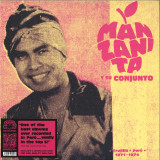
Following the 70s Peruvian cumbia compilation by Ranil last year, Analog Africa returns to Latin America to highlight the work of one of Perú’s undisputed masters of the electric guitar: Manzanita. This 13th release in the Limited Dance Edition Series includes 14 mostly instrumental compositions of electrifying Peruvian cumbia and guaracha. Manzanita's unique guitar lines rest on confident foundations that shifts gears effortlessly. Limited Edition LP in Gatefold Cover pressed on 180g high quality virgin vinyl
"I was in Lima, hanging out with collector-extraordinaire Victor Zela, who had spent the previous few years pouring his passion for Peruvian Cumbia into the blog „la cumbia de mis viejos“, a trove of incredible music. But after the birth of his first child, his priorities shifted and he decided to part with some of his rarest LPs. I was one of the lucky few given an early chance to examine his treasures, and when I picked up the album Manzaneando com Manzanita, Victor said: “Take it! its one of the best LPs ever recorded in Perú … easily in the top five”. That was all the encouragement I needed … two years later many of the songs from that masterpiece have made it onto Manzanita y su Conjunto, a compilation of electrifying Cumbia sides from Manzanita’s golden era.
Berardo Hernández – better known as Manzanita – first surfaced during the psychedelic Cumbia craze. At the head of the scene were the magnificent Los Destellos, whose leader, Enrique Delgado, was such a six-string wizard that other guitarists found it impossible to escape his shadow. But when Manzanita arrived, his electric criollo style sent shockwaves through Lima’s music scene and posed a serious threat to Delgado’s dominance as king of the Peruvian guitar.
Manzanita had come to Lima from the coastal city of Trujillo, five hundred miles up the coast – a place where Spanish, African and indigenous populations had been living and making music together for centuries – and came of age at a time when the first wave of psychedelic rock from the US and UK was starting to sweep the airwaves. But the sounds of Cream and Hendrix disappeared from the radio just as quickly in 1968 when Juan Velasco seized control of the country in a military coup. The new regime, which favoured local traditions over cultural ‘imports’ from the north, was a blessing in disguise for the Peruvian music scene.
Record labels flourished as new bands, raised on a hybrid diet of electric guitars and Cuban rhythms, rushed in to fill the vacuum created by the lack of imported rock. A new genre, known as Peruvian cumbia, was born and Manzanita quickly became one of its most original voices.
Starting in 1969, Manzanita y su Conjunto released a steady stream of singles that used Cuban guaracha rhythms as the foundation for dazzling electric guitar lines. After countless 45s and several years on the touring circuit, the band signed to Virrey, an important Peruvian label, and recorded two LPs acknowledged as masterpieces among aficionados of tropical music. Most of the songs on Analog Africa’s new compilation Manzanita y su Conjunto are drawn from those legendary sessions of 1973 and 74.
Although he scored a few more hits in the later 70s, his dissatisfaction with the music industry caused him to withdraw from the scene for several years; and when he finally retired for good, the golden age of Peruvian cumbia was a distant memory. But when Manzanita was at the top of his game he had few equals. Victor Zela was right: this is some of the best music ever recorded in Perú."