Zürich-based musician Angelo Repetto returns with his new album Between Worlds: Interference, released on Subject to Restrictions Discs. The record is the result of a unique collaboration with Argentinian visual artist Clara Grabowiecki, extending their immersive live project Between Worlds into a sonic and tangible form.
«This album is a continuation of the deep conversations Clara and I had about concepts of perception that led us to question silence, time, transcendence, and the future», says Repetto. «It’s not about finding answers, but about opening spaces where sound, image, and emotion can flow freely.»
Between Worlds: Interference oscillates between hypnotic rhythms, kraut-inspired synth layers, and psychedelic atmospheres – hallmarks of Repetto’s style that listeners may recognize from earlier releases such as Sundown Explosion and Kamiokande. At its core it is an invitation into an open dimension where disciplines, experiences, and realities dissolve into one another. It is both a deeply personal statement and a collective journey into new perceptual spaces.
quête:stat
- A1: A Day In Your Life Ft. Antonina Nowacka
- A2: Jellyfish Light A Big Blue Lie
- A3: Days Ft. Heith
- A4: Slices Of Wind
- A5: Miles Of Silence Ft. Antonina Nowacka
- B1: The Lighthouse Ghost Ft. Martyna Basta Heith
- B2: Airbus 2021
- B3: Music For Airdrop Ft. Renato Grieco
- B4: Please Please Dear Seagull
- B5: Iced-Eye Clown
"Recorded in Naples historic recording studio Auditorium Novecento ‘notes from the air’ is the second Ciro Vitiello full-lenght album, that turns around the ambiguous figure of the seagull, a coastal apparition both ridiculous and divine, foolish and sacred, graceful in flight yet uneasy on land, something that knows more than it shows, carrying both wonder and threat in its gaze.
The album breathes through that tension, the desire to fly and the fear of falling, the suspicion of having already crashed somewhere unseen.
Wind, creaking ropes, invisible currents: these become signals from another uncoding state, reminders that air can be both home and haunting. The record lingers in suspension. Each track feels like a fragment carried by wind, a message blurred, a memory misplaced, something approaching meaning but never arriving.
The record drifts between orchestral gestures and dream-pop/post-rock shadows, guided by Ciro Vitiello’s fascination with shoegaze textures and cinematic atmospheres, and features contributions by Heith, Renato Grieco, Stefano Costanzo, Caraluce and Daniel Kinzelman. Vocal features include Martyna Basta, Heith and Antonina Nowacka, alongside Ciro’s own voice."
InDepth Imprint launches its debut release with a forward-thinking V.A. bringing together UFO95, Hadone, Raar, Initial Code and Clara D. The label focuses on bridging avant-garde sound exploration with club-driven functionality. This first release is built on audio material recorded during a collaborative residency at Willem Twee Studios, using its unique collection of mid-20th-century scientific instruments repurposed for music. Each artist was invited to explore their own creative path, resulting in a highly distinctive record where experimental textures meet precision-engineered techno. The outcome is a coherent yet diverse sonic statement that sets the artistic direction for InDepth Imprint: immersive, concept-driven and deeply connected to contemporary club culture.
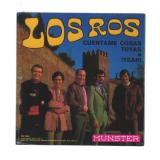
'Cuéntame cosas tuyas' is perfect pop with flawless arrangements; it's crossed over into the international soul scene, made its way into playlists by DJs like Gilles Peterson, and was even covered in the early 2000s by La Costa Brava-proof of its appeal among an ever-broader audience. On the B-side you'll find the superb '¡Yeah!', packed with soul and funk flair. Two irresistible tracks that, after years out of print, we're putting back into circulation with the reissue of this essential record-one that's practically impossible to find in its original pressing. Few late-'60s Spanish pop songs have reached the status that 'Cuéntame cosas tuyas' has earned decades after its original 1969 release. The single, put out by Barcelona label Belter, has become one of the most coveted gems for collectors of '60s sounds. 'Cuéntame cosas tuyas' is perfect pop with flawless arrangements-a sure-fire dance-floor killer, right up there with Elia y Elizabeth's 'Alegría' in any imaginary ranking of Spanish-language pop anthems. Although originally from Valencia, Los Ros (formerly Los 4 Ros) built their career in Palma de Mallorca and released nearly twenty singles on Belter. Between 1968 and 1970, their friendly, commercial pop started weaving in bolder elements drawn from soul, funk, and even psychedelia-something you can also hear on the B-side of this very single, featuring the superb '¡Yeah!'
Daniele Baldelli and Jolly Mare come together for a record that feels less like a collaboration and more like a shared state of mind. Flusso Uno moves through Afro-cosmic kraut-inflected psychedelia and cinematic electronics with a natural, unforced flow, where rhythm, texture and narrative all pull in the same direction.
Rather than referencing the past, the EP treats it as a living language. The longform, ritualistic percussion of early cosmic dance culture meets the hypnotic motorik pulse of krautrock and the more structured, sample-driven tribalism that followed in later decades. What ties it all together is a deep sense of atmosphere and intention: music that feels physical, emotional and quietly transportive.
“We particularly focused on ritual percussions, hypnotic grooves and suspended atmospheres, trying to blend musical anthropology, auteur electronics and narrative instinct.”
Dhol Parade opens the journey like a slow-burning procession, drums circling and expanding as if guiding the listener into another space. With Icari the perspective lifts, melodic lines drifting and tilting, constantly searching for balance between gravity and flight. Huldufolk pulls everything back into a shadowy, nocturnal zone, where textures feel half-real, half-imagined.
Finally, Viaggio Tascabile loses the record in a quietly reflective way, a compact voyage that sums up the EP’s philosophy: small in scale, deep in meaning. Flusso Uno is not about nostalgia or revivalism. It is about taking the spirit of cosmic culture and letting it breathe in the present, where storytelling, dancefloor intuition and sonic exploration still meet. A record made for open ears, open minds and long nights.
2026 Repress
Founded in 1988 by Frank and Karen Mendez as a vehicle for The Burrell Brother’s prolific creative output, the legendary NYC label Nu Groove was relaunched in 2021, reinstating its cult status and quickly becoming a home for genre pioneers. Today its eclectic catalogue continues to grow with label returnee Stefan Braatz delivering his ‘Planet 2 Planet EP’, a four-track vinyl release showcasing this Berlin underground authority’s deeply synthetic club sound and timeless influences, including a collaboration with Virgo Four on the title track.
STRIKER TRAXX proudly presents its very first release — STX101: BALLAN “Chantal Grooves EP”.
Born as the new sub-label of SUPREME STRIKER, itself a direct emanation of the Skylax Records universe, STRIKER TRAXX sets the tone for a new era: raw, uncompromising, and forward-thinking. As always, the visual identity is entrusted to the legendary H5’s exclusive artwork (Daft Punk, Air, Logorama), delivering a striking design that transforms each copy into a true collector’s object.
For this inaugural strike, we welcome Asaf Ballan, aka BALLAN, an artist emerging with force from the vibrant beatscape of contemporary electronic music. With Chantal Grooves EP, he delivers a 12-inch packed with five club-weapons that dive deep into the essence of house and tech house, reshaping them with his own relentless, pumpy twist.
The trip opens with “How Should I Start”, a perfect ignition, teasing anticipation while locking you instantly on the groove. “Goddamnit (Club Tool)” follows as a pure machine workout, echoing Kerri Chandler’s house foundations while pushing them into today’s territory. “Members Only Club” exudes exclusive sophistication, a secret-weapon built for late-night dancefloors. On the flip, “Keep the Frequency Clear” hypnotizes with razor-sharp frequencies, proof of BALLAN’s sonic craftsmanship, before “Futuro” launches us headfirst into tomorrow—where innovation collides with the Romanian sunrise aesthetic, infused with a heavier, raw energy.
Influenced by the minimal masters (Zip, Ricardo Villalobos, Raresh) yet unwilling to compromise on drive and power, BALLAN delivers here a record where every track stands as a killer. Chantal Grooves EP is both a homage to the roots of house and tech house, and a manifesto propelling the genre into its next evolution.
STRIKER TRAXX launches with a statement: this imprint is made for DJs and dancers who still believe in vinyl as a sacred object and in the dancefloor as a transformative space. With H5’s exclusive artwork (Daft Punk, Air, Logorama)and Skylax’s uncompromising vision, each release is conceived as a weapon for the underground, and a jewel for the true collectors.
Vinyl only. For devoted believers.
- A1: Super Boiro Band - So I Si Sa
- A2: Bembeya Jazz National - Armée Guinéenne
- A3: Kaloum Star - Maliba
- A4: Balla Et Ses Balladins - Nyo
- B1: Quintette Guinéenne - Douga
- B2: Le Simandou De Beyla - Festival
- B3: Horoya Band - Zoumana
- C1: Kaloum Star - Gbassikolo
- C2: Sombory Jazz De Fria - Nana
- C3: Syli Authentic - Fabara
- D1: Balla Et Ses Balladins - Paulette
- D2: 22 Band Kankan - Deny
On October 2 1958, after over 60 years of colonial rule, Guineans voted overwhelmingly for their independence, and Guinea was declared a Republic with Sékou Touré as President. Guinea was the first of West Africa’s Francophone colonies to gain independence. To free Guinea from its colonial legacy, president Touré sought to restore dignity to his nation and give cause for Guineans to take pride in their culture, history and newfound freedom. To achieve this, he instructed his government to implement new cultural policies that were intended to revitalise and celebrate indigenous culture. The focus of these new policies was on music.
In 1961, President Touré launched authenticité, the name of his new cultural policy for Guinea. One of its first acts was to assemble the best Guinean musicians into a new state-sponsored orchestras that were tasked with presenting traditional Guinean music in a new and modern style. All musicians in Guinea’s orchestras were officially designated as members of the public service. During the years of Sékou Touré’s presidency (1958 – 1984), the government’s cultural policy of authenticité was applied strictly to the creative arts. Guinea’s sole political party, the Parti Démocratique de Guinée exercised complete authority over artistic production. The scale of the Guinean government’s commitment and efforts to invigorate its indigenous musical cultures was unmatched in Africa, and it presented a clear contrast to the minimal endeavours undertaken by Guinea’s former colonial rulers.
From 1967 to 1983, Guinea’s government presented selections of songs from the Voix de la Révolution catalogue on its own recording label, Syliphone. These recordings were described as ‘the fruit of the revolution’. Syliphone was revolutionary in many aspects: it was the first recording label to feature traditional African musical instruments such as the kora and balafon within an orchestre setting; it was the first to present the traditional songs of the griots within an orchestre setting; and it was the first government-sponsored recording label of post-colonial Africa. Syliphone represented authenticité in action, and over 750 songs were released by the recording label on 12-inch and 7-inch vinyl discs. All are highly sought after by collectors worldwide.
This is the second of a two-volume release which presents a selection of the best songs from Guinea's Syliphone recording label. This volume focuses on recordings from the 1970s, when Guinea’s authenticité policy had transformed the nation's music through a network of over 30 orchestras, each representing their local region, and each presenting Guinean musical traditions alongside the influences of Cuban music, jazz and funk.
- A1: ) | Anuradha Paudwal – Gayatari Mantra
- A2: ) | Baba Zula – Arsiz Saksagan (Cheeky Magpie)
- A3: ) | Orchestra Tout Puissant Marcel Duchamp – So Many Things (To Feel Guilty About)
- A4: ) | Christopher Martin – Playing Games With My Heart
- B1: ) | Geir Sundstøl – C’est Vide En Ville
- B2: ) | Brother Ah – Transcendental March (Creation Song)
- B3: ) | Les Abranis – Therrza Rathwenza
- B4: ) | Sparkels – That Boy Of Mine
- C1: ) | Maximum Joy – Stretch (7” Mix)
- C2: ) | Chillera – Schax
- C3: ) | Elijah Minnelli – I Hope The Goats Come Back (Ze-Hood De-Sham Lichdal)
- C4: ) | Siti Muharam – Pakistan
- D1: ) | Muriel Grossmann – Traneing In
- D2: ) | Catford Gyrations – Land Of 1000 Presets **
- D3: ) | Living Daylights – Let’s Live For Today
- D4: ) | Natalie Bergman – Shine Your Light On Me
Yellow / Pink Vinyl[49,37 €]
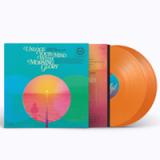
Crate digger and music enthusiast James Endeacott compiles ‘Unlock Your Mind With Morning Glory’ for Two-Piers Records – A glorious heady mix of the weird and wonderful eclectic music from his radio show ‘Morning Glory’
“One weekday afternoon towards the end of 2017 I sat in The Lyric pub on Great Windmill Street, Soho with my dear friend Raf. I’d just finished another of my weekly Soho Radio shows and was starting to think about the next one. Raf had been on as a guest playing some of his favourite tunes of the day. We had a few drinks, told a few stories and started to plot and scheme. It was always a dream of mine to have a daily radio show. Radio had always informed and excited me from my early teens listening to John Peel under the blanket when I should’ve been either sleeping or revising right up to the present-day musical excursions of NTS, WFMU and numerous internet based stations.
We decided to speak to Adrian and Dan who ran Soho Radio to see if they’d be up for us doing a daily morning show. To our surprise they were into the idea and within 5 minutes Adrain came up with the name Morning Glory. We all liked it. We were all excited. It was all systems go. In December 2017 Raf and myself started a daily 2 hour show. We did the show together, got guests in and the musical policy was whatever we felt like that day. After several months Raf found the mornings too much. Off he went into the distance occasionally coming back with a smile, and a bag of new music. I carried on alone and then suddenly in March 2020 the world stopped, and we went into lockdown.
We set up in my house in Catford, Southeast London and carried on. The show became 3 hours a day and I started to invite friends, record labels, record shops, bands etc.. to supply me with hour long mixes that I played every day. The show took off during this time. My musical tastes expanded as I spent all day long searching for new sounds from around the globe. People started to send me more and more music. I became obsessed with the show. The audience started to take to social media and ask for certain tracks or artists to be played. I got listeners to make me mixes to play on the show and I did several phone interviews with musicians while playing some of their favourite tunes.
I was grateful that Soho Radio left me to my own devices. They never told me what to do or what to play – they trusted ma and I trusted my instincts.
The music on this compilation is not a ‘best of’ it’s just how I felt when I compiled it at the start of 2025. Apart from a couple of tracks they are all things I’ve come across since the show started in December 2017. If I did a list of tracks now I’m sure it would be completely different. Surely that’s the point. We never stick in one place. We are always moving and searching. Always trying to unlock our minds. Put it on. Take your time and let it take you somewhere” James Endeacott 2025
Above The Clouds I Finally Found Peace, the latest work from French artist Quelza (Leo Naït Aïssa) on Ostgut Ton, feels like a homecoming.
A testament to introspection and self-awareness.
Rather than adhering strictly to a club-focused approach, the EP marks a step forward in freedom of expression, breaking away from a purely club-based format and instead leading into a broader listening territory. It unfolds as a personal musical journal shaped by perception, memory, and emotion.
As its title suggests, the record carries a spiritual undercurrent. It stands as a sincere sonic statement from a young artist, driven by a clear intention: to express vulnerability and honesty through sound.
The EP invites the listener to let go of expectations formed by previous releases, while preserving the emotional intensity and distinctive sonic identity that have come to define this work in recent years.
„Above The Clouds I Finally Found Peace“, das neueste Werk des französischen Künstlers Quelza (Leo Naït Aïssa) auf Ostgut Ton, fühlt sich wie eine Heimkehr an.
Ein Zeugnis der Selbstreflexion und Selbstwahrnehmung. Anstatt sich strikt an einen cluborientierten Ansatz zu halten, markiert die EP einen Schritt vorwärts in Richtung Ausdrucksfreiheit, bricht mit einem rein clubbasierten Format und führt stattdessen in ein breiteres Hörgebiet. Sie entfaltet sich wie ein persönliches musikalisches Tagebuch, geprägt von Wahrnehmung, Erinnerung und Emotion.
Wie der Titel schon andeutet, hat die Platte eine spirituelle Unterströmung. Sie ist ein aufrichtiges klangliches Statement eines jungen Künstlers, der von einer klaren Absicht getrieben ist: Verletzlichkeit und Ehrlichkeit durch Klang auszudrücken.
Die EP lädt den Hörer dazu ein, die Erwartungen, die durch frühere Veröffentlichungen entstanden sind, loszulassen, während sie gleichzeitig die emotionale Intensität und die unverwechselbare klangliche Identität bewahrt, die dieses Werk in den letzten Jahren geprägt haben.“
The union of Antwerp synthesist David Edren and Tokyo minimalist Hiroki Takahashi is a fit so natural as to feel preordained. Both traffic in subtle shades of contemplative electronics, marked by patience, space, and poetic restraint. And both have rich histories of curation and collaboration – Edren in the duo Spirit & Form alongside Bent Von Bent, and Takahashi as proprietor of the Kankyō record shop, as well as one fourth of cosmic ambient quartet UNKNOWN ME. Mutual fans of one another’s work, they began sharing stems in the latter half of 2020, which slowly blossomed into a collection of multi-hued compositions inspired by notions of connectivity and impermanence, translated for east and west: Flow | 流れ.
Opener “Dusk Decorum | 黄昏 礼節” maps the mood of what’s to come, elegantly pirouetting and percolating through an expanding vista of looming stars and half-light horizons. Takahashi describes Edren’s arrangements as evoking “a strange feel, something we haven't heard much of before.” The sensation is one of “in-betweenness,” a restless current whispering beneath the beauty, like seasons seen in time-lapse footage: flickering but infinite, transience turned permanent. Takahashi’s signature sculpture garden tones plot spiral patterns over which Edren cascades dazzling pointillist synthesizer coloration. The pieces veer between delicate and dilated, micro and macro, their aperture forever softly in flux.
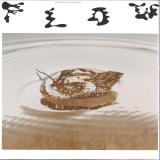
From the oscillating orchestral lullaby of “Stalactime | 鍾乳石時計” to the sweeping, sparkling dream sequence closer, “Shift Register | シフトレジスタ,” the album achieves the elusive goal of being more than the sum of its parts. This is music of rare air, elevated and amorphous, shimmering just out of reach. Though Edren and Takahashi have yet to cohabitate the same room in person (a fact that should be rectified soon by an astute festival booker), their palettes and poise are perfectly paired, twin fragilities woven into seven radiant and regenerative vibrational states. The cover design of a beatific, beaded leaf rippling on the surface of a hidden pond aptly captures the record’s muted majesty. Takahashi’s quiet pride is justified: “We are very happy with this time-consuming and carefully crafted work.”
This EP aims to positively boost your subconscious thoughts while your body is captured by ravey energy. You wanna loose your skin and become a Mental Mamba? Than you should sometimes mirror your thoughts, and not only your body...
DJ Tjizza’s latest inception has been crafted to positively boost your subconscious state, whilst your body is captured by ravey energy
Big heart US deep house figurehead Chez Damier has opened his studio up to new school collaborators once again, with Italy's Nico Lahs and Adeen chief Camille getting back to work on a new series of tunes inspired by jazz-fusion and the sounds broadcast on legendary radio station WJZZ. 'Dragon Breath' opens with tense rhythmic interplay and expressive horns and vibraphones, while 'Tunita' offers shimmering rhythms. 'Third World Wave' is a busy broken beat with weighty kicks and brilliantly loose percussion all run through with off-kilter horns. The 12" expands the palette, from the lighter touch of 'Haiku' to the driving force of 'Bullet Train'. Another majestic collaboration.
Pariter continues to strengthen its ties to the roots of the late 90s and early 00s London underground sound. Following the acclaimed reissues of Ron & Roland, 7th Voyage and Terry Francis the label now unearths a truly rare masterwork from two central figures of the legendary Housey Doingz collective: Justin Bailey and David Coker.
Originally released in 1999 and long considered a lost treasure, Majik Man has been one of the most elusive UK Tech House singles, patiently hunted by dedicated heads for decades. With almost no information ever available about the producers behind the project the mystery only amplified its cult status.
Now for the first time, the original DAT has been meticulously remastered by Yossi Amoyal, revealing the full depth of its hypnotic swing. 25 years on, Majik Man still sounds absolutely massive, an undeniable slice of gold from the era that defined the London sound.
Libertine Records returns with Traditions 22: NOVA EXPREXX – UNDERGROUND REVENGE
After a break, Libertine Records presents a new chapter in its Traditions series. NOVA EXPREXX – UNDERGROUND REVENGE delivers a fierce and uncompromising blend of techno, new beat, acid, and tribe sounds, crafted for night wanderers and those who live beyond conventional paths.
The release captures the raw energy and spirit of the underground, offering relentless beats, hypnotic rhythms, and a soundscape that resonates with true fans of cutting-edge electronic music.
UNDERGROUND REVENGE is a statement of intent from Libertine Records — a label known for pushing the boundaries of electronic music and celebrating the underground scene.
- A1: Deep Sea Ranch - From "Ponyo On The Cliff By The Sea
- A2: Path Of The Wind - From "My Neighbor Totoro
- A3: The Wind Of Time - From "Porco Rosso
- A4: 6Th Station - From "Spirited Away
- A5: One Summer's Day - From "Spirited Away
- A6: Dragon Boy - From "Spirited Away
- A7: Princess Mononoke - From "Princess Mononoke
- B1: Castle In The Sky - From "Laputa Castle In The Sky
- B2: Jinsei No Merry Go Round - From "Howl's Moving Castle
- B3: Tatara Women Work Song - From "Princess Mononoke
- B4: Madness / Kyouki - From "Porco Rosso
- B5: Spring Waltz - From " The Tale Of Princess Kaguya
- B6: Ashitaka And San - From "Princess Mononoke
- B7: The Destruction Of Laputa - From "Laputa Castle In The Sky
- 1: White Noise
- 228: Grams
- 3: Revolutionary Blues
- 4: Come Around
- 5: Still Nothing
- 6: I Dream Of Fever
- 7: Desolation Grows
Ckear Vinyl[24,79 €]
Seit ihrer Gründung im Jahr 1988 bewegen sich The Telescopes in einer ganz eigenen Umlaufbahn. Vage zwischen Noise, Space Rock, Dream Pop und Psychedelia verortet, hat die Band um Stephen Lawrie ihre Klanggrenzen stets verschoben und sich konsequent jenseits etablierter Strömungen bewegt. Static Charge ist bereits das 19. Studioalbum der Gruppe und zugleich die achte Veröffentlichung bei Tapete Records - ein weiteres eindrucksvolles Kapitel ihrer rastlosen, genreübergreifenden Geschichte. Nach einer dreimonatigen Tour durch Großbritannien und Europa kehren The Telescopes mit einem kompakten, fokussierten Werk zurück. Sieben Songs, überwiegend live eingespielt, entfalten eine rohe, elektrisierte Energie: primitive Beats, Außenseiterklänge und tief vibrierende Frequenzen verbinden sich zu einem widerständigen Sound, der bewusst gegen die Absurditäten der Gegenwart arbeitet. Aufgenommen und produziert innerhalb von zwei Monaten im hauseigenen Butterfly House Studio in Shropshire, präsentiert sich Static Charge reduziert, direkt und kompromisslos. In der aktuellen Viererbesetzung bündeln The Telescopes ihre Kräfte zu einem Album, das zugleich wuchtig, hypnotisch und erstaunlich konzentriert wirkt - Musik, die nicht gefallen will, sondern nachhallt.
- A1: From Me To U (Feat. Poppy)
- A2: Ratatata (Babymetal, Electric Callboy)
- A3: Song 3 (Babymetal, Slaughter To Prevail)
- A4: Kon! Kon! (Feat. Bloodywood)
- A5: Kxaxwxaxixi
- B1: Sunset Kiss (Feat. Polyphia)
- B2: My Queen (Feat. Spiritbox)
- B3: Algorism
- B4: Metali!! (Feat. Tom Morello)
- B4: White Flame ー白炎ー
- C1: From Me To U (Major Lazer Remix)
- C2: From Me To U (Jordan Fish Remix)
- D1: From Me To U (Live From The O2)
- D2: My Queen (Live From Intuit Dome)
- D3: Algorism (Live From Saitama Super Arena)
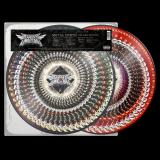
"Beyond HEAVY METAL": the deluxe edition is a special 2LP zoetrope vinyl featuring live recordings from arena shows in the UK, US, and Japan, along with “from me to u (feat. Poppy)” Major Lazer Remix and “from me to u (feat. Poppy)” Jordan Fish Remix
Having celebrated its 15th anniversary last year, BABYMETAL presents a new style of heavy metal album created in collaboration with a new generation of friends encountered across the globe. A powerful statement of who the band is today, this album pushes toward what lies "beyond HEAVY METAL" and aims to change the course of history.
Available to own on special edition zoetrope vinyl. Limited quantities, available while stocks last!
In spring 2025, Abul Mogard and Rafael Anton Irisarri created the source material for their second album, Where Light Pauses in the Silence of the Sun, during a three-day residency at Morphine Raum in Berlin. Functioning as both recording studio and performance venue, the space has no stage, with the audience gathered around the performers. Working within an open framework, the duo reshaped the music each evening while recording the performances live to multitrack. Rotary speakers, modular synthesizers and bowed guitar formed the core of their sonic language, captured through a 1970s mixing console and microphones placed around the room.
Back in Mogard’s studio in Rome, the material was further crafted as motifs were stretched, fragments isolated, and tempos dissolved. Irisarri recorded additional guitar textures and treatments in New York, while passages recorded by Martina Bertoni and Andrea Burelli in Berlin reinforced the harmonic centres and brought breath, refinement and a new sensibility to their compositions. The process continued as Mogard’s layering and subtraction reassembled everyone’s parts into the final arrangement.
The album opens with “In the Eastern Wild,” building from a sparse outline into a monumental formation of low-frequency weight, its internal motion shaped by the rotating Leslie speaker. “Over the Domes” widens into a broader acoustic field, where sustained modular tones meet waves of softly plucked guitar. The music then turns inward with “A Blue Descent,” centred on Bertoni’s cello, whose growling timbre introduces a melancholic depth.
At the album’s centre, “In a Quiet Radiance” unfolds around a slow guitar ostinato, its luminous stillness opening into a more expansive and reflective state. Across its ten-minute span, Burelli’s violin lines and Bertoni’s lower cello phrases gradually surface, weaving through the harmonic field. Mogard brings Burelli’s processed voice to the fore, its emotive, operatic presence becoming one of the record’s pivotal moments. “Of Blessed Ages” suspends the sonic flow, shifting between parallel major and minor chords as lingering, slowly decaying melodies shape the music’s internal drift. The closing “Among Shadows” settles into a darker resonance as layered textures recede.
Mogard and Irisarri’s shared language balances restraint and maximalism. UK magazine Crack describes the music as “a tidal wave held in suspension,” while Dutch newspaper de Volkskrant writes, “What a colossal sound, and how this music strikes at the emotions.” Reflecting on the residency sessions, Irisarri recalls: “At moments I genuinely couldn’t tell if a sound was coming from me or from Abul. It stopped feeling like two people making decisions and began to feel like we were inside a system moving on its own."
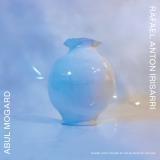
Marja de Sanctis’ cover artwork revisits the vessel sculpture from the duo’s first album, Impossibly Distant, Impossibly Close. There it appeared as raw, unfired clay. Here it has been fired in the kiln and finished with a glaze. Light gathers on its polished surface and spills into the surrounding space. As she explains, “I wanted to convey the idea of continuity within the duo, and the vessel became a kind of container for that idea. However, their music felt different this time, and with the collaboration of Martina and Andrea, I felt it should have a sleeker, softer, more glamorous look, very distant from the first raw appearance.” The transformation of the vessel from raw clay to fired form suggests a passage from immediacy toward permanence, mirroring the music’s gradual expansion.