”Operation Timeframe” is a fusion of styles between two artists who have made waves in their careers: Franco Falsini and Saverio Celestri. On one side, we have a pioneer of electronic music; on the other, the product of years of evolution.
Franco has a rich musical history and a diverse array of influences: starting from progressive rock and arriving at electro-pop, he approached electronic music with a substantial musical background. After founding and participating in various bands across the United States and England, he collaborated with the renowned record label Polydoor. In the early 1990s, he combined his skills as a guitarist and producer, beginning to perform worldwide. In track A2, “A Molecular Affair,” you can clearly hear this blend, which transports us back a few decades and lets us savor a gem deeply rooted in a quality-rich past.
Saverio also had an initial approach to electronic music partly rooted in rock, though more toward alternative rock. Moving to Berlin at a young age, he developed his sense of electronic music in a city teeming with inspiration. Here, he combined his background in electronic, pop, and rock to create brilliant tracks that captivate dance floors worldwide with his Electro, EBM, Synth-Pop, and more. With the B1 track “Veleno,” Saverio follows in the footsteps of his friend Franco, closing the album with “Traveling,” a track structured in Synth Pop, enhanced by the crystal-clear voice of Brazilian artist Lourene.
This is a record that focuses on that frame in which the two artists perfectly align their past and future, projecting it directly into the present, as only two geniuses can.
Search:stat
For the second vinyl release of GNC Records we got five tracks meant for a dark night at the club, produced straight out of the Patagonia by argentine heavyweight Saigg. This EP has four Electro Techno cuts and it also includes a killer remix by argentine EBM live duo KRSSV. Throughout the release, playful basslines interact with arpeggiated synthesizers generating a fun climate that becomes more and more tense while reverberant atmospheres bring the night to its climax. On the side A, we can appreciate how sharp drums build up intensity on the dancefloor in order to leave everything on point for side B, where breakbeats and diffused vocals transport the listener to an induced psychedelic state, a dystopic void representative of the producer and his sonic quest.
Antoni Maiovvi is an artist like few others. “Knights of New Haven” summarises his unique ability and unparalleled range. This return to the Bordello reflects the influence of the West Coast Sound of the Netherlands as well as that machine music of his adopted home of the U.S. “Later Not Lately” bends bars above a throbbing kick, hi-hats ruffling the clean arcs of string. Echoes of Chicago and Detroit penetrate the EP. Melting melodies fold and oscillate under the crashing cymbals of “Slack Blabbath”, staggered synthlines jolted by tight percussion patterns. A brother-in-arms opens the flip, Danny Wolfers drafted in under his Legowelt moniker to turn his magic to “Later Not Lately”. Undulating undertones are sliced by serrated snares before a sordid TB303 is unsheathed, Wolfers’ soulful and squalid retelling of the original. “The Madness in the Method” closes. Fizzing static blurs drum patterns, a taut note piercing the dense bass fog. Teetering between the profound and the profane, Maiovvi pivots his horror disco trademark sound with driving house drums and devil-may-care grandeur. An EP of epic proportions.
Twenty-four years on from its original release, Monolake's seminal Gravity receives its first vinyl pressing courtesy of Field Records. Occupying its own space at the intersection of dub techno, minimal and electronica, it's an ageless album of staggering vision and technological prowess which has matured into an all-time pillar of electronic music. This edition, remastered by the album's key architect Robert Henke, follows on from the recent reissue of Monolake's first album, Hongkong.
Arriving just after the turn of the millennium, Gravity marked a turning point for Monolake. With co-founder Gerhard Behles moving on to other ventures, Henke produced most of the album solo and journeyed deeper into spatial exploration and the dub-informed principles that underpinned their project from the start. Minimalism and negative space run through the whole record, from the keen slithers of percussion pinging through lattices of delay to the hypnotising pulse of subliminal basslines anchoring the tracks. Gravity is a record which hangs on techno's linearity as a form of meditation, but the crystalline clarity of the mix allows every micro-fluctuation in rhythm and sound to cut through.
Compared to a lot of overly sterile digital music released in the early 2000s, Gravity endures thanks to the warmth and texture Henke elicited from his processes — even when leaning into none-more-digital effects like bit reduction. He described the ninth-floor view over Berlin from his studio at night as a key influence on the sound of the record, but the space Gravity shapes out feels thrillingly implacable. Unbound by the standard conventions of time and space, Gravity stands proud as a true original and finally gets the ceremonious vinyl pressing it so richly deserves.
Hard Times proudly welcomes a new release from an artist deeply connected to the label’s storied past. Alex Arnout presents BLACK LOGIC with their debut EP, ‘Pull Up’, a project born from passion, collaboration, and a return to House music's soulful roots
Hailing from West Yorkshire, Arnout spent his formative years on the Hard Times dancefloors, absorbing the beats and vibes that would later shape his own productions. His journey with the label reignited when he was invited to remix Michael Watford’s classic 'Love Change Over' and Steve Silk Hurley’s fresh hit 'All I Need'. Now, he returns with something truly special
“Black Logic was born out of the pandemic,” says Arnout. “I wanted to move away from drum machines and synths, getting back to sampling jazz and the deep house sounds of the ‘90s - taking inspiration from artists like Bugs in the Attic, Jazzanova, and Ernest Saint Laurent.
What began as a solo project soon evolved into a collective effort. Bassist and guitarist Alan Riggs, a former member of Delta 5, joined the sessions, bringing warmth and groove to the productions. Vocalists Tempo O’Neil, Anthony Beckford, Mariana Orsho, and Sophie Barker added their distinct voices, completing the vision.
The ‘Pull Up’ EP is the first of a debut double-header from Black Logic, delivering five stunning tracks that blend jazzy keys, deep grooves, and rich, soulful vocals. From the warm basslines to the celestial closing moments, this EP is a statement of intent - a wonderfully fresh, yet nostalgic take on deep house from a collective of masterful musicians.
Once again the mighty Dusty Donuts take a trip to Queensbridge, where they bump
into a Lost Girl that once appeared on an infamous mixtape of one of QBs finest.
This bouncy and choppy rework is guaranteed to get the party going.
On the flipside we move from QB to Staten Island to rock you with the special
technique.
The heavy soul classic comes in a true shaolin fashion and makes all true hip hop
heads turn!
In stores early April 2025
Classic 1988 'early' house LP reissued on yellow vinyl for the first time for RSD 2025. Made by Royal House aka Todd Terry, the legendary producer & DJ from New York who was a staple for house music and produced under many different aliases throughout his time such as Black Riot, CLS, D'Effect, Dred Stock, Frontline, Frozen Inc., Gypsymen, Hardhouse, House Of Gypsies, Limelife, and amongst many others, Masters At Work (Before he gifted the name to Louie Vega & Kenny Dope). Everybody who was into house and it’s culture in 1988 owned this record, now you have the chance to own this on yellow vinyl for the first time. 'Can you Party' is still played on national radio stations and one of the staples in rave and it’s scenes. Remastered for 2025 in the original 'PAID' designed sleeve but now in transparent yellow vinyl for RSD. Limited edition.
Demi Riquisimo brings together a motley crew of label favourites and newcomers alike on the ‘Love State’ V/A, the 22nd release on his Semi Delicious imprint.
The EP brings together the talents of Demi himself with Clint, Swoose, Lulah Francs, Dukwa, Anastasia Zem & Asa Tate across six discerning cuts exploring modern club music, rooted in the traditions of what came before.
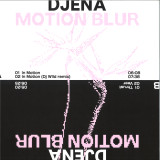
After years of silence dedicated to side projects, DJENA makes a triumphant return with his solo EP, In Motion. A testament to his passion for eclecticism, this release seamlessly bridges house and breakbeat, enriched by a stunning remix from the legendary French producer DJ W!LD.
The journey begins with the title track, In Motion, a hypnotic breakbeat composition where deep pads intertwine with tribal vocal elements, evoking raw emotion and sonic depth. This track is designed to captivate both the ears and the heart. DJ W!LD then takes the reins, transforming In Motion into an irresistible dancefloor anthem. His remix injects a house-driven groove, elevating the track into an emotive yet club-ready masterpiece.
Flipping to the B-side, Thrust propels listeners into a deep tech-driven rhythm, gradually intensifying into a peak-time energy surge. Rounded arps, subtle vocal textures, and celestial pads craft an immersive, ethereal adventure—blurring the lines between introspection and movement.
Closing out the EP, Veer is a sublime after-hours gem. Its bouncy bassline and tech-house rhythm are complemented by atmospheric pads and haunting vocals, leading the listener into a space where both mind and soul find fulfillment
In Motion EP is a refined sonic exploration, balancing depth and energy in perfect harmony. DJENA’s return marks a powerful statement—one that will undoubtedly resonate on dancefloors and beyond.
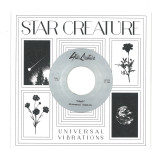
The A-side puts the fun in a funky psychedelic disco stomper complete with sing-along chants and breakbeats. Imagine an overlooked KID CREOLE garage dub cut. The B-side is a fresh take on classic Italo disco with analog percussion, vintage synths and his own guitar and bass.
At this point, Southern Italy's Giovanni Damico is basically an honorary Windy City Native. I don't think he's ever been to Chicago
but he certainly has status on all sides of the City. Damico's collaborations with Chicago's Star Creature kicked have spanned the
better part of the last decade with just as many vinyl releases during that time spanning 2 LPs, 2 EPs, a handful of 7's and an appearance on the 2020's Star Creature Vibes label compilation not to mention the over 20+ 12's and a dozen appearances on labels ranging from MCDE, Lumberjacks in Hell to Kalakuta Soul, Bordelllo A Parigi, his own White Rabbit Recordings and more.
That perfect blend of Tracky Italo Early Drum Machine, Bang the Box type of Proto House Electro Soul with adventurous and ambitious beats and melody combos pulled from a range of global influencers, mixing of electronic and acoustic instruments giving some of the most full body unique compositions in dance music, each being accomplished, evolving and truly unique.
At the start of the 1980’s X-Plode’s dad had a second-hand colour TV business in Bolton, Lancashire where he would buy, sell, repair and trade TVs. He would come back home with all kinds of things he had traded for a TV but the most memorable, to a 10 year old kid at that time, were the keyboards. He use to watch his dad play songs from the 1960’s on these keyboards and when his dad had gone out, Lee X-Plode would sneak on them and start messing about, experimenting with the drum programs and fiddling with the buttons, trying out ideas. He had to move fast though because these keyboards didn’t stay in the house for long as his dad would trade them again for something else; one time that was an old analogue echo chamber, which Lee also messed about with when his dad was out. That echo chamber was a revelation to Lee and opened up the possibilities of what was possible with sound. So by the time Lee was 16, he decided he wanted his own keyboard and started saving. When his 17th birthday came around he had saved up £200 and visited his local Argos where he bought himself a Yamaha PSS 680, an FM synthesizer with memory banks and a basic drum machine incorporated. ‘It was shit quality like, but I didn’t mind. I just wanted it for the programmable drum machine, the synth and the memory banks that came with it” Lee recalls. The year was 1987 and by this time in Lee’s life he was into reggae and hip hop, the latter he first embraced in 1983 by the way of breakdancing and listening to electro, so all he wanted to do when he got his gear was make reggae and electro sounding beats. Recalling his youth and the fun he had with the echo chamber, the next edition to his home set up was to acquire one of those, which he did via a mate of his. But by the time he got his minimal set up sorted in 1988, his musical tastes had changed. House music had landed here in UK and this was Lee’s new passion, so from that point on wards he started experimenting, trying to nail a decent house groove. ‘I wanted 808 sounds, but I didn’t know what one was!’ Lee explains.
Around late 1990 or early 1991, Lee started to improve upon his set up, purchasing an Atari STE, a Cheetah MS6 , a 6 voice polyphonic/multi-timbre analogue rack mounted synth that linked up to his Yamaha – “It wasn’t a great bit of kit, I kept getting electric shocks from it. Eventually it just blew up!” Lee had acquired a cracked copy of Cubase on floppy disk from his local computer game shop but struggled with it. “It was so complicated to understand and took me ages to get used to it. I was stoned a lot back then and I just couldn’t concentrate on anything for long” Lee laughs, continuing “I also picked up a 4 channel sampler/sequencer which plugged into the side of the Atari and that’s when I first started sampling, I think this would have been late 1991. I had the Simon Harris ‘Breaks, Beats and Scratches’ vinyl that he put out on Music for Life which were a godsend back then. I was also sampling a lot from cassette tapes, especially reggae. I would also record the Stu Allan show on Key 103FM, one of the main stations broadcasting out of Manchester. He would do a 3 hour show with hip hop and house, and then hardcore house came along. Eventually he dropped the hip hop altogether and it was just house and hardcore. I recorded the shows onto cassette most weeks and started to learn more about how house and hardcore was put together by listening to those shows.”
Velasco’s Moving In Silence label kicks off with four heavy hitters. An exciting time as the Berlin based New Yorker embarks on this solo label project, uncovering underground sounds from all corners of the globe. Landed kicks off the project with gritty peak-time action from the producer on the rise, crammed with an abundance of rave textures throughout the “Enigma” EP. Expect 4 live recorded rolling techno tunes to keep you stuck in a loop.
300 Limited copies
- A1: Heartbreak Hotel
- A2: Today It’s Junk, Tomorrow It’s Gold
- A3: Dominos
- A4: Siehst Du?
- B1: Trance Europe
- B2: Floks & Murders Of Entitled Spirits
- B3: 420
- B4: The Gates Are Closing And Opening Now
- B5: Really Good
- C1: Tokyo Hotel
- C2: Newttton
- C3: Work Under New Circumstances
- C4: So Much On Your Plate In A Fermented State
- D1: Soft Spots
- D2: The End Ll
- D3: Untitled#6
It was quite unexpected to see the very prolific and talended Pieter Kock featuring on Macadam Mambo - which is usualy used to new-comers - as he has released a lot in the past 2 years on very nice labels like RIO, Meakusma or Moonwalk X. But, the demos that he sent were so good that there was no question about doing something. And with a lot of possibilities, to prepare a double album that is now composed of 15 quality tracks for 1h20 of music... What vibes are in here! It’s heavy, loudy, loopy, mental, smokey, and always surprising. Pieter has is very own universe, and is without doubt one of the most interesting electronic musician at the moment.
Should we ask you to give chance to this opus, and tell you you won’t regret it ? We don’t think we need to do so... J
Perc Trax is proud to unleash the second EP of remixes of tracks from Perc's Resident Advisor recommended album 'The Cut Off'. Following on from EP1 this collection of remixes again covers a range of sounds from cutting edge Parisian deep techno to the sound of the UK underground scene.
Opening up the EP is Mac Declos, a breakout star of the Paris techno scene and a key member of Anetha's Mama Told Ya crew. Mac takes 'Full Goblin', one of the more uncompromising tracks on 'The Cut Off' and transforms it into a slice of grinding stripped back techno, recalling the glory days of Daniel Bell's DBX project.
Next up Sweden's Peder Mannerfelt, who has a long association with Perc & Perc Trax, remixes album standout track 'Static' which features his regular collaborator Sissel Wincent. Peder's version of 'Static' recalls classic Detroit electro with the addition of gliding harp runs providing a glistening counterpoint to the jabbing drums and Sissel's deadpan vocal delivery.
On the B-side Perc Trax new boy Million follows up his recent 'Six Ways To Die' EP taking hold of 'UK Style', originally one of the 'The Cut Off's more abstract tracks, energising it into a driving techno / jungle hybrid with just a sprinkling of classic UK rave to raise a smile on the face of the most exhausted raver.
Finally UK underground legend Boy Pete drags 'Imperial Leather' to the nearest free party, dirtying up Perc's epic original delivering a remix that will keep any 4am dance floor bubbling with energy. The relentless energy that Pete's productions are known for is all over this remix as it continuously powers forward.
Unspecified Enemies, the project led by Louis Digital (Numbers, Counterattack, Arcola) present their debut album Romance in the Age of Adaptive Feedback.
Written and produced by Louis Digital, the album incorporates fragments of music data generated by long-time collaborator CiM (Ann Aimee, Delsin). Describing the title track, Louis Digital states:
“It’s the microelectronic sound of a city playing strange light games with itself, evoking bitcrushed desires and floating images, an urban phantasy stored on the broken circuits of an Ensoniq ASR-10.”
The origins of Romance in the Age of Adaptive Feedback trace back to 2006, when Louis Digital launched Diamond Sea, a series of events at London’s ICA that introduced the Unspecified Enemies project and a label called City of Quartz. The vision was to merge the hi-tech electronic textures of contemporary R&B with the sampling and sequencing techniques of pioneers like Anthony Shakir and Soundhack. However, the music was lost in time, and City of Quartz never released a single record.
Yet, the story took an unexpected turn. At one of these events, Spencer from Numbers received a CD containing early recordings. Years later, Numbers encouraged Louis Digital to reconstruct the lost music for an album. The result is a work resurrected from the past and reimagined for the future—retrieved in fragments from a broken Iomega Jazz SCSI Drive.
Expanding on the album’s themes, Louis Digital reflects:
“By the late ’90s the cinematic image of Los Angeles and the sound of Detroit techno had crystallised a new style of living in time and space. In 1997 Mike Davis — the political activist, urbanist, writer and historian of Los Angeles — suggested that it all had “something to do with a microelectronic aesthetic of very transient and decaying states”. It was a romantic vision — one where the city’s glass surfaces reflected a musical desire for futurity not yet dominated by data-driven corporate life. These were strange days to live through. This album evokes the embers of this fibre-optic moment, when urban revolution in an age of digital reification still felt possible.”
The album features full sleeve artwork and a poster designed by Ben Drury. In support of the release, an NTS show titled Romance and Reification will explore the cinematic and electronic music influences behind the album.
The second vinyl release from Exxtra Beats Records delivers a dynamic 4-track EP showcasing the label's commitment to cutting-edge electronic house music. Featuring a diverse lineup of artists, this Various Artists release explores a range of styles, from driving electro to raw acid, making it a must-have for dancefloors and collectors alike. A bold statement of the label's evolving sound.
DAYBREAKERS, a new London based label focusing on the deepest of deep house, from classics to rarities, dubs, hits & b sides.First up for the label is a focus on Jeffrey Collins’ Music Station label from Englewood, New Jersey. Music Station was a staple on dancefloors across the USA in the 90s. This EP selects four of the best from the label.The A Side has Mixes of Elaine Monk’s - Something For Nothing, mixes so good we had to include them both. On the Flip, the Club Dub of Cherie Lee’s 'Love Me Or Leave Me' will keep the dancefloor rolling, and then B2 is the Smack Rain Vibe Mix of Gerideau’s 'Take A Stand', a deeper than deep anthem perfect for any discerning red lit basement full of dancers.Don't miss out, buy or cry.
QUEENDOM is an album that marks a new era for the project while staying true to the essence of Minuit Machine. Produced under the SYNTH RELIGION label, this opus immerses us in Amandine's introspective realm, oscillating between darkness and light, between doubt and self-conquest. While retaining the emotional DNA of previous productions, QUEENDOM stands out with a more pop-oriented touch, featuring tracks where Amandine sings in French for the first time.
The first single, "HOLD ME," is a powerful pop anthem addressed to the queer community, celebrating the freedom to be oneself and breaking free from societal and patriarchal norms. This track is a true empowerment statement, with striking electro beats supporting a strong message of emancipation and pride.
"Créatures," a collaboration between RAUMM and Minuit Machine, is a modern fairy tale—a timeless love story that could take place in any era. This salvific love, rarely seen today, embodies a poignant depth and beauty.
Continuing the journey, "Cent Fois"—a French-written track—takes us into a techno-pop universe with nostalgic yet hopeful undertones. This song perfectly reflects Minuit Machine's evolution toward a more radiant approach while staying faithful to its dark heritage.
"Party People," on the other hand, is a return to roots with dark wave/italo sounds. This hypnotic and haunting track questions identity in an increasingly robotic society, where individuals are forced to conform to imposed norms. This exploration of the individual versus the collective lies at the core of Minuit Machine's DNA.
"Mes Souvenirs," created in collaboration with Rebeka Warrior, dives intimately into the memories of Amandine and Rebeka. Together, they reveal fragments of their past—precious and vibrant memories that resonate through powerful and melancholic electro sounds.
Finally, the eponymous track "Queendom" invites us to plunge into the depths of Amandine's world—a universe that is both tormented and icy, yet resilient. Supported by a slow and captivating rhythm, this track is designed to grip and haunt the listener, like an incantation.
QUEENDOM is a bold and hybrid work where each track reflects a pursuit of sincerity and artistic reinvention while maintaining the ability to express emotions through rhythms that are both danceable and introspective. The album showcases Minuit Machine's artistic maturity, establishing itself as a must-listen in the darkwave and electronic pop scene.
Amandine entrusted the artistic direction of this album to Manon Dupeyrat, a brilliant young artist who crafted a bespoke universe perfectly aligned with the produced tracks. The album cover, both intimate and anachronistic, invites listeners into Amandine's private world through her bedroom, revealing what she wishes to share.
This group is led by Roland Nieto, a former trumpet player and composer for Or- questa La 33, who has 18 years of experience in international tours. Additionally, the lead vocalist and songwriter is the versatile musician Pío Molina. This album emerged from a desire to explore the origins of brass bands in various parts of the world, including Colombia, Mexico, the United States, Serbia, and Nigeria. In two of its tracks, it also delves into electronic sounds and Dub. While inviting listeners to celebrate with a powerful ensemble of winds and percussion, the album's lyrics address socially relevant issues.
There's iconic. Then there's *iconic*.
A MASSIVE speaker-smashing release, decades overdue. It's been bootlegged - shamefully so, many times over the years - but finally we present the first ever officially licensed reissue of this truly special Afro-disco-not-disco LP from 1979. A favourite of Harvey, Antal, Young Marco and, er, every great DJ to ever play deep records ever, basically. It's not hard to see - or, indeed, *feel* why.
Gem after gem of relentless, irresistibly funky gold, it's an incredibly revelatory album with endlessly complex drum patterns and basslines to dive into, throughout. Truly, this is uniquely FIRE music, unlike anything else you've ever heard, based on Gwo ka music from the gorgeous islands of Guadeloupe and Martinique. A thrilling synthesis of primal, hypnotic drums - the most tribal of percussive elements high in the mix throughout - with the loping synth pyrotechnics of, amongst a whole host of other greats, Wally Badarou and bass power of disco funk don Sauveur Mallia (Arpadys, Spatial & Co.)
Originally released on the seminal French label Barclay, you'd be hard pressed to even find an original copy in nice condition anywhere, let alone for a reasonable price, so it's high time an officially licensed, remastered reissue came around. It's just the latest in a long line of Be With reissues where the music sounds like the - drop-dead dazzling - cover. This here is a true drum attack. BUY ON SIGHT!
Tumblack was a short-lived project, produced and arranged by electronic wizard Yves Hayat and it can certainly be regarded as one of the first examples of Zouk, mixing powerful disco-funk arrangements with Gwo ka, traditional music from Guadeloupe. Gwo ka is an Antillean Creole term for "big drum". You can say that again! It refers to both a family of hand drums and the music played with them, which is a major part of Guadeloupean folk music.Whilst the first side is credited to the exceptional Tumblack band, the flip is given over to "Tumblack & Friends". These weren't just any old friends. Oh no, they were the absolute cream of the French scene (think Arpadys, Voyage, Le Club, Giant, CCPP, Synthesis, Swing Family) such as Sauveur Mallia, Wally Badarou, Marc Chantereau on percussion, Slim Pezin on guitar and Jean-Paul Batailley and Pierre Alain-Dahan handling drum duties.
The urgent, frantic "Fracas" gets things moving straight away with a cavalcade of drums and percussive funk before giving way to the stratospheric "Invocation", one of the album's many, many highlights. It's effectively one long heavenly drum break, a really hard, raw, tribal drum workout without a whole lot else going on - and all the better for it! One to make you sweat, no question. Up next, "Jubilé" is announced with a bellowing accapella voice, chanting the titular name before the heaviest of kicks smashes out your system and lulls you into an absolute state of bliss for nearly 6 minutes. Whoooooosh! Rounding out the sensational A-Side, "Vaudou" is a scratchy, funky patterned drum workout which - yep, yet again - absolutely slays your neck muscles, making them snap and contract in extraordinary fashion. TURN IT UP!
Ushering in the B-Side, the brief, fidgety, African chant-funk of "Parlement" segues seamlessly, beautifully into "Waka", an overwhelmingly rich gem of percussive funk. You do not want this to end, once it hits its stride. For maximum heavenly drum pleasure, you'd need to go a long way than the moment "Waka" feels like it's fading out before it kick-drum-blend into the mighty "Caraïba (Intro)". It's just staggeringly good. It's a minute-long layered drum prelude to the gigantic track which follows. Indeed, "Caraïba" is arguably the best loved and most well-known cut off the LP. And with good reason...featuring that Mallia bass, warm Rhodes and clavs, synth magic, memorably alto sax lines and, of course, tribal chanting.
Another mighty super-ahead-of-its-time classic, the bouncing bass heavy synth funk of "Chunga Funk" deploys Mallia and Wally Badarou (on Mini Moog) exceptionally well. I mean, come on, that bassline is just ridiculous. Try not to move to this one. This extraordinary record closes out with the more traditional Gwo ka sounds of "Bateau La Passé", the tribal chorus making the hairs on the back of your neck stand up.
Tumblack really is a gorgeous late-70s disco-not-disco essential. It's an absolute MONSTER that will completely blow you away; and, yes, it's as compelling and trance-inducing as the cover. The audio for Tumblack has been carefully remastered by Be With regular Simon Francis, ensuring it sounds better than ever. Cicely Balston's expert skills have made sure nothing is lost in the cut whilst the records have been pressed to the highest possible standard at Record Industry in Holland. The cover of Tumblack is so iconic and we sought special permission from original artist Hélène Majera to recreate this at Be With HQ. It absolutely zings off the print and serves as the perfect finishing touch to this long overdue re-issue.