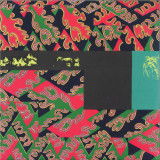
Extended Revelation for the Psychic Weaklings of the Western Civilization is the second album by Swedish rock band The Soundtrack Of Our Lives. Heavily influenced bands from the sixties and seventies such as The Rolling Stones and Iggy and the Stooges, the band became popular in both Europa and the United States. Their fame was partially propelled by their songs being featured on popular video game franchises such as FIFA, NHL and Gran Turismo.
The title of this album comes from the Rolling Stones Records’ release of Brian Jones Presents the Pipes of Pan at Joujouka, where the inside liner notes state that “Western Civilization has made us such Psychic Weaklings”. About 50% of the songs on the album were leftover material from the bands debut album, yet this record sounds far more dark and contains influences from psychedelic music. The album was well received and spawned one single: “Black Star”.
After he became one of the most respected name in the global Balearic scene skipping rocks across water and moving through an amazing and different philosophy. A Vision of Panorama's latest release is an extremely well-designed album which is morphing his synth-o-logy on even more subtly and glistering shapes. With previous 12'' releases on Mellophonia, Cala Tarida Musica and Omena gave us the first sings ''Tiger'' was a matter of time. Boogie-crafted sound with squelching percussions and a touch of 'jazz in the house' which representing the charismatic sound of Larry Heard is managing not only to satisfy his already fans but to be discovered by tones of new ones who their musical references are not only the European 'state of Balearic music' but the breezy US sound too
out of Stock
Last delivered 4 years ago available to reorder, subject to availability
Jess Cornelius first began writing the songs that would comprise Distance after moving from Melbourne, Australia to Los Angeles. At the time, she was excited to start fresh after several years as the primary songwriter in the band Teeth and Tonuge. But the distance she addresses over the album is hardly a geographical one. Instrad, Distance finds a deft songwriter analyzing the space between society’s expectations for her and her own dreams, the illusion of the love and reality of disappointment, and a past she is ready to let go of and a future she could have hardly imagined.
Distance documents a songwriter in the pursuit of living life on her own terms. As Cornelius puts it, “A lot of the rEcord was about me deciding to continue this nomadic lifestyle of being a musician. People would ask ne if I was going to have a family and lot of the songs are about me being ok with no pursuing that path. It was about coming to terms with the choice I had made.. And then two years later, I’m knocked up and married! I couldn’t have imagined that”
Cornelius gave a first taste of Distance with “No Difference,” released last year, which was featured by NPR’s All Songs Considered as well as Paste Magazine, Brooklyn Vegan, Hype Machine and Uproxx, who called it “a striking stateside introduction.”
On new single “Kitchen Floor,” Cornelius maps the space between the bedroom and the front door over a Roy Orbison tinged rave-up, lamenting the coming pain: “This is gonna be a hard one.” Its accompanying video, the first in a series in which she plays a familiar female character trope, was filmed by Cornelius and her partner on an iPhone at 5am in Los Angeles so they wouldn’t encounter any people. “I have a weird fascination with Hollywood Blvd — it’s such a grotesque place most of the time,” says Cornelius. “But I knew we’d have the chance to experience it deserted and empty, and it was like a different place. I’d been watching a lot of ‘last human on earth’ apocalypse-type films. Mostly, the concept behind the clip was to have this character just owning it. There are so many things pregnant women are not ‘supposed' be doing, like having casual sex with strangers. There’s a loneliness, too, that I wanted to get across in the clip, but ultimately she’s in a state of friendliness with herself and the world.”
‘Voyager’, the seventh album from Current Joys, rattles with the
live-wire feeling that’s thrummed through all of Rattigan’s previous
releases: quavering, scream-itself-hoarse vocals and selfinterrogation via song. But here, that bristling, sentimental rock ‘n’
roll cacophony is overlaid with a soundtrack orchestra guiding it
along. It’s an odyssey, a grand-sounding journey of self-discovery
spread across sixteen tracks.
Part ekphrasis, part personal, it’s Rattigan learning new ways to
understand his own feelings and identity while inspired by the
highly-stylized, striking storytelling of filmmakers like Alfred
Hitchcock, Terrence Malick, Agnès Varda and Andrei Tarkovsky.
‘Voyager’ is unlike anything Current Joys has released before.
On his new album, Rattigan eschews lo-fi home recordings for a
full band and recording sessions at Stinson Beach Studios. As a
vocalist/drummer in his other band Surf Curse, Rattigan had finally
opened up to the possibility of working in a professional studio.
It’s all held together by the fervour of Rattigan’s creative process.
He believes in the premonitory power of music and he latches onto
the song ideas that strike him in the moment, propelled by an
abstract existentialism or burst of feeling more than anything else.
It imbues ‘Voyager’ with an intensity and intimacy - with the sense
that you’re getting to hear, all at once, the disparate parts that
make a project - or person - into a sprawling, cinematic whole.
Similar to Tame Impala or Mac Demarco in their early days,
Current Joys is singular and with a fanbase that extends far
outside of traditional indie fans. The band managed to establish an
indie and mainstream audience while flying under the radar of
DSPs and nearly all other industry levers. They are one of the first
indie bands to have their place fully created and cemented by
TikTok.
Double LP packaged in a gatefold sleeve
‘Spoiled Love’ is the debut album from Buzzy Lee (aka Sasha Spielberg). Spoiled Love is unapologetically confessional, The album is about the cycle of an unhealthy relationship, the understanding that one might play a part in that themselves, coming to terms with it and then returning to a state of childhood adolescence following it. These songs started breathing on the coast of Northern California, sat through the traffic of Los Angeles and then found their way to Northern Italy where she crafted and recorded them with longtime friend and collaborator Nicholas Jaar over three trips.
out of Stock
Last delivered 5 years ago available to reorder, subject to availability
‘Archive Series Volume no. 5: Tallahassee Recordings’ is the lost-in-time debut
album from Iron & Wine. A collection of songs recorded three years prior to his
official Sub Pop debut, ‘The Creek Drank the Cradle’ (2002). A period before the
concept of Iron & Wine existed and principal songwriter Sam Beam was studying
at Florida State University with the intent of pursuing a career in film.
‘Archive Series Volume no. 5’ documents the very first steps on a journey that
would lead to a career as one of America’s most original and distinctive singersongwriters. ‘The Creek Drank the Cradle’ arrived like a thief in the night with its
lo-fi, hushed vocals and intimate nature, while almost inversely Tallahassee
comes with a strange sense of confidence. Perhaps an almost youthful discretion
that likely comes from being too young to know better and too naïve to give a
shit.
The recordings themselves are more polished than ‘The Creek Drank the Cradle’
and give a peak into what a studio version of that record might have offered up.
‘Archive Series Volume no. 5’ was recorded over the course of 1998-1999 when
Beam and future bandmate EJ Holowicki moved into a house together. Beam
had not been performing publicly however, he was known for playing an original
song or two in the early morning glow of a long night. Holowicki - also in the film
program and who would go onto a career as a sound designer at Skywalker
Sound - had a mobile recording device and after some prodding convinced his
friend to record these late-night meditations.
Together they would record close to twenty-four songs, ideas and sketches, with
EJ on bass and Sam on vocals, guitar, harmonica and drums. The recordings -
all captured in the house where they lived - have a ‘live in the room’ feel akin to
say Neil Young’s ‘Harvest’ or Nick Drake’s ‘Five Leaves Left’, rather than the
homespun lo-fi 4-track home recording experiment taking place at the time.
These recordings, minus one track, have never been made available and were
instead left preserved on a hard drive for the last twenty years. The one track
that floated out there, called ‘In Your Own Time’ was shared without a title to
childhood friend Ben Bridwell (Band of Horses) at some point. The song became
known as the ‘Fuck Like A Dog’ song and Ben shared it with more than a few
folks during the golden era of mix CDs. Two of those folks were Jonathan
Poneman from Sub Pop and journalist Mike McGonigal, who included it on his
best songs of 2001 mix CD, passed out to friends and acquaintances. And for
many that is where the Iron & Wine story begins, until now.
‘Archive Series Volume no. 5’ is the foreword to your favourite book that you’ve
somehow skipped over time and time again. It’s an alternative history mixed with
some revisionist history told over the course of eleven songs. It’s also the debut
record by Iron & Wine some twenty years after the fact.
Global pop sensation Ava Max—who has already accumulated more than 4 billion career streams—has released her highly-anticipated debut album Heaven & Hell. The record features eight new tracks alongside her previously released hit singles “Sweet But Psycho,” “Who’s Laughing Now,” “So Am I,” “Salt” and “Kings & Queens,” the latter of which spent five weeks at #1 on European airplay and is currently #21 on Top 40 radio.
“Heaven & Hell represents light and dark, good and evil, and the devil and angel on your shoulder,” said Ava on the meaning behind the album. “I’m discussing the dualities of the challenges we face each day. Some songs have darkness; other songs are more positive. Heaven & Hell is the middle ground.”
Ava has also revealed the video for her track “Naked,” which was directed by Hannah Lux Davis (Ariana Grande, Halsey, Doja Cat).
“It’s about the real emotions we go through,” said Ava on the meaning behind the track. “If you don’t know my mind, soul, and heart, you’ll never know me by seeing me naked. We are more than our physical bodies. That’s what I wanted to show.”
A truly international artist, Ava sealed her pop superstar status with the blockbuster success of the RIAA 3x-platinum certified hit, “Sweet but Psycho.” Currently boasting over 2 billion global streams and counting, “Sweet But Psycho” was named among the New York Times’ “54 Best Songs of 2019,” spent three weeks in the top 10 of Billboard’s “Hot 100,” peaked at #3 at US Pop Radio and earned Ava her first-ever Teen Choice Awards nomination for “Choice Pop Song.” The song was joined by an official video that has more than 600 million views on YouTube.
Produced by GRAMMY® Award-winning super-producer Cirkut (Maroon 5, Miley Cyrus, The Weeknd) and co-written with Madison Love (Camila Cabello), “Sweet But Psycho” hit #1 on both Spotify’s “United States Viral 50” and Billboard’s “Dance Club Songs” while becoming one of “The Top Most-Shazamed Songs of 2019.” The song’s stateside success followed the track’s remarkable popularity abroad, including four consecutive weeks atop the UK Singles Chart and #1 rankings on charts in nearly 20 countries.
Dubbed an “Artist You Need to Know” by Rolling Stone, Ava has been feted with a wide range of media attention including high profile features in Vanity Fair, Billboard, FORBES, PAPER, and more. The pop star first took over TV with performances of “Sweet but Psycho” on CBS’s The Late Late Show with James Corden, NBC’s TODAY, and the Ellen DeGeneres Show, as well as a summer performance of her RIAA-certified gold single “So Am I,” on ABC’s Jimmy Kimmel Live. Ava became one of 2019’s most honored performers, including “Best New Artist” nominations at both the 2019 MTV Video Music Awards and the 2019 MTV Europe Music Awards. The latter was highlighted by both Ava’s first-ever win for “Best Push Artist” and show-stopping live performances of both “Torn” and “Sweet But Psycho,” streaming now.
Shpritsz (derived from a colloquial German word for “syringe”) is the second studio album by Dutch rock and roll and blues group Herman Brood & His Wild Romance. The album produced two singles: “R & Roll Junkie” didn’t chart, but biggest hits, charting in Europe as well as the United States. Shpritsz remains one of Brood’s most critically and commercially successful albums. In a 2008 poll by leading Dutch music magazine OOR, Shpritz was voted the fourth- best Dutch album of all time.second single “Saturday Night” ended up becoming one of his
Finding Wildflowers (Alternate Versions) - the latest offering of Tom Petty music, curated with help from his loving family, bandmates and collaborators - will be released on April 16 via Warner Records. The tracks, which were previously released on the limited-edition Super Deluxe version of 2020’s Wildflowers & All The Rest, will now be available on standalone CD & vinyl and digitally for the first time.
The first track to be released is “You Saw Me Comin’,” a previously unreleased song and recording from 1992 and the final track on the collection, which will be premiering alongside a video directed by Joel Kazuo Knoernschild and Katie Malia. Reflecting upon recording “You Saw Me Comin’” for Wildflowers, Heartbreaker Benmont Tench notes, “There’s this kind of longing in the song, in the way that he wrote the chord structure, the melody and the lyrics. It’s wistful, and it would have been the perfect way to end the disc.”
Finding Wildflowers (Alternate Versions) follows Wildflowers & All The Rest which was hailed by Rolling Stone as “the definitive artistic statement that newly illuminates one of the most fruitful, inspired periods of the American legend’s career,” and by Variety, who called it “the best and most justified boxed set of this kind since the Beatles’ White Album compendium.” In fact, the songs on Finding Wildflowers (Alternate Versions) first initiated the estate’s discovery and curation process for the larger project.
Finding Wildflowers (Alternate Versions) features 16 studio recordings of alternate takes, long cuts and jam versions of Wildflowers songs as Tom, band members and co-producer Rick Rubin worked to finalize the album in 1994. The release offers fans further deep access into the writing and recording of Wildflowers, as well as realizing the full vision of the project as Tom had always intended.
The collection was produced by Tom’s longtime engineer and co-producer Ryan Ulyate who listened to 245 reels of 24-track tape, revealing Tom and his collaborators’ evolutionary process and finding the group willing to do whatever it took to discover the essence and magic in the material.
Focus mode to the fullest. Berlin-based Lars Huismann strikes back on Voxnox Records, with his four-track EP "Take The Step".
Self-titled "Take The Step" kicks in first by delivering filthy hat shuffles on even nastier drums and a growing arpeggiator line. With small, yet effective vocal pieces emerging over the place, mysterious pad shapes build a tremendous climax ready to roll further into the future on this one. It's a Voxnox Fam thing with this perfect introduction!
With "Not The Same" stepping up next, Huismann showcases an ever-evolving percussion line on top of some tasty claps and flowing synthesizer plugs. Small voice parts enter the situation too as we get into deeper, atmospheric vibes bringing us a never stopping joy.
And so it's said that the B-sided "Bulletproof" takes nothing less but marching drum patterns and melody glitches coming out of nowhere to prove a forward-directed vibe afterwards. Eventually taking us back to the good old raving area, where eclectic synth lines were the regular state, followed by clever arrangement moves.
Rounding up this EP is the delivered "Bulletproof" remix by Manchester's powerhouse AnD. Taking a faster pitch on the original stems, this remix is a forward-moving rave machine par excellence. With synthesizers marching around the room, proofing that nothing can stop them, we get lost inside this epic round up for the 44th Release of VNR.
out of Stock
Last delivered 11 months ago available to reorder, subject to availability
4LP box set including Angel Olsen’s latest two albums, ‘All
Mirrors’ and ‘Whole New Mess’, as well as an LP of bonus
audio. Also includes 40-page book including photo shoot
outtakes, pictures from the recording of these albums,
handwritten lyrics and items of meaning to Angel.
Originally conceived as a double album, ‘All Mirrors’ and
‘Whole New Mess’ were distinct parts of a larger whole, twin
stars that each expressed something bigger and bolder than
Angel Olsen had ever made. Released in 2019, ‘All Mirrors’
is massive in scope and sound, tracing Olsen’s ascent into
the unknown, to a place of true self-acceptance, no matter
how dark, or difficult, or seemingly lonely. ‘All Mirrors’ is
colossal, moving, dramatic in an Old Hollywood manner.
Recorded before ‘All Mirrors’ but released after, ‘Whole New
Mess’ is the bones and beginnings of the songs that would
rewrite Olsen’s story. This is Angel Olsen in her classic style:
stark solo performances, echoes and open spaces, her voice
both whispered and enormous. ‘All Mirrors’ and ‘Whole New
Mess’ presented the two glorious extremes of an artist who,
in these songs, became new by embracing herself entirely.
Now, with ‘Song of the Lark… And Other Far Memories’,
these twin stars become a constellation with the full extent of
the songs’ iterations: all the alternate takes, B-sides, remixes
and re-imaginings are here, together. Alongside, a 40-page
book collection tells a similar story, not just through outtakes
and unseen photos but through the smaller, evocative
details: handwritten lyrics, a favourite necklace, a beaded
chandelier. As if it could be more plainly stated (there’s
nothing more), Angel adds one cover here: a loving,
assertive rendition of Roxy Music’s ‘More Than This’.
It is a definitive collection, not just of these songs but of their
revelations and their writer, from their simplest origins to their
mightiest realizations.
First released in Brazil in 1960 this is Joao Gilberto's second studio effort. A seminal album that just one year later introduced Bossa Nova to the United States. Joao Gilberto, one of the true masters of the genre, displays a great selection of songs including various Tom Jobim's classic gems such as "Samba de Uma Nota Só" ("One Note Samba"), "Corcovado" and "Outra Vez". An essential piece of work in the whole history of Brazilian music.
Punk Dancehall fusion .. A Collision between African Headcharge and CRASS.. Born from the ashes of an early 1980’s Northampton based anarcho collective of musicians & artists – with a shared love of reggae and a punk neo industrial ethos – came REDUCER – We had to do things with an edge – to cut through the shit – that post punk new wave safe pop with a renewed knife of Joy & Righteous Anger – love & hate – life & death – banged out in a massive industrial reggae punk soundscape – our gigs were audio visual shock & awe – total commitment to the moment and the creativity – video projection,, incence & pyrotechnics, covering the venue walls with backdrops – it was a fully immersive experience. We never sought music business recognition- we weren’t in the music business! We were in the experience business! We recorded about 30 odd tracks in all, in order to try & catch the passion, energy & raw power of when we played live, the tracks were recorded over a period of 7 years. Each one unique, unrehearsed, spontaneous & improvised – one take, one mix onto cassette and a vershun if wanted & were done – capturing the raw passion & life energy that was pouring through us. About 5 years ago years we decided to set up a website & release what felt at that point may have been our 1st, last & only chance to get something on vinyl, & set up a website in order to tell the remarkable story of what happened in that little town in the Midlands 40 years ago and after we decided to digitize our archive of recordings and put them on the site and other platforms just as a “We were here & We did this” statement of public record – incredibly a Reducer Renaissance was born – the website mushroomed & we got US Radio airplay, we suddenly sold out our 1st vinyl release – Product & 35 years on a new audience got to hear & see what the myths & legends are about and they want more so, here it is, 5 tracks 5 videos. 35 Years old – Sounds like it was Recorded Yesterday. Think you’ve heard everything? You haven’t heard Reducer.
out of Stock
Last delivered 5 years ago available to reorder, subject to availability
Band of Brothers is a 2001 American war drama HBO miniseries based on historian Stephen E. Ambrose’s 1992 non-fiction book of the same name. Produced by Steven Spielberg and Tom Hanks, the series tells the story of “Easy” Company, 2nd Battalion, 506th Parachute Infantry Regiment, of the 101st Airborne Division, from their first jump training in the United States through their participation in major actions in Europe during World War II. The series received universal acclaim and went on to win many awards, including multiple Emmy and Golden Globe Awards.
Rich in musical associations yet utterly singular in its voice, joyous with an inner tranquility, the music of Natural Information Society is unlike any other being made today. Their sixth album in eleven years for eremite records, descension (Out of Our Constrictions) is the first to be recorded live, featuring a set from London’s Cafe OTO with veteran English free-improv great Evan Parker, & the first to feature just one extended composition. The 75-minute performance, inspired by the galvanizing presence of Parker, is a sustained bacchanalia of collective ecstasy. You could call it their party album.
This was the second time Parker played with NIS. Joshua Abrams: “Both times we played compositions with Evan in mind. I don’t tell Evan anything. He’s a free agent.”
The music is focused & malleable, energized & even-keeled, drawing on concepts of ensemble playing common to musics from many locations & eras without any one specific aesthetic realization completely defining it.
“The rhythms that Mikel plays are not an exact reference to Chicago house, but that’s in there,” Abrams says. “I like to take a cyclic view of music history, can we take that four-on-the-floor, & consider how it connects to swing-era music? Can we articulate a through line? I dee-jayed for years in Chicago & lessons I learned from playing records for dancing inform how I think about the group’s music. The listener can make connections to aspects of soul music, electronic music, minimalism, traditional folk musics, & other musics of the diaspora as well. It’s about these aspects coming together. I don’t need to mimic something, I need to embody it to get to the spirit, to get to the living thing.”
For jazz fans, the sound of Parker’s soprano & Jason Stein’s bass clarinet might evoke Coltrane & Dolphy, even though they didn’t necessarily set out to do that & they play with complete individuality. Abrams sees a bridge to the historical precedent, too. “Since we first met in the 1990s, one of the things that Evan and I connected on was Coltrane’s music,” he says. “I hoped that we would tap into that sound world intuitively. In this case, I think that level of evocation adds another layer of depth, versus a layer of reference.”
Indeed, this is a performance in which the connections among the ensemble & the creative tension between improvisation and composition build into a complex mesh of associations & interactions. While the band confines itself to the territory mapped out by Abrams’ composition, they are remarkably attentive & responsive, making adjustments to Parker’s improvisations. When Parker’s intricate patterns of notes interweave with the band, the parts reinforce one another & the music rockets upward. Sometimes, Parker’s lines are cradled by the group’s gentle pulse & an unearthly lyrical balance is struck.
Drummer Mikel Patrick Avery is locked-in, playing with hellacious long-form discipline, feel & responsiveness. Jason Stein’s animated, vocalized bass clarinet weaves in & out with Lisa Alvarado’s harmonium to state the piece’s thematic material; the pulsing tremolo on the harmonium brings a Spacemen 3 vibe to the party. Abrams ties together melody & rhythm on guimbri, a presence that leads without seeming to. Like his bandmates, he shifts modes of playing frequently, improvising & then returning to the composed structure.
“As specific as the composition is, the goal is to internalize it & mix it up,” Abrams says. “The idea is to get so comfortable that we can make spontaneous changes, find new routes of activity, stasis & byways every gig. It’s like a web we’re spinning. If someone makes a move, we all aim to be aware of it, make room for it. Experiencing & listening is what it’s about, & Evan supercharges that.”
& “supercharged” is the word for this album. With Parker further opening up their music, descension (Out of Our Constrictions) is the sound of Natural Information Society growing both more disciplined and freer, one of the great bands of its time on a deep run.
Aguirre edition: Mastered by Helge Sten, Audio Virus, Oslo. Lacquers by Dubplates & Mastering. Liner Notes by Theaster Gates. LPs pressed on premium audiophile-quality vinyl at Pallas Records. US 2xLP edition available thru Eremite records.
out of Stock
Last delivered 5 years ago available to reorder, subject to availability
"We want to make people feel good about things that we feel terrible about." says David Brewis, who has co-led the band Field Music with his brother Peter since 2004. It's a statement which seems particularly fitting to their latest album, Flat White Moon released on 23 April via Memphis Industries. Sporadic sessions for the album began in late 2019 at the pair's studio in Sunderland, slotted between rehearsals and touring. The initial recordings pushed a looser performance aspect to the fore, inspired by some of their very first musical loves; Free, Fleetwood Mac, Led Zeppelin and The Beatles; old tapes and LPs pilfered from their parents' shelves. But a balance between performance and construction has always been an essential part of Field Music. By March 2020, recording had already begun for most of the album's tracks and, with touring for Making A New World winding down, Peter and David were ready to plough on and finish the record. The playfulness that's evident in much of Flat White Moon's music became a way to offset the darkness and the sadness of many of the lyrics. Much of the album is plainly about loss and grief, and also about the guilt and isolation which comes with that. Those personal upheavals are apparent on songs like Out of the Frame, where the loss of a loved one is felt more deeply because they can't be found in photographs and compounded by the suspicion that you caused their absence, or on When You Last Heard From a Linda, which details the confusion of being unable to penetrate a best friend's loneliness in the darkest of circumstances. Some songs are more impressionistic. Orion From The Streets combines Studio Ghibli, a documentary about Cary Grant and an excess of wine to become a hallucinogenic treatise on memory and guilt.. Others, such as Not When You're In Love, are more descriptive. Here, the narrator guides us through slide-projected scenes, questioning the ideas and semantics of 'love' as well the reliability of his own memory. The result is a generous record of bounteous musical ideas, in many ways Field Music's most immediately gratifying to date.
"We want to make people feel good about things that we feel terrible about." says David Brewis, who has co-led the band Field Music with his brother Peter since 2004. It's a statement which seems particularly fitting to their latest album, Flat White Moon released on 23 April via Memphis Industries. Sporadic sessions for the album began in late 2019 at the pair's studio in Sunderland, slotted between rehearsals and touring. The initial recordings pushed a looser performance aspect to the fore, inspired by some of their very first musical loves; Free, Fleetwood Mac, Led Zeppelin and The Beatles; old tapes and LPs pilfered from their parents' shelves. But a balance between performance and construction has always been an essential part of Field Music. By March 2020, recording had already begun for most of the album's tracks and, with touring for Making A New World winding down, Peter and David were ready to plough on and finish the record. The playfulness that's evident in much of Flat White Moon's music became a way to offset the darkness and the sadness of many of the lyrics. Much of the album is plainly about loss and grief, and also about the guilt and isolation which comes with that. Those personal upheavals are apparent on songs like Out of the Frame, where the loss of a loved one is felt more deeply because they can't be found in photographs and compounded by the suspicion that you caused their absence, or on When You Last Heard From a Linda, which details the confusion of being unable to penetrate a best friend's loneliness in the darkest of circumstances. Some songs are more impressionistic. Orion From The Streets combines Studio Ghibli, a documentary about Cary Grant and an excess of wine to become a hallucinogenic treatise on memory and guilt.. Others, such as Not When You're In Love, are more descriptive. Here, the narrator guides us through slide-projected scenes, questioning the ideas and semantics of 'love' as well the reliability of his own memory. The result is a generous record of bounteous musical ideas, in many ways Field Music's most immediately gratifying to date.
On October 12, 1929, Kathryn Culp and Sammie Lee Brown had the idea to name their first-born baby Napoleon. With such a vital beginning, little Nappy was already predestined to hit the mark, so from a very young age he stood out for his vocal qualities, well cultivated in gospel, which he practiced assiduously in The First Mount Zion Baptist Church run by his father.
To Mr. Brown's chagrin, after his first forays into religious music participating in vocal gospel groups such as The Golden Crowns, Golden Bell Quintet and The Heavenly Lights, with whom he recorded his first single for Savoy in 1954, the young Napoleon decided to try his hand at secular music, convinced by Herman Lubinsky, the big boss man of the New Jersey label.
In this way, between 1954 and 1962, Napoleon recorded a total of 28 singles at Savoy, clearly marking the transition from Rhythm & Blues to Rock’n’Roll, and also his subsequent jump to Soul, being the natural link between the late 40s southerners like Wynonie Harris or Big Joe Turner and artists like Jackie Wilson or James Brown, who cemented the black sounds of the 60s.
This LP includes a compilation of some of his best songs at Savoy, high class rock'n'roll, with a lot of dancefloor favourites like DON'T BE ANGRY, compiled in its two versions, or JUST A LITTLE LOVIN ', but also his more Bluesy sides, with songs like the fabulous DOWN IN THE ALLEY, which would be recorded years later by that certain singer born in Tupelo, Mississippi, that many times declared how much he dug Nappy Brown’s Rhythm & Blues.
In the same bluesy way Nappy wrote the iconic THE RIGHT TIME, one of the first stones of the Soul cathedral, originally recorded by Nappy on 1957, and revised one year before by Ray Charles. Ray’s version, renamed Night Time Is The Right Time, would be included as the main theme of the award-winning film IN THE HEAT OF THE NIGHT. We´ve also included Nappy’s own answer to this song, recorded in 1961 and titled as ANY TIME IS THE RIGHT TIME.
Finally can´t avoid to name some of the backing musicians you´ll hear in these tracks, Sam ‘The Man’ Taylor, Mickey Baker, Panama Francis… have a look on notes bellow, oh boy! the A-Team of the mid-century New York Rhythm & Blues!
Nappy disappeared from the music scene in 1962, remaining anonymous until 1969, when he would return to Rhythm & Blues on Elephant Records with an LP whose title could not be more eloquent: THANK YOU FOR NOTHING.
Since then, Nappy was very active until his death in 2008, alternating his love for gospel and Rhythm & Blues, touring the United States and Europe and releasing no less than a dozen LPs.
Isasa’s fourth LP is a guitar excursion from a skillful, humble guide. Minimal, contemplative songs, rich in atmosphere and warm in spirit.
Some musicians give their name to their first album, signifying introduction. Some hold it in reserve — it took Wire 39 years to get around to calling an LP Wire. But whenever they do so, they are making a statement. For Conrado Isasa, an acoustic guitarist from Madrid, Spain, the decision to call his fourth album Isasa reflects the fact that his music’s relationship to his own identity has evolved. Isasa presents an artist whose work reflects that he knows and accepts where he comes from.
Between 1993 and 2003, he played electric guitar in the hardcore metal band Down For The Count and the post rock combo, A Room With A View. These were collective statements, communications between small groups and a select underground community. After the latter group’s demise, Isasa stepped back from recording, and for a while from guitar playing as well. He spent some time learning to play the trumpet, but was inspired to return to the guitar in 2007 after he heard Geoff Farina play a Mississippi John Hurt song for the encore of a Glorytellers gig. Then came another period of learning, during which he studied the playing of Hurt, John Fahey, Jack Rose, and Glenn Jones.
Performing as Isasa, he made three records, each of which can be heard as confrontation with an artistic challenge. Las Cosas (2015) is between the man and his acoustic guitar; what could he do with his fingers, a slide, six steel strings, and a box of wood? Los Días (2016) faces the broader issue of how to deal with the requirements of the American Primitive guitar style. Like Fahey, Rose, and Jones, Isasa sought to make an album that used a cohesive sequence of guitar and banjo instrumentals to express personal experiences. With its references to the sights, sounds, and tastes one might encounter in Madrid, it is like a poetic diary written with the distance that comes from having mastered a second language. After making that record, Isasa toured parts of the United States, and played at The Thousand Incarnations Of The Rose, a festival that gathered representatives of American Primitive guitar’s past, present, and future in Takoma Park, the town where the style’s original synthesist, John Fahey, was born. Insilio (2019) began to look beyond that style, dealing with Hindustani raga forms and adding other instrumental textures.
And now comes Isasa. The name suggests something very personal, and it’s true that it draws upon Isasa’s closest relationships. Two compositions are either named for or feature the voices of his children, but their presence helps this music to transcend the purely personal. For what could be more universally shared than the joy and love one feels for children? Others invoke concepts — absence, liberty, love, reunion. They may mean one thing to Isasa, and another thing to you, but by sharing his reactions to them, he invites you to recognize yours. Isasa isn’t just using his experiences to tell you about his life; he is using what he knows about life to help us know a little more about ours.
Following the hard-hitting return single ‘Anxious’ and a slew of mysterious ‘West Gazette’ posters appearing around the UK hinting at the announcement (including Birmingham, Manchester, Glasgow, Bristol and London), West London’s AJ Tracey assumes the character of a rising young basketball player appearing in a livestreamed press conference to reveal his next move: a lucrative deal with major
franchise Revenge Athletic ahead of a crucial playoff game. The broadcast ends with the true reveal: AJ’s highly anticipated sophomore album ‘FLU GAME’ will finally arrive.
Always pushing boundaries with his creative output, AJ’s campaign draws influence from the story of Michael Jordan and his Chicago Bulls team in the late 90s, with ‘FLU GAME’ referencing one of MJ’s most memorable championship games where he overcame a nasty bout of food poisoning (brought on by a dodgy takeaway pizza) and took the Bulls to the championship. Revenge Athletic are a franchise on the brink of a massive championship win and AJ is their new star. All we know for now is that AJ is about to take us into this new world, as he dons the number 10 jersey and states he’s “ready to get going and do what I’ve always done.”
‘FLU GAME’ sees AJ showcasing twelve brand new tracks, with tantalising features including Kehlani, T-Pain, SahBabii, NAV and Millie Go Lightly. On the production
front, AJ calls on regular collaborators Nyge, The Elements, Kazza, AoD and Remedee.
The project also features the UK Top Five singles ‘Bringing It Back’ with Digga D, ‘West Ten’' with Mabel and the Platinum smash ‘Dinner Guest’ featuring MoStack. AJ Tracey is a man on an unstoppable, independently built trajectory. 2020 was his
biggest year to date, with (certified Gold) single ‘West Ten’ alongside Mabel landing in the wake of chart-scaling ‘Dinner Guest’ featuring MoStack (Platinum), Number 1 charity single ‘Times Like These’ (alongside Dua Lipa, Rag & Bone Man and The Foo Fighters) and the Platinum-certified TikTok sensation ‘Rain’ with Aitch, which went on
to become the most watched UK YouTube video of 2020. AJ finished the year with a stand-out feature on Headie One’s enormous anthem ‘Ain’t It Different’ alongside Stormzy, a Platinum certified track that peaked at Number 2 in the UK Singles Chart.
In 2019, AJ released his debut self-titled album which, after landing at Number 3 in the UK Official Charts, has gone on to clock over 350 million streams globally and is certified Gold. His Conducta-produced breakout hit ‘Ladbroke Grove’ was officially the
top selling independent single of 2019, spending an astounding 14 weeks in the UK Top 10, and is now certified Double Platinum (over 1.2 million sales). It was nominated for a BRIT, was named Best British Song at the NME Awards and is now the biggest-selling UK Garage record of all time - an incredible feat. AJ rounded off a
huge 2019 with two sold-out headline shows at London’s 10,000 capacity Alexandra Palace.
A music and cultural icon, and boasting over 1 billion global streams independently, AJ’s formidable talent and unmatched creative vision is set to see him scale even higher heights in the coming months.
a Anxious [prod Remedee]
[b] Kukoč (ft. NAV) [prod Pxcoyo + Yung Swisher]
[c] Bringing It Back (with Digga D) [prod. The Elements + AoD)
[d] Cheerleaders [prod Kazza & Swidom]
[e] Draft Pick [prod 5ive Beatz] Eurostep [prod AJ Tracey]
[f] Cherry Blossom [prod Nyge & AoD]
[g] Glockie [prod The Elements & AoD]
[h] Little More Love [prod YOZ BEATZ, RyFy & Mark Raggio]
[i] Top Dog [prod Nyge & AoD]
[j] Summertime Shootout (ft. T-Pain) [prod Nyge & AoD]
[k] Perfect Storm [prod YOZ BEATZ & JBJ]
[l] Coupé (ft. Kehlani) [prod The Elements]
[m] Numba 9 (ft. SahBabii & Millie Go Lightly) [prod The Elements]
[n] Dinner Guest (ft. MoStack) [prod The Elements & AJ Tracey]
[o] West Ten (with Mabel) [prod FRED & Take a Daytrip]
[a] Anxious [prod Remedee]
[b] Kukoč (ft. NAV) [prod Pxcoyo + Yung Swisher]
[c] Bringing It Back (with Digga D) [prod. The Elements + AoD)
[d] Cheerleaders [prod Kazza & Swidom]
[e] Draft Pick [prod 5ive Beatz] Eurostep [prod AJ Tracey]
[f] Cherry Blossom [prod Nyge & AoD]
[g] Glockie [prod The Elements & AoD]
[h] Little More Love [prod YOZ BEATZ, RyFy & Mark Raggio]
[i] Top Dog [prod Nyge & AoD]
[j] Summertime Shootout (ft. T-Pain) [prod Nyge & AoD]
[k] Perfect Storm [prod YOZ BEATZ & JBJ]
[l] Coupé (ft. Kehlani) [prod The Elements]
[m] Numba 9 (ft. SahBabii & Millie Go Lightly) [prod The Elements]
[n] Dinner Guest (ft. MoStack) [prod The Elements & AJ Tracey]
[o] West Ten (with Mabel) [prod FRED & Take a Daytrip]
Violence Unimagined. The title tells you everything you need to know about Cannibal Corpse's fifteenth hellish opus. Comprised of eleven tracks, it is state of the art death metal played with passion and breathless precision, making for another flawless addition to what is inarguably one of the premier catalogues the genre has thrown up. Ever improving on the genre they helped define, 2017's Red Before Black stands as one of the highlights of their career. Following it up wasn't exactly easy, but Cannibal Corpse have somehow managed to raise the bar yet again. Already well known for the level of extreme technicality they bring to every record, on Violence Unimagined, Cannibal Corpse have further upped their game.
Surrender is the debut full length from DJ, producer, and songwriter Endgame. Stepping out for the first time as a vocalist, and lyricist, Surrender is his most ambitious and vulnerable work to date; a striking statement of intent, with moments of beauty and brutality. Endgame has carved an iconoclastic niche in club culture. Breaking into the scene as co-founder of the legendary collective Bala Club, and resident of the radical club-night Endless. Whilst continuing almost a decade hosting his infamous NTS radio show (and now label) Precious Metals, he has forged a path against the tide of formulaic club music. A visionary DJ and producer, Surrender sees Endgame continue this trajectory, with a project that both amplifies the ferocious club constructions he's known for, whilst making space to open up wounded memories and with sombre unfeigned requiems. Having previously released records on Hyperdub, PTP, Golden Mist and Infinite Machine, Endgame's first release on his own Precious Metals imprint, is him at his most reflective. Surrender is a deeply personal record, about loss and finding meaning in despair. Death is a prevailing theme, with the passing of his father a totemic subject. The recollection of his father's torturous final moments leaves him to mournfully contemplate temporality. Using this sense of anguish, he blurs reality-creating a world where angels and demons are among us in a decaying cityscape; akin to the work of Todd McFarlane. The opener Faithless, propels us into this world, with the slow build of industrial precision amidst the sombre build of harsh melodic synths. We descend deeper into this vision with Barbed Heart, featuring a defining vocal from scene staple and long time collaborator Yayoyanoh, as 808's and skittering hi hats ricochet off one another beneath his bass driven vocal. No Heroes continues our journey into the unknown with a chaotic rush of acidic riffs, pounding percussion, and a reference to the brutalist anthem from hardcore punk band Converge (where the track borrows its name). Requiem acts as the turning point of the record as Endgame steps into the foreground as a vocalist. As the name suggests, this lament is a sombre reflection of grief; its minimalist instrumental allows Endgame's haunted verse to rise into the foreground, like an apparition amidst the smoke in the depths of a dimly lit club. The dark clouds fade into the distance in Exhumed, as the elegant melancholic vocal of Bala Club affiliate and gifted vocalist Organ Tapes reflects off Endgame's sanguine verses bringing hope into the heartfelt instrumental filled with melodic flourishes and bass-bin rattling subs. The thematic haze thickens in Abyss, as the pulsating and doom laden instrumental interweaves with Endgame's sepulchral vocal. Like a message from the void, his words act as an agnostic hymn that pulls apart his sense of self. The contrast of his plaintive verse with the intensity of the instrumental creates a contrast that is symbolic of the record itself, a duality that presents moments of soft reflection against a severe sonic palette to create moments of transcendence.
Honeyed harmonies form a girl group turntable turnover! Sugar-dusted girl group confections concocted on impulse of three Staten Island girls who just wanted the attention of some high school boys!
This poly-vinyl pastry collects all the Candy And The Kisses soulful Scepter sides and some originally unissued bonbons! The Scepter Sessions collects them all on LP for the first time, pressed on sweet colored vinyl!
“This is the time. And this is the record of the time.”
Laurie Anderson’s 1982 debut album, Big Science, will return to vinyl for the first time in 30 years with a new red vinyl edition on Nonesuch Records. The release includes the re-mastered original album first released on CD for the 25thanniversary in 2007.
In the early 1980s, Laurie Anderson was already respected as a conceptual artist and composer, adept at employing gear both high-tech and homemade in her often violin-based pieces, and she was a familiar figure in the cross-pollinating, Lower Manhattan music-visual art-performance circles from which Philip Glass and David Byrne also emerged. While working on her now-legendary seven-hour performance art/theater piece United States, Part I–IV, she cut the spare ‘O Superman (For Massenet)’, an electronic-age update of 19th century French operatic composer Jules Massenet’s aria ‘O Souverain’, for the tiny New York City indie label 110 Records. In the UK, DJ John Peel picked up a copy of this very limited-edition 33⅓ RPM 7” and spun the eight-minute-plus track on BBC Radio 1. The exposure resulted in an unlikely #2 hit, lots of attention in the press, and a worldwide deal with Warner Bros. Records.
’Cause when love is gone, there's always justice.
And when justice is gone, there's always force.
And when force is gone, there's always Mom. Hi Mom!
At the time of its original release, the NME wrote of Big Science, ‘There’s a dream-like, subconscious quality about her songs which helps them work at deeper, secret levels of the psyche.’ With instrumentation ranging from tape loops to found sounds to bag pipes, Big Science anticipated the tech-savvy beats, anything-goes instrumentation and sample-based nature of much contemporary electronic and dance music. On the album’s 25th anniversary, Uncut noted, ‘The broader themes of alienation and disconnection still resonate, while Anderson’s use of loops and traditional/synthesized instrumentation is prescient.’
“In the ’70s I travelled a lot,” Anderson recounts. “I worked on a tobacco farm in Kentucky, hitchhiked to the North Pole, lived in a yurt in Chiapas, and worked on a media commune. I had my own romantic vision of the road. My plan was to make a portrait of the country. Big Science, the first part of the puzzle, eventually became part two of United States I–IV (Transportation, Politics, Money, Love). My goal was to be not just the narrator but also the outsider, the stranger. Although I wasfascinated by the United States, this portrait was also about how the country looked from a distance. I was performing a lot in Europe, where American culture was simultaneously booed and cheered. But the portrait was also a picture of a culture inventing a digital world and learning to live in it. Big Science was about technology, size, industrialization,shifting attitudes toward authority, and individuality. It was sometimes alarmist, picturing the country as a burning building, a plane crash. Alongside the techno was the apocalyptic. The absurd. The everyday. It was also a series of short stories about odd characters – hatcheck clerks and pilots, preachers, drifters and strangers. There was something about Massenet’s aria ‘O Souverain’ – which inspired ‘O Superman’ – that almost stopped my heart. The pauses, the melody. “O souverain, ô juge, ô père” (O Lord, o judge, o father). A prayer about empire, ambition, and loss.”
Laurie Anderson is one of America's most renowned – and daring – creative pioneers. Her work, which encompasses music, visual art, poetry, film, and photography, has challenged and delighted audiences around the world for over 40 years. Anderson released her first album with Nonesuch Records in 2001, the critically lauded Life on a String. Her subsequent releases on the label include Live in New York (2002), Homeland (2010), the soundtrack to Anderson’s acclaimed film Heart of a Dog (2015), and her Grammy-winning collaboration with Kronos Quartet, Landfall (2018). Additionally, Anderson’s virtual-reality film La Camera Insabbiata, with Hsin-Chien Huang, won the 2017 Venice Film Festival Award for Best VR Experience, and, in 2018, Skira Rizzoli published her book All the Things I Lost in the Flood: Essays on Pictures, Language and Code, the most comprehensive collection of her artwork to date.
out of Stock
Last delivered 5 years ago available to reorder, subject to availability
To Sonic Boom’s Pete Kember, re-imagining the past can lead to ways forward on life’s natural, interconnected path. In April of 2020, he released his first album in over 20 years called All Things Being Equal, a lush and psychedelic record full of interwoven synthesizers and droning vocal melodies, concerned with the state of humanity and the natural world. An entire year later, Kember has re-imagined his last release and created an album of self-remixed tracks called Almost Nothing Is Nearly Enough, inspired by the spirit of late 70s, early 80s records by artists like Kraftwerk, Blondie and Eddy Grant. His new album is hypnotic and moody, holding onto the existential framework of the original, but exposes a fresh, beating realm of possibility.
In his last album, All Things Being Equal, Kember told regenerative stories backwards and forwards as he explored dichotomies zen and fearsome, reverential of his analog toolkit and protective of the plants and trees that support our lives. His work is always complex, both in its instrumentation built using modular synthesizers, and with his attempts to observe the many variables that exist in the universe that are intrinsically connected. Kember takes his existential and musical curiosity even further in Almost Nothing Is Nearly Enough, explaining “how we interact now is especially critical.” Written while the world endures many environmental and human crises, the album is both a balm and a reminder to nurture our own relationships, both natural and personal.
Almost Nothing Is Nearly Enough includes remixes of six tracks from All Things Being Equaland two tracks previously released exclusively in Japan. The album opens just like the original, with “Just Imagine”in its remixed form. The modular synthesizer at its foundation sounds familiar, but as the song progresses it branches out into various veins of sparkling embellishments and deep humming to truly expand the world that the song attempts to envision. On the albums’title track “Almost Nothing Is Nearly Enough,” Kember’s instrumentation mirrors the interactions he wishes to inspire; synthesizers responding and building on one another, a conversation of sorts that the human world currently seems to avoid.
Almost Nothing Is Nearly Enough sets itself up to be a grooving, night-time record, while carrying on Sonic Boom’s sense of urgency to assess our relationship with the world. As Sonic Boom revisits his last album, he exposes the arteries and bones of his past work and shares its raw, exciting potential. The result is a re-textured and re-colored new set of songs, emphasizing Sonic Boom’s ability to make a sonically expansive album feel distinctly impactful for anyone who listens closely.
Bill MacKay and Nathan Bowles’ debut is well titled: keys are what they play
and keys unlock things too. Their trad bonafides are balanced with
inquisitive playing that adds surprise as a formal songwriting and arranging
tool. Spirited 21st Century folk music made of equal parts bluegrass,
classical, country, gospel and improv.
‘Keys’ is, on first blush, a collection of guitar and banjo duets - but from the
opening moment, it is clear that Bill and Nathan’s agreed-upon duo is a
living organism, growing as it goes. Behind the stately figures of ‘Idumea’, a
19th Century southern hymnal played out on their stringed instruments, a
low organ drone hums persistently, signalling that this music, while coming
from traditional places, is asking more of itself, seeking sparks of inspiration
to light the path forward.
Bill and Nathan met a few years back, if time has any meaning. It didn’t
seem to at the time - after the first night they hung out, it seemed as if
they’d known each other for a while already. A year later, in 2018, they
were booked as a duo at Cropped Out. Preparing for the show involved a
correspondence exchanging lots of provisional ideas, thoughts and music
back and forth from Chicago to Durham NC, then dashing through the ideas
again on the festival grounds an hour before the show. From this seemingly
hectic preparation, their playing that night was remarkably serene, a
spiritual treatise clothed in the casual and natural manner of the proverbial
porch, or in this case, riverside-jam, as the stage literally straddled the edge
of the Ohio River. It was a stellar, simpatico first moment that asked for
more moments like it.
After several more sets the following year, they felt ready to roll tape (as the
saying goes) and chose to do so in Chicago, with Nick Broste at The Shape
Shoppe. Again, an easy rapport prevailed, allowing them to work through
their collected ideas quickly and freely, with the moments of spontaneous
decision that can come only with comfort and trust in each other’s presence.
Throughout ‘Keys’, Bill and Nathan propel their power-folk engine with intent
and feeling, joy and solemnity, as images of wariness, wonder, anger,
deliberation, forgiveness, trust and devotion rise up from the music and roll
it forward into the unknown, a place we can sense both players are happy
to go.
Eight of the ten songs featured are originals, with the other two coming
from different centuries to this one. The diversity of song is matched by the
instrumentation: in addition to Bill’s guitar and Nathan’s banjo, they add
voice, piano, percussion, pump organ, requinto and electric organ to the
richness and rusticity, the traditionalism and open space of the
compositions.
Superb unreleased soundtrack from British 1972 sex comedy starring Gabrielle Drake (Nick Drake’s sister) and Rchard O’Sullivan (Gilbert O’Sullivan’s brother!). Brilliant music on many levels, 17 sexy tracks of swinging jet-set jazz, groovy scatty vocals, hell it must be good because it’s on Trunk Records.
Take yourself back to the fleapit cinemas of the early 1970s. My home town of Aldershot had two - the ABC/123 (with three screens) and The Palace (just one screen, and anything but palatial). Au Pair Girls, released in 1972, was exactly the kind of soft porn “comedy” flick with a vague plot that would, without doubt, have been playing as part of a double bill to the regular “dirty mac brigade”. Such films and such establishments guaranteed the small crowd regular titillating wide screen visions of nude women in preposterous situations and fulfilling preposterous fantasies.
The title of Au Pair Girls suggests it all of course; yes, four young women fly into London from Europe and Asia, are sent to their new employers and find themselves in unexpected and unusual situations pretty fast. There is of course full nudity, crudity and a large slab of cheese on the menu.There is also no real comedy, a sprinkling of infamous character actors (Richard O’Sullivan, John Le Mesurier), and “UFO” actress Gabrielle Drake (sister of Nick Drake) wearing nothing at all. If anything, the film has maintained a vague middle aged male following because of Gabrielle.
But there’s little to save this film from contemporary criticism - its outdated view of life, rights, sex and taste sit uncomfortably today. But the jet set soundtrack by Roger Webb was worth saving.
By 1972 Roger Webb’s career in film and TV music was taking off. He was an established songwriter and live pianist with a jazz trio. He’d already penned a few British scores and was just starting on a formidable future with library companies including Chappell, de Wolfe and Capitol. His route to Au Pair Girls was accidentally through Norman Newell, one of the giants of the post war music industry.Actress and performer Dee / Deanne Shenderry had asked Newell to recommend an artist to arrange her up and coming album. New;ee recommended Roger Webb.The two worked together and some music was produced, but to my knowledge only got to acetate stage (possibly for Apple Records). Dee husband was Kenneth Shipman, a co-owner ofTwickenham film studios.And so when Kenneth Shipman started pre
production of Au Pair Girls, Roger Webb was an easy go-to for film music composition.
Many years ago there was an original reel / master for Au Pair Girls. It was transferred to CD, DAT and cassette circa 1990 and the rapidly degrading tape was subsequently misplaced, lost or just binned. So all we had to work with was a rather shaky transfer from nearly 30 years ago, one which included numerous wobbles as well as speeding up and slowing down moments.The job of rescuing all this was left to Jon Brooks, my hero for all such musical problems. The end result is what you hear on this album. It is by no means sonically perfect but it is all we will ever have.
It’s certainly not Roger Webb’s best ever score (I have more of his ace work coming) but it has a certain charm and relentlessness.The lyrics were written by Norman Newell, and I can imagine the pair having a huge amount of fun putting the score together and recording it, with - as you’d expect - a pretty tight band and lively vocal group.The main theme does, as one reviewer state, “go on a bit”, but there’s enough musically here for me to get excited about and really want to “stick it out”. So I have.
out of Stock
Last delivered 5 years ago available to reorder, subject to availability
Mastered by Denis Blackham at Skye Mastering, June 2020
Cut by Andreas Kauffelt at Schnitstelle, Berlin, June 2020
Johannes Auvinen has been a one man acid king for over a decade producing a wealth of acid and acid house under the moniker Tin Man. For this new release on Editions Mego he navigates an entirely different zone. Drawing on the history of electronic musik Akkosaari is a transcendental journey far from the sensual frenzy of sweaty acid drenched dancefloors we are accustomed to with his work. Akkosaari lies in the middle of the kosmic komische of Ash Ra Temple's Jenseits, the weightless transcendentalism of Eliane Radigue's Trilogie De Morts and the more glacial output of the Sähkö catalogue. The pace is gentle as the listener is drawn further into a world unlike the one we inhabit, these machines are more second life than one's emulating real life. The fantastic potential for audio induced visions are at play in this adventure in music as mind travel. On Kyläläiset Tanssii a measured pulse acts as a means of navigation before Susi spirals out clouds of sound. By the time we get to Kelluminen we are deeply within an unfamiliar state prior to landing in the heavenly plateau of Akkosaari. Throughout Akkosaari we are bathed in enrapturing and enveloping mists of psychedelic haze which take the listener on a vivid mental journey. This is intoxicating head music unfolding like an astral ascension and like any trip warrants repeat visitation.
out of Stock
Last delivered 9 months ago available to reorder, subject to availability
First-ever official re-issue of the Ecuadorian composer's stunning electroacoustic composition "Oeldorf 8" on vinyl and CD. Remastered by KASSIAN TROYER at D&M, Berlin.
MESÍAS MAIGUASHCA (b. December 24th, 1938 in Quito / Ecuador) is a composer of Neue Musik, especially electroacoustic music, who studied at the Conservatorio Nacional de Quito, at the Eastman School of Music in Rochester, NY (1958–65), with ALBERTO GINASTERA at the Instituto di Tella in Buenos Aires, at the Hochschule für Musik in Cologne and, after a short return to Ecuador, attended the Internationale Ferienkurse für Neue Musik in Darmstadt and the Fourth Cologne Courses for New Music in 1966–67 where he studied with KARLHEINZ STOCKHAUSEN. From 1968 to 1972, MAIGUASHCA worked closely with STOCKHAUSEN in the Electronic Music Studio of the Westdeutscher Rundfunk in Cologne and joined STOCKHAUSEN's ensemble for performances at the German Pavilion at the Expo '70 in Osaka. In 1971 he became a founding member of the OELDORF GROUP of composers and performers, and began work at the Centre Européen pour la Recherche Musicale in Metz, at IRCAM in Paris, and at the ZKM in Karlsruhe. From 1990 – 2004 MAIGUASHCA was Professor of Electronic Music at the Musikhochschule of Freiburg im Breisgau where he still lives today.
The OELDORF GROUP, named after the small village 40 km away from Cologne where they lived and worked in a rented farmhouse where they set up their own studio for electronic music and studio productions, was a musicians' collective active during the 1970s. In the adjacent barn, the group held concerts for audiences up to 300 people with an emphasis on live-electronic music and other kinds of new and avant-garde music. Thanks to a long-standing contact with the Westdeutscher Rundfund, the core members of the OELDORF GROUP (PETER EÖTVÖS - electronics and keyboards, the violinist/violist and composer JOACHIM KRIST, electronics specialist and composer MESÍAS MAIGUASHCA, who also played keyboards, and his wife GABY SCHUMACHER – cello) received commissions for compositions, invitations to perform in the Musik der Zeit concert series, as well as having many of their summer concerts recorded for the late-night broadcasts of WDR3.
One of these commissioned compositions is "Oeldorf 8": a retrospective portrait of the OELDORF GROUP consisting of a series of ten short pieces for four instrumentalists (clarinet, violin, cello, electric organ/synthesizer) and tape which may be played either simultaneously or continuously without a break. It premiered in 1974 at the Darmstädter Ferienkurse and was released on LP two years later and turned into a sought-after, but not very well-known rarity achieving collector's prices., and was later unofficially reissued on KEITH FULLERTON-WHITMAN's Creep Pone CDr label.
Conceived as a sonic diary with an edge to encompass radical electronic synthesis, the 48 minute composition proves " … a thing of wonder; from the outset, MAIGUASHCA's spoken introduction of the players & concept gets slowly eroded by errant, pointillist electronic sound … which then lets loose for a good 10 minutes before a swarm of slowly rising held tones c/o the players acoustic arsenal slowly comes to the fore. On the second side, the acoustic sounds - patiently, elegantly state their cases across a good half of the segment until a rising pulse-wave drone essentially annihilates the more nuanced phrasing & slowly builds to an almost ROLAND KAYN-esque climax of raw oscillator gristle" (Soundohm).
44 years after its original release, MAIGUASHCA's stunning album finally sees its deserved and overdue re-release on CD and LP, carefully remastered by KASSIAN TROYER at D&M, Berlin.
"Maiguashca … is part of the first generation of South American maverick sound explorers that in the 1960s paved the way for a tradition of innovation that persists in the present noise and psychedelic scenes of the continent. Along with Edgar Valcárcel, César Bolaños, Beatriz Ferreyra, Mauricio Kagel or José Vicente Asuar, he contributed to expand the possibilities of musical language beyond the dominant Western canon …"
David Jarrin / Kraak Festival
out of Stock
Last delivered 5 years ago available to reorder, subject to availability
Sam Gendel’s new album, DRM, is the follow-up to his Nonesuch debut, Satin Doll, released earlier this year. DRM features Gendel’s solo musical experiments with vintage instruments such as a forty-year-old Electro Harmonix DRM32 drum machine, antique synthesizers, and a sixty-year-old nylon-string guitar — accompanied by his voice. While Satin Doll was a futuristic homage to classic jazz, DRM includes just one cover song: Lil Nas X’s ‘Old Town Road’, which Gendel interprets as an instrumental, playing the melody on an old German analogue synthesizer. The album’s accompanying short films were directed by Marcella Cytrynowicz and filmed at various locations around Gendel’s home state of California during COVID lockdown.
“I’m imagining people listening to DRM and thinking, ‘What the hell is this?’, like they’d just encountered some sailing ship in the sky,” Gendel says of the new work. “I imagine it as if someone many years into the future listened to the popular music of today and then tried to recreate it, without any of the tools or the understanding. Stylistically, it’s not too far from so much contemporary pop-rap music that you hear on the radio. A lot of those electronic backgrounds and instrumentals you hear today are tending towards something really out-there and experimental. It’s rhythmic and pointillistic, collaging different, seemingly unfitting elements together in cool ways. The visuals aren’t necessarily dictated by the music, but they both share the same slightly surreal feel, like I’m a video game character, inhabiting all these different backgrounds,” says Gendel.
Gendel is best known as a world-class saxophonist — it’s the instrument with which he’s led most of his bands, as well as the instrument on which he’s guested with the likes of Vampire Weekend, Ry Cooder, Moses Sumney, Sam Amidon, and Louis Cole’s Knower — but DRM is saxophone-free. “There was no active effort on my part not to include it; it just wasn’t part of the equation when I started recording it,” he says. “I just found a formula, working around this DRM32 drum machine, and rolled with it. I don’t consider myself just a saxophonist, I’m just someone who works in music.”
DRM was recorded in one sixteen-hour session, and then manipulated by Gendel with electronic percussionist Philippe Melanson. It was mixed by Blake Mills, and mastered by Grammy-nominated engineer Mike Bozzi. Gendel’s previous discography includes 2018’s Music for Saxofone & Bass Guitar with bassist Sam Wilkes, 4444, and Satin Doll, which the Los Angeles Times called “a woozy, blissfully twisted album.” He also performs on two other Nonesuch releases this month: Joachim Cooder’s Over That Road I’m Bound and Sam Amidon’s new self-titled album.
out of Stock
Last delivered 5 years ago available to reorder, subject to availability
Over the course of four albums, Manchester based trumpeter, composer, arranger and band-leader Matthew Halsall has carved out a niche for himself on the UK music scene as one of it's brightest talents. His languid, soulful music has won friends from Jamie Cullum and Gilles Peterson to Jazz FM and Mojo as well as an ever-growing international following. His label Gondwana Records is home to GoGo Penguin and his own albums have found Halsall exploring the modal jazz of John and Alice Coltrane, paying tribute to the hard bop of the late '50s and early '60s or most recently on Fletcher Moss Park drawing on Eastern influences in his most personal statement yet. His latest album When The World Was One is something of a companion piece to Fletcher Moss Park (much of the music was written at the same time) but draws more explicitly on Halsall's love of spiritual jazz and Eastern music as well as his own studies in meditation and travels in Japan. Beautifully recorded at Hasall's favourite studio, 80 Hertz in Manchester, and engineered by Brendan Williams and George Atkins it features the recording debut of Halsall's large ensemble, The Gondwana Orchestra, which utilises the exotic flavours of harp, koto and bansuri flute and Eastern scales to create a global palate for Halsall's life-affirming sounds.
The Gondwana Orchestra features long time collaborators Nat Birchall, saxophone, Gavin Barras, bass and Rachael Gladwin, harp as well as Taz Modi on piano. Modi who also plays with Halsall in their more electronic trio shares his passion for spiritual jazz and plays the music with real feeling while the role of the harp here is to bring a touch of 'magical reality' a floating dreaminess that is a vital part of Halsall's elegiac and beautiful music. The drummer Luke Flowers is perhaps best known as part of Cinematic Orchestra, and Halsall describes him as 'one of the best drummers in the world' and hails him for 'playing the music exactly as I heard it in my head', Keiko Kitamura is a Japanese Koto player who is becoming an increasingly important part of the Gondwana Orchestra, her role is similar to Gladwin's in that the koto helps free up the music while also bringing a real sound of the East. Finally, flautist Lisa Mallett brings a love of Indian music to the orchestra, much travelled on the continent she brings all of her knowledge and experience to play offering a unique texture to Halsall's dreamy melodies.
The album opens with the title track, When The World Was One, an expansive ascending tune that nods to Art Blakey and McCoy Tyner and draws the listener in before giving way to the dreamy, meditative A Far Away Place which features great work from Gladwin on harp and draws on Eastern influences alongside the music of Alice Coltrane and Yusef Lateef. Falling Water which features the beautiful soprano of Nat Birchall nods to classic spiritual jazz as well, but mixes in the more contemporary influences of Nostalgia 77 and Cinematic Orchestra, while the hard-driving Patterns conjures an up-lifting celebratory vibe with fine work from pianist Modi to set the mood. The beautiful Kiyomizu-Dera is inspired by Halsall's travels in Japan and in particular his visit to the Buddhist temple of the same name. Likewise Sagano Bamboo Forest is named for another place that left a deep imprint on Halsall and aims to capture his feelings as he worked through the vast maze of bamboo trees. Finally the album closes with the self-explanatory Tribute To Alice Coltrane a grooving tribute to one of Halsall's key influences. Driven by a powerful bass line and featuring wonderful work from Mallet on bansuri flute and harpist Gladwin, the band all really find their way into Halsall's groove before the leader plays a beautiful wistful solo of his own and it is the oneness of the Gondwana Orchestra that makes it such a powerful vehicle for Halsall's music as the leader takes you on his very own journey through his musical and spiritual world.
out of Stock
Last delivered 4 years ago available to reorder, subject to availability
Miles was right, Embryo was more than a unique experience. While talking with Charlie Mariano (the saxophone player was one of the most impressive collaborator of the german band) one day he stated: ‘Embryo - they are these crazy creative musicians playing really weird stuff.’ When you get the blessing from the prince of darkness itself, nothing can go wrong, so here’s the story. Opal was the beginning of all things to come, the record was released in 1970 and licensed by pioneering early Berlin rock/jazz/experimental music label Ohr. It was quite a shock! Forget about your kosmische debris and sought after kraut rock genetics, this was pure and mind bending (heavy) psychedelia, the kind mr. Julian Cope would have killed for. The long stretching People From Out The Space – seven minutes plus of outstanding jam – was sitting at the end of the album, right after a series of heavy hitting jazz rock numbers. This was the foundation of a whole myth. A cornerstone in European experimental and popular modern composition. (Released by LONEOS in cooperation with MATERIALI SONORI.)
out of Stock
Last delivered 5 years ago available to reorder, subject to availability
La Morte Viene Dallo Spazio (Death Comes From Space)’s name is taken from an a late 50s Italian sci-fi b-movie, and this ensemble’s cinematic odyssey of sound is like Argento, Fulci and Bava taking acid with Magma and Jodorowsky. A solid departure from anything you will be listening to right now, La Morte Viene Dallo Spazio’s free-form journeys leave you in unknown astral territory and bake your brain. Composed of an open gathering of players, the Italian quintet combines flavours of Middle Eastern scales, droning theremin and guitars. Their flute-player’s frantic, progressive and abstract elements tear open the cosmic gates like Jethro Tull in a Giallo nightmare. The first album, ‘Sky Over Giza’, released in 2018, was a synth laden soundscape full of ancient mysticism and alien apparitions which gained them a rabid following in their home country of Italy and beyond. La Morte Viene Dallo Spazio’s second album on Svart Records; ‘Trivial Visions’, is a wholly unique experience. An enthralling listen in a confluence of sound and ritual atmospheres that craft a both vibrant and hypnotic effect with nods to black metal and extreme ends of the sound spectrum. This vivid, dreamy and cosmic material will transfer the listener to vast sonic dimensions where one could easily lose the way back to reality. Is this Jazz, Stoner-Rock, Psych-Rock or Progressive Rock? This is La Morte DalloS pazio and they’re in a universe of their own. Start receiving your deathly visions when the new album drops via Svart Records on the 26th of March 2021.
"Terrific!"- Steve Lamacq, BBC 6 Music. Double header 7" from NY production duo The Still Brothers. 'Wake Up' Mixed by Skinshape. The Still Brothers are Andrew LeCoche (Ula Ruth) and Evan Heinze (The Shacks). 'Wake Up' was created in a New York winter on a cloudy day. The song's bones were sculpted in the classic Still Brothers' fashion making use of a collection of favourite sounds. It came to life when Brazilian friend and collaborator Marina B heard the track in her sleep and thought of the song's lyrics as she woke up. It might take you to that place in-between dreams and the waking life, where you are pulled in and out of a state of slumber. It incidentally speaks to the abrupt change that was about to fall upon the world in early 2020. Between the singing in Portuguese and the sounds of subway doors, the song is just alienating enough to make anyone these days to feel right at home. 'Wake Up' was mixed by Will Dorey aka Skinshape and mastered by Alex DeTurk. The cover art was designed by Sofia Ohanna. Inspired by subway preachers, jazz funerals and Hip-Hop 'The Deep' serves as an introduction to the dazzling skills of New York production duo The Still Brothers. Their debut track breaks open with a reverend crying out about the transgressions we have committed against each other. He then observes that so many of us are throwing up our hands in an act of surrendering. A poignant sentiment in these troubling times and one that will resonate throughout the world.
It took Sibille Attar five years and a lot of soul searching to produce Paloma’s Hand, the 2018 EP that served as the long-awaited follow-up to her debut album, Sleepyhead. Both that record and her first EP, 2012’s The Flower’s Bed, seemingly left her with the world at her feet, with widespread critical acclaim, television appearances and a Swedish Grammy nomination for Best Newcomer. The years that followed, though, involved both creative and personal turmoil, and left her feeling increasingly adrift musically as the uglier side of the industry reared its head.
“For a long time in my life, I tried to sit in certain constellations to please other people,” she says. “And it didn’t work, because I could only do it for a little while before I’d get frustrated and want to do things my own way. There was a time when I felt like I couldn’t trust the business, and it was draining me of my love for the music. Eventually, I realised you can’t live your life trying to fit into somebody else’s mould all the time.”
Paloma’s Hand, a six-track pop odyssey that slalomed through genres, brought years of struggle to a long-overdue end. Just as importantly, though, it served as a much-needed palate cleanser for Attar, breaking through the barrier of writer’s block. Just two years later, she’s back with her second full-length, the aptly-titled A History of Silence, a reference to that long period of searching for her voice. “I thought about calling it A History of Violence, because in many ways, the album is like a violent attempt to tell my own story when I’ve been silenced,” she explains.
Key to the pace at which she was able to work this time around was a realisation that she functions best on her own - “I just felt like, “fuck it - I can’t be bothered dealing with other people and their opinions.” Accordingly, A History of Silence was written, recorded and mixed entirely by Attar herself, and where she needed a little bit of outside help - sweeping strings on the epic "Dream State", for instance - she penned the arrangements herself and had friends record them exactly as directed. “It seems like that’s the way I have to work to get things done, and it helped things come together really quickly - the first song was done at the start of 2019, and the last one was finished around the time the pandemic was taking hold. It was frantically fast, but I work one song at a time, so it was never too chaotic."
The album never sounds too chaotic, either; like Paloma's Hand, it takes a broad approach to pop, but one that’s anchored by the key through-lines of sharp melodies and atmospheric soundscapes. Largely recorded in Attar’s Stockholm apartment, A History of Silence finds room for everything from sparse alt-rock ("Go Hard or Go Home") to spacey, electropop (the Madonna cover "Oh Father"), via the more up-tempo likes of "Somebody’s Watching". “On some tracks, I had really specific influences in mind,” says Attar. “There’s a lot of eighties stuff going on, and I was deliberately tracking down those kinds of synthesizers to try to capture that sound.”
Attar shies away from talking in too much detail about the themes that run through A History of Silence - she wants the record to be received as universally as possible - but it’s clear that the album marks the beginning of a hugely exciting new chapter after the rebirth that Paloma’s Hand represented. “If anything, it’s like a preacher’s album,” she says. “I’m preaching to myself, teaching myself, telling myself off in the lyrics. It’s about accepting loss of power, changing expectations, and getting rid of some heavy baggage. That’s the way I made the album, and it meant I had no limits - every single idea I had, I tried. When I said I was falling out of love with music, that feels like a very long time ago now.”
“I made this record for young women to feel invincible.” - Izzy B. Phillips, Black Honey Having last week been pre-empted by the landing of their colossal new single ‘Run For Cover’, today Black Honey have announced their brand-new album – ‘Written & Directed’. ‘Written & Directed’ will be released on the 29 th of January 2021 on Foxfive Records. ‘Written & Directed’ is Black Honey’s second album. It follows their outstanding self-titled debut released back in 2018 when the world that surrounded the Brighton four piece looked and felt like a very different place. Black Honey however are still the bad-ass, truly original band they have always been, they’ve just graduated from the intriguingly anomalous newcomers to becoming one of UK indie’s most singular outfits. They've travelled the world and released a Top 40 album; graced the cover of the NME and become the faces and soundtrack of Roberto Cavalli's Milan Fashion Week show; smashed Glastonbury and supported Queens of the Stone Age, all without compromising a shred of the wild, wicked vision they first set out with. It's now time for the next instalment of their story – ‘Written & Directed” – which see’s Black Honey deliver one, very singular, message – a 10 track mission statement that aims to unashamedly plant a flag in the ground for strong, world-conquering women. For fierce frontwoman and album protagonist Izzy B. Phillips – it’s the most important message she could send to inspire her cult-like fanbase and fill the female-shaped gap that she felt so acutely when she was growing up and discovering rock music for the first time. Written throughout 2019 and recorded in fits and spurts between touring, ‘Written & Directed’ is drenched with a hedonistic, anything-goes attitude. It’s also the most full-throttle collection of music that Black Honey have ever-written – egged-on by their run of shows supporting long-term friends and collaborators Royal Blood. Exploring everything from womanhood, to identity and power, it’s an album that revels in the rich history of pop culture, throws a wink to its rock- and-roll heroes, but ultimately (and in true Black Honey fashion) it stands on its own two feet. With a typically hyper-visual world referencing grindhouse cinema, kitschy pulp films and a flip-reverse of female cinematic representation all primed to unfurl and explode around them, 'Written & Directed' is the sound of Black Honey strapping in and saddling up, of harnessing their quirks, and, as the Phillips has always hoped, riding them joyously into the sunset.
- The definitive overview of one of Canada's unsung musical heroes - Rare/previously unreleased recordings, photos, and interviews - Lyrics, discography, and filmography - Audio re-mastered by John Baldwin Mastering - Artwork by Christi Belcourt and Alanna Edwards - Liner notes by Kevin Howes (Voluntary In Nature) - Contributions from the Dunn family, Bob Robb, and Alanis Obomsawin (OC) // How did you first experience the poetry, music, and film of Willie Dunn? In a Montreal coffeehouse during the mid-1960s? On a CBC Indian Magazine broadcast with host Johnny Yesno? At a Toronto record store or Native Friendship Centre at the turn of the 1970s? Waiting outside of the Mohawk Nation Longhouse? Maybe in your parent's record collection on the Rez? A White Roots of Peace gathering? Pow wow? The Mariposa Folk Festival? Or was it that Save James Bay Benefit back in '73? On a good friend's stereo? Sitting around a crackling campfire? How about an old NFB film reel or VHS tape in high school? Or while attending Manitou College? A German concert hall in the 1980s? Maybe a direct action protest on the colonial streets of Canada? Busking in Ottawa during the 1990s? College radio? At Willie's celebration of life service in 2013 alongside Alanis Obomsawin and Willy Mitchell? LITA's Grammy-nominated Native North America (Vol. 1) compilation or the very anthology you hold in your hands? There should be no judgment for coming to things when you do. All that's important is remaining open to life-changing messages such as these_ Willie Dunn shared truth through song and celluloid. His original composition, "I Pity the Country," is an unparalleled statement on the greed and hate created by humankind, recorded in 1971 and still unfortunately needed today. "It's like the reason you're supposed to make music," said Kurt Vile about the song to MOJO Magazine in 2015. With "Charlie," Willie was the first to deliver the devastating story of Chanie Wenjack and the Canadian residential school system to the music community, nearly 50 years before the much-celebrated Secret Path, yet ignored outside of Indian Country and the folk festival circuit. Dunn's film technique, featured in 1968's The Ballad of Crowfoot (NFB), predates the "Ken Burns effect" to great effect. Are you catching the drift? Willie Dunn was not only a trailblazing leader in his time, but well ahead of the curve, simply without the PR push and big money backing of major label players. "He was our Leonard Cohen," said singer-songwriter Eric Landry about his musical hero. The only difference is that Willie refused to play the Hollywood showbiz game. In talent, he is Cohen, Dylan, and Cash rolled into one and along with Buffy Sainte-Marie, Floyd Red Crow Westerman, and A. Paul Ortega, brought a new set of perspectives and realities to the folk music tradition. Willie spoke directly to his people and Mother Earth through his creations, not only from experience but by examining his roots and connecting with the world in which he lived. We are humbled to help honor Willie Dunn. May he never be forgotten_ PEACE
Two of our favorite records that we here at Real Gone Music have reissued in the last few years were the debut pair of records (both originally released in the early ‘70s) by legendary Brazilian percussionist Airto; each album serves up a savory, bubbling stew of Brazilian folk, fusion jazz and bossa nova spiced with a hint of tropicalia. While Airto’s contributions on each record were, of course, front and center, there was another player on those records that almost stole the show: one Severino Dias de Oliveira a.k.a. Sivuca, a small, wizened man (often somewhat uncharitably described as “gnomish”) whose dazzling virtuosity on accordion, guitar, and keyboards—coupled with a powerful singing voice that belied his small stature—made one instantly sit up and take notice. Further investigation revealed that stealing the show was nothing new to Sivuca; championed by Oscar Brown, Jr., he was the instant star of tours by both Harry Belafonte and Miriam Makeba among others. Sivuca started making records back in the mid ‘50s, and recorded for a number of labels in the States, including Reprise and RCA, but it is this record, made in 1973 for the Vanguard label, that is the one that collectors worldwide have zeroed in upon. And with good reason; it offers the same beautiful blend of styles found on those Airto records, but with an emotional shading all its own, a joyfulness paradoxically infused with melancholy, best expressed on Sivuca’s mesmerizing take on Bill Withers’ oft-covered “Ain’t No Sunshine,” which is likely to become your favorite version.
out of Stock
Last delivered 5 years ago available to reorder, subject to availability
Following his spiritual and artistic rebirth, and hot on the heels of his incredibly well received release, ‘Mona Bone Jakon’, Cat Stevens unveiled his second album of the year in November 1970 … and it was to become one of the defining musical statements of the new decade. ‘Tea For The Tillerman’ not only consolidated Cat’s success in the UK and forged him a glittering new career in the USA, it also set him on the road to global superstardom and gave the world songs like ‘Wild World’, ‘Father & Son’, ‘Where Do The Children Play?’ and many more.
To commemorate the album’s 50th anniversary comes this stunning new 180 gram gatefold vinyl 2020 remaster of ‘Tea For The Tillerman’ by Geoff Pesche at Abbey Road, overseen by original producer Paul Samwell-Smith.
out of Stock
Last delivered 5 years ago available to reorder, subject to availability
Xqui travels back one hundred years, navigating a twisted channel to the roaring Twenties. As this record crackles into life, sounds begin to melt and warp in a visceral transgression of time. Uncompromisingly immersive; startling; melancholic; confusing; beautiful - Twenties is the rebirth of a fading spirit song of ages. "Often when I have an idea for a new track with a new approach or sound, it snowballs into something bigger. Whether that be a longer track, an EP or even an album, each time I try to have a theme that carries through the project. Lleisiau was based around voices, Microchasm was my industrial ambient album and Ambients found me in a more reflective and serene state of mind. With Twenties it was simply the thought of using archive recordings and footage to expand into something more tangible. I found dozens of recordings from the 1920s which I thought worked well with some of my more trademark sounds. I was looking at images for the search term ‘1920s’ when I came across an image of a man from one hundred years ago who was wearing a facemask which was presumably from the time of the Spanish Flu pandemic. It was not until I saw it that I realised, with irony, that the same thing was happening here and now. The finding of the photo added another angle to the album, a little bit of horror, interference and mechanical sounds. I recorded and collated more field recordings and manipulated them to give the noise on the album. I feel it is probably my most complete work to date and I’m incredibly proud of it. I present to you, the Twenties." Xqui. Xqui first appeared in April 2018 with his Britannia EP which was swiftly followed by the Dragon album in May. Using field recordings which he manipulated via mobile phone and laptop, he created incredible soundscapes and was quickly compared to Eno, Basinski and Mansell. Since then, he has been in rich productive form with Twenties being his seventh full length album. Appearing in several Albums of the Year lists over the last three years, he has also remixed for the likes of Lark, Elizabeth Joan Kelly and Assassin of Sound as well as collaborated with Transmission 13, Radio Europa and Geiger von Muller to name but a few. His work with boycalledcrow under the moniker of Wonderful Beasts received massive critical acclaim resulting in the approach from a filmmaker to provide soundtrack material as well as a sold-out debut compact disc.
out of Stock
Last delivered 5 years ago available to reorder, subject to availability