Die Debüt-LP der Raconteurs, veröffentlicht im Mai 2006. "Broken Boy Soldiers" dient den meisten Fans als erster Zugang zur Band und enthält legendäre Klassiker wie "Blue Veins", "Hands" und das hymnische "Steady, As She Goes". Direkt von den analogen Masterbändern geschnitten, auf schweres 180-Gramm-Vinyl gepresst und in einer wunderschönen Tip-On-Hülle mit edlen Kupferfolienauflagen untergebracht, ist dieses Album optisch und akustisch so schön, wie man es sich nur wünschen kann.
Cerca:steady
- John Holt - Ali Baba
- The Jamaicans - Baba Boom
- The Melodians - You Don’t Need Me
- Alton Ellis - Rock Steady
- The Techniqyues - Queen Majesty
- Justin Hinds - Carry Go Bring Come
- Rolando Alphonso Baba Brooks Band - Nuclear Weapon
- Don Drummond & The Skatalites - Eastern Standard Time
- Eric Monty Morris - Penny Reel
- Starnger Cole & The Skatalites - Rough & Tough
- Phyllis Dillon - Perfidia
- Joya Landis - Angel Of The Morning
- U-Roy & The Pargons - Wear You To The Ball
- Dennis Alcapone - No Onestation (Aka Buttercup)
- U-Roy & The Melodians - Everybody Bawling
- The Paragons - The Tide Is High
Charly Records have done plenty of leg work here thatmeans you can save yourself lots of time and effort and immediately make yourself out to be a font of dub and reggae wisdom. Treasure Isle Solid Gold is a well curated selection of the most vital club hits produced by the legendary Jamaican label owner Arthur ‘Duke’ Reid. You will know plenty of the artists he worked with from the opener John Holt via Rolando Alphonso Baba Brooks Band, Don Drummond & The Skatalites and U-Roy & The Pargons.
The sounds are varied but never less than sensational across both sides of wax.
The earth rotates, seasons change_there is but one long day_ Time is a beguiling, indistinct entity_sometimes standing still, sometimes bending back upon itself with premonitions or memories of the future. Growing out of a pen pal style correspondence that took place over the course of a year, separated by the Atlantic Ocean, Gloria de Oliveira and Dean Hurley passed thoughts and music back and forth that would eventually form their collaborative album, Oceans of Time. The result is an aural tapestry of that exchange: woven from conceptual threads of the celestial within, mortality and the realm beyond stars. The duo's partnership is an effortless merge, yet it's the steady presence of de Oliveira's vocals that endows the record with its sense of potency. Throughout the album, there is an innate understanding of how a lyric across a chordal color can sharpen an emotional truth. Much like a sunbeam that pierces a spiderweb to reveal its intricacy, her lyric and melody are purposely aimed in order to illuminate the truths deep within oneself_a process that ties us all to the universal. The Danish philosopher Soren Kierkegaard, a professed influence, wrote about the truth as something that was inherently subjective, less about the concrete reality of what is believed and more about how it is experienced by the believer. Frequent David Lynch collaborator Dean Hurley sets the tonal and sonic landscape of each track on the album, lending a layered ether that envelops, frames and holds de Oliveira's vocals. With its impressionistic synths, shimmering guitars, and ethereal sonics, Oceans of Time at moments recalls the foundational dreampop of 4AD acts like Cocteau Twins and Lush. The album feels especially attuned to the connections between the physical and transcendental realms, and the best dreampop has a way of making the veil between two worlds feel just a little bit thinner. Oceans of Time is a key that has the power to release its listener from the handcuffs of reality, however briefly_
In his “Pulse Music” compositions of the mid-1970s, composer John McGuire forged a unique interpretation of European serialism. A student of Karlheinz Stockhausen, Krzysztof Penderecki and Gottfried Michael Koenig, McGuire moved to Cologne, Germany in 1970, where he become associated with the world-leading Studio for Electronic Music at Westdeutscher Rundfunk (WDR) in Cologne. Like Stockhausen, McGuire found his musical imagination both constrained and inspired by the technology that was available to him.
A conversation with sculptor Hans Karl Burgeff led McGuire to think beyond the horizon and into limitless space. For “Vanishing Points” (1985–1988), McGuire used an entirely digital set-up for the first time: a digital sequencer, eight Yamaha DX-7 synthesizers and a Studer 24-track digital tape recorder. The piece was conceived as a “sequel” to the Pulse Music series, but also a step forward from it. Whereas the Pulse Music pieces had employed steady streams of pulses, with Vanishing Points McGuire employed pulse layers that accelerate or decelerate against one another, vastly increasing the resulting rhythmic complexity.
McGuire's exploration of music technology continued in “A Cappella” (1990–1997), written for his wife, the soprano Beth Griffith, known for her recording of Morton Feldman’s “Three Voices” made in 1983. Using samples, he created a four-voice choir of voice samples and arranged them into interacting parts. The composition faced challenges due to the organic nature of the human voice compared to the precision of synthesized sounds. This process involved extensive editing and a negotiation between the "material" and the "original conception". This sort of negotiation applies as much to the composition of a single piece as it does to the work of two decades.
The band’s true skill, though, lies in how their instruments interlock, the structuring of movements that grow songs from rotted dirges to triumphant war cries, rhythmic tension building until a riff explodes it into something unexpected and completely satisfying. Notably, the band welcomes Andre Sanabria to take over vocal duties, “Andre has been a musical force in all his previous bands. His vocal intensity is compelling,” Howell says. Sanabria screams like he’s trying to tear the songs apart, though he manages to find moments of almost zen-like contemplation. It’s a deft and mesmerising performance, aided by his deeply thoughtful lyrics about, as Howell says, the steady dismembering of the things that bind us.Whilst the album is a depiction of people losing connection with each other, the shows that the band put on see their audiences coming together in catharsis and fighting back against this separation. In this case, hope inspires action - a knock-on effect of community through art.
Lately, if you blink you may miss Goose fly by. Attributing much of their success to a dedicated and exponentially expanding fan base, steady creative output, and a collective commitment to improvement, the band is now universally recognized as a premier musical act nationwide. Dripfield, Goose's forthcoming studio offering, is a tale of introspection, carefully dissecting the details of the journey. Produced and engineered by D. James Goodwin at The ISOKON in Woodstock, NY, Dripfield is the band's first full-length project completed exclusively with an executive producer. Known for his unconventional recording style and eclectic equipment collection, Goodwin guided Goose through an entirely new process of album creation. Undoubtedly the product of multiple sold out concerts and consistent recording and songwriting, Dripfield is anchored by the theme of balance. Fittingly, the project features a mix of unheard originals and re-imagined catalog staples.
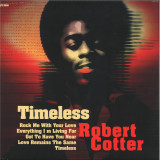
Worthy re-issue of Robert Cotter's second late 70's soul album! Comprising five songs, with four of them being quite lengthy and well-structured for the dance floor, was entirely recorded in the United States by top-notch American musicians. "Timeless", a fresh and lively expression of late 70s soul music, was recorded at the Sundragon Studio in New York. This studio was home to legendary bands such as Talking Heads and Ramones, as well as a few 'disco studio groups' like Andrea True Connection, Tony Valor Sound Orchestra, and Camouflage, who recorded songs that later became considerable hits. For this reason, it's believed that the positive outcome of the album can be partially attributed to Ned Liben, an eclectic New York musician and co-founder of the studio in the Flatiron district of Manhattan, served as an exhaustive interlocutor for any artistic and technical needs. He was also the arranger of "Rock Me With Your Love", the most significant song on the album. Ned's successful mission was to capture the maximum timbral fidelity of Robert Cotter's voice using appropriate recording techniques, assisted by Michael George Ewing, a talented engineer who had previously worked on similar projects with well-known artists like Carol Williams, Maryann Farra & Satin Soul, Touch and Tony Valor. In fact, the piece features original and melodious lines, coupled with an excellent steady rhythm, spanning approximately 8 minutes and 30 seconds - in short, "a delightful sound for every beat." This ensured that the performance of the young singer-songwriter from New Jersey was faithfully reproduced without neglecting the overall musical landscape. The other four songs, arranged by Ben Lazzaroni with the same musicians as the first piece, are no exception. Best Record also delivered on the promise to Robert's older brother, Karl Potter, a powerful percussionist transplanted to Rome, for whom the roman label produced "Sweet & Salty Cha-Cha-Cha" (12", 1986). Robert Cotter, an artist about whom almost nothing has been written, is poised to gain recognition once word spreads about his album, which has been entirely remastered by Dom Scuteri and features a more congenial tracklist. This album is destined to be truly 'timeless', ready to captivate audiences around the world. Even the new cover artwork, created by Nerina Fernandez, pays homage to an artist who, despite expressing himself with elegance and simplicity, radiates energy and exudes love. "Timeless" is an inevitable revelation for anyone who missed it at the time, and for the next 40-plus years, it will remain an absolute must-listen for Robert Cotter's many fans, leaving them all in awe. In addition to the reissue on the classic glossy black vinyl, a strictly limited edition on red vinyl will be released exclusively by Clone Distribution.
Worthy re-issue of Robert Cotter's second late 70's soul album! Comprising five songs, with four of them being quite lengthy and well-structured for the dance floor, was entirely recorded in the United States by top-notch American musicians. "Timeless", a fresh and lively expression of late 70s soul music, was recorded at the Sundragon Studio in New York. This studio was home to legendary bands such as Talking Heads and Ramones, as well as a few 'disco studio groups' like Andrea True Connection, Tony Valor Sound Orchestra, and Camouflage, who recorded songs that later became considerable hits. For this reason, it's believed that the positive outcome of the album can be partially attributed to Ned Liben, an eclectic New York musician and co-founder of the studio in the Flatiron district of Manhattan, served as an exhaustive interlocutor for any artistic and technical needs. He was also the arranger of "Rock Me With Your Love", the most significant song on the album. Ned's successful mission was to capture the maximum timbral fidelity of Robert Cotter's voice using appropriate recording techniques, assisted by Michael George Ewing, a talented engineer who had previously worked on similar projects with well-known artists like Carol Williams, Maryann Farra & Satin Soul, Touch and Tony Valor. In fact, the piece features original and melodious lines, coupled with an excellent steady rhythm, spanning approximately 8 minutes and 30 seconds - in short, "a delightful sound for every beat." This ensured that the performance of the young singer-songwriter from New Jersey was faithfully reproduced without neglecting the overall musical landscape. The other four songs, arranged by Ben Lazzaroni with the same musicians as the first piece, are no exception. Best Record also delivered on the promise to Robert's older brother, Karl Potter, a powerful percussionist transplanted to Rome, for whom the roman label produced "Sweet & Salty Cha-Cha-Cha" (12", 1986). Robert Cotter, an artist about whom almost nothing has been written, is poised to gain recognition once word spreads about his album, which has been entirely remastered by Dom Scuteri and features a more congenial tracklist. This album is destined to be truly 'timeless', ready to captivate audiences around the world. Even the new cover artwork, created by Nerina Fernandez, pays homage to an artist who, despite expressing himself with elegance and simplicity, radiates energy and exudes love. "Timeless" is an inevitable revelation for anyone who missed it at the time, and for the next 40-plus years, it will remain an absolute must-listen for Robert Cotter's many fans, leaving them all in awe.
New York-based label Kindergarten Records is thrilled to unveil Ayesha’s debut album, ‘Rhythm is Memory’ – 10 boundary-pushing tracks, a shape-shifting percussive journey with electric moments.
While intended for maximum dancefloor impact, Ayesha’s first LP is also conceptually thought-provoking and playful, exploring how bodies store and channel creative knowledge.
A self-taught producer, Ayesha relies on her instincts to make music: sensing what her body wants to feel and hear. To her, essential to building a groove is channeling what is already inside us –
memories – whether they are based on lived experience or coded in the body: culturally, ancestrally, or intergenerationally. The result is this Indian-American producer’s distinct rhythmic voice, with its
many configurations boldly expressed across her debut album.
Kindergarten first released Ayesha’s material in 2020 with her ‘Natural Phenomena’ EP, a four-track journey which she described as “an undulating love letter to nature and the dancefloor, a space
where her biophilia collides with her yearning for the dancefloor.” Subsequently, she continued to build upon her luminous, scintillating sound with a contribution to ‘Fluo II’ titled “Aspara Dub”, followed
by “Varanasi” and “Downpour” on ‘Ether’, a split release with Sha Ru in 2021. With each release, Ayesha's sound evolved, adding shades, layers, and perpetual rhythmic nuance to a mind palace of
dancefloor possibilities.
That is why her and Kindergarten are a perfect match -- driven by their mutual fascination with exploratory sonics and a shared commitment to the community that inspires them. Kindergarten
Records has shaped itself into a trailblazing label, uniting a diverse and innovative collective of local and international producers, while embodying a strong familial atmosphere.This debut LP represents
a significant step-up for both the artist and the imprint, as they strive harmoniously towards a shared goal: delivering a sonic experience full of colorful, otherworldly bass-fueled expansion.
‘Rhythm is Memory’ captures Ayesha’s signature love for driving techno and organic percussion, while at moments veering into newer electro territory while keeping it psychedelic, spacious, dubby, and
always playful. This feels intuitively right for a producer at a crossroads in her career. All tracks intricately weave together pulsing drum grooves, slinky synths, nuanced melodies, and delightfully
unexpected twists. No single genre can do justice to describing this project as Ayesha delicately nods to many, reveling in the spaces between.
Undoubtedly, across A and B sides, 'Rhythm is Memory' imparts the joy of sonic experimentation to listeners and dancers. Ayesha invites us into her creative process and its steady evolution – rooted in
many days and nights of exploration, reflection, and repetition. "The ritual practice of cultivating and tending a garden is what comes to mind if I were to visualize this record. Beautiful things can emerge
from care and consistent attention," says Ayesha. While she refers to her specific experience making 'Rhythm is Memory,' this powerful album culminates a decade of working in nightlife for Ayesha – a
project slated to leave an indelible mark on the underground. To mark this impressive milestone in their catalog, Kindergarten Records is proud to return to pressing vinyl after a hiatus since 2020,
recognizing the significance of putting out a physical release to behold such a moment in both the label's and the artist's trajectory.
The latest album release by acclaimed Norwegian band Erlend Apneseth Trio is made in collaboration with renowned experimental composer and vocalist Maja Ratkje. Their impromptu concert together in 2022 was a glorious kick-off for a five-day festival and was luckily put on tape. After reworking and reimagining the recorded material with their steady collaborator Jorgen Træen, the result is a refreshing take on improvisations-turned-compositions. Featuring innovative soundscapes with archival material and an engaging transitory state. Listening to the album is akin to being on a voyage of discovery, in and out of the dream state. From the very beginning, the listener is met by ancient voices on tape, surrounded by distorted and dispersed sounds. Like stars on a moonless night, the sounds fall in and out of perceptibility, most twinkling, some falling. You suddenly wake up on a speeding train. As it enters a tunnel, ghostly voices sing a lullaby. The music gradually unfolds from mesmerizing melancholia to a ritualistic blowout. The music always takes the route of the unexpected and reaches momentums which shows why this is one of Norway's most unique constellations. Orbiting sounds gather around and assemble themselves into scenes, forming uncanny rooms collectively dreamed up by the artists. The album's first track Tre Vegar follows an enthralling pathway layered with field recordings and intensified by noise, suddenly plunging into a delightful stream of chords fleeting in mid-air. The variety of sounds that make up this glorious and aptly named 'Collage' is astounding. Elemental sounds range from the howling wind and soft-bright ringing of sheep-bells to the timeless trickling of a small stream of water. Strings of many timbres soar over animated croaks and quacks, assembling into a swampy symphony. The well-balanced diversity of acoustic and electric sounds has become the band's trademark. It is ever-present, complementing and creating new improvisatory trails to follow. Erlend Apneseth: Hardanger fiddle Stephan Meidell: baritone acoustic guitar, live sampling, modular synth Oyvind Hegg-Lunde: acoustic & electronic drums, percussion, timpani Maja S. K. Ratkje: voice, electronics
The first release of Clinical Records is here! This brand new label combines repressing old gems with newly produced tracks by upcoming producers that are inspired by the sound from back in the day that we all like!
The A side is originally from Sleepwalker, 1 out of 3 from the trio Boom Generation. Both of the tracks were originally release in 1992!
A1 - Saying Hi There is an energetic, upbeat track with a driving bassline that will get any party going.
A2 - Fruitface comes with an infectious groove and old school stabs which are perfect for any warmup set.
B1 - Push Me Up is from new artist Ben Diggins and combines a heavy sub with groovy piano chords and a steady groove, one for the house heads!
B2 - Loosduinseweg is from Boss Priester, an artist that is really making way for himself. He puts a new touch to old school sounds with a groove to die for, a must have!
Since 2014, Silas Schletterer has been part of the Bordello A Parigi family. Under his Machinegewehr guise, the Rotterdam artist released three show-stopping synth centred records.
2023 sees him put out his fourth, Life. Burbling arpeggios, a signature of his sound, are present for “Sans.” Clever inviting melodies, another feature of Schletterer’s style, mix beautifully with clean percussion and samples for a definite dancefloor favourite. The title work follows. Measured and meditative, “Life” employs a familiar sound palette with very different outcomes. The pulsations, the throb, of Machinegewehr is there, but there is a considered melancholy that brins a bittersweet balance to the piece. Steady kicks and vocal snippets introduce “Pills.” Shifting melodies, piano stabs, driving rhythms and spoken word come together to create a heady brew of sheer pleasure. Vocals are central in the closer. “Neurons” narrates a fantastical story of subdued sci-fi sorrows and wistful yearning, all to a silken synth-pop soundtrack.
A welcome return from a multifaceted musician.
Polish jazz rebels sneaky jesus are back with their second studio album For Chaching Taphed.The highly imaginative quartet out of Wroclaw comprising Maciej Forreiter (Guitar), Matylda Gerber (Saxophones), Ben Łasiewick i(Bass) and Filip Baczyński (Drums) have won fans around the world for their restless, quirky brand of jazz which takes in breakbeats, twisting chord progressions and improvisation as well as a wealth of musical influences.
The band have been touring their asses off ever since they surprised the world with their debut album For Joseph Riddle in 2021. From out of nowhere their debut LP of 500 copies sold out in a month and they quickly went on to sell close to 1,000 CDs of the album. Fast-forward to 2023 and the band are sharing stages with artists such as Ill Considered and Theon Cross.
For Chaching Taphed was created in complete isolation. The group locked itself in a barn at the Museum of Agricultural Technology in Piotrowice Świdnickie. It worked on its sophomore output surrounded by machinery, trucks and carriages. These new compositions mirror the abstract conversations which the group frequently has just for fun. Contrary to For Joseph Riddle, this album is simple and does not rely on ongoing grooves. This enabled the group to be much more experimental. The band was joined by friends Flautist Mariya Mavko on Piękno Niemożliwe (Impossible Beauty) and her playing is sampled in Hipotetyczny Taras (Hypothetical Terrace). Pięciu Pszczelarzy (Five Beekeepers) closes the album featuring EABS' Jakub Kurek on trumpet. His fiery solo is one of the most intense moments of the album.
Spacer Po Nadodrzu (A walk around Nadodrze) opens the album and is inspired by one of the districts of Wrocław. It is a sonic story depicting a walk through Nadodrze late at night. A steady bass rhythm imitates a careful pace and the responding sax line is a spooky theme that might pop to oneʼs head in a moment of uncertainty.
The album's first single Krztusiec (Whooping Cough) finds the group diving head first into their most recent influences. The trackstarts with drum improvisation, rolling into a solid hip-hop backbeat provided by Ben Łasiewicki on Bass and Drummer Filip Baczyński. Sax and Guitar weave steady but dissonant lines, written by Maciej Forreiter after many hours spent listening to the Ethiopian jazz greats. The track takes off right after that. Matylda Gerber delivers a fiery Sax solo, while the group picks up the tempo and quickens the groove. The essence is the middle section, a dubby collective improvisation. Forreiter, Gerber and Baczyński take turns playing both classic dub phrases and fierce avant grade lines. Łasiewicki keeps everybody in check with a steady bassline. The energy slows down until Baczyński's drum solo, which explores phrasing detached from the rest of the tune.
Second single Chiński Sprzedawca Smażonych Kasztanów (Chinese roasted chestnut seller) is a fusion of breakbeats, energized songo rhythms and motifs inspired by South African melodies. Presenting the group with spacious and rhythmic horn lines, guitarist Maciej Forreiter wrote a chord progression while Beniamin Łasiewicki and Filip Baczyński took care of the rhythm section. This first part of the track suddenly drops out and explodes into the dramatic main motif which includes double sax and fierce guitar playing in harmony, plus the rhythm section playing more and more jungle-esque. Powerful guitar and sax solos feature before we return to the main theme with a completely different rhythmic backdrop.
W Klatce z Bykiem (In a cage with a Bull), starts like a race. The music plays with an incredible nerve and when the theme is right on edge it suddenly stops. It is followed by an animalistic growl on the saxophone and a doom metal-esque bash of downtuned, distorted guitars and heavy drums. In this heavy fashion it slowly approaches the finishing line hitting one final metallic clang.
Piękno Niemożliwe (Impossible Beauty) features wonderful flute playing of Mariya Mavko (Kadabra Dyskety Kusaje). Her work in the opening motif evokes sounds of Polish and Ukrainian folklore. This brief mellow moment serves as a contrast to the usual frantic sounds of sneaky jesus. It is an appreciation of thepolish jazz music of the past, intrinsically-linked to folklore. The band took this idea and reworked it into their own unique style.
Hipotetyczny Taras (Hypothetical Terrace) is built on top of a lengthy vamp in an unusual 7/8 time-signature. The bass anchors the quartet in a simple line, while the rest of the quartet share an emotional conversation. This track is the most open of the whole project and it ends accordingly. The final burst is a call back to the basics ofspiritual jazzand the whole band shows every emotion simultaneously and gracefully fades out.
Pięciu Pszczelarzy (Five Beekeepers) is For Chaching Taphed's conclusion and is a non stop assault of heavy horn lines, punk rhythms and noise. The band is joined by the extraordinary trumpeter Jakub Kurek from EABS, who blends in perfectly with sax and guitar. His exchange of solos with Maciej Forreiter is a combination of classic jazz phrasing and discordant clatter. In the same fierce manner the whole group works within the motif, switching up accents and breaks.
In the short space of two years, sneaky jesus has gone from ambitious upstart looking to break out from its home city playing spit and sawdust venues, to touring Europe as well as prestigious Jazz clubs such as Jassmine in Warsaw. In the process, it has delivered two full-length albums that don't stay in lane or pander to established jazz sub-genres as so many groups do. Some artists make the same record twice or even more than that, but not sneaky jesus. For Chaching Taphed shows the band as restless, experimental, fun, irreverent but purposeful as never before.
“A lot of over-hyped improv / jazz projects out there at the moment and Sneaky Jesus are genuinely excellent and out on their own. Drawing on the expansive atmospherics of a barn as the recording's setting, the album immediately pulls you in with the unsettling 'Spacer Po Nadodrzu' and lifts off on 'Krztusiec', effortlessly moving from angular, abrasive jazz to trippy dub and cinematic intrigue. Tempos shift and intensities shift naturally. The whole set warrants a deep listen from start to finish and watch out for two great guest features from flautist Mariya Mavko and Jakub Kurek bringing some mad fuzz licks to the boisterous closer. Brilliant album.”
Quinton Scott — Strut Records
SDEM’s debut LP for Mancunian electronic music imprint Skam Records.
VORTICES 9 tracks continue SDEM’s current prolific flow after a steady series of drops via his own
MEDS label & other like-minded operators (CPU, Opal Tapes, Seagrave, Superpang etc..)
Informed by hiphop & computer music and steeped in Northern England's post bleep+bass
mutations, VORTICES operates in its own lane, rooted as much in the by-hand manipulations of
musique concrete and free improv as the studio-as-an-instrument innovations of electro, hiphop, dub and bass weighted electronica.
Evolved out of hardware jams, the pieces showcased here crackle with emotion and colour,
repeated plays reveal suggested and subliminal depths. Neither shackled to the grid nor enslaved to linearity, the LP expands & finesses SDEM's dynamic & forward facing approach
Edinburgh (via Bristol) producer, DJ and balearic psychonaut takes us on a playful exploration through his cosmic arboretum on the Memory of Stolen Bush EP, with four of his own tracks and a very tasty remix from Berlin’s Glenn Astro. Café Lotito draws us into a world of atmospheric chug with dreamy whistles, rich, saturated pads and sneaky acid lines sitting atop a tasteful break and a steady, thudding kick. Gottlieb's Lament drops the tempo further, into a shimmering, melancholic lagoon of dubby psychedel ia, with marimbas and melodicas dancing amongst the mournful, lysergic synth work.
The B side steps straight into the dance with the EP’s namesake In The Shadow Of The Oleander, a pulsing, acidic drum machine workout, bustling with percs and bleeps and cru nchy rhythms, all set to a backdrop of soaring pads and drifting harmonics. Glenn Astro’s remix of Oleander pumps things up into an epic, maximalist realm with huge synth lines and a squarely pounding rhythm section turning the playful roller into a peak ti me thumper. Finally the digital bonus track Memories of Hare uses surrealist snippets of colour to pay tribute to a much missed former Bristol haunt, dropping the tempo back down and putting melody and atmosphere front and centre, with a ghostly marimba l eading the procession beside staccato guitars and shimmering synths unknown
Release Sustain, a London-based underground label, is pleased to introduce a new EP by Moody Waters, the label's founder. "Beneath the Moon" is a four-track EP that offers a refreshing blend of deep techno and house sounds. With steady beats and intriguing vibes, "Beneath the Moon" is a versatile addition to any DJ's collection. This EP explores an underground sound that combines the essence of house and techno, making it an enjoyable listen for those interested in electronic music in 2023. Don't miss the chance to check out this latest offering from Moody Waters and and awesome remix from Fred P. Grab your copy of "Beneath the Moon" and discover why fans are appreciating this new release from Release Sustain.
Appleton, Wisconsin’s Dusk may seem to have fallen from the sky. Surrounded by a music climate of destination festivals and instagram celebrity, they’ve remained reclusive, yet focused on the proverbial
carrot on the end of the stick that’s hard for so many working musicians to define. For the past four years, they’ve maintained a steady schedule of recording and “hitting the dirt,” as they say: spending weeks on the road playing dives and basements. The group was conceived in 2014 as a casual recording project between vocalist and bassist Amos Pitsch and drummer Colin Wilde. Amos had just
completed recording Predatory Headlights, the critically acclaimed double album by his other group, Tenement, and with the new found down time, he and Colin arranged their own versions of vintage
soul songs. The intention was to treat the project like a revolving door for collaborators, but soon the permanent additions of vocalist/pianist Julia Blair, lead guitarist Tyler Ditter, and Ryley Crowe on pedal steel, rhythm guitar, and vocal duties would cement the band into a connsistent rock and roll ensemble; informed by soul music, country, jazz, and beyond.
Sophie Lloyd is one of the most prolific guitarists on the world wide web,
a trailblazer who is redefining the concept of a "bedroom" guitarist
A talented composer and accomplished musician, Sophie graduated from the
prestigious BIMM in 2018 with a First Class Honours BMus in Popular Music
Performance, honing and refining a talent she has nurtured since childhood.
Since then, she has amassed the kind of following that even the guitar gods she
grew up idolizing would be envious of, with a reach surpassing 3 million followers
across her social channels, built through a steady stream of sharing her talent via
guitar "shredleys", covers and her own original material.
In addition to her own content, Sophie's talent and popularity has led to
collaborations with brands such as Amazon Prime, Hard Rock Cafe, LiveNation
and Harley Davidson, her own Guitar course on Truefire and a stunning
performance at Paris Fashion Week for Redemption Brand Clothing.
She has also released her own signature guitar, becoming the first female artist to
do so for exclusive Californian Guitar maker KIESEL.
Most recently, Sophie could be seen shredding on stage as guitarist for multiplatinum recording artist Machine Gun Kelly on his recent Mainstream Sellout
World Tour, which included sold out shows at legendary venues such Madison
Square Garden in New York and Wembley Arena in London.
RIYL: The Fall, Royal Trux, The Dead C, Shirley Collins, ’70s British progressive rock, Dean Blunt.
Throughout their legendary, decade-long run, the Shadow Ring were an enigmatic force on the international musical sub-underground. Before their disbandment in 2002, this shambolic rock outfit, formed by a group of rowdy teenagers in southeast England, left behind a mighty run of eight LPs, a handful of 7"s, and a spate of raucous live shows and cryptic zine appearances on both sides of the Atlantic, all which have bolstered their enduring word-of-mouth mystique. Beginning this year with the first-ever vinyl pressing of the self-released pre-Shadow Ring tape The Cat & Bells Club (1992), Blank Forms Editions is conducting a systematic retrospective of the storied group, including a multi-year LP reissue effort and a forthcoming comprehensive CD box set and an over five hundred page book. Recorded in summer of 1994 at S.H.P studios (frontman Graham Lambkin’s parents’ home), the group’s sophomore record Put the Music In Its Coffin is a more sinister, saturnine affair than their debut City Lights. Coffin was many listeners’ introduction to the Shadow Ring, who had hitherto self-released their music, courting a steady stable of international fans through the magazine and mail-order catalog Forced Exposure. For their follow-up, the duo reached out to the ascending Philadelphia label Siltbreeze, whose eclectic roster of sneering, low-fidelity rock and noise connected disparate subterranean scenes from rust-belt America to the English Midlands, Dunedin, and beyond. As luck would have it, Siltbreeze proprietor Tom Lax was already a fan of the band’s first record and arranged to release both a 7” and their “difficult second album.” The connection proved to run deeper than vinyl within six months, Lax would pick up the pair from the airport for their spring 1995 US tour. This episode marked not only their first trip to the States but their first live performances at all, formally introducing the Shadow Ring to the American underground and solidifying the allure of the Folkestone pair. From the get-go, the record has a menacing, vile ambience. Its opening track “Horse-Meat Cakes,” inspired by an anecdote by pulp author Philip K. Dick about how he and his wife subsisted off low-grade pet food when he first arrived in San Francisco, sets the tone lyrically and sonically. Subsequent tracks are filled with Rabelaisian body horror and sinewy, haptic diction. “I try to pass out vital organs, convinced that they are waste,” intones Lambkin in “Heart, Liver & Lungs,” before a chorus of detuned guitars kicks in, nearly drowning out the speaker’s account of consuming chevaline intestines. Later songs similarly detail vernacular cooking (“Caribbean Porridge,” about a cornmeal hangover cure), bodily processes (“Nocturnal Middle Rumbles,” about nighttime defecation), and creaturely conflict (“Crystal Tears” and “Spin The Animal Dial”). The album’s makeshift percussion and teenaged rawness resembles the verve of City Lights, while its screeching strings and gnarly distorted vocals give it a sparse, miasmic atmosphere that look towards the uncompromising, otherworldly experimentation of the band’s Hold Onto I.D. (1996) and Lighthouse (1997), making this one of the Shadow Ring’s most distilled musical statements