After a debut outing on International Black last year with his best friend Mallard, LT graduates onto Rhythm Section INTL with a stunning debut solo effort: FOREST FLOOR.Aged just 20 years old, Lewis Taylor aka LT is another prodigal talent from the north of England, whose association with Rhythm Section goes back to his school days. A fan of the label from an early age, Lewis regularly made pilgrimages to the pool hall as soon as he was old enough to do so. It was these visits with his old school friend Mallard (who had recently moved down to London from Derbyshire to study music) which proved to be a formative influence, prompting him to try his hand at production...It turned out he was quite the natural, with his second ever effort as an 18 year old making it onto this very EP. Sitting somewhere between electro, house and techno with a healthy dose of breaks - LT constructs complex arrangements with as much of a nod to the retro summer of love stylings of Lone as to the new age bounce of the Pender Street Steppers. The piano house stabs of 'Untitled (Chesney)' reverberate around chopped breaks and screaming samples, anchored down by bouncy organ bass and FM lead synth which really begs the question: 'How did LT develop such a rich lexicon of club culture references in such a short time' We'd be tempted to believe it was just pure luck, if this mastery of rave aesthetics wasn't repeated throughout the EP...
Mesosphere fizzes with arpeggiated energy before giving way to a magnificent yet subtle drop that will serve festival main stages as well as it will back room clubs. Before the EP is over, LT has one more trick up his sleeve in Forest Floor - the titular track which is the musical equivalent of watching the sun rise through a misty glade after a night spent alone in the wilderness. With this gentle touch, LT proves he's more than another kid on Ableton making bangers - he has breadth, incredible musicality and a rare ability to transcript sceneries into sounds. Finishing with 'North Circular' possibly a reference to the free Parties on the London Orbital or merely just a coincidence you decide.
We couldn't be happier to welcome LT onto the RS INTL roster in what feels like a fulfilment of destiny. It's such a great honour to have nurtured and now introduce the next generation via the Rhythm Section platform.
quête:step 2 sun
Taking a turn to some of its roots, Emotional Rescue offers a reissue of Ramjac Corporation's UK house/breaks anthem Cameroon Massif!. First released on the increasingly cult-status Irdial Discs in 1990, this was very much the sound of the big bang explosion of Acid House morphing and splintering, as subsequent multi-genres developed, formed, imploded and reformed in new ways that still subsists today.
Within the melting pot of anything goes, chemically-enhanced optimism that spread across the UK during that return to the summers of love from 1987 onwards, the nascent sounds coming from Chicago and Detroit were mixed with a hybrid of 80s British influences, taking in European synth pop, US electro, new beat, hip hop and reggae. Out of this appeared a new sound, mixing that love of techno and house with dub bass and break beats into a proto-jungle swirl.
Like many growing up through the ever-evolving 60, 70s & 80s British music scene, Paul Chivers' early years of learning piano and guitar, moved from Beatles era pop to take in punk, jazz and anything an eager musical mind could explore. Developing a long-term interest and study of Cuban and Afro-drumming, his acquisition of an Atari and sampler soon moved to programming of both drum machines and TB303 and with that, Ramjac Corporation was born.
Playing live at some of the earliest raves in 1988, as often through luck and "right time, right place", including the infamous Back To The Future and Energy parties, Ramjac went from playing from 50 to 10,000 ravers in a matter of months, as the nation was gripped, depending on your cultural standing, by either a mixture of drug apocalypse paranoia or ecstatic celebration.
It was a meeting with Akin Fernandez, founder of Irdial Discs, that led some of the first studio experiments and creation of Cameroon Massif!. Utlising Akin's in-house studio and production skills, alongside Chivers' jazz influenced outlook of improvisation over arrangement, the track took shape, mixing the live programmed percussion, heavy doses of phase, delay and reverb and Sun Ra inspired keys that resulted in a number of mixes of Massif!.
Collected here are the original 12" "Massive" and "Massing" mixes, plus a special live version taken from the "Live At The Brain" reunion gig of 2009. The sought after 1990 versions and original Live mix are taken a step further with this 13 mins + mix, in essence a resampling and remixing reversion with didgeridoo and live on mic MCing, that gives a real glimpse of those early live sets. With more Ramjac Corporation material upcoming and a live reel-to-reel show appearing soon, the return of Cameroon Massif! is now.
teppas Records presents 'Osaka Steppas' Vol. 3, the third in a series of releases showcasing the Japanese underground dub movement. This edition features Osaka producers Hiroshi and Roots Masashi in collaboration with Spanish producer Ojah and well-respected UK singer Rudey Lee. The Osaka Steppas' raw and unrelenting sound developed in the subterranean clubs of Osaka, a port city famous for its counterculture night life. Inspired not only by the sounds of Jamaica, but also drawing inspiration from UK and European soundsystem culture with enough bassweight to test even the toughest of soundsystems. Presented in a beautifully designed full colour sleeve inspired by the works of the legendary ukiyo-e woodblock artist, Hokusai. This release is not to be missed.
Side A features an earth rocker riddim from Ojah & Hiroshi, with conscious lyrics sung by the legendary Rudey Lee.
Side B features a much sought after dubplate from Osaka producer Roots Masashi, a deep, dark & mystical steppa.
Next up on the ever-eclectic XVI Records, a shadowy figure steps into the spotlight: enter the mysterious Captain Over, whose dark yet soulful bruk-infused tracks soundtrack the next stage of their voyage towards the sun. For his debut outing, Captain Over calls on the abstract vocal stylings of the legendary Trim (Roll Deep, 1800 Dinosaur) on opening track 'SICK'.
Showcasing why he's one of the most iconic and forward-thinking MC's to grace the mic, Trim's dulcet tones twist through a jungle of shuffled beats and subterranean sub-bass, an eerie child-like melody drifting overhead.
Clack Clack and No One Ever Really Flies inhabit a more dancefloor friendly space, their unique syncopation, fierce instrumentation and relentless energy open up the dancefloor for some real get loose moments.
On the remix, they hand the controls over to XVI homestay Books (following on from the success of his previous 'Feel It In My Bones' and 'High Praise Edits Vol 1' releases which won praise from the likes of The Black Madonna, Moodymann, Gilles Peterson and Seven Davis Jr) Books expertly crafts a cosmic footwork jam, full of his trademark soulful chords and eerie midnight saxophone licks.
As he prepares to launch his forthcoming EP 'No-One Every Really Flies' into the cosmos ; Captain Over is beginning to cement his place as one to watch in the UK underground - a sequel EP featuring grime upstart Nico Lindsay is scheduled for release later in the year, with several more collaborative works in progress.
+++
"After a deceptively quite 2017, Especial picks up the pace pace by welcoming back the peroxide, youth filled Fairplay (re)version and a 2nd EP of old-skool-meets-the-new-school flavoured House and Breaks to lock, jock and spin.
After the criminally overlooked 'How Do You Like Me Now' EP - how is Classic Version not a...classic...version - Junior gets back on the (lino) floor. The EP starts with a look north to the 'other city of 7 hills' that birthed a Warp'd British retake on House in his bleep-dub ode, End Of Love. The autobiographical title belies a forward approach with his trademark echobox kick'n'hats underpinning uplifting keys and nodding bleep finger solo.
Who to join the party then, than another man of mystery, Roy Of The Ravers. After his debut EP on sister label Emotional Response became a most played from Aphex et al, it is only right bring him to E'Special. His brooding, hoover rush Remix 1 heightens the vibes with a heads down bleeping half-steppa. Righteous!
The flip is given over to Junior's roots, bringing the hip-hopper back with the anthemic The Shazsquatch Goes Back Into The Woods. No shoc(k) horror here, just more upwardly mobile breakbeat meets UK techno licks. You can hear Fairplay at one with man and machine, pushing a sound that looks back but most definitely goes forward with 'Sunrise' on the mind.
To close is the swagger of EP title cut, Faxes From The Future. Hair of the (black) dog fuses a swinging break with proto-dub-meets-Giallo stylings to rework the senses and say, now is (still) the time!
A return to making the noise while keeping tongue planted firmly in cheek. What are u like Top. Buzz."
Raga Abhogi
1) Alap
2) Jod
3) Jhala
Raga Vardhani
4) Alap
5) Jod
6) Jhala
Zia Mohiuddin Dagar : rudra veena
Annie Penta : tanpura
Concert recorded at the home of Shantha and Niranjan B. Benegal, Seattle, Washington 9 March 1986.
Recorded by Niranjan Benegal. Files obtained from Jeff Lewis.
Mastered & Cut by Rashad Becker at Dubplates & Mastering 1117 & 0318.
Liner notes by Renaud Brizard, edited by Stephen O'Malley & Ian Christe.
Front and back cover photos by unknown.
Interior photography by Niranjan B. Benegal, Dan Neuman & unknown, Seattle 1978-1980. .
Around ten years ago, deep into a cozy and hazy night following a concert with my sound brothers Daniel O'Sullivan and Kristoffer Rygg in London (as Æthenor), they graciously introduced me to a recording of rudra veena (a kind of noble deeper bass relative to the sitar, in a way) as performed by dhrupad master Zia Mohiuddin Dagar.
Dhrupad, for those who do not know, is a branch of Hindustani classical music said to "show the raga in its clearest and purest form". It's pacing concentrates heavily on the slow, contemplative alap section and works with specific microtonal gestures and deep characteristics of resonance ... in short I was hooked on this new (to me) and ancient form of music from the first listen, and feel that a more or less continual listening & reviewing of Zia Mohiuddin Dagar's recordings in the years that followed have influenced my own approach to music quite heavily (if, albeit, indirectly).
In early 2015 I was able to make contact with Zia Mohiuddin Dagar's son Bahauddin and some of his American students/disciples, primarily Jeff Lewis. Over time we developed a friendly and educational exchange, access a massive archive of recordings and developed these two paired titles for my label. It's been a long path to arrive at actually releasing them but also probably in many ways one of the most significant releases I've worked on. And I'm proud to be able to reveal these to date unreleased archival recordings of one of the masters of dhrupad, Z. M. Dagar, to the public for the first time.
Zia Mohiuddin Dagar was the nineteenth generation in a family tradition known as Dagar gharana, a rich lineage which continued and performed the musical form of dhrupad (Bahauddin Dagar continues the lineage as a master rudra veena dhrupad player of note today). Initially, dhrupad was a rigorous, austere, devotional genre that was sung in Hindu temples. But between the 16th and the 18th centuries, it became the preeminent genre in royal courts in North and Central India, and the Dagar gharana developed and continued publicly following the eventual loss of court patronage for dhrupad in the 19th century. The French ethnomusicologist Renaud Brizard covers the story of Zia Mohiuddin Dagar's life and teaching (a long story also in Seattle, my hometown!), the Dagar family and gharana, the rudra veena and more topics in an extensive set of liner notes in this release.
Ragas Abhogi & Vardhani were recorded in a private house concert in Seattle at the home of the Benegals in March 1986 (the week before the accompanying release SOMA029 Raga Yaman was recorded). The Benegals were friends (& Shantha Benegal was also a student) of Dagarsahib who sometimes hosted Hindustani music concerts in their home. It's a rare glimpse of a more intimate, personal and perhaps different kind of performance considering the form of dhrupad.
-Stephen O'Malley, March 2018, Paris, France
Stephen O'Malley would like to especially thank Bahauddin Dagar, Jeff Lewis & Jody Stecher for their enthusiasm, cooperation, patience, insight & advice toward developing these editions. Thank you also to Laurel Sercombe & John Vallier from the University of Washington Ethnomusicology Archives, Shantha Benegal, Philippe Bruguière, Dan Neuman, Ira Landgarten, Renaud Brizard, Ian Christe, Peter Rehberg, Rashad Becker, Daniel O'Sullivan & Kristoffer Rygg, all for their direct or indirect cooperation, assistance & patience.
Raga Yaman
1) Alap
2) Jod
3) Jhala
4) Gat (Composition in Chautal)
Zia Mohiuddin Dagar : rudra veena
Manik Munde : pakhawaj
Gayathri Rajapur & Annie Penta : tanpuras
Recorded by unknown at the University of Washington, HUB Auditorium, Seattle, Washington 15 March 1986 , concert co-sponsored by the UW Ethnomusicology Division and Ragamala.
Original digitally processed audio recording made with Panasonic PV-9000 VCR, Sony PCM-F1, PZM mics. Mastered & Cut by Rashad Becker at Dubplates & Mastering 1117 & 0318.
Liner notes by Renaud Brizard, Stephen O'Malley & Ian Christe.
Front and back cover photos by Niranjan B. Benegal, Seattle Center Folklife Festival 1979. Elizabeth Reeke & Annie Penta on tanpuras.
Inner gatefold photography by Niranjan B. Benegal & Ira Landgarten.
Around ten years ago, deep into a cozy and hazy night following a concert with my sound brothers Daniel O'Sullivan and Kristoffer Rygg in London (as Æthenor), they graciously introduced me to a recording of rudra veena (a kind of noble deeper bass relative to the sitar, in a way) as performed by dhrupad master Zia Mohiuddin Dagar.
Dhrupad, for those who do not know, is a branch of Hindustani classical music said to "show the raga in its clearest and purest form". It's pacing concentrates heavily on the slow, contemplative alap section and works with specific microtonal gestures and deep characteristics of resonance ... in short I was hooked on this new (to me) and ancient form of music from the first listen, and feel that a more or less continual listening & reviewing of Zia Mohiuddin Dagar's recordings in the years that followed have influenced my own approach to music quite heavily (if, albeit, indirectly).
In early 2015 I was able to make contact with Zia Mohiuddin Dagar's son Bahauddin and some of his American students/disciples, primarily Jeff Lewis. Over time we developed a friendly and educational exchange, access a massive archive of recordings and developed these two paired titles for my label. It's been a long path to arrive at actually releasing them but also probably in many ways one of the most significant releases I've worked on. And I'm proud to be able to reveal these to date unreleased archival recordings of one of the masters of dhrupad, Z. M. Dagar, to the public for the first time.
Zia Mohiuddin Dagar was the nineteenth generation in a family tradition known as Dagar gharana, a rich lineage which continued and performed the musical form of dhrupad (Bahauddin Dagar continues the lineage as a master rudra veena dhrupad player of note today). Initially, dhrupad was a rigorous, austere, devotional genre that was sung in Hindu temples. But between the 16th and the 18th centuries, it became the preeminent genre in royal courts in North and Central India, and the Dagar gharana developed and continued publicly following the eventual loss of court patronage for dhrupad in the 19th century. The French ethnomusicologist Renaud Brizard covers the story of Zia Mohiuddin Dagar's life and teaching (a long story also in Seattle, my hometown!), the Dagar family and gharana, the rudra veena and more topics in an extensive set of liner notes in this release.
Raga Yaman was recorded at a public concert in Seattle at the HUB Ballroom at the University of Washington in March 1986 (the week after the accompanying release SOMA028 Ragas Abhogi & Vardhani was recorded) at the end of his last tour of the United States. Yaman was a special raga for Zia Mohiuddin Dagar, one of his signature raags. For centuries, Yaman has been considered as one of the most fundamental ragas in Hindustani music and is one of the first ragas which is taught to students. A deep knowledge of Yaman gives a key for understanding many other ragas. It's filled with tranquility, contemplation, pathos and spiritual yearning. .
-Stephen O'Malley, March 2018, Paris, France
Prairie is the project of multi-instrumentalist and producer Marc Jacobs, hailing from Brussels with roots in The Netherlands. He previously released an EP (I'm so in love I almost forgot I survived a Disaster - 2013) and an LP (Like a Pack of Hounds - 2015) on the Berlin imprint Shitkatapult. On stage, Prairie plays with two or three musicians and together they re-create a free association of musical ideas and atmospheres. Prairie has played in selected venues and festivals across Europe and toured with Apparat in 2016.If the apocalypse was painted in several layers of pastel gouache, its soundtrack might be PRAIRIE's Flash Flood. Listening to the album, we drift through a series of frozen landscapes that gesture at a post-apocalyptic ambience. This is a kind of blackened music that has been left to sediment, excavated from traces in ice core samples. Flash Flood showcases a deep sensitivity to narrative and rich cinematic textures as Marc Jacobs returns with palimpsestic sonic layers. It has been three years since PRAIRIE's last release—the 2015 Cormac McCarthy-inspired Like a Pack of Hounds—and it is clear that it has been several years of pensive reflection. Now, PRAIRIE takes the sentiment of his 2012 debut, I'm So In Love I Almost Forgot I Survived A Disaster, several steps further: it is after the apocalypse, and no one has survived. And yet with Flash Flood, we can hear the hum of this impossible future.
'After the Flash Flood' introduces the sonic ruins of distorted guitars, field recordings, drum programming and synths that create the textures of the entire album. The melancholic and subdued black metal churn of 'Raindeath' becomes the cold backdrop for unnerving, paranoiac speech. The third track, 'Sisters', foregrounds this coldness while slowly moving away toward alternate vistas where the acoustic timbres of the saz-driven 'A Permanent War Economy' take over. 'Underwater Body Hunting' and 'Rabid Ibrahim' are hard hitting beat-oriented tracks that insist on burning slow. There is a patience with PRAIRIE's FLASH FLOOD that is difficult to deny. The lamentation of 'Elephants Will Rise Again' perhaps signals that it is not only the human that is lost after catastrophe. The album closes with 'Hard Water: Cracked Ice' and 'Hayashi Clock'. The former is a beautiful coalescence of clean harmonious tones and softly overdriven drums, while the latter brings us back to a meditative state, drifting through the final pastel tapestry.
"... his cosmos is located somewhere between Bohren & der Club of Gore and Sunn O))), ambient is as familiar to him as brachial sounds, and he is as much acquainted with guitars as with synths and modern technology" (GROOVE)
"... Like Ben Frost, (Prairie) exudes a certain harshness while tempering his work with moments of sublime beauty. This isn't club material, it's music for the hammer in one's hand, the confrontation of the demon, the soul-shattering revelation." (A Closer Listen)
Hot Off The Back Of The Second Full Length Far Out Monster Disco Orchestra Lp Black Sun, The Orchestra's Prolific Remix Series, Which Has So Far Included Reworks From The Likes Of Theo Parrish, Dj Spinna, Andres And Dego, Rolls On. John Morales' Massive M&m Main Mix Of 'step Into My Life' Ft. Arthur Verocai, Gets A Reissue On This New 12', Alongside A Brand New Remix Of 'the Two Of Us' From Million Dollar Disco Boss Al Kent, Who Highlights The Hypnotic Backing Vocals Of Brazilian Psych-folk Master Mauricio Maestro, For An Emotionally Charged Balearic Anthem, Complete With Heavy Dub Mix.
Med School's most innovative release series returns. Responsible for delivering the drum & bass scene early stories of Etherwood, Royalston, Stray and Whiney, 'New Blood' is definitive of Med School's ethos when it comes to discovering and nurturing quality talent. With artists constantly redrawing the boundaries of 170BPM, this '018' edition breaks the mould showcasing the weird and wonderful sounds from the genre's most promising new talent.
Interdimensional waveman Lakeway has mustered up a jukey-jungle hybrid in the form of 'Lock Off'. Panpipe synths and some big beat steps combine to make the ultimate banger. Keeping things correct is Bristolian serpent Constrict. Choppy snares and flirty 8-bit synth stabs slither together to create 'Tight Coil'. Both choice cuts for any DJ looking for that D&B curveball.
This internationally spread line-up also features some of Russia's best D&B exports. A.Fruit's 'Tender Love' is a delectable fusion of footwork and techno rolled into one and Soela's 'I Wish You Would Come' is an ambient spaced out down tempo number.
A myriad of styles from across the globe are the key ingredients for the 'New Blood 018' LP. Med School has once again proven its A&R prowess, signalling to the world there is no better home for fresh talent.
Do you like Love songs After spending a lifetime spent avoiding this subject in song, Joel Sarakula finally admits that he does. On his new album "Love Club" Sarakula relives the golden age of Soulful and Romantic Pop music and connects it with a modern aesthetic. While a deeper message of love and peace flows through the record, Joel Sarakula is no old fashioned hippie: ",Love Club' is about connecting to reality and re-framing the idea of romantic love and loss in the present, loveless age ". Featuring eleven songs touching all genres from disco to blues, from soul to soft-rock, Joel Sarakula's "Love Club" is a profound pop statement.
Joel Sarakula has travelled the world in search of his muse, experiencing everything from being a victim of Caribbean carjackings to performing in the remote fishing villages of Norway, via the dive bars of Europe and the US. It was the hodge-podge musical tapestry of England's capital that finally drew him to a settling point, in the wake of seemingly never ending run of shows. With personal tastes that span from the more avant-garde to soul and pop greats like Sly Stone, Todd Rundgren and Hall & Oates, there are clear nods to contemporaries like Unkown Mortal Orchestra, Erlend Oye and Toro Y Moi in terms of ambition and style.
With his last two albums "The Golden Age" and "The Imposter" collecting strong radio plays at BBC Radio 2, BBC 6, BBC London, XFM Joel Sarakula has been play-listed nationally in Europe including Flux FM, WDR 5, Radioeins, Bayern 2, Deutschlandfunk and Deutschland Kultur Radio in Germany as well as in Benelux and Italy and Spain. He is a regular fixture on the live festival and club circuit in the UK, Europe and internationally including appearances at SXSW, Primavera Sound, Glastonbury, The Great Escape, Liverpool Sound City, Scala London, Tallinn Music Week, V-ROX (Vladivostok) and Reeperbahnfestival Hamburg.
"Love Club" is Sarakula's bold and unashamedly emotional next step. In essence the album is a homage to the soulful singer & songwriter artistry of the Seventies filtered through a darker contemporary lens - fitting for these uncertain times. "I always shied away from generic love songs," the Sydney, Australia born songwriter admits, "but on this record I embraced the subject wholeheartedly... and intellectually, looking at themes of love, lust, loneliness and everything in-between." Take the first single "In Trouble", co-written with Michele Stodart of The Magic Numbers, as the best example for Joel Sarakula's unique, and honest approach to making music. "We Used To Connect" questions the changing nature of relationships in our social-media addicted world: 'We used to connect in the real world too, now the touch of your hand is a digital cue'.
"Coldharbour Man", on the other hand, examines the identity of the song's narrator and the artist vs. fan dynamic all wrapped up in a disco love song: "There's a lot going on in this particular track. I feel my writing has grown emotionally...", explains Joel Sarakula. "Just best to listen yourself and make up your own interpretation!: 'We met in a song come to life like some fantasy cliché, though I'm known for my moves in the dark you flooded sunshine on my day'. Then there's "Baltic Jam", capturing romantic love and loss in authentic 70s confessional singer & songwriter style and of course "Dead Heat", a song about how there is struggle in the most perfect relationship pairings as the match is so even: "I recall an ex-girlfriend of mine... when we first met, we thought we hated each other but we eventually flipped that emotion and realised we had a deep passion and love for each other, there just was a lot of underlying sexual tension!" : 'It's a battle we could only win, if we lose. We'd be stronger if these lonely ones became two'.
More than a year in the making, Joel Sarakula recorded "Love Club" in various studios around London and Berlin capturing soulful performances from his many musical comrades on vintage analogue equipment. "This record has truly been a labour of love. Recording and privately sharing these performances amongst my collaborators started to feel like a bit like a club - I guess that lead to the album title! I was surprised how much I actually enjoyed the 'love-making process' and I look so much forward to playing these new songs on stage with my band." We can't wait, Joel Sarakula.
2x12"
Tinfoil is the project of DeFeKT and Sunil Sharpe. Initially forged as a studio collaboration in 2014 (and later as a live show), the pair have since racked up an impressive catalogue of 12s on their own self-titled label. Tinfoil's sound is unique in today's scene, reflecting the versatility of both artists, plus a combined know-how of techno and electro. Their music comes primarily from live studio jams, enforced by a desire to get quickly to the point in what they do. This is no surprise given the fast, technical way in which they each perform solo.
For their debut album, Tinfoil provide a varied but cohesive collection of tracks. Following the intro's epic synth blasts, they open with a bang through 'Caravan Life' - a sinister, bassline-driven destroyer that builds and builds over a blend of claps, filter zaps and crying feedback. 'Beads' continues in a heads-down vein, this time with a more musical EBM type bass and knocking rimshots that mark the first appearance of Sunil's role-playing, haunting lead vocals.
'Friendly Safe Fumes' marries playful bass notes to a singing lead line, as fizzling closed hats and busy claps whip things into a frenzy. Next enter the otherworldly mutant electro of 'Meadow Pulse', signaling a well-timed lull in mood to explore a silkier side to Tinfoil's production. 'Every Saturday Night' starts with a taxi conversation about horses and carbolic soap in bygone Dublin days, before launching into a volley of clattering beats and hip-shaking FM sequences.
'Multi-DOMINATION' retains some of the FM wonk and treads a broken-beated path, featuring vocals this time akin to a ritualistic chant or perhaps the murmurings of a possessed baby. 'Both Roads To Triogue' meanwhile, brings us to a short intersection, splicing odd voices with a dense tribal rhythm. 'The Wolves Of Hellfire' is Tinfoil in more minimal dancefloor mode, as drones filter in and out under a resonating bass that detonates at all the right times.
Closing with 'Resting Point', the climax becomes deadly. The beats are stepped and the bass boisterous, while pained screams become quickly uncontrolled, setting up for a crescendo of roughneck rhythms, ricocheting kicks and turbulent modular wails.
Tinfoil have been on a roll since the beginning but maybe 'On A Roll' emphasizes this a little bit more now.
- A1: Precious Little
- A2: Deep Hole Ends
- A3: Never Hurt You
- A4: I Sense
- A5: Everso
- A6: Never Learn Not To Love
- B1: Wish Of You
- B2: Celeste
- B3: All A Dreams
- B4: Celestial
- B5: Flying
- B6: Soul Full Of Tears
- C1: High On Fire
- C2: The Sleepwalk
- C3: Tornado (Alternate Version)
- C4: Sunspray
- C5: 16T#3
- C6: From The Inner Void I Fear
- D1: The Sleepwalk (Sitar Version)
- D2: Candy Says
- D3: The Good's Gone
- D4: Please Tell Mother
- D5: Splashdown
- D6: To The Shore
- D7: The Presence Of Your Grace
The Telescopes were founded in England in 1987 by chief member Stephen Lawrie and released several recordings in the late 1980s but it is in 1990, when the band signed to legendary label Creation, that they hit their stride and helped to define a decade of UK rock music. Fusing elements of psychedelia with noise-rock, and dreamy pop, The Telescopes were near the forefront of the early shoegaze scene and hugely influential on the next wave of early 1990s Brit-pop. This crucial collection complies all 4 of their 12" singles on Creation as well as a 1991 John Peel session and other bonus tracks. Issued on 180 gram 2LP with a deluxe double sided poster insert.
Limited Edition Clear Vinyl
Includes 12' Vinyl and Deluxe CD album, 30 page hard back book
Now that I've been to Nashville,' Kylie Minogue says with audible affection, I understand. It's like some sort of musical ley-line...'
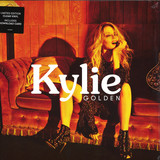
Golden, Kylie's fourteenth studio album, is the result of an intensive working trip to the home of Country music, a city whose influence lingered on long after the pop legend and her team returned to London to finish the record: We definitely brought a bit of Nashville back with us,' she states. The album is a vibrant hybrid, blending Kylie's familiar pop-dance sound with an unmistakeable Tennessee twang. It was Jamie Nelson, Kylie's long-serving A&R man, who first came up with the concept of incorporating a Country element' into Kylie's tried-and-trusted style. That idea sat there for a little while, with Minogue and her team initially unsure about how to bring it to life. Then, when Grammy-winning songwriter Amy Wadge's publisher suggested Kylie should come over to collaborate in Nashville, a city Kylie had previously never visited, something clicked. You know when you're so excited about something,' she recalls, that you repeat it an octave higher and double the decibels I was like that. 'Nashville! Yes! Of course I would!'. I hoped it would help the album to reveal itself. I thought 'If I don't get it in Nashville, I'm not going to get it anywhere.''
Kylie's Nashville trip involved working alongside two key writers, both with homes in the city. One was British-born songwriter Steve McEwan (whose credits include huge Country hits for Keith Urban, Kenny Chesney and Carrie Underwood), and the other was the aforementioned Amy Wadge, another Brit (best known for her mega-selling work with Ed Sheeran). It was then a truly international project: Golden was mainly created with African-German producer Sky Adams and a list of contributors including Jesse Frasure, Eg White, Jon Green, Biff Stannard, Samuel Dixon, Danny Shah and Lindsay Rimes, and there's a duet with English singer Jack Savoretti.
However, the album's agenda-setting lead single Dancing was, significantly, first demoed with Nathan Chapman, the man who guided Taylor Swift's transition from Country starlet to Pop megastar. If anyone knows how to mix those two genres, Chapman does. Nathan was the only actual Nashvillean I worked with. He's got a huge studio in his house, which is probably due to his success with Taylor... there's plenty of platinum discs of her, and others on his walls.' There's something of the spirit of Peggy Lee's Is That All There Is, of Dylan Thomas' Do Not Go Gentle Into That Good Night, even of Liza Minnelli's Cabaret about Dancing, a song which not only opens the album but sets out its stall, providing a microcosm of what is to come. You've got the lyrical edge, that Country feel, mixed with some sampling of the voice and electronic elements, so it does what it says on the label. And I love that it's called 'Dancing', it's immediately accessible and seemingly so obvious, but there's depth within the song.'
The experience of simply being in Nashville was an overwhelming one, before Kylie had even arrived. Once I knew I was going to Nashville, people talked about the place with such enthusiasm. They said without doubt I would love it and, I would come back with songs. They were sending lists of restaurants, coffee shops and bars. It really was a beautiful and genuine response and it felt like I was about to have a life changing experience and in a way, I did.' The reality came as something of a surprise, when she found a far more modern metropolis than the vintage one she'd envisaged. I thought it would be like New Orleans: little houses and bars, with music spilling out onto the street. It reminded me more of Melbourne: apartment blocks going up everywhere! The main strip, Broadway, where the honky tonk bars are, that's where the street was filled with music and it was just amazing.' Mainly, Minogue remembers the heat and humidity. It was 100 degrees. It was like it was raining with no rain.' She also relished the chance to wander around unrecognised, visit a few venerable music bars and soak in the atmosphere. I didn't get to the Grand Ole Opry or the music museums but I managed to go to a couple of the institutions there like The Bluebird Cafe and The Listening Room, and just by being there, through some kind of osmosis, you get this rejuvenated respect for The Song, and the writing of The Song. There's no hoo-hah around it. There's a singer-songwriter there, talking about the song and singing the song, to an audience who are there to listen. Although, I have to confess I was guilty of starting to clap too soon during a long pause at the end of one of the songs. The guy made a bit of a joke out of it and got a laugh from it, but I thought 'Of all people in the audience, no...''
It's probably no coincidence, therefore, that every track on Golden is a Kylie co-write, making it arguably her most personal album to date. The end of 2016 was not a good time for me,' she says, referring to well-documented personal upheavals, so when I started working on the album in 2017, it was, in many ways, a great escape. Making this album was a kind of saviour. I'd been through some turmoil and was quite fragile when I started work on it, but being able to express myself in the studio made quick work of regaining my sense of self. Writing about various aspects of my life, the highs and lows, with a real sense of knowing and of truth. And irony. And joy!'
The songwriting process allowed Kylie to get a few things out of her system. Initially, she admits, it was cathartic, but it also wasn't very good. I think I was writing too literally. But I reached a point where I was writing about the bigger-picture, and that was a breakthrough. It made way for songs like Stop Me From Falling and One Last Kiss. It also meant I had enough distance to write an autobiographical song, like A Lifetime To Repair, with a certain amount of humour. The countdown in that song: 'Six-five-four-three, too many times...'. I don't know if that will be a single, but I can just imagine a girl with framed pictures of past boyfriends, and kind of going 'Oh god, when am I going to get this right'' When she listens back to Golden, Kylie can vividly hear the Nashville in it. It is, she'll agree, probably the first time that a Kylie album has sounded like the place it was made. You wouldn't normally relate my songs to the cities. Can't Get You Out Of My Head sounds more like Outer Space than London. But Shelby '68, for example, was written in London but it was done with Nashville in mind. It's about my Dad's car, and my brother recorded Dad driving it! I don't think I'd have written a number of the songs, including Shelby '68 and Radio On without having had that Nashville experience.'
The latter, she says, is about music being the one to save you.' Throwing herself into the making of the record, she says, crystallised that idea. If there's one love that will always be there for you, it's music. Well, it is for me, anyway.' That song, in particular, carries nostalgic echoes of the golden age of Country, as heard through Medium Wave transistors and tinny home stereos in the distant past. Like any child of the Seventies, Kylie had a basic grounding in Country music, mainly absorbed from older family members. My Step-Grandfather was born in Kentucky and though he lived most of his adult life in Australia, he never stopped listening to his beloved Country artists.' If there's any classic Country singer whose imprint can be heard on Golden, it's Dolly Parton.
Kylie saw Dolly live for the first time at the end of 2016, at the Hollywood Bowl. It was like seeing the light,' she beams. It was incredible. Everyone, whether they know it or not, is a Dolly Parton fan. When I was in Nashville, I did pick up a T-shirt that said 'What Would Dolly Do' Maybe that should be my mantra.' And, whether consciously or otherwise, there's a timbre and trill to Kylie's vocals on Radio On that is distinctly Parton-esque. My delivery is quite different on this album,' she says. A lot of things are 'sung' less. The first time I did that was with Where The Wild Roses Grow. On the day I met Nick Cave, when I recorded my vocals, he said 'Just sing it less. Talk it through, tell the story.' This album wasn't quite to that extreme, but a lot of the songs were done in fewer takes, to just capture the moment and keep imperfections that add to the song. I remember on my last album, a lot of producers were trying to take out literally every vibrato they heard. And that's not natural to my voice. I mean, I can make myself sound like a robot, but it's nice to sound like a human!' Working within the Country genre also gave Kylie permission to write in the Nashville vernacular. Because we were going there, I wasn't afraid to have lines like 'When he's fallen off the wagon we'd still dance to our favourite slow song', 'Ten sheets to the wind, I was all confused', 'I'll take the ride if it's your rodeo'. The challenge of bringing a Country element to the album made the process feel very fresh to me, kind of like starting over. I started to look at writing a different way, singing a different way.'
If ever Kylie lost confidence in the Country-Pop concept, and found herself pondering This is great, but back in the real world - my real world - how will this work', Jamie Nelson was there to badger her into sticking to the path. We found a way to make it a hybrid with what we'll call my 'usual' sound. It had to stay 'pop' enough to stay authentic to me, but country enough to be a new sound for this album. The closer we zoomed in, and the more we honed it, I knew Jamie was right. We sacrificed good songs that weren't right for this album, because we wanted it to be as cohesive as possible. The songs that were hitting the mark were these ones, so we decided to be strong, and that's how we wrapped up the album. What he said, that stuck with me, was that 'I'd hate to get to the end of this and really wish we'd gone for it.'' Having worked with Kylie for so long, Nelson was able to put this latest shift of direction into perspective. He said 'You've traditionally done it throughout your career. You had your PWL time, then you did a complete turn when you went to deConstruction, then another complete turn with Spinning Around, and R&B dance-pop, and then another turn with Can't Get You Out Of My Head, icy synth-pop, and this is another one.' He was right. It felt like the right time to have a change sonically. New label, new stories to tell, and a new decade almost upon me.'
Kylie Minogue will, it's scarcely believable, turn 50 this year. This looming milestone is partly behind the album's title, and title track. I had this line that I wanted to use: 'We're not young, we're not old, we're golden' because I'm asked so often about being my age in this industry. This year, I'll be 50. And I get it, I get the interest, but I don't know how to answer it. And that line, for my personal satisfaction, says it as succinctly as possible. We can't be anyone else, we can't be younger or older than we are, we can only be ourselves. We're golden. And the album title, Golden, reflects all of this. I liked the idea of everyone being golden, shining in their own way. The sun shines in daylight, the moon shines in darkness. Wherever we are in life, we are still golden.' One of the album's shiniest moments is Raining Glitter, an exuberant banger which ventures closest to Kylie's traditional dance-pop comfort zone. Eg White, who is one of the producers and writers and a great character, was talking about disco one day. I said 'I love disco, but you know the brief.' We needed to be going down the Country lane, so to speak. But we managed to bring them both together. When I wrote it, I was thinking about the Jacksons video for Can You Feel It where they're sprinkling glitter over everyone. And I think there's a Donna Summer record that's got that feel to it. I think that's my job: I basically leave a trail of glitter after every show I do anyway.'
Kylie is looking forward to the challenge of incorporating the Golden material into her live shows. Mixing these songs in with my existing catalogue is going to be fun. And it could be fun to do some of those songs with just a guitar. It'll make my acoustic set interesting...'Her incredibly loyal fans - to whom one Golden song, Sincerely Yours, is intended as a love letter' - will, she believes, have no problem with her latest stylistic shift. My audience have been with me on the journey, so I shouldn't be afraid that they won't come with me on this part. I've had fun with it, and I'm sure they will too.'
The time spent making Golden has, Kylie says, been a time of creative and personal renewal. I've met some amazing people, truly inspiring writers and musicians. My passion for music has never gone away, but it's got bigger and stronger.' And if there's an overriding theme to the record, it is one of acceptance. We're all human and it's OK to make mistakes, get it wrong, to want to run, to want to belong, to love, to dream. To be ourselves.'
I was able to both lose and find myself whilst making this album.'
Black Truffle is pleased to make Oren Ambarchi's Grapes from The Estate available once more on vinyl. Originally released on CD on Touch in 2004 and reissued on Southern Lord as a limited double LP in 2006 during Ambarchi's tenure as a member of Sunn O))), Grapes from the Estate was a landmark release for Ambarchi, seeing him expand his sonic palette beyond the clipped, bass-heavy electric guitar tones he was known for at that point. Incorporating subtle layers of strings, keyboards, percussion over a bedrock of his signature guitar tones, in retrospect this album can be seen as the beginning of a broadening and evolution in Ambarchi's work that would lead to his acclaimed, densely layered epics for Editions Mego, Quixotism (2014) and Hubris (2016). Beginning with the shuddering pure tones of opener 'Corkscrew', which looks back to previous guitar-only releases such as Suspension (2001), the album's next two pieces show a progressive broadening of the instrumental palette and a corresponding move away from textural abstraction and sustained tones towards more traditional notions of musicality. This reached its high point on the album's third piece, the fifteen-minute long 'Remedios The Beauty', where guitars, both acoustic and electric, strings, piano, and bells build from a murmur to an interlockinging web of repeating melodic patterns over gently swinging brushed snare and cymbals. The epic closer, 'Stars Aligned, Webs Spun', returns us to a space populated only by the electric guitar, but unlike everything Ambarchi had produced up until this point in his career, the piece has a liquid, psychedelic edge that looks forward to the shimmering harmonics of his more recent work. As Brendan Walls wrote at the time of the original release, this is 'another outpouring of personal, intimate and enduring music from Oren Ambarchi'. Presented in a stunning gatefold sleeve featuring the original artwork and design by Jon Wozencroft. Redesigned by Stephen O'Malley Remastered and cut by Rashad Becker at D&M, Berlin.
o Mirage is the 3rd full-length album from Chicago cinematic-rock trio To Destroy A City.
Limited Edition 180gm Oxblood LP w/DL/Gatefold CD.
This follow-up to 2014's post-rock paragon SUNLESS has an added immediacy due to the soaring nature of guitarist Michael Marshall's step toward the mic. Yes... There are vocals! Post-rock for the most part, has mainly utilized vocals as a texture or afterthought. Yet, To Destroy A City have adeptly included vocals into their cinematic tapestries with ease, and in the process added another layer of melody, modesty, and a surprising sense of hope to their already affecting guitar-driven compositions.
There is an air of instant grati- fication with Go Mirage. It seems to push you forward to the next horizon, much as its title might suggest. Idealists might bark that To Destroy A City can't continue to fly the post-rock flag with such a vocalic album.
The enlightened will find that the addition of vocals places the band as contemporaries to artists such as Caspian, Mogwai, and Album Leaf which have effectively used vocals as key components in their music.
Cut by CGB at Dubplates & Mastering, Berlin, June 2017
Digital Transfer: Jonathan Fitoussi
Translations: Valérie Vivancos
Layout: Stephen O'Malley
Coordination GRM: Daniel Teruggi & François Bonnet
Executive Production: Peter Rehberg
Tremblement de terre très doux (1978), 28'14
climate 1 / transit 1 / landscape 1 / climat 2 / landscape 2 / transit 2 / landscape 3 (walking - jumping - sliding - flying) / climate 3 / landscape 4 / climate 4 - transit 3 / landscape 4, end.
The familiar generates the strange.
These rolls, these hums, these sudden rushes, this song, these peaceful circlings, these sudden outbursts, these returns to quiescence - what do they remind us of
This piece's trajectory could also be a representation of the dramatic unfolding of a day - of a life - from sunrise (climate 1) to night-time (landscape 4) via restless encounters, transitions (1 to 3) that announce the drama climaxing in landscape 3, before reaching its denouement in climate 4... A whole concrete 'story'.
The subterranean properties inherent to listening gently shift our ideas...
François Bayle
First performance: 19 March 1979 - Grand Auditorium of Radio-France,
Ina-GRM's Cycle Acousmatique. .
Toupie dans le ciel (1979), 21'
A wave is swaying on two minors thirds. This constantly uniform yet constantly varied swaying revolves in a swarm of sharp designs that blink on and off in a layer of growing density and mobility.
Distance, speed, pressure, density, temperature, colour, intensity, are the "themes" of the 27 short interconnected cells flowing together though this seemingly unified movement.
Occasionally, a breach in the texture reveals skyes dotted with little comets. In the centre, a slow gliding picks up the distant harmonics of a basic chord. Toward the end, this gliding returns with a fiery burst.
Fine lines and whirs are generated from the song of a spinning antique top.
To end on a lighter note the title Toupie dans le ciel - Spinning Top in the Sky reminds us of Lucy in the Sky with Diamonds by The Beatles as well as Lucy, the oldest Australopithecine (3 million years), our African grandmother in the Erosphere...
The overall title Erosphere alludes to the desire inherent to the listening experience, and to the very primitive cues that sustain the auditory attention and are the basis of all musical pleasure.
François Bayle
First performance: 21 January 1980 - Grand Auditorium of Radio-France,
Ina-GRM's Cycle Acousmatique.
With their new Horizon EP, Lucien & The Kimono Orchestra open a music box which transports you in a blue and dawnish atmosphere, a morning spent on walking in an old cinematic Paris.
First step in the eighties, Connection starts as a film opening. Then arrives the single, Fresh Start, full of indelible voices and gimmicks. Horizon, sung in French, is a delicate reference to the French songwriting tradition inherited from Michel Berger, Alain Chamfort or Alain Souchon. To get some breath back between two songs, Georges, offers a strong instrumental interlude. Almost at the end, the English-spoken Shell extends the panel of influences with it's downtempo emotion. With its spontaneous declamations and slick guitar riff, Asile closes the journey, as the splendid climax of the foursome's second EP.
The night is what makes a big city come to life. Right after sundown, the hectic buzzing of downtown makes way for adventure playgrounds, bathed in neon light, revealing their countless chances and opportunities. It's when you'll find the subway spitting out it's purpose seeking passengers by the minute. A coming and going of restless people passing through. All it takes is a few hours, before the sunrise makes it all disappear. Mental Bend captures the magic of that very moment in their dreamy soundtracks. If you close your eyes, you can see blurry pictures passing in slow motion, accompanied by their atmospheric songs. Grainy black and white snapshots, fragments of memories lighting up somewhere in the farthest corner of the cortex. 'One Step' is the Berlin-based indietronica duo's visually vivid debut album, released on Enfant Fenou. Mental Bend are all about letting go. Sissip (voc/synth/bass) and Hendrik Havekost (beats/production) know how to trust their instincts, crafting their hypnotic signature sound, somewhere in between electronica, ambient and dream pop. Before founding the band in 2013, the two were already shaping their skills in all kinds of different formations and styles of music. As soon as they got together, they had a viral mini hit with their song 'Take My Hand', praised on various tastemaker blogs and generating over 100.000 likes on Soundcloud in no time. The band's first long play record 'One Step' is all about important experiences and decisions, small as well as big steps, all a part of making progress, which in the end can even be life changing. It was a step, that recently got Mental Bend their record deal on Mo's Ferry's sub label 'Enfant Fenou'.
We deliver an electrobraindancehybrid: 8 tracks of gorgeous analogue machinery music recorded during midnight jams. YUYAY's third vinyl installment steps back three catalognumbers and brings this LP to physical life upon heavy request. Including the hit 'Chord Memory' and gems like 'Sunrise Faders' and 'Accumulator'. Comes in silkprinted and handnumbered cardboard sleeve