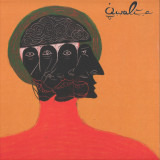
Canto Ostinato is the new volume of classical minimalism from musician and producer Erik Hall. Written for four pianos in 1979 by Dutch composer Simeon ten Holt, the piece is freshly framed as an intimate, hour-long solo performance consisting of multitracked grand pianos, electric piano, and organ. Modern yet warm, ethereal yet tangible, Hall's Canto Ostinato expertly bridges a revered piece of meditative concert repertoire with a tactile and highly personal studio setting. Chicago-born and Michigan-based, Erik Hall is known as a multi-instrumental pillar for the groups NOMO, Wild Belle, and his own songwriting moniker In Tall Buildings. He has composed music for feature films, and as a producer/engineer he has shaped records for Natalie Bergman and Western Vinyl labelmates Lean Year. In a 2020 creative pivot, he chose to reinvent composer Steve Reich's monumental contemporary classical masterpiece Music for 18 Musicians as a solo undertaking, applying the piece's score to the familiar keyboards, guitars, and synthesizers in his studio. "At the time I think I was working through my identity as a musician and an artist," Hall explains, "and on a level there was some sort of exorcism of a long held pop spirit." The album was celebrated for being "freshly thrilling" and "legible in history but assertive of the moment" (Pitchfork) and "beguiling, meditational, and magical" (Electronic Sound). It won the 2021 Libera Award for Best Classical Record, and it quickly joined the canon of the piece's quintessential recordings. "There is a pseudo-meditational benefit to working on a longform piece that's built on repetition," Hall says. "Every stage- from internalizing the music, to executing the performance, to editing and mixing the record- requires deep and sustained presence of mind. I've always been drawn to a hallucinatory combination of harmony and repetition, and I found the entire process addictive." An apt second chapter, Canto Ostinato is inherently vast, and its score gives great creative license to the performer. Comprising 106 sections, complete freedom is given to repeat each one as many or as few times as desired. Additional leeway is given with regard to dynamics, articulation, and even instrumentation. On the heels of his previous, rather maximal arrangement, Hall chose to limit this album's palette to three foundational keyboards of his studio: a 1962 Hammond M-101 organ, a 1978 Rhodes Mark I electric piano, and his family-heirloom 1910 Steinway grand piano. "This particular piece brought the added challenge of rekindling my dexterity as a pianist, something I haven't maintained in earnest since I was a teenager," he admits. The ensuing five-note rhythmic motif- the piece's primary building block- is steady and workmanlike, forgoing virtuosic flare for depth, texture, and resonance, and eventually giving way to the stunning gratification of a gorgeously lyrical left turn. As with Music for 18 Musicians, Hall employed no loops nor quantization nor any programmed or sequenced instruments of any kind. Every part was performed live in a room and captured with microphones, one at a time, each informed by, and reacting to the last. In this way the record breathes with interplay and an organic humanity, complete with flaws, noise, and the faint sound of turning pages. The recording quality is nonetheless toneful and saturated, characteristic of Hall's production style and straying from the usual transparency of classical albums by using gear with tubes, transformers, and various stages of compression in the signal path. Always there is unmistakable realism and the feeling of being present in the room, sitting among the keys, hammers, and tines. Ten Holt said: "Time, patience and discipline are the prerequisites for making a genetic code productive." His landmark composition provides Hall once again with a wondrous space in which to reverently embody this sentiment and deftly convey the elegant beauty of this music.
quête:steve c
The studio at 122 West Loveland Avenue was not an unfamiliar space for Steve Okonski, the leader of his eponymous trio Okonski. Ever since the Colemine label set up shop in Loveland, Ohio it has been a host to a number of groups passing through town, including Durand Jones and the Indications who all of this trio's members have connections to. After setting aside some time in winter of 2020, Okonski, trained initially as a classical pianist, invited Michael Isvara "Ish" Montgomery and Aaron Frazer to work on an album that was initially planned to be beat driven and fully composed trio instrumentals. After finishing this first session with some improvisations, a second week was booked in the summer of 2021 to try and capture some more of that spontaneous energy. During this session, the tracks were all improvised and recorded live to a Tascam 388 during several late nights at the Colemine HQ. They were structured to allow the group's collective intuition to fully shape the melodies and arcs of the music. The album opens with Runner Up, where a triumphant yet melancholic melody in the piano leads to a more reserved B-section driven by the drums and bass of Frazer and Montgomery. As you journey through the remainder of the album you are met with a plethora of evoked and explored emotions. The calmness one has walking down a moonlit street after midnight, the connection one has for a person who comes into their world for just a moment or a lifetime, and the nerves and catharsis one feels when starting upon a new, unknown journey. Magnolia closes with Sunday, a track that was recorded late into the night at the close of their first recording session. Without the spontaneity of Sunday, the remainder of Magnolia would likely have never come to fruition. Magnolia was composed from the heart and from the spirit of those in the studio those late nights in Loveland. It is the culmination of an emotional and artistic release that was not afforded or recognized before the band sat at their instruments, and because of that it is introspective, meditative, spiritual, and new.
NuNorthern Soul may be Ibiza-based, but the label’s connections with Nottingham run deep. Over the years, Phil Cooper’s imprint has offered up countless releases and remixes from some of the East Midlands’ city’s most Balearic-minded residents, including Crazy P’s Jim Baron, Is It Balearic? chiefs Coyote and, most recently, Constellations Workshop associates Brown Fang.
You can also add to that list Torn Sail, a collaboration between Brown Fang members Jon Thompson and Henry Scott, and another Notts-based NuNorthern Soul contributor, Huw Costin. The trio’s mesmerising ‘Disconnected’ recently featured on the label’s deluxe 10th anniversary vinyl box set and now they return with a single credited to both Brown Fang and Torn Sail – the first such occurrence of that happening.
Those who heard Brown Fang’s brilliant mini-album, Sherwood Pines, will immediately feel at home. Both ‘Exit’ and ‘Endless’, the two tracks showcased on this fine single release, feature the same gorgeous, slowly shifting fusion of sun-kissed electric guitar textures, ambient atmospherics and immersive, sunset-friendly sound design.
First up is ‘Exit’, an undulating, slow burning delight where rising and falling electronic melodies and yearning, gently jazzy electric guitar motifs rise above a sparse, shuffling, subtly Latin-tinged drum machine rhythm and warming bass. Endearing, enveloping and endlessly attractive, the track seemingly blossoms in slow motion throughout its’ three-and-a-half-minute duration, with additional musical elements presenting themselves as it progresses. Even by the trio’s high standards, it’s a magical composition.
On ‘Endless’, the long-time collaborators explore their love of mind-soothing ambient soundscapes. Doffing a cap to the 1970s new age ambience of Steve Hillage – whose distinctively languid, stretched out, effects-laden electric guitar solos were undoubtedly an inspiration –Thompson, Scott and Costin deliver a becalmed and brilliant dream-scape full of hazy aural textures, drifting chords and gentle, eyes-closed vocalisations. It feels like a loved-up, smile-inducing evocation of the most visually stunning dawn you’ve ever ushered in after a night dancing under the stars.
- A1: The Dna Lounge - Lost In Translation
- A2: Height/Dismay – Girl From Ipanema
- A3: Will Kuiper – Diffusion
- A4: Drone – Music For Guitar + Piano
- B1: Tim Gruchy – Jungles
- B2: Tch – Moholy Nagy Takes A Holiday
- B3: Cameron Allan –Tango Bw
- B4: Electric Hand – Daintree
- C1: Buchanan Holbrook – Hunger
- C2: Colin Offord – Absolutely Wired
- C3: Roger Frampton's Intersection – Open, As The Sky
- C4: David Watson – The Key To A Code
- D1: Jane Stevenson – Soloaloha
- D2: Lime – Farmarimba Solo
- D3: Kiri Uu – Mis Sa Kavva Kodun Teid?
- D4: Clout – Two Can Too
- D5: Back To Back Zithers – Cicadas
Antipodean Anomalies 2 is Left Ear Records' most ambitious project to date, a compilation that took over 4 years to license and includes 17 artists across a double LP. AA2 picks up where the first iteration left off, with co-compilers Chris Bonato and& Bridget Small continuing to dig through the music of the geographically isolating and maverick landscapes of Australia and& New Zealand.
As with the first iteration, Left Ear continues its to excavation ofe the music from these vast micro-scenes that evolved out of a number of small community-focused domains, creating their own unique reinterpretation of musical influences from near and far, spanning the years 1980 – 1992.
The compilation scopes an overlooked epoch from Adelaide, presenting acts such as the DNA Lounge, TCH & Will Kuiper. A close-knit community of like-minded mates that made distinctive electronic music together throughout the 80’s, all of which remained unreleased until now. Holbrook Buchanan capture the ambiance of Perth’s heat prodded afternoon’s perfectly with their track Hunger, a breezy 9-minute minimal-jazz jam that includes kalimba, water samples & conga. Furthermore, artists like David Watson & Colin Offord use samplers and handmade instruments to offer a more abrasive and experimental aesthetic.
To round out the compilation, artists such as Jane Stevenson, discovered a 7” at an op-shop and found the needle stuck on the word, ‘Aloha’. Using tape loops, she chose to highlight imperfections rather than hide them and in unison managed to cross boundaries of time; the 60s (album voice) and the 80s (my voice), of location; Hawaii and Australia, and of language; “Aloha and Hi”. This ethos echoes the compilation's vision, to champion artists that implement impromptu creativity, and who have a desire to create regardless of their surroundings and resources. AA2 signs off with the Back to Back Zithers, drawing inspiration from the haiku poems of Basho. To illustrate this, Kari set a Kacapi improvisation to the backdrop of the cicada chorus of summertime in outer Melbourne.
Steve Moore's Lovelock is back with Washington Park, a gorgeous suite of instrumental lounge music that can only be described as synth exotica. A real departure for Steve, this is a more mellow, soothing sound and can be regarded as Lovelock's response to these dystopian times.
New York-based multi-instrumentalist/producer/film composer Steve Moore is probably best known for his synthesizer and bass guitar work as Zombi, together with Anthony Paterra. Yet his Lovelock alias has been quietly blowing minds and warming hearts for a decade plus now. His latest effort, Washington Park, was not initially meant to be a Lovelock album. But Steve was posting little snippets of his work on Instagram and people started asking him: "is this new Lovelock?" It was at this point that Steve had an epiphany, of sorts. "It occurred to me that Lovelock can be whatever I want it to be. So yeah, maybe this new lounge/exotica record is, in fact, Lovelock."
Washington Park creeped out in a very low-key, early lockdown fashion and there wasn't much of a reaction. Says Steve, "I just self-released it and all my usual suspects were down with it, but it didn't really make it outside of my own circle." Yet many of the Balearic heads in Europe were indeed on it and Be With were most certainly listening. So, when we struck a deal to do the vinyl version of Burning Feeling, we couldn't resist asking about Washington Park.
Gentle opener "It Means Love" grooves along in the laconic style, conjuring carousel innocence and complimented by dreamy, spiritual sax and syrupy synth strings over a digi-soul beats. Title-track "Washington Park" glides smoothly in much the same vein, almost like a slightly more acidic, squelchier version of the preceding track with more insistent organ. Swoon. Closing out Side A, steady ambient gem "We'll See" is all gorgeous, soft pads with plaintive guitar and organ giving way to soaring digital strings over that metronomic drum machine soul.
Flip for the eerily brilliant "Seduction", a track which starts like a minimalist slice of Tommy Guerrero-esque guitar and drum machine soul but soon takes on a more menacing bent as Steve leans into his long-held predilection for horror by creating a slow-mo haunted house jam. The tempo (and temperature) rises with "Center Square", a Latin rhythm section and a sensual sax rubbing up against hot and heavy organ and string action. Steamy! To round things off, the ominous creeping groove of "Rhythm 77" feels like exotica-in-excelsis.
Washington Park was recorded over the first few months of the pandemic, during the spring of 2020, against the backdrop of his kids being out of school which meant daily walks and bike rides through Washington Park in Albany. It was during these moments of family activity and gentle movements, trying to make sense of the chaos engulfing his world, that Steve formed the ideas that led to this album. To make it manifest, he used all his old Roland beat boxes (CR-78, Rhythm 77 and Rhythm 330, Rhythm Arranger) plus a Chamberlin Rhythmate for all the percussion. Basslines were usually performed with his Moog Source or Minitaur and for pads and brass he used his Sequential Prophet 600 and Roland Juno 60. Strings came via a variety of old stringers - Korg Polysix, Elka Rhapsody, Crumar Orchestrator and Solina String Ensemble - and he also used his Fender Strat and Yamaha Custom saxophone.
Steve is a huge fan of exotica and that's clearly where this album is coming from. The likes of Martin Denny, Les Baxter and Henry Mancini can all be discerned here. As Steve explained, "I spent a lot of time listening to that stuff in the 90s and I figured it was time to let those influences show." You're going to be glad he did.
Mastering for the Washington Park vinyl edition was overseen by Be With regular Simon Francis before being cut by Cicely Blaston of Alchemy Mastering at AIR Studios and pressed in the Netherlands by Record Industry.
- A1: Andrzej Marko - Dhamma (3:33)
- A2: Andre Mikola - Circulation (3:30)
- A3: Andrzej Marko - Magic Scenery (5:12)
- A4: Andre Mikola - Longing For Tomorrow (3:35)
- A5: Andre Mikola - Nocturnal Flowers (3:39)
- B1: Andre Mikola - Fly Me To The Sun (3:46)
- B2: Andre Mikola - Birth Of A Butterfly (3:44)
- B3: Andre Mikola - Riding On A Sunbeam (3:52)
- B4: Andre Mikola - Osmosis (4:33)
- B5: Andre Mikola - Solar Heating (3:36)
Fly Me To The Sun is a breathtaking German library gem from the hallowed Coloursound label. Originally out in 1983 it features two Polish composers, Andrzej Marko and André Mikola. If outré synth-funk is your thing, you need this record.
Almost blindingly luminous with positive vibes and radiant optimism, Fly Me to the Sun is a collection of funky, sun-dappled compositions for synthesizer and live instruments like drums, bass and guitar. A dope blend of beatbox driven future jazz and electro pop.
The wonderfully sleaze-adjacent opener "Dhamma" includes some grandiose piano chords amid floating ambient sounds a la Steve Hillage with slick drums entering the fray at a languid pace. "Circulation" sounds like Bowie ran into Chaz Jankel during an extended stay in Los Angeles, the Thin White Duke emerging out of a studio at 6am, bleary-eyed and clutching this filthy, bleepy instrumental of sonic smut. "Magic Scenery" is as delicate and astounding as the title suggests, a deep ambient movement conjuring halcyon images of rolling fields with abundant fauna and flora; acid-tinged visions of intense colour and natural beauty. Cool, slo-mo breaks adorn the strutting melancholy of “Longing for Tomorrow” and “Nocturnal Flowers” to close out Side A.
Skip the title track, which opens up Side B, and head straight to “Birth of a Butterfly” for a slice of creeping digi-dub-soul niceness. This should've been front and centre of that Personal Space compilation a decade ago. Raising both the tempo and the temperature, “Riding on a Sunbeam” continues in the mesmerising cosmic funk style before "Osmosis", one of the clear stand-outs, presents a fine vintage synth solo over a mellow funky rubberband beat. The closing track, "Solar Heating", warms things up with slapped bass and bold drum machine beats and the synth lends Sci-Fi vibes to the dark dub-funk-reggae rhythm.
As David Hollander, in Unusual Sounds: The Hidden History of Library Music, states, Coloursound was "founded in 1979 by composer, music lawyer, and vibraphonist Gunter Greffenius. A Munich-based library with a reputation for releasing innovative and ambitious music, it catered largely to the market for experimental sounds, its first release was 1980’s Biomechanoid, an abstract synthesizer excursion by Joel Vandroogenbroeck, of the pioneering kosmische band Brainticket. The record — complete with imposing, anonymous title and unearthly H.R. Giger cover art — set the tone for the label’s progressive leanings. The label’s catalogue stands as a tribute to the unfettered creative license that libraries were able to provide to forward-thinking musicians who, frustrated by the whims and constraints of the commercial scene, found complete freedom in the world of production music."
As with all our library music re-issues, the audio for Fly Me To The Sun comes from the original analogue tapes and has been remastered for vinyl by Be With regular Simon Francis. Richard Robinson has brought the original Coloursound sleeve back to life in all its metallic silver glory.
- A1: Atomic Plant 1 (3:13)
- A2: Atomic Plant 2 (3:16)
- A3: Atomic Plant 3 (1:02)
- A4: Fusion Point 1 (2:45)
- A5: Fusion Point 2 (1:34)
- A6: Fusion Point 3 (1:00)
- A7: Nuclear Radiation 1 (2:46)
- A8: Nuclear Radiation 2 (2:30)
- A9: Nuclear Radiation 3 (1:06)
- B1: Regulators 1 (3:30)
- B2: Regulators 2 (1:54)
- B3: Data Load (2:11)
- B4: Modem (1:07)
- B5: Robot Masters (4:26)
- B6: Digiheart 1 (3:21)
- B7: Digiheart 2 (2:01)
Heads have been after Otakar Olšaník and Jan Martiš's Advanced Process for a long time. That's because "coincidentally-cosmic disco" packed with spaced-out, smacky-synth dynamite tends to become sought-after. Originally slipping out on the mighty Coloursound in 1986, the label described the sound as "contemporary synthesizer underscores played by computers; depicting future technologies in today's process." If they'd just added "acid-drenched", they'd have been closer to nailing it.
The A-Side is totally beatless. It's also totally perfect. "Atomic Plant 1" is a pulsing synth epic and could've easily soundtracked a stylish 80s thriller such as Thief or To Live And Die In LA. It's a narcotically enhanced meeting between John Carpenter and Steve "Lovelock" Moore. "Atomic Plant 2" adds extra squelch and proper early computer synth squiggles. This stuff is addictive and truly ace. The 3 part "Fusion Point" showcases a dramatic and insistent industrial mood via a gripping sequencer pattern mixed with effects and accents. Menacing and magnificent. The trio of "Nuclear Radiation" tracks veer majestically from a hypnotic sequencer pattern with a heavy dramatic tune to hectic patterns without much of a tune, managing nevertheless to maintain a hold on the listener.
The drums enter proceedings on Side B and they're absolutely outstanding. Coming on like a slicker, heavier Johnny Jewel production, 20 years before Italians Do It Better, "Regulators 1" marries the smoothest head-nod beat you can wish for, with a murky mechanical rhythm and phasing effects. After the stunning beatless version ("Regulators 2") the suuuupppper slo-mo "Data Load" sounds like its wading through the heaviest K-Hole and is all the more thrilling for it. "Modem" is a brief and breezy funky bass and synth squiggle wonder, of the beatless variety. "Robot Masters", would you believe, actually sounds like something those Daft Parisians would've sampled on Discovery, over 15 years later. An uptempo, optimistic track with a real strut; propulsive rhythms with dramatic synths, what can only be described as "very-80s sounds" and digi-handclaps. The breathless "Digiheart" double bill rounds things out, one with a dynamic driving rhythm and more slick-as-hell beats and the other without drums. Mental, brilliant and completely essential.
As David Hollander, in Unusual Sounds: The Hidden History of Library Music, states, Coloursound was "founded in 1979 by composer, music lawyer, and vibraphonist Gunter Greffenius. A Munich-based library with a reputation for releasing innovative and ambitious music, it catered largely to the market for experimental sounds, its first release was 1980’s Biomechanoid, an abstract synthesizer excursion by Joel Vandroogenbroeck, of the pioneering kosmische band Brainticket. The record — complete with imposing, anonymous title and unearthly H.R. Giger cover art — set the tone for the label’s progressive leanings. The label’s catalogue stands as a tribute to the unfettered creative license that libraries were able to provide to forward-thinking musicians who, frustrated by the whims and constraints of the commercial scene, found complete freedom in the world of production music."
As with all our library music re-issues, the audio for Advanced Process comes from the original analogue tapes and has been remastered for vinyl by Be With regular Simon Francis. Richard Robinson has brought the original Coloursound sleeve back to life in all its metallic silver glory.
"Hans Zimmer LIVE" versammelt mehr als zwei Stunden neuer Musik des in Frankfurt am Main geborenen Komponisten-Stars! Für das Album hat Hans Zimmer neue "Suiten" arrangiert, die auf einigen der bekanntesten Themen und Melodien aus seinen Oscar®-prämierten Filmmusiken basieren, darunter "Dune" und "Der König der Löwen" sowie für moderne Filmklassiker wie "The Dark Knight", "X Men: Dark Phoenix", "Dunkirk", "Gladiator", "Inception", "Interstellar", "Last Samurai", "Man of Steel", James Bond: "Keine Zeit zu Sterben", "Fluch der Karibik" und "Wonder Woman 1984".Gemeinsam mit seiner 20-köpfigen Band "The Disruptive Collective", in der eine Reihe langjähriger musikalischer Partner des Komponisten mitwirken, sowie mit dem Odessa Opera Orchestra und Chor hat Hans Zimmer ein episches Musikspektakel geschaffen, das stimmungsvolle klassische Arrangements und elektronische Elemente mit dem kraftvollen Sound einer Rockband verschmilzt."Ich wollte einfach ein tolles Album produzieren", sagt Zimmer, der "Hans Zimmer LIVE" ähnlich wie eine Studioproduktion an zehn Abenden seiner gleichnamigen Tour im Frühjahr 2022 aufzeichnete und mehrere Wochen damit zubrachte, das Album gemeinsam mit dem Produzenten Stephen Lipson abzumischen. "Ich wollte der Musik ermöglichen, auf neue Weise in ihrem eigenen Zusammenhang zu atmen, und ich bin absolut begeistert von dem fantastischen Team, das mich bei diesem Abenteuer unterstützt hat.""The Disruptive Collective" vereint Musiker, die schon lange mit Hans Zimmer zusammenarbeiten, etwa die Sänger*Innen und Komponist*Innen Lisa Gerrard ("Gladiator"), Lebo M. ("König der Löwen") und Loire Cutler ("X Men: Dark Phoenix"), die Cellistin Tina Guo ("Wonder Woman 1984") und Nick Glennie-Smith (musikalischer Leiter der Band). Zu den weiteren Solist*Innen zählen Andrew Kawczynski (Synthesizer, Schlagzeug), Pedro Eustache (Holzblasinstrumente), Refi (Gesang), Rusanda Panfili (Gesang), Guthrie Govan (Gitarren), Andy Pask (Kontrabass), Aicha Djidjelli (Trommeln), Steven Doar (Schlagzeug, Keyboards), Molly Rogers (Gesang), Juan Garcia Herreros Snow Owl (E-Bass), Nile Marr (Gitarren), Leah Zeger (Gesang), Holly Madge (Drumkit), Aleksandra Suklar (Schlagzeug). Hans Zimmer spielt auf dem Album eine Reihe verschiedener Instrumente.Die 2 CD-Version im Digipac enthält ein Booklet mit Bildern von der Live-Show und Illustrationen, einen persönlichen Text von Hans Zimmer und Texte zu allen Solisten.Die limitierte audiophile Vinyl-Version enthält 4 x 180g LPs im Quadfold mit bedruckten Innentaschen. Enthalten sind Bilder von der Live-Show und Illustrationen, ein persönlicher Text von Hans Zimmer und Texte zu allen Solisten. Direct Metal Mastering. 33 RPM.
Holidays In Eden wurde ursprünglich 1991 veröffentlicht
und war das sechste Studioalbum von Marillion und das
zweite mit Steve Hogarth als Lead-Sänger. Diese
Versionen enthalten die neuen 2022 Remixe des Albums
von Stephen W Tayler, die auf den Holidays In Eden
Deluxe-Editionen veröffentlicht wurden.
[a] A1 Splintering Heart [6:44]
[b] A2 Cover My Eyes [4:04]
[c] A3 The Party [5:37]
[d] A4 No One Can [4:45]
[f] B1 Holidays In Eden [5:23]
[g] B2 Dry Land [4:45]
[h] B3 Waiting To Happen [4:55]
[i] B4 This Town [3:19]
[j] B5 The Rake's Progress [1:54]
[k] B6 100 Nights [8:07]
- 1: J.b. Banfi - Gang (For The Rock Industry)
- 1: 2 Michael Garrison - To The Other Side Of The Sky
- 1: 3 Iasos - Lueena Coast
- 1: 4 Carl Matthews - As Above, So Below
- 1: 5 Tim Blake - Midnight
- 2: 1 Stratis - By Water
- 2: Laurie Spiegel - Improvisation On A 'Concerto Generator
- 2: 3 Mother Mallard's Portable Masterpiece Company - Ceres M
- 2: 4 Michael Stearns - In The Beginning
- 2: 5 Beverly Glenn-Copeland - Ever New
- 3: 1 Richard Pinhas - Variations Vii Sur Le Thème Des Bene G
- 3: 2 Tod Dockstader - Piece #
- 3: Kevin Braheny - Ancient Stars
- 3: 4 Steven Halpern - Starborn Suite (Part 1)
New edition of this Soul Jazz Records out-of-print classic album available now as a new limited-edition one-off pressing triple yellow vinyl album (plus download code), and limited-edition one-off pressing special yellow CD edition. Soul Jazz Records" Space, Energy and Light is a collection of music by early electronic and synthesizer pioneers (from the 1960s through the 1970s), mid-1970s proto-new age gurus and 1980s guerrilla D-I-Y cassette-era electronic artists, spanning in total over a near 30-year time frame. All of these artists used electronic advancements in music technology as a means of exploring not only space and the idea of the future, but also of looking inwards to the soul and of creating music in harmony with the natural world.
- A1: Jb Banfi - Gang (For Rock Industry) (For Rock Industry)
- A2: Michael Garrison - To The Other Side Of The Sky
- B1: Iasos - Lueena Coast
- B2: Carl Matthews - As Above, So Below
- B3: Tim Blake - Midnight
- C1: Stratis - By Water
- C2: Steven Halpern - Starborn Suite (Part 1)
- C3: Laurie Spiegel - Improvisation On A 'Concerto Generator
- D1: Mother Mallard's Portable Masterpiece Company - Ceres Motion
- E1: Michael Stearns - In The Beginning
- E2: Beverly Glenn-Copeland - Ever New
- F1: Richard Pinhas - Variations Vii Sur Le Theme Des Bene Gesserit
- F2: Tod Dockstader - Piece #1
- F3: Kevin Braheny - Ancient Stars
New edition of this Soul Jazz Records out-of-print classic album available now as a new limited-edition one-off pressing triple yellow vinyl album (plus download code), and limited-edition one-off pressing special yellow CD edition.
Soul Jazz Records’ Space, Energy and Light is a collection of music by early electronic and synthesizer pioneers (from the 1960s through the 1970s), mid-1970s proto-new age gurus and 1980s guerrilla D-I-Y cassette-era electronic artists, spanning in total over a near 30-year time frame. All of these artists used electronic advancements in music technology as a means of exploring not only space and the idea of the future, but also of looking inwards to the soul and of creating music in harmony with the natural world.
From computer software and hardware experimentalists and sound pioneers such as Laurie Spiegel and Kevin Braheny, as well as Mother Mallard’s Portable Masterpiece Company – the first synthesizer ensemble created in collaboration with Robert Moog – through to musique concrète experimentation, the album shows how technological advancements and creative artistic expression often went hand in hand.
In the mid-1970s artists Steven Halpern and Iaxos were instrumental in creating proto-new age music, experimenting in both the healing properties of sound and its relationship with the natural world. These artists also pioneered a new self-contained and underground D-I-Y approach to music, creating their own record labels, forming new distribution networks (with albums sold in meditation centres, health food stores and ashrams) far away from the commercialism of the mainstream music industry. In the early 1980s after the revolution of punk, these D-I-Y attitudes and ideas appeared once more in the growth of the distinctly anti-commercial and underground cassette-only careers of artists such as Germany’s Stratis and Carl Matthews in Britain.
Artwork includes some of the earliest photography of the Plieades star cluster dating from the 1880s.
"Listening to Space, Energy & Light in one sitting is a bit like experiencing constellations exploding within constellations inside your brain." Record Collector
"Incredible collection of spacey electronics and meditative soundscapes dating from the early 60s to the late 80s here, lovingly assembled by the Soul Jazz team. This compilation has it all if you like your music deep. Big names such as Iasos and Laurie Spiegel feature, but even if you think yourself a bit of a nerd in this field, there are some lesser known pearls to be found." Bleep
"Quite simply an amazing mix of some quite bizarre and interesting pieces of music, no way to describe it other than to buy it, put on some headphones and drift off to inner space.” Amazon
"New compilation charting almost three decades of experimental
electronic and synthesizer music from the most influential and often
unsung composers of their generation. Beginning and 1961 and
following the story until 1988, Space, Energy and Light connects
proto-new age gurus and DIY tape vigilantes who were equally
inspired by the advancements of new technology and its potential to
unlock utopian futures in both the music and the soul." Vinyl Factory
ComposedandConducted By John Williams
E.T. the Extra-Terrestrial Original Motion Picture Soundtrack...
The summer of 1982 saw the release of some of the most culture-defining films of our lifetime (STAR TREK II: THE WRATH OF KHAN, POLTERGEIST, TRON, CONAN THE BARBARIAN, THE THING, THE ROAD WARRIOR ... just to name a few!)
But few have had nearly the same impact on film music as the legendary sixth collaboration between Steven Spielberg and John Williams: E.T. THE EXTRA-TERRESTRIAL.
Mondo, along with Geffen Records and Universal Pictures, are proud to celebrate forty years of E.T., with an all new re-issue of John Williams' timeless, essential and period-defining score.
Reissue Produced by Bruce Botnick & Mike Matessino
Composed and Conducted by John Williams
Artwork by Dan McCarthy
Liner Notes by Mike Duquette
Manufactured in Czech Republic
Studio One was founded by Clement "Coxsone" Dodd1 in 1954, and the first recordings were cut in 1963 on Brentford Road in Kingston.[1][2] Amongst its earliest records were "Easy Snappin" by Theophilus Beckford, backed by Clue J & His Blues Blasters, and "This Man is Back" by trombonist Don Drummond. Dodd had previously issued music on a series of other labels, including World Disc, and had run Sir Coxsone the Downbeat, one
of the largest and most reputable sound systems in the Kingston ghettos.
In the early 1960s, the house band providing backing for the vocalists were the Skatalites[3] (1964–65), whose members (including Roland Alphonso, Don Drummond, Tommy McCook, Jackie Mittoo, Lester Sterling and Lloyd Brevett) were recruited from the Kingston jazz scene by Dodd. The Skatalites split up in 1965 after Drummond was jailed for murder, and Dodd formed new house band the Soul Brothers (1965–66), later named the Soul Vendors (1967) and Sound Dimension (1967-). From 1965 to 1968 they played 9 a.m. to 5 p.m., 5 days a week, 12 rhythms a day (about 60 rhythms a week) with Jackie Mittoo as music director, Brian Atkinson (1965–1968) on bass, Hux Brown on guitar, Harry Haughton (guitar), Joe Isaacs on drums (1966–1968), Denzel Laing on percussion, and on horns (some initially and some throughout): Roland Alphonso, Dennis 'Ska' Campbell, Bobby Ellis, Lester Sterling, among others on horns during the era of Rock Steady. Headley Bennett, Ernest Ranglin, Vin Gordon and Leroy Sibbles were included among a fluid line-up, to record tracks directed by Jackie Mittoo at Studio One from 1966-1968.
During the night hours at Studio One from 1965-1968, singers like Bob Marley, Burning Spear, The Heptones, The Ethiopians, Ken Boothe, Rita Marley, Marcia Griffiths, Judy Mowatt, Alton Ellis, Delroy Wilson, Bunny Wailer[4] and Johnny Nash, among others, would put on headphones to sing lyrics to original tracks recorded by the Soul Brothers earlier each day. These seminal recordings included "Real Rock" (by Sound Dimension), "Heavy Rock", "Jamaica Underground", "Wakie Wakie", "Lemon Tree", "Hot Shot", "I'm Still In Love With You", "Dancing Mood", and "Creation Rebel".
Jackie Mittoo, Joe Isaacs, and Brian Atkinson left Studio One in 1968, recorded drums and bass for Desmond Dekker's and Toots' biggest hits at other Kingston studios, then moved to Canada. Hux Brown stayed in Jamaica to record on the soundtrack The Harder They Come, The Harder They Fall, and toured in Nigeria with Toots and the Maytals and Fela Kuti. The Soul Brothers (a.k.a. Sound Dimension) formed the basis of reggae music in the late 1960s, being versioned and re-versioned time after time over decades by musicians like Shaggy, Sean Paul, Snoop Lion, The Clash, String Cheese Incident, UB40, Sublime, and countless other Billboard originals and remakes trying to emulate their original Rock Steady sound at Coxsone's Studio One.
Solaire, Siegfried Kessler, that is the least we can say! Aged 4: learns piano. Aged 6: his first concert. After this: studies classical music like everyone else... until the jazz of Jack Diéval and Stan Kenton turned everything upside down. So it was goodbye to Bach...
...And hello to Dexter Gordon, Joe Henderson, Ted Curson and Archie Shepp (who he would accompany over a long period). In 1969, with Yochk’o Seffer, Didier Levallet and Jean-My Truong, he formed a group which would mark history and create a sensation: Perception. If French free jazz exists, its thanks to Kessler (and company).
The following year, the pianist recorded his first album: Live at the Gill’s Club. On this one-night concert date can also be heard Barre Phillips and Steve McCall. But it was in 1971 that Kessler would record his greatest album; still in a trio setting, but this time with bassist Gus Nemeth and percussionist Stu Martin: Solaire. Five tracks of extraordinary music, moving back and forth between modal jazz and contemporary music.
Let’s begin at the end, with the title track Solaire, on which Kessler plays a melody on flute and piano which resists all onslaughts. It sends out powerful waves, Kessler’s jazz, bubbling like hot oil (Persécution, Drum), shaking modal jazz to its roots (De l’Orient à Orion) or upsetting the memory of a cantata (Bach Hcab). The piano is an instrument which can provide a tendency towards, demonstrative technique; with Kessler, it is something else: a joyful persecution!
"I begin our sixth album by exploring melodies that take me to the boundaries of my voice. I write myself into my highest highs and lowest lows. There is a precariousness in the outer limits of my range that demands vulnerability. As our demos take shape, I realize this will be our first album without any belting, the first time I can’t force my way through the notes," recalls Tennis' Alania Moore. "In the studio, Patrick compresses the shit out of my mic and I sing with the gentleness of breathing. In that softness, lyrics take shape. We want to write a big album—something suited for radio, but our songs don’t follow conventional pop structures. Instead of choruses with universal themes, I write with a specificity that is new to me, narrowing in on the smallest details of our lives. The more we try to broaden our scope, the more we turn inward." "We name the album Pollen. It is about small things with big consequences: a particle, a moment, a choice. It is me in a fragile state; sometimes inhabited freely, sometimes reacted against. It is striving to remain in a moment without slipping into dread. It is about the way I can be undone by a very small thing." Tennis is Alaina Moore and Patrick Riley. Pollen is their sixth album. The two met in the philosophy department at the University of Colorado in 2008 after dropping out of their respective music programs. In the years after graduating, they got involved in Denver’s DIY music scene. Through house shows, they were connected with Underwater Peoples and Firetalk. The band went blog-viral nearly overnight, landing them a record deal with Fat Possum and then Communion Records, but with shifting labels and new interests, Tennis chose an alternate path for their band and career. In 2016, Moore and Riley formed the label Mutually Detrimental and began self-releasing. Their newfound freedom allowed them to return to their sailboat to write their next full-length, this time in the Sea of Cortez. Yours Conditionally, released in 2017, became their most commercially successful album–charting at #4 on Billboard’s Independent list and in the top 100 highest selling vinyl releases that year. They played Coachella and opened for artists like The National, Father John Misty and The Shins–proving their DIY roots as a cornerstone to their sound and narrative. Their follow up Swimmer (2020), was recorded in their home studio with Moore and Riley producing and engineering. The pair brought their long-time touring member Steve Voss in for the second time to drum on record. The singles, Need Your Love and Runner, were Tennis’ most successful releases to date.
Carolina’ is the Brazilian virtuoso Seu Jorge's debut full-length album from 2002. Originally released under the title ‘Samba Esporte Fino’, its release and subsequent international acclaim dovetailed with Seu Jorge’s ascent into movie stardom. He is probably best known outside of Brazil for his work on Wes Anderson’s 2004 film 'The Life Aquatic with Steve Zissou’, in which he played a starring role and his Portuguese covers of David Bowie records were a highlight of the soundtrack. Having initially found fame thanks to his standout performance as Knockout Ned in the revered movie ‘City of God’. ‘Carolina’ would cement his global fame and launch an illustrious musical career that has earnt him a Grammy nomination.
Co-produced by Mario Caldatto of Beastie Boys and Planet Hemp fame, the album presented a vibrant, contemporary combination of samba and funk, backed by guitar, bass, drums, percussion, and horns. It kicks off with one of Seu's most loved tracks 'Carolina', an anthemic feel-good classic with timeless energy, ending in a sing-along crescendo. Other highlights included the Brazilian-Funk of 'Mangueira' reminiscent in places of Tim Maia with its 80s inspired vibe, and the catchy jazzy-samba of 'Tu Queria' which always ignites the dance floor.
- A1: Kimiko Kasai - Use Me
- A2: Eric & The Vikings - Get Off The Street Y'all
- A3: Junior Mance - Don't Cha Hear Me Calling To Ya
- A4: Leroy Winegar - Damn! Somebody Stole My Pants
- B1: Hammer - Tuane
- B2: Mystic Moods - Honey Trippin
- B3: Estelle Levitt - All I Dream
- B4: Jimmie & Vella Cameron - Chica Boom
- B5: Little Feat - Spanish Moon
- C1: The Young Rascals - It's Love
- C2: John Fitch - Romantic Attitude
- C3: Nino Tempo & April Stevens - Land Of 1000 Dances
- C4: Vincent Geminiani - Insidieusement Les Elfes
- C5: Piet Van Meren - Cool Echo
- D1: Experience - Pink Movement
- D2: Syd Dale - Disco Tek
- D3: Les Mccann - Shamading
- D4: Johnny Harris - Stepping Stones
Brainwave research center is a new project from NYC-based house/techno producer, Chase Smith (W.T. Records, Apartment, is/Was), & documentary filmmaker, Christa Majoras (School of Visual Arts).
Conceived together over two years as musical thought experiments, brainwave research center’s debut album, figure 1, contains a genre-bending distillation of influences from experimental music (Steve Reich, Laurie Spiegel, Black Dice), 1990s ambient techno (The Orb, Pete Namlook/Fax Records), and Motorik/Kosmiche/Krautrock (Kraftwerk, Suicide, Manual Gottsching).
The songs embrace a raw, naive approach to sound design, instrumentation, and technical production to capture the feeling of experimentation of the works they are inspired by. Described by listeners as a mixture of Electronic, ambient, and kosmische/krautrock.
Recorded and produced in Greenpoint, Brooklyn in the back of Smith’s synthesizer/electronic repair shop, Specs Sales & Repair, Figure 1 is the first in a sequence of 4 works to be released.
Made primarily with TR-606, OB8, SH-101, MS-20, Fizmo, H3000, SDE-3000