ALREADY SUPPORT BY OSCAR (STEVE HAZE REMIX), HALF STEREO, SECRET CINEMA, NUDISCO!!
DIE STRICHCODE E.P. IST EINE KOOPERATION VON ALEXANDER STOYAN (AKA 1112X) UND SVEN HANKE. IN DER SUMME STEHEN 3 ABWECHSLUNGSREICHE STÜCKE UND DER REMIX ZU "PETER UND DER WOLF" VON STEVE HAZE, SOWOHL FÜR DEN FLOOR ALS AUCH FÜR DAS OHR BEREIT. DER SCHWERPUNKT LIEGT AUF DEN HARMONISCHEN TECHNOGRUNDGERÜSTEN ALS AUCH BEI DER OPTIMALEN KRÄFTEBÜNDELUNG FÜR DIE BELANGE DER TANZBEINE. DIE ENTFALTUNG FEINER DETAILS SPIELT EBENSO EINE TRAGENDE HAUPTROLLE. PUREPUREMUSIC !!!!
Cerca:steve haze
- 1
Steve O’Sullivan returns under his Bluetrain alias, channeling the essence of dub into groovy,
endlessly cycling patterns shaped by submerged chords and tectonic low-end pressure. The influence of Mike Ink’s monolithic Studio One era is unmistakable, where reduction becomes
propulsion and each delay-trail etches its own pulse into the haze. Limited colourec vinyl.
Steve O’Sullivan returns under his Bluetrain alias, channeling the essence of dub into groovy,
endlessly cycling patterns shaped by submerged chords and tectonic low-end pressure. The influence of Mike Ink’s monolithic Studio One era is unmistakable, where reduction becomes
propulsion and each delay-trail etches its own pulse into the haze. Limited colourec vinyl.
Parsley Sounds was the glorious debut album for Mo Wax by Parsley Sound. The album was one of the iconic label’s final releases before it closed in 2003 and locating a clean copy has been extremely tricky of late, unless you're flush enough to drop 150 notes on it. Mercifully, the Be With reissue, put together with invaluable assistance from the group, should remedy this situation. It's a lo-fi, bass-heavy, blunted beat treat, warped with heat haze and dreamy soft-psych and has been criminally under-heard for far too long.
As with most cult-like records, Parsley Sounds has many influential fans, far and wide. From Four Tet and Caribou to NTS's modern day breakfast hero Flo Dill, its reputation has only grown in stature. At the time, the notoriously hard-to-please Pitchfork garlanded it with a scarcely achievable 8.8 whilst, just recently, the Numero Group's Rob Sevier described it as a "visionary bit of proto-Salvia Palth (or Steve Lacy)" via a Ghostly International missive.
Parsley Sound comprised super-talented duo Preston Mead and Dan Sargassa. They released an early single (the perfect "Twilight Mushrooms", featured here) on Warp Records as Slum, before signing to Mo Wax. Hidden behind a wall of sound - fuzzy layers of beats, bleeps and symphonic synths - they were convinced they made mainstream pop music. And, in many respects, Parsley Sounds really is a beautiful pop album. It overflows with memorable, gorgeous melodies and inspired songcraft. As the contemporaneous Pitchfork review correctly had it: "Parsley Sounds is one of those rare records that manage to sound modest while frequently pushing the sonic envelope."
Killer opener "Ease Yourself And Glide" is a thing of aching, soft-psych, wonky beat-beauty. A melodic masterpiece, part Crosby, Stills & Nash, part proto-Koushik, it presents a melancholy falsetto, surging bass and blunted lead guitar. As it climaxes, gorgeous strings are ushered in to see us out. Sublime. "Twilight Mushrooms" is up next and it's an acid-drenched, strung-out acoustic-led campfire wonder. Amid layers of tape-hiss and beautiful, sun-dappled strings, its understated vocal track provides a haze of wistful innocence.
The breezy "Spring's Near" is a krautrock-inspired chiming instrumental of heavenly excellence, its warm, skipping, motorik groove and dreamy synths completely infectious. Another total highlight, the technicolour "Yo Yo" initially presents itself as a more abstract, bleepy offering but as it organically swells into ever more beautiful places, with the addition of a choppy insistent drum loop, flute bursts, horns and sweeping strings, it puts one in mind of early Manitoba and Four Tet releases. Shimmering, blissed-out greatness.
The celestial harmonies and glistening harps of the wonderfully beatless, serenely sullen "Ocean House" are very much in conversation with late-60s meditative psych whilst, closing out Side A, the jaw-dropping, lushly experimental effort "Find The Heat" comes on like Arthur Russell meets Brian Wilson. Yep, *that* good.
Side B opens with the warped, bleepy "Stevie", a brief but beautifully wonky, soulful and intricate instrumental. The more upfront vocals that propel the fuzzy "Platonic Rate" have a refreshing swagger to them, the heavy bass and neck-snapping in-the-red beats too much for any system to deal with whilst the guitars and strings have a sweeping, cinematic feel which just beguiles. The slow, urbane soul of "Candlemice" will stop you in your tracks, no matter what you're doing. It carries a delicate sadness, as does much of the album in that classic "down lifting" style we so love here at Be With.
The fuzzing, buzzing "Templechurchmansions" is a searing, soulful dubwise detonation. Heavily stoned with slow-burning jazzy snatches and a tense, moody atmosphere, it's a Tricky-adjacent gem. The album rounds out brilliantly with the ominous instrumental "Neon Breeze" before giving way to the propulsive, almost incongruous punk-funk / disco-dub of secret "untitled" track "Caution", a scratchy, smacked-out groove-fuelled workout with a female vocal dripping with 'tude. Just sensational.
Under the watchful eye - and attentive ears! - of Parsley Sound themselves, the audio for Parsley Sounds has been carefully mastered by Be With regular Simon Francis, with a few much needed tweaks here and there, according to the artist's wishes. Cicely Balston's expert skills have made sure nothing is lost in the cut whilst the records have been pressed to the highest possible standard at the always stellar Record Industry in Holland.
Preston and Dan always thought the colours on the first vinyl pressing looked a bit "washed out" vis-a-vis the original artwork which was way more vibrant. We feel we've got it popping back to the original intention with the restoration work here at Be With HQ. So with the audio and artwork now approaching completeness after 20 years, this long overdue re-issue could be considered its definitive vinyl release.
Ruby Red - Transparent - Galaxy effect vinyl in dub style jacket (jacket sleeve with center hole cut out so label of LP shows through) a black paper inner sleeve and poly bag.
PART ONE’ METAL HAMMER - 8/10 review. FOR FANS OF : Lustmord, Om, Sunn O))) . “An exercise in freeform ambience, ritualistic repetition and the rapturous, womb-like power of bass…strange and affecting. We remain lucky to share in the great man’s vision.”
At its heart, music has always been a questioning of inheritance – a dialogue with predecessors and forebears, the forging of one’s own perspective in relation to what has come before, and for some, a plunge into the boundless realms between. For Steve Von Till, that process has always taken on an added dimension to become the most sacred of tasks. Whether through the apocalyptic uprising of Neurosis, the sonic deconstructions of their sister project, Tribes of Neurot, the invocatory intimacy of his eponymous solo albums or his instrumental psychedelic reveries in the guise of Harvestman, that dialogue has never just been with musical influences, but with what underpins them: the primordial, elemental forces now banished to the peripheries of our contemporary consciousness, yet still broadcasting a signal for all who will listen.
Drawn to the megaliths, ruins and ancient sites mapped out along the British and European mainland’s geographical and psychic landscapes, the folklore and apocrypha forever resurfacing as portals from a rational world, “Triptych” is a meditation forged from traces and residues, and an hallucinatory recollection of artists who have tapped into that enduring otherworldliness embedded within us all. It’s a dream diary narrating a passage through Summer Isle where Flying Saucer Attack are wafting out of a window, a distant Fairport Convention are being remixed by dub master Adrian Sherwood, celestial scanners Tangerine Dream are trying to drown out Bert Jansch and Hawkwind are playing Steeleye Span covers, all prised out of time yet bound to its singularity.
Woven together from home studio recordings that span two decades, this latest outing as Harvestman finds parallels with nature’s cycles not just in its release dates but in the repeated structure that binds each album, like an imprint refracted through three separate strata. As with April’s “Part One” and the forthcoming “Part Three”, “Part Two”, starts on a collaboration with Om bassist and long-term friend of Steve’s, Al Cisneros, with a dub take opening the B-Side. Here, the opening track, “The Hag Of Beara Vs The Poet”’s languid, tribal groove expands into a chromatic wash, like an endless drip of oil spreading out under a midsummer haze.
A filtering of the alpha-state travelogues of its predecessor, “Part Two” reaches even deeper into primal yet pristine states. It journeys from the undulating drone and slow-thawing wonder of “The Falconer”, as if the Myst soundtrack were being broadcast from outer space, through “Damascus”’s perpetual-motion, dreamtime bazaar and “Vapour Phase”s seismograph frequencies measuring supernatural tremors to “The Unjust Incarceration”s distorted bagpipes, sounding a noise-frayed lament
If “Triptych” is a multi- and extra-sensory experience, it extends to the remarkable glyph-style artwork of Henry Hablak, a map of correspondences from a long-forgotten ancient and advanced civilization. As with “Triptych” itself, it’s an echo from another time, an act of binding, a guide to be endlessly reinterpreted, and a signpost to the sacred that might not indicate where to look, but how.
Steve O’Sullivan returns under his Bluetrain alias, channeling the essence of dub into groovy,
endlessly cycling patterns shaped by submerged chords and tectonic low-end pressure. The influence of Mike Ink’s monolithic Studio One era is unmistakable, where reduction becomes
propulsion and each delay-trail etches its own pulse into the haze. Limited colourec vinyl.
- A1: Circles & Chambers
- A2: Gather Words For The Fire
- A3: Old Legra
- A4: Lilac Haze Of Lavender
- A5: In The Arms Of Lewes
- A6: Hoist The Drawbridge
- B1: You Often Hid
- B2: On Silbury Hill
- B3: Roar No More
- B4: Til The Worm Turns
- B5: Nerano Sailor
- B6: Viewing The Waterhen
Vinyl[22,48 €]
Rotating Irish/international collective United Bible Studies (UBS) releases its 28th album, Strange is the Coastline, this Autumn (CD on Talking Elephant Records / LP on Hobby- Horse).
The album is preceded by the single ‘In The Arms of Lewes’ which was available on all digital platforms from 14th August.
'Strange Is The Coastline' is a collection of original folk-rock songs written by current core members David Colohan (co-founder of UBS) and Alison O’Donnell (Mellow Candle) in the company of multi-instrumentalist Steven Collins (The Owl Service). Melding and meshing classic folk, contemporary pop, and passionate tune-smithery in an inspiringly complementary way; disparate, yet delightfully cohesive, with themes of Albion myth and legend to Victorian-era murder ballads via tales of chilling contemporary stalkerss, and climate chaos.
United Bible Studies was formed in 2001 and over the last couple of decades has been home to a head-spinning array of performers in an ever-evolving merry-go-round of studio and live personnel. Drawing on the broadest community of musicians, the band have created an impressive catalogue of 28 albums of studio and live recordings.
Standard weight black vinyl LP in picture sleeve with lyric booklet. 300 copies for the World.
“...teems with bushy-tailed folk-rock about Albion and Ireland, as well as brutal, bracing songs about singer Alison O’Donnell’s experiences with a former stalker, such as the startling You Often Hid”. (THE GUARDIAN)
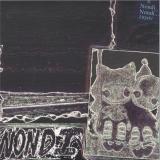
Following her acclaimed 2023 release Flood City Trax, a dreamy, lo-fi take on footwork inspired by the crumbling rust-belt city she calls home, Nondi returns to Planet Mu with her second self-titled album, Nondi…While Nondi… retains some of the hazy, nostalgic atmosphere of Flood City Trax, it pushes her sound in bold new directions. “I made this album to capture the sense of freedom I used to get from music when I was first discovering it all,” Nondi says. “It’s meant to be cute, fun, kinda weird and emotional — but most of all, it’s a presentation of some of the prettiest tracks I’ve made.” Though she hasn’t really experienced club culture where she lives, her impressionistic productions evoke the surreal, lingering sounds of a night out — the melodic haze that hums in your ears as you drift off to sleep. Lo-fi and melodic, yet fluid and free, her music carries a sense of flight and intuitive logic. Nondi’s influences range widely — Actress, Aphex Twin, footwork, and the stranger edges of dub techno are all felt, yet she hallucinates them through her own weathered, dreamlike lens. Her tracks often build from clashing loops that evolve and transform organically, or from familiar genre elements reshaped by her instinct for misty, heart-wrenching melody. Some moments stay closer to genre, like Broken Future 175, a drum-and-bass tear-out that dissolves into lush, blurred chords, or Just Hanging Out, a bruised and beautiful take on 2-step. Lead single Tree Festival feels like a blown-out fusion of rave energy and sped-up new-age bliss, while Death Juke drifts through off-beat vocal samples, pulsing drums and 8-bit FX, reminiscent of early Steve Reich reimagined through a Game Boy. Nondi… is a uniquely moving and exploratory album that expands her sonic world even further. Lo-fi yet luminous, playful yet profound.
Steve Hauschildt returns after 6 years with a new album titled Aeropsia. After a transcontinental relocation from the US to Tbilisi, Georgia, the electronic composer emerges from a personal and global transformation to explore themes of perceptual distortion, disconnection, and renewal.
Aeropsia (which roughly translates as “seeing the air”) refers to a visual phenomenon in which objects appear to float or shimmer, often due to changes in pressure, perception, atmospheric shifts or neurological disturbance. This becomes a metaphor for the liminality that informs the record: blurry visions, dreamlike displacements, and the fragile membrane separating what is seen from what is felt.
In the years since his last solo release, Hauschildt’s world has been marked by relocation and a growing sense of global turbulence. These experiences became the raw material for a work that navigates institutional haze and uncertainty itself. The result is music that employs decay as method, structure as entropy, and mutation as expression.
While Aeropsia remains subjective in its vision, Hauschildt invited two previous collaborators to expand the album’s gravitational pull. Cellist Lia Kohl, who previously performed on Nonlin, returns and brings a tactile warmth to select tracks, while guitarist Michael Vallera threads spectral harmonics into the mix. The album’s electronic foundation and its tactile elements meet in a state of luminous suspension to navigate the shifting in physical and psychological terrain.
Ostinato as resistance: Rafael Anton Irisarri’s landmark work reimagined. Marking the tenth anniversary of the American composer’s critically acclaimed album 'A Fragile Geography', this new edition arrives renewed, both sonically and visually.
First released in 2015 (Room40) during a period of personal upheaval and creative reinvention, it endures as a testament to resilience, transformation, and the connection we hold with the places that shape us.
Written in the aftermath of a devastating theft, A Fragile Geography was born out of loss. Just days before a cross-country move to New York, Irisarri’s entire Seattle-based studio was wiped out. Instruments. Recordings. Archives. Gone without a trace. He arrived on the East Coast to an empty room and the daunting task of starting over.
“This album wasn’t just a record; it was a lifeline,” Irisarri reflects. “It became a way to process the emotional chaos that followed: uprooting, instability, and ultimately, the slow, intuitive rebuilding of a life.”
Composed and recorded in the rural woods of the Hudson Valley, the album took shape in seclusion, surrounded by nature, and through a process guided by improvisation. Embracing limitations, Irisarri wove textural layers of field recordings with half-remembered melodies from his Seattle years, piecing them together like fragments of memory. Tracks like “Displacement,” “Hiatus,” and “Persistence” juxtaposed haunting stillness with restless momentum, mapping an inner terrain of grief, catharsis, and rebirth.
Among its defining sounds is “Empire Systems,” a monumental centerpiece built around a simple four-chord progression, organ textures, and guitar drones. Gradually, the track expands into layers of immersive loops and thick, enveloping distortion that wash over the listener like a rolling wave. Often cited as the album’s most majestic passage, it captures Irisarri at his most sonically ambitious. With a harmonically saturated structure crafted from restraint and repetition, it remains one of his most recognizable compositions: an exercise in the art of maximal minimalism.
From the outset, “Reprisal” received praise from BBC’s Mary Anne Hobbs, who championed the track on her radio show. Her support played a key role in introducing Irisarri’s work to wider audiences and solidifying his place within the lineage of electronic, drone, and experimental sound artists. A slow-burning elegy, the piece emerges from a haze of distortion and sub-bass, with dense, unrelenting drones carrying a sense of mounting tension. Just as it seems to collapse under its own weight, flickers of guitar emerge like distant light through fog. It’s a meditation on dissonance, resolve, and the elusive possibility of release.
The closing track, “Secretly Wishing for Rain,” is steeped in saudade: a longing for Seattle’s dour grey skies, lush green landscapes, and desaturated sunsets. Through it, Irisarri mourns a vanished chapter of life bound to the city, a time documented in scattered mementos and cherished collections, now permanently gone. A reflection on what could never be recovered: an era lost to time. Julia Kent’s looped cello motifs added a melancholic warmth to the track, marking the first collaboration between the two artists and sparking a musical dialogue that would keep growing in the years that followed.
More than a career highlight, A Fragile Geography has laid the foundation for Black Knoll studio, which Irisarri rebuilt from the ground up. The studio has since grown into a creative hub for countless projects, with Irisarri engineering records for iconic music figures like Terry Riley, Ryuichi Sakamoto, William Basinski, MONO, Devendra Banhart, Grouper, Emeralds, Steve Hauschildt, Julianna Barwick, and many others. Carried by its lasting influence, the album has quietly captured the ear of a younger generation, its sound and emotional arc finding new listeners in unexpected corners.
The album’s new visual language was reimagined in collaboration with Mexico City–based designer Daniel Castrejón. Irisarri captured ghostly images at Gaztelugatxeko Doniene, a historic coastal site in Bermeo, Euskal Herria. Castrejón then treated the photographs with distressed textures and spectral overlays. The final artwork channels the rugged, elemental forces that shaped both the music and Irisarri’s aesthetic, renewing his ties to ancestral ground inspired by the Basque homeland of his bloodline.
Mastered by Stephan Mathieu with exceptional attention to detail, this anniversary edition uncovers every nuance in the sound design, enhancing clarity and presence. With each listen, new elements emerge, inviting discovery and reconnection.
“I don’t experience this album as a document of grief anymore,” says Irisarri. “I hear adaptation and I'm reminded that when everything falls apart, something meaningful, maybe even beautiful, can emerge.”
Ostinato as resistance: Rafael Anton Irisarri’s landmark work reimagined. Marking the tenth anniversary of the American composer’s critically acclaimed album 'A Fragile Geography', this new edition arrives renewed, both sonically and visually.
First released in 2015 (Room40) during a period of personal upheaval and creative reinvention, it endures as a testament to resilience, transformation, and the connection we hold with the places that shape us.
Written in the aftermath of a devastating theft, A Fragile Geography was born out of loss. Just days before a cross-country move to New York, Irisarri’s entire Seattle-based studio was wiped out. Instruments. Recordings. Archives. Gone without a trace. He arrived on the East Coast to an empty room and the daunting task of starting over.
“This album wasn’t just a record; it was a lifeline,” Irisarri reflects. “It became a way to process the emotional chaos that followed: uprooting, instability, and ultimately, the slow, intuitive rebuilding of a life.”
Composed and recorded in the rural woods of the Hudson Valley, the album took shape in seclusion, surrounded by nature, and through a process guided by improvisation. Embracing limitations, Irisarri wove textural layers of field recordings with half-remembered melodies from his Seattle years, piecing them together like fragments of memory. Tracks like “Displacement,” “Hiatus,” and “Persistence” juxtaposed haunting stillness with restless momentum, mapping an inner terrain of grief, catharsis, and rebirth.
Among its defining sounds is “Empire Systems,” a monumental centerpiece built around a simple four-chord progression, organ textures, and guitar drones. Gradually, the track expands into layers of immersive loops and thick, enveloping distortion that wash over the listener like a rolling wave. Often cited as the album’s most majestic passage, it captures Irisarri at his most sonically ambitious. With a harmonically saturated structure crafted from restraint and repetition, it remains one of his most recognizable compositions: an exercise in the art of maximal minimalism.
From the outset, “Reprisal” received praise from BBC’s Mary Anne Hobbs, who championed the track on her radio show. Her support played a key role in introducing Irisarri’s work to wider audiences and solidifying his place within the lineage of electronic, drone, and experimental sound artists. A slow-burning elegy, the piece emerges from a haze of distortion and sub-bass, with dense, unrelenting drones carrying a sense of mounting tension. Just as it seems to collapse under its own weight, flickers of guitar emerge like distant light through fog. It’s a meditation on dissonance, resolve, and the elusive possibility of release.
The closing track, “Secretly Wishing for Rain,” is steeped in saudade: a longing for Seattle’s dour grey skies, lush green landscapes, and desaturated sunsets. Through it, Irisarri mourns a vanished chapter of life bound to the city, a time documented in scattered mementos and cherished collections, now permanently gone. A reflection on what could never be recovered: an era lost to time. Julia Kent’s looped cello motifs added a melancholic warmth to the track, marking the first collaboration between the two artists and sparking a musical dialogue that would keep growing in the years that followed.
More than a career highlight, A Fragile Geography has laid the foundation for Black Knoll studio, which Irisarri rebuilt from the ground up. The studio has since grown into a creative hub for countless projects, with Irisarri engineering records for iconic music figures like Terry Riley, Ryuichi Sakamoto, William Basinski, MONO, Devendra Banhart, Grouper, Emeralds, Steve Hauschildt, Julianna Barwick, and many others. Carried by its lasting influence, the album has quietly captured the ear of a younger generation, its sound and emotional arc finding new listeners in unexpected corners.
The album’s new visual language was reimagined in collaboration with Mexico City–based designer Daniel Castrejón. Irisarri captured ghostly images at Gaztelugatxeko Doniene, a historic coastal site in Bermeo, Euskal Herria. Castrejón then treated the photographs with distressed textures and spectral overlays. The final artwork channels the rugged, elemental forces that shaped both the music and Irisarri’s aesthetic, renewing his ties to ancestral ground inspired by the Basque homeland of his bloodline.
Mastered by Stephan Mathieu with exceptional attention to detail, this anniversary edition uncovers every nuance in the sound design, enhancing clarity and presence. With each listen, new elements emerge, inviting discovery and reconnection.
“I don’t experience this album as a document of grief anymore,” says Irisarri. “I hear adaptation and I'm reminded that when everything falls apart, something meaningful, maybe even beautiful, can emerge.”
Ostinato as resistance: Rafael Anton Irisarri’s landmark work reimagined. Marking the tenth anniversary of the American composer’s critically acclaimed album 'A Fragile Geography', this new edition arrives renewed, both sonically and visually.
First released in 2015 (Room40) during a period of personal upheaval and creative reinvention, it endures as a testament to resilience, transformation, and the connection we hold with the places that shape us.
Written in the aftermath of a devastating theft, A Fragile Geography was born out of loss. Just days before a cross-country move to New York, Irisarri’s entire Seattle-based studio was wiped out. Instruments. Recordings. Archives. Gone without a trace. He arrived on the East Coast to an empty room and the daunting task of starting over.
“This album wasn’t just a record; it was a lifeline,” Irisarri reflects. “It became a way to process the emotional chaos that followed: uprooting, instability, and ultimately, the slow, intuitive rebuilding of a life.”
Composed and recorded in the rural woods of the Hudson Valley, the album took shape in seclusion, surrounded by nature, and through a process guided by improvisation. Embracing limitations, Irisarri wove textural layers of field recordings with half-remembered melodies from his Seattle years, piecing them together like fragments of memory. Tracks like “Displacement,” “Hiatus,” and “Persistence” juxtaposed haunting stillness with restless momentum, mapping an inner terrain of grief, catharsis, and rebirth.
Among its defining sounds is “Empire Systems,” a monumental centerpiece built around a simple four-chord progression, organ textures, and guitar drones. Gradually, the track expands into layers of immersive loops and thick, enveloping distortion that wash over the listener like a rolling wave. Often cited as the album’s most majestic passage, it captures Irisarri at his most sonically ambitious. With a harmonically saturated structure crafted from restraint and repetition, it remains one of his most recognizable compositions: an exercise in the art of maximal minimalism.
From the outset, “Reprisal” received praise from BBC’s Mary Anne Hobbs, who championed the track on her radio show. Her support played a key role in introducing Irisarri’s work to wider audiences and solidifying his place within the lineage of electronic, drone, and experimental sound artists. A slow-burning elegy, the piece emerges from a haze of distortion and sub-bass, with dense, unrelenting drones carrying a sense of mounting tension. Just as it seems to collapse under its own weight, flickers of guitar emerge like distant light through fog. It’s a meditation on dissonance, resolve, and the elusive possibility of release.
The closing track, “Secretly Wishing for Rain,” is steeped in saudade: a longing for Seattle’s dour grey skies, lush green landscapes, and desaturated sunsets. Through it, Irisarri mourns a vanished chapter of life bound to the city, a time documented in scattered mementos and cherished collections, now permanently gone. A reflection on what could never be recovered: an era lost to time. Julia Kent’s looped cello motifs added a melancholic warmth to the track, marking the first collaboration between the two artists and sparking a musical dialogue that would keep growing in the years that followed.
More than a career highlight, A Fragile Geography has laid the foundation for Black Knoll studio, which Irisarri rebuilt from the ground up. The studio has since grown into a creative hub for countless projects, with Irisarri engineering records for iconic music figures like Terry Riley, Ryuichi Sakamoto, William Basinski, MONO, Devendra Banhart, Grouper, Emeralds, Steve Hauschildt, Julianna Barwick, and many others. Carried by its lasting influence, the album has quietly captured the ear of a younger generation, its sound and emotional arc finding new listeners in unexpected corners.
The album’s new visual language was reimagined in collaboration with Mexico City–based designer Daniel Castrejón. Irisarri captured ghostly images at Gaztelugatxeko Doniene, a historic coastal site in Bermeo, Euskal Herria. Castrejón then treated the photographs with distressed textures and spectral overlays. The final artwork channels the rugged, elemental forces that shaped both the music and Irisarri’s aesthetic, renewing his ties to ancestral ground inspired by the Basque homeland of his bloodline.
Mastered by Stephan Mathieu with exceptional attention to detail, this anniversary edition uncovers every nuance in the sound design, enhancing clarity and presence. With each listen, new elements emerge, inviting discovery and reconnection.
“I don’t experience this album as a document of grief anymore,” says Irisarri. “I hear adaptation and I'm reminded that when everything falls apart, something meaningful, maybe even beautiful, can emerge.”
- 1: Line Check
- 2: Inglish
- 3: Alluvial Groove
- 4: Now U See It
- 5: Prosecco On Ice
- 6: Mr Bellini
- 7: An Imagined Child
- 8: Incident In Torino
- 9: Sheol
- 10: Tragedy
- 11: Sublima
Frontman and bassist Steve Kilbey of the Australian rock group The Church and Frank Kearns, guitarist of the Irish band Cactus World News, had already come together at the end of the 1990s to get some musical pieces off the ground together. However, this material was not captured on any record at the time. Originally released on Red Coral Records & then re-issued by Easy Action in 2023 on vinyl & CD (EARS195 & EARS195LP)
- A1: Blondie - "Call Me" (3 31)
- A2: Madness - "My Girl" (2 47)
- A3: Kate Bush - "Army Dreamers" (2 51)
- A4: Roxy Music - "Oh Yeah!" (4 50)
- A5: Grace Jones - "Private Life" (4 39)
- A6: Siouxsie & The Banshees - "Christine" (3 00)
- A7: Judas Priest - "Breaking The Law" (2 36)
- A8: Motorhead - "Ace Of Spades" (2 49)
- B1: Donna Summer - "On The Radio" (3 53)
- B2: Diana Ross - "I'm Coming Out" (3 57)
- B3: Change - "Searching" (3 12)
- B4: Stephanie Mills - "Never Knew Love Like This Before" (3 24)
- B5: Odyssey - "If You're Lookin' For A Way Out" (3 07)
- B6: The Korgis - "Everybody's Got To Learn Sometime" (3 54)
- B7: Andrew Lloyd Webber & Marti Webb - "Take That Look Off Your Face" (3 08)
- B8: Jona Lewie - "Stop The Cavalry" (2 57)
- C1: Adam & The Ants - "Antmusic" (3 31)
- C2: Toyah - "I Want To Be Free" (2 58)
- C3: Kim Wilde - "Chequered Love" (3 17)
- C4: The Human League - "Open Your Heart" (3 51)
- C5: Visage - "Mind Of A Toy" (3 35)
- C6: Altered Images - "I Could Be Happy" (3 30)
- C7: Fun Boy Three - "The Lunatics (Have Taken Over The Asylum)" (3 04)
- C8: Shakin' Stevens - "Green Door" (3 02)
- D5: Gary Numan - "She's Got Claws" (4 52)
- D6: Freeez - "Southern Freeez" (3 55)
- D7: Kiki Dee - "Star" (3 14)
- D8: Cliff Richard - "Wired For Sound" (3 38)
- E1: Duran Duran - "Hungry Like The Wolf" (3 25)
- E2: Haircut 100 - "Fantastic Day" (3 13)
- E3: Adam Ant - "Friend Or Foe" (3 25)
- E4: Soft Cell - "Torch" (4 08)
- E5: A Flock Of Seagulls - "Wishing (If I Had A Photograph Of You)" (4 06)
- E6: Japan - "Nightporter" (4 52)
- E7: Abc - "All Of My Heart" (4 38)
- F1: The Clash - "Should I Stay Or Should I Go" (3 01)
- F2: The Jam - "Beat Surrender" (3 22)
- F3: Bucks Fizz - "The Land Of Make Believe" (3 49)
- F4: Tight Fit - "Fantasy Island" (3 26)
- F5: Dollar - "Videotheque" (3 32)
- F6: Imagination - "Just An Illusion" (3 57)
- F7: Shalamar - "There It Is" (3 22)
- F8: Daryl Hall & John Oates - "I Can't Go For That (No Can Do)" (3 43)
- G1: Wham! - "Wham Rap! (Enjoy What You Do?)" (3 22)
- G2: Spandau Ballet - "Gold" (3 42)
- G3: Bananarama - "Cruel Summer" (3 30)
- G4: Billy Joel - "Tell Her About It" (3 45)
- G5: Paul Young - "Wherever I Lay My Hat (That's My Home)" (4 02)
- D1: The Police - "Invisible Sun" (3 22)
- G6: Carmel - "Bad Day" (3 37)
- D3: The Teardrop Explodes - "Reward" (2 45)
- G7: Culture Club - "Victims" (4 55)
- H1: Paul Mccartney & Michael Jackson - "Say Say Say" (3 40)
- H2: Kc & The Sunshine Band - "Give It Up" (3 55)
- H3: The Cure - "The Walk" (3 26)
- H4: Tears For Fears - "Change" (3 51)
- H5: Heaven 17 - "Come Live With Me" (3 30)
- H6: Elton John - "I Guess That's Why They Call It The Blues" (4 40)
- H7: Robert Plant - "Big Log" (4 54)
- I1: Queen - "Radio Ga Ga" (5 40)
- I2: Thompson Twins - "Doctor! Doctor!" (4 23)
- I3: Nik Kershaw - "I Won't Let The Sun Go Down On Me" (3 21)
- I4: Howard Jones - "Like To Get To Know You Well" (3 52)
- I5: Sandie Shaw - "Hand In Glove" (2 56)
- I6: Alison Moyet - "All Cried Out" (3 39)
- I7: Tina Turner - "Private Dancer" (4 03)
- J1: Lionel Richie - "Stuck On You" (3 07)
- J2: Rufus & Chaka Khan - "Ain't Nobody" (4 21)
- J3: Billy Ocean - "Caribbean Queen (No More Love On The Run)" (3 57)
- J4: Hazell Dean - "Whatever I Do (Wherever I Go)" (3 42)
- J5: Shakatak - "Down On The Street" (3 17)
- J6: Frankie Goes To Hollywood - "The Power Of Love" (5 31)
- J7: Band Aid - "Do They Know It's Christmas?" (3 45)
- D2: Pretenders - "Message Of Love" (3 25)
- D4: Orchestral Manoeuvres In The Dark - "Joan Of Arc" (3 14)
- A1: Queen & David Bowie - Under Pressure
- D5: Sheena Easton - For Your Eyes Only
- D6: Odyssey - Going Back To My Roots (Single Version)
- D7: Earth Wind & Fire - Let's Groove
- D8: Imagination - Body Talk
- E1: Duran Duran - Girls On Film
- E2: Spandau Ballet - Chant No 1 (I Don't Need This Pressure On) (I Don't Need This Pressure On)
- E3: Haircut 100 - Favourite Shirts (Boy Meets Girl) (Boy Meets Girl)
- E4: Abc - Tears Are Not Enough
- E5: Phil Lynott - Yellow Pearl
- E6: Landscape - Einstein A Go-Go
- E7: Orchestral Manoeuvres In The Dark - Souvenir
- E8: The Passions - I'm In Love With A German Film Star
- F1: Adam & The Ants - Prince Charming
- F2: Altered Images - Happy Birthday
- F3: Toyah - It's A Mystery
- F4: Tom Tom Club - Wordy Rappinghood (Single Version)
- F5: Bucks Fizz - Making Your Mind Up
- F6: Shakin' Stevens - This Ole House
- F7: Smokey Robinson - Being With You (Single Version)
- F8: Michael Jackson - One Day In Your Life
- A2: The Police - Every Little Thing She Does Is Magic
- A3: Blondie - Rapture
- A4: Olivia Newton John - Physical
- B2: Visage - Fade To Grey
- B3: Soft Cell - Tainted Love
- B4: Japan - Quiet Life
- B5: Duran Duran - Planet Earth
- B6: The Human League - Don't You Want Me
- B7: Kim Wilde - Kids In America
- B8: Adam & The Ant - Stand & Deliver
- C1: John Lennon - Woman
- C2: Roxy Music - Jealous Guy
- C3: Hazel O'connor - Will You?
- C4: Kim Carnes - Bette Davis Eyes (Radio Edit)
- C5: Reo Speedwagon - Keep On Loving You
- C6: The Who - You Better You Bet (Edit)
- C7: Electric Light Orchestra - Hold On Tight
- D1: The Specials - Ghost Town
- D2: The Jam - That's Entertainment
- D3: Ub40 - One In Ten
- D4: Madness - It Must Be Love
- A5: Lionel Richie & Diana Ross - Endless Love
- A6: Pretenders - I Go To Sleep
- A7: Abba - One Of Us
- B1: Ultravox - Vienna
NOW Music is proud to present the newest addition to the ‘Yearbook’ series: NOW – Yearbook 1981. NOW – Yearbook 1981; a celebration of the eclectic and creative brilliance of the year in pop. 4 CDs of 85 tracks that defined the charts in 1981. Available on a 4CD special edition which is housed in ‘hard-back book’ packaging, including a 28-page booklet with a summary of the year, a track-by-track guide, a quiz, and original singles artwork, and as a standard 4-CD package. A limited edition 3LP set pressed in translucent red vinyl, limited to 3,000 units and a 4CD set
Strap yourself in for the highly anticipated latest edition in the High Energy Dance Club! Delivered by our friend and Hi NRG afficionardo Ian Anthony Stevens and released on Energy Level, Volume 2 features four previously unreleased hits from the 1980s all-star Hi NRG lineup of Paul Parker, Astaire, Hazell Dean and Marsa Raven. Complete with transparent green vinyl, this compilation is sure to turn the Energy Level to the maximum.
METAL HAMMER - 8/10 review. FOR FANS OF : Lustmord, Om, Sunn O))) . “An exercise in freeform ambience, ritualistic repetition and the rapturous, womb-like power of bass…strange and affecting. We remain lucky to share in the great man’s vision.”
It’s a dream diary narrating a passage through Summer Isle where Flying Saucer Attack are wafting out of a window, a distant Fairport Convention are being remixed by dub master Adrian Sherwood, celestial scanners Tangerine Dream are trying to drown out Bert Jansch and Hawkwind are playing Steeleye Span covers, all prised out of time yet bound to its singularity.
Released periodically on three of 2024’s full moons – April 23rd’s Pink Moon, July 21st’s Buck Moon and October 17th’s Hunter Moon – the three-album cycle, “Triptych”, is (Steve Von Till from Neurosis) Harvestman’s most ambitious undertaking yet.
Guest musicians including Al Cisneros of Sleep / OM who plays bass on one track for each LP, of which he will also mix a dub version on the B-Side of each LP. Dave French of Yob, Sanford Parker and Wayne from Petbrick all make appearances.
Released periodically on three of 2024’s full moons – April 23rd’s Pink Moon, July 21st’s Buck Moon and October 17th’s Hunter Moon – the three-album cycle, “Triptych”, is (Steve Von Till from Neurosis) Harvestman’s most ambitious undertaking yet.
Guest musicians including Al Cisneros of Sleep / OM who plays bass on one track for each LP, of which he will also mix a dub version on the B-Side of each LP. Dave French of Yob, Sanford Parker and Wayne from Petbrick all make appearances.
It’s a dream diary narrating a passage through Summer Isle where Flying Saucer Attack are wafting out of a window, a distant Fairport Convention are being remixed by dub master Adrian Sherwood, celestial scanners Tangerine Dream are trying to drown out Bert Jansch and Hawkwind are playing Steeleye Span covers, all prised out of time yet bound to its singularity.
Bone White opaque + Black Galaxy effect vinyl in dub style jacket (jacket sleeve with centre hole cut out so label shows throug
Drawn to the megaliths, ruins and ancient sites mapped out along the British and European mainland’s geographical and psychic landscapes, the folklore and apocrypha forever resurfacing as portals from a rational world, “Triptych” is a meditation forged from traces and residues, and an hallucinatory recollection of artists who have tapped into that enduring otherworldliness embedded within us all.
Woven together from home studio recordings that span two decades, this fifth outing as Harvestman finds parallels with nature’s cycles not just in its release dates but in the repeated structure that binds each album, like an imprint refracted though three separate strata. “Part One”, as with the forthcoming Parts Two and Three, starts on a collaboration with Om bassist and long-term friend of Steve’s, Al Cisneros, with a dub take opening the B-Side. Here, the opening track “Psilosynth" orbits a grandfather-clock mechanism passing through a nebula haze, all waved on by an acid-fried deity. From there on, “Part One” journeys through the elegiac “Give Your Heart To The Hawk”, with the sampled poetry like a documentary retrieved from a long-lost world, Philip Glass wistfully attending a rescue beacon from the far corner of the universe on Coma, as well as percussion recordings performed by Steve and friend Dave French (drummer of Yob) on a rusted torn open stock tank outside Steve’s barn, treated bagpipes and old reel-to-reel recordings, all reiterated across the next volumes in ever more out-there contexts.
If “Triptych” is a multi- and extra-sensory experience, it extends to the remarkable glyph-style artwork of Henry Hablak, a map of correspondences from a long-forgotten ancient and advanced civilization. As with “Triptych” itself, it’s an echo from another time, an act of binding, a guide to be endlessly reinterpreted, and a signpost to the sacred that might not indicate where to look, but how.
The Left Side is the latest body of work from the Iggy Pop-endorsed teens since the release of their acclaimed second EP We Aren’t Getting Out But Tonight We Might in summer 2022. With Saul at the creative helm, The Left Side is a mature and cerebral body of work with Saul once again writing and producing the entire EP (with co-production by Ali Chant (Yard Act, Katy J Pearson, Dry Cleaning) on ‘Conman’ and ‘ITSA’). Written in Saul’s bedroom, the EP is a retrospective insight into the young band’s journey so far as they tie up their teenage years.
A coming of age saga, the EP acts as a vehicle for Saul to dive into the psyche behind emotional evolution, and to unpack the complexities of maturity and the ability to say goodbye to the past. These themes present themselves not only in the songs, but right down to the title of the EP itself - which refers to the fact that the left side of the brain is responsible for comprehension.
Summarising the EP, Saul says: “It’s the closest we have been to knowing what picture we want to paint. It’s another window into the musical space we wish to explore, yet I think we’re closer to having our sound. I think the project signifies the end of a section in our lives, moving out from the haze of the moment and reflecting on our teenage years and all its chaos with more understanding.”
L’objectif have drawn instant acclaim across their two EPs to date with support coming from key tastemakers at 6 Music (where previous single ‘Feeling Down’ was daytime playlisted after being premiered by the station’s Steve Lamacq) such as Amy Lamé, Tom Robinson, and of course Iggy Pop, BBC Radio 1’s Jack Saunders (who made the band his Next Wave featured artist and featured
‘Burn Me Out’ and ‘Do It Again’ as Daily Delivery) and Gemma Bradley, Radio X’s John Kennedy, Apple Music 1’s Matt Wilkinson, and Australian national broadcaster triple j. The effervescent young band have already received ‘ones to watch’ tips from national media outlets NME (First On), The Line Of Best Fit (On The Rise), The Observer (One to watch), The Sunday Times Culture (Breaking Act), and more.
Frozen reeds presents the only recorded duo playing of two legendary musical figures. Derek Bailey and Paul Motian – two longstanding pioneers of distinct strains of improvised music – came together for a brief period of collaboration in the early 1990s. Tapes of their two known live performances (one at Groningen’s JazzMarathon festival in the Netherlands, the other a year later at New Music Cafe, NYC) were recently unearthed in the Incus archives, and their contents will surprise and delight fans of both supremely idiosyncratic musicians.
The Groningen concert (1990) is released on vinyl, while the New York date (1991) is included with the digital download, free of charge for all purchasers. A conversation between Bill Frisell and Henry Kaiser on Bailey, Motian, their intertwined backgrounds, and the significance of these recordings is included as sleeve-note insert.
“This is one of those moments that we’re always hoping for, and it's so rare. And it's so hard to talk about, because it's so beautiful. It's like you're seeing some new species of plant that you never knew existed or something.” – Bill Frisell
Each player bringing decades of crucial experience to their encounters – with histories taking in vast swathes of the development of jazz and free improvisation – these fleeting shared moments provide some of the most riveting playing in the career of either.
There is precious little recorded evidence of Motian as a free improviser, but his mastery is beyond any doubt in these recordings. From knife-edge precision to textural haze, Motian’s palette is astounding, but perhaps even more impressive is his confidence in the non-idiomatic conversation itself. Pushing far beyond the established vocabulary of free percussion, his playing allows a measured degree of repetition to take form, giving rise to almost song-like structures. The covert influence of the drummer’s work on the post-rock genre (just taking its first nascent steps in the early 1990s) is made overt here.
In turn, Bailey allows some of his most unashamedly melodic passages to unfold without a mote of his trademark contrariness or antagonism. Patterns that would be acerbically disrupted elsewhere are allowed to settle, with variations of note and timbre introduced more gradually than is typical of his playing. When forceful changes in dynamics or tone do arrive, they do so in such close tandem with Motian’s rhythmic and textural transitions as to beggar belief. The guitarist’s duos with percussionists (Jamie Muir, Han Bennink, John Stevens…) arguably provide some of the highlights of his discography. ‘Duo in Concert’ represents a strong addition to the list.
An elegant sense of construction pervades the sets, as the duo ably fulfil the promise of free improvisation: carving out hugely compelling, expertly balanced, and thrillingly paced music as if from thin air.
Following the release of the shoegaze masterpiece Delaware in 1992, and the intricate experimentations on National Coma in 1993, Drop Nineteens disbanded. They had a great run. Shared stages with Radiohead, Hole, Blur, PJ Harvey. Went from being teenaged kids in Boston to mid twenty somethings with an MTV video under their belt. So when Drop Nineteens ceased to be, Greg Ackell felt content, music was a closed chapter. That was until 2021. For the first time in nearly 30 years, Ackell felt compelled to pick up a guitar. He immediately called up Steve Zimmeran, the band's bassist and fellow guitarist, and the two got writing. It felt effortless for Ackell, like he never stopped writing music. "We were off to the races," he says. "But also the question came up: what does a Drop Nineteens song sound like today? Enter Hard Light, the band's stunning third record. It's the band's proverbial follow up to Delaware, a modern Drop Nineteens record that is completely singular in its sound and vision. The first task making Hard Light, was of course, getting the rest of the band back together. Drop Nineteens is an inherently collaborative project. Ackell's primarily the lyrics writer, and he collaborates with Zimmerman, Paula Kelley, Motohiro Yasue, and Peter Koeplin to create the sonic world. The record came together over the course of a year, recording at a patchwork of studios all around the country. Making music together felt natural, fluid, exciting. The guitar reverb is expansive as ever. Ackell and Kelley's vocals are crystalline. "Scapa Flow," is triumphant. An excellent example of what a modern day Drop Nineteens song sounds like. The guitars glide like clouds on a blue sky day, drums shuffle in the background, searching. Ackell and Kelley's vocals are cool toned and dreamy, bound up in a haze of reverb. It's unquestionably lovely. You could say the same for the whole of the record. Hard Light is so lovely. A portrait of a band 30 years later, as talented and as dedicated to their craft as ever.
- 1: Over The Dune
- 2: Painterly
- 3: Scattering
- 4: Basin
- 5: Morning Mare
- 6: Libration
- 7: Paper Limb
- 8: Rhododendron
Steve Gunn and David Moore's Let the Moon be a Planet is a volume of improvisatory exchanges between classical guitar and piano, and a meeting place where two artists become acquainted through instrumental dialogue without a single expectation distracting them from the joy and open field possibility of collaboration. A project enveloped by an aura of reciprocity, Let the Moon Be a Planet unfolded from an invitation to connect between two New York-based musicians who admired each other's work but had never intersected: guitarist and songwriter Steve Gunn, whose solo, duo, and ensemble recordings represent milestones of contemporary guitar-guided material, and pianist and composer David Moore, acclaimed for his minimalist ensemble music as the leader of Bing & Ruth. The exchange began remotely as Gunn and Moore responded to one another's solo improvisations, embarking on a synergistic progression of deep listening and connection through musical conversation. "We were both fans of each other's music and this was a chance to try a different process which was much more open," says Moore. "It felt like something I needed personally as an artist, to not be so controlling over the final output, and to truly collaborate with somebody else." Similarly for Gunn, who was exploring new pastures and passages in classical guitar when the dialogue began, the project was an invitation for pure conversation and exchange, creating space for him to revisit foundational forms with his playing: "I was trying to break out of what I was doing, to have something that just pulled away all the elements of usual structured things." Let the Moon Be a Planet intertwines the trajectories of two musicians acclaimed for pushing the boundaries of their instruments, unified by a shift away from what they recall as more "detail-oriented" approaches to composition. Fueled by the magnetism of their call and response exercise, Gunn and Moore set out on a nomadic songwriting venture without an intended destination. "We didn't know it was going to be an album," Gunn explains. "There was never pressure on us to complete or make something. It was interesting to start realizing that this could be an album and to take a step back_ to arrive at a project after the fact." Calibrating their focus to connect with a spectrum of inner and external emotional realities, the duo found their way into a world where the most subtle of gestures can eternally flow. Let the Moon be a Planet is an ode to experimentation over outcome; it holds a candle light to the corners of introspection and captures the patterns that flicker within. Cast across the compositions of the album is a gritty, filmic grain _ a quality that emerged partially from recording "without the greatest microphones" or their usual studio environments. For both artists, this lo-fi sensitivity felt integral to the record and its production, and they worked closely with engineer Nick Principe to preserve its otherworldly haze in the final mixes. Across the record's eight compositions, the rippling impulses of Gunn and Moore's inner worlds converge in the spirit of two strangers wandering the same path, engaged in a daydream state of natural back and forth. Melodic tableaux arise, drift and disperse across serene open spaces, painted in earthy hues of nylon string and balmy, undulating keys _ side by side, the duo converse in tessellating motifs and gestures of lucid introspection, cultivated by a shared desire for intuitive play. "This project was such a simple idea," says Gunn. "It got down to the very core of where I am or where I was, and where I'm trying to be as a musician. Making this record became a very beneficial ritual for me, almost a meditative process." As Moore recalls, "Our only motivation for making these tracks was that it felt good to make them and there was nothing else behind it_ I don't know that I've ever made a record that came about so naturally." While Let the Moon Be a Planet was envisioned through a deeply collaborative process, it uncovered a path for Gunn and Moore to respectively return home as musicians. Imbued with the forces of interconnection and balance, the record is an exploration of creative synergy while following the currents of inner experience _ of looking outwards to arrive at one's natural self. Steve Gunn and David Moore's Let the Moon Be a Planet will be released March 31, 2023 in LP, CD, and digital editions. The album represents the first volume of Reflections, a new series of contemporary collaborations orchestrated by RVNG Intl. A portion of the proceeds from this release will benefit St. John's Bread and Life, whose mission is to respect the dignity and rights of all persons by ensuring access to healthy, nutritious food and comprehensive human services resulting in self-sufficiency and stability.
After the ambitious A Distant (Dark) Source (2018) and the subsequent artistic triumph of its live recording in 2021, French avant-garde metal outfit HYPNO5E return with their sixth studio album. Once more, these four visionary musicians and cinematographers take us back to the lost shores of the palaeolithic Lake Tauca, where we dive deeper into its dark source to fnd vibrant visions of a memory both distant and hazy as well as warm and evocative. Sheol shows HYPNO5E at the top of their game, revealing the epitome of their idiosyncratic sound while also exploring new and exciting aspects of their artistic identity. Since 2006 HYPNO5E have been taking grand strides in honing their brand of cinematographic metal, with each of their albums developing elements that would become essential building blocks to their sound. Their 2007 debut album Des Deux l'Une Est l'Autre harnessed a raw, chaotic energy, while the following Acid Mist Tomorrow (2012) saw them apply a hazy filter to their ferocious sound. On Shores of the Abstract Line (2015) HYPNO5E already transformed into the true modern metal grandmasters they are today, while the special soundtrack album Alba - Les Ombres Errantes explored a more subdued acoustic side of the band. Sheol sees the band sounding warmer and brighter than anywhere else in their storied discography, and the arrival of new drummer Pierre Rettien and bass player Charles Villanueva adds a fresh touch the classic HYPNO5E sound. The sweeping finales of «Lands of Haze» and «The Dreamer and His Dream» as well as the pastoral qualities of the quiet finger-picked parts on «Bone Dust» and «Lava From The Sky» hearken back to the old prog rock records of the seventies, albeit with an updated sonic palette and modern production parameters. Besides, these eight tracks also see the band carefully exploring new patterns, shapes, and forms within their own musical universe: from the alternating use of ritardando and accelerando on the aforementioned rim-clicks to the increased employment of string sections and vocal harmonies. With the addition of a whole new palette of warmer and brighter tones, HYPNO5E superbly bridge the sounds of the modern progressive metal and retro prog-movements creating an evocative sonic experience. FOR FANS OF Gojira, Opeth, Periphery, Uneven Structure, Steven Wilson Limited (100 copies ww) Single Colour (Gold Vinyl) Edition!
- 1: Runner: I. Sixteenths
- 2: Runner: Ii. Eighths
- 3: Runner: Iii. Quarters
- 4: Runner: Iv. Eighths
- 5: Runner: V. Sixteenths
- 6: Music For Ensemble And Orchestra: I. Sixteenths
- 7: Music For Ensemble And Orchestra: Ii. Eighths
- 8: Music For Ensemble And Orchestra: Iii. Quarters
- 9: Music For Ensemble And Orchestra: Iv. Eighths
- 10: Music For Ensemble And Orchestra: V. Sixteenths
‘Runner is a calmly luminous orchestral piece with the pulsating, propulsive
rhythms that animate much of Mr. Reich’s music.’ – New York Times
‘Reich interweaves the two groups to create a dense textural tapestry that sounds like his most native orchestral thinking to date. A beautiful and dramatically charged masterpiece.' – San Francisco Chronicle
Nonesuch Records releases the first recordings of Steve Reich’s Runner (2016) and Music for Ensemble and Orchestra (2018), performed by the Los Angeles Philharmonic and conducted by Susanna Mälkki.
Reich says Runner is written “for a large ensemble of winds, percussion, pianos, and strings. While the tempo remains more or less constant, there are five movements, played without pause, that are based on different note durations. First, even sixteenths, then irregularly accented eighths, then a very slowed-down version of the standard bell pattern from Ghana in quarters, fourth a return to the irregularly accented eighths, and finally a return to the sixteenths but now played as pulses by the winds for as long as a breath will comfortably sustain them. The title was suggested by the rapid opening and my awareness that, like a runner, I would have to pace the piece to reach a successful conclusion.”
“Music for Ensemble and Orchestra is an extension of the Baroque concerto grosso where there is more than one soloist,” the composer continues. “Here there are twenty soloists – all regular members of the orchestra, including the first stand strings and winds, as well as two vibraphones and two pianos. The piece is in five movements, though the tempo never changes, only the note value of the constant pulse in the pianos. Thus, an arch form: sixteenths, eighths, quarters, eighths, sixteenths. Music for Ensemble and Orchestra is modeled on my Runner, which has the same five movement form.”
Nonesuch has recorded every new piece of music by Steve Reich since 1985, beginning with The Desert Music and continuing through 2018’s Pulse/Quartet, resulting in 22 albums and the two box sets Phases in 2006 and Works: 1965-1995 in 1997. Most recently, the label released his Reich/Richter, performed by Ensemble intercontemporain and conducted by George Jackson, in June 2022. The Times said, ‘What a delight to be able to focus on the music, delivered here with a clever mix of pinprick precision and reverberant haze by 14 members of Ensemble Intercontemporain. The more intently you listen, the more subtleties emerge among the shifting, criss-crossing textures and phrases, sometimes coloured with gentle melancholy but decisively upbeat by the end. Reich/Richter is an ear-tickling tonic and a happy companion to Reich’s newly published book, Conversations.’ Nonesuch will put out a collection of Reich’s complete works in 2023.
Reich released a book earlier this year, Conversations, that includes dialogues with past collaborators, fellow composers, musicians, and visual artists who have been influenced by his work, including: David Lang, Brian Eno, Richard Serra, Michael Gordon, Michael Tilson Thomas, Russell Hartenberger, Robert Hurwitz, Stephen Sondheim, Jonny Greenwood, David Harrington, Elizabeth Lim-Dutton, David Robertson, Micaela Haslam, Anne Teresa de Keersmaeker, Julia Wolfe, Nico Muhly, Beryl Korot, Colin Currie, and Brad Lubman. The Wall Street Journal called the book ‘a testament to the influence of an idea – one that triggered a cultural turning point,’ and the New York Times said, ‘The joy of the book is to hear artists from a variety of disciplines and backgrounds rhapsodizing about their relationship to Reich’s music and how it influenced their own creative processes.’
Steve Reich has been called ‘America’s greatest living composer’ (Village Voice), ‘the most original musical thinker of our time’ (New Yorker), and ‘among the great composers of the century’ (New York Times). His music has influenced composers and mainstream musicians all over the world. Music for 18 Musicians and Different Trains have earned him two Grammy Awards, and in 2009, his Double Sextet won the Pulitzer Prize. Reich’s documentary video opera works – The Cave and Three Tales, done in collaboration with video artist Beryl Korot – have been performed on four continents. His recent work Quartet, for percussionist Colin Currie, sold out two consecutive concerts at Queen Elizabeth Hall in London shortly after tens of thousands at the Glastonbury Festival heard Jonny Greenwood (of Radiohead) perform Electric Counterpoint followed by the London Sinfonietta performing his Music for 18 Musicians.
In 2012, Reich was awarded the Gold Medal in Music by the American Academy of Arts and Letters. He has additionally received the Praemium Imperiale in Tokyo, the Polar Music Prize in Stockholm, the BBVA Award in Madrid, and the Golden Lion at the Venice Biennale. He has been named Commandeur de l’Ordre des Arts et des Lettres and has been awarded honorary doctorates by the Royal College of Music in London, The Juilliard School, and the Liszt Academy in Budapest, among others. ‘There’s just a handful of living composers who can legitimately claim to have altered the direction of musical history and Steve Reich is one of them,’ states the Guardian.
Redefining what an orchestra can be, the Los Angeles Philharmonic (LA Phil) is as vibrant as Los Angeles, one of the world's most open and dynamic cities. Led by Music & Artistic Director Gustavo Dudamel, this internationally renowned orchestra harnesses the transformative power of live music to build community, foster intellectual and artistic growth, and nurture the creative spirit. This is the third recent recording by the orchestra on the label; the others were the Louis Andriessen pieces The only one and Theatre of the World. Additionally, the Los Angeles Philharmonic’s recordings of The Gospel According to the Other Mary and Must the Devil Have All the Good Tunes?, with Yuja Wang, released on Deutsche Grammophon, are included in this year’s John Adams Collected Works boxed set. Nonesuch also released an LA Phil recording of Adams‘ Naïve and Sentimental Music in 2002.
Susanna Mälkki is sought-after at the highest level by symphony orchestras and opera houses worldwide. About to embark on her final season as Chief Conductor of the Helsinki Philharmonic Orchestra, she concludes a seven-year tenure with a distinctive dynamism and imaginative flair to her programming. In addition to a full season in Finland, she will lead the Helsinki orchestra on tour to the prestigious Lucerne and Edinburgh festivals, New York’s Carnegie Hall, and Washington’s Kennedy Centre this season.
Having first met in 1991, music photographer STEVE GULLICK and JAMES JOHNSTON, founder of Gallon Drunk, began blurring the boundaries between audio and visual in 2004 when they formed their own band, '...bender'. They’ve maintained the habit ever since, with Gullick subsequently founding Tenebrous Liar and Johnston pursuing a career, alongside his work with PJ Harvey and a tenure in Nick Cave & The Bad Seeds, as an acclaimed visual artist and painter.After working together on an art show in late 2019, the idea of making music again immediately resurfaced. Without any firm strategy, Johnston and Gullick began recording, unprompted, drawing upon a shared love of noise, folk, and classical. This became the album ‘We Travel Time’, a compelling and mysterious record that bravely embraced beautiful piano, voice, violin, and guitar to create a drifting haze, forging an imagined soundtrack which offers echoes of Big Star, Nico, Lee Hazlewood and Palace Brothers alongside the haunting influence of contemporary minimal classical. Due for release this coming November 18th via God Unknown Records, Johnston and Gullick have returned to their craft to create a stunning new selection of songs and moods, brought together for the album ‘Everybody’s Sunset’. Recorded at their homes throughout 2021 and 2022, the ten songs on this new album take the fragile intimacy and agenda-free approach of its predecessor and go out even further into the fringes of tone and feeling. Utilising a vast selection of instruments between them (violin, organ, guitar, banjo, autoharp, harmonica, piano, synthesisers….), ‘Everybody’s Sunset’ ebbs and flows, bringing different instruments and signals to the fore as the album progresses. a bold, adventurous musical trip that finds Johnston and Gullick’s musical bond grow ever deeper and closer. Tune in and watch the Sunset glow. All songs written, arranged and recorded by James Johnston and Steve Gullick James Johnston: Violin, voice, organ, piano, guitar, banjo, autoharp. Steve Gullick: Voice, guitar, piano, organ, harmonica, harmonium. 1. The Moon & The Stars 2. Shimmer 3. Fear of Everything 4. Save Our Souls 5. Ice Moon 6. The Town That Couldn't Sleep 7. Medieval Death Song 8. Greater Silence 9. Who I Who 10. Everybody's Sunset
- 1: Aaron Lee Tasjan - Traveling After Dark
- 2: Jaime Wyatt - Need Shelter
- 3: Beachwood Sparks & Gospelbeach - You Don't See Me Crying
- 4: Marcus King With Eric Krasno - No One Above You
- 5: Fruit Bats - Feathers For Bakersfield
- 6: Billy Strings With Circles Around The Sun - All The Luck In The World
- 7: Dori Freeman W/ Teddy Thompson - Sweeten The Distance
- 8: Hiss Golden Messenger - Time Down The Wind
- 9: Johnathan Rice - Me & Queen Sylvia
- 10: Mapache - The Wisest Of The Wise
- 11: Phil Lesh & The Terrapin Family Band - Freeway To The Canyon
- 12: Leslie Mendelson - Feel No Pain
- 13: Jonathan Wilson With Hannah Cohen - Detroit Or Buffalo
- 14: Susan Tedeschi & Derek Trucks - Day In The Sun
- 15: Jimmy Herring With Circles Around The Sun - Bird With No Name
- 16: Shooter Jennings - Maybe California
- 17: Vetiver - White Fence Round House
- 18: Todd Scheaffer - December
- 19: Courtney Jaye - Grand Island
- 20: Oteil Burbridge, Nick Johnson, Steve Kimock, John Morgan Kimock, Duane Trucks - Superhighway
- 21: Britton Buchanan - Willow Jane
- 22: Kenny Roby W/ Amy Helm - Too Much To Ask
- 23: Bob Weir - Time & Trouble
- 24: J Mascis - Death Of A Dream
- 25: Tim Heidecker - The Cold & The Darkness
- 26: Warren Haynes - Free To Go
- 27: Rachel Dean - So Far Astray
- 28: Steve Earle & The Dukes - Highway Butterfly
- 29: Victoria Reed - Angel & You're Mine
- 30: Jason Crosby - Pray Me Home
- 31: Lauren Barth - Lost Satellite
- 32: Jesse Aycock - The Losing End Again
- 33: Puss N Boots - These Days With You
- 34: Tim Bluhm With Kyle Field - Cold Waves
- 35: Zephaniah Ohora With Hazeldine - Best To Bonnie
- 36: The Mattson 2 - Let It All Begin
- 37: Cass Mccombs, Ross James, Joe Russo, Farmer Dave Scher, Dave Schools - You'll Miss It When It's Gone
- 38: Angie Mckenna - Fell On Hard Time
- 39: Allman Betts - Raining Straight Down
- 40: Hazy Malaze Featuring Jena Kraus - Soul Gets Lost
- 41: Robbi Robb - I Will Weep No More
Highway Butterfly: The Songs of Neal Casal is a 5LP vinyl boxset
celebrating the prolific body of work Casal left behind over the course of
14 studio albums
Recording sessions for the project began in February 2020 led by co-producers
Dave Schools of Widespread Panic and seven time Grammy- Award winning
recording engineer/ producer Jim Scott at PLYRZ Studios in Valencia, CA.Over
forty artists appear on the tribute including Susan Tedeschi and Derek Trucks,
Jonathan Wilson, Phil Lesh and The Terrapin Family Band, Steve Earle, Warren
Haynes, Jaime Wyatt, and Shooter Jennings among numerous others. The first
single and video from the recording was captured during the initial sessions in
February 2020. It features Billy Strings with Circles Around the Sun performing
"All The Luck In The World.
Heavy psych power trio Charles Moothart, Ty Segall and Chad Ubovich hit the stage for the first time together in five years bringing a full set spanning their entire discography, and new album, III! Recorded at Zebulon in Los Angeles, CA. In Oct 2020 the band released their first album in 5 years, III, scorching the earth with pure primitive rock and roll mastery captured by the sonic guru Steve Albini. It’s a record that is meant to be heard and experienced live, and their Levitation Sessions set is the smoldering slab of heavy psych we’ve all been waiting for, recorded at Zebulon in Los Angeles, CA. Director Joshua Erkman alongside sound engineers Matthew Littlejohn and Mike Kriebel, capture FUZZ’s intense energy backdropped by electric artwork from artist Tatiana Kartomten. “We wanted to create something that felt like more than just a replacement for seeing us live. This is the first time we had played songs from III in the context of a set, and we found new footing on some of the old songs. This led us down avenues we hadn’t seen in rehearsal. To find ourselves in the space right in between ‘lost’ and ‘found’ (aka live) was both alarming and electrifying after having been away from it for so long.” -FUZZ
New York City 4-piece deliver a modern blues rock masterclass on their feisty debut album.
“A timeless classic rock sound that revels in lean riffs and raw emotion.” – Afropunk
In an age where artistic merit is awarded to those who shout the loudest, Dakota Jones pride themselves on an unwavering ability to leave a lasting impression. Spearheaded by Tristan Carter-Jones fierce and unashamedly uncensored songwriting, the band’s fast-growing reputation as formidable live act has stamped Dakota Jones with the hell-hath-no-fury power of Chaka Khan, the wild spontaneity of Janis Joplin, and the honey-dripping sensuality of Marvin Gaye. Their debut album’s message of proud black heritage and triumphant queerness manifests itself in Carter-Jones’ ability to challenge norms of adulthood and femininity as she takes a deep dive into some of life’s most visceral emotions.
Tristan Carter-Jones: “I’m a black, queer woman expressing myself through love and music. Some folks still find that to be a transgressive act in and of itself. I work to fight that idea. I write a lot about my
Continued over…
sexuality and the ways in which I express it. Songs about sex and love bounce back and forth between songs about heartache, hangovers and self-medication, and the pleasure and pain of truly finding yourself. I don’t think we get to hear these things from a woman’s mouth as often as we should.”
Serving as an instant tone setter, the album opens with the line "Stretch marks from growing pains" with Carter-Jones lamenting the woes of adjusting to adulthood on lead single ‘Did It To Myself’ - her husky and commanding vocal instantly asserting its place in the spotlight. The atmosphere soon turns steamy on the flirtatious title track ‘Blacklight,’ whilst fantasising over a modern-day Bonnie & Clyde love affair the funk-laden ‘We Playin Bad Games’ packs a punch with its tale of free spirits entwined in a haze of late-night revelry.
Elsewhere, stories of caustic heartache twist the knife into wounded blues guitar riffs on ‘Like That’ and ‘Black Magic (That Power)’, in which Carter-Jones’s stoical voice never once faulters as she mourns the memories of a previous flame. Personal prayer ‘Lord Please’ recites empowered words of reassurance, and solidarity in the face of injustice erupts into a rallying cry for change on the classic sounding ‘Noise’ – written as a reaction to the 2016 US election. “I woke up after the election feeling pure panic and fear in my body,” remembers Tristan. “I wanted people in a place of privilege to stand up for what I was feeling, stand up for injustice, stand up for all of the things we need to change as a country. I wanted their rage, and I wanted their noise.”
Finally, the band’s tender tropes of togetherness eventually boil into gritty, guitar-slung balladry on hidden bonus track, ‘California,’ where, knees buckling under the weight of past trials and tribulations, Carter-Jones sets out on one final journey of self-discovery, hastily pulling out from reality and leaving only a dust cloud in her wake.
Production comes courtesy of the Grammy-winning John Wooler, ex Virgin Records A+R and founder of the Blues label Pointblank who has worked with everyone from John Lee Hooker and John Hammond to Isaac Hayes and Van Morrison. The album also features a wealth of hugely talented and accomplished musicians, including backing vocalist Kudisan Kai, former backing vocalist for the likes of Elton John, Chaka Khan, Anita Baker, Natalie Cole, Beck, Sting, Mary J. Blige and Jill Scott. Also present; Grammy winning keyboardist Jon Gilutin, who has spent years working with some of the industry’s most respected and iconic artists including Linda Ronstadt, James Taylor, Lady Gaga, Willie Nelson, Aretha Franklin, Diana Ross, Jackson Browne, Celine Dion, Bonnie Rait and Carole King. You’ll also hear the talents of acclaimed guitarist Michael Toles. Most well-known for being a part of the Stax Records group The Bar Kays, and for his contributions on famous records by Issac Hayes, Al Green, BB King, Johnny Taylor, Rufus Thomas, Albert King to name just a few.
Dakota Jones are a rising funk, soul and blues rock band from Brooklyn, New York City. Comprising of Tristan Carter-Jones (vocals), Scott Kramp (bass) Steve Ross (drums), and acclaimed musician Randy Jacobs (guitar) - former member of Was(Not Was) who has recorded for Seal, Bonnie Raitt, Tears for Fears, Elton John and many others. Though Carter-Jones and Ross first met in 1999 whilst at primary school, the band formed years later following a series of home jam sessions in 2016. The band’s collective alias originates from Carter-Jones’s middle name, ‘Dakota’. Dakota Jones have since released a string of acclaimed singles and EPs as well as received international attention for their track, ‘Have Mercy’ after it featured on Netflix’s 2019 film, Always Be My Maybe starring Ali Wong and Randall Park – and now after years of hard work and determination, the band are finally set to reveal their long awaited debut album. “We’d been regularly releasing EPs, waiting for our chance to come, and wondering what that would look like,” says Carter-Jones. “We didn’t realise until we started making this record that we needed to stop waiting for some break to come along, and just do it ourselves, independently.”
“Black Light really dives into a place of funk soul and everything that comes with it. There’s joy and dancing, sleek guitar licks and funky bass slaps. There’s pain and longing, and there’s the feeling of relief when you come out of that place and find your joy and purpose again. Black Light is my story.”
James Johnston (Gallon Drunk / Nick Cave / PJ Harvey) and Steve Gullick (renowned music photographer) are pleased to announce their new album out on the 26th Feb 2021. It's a dark but beautiful trip. After working together on an art show in late 2019, the idea of making music again immediately resurfaced. Without any firm strategy, Johnston and Gullick began recording, unprompted, drawing upon a shared love of noise, folk, and classical. After the first tracks began to evolve, however, they knew they’d unearthed something compelling and fresh, not to mention unexpectedly mysterious. This became WE TRAVEL TIME.The result is a deceptively crafted album that slowly reveals – and, more importantly, embraces – beauty in its cracks. Piano, voice, violin and guitar create a drifting haze, with the focus on these acoustic elements forging an imagined soundtrack which offers echoes of Big Star, Nico, Lee Hazlewood and Palace Brothers, as well as the gentle, haunting influence of contemporary minimal classical. Ambient sounds – birds, rain, cars, clocks, distant voices – also drift in and out, melting into the music’s fabric via windows left open during the early 2020 heatwave. WE TRAVEL TIME, nonetheless, resists definition, remaining enigmatically timeless.
- A1: Crystal Drift (03:56)
- A2: Rainbow Ripples (04:08)
- A3: And Breathe (02:10)
- A4: Lost Oceans (01:34)
- A5: New Infinity (05:03)
- A6: White Mirror (02:54)
- B1: Peace Bells (02:40)
- B2: Revolving Evolving (03:34)
- B3: Mountain Dreaming (02:03)
- B4: Forest Motion (03:16)
- B5: Sleep Golden (03:16)
- B6: The Long Path (03:29)
Ocean Moon is a solo project from Jon Tye of Seahawks. A long time explorer of the sounds of spaciousness, having released the ambient classic LP iO in 1994 as MLO, Crystal Harmonics is a document of Jon’s latest discoveries. An ambient/new age/modern classical library suite for KPM, this is inter-dimensional music for mind, body and spirit.
Island Visions, the recent collection of music from Seahawks for KPM, touched on the deeper, more spatial side of music and led to Jon exploring this territory in greater depth, again for KPM, under his Ocean Moon alter ego. This time he brought along some of today’s most visionary musicians: Jon Brooks (The Advisory Circle / Ghostbox) for his intuitive melodic mastery, Seaming To (Graham Massey’s Toolshed) for her extraordinary vocal talents, Steve Moore (Zombi) for his sophisticated and inventive rhythmic sensibility and Richard Norris (The Grid) for his sensitive and deeply resonant ambience. The initial recordings were made at The Centre Of Sound in Cornwall, with the collaborators various contributions coming from London, Derbyshire and the US.
The supremely serene electronic flute and bells of “Crystal Drift” ease us into our journey and we take our next steps with “Rainbow Ripples” as it gently folds space with arpeggiated synth swells and delicate machine beats. Light vocal tones, bells and breath FX on “And Breathe” keep us going, accompanied by synth drones and billows of electric piano.
We travel through the synth-space-surf haze of “Lost Oceans”, with soft bass and warm ambience, to reach the “New Infinity” of revolving melody, spacious pads and light electronic beats. The celestial tone floats of “White Mirror” close out the first side.
Temple bells ring out to running water flowing together with deep resonant vocal tones as the second side opens with “Peace Bells”. “Revolving and Evolving” follows, a tranquil electronic meadow of lush pastoral synth tones where we rest for a while for “Mountain Dreaming”, a light rhythmic dance of zither and birdsong.
The undulating “Forest Motion” ripples with synth arpeggios, dreamy Solina strings and percussive modular electronics before allowing the crackling ambience and Cantonese whispers of “Sleep Golden” to wash over us. Finally we find ourselves on “The Long Path”, its warm temple ambience of drones and chants guiding us home.
Crystal Harmonics is inspired by four particular albums from KPM’s catalogue. There’s The Electronic Light Orchestra by Adrian Wagner from 1975 and then Temple Of The Stars, Breath Of Life and finally Keith Mansfield’s Circles, these last three coming from KPM’s mid-1980s run of modern classical/New Age gems. For Jon, “making library music can be very liberating. I really enjoyed the additional focus it brought to the music working on different facets of composition with each collaborator”.
But Crystal Harmonics is no mere exercise in vulger pastiche. As the past, present and future sound of paradise, this fresh exploration of mid-90s ambient and original New Age sounds exists outside of our linear experience of time.
The cover started as a collage Jon made a couple of years ago, a different expression of the same impulses that guided the music. As a nod to the records that provided seeds of inspiration, the collage was framed by KPM’s house style of the 1980s for the finished sleeve by Richard Robinson.
Mastered for vinyl by Be With’s sonic shaman Simon Francis, cut by the legendary Pete Norman and pressed in the Netherlands by Record Industry, Ocean Moon’s Crystal Harmonics is the tranquil balm for these turbulent times.
- 1