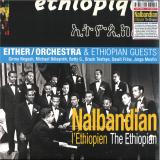
The Éthiopiques series returns! Essential archive recordings from an extremely fruitful period in Ethiopian music.
Before “Swinging Addis” took over the world, there was Moussié Nerses Nalbandian — the Armenian-born composer who shaped modern Ethiopian music. Mentor, arranger, and pioneer, he laid the foundations of Ethio-jazz.
This Éthiopiques volume revives his forgotten legacy, recorded live by Either/ Orchestra First issue ever with new exclusive photos and in depth liner 8-page insert.
“Ethiopian jazzmen are the best musicians that we have seen so far in Africa.
They really are promising handlers of jazz instruments.”
Wilbur De Paris
(1959, after a concert in Addis Ababa)
አዲስ፡ዘመን። *Addis zèmèn* **A new era.**
The time is the mid-1950s and early 1960s, just before "Swinging Addis" bloomed – or rather boomed – onto the scene. Brass instruments are still dominant, but the advent of the electric guitar, and the very first electronic organs, are just around the corner. Rock’n'Roll, R’n’B, Soul and the Twist have not yet barged their way in. Addis Ababa is steeped in the big band atmosphere of the post-war era, with Glenn Miller's *In the* *Mood* as its world-wide theme song, neck and neck with the Latin craze that was in vogue at the same period. Life has become enjoyable once again, with the return of peace after the terrible Italian Fascist invasion of Ethiopia (1935-1941). The redeployment of modern music is part and parcel of the postwar reconstruction. *Addis zèmèn* – a new era – is the watchword of the postwar period, just as it was all across war-torn Europe.
The generation who were the young parents of baby boomers** were the first to enjoy this musical renaissance, before the baby boomers themselves took over and forever super-charged the soundtrack of the final days of imperial reign. Music is Ethiopia's most popular art form, and very often serves as the best barometer for the upsurge of energy that is critical for reconstruction. Whether it be jazz in Saint-Germain-des-Prés or the *zazous* who revolutionised both jazz and French *chanson* after the *Libération*, be it Madrid's post-Franco Movida, or Dada, the Surrealists and *les années folles* that followed World War I, the periods just after mourning and hardship always give rise to brighter and more tuneful tomorrows. Addis Ababa, as the country's capital, and the epicentre of change, was no exception to this vital rule.
**Two generations of Nalbandian musicians**
Nersès Nalbandian belonged to a family of Armenian exiles, who had moved to Ethiopia in the mid-1920s. The uncle Kevork arrived along with the fabled "*Arba Lidjotch*", the** "*40 Kids*", young Armenian orphans and musicians that the Ras Tafari had recruited when he visited Jerusalem in 1924, intending to turn their brass band into the official imperial band. If Kevork Nalbandian was the one who first opened the way of modernism, pushing innovation so far as to invent musical theatre, it was his nephew Nersès who would go on to become, from the 1940s and until his death in 1977, a pivotal figure of modern Ethiopian music and of the heights it. Going all the way back to the 1950s. Nothing less. And it is Nersès who is largely to thank for the brassy colours that so greatly contributed to the international renown of Ethiopian groove. While the younger generations today venture timidly into the genealogy of their country's modern music, often losing their way amidst a distinctly xenophobic historiographical complacency, many survivors of the imperial period are still around to bear witness and pay tribute to the essential role that "Moussié Nersès" played in the rise of Abyssinia's musical modernity.
Given the year of his birth (15 March 1915), no one knows for sure if Nersès Nalbandian was born in Aintab, today Gaziantep (Turkiye/former Ottoman Empire) or on the other side of the border in Alep, Syria... What is certain is that his family, like the entire Armenian community, was amongst the victims of the genocide perpetrated by the Turks. Alep, the place of safety – today in ruins.
Before Nersès then, there was uncle Kevork (1887-1963). For a quarter of a century, he was a whirlwind of activity in music teaching and theatrical innovation. *Guèbrè Mariam le Gondaré* (የጎንደሬ ገብረ ማርያም አጥቶ ማግኘት, 1926 EC=1934) is his most famous creation. This play included "ten Ethiopian songs" — a totally innovative approach. According to his autobiographical notes, preserved by the Nalbandian family, Kevork indicates that he composed some 50 such pieces over the course of his career. This shows just how much he understood, very early on, the critical importance of song as Ethiopia's crowning artistic form. Indeed, for Ethiopian listeners, the most important thing is the lyrics, with all their multifarious mischief, far more than a strong melody, sophisticated arrangements or even an exceptional voice. (This is also why Ethiopians by and large, and beginning with the artists and producers themselves, believed for a long time — and wrongly — that their music could not possibly be exported, and could never win over audiences abroad, who did not speak the country's languages).
Last but not least, one of Kevork's major contributions remains composing Ethiopia's first national anthem – with lyrics by Yoftahé Negussié.
Nersès Nalbandian moved to Ethiopia at the end of the 1930s, at the behest of his ground-breaking uncle. Proficient in many instruments (pretty much everything but the drums), conductor, choir director, composer, arranger, adapter, creator, piano tuner, purveyor of rented pianos,... he was above all an energetic and influential teacher. From 1946 onwards, thanks to Kevork's connexion, Nersès was appointed musical director of the Addis Ababa Municipality Band. In just a few years, Nersès transformed it into the first truly modern ensemble, thanks to the quality of his teaching, his choice of repertoire, and the sophistication of his arrangements. It was this group that would go on to become the orchestra of the Haile Selassie Theatre shortly after its inauguration in 1955, which was a major celebration of the Emperor's jubilee, marking the 25th anniversary of his on-again-off-again reign.
At some point or other in his long career, Nersès Nalbandian had a hand in the creation of just about every institutional band (Municipality Band, Police Orchestra, Imperial Bodyguard Band, Army Band, Yared Music School…), but it was with the Haile Selassie Theatre – today the National Theatre – that his abilities were most on display, up until his death in 1977. To this must be added the development of choral singing in Ethiopia, hitherto unknown, and a sort of secret garden dedicated to the memory of Armenian sacred music, and brought together in two thick, unpublished volumes. Shortly before his death (November 13, 1977), he was appointed to lead the impressive Ethiopian delegation at Festac in Lagos, Nigeria (January-February 1977).
His status as a stateless foreigner regularly excluded him from the most senior positions, in spite of the respect he commanded (and commands to this day) from the musicians of his era. Naturally gifted and largely self-taught, Nerses was tirelessly curious about new musical developments, drawing inspiration from the very first imported records, and especially from listening intensely to the musical programmes broadcast over short-wave radio – BBC *First*. A prolific composer and arranger, he was constantly mindful of formalising and integrating Ethiopian parameters (specific “musical modes”, pentatonic scale, and the dominance of ternary rhythms) into his “modernisation” of the musical culture, rather than trying to over-westernise it. It even seems very probable that *Moussié* Nerses made a decisive contribution to the development of tighter music-teaching methods, in order to revitalise musical education during this period of prodigious cultural ferment. Flying in the face of all the historiographical and musicological evidence, it is taken as sacrosanct dogma that the four musical modes or chords officially recognised today, the *qǝñǝt* or *qiñit* (ቅኝት), are every bit as millennial as Ethiopia itself. It would appear however that some streamlining of these chords actually took place in around 1960. It was only from this time onward that music teaching was structured around these four fundamental musical modes and chords: *Ambassel*, *Bati*, *Tezeta* and *Antchi Hoyé*. A historical and musical “details” that is, apparently, difficult to swallow, especially if that should honour a *foreigner*. Modern Ethiopian music has Nersès to thank for many of its standards and, to this day, it is not unusual for the National Radio to broadcast thunderous oldies that bear unmistakable traces of his outrageously groovy touch.
Cerca:still going
- A1: Scratch Pad 1
- A2: Messij Received
- A3: God's Gift
- A4: Tentative
- B1: Canada 2048
- B2: Wiped Out
- B3: Body In Motion (Body Plus Mix)
- B4: Onyx (Dark Side Of The Moon)
- C1: Messij Received (Wstwgbe Mix)
- C2: Canada (Drunken Auslander Mix)
- C3: Tentative (Woffenfum Mix)
- D1: Messij (Bobbing Boat Mix)
- D2: Body In Motion (Timeless Techno Mix)
- D3: Doh-T (Am / Fm Mix)
- E1: 95 Future Echoes
- E2: Turbine
- E3: Pencil Neck
- E4: Messij 2005 (New Science Mix)
- F1: Canada (Tim Reaper Remix)
- F2: Messij (Sherelle's Messij In A Bottle Hardcore Remix)
- F3: Doh-T (Mantra Remix)
- F4: Canada (Niknak Remix)
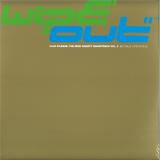
The legacy of wipE′out′′ has transcended time and cemented itself as a true transgenerational phenomenon. Launched in 1995, it didn’t just revolutionise the gaming industry, it created a bridge between the gaming ecosystem and the raver community. Its futuristic aesthetics and forward-thinking sound left a mark not only on mainstream audiences but also on the most demanding corners of the underground.
Decades later, the game’s impact is still alive. The release in 2023 of The Zero Gravity Soundtrack on Lapsus Records proved once again that wipE′out′′’s accompanying audio will go down in history as much more than just an anti-gravity racing game soundtrack.
This is why we decided to go deeper into the slipstream and build the second volume you’re now holding in your hands. Drawn from the original archives of Tim Wright, aka CoLD SToRAGE, this new collection surfaces unreleased cuts, pieces that couldn’t fit on the first edition, and a suite of self-authored ambient reworks that translate pure velocity into wide-screen atmospherics engineered for the long straights, the drone of airbrakes, the blue hour between checkpoints. It also reconnects the circuit, gathering selections and variants tied to later chapters of the saga — wipE′out′′ HD and wipE′out′′ Pure — plus alternative mixes that, until now, only existed in the Sega Saturn dimension of the franchise.
Finally, the material takes a leap into the future in the hands of four remixers especially chosen for this release: Tim Reaper, SHERELLE, Mantra, and NikNak, who collectively forge links between CoLD SToRAGE’s pioneering musical vision, the sound world of the game, and the contemporary breakbeats and drum & bass vanguard.
Expect the DNA you remember — accelerated breaks, trance-vector synths, jungle influences, sub-bass rumbling neatly beneath the craft’s hull, and at times even echoes of classic hardstyle — now revealed with new angles and air. The previously unheard material carries the same aerodynamic design sense that made these tracks feel faster than the track map itself, while the ambient versions open the field of view with melodies hovering at the lip of overdrive. Without a doubt, here you’ll find a strong sense of nostalgia. But this isn’t just nostalgia; it’s also proof that this sound world continues to evolve when you ease off the throttle.
For the faithful — crate-digging ravers, speed-run obsessives, and design nerds — this is an essential expansion pack: compiling rarities, restoring context, and reframing the emotional core of wipE′out′′ for late nights and early mornings alike. Bridging memory and momentum, club and console, rush and afterglow. Strap in.
Detailed tracklist, with annotations by Tim Wright aka CoLD SToRAGE
· Scratch Pad 1: “This track was composed using incomplete tracks that were developed around the time of the first wipE′out′′. It’s so long because it was used for a marathon-length Psygnosis promotional video.”
· Messij Received: “Messij was a firm favourite with wipE′out′′ fans, so it made sense that there’d be more where that came from — this was one of those re-workings.”
· God’s Gift: “I was always very fond of Erasure’s track Love to Hate You with the canned crowd FX sounds. God’s Gift was a tongue-in-cheek reference to how some musicians think they are just that. This was way before I even played live as CoLD SToRAGE.”
· Tentative: “I wasn’t sure about introducing some wacky beats and distorted sounds into one of the tracks, because it was kinda heading away from the other tracks, hence Tentative — but it turned out OK.”
· Canada 2048: “When wipE′out′′ 2048 was launched I decided to re-make Canada as a kind of tribute, but in a slightly new-tech, laid-back way, using Propellerhead Reason and all software synths.”
· Wiped Out: “Based on a few riffs from a MIDI file unused at the time of the original wipE′out′′ game compositions, this featured on my debut album MELT.”
· Body in Motion (Body Plus Mix): “A more trippy interpretation of Body in Motion that featured on non PlayStation versions of the game e.g. Sega Saturn.”
· Onyx (“Dark Side of the Moon”): “Onyx was my sole contribution to wipE′out′′ Pure on the Sony PSP handheld gaming console. This version was something I developed in a darker style, that eventually erupts into a crescendo.”
· Messij Received (WSTWGBE Mix): “Like I say, Messij was a hit with most wipE′out′′ fans, so when I was asked to compose more music for non-PlayStation versions, I adapted this tune into a parallel-universe version for PC and Sega Saturn. By the way, WSTWGBE refers to Who Said This Was Going To Be Easy?”
· Canada (Drunken Ausländer Mix): “In early 2018 I released a fresh album called Ch'illout′′, a re-working of many of my wipE′out′′ tracks in an ambient, Sunday-morning vibe style — it was a few years’ work, here and there.”
· Tentative (Woffenfum Mix): “Another chilled re-working of one of my wipE′out′′ tracks, the mix named with a nod to a good friend of mine, Carl Woffenden — someone who I've worked with for many years in the games industry.”
· Messij (Bobbing Boat Mix): “A nice cheesy computer blip-blop start belies its deep and upbeat chilled-out melodic finale.”
· Body in Motion (Timeless Techno Mix): “Another classic track given the chilled-out vibe mix, as featured originally on my Ch'illout′′ album. This one’s a really trippy, deep-space take on the original.”
· DOH-T (AM / FM Mix): “The idea with this chilled-out mix was to imagine all the melodic parts of this varied track being broadcast on terrestrial radio, so each theme drifts in and out through the radio static.”
· ’95 Future Echoes: “Originally developed as a companion album for wipE′out′′ HD, this track actually has its roots in a tiny loop of a song that never progressed to anything special back in the mid-’90s when I was composing for the original game.”
· Turbine: “Also from my wipE′out′′ HD album, it leans heavily into the upbeat, uplifting tunes from the original game, but also steals a bit of vibe and energy from The Prodigy, with those distorted flute sounds.”
· Pencil Neck: “This excerpt from my wipE′out′′ HD album features lots of sounds centre-stage and forward from Propellerhead Reason’s Subtractor virtual synth. I learned to love this more than my JD-800!”
· Messij 2005 (New Science Mix): “Yet another take on the track that still raises a smile, this time through a mix of samples from the original and Propellerhead Reason — the ‘new science’ when compared to an Amiga 1200 running Bars and Pipes.”
- A1: Ulrika Spacek - 'Interesting Corners
- A2: Empty Country - 'D3Sp4Ir
- A3: The Reds, Pinks & Purples - 'New Market Space (Down The Stairs Ver )
- A4: Cindy - 'The Thousand First
- A5: April Magazine - 'U Bop
- B1: Index For Working Musik - 'Going To Heaven On The End Of A String
- B2: Midding - 'Do As You Would
- B3: Luft - 'My Third Eye
- B4: Hospital - '25 Jade Place
- B5: William Doyle - 'The Sun Ain't Doing It For Me Lately
- B6: Daily Toll - 'Begin Again
LTD BLUE VINYL[26,68 €]
After so long it becomes harder to say new things about older things you now just do. Some things you've become. Some things you simply (never simply) are. The thing becomes a slippery notion. The self slides along with it. After this long, the story is whatever are the songs. A Self-portrait at two decades. Here are 11 new ones, from the current constellation, and a future still to come. The cement is still wet on that one. From the forest near where I now live you can hear a chorus of different birds in voice at once, competing but each defined, in defence of a territory or to attract a mate. There's an app that tells you so. I wonder, too, what that app doesn't reveal, if their nature need not share those same purposes. This is simply (never simply) how it exists. If we can't speak to the mysteries of these strategies, they at least persist, regardless of who picks up the frequency. Singing to itself, and there will always be these kinds of songs. 1. Ulrika Spacek - 'Interesting Corners' 2. Empty Country - 'D3SP4IR' 3. The Reds, Pinks & Purples - 'New Market Space (Down the Stairs Ver.) 4. Cindy - 'The Thousand First' 5. April Magazine - 'U Bop' 6. Index For Working Musik - 'Going to Heaven On the End of A String' 7. Midding - 'Do As You Would' 8. Luft - 'My Third Eye' 9. Hospital - '25 Jade Place' 10. William Doyle - 'The Sun Ain't Doing It For Me Lately' 11. Daily Toll - 'Begin Again'
- A1: Speedfreak
- A2: Michael Myers (Still In Shape)
- A3: My Baby's Got A Flame Thrower
- A4: I Don't Want You No More
- A5: You're A Liar
- A6: I'm Going Home
- A7: You Don't Know Me Very Well
- A8: If You Don't Wanna Fuck Me Baby
- B1: These Boots Are Made For Walking
- B2: Die World (End Reprise)
- B3: Wild Thing
- B4: No One Likes Us
- B5: Rock-A - Hula Baby
- B6: Night Of The Werewolf
- B7: Slow Down You Grave Robbing Bastard
Part 1, Black Vinyl[28,15 €]
Part 1 Limited Purple Vinyl[29,37 €]
Part II Transparent Green Vinyl[29,37 €]
A bit of backstory behind this release, I first met Hilton (Jack Horner) at an event in 2012 that took place in a venue called Crucifix Lane (also known as Jack's, now defunct due to expansion of London Bridge station). He's good friends with Krome & Time who were performing that night and I remember chatting with him about jungle (I was still a very eager young lad that was in his first year of raving and very keen to talk about jungle/hardcore/d&b to anyone that would be willing to endure it!) and he mentioned that he used to make jungle in the 90s. I asked who he was and when he told me he was Jack Horner, I went mental because I was a big fan of the 2nd release on Spectrum Records (The Hoover & I Got This Feeling) and to actually meet the person behind those tunes was a really special situation for me to be in.
Unfortunately, I was too shy to get any contact details for him and I never saw him again or knew anyone that had a way of getting in touch with him. That was until very recently, when he had started attending Distant Planet events in London & I got the chance to meet him again, only to be shocked by him telling me that he had been following me & my music and was a fan of me & my label! This time, I made sure that I was able to get contact details for him, I was not going to make the same mistake as last time!
Last December, he messaged me asking if I would be up for doing a remix of The Hoover & I was quite unsure about doing it because of how much I really enjoy the original and feel like it does pretty much everything it needs to do with the sounds used. But, I thought it would be worth a try so I gave it a go and Hilton really liked the outcome (which was a huge relief ????), even though I was a bit too scared to change too much of it haha.
He then asked if I would be interested in releasing it on Future Retro London, which I'd never considered doing because I thought he would have had his own plans for it but I was willing to try & see if we could make a release out of this. I messaged Dwarde & Kid Lib to ask if they'd be up for doing remixes of the same tune (at the time, we only had access to the samples from The Hoover) and they both were and they did great work taking the original track in different directions, each in their own way.
Around the time of making The Hoover, Hilton made another tune with similar samples called After The Pain, which was never released, but he still had the tune. The problem is that he only had it in the form of a cassette recording, which wasn't very good quality and probably would not be easily cleaned up for release. So, I decided to remake the tune from scratch, using the samples I had from The Hoover, as well as sourcing & recreating other sounds used. I was able to remake the whole tune arrangement & then Kid Lib mixed it down to make it sound more sonically similar to how it would have sounded when it was originally made back in 94/95.
Anyway, story time over, big thanks to Hilton for his co-operation & assistance on making this release happen, to Dwarde & Kid Lib for their remix work & a special shout going out to Hughesee for going through Hilton's collection of floppy disks to find & record the samples for The Hoover.
The session that Clarence Daniel featured Obie (Young) Jessie on as the vocalist, consisted of three marvelous jazz/soul tracks. Two sides sold very poorly on release on the Modern subsidiary Affiliated in 1966. However, early in the next millennium, ‘Hard Working Girl’ was picked up and played by retro DJs to great acclaim. The demand for the few, scarce existing copies, rocketed the price, thereby leading to Kent re-releasing it.
The third recorded track at the session, was equally excellent, so we have taken the opportunity to release ‘Got A Good Thing Going On’ on vinyl as a Kent Select 45 for its many fans. With ‘Hard Working Girl’ now deleted and still needed by more recent converts, it makes for a great new release.
- A1: Init
- A2: Forked Reality
- A3: As Alive As You Need Me To Be
- A4: Echoes
- A5: This Changes Everything
- B1: In The Image Of
- B2: I Know You Can Feel It
- B3: Permanence
- B4: Infiltrator
- B5: 100% Expendable
- B6: Still Remains
- C1: Who Wants To Live Forever?
- C2: Building Better Worlds
- C3: Target Identified
- C4: Daemonize
- C5: Empathetic Response
- D1: What Have You Done?
- D2: A Question Of Trust
- D3: Ghost In The Machine
- D4: No Going Back
- D5: Nemesis
- D6: New Directive
- D7: Out In The World
- D8: Shadow Over Me
Nine Inch Nails returns with over 70 minutes of new music for the motion picture TRON: Ares, the first soundtrack / score work from Trent Reznor and Atticus Ross that will live under the Nine Inch Nails moniker; consisting of all original music, complete at 24 tracks. Reznor and Ross bring their Grammy and Oscar-winning sonic vision to the Grid, crafting a soundtrack that hums with menace, melancholy, and momentum. More than an album, its architecture in sound: pulsating synths, distorted textures, and haunting melodies that rewire the TRON universe from the inside out. It is the collision of analog soul and digital dread—a score that doesn't just accompany the film, it possesses it.
Ten City is universally known as one of the foundational House Music artists who helped to preach the gospel of House from Chicago out to the world during the genre’s formative years in the late 80’s. Remarkably Ten City is still recording and performing, with the voice and face of Ten City Byron Stingily delivering classic songs like “That’s The Way Love Is,” “Devotion” and “Right Back To You” to adoring fans from multiple generations around the world.
Throughout his career, Byron has always had a keen sense of where House Music is going both on a musical and cultural level, and the role Ten City could play to stay at the forefront. He saw that now in the year 2025 the time was right to collaborate with a new generation producer who could “walk the walk” in terms of knowing how to utilize to the fullest the multiple emerging production techniques making House Music dancefloors jump. At the same time, whomever he worked with to create a new Ten City album had to be so well versed and respectful of the group’s legacy that they would not stray too far from what the original songs and albums were all about.
He found his man in another Chicago native DJ Emmaculate, who is well known among house music fans as one of the most talented writer / producer / DJs in the genre.
For the new album on Nervous Records, appropriately entitled “The Next Generation,” Byron and Emmaculate have expanded the Ten City sound both musically and in terms of vocal contributors. While “Voice Of House Music” Byron Stingily still delivers slam-dunk hits with his inimitable style, the album also includes supreme vocal contributions from Mon’Aerie, Uneq’ka, DRAMA D. Lylez, and a rap delivery from OVEOUS.
This Double Pack vinyl consisting of 8 songs with a custom jacket is a priceless and must-have addition to anyone and everyone who is a fan of the house music genre.
- A1: Powder Pain And Misery
- A2: My Slaughtering
- A3: The Phantom Rider
- A4: Endless Sleep
- A5: We Wanna Wreck Here
- A6: The Cutter Uts While The Widow Weeps
- A7: The Queen Of The Wild Wild Wind
- B1: Shadow Time
- B2: Lie Down
- B3: You Want It
- B4: Black Black Night
- B5: Paradise Lost
Black Vinyl[24,79 €]
Blue Curacao Vinyl[24,33 €]
Red Vinyl[23,95 €]
Black Vinyl[26,85 €]
Pumpkin Orange Vinyl[26,85 €]
The original creators of Psychobilly Music, The Meteors began as a reaction against soft neo-rockabilly music of the late 70’s rock revival era. Since then the loud, sneering lovers of horror, perversion and death have released a few dozen records and are still going strong, 40 years into their career of evil. Svart Records are hellishly excited to bring you an official reissue of The Meteors’ 2007 album Hymns For The Hellbound. Long out of print on physical formats, this authorised reissue comes with a secret bonus track, all pressed on pitch black or blood-dripping red vinyl and wrapped in a gatefold jacket.
- A1: Wolfjob
- A2: King Vlad
- A3: Fuck Like A Beast (Fight Like An Animal)
- A4: Bloodbeat
- A5: Funhouse
- A6: Papa Jude
- A7: I Hate People
- B1: Hellfire
- B2: I Could Kill You (For What You´ve Done To Me)
- B3: The Forsaken
- B4: The Last Bus To Sanity
- B5: U Ain´t Right
- B6: Outro (No One Likes Us)
Green Vinyl[24,79 €]
The original creators of Psychobilly Music, The Meteors began as a reaction against soft neo-rockabilly music of the late 70’s rock revival era. Since then the loud, sneering lovers of horror, perversion and death have released a few dozen records and are still going strong, 40 years into their career of evil. Svart Records are overwhelmed with psychotic joy to present an official reissue of The Meteors’ 2003 album Psychobilly. Long out of print on physical formats, this authorised reissue comes with a secret bonus track, all pressed on pitch black or poisonous green vinyl and wrapped in a gatefold jacket.
- A1: Kajagoogoo - Kajagoogoo (Instrumental)
- A2: Simple Minds - Don't You (Forget About Me)
- A3: Orchestral Manoeuvres In The Dark - If You Leave
- A4: Oingo Boingo - Weird Science
- A5: Furniture - Brilliant Mind
- A6: Dave Wakeling - She’s Having A Baby
- B1: The Flowerpot Men - Beat City
- B2: The Psychedelic Furs - Pretty In Pink
- B3: Flesh For Lulu - I Go Crazy
- B4: Dr. Calculus - Full Of Love
- B5: Lick The Tins - Can't Help Falling In Love
- B6: Steve Earle & The Dukes - Six Days On The Road (A
- C1: Kirsty Maccoll - You Just Haven't Earned It Yet Bab
- C2: Suzanne Vega & Joe Jackson - Left Of Center
- C3: Pete Shelley - Do Anything (Soundtrack Version)
- C4: Carmel - It's All In The Game
- C5: The Dream Academy - Power To Believe (Instrume
- C6: Kate Bush - This Woman's Work
- D1: The Beat - March Of The Swivelheads (Rotating He
- D2: Nick Heyward - When It Started To Begin
- D3: Orchestral Manoeuvres In The Dark - Tesla Girls
- D4: Big Audio Dynamite - Bad
- D5: Killing Joke - Eighties
- D6: The Specials - Little Bitch
- E1: Gene Loves Jezebel - Desire (Come And Get It) (Us
- E2: Flesh For Lulu - Slide
- E3: Love And Rockets - Haunted When The Minutes Dr
- E4: Sigue Sigue Sputnik - Love Missile F1-11 (Ultraviole
- E5: Lords Of The New Church - Method To My Madnes
- F1: The Jesus And Mary Chain - The Hardest Walk (Sing
- F2: Echo & The Bunnymen - Bring On The Dancing Hor
- F3: General Public - Tenderness
- F4: The Blue Room - I'm Afraid
- F5: Belouis Some - Round, Round
- F6: Thompson Twins - If You Were Here
- F7: The Dream Academy - Please, Please, Please Let M
- G1: Yello - Oh Yeah
- G2: Book Of Love - Modigliani (Lost In Your Eyes)
- G3: Otis Redding - Try A Little Tenderness
- G4: Patti Smith - Gloria In Excelsis Deo
- G5: Westworld - Ba-Na-Na-Bam-Boo
- G6: Divinyls - Ring Me Up
- G7: Topper Headon - Drummin' Man
2LP Edition[87,35 €]
Demon Music group in conjunction with the Hughes family are proud to present the first official compilation of music
from the movies of legendary filmmaker John Hughes, covering the classic eighties period 1983 – 1989.
For anyone growing up in the 1980s, the films of John Hughes are some of the most iconic of the decade and have
created a lasting cultural impact still felt and referenced across TV, film and music. As well as the characters and
stories created in these iconic movies, what made John Hughes’ movies different from the rest was the symbiotic
relationship between scene and music. Whether Cameron Frye staring at the painting in Ferris Bueller’s Day Off set to
The Dream Academy’s “Please, Please, Please Let Me Get What I Want (Instrumental)”, Duckie and Andie from Pretty
In Pink at prom set to Orchestral Manoeuvres In The Dark’s “If You Leave”, or even Neal and Del’s classic “Those aren’t
pillows” scene from Planes, Trains and Automobiles set to Emmylou Harris’ “Back In Baby’s Arms”.
“Music was a huge part of filmmaking for him, it was a thing he seemed to like the most.” Matthew Broderick
Curated by John Hughes’ music supervisor Tarquin Gotch, this 6LP vinyl boxset includes 73 tracks from the movies
National Lampoon’s Vacation, Sixteen Candles, The Breakfast Club, Weird Science, Pretty In Pink, Ferris Bueller’s Day
Off, Some Kind Of Wonderful, Planes, Trains And Automobiles, She’s Having A Baby, The Great Outdoors and Uncle
Buck.
“Back when we were working on these movie soundtracks, the best way to send music around the world was the
cassette, by Fedex. We sent John cassettes of newly released music, of demos, of just finished mixes (and in return he
would send VHS videos of the scenes that needed music).” Tarquin Gotch
The films of John Hughes spawned many classic tracks, some licensed for the films, some commission specifically, and
many going on to become huge international hits from acts such as Simple Minds, Kate Bush, Furniture, Yello, and
The Psychedelic Furs.
“It serves as a reminder not just to the musicians he championed in the 1980s, but to how intensely his search for
music expanded beyond this era. Until his final days, he was still collecting outrageous amounts of music from around
the world, galaxies removed from the New Romantic and new wave sounds that, to many, still define him.” James
Hughes
Also includes an extensive 24-page booklet including memories from Matthew Broderick, James Hughes, Tarquin
Gotch, Ron Payne, plus track-by-track sleeve notes.
“John said he only made movies so he could choose what music to put in them, so as his success at the Box Office
grew, and thus his power with the studios, the number of tracks in his films, by up and coming UK bands, steadily
grew.” Tarquin Gotch
Billy Idol - "Catch My Fall" (From The 1987 Movie 'Some Kind Of Wonderful')
The Association - "Cherish" (From The 1986 Movie 'Pretty In Pink')
Penguin Cafe Orchestra - "Music For A Found Harmonium" (From The 1988 Movie 'She's Having A Baby')
Zapp - "Radio People" (From The 1986 Movie 'Ferris Bueller's Day Off')
Blue Room - "Cry Like This" (From The 1987 Movie 'Some Kind Of Wonderful')
Ray Charles - "Mess Around" (From The 1987 Movie 'Planes, Trains & Automobiles')
Joe Turner - "Lipstick, Powder & Paint" (From The 1989 Movie 'Uncle Buck')
Darlene Love - " (Today I Met) The Boy I'm Gonna Marry" (From The 1984 Movie 'Sixteen Candles')
Marvin Gaye - "How Sweet It Is (To Be Loved By You)" (From The 1988 Movie 'She's Having A Baby')
Perry Como/Mitchell Ayres & His Orchestra/The Ray Charles Singers - "Juke Box Baby" (From The 1989 Movie 'Uncle Buck')
The Chordettes - "Mr Sandman" (From The 1989 Movie 'Uncle Buck')
Ray Anthony & His Orchestra - "The Peter Gunn Theme" (From The 1984 Movie 'Sixteen Candles')
Lindsey Buckingham - "Holiday Road" (From The 1983 Movie 'National Lampoon's Vacation')
Emmylou Harris - "Back In Baby's Arms" (From The 1987 Movie 'Planes, Trains & Automobiles')
Hugh Harris - "Rhythm Of Life" (From The 1989 Movie 'Uncle Buck')
Spandau Ballet - "True" (From The 1984 Movie 'Sixteen Candles')
Propaganda - "Abuse" (From The 1987 Movie 'Some Kind Of Wonderful')
The Dream Academy - "The Edge Of Forever" (From The 1986 Movie 'Ferris Bueller's Day Off')
Yello - "Lost Again" (From The 1987 Movie 'Planes, Trains & Automobiles')
Bryan Ferry - "Crazy Love" (From The 1988 Movie 'She's Having A Baby')
The Rave-Ups - "Positively Lost Me" (From The 1986 Movie 'Pretty In Pink')
Los Lobos - "Don't Worry Baby" (From The 1985 Movie 'Weird Science')
Steve Earle - "Continental Trailways Blues" (From The 1987 Movie 'Planes, Trains & Automobiles')
The Revillos - "Rev Up" (From The 1984 Movie 'Sixteen Candles')
Boston - "More Than A Feeling" (From The 1988 Movie 'She's Having A Baby')
Balaam & The Angel - "I'll Show You Something Special" (From The 1987 Movie 'Planes, Trains & Automobiles')
The Rave-Ups - "Rave Up/Shut Up" (From The 1986 Movie 'Pretty In Pink')
Pop Will Eat Itself - "Beaver Patrol" (From The 1988 Movie 'The Great Outdoors')
The Vapors - "Turning Japanese" (From The 1984 Movie 'Sixteen Candles')
Silicon Teens - "Red River Rock" (From The 1987 Movie 'Planes, Trains & Automobiles')
out
The landscapes of Orlan 19 resembled the dream of a mad cartographer: cliffs were floating above the surface, horizons were bending and vanishing into infinity, and energy vortices were flaring up beneath their feet in psychedelic patterns. The familiar laws of physics didn’t apply here — gravity shifted chaotically, and time flew with unpredictable intensity. As Spacelunch, absorbed in thought, stroked the ground which distorted like a mirage under his touch, Cat’s grumbling echoed simultaneously from the past and future:
— Doc, don’t you think we’re just walking in circles?
— No wonder. That’s how inverse modelling works. Every action we take reshapes the surrounding space.
— Can you explain it in simpler terms? There’s only one genius here.
— Ever heard of the Philadelphia Experiment?
— Of course! You know how much I love sushi rolls!
— Well, I set myself up for this predicament… Back in my university days, we experimented with magnetic fields trying to program them by thought. You get where I’m going, don’t you? The planet is reacting to our intentions. So, focus on visualizing the portal.
The confusion on Cat’s face gave way to a mask of detachment. Clusters of matter began to tremble pulling the threads of reality to their breaking point before finally forming a vortex. Having devoured as much as it could, the vortex snapped shut with a loud pop and dissolved in a blinding flash.
As the scene began to take shape, silhouettes emerged under the soft glow of a desk lamp, evoking an overwhelming sense of nostalgia. A worn desk and a small bed stood by the wall adorned with faded photographs, while the floor let out a gentle creak underfoot. The clearer the interior came to be, the more paralyzing the realization, and the more elusive the explanation for what had happened became.
— Holy…! Cat, are we looking at the same thing?
— Yeah, but… This can’t be real.
Spacelunch slowly approached the window and froze still. A single thought raced through his mind: “The only force strong enough to pull me this far… was love.”
Originally released in 1978 on Americom Records. Officially reissued for the first time with love by Celestial Echo Records.
Some records just have that magic. A vibe that pulls you in from the first note and doesn’t let go. Phylliss Bailey’s 1978 cult classic Phylliss is one of those records—a hidden gem of modern soul and disco that’s been doing the rounds for decades in underground scenes, on dancefloors, and among collectors who know. It’s been whispered about in the right circles, bootlegged and then bootlegged again—but never given a proper reissue… Until now.
Celestial Echo Records proudly presents the first official reissue of Phylliss, a record that’s as essential today as it was back then. Originally released on the independent Americom label, the LP flew under the radar in its day but has since become a secret weapon for DJs with a taste for the modern soul & disco sound.
Phylliss Bailey’s voice is pure class—gliding over lush arrangements, tight rhythm sections, and dreamy strings with ease. Whether she’s riding the groove on dancefloor bombs like 'Focus' and 'Release Me' or slowing it down on the smouldering 'Feeling Of Love,' Bailey brings emotional weight and undeniable swagger to every track.
Fully remastered and officially licensed, it brings Phylliss into the light where it belongs. With a reimagined sleeve and labels (to distinguish from some shady copies going around!). This record is looking and sounding better than ever.
Celestial Echo Records is a label devoted to the soulful and the timeless. Based in London and run by miche & Stu Clark, the imprint has been steadily carving out a reputation among collectors and DJs for high-quality, lovingly curated reissues of rare modern soul, boogie, and disco. With each release, they shine a light on overlooked gems that still resonate deeply in today’s clubs and dancefloors. Phylliss is the next jewel in their growing catalogue of essential rediscoveries.
- A1: Fsol - There Is Nothing
- A2: Turbulent Space - Feeling Something Or Lapsing
- A3: Lies Not War - Horse And Me
- A4: The Amorphous Androgynous - We Persuade Ourselves We Are Immortal (Nightshift)
- B1: Snake Oil - Token
- B2: New York Mules - Loose Tongue
- B3: Yage - Chop Strat 4
- B4: The Still - Going In
- B5: 333 - Smoke Filled
Trip Maps 3 is a compilation of psychedelic / electronic oddities written by The Future Sound of London under various guises.
The Trip maps series (now at Vol.3 ) is created in conjunction with charity label Touched Music.
Live drums and bass mash with bizarre electronics , feels like the past but definitely the Future …….
- A1: I'm Dirty
- A2: G Strings
- B1: Side Winder
- B2: Phoenix Theme (G's Out Dub)
- C1: Daily Prayer
- C2: Magic Potion
- D1: My Fathers Farda (Mr G's Soundboyz Dub)
- D2: Gladesmen
- E1: Danger Glyph Theme
- E2: Eye Poke
- F1: Day After B
- F2: Emotionz (Unreleased)
- G1: Hear Me Out
- G2: Pepsi
- H1: Jet Black
- H2: Shelter (Unreleased Version)
- I1: Lights
- I2: Live And Let Me Live
- J1: Song For My Cantor
- J2: Potion (Unreleased)
- K1: Moments
- K2: Mmmm
- L1: Going Home
2026 Repress
Mr. G, aka Colin McBean, presents a remastered, 23-track compilation entitled 'OG Retrospective'
'The day I found my original studio masters and got my rights back was the starting point, and then I realised it's 25 years on and it's time to recode, remaster and reevaluate because I've never looked back properly. I've always been like a bat out of hell, never quite thinking I'm good enough or great at what I do, but it's important to celebrate, because there's nota lot of people still here, still doing it after this length of time'.
With new masters provided by Simon at the renowned London mastering house The Exchange London, a direct link to the original mastering done by the late-Nilz (Nilesh Patel) from The Exchange, Mr. G's 'OG Retrospective' marks a reflective period in McBean's life.
'All I've ever done is write and move forward, but more and more, I get the new generation sending me videos of my old tracks and sometimes I don't even recognise them, so finally I thought, 'ok, you're comfortable in your own skin, let's really see how you sounded at the beginning, how you've changed, how have the techniques changed'?
It was quite raw going back over these; some of the memories are riddled with pain and angst - friends dying, where I was in my life at the time, having a heart attack and so on. Having a sound, too, can be a cross to bear. You're only ever competing with yourself, your only game is being better than your last game, so if you dwell on the past too much you can't move forward. Getting to the point where I can look back and feel happy, feels good.
Invariably, what will come from this is 'more', because, with my own label I have endless possibilities and will continue telling my story.'
- A1: Eu Sou Terrivel
- A2: Lingua Do P
- A3: Love, Try And Die
- A4: Mini-Misterio
- A5: Acaua
- B1: Hotel Das Estrelas
- B2: Deixa Sangrar
- B3: The Archaic Lonely Star Blues
- B4: London, London
- B5: Falsa Baiana
Pure class as always from Gal Costa! The record is her first after the immediate Tropicalia years, and it's a stunning blend of styles that seems to draw heavily from changes going on in the American rock scene at the time. The core of the music is still steeped in Brazilian elements – but there's a lot of influences coming into play on the album, like bluesy rock phrasing, showy nostalgia-heavy arrangements, psychedelic production elements, and some of the baroque orchestrations that would show up on Gal's later albums in the 70s.
From Harmony: I've wanted to do a collab EP with Kenny (Kid Lib) for sometime, as he's a great producer and friend. Kenny and I wrote "Dressback" together a few years ago, but never finished anymore colabs. Recently, I found it while going through my hard drive, and we both decided it still needed to be released. So each of us wrote an additional track to finish off the EP, giving you a bit of our separate styles alongside our collab.
As often, it started with discovering a CD, leading to the depths of the Internet Archive. I still remember the excitement of going through B.L. Underwood's recordings for the first time and realising how unique his approach to electronic music was, every track had something powerful yet moving within it, as he could play around with genres and tempos yet carrying a very distinctive touch. After a short detective work to get in touch with the artist, and quite some time curating the content of this compilation (the hardest part by far), System Of Objects is proudly presenting the remastered version of 6 of his tracks that showcast B.L. Underwood talent and uniqueness.
Veteran Japanese electronic music producer, AKIO NAGASE, a leading player in the Kansai underground music scene since the late 1990s teams up with Yukino Inamine, a gifted and young female singer from Okinawa who magically mixes traditional Ryukyu (Okinawa) folk songs with her sanshin (Okinawan Shamisen) playing into the modern age, to create this wonderful collaborative album, Yugafu ai KAJI. This album is set to be released on GLOCAL RECORDS, a record store/ record label run by Genta Minowa, an ex-staff at the record store, Disc Shop Zero in Shimokitazawa, Tokyo and who still continues to introduce a great selection of dubby, club music from his HQ in Harajuku.
AKIO NAGASE regularly organised parties at his own venue, as well as ran a record store of the same name while actively being part of the Kansai scene at legendary clubs such as Tsuru no Ma, Sound Channel, etc., the best of what was offered in the Kansai underground dance scene in the 2000s.
As an artist, he released his own productions out of labels such as Sound Channel and RUDIMENTS run by Minowa. His album, Make Dub was released in 2003 out of the label, Sound Channel featured an innovative, techno meets dancehall track, Dance Hall King which connected techno, acid house with reggae and dub. This album is an undiscovered gem whose sound still emulates freshness and originality today (my wish is for it to be reissued on vinyl!) After a brief hiatus of releasing music, he released the EP, Delusion out of Chillmountain Records, a label run by his friend, Ground in 2018 and at his own leisurely pace, he has been slowly but surely releasing material that oozes originality, expressed through a robust acid sound and a variety of elements such as afro and Ryukyu folk music that is then incorporated into the medium of dub. Recently, he has also started to gain international attention by releasing original material and remixes out of labels such as the UK label, Emotional Especial, etc.
For this album, NAGASE teams up with Yukino Inamine who brings her own distinctive singing and sanshin playing magic into this collaboration and they fuse electronic music sounds with Ryukyu folk songs to create this wonderfully imaginative album that has no precedence or equal. Apart from the song, Ishikawa Koiuta, all other songs are covers of Ryukyu folk standards that were handpicked by NAGASE from the repertoire of songs that Inamine regularly performs live. They met up when NAGASE was commissioned to remix one of her original compositions, Miyagi Kaigan that was released in 2023 and that evolved into a collaboration with a concept that mixed Inamine singing Ryukyu folk standards with a backing tracks produced by NAGASE. Whenever she went to the the Kansai area, she would work on the basic track material created by NAGASE at the dub master of Osaka, Soulfire’s studio, HAV who would then additionally edit her takes to create the finishing tracks.
This album, Yugafu ai KAJI opens with Shirahamabushi, a track that slowly builds with an interesting mix of slow acid techno and sanshin and then moves onto the easy-going electro dub of Tinsagu nu hana (it is actually a cover of the track of the same title that first appeared in the label sampler, Comuni ó n Especial that was released on Emotional Especial. NAGASE initially wanted to feature Inamine on vocals for this track but due to scheduling issues, it did not happen but with good fortune, the new version of this track is now included in this album). A side closes with the optimistic Balearic sounds of Tsuki nu Kaisha that converges immaculately with slow-mo steppers. It is also worth noting that the person who introduced NAGASE to Inamine was the Okinawa dub master, HARIKUYAMAKU. They met at a concert held by both him & Yukino Inamine hosted by BUN BUN THE MC at the venue, RAGGA CHANNEL. From this encounter, this album came into fruition and they also asked HARIKUYAMAKU to produce an earthy, traditional rootsy, dub version of Tsuki nu Kaisha that is included as the 3rd track on the B Side.
Ashimizubushi, the track that magically blends old school Chicago house ala TRAX with Ryukyu folk music starts off the B side and it carries on to an uplifting track with a Skaouse (ska + house) feel, Hounen Ondo. Inserted after HARIKUYAMAKU’s dub of Tsuki nu Kaisha, this album closes out with the song, ‘Ishikawa Koi Uta’, the only song written by Inamine who said that she wrote it after falling in love with chill-out music. It is an ambient dub track with a collage like flavour, reminiscent of early The Orb (remixed by Mad Professor) and the latter half of the track finishes off with a message presented by Masao Itokazu (her uncle) who received tutelage from the prior owner of her sanshin that Inamine plays, Moritomo Inamine (her grandfather).
Incidentally, the album title, YUGAFU ai Kaji is derived from an auspicious word from Okinawa, Yugafu which means fruitful year, happiness, prosperity and ai (indigo) is a word that Yukino found inspiration few years ago (she wears a Okinawan indigo clothing called kinonuno in the front cover of this album).
The unique indigo colouring produced by nature overlaps with the unique charm of the human personality, and she wanted to present that current along with the music so the name was integrated to ‘indigo wind’, and the two were connected to form the album title, ‘YUGAFU ai Kaji’.
The photo of the front cover was taken by a young, Uchinaanunishie—- (meaning a boy from Okinawa) 17 year old photographer named Ratio and the designer of this album is Anmonaito who is a childhood friend of Inamine who also did the artwork for her album, Miyagi Kaigan. And the mastering and cutting of this album was done by Rei Taguchi.
The cosmology existing in Yukino Inamine’s singing is fully amplified by AKIO NAGASE’s spacey, abundant with many ideas, dance machine beat~ambient music and all of these elements are organically linked by the adhesive effect of dub.
- A1: Kajagoogoo - Kajagoogoo (Instrumental)
- A2: Simple Minds - Don't You (Forget About Me)
- A3: Orchestral Manoeuvres In The Dark - If You Leave
- A4: Oingo Boingo - Weird Science
- A5: Furniture - Brilliant Mind
- A6: Dave Wakeling - She’s Having A Baby
- B1: The Flowerpot Men - Beat City
- B2: The Psychedelic Furs - Pretty In Pink
- B3: Flesh For Lulu - I Go Crazy
- B4: Dr. Calculus - Full Of Love
- B5: Lick The Tins - Can't Help Falling In Love
- B6: Steve Earle & The Dukes - Six Days On The Road (A
- C1: Kirsty Maccoll - You Just Haven't Earned It Yet Bab
- C2: Suzanne Vega & Joe Jackson - Left Of Center
- C3: Pete Shelley - Do Anything (Soundtrack Version)
- C4: Carmel - It's All In The Game
- C5: The Dream Academy - Power To Believe (Instrume
- C6: Kate Bush - This Woman's Work
- D1: The Beat - March Of The Swivelheads (Rotating He
- D2: Nick Heyward - When It Started To Begin
- D3: Orchestral Manoeuvres In The Dark - Tesla Girls
- D4: Big Audio Dynamite - Bad
- D5: Killing Joke - Eighties
- D6: The Specials - Little Bitch
- F2: Echo & The Bunnymen - Bring On The Dancing Hor
- F3: General Public - Tenderness
- F4: The Blue Room - I'm Afraid
- F5: Belouis Some - Round, Round
- F6: Thompson Twins - If You Were Here
- F7: The Dream Academy - Please, Please, Please Let M
- G1: Yello - Oh Yeah
- G2: Book Of Love - Modigliani (Lost In Your Eyes)
- G3: Otis Redding - Try A Little Tenderness
- G4: Patti Smith - Gloria In Excelsis Deo
- G5: Westworld - Ba-Na-Na-Bam-Boo
- G6: Divinyls - Ring Me Up
- G7: Topper Headon - Drummin' Man
- E1: Gene Loves Jezebel - Desire (Come And Get It) (Us
- E2: Flesh For Lulu - Slide
- E3: Love And Rockets - Haunted When The Minutes Dr
- E4: Sigue Sigue Sputnik - Love Missile F1-11 (Ultraviole
- E5: Lords Of The New Church - Method To My Madnes
- F1: The Jesus And Mary Chain - The Hardest Walk (Sing
6LP Edition[79,79 €]
Demon Music group in conjunction with the Hughes family are proud to present the first official compilation of music
from the movies of legendary filmmaker John Hughes, covering the classic eighties period 1983 – 1989.
For anyone growing up in the 1980s, the films of John Hughes are some of the most iconic of the decade and have
created a lasting cultural impact still felt and referenced across TV, film and music. As well as the characters and
stories created in these iconic movies, what made John Hughes’ movies different from the rest was the symbiotic
relationship between scene and music. Whether Cameron Frye staring at the painting in Ferris Bueller’s Day Off set to
The Dream Academy’s “Please, Please, Please Let Me Get What I Want (Instrumental)”, Duckie and Andie from Pretty
In Pink at prom set to Orchestral Manoeuvres In The Dark’s “If You Leave”, or even Neal and Del’s classic “Those aren’t
pillows” scene from Planes, Trains and Automobiles set to Emmylou Harris’ “Back In Baby’s Arms”.
“Music was a huge part of filmmaking for him, it was a thing he seemed to like the most.” Matthew Broderick
Curated by John Hughes’ music supervisor Tarquin Gotch, this 6LP vinyl boxset includes 73 tracks from the movies
National Lampoon’s Vacation, Sixteen Candles, The Breakfast Club, Weird Science, Pretty In Pink, Ferris Bueller’s Day
Off, Some Kind Of Wonderful, Planes, Trains And Automobiles, She’s Having A Baby, The Great Outdoors and Uncle
Buck.
“Back when we were working on these movie soundtracks, the best way to send music around the world was the
cassette, by Fedex. We sent John cassettes of newly released music, of demos, of just finished mixes (and in return he
would send VHS videos of the scenes that needed music).” Tarquin Gotch
The films of John Hughes spawned many classic tracks, some licensed for the films, some commission specifically, and
many going on to become huge international hits from acts such as Simple Minds, Kate Bush, Furniture, Yello, and
The Psychedelic Furs.
“It serves as a reminder not just to the musicians he championed in the 1980s, but to how intensely his search for
music expanded beyond this era. Until his final days, he was still collecting outrageous amounts of music from around
the world, galaxies removed from the New Romantic and new wave sounds that, to many, still define him.” James
Hughes
Also includes an extensive 24-page booklet including memories from Matthew Broderick, James Hughes, Tarquin
Gotch, Ron Payne, plus track-by-track sleeve notes.
“John said he only made movies so he could choose what music to put in them, so as his success at the Box Office
grew, and thus his power with the studios, the number of tracks in his films, by up and coming UK bands, steadily
grew.” Tarquin Gotch