Not one to be pigeonholed, highly respected DJ and producer WILL SAUL has always run the gamut of electronic dance music: from deep house to techno and UK bass, his sets and tracks like to rock the boat of any given genre, taking in contemporary impulses as well as classic inspirations. As label honcho for iconic imprints like Simple or Aus Music, he further honed his ear for the perfect groove and was invited to bring his expert selection to the revered DJ Kicks mix series in 2014. A remix collaboration with fellow UK producer October for Michael Mayer's MANTASY REMIXE 2 (KOMPAKT 272) turned out to be a fine first foray into Kompakt territory - now to be succeded by the LOST IN TIME EP, for which he teamed up with Bristol-based soundsmith KOMON. Komon & Will have been collaborating for many years, resulting in tracks on Will's DJ Kicks and remixes for labels such as Ninja Tunes (Kelis) and Houndstooth (Throwing Snow). Komon has been a mainstay on Will's Aus Music imprint, with solo releases and regular collaborations with Appleblim. For Kompakt, they turn in a swooping trio of floor-versed cuts that are no strangers to atmosphere and experimentation, but like to keep the crowd in check with outbursts of pressurized funk. Leading the pack is the title cut featuring quality vocals from BEN WESTBEECH (aka Breach), flanked by the introspective DRONE and immersive mover DIGITAL PARADISE - a versatile and powerful outing from two artists that know perfectly well how to set the scene.
(de) Als einer, der sich nie leicht kategorisieren ließ, hat der hochrespektierte DJ und Produzent WILL SAUL stets die gesamte Bandbreite der elektronischen Tanzmusik zum Thema gemacht: von Deep House zu Techno und UK Bass findet alles den Weg in seine Sets und Tracks, jenseits von Genregrenzen und gerne inspiriert von zeitgenössischen wie klassischen Impulsen. Der Macher hinter gefeierten Labels wie Simple oder Aus Music ist bekannt für sein feines Ohr am Groove der Zeit und hat seine Expertise in 2014 für die berühmte DJ Kicks Mix-Reihe zum Einsatz gebracht. Eine Remix-Kollaboration mit dem befreundeten Klangschmied October für Michael Mayer's MANTASY REMIXE 2 (KOMPAKT 272) entpuppte sich als grossartiger erster Ausflug in Kompakt-Gefilde - nun der Schritt zum eigenen Release mit der LOST IN TIME EP, für die er sich mit dem Bristol-Produzenten KOMON zusammengetan hat. Komon & Will arbeiten seit vielen Jahren zusammen, was bereits zu Tracks auf Will's DJ Kicks and Remixen für Labels wie Ninja Tunes (Kelis) und Houndstooth (Throwing Sbow) geführt hat. Dank seiner Solo-Releases und der Kollaborationen mit Applebim ist Komon ein gern gesehener Gast auf Will's Aus Music. Für Kompakt liefern die beiden ein bissfestes, tanzflur-erprobtes Track-trio ab, das gerne in experimenteller Atmosphähre badet, den Tänzern aber auch gerne mit Hochdruck-Funk Beine macht. Der Titeltrack brilliert mit wundervollen Vocals von BEN WESTBEECH (aka Breach), flankiert vom introspektiven DRONE und dem mitreissenden Schieber DIGITAL PARADISE - eine vielschichtige und kraftvolle Darbietung von zwei Künstlern, die ganz genau wissen wie man den Beat in Szene setzt.
Search:strange u
Nightime Drama is proud to present a 3 track EP from Yoshihiro Arikawa, featuring a remix by Aubrey. The Tokyo based producer Yoshihiro Arikawa is known for a compound of minimal and 90's ghetto house, releasing a series of critically heralded EPs on Logistic in France, kb and his own label Kodaira Tracks under his alias d'Kawa between 2003 and 2009. After a short hiatus, Arikawa restarted the activities under his real name and has revealed a new aspect of his music on a number of releases from international labels such as AFFIN, Hypnotic Room, Labyrinth, M_Grey, Toffler Sound and Swap. His first release on Nightime Drama comes with a remix from Aubrey who is no stranger to any techno lover's ears. With over 25 years in the industry, he has been involved with some of the biggest names in the business and brings a funky energetic remix to the release.
Originally released by Legowelt's Strange Life on a CD-r back in 2007, 'Mons Testaceum' finally has its first vinyl press on Mannequin Records.
First full length released by Heinrich Dressel aka Valerio Lombardozzi, boss of the mighty Minimal Rome, 'Mons Testaceum' together with 'Escape From The Hill' and 'Completion Of The Amphoras Table ' represented the first of a trilogy dedicated to the 'Monte Testaccio', an artificial mound in Rome composed almost entirely of 'testae', fragments of broken amphorae dating from the time of the Roman Empire.
'Mons Testaceum' is the second appearance of Valerio Lombardozzi on Mannequin Records, after the noirish atmospheric 'Sighing Melodies Thru The Graves' mini lp released in 2012 as MNQ 027 on white vinyl.
The sound of the album is moving somewhere hidden between Fabio Frizzi ('Paura Nella Città Dei Morti Viventi') and Goblin ('Buio Omega'), thanks the extensive use of the Italian - better, Roman - legendary synthesizer Elka Synthex in every single track, with touches of the Berlin electronic school, 'mixed with irresistable futuristic soulfunk synth solos (Kool and the Gang goes cosmic!)'.
Impressive stuff, which influenced deeply the sound of Mannequin Records itself during the years after it was released. TIP! Mastered by Andrea Merlini.
Graphic design by Dave Grave and Alessandro Adriani.
Limited Edition of 400 copies.
Early support by: Marcel Dettmann, Takaaki Itoh, Gary Beck, DVS1, Adam Beyer, Randomer, Jeroen Search, Speedy J, Jonas Kopp, Tommy Four Seven,Slam, Mosca, Psyk, Paul Mac, NX1, Manni Dee, Progression, Scalameriya, Thomas Hessler, Juho Kusti, Ryuji Takeuchi, Mr Jones, ANFS, Dustin Zahn, Kyle Geiger, Joton, Paul Birken, Hector Oaks, Charlton, Dario Zenker, Kwartz, Dimi Angelis, Drvg Cvltvre, Stranger, Mikael Jonasson, Arnaud le Textier, Dax J, Jerome Hill, 3.14, Pfirter, Echologist, Darko Esser, Tripeo, Endlec, Stenny, Clouds, I/Y, Rivet, Henning Baer, Dave Tarrida, Rolf Mulder, W.I.R.E, SHDW, Pacou, Patrick DSP, Ansome, Sebastian Krenzlin, Rebekah, Gareth Wild, Domenico Crisci, Perc, Setaoc Mass, J.Tijn, Radial, Aiken, The Black Dog, Ness, Developer, Exium, Sawf, Joseph Capriati, Svreca, Shards, Truss, Truncate, Myler, Inigo Kennedy, Advanced Human, Operator
Historia y Violencia proudly presents Raiz's "Curandero" EP.
Coming from the notorious L.A. promoters/multi-media group Droid Behavior, Vangelis and Vidal Vargas are no strangers to Techno. These brothers have been shaping and molding L.A. dance floors since the early 2000's. Formerly known as Acid Circus, they started to record as Raíz in 2010 for their first release on Historia y Violencia.
Here, the brothers dive deep into the realm of music and structure, with two moving tracks that defy their live performances. Curandero builds up through out the track with every bit of 909 drum and just enough fx's to keep you focused on your 1-2 step. With Sabio, Raíz dives deep using the classic Convextion formula to hypnotize the audience in their style. Both tracks tell a story of what Raiz is about and what part they hold in L.A. Techno History.
- A1: Big Dumb
- A2: Stowaway
- A3: Throwin' Stones
- A4: Sex With Your Own Shadow
- A5: Too On (Feat. Anderson .Paak)
- A6: I'd Rather Be Me
- B1: Full Flavored Vibrations
- B2: Strange Is My Name
- B3: Change The Vibration
- B4: Gunsmoke & Mirrors
- B5: Drive Me Home
- B6: Bound To Bloom
Few artists can make chaos sound this fun. Steel Beans, the self-titled album from the genre-bending one-man band, is a wild ride through rock, funk, jazz, and whatever else happens to cross the radar of Everett, WA’s Jeremy DeBardi — the multi-instrumentalist and mad scientist behind it all. Known for his jaw-dropping live performances where he sings, shreds guitar, and drums at the same time, Steel Beans brings that same unfiltered energy to tape, capturing the spirit of a garage jam gone cosmic.
The album moves effortlessly from fuzzed-out psych-rock to greasy funk breakdowns and tongue-in-cheek lyricism, mixing humor and virtuosity in equal measure. It’s unpredictable, unpolished in all the right ways, and full of personality — the kind of record that feels alive because it’s never trying to be perfect. Steel Beans isn’t just an album; it’s a reminder that music can still be weird, raw, fun, and ridiculously entertaining. Whether you’re hearing him for the first time or you’ve already seen the madness live, this album is the perfect introduction to the wild world of Steel Beans.
Released in 2002, Games and Hell marked an early chapter in Toxic Twin’s output, capturing the raw, hardware-driven sound of Berlin’s early 2000s electronic underground.
Minimal, direct, and rooted in a time when the scene was still forming.
Nearly 25 years later, Games is reissued and expanded to six tracks, including previously unreleased material from the same era, via Relic.
Even in these most turbulent of times, dub musician and fatigued onlooker Elijah Minnelli remains an inexplicable stalwart on the lower rungs of the Breadminster County Council.
His latest record ‘Clams As A Main Meal’ continues his astute siphoning of council funds, this time with help from the Breadminster Board of Abstinence. As a further mark of respect, the original head of the Board, Dr. K'houldoux, graces the cover art in his infamous ‘Looming Moon of Desire’ guise.*
As fine a backdrop as any for Minneli’s off-brand dub experiments, and ‘Clams...’ is the truest representation of his varied wheelhouse yet...
We find vocal appearances from dub goliath Dennis Bovell and Welsh-language singer Carwyn Ellis. A pair of tracks which build on 2024’s acclaimed ‘Perpetual Musket’, a collection of folk songs reworked alongside reggae vocalists, released by FatCat Records. It garnered glowing reviews, with nods from The Guardian and The Quietus concluding with prominent appearances on their respective yearly round-up lists.
Elsewhere, the album finds Minnelli in a more experimental mode, all wheezing contraptions and cockeyed bass, creaking with the weight of creation, a satisfying tactility laid seam-side up.
As well as ‘Perpetual Musket’, the new album follows years of sold out 7" singles, handmade and self-released. Online, the tracks have amassed global streams numbering in the millions. His tracks have found play across an eclectic range of radio mixes and dance floors, most notably the likes of Andrew Weatherall, Batu, Optimo and Zakia Sewell (BBC6Music).
It is perhaps worth mentioning that this everbuilding interest in his work is at great odds with the growing suspicions amongst his fellow townsfolk, who see his Breadminster County Council Music Initiative as nothing more than an empty cash-grab.
Further Reading on the Breadminster Board of Abstinence
In the late 70s, Breadminster was awash with the last vestiges of the hippy era. Though the flared silhouette of the lower leg remained, the utopian ideals that had once flowed merrily around the youth's shaded ankles had begun to wane. LSD and free love had led to a sharp spike in population and a generation of children raised by air-headed psychonauts unprepared for the bleary-eyed strictures of parenthood.
Aware of the crisis, the County Council entrusted Dr. Paulinque K'houldoux to spearhead a pushback, and it was his pro-abstinence movement - a mixture of education initiatives and radical renutrition campaigns - that came to impact Breadminster's census deep into the new millennium.
Being a pseudo-archipelago Breadminster has fundamentally limited resources, however deep-seated ties to distant coastal villages meant that oysters were a regular part of the local diet. K'houldoux pinpointed this as a factor in the town's overpopulation, and believed that simply replacing these with clams (a “lesser mollusk”) would help lower the erotic urges of the people. It was his “anti-aphrodesia” movement that first championed the idea of “Clams As A Main Meal,” and the slogan “Consider Abstinence” carried the message yet further.
The Breadminster Board of Abstinence soon became involved in all cultural happenings in the area, with K'houldoux MCing at prominent festivals and performances, sometimes dressed as the “Looming Moon of Desire” - an idea of his relating to the tide, seafood, menstrual cycles, and his privately held celestial predilections.
It was in 1981 that it was revealed Dr. K'houldoux had never fully qualified as a doctor and was seeking exile in Breadminster due to a series of botched bracelet heists in which he had previously been involved. K'houldoux was subsequently extradited to Basingstoke, where he served 3 of a 12-year sentence, owing to the lunar-oriented prisoner health campaigns he helped implement.
It has been a strange twist of bureaucratic fate that the Breadminster Board of Abstinence has never stopped receiving public funding, despite its lack of clear utility. And while its roots are tied to a rose-tinted past, the Board continues to sponsor cultural events and projects to this day.
An extract from: Eugeniq Schooner's article in Sydney Parishioner: “Clams, Breadminster and Countercultural Abstinence Trends” (2008)
Niagara return to Discrepant with Buxtehude, a new work bending the legacy of Dietrich Buxtehude into their own fractured, electro-organic language.
Rather than a tribute, Buxtehude feels like an abstract dialogue with the Baroque composer’s sense of structure and flow—reimagined through Niagara’s raw synth work, off-grid rhythms and subtly warped melodic cycles. The trio let the music grow from the inside out: patterns expand and contract, harmonies tilt slightly off their axis, and small details accumulate until each piece reveals its own internal gravity.
There’s a clarity to Buxtehude that feels carved rather than composed. Tracks move with a quiet insistence, like mechanical organisms finding coherence through repetition and drift. Melodic fragments surface briefly, disappear, then return transformed, lending the album a strange balance between austerity and warmth.
With Buxtehude, Niagara continue to refine their unmistakable approach—playful yet rigorous, minimal yet full of life— remaining entirely their own.
From Wisdom Teeth’s recent compilation nagoyaka na kaze / 和やかな風 (quiet wind)—which cast a spotlight on the Japanese city of Nagoya—emerges “2++”, a new label launched by abentis, who curated the compilation alongside Facta and K-LONE as a central figure in the scene. Conceived as a series introducing facets of Nagoya’s underground electronic music to the world on vinyl, its inaugural release is abentis’ debut album, Dim Grow.
Across the album, intricately designed electronic mallet sounds—created using Ableton Live’s physical-modeling synthesizer—take center stage. Fresh and percussive like marimba or kalimba, yet simultaneously carrying an otherworldly, unreal quality, these tones form the core of the record’s sonic identity. In moments of near-silence, a crystalline resonance poised between glass and metal shimmers with subtle shifts in temperature, giving the album its distinctive texture.
While resonating with the sonic sensibilities of fellow Wisdom Teeth affiliates such as K-LONE, Tristan Arp, and Salamanda, abentis’ uniquely strange palette can be traced back to one of his strongest influences: Haruomi Hosono. In particular, Hosono’s mid-’70s tropical-infused solo albums — Tropical Dandy (1975), Bon Voyage Co. (1976), and Paraiso (1978) — serve as a key reference point. Symbolically reflected in Hosono’s marimba and vocal performance at a 1976 live show in Yokohama Chinatown, the marimba functioned as a central instrument for constructing imagined exotic landscapes inspired by Martin Denny and Hawaiian music.
For abentis—who worked at a local jazz bar before becoming active as a hip-hop beatmaker—the language of “tension chords,” a harmonic vocabulary rooted in jazz and R&B that hovers ambiguously between brightness and darkness, forms a consistent grammar throughout Dim Grow.
Behind the album’s core theme of “mallets + tension chords” lies a broad musical lineage: the harmonic sensibility of Claude Debussy, who anticipated the tensions of jazz; the proto-minimalist spirit of Erik Satie; the marimba-centered structures of Steve Reich; their continuation in Japan through Mkwaju Ensemble (with Midori Takada and production by Joe Hisaishi); and the subsequent branches into post-rock, electronica, and ambient music.
Growing up in Nagoya—an industrial city where creative independence is deeply valued—and being rooted in punk and hip-hop counterculture scenes naturally fostered abentis’ affinity with these predecessors. His practice between genres, combined with an encounter with the highly cross-pollinated musical perspective cultivated around Wisdom Teeth, provided the framework through which his own musical language crystallized. Dim Grow stands as the natural culmination of that journey.
- A1: Les Masques - Il Faut Tenir (1969)
- A2: Isabelle Aubret - Casa Forte (1971)
- A3: Christianne Legrand - Hlm Et Ciné Roman (1972)
- A4: Jean Constantin - Pas Tant D'chichi Ponpon (1972)
- A5: Billy Nencioli & Baden Powell - Si Rien Ne Va (1969)
- B1-: Marpessa Dawn - Le Petit Cuica (1963)
- B2: Jean-Pierre Sabar - Vai Vai (1974)
- B3: Sophia Loren - De Jour En Jour (1963)
- B4: Isabelle - Jusqu’à La Tombée Du Jour (1969)
- B5: Sylvia Fels - Corto Maltesse (1974)
- C1: Frank Gérard - Comme Une Samba (1972)
- C2: Ann Sorel - La Poupée Des Favellas (1971)
- C3: Charles Level - Un Enfant Café Au Lait (1971)
- C4: Andrea Parisy - Les Mains Qui Font Du Bien (1970)
- C5: Audrey Arno - Quand Jean-Paul Rentrera (1969)
- C6: Aldo Frank - T’as Vu Ce Printemps (1970)
- D1: Christianne Legrand - Cent Mille Poissons Dans Ton Filet (1972)
- D2: Clarinha - Lemenja (1970)
- D3: Hit Parade Des Enfants - Aquarela (1976)
- D4: Jean-Pierre Lang - Tendresse (1965)
- D5: Magalie Noël - Une Énorme Samba (1970)
- D6: Françoise Legrand - La Lune
Ever since the late 1950s bossa-nova revolution, Brazil’s influence on French music has been undeniable. Pierre Barouh, Georges Moustaki and a vast array of lesser known artists, all made the Musica Popular Brasileira (MPB) an axis of promotion at the service of a cool and metaphysical, modern and mixed Brazilian lifestyle. Some were seduced by the poetic languors of the bossa, some were looking for fun, and others just loved the American hybridization of jazz-bossa, jazz-samba.
What is bossa nova? One of its creators, Joao Gilberto said: "Its style, cadence, everything is samba. At the very start, we didn't call it bossa nova, we sang a little samba made up of a single note - Samba de uma nota so .... The discussion around the origins of bossa nova is therefore useless”. It is nevertheless useful to remember that these magnificent Brazilian songs, which the guitarist describes as samba, were shifted and balanced around improbable chords. "I like things that lean, the in-betweens that limp with grace," said Pierre Barrouh, quoting Jean Cocteau.
With emotion, arrangements for violin and supple guitar licks, bossa nova rapidly changed. A transformation that can be heard in the Tchic, tchic, French Bossa Nova 1963-1974 compilation, the result of a cultural reappropriation, which traveled through the United States and supplemented itself in France.
A musical revolution that has remained significant, bossa nova was born in Rio. From 1956 to 1961, Brazil lived through its golden years. In five years, the country had invented its modernist style. Elected president in 1956, Juscelino Kubitschek de Oliveira, an elegant man with a broad forehead, brandished a promising slogan: "Fifty years of progress in five years". He quickly got to work. Not worried about increasing debt, he launched the project for a new federal capital, Brasilia, designed by the communist architect Oscar Niemeyer. Volkswagen opened state-of-the-art factories and created the “fusquinha”, the Beetle. In Rio, the Vespa made its first appearance. The Arpoador Surf Club crew run into the “girl” from Ipanema, Helô Pinheiro - the tanned garota ("chick"), between a flower and mermaid, who at 17 walked by the Veloso bar, where the fiery author and composer, Tom Jobim and Vinicius de Moraes, were getting drunk on whiskey. From then on, bossa symbolized cool.
In 1958, Joao Gilberto recorded Chega de Saudade, which the directors of Philips denied, calling it "music for fagots". The marketing director, who believed in it, secretly pressed 3000 78-inch vinyls and distributed them at schools around Rio, creating a tidal wave.
American jazzmen then took over. In particular, trumpeter Dizzy Gillespie and guitarist Charlie Byrd. In November 1962, the Brazilian Ministry of Foreign Affairs funded a "Bossa-Nova" concert at Carnegie Hall in New York, inviting the genre’s pioneers. Unprepared, the show soon turned to disaster. But the troupe was invited to the White House by Jackie Kennedy. The first lady loved "the new beat" and in particular Maria Ninguem, a song by Carlos Lyra, later covered by Brigitte Bardot.
In Brazil, the 1964 military coup quickly ended this euphoria. The destructive atmosphere that ensued pushed many Brazilian musicians to leave, if not to exile. Thus, Tom Jobim, Sergio Mendes and Joao Gilberto arrived to the United States. In New York, Joao Gilberto met saxophonist Stan Getz. At the time, he was married to the Bahianese Astrud Weinert Gilberto, who had a German father. She had never sung before, but she knew how to speak English. Getz therefore asked her to replace her husband on The Girl From Ipanema. The Getz/Gilberto record with Tom Jobim on piano, was released in March 1964. Phil Ramone, the "pope of pop" was in charge of sound.
Bossa nova arrived in Paris through the classic “guitar-voice” channel (Pierre Barouh, Baden Powell, Moustaki…) But France loved jazz and Paris had already welcomed its American contributors. All these good people were to pass through Saint-Germain-des-Prés. The cabaret l'Escale became the Mecca of Latin American sound where one could find Pierre Barrouh and his friends, such as the Camara Trio, samba-jazz aces, whose only record was published by the Saravah label. With a band strangely called Les Masques (a band that included Nicole Croisille and Pierre Vassiliu, among others), the Camara Trio recorded an interesting Brazilian Sound, including the track Il faut tenir which is present on this tasty compilation of rarities.
Other enlightened musicians can also be found on the compilation, such as Jean-Pierre Sabar (songwriter for Hardy, Auffray, Leforestier ...) and the French pop rock organist Balthazar. In 1975, Sabar recorded Aurinkoinen Musiikkimatka on a Finnish label, which featured the crazy Vai, Vai, included on this record. We are now following the footsteps of Brazilian electronic musicians such as Sergio Mendes, Eumir Deodato or Marcos Valle who created funk and disco sounds on their keyboards and synthesizers. A style that influenced Véronique Sanson when she wrote Jusqu’à la Tombée de la nuit in 1969 for Isabelle de Funès, the niece of Louis and a great friend of Michel Berger - Sanson did end up singing this track on her 1992 Sans Regret record.
The pinnacle of exoticism and travel, Sylvia Fels’ Corto Maltese includes bongos, sea mist and ocean sounds. The title was taken from Jacky Chalard’s concept album written in 1974, Je suis vivant, mais j’ai peur (I am alive, but I am scared), based on Gilbert Deflez’s science fiction novel.
However, bossa nova extended the scope of popularity. "In the 1970s, I was a fan of Sergio Mendes, Getz / Gilberto. I fell in love with this music that I knew because I had been an orchestral singer, " explained Isabelle Aubret, who in 1971 delivered a composite record of covers by the very funky Jorge Ben, Orfeu Negro, Tom Jobim, Vinicius de Morais and Jean Ferrat. "I recorded this album for Meys Records in Paris, far from Brazil, with wonderful musicians, François Raubert, Roland Vincent, Alain Goraguer...". The latter wrote the arrangements for Casa Forte, a very percussive title borrowed from Edu Lobo, one of the initiators of the bossa who spent time in California. "Jazz and bossa came together and produced very rhythmic music. I love singing, it allows me to dream, to have fun, to feel a high on stage, and these songs brought me joy, made me swing, my singing felt like a dance.”
The world tours of French singers and their desire for the tropics, often brought them to Rio with its hills, forests, caipirinhas and tanned bodies. There are surprises though, like this Iemenja (Iemenja is the goddess of the sea in the Afro-Brazilian candomblé religion). Not unlike the composer and musician Jean-Pierre Lang, based in Sao Paulo, Claire Chevalier taught Brazil to Brazil. In 1970, the singer and painter published a 45-inch vinyl, Mon mari et mes amants (My husband and my lovers), under the improbable pseudonym of Clarinha (little Claire). She was then living in Rio, with her husband, Joël Leibovitz, who founded a band called Azimuth, and who owned a record label specialized in "sambas enredos" songs for samba school parades.
For its B side, she asked Pierre Perret to come up with lyrics for a song composed by Carlos Imperial: "Oh goddess of the sea, o goddess Iemenja, I bring a white rose to adorn your long hair ..." . "Perret came to see us, and we had fun, remembers Joël Leibovitz. We wrote Lemenja for fun, we recorded it at the Havaí studio, behind the Central do Brasil the central station. Erlon Chaves, the arranger who worked with Elis Regina, joined us" adding his share of Afro-Brazilian percussions and funky brass to the mix.
There is a common misunderstanding in Franco-Brazilian history: that bossa, admittedly hedonistic, is perceived as funny, even though the poets who wrote the texts are often philosophizing on the human condition. Its French interpreters pull it towards a carnival inspired universe, far removed from its fundamental essence. Thus, Jean Constantin covered the famous Samba da minha terra, an ode to the art of samba written by the classic Bahian composer Dorival Caymmi, renaming it with the enticing title of Pas tant de tchi tchi pompon: "On your pier there is no tchi tchi / when you arch your back, you know everything is alright ”(lyrics by Gérard Calvi). This expedited bossa aims for the absurd, but retains a certain elegance.
Indeed, Jean Constantin was not an idiot, the rather large man had a huge mustache and liked fantasy, (Les pantoufles à papa, Le pacha, inspired by cha-cha-cha-cha, salsa and jazz) but he was also the lyricist of Mon manège à moi interpreted by Edith Piaf, the composer of Mon Truc en plume by Zizi Jeanmaire and the soundtrack of François Truffaut’s 400 Blows. Le Poulpe, published in 1970, from which this bossa is extract, was arranged by Jean-Claude Vannier, an accomplice of Serge Gainsbourg’s Melody Nelson. In short: "There is enough of samba / By looking at the parasol / Because my poor cabeza / Is going to die in the sun".
Even the American actress Marpessa Down, who was at the heart of the bossa nova revolution with her role as Euridyce in Marcel Camus’ film Orfeu Negro, winner of the 1959 Cannes Palme d'or, fed the clichée with Je voudrais parler au petit cuica - "Tell me how you manage to always make people want to dance / It's true, I must admit that I cannot resist your magic" - in consequence, once can hear the cuica, a little drum inherited from the Bantu.
But bossa nova had many angles. Societal, of course, pushing actresses who were symbols of women's liberation like Brigitte Bardot, Jeanne Moreau, or Sophia Loren to engage in the exercise of accelerated bossa. In February of 1963, Sophia Loren made a record in French in Rome, Je ne t'aime plus, featuring the song De jour en jour, a bossa written by two Italians, Armando Trovajoli and Tino Fornai, which was released a little later by Barclay. Bossa accompanied the 1960s, a decade of moral liberation. Ann Sorel, who interpreted La Poupée des favellas, caused a sensation with L’amour à plusieurs, a provocative song written by Frédéric Bottom and Jean-Claude Vannier. As for the actress Andrea Parisy, she displayed her bourgeois cheekiness in Marcel Carné's Les Tricheurs before interpreting Les mains qui font du bien. And Magalie Noël, the friend of Boris Vian, who sung Johnny fais-moi mal, was hired to sing Une énorme Samba, composed by Alain Goraguer (arranger to Gainsbourg, Bobby Lapointe and Jean Ferrat) with lyrics by Frédéric Botton.
But in the end, of what wood is bossa nova made of? The answer is given by Christianne Legrand, daughter of Raymond the conductor, and sister to Michel the composer: "With me, with jà" - jà means "immediately" in Portuguese. In 1972, the singer, an expert in vocal jazz and a member of the Double Six, published Le Brésil de Christianne Legrand. Two songs included on the Tchic Tchic compilation that demonstrate how bossa, jazz, funk, rock, etc. work like a swiss army knife: the music is used to denounce broken systems, or miracles, HLM et ciné roman, Cent mille poissons dans ton filet, two songs from the O Cafona soundtrack, a successful telenovela broadcast, at the time in black and white, on TV Globo. The first was adapted in French by the fighter and friend of the Legrand tribe, Agnès Varda. The second is content with a play on words, jostling them into a summer fun.
Véronique Mortaigne
- 1: Complicado
- 2: No Quiero Llegar A Viejo
- 3: El Adivino
- 4: Mi Imposible
- 5: Ven Debajo De Mi Bote
- 6: A Través De Las Lgrimas
- 7: Psicosis
- 8: Vino Dulce
- 9: Conexin
- 10: Llmame
- 11: Algo De Ttere
- 12: Toad
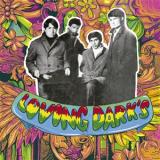
Los Amantes Oscuros" brings together for the first time on vinyl the recordings made between 1968 and 1969 by pioneers of Bolivian garage rock, Loving Darks, originally released on their three EPs. A selection packed with proto-punk covers of hits by the Stones, Cream, Tony Hatch, and more-often surpassing the originals in attitude and power. Their original records are highly sought after and are virtually impossible to find in any condition_ If we had to choose the Latin American country where the rawest and wildest garage and beat records of the '60s were recorded, Bolivia would be one of the clearest contenders. For some strange reason-surely related to the country's extreme conditions, its high altitude, and the influence of huayno-Bolivian recordings are truly unique and fascinating. A multitude of bands sprang up under the influence of groups-mainly British-that dominated the international charts. From the ashes of two of Bolivia's most important seminal bands, Los Black Byrds and The Turtles, two new groups fundamental to the history of Bolivian rock would be born: the mythical Climax and the legendary Loving Darks. "Los Amantes Oscuros" brings together for the first time on vinyl the recordings this band made between 1968 and 1969, originally released across three EPs on the local Lyra label. Their repertoire is packed with covers such as 'El Adivino,' a sped-up reinterpretation of 'Fortune Teller,' or even 'Algo de títere,' a reworking of 'Jumpin' Jack Flash.' They also adapt the classic 'Call Me' by Tony Hatch and 'Toad' by Cream, from whom they borrow the cover of one of their most iconic albums for the artwork of their EP "Complicado." In fact, 'Complicado'-a proto-punk version of the Rolling Stones' 'Complicated' and their signature track-is a perfect example of how a Bolivian band could outdo the British giants in attitude and power. Their importance lies in having paved the way for new sounds, styles, and aesthetics within a still-emerging scene. This compilation is a joint release with the Peruvian label Rey Record and includes an insert with notes on the band's history. First time vinyl reissue.
- 1: Familiar Theme
- 2: Domestic
- 3: Dead Wrong
- 4: Lives Of Others
- 5: When You Pass
- 6: Strangest Example
- 7: Lifeline
- 8: Distorted Vision
- 9: Before You Merge
- Strange Fruit
- Yesterdays
- Fine And Mellow
- I Gotta Right To Sing The Blues
- How Am I To Know?
- My Old Flame
- I'll Get By
- I Cover The Waterfront
- I'll Be Seeing You
- I'm Yours
- Embraceable You
- As Time Goes By
- He's Funny That Way
- Lover Come Back To Me
- I Love My Man (Aka Billie's Blues)
- On The Sunny Side Of The Street
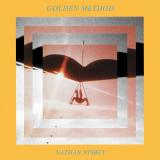
- A1: Golden Method
- B1: Strange Way
Skirting the line between post-punk and electronic music is the world in which this new project from Nathan nisbet resides. The Perth producer is looking back to his favourite bands from the 80s like The Cure and The The while applying his usual techniques for electronic dance music. The end result is analog and gritty yet heartfelt.
- A1: Evangelina - Hoyt Axton
- A2: Lady Love - Lou Rawls
- A3: Castles In The Air - Don Mclean
- A4: Why Have You Left The One You Left Me For - Crystal Gayle
- A5: Lost In Love - Air Supply
- A6: Danny's Song - Anne Murray
- B1: Train In The Distance - Paul Simon
- B2: The Bargain Store - Dolly Parton
- B3: We're Gonna Change The World - Matt Monro
- B4: Run Like The Wind - Barbara Dickson
- B5: Stumblin' In - Suzi Quatro & Chris Norman
- B6: Matrimony - Gilbert O'sullivan
- C1: You Belong To Me - Carly Simon
- C2: The Best Is Yet To Come - Clifford T Ward
- C3: Daylight Katy - Gordon Lightfoot
- C4: Deeper Than The Night - Olivia Newton-John
- C5: Warm Feeling - Lindisfarne
- C6: The Danger Of A Stranger - Stella Parton
- D1: Who What When Where Why - Dionne Warwick
- D2: 99 Miles From La - Art Garfunkel
- D3: Calypso - John Denver
- D4: Old And Wise - The Alan Parsons Project
- D5: Theme From 'Taxi' (Angela) - Bob James
Bob Stanley’s latest compilation “Wednesday Morning 6AM” literally turns back the clocks.
In the late 70s and early 80s, there was a parallel world of hits that people only heard when their clock radio went off. BBC Radio 2 had little time for the Top 40 music played by Radio 1 and beamed into living rooms by Top Of The Pops. Radio 2 effectively created a chart of its own playing singles or album tracks that their DJs enjoyed and wanted to share with their listeners. These tracks were given multiple plays on rotation and became earworms for millions of listeners.
“Wednesday Morning 6AM” is the warming soundtrack of eating breakfast or driving to school or to work in the cold and dark early hours to the sound of Art Garfunkel’s ‘99 Miles From LA’, Dolly Parton’s ‘The Bargain Store’, Hoyt Axton’s ‘Evangelina’, Paul Simon’s ‘Train In The Distance’ and Air Supply’s ‘Lost In Love’.
Other featured artists include Gilbert O’Sullivan, Crystal Gayle, Carly Simon, John Denver, Lou Rawls, Lindisfarne, Bob James, Stella Parton and Dionne Warwick.
The 2-LP version includes the bonus track ‘Danny’s Song’ by Anne Murray.
- Fair Weather
- The Big Flood
- Modern Times
- Into The Woods
- February
- I The King
- Dorian Grays' Bathroom Cabinet
- Same Time Next Week
- Strangers On A Train
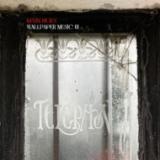
The album presents a distinctive artistic statement built around song, texture and collective exploration. Opening tracks such as 'Fair Weather' and 'The Big Flood' draw on the oblique lyricism of Henry Cow and the surreal songcraft of Robert Wyatt, with Beraha's voice at the centre of a sound world shaped by analogue radio collage and drifting, delayed saxophone lines. Punk-inflected rhythms emerge on 'Modern Times', while the reflective 'Into the Woods' blends lyrical song with collective improvisation, highlighting the ensemble's dynamic range. Across the album, tightly composed material sits alongside free improvisation, cinematic writing and storytelling. Tracks including 'February' and 'I the King' explore contemporary jazz, humour and surreal narrative, while groove- led pieces such as 'Dorian Gray's Bathroom Cabinet' and Morricone- inspired 'Same Time Next Week' showcase rhythmic drive and playfulness. The album closes with 'Strangers on a Train', where scripted text gives way to improvised spoken dialogue over a relentless pulse, uniting the record's themes of collaboration, narrative and spontaneity. Reflecting on the recording process, Kevin Figes describes Wallpaper Music III as "a joy to make", marking a return to Rockfield Studios and a collaborative experience with musicians whose sensitivity, imagination and improvisational skill shaped the music at every stage
- Aaaaaaa Ahhhhhhhh!!!!
- Sad Clown
- Haha!
- Bored
- Why Would I Want To Be Just Like You?
- Cabin Fever
- My Head Fell Off Last Night
- Real Life
- City Strange
- Bye Bye, Loser Blues
- Slugs
- You'll Get Better
Melanie Baker komponiert Musik über alles, was schmerzt, und alles, was sich gut anfühlt. Sie lebt in Newcastle (Großbritannien) und schreibt mit unerschütterlicher Ehrlichkeit - Songs, die zwischen lauter Katharsis und leisen Geständnissen, zwischen absurdem Humor und tiefer Verletzlichkeit schwanken. Mit hämmernden Trommeln, verzerrten Gitarren und zarter lyrischer Präzision greift Baker den Mut und den Geist des Alternative Rock der 90er Jahre durch eine queere, moderne Linse wieder auf.