The iconic fifth album Houdini by the Melvins captures the band's power, vision, and musical strangeness. It's an essential '90s release, combining elements of grunge with hard rock and sludge metal. Their biggest commercially success and first major label release is an album where they displaying the full width of their musical abilities. Buzz Osbourne's guitar sound is deep and heavy and combined with Dale Crover's powerful drum rolls and fills it sounds really impressive. Kurt Cobain (Nirvana) added his guitar skills to the track 'Sky Pup' and can be heard as a percussionist on 'Spread Eagle Beagle'. It's one of the most accessible Melvins albums and the gateway to explore more records by the band. Houdini is the ultimate Melvins classic and a must have for every grunge and music fan in general.
Cerca:strange u
The eighth and latest slate of refined retro-futuristic synth-pop by Liz Wendelbo and Sean McBride aka Xeno & Oaklander is named after and inspired by "the study of what not to do, a negative image of a positive, the other side, the other:" Via Negativa (in the doorway light). Recorded in the fall of 2023 at their modernist Connecticut home fashioned into a two-story synthesizer laboratory and mixing studio, the album is uniquely visionary in spirit yet precision in execution, a contrast central to the duo's enduring chemistry. Embryonic piano sketches were translated to nuanced modular systems, which McBride weighted with "harmonic padding," tuned percussion, and a spectral transfer device capable of "rendering spasms of rhythmic overtonal filigree." Despite the technological complexity of their craft, emotively the songs require no deciphering - these are technicolor widescreen anthems of the cybernetic age. The eponymous opening track sets the pace, soaring sleekly over glittering synths and call-and-response vocals about arias, shattered light, and faces in stereo. From there the record expands and contracts, cycling through a gallery of moods and masks, animated by the band's fascination with drama, "the idea of personae," and theatrical characters. Track by track, a murky, tragic backstory reveals itself: forlorn figures navigating a treacherous mercury mine, alternately poisoned by fumes or buried in collapsing caverns. The tension between Teutonic, utopian synthetic pop and lyrical narratives of ghosts in silos, ruined mills, and the traumas of mineral excavation creates a compelling friction, alternately futurist and obsolete, elevated and subterranean. Wendelbo describes the music's polarities perfectly: "The heavy machinic din of extraction in contrast with the enchantment of the mined precious gems and metals." From bilingual odes to bloodstones ("O Vermillion") to cosmic chrome dance floor classics ("Lost & There" "The present tense can never feel real / So many pasts conspire in the burning sun") to strutting EBM sensualities ("Actor's Foil"), Xeno & Oaklander re-prove themselves masters of the axis of technology and poetry, snaking cables and synesthesia, mining melodies and myths across 15 years of focused artistry. Theirs is a muse still gilded and gleaming, burnished red and silver, attuned to "the unobservable, the unfamiliar, that which you don't see directly."
The eighth and latest slate of refined retro-futuristic synth-pop by Liz Wendelbo and Sean McBride aka Xeno & Oaklander is named after and inspired by "the study of what not to do, a negative image of a positive, the other side, the other:" 'Via Negativa (in the doorway light)'. Recorded in the fall of 2023 at their modernist Connecticut home fashioned into a two-story synthesizer laboratory and mixing studio, the album is uniquely visionary in spirit yet precision in execution, a contrast central to the duo’s enduring chemistry. Embryonic piano sketches were translated to nuanced modular systems, which McBride weighted with "harmonic padding," tuned percussion, and a spectral transfer device capable of "rendering spasms of rhythmic overtonal filigree." Despite the technological complexity of their craft, emotively the songs require no deciphering – these are technicolor widescreen anthems of the cybernetic age.
The eponymous opening track sets the pace, soaring sleekly over glittering synths and call-and-response vocals about arias, shattered light, and faces in stereo. From there the record expands and contracts, cycling through a gallery of moods and masks, animated by the band’s fascination with drama, "the idea of personae," and theatrical characters. Track by track, a murky, tragic backstory reveals itself: forlorn figures navigating a treacherous mercury mine, alternately poisoned by fumes or buried in collapsing caverns. The tension between Teutonic, utopian synthetic pop and lyrical narratives of ghosts in silos, ruined mills, and the traumas of mineral excavation creates a compelling friction, alternately futurist and obsolete, elevated and subterranean. Wendelbo describes the music’s polarities perfectly: "The heavy machinic din of extraction in contrast with the enchantment of the mined precious gems and metals."
From bilingual odes to bloodstones ("O Vermillion") to cosmic chrome dance floor classics ("Lost & There" "The present tense can never feel real / So many pasts conspire in the burning sun") to strutting EBM sensualities ("Actor's Foil"), Xeno & Oaklander re-prove themselves masters of the axis of technology and poetry, snaking cables and synesthesia, mining melodies and myths across 15 years of focused artistry. Theirs is a muse still gilded and gleaming, burnished red and silver, attuned to "the unobservable, the unfamiliar, that which you don’t see directly."
The eighth and latest slate of refined retro-futuristic synth-pop by Liz Wendelbo and Sean McBride aka Xeno & Oaklander is named after and inspired by "the study of what not to do, a negative image of a positive, the other side, the other:" 'Via Negativa (in the doorway light)'. Recorded in the fall of 2023 at their modernist Connecticut home fashioned into a two-story synthesizer laboratory and mixing studio, the album is uniquely visionary in spirit yet precision in execution, a contrast central to the duo’s enduring chemistry. Embryonic piano sketches were translated to nuanced modular systems, which McBride weighted with "harmonic padding," tuned percussion, and a spectral transfer device capable of "rendering spasms of rhythmic overtonal filigree." Despite the technological complexity of their craft, emotively the songs require no deciphering – these are technicolor widescreen anthems of the cybernetic age.
The eponymous opening track sets the pace, soaring sleekly over glittering synths and call-and-response vocals about arias, shattered light, and faces in stereo. From there the record expands and contracts, cycling through a gallery of moods and masks, animated by the band’s fascination with drama, "the idea of personae," and theatrical characters. Track by track, a murky, tragic backstory reveals itself: forlorn figures navigating a treacherous mercury mine, alternately poisoned by fumes or buried in collapsing caverns. The tension between Teutonic, utopian synthetic pop and lyrical narratives of ghosts in silos, ruined mills, and the traumas of mineral excavation creates a compelling friction, alternately futurist and obsolete, elevated and subterranean. Wendelbo describes the music’s polarities perfectly: "The heavy machinic din of extraction in contrast with the enchantment of the mined precious gems and metals."
From bilingual odes to bloodstones ("O Vermillion") to cosmic chrome dance floor classics ("Lost & There" "The present tense can never feel real / So many pasts conspire in the burning sun") to strutting EBM sensualities ("Actor's Foil"), Xeno & Oaklander re-prove themselves masters of the axis of technology and poetry, snaking cables and synesthesia, mining melodies and myths across 15 years of focused artistry. Theirs is a muse still gilded and gleaming, burnished red and silver, attuned to "the unobservable, the unfamiliar, that which you don’t see directly."
- 01: Intro
- 02: It`s Hard
- 03: Skeleton
- 04: You`ve Got To Stop Drinking That Juice That Makes You Shrink
- 05: Don`t Put Anything In There (Ewan Mix)
- 06: Voice Message
- 07: Chorus For The Open Room
- 08: 121
- 09: Loose2
- 10: Twenty Seven Past Four
- 11: Spit You Out Again
- 12: And Everybody Goes Bloody Mental
- 13: Ten Zithers
- 14: Body Left In The Snow
- 15: The Kindest Smile In A While
London based songwriter Louis Gardner offers his first mixtape, released via Goldsmiths University imprint NX Records. On For The Open Room, Gardner spirals artfully through outsider jazz, pop, folk and noise, landing sprawled in a territory all his own.
Tangled riffs and strange structures form the terrain for intimate, un-rugged vocals to float above. Starting life like brisk journal entries or misshapen doodles in digital fuzz, Gardner's stories bloom with stop-start tension, oscillating between tender and guttural, crude and complex.
For the open room captures a flow state of ideas, traces and associations - from the bubbling jazz congruence of "It's Hard", to plucked maximalist fragility on "Ten Zithers". Wrapping up with "Body Left in the Snow", Louis reveals mightily undulating piano chops - leaving us to wonder what else is withheld, and what might appear next.
Recommended for fans of Jandek, Mount Eerie, Arthur Russell.
In a very dark ambiance, rampge acid tekno doom sound will tell you the story of a man lost in an abandoned radiocative factory... Strange creatures seems to hunt... The result of a mutation....
But, on the B side, starts the fight between the survivor and those new world order monsters... you can try to escape, but at a time you need to face them : Good luck !
The Rills haben sicherlich ein oder zwei Häute abgestreift, um diesen Punkt am Vorabend ihres spritzigen Debütalbums zu erreichen. Produziert von Dave McCracken (Indie-Mastermind hinter Ian Brown, dEUS, The Rifles), nehmen diese drei jungen Freunde auf "Don't Be A Stranger" die ungenutzte Energie, die sie zu viralen Sensationen und Lieblingen der Grassroots-Szene gemacht hat, und verwandeln sie in etwas Überlegteres, Vollständigeres und Herzlicheres.
- "The Rills sind eine Mischung aus einer Northern Oasis inspirierten und einer trendy Post-Punk-Band aus London. Damit schafften sie es nicht nur mit ihrer Musik, sondern auch über Tiktok zu begeistern." - Budde Talent Agency (Tourveranstalter)
Comic relief serves as a refreshing element that lightens up a tense or tragic situation. It creates a moment of contrast and distraction from the seriousness of the scene. This pattern can also be found in literature and film, in humorous characters like Chandler from the sitcom Friends. Especially in difficult times like these, we all occasionally long for comic relief. With his new EP, David Bay tries to create exactly such a moment of escape.
The songs on the EP unite an organic yet modern approach to indie, disco, and house music. David combines the two worlds he is rooted in: growing up in an indie band and, at the same time, running a disco-house label. After two edit EPs and a collection of singles with classic instrumentation and songwriting, this release brings everything together – music that sounds distinctly indie, but with a pulsating house beat.
Next to the four originals on the A-side, each track was remixed and is to be heard on the B-side of this vinyl: 80ies-influenced and well-known producer Lauer contributed his version of disco-gem „1999“, up and coming Dj- and producer Marie Lung flipped the indie-disco track „strangers“ into a deep and housy groover - Electro-legends Digitalism turned the dance-floor-ballad „<3 beat“ into a French-House belter and Dylan C. Greene hailing all the way from San Francisco remixed „dancing on the edge“. Out now on vinyl, only on Zissou Records.
The Twilight Sad feiern das 10-jährige Jubiläum ihres gefeierten vierten Studioalbums 'Nobody Wants To Be Here And Nobody Wants To Leave' mit einer speziellen, limitierten 'Demos'-Version.
'Nobody Wants To Be Here And Nobody Wants To Leave - Demos' enthält ein komplettes Album mit Demotracks und den ursprünglichen Arbeitstiteln, die in Vorbereitung auf die offizielle Version des Albums aufgenommen wurden.
- Ltd. LP: (Schwarzes Vinyl)
- A1: I’ve Played This Song Before
- A2: Anchor Child
- A3: Baby
- A4: Gum Tree
- A5: Wasted Again Side
- B1: If I Was A Stranger
- B2: You’re So Satanic
- B3: Always In Transit B4 What Else Can A Poor Boy Do
- B5: Northern Train
Cass McCombs ist zurück bei Domino. Sammlung bislang unveröffentlichter Songs erscheint am 08.11.2024.
Cass McCombs veröffentlicht mit "Seed Cake On Leap Year" eine Sammlung früher, bisher unveröffentlichter Musik, die in Jason Quevers Wohnung in der 924 Fulton Street in San Francisco aufgenommen wurde, während McCombs zwischen 1999 und 2000 in Berkeley lebte. Alles, was Cass McCombs‘ Fans lieben gelernt haben, ist auf "Seed Cake On Leap Year" zu hören. Bereits zu dieser Zeit beherrschte er die anmutigen, schwebenden Melodien, die wirken, als stammten sie aus zeitlosen Liedern von Jukeboxes und Transistorradios in ganz Amerika; ebenso seine tiefgründige, verschlungene Art mit alltäglicher Sprache umzugehen, die aufrichtige Wahrheiten in Rätsel verwandeln kann. „Songs are sung every day/So what can I say to find my own way?“, verkündet er in der ersten Zeile von „I’ve Played This Song Before“. Und mit diesen Worten schlägt er seinen eigenen Weg ein, immer verwurzelt in Tradition, aber dem Unbekannten zugewandt. Das Bemerkenswerte an "Seed Cake On Leap Year" ist, wie lebendig und roh diese Songs geblieben sind, voller Einsicht und Wunder, im Dialog mit allem, was noch kommen wird. Es gibt eine ungeschönte Ehrlichkeit in dieser Jugend, und obwohl dies vielleicht die ungeschönteste Ehrlichkeit ist, die sich Cass McCombs je auf einem Album zugestand, verstärken und vertiefen diese Songs nur das Mysterium.
Unbound by place or genre, mercurial, experimental pop duo Soft as Snow find freedom to intuitively reflect the disarray of human connection with their intricate, shape-shifting pop production. With each successive release, the duo evolves, unfurling into their own poetic sound, now fully realized on their intimate, third full-length, Metal.wet.
The oft-present trappings of male-female duos are eschewed here as the Berlin-based Oda Starheim and Øystein Monsen contribute equally across a canvas of analogue synthesizers, samplers, live drums, and processed guitars. At once a part of and yet apart from the zeitgeist, their forward-thinking modernity stretches the limits of expectations across Metal.wet's ten insouciant tracks. Fans of Tirzah, Hype Williams, and even Angelo Badalamenti will find much to love in this haunting work peppered with ASMR moments and rough sampling wrapped in high production –– twinkling glasses and sirens in the distance, rhythms and voices up front. The result is synth-driven, noisy, and dripping with laidback, confident sensuality.
Although Starheim's voice begins the album in a whisper, it quickly becomes apparent that the group has jettisoned their previous tendency to bury and distort her vocals. Nested in a bed of thorny electronics and broken rhythms, her multifaceted vocals might bring to mind Kazu Makino of Blonde Redhead or Hope Sandoval fronting Massive Attack. London MC Brother May (Mica Levi, CURL) makes an appearance on the driving and ethereal “Whip,” while Øystein’s own voice appears for the first time in a state of languid background haze.
Soft as Snow create and record across Europe. Defiantly averse to genre, the pair become vessels for their “electronic music pushed to the brink of collapse” (The Wire), previously released by Infinite Machine and Houndstooth. Informed by backgrounds in film and performance art, “there’s a surrealism that comes with watching Soft as Snow in the flesh,” (Vice) as seen at L.E.V. and Lunchmeat Festivals. Collaborations with visual artist Guynoid, designer AGF Hydra, and sculptor Camilla Steinum add depth to the corporeality of their “strange, mesmerising and utterly unforgettable” electronic experimentations. (DJ Mag).
Where would a painter paint if it were not on a white canvas? Where would a composer compose if it were not on the stave and the spaces in between the lines? How would a musician play his instrument if there were no melodies composed, written down, painted for him to follow?
The magic of art needs a frame, a somewhat solid container to hold the freedom that can only be found once we integrate some form of structure. And that also holds in every other area of life. We all need a frame, a structure, a rhythm, or else, we fall apart. This human form needs the body, and yet it transcends the limitations of the body - through art.
Consistency being one of them seems oftentimes less tangible, for it resides more in the act of doing, and showing up for the practice, for devoting energy and presence. Strangely, if we consistently show up for our practice, regardless of its form, the solid frame of the hour we devote to playing the instrument, learning a language, doing the sport, sitting silently for that meditation: It feels different every single time. It feels new every single time.
The repetitive consistency in being present again and again allows for nothing short of magic to happen. Magic feeds consistency. Consistency feeds magic. Consistency sets a foundation that strengthens over time. It allows us to slowly but surely develop any kind of skill, to find and hence to embody expertise. On the fertile grounds of such a solid foundation, creativity fosters, and innovation blossoms.
Establishing consistent rituals and routines can bring a sense of comfort and safety into every-day-life. For routine beholds repetition and its frame enables our experience within to change. In the familiar, we dare to explore, maybe even experiment, merely because a part of us remembers we depart from, and always return to, a safe space. We do not get lost. We do not fall apart. As we practice, again and again, we build resilience in overcoming obstacles or literally persevering through challenging situations and stretches of time.
While consistency gifts steadiness and stability, its overdose risks to result in what may appear as uniformity. It feels like constantly - consistently - dancing on the fine line of freedom within a structure. Life is filled with unexpected twists and turns, adjustments need to be made to accommodate change and avoid rigidity. By striking a balance between consistency and flexibility, we can create harmony in our lives, just like a beautiful melody that flows smoothly from one note to the next.
Within the magical waves of music, skills are needed, too. Consistency is key to show up and do the work. It frames the freedom of magic that resides beyond and only beyond effort. Learning to play an instrument, learning to sing, does never happen within the blink of the eye. It takes time. Time to show up for the practice, to do precisely that: practice. Again and again, every single time, again and again. Precision feeds perfection that falls apart inside the structure of a song, a line, a rhythm, dissolving into magic.
Consistency in practicing, in composing and sharing music with the world regardless of the form allows any musician to refine his style, to carve out his uniqueness. For any artistic expression is, after all: Unique. And this uniqueness is born inside the vessel of any structure, over and over again. Sharing music in the form of new releases and public performances nourishes the bond between artist and audience. And for that to unfold, both parties need to show up - while the underlying beat of this never-ending practice is presence fuelled by consistency.
"As I'm getting older, chip up on my shoulder..." is the opening line from Mac DeMarco's second full-length LP `Salad Days,' the follow up to 2012's lauded `Mac DeMarco 2.' Amongst that familiar croon and lilting guitar, that initial line from the title track sets the tone for an LP of a maturing singer/songwriter/producer. Someone strangely self-aware of the positives and negatives of their current situation at the ripe old age of 23. Written and recorded around a relentless tour schedule (which picked up all over again as soon as the LP was done), `Salad Days' gives the listener a very personal insight into what it's all about to be Mac amidst the craziness of a rising career in a very public format. The lead single, "Passing Out Pieces," set to huge overdriven organ chords, contains lines like "...never been reluctant to share, passing out pieces of me..." Clearly, this isn't the same record that breezily gave us "Dreamin," and "Ode to Viceroy" but the result of what comes from their success. "Chamber of Reflection," a track featuring icy synth stabs and soulful crooning, wouldn't be out of place on a fantasy Shuggie Otis and Prince collaboration. Standout tracks like these show Mac's widening sound, whether insights into future directions or even just welcome one-off forays into new territory. Still, this is musically, lyrically and melodically good old Mac DeMarco, through and through. The same crisp John Lennon / Phil Spector era homegrown lush production that could have walked out of Geoff Emerick's mixing board in 1972, but with that peculiar Mac touch that's completely of right now. "Brother," a complete future classic, is Mac at his most soulful and easygoing but with that distinct weirdness and bite that can only come from Mr. DeMarco. "Treat Her Better" is rife with "Mac-isms," heavily chorused slinky lead guitar, swooning vocal melodies, effortless chords that come along only after years of effort, and the other elements seriously lacking in independent music: sentiment and heartfelt sincerity. We're only at Part 2 and 1/2 (one EP and two LP's in) into Mac's career. As you read this and as you hear the album on April Fool's Day of this year, he'll probably be on tour, or preparing for one... or maybe already writing new music. A relentless work ethic is something to be admired in today's indie music scene, but when it's of the quality Mac is giving us time and time again, it starts to turn from admiration to awe.
- First To Betray Me
- Runaway From You
- I Hope Somebody's Loving You
- Skirty
- Goddamn Biscuit
- Living With Strangers
- Zollifer Files
- Devil In My Pocket
- California Loner
- My Only Friend Is You
- Crooked Road
- The Children Are Waiting
- This Little Light Of Mine
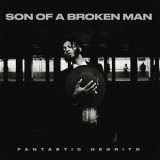
- Son Of A Broken Man
Born Xavier Amin Dphrepaulezz, by now much has been made of Fantastic Negrito's own unique story--his early years growing up in an orthodox Muslim household, the doomed major label deal that turned him off of the music industry altogether, the near-fatal car crash that permanently damaged his guitar playing hand--as well as the remarkable redemption arc that began in 2015, when he won the first ever NPR Tiny Desk Contest. In the years that followed, Negrito would go on to take home three consecutive GRAMMY Awards for Best Contemporary Blues Album, tour with everyone from Sturgill Simpson to Chris Cornell to Bruce Springsteen, collaborate in the studio with the likes of Sting and E-40, launch his own Storefront Records label, perform at Lollapalooza, WOMAD, Glastonbury, Newport Folk, Byron Bay Blues, and nearly every other major festival on the map, and found the Revolution Plantation, an urban farm aimed at youth education and empowerment. Son of a Broken Man sees Fantastic Negrito encapsulating the inimitable elements of his celebrated body of work to date, from hard-hitting distorted guitar riffs to melodic and expressive ballads, all fueled by the unexpected twists that have become his trademark. The album stands as perhaps Fantastic Negrito's most personal thus far, exploring family, deception, and the human desire to hide the true self as he dives deep into one of the oldest conflicts in human history, the struggle between father and son. Beginning at a young age, Negrito was served untruths by his father. A made-up last name, a fabricated ancestry, and a fake Somali accent. Why lie? Why create this false narrative? Those are the questions Negrito had to ask himself and the questions that lie at the heart of Son of a Broken Man.
- Untitled
- Really Insane
- Wondinwil
- Chokechain
- K-Sensa-My
- High School
- Afraid Of Babies
- Brand New Love (Strumental)
- Strange Love
- The Free Man
- Organ
- Run To You (Bryan Adams)
- Losercore
- Cello
- Not Nice To Be Nice
- Heartness Crane
- No Matter What
- Untitled Strumental
- Bells
- Spoiled (Live)
- End
Lou Barlow personified home recording’s rise in the late ’80s and was arguably one of the few key players that changed the trajectory of songwriting as the ’90s charted its cultural course. For the 30th anniversary of his Really Insane 7-inch and Winning Losers EP, Emil Amos and Steve Shelley have compiled an overview of Barlow’s best solo work under the name Sentridoh. Based around an even mix of legendary tracks and extra deep cuts, this compilation focuses on Barlow’s arrangement innovations, signature textural explorations, and radical ability to turn psychological upheaval into classic songs.
- A1: A Hilly Town
- A2: Concrete Road
- A3: Convenience Store
- A4: A Half-Window
- A5: Moon, The Strange Cat
- B1: At The World Emporium
- B2: Baron's Song
- B3: The Teenage Violin Maker
- B4: Dawn
- B5: Take Me Home, Country Roads
A collection of music created based on Hayao Miyazaki's storyboards and sketches. Includes four vocal tracks.
Through the Looking Glass is the eighth studio album by English rock band Siouxsie and the Banshees. The album is a collection of cover versions. It was co-produced with Mike Hedges and released in March 1987 on Polydor. Through the Looking Glass was preceded by the single "This Wheel's on Fire". It was the second and final album recorded with guitarist John Valentine Carruthers. Some of their cover songs were praised by the original artists themselves.