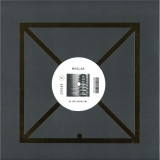
Frances Castle is the illustrator/owner behind the Clay Pipe record label and The Hardy Tree is her on- going musical project. Common Grounds was started during the first 2020 lock down - when time moved very slowly and travel away from home became impossible.
The album was recorded at home by Frances, then mixed to tape with Ed Deegan at Gizzard Analogue Studios in East London. Ed plays drums on three of the tracks.
“Like many others with nowhere else to go, I walked the streets of my neighbourhood for exercise and well-being. I rambled like I might in the country side; stopping every now and then to take in the view, or notice something I’d missed before. I took to looking up local streets in historical newspapers, and read reports of mysteries and crimes that had happened here in the past. I researched the names of the people who had lived in my flat before me, viewed old census returns from the surrounding area, and noted the birth places and livelihoods of past residents. I began to see the ghosts of these people on my walks, and notice the things that they had left behind; shapes of ancient tram tracks creeping under the tarmac, an old gas street lamp in an alleyway, a tiny metal sign indicating a culverted river. I spent my evenings writing and recording the music on this LP, and then the following day would listen to the rough mixes as I walked, the music began to soundtrack the walks, and the walks began influencing the type of music I was creating.” - Frances Castle, 2022
1. A Garden Square in the Snow 2. The Spire of St Mary's 3. St Saviour's Through the Railings 4. Shop Fronts and Parked Cars 5. The New River Path, August 6. Railway Tracks 7. Mist on the Playing Fields 8. Face at the Window, Seaforth Crescent 9. Up on the Hill
Suche:street hi fi
New label Golden Ape Records kick off their journey with some raw Electro-Funk chic from the Funk Messiahs with their brilliant debut single, 'Save Me' Vocalist Lucy (Veeresh's Humaniversity Sound), whose deep sultry understated vocals soothe the soul; the amazing Pest trio (Ninja Tune) of Matt on guitar, Vinny on sticks and Tom on Trombone to provide the rhythm and driving funk. Super talented Kitty (Kitty, Daisy & Lewis) moving booties with the bass, and A-Lo adding Electro vibes with his vintage synths. Remixes from Crazy P's Jim Baron, who delivers a seductive percussive Disco vibe under his Ron Basejam moniker; 'Dark Wobble' (aka Michel Williams), who injects some Scouse street style flavas; and Ben Pest amps up the electro filth with a gritty electronic outing.
- 1: Thug Love
- 2: Cinderella Story
- 3: Me And My Guitar
- 4: Might Not Give Up (Feat. Young Thug)
- 5: Numbers (Feat. Roddy Ricch, Gunna And London On Da Track)
- 6: Stain (Feat. Dababy)
- 7: Hit ‘Em Up (Feat. Trap Manny)
- 8: Dtb 4 Life
- 9: Calm Down (Bittersweet)
- 10: Another Day Gone (Feat. Khalid)
- 11: Good Girls Gone Bad
- 12: Blood On My Denim
- 13: R.o.d
- 14: Big Shit
- 15: Right Back
- 16: Luv Is Art (Feat. Lil Uzi Vert)
- 17: King Of My City
- 18: Mood Swings
- 19: Reply (Feat. Lil Uzi Vert)
- 20: Streets Don’t Love You
A Boogie Wit da Hoodie will be releasing his third studio album ‘Artist 2.0’ on vinyl on the 5th August.
The Bronx-bred artist Artist Dubose, better known as A Boogie Wit Da Hoodie, first hit the rap scene with the breakout hit “Still Think About You” which was featured on his 2016 debut mixtape, ARTIST. The mixtape also introduced fans to “My Shit” which went on to become RIAA certified platinum and was also listed as one of “The Best Songs of 2016” on Apple Music. A Boogie quickly proved himself to be one of the game’s newest heavyweights after XXL dubbed him as “one of the hottest and newest up-and-comers in hip-hop” and included him in the 2017 Freshman Class. The young star also went on to release the 3x platinum “Drowning feat. Kodak Black” along with the platinum certified singles “Jungle” and “Timeless.” A Boogie went on to release his highly anticipated, now gold certified, debut album, THE BIGGER ARTIST, which quickly sprung into the Top 5 on Billboard’s Top 200. He also became the top emerging acting in the U.S. as he simultaneously sprung to #1 on Billboard’s Emerging Artists chart.
It is easy to see why The New York Times named A Boogie “the most promising young rapper the city has produced in some time.” A Boogie earned a BET Award Nomination for “Best New Artist” at the end of 2018 in addition to releasing his gold-certified sophomore album, HOODIE SZN, which made its debut at #2 before spending three non-consecutive weeks at #1 and maintaining a stunning 17-week streak within the top 10 on the Billboard Top 200 chart. The album also soared on streaming, garnering over 83 million streams the week it went #1. Following his latest album as well as his sold out “A Boogie Vs. Artist” tour, there’s no doubt A Boogie will continue to make waves and redefine the sound of New York rap.
[i] 9. Calm Down (Bittersweet) [feat. Summer Walker]
King Tubby and Producer Bunny ‘Striker’ Lee are intertwined in the birth of Dub Music. After discovering a mistake that made a ‘serious joke’ (more of which later...) they went on to release the first pressings of this new musical genre namely ‘Dub Music’. Tubby’s vast knowledge of electronics and Bunny’s vast catalogue of rhythms would lay the foundations of what today is taken as a standard... the Remix / Version cuts to an existing vocal tune.
Osbourne ‘King Tubby’ Ruddock was born in Kingston, Jamaica on 28th January 1941 and grew up in the High Holborn Street area of downtown Kingston. He studied electronics at Kingston’s National Technical College and also on two correspondence courses from the U.S.A... When he had qualified Tubby began repairing radios and other electrical appliances in a shack in the back yard of his mother’s home. His work in the early days included winding transformers and building amplifiers for Kingston’s Sound Systems. Tubby built his first Sound System in 1957 playing jazz and Rhythm & Blues at local weddings and birthday parties. His reputation as a man who knew and understood both electronics and music grew steadily and as the sixties drew to a close. Tubby purchased his own basic two track equipment. He installed this alongside his dub cutting machine, a homemade mixing console and his impressive collection of Jazz albums in the back bedroom of his home at 18 Dromilly Avenue which he christened his music room.
Tubby and Striker were at Treasure Isle Studio’s one day while Ruddy from Spanish Town was working with the engineer Byron Smith....
“Tubby and myself was talking when Ruddy was cutting some dub but Smithy (engineer) made a mistake through we were talking and forgot to put in the voice. It was two track recording in those days. Ruddy said ‘No Man! Make it stay! and so they cut the rhythm. When I went over to Ruddy’s that Saturday night a dance was in progress and when they played the vocal to the tune... then he said we’re going to play ‘Part Two’. They never called it ‘Version’..and then he played the rhythm track. The song was a catchy song and everybody started to sing along and the deejay started to toast so everything went down well. On Monday morning I went up and I said ‘Tubbs the mistake we made was a serious joke. It mash up Spanish Town! The people went wild. So you have to start to do that now ‘cause when the man put on the ‘Part Two’ everyone start singing this song. It played about twenty times. I said you try Tubbs!’...Well the next Saturday night now when Tubby strung up down the farm U Roy said he’s going to play ‘Part Two’ but Tubby did it different now. He started with the voice then dropped it out and let the rhythm run and then he brought in the voice in the middle and from there Tubby started to get really popular.’’
Bunny ‘Striker’ Lee
Dynamic Sounds upgraded to sixteen track recording in 1972 and Tubby purchased, again with the help of a deal brokered by Bunny Lee. The old four track equipment and the MCI console from their Studio B. The four tracks now gave him far wider scope to work with and he began to create a new musical form where the bass and drum parts were brought up while the faders allowed Tubby to ease the vocal and rhythm in and out of the mix. It was only a matter of time before Tubby’s dub plate experiments began to make it on to vinyl and the first ever long-playing King Tubby releases would feature a collection of his mixes to a selection of Strikers rhythms. So please sit back and enjoy this historic set of sounds, mixed by King Tubby and Mr Prince Phillip Smart and another set of scorcher Bunny Lee rhythms.
- 11: Non- Specific Song
- 12: Charterhouse
- 13: Happy Shopper
- 14: Useless Second Cousin
- 15: Ex- Cable Street Tomorrow Attacking
- 16: Son Of Nothing
- 17: Ropeswing
- 18: Rent Act
- 19: Invisible People
- 20: A Mess Of Paradise
- 21: No Soap In A Dirty War
- 22: Red Tape Red Light
- 23: Natural Disasters
- 24: Cottonmouth, Torture
- 25: Tied The Small Death
- 26: A Mess Of Paradise (Scarf Demo)
- 27: I’m Not Like Everybody Else
- 28: Set Me Free
- 29: Second Son
- 30: Everybody, Recycle
Deluxe reissue of their 1989 sophomore album pressed on pale blue colour vinyl.
Presented in a gloss laminated gatefold sleeve, which features the original LP plus a bonus disc with all the A and B sides, some compilation tracks and an outtake, plus a 12-page booklet containing previously unpublished lyrics and tons of contemporary reviews and photos.
Completely remastered for your listening pleasure.
In 1989, while the musical world was fêting serial-killer worshipping noise bands, white boys with dreadlocks and the first glimmers of techno, one band – The Wolfhounds – was describing the times and the country exactly as they were. Or at least as they saw it.
Well, not exactly. The privations of finding enough money to live on, a semi-permanent roof over your head and perhaps the hope of real change were all there in the lyrics along with the multitudinous shards of ideas in the music, both raging and reflective – but there was also a sense of magical realism and authentic personal circumstance imbued in it all.
Formed as a frantic noisy fusion of sixties garage and independent post-punk in Romford in 1984, by 1986 it was the band’s misfortunate to be corralled with the jangly and quirky bands of the era-defining C86 tape, given away free with the NME that year. The frustration of being lumped with the lumpen was already spilling over into a heightened creativity that would see the band release three LPs in 18 months, the first and perhaps most fully realised of which was Bright & Guilty.
The band’s sense of melody saw three singles taken off it, and all received plentiful radio play that resulted in enthusiastic audience responses when the band toured with My Bloody Valentine and the House of Love shortly after the LP came out. This renewed attention also saw them being threatened with legal action by the food company satirically targeted by one of the singles – Happy Shopper.
The band’s magpie listening habits also saw the first glimmers of an interest in sampling with the track Cottonmouth, hip hop in the drum rhythms of Invisible People and Son of Nothing, discordant post- hardcore in Non-specific Song and even percussive hints of Tom Waits’ Rain Dogs in Charterhouse.
The album’s lyrical themes have sustained the relevance of these 30-something year-old songs. The dictatorship of the class system over the economy is touched on in Charterhouse, the unfairness of housing policy in Rent Act and Red Tape Red Light, the desperation of not having enough money to even seek employment in Useless Second Cousin. But there is contemplation and mystery, too: Rope Swing’s nostalgia for pre-teen childhood, Invisible People’s detailing of intangible weaknesses.
Of all their peers, The Wolfhounds post-C86 output stands up straight and proud, and you’ll find echoes of their sound in Fontaines DC, Idles and many others – but not performed with the brashness, vigour and uniqueness of the originals.
A central theme in the life and work of the British DJ pioneer Greg Wilson, UK electro is a page turner. With the seminal Street Sounds compilation from 1984 (please see Greg’s blog for the whole story) being the beacon, there are still a few overlooked corners.
XXXO by Equip is one of them. Originally intended to be part of said release and produced by Greg Wilson, Martin Jackson and Andy Connell (like most of the comp), it was turned down at the time. Sounding like a like a proto -house template with a dash of Klein & MBO, it wasn’t considered strong enough at the time, but found it’s way to the public as a one-sided 12“ in 2006, it felt like a brand-new track as it perfectly correlated with the electro influenced underground dance music mainstream at the time (Chicken Lips et al.). Here it is again: remastered, rekindled and unreduced cut to 45rpm. For full disclosure please see the liner notes on the back cover.
Pressed and released for the first time on this planet though are the ICA Beats Pt 1 & Pt 2. Intended to be backing tracks for a UK Electro live appearance in August ´84, they haven’t seen the light of day until now. Both Restored and re-edited with some help of label owner Gerd Janson, they are fierce examples of the sound at the time. Sitting between rhythm tracks and experimental drum machine compositions (and a short greeting from their creators’ other project Syncbeat), it makes you wonder how one could have lived for so long without them. The history of the past enables you to dream of the future.
NEW 45 BY DEEP-FUNK PIONEER LUCKY BROWN RECORDED DURING THE MYSTERY ROAD SESSIONS!
"Funk is a living, breathing, creative and generative entity and The New Lucky Seven celebrate its life with a mysterious and authentic sonic snapshot from the iconic Mystery Road sessions: WOODHEAD!"
Woodhead is a steady medium groover built around an acute chanky guitar part that Joel Ricci aka Lucky Brown composed while living in the "Woodhood" district of Bellingham Washington, USA in the fallout shadow of an industrial area on the outskirts of town. The Woodhood was so named because the streets were all named after different kinds of trees; Cottonwood, Alderwood, Birchwood, etc. Though members of the band had been performing Woodhead since as early as 2004, it had never been officially committed to tape. So during the 2013-2014 span of living room "Magik Carpet" sessions at drummer, Oliver Klomp's house in West Seattle, the combo dubbed by Lucky as "The New Lucky Seven" casually hit the head a couple times before calling it a night as Lucky rolled tape.
Opening with the now world-famous guitar player, Jabrille "Jimmy James" Williams dropping deftly into his rhythmic part, Lucky chants in the background the words "don't stop" as the tension builds up into the moment the whole band comes in. With Bob Heinemann on bass, Marc Hager on Rhodes and Oliver Klomp on drums, the thick but honest groove is instantly palpable. Trombone player Mars Lindgren and Sax player Thomas Deakin, along with Lucky on Trumpet lay down the 'head' to the tune right off the bat with everyone in the band giving that hard hit on the 4 count of the last bar of the repeated figure. This 'hit' returns again to form the breakpoint between soloists Jimmy James, Marc Hager, and on side B, Thomas Deakin, and Lucky Brown on the flute. The horn section microphone was situated on the dining room table and Lucky just had to lean over to reach it with his instrument! Michael Iris of Bell Creek Studio transferred and mixed these two tunes from Lucky Brown's cassette machine.
This tune was left off of the Mystery Road compilation album but comprises one of the last tracks created during those sessions therefore the concept, vibe, style, and intention should resonate and be interchangeable with the rest of the 45s from that epic Box Set TR-9043 released by Tramp Records on May 4, 2015.
As you spin and interact with the Mystery Road recordings, you are invited to allow Woodhead to take its rightful place specifically alongside the other "The New Lucky Seven" recordings and generally as a part of the suite of crude and naive living-room "Magik Carpet" funk of the rest of the Mystery Road.
As illuminated before in Lucky's artist statement regarding the Mystery Road sessions, the music contained therein was always intended to put emotion, vibe, feeling, and spirit before technical, spatial, or even performance constraints and to serve as a gift of discovery to lovers and aficionados of the deep funk idiom and the rare 45rpm format. Funk is a living, breathing, creative and generative entity and The New Lucky Seven celebrate its life with a mysterious and authentic sonic snapshot from the iconic Mystery Road sessions: WOODHEAD!
- A1: The Plastik Beatniks Feat. Angel Bat Dawid - The Sun Is A Negro
- A2: The Plastik Beatniks Feat. Doseone - Hollywood Beat
- A3: The Plastik Beatniks Feat. Allen Ginsberg - What He Looks Like_
- A4: The Plastik Beatniks Feat. Angel Bat Dawid - Westcoast Sound 1956
- A5: All Those Streets I Must Find Cities For
- A6: The Plastik Beatniks Feat. Angel Bat Dawid - Bagelshop Jazz
- B1: The Plastik Beatniks Feat. Moor Mother - War Memoir
- B2: The Plastik Beatniks Feat. Angel Bat Dawid - Harwood Alley Song
- B3: The Plastik Beatniks Feat. Patti Smith - Ginsberg (For Allen)
- B4: Would You Wear My Eyes
- B5: A Particular Police Officer
- B6: The Plastik Beatniks Feat. Angel Bat Dawid - The End Always Comes Last
Sounds like supergroup. Rarely have outstanding figures of such a variety of musical styles collaborated on one album to pay homage to a nearly forgotten artist, one of the few black Beatnik poets, Bob Kaufman.
"All Those Streets I Must Find Cities For" by The Plastik Beatniks is an attempt to acoustically reanimate Bob Kaufman, to return the Beat to him in a transatlantic collaboration. It is a shimmering psychedelic, at times jazzy concept album, sometimes reminiscent of Krautrock or hip hop, about a Beat-era poet who was as great as he was forgotten. It takes spoken word to a new level, as a transatlantic showcase of musical avant-gardes and a joyful "sound archaeology" of modernity, in which the tracks of the "Plastik Beatniks" meet the best voices of America.
The 12 wildly different songs and audi collages, on the transatlantically-produced album, "All the Streets I Must Find Cities For," is based on lyrics by Beat author Bob Kaufman. They were originally part of the radio play "Thank God for Beatniks," for which author Andreas Ammer ("Ammer & Einheit"), Notwist‘s Markus Acher and Micha Acher and loop maker Leo Hopfinger ("LeRoy") formed "The Plastik Beatniks." On the eastern side of the Atlantic they composed music and crafted soundscapes. On the west side of the ocean, they asked three of the most renowned singers, activists and producers in the U.S. to recite or sing Bob Kaufman's poetry.
Punk-pop icon Patti Smith immediately signed on to read Kaufman's poem "Ginsberg (For Allen)". Free jazz vocalist Moor Mother passionately performed Bob Kaufman's "War Memoir". American jazz clarinetist, composer, singer and “International Anthem” labelmate Angel Bat Dawid, a legitimate successor to Sun Ra, polyphonically read and sang such poems as "The Sun is a Negroe" and "West Coast Sound 1956" and included some clarinet solos on top. Also on the album, Bob Kaufman himself recites his previously unknown poems "Hollywood Beat", "Would You Wear My Eyes", and the "Jail Poem" "All Those Streets I Must Find Cities For". Beat chronicler Raymond Foye, who still lives at the Chelsea Hotel in New York, contributed an interview he conducted with late beatnik Allen Ginsberg about Bob Kaufman. Completing the circle was hip-hop artist Adam "DoseOne" ("13&God"), who once gave Markus Acher a well-thumbed volume of Bob Kaufman, whom he admired. He contributed some raps. Thus 12 tracks emerged, as diverse as the artists, poets and musicians who contributed to it. More than an album. An epitaph. A work for the eternity of Beat.
Regarding Bob Kaufman - of course the FBI kept a file on him – first as a sailor, then a communist, and finally a Beat poet. As one of the mainstays of the movement, he edited the literary magazine "Beatitude" in San Francisco and defined "Beatnik" to Allen Ginsberg: half rhythm, half sputnik. Bob recited his poetry loudly on the streets (when he wasn't sunk into years of silence in protest of the Vietnam War) and in the bars and bagel shops of North Beach. Once, he almost landed a pop hit ("Green Green Rocky Road"), which then made Dylan's companion Dave van Ronk famous. That Kaufman is today less known than his friend Allen Ginsberg may be because he was a black Beat poet, and also a Jew. This was not compatible with fame in the US of the 1950s. Though Kaufman had the same publisher, City Lights, as Ginsberg, he was frequently arrested and jailed, and was treated with electric shocks until he developed serious mental heath issues. There he wrote his "Jail Poems". The seventh of these lent this album its name:
"Someone whom I am is no one / Something I have done is nothing Someplace I have been is nowhere / I am not me What of the answers / I must find questions for? All these strange streets I must find cities for, Thank god for beatniks."
- A1: Pale Blue Care Biobiopatata06 09
- A2: Crossing The Tamariver Maher Shalal Hash Baz 48
- A3: Bayern Mitamurakandadan? 02 39
- A4: Anton Popo 04 08
- A5: Tohonoko Kourakuen 03 03
- A6: People Have Called Them Flowers Various Sighhorns 03 32
- B1: A Sparkle To Your Eyes Zayaendo 04 58
- B2: Swamp Strada05 18
- B3: New Window (Onto A Collapsed House) Sekifu 01 41
- B4: Gone Astray Hose 04 44
- B5: Ghhgh Compostela02 40
- B6: Wippi Zayaendo 01 25
- C1: Just Watching Gratin Carnival 04 35
- C2: Apple Ringo Pascals 02 50
- C3: Way To The Seatail 02 59
- C4: Pensive Miss Noahlewis’ Mahlon Taits 03 33
- C5: Nagyon Szeretrek Mindenkinek K`dlokk 05 57
- D1: Kemuri Fuigo 04 28
- D2: Mado Petit Daon 05 53
- D3: Minato Nrq 02 35
- D4: The Ending Theme Tenniscoats 02 59
- D5: A Day With The Saints Satomi Endo 03 13
Alien Transistor present Alien Parade Japan, a joyous double-album compilation of groups from Japan’s indie-pop and avant-garde undergrounds, all of which feature brass or woodwind instruments as part of their line-up. Compiled by Markus Acher (Alien Transistor, The Notwist, Hochzeitskapelle) with plenty of support and help from his Spirit Fest bandmate, Saya (also of Tenniscoats), it features some familiar names – Tenniscoats, naturally, but also Zayaendo, Tori Kudo’s Maher Shalal Hash Baz – alongside lesser-known groups like Biobiopatata, Mitamurakandadan?, Kourakuen, sekifu, and Noah Lewis Mahlon’ Taits, amongst many others.
The collection of songs here rests upon a simple question, and an interesting parallel: Why do so many groups from Japan include brass and woodwind, and how closely does this echo the scene that Acher is involved with in Munich? The idea was formulated in Acher’s mind after one of his groups, Hochzeitskapelle, had been invited by Saya to Japan in 2019, to take part in the Alien Parade Japan tour. “Saya and her friends recommended a lot of music to me that I didn’t know of,” Acher recalls, “and I was surprised and excited to find so many Japanese bands who use brass and woodwind instruments.”
This approach was something Acher had been familiar with for a while, thanks to his experiences in Munich: “Until then I thought of the Munich scene, where Hochzeitskapelle come from, as being quite unique in having ex-punk and still-indie musicians form loud acoustic bands with many brass instruments and play a wild mixture of styles.” And indeed, that variety is reflected in the twenty-two songs on Alien Parade Japan, which flits from the pastoral melody of Maher Shalal Hash Baz’s “Crossin The Tama River”, through the tenderness of various sighhorns’s “people have called them flowers”, to the folksy lament of Gratin Carnival’s “Just Watching”.
Alien Parade Japan reaches further afield, too, drawing in some groups, like HOSE, Fuigo, and popo, that feature musicians like Toshihiro Koike, Masafumi Ezaki and Taku Unami, who may be better known for their experimental and improvised releases on labels like ftarri and Erstwhile. It also looks back to material recorded in the 1990s - the swinging slide guitars and sax/tuba duet of Strada’s “Swamp”, from 1998, and Compostela’s energetic, rousing “ghhgh”, from 1990. Both pieces were written by, and feature, saxophonist Kanji Nakao; Compostela’s membership also included late saxophonist Masami Shinoda, who was also part of such storied Japanese groups as Pungo, A-Musik, Orquestra Del Viento, Ché-SHIZU, and the fiery free jazz outfit, Seikatsu Kōjyō Iinkai.
Groups like Compostela help to draw some through-lines to the aesthetics of chindon’ya, a type of Japanese marching band made up of costumed street performers who advertise businesses; the music made by these bands is brash, spirited, and full of energy. Alien Parade Japan weaves all of this together – chindon’ya; jazz; indie-pop; psych-folk; big band – into one beautiful, big tapestry of gorgeous melody, sweetness, and melancholy, with plenty of creative fraying at its edges. “The collection is a very personal view of Japanese bands using brass and woodwind instruments,” Acher concludes: “it’s not a representative anthology, it’s mainly held together by my personal taste, experiences, and friendships.” But it’s also a wonderfully coherent collection of some of the most playful and elated music you’re likely to hear this year. As musician and writer David Grubbs says:
„Now it is confirmed: my favorite genre of music is Alien Parade Japan. Hopefully now people will know what I’m talking about when I gush about the unassailable brilliance of longtime favorites like Maher Shalal Hash Baz, Popo, Mitamurakandadan?, Hose, and Tenniscoats, presented here alongside others whose music I have only begun to search out. Please share in my gratitude and enjoyment of this lovingly assembled collection, one that I welcome into my home as I would a long-anticipated guest.“
Bloodywood from India are the hottest new band in the Metal-genre. Millions of followers online and a growing fanbase! The self-released debut “Rakshak” finally released as a proper vinyl edition!
Formed in 2016 as a fun band, Bloodywood from New Delhi, India are the hottest metal band right now! They bring everything you need in 2022: aggression, global ideas, visionary views, politically correct behavior and standing up for minorities from all walks of life. The band around the three heads Jayant Bhadula, Karan Katijar and Raoul Kerr managed to break into the international charts on their own and gathered an incomparable fan following. What started out six years ago with Bollywood and Linkin Park-covers has grown to a size that's expanding by the day. Bloodywood fans can now be found all over the world, millions of people have heard their songs and watched their videos, the wave can no longer be stopped. Now the debut “Rakshak”, which the band self-released in early 2022, is finally out on vinyl! In the summer of 2022 they will storm the European festivals, make their point in the USA in September and return to play their long-awaited clubtour through Europe, which was postponed due to the pandemic, at the beginning of 2023. Tickets are already running low. In a year at the latest everyone will know who Bloodywood is. Tom Morello (Rage Against The Machine) already knows it and has drawn his fans' attention to the Indian metallers with a tweet: "Rocking!" he calls the Indian sensation. Among other things, the musicians are involved in animal welfare and social projects and use traditional Indian instruments such as the tabla, dhol or bamboo flute. They mix it with rough thrash metal, urban rap vocals (English/Hindi/Punjabi) and rock-hard grooves. That creates a lot of uproar, at times sounds like open street fighting and, despite the regional references, has an absolutely international level. Especially since moderate sounds also find their place on “Rakshak” (Hindi for “protector”), as can be heard from the tracks 'Zanjeero Se' and 'Jee Veerey'. Bloodywood definitely deliver Linkin Park-standards here and even open themselves up to target groups that are less metal-savvy. The majority of this album rages like an unleashed tropical storm ('Dana-Dan', 'Chakh Le') is decked out with an impressively rabid force and hardly allows the listener any breaks. This mix is what makes it so successful: the album entered the Billboard charts, making them the first Indian metal band to do so.“Rakshak“ was also successful on Bandcamp, where it topped the platform's album sales upon release and was ranked as the 22nd best-selling new release of all time (as of March 2022) and the 3rd best-selling metal release. Rock for a rebellion that will be unstoppable!
Bloodywood from India are the hottest new band in the Metal-genre. Millions of followers online and a growing fanbase! The self-released debut “Rakshak” finally released as a proper vinyl edition!
Formed in 2016 as a fun band, Bloodywood from New Delhi, India are the hottest metal band right now! They bring everything you need in 2022: aggression, global ideas, visionary views, politically correct behavior and standing up for minorities from all walks of life. The band around the three heads Jayant Bhadula, Karan Katijar and Raoul Kerr managed to break into the international charts on their own and gathered an incomparable fan following. What started out six years ago with Bollywood and Linkin Park-covers has grown to a size that's expanding by the day. Bloodywood fans can now be found all over the world, millions of people have heard their songs and watched their videos, the wave can no longer be stopped. Now the debut “Rakshak”, which the band self-released in early 2022, is finally out on vinyl! In the summer of 2022 they will storm the European festivals, make their point in the USA in September and return to play their long-awaited clubtour through Europe, which was postponed due to the pandemic, at the beginning of 2023. Tickets are already running low. In a year at the latest everyone will know who Bloodywood is. Tom Morello (Rage Against The Machine) already knows it and has drawn his fans' attention to the Indian metallers with a tweet: "Rocking!" he calls the Indian sensation. Among other things, the musicians are involved in animal welfare and social projects and use traditional Indian instruments such as the tabla, dhol or bamboo flute. They mix it with rough thrash metal, urban rap vocals (English/Hindi/Punjabi) and rock-hard grooves. That creates a lot of uproar, at times sounds like open street fighting and, despite the regional references, has an absolutely international level. Especially since moderate sounds also find their place on “Rakshak” (Hindi for “protector”), as can be heard from the tracks 'Zanjeero Se' and 'Jee Veerey'. Bloodywood definitely deliver Linkin Park-standards here and even open themselves up to target groups that are less metal-savvy. The majority of this album rages like an unleashed tropical storm ('Dana-Dan', 'Chakh Le') is decked out with an impressively rabid force and hardly allows the listener any breaks. This mix is what makes it so successful: the album entered the Billboard charts, making them the first Indian metal band to do so.“Rakshak“ was also successful on Bandcamp, where it topped the platform's album sales upon release and was ranked as the 22nd best-selling new release of all time (as of March 2022) and the 3rd best-selling metal release. Rock for a rebellion that will be unstoppable!
Produced by Dan Austin, (Biffy Clyro, You Me At Six) 2021’s Fatal Mistakes made No 5 in the UK national album chart which is the 6th top 10 for Del Amitri and the highest charting album since Twisted in 1995. The album also made No 2 on the Independent album chart and No 5 on the vinyl album chart. Fatal Mistakes also achieved the band’s highest chart position in Germany to date Throughout their first chapter, Del Amitri released a succession of hits - including ‘Nothing Ever Happens’, ‘Always The Last To Know’ and ‘Roll To Me’ - which became international radio staples, propelling a career that accomplished five UK Top 10 albums and 6 million sales. Justin speaks about the track When Iain presented me with this psychedelic swamp blues it called out for the stream-of-consciousness treatment. Sadly I’m no Dylan and this pathetic attempt to summon the spirit of Subterranean Homesick Blues refracted through the streets of Glasgow ended up in the outtakes pile. The only thing I can say in mitigation is that it’s ALL TRUE, EVERY WORD.
Pye Corner Audio releases a new album, Let’s Emerge!, for Sonic Cathedral. It’s his first studio outing for the label following the acclaimed live recording Social Dissonance, which came out earlier this year, and it features Ride guitarist Andy Bell playing on five of its ten tracks. From the first glimpse of the artwork to the first note of the music it’s a marked deviation from Pye Corner Audio’s more traditional shadowy sounds. Whereas his last outing for Ghost Box (2021’s Entangled Routes) was inspired by the underground fungal pathways through which plants communicate, this one is very much above ground, bathed in sunlight and acid-bright psychedelia.
“This is a departure to sunnier climes, but a departure nonetheless,” says Pye Corner Audio, aka Martin Jenkins. “It’s something that I’d been thinking about for a while. I try to tailor my work slightly differently for the various labels that I work with, and this seems to fit nicely with Sonic Cathedral’s ethos.” Designer Marc Jones’ bold and ultra vivid artwork consciously references the likes of LFO, Spacemen 3 and the early output of Stereolab. “I think it mixes together many of my earliest influences,” explains Martin. “I’ve been a long-time fan of Spacemen 3 and Stereolab.
Their moments of repetition and drone have always seeped into what I’ve tried to create.
“I was living in a small apartment and I’d stripped down my studio set-up when I was recording this album. This enabled me to focus on a few key pieces of equipment and explore them fully.” The recordings were fleshed out by Andy Bell, who Martin first met at the Sonic Cathedral 15th birthday party at The Social in London back in 2019 – the same show that became the live album Social Dissonance.
“New alliances were formed and friendships made in that basement in Little Portland Street,” recalls Martin. “When I met Andy, we agreed that we needed to work together in some way. After I’d remixed a few tracks from his album The View From Halfway Down, he kindly repaid the favour.” The end results – mastered in New York by acclaimed engineer Heba Kadry – are incredible, from the first stirrings of opener ‘De-Hibernate’, via the glorious ‘Haze Loops’ and ‘Saturation Point’, the album slowly but surely awakens, blinking and feeling its way into the light. It all culminates in the epic closing track ‘Warmth Of The Sun’ which, with its vocal harmonies and acid breakdown, is seven and a half minutes of pure release.
“That one’s about life’s simple pleasures,” concludes Martin. “The Beach Boys, tremolo guitars, infinite drones, Spacemen 3. Let’s emerge from this darkened era and feel the ‘Warmth Of The Sun’. “The last few years have seen huge changes, both personally and in a wider perspective. The album title is a reaction to this, a collective (tentative) sigh of relief. Here’s to new beginnings and a sense of hope.”
Diving once more into the forgotten corners of the electronic Spanish music scene from the 80’s and early 90’s, Soundway reissue Scan Man’s full single Arabian. Bringing together a Furious Five retro styled bounce & rhyme and a bite of UK street soul, the track is taken from Soundway’s hugely popular compilation Ritmo Fantasía. Expect soulful American expat rap layered over sitarlike sounds, and a tumbling, rattling, 808 pattern. Along with the original track and instrumental, DJs Trujillo and Ray Mang serve a souped up instrumental primed for modern dancefloors.
Recorded at the CEV Studios in Madrid, Arabian was the first composition and production of Marcos Manzanares to get an official release. Using an Ensoniq Mirage Sampler (one of the early, affordable synth samplers), and with Stephen Sutton providing the vocals for the track, he first made his entry into the Spanish music scene. A short while later he would go onto make a career for him self under the name of Tension808.
DJ Swagger Minor Major Grand Schemes Nearing that halfway mark into 2022, you'd think Bielefeld's most illustrious producer DJ Swagger would have begun losing steam. Following a successful string of releases throughout the New 20's - consistently solid slabs on Thirty Year Records, ec2a, Timeisnow, plus killer collaborations with LUZ1E as DJ DOOM - the young musician pulls out his second full-length on his own GODDESS MUSIC imprint in the form of a slick, multi-genre double-pack: Minor Major Grand Schemes. MMGS is as much a refinement as it is an expansion of Swagger's stylistic bag of tricks, maneuvering through modern styles of club music, pop sensibilities and sleek production techniques that ticks off boxes for both DJs and casual listeners alike. You got your cheeky intros/interludes and your trap-pop miniatures; dusky UKG street devotionals and bonkers dubstep tools; sexy vocal features, clickity-clack percussion, and biiiig low-end. This is what DJ Swagger says about his new LP: This album is the most DJ Swagger sound yet. It wraps up all my influences from techno over hiphop to breakbeat and IDM. I had such a great time working on this and watching the process. I'm beyond grateful for the features and beautiful people that consistently helped me shape this piece of music. As said this is my very own project on my own label. Probably the largest project I ever started and drove to finish. Minor Major Grand Schemes stands for the balance between objective and subjective reality. Your perception of things mirrors on how you see them, feel them and take them for yourself. Minor major, so to say, important or not-so-important, grand schemes, means that things might get more or less important on how you value them. This is at least what I learned for myself doing a long-term therapy late 2020 into early 2021 against depression and OCD. As my view changed, so did my surroundings. As my surroundings changed, so did my view. I found that to be a really important and crucial lesson on how to deal with fear, anxiety and feelings alike. The toughest thing is to learn how to shift your mind towards another, more positive direction. That might take time, a lot of hard work and a strong will. Be sure that it is okay to ask for help, always. If I didn't get the help I got during my down times, I don't know where I would be now. This is why I decided on that name for this album. Consider yourself important and beautiful at any given time. Have fun and enjoy listening to Minor Major Grand Schemes.
- 1: Connais Tu L'animal Qui Inventa Le Calcul Integral?
- 2: Evariste Aux Fans
- 3: Les Pommes De Lune
- 4: La Chasse Au Boson Intermédiaire
- 5: Dans La Lune
- 6: La Faute À Nanterre
- 7: Ma Mie
- 8: Wo I Nee
- 9: Si J'ai Les Cheveux Longs C'est Pour Pas M'enrhumer, Atchoum!
- 10: La Révolution
- 11: Je Ne Pense Qu'a Ça
- 12: Je Chante Pour Vous Faire Marcher
- 13: Je Ne Suis Pas Simple
- 14: Si Les Étoiles Pouvaient Parler
Évariste is one of the rare specimens of artist-cum-scientists. Among his kind stand others like Pierre Schaeffer, a Polytechnique graduate (an engineer but also the father of musique concrète) and the eccentric Boby Lapointe (graduate of the École centrale and inventor of the Bibi-binaire system, patented in 1968). Évariste's songwriting, joyful and full of energy (albeit extremely critical), shrouds an original tragedy: born in 1943 among résistants, Joël Sternheimer (aka Évariste) grew up without a father, lost to Auschwitz. Although he makes little reference to Jewish culture in his music, his origins leave their mark: in 1974, he sings a Hebrew song on television. In 1966, the young Joël sports Princeton's colourful paraphernalia - that's because he's freshly returning from the US, where he was sent to pursue his research on "particle mass and the interpretation of observed regularities, such as the effects of a wave" (will understand who may). When he gets there the country's in the midst of the Vietnam War. With McNamara keen to find an alternative to the nuclear weapon and calling upon the country's biggest brains to undertake the task, there's a "fund shift" within the university - a diplomatic way to give notice to whoever may not be disposed to follow the government's scheme. Joël, who's under the supervision of a rebellious physician, is dismissed. He regardless keeps following the prestigious seminaries of the Institute for Advanced Study, chaired by Oppenheimer, inventor of the atomic bomb. Likely inspired by the hippie movement and music, Joël buys a guitar and starts playing in Washington Square - after all, Bob Dylan himself started there. He blithely skips Oppenheimer and receives a warm (though surprised) welcome from a crowd thoroughly unfamiliar with French. When the ageing physicist questions him about his decreasing attendance, Joël explains how drawn he is to music, and how he thinks it could help him in self-financing his research. Évariste recalls seeing the sickened man, his face torn by remorse, lighten up to his words and say: "What's keeping you - go for it! If I was still young that's exactly what I'd do." The student takes these words as a testimony from his professor - and it's enough to convince him . And so he takes the leap during the Christmas vacations he spends in Paris. A journalist friend he often sees around the Sorbonne introduces him to the artistic director of Disques AZ. The latter passes the tapes on to the label's boss, Lucien Morisse, also program manager on Europe N°1. Morisse is blown away - and signs him onto the label right away. Michel Colombier, arranger for Serge Gainsbourg and co-author of "Psyché Rock", with Pierre Henry, contributes some of his original ideas to the 7 inch "E=mc2": Évariste's preoccupation with the percussion sound on the track "Le calcul intégral" is that it goes "poom poom" and not "tock tock" - Colombier is aware of the issue and records Évariste's guitar like a percussion in an isolated booth. The organist Eddy Louis, who is to participate, in 1969, to the success of Claude Nougaro's "Paris mai", also appears on the record. It's 1966 and the Antoine phenomenon (signed on Vogue) storms through France. The two singers share similarities: Antoine is an engineer of the École centrale, gifted with a great originality in his song-writing. A godsend for the two labels who turn this resemblance into a commercial strategy, setting them out as rivals. To this day though, Évariste still denies what was little more than slushy tabloïd gossip. Success comes around swiftly and in 1967 Évariste launches into a second 7 inch, "Wo I nee", again arranged by Michel Colombier. Quantum mechanics fans finally get their anthem with "La Chasse Au Boson Intermédiaire" (or the "Intermediary Boson Pursuit"). To sum up what's a boson, say he's a close pal of the meson, photon and other gluons. A few months later, it's May 68 and everything's turned upside down. Évariste writes a series of songs inspired by the events, which he immediately submits to Lucien Morisse. When the man behind "Salut les copains", once married to Dalida, hears the song "La révolution" - a father and son dialogue - he can't take any more: AZ simply cannot release this. But there and then Lucien Morisse makes a gesture which will remain engraved in French music's history: sorry to be unable to officially stand by the singer, he encourages him to self-produce the record, but with his tacit support. He calls the pressing factory and asks they apply the same rate for Évariste as they would for AZ. The singer and his musicians use the same studio as for the previous record, all of them playing for free awaiting a return on investment. Évariste keeps singing at the Sorbonne with "Jussieu's gang" and "the young Renaud" he nicknames "le p'tit gavroche" (or "street urchin"). Renaud volunteers to type the lyrics of the song "La révolution" so that the chorus can be sung and recorded. A boy in the group is related to Wolinski and introduces them. The two get along so well that Wolinski ends up drawing the cover for the record "La révolution", for free. The self-released 7 inch "La révolution / La faute à Nanterre" is sold under the table and door-to-door for half the price of a standard record, on and around the boulevard Saint-Michel; and it runs out fast. In the end, there will be 6 releases of the record, and 25000 copies sold. When the theatre director Claude Confortès decides to adapt Wolinski's drawing series titled "Je ne veux pas mourir idiot" ("I don't want to die a fool"), he asks Évariste to write the original soundtrack. His friend, now cartoonist for Hara-Kiri Hebdo, often promotes him in accordance with a principle dear to him by virtue of which he gives a special place to his friends. Dominique Grange (writer of the song "Nous sommes les nouveaux partisans") soon joins the team. After 150 performances, Évariste leaves his place to Dominique Maurin (brother of Patrick Dewaere). Évariste composes the songs for Claude Confortès' next play, "Je ne pense qu'à ça" ("That's all I think about"), co-wrote with Wolinski in 1969. The comedians of the play record the songs on a 7 inch, with a cover signed, again, by Wolinski. In 1971, French television produces the documentary "Évariste et les 7 dimensions", but doesn't air it. Indeed, the scientific sub-comity of the programming comity (sic) censors the show. The given justification is that "Évariste dangerously mixed science with science-fiction, numerology and other non-scientific disciplines". The underlying motive might have been a will to censor the singer-mathematician's political discourse. In the documentary and among other things, Évariste discusses hierarchy, alienation and revolution. Half a century later the documentary remains invisible, though some excerpts resurfaced in 1992 in the cult show "L'oeil du cyclone", on Canal +. Though flourishing, Évariste's career is nearing its end. 1970 is the beginning of a decade in the course of which he is to make a decisive discovery in the musical and scientific domains. Following this breakthrough, he moves away from self-produced music and gaucho magazines to focus on science. He keeps Oppenheimer's encouraging words in mind, now freely pursuing his research thanks to the sales of his records. Joël realises that when decoding protein sequences, one finds musical sequences recognisable to humans. He names them "proteodies". If, when listening to a proteody, one responds by being so sensitive as to finding it beautiful, then it reveals a deficiency of the related protein - and this peculiar music may be the cure. We could trace back the music history in light of proteins lacking in a given artist, or within a public's majority. You always thought these hysterical groupies who'd throw their underwear with passion and faint in the pit had miraculously appeared because they had never heard anything as wonderful as the Beatles? Make no mistake! For Évariste, it all boils down to an intro's protein content. Indeed, the beginning of their first hit "Love Me Do" corresponds to dopamine, the neurotransmitter linked to compulsive buying. An intro like this could only unleash the fervour of groupies, victims of fashion and biology. Évariste's success is such that the income from his sales gives him the autonomy to which he had aspired when confiding to Oppenheimer. It made it possible for him to pursue his research without any institutional constraints. He now devotes himself to his proteodies, sat in the offices of the European University for Research, just around the corner from the Sorbonne he knew so well. Évariste is no more. Joël regained control of this strange and comical beast.
We’re stoked to welcome back Medlar to Delusions for his third EP on the label and you’re in for a proper treat! One of the unsung heroes of UK underground house music, Medlar has released on Wolf Music, Wah Wah 45’s and West Friends. His remixes and edits for the likes of West End, Kon, Dele Sosimi, Glenn Astro, Disclosure and Billy Cobham always hit the spot with an authentic, raw and crunchy sound that work magic on the dance floor.
Here on his Interruptor EP we have 4 tracks which show off his range as a producer, taking in percussive tools, deep and dusty basement jams and blissful late night atmospherics. Lead track Interruptor is deceptively simple but devastating on a big system. Chopped up percussion, speaker wobbling bass and a heavy kick lay the foundation for crazy timbales and filtering syn-toms, all topped off with a familiar sample from back in the rave days.
Next up we have I Wish which features Kim Anh who delivers a brilliant vocal complimenting the low-slung disco drums, 808 percussion and fat bassline perfectly. This is our idea of what a modern day house hit should sound like. Raw and unpolished with a loose, un-quantized groove so you can feel the funk and a dynamic arrangement which keeps the energy high throughout.
Flipping over we have Cable Street which cranks things up with a techy house jam perfect for more peaks time sets. Once again, Medlar knows ex- actly how to make more with less and keeps the shuffling drums stripped back and simple stabs and modulating FX front and centre for maximum im- pact.
Finally, Turn Things Around brings a more 90’s deep NYC feel to the EP with floating pads, bouncing bassline, piano stabs and organ riff. Subtley epic and grandiose without being showy, this is a slow-burner that could just be one of those B2 tracks which become your favourite of the release.
- A1: Get Down Saturday Night Feat Alan Scaffardi
- A2: Live For Funk Feat Sonny King
- A3: Awakening Boogie
- A4: Your Love Keeps Me Groovin’ Feat Kenneth Bailey
- B1: Speed Date
- B2: It’s Gonna Be Alright Feat Frankie Lovecchio
- B3: Trying Feat Kaigo
- B4: 3 Of A Kind
- C1: Act Like You Know Feat Al Castellana
- C2: Riding The Wave
- C3: Spread Your Love Around Feat Randy Roberts
- C4: About Love Feat Alan Scaffardi
- D1: Outstanding Feat Alan Scaffardi
- D2: So Satisfied Feat Frankie Lovecchio
- D3: Meant To Be Feat Dario Daneluz
From a previous album dedicated exclusively to Soul music by the Roman producer Nerio Papik Poggi, this new project in the artistic name 'The Soultrend Orchestra' was born in 2017. The album titlereleased that year, '84 King Street', definied the musical genre to which it is dedicated. In fact, the address is that of the legendary New York club Paradise Garage from where Disco music in the late 70s was definitively launched all over the world by deejays David Mancuso and Larry Levan in the first place. So Soul and Disco are the predominance of this first album which has had great success in the sector so much so that the band has performed live in important European festivals.
This new album entitled Live For Funk starts from where the first left us musically to enter much more on the Funk sound, especially the English one of the early 80s and the American one linked to jazz musicians such as Donald Byrd or Roy Ayers who have been re-evaluated so much in the years starting from the Acid Jazz scene from the 90s onwards.
15 songs in total, including three covers, all three already released as digital singles. The three covers are remakes of cult songs from past
years in the Disco Funk world and exactly Get Down Saturday Night by Oliver Cheatham, Outstanding by the Gap Band and Act Like You
Know by the Fat Larry's Band. In the project Nerio Poggi brought with him his historical musicians such as Alfredo Bochicchio on guitars, Peter De Girolamo on keyboards, Massimo Guerra on trumpet, Fabio Tullio on sax, Simone 'Federicuccio' Talone on percussion and Luca Trolli on drums. In addition to a dozen other guest musicians also 8 different singers among which the names of Alan Scaffardi, Al Castellana, Kenneth Bailey and Danny Losito of Kaigo stand out
»Sull’Accordo Mimetico (On the Mimetic Chord)« dates back to the end of the 80’s. It was commissioned by the artistic director of the ParcoScenico Festival, held in Treviso, Italy. Since the area where artists and the public gathered after the Festival was located to a very busy street, Marco asked me for a sound installation that could work as some sort of a defensive barrier for the street noise. I suggested that my work, rather than hiding the noise, should aim to harmonize the disturbances coming from the street within musical structures and forms, without burdening or saturating too much the acoustic spectrum of the place. In this way, I thought about sonic veils, consisting of repetitive – but also light and discreet – harmonic-rhythmic structures. Since the Festival took place in a beautiful centenary park, I also integrated the music with natural sounds and animal calls, always as an attempt to bridge these sound events and the other materials that made up the composition. The human voice constitutes a central element in this musique d'ameublement project, as a constant source of memory of places and times – here with many references to traditional music for children.
A pearl of ambient electro-acoustic mimimalism with field recordings components in which the nostalgia of Maestro Tiziano Popoli shines through in painting landscapes that slowly change to be seen with the ears. Nocturnal, emblematic, Lynchian.