Search:strike one

Styles
All
Bunny Lee - Creation Of Dub LP

King Tubby and Producer Bunny ‘Striker’ Lee are intertwined in the birth of Dub Music. After discovering a mistake that made a ‘serious joke’ (more of which later...) they went on to release the first pressings of this new musical genre namely ‘Dub Music’. Tubby’s vast knowledge of electronics and Bunny’s vast catalogue of rhythms would lay the foundations of what today is taken as a standard... the Remix / Version cuts to an existing vocal tune.

Osbourne ‘King Tubby’ Ruddock was born in Kingston, Jamaica on 28th January 1941 and grew up in the High Holborn Street area of downtown Kingston. He studied electronics at Kingston’s National Technical College and also on two correspondence courses from the U.S.A... When he had qualified Tubby began repairing radios and other electrical appliances in a shack in the back yard of his mother’s home. His work in the early days included winding transformers and building amplifiers for Kingston’s Sound Systems. Tubby built his first Sound System in 1957 playing jazz and Rhythm & Blues at local weddings and birthday parties. His reputation as a man who knew and understood both electronics and music grew steadily and as the sixties drew to a close. Tubby purchased his own basic two track equipment. He installed this alongside his dub cutting machine, a homemade mixing console and his impressive collection of Jazz albums in the back bedroom of his home at 18 Dromilly Avenue which he christened his music room.

Tubby and Striker were at Treasure Isle Studio’s one day while Ruddy from Spanish Town was working with the engineer Byron Smith....

“Tubby and myself was talking when Ruddy was cutting some dub but Smithy (engineer) made a mistake through we were talking and forgot to put in the voice. It was two track recording in those days. Ruddy said ‘No Man! Make it stay! and so they cut the rhythm. When I went over to Ruddy’s that Saturday night a dance was in progress and when they played the vocal to the tune... then he said we’re going to play ‘Part Two’. They never called it ‘Version’..and then he played the rhythm track. The song was a catchy song and everybody started to sing along and the deejay started to toast so everything went down well. On Monday morning I went up and I said ‘Tubbs the mistake we made was a serious joke. It mash up Spanish Town! The people went wild. So you have to start to do that now ‘cause when the man put on the ‘Part Two’ everyone start singing this song. It played about twenty times. I said you try Tubbs!’...Well the next Saturday night now when Tubby strung up down the farm U Roy said he’s going to play ‘Part Two’ but Tubby did it different now. He started with the voice then dropped it out and let the rhythm run and then he brought in the voice in the middle and from there Tubby started to get really popular.’’
Bunny ‘Striker’ Lee

Dynamic Sounds upgraded to sixteen track recording in 1972 and Tubby purchased, again with the help of a deal brokered by Bunny Lee. The old four track equipment and the MCI console from their Studio B. The four tracks now gave him far wider scope to work with and he began to create a new musical form where the bass and drum parts were brought up while the faders allowed Tubby to ease the vocal and rhythm in and out of the mix. It was only a matter of time before Tubby’s dub plate experiments began to make it on to vinyl and the first ever long-playing King Tubby releases would feature a collection of his mixes to a selection of Strikers rhythms. So please sit back and enjoy this historic set of sounds, mixed by King Tubby and Mr Prince Phillip Smart and another set of scorcher Bunny Lee rhythms.

out of Stock

Order now and we will order the item for you at our supplier.

13,87 €
DELROY WILSON - Dubbing at King Tubby’s LP

Delroy Wilson’s rich vocal tones always added magic to any song put his way. The ‘Cool Operator’ as he was affectionately named, after he worked on a tune with the legendary Jamican producer Bunny Lee.

A match made in heaven that you will hear on the album where he was put against some of the finest rhythms made in what would be a high point in Reggae’s history.

Delroy Wilson (b.1948 Kingston, Jamaica) began his musical career at the school which was Coxonne Dodd’s Studio One label. His first release at the tender age of 13 was the Lee Perry produced ‘Joe Liges’. This Ska enhanced tune gave the young singer his first hit
and the follow up single ‘Spit in the Sky’ that also flew out the record store doors.

After a brief stop in 1969, Delroy began working for producer Sonia Pottinger’s Tip Top label which gave him more hits including ‘It Hurts’ and ‘Put Yourself in My Place’.

The 1970’s saw Delroy Wilson’s arrival at Bunny ‘Striker’ Lee’s door and what would turn into a winning formula, scoringhit after hit.
It is from this great period in Delroy’s career that we have compiled this selection of killer tracks, cut with drum and bass rhythm kings themselves Sly Dunbar and Robbie Shakespeare.

A great dub set mixed at the one and only King Tubby’s studio … We hope you enjoy the set …

out of Stock

Order now and we will order the item for you at our supplier.

Last In: 4 years ago
13,87 €
Giuliano Sorgini - Savana Selvaggia (7")
  • A1: Arabian Safari
  • B1: I misteri del mondo

African visions, Middle Eastern mirages, and cosmic pulsations: the map of Giuliano Sorgini’s sonic universe continues to expand, revealing new, uncharted territories.

Set for release on 10 July, the 7-inch Savana Selvaggia brings together two extraordinary, previously unreleased tracks, shedding light on one of the most visionary facets of Sorgini’s library music aesthetic. On Side A, “I misteri del mondo” (The Mysteries of the World) transports us to an imagined, ancestral Africa suspended between endless horizons, elegiac wilderness, and analogue electronics.

On Side B, “Arabian Safari” opens the door to a mystical, Arabic-tinged soundscape where African imagery blends with Middle Eastern influences and kosmische futurism. Driven by a potent mix of electronic drums, hypnotic sequencing, and fiercely inventive synths, it strikes a sonic kinship with the finest European Krautrock.

The dialogue between these two tracks perfectly highlights the composer's artisanal, experimental approach. Here, the Solina, Minimoog, modular circuits, pulsating synth lines, and suspended melodies intertwine to form a fascinating, enigmatic, and deeply personal sonic world—one built entirely by Sorgini in his Cat & Fox Studio in Rome, located a mere stone's throw from the RAI headquarters.

Two forgotten tracks. Two cinematic journeys whose original visuals have been lost to time. Two missing puzzle pieces in the ongoing recovery of the work of a composer who sounds more modern today than ever before. A magnificent sonic transmission from a bygone era that lands with the force of a contemporary revelation.

pre-order now10.07.2026

expected to be published on 10.07.2026

17,44 €
BUSTA RHYMES - DANGEROUS (SOUL SOCIETY REMIX) (7")

riginally released during the peak of Busta Rhymes' breakthrough era, "Dangerous (Soul Society Remix)" is one of the most sought-after alternative versions of the classic hit taken from the platinum-selling album When Disaster Strikes.... The remix delivers a heavier, club-oriented production while preserving the explosive energy, rapid-fire flow, and unmistakable charisma that established Busta Rhymes as one of hip-hop's most innovative artists of the late 1990s.

The Soul Society Remix became particularly popular among DJs and collectors thanks to its powerful bassline, built around the officially licensed sample of Queen's "Another One Bites the Dust", its undeniable dancefloor appeal, and its distinctive reinterpretation of the original track. Combining hard-hitting beats, a strong soulful chorus performed by Lalomie Washburn, and Busta's commanding vocal delivery, the remix perfectly captures the crossover sound that dominated urban clubs and radio playlists throughout the late '90s. With this newly remastered version, the track sounds fresher and more relevant than ever, proving its timeless appeal for both longtime fans and a new generation of listeners. A standout example of hip-hop remix culture, "Dangerous (Soul Society Remix)" remains a favorite among fans of classic East Coast rap, golden-era club remixes, and collectors of rare Busta Rhymes releases. The track showcases the creative remix approach that helped extend the success of the original single and further cemented Busta Rhymes' reputation as one of hip-hop's most dynamic and influential performers. Exclusive first time release on 7“/45 vinyl.

out of Stock

Order now and we will order the item for you at our supplier.

Last In: 68 days ago
15,55 €
Nightshade, The 18th Parallel - Don't Tell Me To Smile

The 18th Parallel strikes hard once again with its new riddim series called ‘BONANZA CHARGE’. Carefully produced in its Geneva studio, the collective of musicians presents two vocal cuts and one horns instrumental released as three 7” singles with dubs mixed by Roberto Sánchez. This is heavyweight roots reggae tailor-made for the heaviest sound systems!

First song recorded on the riddim, ‘Don’t Tell Me To Smile’ is NIGHTSHADE’s debut single on Fruits Records and it really is music with a powerful message. Turning an everyday frustration into a universal cry, Nightshade sings out loud what she always wanted to answer to the countless strangers who told her – like so many other women – to smile… because “a woman who smiles looks so much prettier”.

She says: “If it’s really such an innocent thing to say as some claim, why do men never say it to other men? Why do some feel entitled to tell complete (women) strangers how they should look, feel or behave? These so-called ‘small comments’, repeated over and over, are just one piece of the constant scrutiny and everyday violence many women face – and we can’t take no more of it.”

Carried by three united voices, ‘Don’t Tell Me To Smile’ reminds us that a woman is not a decorative object meant to please the male gaze. It’s a call to see through the trap: under the guise of compliments, what is at work is control over women’s bodies and minds. A smile should come from the heart, never from an obligation.

out of Stock

Order now and we will order the item for you at our supplier.

Last In: 3 months ago
12,82 €
Horns of Guiding Star Orchestra, The 18th Parallel - Bonanza Charge

Horns of Guiding Star Orchestra, The 18th Parallel

Bonanza Charge

7"-VinylFTR079
Fruits Records
02.07.2026

The 18th Parallel strikes hard once again with its new riddim series called ‘BONANZA CHARGE’. Carefully produced in its Geneva studio, the collective of musicians presents two vocal cuts and one horns instrumental released as three 7” singles with dubs mixed by Roberto Sánchez. This is heavyweight roots reggae tailor-made for the heaviest sound systems!

Fruits Records is a label run by musicians, that’s why we love instrumentals so much. In 2022, The 18th Parallel did a first collaboration with some of our favorite reggae musicians, Danish band Guiding Star Orchestra. ‘Meeting In A Wonderland’ was such a killer tune that we wanted to push the collaboration further with our Danish friends. ‘Bonanza Charge’ is another instrumental gem created between Geneva and Copenhagen: a powerful riddim section enhanced by the finest three-piece horn section in the business. Wheel up and come again!

out of Stock

Order now and we will order the item for you at our supplier.

Last In: 3 months ago
12,82 €
Young Kulcha, The 18th Parallel - Mystic Revelation

Young Kulcha, The 18th Parallel

Mystic Revelation

7"-VinylFTR078
Fruits Records
26.06.2026

The 18th Parallel strikes hard once again with its new riddim series called ‘BONANZA CHARGE’. Carefully produced in its Geneva studio, the collective of musicians presents two vocal cuts and one horns instrumental released as three 7” singles with dubs mixed by Roberto Sánchez. This is heavyweight roots reggae tailor-made for the heaviest sound systems!

Three months only after the release of the hit song ‘More Work To Be Done’, Young Kulcha – the rising star of European sound systems – returns with a second single on Fruits Records! In stark contrast to the heavy stepper riddim of The 18th Parallel, Young Kulcha’s high-pitched voice tackles the classic rasta theme of mystical revelation. This ‘Mystic Revelation’ is spiritual music designed to be danced to at sound system community gatherings. Scorcher!

pre-order now26.06.2026

expected to be published on 26.06.2026

12,82 €
Kitchen Knife Conspiracy - Handicapitated LP
  • 1: Train Wreck
  • 2: V8 Superpussy
  • 3: Crawl
  • 4: Don't Leave You Pets Outside
  • 5: Song for a Girl
  • 6: Crushed to Death
  • 7: I'm Having an Emotional Eclipse (and Now I'm
  • 8: Gonna Light Myself on Fire)
  • 9: Headcase
  • 10: Internal Killing Machine
  • 11: Everyday Suffering
  • 12: Invasion X
  • 13: Don't Leave You Pets Outside (bonus-live 2004)

Kitchen Knife Conspiracy emerged in 1998, blending death metal, hardcore, nu-metal, and thrash metal into a volatile concoction labeled ‘stompcore’ early in the band’s career. Forged in the industrial, run-down steel mills of Youngstown, Ohio, the group has laid down brutal riffs and relentless grooves over the course of five full-length albums, one EP, and a live DVD set.
The band has always diversified their sound from album to album: their debut, Sin-Pathetic, leans proudly into death metal and thrash. Their sophomore effort, Handicapitated, bears influence from hardcore, nu-metal, and sludge. Worst Case in Stereo, recorded and produced by Steve Austin of Today is the Day, “stands firmly in the shadow of grind-kings like Obituary,” as reviewed by Cleveland Scene. Their fourth effort, A Friend in Need...Is a Friend to Kill, incorporates a large dose of thrash and grind. Their most recent album, Seven Deadly Sins, is an ambitious concept record dealing with the faults of man, handing
out hardcore beatdowns with hints of black metal throughout. The future is now at hand as Kitchen Knife Conspiracy signs with a new label as diversified and ambitious as their own discography and issue the 25th Anniversary of Handicapitated on a Limited Edition (250 copies) White and Blue Splatter.
Stompcore looks to expand to a wider audience—a Kitchen Knife
Conspiracy is the blunt force weapon ready to deliver the killing strike.

pre-order now26.06.2026

expected to be published on 26.06.2026

26,85 €
Aborym - With No Human Intervention (2x12")
  • Antichristian Codec (intro)
  • With No Human Intervention
  • U. V. Impaler
  • Humecanics Virus
  • Does not compute
  • Faustian Spirit of the Earth
  • Digital Goat Masque
  • The Triumph
  • Black Hole Spell
  • Me(n)tal Striken Terror Action
  • Out of shell
  • Chernobyl
also available

Red & Black Splatter Vinyl[33,82 €]


Compared to their debut, the band pushes even further the fusion between black metal and industrial electronics, resulting in a colder, more mechanical and chaotic sound. Extreme guitars and traditional black metal vocals are intertwined with drum machines, abrasive synths, and digital noise, creating the impression of a kind of "dehumanized" music, as the title suggests. The atmosphere is dystopian and aggressive, far removed from traditional metal: it does not aim for melody, but rather for a dense and oppressive sonic impact, where everything feels filtered through a technological lens. In short, it is a record that pushes the idea of black metal to its limits by placing it within an industrial, cyberpunk universe, becoming one of the band's most representative works.

pre-order now26.06.2026

expected to be published on 26.06.2026

28,99 €
Aborym - With No Human Intervention (2x12")

Compared to their debut, the band pushes even further the fusion between black metal and industrial electronics, resulting in a colder, more mechanical and chaotic sound. Extreme guitars and traditional black metal vocals are intertwined with drum machines, abrasive synths, and digital noise, creating the impression of a kind of "dehumanized" music, as the title suggests. The atmosphere is dystopian and aggressive, far removed from traditional metal: it does not aim for melody, but rather for a dense and oppressive sonic impact, where everything feels filtered through a technological lens. In short, it is a record that pushes the idea of black metal to its limits by placing it within an industrial, cyberpunk universe, becoming one of the band's most representative works.

pre-order now26.06.2026

expected to be published on 26.06.2026

33,82 €
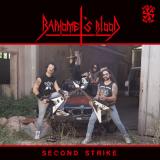
Baphomet's Blood - Second Strike
  • 1: Second Strike (Intro)
  • 2: Baphomet's Blood
  • 3: Baphometal
  • 4: Army of the Night
  • 5: Satanic Force
  • 6: Burn in Hell
  • 7: Speed, Fast, Loud
  • 8: Speed Metal Earthquake
  • 9: Making Noise and Drinking Beer

DYING VICTIMS PRODUCTIONS is proud to present the much-needed reissue of BAPTHOMET’S BLOOD’s sophomore album, Second Strike, on vinyl LP and - for the first time - CD formats. Originally released in 2008, the Italians definitely continued in the same vein: rough speeding heavy metal hailing the old goods of NWOBHM and 80s speed metal. Beer drinkers and hell raisers though and through, this one is for the backwards leaning blue-collar metal maniacs. 8 tracks + a cover of German heavy metal cult act Tyrant finished of this Second Strike

pre-order now19.06.2026

expected to be published on 19.06.2026

22,65 €
J and the Woolen Stars - Puff

J and the Woolen Stars

Puff

12inch28912-3
28912
12.06.2026

New from Ulla’s 28912 label comes a gorgeous bouquet of lowercase wonders from Justin Cantrell aka J and the Woolen Stars, part of Picnic, and the brains behind the excellent Daisart and se Dessaisir Publishing labels.

»Puff« is a glistening pool of lush refractions and music-box lullabies, featuring an array of acoustic instruments and fragile foley sounds that are gently peeled away until all we’re left with are the faded outlines of half-remembered songs.

A sound that roots itself in the prophetic machinations of artists like Fennesz and the languid Japanese minimalism of Fourcolour or Moskitoo, »Puff« strikes a delicate balance, sounding as bewitchingly informal as a Tenniscoats set, but also consistently muddling the perception of high and low-brow sound. Cantrell’s skill lies in a sort of sonic conjuration, bamboozling the brains of those of us who grew up listening to stepped-on audio via ramshackle RealMedia streams by alchemising the content, turning found sound into gold. Just tell us you don’t get chills from hearing the bitrate-impaired acoustic guitar on »Dirty like an angel«, set against a backdrop of windy, harmonic detritus. It’s both meticulously contrived and gloriously off-the-cuff, like one of Vincent Gallo’s classic »When«-era demos reduced down to 96kbps.

Similarly, »She knows just what to say« provokes faint memories of folk music, with impromptu fiddle parts gently steamrolled to create a sound that’s nothing short of exquisite, like pressed flowers rediscovered in an old, discarded book. Even the more palpably electronic elements are hand sculpted in a way that belies the era we’re living in - it’s music for a digital age that sounds oddly unplugged, flawed and human. An unmistakably lovely antidote to the opiating nostalgia of our time.

pre-order now12.06.2026

expected to be published on 12.06.2026

26,68 €
DJ Sprinkles & Hardrock Striker feat. Move D - SKYLAX HOUSE EXPLOSION IV – After The Dancefloor

DJ Sprinkles & Hardrock Striker feat. Move D

SKYLAX HOUSE EXPLOSION IV – After The Dancefloor

12inchLAXSHE4
Skylax Records
01.06.2026

A defining transmission in the history of Skylax Records. Originally released across different moments of the Skylax catalogue, these recordings are now assembled as the final chapter of the Skylax House Explosion series — a project exploring the architecture, memory and survival mechanisms embedded within house music culture. The record opens with Move D’s “Outer Rim 64”, originally released in 2018 as part of the Skylax House Explosion narrative. Suspended between motion and distance, the track establishes the conceptual perimeter of this final chapter — a space where rhythm no longer functions only as propulsion, but as orientation. Here the listener stands at the outer edge of the dancefloor’s architecture, where structure persists even as its original social conditions begin to disappear. The sequence continues with Hardrock Striker’s “Motorik Life (DJ Sprinkles Dub)”, originally released in 2011. Rather than operating as a conventional remix, the Dub reinforces the motorik continuum of the original composition, transforming repetition into endurance. DJ Sprinkles preserves the infrastructural skeleton of the dancefloor — its capacity to sustain bodies through duration alone, without narrative resolution or emotional release. The record culminates with “Motorik Life (DJ Sprinkles Mountain Of Despair Remix)”, one of the most politically explicit works ever associated with Skylax Records. Through the relentless repetition of the phrase “mountain of despair,” Terre Thaemlitz dismantles the traditional function of dance music, transforming remix culture into structural critique. Referencing Martin Luther King Jr.’s famous metaphor, the remix removes the promise of redemption and leaves only the architecture of struggle. The dancefloor is no longer presented as escape, but as a temporary condition of survival. Together these recordings reveal house music’s true function: not to resolve despair, but to create temporary conditions in which bodies can continue to exist despite it.

AFTER THE DANCEFLOOR

you cannot preserve a dancefloor
by archiving its sound
because the dancefloor was never sound

it was bodies
finding temporary protection
inside systems designed to erase them

house music was never a genre
it was a survival strategy

when the lights disappeared
the structures remained
and so did we

out of Stock

Order now and we will order the item for you at our supplier.

12,40 €
Stand High Patrol - Our Own Way LP 2x12"

2023 Backstock

New album of one of the biggest Reggae/Dub french soundsystem starring MacGyver, Rooty Step & Pupajim (who worked with Alpha Steppa, Biga Ranx, High Tone, Mungo's Hi-Fi ...).

Since their inception at start of the 2000s, Stand High Patrol have rocked sound systems to their own riddim, assimilating and re-purposing the codes of the genre in their own unique style. From tiny bars in Brittany to huge festival stages, on independent radio or across national airwaves, the crew have quietly trod their own path, never compromising their core value of independence. Connoisseurs have long recognised Stand High’s credentials both as a dub group and a leading sound system, but they stand out from the crowd because of their ability to deliver the unexpected, whether live or on record. Their ability to draw such a diverse audience is testament to this atypical approach to making music.

In 2020, almost 20 years since their humble beginnings, the collective presents their fifth album, “Our Own Way”. As with their first two albums “Midnight Walkers” and “Matter Of Scale”, now considered as classics in their genre, this new opus asserts itself as the latest representation of the crew’s versatile approach to crafting sound. Their music, a blend of its own known as “Dubadub”, has always borrowed influences from multiple sources, and over the course of their career their roots in dub and reggae have intertwined with hip-hop, jazz, new wave, trip-hop and numerous other genres. The ‘Dubadub Musketeers’ have never ceased experimenting, forever seeking to increase the sonic territory they cover, day after day. Both live and recorded, they’ve made it a point of honour to never offer up the same thing twice. Any resemblance that “Our Own Way” might bear to those first two albums is a consequence of this obvious creative continuity, rather than of going “back to basics”.

In contrast to the last two Stand High Patrol records, the hip-hop inspired “The Shift”, or the Bristol indebted “Summer On Mars”, “Our Own Way” doesn’t have a unifying concept or theme. Rather than being limited to a single aesthetic, the LP pays respect to the entire canon of Jamaican music, all unified under Stand High’s inimitable production values. With the wealth of experience gained during the recording of their last two records, the collective decided to aim for a freer project, letting themselves be guided by their own music and their own instincts. The end result is a musical portrait of what Stand High Patrol is in the present moment.

The tracks that make up the new LP burst out of the studio, each born out of unbridled, impulsive creativity. Previously unheard compositions and specially re-tooled dub plates have been assembled into a tracklist that shifts and moves like a classic Dubadub Musketeer live set. Each step of the process has been refined by years of practice : composition, effects, and the final mix. Throughout “On Our Way”, the brutal dub stepper, though still a favourite for sound system sessions, is noticeable by its absence. Instead, it’s the full weight of the crew’s reggae heritage that’s expressed in the mix. It's not just the depth and weight of each tune that strikes the listener, but also the spaces heard between the notes that grab and hold their attention.. The sense of a trip, whether musical, internal or geographic, is omnipresent throughout the LP, linking each track to those before and after. “Our Own Way” finds Stand High Patrol exploring as usual, yet also narrating their journey as they’ve rarely done before.

out of Stock

Order now and we will order the item for you at our supplier.

Last In: 4 years ago
27,31 €
Senser - Stacked Up XX (Remastered) (LP 2x12"

Man nehme eine Prise Rock, füge ein paar Hip-Hop-Einflüsse hinzu und kröne das Ganze mit starken Texten. Man denke an Nu-Metal mit viel weniger Metal und einer funkigeren Note. So klingen die 90er-Jahre-Legenden Senser. Wenn du diesen Sound magst, wirst du die Neuauflage 2023 ihres Debütalbums »Stacked Up« lieben, die das ursprüngliche, neu gemasterte Album plus ungehörte Bonustracks auf zwei Discs enthält.

out of Stock

Order now and we will order the item for you at our supplier.

Last In: 4 months ago
23,49 €
DAVUS - DAVUS

DAVUS

DAVUS

12inchLBR163
LITTLE BUTTERFLY RECORDS
15.05.2026
  • 1: EUTANASIA
  • 2: CERRá LA BOCA
  • 3: RICKY
  • 4: LA MOTO
  • 5: EL CRUSH DE TU BAE
  • 6: PAPU
  • 7: TANQUE AFULL
  • 8: FE Y AUTOTUNE
  • 9: MALA MíA
  • 10: COMO TP
  • 11: CHAPóN RMX
  • 12: QUE SEA SOLO RAP RMX
  • 13: COUNTER STRIKE
  • 14: UN PAR DE SECUENCIAS
  • 15: GUITA
  • 1694: 0

A sharp, genre-blurring portrait of Uruguay's most creative and profound voice of the new urban generation. Ironic, witty, and relentlessly current, Davus blends trap, plug, drill, and hip hop into a bold statement of cultural leadership-now captured on vinyl for the first time. Davus is one of the defining figures of Uruguay's contemporary urban movement. Known for his sharp lyricism, forward-thinking sound, and constant reinvention, he has become both a reference point and a source of inspiration for emerging and mainstream artists alike. Emerging from Montevideo's fast-evolving underground scene, Davus built his career by fusing irony, emotional honesty, and street-level storytelling with a sound rooted in trap and its subgenres-plug, Detroit, and sexy drill. From early independent releases to major collaborations with leading figures of the Latin American urban movement, his work has consistently pushed beyond trends while remaining deeply connected to the pulse of his generation. This recopilatory vinyl brings together key moments from across his catalog-songs that trace his evolution from underground innovator to a defining voice of contemporary South American urban music. More than a collection, it stands as a cultural snapshot of a generation that found its sound, its language, and its attitude through Davus's ever-evolving artistry-while simultaneously opening the door to a new chapter shaped by bold collaborations and cross-border creative exchange.

pre-order now15.05.2026

expected to be published on 15.05.2026

30,46 €
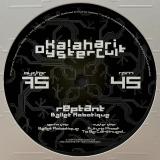
Reptant - Ballet Robotique

Release 75. Reptant’s third. The reptilian overlord surfaces only once every 25 – right on the jubilee, without fail.

Combining menace and kitsch the way only the Rotterdam greats do so effortlessly, he comes in smooth af on the opening cut. Mainframe-tapping machine funk, almost sounding like the Antipodean lovechild of Kraftwerk and Egyptian Lover.

From there, laced with spite and insectoid detail. Noirish cybernetics delivered with genuine vigour, all across a triple-pronged strike of electro excellence. Properly aerodynamic.
Not a tribute to a classic period – rather, a continuation of what the genre’s forebears built. A tried and tested formula that never loses bite, truly heralding Reptant as a standard bearer for electro in the modern era.
The cold-blooded one, right on schedule.

out of Stock

Order now and we will order the item for you at our supplier.

Last In: 39 days ago
14,50 €
Bunny Lee & The Aggrovators - Run Sound Boy Run

To celebrate the 20-year anniversary of our label Jamaican Recordings and to mark the sad one year passing of the musical maestro reggae producer Bunny `Striker’ Lee, we have pulled together a brand new collection of some great Bunny Lee rhythms.

Our label started way back with initial meetings with Bunny Lee and a promise to keep his music available, out on the streets. He will be sorely missed but will live on through his extraordinary musical legacy and we hope to add to this by including this release to the stable of an unbeatable catalogue.

Legendary record producer Bunny `Striker’ Lee’s vast selection of rhythms were ever present at any Sound Clash or Dance worth talking about in the early to mid-1970’s.
Where the version found on the b-side of a single or special dub cut on acetates, would be played to win over the people and conquer the dance. Bunny Lee was the undisputed rhythm master and on this special release he is also the MC telling the crowd how it is and that any rival sound system should watch out as he has the rhythms that can reign supreme. The band cutting these timeless rhythms were a group of top Jamaican musicians Bunny had put together called The Aggrovators.

The Aggrovators were a group of reggae musicians that usually featured Carlton `Santa’ Davis on drums playing alongside Robbie Shakespeare on bass, with other musicians added like Earl `Chinna’ Smith on guitar and Tommy McCook and Vin Gordon and Lennox Brown added for horn arrangements. Keyboards and organ duties normally fell
to musicians Ansel Collins and Bernard ‘Touter’ Harvey. The band was named after singer Eddie Grant had repeated the phrase to Bunny Lee on one of his many trips to England, that such and such artist was giving him `Aggro’. This was a term used in England in the 1970’s by the Skinhead followers of reggae music. A term shortened
from the word `Aggrovation’, meaning trouble, fighting or making the situation worse. Bunny Lee was so taken with this term that on returning to Jamaica, not only did he name his group of musicians the `Aggrovators’ but he also named his record shop situated at 101 Orange Street `Agro Records’.

We have compiled some great tracks recorded by this fantastic group of musicians. With the added extra magic of Mr Bunny Lee calling it out as only he can on the microphone.
Yes Run Sound Boy Run the version master is here…Respect

out of Stock

Order now and we will order the item for you at our supplier.

Last In: 4 years ago
14,24 €
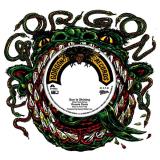
Ronnie Davis & The Aggrovators & Prince Fatty & Bu - Sun Is Shining 7"
  • A1: Sun Is Shinning - Ronnie Davis, The Aggrovators, Prince Fatty
  • B1: Dub Is Shinning - The Aggrovators, Ronnie Davis, Bunny Lee

This 7-inch singles features a previously unreleased cover of Bob Marley's iconic "Sun Is Shining," performed by the prolific Jamaican singer Ronnie Davis of The Itals and The Tennors. The multi-track tape was famously mixed by Prince Jammy into the popular "Jammys A Shine" dub, without any vocals. More recently, Prince Fatty mixed his version "Dub Is Shining" for the acclaimed Prince Fatty Meets The Gorgon album (VP4246) in 2023. The vocal was never mixed or issued, for reasons unknown, but with Prince Fatty's usual magic touch, it finally finds its way to the public after nearly five decades. Ronnie Davis, 1950-2017, was one of Jamaica's beloved voices during his long career. He was better known as a member of the rocksteady group The Tennors, and later with The Itals, but during the 1970s he was on of Bunny Striker Lee's top vocalists.

pre-order now08.05.2026

expected to be published on 08.05.2026

11,72 €
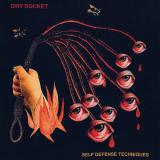
Dry Socket - Self Defense Techniques LP

Dry Socket is a politically charged hardcore band from Portland, Oregon, known for blistering performances and emotionally uncompromising songwriting. Rooted in the raw aggression of classic hardcore, their sound channels the urgency of early Ceremony, G.L.O.S.S., and Negative Approach while carving out a distinctly modern, inclusive space within the genre, one where anger, grief, and survival are not just themes, but lived realities.

Their music confronts systems of violence, coercion, and control with unflinching honesty, creating room to be unapologetically furious, vulnerable, and alive at the same time. Every riff lands like a strike; every lyric feels torn from experience rather than abstraction.

Since forming, Dry Socket has toured extensively across the U.S., Europe, and Mexico, sharing stages with Gorilla Biscuits, The Hope Conspiracy, Torso, and more.

Their latest record, Self Defense Techniques, centers on survival under constant pressure. Inspired by the practice of dehorning rhinos to protect them from poachers, removing a vital part of the animal in order to keep it alive, the album examines the compromises people are forced to make to endure a hostile world. Horns are tools for protection, communication, care, and identity. To survive, so many of us are taught to remove our own.

Across the record, Dry Socket interrogates life inside systems that demand silence, obedience, and self-erasure. Songs wrestle with exhaustion, spiritual betrayal, and economic violence, oscillating between fury and grief. Self Defense Techniques isn’t about triumph, it’s about endurance, documenting the cost of staying alive while refusing the lie that softness is weakness or that silence is peace

pre-order now24.04.2026

expected to be published on 24.04.2026

26,85 €
Guilty Razors - Complete Recordings 1977 - 1978

UILTY RAZORS, BONA FIDE PUNKS.


Writings on the topic that go off in all directions, mind-numbing lectures given by academics, and testimonies, most of them heavily doctored, from those who “lived through that era”: so many people today fantasize about the early days of punk in our country… This blessed moment when no one had yet thought of flaunting a ridiculous green mohawk, taking Sid Vicious as a hero, or – even worse – making the so-called alternative scene both festive and boorish. There was no such thing in 1976 or 1977, when it wasn’t easy to get hold of the first 45s by the Pistols or the Clash. Few people were aware of what was happening on the fringes of the fringes at the time. Malcolm McLaren was virtually unknown, and having short hair made you seem strange. Who knew then that rock music, which had taken a very bad turn since the early 1970s, would once again become an essential element of liberation? That, thanks to short and fast songs, it would once again rediscover that primitive, social side that was so hated by older generations? Who knew that, besides a few loners who read the music press (it was even better if they read it in English) and frequented the right record stores? Many of these formed bands, because it was impossible to do otherwise. We quickly went from listening to the Velvet Underground to trying to play the Stooges’ intros. It’s a somewhat collective story, even though there weren’t many people to start it.
The Guilty Razors were among those who took part in this initial upheaval in Paris. They were far from being the worst. They had something special and even released a single that was well above the national average. They also had enough songs to fill an album, the one you’re holding. In everyone’s opinion, they were definitely not among the punk impostors that followed in their wake. They were, at least, genuine and credible.

Guilty Razors, Parisian punk band (1975-1978). To understand something about their somewhat linear but very energetic sound, we might need to talk about the context in which it was born and, more broadly, recall the boredom (a theme that would become capital in punk songs) coupled with the desire to blow everything off, which were the basis for the formation of bands playing a rejuvenated rock music ; about the passion for a few records by the Kinks or the early Who, by the Stooges, by the Velvet mostly, which set you apart from the crowd.
And of course, we should remember this new wave, which was promoted by a few articles in the specialized press and some cutting-edge record stores, coming from New York or London, whose small but powerful influence could be felt in Paris and in a handful of isolated places in the provinces, lulled to sleep by so many appalling things, from Tangerine Dream to President Giscard d’Estaing...
In 1975-76, French music was, as almost always, in a sorry state ; it was still dominated by Johnny Hallyday and Sylvie Vartan. Local rock music was also rather bleak, apart from Bijou and Little Bob who tried to revive this small scene with poorly sound-engineered gigs played to almost no one.
In the working class suburbs at the time, it was mainly hard rock music played to 11 that helped people forget about their gruelling shifts at the factory. Here and there, on the outskirts of major cities, you still could find a few rockers with sideburns wearing black armbands since the death of Gene Vincent, but it wasn’t a proper mass movement, just a source of real danger to anyone they came across who wasn't like them. In August 1976, a festival unlike any other took place in Mont-de-Marsan – the First European Punk Festival as the poster said – with almost as many people on stage as in the audience. Yet, on that day, a quasi historical event happened, when, under the blazing afternoon sun, a band of unknowns called The Damned made an unprecedented noise in the arena, reminiscent of the chaotic Stooges in their early adolescence. They were the first genuine punk band to perform in our country: from then on, anything was possible, almost anything seemed permissible.

It makes sense that the four+1 members of Guilty Razors, who initially amplified acoustic guitars with crappy tape recorder microphones, would adopt punk music (pronounced paink in French) naturally and instinctively, since it combines liberating noise with speed of execution and – crucially – a very healthy sense of rebellion (the protesters of May 1968 proclaimed, and it was even a slogan, that they weren’t against old people, but against what had made them grow old. In the mid-1970s, it seemed normal and obvious that old people should now ALSO be targeted!!!).
At the time, the desire to fight back, and break down authority and apathy, was either red or black, often taking the form of leafleting, tumultuous general assemblies in the schoolyard, and massive or shabby demonstrations, most of the time overflowing with an exciting vitality that sometimes turned into fights with the riot police. Indeed, soon after the end of the Vietnam War and following Pinochet’s coup in Chile, all over France, Trotskyist and anarcho-libertarian fervour was firmly entrenched among parts of the educated youth population, who were equally rebellious and troublemakers whenever they had the chance. It should also be noted that when the single "Anarchy in the UK" was first heard, even though not many of us had access to it, both the title and its explosive sound immediately resonated with some of those troublemakers crying out for ANARCHY!!! Meanwhile, the left-wing majority still equated punks with reckless young neo-Nazis. Of course, the widely circulated photos in the mainstream press of Siouxsie Sioux with her swastikas didn’t necessarily help to win over the theorists of the Great Revolution. It took Joe Strummer to introduce The Clash as an anti-racist, anti-fascist and anti-ignorance band for the rejection of old-school revolutionaries to fade a little.

The Lycée Jean-Baptiste Say at Porte d’Auteuil, despite being located in the very posh and very exclusive 16th arrondissement of Paris, didn’t escape these "committed" upheavals, which doubled as the perfect outlet for the less timid members of this generation.
“Back then, politics were fun,” says Tristam Nada, who studied there and went on to become Guilty Razors’ frontman. “Jean-Baptiste was the leftist high-school in the neighbourhood. When the far right guys from the GUD came down there, the Communist League guys from elsewhere helped us fight them off.”
Anything that could challenge authority was fair game and of course, strikes for just about any reason would lead to increasingly frequent truancy (with a definitive farewell to education that would soon follow). Tristam Nada spent his 10th and 11th unfinished grades with José Perez, who had come from Spain, where his father, a janitor, had been sentenced to death by Franco. “José steered my tastes towards solid acts such as The Who. Like most teenagers, I had previously absorbed just about everything that came my way, from Yes to Led Zeppelin to Genesis. I was exploring… And then one day, he told me that he and his brother Carlos wanted to start a rock band.” The Perez brothers already played guitar. “Of course, they were Spanish!”, jokes their singer. “Then, somewhat reluctantly, José took up the bass and we were soon joined by Jano – who called himself Jano Homicid – who took up the rhythm guitar.” Several drummers would later join this core of not easily intimidated young guys who didn’t let adversity get the better of them.

The first rehearsals of the newly named Guilty Razors took place in the bedroom of a Perez aunt. There, the three rookies tried to cover a few standards, songs that often were an integral part of their lives. During a first, short gig, in front of a bewildered audience of tough old-school rockers, they launched into a clunky version of the Velvet Underground's “Heroin”. Challenge or recklessness? A bit of both, probably… And then, step by step, their limited repertoire expanded as they decided to write their own songs, sung in a not always very accurate or academic English, but who cared about proper grammar or the right vocabulary, since what truly mattered was to make the words sound as good as possible while playing very, very fast music? And spitting out those words in a language that left no doubt as to what it conveyed mattered as well.
Trying their hand a the kind of rock music disliked by most of the neighbourhood, making noise, being fiercely provocative: they still belonged to a tiny clique who, at this very moment, had chosen to impose this difference. And there were very few places in France or elsewhere, where one could witness the first stirrings of something that wasn’t a trend yet, let alone a movement.

In the provinces, in late 1976 or early 1977, there couldn’t be more than thirty record stores that were a bit more discerning than average, where you could hear this new kind of short-haired rock music called “punk”. The old clientele, who previously had no problem coming in to buy the latest McCartney or Aerosmith LP, now felt a little less comfortable there…
In Paris, these enlightened places were quite rare and often located nex to what would become the Forum des Halles, a big shopping mall. Between three aging sex workers, a couple of second-hand clothes shops, sellers of hippie paraphernalia and small fashion designers, the good word was loudly spread in two pioneering places – propagators of what was still only a new underground movement. Historically, the first one was the Open Market, a kind of poorly, but tastefully stocked cave. Speakers blasted out the sound of sixties garage bands from the Nuggets compilation (a crucial reference for José Perez) or the badly dressed English kids of Eddie and the Hot Rods. This black-painted den was opened a few years earlier by Marc Zermati, a character who wasn’t always in a sunny disposition, but always quite radical in his (good) choices and his opinions. He founded the independent label Skydog and was one of the promoters of the Mont-de-Marsan punk festivals. Not far from there was Harry Cover, another store more in tune with the new New York scene, which was amply covered in the house fanzine, Rock News (even though it was in it that the photos of the Sex Pistols were first published in France).
It was a favorite hang-out of the Perez brothers and Tristam Nada, as the latter explained. “It’s at Harry Cover’s that we first heard the Pistols and Clash’s 45s, and after that, we decided to start writing our first songs. If they could do it, so could we!”
The sonic shocks that were “Anarchy in the UK”, “White Riot” or the Buzzcocks’s EP, “Spiral Scratch” – which Guilty Razors' sound is reminiscent of – were soon to be amplified by an unparalleled visual shock. In April 1977, right after the release of their first LP, The Clash performed at the Palais des Glaces in Paris, during a punk night organised by Marc Zermati. For many who were there, it was the gig of a lifetime…
Of course, Guilty Razors and Tristam were in the audience: “That concert was fabulous… We Parisian punks were almost all dressed in black and white, with white shirts, skinny leather ties, bikers jackets or light jackets, etc. The Clash, on the other hand, wore colourful clothes. Well, the next day, at the Gibus, you’d spot everyone who had been at this concert, but they weren’t wearing anything black, they were all wearing colours.”

It makes sense to mention the Gibus club, as Guilty Razors often played there (sometimes in front of a hostile audience). It was also the only place in Paris that regularly scheduled new Parisian or Anglo-Saxon acts, such as Generation X, Siouxsie and the Banshees, the Slits, and Johnny Thunders who would become a kind of messed-up mascot for the venue. A little later, in 1978, the Rose Bonbon – formerly the Nashville – also attracted nightly owls in search of electric thrills… In 1977, the iconic but not necessarily excellent Asphalt Jungle often played at the Gibus, sometimes sharing the bill with Metal Urbain, the only band whose aura would later transcend the French borders (“I saw them as the French Sex Pistols,” said Geoff Travis, head of their British label Rough Trade). Already established in this small scene, Metal Urbain helped the young and restless Guilty Razors who had just arrived. Guitarist for Metal Urbain Hermann Schwartz remembers it: “They were younger than us, we were a bit like their mentors even if it’s too strong a word… At least they were credible. We thought they were good, and they had good songs which reminded of the Buzzcocks that I liked a lot. But at some point, they started hanging out with the Hells Angels. That’s when we stopped following them.”

The break-up was mutual, since, Guilty Razors, for their part, were shocked when they saw a fringe element of the audience at Metal Urbain concerts who repeatedly shouted “Sieg Heil” and gave Nazi salutes. These provocations, even still minor (the bulk of the skinhead crowd would later make their presence felt during concerts), weren’t really to the liking of the Perez brothers, whose anti-fascist convictions were firmly rooted. Some things are non-negotiable.
A few months earlier (in July 1978), Guilty Razors had nevertheless opened very successfully for Metal Urbain at the Bus Palladium, a more traditonally old-school rock night-club. But, as was sometimes the case back then, the night turned into a mass brawl when suburban rockers came to “beat up punks”.

Back then, Parisian nights weren’t always sweet and serene.

So, after opening as best as they could for The Jam (their sound having been ruined by the PA system), our local heroes were – once again – met outside by a horde of greasers out to get them. “Thankfully,” says Tristam, “we were with our roadies, motorless bikers who acted as a protective barrier. We were chased in the neighbouring streets and the whole thing ended in front of a bar, with the owner coming out with a rifle…”
Although Tristam and the Perez brothers narrowly escaped various, potentially bloody, incidents, they weren’t completely innocent of wrongdoing either. They still find amusing their mugging of two strangers in the street for example (“We were broke and we simply wanted to buy tickets for the Heartbreakers concert that night,” says Tristam). It so happened that their victims were two key figures in the rock business at the time: radio presenter Alain Manneval and music publisher Philippe Constantin. They filed a complaint and sought monetary compensation, but somehow the band’s manager, the skilful but very controversial Alexis, managed to get the complaint withdrawn and Guilty Razors ended up signing with Constantin with a substantial advance.

They also signed with Polydor and the label released in 1978 their only three-track 45, featuring “I Don't Wanna be A Rich”, “Hurts and Noises” and “Provocate” (songs that exuded perpetual rebellion and an unquenchable desire for “class” confrontation). It was a very good record, but due to a lack of promotion (radio stations didn’t play French artists singing in English), it didn’t sell very well. Only 800 copies were allegedly sold and the rest of the stock was pulped… Initially, the three tracks were to be included on a LP that never came to be, since they were dropped by Polydor (“Let’s say we sometimes caused a ruckus in their offices!” laughs Tristam.) In order to perfect the long-awaited LP, the band recorded demos of other tracks. There was a cover of Pink Floyd's “Lucifer Sam” from the Syd Barrett era – proof of an enduring love for the sixties’ greats –, “Wake Up” a hangover tale and “Bad Heart” about the Baader-Meinhof gang, whose actions had a profound impact on the era and on a generation seeking extreme dissent... On the album you’re now discovering, you can also hear five previously unreleased tracks recorded a bit later during an extended and freezing stay in Madrid, in a makeshift studio with the invaluable help of a drummer also acting as sound engineer. He was both an enthusiastic old hippie and a proper whizz at sound engineering. Here too, certain influences from the fifties and sixties (Link Wray, the Troggs) are more than obvious in the band’s music.

Shortly after a final stormy and rather barbaric (on the audience’s side) “Punk night” at the Olympia in June 1978, Tristam left the band ; his bandmates continued without him for a short while.

But like most pioneering punk bands of the era, Guilty Razors eventually split up for good after three years (besides once in Spain, they’d only played in Paris). The reason for ceasing business activities were more or less the same for everyone: there were no venues outside one’s small circuit to play this kind of rock music, which was still frightening, unknown, or of little interest to most people. The chances of recording an LP were virtually null, since major labels were only signing unoriginal but reassuring sub-Téléphone clones, and the smaller ones were only interested in progressive rock or French chanson for youth clubs. And what about self-production? No one in our small safety-pinned world had thought about it yet. There wasn’t enough money to embark on that sort of venture anyway.

So yes, the early days of punk in France were truly No Future!

out of Stock

Order now and we will order the item for you at our supplier.

Last In: 5 months ago
21,43 €
Iivana Mišukka & Arja Kastinen - Iivana Mišukka (Tape)
  • 01: Maanitus & Tšiižik
  • 02: Markka
  • 03: Melkutus
  • 04: Letška
  • 05: Kuuen parin hoirola
  • 06: Brišatka
  • 07: Tšiižik
  • 08: Kirkonkellot
  • 09: Kirkonkellot korkea
  • 10: Hoirola, 3 parin
  • 11: Lippa
  • 12: Kyngäkiža
  • 13: Ristakondra
  • 14: Vanha polkka
  • 15: Viistoista
  • 16: Vanha valssi
  • 17: Kiberä
  • 18: Maanitus Kuokan kanteleella
  • 19: Tuuti lasta nukkumahe
also available

Vinyl[22,65 €]


Death Is Not The End present a further volume of Arja Kastinen's eerie amalgamations of 110 year old wax cylinders with her own meticulously transcribed takes, this time focussing in on Armas Otto Väisänen's field recordings of kantele player Iivana Mišukka (b. 1861 d.1919).

"Ivana Mišukka (1861–1919) was one of the Karelian kantele players recorded by the folk music researcher Armas Otto Väisänen on wax cylinders in 1916 and 1917. In the early 20th century, the remote areas of Border Karelia were undergoing the final phase of a transformation in musical culture, with the ancient runo song tradition giving way to newer forms of music. This transition is reflected in Mišukka's repertoire and choice of instrument. The ancient small kantele, hollowed out of a single piece of wood, was already rare at the turn of the century. Mišukka's kantele was a new type of instrument with 26 strings, constructed of several parts, but he played it using the traditional plucking technique. Like other Border Karelian kantele players, his repertoire consisted of music rooted in runosong culture, as well as newer dances and songs from the east and west. Most of the recorded material falls into the latter category.

Ivan Bogdanov Mišukka was born out of wedlock in Suursara village, Suistamo, on 1 May 1861. He began playing the kantele at the age of five or six, quickly mastering the instrument. In adulthood, he was considered one of the area's best master players. Mišukka was landless for most of his life and lived in different parts of the Suistamo parish. His first wife, Tekla Markintytär, died in 1897 at the age of 40, and his second wife, Jevdokia Filipintytär Jeminen, died in 1907 at the age of 50. Seven children were born from the first marriage, two of whom died young. The third wife, Maria Ignatintytär Gurnan (Kuurnanen), was a well-known master of lamentations. Together with Maria, Iivana Mišukka worked as a tenant farmer in the village of Suursara. Mišukka suffered from rheumatism, which prevented him from participating in physical work like Maria. This was apparently partly the reason why Iivana Mišukka went to earn extra money by playing the kantele on gig trips. He often had other traditional artists from Suistamo as his travelling companions, such as the runosingers Konstantin Kuokka and Iivana Onoila. Iivana Mišukka died in Leppäsyrjä village, Suistamo, on 18 May 1919 at the age of 58, and his kantele was donated to Teppana Jänis.

Mišukka only used 14 of the 26 strings on his kantele, playing the same tunes either a fourth higher or lower. He tuned his kantele to the major scale using fifths, except for a low seventh scale degree on the upper strings, but not below the fundamental. Since he did not use the seventh note of the scale on the upper strings at all, he could use the major scale both lower and a fourth higher with this tuning. According to Mišukka, the sound of higher, or 'finer', strings is 'more beautiful', while that of lower ones is 'greater'. Among runosingers, the size of the thirds varied, ranging from major to minor to neutral. A similar phenomenon can be observed in kantele tunings, where the third, sixth and seventh scale degrees vary in a comparable way.

During a meeting, Väisänen suggested that Mišukka play the smaller kantele belonging to Konstantin Kuokka. The idea was to bring it closer to the horn to improve the recording quality. However, the kantele was completely out of tune, and now Mišukka tuned it to the Lydian scale (track 18).

Using the old plucking technique, Mišukka placed his right middle finger on the fundamental tone, his right index finger on the second scale degree, his left middle finger on the third scale degree and his left index finger on the fourth scale degree, and his right thumb on the fifth. The thumb also played the notes above the fifth note of the scale. As Mišukka remarked to Väisänen: 'Peigaloll' tuloo enemb ruadoa' (the thumb has to do more work). However, he did not use the seventh note of the scale on the upper strings at all. Below the fundamental note, he played the seventh and sixth notes of the scale with his right middle finger of and the fifth note of the scale with his right ring finger. This fifth scale degree below the fundamental is almost always used as a drone. Sometimes, when the melody required it, Mišukka, like other players, also varied the fingering. He would also occasionally strike the same string with the side of his fingernail after plucking it.

The wax cylinder recordings of Karelian kantele players are kept in the archives of the Finnish Literature Society in Helsinki, Finland. Copies were made of them onto reel-to-reel tapes in both the 1960s and 1980s. The 1960s copies are mono and the 1980s copies are stereo. However, not all kantele recordings from these decades have survived.

The sound of the kantele is difficult to hear in wax cylinder recordings due to its low volume, and it occasionally becomes completely obscured by noise. During the copying process, the cylinder sometimes rotates unevenly, resulting in breaks or jumps in the music. Additionally, the rotation speed of the cylinder in the copies does not correspond to the performance speed of the original music, which alters the pitch. However, since Väisänen's precise notes are available in the archive, it is possible to deduce the melodies, their speed, and the tuning level of the kantele in the recordings. Of the copies of the original recordings from the 1960s and 1980s, I have selected the one that best met the requirements of this publication and adjusted the speed of the recording to align with Väisänen's notes. To enhance the listening experience, I have replayed the songs, which now partly overlap the old recordings on this release."

— Arja Kastinen

pre-order now27.03.2026

expected to be published on 27.03.2026

16,39 €
Iivana Mišukka & Arja Kastinen - Iivana Mišukka LP

Death Is Not The End present a further volume of Arja Kastinen's eerie amalgamations of 110 year old wax cylinders with her own meticulously transcribed takes, this time focussing in on Armas Otto Väisänen's field recordings of kantele player Iivana Mišukka (b. 1861 d.1919).

"Ivana Mišukka (1861–1919) was one of the Karelian kantele players recorded by the folk music researcher Armas Otto Väisänen on wax cylinders in 1916 and 1917. In the early 20th century, the remote areas of Border Karelia were undergoing the final phase of a transformation in musical culture, with the ancient runo song tradition giving way to newer forms of music. This transition is reflected in Mišukka's repertoire and choice of instrument. The ancient small kantele, hollowed out of a single piece of wood, was already rare at the turn of the century. Mišukka's kantele was a new type of instrument with 26 strings, constructed of several parts, but he played it using the traditional plucking technique. Like other Border Karelian kantele players, his repertoire consisted of music rooted in runosong culture, as well as newer dances and songs from the east and west. Most of the recorded material falls into the latter category.

Ivan Bogdanov Mišukka was born out of wedlock in Suursara village, Suistamo, on 1 May 1861. He began playing the kantele at the age of five or six, quickly mastering the instrument. In adulthood, he was considered one of the area's best master players. Mišukka was landless for most of his life and lived in different parts of the Suistamo parish. His first wife, Tekla Markintytär, died in 1897 at the age of 40, and his second wife, Jevdokia Filipintytär Jeminen, died in 1907 at the age of 50. Seven children were born from the first marriage, two of whom died young. The third wife, Maria Ignatintytär Gurnan (Kuurnanen), was a well-known master of lamentations. Together with Maria, Iivana Mišukka worked as a tenant farmer in the village of Suursara. Mišukka suffered from rheumatism, which prevented him from participating in physical work like Maria. This was apparently partly the reason why Iivana Mišukka went to earn extra money by playing the kantele on gig trips. He often had other traditional artists from Suistamo as his travelling companions, such as the runosingers Konstantin Kuokka and Iivana Onoila. Iivana Mišukka died in Leppäsyrjä village, Suistamo, on 18 May 1919 at the age of 58, and his kantele was donated to Teppana Jänis.

Mišukka only used 14 of the 26 strings on his kantele, playing the same tunes either a fourth higher or lower. He tuned his kantele to the major scale using fifths, except for a low seventh scale degree on the upper strings, but not below the fundamental. Since he did not use the seventh note of the scale on the upper strings at all, he could use the major scale both lower and a fourth higher with this tuning. According to Mišukka, the sound of higher, or 'finer', strings is 'more beautiful', while that of lower ones is 'greater'. Among runosingers, the size of the thirds varied, ranging from major to minor to neutral. A similar phenomenon can be observed in kantele tunings, where the third, sixth and seventh scale degrees vary in a comparable way.

During a meeting, Väisänen suggested that Mišukka play the smaller kantele belonging to Konstantin Kuokka. The idea was to bring it closer to the horn to improve the recording quality. However, the kantele was completely out of tune, and now Mišukka tuned it to the Lydian scale (track 18).

Using the old plucking technique, Mišukka placed his right middle finger on the fundamental tone, his right index finger on the second scale degree, his left middle finger on the third scale degree and his left index finger on the fourth scale degree, and his right thumb on the fifth. The thumb also played the notes above the fifth note of the scale. As Mišukka remarked to Väisänen: 'Peigaloll' tuloo enemb ruadoa' (the thumb has to do more work). However, he did not use the seventh note of the scale on the upper strings at all. Below the fundamental note, he played the seventh and sixth notes of the scale with his right middle finger of and the fifth note of the scale with his right ring finger. This fifth scale degree below the fundamental is almost always used as a drone. Sometimes, when the melody required it, Mišukka, like other players, also varied the fingering. He would also occasionally strike the same string with the side of his fingernail after plucking it.

The wax cylinder recordings of Karelian kantele players are kept in the archives of the Finnish Literature Society in Helsinki, Finland. Copies were made of them onto reel-to-reel tapes in both the 1960s and 1980s. The 1960s copies are mono and the 1980s copies are stereo. However, not all kantele recordings from these decades have survived.

The sound of the kantele is difficult to hear in wax cylinder recordings due to its low volume, and it occasionally becomes completely obscured by noise. During the copying process, the cylinder sometimes rotates unevenly, resulting in breaks or jumps in the music. Additionally, the rotation speed of the cylinder in the copies does not correspond to the performance speed of the original music, which alters the pitch. However, since Väisänen's precise notes are available in the archive, it is possible to deduce the melodies, their speed, and the tuning level of the kantele in the recordings. Of the copies of the original recordings from the 1960s and 1980s, I have selected the one that best met the requirements of this publication and adjusted the speed of the recording to align with Väisänen's notes. To enhance the listening experience, I have replayed the songs, which now partly overlap the old recordings on this release."

— Arja Kastinen

pre-order now27.03.2026

expected to be published on 27.03.2026

22,65 €
THE ROOTS - Undun LP

THE ROOTS

Undun LP

12inch6788928
Def Jam
24.03.2026
  • A1: Dun
  • A2: Sleep
  • A3: Make My feat Big Krit & Dice Raw
  • A4: One Time feat Phonte & Dice Raw
  • A5: Kool On feat Greg Porn & Truck North
  • A6: The Otherside feat Bilal Olivier & Greg Porn
  • B1: Stomp feat Greg Porn
  • B2: Lighthouse feat Dice Raw
  • B3: I Remember
  • B4: Tip The Scale feat Dice Raw
  • B5: Redford (For Yia-Yia & Pappou) (Redford Suite)
  • B6: Possibility (2nd Movement)
  • B7: Will To Power (3rd Movement)
  • B8: Finality (4th Movement)

Undun is the story of a man, Redford Stevens, dying in reverse, rewinding from the moment he became a statistic and hitting the points in his life where he's at his most self-aware. That he's a criminal who got caught up in the familiar street-hustle trappings that the modern media's documented countless times is a pivotal detail-- it's hit at an angle that seems to emphasize the futile inevitability of it all. His life could be any number of misdirected narratives that ends with a toe tag, and what details listeners learn about him are hazy, buried under archetypal turns of fate and decisive struggles. That this protagonist is a fictionalized composite of a handful of real people, filtered through a matter-of-fact narrative that splits character ambivalence with journalistic impartiality, only makes his lack of direction and the failure of any real closure stand out even more. "Lotta niggas go to prison," Dice Raw states on "Tip the Scale", "how many come out Malcolm X?"

So the Roots' latest album isn't a sprawling, rise-and-fall crime story, not a condemnation or a veneration of a man living outside the law, not a bullet-riddled grand guignol heavy on explicit details of soldiers getting cut down. It's a character study of a man whose existential crisis ends only with his death-- a death gone largely unspecified, the glamor and tragedy washed over with a doomed resignation. That's a hard thing to pull off, even for a band as given to deep-thinking concepts as the Roots are. And when your main lyrical catalyst is Black Thought-- a man more given to allusions than direct statements-- it's likely that it'll take a while for the full scope of Undun to really sink in.

If and when it does, it might strike listeners as a bit skeletal: omit the mood-setting instrumental bookends, including a brief, four-part orchestral suite that builds off Sufjan Stevens' "Redford (For Yia-Yia and Pappou)", and you've got maybe a half hour's worth of material. By ?uestlove's accounts, writing Redford's story introduced the headaches and challenges that come with scriptwriting into their songwriting, and what's left on Undun is the end result of frequent revisions and rewrites that attempt to reconcile character, theme, and continuity. If it comes at the expense of nuance, it's not always obvious: There's an easy-to-trace narrative line from Redford's acceptance of his fate ("Sleep") to his acknowledgement of how close it's approaching ("Make My"), back through declarations of aggravated toughness ("One Time"), and celebratory fatalism ("Kool On"), along ups and downs that juxtapose motivation ("Stomp") and helplessness ("Lighthouse"). When the vocal portion of the album ends with two of the bleakest sets of verses in the Roots discography, peaking with the estrangement of "I Remember" and the desperation of "Tip the Scale", Undun reveals itself as a story where a man's actual death isn't quite as tragic as the circumstances that pushed him to it.

out of Stock

Order now and we will order the item for you at our supplier.

Last In: 6 months ago
31,05 €
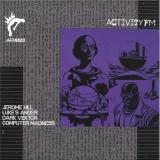
Various Artists - AFM003 LP

Various Artists

AFM003 LP

12inchAFM003BLACK
ACTIVITY FM
19.03.2026

Jerome Hill, Lukes Anger, Dark Vektor and Computer Madness deliver a no-nonsense 12 Inch strike between Electro, Detroit pressure and machine funk. Punchy drums, icy synth cuts, raw momentum, built for DJs, built for floors. Four producers, four angles, one shared language of body-ready electronics, driven by Detroit energy and sharp-edged Electro.

out of Stock

Order now and we will order the item for you at our supplier.

Last In: 3 months ago
11,72 €
MONSTERNAUT - APPROACHING DOOM

MONSTERNAUT

APPROACHING DOOM

12inchHPSLP382
HEAVY PSYCH SOUNDS
17.03.2026

Repress on black vinyl. Goldfoil embossed cover. Alright! 2023, Black Rainbows are back with 12 fresh, brand new tunes! The new album sounds huge, with of a great deal of attention paid to the guitars in the recording, and it seems that the band has finally found the perfect balance and tone for their heavy super stoner sound! This album gives you not only incredible heavy rock-stoner gems, but also: one space acoustic song, one super psychedelic suite and one melodic trippy ballad that adds a perfect mixture of what is sure to be the best album released by the band so far! "Superskull" has been recorded by Fabio Sforza (the same producer of the last two recordings), in May 2022, and after much work and effort by the band in mixing and mastering, the album will see the light of day one year later. The incredible artwork has been delivered by the brazilian artist Pedro Correa.

pre-order now17.03.2026

expected to be published on 17.03.2026

23,32 €
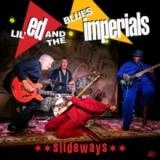
Lil Ed & The Blues Imperials - Slideways LP

"Rough and ready blues played with unmitigated intensity…scorching and soulful, joyous and stomping.
—Living Blues

Electrifying and raucous…one of the few authentic links to pure Chicago blues.
—Chicago Tribune

Lil’ Ed & The Blues Imperials are the reigning champions of raucous, slide-stoked Chicago blues. They’ve achieved legendary status with over 40 years of critically acclaimed recordings and raucous foot-stomping gigs on club, theatre and festival stages all over the world. Slideways is a tour-de-force of old-school Chicago blues played with contemporary urgency.

Shows in support begin on street date in Chicago, followed by Milwaukee, Minneapolis, Columbus, Cleveland, Dayton, New York and Syracuse amongst others. Touring will continue throughout Spring and Summer.

Press, radio and social media focus on album and tour dates, pitching stories and reviews to over 1000 print and internet media contacts around the world. Over 1400 radio programmers worldwide will be serviced and solicited for blues specialty show and selected Triple A and Americana rotation airplay. The album is certain to be welcomed with open arms by the blues media.

Slideways is bursting with Lil’ Ed’s rollicking slide-work and rough-hewn vocals on a joyous blend of smoking slide guitar boogies, raw-boned shuffles, and heart-stopping slow blues. As always, The Blues Imperials supply rock-solid, road-tested and gloriously riotous backing."

pre-order now27.02.2026

expected to be published on 27.02.2026

25,84 €
Necronomicon - Apocalyptic Nightmare LP
  • 1: The Ancient Ones
  • 2: Apocalyptic Nightmare
  • 3: The Following Century (Darkland II)
  • 4: Rhetorical Dictums
  • 5: In Memory
  • 6: Broken Illusions
  • 7: Retributive Strike

Dass es jede Menge deutsche Thrash-Legenden gibt ist ja nun kein Geheimnis ... Aber statt sich immer nur die alten Standards reinzutun, sollte man sich lieber mal mit einer Underground-Perle beschäftigen, die der eine oder andere von euch kennen sollte: Necronomicon! Noch nie gehört? Tja... Das Leben als Thrasher hätte so schön sein können, wenn...ja, wenn Necronomicon Mitte der 80er nicht so ein Pech mit ihrem Label Scratchcore gehabt hätten... „Apocalyptic Nightmare“ von 1987 wurde hierzulande erstmal großflächig und schändlich ignoriert. In den Staaten, in Südamerika und in allen Skandinavischen Ländern wurde das zweite Album der Baden-Württemberger dagegen mächtig abgefeiert – und dass man in diesen Ländern was von guter Musik versteht, ist ja wohl klar. Sänger Freddy braucht den Vergleich mit Destructions Schmier nicht zu scheuen, und der Gitarrensound auf „Apocalyptic Nightmare“ ist schon des Öfteren mit den frühen Celtic Frost verglichen worden. Während ein kleines, obskures Label Necronomicon damals den Start versaut hat, werden High Roller Records es besser machen – und zwar mit der Deluxe-Re-Edition von „Apocalyptic Nightmare“! Mit dem Signing bei High Roller geht für die Band endlich eine echte Odyssee zu Ende!

pre-order now27.02.2026

expected to be published on 27.02.2026

22,23 €
King Tubby - The Roots Of Dub

“Tubby did three original dub albums, ‘Dub From The Roots’. ‘The Roots of Dub’ and the third is ‘Brass Rockers’ with Tommy McCook ‘pon the flying cymbals. Where he mixed it with the horn going in and out in a dub way and one named ‘Shalom Dub’ you can call Tubby’s too because he mixed the versions as they were off forty fives’’

Bunny ‘Striker’ Lee

King Tubby and Producer Bunny ‘Striker’ Lee are intertwined in the birth of Dub Music. After discovering a mistake that made a ‘serious joke’ (more of which later...) they went on to release the first pressings of this new musical genre namely ‘Dub Music’. Tubby’s vast knowledge of electronics and Bunny’s vast catalogue of rhythms would lay the foundations of what today is taken as a standard... the Remix / Version cuts to an existing vocal tune.

Osbourne ‘King Tubby’ Ruddock was born in Kingston, Jamaica on 28th January 1941 and grew up in the High Holborn Street area of downtown Kingston. He studied electronics at Kingston’s National Technical College and also on two correspondence courses from the U.S.A... When he had qualified Tubby began repairing radios and other electrical appliances in a shack in the back yard of his mother’s home. His work in the early days included winding transformers and building amplifiers for Kingston’s Sound Systems. Tubby built his first Sound System in 1957 playing jazz and Rhythm & Blues at local weddings and birthday parties. His reputation as a man who knew and understood both electronics and music grew steadily and as the sixties drew to a close. Tubby
purchased his own basic two track equipment. He installed this alongside his dub cutting machine, a home-made mixing console, and his impressive collection of jazz albums in the back bedroom of his home at 18 Dromilly Avenue which he christened his music room.

Tubby and Striker were at Treasure Isle Studio’s one day while Ruddy from Spanish Town was working with the engineer Byron Smith....

“Tubby and myself was talking when Ruddy was cutting some dub but Smithy (engineer) made a mistake through we were talking and forgot to put in the voice. It was two track recording in those days. Ruddy said ‘No Man! Make it stay! and so they cut the rhythm. When I went over to Ruddy’s that Saturday night a dance was in progress and when they played the vocal to the tune... then he said we’re going to play ‘Part Two’. They never called it ‘Version’..and then he played the rhythm track. The song was a catchy song and everybody started to sing along and the deejay started to toast so everything went down well. On Monday morning I went up and I said ‘Tubbs the mistake we made was a serious joke.It mash up Spanish Town! The people went wild. So you have to start to do that now ‘cause when the man put on the ‘Part Two’ everyone start singing this song. It played about twenty times. I said you try Tubbs!’...Well the next Saturday night now when Tubby strung up down the farm U Roy said he’s going to play ‘Part Two’ but Tubby did it different now. He started with the voice then dropped it out and let the rhythm run and then he brought in the voice in the middle and from there Tubby started to get really popular.’’

Bunny ‘Striker’ Lee

Dynamic Sounds upgraded to sixteen track recording in 1972 and Tubby purchased, again with the help of a deal brokered by Bunny Lee. The old four track equipment and the MCI console from their Studio B. The four tracks now gave him far wider scope to work with and he began to create a new musical form where the bass and drum parts were brought up while the faders allowed Tubby to ease the vocal and rhythm in and out of the mix. It was only a matter of time before Tubby’s dub plate experiments began to make it on to vinyl and the first ever long-playing King Tubby releases would feature a collection of his mixes to a selection of Strikers rhythms. So please sit back and enjoy this historic set of sounds. Lovingly restored and with a few extra gems added to the CD Editions. These releases were the first to carry the name of King Tubby and the first to credit the great musicians that contributed so much to the rhythms that made these albums possible.

out of Stock

Order now and we will order the item for you at our supplier.

Last In: 21 days ago
13,24 €
NINEY THE OBSERVER - Soul Syndicate Dub Classics LP

Reggae music in many ways reminds us of America’s Motown records. The music comes out of its stable fast and furious we tend to know the songs, the artists, the
studio but who? are the players. The unsung heroes that in many cases, cut most of our favourite tracks One such band this applies to in the Reggae field is the Soul Syndicate Band.

Each Jamaican record producer would have their favourite set of musicians they would use, availability permitting. Although several musicians crossed over into different named bands. For example, a set of players working with Producer Bunny 'Striker' Lee would go under the guise of The Aggrovators. The same group working with Producer Joe Gibbs would work under the name The Professionals. Soul Syndicate were the band of choice for Producer Niney the Observer, who used them for his own recordings and when you put that aside the other artists Niney produced, Dennis Brown, Max Romeo, Michael Rose, I Roy, The Ethiopians, Barry Brown, Gregory Issacs and Freddie McGregor.  To name a few and not necessary all, you begin to see the amount of material this set of musicians played on.

Built around the rhythm section of Calton 'Santa' Davis and George 'Fully' Fullwood, drums and bass respectfully. They were usually accompanied by Earl 'Chinna' Smith, Tony Chin on guitars, Keith Sterling, Gladstone 'Gladdy' Anderstone, Bernard 'Touter' Harvey, organ/keyboards and Noel 'Skully' Simms, percussion. Niney's tracks tended to be rhythm heavy and thus Sound System favourites.But when brass was needed/called for ,this was provided by the likes of Tommy McCook, Bobby Ellis, Felix ' Deadley Headley' Bennett. Niney not having a studio of his own at the time used most of Kingston's studios, again availability and money providing. But most of these cuts
selected for this release were cut at Channel 1 and a few exceptions at Randy's Studio 17 and at Joe Gibbs studio at Burns Avenue.

Niney also worked closely with King Tubby on his dub plates, so tracks after the recording sessions were taken to King Tubbys for reconstruction and sometimes
re-voicing over an existing rhythm. These were then used as version sides to the vocal cuts, but most importantly used to nice up the dances, being played out on King Tubbys Hometown Hi-Fi Sound System. We have pulled together a selection of such dub plate specials cut by the Soul Syndicate band for this release. Dub sides that emphasise how well the band worked together, and with Niney at the reigns and the added bonus of some Tubby magic sprinkled on top. Please see our Niney the Observer at King Tubbys 1973-1975 (JRO11) for further examples of this work.

We at Jamaican Recordings hope we are not alone in saluting the musicians, that played such a big part in producing many of our favourite Reggae Sounds. Having released titles by The Revolutionaries (JR003), The Aggrovators (JR005), Sly and Robbie (JR006), we are now pleased to release a selection of rare Dub cuts by another one of Jamaica's finest, the Soul Syndicate band to our catalogue...

Respect Jah Floyd.

out of Stock

Order now and we will order the item for you at our supplier.

Last In: 7 months ago
13,40 €
Temple Balls - Temple Balls
  • 1: Flashback Dynamite
  • 2: Lethal Force
  • 3: Tokyo Love
  • 4: There Will Be Blood
  • 5: We Are The Night
  • 6: Hellbound
  • 7: Soul Survivor
  • 8: The Path Within
  • 9: Stronger Than Fire
  • 10: Chasing The Madness
  • 11: Living In A Nightmare

Temple Balls, the high-octane hard rock band from Finland, is back with a brand-new self-titled album. Over the past few years, the band has kept busy both in the studio and on the road, solidifying their reputation as one of the most exciting live acts in the genre. Having opened for legendary acts such as Sonata Arctica, Queen, Deep Purple, and Uriah Heep, Temple Balls have proven they can command any stage—whether it’s a massive festival or an intimate club. Their live shows are explosive, turning skeptics into die-hard fans with their raw energy and undeniable charisma. The journey began with their official debut single, “Hell and Feelin’ Fine,” released in September 2016, which gained heavy rotation on Finnish Radio Rock. Their debut album, recorded in May 2016 at Karma Sound Studios in Thailand, was released on February 24, 2017. Produced by Tobias Lindell (Europe, Mustasch, H.E.A.T.), the album marked the band’s bold entrance into the international rock scene. In the fall of 2017, Temple Balls embarked on a sold-out Finnish tour with Battle Beast, made their live debut in Japan, and completed a five-day tour across Ukraine. Their popularity soared in Japan, where readers of the country’s biggest rock magazine Burrn! voted them the “Second Brightest Hope,” and they were named “Newcomer of the Year” on Masa Ito’s Rock TV. Their sophomore effort, Untamed, released on March 8, 2019, received rave reviews from major music outlets including Soundi and Burrn!. A European tour alongside Sonata Arctica further cemented their reputation as a world-class live band. Their third album, Pyromide, marked their debut with Frontiers Records and was a melodic hard rock tour de force produced by Jona Tee (H.E.A.T.), packed with powerful riffs, massive hooks, and arena-sized choruses. In May 2022, Temple Balls toured Europe with Swedish melodic metal giants H.E.A.T., followed by a busy summer festival season across Finland. The lead single from their fourth album, Strike Like a Cobra, was released in March 2022 to widespread acclaim. That same year, they completed work on their next full-length, Avalanche, released in fall 2023, featuring the single “No Reason,” which dropped globally on June 22. Now, with their new self-titled album, Temple Balls continue the sonic evolution started with Avalanche, delivering an even more personal and refined sound.

pre-order now13.02.2026

expected to be published on 13.02.2026

32,14 €
Various - ANTENA/ATENAS LP

In 2017, at Documenta Kassel (but in Athens), I invited José Jiménez Bobote, a remarkable gitano artist from the Tres Mil Viviendas neighbourhood in Seville, to record a series of actions in specific locations in the Greek capital. Ancient Greece and modern Greece. I wanted him to draw sound from the city, to strike it as only a flamenco artist can, with his feet. To hit the ground and make it moan, ring out with noises evoking significant moments in history: from Diogenes the Cynic and the Apostle Paul’s sermon at the Areopagus to Rosa Eskenazi’s resistance to the Nazi-German occupation, and the ups and downs of police Inspector Costas Haritos’s survival at the European Bank during the PIGS crisis. Bobote struck the ground and Athens responded, sending back echoes of the past, in an exceptional anachronistic exercise. In flamenco it is possible for several times to sound simultaneously.

We took seventeen hours of footage, and water from many wells.

I then shut away producer, musician, and friend Raül Refree with this material so that he could take the long titles and use them as scores, turning them into mere songs. It was very important to think in terms of songs. The tracks had to have the capacity to be songs, the kind of thing one whistles while absent-mindedly walking down the street. Generally speaking, the scores—that is, the texts—defended the use and abuse of the loose coins that people carry around in their pockets. Loose change as a kind of everyday fetishism against big financial capital. Pistis! Refree managed to coax that distinctive unity of songs, their bright catchiness, from the amalgamation of sounds that would, in other hands, end up being labelled concrete music. Peter Szendy would be pleased and grateful. Being able to sing under one’s breath something that others consider simply noise.

Seven songs, yes. And if you get the chance, take a stroll through Athens with them: the locations are clearly defined. If not, then let Athens fill your home with all its ancient wisdom, boring into your ears like worms, making holes in history.

Listen, and, as people used to say, turn up the volume!

Pedro G. Romero, Santa Marta, Colombia, November 2025

Comes with booklet with song lyrics written by Pedro G. Romero. Limited edition of 250 vinyl records.

pre-order now02.02.2026

expected to be published on 02.02.2026

26,47 €
The Flying Hats - Blender / Hot Cakes (7")

ATA Records proudly present the latest release from The Flying Hats, Blender 7” Following the buzz surrounding their debut LP and the soft limited pre-release of Blender, anticipation for this single has been huge - and with good reason.
“I've never heard something so perfectly combine funk and reggae and do it in a way that is dancefloor gold”. - Monkeyboxing.
The Flying Hats - the Leeds quartet responsible for one of the standout albums of the year - return in phenomenal form with two previously unreleased cuts of the highest calibre. Both tracks strike hard somewhere between Kingston and New Orleans, as if The Meters were channelling Jackie Mittoo or Sound Dimension were jamming with Jimmy Smith.
Thick, funky-reggae organ leads the charge with killer breakbeats, bass pressure, and rhythm-section fire designed to light up any dancefloor worth its salt. Both sides are built for selectors, collectors and dance DJs alike.

out of Stock

Order now and we will order the item for you at our supplier.

Last In: 8 months ago
14,71 €
Royce Wood Junior - Penny Ballads 12"
  • A1: Clean Up (EP Mix)
  • A2: Go Get Your Money
  • A3: Beretta (feat. Lucey Way)
  • B1: Things
  • B2: Rolling
  • b:3 Go Get Your Money (B-Sharp Mix)

First Word Records are proud to bring you 'Penny Ballads', a 5-track EP from Royce Wood Junior. Royce Wood Junior is a Grammy & Mercury Award-nominated musician, songwriter and record producer from London, currently based in Brighton. As a multi-instrumentalist, he's collaborated with a litany of brilliant artists over the years, such as Jamie Woon, Nao, Disclosure, Jessie Ware, Olivia Dean, Joy Crookes, Jamie Lidell and Jordan Rakei, additionally to touring with the likes of the legendary Thomas Dolby. He's released two acclaimed solo albums to date ('The Ashen Tang' in 2015, and 'No Two Blue Ticks' in 2021). 'Penny Ballads' demonstrates RWJ's varied talents, with a collection of alternative soul compositions, each one as unique as the next. It includes the first two singles, the Poplife-Prince era flavoured 'Go Get Your Money', and the double-time future funk adrenaline shot, 'Clean Up', along with three previously-unreleased tracks. 'Beretta' is low-slung soul funk, beginning with quirky squelchy synths, before the soulful lead vocal of feature artist Lucey Way breezes in to melt everyone's hearts. 'Things' sweeps in next, an infectiously soulful midtempo heavy soul bop, with an instant earwork of a hook, like a modern-day Steely Dan / Doobie Brothers, complete with a head-nodding string section to end the track. The collection concludes on a more melancholy downtempo tip with 'Rolling'; an almost-folktronic anthem, with a key refrain that wouldn't be out of place on a 70's Stevie piece. RWJ (aka Jim Wood) says of this project… "Back in the 17 and 1800's Troubadours and minstrels would go from Tavern to Tavern selling Penny Ballads, single sheets of music and lyrics written quickly and frivolously to make a quick buck.. It strikes me that we're in a similar phase in the way we value music in 2025. An old Penny Ballad was cheap and dog-eared, ink-smudged, sung aloud by firelight, Now songs live in the digital ether, dissolved in the air, a ghostly breath paid in micro cents. The new era of Penny Balladry is here, and weird. This EP is a snapshot of my writing over a two year period. Focussed on minimal recording styles, one mic on the drums, generally first or second takes on parts and vocals, I wanted the music to feel like small moments with lyrics that talk about the weird nuances of being alive as a latter stage human on the cusp of the Ai revolution. Culturally so evolved, but physiologically still just a bunch of mammals walking about with primitive fears and needs. Just trying to reconcile it all moment to moment…" Previous support for Royce's music has included Radio 1's Future Sounds, BBC 6 Music's New Music Fix, Annie Mac, Clara Amfo, Jo Whiley (BBC Radio 2), Mary Anne Hobbs, Jamz Supernova, Tom Robinson, Huw Stephens (BBC 6 Music), Zane Lowe and MistaJam. There have been sessions previously for the likes of Red Bull and press from Huck, Line of Best Fit, Clash, Aesthetica & DIY magazine. Entirely self-written and self-produced, this EP gives a solid taste of RWJ's talents. A deeply funky diverse set of music from an immensely talented individual. 'Penny Ballads' is due to be released on vinyl & digital, 24th October 2025. The vinyl version also includes an exclusive additional mix of the first single 'Go Get Your Money'. TRACKLIST: 01: Clean Up (EP Mix) 02: Go Get Your Money 03: Beretta (feat. Lucey Way) 04: Things 05: Rolling 06: Go Get Your Money (B-Sharp Mix) Deconstructed Mixes

pre-order now23.01.2026

expected to be published on 23.01.2026

16,77 €
Riccardo La Foresta - ZERO,999...

After spending much of the last years focusing on the evolution of his own instrument, the drummophone, the release of ZERO,999… reveals a new paradigm in La Foresta's work and career.

In this album he collects fragments of live performances and site-specific installations conducted over the last decade, with and without the drummophone — reimagining and repurposing them as compositional elements that he has interwoven with recent studio recordings and collaborations to form eleven viscerally powerful pieces of overwhelming rhythmic and textural density.

La Foresta weaves together these captured moments in time, while employing combinatory strategies inspired by Italo Calvino's tarot stories in "Il castello dei destini incrociati," forging relationships and connections between recordings from the collaborators and his own. In approaching accompanying and augmenting these recordings, Riccardo, in the role of percussionist and composer explores the tension between his personal and academic focus on rhythmic structures and his fascination with repurposing the drum as a durational instrument.

Contributions from collaborators include the synthetic textures of Valerio Tricoli, Anthony Pateras, Aleksandra Słiż, and Renato Grieco, the vocalizations of Antonina Nowacka and Sara Persico, and the guitar experimentations of Ale Hop and Stefano Pilia, bringing together a distributed ensemble of musicians pulling apart the orthodoxies of their own instruments and techniques. Through the interaction of these elements, La Foresta imagines a causal network that binds, integrates and informs fragmented contexts, performers and performances, exploiting new possibilities of the drummophone.


ZERO,999… is conceived as a suite where sound and time are communicated simultaneously at different orders of scale, a single strike of a drum is a drone if slowed down one thousand times, an hour-long drone is a brief tick in the clock of geological time. A seemingly static object, such as the number 1, can both be defined by its fixedness, and as a process in which eternally approaching (0,999...) is the same as arriving.


k 11: EyeContact (Nereo`s) feat. Stefano Pilia

out of Stock

Order now and we will order the item for you at our supplier.

Last In: 8 months ago
16,39 €
Bullet - Kickstarter

Bullet

Kickstarter

12inch249981
Steamhammer
09.01.2026
  • 1: Kickstarter
  • 2: Caught in the action
  • 3: Open fire
  • 4: Keep Rolling
  • 5: Hit the road
  • 6: Avenger
  • 7: Chained by metal
  • 8: Spitfire
  • 9: Full throttle
  • 10: Strike at night
  • 11: Night falls down

The Swedish band Bullet got together in autumn 2001, with the aim of playing traditional heavy metal inspired by the late 1970s and early 1980s: solid, authentic and classic, with a contemporary and timeless touch. Seven years after their latest studio album, ‘Dust To Gold’ (2018), the musicians Dag “Hell” Hofer (vocals), Hampus Klang (guitar), Gustav Hector (bass), Gustav Hjortsjö (drums) and latest addition Freddie Johansson (guitar) are now back with a new album: ‘Kickstarter’ is scheduled for release on Steamhammer/SPV on 09 January 2026 and is set to prove that Bullet are determined to continue their almost 25-year career with the very kickstart referenced to by the album title. This of course also includes Bullet’s iconic tour bus, whose engine exploded after one of their most recent shows, forcing the musicians to embark on their return journey without their rolling accommodation. Naturally, this was the end neither of Bullet nor their battered vehicle – to the contrary: The group’s classic heavy metal spirit and their unwavering DIY mindset have proved stronger than ever. Having repaired the ageing bus with unwavering determination, oil-smeared hands and sweaty brows. Bullet are now ready to hit the road again, with ‘Kickstarter’ and the three lead singles/videos ‘Kickstarter’ (17 October 2025), ‘Keep Rolling’ (21 November 2025) and ‘Chained By Metal’ (19 December 2025) on board.

pre-order now09.01.2026

expected to be published on 09.01.2026

26,47 €
JAMES BROWN - Sex Machine (2x12")
  • A1: Get Up I Feel Like Being a Sex Machine
  • A2: Brother Rapp (Part I & Part II)
  • A3: Bewildered
  • A4: I Got the Feeling
  • B1: Give It Up or Turnit a Loose
  • B2: I Don’t Want Nobody to Give Me Nothing
  • B3: Licking Stick
  • C1: Lowdown Popcorn 9.Spinning Wheel
  • C2: If I Ruled the World
  • C3: There Was a Time
  • C4: It’s a Man’s Man’s Man’s World
  • D1: Please, Please, Please
  • D2: I Can’t Stand Myself (When You Touch Me)
  • D3: Mother Popcorn

James Brown wants to know one thing before he and his band begin Sex Machine. “Can I get into the thing, really?,” he asks. His cohorts enthusiastically respond in the affirmative. And for the next hour and change, Mr. Dynamite gets into it and more, turning in a sweat-soaked, feet-moving, hip-swiveling, emotion-purging, in-the-red, drop-everything-you’re-doing-and-dance performance for the ages. Ranked by Rolling Stone among the 500 Greatest Albums of All Time, the sweeping 1970 effort towers as a testament to Brown’s inimitable legacy as well as the peak powers of his voice, vibrancy, and bands.

Sourced from the original master tapes, pressed at Fidelity Record Pressing, and housed in a Stoughton gatefold jacket, Mobile Fidelity’s numbered-edition 180g 33RPM 2LP set presents Sex Machine in audiophile sound for the first time. It explodes with the energy the lightning-strike music demands. Dynamic, immediate, present, airy: Everything from the brassiness and fluidity of the horns to the snap and decay of the snare to the swell and carry of the organ comes across in full-range perspective.

Then there’s Brown’s superhuman singing, which here emerges with a purity, naturalism, and transparency that ensure you feel everything. Screeching, shouting, pleading, moaning, preaching, stinging, commanding, testifying, crooning, humming: The Godfather of Soul contributes one of the finest vocal performances known to man. This definitive 55th anniversary reissue of Brown’s monster funk statement further exhibits a combination of clarity, solidity, separation, and imaging that helps bring to light what he and his crack ensembles committed to tape. Both in the studio and on the stage.

Just how lifelike does this reissue sound? Senior Mobile Fidelity Sound Lab engineer Krieg Wunderlich, who handled the remaster, notes: “There were some artifacts that sounded a bit like mistracking. But they turned out to be breath blasts on the vocal microphone. That is part of history. JB was workin' hard, and breathin' hard. And there was an edit the timing of that was truly strange. Again, a part of history.”

Originally marketed as a live album, Sex Machine contains six songs recorded in the studio and later overdubbed with canned crowd noise and reverberation. Save for “Low Down Popcorn,” the tracks on the latter half stem from a phenomenal performance captured in October 1969 at Bell Auditorium in Brown’s adopted hometown of Augusta, GA. The special relationship between the singer, the audience, and the location is palpable.

As the 1960s gave way to a new decade, Brown experienced immense success and dealt with unexpected change. Soul Brother Number One soon expanded his idea for an official live album captured in Augusta when the ensemble that backed him on that date morphed into the original version of the world-famous J.B.’s just months after the show. The virtuosic abilities, sticky chemistry, and rhythm-forward nature of the J.B.’s prompted him to book a one-off session in Cincinnati, OH, on a late July night.

Anchored by brothers William “Bootsy” Collins and Phelps “Catfish” Collins, the group — as well as two different drummers — laid down a nearly 11-minute rendition of “Get Up I Feel Like Being Like a Sex Machine” and a thrilling medley of “Bewildered,” “I Got the Feeling,” and “Give It Up or Turnit a Loose.” A pair of then-recent studio singles cut in separate locations in 1969, “Brother Rapp” and “Low Down Popcorn,” each featuring his prior group, took care of the second LP worth of material that complements the originally planned live set.

Complicated? Somewhat. Unusual? Definitely. But just as he elevated the expectations for all present and future R&B artists, Brown not only makes it all work. He makes it positively electrifying.

“Get Up I Feel Like Being Like a Sex Machine” is alone deserving of a dissertation on the art of funk music, seeing it moves up and down akin to an oil derrick, witnesses Brown unleashing a trademark series of grunts, squeaks, and “good god” asides, and glides to a hypnotic groove that won’t quit. Or look to the syncopated rhythms of “Brother Rapp (Part I and Part II),” one of multiple pieces here that signify the point where Brown began viewing every instrument as a percussive tool. Brown closes the three-song medley with his new band with a skedaddling “Give It Up or Turnit a Loose,” which provides jolts on the order of sticking your finger into a socket.

Not that the actual live material falls short in any way. Setting an insistent tempo for the vitality that follows, “I Don’t Want Nobody to Give Me Nothing” positions Brown as a role model, leader, and self-sufficient entrepreneur. All simmer and boil, the short and sweet “Licking Stick” dares you to keep pace. The floating, almost comforting “Spinning Wheel” spotlights the instrumental prowess of Maceo Parker and company, and functions as a seamless segue into the tender, horn-saluted “If I Ruled the World.”

And Brown and his mates still aren’t done. Just try to resist the one-two closing punch of “I Can’t Stand Myself (When You Touch Me)” and “Mother Popcorn.” Mercy.

Ain’t it funky? Sure ‘nuff.

out of Stock

Order now and we will order the item for you at our supplier.

Last In: 9 months ago
83,40 €
Purl - Deep Ground (3x12")

Hailed as "one of the finest ambient and dub techno albums around," Deep Ground earned Purl a place in the hearts of many lovers of the deeper side of electronica. Enthusiasts on Discogs describe it as "one of the best dubtech albums ever - hypnotic, mesmerizing & deep" - and compare it to luminaries like Biosphere and bvdub for its "warm deep calming sounds and atmospheres." Reminiscent of Wolfgang Voigt's GAS project, the seminal 2011 album by Purl (Ludvig Cimbrelius) is finally reborn in a remastered 3xLP vinyl reissue on LILA ART. Originally released on the revered Silent Season label based in British Columbia, this ambient techno masterpiece has continued to captivate listeners year after year. In many ways like a darker sister to 154's ethereal techno epic "Strike", Deep Ground echoes the misty forests and quiet expanses of Cimbrelius' youth in Sweden. As the artist reflects in a poem accompanying the release: "We are consciousness, rooted in the deep ground of being. The deep ground of being is where all things begin and end. The deep ground of being is eternal." This ethos permeates every layer of Purl's expression; crafting sonic sanctuaries that remain intimate while evoking the infinite.

Delicately remastered for vinyl by Giuseppe Tillieci (Neel) in collaboration with Purl. Limited to 300 copies worldwide.

out of Stock

Order now and we will order the item for you at our supplier.

Last In: 9 months ago
39,08 €
Woodkid - WOODKID FOR DEATH STRANDING 2 (LP 2x12")

WOODKID komponiert die Musik zum heiß erwarteten PlayStation-Spiel "Death Stranding 2: On The Beach". Mit seinem neuen Album "WOODKID FOR DEATH STRANDING 2: ON THE BEACH" zum sehnlichst erwarteten Spiel von Hideo Kojima hebt WOODKID die Idee von Game-Musik auf ein neues Level. Die Songs sind inspiriert von Kojimas Erzählkunst, seinen Figuren und der Welt von Death Stranding - und entfalten sich als eigenständiges Werk voller Tiefe, Kontraste und Atmosphäre.WOODKID, bürgerlich Yoann Lemoine, ist ein französischer Sänger und Komponist. Mit seiner stilsicheren Kombination aus orchestraler Dramatik, elektronischer Präzision und emotionalem Tiefgang hat er sich international einen Namen in der Musik- und Filmwelt gemacht - sowohl als Musiker als auch als Videoproduzent für Künstler:innen wie Rihanna, Lana Del Rey, Pharrell Williams oder Harry Styles. Seine Musik wurde für zahlreiche Film-, Serien- und Videospielproduktionen eingesetzt (Arcane, Assassin's Creed, The Umbrella Academy). Für seine Arbeiten wurde er mehrfach für Grammy- und MTV-Awards nominiert, seine Single "Run Boy Run" wurde weit über fünfhundert Millionen Mal gestreamt. Auch in der Modewelt ist WOODKID präsent - etwa mit Musik für die Shows von Louis Vuitton oder Dior.Über drei Jahre hinweg arbeitete WOODKID eng mit Kojima und dem Team von Kojima Productions zusammen, um Musik zu erschaffen, die weit über klassische Soundtracks hinausgeht. "Jeder Song, jedes Thema wurde in zahllosen Varianten und Schichten komponiert", erklärt WOODKID. Das Ergebnis ist ein Album, das cineastische Orchesterarrangements mit elektronischen Klanglandschaften und eindringlichen Gesangslinien verbindet."Death Stranding 2: On The Beach" ist das neue Werk von Hideo Kojima, einem der visionärsten Köpfe der Gaming-Welt. Als Fortsetzung des vielfach ausgezeichneten ersten Teils, der über 20 Millionen Spieler:innen weltweit erreichte, führt das Spiel die Themen Verbindung, Isolation und Verantwortung in eine neue erzählerische Dimension. Das Spiel besticht zudem durch einen hochkarätigen Cast - darunter Norman Reedus, Léa Seydoux, Troy Baker, Elle Fanning und Shioli Kutsuna - und eine Geschichte, die von den globalen Erfahrungen der letzten Jahre inspiriert ist.Von zarten Melodien bis zu eruptiven Breakcore-Momenten - jeder Track erzählt eine Geschichte. Für die Aufnahmen reiste WOODKID zwischen Paris, Los Angeles und Tokio, um die kreative Vision Kojimas einzufangen. "Es ist manchmal schwer, Hideos Vision ganz zu verstehen, weil sie sich ständig verändert. Man muss dem Prozess vertrauen - und das Ergebnis ist immer überwältigend", sagt er. Was dabei entstand, ist mehr als ein Soundtrack: Es ist ein Manifest künstlerischer Freiheit, ein musikalischer Gegenentwurf zu Konventionen - und eine Hommage an das Anderssein.Die erste Single "To The Wilder" erschien im März 2025 und verzeichnet bereits über 3,7 Millionen Streams weltweit. Das Album erscheint digital, sowie als Vinyl- und CD-Edition - beide mit dem großartigen Artwork des Spiels und als liebevoll gestaltete Sammlerstücke für die internationale Fancommunity.Neben WOODKIDs Album erscheinen zwei weitere Veröffentlichungen zum Spiel: ein Score-Album sowie ein weiteres Song-Album mit noch nicht angekündigten Künstler:innen. Beide erscheinen digital, ebenfalls bei Milan Records.Das Spiel "Death Stranding 2: On The Beach" erscheint am 26. Juni 2025 exklusiv für PlayStation®5.

out of Stock

Order now and we will order the item for you at our supplier.

Last In: 9 months ago
40,29 €
Items per Page:

Language