It is no longer a secret that Lady Linn has a very rich and unique voice with a versatility that is second to none, ensuring that she is right at home in a myriad of styles.
She proved exactly that in her new 'trilogy', a series of three E.P.'s - 'I'm Fine', 'Sea of Trees' & 'Nocturne'- each one telling its own unique story, and now bundled on the album 'Trilogy'.
The common thread throughout the album is her affinity with jazz, soul and dance, but also lyrically, various themes return: the tenderness within family life, melancholy, nature, and the magic of the dance floor.
There is also a clear evolution with the arrangements going from a sober, stripped-down quasi-electronic sound of the JX-03 on 'I'm fine' (with contributions from Gustaph, Gregory Frateur and producer Frederik Segers) to dreamy and warm analog synths by producer Joris Caluwaerts on 'Sea of Trees', to an organic, energetic sixties sound on 'Nocturne' with starring role for her partner and bass player Filip Vandebril and partners in crime: The Magnificent Seven, arranger Frederik Heirman and producer Jan Chantrain.
In addition to a selection of the three EPs, 'Trilogy' also includes the extra song 'Hurricane', one of Linn's personal favorites, recorded at Daft Studios with The Magnificent Seven:
'I had just watched a documentary on Laurel Canyon (on the topic of Los Angeles - the epicentre of the 'counter culture' or better 'hippie culture' - in the late 60's and early 70's and the habitat of The Mamas and the Papas, Frank Zappa, Jim Morrison, etc.) which fed my fascination for the 60's that I already had thanks to my parents. The way in which music was created and recorded in that era is a dream for every musician, me included. With the surplus in time due to the lack of gigs during the pandemic the time was right to follow my dream and record in the Daft Studios with my own band. I felt a bit like Carol King behind my piano, but I was also inspired by Joni Mitchell.'
A quote from the lyrics of 'Hurricane': 'I wanna feel the wind like the birds outside/Dive like a seagull, enter the water from flight/Into the deep I slide'.
'A very personal song about losing yourself and the longing for freedom. I composed this one specifically with 60's songs in mind, with loads of modulations and pretty complex chords.'
Lady Linn wrote a versatile trilogy, inspired by a diverse set of influences that had her digging in music history in a very original and contemporary way. She also made her mark on the sound of the productions. On both 'I'm Fine' and 'Nocturne' she was co-producer.
Buscar:stripped inc
Chloé Robinson & DJ ADHD still aren’t short on fuel. In fact, they seem to only be boosted further by their own supply. With such a weighty momentum driving forward their newly established identities, only one big question sits adjacent in the saddle: what’s next? It seems that Chloé and Alex already have the answer for today’s daily summon, and for the next Pretty Weird release, it’s a 4-track techno record reiterating the trusted adage of less being more. With an emphasis on space and silence placed intuitively, the first single from the ‘Steamin’ EP finally gets its much anticipated drop - including a killer remix from close friend Four Tet stamped on in classic, inimitable style.
‘Steamin’ is all serrated kicks, 909 drums and tenacious vocals that yell without inhibition, invoking the looseness of a party spiralling unphased into its collective apex.. ‘Redbull’ scales up on the pyrotechnics and rowdy behaviour, taking the sensation of several shots of caffeine and packaging it into a mean, raucous pick-me-up.
For ‘Pax’, Chloé and Alex continue on the stripped back disorder with white-hot conviction through rhythm and textures that find their power through no-frills, unpretentious simplicity. Kieran Hebden steps up for the remix, nodding back in appreciation to the past through the nestling of a sharply redefined ‘Pulse X’ sample alongside his addictive, punchy production all too suited to those can’t-go-home-just-yet stints.
Early support from artists including Four Tet, Peggy Gou, Jamie XX, Floating Points, Ben UFO, Caribou, Skrillex, Mary Anne Hobbs, Bradley Zero, Bonobo, Saoirse, Zenker Brothers, TSHA, HAAi, I. Jordan, Logic1000 and Pearson Sound.
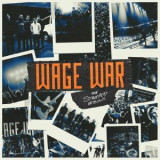
The Stripped Sessions adds to Wage War’s already impressive and numerous career highlights including over 580 total million streams; hitting high marks on Billboard Charts and earning press raves from Revolver, Loudwire, Kerrang!, Alternative Press, Rock Sound, Modern Drummer, and 2021 covers from Kerrang! and UPSET.
The incongruous, yet glorious, creative partnership between Nancy Sinatra and Lee Hazlewood was well underway when the two singular artists reunited to record 1972’s Nancy & Lee Again, a follow-up to their bestselling duet debut, Nancy & Lee. Nancy, the eldest daughter of Frank Sinatra, had been working with the Oklahoma-born songwriter since 1965, when she topped the pop charts with “These Boots Are Made For Walkin’.” Over the next five years, the two artists forged a prolific relationship in the studio, with Hazlewood writing and producing many of Nancy’s solo hits. Soon, the duo found success with a series of duets, including “Sand,” “Summer Wine,” and “Some Velvet Morning” – all of which appeared on their highly-influential 1968 debut.
Not long after the critical acclaim and chart success of Nancy & Lee died down, however, Hazlewood unexpectedly relocated to Sweden, leaving his musical partner in the proverbial dust. America, meanwhile, was in the midst of a cultural shift, as the Vietnam War waged on. By the turn of the decade, the musical landscape had changed significantly. “Trivial music and not profound music became unimportant,” recalls Nancy, speaking to Hunter Lea. “It was a tough time.” And yet, despite the circumstances, the stars somehow aligned for the duo to record some of their most magnificent music together.
Returning to Los Angeles for the project, Hazlewood – who reprised his role as producer – chose to take a new direction with the duo’s sophomore album. Nancy recalls, “It was more dramatic; it was more fun to do, more challenging to do…. It was more grandiose.” For the lush, orchestral arrangements, they collaborated with Larry Muhoberac (an original member of Elvis Presley’s TCB band, whose early ‘70s credits also included Barbra Streisand, Neil Diamond, and Lalo Schifrin) and Clark Gassman, who had worked on Hazlewood’s 1970 LP, Cowboy in Sweden. Backing vocals from brothers John and Tom Bahler, who remain two of the most recorded singers in history, added additional texture to several songs.
The big sound that Nancy describes above is exemplified in the album’s cinematic opener, “Arkansas Coal (Suite).” Clocking in at nearly six minutes long, the dynamic overture tells the tale of an ill-fated coal miner (sung by Hazlewood), while Nancy adjusts her vocals to sing as both the miner’s daughter and his wife. Hazlewood’s knack for vivid, nuanced storytelling shines throughout Nancy & Lee Again, particularly in “Paris Summer,” which details the conflict that a married woman faces, as she engages in a passionate affair. Another highlight is the country-inspired hit, “Did You Ever,” which was released as the album’s lead single. After it landed at No.2 on the U.K. pop charts, the song served as an alternate title track in several countries, including LP pressings in the U.K., Germany, and Canada.
One of the most emotionally-charged moments on Nancy & Lee Again is a cover of Dolly Parton’s “Down From Dover.” The heartbreaking tune tells the tale of a pregnant teenager, who has been abandoned by her lover and her family and ultimately gives birth to a stillborn baby. While Parton’s 1970 version was sung from the teenager’s point of view, Hazlewood and Sinatra transformed the country song into a duet. Hazlewood, who offers the man’s side of the story, sings in a notably deeper octave than his signature baritone.
Another poignant selection is “Congratulations,” which describes a soldier coming home from Vietnam. “His face has grown old and his eyes have grown cold/And they tell you of where he has been/Congratulations, you sure made a man out of him,” Hazlewood sings, pointedly. Nancy, who performs as the vet’s wife, argues that the song had a deeper meaning for her duet partner. “Lee started out a hawk, he was an army guy, so he was all for the war in the beginning. We didn’t talk about it, but at some point, he changed radically. ‘Congratulations’ was almost like an apology from him. I don’t want to put words in his mouth, but it was as though he was saying ‘I’m really sorry.’”
The song “Friendship Train” could also be interpreted as an apology of sorts – this time to Nancy. “You’ve been hurt and I’ve been hurt/Now we’re living pain,” the tune opens. When Hazlewood moved to Sweden without telling his longtime musical partner, Sinatra was understandably upset. “I felt pretty betrayed. I mean, who does that? Who just up and disappears like that? I’ll never understand it,” she reveals. But the uplifting duet – a slice of ‘70s pop perfection – offers reaffirming words of love between friends. “Lee felt things very deeply and tended to express his feelings in song instead of in real life,” explains Nancy.
The 10-track album closes with the stripped-down “Got It Together.” Backed by an acoustic guitar, the song is equal parts playful and candid, as the duo has an impromptu, spoken-word conversation about their lives. “I wish that we’d quit getting so old,” laments Nancy, who later shares her wish to have children (she would do so in the next few years). Hazlewood, meanwhile, attempts to remedy his past wrongdoings – this time asking his partner, “Can I go back to Sweden?” With that, Nancy gives her blessing.
This definitive reissue of Nancy & Lee Again also includes two bonus tracks. Both are stylistic departures for the duo – but fit right in with the psychedelic pop of the era. The first one, “Think I’m Coming Down,” is a harmony-filled reflection on a toxic relationship. “I think that was one of [Lee’s] drug things. I don’t mean that he used drugs; I mean that he was trying to be part of that culture. Trying to be hip,” explains Nancy, who delivers an emotive vocal performance on the solo track. Also included is “Machine Gun Kelly,” penned by a staple of the 70s singer-songwriter movement, Danny Kortchmar (James Taylor, Carole King, Linda Ronstadt). Recorded several months after the release of the album, the song found Nancy reuniting with Billy Strange, who arranged many of her solo albums, as well as Nancy & Lee. Sinatra and Hazlewood first performed “Machine Gun Kelly” during their residency at Las Vegas’ Riviera Hotel in February 1972 (later released as a concert documentary on Swedish television). While the recording has long remained a career favorite of Nancy’s, it would be decades before it was officially released.
Nancy & Lee Again remains a creative high point in the careers of Sinatra and Hazlewood and, upon its release, garnered rave reviews from Billboard, Record World, and Cash Box, among others. Yet, Nancy & Lee Again never received the spotlight it so utterly deserved. “We didn’t have label support at all in those days,” recalls Nancy. “Without the strength of a label, records die. We were old. We were old-fashioned. We were just not what was happening. It’s a very ageist kind of business.” Nevertheless, she adds, “I think it’s a very good album. I think it’s timeless.” Now, after years of being a sought-after rarity, this gem in the Sinatra-Hazlewood canon can finally get its due.
Five decades later, Nancy’s legacy only continues to grow, as new generations discover her impressive catalog (which boasts nearly 20 studio albums – her duets with Hazlewood among them – and dozens of charting singles, including the theme song to the 1967 James Bond film, You Only Live Twice). In 2020, Sinatra was recognized by her peers when “These Boots Are Made For Walkin’” was inducted into the GRAMMY® Hall of Fame. That same year, Sinatra partnered with Light in the Attic for Nancy Sinatra: Start Walkin’ 1965-1976, a definitive survey of her most prolific period. LITA has also reissued Sinatra’s classic debut, Boots, and her iconic, 1968 album with Lee Hazlewood, Nancy & Lee. The label looks forward to celebrating Nancy over the coming years with a variety of special releases, exclusive merchandise, and more.

The incongruous, yet glorious, creative partnership between Nancy Sinatra and Lee Hazlewood was well underway when the two singular artists reunited to record 1972’s Nancy & Lee Again, a follow-up to their bestselling duet debut, Nancy & Lee. Nancy, the eldest daughter of Frank Sinatra, had been working with the Oklahoma-born songwriter since 1965, when she topped the pop charts with “These Boots Are Made For Walkin’.” Over the next five years, the two artists forged a prolific relationship in the studio, with Hazlewood writing and producing many of Nancy’s solo hits. Soon, the duo found success with a series of duets, including “Sand,” “Summer Wine,” and “Some Velvet Morning” – all of which appeared on their highly-influential 1968 debut.
Not long after the critical acclaim and chart success of Nancy & Lee died down, however, Hazlewood unexpectedly relocated to Sweden, leaving his musical partner in the proverbial dust. America, meanwhile, was in the midst of a cultural shift, as the Vietnam War waged on. By the turn of the decade, the musical landscape had changed significantly. “Trivial music and not profound music became unimportant,” recalls Nancy, speaking to Hunter Lea. “It was a tough time.” And yet, despite the circumstances, the stars somehow aligned for the duo to record some of their most magnificent music together.
Returning to Los Angeles for the project, Hazlewood – who reprised his role as producer – chose to take a new direction with the duo’s sophomore album. Nancy recalls, “It was more dramatic; it was more fun to do, more challenging to do…. It was more grandiose.” For the lush, orchestral arrangements, they collaborated with Larry Muhoberac (an original member of Elvis Presley’s TCB band, whose early ‘70s credits also included Barbra Streisand, Neil Diamond, and Lalo Schifrin) and Clark Gassman, who had worked on Hazlewood’s 1970 LP, Cowboy in Sweden. Backing vocals from brothers John and Tom Bahler, who remain two of the most recorded singers in history, added additional texture to several songs.
The big sound that Nancy describes above is exemplified in the album’s cinematic opener, “Arkansas Coal (Suite).” Clocking in at nearly six minutes long, the dynamic overture tells the tale of an ill-fated coal miner (sung by Hazlewood), while Nancy adjusts her vocals to sing as both the miner’s daughter and his wife. Hazlewood’s knack for vivid, nuanced storytelling shines throughout Nancy & Lee Again, particularly in “Paris Summer,” which details the conflict that a married woman faces, as she engages in a passionate affair. Another highlight is the country-inspired hit, “Did You Ever,” which was released as the album’s lead single. After it landed at No.2 on the U.K. pop charts, the song served as an alternate title track in several countries, including LP pressings in the U.K., Germany, and Canada.
One of the most emotionally-charged moments on Nancy & Lee Again is a cover of Dolly Parton’s “Down From Dover.” The heartbreaking tune tells the tale of a pregnant teenager, who has been abandoned by her lover and her family and ultimately gives birth to a stillborn baby. While Parton’s 1970 version was sung from the teenager’s point of view, Hazlewood and Sinatra transformed the country song into a duet. Hazlewood, who offers the man’s side of the story, sings in a notably deeper octave than his signature baritone.
Another poignant selection is “Congratulations,” which describes a soldier coming home from Vietnam. “His face has grown old and his eyes have grown cold/And they tell you of where he has been/Congratulations, you sure made a man out of him,” Hazlewood sings, pointedly. Nancy, who performs as the vet’s wife, argues that the song had a deeper meaning for her duet partner. “Lee started out a hawk, he was an army guy, so he was all for the war in the beginning. We didn’t talk about it, but at some point, he changed radically. ‘Congratulations’ was almost like an apology from him. I don’t want to put words in his mouth, but it was as though he was saying ‘I’m really sorry.’”
The song “Friendship Train” could also be interpreted as an apology of sorts – this time to Nancy. “You’ve been hurt and I’ve been hurt/Now we’re living pain,” the tune opens. When Hazlewood moved to Sweden without telling his longtime musical partner, Sinatra was understandably upset. “I felt pretty betrayed. I mean, who does that? Who just up and disappears like that? I’ll never understand it,” she reveals. But the uplifting duet – a slice of ‘70s pop perfection – offers reaffirming words of love between friends. “Lee felt things very deeply and tended to express his feelings in song instead of in real life,” explains Nancy.
The 10-track album closes with the stripped-down “Got It Together.” Backed by an acoustic guitar, the song is equal parts playful and candid, as the duo has an impromptu, spoken-word conversation about their lives. “I wish that we’d quit getting so old,” laments Nancy, who later shares her wish to have children (she would do so in the next few years). Hazlewood, meanwhile, attempts to remedy his past wrongdoings – this time asking his partner, “Can I go back to Sweden?” With that, Nancy gives her blessing.
This definitive reissue of Nancy & Lee Again also includes two bonus tracks. Both are stylistic departures for the duo – but fit right in with the psychedelic pop of the era. The first one, “Think I’m Coming Down,” is a harmony-filled reflection on a toxic relationship. “I think that was one of Lee’s drug things. I don’t mean that he used drugs; I mean that he was trying to be part of that culture. Trying to be hip,” explains Nancy, who delivers an emotive vocal performance on the solo track. Also included is “Machine Gun Kelly,” penned by a staple of the 70s singer-songwriter movement, Danny Kortchmar (James Taylor, Carole King, Linda Ronstadt). Recorded several months after the release of the album, the song found Nancy reuniting with Billy Strange, who arranged many of her solo albums, as well as Nancy & Lee. Sinatra and Hazlewood first performed “Machine Gun Kelly” during their residency at Las Vegas’ Riviera Hotel in February 1972 (later released as a concert documentary on Swedish television). While the recording has long remained a career favorite of Nancy’s, it would be decades before it was officially released.
Nancy & Lee Again remains a creative high point in the careers of Sinatra and Hazlewood and, upon its release, garnered rave reviews from Billboard, Record World, and Cash Box, among others. Yet, Nancy & Lee Again never received the spotlight it so utterly deserved. “We didn’t have label support at all in those days,” recalls Nancy. “Without the strength of a label, records die. We were old. We were old-fashioned. We were just not what was happening. It’s a very ageist kind of business.” Nevertheless, she adds, “I think it’s a very good album. I think it’s timeless.” Now, after years of being a sought-after rarity, this gem in the Sinatra-Hazlewood canon can finally get its due.
Five decades later, Nancy’s legacy only continues to grow, as new generations discover her impressive catalog (which boasts nearly 20 studio albums – her duets with Hazlewood among them – and dozens of charting singles, including the theme song to the 1967 James Bond film, You Only Live Twice). In 2020, Sinatra was recognized by her peers when “These Boots Are Made For Walkin’” was inducted into the GRAMMY® Hall of Fame. That same year, Sinatra partnered with Light in the Attic for Nancy Sinatra: Start Walkin’ 1965-1976, a definitive survey of her most prolific period. LITA has also reissued Sinatra’s classic debut, Boots, and her iconic, 1968 album with Lee Hazlewood, Nancy & Lee. The label looks forward to celebrating Nancy over the coming years with a variety of special releases, exclusive merchandise, and more.
ALEXANDER SKANCKE´s exciting debut ep for SLICES OF LIFE, including a collaboration track with FOEHN & JEROME.
Alexander Skancke is a Berlin-based DJ, producer and rising talent within Europe´s underground house scene. The young Norwegian has made a sizeable impact on the electronic music scene, dating from way back to his early releases on Neostrictly, to the internationally respected releases on his own label Quirk. Entrenched in his love for vinyl and analog productions, Skancke is imbued with a passion for the very roots of house music, but has also kept his ears open far beyond the boundaries of electronic music.
Skancke’s excitement for analogue is reflected in all aspects of his life: from his work at Bikini Waxx (a record shop in Berlin specializing in second-hand vinyl), to his fascination with vintage studio gear, all culminating in his music having a wonderfully raw and organic feeling.
The 3 tracks that make up his “Public Trouble” ep showcase Alexander Skancke´s knowledge of the history of dance music without copying the originals, but instead creating his own unique signature:
The A side - “This Go This Way” sends you on a crazy acid dream, driven by a hypnotic unstoppable beat with Alexander Skancke´s voice appearing out of the ether, before vanishing away.
For the B1 track “Wind Sync” Alex teamed up with his label mates and renowned DJ- and Producer-Duo Foehn & Jerome at their studio in Berlin. Together they've masterfully crafted a light footed minimal house track with a slightly melancholic touch.
The EP´s title track “Public Trouble” truly shows off Alexander Skancke´s love for deep minimal funk: An ultra groovy piece of music based around tight beats and warm basslines, topped off with a funky stripped back synth line.
Belgium's Ahl Iver has become synonymous with the Lenske name since founder Amelie Lens singled out one of his demo submissions back in 2018. Since then, the young DJ/producer has dropped two EPs on Lenske whilst holding down a busy international touring schedule including regular appearances at Amelie's revered Exhale party series. 'Paradox' contains four dance-floor orientated cuts with the typical Ahl Iver sound that's steadily become a Lenske staple.
Opening the record is 'Reverse Psychology', featuring a thunderous kick drum, whirring sonics and industrial slams. Ahl includes a stripped back rave synth and siren combo with sharp stabbing sequences. Next up is 'Paradox', kicking off with a distant alarm, wicked keys and another blistering kick drum. The elements build together to form the foundation for the jacking vocal sample that dominates and drives the track onward, always with a singular acid line buzzing menacingly in the background.
On the flip is 'Rumble In The Jungle', kicking off with twisted and devilish effects that snicker and shoot across the hurried pace of the roaring kick. The track develops into a battlefield, with the initial mischievous sounds mimicking a frenetic laser fight, before stripping back the focus onto the main kick drum and singular percussive slap. Rounding off the record is 'No Salvation'. The track builds on the initial kick drum combo as well as an ever-present melody that gradually rises to the forefront of the track in a powerful takeover. There's a cinematic feeling to the cut created by airy elongated pads as the hook of the track, gliding and ascending under the harsher elements.
Truly intrigued as a kid by the weird sounds his DIY electronica building kit could make, Mich L. (aka Mich Leemans of Paper Hats and curator of AB Salon) never stopped his quest for more beauty in hidden frequencies and harmonics of modular synths and old tape recorders.
His search into the deep mysterious sound spectrum unexpectedly made a surprising u-turn after a seizure of increasing tinnitus and enduring nausea.
The concept of listening, as stated by Pauline Oliveiros as 'the involuntary nature of hearing and the voluntary, selective nature of listening' took focus in his being.
These new insights, together with a studio rearrangement and the purchase of the EMS Synthi A are the keystones which shaped the contours of his debut solo album 'air near silence'
A precious, fragile and ultra personal sonic exploration of the inner self translated in carefully constructed synth and tape compositions : a microscopic auditive dissection of time and soul.
Slow burning stripped down shifting patterns, patched and wired straight from the heart, crawling steadily under your skin, with no plans to leave.
Hushed analogue splendor for patient music lovers who dare to be surprised.
File under:
deep immersive and profound listening, (dark) ambient, electronica, analogue synths, tape compositions
Recommended if you like:
Eliane Radigue, Coil, Kali Malone, Lucy Railton, The Caretaker, Pauline Oliveiros, BBC Radiophonic Workshop, Throbbing Ghristle, early electronics, DEATHPROD...
- A1: Sexy Ways (Recloose Disco Flip)
- A2: You Can't Miss What You Can't Measure (Alton Miller Mix)
- A3: Get Your Ass Off And Jam (Marcellus Pittman Remix)
- B1: Cosmic Slop (Moodyman Mix)
- B2: Music For My Mother (Andres Wo Ahh Ay Vocal Mix)
- B3: Super Stupid (Dirtbombs Version)
- C1: Music 4 My Mother (Underground Resistance Mix)
- C2: Undisco Kidd (Gay Marvine Edit)
- C3: Take Your Dead Ass Home (The Fantasy Version)
- D1: Let's Take It To The Stage (Amp Fiddler Laughin @Ya Mix)
- D2: Standing On The Verge (Anthony Shake Shakir & T Dancer Remix)
- D3: You And Your Folks (Claude Young Jr Club Mix)
- E1: Be My Beach (Mophono & Tom Thump)
- E2: You And Your Folks (Claude Young Jr Dub)
- E3: Let's Make It Last (Kenny Dixon Jr Edit)
- F1: Looking Back At You (Ectomorph Stripped And Dubbed)
- F2: Maggot Brain (Bmg Dub)
Funkadelic have created an enduring legacy, and the power of their impact is visceral in Detroit. Their records not only played with genre, but possessed a diabolical sense of humour that led to music domination by the late 70s with Parliament, Funkadelic, Parlet, Bootsy's Rubber Band and the Brides Of Funkenstein all releasing albums the same year for two years in a row.
The music itself is beyond stereotype, but equally huge is that they were a black band not allowing themselves to be limited by anyone else's notions of who they could be, having a massive impact on the next generation of Detroit music, Detroit Techno.
But more than just Techno, it is a freedom of thinking that extends beyond boxes, so we included all sorts of today's generation of Detroit musicians and producers to show the wide range of music that was Funkadelic and how these ideas are still contemporary, they endure and inspire.
Bona Fide makes his triumphant return to Lee Burridge’s All Day I Dream label to release the Entropy double-EP.
For his debut EP release on All Day I Dream, Bona Fide showcases a diverse repertoire of sounds across the eight tracks. The record kicks off with the title track, where Bona Fide eases the listener in with soft percussion before incorporating fluttering melodic textures. Another highlight from the A-side is ‘Kikiri’ - a mesmerizing composition spanning nine and a half minutes which features filtered chanting over an enduring drum pattern, balanced out by mystical synth harmonies. On the B-Side, Bona Fide recruits Zone+ to collaborate on ‘Alter Ego’, a stripped-down groover with an infectious bass-line, and Wassu to collaborate on ‘Love Sparkles,’ a joyous track with maximum danceability.
Entropy may sound familiar to some, as unreleased cuts from the record have been staples of Lee Burridge sets worldwide over the last year and a half. Bona Fide’s main stage performance at the inaugural All Day I Dream Festival in Northern California left fans wondering when he would next be featured on the label. Delivering the eight track Entropy EP to be released in both digital and physical format, Bona Fide makes a massive contribution to All Day I Dream, as the world-renowned label adds another wonderful EP to their catalog.
2023 Repress
Marc Acardipane's Pitch-Hiker, originally released under Marc's Pilldriver alias, is without doubt one of the foundation tracks of European hardcore. From the moment it was released in 1995 it caused shockwaves with its stripped down, kick drum focused approach. Gone were the hoovers, sirens, breakbeats and vocal samples of that era's hardcore and instead a stark new minimalism emerged, focusing equally on the kick drum itself and the negative space and air around it.
Like all groundbreaking records it was soon followed by an endless stream of unofficial rip-offs, re-edits and remixes, none of which got close to the perfection of Marc's original. Now for the first time Pitch-Hiker gets officially remixed showing the level of trust Marc has in Perc Trax and Perc's own affection for PitchHiker and for Marc's enduring legacy as an electronic music innovator.
First up is Marc himself with his own take on his classic. Keeping the distinctive reverb soaked kick hits of his 1995 original mix he adds dive-bombing synths and scything hi-hats to increase the energy of the original mix without losing any of its dark charm.
Next label boss Perc adds more weight to the original's unmistakable kick drums, slowly building up the tension until his remix drops into the kind of noise assault not heard on Perc Trax since Tymon's devastating remix of Perc's own 'Hyperlink'. Kick drum specialists Ghost In The Machine step up next and work the original mixes' warping kick drums to the max. Updating and strengthening the track perfectly whilst keeping the sense of space that gave the original mix so much character.
Finally Sissel Wincent and Peder Mannerfelt team up for their Perc Trax debut following on from Perc's remix of 'Sissel & Bass' back in 2019. Flipping the script completely Sissel & Peder add multiple vocal hooks and fuse the original mix's 4/4 kick with half-speed broken beat rhythms to serve up a very different, but still successful interpretation of the original mix.
2023 Repress
Marc Acardipane's Pitch-Hiker, originally released under Marc's Pilldriver alias, is without doubt one of the foundation tracks of European hardcore. From the moment it was released in 1995 it caused shockwaves with its stripped down, kick drum focused approach. Gone were the hoovers, sirens, breakbeats and vocal samples of that era's hardcore and instead a stark new minimalism emerged, focusing equally on the kick drum itself and the negative space and air around it.
Like all groundbreaking records it was soon followed by an endless stream of unofficial rip-offs, re-edits and remixes, none of which got close to the perfection of Marc's original. Now for the first time Pitch-Hiker gets officially remixed showing the level of trust Marc has in Perc Trax and Perc's own affection for PitchHiker and for Marc's enduring legacy as an electronic music innovator.
First up is Marc himself with his own take on his classic. Keeping the distinctive reverb soaked kick hits of his 1995 original mix he adds dive-bombing synths and scything hi-hats to increase the energy of the original mix without losing any of its dark charm.
Next label boss Perc adds more weight to the original's unmistakable kick drums, slowly building up the tension until his remix drops into the kind of noise assault not heard on Perc Trax since Tymon's devastating remix of Perc's own 'Hyperlink'. Kick drum specialists Ghost In The Machine step up next and work the original mixes' warping kick drums to the max. Updating and strengthening the track perfectly whilst keeping the sense of space that gave the original mix so much character.
Finally Sissel Wincent and Peder Mannerfelt team up for their Perc Trax debut following on from Perc's remix of 'Sissel & Bass' back in 2019. Flipping the script completely Sissel & Peder add multiple vocal hooks and fuse the original mix's 4/4 kick with half-speed broken beat rhythms to serve up a very different, but still successful interpretation of the original mix.
Glasgow’s Seated Records return with more archival Scottish New Wave material; this time, in the form of Pop Wallpaper’s disco-not-disco interpretation of the Shuggie Otis classic, “Strawberry Letter 23”. And interpretation is the right word, guitarist Evan Henderson confesses that the lyrics sang by Audrey Redpath on the record were, “err inaccurate due to pre-internet home recording translation”.
The Edinburgh band first released “Strawberry Letter 23” in 1986 as a double A side 12” alongside original song, “Nothing Can Call Me Back". The 1986 record’s sleeve states that the original - “Strawberry Letter 23" has been “re-modelled for special pleasures, namely on the dance floor”. Here the re-model has been re-modelled once more. The track is recontextualised for 2022 playing on a four track 12” that includes an unreleased instrumental demo version of the track, as well as mixes from label founder Pigeon Steve and close friend of the label, Useful Tom.
Wallpaper’s first EP “Over Your Shoulder” was released in 1984. The release received a considerable amount of radio support, not least from Radio 1’s John Peel and Janice Long, which culminated with a live session for Long’s show at the BBC’s studios in London. Released a couple of years later, Strawberry Letter received similar levels of radio play. Despite (much to the band’s confusion) being tracked by Motown UK at one point, Pop Wallpaper did not go on to receive commercial success and eventually went their separate ways.
“Strawberry Letter 23” sits in the singular historical, cultural context of mid-80s Britain. Following the explosion of punk at the end of the 1970s, in the 1980s many British bands began experimenting with new styles and instruments - always keeping an eye firmly on their punk roots. The loose percussion and synthesiser melodies have an almost new-age, balearic mood, while the falsetto vocals of singer Audrey Redpath are an unmistakable embodiment the Post-punk style of the time. The prominent bass-line suggests a reggae or disco inspiration, and bass player Myles Raymond admits that he obsessed over a Sly & Robbie Taxi records compilation around the time the band put the tune together.
This reissue includes an unreleased, unheard instrumental demo-version of the cover, “SL23”. The band recorded the demo during an nighter at Wilf’s Planet studios in Edinburgh, just after Wet Wet Wet had just finished up their own demo for “Wishing I Was Lucky” (Pop Wallpaper all insist they thought it would never be a hit). In this version, we hear the band messing around with drum machines and synths which, in a similar style to Kevin Low and Fiona Carlin on Seated 001, creates a stripped back dance floor work-out that bares almost no resemblance to any version of “Strawberry Letter 23”. In an attempt to emulate the Trevor Horne production style of the time, the band’s drummer Les Cook recalls pushing for more and more reverb on the drums during the session to a reluctant producer Chic Medley, who “eventually obliged, but needed a lot of persuading”. Much to Cook’s disappointment “the reverb was toned down when we got to the final release”.
On the B side, label boss Pigeon Steve delivers a dubbed-out and acid drenched, cosmic rendition of the track with “SL24”, before Useful Tom (son of Pop Wallpaper bass player Myles Raymond) brings the EP to an end with spacey de-construction of fractured vocals and gliding synths on the B2 with “SL25”.
- A1: Kronos Island: 1St Mvt
- A2: Kronos Island: 2Nd Mvt
- A3: Kronos Island: 4Th Mvt
- A4: Kronos Island: 6Th Mvt
- B1: Ares Island: 1St Mvt
- B2: Ares Island: 2Nd Mvt
- B3: Ares Island: 4Th Mvt
- B4: Ares Island: 6Th Mvt
- C1: Chaos Island: 1St Mvt
- C2: Chaos Island: 2Nd Mvt
- C3: Chaos Island: 4Th Mvt
- C4: Chaos Island: 6Th Mvt
- D1: Rhea Island
- D2: Ouranos Island
- D3: Theme Of Starfall Islands
- D4: Theme Of Koco
Released in partnership with SEGA of Japan and composer Tomoya Ohtani, The Music of Starfall Islands is a collection of beautiful instrumental and classical-inspired tracks which are used as the background music for the various islands in Sonic Frontiers. The music for each island is presented as a suite, containing several movements that layer upon one another and build up to a climax, each with its own distinctive tone and feel, much like the islands themselves, which range from green meadows, to arid deserts, volcanoes and beyond. The music, composed solely by Tomoya Ohtani, is often stripped down, melancholic, and unexpectedly experimental, featuring an array of unusual sound sources (including Iranian percussion, Celtic vocal samples and Armenian folk instruments). In other moments, it is often rhythmic and emotive, with the addition of subtle electronics and the grandiose strings of The Nashville Scoring Orchestra.
While this release is by no means the complete soundtrack to Sonic Frontiers, we are thrilled to be able to present these beautiful and intriguing tracks as a collection on their own. With its downbeat tone and new compositional approaches, this music is unlike any Sonic soundtrack that has come before and may well subvert the expectations of some long-term fans, but should also surprise and delight audiences both new and old.
As Tomoya Ohtani explains in his liner notes for this release: “I wanted to create an atmosphere for each song that, despite the sadness it carries, also has a glimmer of hope. I do not believe there are many other pieces of Sonic game music that focus so much on the atmosphere as the tracks on Sonic Frontiers do.”
Oslo-based four-piece Legs 11 return to Beatservice Records with their third studio album, serving seven beguiling tracks on the delightfully off-kilter 'Welcome Home'.
Comprising of deviant players Sigmund Floyd, Torstein Dyrnes, Nils Tveten, and Audun Severin Eftevåg, Legs 11 have been Beatservice mainstays since making their label debut back in 2016. Fusing a disparate blend of esoteric sounds that include synth-pop, post-punk, new wave, house and more, the quartet journey from the murkiest depths into the pop-leaning stratosphere, taking in all manner of mind-altering detours along the way. Throughout their production journey, they've revelled in the unexpected, and 'Welcome Home' masterfully continues this aberrant trajectory.
Kicking things off in energetic mood, the new wave swagger of 'Flawless Logistics' dives deep into late-night rave abandon, Unhinged vocals and throbbing synth bass drive the cut through a futurist landscape of stripped rhythms and sinister tones before an atmospheric sax solo rises in to augment the searing lyrical message. Casting a critical eye on consumer-driven culture and mercenary musical forms, the vital composition is at once an unmissable social commentary and an irresistibly floor-filling groove.
Next, the glistening synths and sing-along vocals of 'Coup' saunter over bouncing bass notes and crisp machine drums. Acid licks rise in to add thrust to the club-primed groove while brooding pads and sultry spoken words meander through the sonic space. Elegantly sashaying into post-punk swirls, the hallucinatory swagger of 'Sax Consensual' bursts with theatrics. Seductive dart across the hyper-atmospheric backing track of pointed instrumentation, with glassy synths and fizzing drums joined by an evocative sax solo to vividly conjure late-night moods.
'Into The Darkness' bubbles with sinister intent, as striking bass and stripped rhythms charge through nocturnal synths, the serrated vocals purposefully projecting through the powerfully vivid subterranean mist. Maintaining the floor-focused tempo, 'This Is Your Home' sees sleazy vocals soar across an alien landscape. Distorted toms drive the groove as mysterious swirls and metallic textures fizz across the off-world horizon. Growling bass arrives alongside a searing sax lead as the endlessly-morphing rhythm undulates and evolves.
'The Crawley Within' sees darkly suggestive vocals enveloped by ominous synths and snarling acid licks, the determined rhythm steering the sparsely-woven instrumentation across alien topography as sensual whispers permeate the groove as the music undulates to an aberrant climax. Finally, completing a strikingly coherent collection, 'fuckboi' brims with attitude, with unhinged synths joined by growling rhythm guitar as the erotically-charged vocals project the steamiest of post-club invitations.
This is entirely unique work from Legs 11. Deviant, potent, and fiercely energetic, each track is propulsive enough to ignite dancefloors while embodied with more than enough profundity for headphone immersion. Utterly compelling.
In the world of heavy music, few bands embrace dynamics and negative
space like Kowloon Walled City - Since forming 15 years ago, the band
has increasingly refined its deconstructed approach to noise rock, math
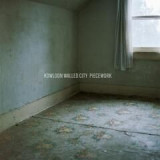
rock, and doom.Now, with Piecework (Neurot Recordings/Gilead Media),
the band's fourth album and first in six years, Kowloon Walled City
reaches new levels of restraint
Songs are bleak and slow, but also shorter and more concise. (Seven songs clock
in at about 30 minutes.) There are stretches of near silence. While the band has
always operated under the MO that less is more, it has doubled down on that
ethos for Piecework. Singer/ guitarist Scott Evans and guitarist Jon Howell, the
main songwriters, self- imposed restrictions to push themselves creatively
"restraining ourselves into oblivion," as Howell put it. Songs are written in more
straightforward time signatures. Evans and Howell also changed their guitar rigs
to sound more "clean and clanky."
With the gristle stripped away, bone and muscle remain: drums decaying in a
room, bass strings rattling, a lonely guitar chord. Sometimes, it's almost
uncomfortably barren. But the negative space also amplifies the ruptures of
heady aggressiveness that anchor Piecework. Angular guitar notes from Howell
skew off the neck, dissolving into space. Ian Miller's bass lines churn in the muck.
Drums and cymbal smashing by Dan Sneddon punctuate dead air. (Sneddon,
formerly of Early Graves, makes his recording debut with the band five years after
joining.) There's sadness and anger in Evans' shouted vocals, but also a desire for
something better.
Through the resignation and regret, Piecework also hints at perseverance and
hope. Pressed on Milky White color vinyl.
MATTERS UNKNOWN is the new project led by multi-instrumentalist and
composer Jonny Enser.We Aren't Just is the debut album from MATTERS
UNKNOWN – Jonny Enser from Nubiyan Twist's solo project
Over 14 tracks, it travels through Afro- jazz, celestial blues, soulful funk,
electronica, hip hop referencing influences such as Mulatu Astatke, Pat Thomas
and Tony Allen all of whom he has worked with via Nubiyan Twist.This album
features some of the UK's finest young players including members of Nerija, Noya
Rao, Golden Mean and COLECTIVA. For fans ofJazz is Dead and Emma- Jean
Thackray. Every track on the album is inspired by a facet of Jonny's personal
development; drawing from his relationship to the city, whether in the delta
regions of the Mississippi river or along London's arterial Thames. The album is a
material testament to the flexibility inherent to MATTERS UNKNOWN; it can be
orchestrated to accommodate a 15-strong orchestra, replete with a string section
to move you to the dancefloor as Jazz originally intended, or stripped down to the
bare bones of a trumpet and tuba- led quartet whose intentions remain all the
same; to pierce into the audience's soul.
Jonny is honest, often laying bare his personal plights with his physical disability
and mental health, and the steep – yet rewarding – uphill climb as a musician and
Jazz instrumentalist. We Aren't Just is a multi- faceted study of the self, one's
relationship with the external world; the material, and the living within the inert.
Freestyle Records drop an unmissable LP of foundational UK dance music made between 1982 to 1984, in the form of the collected output of Contact-U - aka Rick de Jongh and Andy Sojka's stripped-back electro boogie project.
At the turn of the 1980s Challenge Records was founded on North London's Holloway Road - formed by Andy Sojka & Rick de Jongh to act as a sister-label to Sojka's seminal soul & boogie-focused Elite imprint. Initially releasing a smattering of lovers rock singles, Challenge would quickly begin to focus-in on the emerging sounds of Hi-NRG & electro - with Contact-U, an alias for Rick & Andy's own stripped-back productions, becoming Challenge's first act in this vein.
Recording the sublimely wonky spaceage funk of 'Inside You' in November of 1982, de Jongh & Sojka followed this up over the next 2 years with three 12" releases for Challenge before hanging up the moniker. Providing infectious synth-based melodies & basslines with killer drum-machines & minimal but effective live percussion - and in a couple of instances (see "Inca Sacrifice" and "Breaking Point') crucial dub re-versions on their B-sides - these tracks are some of the strongest electro-funk records to come out of the UK during this period. Dig in!
- A1: Ataxia - Detroit Gospel
- A2: Ataxia & Andres - Pine Island
- A3: Ataxia - Language
- B1: Ataxia & Dj Minx – Maxia
- B2: Ataxia - Spit In Your Percolator
- B3: Ataxia - 98 Degrees
- C1: Ataxia - Number Streets
- C2: Ataxia - The Formulator
- C3: Ataxia - The Pusher
- D1: Ataxia & Mister Joshooa - Feels Like
- D2: Ataxia – Wm
- D3: Ataxia - Dance The Bridge
Having torn up raves for well over a decade, the Detroit duo Rickers and Ted Krisko AKA Ataxia present their debut longplayer ‘Out Of Step’. Featuring guest spots from close peers DJ Minx, Andrés and Mr Joshooa, they twist house, techno, electro, breakbeat and rave into revitalized new shapes; embellished with a touch of soul, funk and hip hop. With backgrounds in hardcore and punk, Ataxia’s debut is suffused with that energy, attitude, and approach; this is raw, lean and unashamedly no-nonsense dance floor tackle that goes straight for the jugular. Heavily analogue, the album experiments with tape saturation, which harks back to the duo’s formative years in bands, recording demos to cassettes. These straight-up, in-the-red tracks give preference to overdriven drum machines, rather than generic polished sheen, but conversely, it’s all deceptively well-crafted too; ‘Out Of Step’ is a standout record that’s big in character, bringing to mind the renegade spirit of Underground Resistance, and the bombastic brilliance of The Prodigy and Chemical Brothers.
Defiantly optimistic despite the state of the world, a “life is good” vocal sample meets minor chords sliding over 808 hats on the exemplary house/techno pumper ‘Detroit Gospel’, before a lighter moment on the album, but no less impactful with its hefty low-end thump, is ‘Pine Island’ featuring Motor City hero Andrés. Together they cook up a Motown-inspired house cut awash with horn swells and backup singers, bouncing to wide swung funk bass, in classic 313 style. ‘Language’ turns the club on its head – busting out one of the most distinct basslines in recent times, and bristling with buzzy, undulating chords, whilst ‘Maxia’ features influential Detroit royalty DJ Minx. Inspired by her classic ‘A Walk In The Park’, with a fat distorted kick and stealthy bass groove, this is low-slung, stripped-back, heads-down coolness. The high-tech funk of ‘Spit In Your Percolator’, is laser-guided in its efficiency, with a strobe-like, increasingly intensifying energy, peppered with clever, tripped up vocal chops. With the next cut, conveyor belt noises and fast churning low-end gives way to a dubbed-out breakdown, on the deep breakbeat roller ‘98 Degrees’. Charged with a blistering, rave intensity, ‘Number Streets’, is a futuristic distorted techno workout that booms through the subs, whilst ‘The Formulator’ mixes filtered snippets, abstract synth noises and melodic bleeps with a bassline echoing Paperclip People’s ‘The Floor’. Closer to the UK definition of hardcore, combining 4/4 and breakbeat, ‘The Pusher’ evokes the spirit of late 80s orbital raves, adding a natty keys solo, and deadly bass used sparingly, for even deadlier effect. ‘Feels Like’ sees Rickers and Ted team up their studiomate and fellow TV Lounge resident and club booker, Mister Joshooa. Inspired by Photek but also almost UKG in style, this breakbeat session is stamped with MJ’s signature chopped vocals and intricate rhythmic interplay. The bubbling, wobbly loose swing of ‘WM’ is constructed around a classic chopped-up MTV cribs sample, with a filtered vocal creating a far out psychedelic effect – all of which is propelled apace by a huge bruising LFO. The LP concludes in fine style with ‘Dance The Bridge’, where bouncy beats and wigged-out keys meet bright, gently uplifting synth chords that bring a clear-skied mood; ending the record as it began, on an optimistic note.
‘Out Of Step’ marks another chapter in the ongoing relationship between Life and Death co-founder DJ Tennis and Ataxia. Their connection goes back to the earliest days of the label, where they played gigs together on some of Tennis’ initial visits to Detroit. It’s a friendship that’s blossomed organically over the last decade through their shared love of punk and hardcore, and led to the fruition of one of Ataxia’s most compelling projects to date. Labels to release Ataxia’s output include legendary Detroit techno imprints Planet E and KMS, plus the seminal American house label Nervous Records. Their catalogue also includes music for Visionquest, Leftroom, 20/20 Vision and Seth Troxler’s Play It Say It.
Bubbling up from the psychedelic tar pits of L.A., Frankie and the Witch Fingers have been a constant source of primordial groove for the better part of the last decade. Formed and incubated in Bloomington, IN before moving west to scrap with Los Angeles’ garage rock rabble, the band evolved from cavern-clawed echo merchants to architects of prog-infected psych epics that evoke a shift in reality. After a stretch on Chicago/LA flagship Permanent Records the band landed at yet another fabled enclave of garage and psychedelia - Brooklyn’s Greenway Records, now working in tandem with psych powerhouse LEVITATION and their label The Reverberation Appreciation Society, the groups latest effort is dually supported by a RAS / Greenway co-release. After years of searching for the specific alchemy that would tear open the cosmos, they found the formula with the addition of Shaughnessy Starr on drums in the summer of 2018. They began a new cycle and tripped into tip-on double gatefold territory, flesh-ing out their lysergic impulses into a monolith of sound that closes in from all sides. The band reached new levels of grandiosity and utilized every minute to manifest their psych-soul Sabbath in four dimensions, spilling psychic blood on a populace ready and eagerly waiting. Yet, as expansive, inventive, and immersive as any studio album might be, the band is born for the stage. As their live prowess caught the ears of some legends in their own right, the band practically lived on the road last year with stints opening for Oh Sees, Cheap Trick and ZZ Top. Along the way the constant pulpit of the stage would form ZAM into a transformative experience while plotting their next permutation of space and time. That transformation, Monsters Eating People Eating Monsters... (repeated infinitely,) rises like a Phoenix from the road tar, van exhaust, and ozone crackle of amps in heat. Once off the road it was recorded in just five blistering days. Though, while the tour may have hammered the album into shape and brought about a wind of change, those changes stretched to the band itself as well. In the wake of the tour the band’s longtime bassist Alex Bulli made his exit, with the majority of bass parts on the album being written and played by multi-instrumental magician Josh Menashe with occasional pitch in from songwriter Dylan Sizemore. Stripped to their core the band has created their most ambitious work to date, an album that takes the turbulence of ZAM and crafts it into a beast more insidious and singular than anything in their catalog. Moving forward, the band has taken on new blood. Completing their lineup, Nikki Pickle (of Death Valley Girls) will join them working the new album out roadside on bass. A new horizon of Frankie and the Witch Fingers draws near and we’re all set to follow them into the unknown.