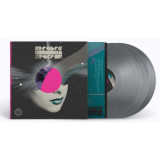
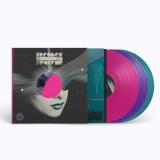
DJ Minx, Boogie Vice & N-You-Up, The People in Fog, and Jabes remix Radio Slave & Kameelah Waheed’s ‘All Rize’ on Rekids
Radio Slave presents the second remix EP for ‘All Rize’, releasing 19th December 2025, a follow-up to his May collaboration with Kameelah Waheed, enlisting DJ Minx, Boogie Vice & N-You-Up, DJ Sodeyama’s The People in Fog alias, and Jabes to reimagine the track. It follows the first remix package, featuring Harry Romero and Samaran in October, which won support from Laurent Garnier, Chloé Caillet, Saoirse, Honey Dijon, and many more.
Detroit’s First Lady of Wax, DJ Minx, follows her appearance at Rekids’ Panorama Bar takeover in August and steps up first. Her remix is a raw, club-ready workout built around a relentless groove and Kameelah Waheed’s commanding vocal mantra, as bleeps and whistles dance across the mix. Linking Cape Town and Southern France, Boogie Vice & N-You-Up follow their 2025 EP on REK’D and deliver a deep cut that slowly builds tension, its organic percussion and warm bassline leading toward a strobe-lit, tripped-out drop.
On the flip of the second ‘All Rize’ remix EP, Japan’s DJ Sodeyama, under his The People in Fog alias, drifts into more hypnotic territory. Lush pads wash over a low-slung beat and bassline, trading the club for the walk to the after-hours by carrying Waheed’s vocal into something surreal and dreamlike. Completing this left-of-centre B-side, Timedance and Kindergarten’s Jabes twists the original into a warped, textural trip with scratching layers and distorted vocal fragments that pierce through a dense atmosphere. If Sodeyama’s version is the dream, Jabes’ is the chaotic counterpart that follows.
Поиск:strobe pie
Все
- 1
Where music resists becoming personal confession, it creates its own narrative - abstract, precise, and unbound by outside noise. Vibraform by Berlin-based hardware and live artist Peryl provides an analytical yet deeply instinctive view on music. It reflects the duality between flow and restraint, between self-exploration and the healthy act of setting limits. At its core lies a certain nonchalance - a refusal to act on voices and trends while maintaining full commitment to sound itself. Meticulous sound design, unpredictable, morphing basslines and an intentional timeless aesthetic offer a rare window into Peryl's creative state of mind. Even as he tries to sidestep personal narratives, emotions inevitably surface in the music, subtly shaping its character. The result is not a confessional piece of work, but an abstraction that remains universal rather than private, while still carrying a trace of personal truth. Four tracks that are striking a rare balance between novelty, grace and aggressive functionality, including a remix by R?dh?d, offer to find purpose in the act of believing that sooner or later art reveals a logic of its own. ? 2025 The Third Room All tracks written & produced by Dennis Strobel B2 remixed by Mike Bierbach Mastered by Ahmet Sisman Artwork by Daniel Bornmann & Lennard Makosch (STUEDIO.XYZ) Distribution by Clone Pressing by Matter Of Fact
What do you get if you put two synthesizer sorcerers in the same room? In the case of Skatebård and Lauer, the answer is Trollkraft. Between them, the Norwegian-German partnership have hundreds of releases, run record labels and have wowed crowds across the globe. In short, the two tracks of Trollkraft are the product of some serious electronic talent. Rich and textured drum layers give way to strings and a vibrating bass for the title piece. Twists and turns abound, elements of disco and house brush shoulders with indie and italo as the pair tear down genre divisions. A 90s heyday influence that runs through both offerings, with “One Night In Geilo” taking its cue from house rhythms and a two-stepping melody adopted from that emblematic decade. Reimagining rave in their own effervescent and playful style, these strobe and fog veterans serve up a fat slice of glow-stick elation. Strings weave high into the dawning sky, bongos and toms reveling next incandescent synthines with just a touch of trance thrown in to add spice to this heady and euphoric mix.
Two tracks from two true masters.
- A1: ) | New Young Pony Club – Ice Cream
- A2: ) | Bloc Party – Banquet (Phones Disco Remix)
- A3: ) | Datarock – Fa-Fa-Fa
- A4: ) | Lcd Soundsystem – Tribulations
- A5: ) | Toktok & Soffy O – Missy Queen’s Gonna Die
- B1: ) | Justice V Simian – We Are Your Friends
- B2: ) | Digitalism – Zdarlight
- B3: ) | Soulwax – Ny Excuse
- B4: ) | Yeah Yeah Yeahs – Heads Will Roll (A-Trak Remix Radio Edit)
- B5: ) | Klaxons – Two Receivers
- C1: ) | The Rapture – Sister Saviour (Dfa Vocal Remix)
- C2: ) | Goose – Black Gloves
- C3: ) | Simian Mobile Disco – Hustler
- C4: ) | Test Icicles – What’s Your Damage (Alan Braxe & Fred Falke Remix)
- C5: ) | Css – Let’s Make Love And Listen To Death From Above
- C6: ) | We Have Band – Hear It In The Cans
- D1: ) | Fujiya & Miyagi – Knickerbocker
- D2: ) | Friendly Fires – Jump In The Pool
- D3: ) | Playgroup – Make It Happen
- D4: ) | Tiga – You Gonna Want Me
- D5: ) | Tom Vek – I Ain’t Saying My Goodbyes
- D6: ) | Shit Disco – Ok
- E1: ) | Zongamin – Bongo Song
- E2: ) | Black Strobe – Italian Fireflies
- F3: ) | Cut Copy – Going Nowhere
- F4: ) | !!! – Me And Guiliani Down By The School Yard – A True Story
- E3: ) | Fischerspooner – Emerge
- E4: ) | Clap Your Hands Say Yeah – Satan Said Dance
- F1: ) | Phoenix – 1901
- F2: ) | The Killers – Mr Brightside (Jacques Lu Cont’s Thin White Duke Radio Remix)
Suicide AFTR 7 is a musical partnership forged across two continents. This cross-Atlantic collaboration was founded in Barcelona by New York’s Neud Photo and London’s Antic.Distributed by Runas, a new label also based in Barcelona. New beat and Proto-Wave influences permeate the 12”.
Lean, mean, and evocative, "Soft Geometry" sets the stage with its blend of classic analogue textures and a sound palette that evokes the darker, more hypnotic side of electronic music. Throaty samples whisper through a synthesizer smoke, sodden bass lines throb against scaling crystalline chords.
The standout track, "Interplay", is an instant classic. Lyrics are distant, words ring, “Distant shadows," as snapping snares and warming pulses pull the listener closer drawing you deeper into its hypnotic world. Across the four offerings, a brooding dance floor looms; a
shadowy square of bodies shrouded in fog, pierced by strobe. This track will stick with you long after the music fades, a perfect blend of light and shade. It's the undeniable dancefloor moment on the EP, forever playful, forever bumpin.
"Last Word" pulses with a cold, hypnotic groove, driven by a deep 808 groove that'll get you moving. Think hypnotic rhythms, driving basslines, and a touch of electro grit. Slow, ethereal strings and shimmering synth stabs create an atmosphere of tension, punctuated
by film noir samples.
A sinister seam runs through the entire EP, coming to the surface for “Blind Spot.” Terse percussive patterns and eclipsed synthlines are stalked by vocals stripped of emotion, the mantra of “We are your enemy” encircling to a close.
Radio Slave drops ‘Wild Life’ on Rekids this May
Following the recently dropped ‘Strobe Queen’, which picked up support from Honey Dijon, Sean Johnston, Laurent Garnier, BBC Radio 1’s Pete Tong and Danny Howard amongst many more, Radio Slave returns with another standout House cut ‘Wild Life’, turning in two exceptional Disco and Dub mixes.
“I’ve always adored the “Wildpitch” era of DJ Pierre, Roy Davis Jnr, DJ Duke and labels like Power Music It’s definitely influenced my work as Radio Slave and “Wild Life” started out as a nod to that early nighties sound. Conceived during the pandemic, I had the track mapped out and then with help of a good friend I decided to add live bass, loads of analogue keyboards and record the whole thing live and it became this super funky disco jam.” - Radio Slave
Radio Slave aka Matt Edwards is one of dance music’s undisputed heavyweights. Having made his name as a DJ in the 90s, he went on to become the king of edits, twisting pop, R&B and indie cuts into essential versions that consistently set clubs alight. Since the mid-2000s, Edwards’ originals have helped define modern dance music, tackling techno, house, breakbeat, minimal and disco whilst exploring dub, balearic sounds and ambient across the myriad of other aliases and projects.
You Can Can is an echoed affirmation, an album which traces song forms around silence, field recordings, and degraded analog memories. This is folk music transmogrified and mutated, as if recorded and reconstructed in Pierre Schaffer’s GRM studio.
Not your typical Mariposa folk duo, the group is comprised of Toronto avant-music scene stalwarts, vocalist Felicity Williams (Bernice, Bahamas) and bricolage artist and synthesist Andrew Zukerman (Fleshtone Aura, Badge Epoch). The album feels like a somnambulant conversation, fragmented and half-remembered with Williams’ vocals traveling through a landscape of field recordings and Zukerman’s saturated concrète topographies. It is an electro-acoustic assemblage, both analog and digital, comprised of air, electricity, minerals, wood, and water. Although the album nods towards traditional forms of folk and musique concrète (if at this point it can be called a traditional form), it is outwardly and inwardly contemporary; non-linear, citational, opaque, and sui generis. In a way it feels like a sonic index of the narrative experiments found on the infamous Language school-related publisher The Figures, in the work of Lyn Hejinian, Clark Coolidge, and Lydia Davis. In the musical continuum, the album picks up where Linda Perhacs left off in the early 70’s—explored by Gastr Del Sol in the ‘90s—a convergence of rural acoustic idioms and urban avant-electronics. This is country music for the discerning cosmopolitan citizen of the 21st Century.
RIYL: Luc Ferrari, Brannten Schnüre, William Basinski, Oval, Eric Chenaux, Emmanuelle Parrenin About Everything In Time and Failure Figures, Felicity Williams says:
Everything In Time is indebted to the language of Brazilian author Clarice Lispector (as translated by Alison Entrekin). Drawing on insights from psychoanalysis, we trace the roots of melancholy to render them available to consciousness; words from the ghostly realm of the transpersonal filter through dreams and shine a beam of light onto a lone trillium in a forest at night. Other influences include the experience of not knowing, of being subject to a gestation outside of one’s control. This is an ode to the power of naming to obliterate, to set free.
Failure Figures is a meditation on the radical contingency of reality and the vicissitudes of the will. With Slavoj Zizek as my guide (think: “Hegel for dummies” - I’m the dummy in this scenario), I wander through the valley of the shadow of death, and take heart. The last verse refers to an experience I had recording at a studio in Brussels. I was singing in French, with which I have some fluency, and the producer was complaining to the artist whose song it was that my delivery was not convincing. Thinking I was out of ear shot, he said in French, “c’est comme elle n'est pas là”; I was pronouncing the words correctly, but I failed to express anything. So what or whom is responsible for conveying meaning, if not the form of the word itself? And if the connection between meaning and form is broken, how do we fix it?
Gratitude to Thom Gill (guitar) and Daniel Fortin (bass) who joined us on the recording of Failure Figures. Thanks as well to my old roommate Christopher Willes, who unwittingly left behind his hand bells deep in the hall closet. We unearthed them by accident, and the bells became an important sound element. Thanks to other past roomies Robin Dann and Claire Harvie, whose childhood piano and guitar respectively still reside with us, and were used in the recording. Field recordings were made in Toronto, Canada and Celestún, Mexico in 2020.
- A1: ) | New Young Pony Club – Ice Cream
- A2: ) | Bloc Party – Banquet (Phones Disco Remix)
- A3: ) | Datarock – Fa-Fa-Fa
- A4: ) | Lcd Soundsystem – Tribulations
- A5: ) | Toktok & Soffy O – Missy Queen’s Gonna Die
- B1: ) | Justice V Simian – We Are Your Friends
- B2: ) | Digitalism – Zdarlight
- B3: ) | Soulwax – Ny Excuse
- B4: ) | Yeah Yeah Yeahs – Heads Will Roll (A-Trak Remix Radio Edit)
- B5: ) | Klaxons – Two Receivers
- C1: ) | The Rapture – Sister Saviour (Dfa Vocal Remix)
- C2: ) | Goose – Black Gloves
- C3: ) | Simian Mobile Disco – Hustler
- C4: ) | Test Icicles – What’s Your Damage (Alan Braxe & Fred Falke Remix)
- C5: ) | Css – Let’s Make Love And Listen To Death From Above
- C6: ) | We Have Band – Hear It In The Cans
- D1: ) | Fujiya & Miyagi – Knickerbocker
- D2: ) | Friendly Fires – Jump In The Pool
- D3: ) | Playgroup – Make It Happen
- D4: ) | Tiga – You Gonna Want Me
- D5: ) | Tom Vek – I Ain’t Saying My Goodbyes
- D6: ) | Shit Disco – Ok
- E1: ) | Zongamin – Bongo Song
- E2: ) | Black Strobe – Italian Fireflies
- E3: ) | Fischerspooner – Emerge
- E4: ) | Clap Your Hands Say Yeah – Satan Said Dance
- F1: ) | Phoenix – 1901
- F2: ) | The Killers – Mr Brightside (Jacques Lu Cont’s Thin White Duke Radio Remix)
- F3: ) | Cut Copy – Going Nowhere
- F4: ) | !!! – Me And Guiliani Down By The School Yard – A True Story
This is another vital instalment of Get Physical Music's classic reissue series, which is now scheduled for a vinyl release. It features a track first released in 1994 and was also part of DJ Pierre's Wild Pitch: The Story album back in 2017. It comes with an Emmanuel Satie edit of the Ricardo Villalobos Dub and a stellar remix from South Africa's Jazzuelle, first released in 2017.
DJ Pierre's name is forever synonymous with house music, particularly the acid sound he pioneered in the' 80s. Staying true to the underground since then, he's consistently released vital tracks, innovated with his Wild Pitch style and now his Afro Acid label. Pierre continues to push boundaries with each new outing while this reissue proves that his earliest works are still some of house music's best ever.
'What is House Muzik' is an almost 10-minute masterpiece that's perfectly designed for gritty warehouse spaces and comes complete with an anthemic vocal monologue. It's dark and distorted with monstrous kicks and oversized hi-hats, a frazzled lead synth line and a marching groove that is lit up with strobe-lit details to get hands in the air. The original also comes alongside an acapella version.
Next up, we have an edit from melodic master Emmanuel Satie, who takes Fellow Ricardo Villalobos's epic 36-minute 'What Is Dub' version and splices it into a floor-friendly and perfectly paced 7-and-a-half-minute edit. Originally dropping in 2015, it now sees its way onto vinyl for the first time. Finally, South Africa electronic production don Jazzuelle drops a remix that lives up to its name with a dive into the deeper realms of acid.
"Friendly Fires" was the debut album from the St Albans-three piece, Ed McFarlane, Edd Gibson and Jack Savidge. Featuring hit singles "Jump In the Pool" and "Paris", it was an era-defining record. It launched the band to huge critical and commercial success, nominated for The Mercury Prize and a Brit Award. The LP is now reissued for its 15th Anniversary on silver vinyl.
“Shadow of Love“ transports echoes of your favorite 80s New Wave anthem into the here and now and refines it with a strobe light makeover. The result is a synth-heavy, digitized banger reaching out for unified dancefloor euphoria while still managing to expand the sonic spectrum of everyone involved. It’s a surprisingly joyous, ecstatic, and breezy slice of, well, state-of-the art pop that probably offers the most radio-friendly piece of music both parties ever laid their hands on.
In the night, the cadenced orientation of the strobe lights sketches geometric trajectories in the dark room. The icy condensation from the cocktail glass drips onto her fingers, caresses her nail polish, grazes the side slit of her evening dress, and evaporates before it touches the floor, the dance floor.
Her body, that of a femme fatale, stands between the clenched bodies of the dance floor. A beam of light pierces the darkness. It illuminates a Mediterranean chest – stronger than the bridle imposed by the buttons of his shirt – adorned with golden necklaces: symbols of faith turned into instruments of seduction. Sin is the antechamber to holiness.
She turns around, that’s him: Marcelo. She had long heard about him. Their gazes, perfect diagonals, get locked in the crowd. A cheeky smile reveals a golden tooth, the lights a shrouded sex bursting forth. His wink is a magnet. Often, words are a mere formality. Let’s make out.
Que rico.
Que lindo.
Te quiero.
Radio Slave's 'Venti' is released on Rekids on May 17th and is a twelve-track celebration of Matt Edward's most prominent alias' history. Starting life as a series of singles that began in 2023, 'Venti' sees Edwards explore lower tempos, House, Disco, and the Pop reinterpretations that birthed the moniker back in 2001.
From Venti’s opening track onwards, a glistening piece of piano-led house that's become an anthem at Sean Johnston and the late Andrew Weatherall's lauded ALFOS parties, it is clear that Edwards is keen to celebrate the past but through the lens of now. A Radio Slave favourite, 'Wait A Minute', is updated to include a powerful vocal from Nez. Kylie's 'Can't Get You Out of My Head' - a track that kicked Radio Slave into the modern dance music consciousness is reinvented as an Italo-inspired cover featuring Michael Love Michael delivering glorious vocals. 'Wild Life' and 'Wake Up', another two tracks that, as singles, dominated house and disco sets of the great and good in 2023, feel simultaneously fresh while paying homage to the origins of House - message-heavy vocals and all. A cover of Audion's 'Mouth to Mouth' and Edwards' tribute to Terry Hall, the Fun Boy Three reimagining 'The Lunatics' are keen displays of Radio Slave's knack for taking on beloved tracks and making them his own. The lasers-set-to-stun cut-and-paste nu-disco of Radio Slave’s 'Jaws' is a muscular and timely reminder that the punch of a track lies in its feel rather than tempo, while Edward's command of dub aesthetics and unmatched ability to stretch grooves into a tension-filled journey shines through on 'New Balance' and the epic closer, 'Thirty-Six'. Never one to entirely give into the throes of the 4:4, the cinematic electro of 'Stranger In The Night' and Balearic Cagedbaby collab 'Amnesia' round out 'Venti' as the whole Radio Slave experience - as intense as it is subtle.
One of the most prolific and critically lauded electronic music artists of the past two and half decades, Matt Edwards was born in Catford, London, in the early 1970s. When acid house hit the city, Edwards was deep in the scene, and he's remained there since. Residencies at the groundbreaking Ministry of Sound and an 'unofficial' residency that has seen him become one of Panorama Bar's most booked DJs during his 15-year stint living in Berlin have provided the grounding for an enviable tour diary that continues today.
His Rekids imprint, a label that has platformed some of dance music's biggest names, has been regarded as a high benchmark for two decades with Matt as sole A&R. Collaborations with legendary artists such as DJ Hell and Robert Hood, releases for Running Back, R&S, Innervisions, Figure and more, and a remixography that simply couldn't be repeated in modern music show just how important Radio Slave is.
- A1: Drawing Future Life - 1969
- A2: Ruutu Poiss - Ihatsin
- A3: Digital Distortion - Mellow Bug
- B1: French Audacity - The Final One (Feat. Valerie)
- B2: Dj Spike - Gaps In Space
- B3: Interdance - Kurz
- C1: Bad Behaviour - Living On Smoke (Edgware Mx)
- C2: Frequency - Systematic Input
- C3: Diffusion - Lushes
- D1: M.f.a. - Blue To Be Happy
- D2: R.i.p. - E.o.pan
- D3: Mad Professor - Oh Hell
Orpheu the Wizard has a magic touch at finding records that fall between the gaps in music - oddities, curios, the weird, the wonderful. But that's just half the trick. It takes a sensitive and selective ear to construct a coherent, accessible narrative from them. So you get DJs who can play for the crowd and "selectors" adept at mining the black gold. In Orpheu, you've got yourself someone who can do both. On a festival main stage, he can keep it weird enough for the heads. In an audiophile setting, he'll keep the flow.
These skill sets come into play on the fifth The Sound of Love International compilation. Jumping between genres, decades, continents, the truly rare, and many B-side cuts that passed you by. But never eclecticism for its own sake; this collection makes sense. Orpheu never loses sight of the listener - he's a friendly and knowledgeable guide to the cosmic outer reaches.
He opens his account with the warm, psychedelic electronics of Drawing Future Life, with ‘1969’. Tucked away on the B-side of an LP of ambient/trance hailing from Fukuoka, this is a very pretty piece of music on a truly rare piece of wax. Then, leapfrogging a couple of decades and timezones, we have Rutuu Poiss' "IHATSIN." Off-kilter, experimental sounds with an endearing melodic hook, followed up by the with lethargic ambient breakbeat of Digital Distortion's "Mellow Bug".
On the B-side, things start to get lively. French Audacity featuring Valerie's "That Fine One" is Gallic garage that has simultaneously got it hugely wrong and massively right. Owing as much to new wave as New York house, this is propulsive and quirky dance music at its finest. Next, we're on a ferry over the channel for DJ Spike and "Gaps In Space." Up-tempo electro with a fondness for sampled vocal cut-ups, like its predecessor.
lnterdance's "Kurz" (another B-side) is the perfect segway - house from 1990 with that sweet, slightly goofy naivete. Things move toward the gnarly with Bad Behaviour and "Living on Smoke," a lesser-known cut on the legendary Atmosphere records. The tempo edges upward on "Systematic Input" by Frequency, hectic hardcore techno that still retains a lightness of touch.
"Lushes" by Diffusion spins us off into space, filigree techno with an emotive trance edge. The chiming intro of "Blue to Be Happy" by MFA lulls us into a sense of false security before massively putting the boot in with a pounding kick drum, bassline, and arpeggiation. From there, it's a sharp left turn into the urban psychedelic dub of R.I.P's "E.O Pan" on cult label Digi Dub.
Sticking with UK sound system music but taking it down a notch, Orpheu closes proceedings with a leftfield reggae excursion from the master of the mixing desk, Mad Professor’s"Oh Hell".
It's a compilation as varied as the many moods and grooves of Love International itself - from sun-dappled olive groves to moments deep in the strobes. This is serious music for party freaks or party music for serious freaks. Tisno is calling.
Lion Machine 23 is a four piece Rock band fronted by singer / guitarist & songwriter extraordinaire Daland based in North London, a mix between Oasis and Nirvana, who have already packed out venues across the city, as well as a recent tour of Argentina featuring a support for the Arctic Monkeys. This four song EP has been co-produced with West London’s finest, JBJ Studios Stormzy, Skrillex & more is due for release this Spring! UK dates incl festivals tbc.
2023s one to watch with true rock n roll style, prepared to get blown away by Lion Machine 23. `Liar’ kicks off with heavy grinding guitars, over which lead
singer Daland’s vocals laments the tone. Solid-driving strobe-lit bass completes the track with a rejuvenating catchy chorus when Daland belts out Liar you can’t help singing along.
Turning the noise up a notch on `The Mobile Phone’ lead singer Daland charismatically vocalises the good and bad of having technology at your fingertips. Bursting into a perspicuity of unending guitars and drums energise the track.
‘Always’ Summer festival anthem in the making, carries that feel good factor.
‘Fucking Under The Water’ Always a crowd pleaser.
2023 Repress
Often called one of Chicago's talented hidden gems, singer/songwriter/DJ/producer Tai Davis means House in almost every sense. He's dropped vocals for established producers such as Paul Johnson, Stacy Kidd, and also Galactik Knights, Nate Caswell and Yakka. Preferring to use vintage analog gear, his classic house sound consistently packs dance floors worldwide!
Track Review: A1) ""Cosmic Groove"" This piece sends you on a trippy journey with a 'spacey' bassline accompanied with groovy drums, but the lush pads and lead synth puts this jam over the top- guaranteed to make the floor burn!
A2) ""Floating"" This is truly vintage-sounding acid with 2 overlapping powerful TB-303 patterns with NO distortion, haunting strings, and a beating drum track for extra thump!
B1) ""Falling Forever"" The mellow but depressing synth pads will definitely grab you, but the repetitive, hypnotizing bassline will keep you. Add a minimal, pounding 808 and it makes this track one to play over and over...and OVER. B2) ""Strobe Light"" A minimalist track with a basic but adequate house piano riff and a freaky synth lead. But the 'popping' claps over the pulsating 909 bass drum paired with an abnormal, repeating bassline makes this one sound like pure 90's house! A definite classic.
Not content with a double 12” of acid drenched delinquency, Schrödinger’s Box have drafted in four 303 addicts to bring their own acrid fire to Hard Ton’s Bigger is Better.
To get the bitter ball rolling, Larionov opens. Known for his dark electro and EBM leanings, this reinterpretation of “Transcend Your Body” is a bruiser of throbbing pulses, lancing lines and stabbing synths to pierce the fog and strobe. Rude 66 follows with his beloved vocoder doing battle with Massimo Bastasi’s original vocals. The result is a duel of distant rhythms and shimmering wordplay. The flip sees Nightwave on the attack. Brawny beats elbow lyrics in this driving audio onslaught. Bulging rusted basslines crush speaker cones as a blistering remake takes hold, blasts of body bending brutalism turning Hard Ton’s original into an even sweatier brute. An artist born and raised on analogue squawk and squelch finishes. Posthuman, one of the infamous figures behind the I Love Acid nights, takes the tongue-in-cheek Brit Pop flashback of “Girls and Boys” and contorts it into a grimy Chicago jam.
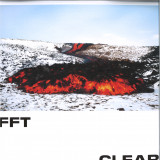
Numbers will release ‘Clear’, the debut album by FFT, on 24th June 2022.The result of three years of focused writing and programming by the London-based producer, ‘Clear’ is deeply psychedelic, defined by a mature sense of melody and structures crafted at a monumental scale.
Though FFT has previously released a handful of tracks under various names, it wasn’t until 2017’s ‘FFT1’ EP on theUncertainty Principle label that his production talents began to fuse into a distinct and personal style, especially evident in FFT’s‘Regional/Loss’ EP on The Trilogy Tapes in 2019, multiple releases on Bruk Records and2021’s ‘Disturb Roqe,’also released on Numbers.Through it all, FFT has mastered a complex sense of mood catalyzed by sound itself: He builds patches and presets from scratch, and feels these synths and software have their own objectives and reactions, creating a kind of compositional feedback loop.The result is an album that brings to mind a collision of electronic pioneers like Delia Derbyshire and Bernard Parmegiani, 2000’s braindance, the Max-imized wares of an OPN or Objekt and the rough rhythmatics of SND or Mika Vainio
The layering of sonic elements and intentions is starkly audible across these nine tracks.They can be seismically concussive and grandiose, but granular and fluid - echoing the Icelandic volcanic eruption that features in the artwork photography byGeorge Cowan. ‘Clear (Eight-Circuit Mix)’sets a euphoric tone immediately accelerated by the jagged sounds and vocal textures of ‘Redeemer’. ‘3 Sided’ channels hyper-urbanity from its almost entirely analogue palette, and by contrast ‘Disturb Roqe 2’is bracingly digital, gyrating in random cycles between clustered percussion, metallic splinters of audio and artificial vocal tics.
Opening side two, ‘You’ve Changed’ adheres to a more abrasive core, while ‘Heal’ and ‘Heal (Alt Mix)’evolved out of linked pieces in FFT’s live sets that grew into complete tracks in the months before Covid-19.The significant intensity of ‘Heal’ in particular was refined during strobe-heavy live performances and is the album at its most turbulent, the claustrophobia interrupted by dazzling arpeggios.The overall impact of 'Clear' is cinematic and precise, marking the arrival of an impressive electronic musician who is not new but has come into his own as a fully developed artist
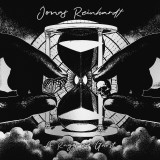
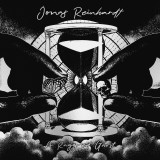
"A Ragged Ghost" is the eighth full-length album from electronic producer Jonas Reinhardt. Following albums on Kranky, Not Not Fun, Constellation Tatsu, and more, his debut release for Trouble In Mind brings together 11 new pieces that explore themes of life & death, netherworlds, and the liminal spaces in between. Taken together as a single narrative, the album offers a stirring exploration of mortality and immortality in what Reinhardt describes as 'a dance of religious syncretism, navigating spaces between the living and the dead'. "A Ragged Ghost" finds him synthesizing influences organically from familiar teutonic strains to the intense austerity of early 21st century electronic pioneers such as Biosphere and Susumu Yokota. A whisper of the Italo-disco-esque romps of Jonas' 2012's "Foam Fangs" EP & 2013's "Mask of The Maker" LP merge with his more kosmische leanings into a sinister, slightly funky, but also studious suite that at times feels like a lost sound library record from the KPM archives. Openers "Ape & The Universal Axis" and "In Lotto Commodore" decidedly sound like a selection from a lost film score while others like the bubbling "Sly Tomb" recall the works of Roedelius or Vangelis' serene soundscapes. Meanwhile, fans of the electro-ambience of Manuel Göttsching's strobe-light, proto-house (on his seminal "E2-E4") or the pulsing insistence of John Carpenter's visceral non-horror scores (i.e. "Escape From New York" or "Assault on Precinct 13") will find a lot to love about songs like "Tumb Tumb" and "Wretched Orchestra of Armistice".
Purple Vinyl
Opening with "Absolut Bond (Sascha Müller My Name Is Acid Mix)" the pairs first collaboration effort weighs in a deep, hypnotic take on spiralling Acid music for strobe-lit underground raves whereas their second conjunctional joint "What I Mean (Great Evening Mix)" brings forth a darker, more pumping and minimalist approach whilst employing a creepy little motif that gets under your skin like the main theme from your favorite horror flic. On the flip we see Sascha Müller going on a double solo tip with "Work My 303", another masterly crafted Acid piece harking back to the finest twisted clubbing moments of the 90s, before the final cut "Generator Man" explores grinding, distorted Broken Techno / Wonky Techno realms, sucking each and every listener into a cold dystopian, post-apocalyptic future within seconds. Get this.
- A1: Ich Will Dir Helfen
- A2: A La Manière (With Roya Arab)
- A3: Ondine
- B1: Aspiration (With Mona Soyoc)
- B2: One Of These Days (With Hafdis Huld)
- B3: Théorème
- B4: Mortel Battement / Nocturne (With Alain Bashung)
- C1: Organique
- C2: The Watcher (With Mona Soyoc)
- C3: Qu’est-Ce Qui M’a Pris (With Philippe Poirier)
- D1: Xr 116 / Messe Rouge
- D2: Untitled
- D3: Ondine (Alt Take)
- D4: Piasong
The sensitive mountain » (la montagne sensible) is the nickname Alain Bashung came up with for Arnaud Rebotini. At the height of his fame, after the success of Fantaisie Militaire in 1998, Bashung readily agreed to create an album with Rebotini. The two men didn’t know each other; their record label had introduced them. Bashung brought in “Mortel Battement” and “Nocturne,” two poems by Jean Tardieu, which he recited in a voice simultaneously warm and flat, and Arnaud produced an impressionist soundscape that ended with an apocalypse of metal. Bashung was so proud of their collaboration that he offered to give several interviews to promote the record. Today, listening back to this moving Léo Ferré influenced "talking singing" exercise, it’s hard not to hear the template for L'Imprudence, the album that Bashung went on to record with Rebotini two years later. In a similar way, the album Organique sparked a productive partnership between Rebotini and filmmaker Robin Campillo, which resulted in their being awarded a César for Best Original Music in 2018. The director, who trusted Rebotini to create the soundtracks for his films Eastern Boys and 120 Beats per Minute, never kept his love for the 2000 record a secret.
Yet it’s an understatement to say that when it was released, Organique was not in the spirit of times. That year was all about the French touch. The funky samples of Modjo’s “Lady” and Superfunk’s “Lucky Star” ruled the sweaty dancefloors. Although Rebotini was familiar with the electronic scene, he had something else in mind when he set about creating Organique. Under his own name or under the pseudonyms Aleph, Avalanche, Black Strobe, Maison Laffitte, and of course Zend Avesta, he had already released several quite bizarre and experimental techno, house, or jungle maxi singles on pioneering labels like P.O.F., Source, and Artefact, run by his friend Jérôme Mestre’s, whom he had met back when both were working as record salesmen at Rough Trade’s ephemeral Parisian store. It was at Artefact, still financed at the time by Barclay and Universal, that he naturally proposed this record project, which was a bit "different." It was his first real album.
Arnaud Rebotini has never hidden his love-hate relationship with the electronic scene. He’s a fan of rave music, Rex, and later Pulp, but he listens mostly to metal and contemporary music, mainly American minimalists such as Terry Riley, Philip Glass, Steve Reich. He wanted to mix this genre with a more French aesthetic inspired by Debussy, whose unconventionality fascinates him. From the first suspended guitar note of Organique, you can pick up another influence, possibly poppier. In the style of Mark Hollis, the erratic leader of Talk Talk, whose only solo album’s silences and dissonances left their mark two years earlier, we hear the fingers touching the keys of the clarinet on “Ondine.” The instruments have presence, character. Nothing is smooth. Everything is organic.
Although it’s sometimes labeled as electronica because of Rebotini’s career, there’s nothing digital about Organique. No "pro tools" editing or samples, only programmed drums and some synth layering. And his guest vocalists. Playing the role of electro producer, he invited Bashung, of course, to join him on the album, but also Roya Arab, who Rebotini first spotted while she was playing in Archive, and her sister Leila, Gus Gus alum Hafdis Huld, Kat Onoma’s Philippe Poirier on the “Samuel Hall” inspired track “Qu’est ce qui m’a pris,” and former KaS Product member Mona Soyoc.
The frustration of a tour where he had "little to do on stage," the desire to sing himself, and the creation of the Black Strobe project, a haunting mix of blues and rock, stopped Zend Avesta from putting out another album. Eighteen years later, the Organique we rediscover today has lost nothing of its strangeness, nor beauty. When it came out, Bashung said, "What is interesting for a musician is to feel that you have a piece of wasteland in front of you, something to clear.” That remains true today.
After a short break, Caduceus Records returns with a weighty techno 12" by long-time friend Pascal Hetzel. The Berlin-based producer delivers four storming tracks that cleverly translate the 90s techno heritage into the present. On "Motion Blur" a hypnotic bleep sequence gives way for majestic pad sweeps just in time for your serotonine rush. "Stutter" is more restrained, with a modulating chord sequence and sturdy drums, while "Timelapse" catapults into darker territory filled with industrial shrapnel and an extra bit of high-octane paranoia. "Strobe" is the fittingly titled closer of the ep. A pummeling piece of monochrome techno hypnosis with a massive kickdrum drenched in reverb and icy atmosphere.
D b2 | Strope
..another one! this time it's SKUDGE SKUDGE SKUDGE VS SAN SAN SAN PROPER PROPER PROPER..... BIG 12"! TIP
Skudge - Silent Running
Swedish duo Skudge ends Dekmantel's compilation the way we expected them to
do: with a fierce jacking and hypnotizing techno monster. Lights off and strobes on please, this is for the heads (do people still say that!)
San Proper - Rattle (Station2Station)
Like the earlier mentioned Juju & Jordash and Makam, San Proper has been involved in Dekmantel's activities from the very beginning as well. It seems that the notorious Dutchmen is getting better with every release. Rattle is an exiling piece of house music, that will shake up dance floors easily.
- 1