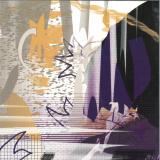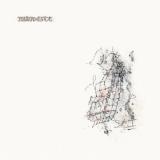
Australian composer-performers Judith Hamann and James Rushford have worked together in countless projects for two decades, perhaps most notably in Golden Fur, their trio with Sam Dunscombe. Black Truffle is pleased to announce Midmeste, their first work as a duo. Its title is Middle English for ‘the middlemost point’, alluding to how the piece builds on the points of overlap between the highly personalised musical languages Hamann and Rushford have developed in recent years. Performed on cello and a variety of pipe organs, Midmeste is a spacious, sometimes unsettling exploration of their shared interest in alternative tunings, psychoacoustic phenomena, the physical properties of their instruments, and the usually peripheral sounds generated by the performing body.
Beginning with a sequence of austerely vibrato-less harmonics from Hamann's cello, trailed by Rushford's whistling portative organ tones, the music soon expands into a slow-moving melodic wander, pausing at times to linger over an uncomfortable harmony or particularly resonant cello tone. Hamann and Rushford have long histories of engagement with pre-Classical European musical traditions, having in past projects performed and radically extended the work of Solage, Louis Couperin, Johann Conrad Beissell and other composers. Here they use a 15th century song by John Dunstaple, ‘O rosa bella’, which returns throughout the piece, distorted, aerated and splayed into new forms.
Developed while the two shared residencies at Akademie Schloss Solitude, Stuttgart in 2020 and La Becque on Lake Geneva in 2023, Midmeste integrates recordings made (at at the invitation of the Biennale Son) on the organ of the Basilica St Valere in Sion, Switzerland—the world’s oldest playable organ, built in the early 15th century. Played by both Rushford and Hamann, the instrument’s idiosyncratic features, including bellows pumped manually using massive wooden beams, are integrated into the music through amplification. Creaks and thumps locate the music physically both in the performers’ bodies and the specific site of its making. Moving through a series of distinct episodes across its forty-minute span, Midmeste makes space for near-silent duets of high harmonics and hissing air, moments where twittering high tones and rumbling sub-bass could be electronic, and static fields that unexpectedly blossom into almost Romantic harmonies.
Listeners familiar with Hamann and Rushford’s work will find many familiar features here: the stunningly rich cello tones, their patient sustain allowing heightened awareness of the inner life of sound and its interactions with the environment; the care with which acoustic space is activated, becoming at times a third instrumental voice; the attention to fragile, unstable sonorities that sometimes have a comic edge. A major work from two key figures in contemporary experimental music, Midmeste synthesises rigorous exploration of fundamental questions of sound and performance with an unapologetic embrace of beauty.
Поиск:stu g
Все
Presse: Eclipsed Interview, Jazzthing, Folker, OX, TAZ World Music, Bad Alchemy, Westzeit, Stadtrevue, Saarbrücker Zeitung, TIP Berlin, Zitty Konzert Tipp, Musikexpress, Choices, Journal Frankfurt, Süddeutsche Zeitung, FAZ, ...
Radio: WDR Cosmo, ByteFM Tour presentation, DLF Kultur Tonart Interview, BR 2 Nachtmix & Kulturwelt, DLF Corso, DLR Kultur Tonart, Radioeins Planet Fruit and other shows, BR 2 Zündfunk, NDR Info Nachtclub Radio Globo and Domingo, Radio Bremen Nordwestradio Sounds, SR 2 Voyages, NDR Kultur Neo, WDR 3 tba, HR 2 Hörbar, MDR Kultur, RBB kulturradio Musik der Kontinente, ByteFM, M94,5 Transglobal Express, Radio Querfunk Orsinos Lied, Oldenburg 1, Radio Dreyeckland, Freies Radio Stuttgart, Radio Darmstadt, tide Radio, Radio Corax, bermudafunk, Radio X, Radio Lora....
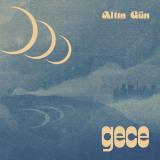
Türkischer Folk-Psych-Rock aus Amsterdam der brennt und funkt und treibt und unwiderstehlich außergewöhnlich ist. Wenn türkische Folk-Music Psych-Rock und Elektro-Pop trifft entstehen Altin Gün. Mit ihrem außergewöhnlichen Spagat zwischen scheinbar komplett unterschiedlichen Stilen gelingt dieser Band, die türkisch klingt, von deren sechs Mitglieder aber nur eines in der Türkei geboren wurde, etwas wirklich Außergewöhnliches. Als türkischen Psych Folk bezeichnen sich diese Niederländer selbst, und betonen, dass sie ihre Musik im Kern als Folk verstehen, freilich ein solcher, dem man die tiefe Liebe zur Musik der funkigen 60er und 70er anmerkt. Sehr groovig, elektrisch und voll explosiver psychedelischer Strukturen kommen die türkischen Stücke daher. Lieder, die zum Teil schon unzählige Male gehört und interpretiert wurden, die zur musikalischen Vergangenheit der Türkei gehören, ihr Erbe sind, aber völlig neu klingen. Bandgründer und Bassist von Altin Gün, Jasper Verhulst, betont, wie wichtig das identitätsstiftende Potential der Lieder ist, dass man diesem aber etwas Einzigartiges hinzufügen wollte, was die Hörer innehalten lässt. "Die Lieder stammen aus einer langen Tradition. Das ist Musik, die versucht, eine Stimme für Viele zu sein. (... Und dann) brauchen wir etwas, das die Leute dazu bringt zuzuhören, als wäre es das erste Mal." Der Sound von Altin Gün klingt gleichermaßen traditionell wie vollständig zeitgenössisch und zeigt auf fast schon märchenhafte Art und Weise, dass Musik ein kulturell durchlässiges, experimentelles Medium ist, in dem uns immer wieder wunderschöne Überraschungen begegnen. Mit "Gece", ihrem zweiten Album, hat sich die Band nun endgültig als unverzichtbarer Interpret des anatolischen Rock- und Folk-Erbes etabliert und ist eine absolut unverwechselbare Stimme in der aufstrebenden globalen Psych-Rock-Szene geworden.
- 1: Be Intense
- 2: I'll Be Damned
- 3: Virginia (West)
- 4: Light Of Becoming
- 5: Cannibal Song
- 6: In Dodge
- 7: Oscar, Please?
- 8: Pandemonium Of Parrots
- 9: The Man Can Dance
- 10: My Eyes Hurt Really Bad
"Blinded by Fame", das zweite Studioalbum von Dutch Interiors, ist ein Fan-Favorit. Es wurde noch nie zuvor auf Vinyl gepresst. Die sechsköpfige Band aus Long Beach begleitet sich schon seit fast zwei Jahrzehnten. Jack Nugent, Conner Reeves, Shane & Hayden Barton, Davis Stewart und Noah Kurtz waren alle Freunde aus Kindertagen, und die Band ist das Ergebnis einer kreativen Verbindung, die durch bereits bestehendes Vertrauen und vertraute Verbundenheit entstanden ist. Man kann die unterschiedlichen Stile und Persönlichkeiten der Bandmitglieder an den Songs erkennen, die sie unabhängig voneinander schreiben, bevor sie sie der gesamten Band vorstellen, wo die Stücke oft zu ganz neuen Formen heranwachsen. Trotz dieser individuellen Herangehensweise an das Songwriting beschreiben sie sich gegenseitig als ,Zweige desselben Lebensstamms", deren aufeinanderprallende Einflüsse und Erfahrungen alle in die Songs einfließen. Mit Einflüssen, die von Ambient über Southern Rock und Jazz bis hin zu Dance-Musik reichen, wandelt sich die Band und oszilliert zwischen Alternative Country, kantigem Indie-Rock und Anklängen an dissonante Ambient-Klänge, während sie dennoch wie eine Band klingt, die sowohl ihre eigene private Sprache spricht als auch diese in etwas Universelles übersetzt. Nach der Veröffentlichung ihres jüngsten Albums ,Moneyball" und einer neuen EP, ,It's Glass", über Fat Possum ist Dutch Interior gekommen, um zu bleiben. Lob für Dutch Interior kommt von Pitchfork, Rolling Stone und anderen.
- 1: Drifting
- 2: Open Roads
- 3: Steps
- 4: Clocks
- 5: Nowhere
- 6: Falling Through
- 7: When
- 8: The Tower
- 9: The Crossing
- 10: The Crossing: Part Ii
- 11: Mountain
Crimson Roots schöpfen tief aus dem Blues und erschaffen weiträumige, eindringliche Musik, in der progressive Strukturen und psychedelische Klangfarben auf Emotion und Erzählkunst treffen. Ihr Sound entsteht aus gefühlvollem Gitarrenspiel, ausdrucksstarkem Gesang, markanten Basslinien, warmen Vintage-Keyboards und dynamischem Schlagzeugspiel. Jedes Instrument dient dem Lied und formt eine Musik, die lebendig, ehrlich und zutiefst menschlich wirkt. Jedes Stück ist ein Spiegel ihrer gemeinsamen Reise - aufrichtig und stets im Wandel, genau wie die Band selbst.
- 1: Power To Live
- 2: Cryptomesia
- 3: Coming Down
- 4: All You Wasted
- 5: When It's Time To Leave
- 6: The Promise Song
- 7: What You Are
- 8: Black To Red
- 9: In The End
LTD. SPLATTER VINYL[37,77 €]
SUN DONT SHINE (formerly EYE AM) is a powerful convergence of four iconic musicians who have shaped the landscape of hard rock and heavy metal. Comprising Kenny Hickey (vocals/guitar, ex-Type O Negative/Silvertomb), Kirk Windstein (guitar/vocals, Crowbar/Down), Johnny Kelly (drums, ex-Type O Negative/Silvertomb), and Todd Strange (bass, ex-Crowbar/Down), the band offers a raw, unfiltered sound that rejects the overly polished, embracing instead the heavy atmosphere of their origins. From Birth to Death is a 2026 masterpiece produced by Duane Simoneaux and recorded at OCD Studios. The album delivers earth-shaking riffs, bleak atmosphere, and a "next level up" in songwriting - darker, heavier, and more versatile than their previous singles.
Blue w/ black splatter vinyl. SUN DONT SHINE (formerly EYE AM) is a powerful convergence of four iconic musicians who have shaped the landscape of hard rock and heavy metal. Comprising Kenny Hickey (vocals/guitar, ex-Type O Negative/Silvertomb), Kirk Windstein (guitar/vocals, Crowbar/Down), Johnny Kelly (drums, ex-Type O Negative/Silvertomb), and Todd Strange (bass, ex-Crowbar/Down), the band offers a raw, unfiltered sound that rejects the overly polished, embracing instead the heavy atmosphere of their origins. From Birth to Death is a 2026 masterpiece produced by Duane Simoneaux and recorded at OCD Studios. The album delivers earth-shaking riffs, bleak atmosphere, and a "next level up" in songwriting - darker, heavier, and more versatile than their previous singles.
- Ernie
- Cay's Cray
- This Room
- Ray Ray
- Dark Days
- Flashback
- Roady
- Wandering Eye
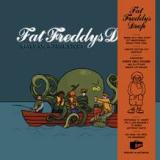
Mystic soul supernova, 'Based On A True Story' aka BOATS is the debut studio album from Fat Freddy's Drop unleashed in May 2005. The BOATS album features 10 fresh slices of future funk, with surprises, fakes & freaky sidesteps throughout. BOATS is Aotearoa’s longest-charting album with 111 weeks in the Top 40, won eight NZ Music Awards and took out Gilles Peterson’s Worldwide Music Awards in the UK.
On debut in Aotearoa, the independent released BOATS debuted at #1 and went Gold on its first release day. The tracklist featured six completely new tracks, as well as reworked versions of previously released singles like 'This Room', 'Hope' & 'Ernie' also known as 'Willow Tree', alongside 'Flashback'
- A1: Skyscraper (Live In Uelzen)
- A2: It's A Hard Life (Live In Paderborn)
- A3: I Got My Eyes You (Live In Uelzen)
- A4: Strange Feeling (Live In Uelzen)
- A5: Goldrush (Live In Uelzen)
- A6: It's Good To Know (Live In Uelzen)
- A7: Just Get Back (Live In Paderborn)
- B1: Dirty Slapstick (Live In Paderborn)
- B2: Heart In Danger (Live In Paderborn)
- B3: We Don't Want It No More (Live In Paderborn)
- B4: Legend (Live In Uelzen)
- B5: Subways Of Your Mind (Live In Uelzen)
- B6: Waiting Song (Live In Uelzen)
We are pleased to announce the first FEX live album, Don't Look Back. The release features selected recordings from two concerts in Paderborn and Uelzen, both captured in 1985. All tracks on the album are previously unissued, including entirely unheard songs such as It's a Hard Life, Just Get Back, Legend, and Waiting Song, alongside a previously unreleased version of Subways of Your Mind, widely known as "The Most Mysterious Song on the Internet."
One of the most striking aspects of the album is the remarkable sound quality of the live recordings, as well as the strength of the performances themselves - particularly given that FEX were still considered a newcomer band at the time. The four-piece lineup consisted of singer, guitarist, and primary songwriter Ture Rückwardt, Michael Hädrich on keyboards and occasional second guitar, Norbert Ziermann on bass, and Hans-Reimer Sievers on drums. In 1985, the band was preparing for broader exposure through a nationwide tour organized by the small promotion company HBM-Musikbüro.
The album opens with the psychedelic Skyscraper, a track Rückwardt reportedly regarded as a personal favorite to perform. Hädrich contributes dynamic synthesizer layers, while Ziermann underpins the track with a distinctive slap bass groove. This is followed by the energetic rock number It's a Hard Life, which once again demonstrates that the band possessed multiple songs capable of matching the impact of their best known track Subways of Your Mind.
After this energetic opening, the album shifts into a more restrained mood with the synth-pop ballad I Got My Eyes On You. It is followed by Strange Feeling, presented here in a particularly compelling live version that arguably surpasses the previously released studio demo featured on the Skyscraper LP, with Rückwardt delivering one of his most expressive vocal performances. On Goldrush, another fan favorite, it is Hädrich's DX7 synthesizer work that stands out.
Don't Look Back continues to flow seamlessly, moving between styles such as new wave, synth pop, and a blues-influenced form of classic rock. On It's Good To Know, a song addressing the theme of stardom, the band returns to a heavier rock sound. In contrast, the synth-driven Just Get Back reflects on the conflict in Northern Ireland, then ongoing at the time. Lines such as "It's the money, it's the money why they come along" are directed at mercenary soldiers, while "even Sunday's a killing time" directly references Sunday Bloody Sunday by U2.
Previously known songs such as Dirty Slapstick and Heart in Danger lead into We Don't Want It No More, perhaps the band's most striking pop ballad. It is easy to imagine that the track had the potential to achieve radio success in the 1980s. The following piece, the epic Legend, explores themes of loneliness and love simultaneously. With poetic and abstract lines such as "some isolate in the falling rain" and "that's why I count all the reasons they call out for living, sadness is falling inside," it builds an almost eerie atmosphere.
One of the final highlights of the album is Subways of Your Mind, recorded in Uelzen. In this version, Rückwardt's vocal performance is even more on point than on the previously issued recording from Paderborn. Another notable moment is the driving, 1970s-inspired rock 'n' roll track Waiting Song. Both the composition and its live performance carry an energy that could easily stand alongside the repertoire of bands such as AC/DC. It was usually the track that FEX ended their concerts with, calling out each band member at the end of the song.
This leads to a broader reflection: it is striking that FEX did not achieve a wider breakthrough at the time. The performances captured here suggest a band capable of delivering consistently, song by song, note by note. It is not difficult to imagine FEX performing in large venues and engaging sizeable audiences. In reality, however, most performances in 1985 took place in front of relatively small crowds. The recordings featured on this album originate from the Roxy club in Paderborn and a small, unknown venue in Uelzen, likely in front of fewer than fifty attendees.
An essential figure behind these recordings is the engineer known only under his nickname Hase (German for "rabbit"), who was responsible for capturing not only these concerts but many other surviving FEX recordings. Bringing his own mixing desk to performances, he developed a deep familiarity with the band's material and was able to shape the live sound with precision, including the timely use of vocal effects. The original recordings existed only on cassette and required careful and extensive restoration work. Zoey Cairs was finally responsible for bringing them to their present quality.
This album marks the beginning of the Live Waves series, following the rediscovery of additional recordings that have gained international attention since November 2024, when they surfaced through what has been described as the largest "lost wave" music search to date. The title of this first live LP Don't Look Back carries a certain paradox. While the album invites listeners to revisit recordings from forty years ago, FEX themselves were always oriented toward the future. In that spirit, further releases of brand new material are already planned.
The cover artwork is once again based on an image by Magnussen from the Kiel archive, depicting the Prinz-Heinrich-Brücke. The bridge, once located in the northern part of the city, no longer exists. As a symbol, however, it remains fitting: a bridge stands for movement and connection - qualities that FEX sought to embody on tour, bringing their music to different places and audiences.
You blink; eyes crusty. Last night went a little too late again, and as you stumble towards the kitchen you stare at the record player like it’s a cup of coffee. The rest of your life can wait. You stare at the record again and hit the lever and the needle falls.
First up: Gastón Cabrera’s Inhumano, a little relentless and unforgiving, like being thrown in the back of an Aston Martin and driven away. The groove builds to a haunting peak, and you want more. Then the record blurs into Alfalfa’s La Fiebre, which tickles your ears with eerie bells, and builds from bass fundamentals into something more driving. It’s hopeful, but makes you work for it – wading through acid; climbing the hill.
Everything stops. Fuck it. You flip the record, and Marcos Coya’s The Underdog starts off easy, but slips you down a dark path to a pool of churning, hypnotic synths. There’s a strange moment of quiet before the final track. vault. and Isaac Elejalde close with authority on Just Melt: a raw and writhing finale spiked with voices and sirens that will leave you out of breath, somewhere else.
Introducing The Goods. Four tracks; one abduction. Limited to 300 copies – vinyl exclusive, forever.
- 1: Love Me
- 2: Wings Of Nightmares
- 3: Paradise And Plague
- 4: The Hands That Used To Hold Me
- 5: Separate Wounds
- 6: Your Own Knife
- 7: Cherished
- 8: Imprints
- 9: Ocean Of Another
- 10: Nothing Left To Love
Nothing Left to Love is Counterparts' sixth studio album following 2017's You're Not You Anymore. Bookended by the powerful lyric “Will you love me when there’s nothing left to love?” — a desperate plea on commitment in the face of both mortality and morality — the album muses on many of the topics vocalist Brendan Murphy has in the past: life’s darkness, self-destructive tendencies and the self-flagellation they beget.
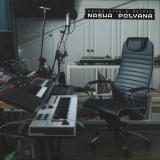
We present an EP from two house masters Artem Stan & Matpri on Analog Concept records.
This record was born like in the classic 90s from jam sessions in the studio, when musicians caught the groove and connected their deep universes, showing true love for house music. Everything is combined here - the sound of drum machines 909 and not only, atmospheric acid impulses of 303, classic pads that paint these paintings bright and filled with deep meaning, as well as much more. Amazing two sides and four compositions, each with its own story.
The Midnight Seduction track opens the telling of these stories on side A. From the first seconds, immersing in the atmosphere of synthesizer temptation, the analog bass line combined with the default drum section and elements of bright metal claps quickly gain the necessary energy and immerse in the images of a closed nightclub with long corridors and hidden dance floors. The light plume of the classic M1 organ and the accentuating Acid lead maintain balance. Secret nocturnal seduction, light ecstasy and an atmosphere of love.
French Kiss - everything is great here, as soon as you listen to the harmony of accordion-like synthesizers and deeply addictive pads, you are instantly transported to the image of Parisian streets. Elements of bells, a rhythm section filled with unpredictable percussion, acid inclusions and an unexpected immersion into a broken beat in the middle of the composition, a real deep French kiss.
Matpri is known for its sophisticated approach to music and is rightfully the guru of micro and minimal house. Having created the maximum sound quality of the rhythm section and the deep bass that was addictive from the first seconds, mixing old-school vibe, while not losing touch with his minimalistic sound image, he filled the House Template track with the smallest details and percussion, which is confidently based on the B-side.
Four certainly high-quality compositions were created in the studio of Artem Stan in the mountains of Krasnaya Polyana and one of the tracks on the B-side - "Nasha Polyana" - is dedicated to this location, it conveys a certain playful atmosphere of a mountain village with a vibe of complete freedom and daily carefree. A complete release with decent house music.
Die brandneue Kollaboration zwischen Freddie Gibbs und The Alchemist, „Alfredo 2”, ist der offizielle Nachfolger der gefeierten „Alfredo”-Veröffentlichung des Duos aus dem Jahr 2020.
Der Rapper Freddie Gibbs wird für sein technisches Können und seine provokanten Texte gelobt und hat sowohl Fans des Gangsta-Rap als auch des Underground-Hip-Hop für sich gewonnen. Er reimt sowohl auf dröhnende Breakbeats als auch auf Trap-Beats und hat mit zahlreichen Rappern und Produzenten zusammengearbeitet, darunter Young Thug, Jeezy, DJ Drama und Statik Selektah. In den 2000er- und frühen 2010er-Jahren machte er sich mit einer Reihe von selbst veröffentlichten Mixtapes einen Namen. Nach seiner ersten offiziell veröffentlichten EP Str8 Killa (2010) begann er, richtige Studioalben zu veröffentlichen, darunter die gut angenommenen Kollaborationen mit Madlib Piñata (2014) und Shadow of a Doubt (2015) sowie You Only Live 2wice (2017). Nach dem kommerziellen Mixtape Freddie (2018) tat er sich für Bandana (2019) wieder mit Madlib zusammen und produzierte mit The Alchemist das Album Alfredo (2020). Letzteres wurde seine erste LP, die die Top 20 der Billboard 200 erreichte und anschließend für einen Grammy Award nominiert wurde.
The return of Jonne Lydén aka 53X is an exhilarating welcome for Emotional Especial with 4 more seismic analogue psychedelic jams that are becoming recognisably a unique and hypnotic statement.
Lydén’s studio time is distillation for personal contemplation and perfection just 3 releases in 5 years that are worth the wait. The heady demand for his debut ‘Synapse’ and the following ‘Zen ‘23’ on Especial (limited repress incoming!) show constant development a sound of widescreen technoscope where dub beats trance pyrotechnics and 303 mind-melt swirling in a cosmic matter.
His return takes this further his music heritage in Finland’s hardcore punk scene to finding the techno of Detroit and Berlin before submerging in synths and drum programming jamming recording and mixing these trip-out electronic journeys live.
This heavy 4/4 jack is apparent on opening Sanctuary. Like his recent outings ‘Radar’ found on the Especial 50th “sampler” release ‘Gracias Especial’ (EES050) and also ‘Simulaato’ hidden away on blink and you miss it cult label Avidya (AVI003) this is a pure undiluted bang. Straight forward heavy bass kicking charged with acid 303 and monotonic vocal insights the track is a flourishing temple a call of embrace.
The eponymous Cyan Haze showcases 53X’s cinematic finest panoramic audio and sound design creating expansive phonics. BPMs drop samples flourish around break drops and rolling bass – breathing looping shouting lifting.
Owls enlightens. Hardware rumbles cerebral a temporal universe awakening. The collage of found sound successive sequential all encased by hypnotic broken chords rolling bass and melancholic piano refrain. Meta worming braindance ecstatic tribal industrial gliding by Shiva into the night.
Dust closes apt its basement collage pounds Lydén to techno genesis. Proto-zeitgeist steppa dark room incantation pulling and expanding the fantasy to strange dreamscapes. Reincarnation and hope in 2026.
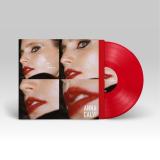
Nach ihrer gemeinsamen Interpretation von I See A Darkness mit Perfume Genius kündigt Anna Calvi die neue EP Is This All There Is? an, die am 20. März erscheint. Die vier Songs versammeln Kollaborationen mit Perfume Genius, Iggy Pop, Laurie Anderson und Matt Berninger.
Eröffnet wird die EP von God’s Lonely Man, in dem Calvi Iggy Pop die Stimme eines zerstörerischen inneren Monologs überlässt. Der Song ist von nervöser Energie getragen: kantige Gitarren, antreibende Drums, eine direkte Konfrontation mit emotionaler Stagnation. Pop verkörpert dabei genau jene rohe Präsenz, die Calvi für die Erzählung suchte.
Seht und hört "God´s Lonely Man" HIER.
Is This All There Is? bildet den ersten Teil einer geplanten Trilogie, die Identität als etwas Veränderliches begreift, geformt durch Nähe, Liebe und biografische Brüche. Ausgangspunkt ist Calvis eigene Erfahrung des Mutterwerdens, die ihren Blick auf Sicherheit, Verantwortung und Möglichkeiten verschoben hat. Die EP kreist um grundlegende Fragen moderner Existenz: Wie lässt sich Intimität neu denken? Was bedeutet es, sich wirklich verbunden zu fühlen? Und wann fühlt man sich wach?
Neben dem bereits veröffentlichten I See A Darkness interpretiert Calvi gemeinsam mit Laurie Anderson Kraftwerks Computer Love neu. Mit Andersons Stimme im Zentrum und choralen Arrangements entsteht ein Stück über digitale Nähe und emotionale Distanz. In ihrer Gesamtheit wirkt die EP wie ein zusammenhängender filmischer Bogen – vier Songs, vier Perspektiven, eine fortlaufende Erzählung.
Is This All There Is? versteht Kollaboration nicht als Zusatz, sondern als Strukturprinzip: Die Stimmen der Beteiligten werden zu Figuren innerhalb eines gemeinsamen Klangraums, in dem Fragen offen bleiben dürfen.
Mean Field Mutation is a thermodynamic phenomenon occurring just below the vaporization point of voracious growth. It relies on the debris of false and almost forgotten narratives. Astral residue of consumer angst, echoes of obsolete newspeak and oscillations of promotional imbecilities collide with free floating particles hovering under the radar of the megamachine. In steady intervals, this results in a meltdown producing random waves of reconfigurations driven by cryptic but sanguine naivety.
Released on Lustpoderosa, Mean Field Mutation is the first musical output by Des Coda. Written and produced by Piero Scherer during the pandemic winter of 2021 in his bedroom studio in Zurich. Moving between playful
serenity and feral distortion, it was produced by layering sounds from field recordings, radio and TV clips, as wellas sequences from drum machines and analogue synthesizers. Taking a stance against commercial copyright, all stems of this production are available for download free of charge and ready to be reappropriated.
Des Coda is an open field for collaborative, cultural experiments beyond the conventional understanding of authorship and representation. It engages with an artistic position that defines the creative process as an interplay between context and concept. The resulting work is not a rigid product of authoritarian ingenuity, but a sensitive, living organism guided by the tensions between society and individual. Des Coda is the zestful curiosity rummaging through the rubble of the present in search of future aesthetics.
In a sharp-angled, fiercely inventive reflection on the nature of club culture and digital fatigue, Simo Cell and Abdullah Miniawy reunite to deliver their new album, Dying is the internet, to Dekmantel's UFO series.
French producer Simo Cell has blazed a singular path from his dubstep-influenced origins to become a leading light in contemporary leftfield club music, twisting up adventurous rhythms and flamboyant production in pursuit of a perpetual freshness for the floor. Egyptian singer, poet, producer and composer Abdullah Miniawy has become equally omnipresent in the past 10 years, straddling the arts world and leading with his piercing Arabic lyricism while maintaining an eternally curious spirit that leads into open-ended, experimental music from the abstract to the propulsive.
Following up on their 2020 EP for BFDM, Kill Me Or Negotiate, Miniawy describes their sharply focused new album as "a playful prophecy about the triggers of a new global revolution." Cell considers the title, Dying is the internet, to be a mantra about "how the internet lost its soul," becoming "less about sharing ideas and more about surviving in a digital business ecosystem." Deliberately at odds with the reel-ready two-minute attention span of the average social media surfer (i.e. everyone), the pair set out to make an album that takes its time to reveal nuanced ideas and expressions. Rather than one-note despair for the modern malaise, Cell and Miniawy offer a philosophical reminder that this present moment in the human experience is a temporary phase, no matter how overwhelming it feels.
Dying is the internet finds Miniawy experimenting with auto-tune across the record, while Cell has developed his voice design chops and compositional instincts, moving closer to fully realised song structures without losing the fundamental 'clubbiness' of each track. The result is a cohesive, wildly original kind of heavyweight dance music that slings out hooks left right and centre, from Miniawy's laconic trumpet looming through low-slung 'Reels in 360' and 'Travelling In BCC' to the persistent handclaps that bring 'Living Emojis' to life. Miniawy's poetry explores the power of insistent, repeated phrases in a break from his more typically structured form.
Kenyan powerhouse Lord Spikeheart adds extra snarl to stripped-back, slow-burn opener 'I See The Stadium', but otherwise Dying is the internet is purely the work of Miniawy and Cell casting their considerable chops out into unexplored territory. The results are electric, bound together by a consistent economy of sound that burrows into a shroud of bass-heavy minimalism barely masking Cell's incredibly detailed studio flex. Even the beatless flourish of the Miniawy-produced 'Tear Chime' comes loaded with physicality — a sensory rush at the mid-section of the album bookended by some of the most idiosyncratic club music in recent memory.
Both Simo Cell and Abdullah Miniawy have already proved themselves as fearless innovators across different fields. The strength of their partnership lies in their ability to make space for each other while letting their distinctive sonic identities ring loud and true. Dying is the internet has immediacy and physicality to translate over a soundsystem, but its intricacies are purpose-built for repeat visits and contemplation, unveiling hidden dimensions the deeper you dive into it.
Gatefold Sleeve
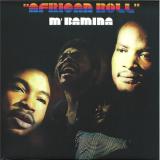
M’Bamina – African Roll (1975)
The story of an album born between Africa, Italy, and the nightclub culture of the 1970s
In the heart of 1970s Italy — a country undergoing profound social change and a music scene just beginning to open itself to distant sounds and cultures — an extraordinary, almost improbable story took shape. It is the story of a group of young African musicians who found their way to Europe, of a Turin nightclub that became a crossroads for communities and experimenters, and of an album which, released in small numbers and largely unnoticed at the time, is now considered a rare jewel of Afro-fusion.
The band called themselves M’Bamina — an ensemble of musicians from Congo, Cameroon, and Benin, who arrived in Italy in the early Seventies. Settling between northern Italy and the Pavia area, they began performing in small clubs and community events, bringing with them a vibrant rhythmic heritage: African polyrhythms, call-and-response vocals, funk-infused bass lines, and Caribbean or Afro-Latin colours absorbed along their musical journeys. Their raw, contagious energy on stage quickly drew attention.
Meanwhile, in Turin, another story was unfolding. There was a venue becoming almost legendary: Voom Voom, one of the city’s liveliest nightclubs, run by Ivo Lunardi. The club attracted an eclectic crowd — students, artists, foreigners, night owls — and Lunardi quickly understood that the dancefloor wasn’t just a place for music, but a melting pot for a new kind of cultural energy. Out of this vibrant atmosphere came his idea: to turn the club’s name into a small independent record label, Voom Voom Music, capable of capturing the spirit of those years and giving voice to unconventional projects.
When Lunardi heard M’Bamina, he immediately sensed that this was the sound he had been searching for: fresh, different from anything circulating in Italy at the time, and capable of blending African tradition with funk and European sensibility. He brought them into the studio.
Production was handled by Lunardi along with Christian Carbaza Michel, while the engineering was entrusted to Danilo Pennone, a young sound technician with a sharp, intuitive ear.
The recording sessions — held in Turin in 1975 — produced a remarkably warm and direct sound. The music feels almost live: grooves rooted in African tradition, but open to funk-rock structures and modern arrangements. It is a natural fusion, never forced. Tracks move between tribal rhythms, funk basslines, light electric guitars, congas and Afro-Latin percussion, with call-and-response vocals and melodies that echo both Congolese tradition and the lineage of Latin jazz. Not by chance, one of the album’s most striking tracks, Watchiwara, reinterprets a Latin standard through M’Bamina’s own rhythmic language.
The album was titled African Roll — a name that was already a statement of intention. It is African music that “rolls,” that moves, adapts, transforms within a new geographic and cultural setting. It is not strictly Afrobeat, nor Congolese rumba, nor Western funk: it is a spontaneous, hybrid blend, shaped more by lived experience than by any calculated aesthetic program.
When African Roll was released, the world around it barely noticed. Distribution was limited, and 1970s Italy had yet to develop a cultural framework for receiving such music. The national music press rarely paid attention to African or “world” productions. The album slipped into silence — though the band’s own story did not.
M’Bamina continued performing across Europe and Africa, even sharing a stage in Cameroon with none other than Manu Dibango. By the late Seventies, they moved to Paris, signed with Fiesta/Decca, and recorded a second LP, Experimental (1978). Meanwhile, the peculiar record they had made in Turin began to resurface quietly among vinyl collectors, Afro-funk enthusiasts, and DJs hunting for forgotten grooves.
That is when the album’s fate began to shift.
Over the decades, African Roll emerged as an almost unique document: a snapshot of an intercultural Italy before the word “intercultural” even existed, a fragment of migrant history, a spontaneous experiment in musical fusion born far from major industry circuits but rich in authenticity. Original copies began commanding high prices on the collector’s market, and the album became recognized as one of the hidden classics of European Afro-fusion from the 1970s.
Today, more than fifty years later, this reissue finally restores visibility and dignity to a project that deserves to be heard, studied, and celebrated. It is not simply an album: it is the testimony of a rare cultural encounter, born in an Italy unaware of how fertile such exchanges would one day become.
It is the story of a visionary producer, an extraordinary band, and a fleeting moment in which music, migration, and nightlife came together to create something genuinely new.
African Roll is — now more than ever — the sound of a bridge: between continents, between eras, between cultures. A record that, after rolling far and wide, has finally come home.
Somewhere long ago in a vinyl galaxy near you We Play House Recordings released an E.P. called ‘This Is Still Belgium Vol 1’. The release was called like that because the music on it could only have been made by Belgians. Vol 2 never happened…until now. Label boss Red D has always been inspired by the rich Belgian club music of the 90’s and inevitably those influences have sneaked into his own productions, but never as clear as on the three tracks you are reading about now.
And so the original WPH series has been revived with WPH 024.5, aptly called ‘This Is Still Belgium Vol 2’. The music is situated somewhere between house, progressive house and early trance music, basically club music with soul & melody at its core.
On the A-side we find Red D teaming up with his friend Mona Lee, a soul sister who has been making waves in recent years in soulful house circles and who comes up with the vocal prowess to match Red D’s emotional trip of a track and heartfelt lyrics. Can you handle the break?
The B-side opens up with ‘Tides’, a deep hypnotic builder for late night eyes-closed dance floors and closes with ‘Papillon’, a track that came to life long ago in the minds of Telepaticos (Marcos Salon & Sandro Valcke). When Red D heard a demo version of this one the melody got stuck in his head and never really left him. Many moons later he rediscovered the parts of this one on a hard drive and got to work on his interpretation that features on this E.P. Safe to say the track holds a special place in Red D’s heart and we’re sure you’ll feel it as well!
The label Erdgeschoss celebrates the freedom of sound and vision at the bar of life, like football – only with a bass drum instead of a ball. And with beer. Because even with vinyl records, the ball has to go in the net.
Pop Vampires Cologne will kick things off; their surrealist debut masterpiece, Karianne, was already released at Total 25 last year. PVC lives up to its name. Like vampires, oskø and Wassermann once again sample their way through the pop supermarket of unlimited possibilities.
Almost overnight, in their illegal, digital garage, they clone hybrid sound structures, saturated with both foreign and self-injected blood doping. Forbidden fruit is known to taste the best. Consciously, explicitly, and provocatively, PVC explores sampling as an indispensable stylistic device, a universal tool for quotation and pop networking. Equally daring and respectfully irreverent, they oppose the new, all-disenchanting AI search engines on the internet with the freedom of art. The rest is surrealism. Just like the accompanying video, which isn't a video in the conventional sense, but rather a kind of making-of with Sabine as the main front character. And the digital versions of some tracks may differ slightly from the vinyl versions.
Because: Anything goes…
Das Label Erdgeschoss feiert an der Theke des Lebens die Freiheit von Sound and Vision wie Fussball - nur mit Bassdrum statt Ball. Und mit Bier. Denn auch bei der Schallplatte muss das Runde ins Eckige.
Den Anfang machen Pop Vampires Cologne, deren surrealistisches Debüt-Meisterstück Karianne bereits im letzten Jahr auf der Total 25 erschienen ist. Bei PVC ist der Name Programm. Wie Vampire sampeln sich oskø und Wassermann einmal mehr durch den Pop-Supermarkt der unbegrenzten Möglichkeiten. Quasi über Nacht klonen sie in ihrer illegalen, digitalen Garage hybride Sound-Gebilde, getränkt mit Fremd- und Eigenblutdoping. Verbotene Früchte schmecken bekanntlich am besten. Bewusst, explizit und provokant arbeiten sich PVC am für sie unverzichtbaren Stilmittel des Sampling als universelle Zitat- und Pop-Vernetzungsmaschine ab. Ebenso wagemutig wie respektvoll respektlos, halten sie den neuen, alles entzaubernden K.I. Suchmaschinen im Netz die Freiheit der Kunst entgegen. Der Rest ist Surrealismus. So wie das dazugehörige Video kein Video im herkömmlichen Sinne ist, sondern eine Art Making Off mit Sabine als Frontdarstellerin. Und die digitalen Versionen einiger Stücke sich leicht von den Vinyl Versionen unterscheiden. Denn: Erlaubt ist, was gefällt…