Fagus’ debut album INTER offers a hypnotic journey through layered black metal soundscapes, crafted with precision and shaped by influences beyond the genre’s borders. Originally released in 2022 and recorded at Iguana Studios, it now sees its first-ever vinyl edition – classic black vinyl via Silent Future Recordings.
Cerca:stu w
Originally released in 1996, Kerosene 454’s sophomore album 'Came By To Kill Me’, is back in print after 28 years. These were the first recordings written exclusively with drummer Darren Zentek (formerly of the band, Glendale) and came at a time when the band felt like they were moving at 100 miles per hour. The album was recorded in the summer of 1996 with J. Robbins (Jawbox, Magpie Cage Studio) and Don Zientara at Inner Ear Studios with help from Juan Carrera (Warmers, Slowdime Records).
- Deepmind
- Two Monkeys
- Every Word Said
- Another One Making Clouds
- Hollow Surrounds
- Uncertain
- Watch
- So Long
- In Bed
TURQUOISE VINYL[28,53 €]
Friends since the age of six, most of the album was written and recorded by the pair when they were nineteen. The songs possess all the singular magic of a duo writing and playing together while sounding like a full, sonically charged band. Their debut E.P. track 'Two Monkeys', included here, has a level of shoegazey dirt that will leave many distortion freaks reeling. `Every Word Said' is prog-pop perfection. The title track is as moody as anything by Flying Saucer Attack. 'Another One Making Clouds' evolves over 35 minutes and doesn't stop elevating and surprising. A founding notion of our label was to release recordings made as the musicians' first intended. No `notes' and no re-recording with a `proper' producer in a `real' studio. A noble preference we saw labels like Rough Trade pursuing with The Strokes, The Smiths, The Fall et al.This album is a proud example. And captures something you can't fake. A young band finding an epic, emotional, cinematic sound in their bedroom. Using it in that peculiarly British way to express the wonder, confusion and heartache of being nineteen. Of wanting to be seen and not seen. It's a kind of British `soul' music with ancestors like The Cure, Echo & The Bunnymen, The Jesus & Mary Chain and the original shoegaze bands. Progressive guitar music, channeling deep emotion, a desire to hear something that sounds like how you feel inside. The stuff nobody talks about. Everything Else.
- Mirage
- Land Of Some Other Order
- The Dire And Ever Circling Wolves
- Left In The Desert
- Lens Of Unrectified Night
- An Inquest Concerning Teeth
- Raiford (The Felon Wind)
- The Dry Lake
- Tethered To The Polestar
- Untitled
Brown/Black smoke vinyl. Hex; Or Printing in the Infernal Method is the fourth full-length studio album by Earth. Contains a special vinyl only bonus track. Comes with 18"x24" poster exclusive to this release. Marking a new direction the band would follow in years to come, Hex stands in stark contrast to Earth's previous works. While retaining the extremely heavy doom/drone metal song structure of epic riffs over simple repetitive drum beats, the guitar was inflected with country influences that favored a cleaner reverb-heavy tone layered with acoustic instruments over the band's previous predilection for distortion. The press release cited diverse influences such as Ennio Morricone, Billy Gibbons, Neil Young's soundtrack to the movie Dead Man, country musicians Duane Eddy, Merle Haggard, and Roy Buchanan.
Neuauflage zum 15. Jubiläum nach längerer Nichtverfügbarkeit!
Black Light ist das sechste Studioalbum des englischen Elektronik-Duos Groove Armada. Es verbindet den
eher Mainstream-orientierten Sound seines Vorgängers Soundboy Rock mit dem Rock-Spirit von Lovebox,
und die Band setzt erstmals 80er-Jahre-Synthesizer ein. Das Album ist von David Bowie, Fleetwood Mac,
Gary Numan, New Order und Roxy Music beeinflusst. Zu den Gesangseinlagen auf dem Album zählen
Bryan Ferry, Fenech-Soler, Jess Larrabee, Nick Littlemore, Saint Saviour und Will Young.
Der irische GRAMMY Award Gewinner Cian Ducrot meldet sich zurrück mit seinem mit Spannung erwartetem zweiten Studioalbum „Little Dreaming“. Die Singles „Who’s Making You Feel It“ und „Little
Dreaming“, die beide Teil des Album sind, beweisen ein weiteres Mal, dass Cian seinen Platz ganz oben in
der Songwriter- und Popriege verdient hat und setzt damit seinen Aufstieg fort, der ihn bis heute über 1,4
Milliarden Streams beschert hat.
Horace Silvers erste Japantournee Anfang 1962 hinterließ bei dem Pianisten einen tiefen Eindruck. Kaum
wieder zu Hause, machte er sich daran, eine Reihe von Stücken zu schreiben, in denen er versuchte, “ein
japanisches Gefühl in den Melodien mit einem lateinamerikanischen Gefühl in den Rhythmen” zu verbinden.
Das im Juli desselben Jahres mit seinem Quintett aufgenommene Album “The Tokyo Blues” widmete er
seinen glühenden neuen Fans in Japan.
At The Gate of Horn wurde ursprünglich 1959 auf Vee-Jay Records veröffentlicht. Es zeigt gekonnt
die Songwriting-Fähigkeiten des produktiven Blues-Pianisten und -Sängers, von Blues-Balladen bis hin zu
beschwingten Nummern. Zu den vielfältigen Titeln gehört auch „Steppin’ Out“, das unter Bluesrockern
zu einem der bekanntesten Stücke von Slim wurde. Dieses neu gemasterte Album mit den Original-Liner
Notes von Studs Terkel wurde bei QRP in Zusammenarbeit mit Acoustic Sounds auf 180-Gramm-Vinyl
gepresst und ist in einer Replika-Hülle untergebracht.
Grammy-Nominated, multi-platinum Hip-Hop legend Pusha T's third studio album Daytona was released in May 2018 via G.O.O.D MUSIC / Def Jam Recordings. An instant classic and arguably Pusha's best work as a solo artist. Now in limited edition Purple Splatter vinyl.
After coming up in different bands in the Long Island and Brooklyn DIY scene in the late '00s and early 2010s, the indie rock outfit Freezing Cold came together in 2017 and settled into its current lineup in 2019. Featuring lead vocalist/guitarist Jeff Cunningham, formerly of Bridge And Tunnel, bassist/vocalist Leanne Butkovic, formerly of Never, and Angie Boylan, formerly of Aye Nako and drummer for Sleater-Kinney — Freezing Cold is coming into their own now more than ever as a dynamic trio.
After playing shows in support of Algernon Cadewalder, Radiator Hospital, and Screaming Females over the past year, the band is sharing their strongest, most fully formed work yet with the album Treasure Pool, due out August 1 on Don Giovanni Records. The 10-track record builds upon the group's extensive DIY experience, while finding an equilibrium where each member shines and moves beyond the early punk resonant in their past projects and toward something more mature.
The new release was recorded in 2023 at Asbury Park's Lakehouse Recording Studios, with production from Marissa Paternoster of Screaming Females and Eric Bennett. It follows the band's 2019 debut Glimmer, produced by J. Robbins (Against Me!, Jawbreaker) and released before Butkovic filled out the group, and 2021's Stuck on Hold/Drawn to Scale EP.
After roughly 15 years out of the game, Marc Kushin makes a highly anticipated return with his Ely Muff project - a label favourite since its inception - debuting proper on Love Love with 4 tracker 'Human Nature'. Kushin's proto-tekno take on the early breakcore sound was a stand-out of a particularly noisy strain of hardcore which emerged in the UK in the late 90s and early 00s, releasing on the likes of Headfuk, One Inch Punch, Deathchant, as well as Kushin's own labels Kinky Stump and Dead Pig, run alongside longtime collaborator Tantrum.
Unpretentious, unserious and completely unapologetic, 'Human Nature' features four tracks of brutal hardcore spiral tekno, distorted and mangled but retaining groove and swagger. The EP features two re-released classics from Kushin's back catalogue: the pumped-up pirate radio pastiche of 'Hold Tite The P, No Need For London' and the feedback-laden blunt lobotomy of 'Automatic Predator', two decades on from their original releases in 2005 on Capsule Core and One Inch Punch. Complementing them are tracks 'Human Nature' and 'Cycle Dirty', previously unreleased spasmoid gems from the same era, unearthed and seeing the light of day for the first time.
All four tracks have been lovingly (re)mastered by Love Love's own Ben Pest for a maximal sonic experience, shining a light on this criminally overlooked corner of UK rave heritage.
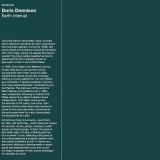
The discovery of Doris Dennison's score represents a genuine musicological breakthrough—what once would have been "a tree falling in the woods" thirty years ago now holds the potential to render "a thunderous clap in our minds." While researching Anna Halprin's lesser-known collaborators, scholar Tom Welsh uncovered the archives of AA Leath, one of Halprin's principal dancers. Buried within these materials was Dennison's handwritten score for Earth Interval, dated May 1956. Born in Saskatchewan, Canada, in 1908, and raised near Seattle, Dennison (1908-2009) encountered John Cage while teaching Dalcroze eurythmics at the Cornish College of the Arts. She joined Cage's earliest percussion quartet—alongside Margaret Jansen, the composer and his wife Xenia—in the group widely regarded as having performed the first complete concert of percussion music in the United States. This historic December 1938 concert was followed by tours and the landmark May 1941 performance at the California Club, comprising Cage and Lou Harrison's Double Music, the premiere of Cage's Third Construction, and Harrison's 13th Simfony.
As Bradford Bailey observes in his extensive liner notes, Earth Interval demonstrates "an extraordinary balance of elements that imbues the piece with a sense of clarity, directness, and constraint that is both distinct and ahead of its time." The work's most remarkable innovation lies in its approach to extended techniques, particularly Dennison's notation for the central movement: "In 2nd movement, 1st player lowers + raises a gong into a tub of water while beating." This technique, absorbed from Cage's experimental vocabulary, generates what Bailey describes as "fields of acoustic abstraction that bend and warp time through sustained resonances, beat, and space." The temporal sophistication of these manipulations anticipated Karlheinz Stockhausen's Mikrophonie I (1964) and Annea Lockwood's water-based sound investigations by over a decade. After joining Mills College as dance accompanist, Dennison maintained crucial connections to the Bay Area's experimental scene, collaborating with figures like Merce Cunningham and programming Cage's music throughout the 1950s.
Comprising three movements—Land Form, Air Tide, and Earth Play—Earth Interval is scored for recorder, drums, gongs, maracas, muted gongs, and bowl gongs. In total, the piece is just under eight minutes: "a fleeting glimmer of moment in time, a life spent at the cutting edge, and a singular creative vision that packs a powerful punch." When viewed in historical context, placed in contrast to roughly contemporaneous avant-garde percussion works by Cage, Harrison, Louis Thomas Hardin (Moondog), and Harry Partch, or important precursors like Edgard Varèse's Ionisation (1931) and Henry Cowell's Ostinato Pianissimo (1934), it's clear that Dennison was following her own path. Earth Interval is not derivative. It is a precursor to what was yet to come, alluding to developments of avant-garde and experimental music that wouldn't begin to appear on the cultural landscape until the 1970s and '80s, with the emergence of Post-Minimalism and more idiosyncratic artists and ensembles like Midori Takada, Ros Bandt, Peter Giger, Frank Perry, Christopher Tree, Michael Ranta, Gamelan Son of Lion, and Niagara.
This recording by Chicago's Third Coast Percussion, captured in March 2022, represents the first complete documentation of this pioneering work. The ensemble's interpretation reveals the piece's remarkable contemporaneity while maintaining its historical specificity. Where Cage, Harrison, and Partch employed "self-consciously off-kilter polyrhythms," Dennison's rhythmic sensibility anticipates minimalist developments by nearly a decade, yet integrates "forceful rests, as well as sharp shifts in sonic character, tempo, and meter, that break the momentum and breathe a sense of life into the piece's structure." This positions her work closer to Post-Minimalism decades before its emergence. The architectural approach demonstrates Dennison's understanding that "the composer almost entirely disappears" in favor of phenomenological listening experience, creating what might be called an egoless music that places its realities and meaning entirely in the ear of the beholder. The present recording, realized by Chicago's distinguished Third Coast Percussion ensemble, represents a significant achievement in experimental music scholarship and performance practice. As specialists in the Cage tradition and contemporary percussion repertoire, Third Coast Percussion approached Earth Interval with the historical sensitivity and technical precision required to illuminate Dennison's subtle compositional innovations. The March 2022 recording sessions, engineered by Colin Campbell, capture both the work's intimate chamber music qualities and its bold exploration of extended techniques. The ensemble's interpretation reveals the piece's remarkable contemporaneity—its ability to speak directly to current musical concerns while maintaining its historical specificity.
This recording serves multiple scholarly functions: it provides the first complete documentation of Dennison's compositional voice, offers insight into the broader network of experimental music practitioners surrounding Cage and Harrison, and demonstrates the sophisticated level of compositional thinking that was occurring within the Bay Area's dance-music collaborations of the 1950s. The work's emphasis on phenomenological listening—what might be called an "egoless" approach to musical experience—places it within a lineage of American experimental music that prioritizes perceptual process over compositional personality. The work's original obscurity—limited to AA Leath's performances at venues like the 1957 Pacific Coast Arts Festival at Reed College—paradoxically allowed it to remain "entirely on its own terms," free from the constraints of historical categorization. Drawing on Jacques Derrida's Archive Fever, the argument emerges that "the archive can acknowledge, celebrate, and resurrect" overlooked voices, transforming our understanding of experimental music history. The present Blume edition, featuring Third Coast Percussion's authoritative interpretation, includes a lavishly illustrated 16-page booklet designed by Bruno Stucchi / dinamomilano, containing complete scholarly apparatus, historical photographs, and detailed production notes. This recording enables "cross-temporal intersectionality," allowing Dennison to "belong to a newly formed and more dynamic understanding of the present and past," demonstrating how forgotten voices can reshape entire historical narratives when given proper scholarly attention and performance advocacy.
This new "Experimental Chapter" by DJ Narciso comes as no surprise, really. Autonomous in the motorization of his music, pushing for progress within the framework of an undeniable (inescapable?) heritage. Twisting and bending sound every step of the way, Narciso definitely keeps in touch with the dancefloor, offering the always much needed transcendence through distinctive, non-linear melodies and patterns. The artist pursues a direct link with bodies in motion but seldom in the expected, institutionalized way club culture is being largely promoted.
This is challenging dance music, proud statements of difference. Narciso's previous record was named "Diferenciado". Now we get "Dificuldades", a track that simultaneously carries the weight of being somewhat odd and the difficulties of life. Check how the piano is venting, freestyle, communicating a feeling, and then lets itself get stuck in a loop, but that's exactly when the groove really starts flowing. And then another layer. It's like direct speech.
A common assertion of pride is found in the origin of the artists. The ghetto as a place where any transformation projects more power precisely because of... inherent difficulties. As others (including himself) did in more or less obvious ways, Narciso clearly states "I come from the ghetto" ( "Não Sabes" ). Twice the value. At least. Almost every segment of music in this album ends up sounding heavily emotional, reaffirming what may be - perversely - a well-known characteristic of Portuguese music: melancholy.
"Não Quero" begins side B as a march maybe more significant than a thousand words, such is the ominous tone of its texture. Next track is another lunar tarraxo, pulling down the shades. Then, "Dor de Barriga" lets things loose again, steering clearly off road, shouting this way and that until a peaceful resolution comes. In "Livra-me Desta", vocal snippets blend into synth snippets, disembodied voices abandon all traces of humanity and finally mutate into different entities that, towards the end, again sound vaguely human but now we find ourselves doubting. Closer "Bob" is a rather classic percussion track with plenty of echo, reverb and an unconscious nod to dodecaphonic music. Unlikely? No, the structural ADN of this music is made up of elements western and eastern, southern and northern. To say all-over-the-place is usually not flattering but in this case the expression translates as wonder, surprise, The Unexpected, and reveals Narciso perfectly at ease inside the nucleus of creation.
Was kann und darf Musik? Auf diese Frage gibt Scott Walker eine Antwort. "Bish Bosch" ist ein düsterer, aber zugleich funkelnder Monolith. Um 2009 herum begann das ehemalige Mitglied der Walker Brothers damit, an diesem Material zu arbeiten. Zusammen mit seinem Co-Produzenten Peter Walsh und einem festen Stamm aus Musikern wie Ian Thomas (Schlagzeug), Hugh Burns (Gitarre), James Stevenson (Gitarre), Alasdair Malloy (Percussion) und John Giblin (Bass) nahm er die Tracks in den folgenden Jahren auf. Nach "Climate Of Hunter" (1984), "Tilt" (1996) und dem tiefdunklen "The Drift" (2006) kreieren die orchestralen Arrangements auf "Bish Bosch" eine aufgeregte Stille. Pointierte klassische Musik trifft auf Breakbeats und verzerrte Gitarren und macht "Bish Bosch" zu einem der wohl intensivsten Hörerlebnisse des Jahres. Unter der Leitung des musikalischen Direktors Mark Warman nahm Scott Walker dieses außergewöhnliche Album in den Londoner Air-Studios auf.
*JAPANESE PRESSING* ** Limited Edition** *** Unique hand silk-screened cover details*
Note: the colours delivered are random - examples shows above**
Enchanting and highly focussed material on a self released LP ** BIG TIP!!
TORSO's 2nd vinyl release.
TORSO (トルソ) is a unit formed by Kenji (flute, sax, etc.) & Orie (cello, voice, etc.), a married couple based in Tokyo, JP.
Technical:
Mastering and cutting were carried out by Graeme Durham of THE EXCHANGE mastering studio, established by the former "Sound Clinic" mastering and cutting section of Island Records UK. This ensures deep grooves and exceptional dynamics.
Kenji: Flute, Sax
Orie: Cello, Voice, Piano
Mixed by: Naoyuki Uchida
Mastering & Cutting by: Graeme Durham (The Exchange)
Press: Toyokasei Japan
The album cover features new artwork by Masaya Nakahara aka HAIR STYLISTICS, with the album title hand-printed using a silk-screen method in 7 colours, individually finished for each of the 500 copies.
- A1: After Afterall
- A2: I Don't Feel It Anymore
- A3: We Feel Alone
- A4: If You Would Come Back Home
- A5: Please Forgive Me
- A6: Further From You
- B1: Just Not Each Other
- B2: Even Now
- B3: You Still Hurt Me
- B4: They'll Never Take The Good Years
- B5: Find Me To Forgive
- B6: Goodmorning
- B7: Maybe Be Alright
Black Vinyl[26,01 €]
- A1: After Afterall
- A2: I Don't Feel It Anymore
- A3: We Feel Alone
- A4: If You Would Come Back Home
- A5: Please Forgive Me
- A6: Further From You
- B1: Just Not Each Other
- B2: Even Now
- B3: You Still Hurt Me
- B4: They'll Never Take The Good Years
- B5: Find Me To Forgive
- B6: Goodmorning
- B7: Maybe Be Alright
Black Vinyl[17,23 €]
Remasterte 15-Jahres-Jubiläumsedition des 2008er Studioalbums »The Sparrow And The Crow« von US-Singer / Songwriter William Fitzsimmons, mit dem ihm der Durchbruch gelang (u. a. iTunes US Best Singer / Songwriter Album 2008). Erweitert um die Vinylerstveröffentlichung der »Derivates« EP (2010) mit 7 elektroakustischen Bearbeitungen von »The Sparrow And The Crow« Albumtracks sowie dem Kate-Perry-Cover »I Kissed A Girl«. Farbiges (Crystal Clear & Yellow) Doppelvinyl im Gatefold.
Mainstays of the D.C. DIY scene, Pretty Bitter live up to their name. Masters of all kinds of dissonance, they juxtapose stories of haunting and heartbreak with dazzling pop-rock arrangements. Pretty Bitter makes music that gets the emo kids dancing. They’re unafraid to infuse their blistering breakdowns with hits of disco and synthpop—and that’s exactly what they’ve done on Pleaser, their sophomore album, co-produced by Evan Weiss (Into It. Over It., Pet Symmetry) and Simon Small (Strawberry Boy) and out July 25th, 2025 via cult favorite indie label Tiny Engines. Following a string of ethereal singles, their 2022 debut Hinges formally introduced Pretty Bitter and their dreampunk to a rapidly growing audience. Fearlessly led by Mel Bleker and sharing studio and touring members with D.C. punk all-stars Ekko Astral, Pretty Bitter has been embraced by DIY fans far and wide. On Pleaser, Pretty Bitter have amped up the drama of their lush arrangements—a match made in heaven for the emotional ferocity of Bleker’s lyricism. “If everything is out there, nothing’s embarrassing,” they sigh on “I Hope You Do,” expertly toeing the line between the personal and the universal over bright, bubbling synths. On the arresting closer “Outer Heaven,” Bleker sings “Time isn’t a lover in the way it likes to play / I’m getting older, every due I pay / Time isn’t a bandage in the way you always say / I won’t be abandoned by myself again this way.” Their observational, heart-on-sleeve songwriting is as effortless as their flittering between the jangly, dreamy inclinations of rock, pop, and folk. Pleaser is a triumph, an instantly lovable record that reveals just how bright Pretty Bitter’s future is.
- Personality Crisis
- Looking For A Kiss
- Vietnamese Baby
- Lonely Planet Boy
- Frankenstein (Orig.)
- Trash
- Bad Girl
- Subway Train
- Pills
- Private World
- Jet Boy
The extroverted blend of attitude, energy, and ostentatiousness that spills from the New York Dolls’ self-titled debut can be seen in full view on the album cover. Depicting the quintet in its hallmark flash-and-trash apparel and in drag appearance, the 1973 album scared away a considerable amount of potential listeners while capturing the attention of a sizable audience that recognized the band for what it was: zeitgeist pioneers who helped develop the punk and glam rock movements.
Named by Rolling Stone the 301st Greatest Album of All Time and by Mojo the 49th greatest album of all time, New York Dolls receives long-overdue audiophile treatment on Mobile Fidelity’s numbered-edition 180g 45RPM 2LP set. Sourced from the original master tapes, pressed at Fidelity Record Pressing in California, and housed in a Stoughton gatefold jacket, this collectible version marks the first time the group’s career-making statement is available to be experienced in audiophile quality.
Far from harboring the crude elements that became associated with the punk scene, New York Dolls benefits from keen production overseen by none other than Todd Rundgren. Though more accustomed to working far higher-caliber musicians, Rundgren — taken by the New York Dolls’ charisma and cool, if not their instrumental approach — fully understood the ensemble’s aesthetic. He captured what went down at New York City’s Record Plant with an astute blend of live-on-the-floor feel, raw authenticity, and professional acumen.
On Mobile Fidelity’s definitive-sounding reissue, you can hear those facets as well as key details, dynamics, and textures with previously unimaginable insight. Rundgren preserved generous degrees of grit, grime, and grease while bestowing the raucous music with elevated levels of separation, solidity, and impact every landmark recording deserves. His vision extends to introducing choice accents — barroom piano notes, Moog synthesizer passages, Buddy Bowser’s honking saxophones — that add to the songs’ appeal without interfering with the primary architecture.
Afforded extra groove space on this pressing, the tenor, presentation, and attack of both vocalist David Johansen and now-iconic guitarists Johnny Thunders and Sylvain Sylvain come across with stunning vibrancy and vitality. The New York Dolls often seem headed off the rails and into the red, but somehow, the strut, swagger, and sloppiness — and the associated sleaze and scruff, scrape and snarl, frenzy and feverishness those characteristics entail — remain together as a whole that shakes its collective fist at the frustrations, isolation, disarray, and disillusionment of youth chaos and urban decay.
Kicking off its debut with “Personality Crisis,” cited by Rolling Stone as one of the 500 Greatest Songs of All Time, the band makes obvious its grasp of alienation, deviance, displacement, and suburban disaffection — as well as its capacity to play hanging-by-a-thread boogie, noisy rock ‘n’ roll, and Brill Building-inspired pop. The lipstick-kissed New York Dolls possesses traits many of its harsher predecessors would overlook: joyfulness and melody, topped with a knack for knowing how and where to take a song inside of three-and-a-half minutes.
Dive and dash with the belligerent “Looking for a Kiss”; stomp your feet and clap your hands to the big choruses of “Jet Boy”; surrender to the demands and provocations of the coded “Vietnamese Baby”; decide whether “Bad Girl” yearns to explode or implode. It’s one of several tunes here that allude to the world coming to end. Of course, that doesn’t mean there isn’t time for a fling before everything burns. “There’s no place I gotta go,” yowls Johansen. And he means it.
Adorned with tonal crunch, glitter, and gristle, New York Dolls takes pride in its brashness and brattiness. The rambunctious effort, which earned the band the distinction of being voted both “Best New Group of the Year” and “Worst New Group of the Year” in the pages of Creem, displays knowing reverence for the blues without calling attention to the style. The folk-laden “Lonely Planet Boy” is nothing if not a collision of heart-on-the-sleeve emotions and the desire in the face of challenges to maintain a tough-skinned exterior. An interpretation of Bo Diddley’s “Pills,” complete with shivering harmonica and clattering rhythms, announces there’s no cure for what infects this band. It’s that contagious. And how.
His deliveries gushing with campy fun, playful irreverence, and sheer decadence, Johansen doubles as the equivalent of an open fire hydrant that spouts at will. He’s at once tender and vicious, serious and tongue-in-cheek. On arguably his finest hour on the album, Johansen’s phrasing, passion, and lyrical ambiguity alone turn “Trash” into an insistent glam-rock gem whose echoing harmonies and girl-group references stamp it a pop classic.
Too much, too soon? Only for those averse to some of the finest rock ‘n’ roll ever put on tape.