Die genreübergreifende Instrumentalband Polyphia besteht aus den Gitarristen Tim Henson und Scott
LePage, Bassist Clay Gober und Schlagzeuger Clay Aeschliman. Seit ihrer Gründung 2010 in Plano,
Texas, hat sich Polyphia einen Namen gemacht, indem sie komplexe Gitarrenriffs mit Hip-Hop-Rhythmen,
basslastigem Trap und Einflüssen aus Progressive Metal und Rock verbindet. Die Band hat bisher drei
Studioalben veröffentlicht – „Muse“ (2014), „Renaissance“ (2016) und „New Levels New Devils“ (2018)
– sowie zwei EPs und einige Singles. Ihr beeindruckender Katalog hat ihnen über 400 Millionen Streams
weltweit, über 140 Millionen YouTube-Aufrufe und internationale Anerkennung eingebracht.
Suche:studio 12
Als das Oscar Peterson Trio im August 1964 mit Trompeter und Flügelhornist Clark Terry ins Studio
ging, um dieses Album aufzunehmen, spielte es bereits seit fünf Jahren zusammen. Die drei Musiker
funktionierten wie eine perfekt geölte Swing-Maschine. Großzügig überließ Peterson seinem Gaststar viel
Raum, um als Solist auf seinen Hörnern zu glänzen. Beim Publikum kamen insbesondere die beiden spaßigen Blues-Nummern ”Mumbles” und ”Incoherent Blues” gut an, in denen sich Clark Terry erstmals als
nuscheliger Scat-Sänger präsentierte.
Nach weltweit über einer Million verkaufter Einheiten erscheint das legendäre SCORPIONS-Debüt-Album
„Lonesome Crow“ pünktlich zum 60-jährigen Bandjubiläum am 27.02.2026 als komplett neu gemixte Auflage in transparentem Vinyl, als Digisleeve-CD und digital als Dolby Atmos-Mix. Unter der Aufsicht von
Stephan Plank, dem Sohn der 1987 verstorbenen Studioikone, wurden die Analog-Tonbänder in einem
modernen State-Of-The-Art-Verfahren von der Patina der letzten fünf Dekaden Jahre befreit und von
Grammy-Gewinner Hans-Martin Buff (Peter Gabriel, Prince etc.) in einen brandneuen Mix umgesetzt,
zusätzlich wurde das Original-Artwork um zahlreiche unveröffentlichte Fotos sowie jede Menge spannender
Making-Of-Anekdoten ergänzt. Ein Kultalbum erstrahlt in neuem Glanz!
„Es ist spannend, nochmal zurückzuschauen und sich daran zu erinnern, wie unsere verrückte Reise damals
angefangen hat“, erklärt Klaus Meine. „‘Lonesome Crow‘ ist eine Liebhaber-Platte für Die-Hard-Fans, die
tief in die Vergangenheit dieser Band eintauchen und unsere Wurzeln erkunden wollen. Die meisten sind
sehr überrascht, weil sie die Scorpions, die man heute kennt, darauf nur in Ansätzen wiederfinden. Trotzdem ist das Album ein wichtiger Punkt in unserer Geschichte, von dem aus wir uns immer weiterentwickelt
haben. Es ist eine irre Sache, nach 53 Jahren in die alten Bänder einzutauchen, neu zu remixen und neue
Klangfenster im Dolby Atmos-Sound aufzumachen.“
- A1: The 1975
- A2: Love Me
- A3: Ugh!
- A4: A Change Of Heart
- A5: She's American
- A6: If I Believe You
- A7: Please Be Naked
- A8: Lostmyhead
- A9: The Ballad Of Me And My Brain
- B1: Somebody Else
- B2: Loving Someone
- B3: I Like It When You Sleep, For You Are So Beautiful Yet So Unaware Of It
- B4: The Sound
- B5: This Must Be My Dream
- B6: Paris
- B7: Nana
- B8: She Lays Down
The 1975 veröffentlichten am 26. Februar 2016 ihr zweites Studioalbum „I Like It When You Sleep, for You
Are So Beautiful yet So Unaware of It”. Es führte sowohl die britischen (BPI Platinum) als auch die USamerikanischen (RIAA Gold) Albumcharts an und brachte sieben Singles hervor: „Love Me”, „Ugh!”, „A
Change of Heart”, „She’s American”, „Somebody Else”, „Loving Someone” und „The Sound”. Pitchfork,
Rolling Stone und The Guardian führten es als eines der besten Alben des Jahres 2016 auf. Die BoxsetVersion wurde bei den Grammy Awards 2017 für die Kategorie „Best Boxed or Special Limited-Edition
Package” nominiert.
2026 ist das 10-jährige Jubiläum dieses viel beachteten Albums. Um dies zu feiern, wird das Album
auf farbigem Vinyl (Farbe noch zu bestätigen) in einer 6-seitigen Dreifach-Gatefold-Verpackung mit alternativem Artwork und 17 12”x12”-Kunstkarten veröffentlicht, wobei jedes Kartenbild einen Song mit dem
Text auf der Rückseite darstellt.
The buzz about the Crystal Teardrop that has been growing for the past two years looks set to reach fever pitch with the release of their debut album _IS FORMING. Featuring a dozen memorable compositions by the bands Alexandra Rose and Leon Jones, the album more than lives up to the promise of their 2024 single releases and their ecstatic live performances on stages across the UK and Europe. The band formed in Stoke-on-Trent in early 2023, "inspired," explains Alexandra Rose, "by a mutual passion for the sights, sounds and creative experimentation of the late 1960s." In addition to Alexandra on lead vocals on guitar, the band comprises Leon Jones (guitar, sitar), Stuart Gray (keyboards, Mellotron), Ed Quigley (bass, vocals), and Huw Woodward (drums, percussion). Intuitively blending elements of garage rock, folk-rock, power pop and psychedelia, the band have created an appealing concoction infused with their own perspectives and personalities. To best capture their sound, they recorded at an all-analogue facility, Tilehouse studio in North London, working closely with White Stripes producer Liam Watson of Toe Rag Studios fame.
- Fanjiry
- Alohotsy
- Sikilony
- Kalavabitiky
- Zongoya
- Zipo Tralala
- Tsapatsapao
- Roro Soa
- Alakarabo
After decades spent shaping the sound of southern Madagascar and becoming one of the defining voices of tsapiky, Damily returns with Fanjiry, his most intimate and focused record to date. Known for electrifying village ceremonies and carrying the fever of Toliara across continents, he takes a sharp turn - not away from trance, but deeper into its core. Recorded in just three days at Studio Black Box with analog wizard Peter Deimel, Fanjiry strips the tsapiky band down to a single guitar and a single heartbeat. Damily plays alone, yet fills the space completely - bass, rhythm, melody, pulse, and breath merging into a dense and vibrating sound. Every riff is architecture, every harmonic a door opening onto memory, childhood landscapes, and nights where music heals, binds, and exhausts the dark. There is no nostalgia here, no museum of tradition. Fanjiry is a new frontier for tsapiky: raw, precise, suspended between earth and sky, born from craft and necessity. The title - the last star before dawn - captures its essence: a quiet moment before the world awakens, where a single guitar can hold an entire history and still point forward.
- A1: Medication
- A2: Little Sally Tease
- A3: There Is A Storm Comin
- A4 19: Th Nervous Breakdown
- A5: Dirty Water
- A6: Pride And Devotion
- A7: Sometimes Good Guys Don't Wear White
- A8: Hey Joe, Where You Gonna Go?
- A9: Why Did You Hurt Me?
- B1: Rari
- B2: Why Pick On Me
- B3: Paint It Black
- B4: My Little Red Book
- B5: Sunshine Superman
- B6: Elanor Rigby
- B7: Try It
- B8: Barracuda
- B9: Riot On Sunset Strip
The debut studio album by the American rock band The Standells, Dirty Water was released by the Tower label in June of 1966. Taped in the midst of touring in a two-day session on April 4–5, 1966 at Audio Recording in Seattle, Washington, the LP takes its title from the homonymous song, which, along with its B-side "Rari," had been recorded on March 5, 1965, at Western Recorders in Hollywood, California and issued as a single. Dirty Water became the band's best-selling LP, peaking at #52 on the Billboard charts, and #39 in the Cashbox listings. The "Dirty Water" single peaked at #11 in Billboard and #8 in Cashbox. Along with Why Pick on Me, this is considered the group's strongest album.
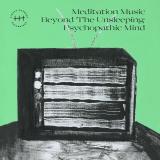
'Meditation Music Beyond The Unsleeping Psychopathic Mind' — a raw, deep free-jazz exploration where synth, voice, saxophone, and percussion dissolve into a single, unfiltered sound world. No boundaries, no polish — just presence and freedom for sonic expression.
Music spontaneously composed (improvised) by all members of the group. Recorded at Threshold Studios in Hamilton, Ontario, Canada. Produced by our good friend Devin Brahja Waldman and wrapped in hypnotic cover artwork specially crafted by renowned Vancouver-based artist Boone Naka.
Annie Shaw - keys/synth/vox
Sarah Good - keys/synth/vox
Nadah El Shazly - keys/synth/vox
Adam Kinner - tenor saxophone
Connor Bennett - soprano saxophone
Devin Brahja Waldman - synth, alto saxophone
Vicky Mettler - guitar
Alexei Orechin - guitar
Daniel Gélinas - drums, percussion
Philippe Melanson - drums, percussion
New Zealand–born, Melbourne-based guitarist, producer, songwriter, DJ and recording artist Lance Ferguson returns with a killer follow-up: two new 7" releases from his third instalment of the acclaimed Rare Groove Spectrum series, offering a fresh set of reimagined and reworked classics. From '70s Australian jazz-funk and Latin-fusion to big-band soul and golden-era funk, Ferguson blends crate-digger sensibilities with modern studio craft.
The "Dominoes / Cold Bear" 7" features the exclusive track "Cold Bear", a fiery reinterpretation of The Gaturs' New Orleans funk classic. Sitting alongside it is a fan favourite among modern funk and soul lovers: Jungle's "Dominoes", stripped back, amped up and played live with an unpolished, authentic feel that pays homage to the essence of the original.
MAN ON THE RUN stammt aus dem Amazon-MGM-Studios-Dokumentarfilm Man on the Run – The
Story of Paul McCartney and Wings, inszeniert vom Oscar-Gewinner Morgan Neville. Die Musik spiegelt
McCartneys Jahre nach den Beatles wider, in denen er sich zahlreichen Herausforderungen stellte und
einen weiteren jahrzehnteprägenden Soundtrack schuf. Dieses Set enthält sowohl weniger bekannte als
auch zeitlose Favoriten aus McCartneys Solokarriere – von seltenen Demos und unveröffentlichten Stücken
bis hin zu obskuren Live-Aufnahmen. Dieses Album fasst viele der operativen Aufnahmen des Spielfilms
erstmals auf Vinyl zusammen – darunter bisher unveröffentlichte Titel wie ’Live and Let Die (Rockshow)’,
’Gotta Sing Gotta Dance’ und ’Arrow Through Me (Rough Mix)’.
- In | A Lake
- Where's | My Phone?
- Cats
- If | I Leave
- Dead | Women
- Instead | Of Here
- I'll | Change For You
- Rules
- That | White Cat
- Charon's | Obol
- Lightning
Auf ihrem achten Album "Nothing's About to Happen to Me" erzählt Mitski, musikalisch unterstützt von ihrer Band und einem Orchester, eine vielschichtige, verrätselte Geschichte, in deren Mittelpunkt eine Frau steht, die zurückgezogen in einem verwahrlosten Haus lebt. Außerhalb ihres Zuhauses ist sie eine Außenseiterin; innerhalb ihres Zuhauses ist sie frei. Mitski schrieb alle Stücke auf "Nothing's About to Happen to Me". Das Album, produziert und aufgenommen von Patrick Hyland und gemastert von Bob Weston, setzt die musikalische Linie von "The Land Is Inhospitable and So Are We" (2023) fort. Eingespielt wurde es live von Mitskis Tourband The Land. Die Orchesteraufnahmen, arrangiert von Drew Erickson fanden in den Sunset Sound und TTG Studios statt, die Tontechnik übernahm Michael Harris. Mitski ist "die faszinierendste und geheimnisvollste Musikerin des Indie-Rock" (Rolling Stone), die sich "immer wieder auf brillante und wunderbare Weise weiterentwickelt" (NPR Music). Im Laufe ihrer Karriere hat sie bislang sieben Alben veröffentlicht, vier davon erreichten Goldstatus. Ihr Stück "My Love Mine All Mine" ist ein Welthit und erreichte Vierfach-Platin. Zu Mitskis vielfältigen Kollaborationen mit anderen Künstler:innen zählen zwei Co-Writing-Beiträge für das aktuelle Florence and the Machine-Album "Everybody Scream", sowie eine Zusammenarbeit mit David Byrne und Son Lux für den Oscar-nominierten Film "This Is A Life". Derzeit schreibt sie Musik und Texte für die Musical-Adaption von "Das Damengambit". Ihre Konzerte, die Variety als "faszinierende Bewegungsstudie" bezeichnet hat, wurden auch als "hochstilisiert, brillant umgesetzt, supercool" (Philadelphia Inquirer) und "ungewöhnlich, rätselhaft und absolut fesselnd" (The Guardian) beschrieben. Ihr erster Konzertfilm "Mitski: The Land" lief im Oktober 2025 in über 600 Kinos weltweit und festigte ihren Ruf als "eine der wenigen Indie-Stars, die sich den großen Durchbruch verdient haben" (Uproxx). Er erschien zeitgleich mit dem Live-Album "The Land".
- A1: Bobby Hebb - "Hard Hard Promises
- B1: Alice Clark - "Hard Hard Promises
The Song “Hard, Hard Promises” showcased on this latest Soul Direction release, showcases Bobby Hebb’s song writing talents and brings together the album only release performed by
Alice Clark and the Unreleased demo version sung by Bobby Hebb himself. Incidentally the studio dub was entitled “Hard Heart Promises”. We don’t know if he ever intended to release the song himself, but it showcases his talent as a songwriter and a singer. After a few conversations with Universal Licensing, they graciously allowed Soul Direction to release this version and with the consent of Bobby Hebb’s Publishing Company. To both these, we are extremely grateful. Thank you for your continued support.
"And what about you? What are you looking for?" - René Daumal
This musical journey pays tribute to René Daumal and his enchanting world of mysteries and magic. The album shares its title with Daumal's novel, Mount Analogue: A Novel of Symbolically Authentic Non-Euclidean Adventures in Mountain Climbing, published posthumously in 1952, eight years after the author's untimely death.
Mount Analogue is a classic allegorical adventure novel. The novel describes an expedition undertaken by a group of mountaineers to travel to and climb the titular Mount Analogue an enormous mountain on a surreal continent, that is invisible and inaccessible to the outside world and can be perceived only by the application of obscure knowledge. The central theme of mountaineering is extensively explored through literary and philosophical lenses. Daumal died before the novel was completed, providing an uncanny one-way quality to the story, which ends abruptly in the middle of a sentence.
The first disc features a fifty-minute composition divided into six chapters: Introduction, Meeting, Supposition, Crossing, Arrival, and Conclusion. This album weavestogether a rich tapestry of diverse instruments, sounds, and voices that collectively tell the story of this conceptual work, loaded with a synesthetic multitude of colors, aromas, meanings, textures, and moods.
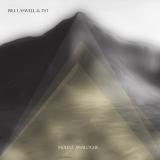
Contributors to this musical poem include Bill Laswell (bass), Henry Kaiser (guitar), Anna Clementi (vocals), Percy Howard (voice), Hideo Yamaki (percussion), Graham Haynes (cornet), Dorian Cheah (violin), Nils Petter Molvaer (trumpet), Peter Apfelbaum (keyboard), and P.ST (concept, electronics), who all lend their talents to a series of excerpts from Daumal's text.
A truly global project, the recordings took place across various locations in Europe, North America, and South America, culminating at Orange Music Studio in New York, thanks to the collaborative efforts of Bill Laswell, James Dellatacoma, and Michael Fossenkemper.
The second disc presents five improvisations for solo electric guitar by Henry Kaiser. The first solo, Jodorowsky's Peradam, draws its inspiration from Alejandro Jodorowsky's 1973 film The Holy Mountain, which was inspired by the Daumal novel. Kaiser's initial forty-eight-minute guitar solo serves as a foundational guide for his four subsequent, Rashomon-esque, solo musical interpretations of Mount Analogue, as seen through the psychedelic labyrinth of Jorodrowsky's cinematic masterpiece.
"And what about you? What are you looking for?" - René Daumal
This musical journey pays tribute to René Daumal and his enchanting world of mysteries and magic. The album shares its title with Daumal's novel, Mount Analogue: A Novel of Symbolically Authentic Non-Euclidean Adventures in Mountain Climbing, published posthumously in 1952, eight years after the author's untimely death.
Mount Analogue is a classic allegorical adventure novel. The novel describes an expedition undertaken by a group of mountaineers to travel to and climb the titular Mount Analogue an enormous mountain on a surreal continent, that is invisible and inaccessible to the outside world and can be perceived only by the application of obscure knowledge. The central theme of mountaineering is extensively explored through literary and philosophical lenses. Daumal died before the novel was completed, providing an uncanny one-way quality to the story, which ends abruptly in the middle of a sentence.
The first disc features a fifty-minute composition divided into six chapters: Introduction, Meeting, Supposition, Crossing, Arrival, and Conclusion. This album weavestogether a rich tapestry of diverse instruments, sounds, and voices that collectively tell the story of this conceptual work, loaded with a synesthetic multitude of colors, aromas, meanings, textures, and moods.
Contributors to this musical poem include Bill Laswell (bass), Henry Kaiser (guitar), Anna Clementi (vocals), Percy Howard (voice), Hideo Yamaki (percussion), Graham Haynes (cornet), Dorian Cheah (violin), Nils Petter Molvaer (trumpet), Peter Apfelbaum (keyboard), and P.ST (concept, electronics), who all lend their talents to a series of excerpts from Daumal's text.
A truly global project, the recordings took place across various locations in Europe, North America, and South America, culminating at Orange Music Studio in New York, thanks to the collaborative efforts of Bill Laswell, James Dellatacoma, and Michael Fossenkemper.
The second disc presents five improvisations for solo electric guitar by Henry Kaiser. The first solo, Jodorowsky's Peradam, draws its inspiration from Alejandro Jodorowsky's 1973 film The Holy Mountain, which was inspired by the Daumal novel. Kaiser's initial forty-eight-minute guitar solo serves as a foundational guide for his four subsequent, Rashomon-esque, solo musical interpretations of Mount Analogue, as seen through the psychedelic labyrinth of Jorodrowsky's cinematic masterpiece.
- A1: Late Last Night
- A2: Walking Down A Road
- A3: Titus
- A4: Lovey Dovey
- A5: Sweet Dreams
- A6: Stranger Than Fiction
- A7: Time For A Change
- A8: Matinee Idyll
- A9: The Woman Who Loves You
The next chapter in this series, 'Second Thoughts (Expanded Edition)', marks 50 years since Split Enz ventured to London to record with Roxy Music's Phil Manzanera in the producer's chair. This definitive 2LP set pairs the original 1976 mix, remastered from the original tapes, with a companion LP 'Wide Angle Enz' - a treasure trove of live recordings and alternate mixes, including a previously unreleased archival rough mix of '129 (Matinee Idyll)' which is exclusive to this release. Presented in the distinctive Australia/New Zealand sleeve featuring John Prew's band portrait, the album concludes with the hypnotic locked- groove of 'Mental Notes', mirroring the international version's striking finale. Pressed on two 140g vinyl, housed in a wide- spine sleeve with printed inner bags. Remastered from the original tapes by Phil Kinrade and overseen by Eddie Rayner, with lacquers cut by Harry Rudkins at AIR Studios.
Seit über einem Jahrzehnt ist THE NEAL MORSE BAND eines der beständigsten und einheitlichsten Kollektive des Progressive Rock. Mit "L.I.F.T.", ihrem neuesten Studioalbum und dem ersten seit "Innocence & Danger" aus dem Jahr 2021, kehren Neal Morse, Mike Portnoy, Eric Gillette, Bill Hubauer und Randy George mit einem Werk zurück, das sowohl Reflexion als auch Inspiration verkörpert. "L.I.F.T." wurde unter Zeitdruck während einer Phase großer Veränderungen geschrieben und aufgenommen und fängt die kreative Chemie der Band in ihrer instinktivsten und inspiriertesten Form ein.
Konzeptionell setzt "L.I.F.T." die Tradition von NMB fort, Geschichten mit spirituellen Themen zu erzählen, und kombiniert emotionale Tiefe mit der für die Band typischen progressiven Rock-Größe. "Ich würde sagen, es ist die Reise eines spirituellen Helden", erklärt Morse. Auf "L.I.F.T." klingt NMB sowohl revitalisiert als auch vereint. Das Zusammenspiel zwischen den einzelnen Mitgliedern und die Lebendigkeit der Songs sorgen für ein neues Gefühl von Ausgewogenheit und Spannung. "Wenn alle an einem Strang ziehen und sich dafür begeistern, geht es schnell voran", sagt Morse. "Dank der Arbeit aller, einschließlich Rich, haben wir das meiner Meinung nach wirklich geschafft. Ich glaube, wir haben hier etwas ganz Besonderes geschaffen."
"L.I.F.T." wird als limitiertes 2CD-Digipak (inkl. Bonus-CD mit Instrumentalstücken), Standard-CD-Jewelcase, Gatefold-2LP und als digitales Album erhältlich sein.
- 1: The Star Of Beshaan
- 2: Pandora’s Box
- 3: Hold High The Flame
- 4: Children Of Tomorrow
- 5: Trial By Fire
- 6: Starflight
- 7: Dead Man’s Gold
- 8: Treachery
- 9: The Son Of Odin
- 10: The Star Of Beshaan
- 11: Pandora’s Box
- 12: Hold High The Flame
- 13: The Son Of Odin
- 14: Winds Of Time
- 15: Treachery
- 16: Playing With Fire
- 17: Dead Man’s Gold
- 18: Born Loser
- 19: Deal With The Devil
- 20: Chariot Of The Gods
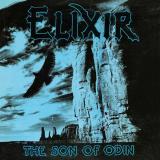
Auch wenn die NWOBHM zum Zeitpunkt der Veröffentlichung von Elixirs »The Son Of Odin«, im Juli 1986, bereits Geschichte war, zählt das Album zu den besten Alben der Bewegung. Mit einer neuen Fassung ihrer hoch gelobten Single ‘Treachery (Ride Like The Wind)’, viele Jahre nach der ursprünglichen 7“, wurde »The Son Of Odin« vom englischen Terrorizer-Magazin als eines der Top 20 Power-Metal-Alben gekürt, während es das Sweden Rock im April 2010 als „Album-Klassiker des Monats“ auswählte. Elixir starteten 1983 in London. Die fünf Musiker nannten seinerzeit das erste Album von MSG sowie »British Steel« von Judas Priest sowie neuere Bands wie Mercyful Fate und Queensryche als ihre Haupteinflüsse. 1985 erschien die Debüt-Single ‘Treachery (Ride Like The Wind)’, die im Kerrang! von keinem Geringeren als Ronnie James Dio in einem Gastbeitrag abgesegnet wurde, was die Band anspornte, ihr erstes Album in Angriff zu nehmen. Das Resultat war »The Son Of Odin«, aufgenommen im Januar 1986 im The Lodge Studio von The Enid und sechs Monate später abgemischt. Nahezu überall folgten überschwängliche Kritiken, nicht zuletzt im Metal Forces, wo Dave Constable zu Protokoll gab: „Eine selbstfinanzierte LP, die so manche Veröffentlichung eines Major-Labels in den Schatten stellt.“ Constable resümierte: „Ich höre mir lieber »The Son Of Odin« an, als die hundertste Version von »Turbo« oder »Somewhere In Time«.“ Die 40th Anniversary Edition dieses unsterblichen NWOBHM-Klassikers beinhalt zusätzlich zum regulären Album die vollständige Session, von der die ‘Treachery (Ride Like The Wind)’-Single stammt, genauso wie das vorangegangene Demo und die BBC Friday Rock Show Session. Zudem erzählen aktuelle Interviews mit Gitarrist Phil Denton und Manager Seymour Mincer erzählen die Geschichte des Albums.
- A1: Lazy Love
- A2: The Best
- A3: Like The Sun
- A4: Bitter Medicine
- A5: Hunned Bandz
- B1: Natural
- B2: The Blue Sky
- B3: Sundays
- B4: Perfect
- B5: This Time
Sundays is the debut full length from Oakland-based Tanukichan, aka multi-instrumentalist Hannah van Loon. At surface level, the album sounds just how the title describes: hazy, dreamy, reflective, just like a lazy Sunday afternoon. Upon second and third listens, the dreamy music unveils a deeper world: an ever present sense of longing, an endless state of summer and a period of instability that plagues us all at one point or another in our lives.
Raised in San Francisco, van Loon started out making classical, bluegrass and jazz music as well as playing in numerous bands in the area before deciding to make something more personal. What started with a few unfocused demos, with van Loon playing all the instruments herself in her house, became a studio experience and viable collection of music after her friend Anthony Ferraro of Astronauts, Etc. introduced her to Company Records founder Chaz Bear (Toro Y Moi, Les Sins). After collaborating on her 2016 EP Radiolove, van Loon and Bear set out to make a much more sonically cohesive release, with both the producer and artist playing all the instruments on the record. The result is a slice of dream pop that could only come from the combination of the laid back atmosphere of California and the nostalgic and often difficult memories that are generally associated with coming of age.
To van Loon, the tracks of Sundays are a form of contemplation and approaching life’s issues from a different and less complicated perspective. “Sometimes for me, it feels easier to write songs about things than to talk. A lot of things in life are layered and paradoxical, but with songs it always seems simpler.”
Opening track “Lazy Love” sets the stage, sonically and lyrically, for the rest of the album, combining vulnerable lyrics with gorgeous, fuzzy tones. Above pummeling synths and guitar tones, van Loon sings “you know I'd do anything/don't you know I try my best/if I could wake up when the sun is rising” showing the album’s constant theme of balancing always wanting to be the best person you can be, while also feeling a low level joy at letting life play out as it wants to. “Natural” is a track that feels perfect for a road trip, a track that hums away with a driving beat, culminating in the sheer excitement of finally having a night alone with someone you’ve loved for a while, among many highs and lows: “a window too bright/it's natural sunlight/grey fades to white lie/kiss you tonight/it's natural delight/help me feel right.” The tracks collectively address a deep rooted sense of yearning for someone, something new, while also feeling content with your life; a realization that maybe the places you’ve always belonged aren’t where you should be anymore, that suddenly you might be looking for something completely different.
“I settled on the name Sundays as the title of the record because it encapsulated how the record felt to me,“ van Loon says. “I was thinking about the laziness, and dreamy clarity that you can feel after a late night, waking up having to face the world with a new perspective.” Sundays encapsulates this feeling, a nostalgic way of looking at the world, waking up feeling like a slightly different person than before, looking back on life, not sure if you can tackle what’s next, but doing your best, day in and day out
Hidden away amidst the bustle of Rio de Janeiro’s Catete neighbourhood is a small alleyway behind a cast iron gate. At its end is Bairro Saavedra, the courtyard surrounded by Neo-colonial houses where Brazilian guitar virtuoso Fabiano do Nascimento spent much of his childhood. Built in 1928, this secluded neighbourhood with its wooden shutters, tiled floors and tranquil benches, provides the inspiration for the title of Do Nascimento’s new album VILA, a collaborative project with a sixteen piece orchestra led by trombonist and arranger Vittor Santos.
Recorded between Rio de Janeiro and Los Angeles, VILA is grand, tender, warm, playful and nostalgic. On this stunningly ambitious work, the delicate compositions led by Nascimento's guitar, which sits central in the mix, are surrounded by Santos’ breathtaking orchestral arrangements which swirl in all directions: complimenting, questioning, responding; in constant conversation.
Like the eclecticism of the architecture Do Nascimento grew up surrounded by, his music straddles many worlds at once. He is known as a Brazilian acoustic guitar master and as such has collaborated with Arthur Verocai, Airto Moreira and Itibere Zwarg. But equally at home in Los Angeles's jazz and experimental music scenes, Do Nascimento is also known for his work with artists like Sam Gendel and Carlos Nino.
Vittor Santos is an arranger and Trombonist who has worked extensively with many of the greats of Brazilian music, including João Donato, Marcos Valle, Toninho Horta, and Elza Soares.
=====================================
Credits:
Fabiano do Nascimento – 6, 7 and soprano guitars.
All orchestral arrangements and production by Vitor Santos.
Recorded at Electro-Sound studio, Los Angeles and Estúdio Fibra, Rio de Janeiro
Engineered by Jason Hiller and Garbiel Lucchini
Mastered by Mike Bozzi
Oboe – Francisco Gonçalves
Contrabaixo – Rodrigo Villa
Drums – Márcio Bahia
Violino - Ricardo Amado
Violino – Thiago Teixeira
Violin – Daniel Albuquerque
Violin – Márcio Sanches
Viola – Ivan Zandonade
Viola – Dhyan Toffolo
Cello - Hugo Pilger
Cello – Janaína Salles
Double Bass – Rômulo Gomes
Clarinet – José Batista
French Horn – Philip Doyle
Trombones - Vittor Santos
Violin – Daniel Guedes