“The Mire Chronicles,” the latest album by Spammerheads, was born from the difficult experience of the floods that hit Valencia on October 29, 2024. During this time, the duo lost part of their studio and actively participated in the cleanup efforts in their city.
This was an experience filled with a mix of emotions—shock, helplessness, fury, resistance, solidarity, and resilience, among others—that shaped what may be their best work to date. Written as a chronicle, the album explores the personal and collective states of people affected by tragedies or catastrophes. The Valencian duo
(through a carefully produced edition released by Banshees Records) offers six tracks (plus two digital bonus tracks) to remind us that despite the difficulties we may face, we must always fight to get ahead, get back on our feet, and not be swept away by the current.
This album is dedicated to the people and communities who face extreme situations and never give up.
Cerca:studio b
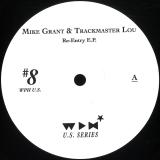
Detroit is where it’s at for this 8th release in the WPH U.S. Series. If we may say so we are talking Detroit royalty here, with three tracks unearthed from the 313 vaults dating back to a studio session with Moods & Grooves main man Mike Grant and the one and only Trackmaster Lou aka Lou Robinson of Scan 7 fame.
Pure, raw and dusty Detroit house grooves spread out over the three tracks ‘Music Is’, ‘Manifest’ and ‘Remember’ with a killer Reggie Dokes remix of the latter thrown in for more deepness for your buck.
It does not get more authentic than this.
- A1: Laraaji
- A2: Peshawar
- A3: Calypso Gene (Feat Silka & Cleo Reed)
- A4: Glue Traps (Feat Quelle Chris)
- A5: Scandinavia
- A6: Nil By Mouth
- A7: Dogeared (Feat Kapwani)
- B1: Crisis Phone (Feat Pink Siifu)
- B2: Moonbow
- B3: No Grabba
- B4: U Know My Body
- B5: Longjohns (Feat Quelle Chris & Cleo Reed)
- B6: California Games (Feat Earl Sweatshirt)
- B7: Super Nintendo
Armand Hammer und The Alchemist erschaffen Welten. Ihre erste war Haram, die nach wie vor in ihrer Umlaufbahn gefangen ist, gleichermaßen üppig wie bedrohlich. Ihre neue Welt heißt Mercy und besteht aus Blut und Imperium, Kinderlachen, unbezahlten Strafzetteln und Dingen, die noch nicht geschehen sind. Die Rapper ELUCID und billy woods werden am Mikrofon von Earl Sweatshirt, Quelle Chris, Cleo Reed, Pink Siifu, Kapwani und Silka begleitet. The Alchemist hat alles andere übernommen.
Building on the foundations of his Braindance Records label (2017–2020), Korean musician Go Dam now presents the second release on Stellar Systems. The Digifuga Series: Stellar EP finds him in interplanetary hyperdrive, charting trails blazed by pioneers from Hashim to Mad Mike to Gerard Hanson.
The four tracks were written in the studio Go Dam built with his own hands in Eulji-ro — once Seoul’s printing district, now a hive of small businesses. That same meticulous, artisanal approach runs through all of his work, whether composing film scores, producing K-Pop for online personalities, or fine-tuning sound systems around the city. The EP opens with the irrepressible electro funk of 'Fevernova', its slapping beat driving growling bass and wide-eyed synths. 'Dream Powder' is a stormy banger, surfing waves of filtered acid and noise before breaking into light. 'Chrono Flux' sustains the high energy, like the soundtrack to an anime motorbike chase at sunset, while 'Quasiverve' drifts into deepest night, its sinuous leads creeping over a stalking bassline.
Blending heavyweight vintage hardware with sharp digital tools, Go Dam conjures an epic widescreen sound that nods both to the sci-fi optimism of early electro and techno and to today’s fractured, machine-mediated music economy.
- A1: The Street Enters The House
- A2: Overthere Comes Overhere
- A3: A Tunnel With Curves
- A4: Surrounded By Trees
- A5: A Light Moves Across Curtains
- A6: Weightless
- A7: No Longer
- B1: Running In The Dark
- B2: Moving In The Rain
- B3: On A Beach Lost At Sea
- B4: The End Of The Road
- B5: And Fall Asleep
- B6: An Empty Corridor
- B7: Outwards And Across
- B8: Goodnight
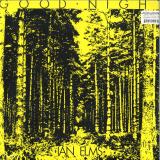
Ian Elms’s cult isolationist synth masterpiece Good Night returns via Dark Entries. Originally released in 1982, Good Night blends Berlin school minimalism and BBC Radiophonic weirdness with the aesthetics of then-nascent DIY punk electronics throughout its fifteen short tracks. According to Elms, these pieces were composed in two broad but interrelated modes: pieces with voice and synthesizer, which are obliquely narrative, and instrumental synthesizer pieces that aspire to capture fleeting emotions. Ian met with producer David Hoser at Octopus Studios and they began constructing pieces using a Polymoog Keyboard 280a, sampled drum tracks, and Elms’s synthesizer. On “The Street Enters the House”, live drums lurch along with skeletal motifs while Elms’s elliptical lyrics evoke domestic discontent. “A Light Moves Across Curtains” features metronomic pummeling and icy strings buttressing the scant cryptic lines from Elms. Instrumental gems like “Goodnight” and “Surrounded by Trees” are built around detuned riffs in round-like structure, both drifting and static like the motion of waves. With original pressings fetching three digits – if you can even find a copy – this reissue is essential listening for fans of John Bender, Transparent Illusion, and the early 80’s DIY cassette scene. Each copy of Good Night comes with a postcard featuring a photograph and notes by Elms. “This record is intended for anyone who by accident or design spends most of their time alone (whether in the body or in the mind).” – Ian Elms.
Dark Entries release 'A Boy Alone', a double LP set from Manchester electronic music pioneer Eric Random. Best known for his early recordings for New Hormones and Les Disques du Crépuscule and collaborations with Pete Shelley (Buzzcocks), Cabaret Voltaire and Nico.
As an original member of The Tiller Boys with Shelley, Random injected a healthy dose of Krautrock into the dour Manchester post-punk scene in 1978/79 before going solo the following year. Random's first 7' 'Subliminal'/'23 Skidoo' was released in 1981 via Les Disques du Crépuscule and explored ominous sonic surrounds. That same year also saw the release of a second 7" single on New Hormones, 'Dow Chemical Company'/ 'Skin Deep'. Both tracks offered bubbling, rhythmic sound patterns, and were the first to feature other musicians that would become know as The Bedlamites. Consisting of Lynn Walton on vocals, Ian Runacres and Andy Diagram of Dislocation Dance, and bassist Wayne Worm, aka Wayne Sedgeman. Their debut 12' single 'Subliminal Seduction'/'Bedlam-a-Go-Go' was released in 1982 through Plurex, mixing arid funk textures and sparse melodies. That same year the group contributed proto chill-out track '6.55' to Plurex compilation 'Hours' and the highly filmic track 'In Cassette Conference' to the Touch cassette package 'Feature Mist'. In 1983, Random spent several months in the Himalayas with a group of musicians from the Kulu Valley and studied non-Western instruments such as tabla. On returning to Manchester, Random convened a new group of Belamites including Walton, Sedgeman and drummer Graham Dowdall aka Dids of Ludus. They released the 12' single 'Mad As Mankind'/'Dream Web Of Maya' in 1984 on Cabaret Voltaire's Doublevision, embracing electronic, industrial and dub styles. In 1985 they contributed the soothing 'Pure Power' to Food Records' 'Imminent Episode One' compilation.
Our reissue also includes 4 unreleased bonus tracks from Eric's archives recorded between 1981-1984. The whole set adds up to 115 minutes of sinister, somnambulant Random music. All songs have been remastered by George Horn at Fantasy Studios. Each copy is housed in a gatefold jacket designed by Eloise Leigh featuring a spread of ephemera, photos with liner notes by James Nice of LTM.
Triple Five Sol drop 75 Racks on Dark Entries, an EP featuring 5 cuts of raw and jacking house music. San Francisco-based producers/DJs Johnny Five and Vin Sol linked up during a trip to New Orleans, and they began hatching plans to collaborate. After setting up a new home studio in Vin Sol’s abode, jam sessions ensued, and soon the duo had cemented their sound. Their analog house tracks harken back to the roughshod and unembellished vibes on 80s Chicago and New York labels like Nu Groove or Gherkin Records, influences they wear with pride. “Boxxx that Rocks,” “Just a Freak,” and “Everybody Loves Triple Five Sol” deploy chunky beats with sprees of minimalist bleeps, sounding like Chip E retuned for the 22nd century. It’s not all jagged drums and acidic squelch on 75 Racks, though; “Gonna Get Out” and “Halfway Home” saunter with the confidence of a New Dance Show participant, soulful and grooving with a dash of garage. 75 Racks comes in a sleeve designed by Primo Pitino featuring bold retro primary colors. Triple Five Sol brings us timeless dance music: deep, real, and weird.
- A1: Ich Weiss Nicht Mehr
- A2: Watashino Shonen
- A3: Paradis Perdu
- A4: Sakuramochi
- B1: Le Soleil Se Leve
- B2: La Jungle En Folie
- B3: Au Clair De La Lune
- B4: Singin In The Rain
- B5: Bird Island
- C1: Alien Go Home
- C2: Tu Te Fous De Moi
- C3: Time Out
- C4: Drole Doiseau
- D1: Time To Party
- D2: Tabac
- D3: Tale Of A Lizard
- D4: Moonman
Evelyne/Masao bring TESTPATTERN to Dark Entries for the label’s first foray into vintage Japanese electronics. Masao Hiruma and Fumio Ichimura’s project Testpattern is known for their release Apres-Midi, a cult slab of synthpop perfection released by Yukihiro Takahashi and Haruomi Hosono’s legendary Yen Records in 1982. While Hiruma and Ichimura parted ways following Apres-Midi, Hiruma’s musical endeavors would continue after meeting French/American model and vocalist Evelyne Bennu in 1984 at a café bar where she would sit and write poetry. Their collaborative efforts as Evelyne/Masao were fruitful, and the duo first performed together in June 1984 on a television program called TOKYO ROCK TV. The album TESTPATTERN comprises seventeen songs recorded in Hiruma’s home studio, which have never been released previously. The Evelyne/Masao duo continues building on the soundworld of Apres-Midi: lush, sophisticated electronics with intricate yet minimalist production. Tracks like “Sakuramochi” and “Bird Island” bear influence from Hosono most clearly, their soaring melodies revealing a subtly ironic redeployment of East Asian musical tropes. But TESTPATTERN is more than homage to Yellow Magic Orchestra. “Tabac” and “Le Soleil Se Leve” display oddball sensibilities closer to Sky Records icons Asmus Tietchens or Cluster. Elsewhere, the project shows affinity for the punkier ethos of continental DIY electronics, like on the quirky “Alien Go Home” and a positively skewed cover of “Singin’ in the Rain.” Bennu’s vocals provide a common thread through these explorations, as she alternates deftly between New Wave deadpan and unhinged chanson singer—check her waxing maximally Francophone on “Au Clair de Lune,” based on an 18th century French song. TESTPATTERN will be available on both double LP as well as CD, and includes a fold-out poster with liner notes with lyrics. This album is dedicated to Masao Hiruma, who passed away in 2011.
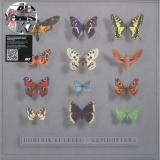
Lepidoptera - the scientific name for butterflies, meaning "scale-winged" - is also the title of the seventh studio album by renowned music producer, bestselling author, ecologist, and knowledge mediator Dominik Eulberg. More than just an album, Lepidoptera is an artistic manifesto: a celebration of butterfly diversity and a profound ecological statement. Set for release via !K7 Records, Lepidoptera blends his signature sound with an urgent ecological message. It marks the pinnacle of a music career spanning over three decades. Eulberg"s fascination with butterflies began in early childhood and has since become a lifelong passion. Drawing from years of experience as a producer and DJ, Eulberg presents his most technically ambitious work yet. At the heart of Lepidoptera are twelve native butterfly species, handpicked by Eulberg from the 3,700 known species in his homeland. Each track is inspired by one species, shaping the album"s structure and grounding its creative focus. The result is a richly textured and immersive journey that moves fluidly between pulsating, danceable rhythms, ambient soundscapes, and orchestral flourishes.
Terry Francis makes his debut on Pariter with a rare and essential reissue from one of the UK Tech House's original pioneers. A cornerstone of the London scene, long time Fabric resident and a driving force behind the early Housey Doingz and Wiggle movements, Terry's influence runs deep in the foundations of underground house music as we know it today.
This release marks the first installment in a short-series with a carefully selected tracks from Terry's archive. Engineered by Wubble-U at the legendary Strange Weather studios and originally released on Eukahouse 25 years ago, these tracks capture the raw energy and spirit of the late 90's London Tech House at its finest. A timeless, sought-after release specially reissued and remastered with an unreleased retake, a vital document from a pivotal era.
Elations Recordings presents "Depois do Silêncio", an intimate, forward-looking acoustic bass, digital keyboard and synthesiser recording by Brazilian avant-garde jazz luminaries Zeca Assumpção and Lelo Nazario. This release celebrates almost fifty years of the duo's friendship and musical affinity, continuing a musical dialogue between long-time collaborators. The duo began working together with Hermeto Pascoal's "Grupo Vice Versa" in the mid 1970s before forging one of Brazil's most adventurous experimental jazz groups "Grupo Um" in 1976; releasing three albums with a shared avant-garde and lateral, exploratory approach to sound fusing jazz and contemporary synthesis with expanded and prepared acoustic playing.
"Depois do Silêncio" reflects the duo's long development of a shared conception of music, resulting in a work that is both timeless and modern. The music on the album was primarily recorded in Nazario's UTOPIA Studio, São Paulo, in 1994, featuring Assumpção on acoustic bass and Nazario on his newly acquired Ensoniq TS-12; these recordings were supplemented with acoustic bass for "Quintal da Memória" in 2018 and completed with an additional layer of rich, complex analog and virtual synthesis following their rediscovery of the material in 2022.
Assumpção's deeply expressive acoustic bass playing forms the backbone of these compositions, augmented by Nazario's expansive and exploratory approach to synthesis, its constantly shifting timbres "making music a living organism, which adapts to situations as they appear." Nazario explains that "although the themes are written, much of the music is improvised based on an organic development of ideas, all intertwined and interrelated exactly as happens in a living organism".
The album title "Depois do Silêncio" (After Silence) references a phrase by the writer Aldous Huxley; "after silence, that which comes nearest to expressing the inexpressible is music". Assumpção and Nazario continue a search for new forms of musical expression, and here they succeed in creating music that "expands the sound of musical instruments, so opening new horizons in the minds of listeners".
Bringing together the elder statesman of the Zulu guitar Madala Kunene and internationally acclaimed Sibusile Xaba, kwaNTU pulls two generations of South African guitar mastery into a single point of focus. Under-represented on recordings outside of South Africa, Madala Kunene (b. 1951), the ‘King of the Zulu Guitar’, is revered as the greatest living master of the Zulu guitar tradition. Sibusile Xaba, whose collaboration with Mushroom Hour Half Hour reaches back to his first recording in 2017 (Open Letter To Adoniah/Unlearning), has garnered international acclaim for his unique voice and virtuoso guitar stylings, which bring together multiple South African guitar lineages in an original, spiritualised fusion. Collaborating with Mushroom Hour and New Soil for kwaNTU, the two players come together to weave a filigree sonic fabric which reaches down to the heartwood of Zulu guitar music but moves resolutely outward, building on the past to create a deeply rooted statement about present conditions and future travels. kwaNTU – which can be roughly translated ‘the place of the life-spirit’ – is also conclave of teacher and student, as Xaba has been taught by Kunene for the last decade. Meditative, rich and sonically sui generis, kwaNTU finds these two musicians linking up within the inimitable space of sound and spirit that they share through Kunene’s teaching.
The great masters of South African music have not all had equal exposure. For many years the generation of musicians who were exiled during apartheid took centre stage, as the regime made it very difficult for those at home to be heard. More recently, a new cohort of important voices, especially in jazz, has broken through to international consciousness. But for the generation of musicians in between – those who shone like beacons in the most difficult final years of apartheid and immediately afterward – international recognition has been slow in coming.
Madala Kunene, ‘the King of the Zulu Guitar’, is among this number. A revered figure for current generations of South African musicians, Kunene began his recording career in 1990, at the bitter end of apartheid, with a now classic self-titled LP for David Marks’ storied Third Ear imprint. Born in 1951 in Cato Manor, near Durban, he had determined to be a musician from early childhood, and by the time he first entered a recording studio he had already had a long career as a popular performer. His virtuoso absorption and transformation of the venerable Zulu maskanda guitar tradition and his richly spiritualised approach to music immediately marked him out as someone special, and in the years that followed, Kunene cemented his position as one of South Africa’s musical elders. He is without doubt the grand master of the Zulu guitar tradition, but his sound and sensibility ranges far beyond it into varied sonic terrain, and he has collaborated with a wide range of musicians both at home and abroad. Now in his mid-seventies, he remains a shining light for those that are making music in contemporary South Africa.
‘He is really an amazing person,’ says the guitarist Sibusile Xaba, who has been mentored by Kunene for over a decade, and now invites a collaboration with him on kwaNTU. ‘As a mentor, he's really powerful in showing us the way. For us to have this opportunity to make music together and have a project together is really a blessing to me.’
Xaba himself grew up in Newcastle, KwaZulu-Natal, where his mother had been in a band and his father sang in a church choir, and from early childhood Xaba played homemade tin guitars. He only later realised that music was his calling. ‘I just loved music. I was fortunate. My parents loved music. And when it was time for me to leave home and go to study outside Newcastle, I knew that music was what I wanted to do. There was no second option. It was just music.’ Moving to Pretoria to study music formally, Xaba committed himself to his craft, developing a unique style that draws on both US jazz masters such as Wes Montgomery and Jim Hall, and the rich and varied heritage of the South African guitar, from inspirational jazz players such as Allen Kwela and Enoch Mthalane, to the music of the Malombo groups and Dr. Philip Tabane (Xaba has previously collaborated with Dr. Tabane’s late son, Thabang), and the Zulu guitar tradition embodied by Kunene.
‘I was really in love with the jazz guitar, I really admired it, and I was digging a lot in that direction,’ says Xaba, recalling his first encounter with Kunene’s music, over a decade ago. ‘And then one day on my timeline, Kunene popped up, and I was like – “What's this sound?” I was so connected to it. It really touched me deep. I started checking out his records, and then I found out he's from the same region as I am, which is Zululand.’ After Kunene played a show at the Afrikan Freedom Station in Johannesburg, Xaba make contact with him, and visited him at home in Durban. They struck up a friendship, and Xaba became the elder’s student, as Kunene began to pass on his knowledge and his inimitable way of playing.
kwaNTU is a tribute to this relationship and the deep learning that has defined it. The album was recorded in Zululand in the town of Utrecht, at a cultural centre called Kwantu Village, which gives its name to the album. ‘It's such a broad word,’ Xaba says, ‘but the elders teach us that Ntu is basically an energy, almost chi, an energy, a force that all living beings have within them. It's a living energy, so kwaNTU is like, almost the place of this energy.’ The two men sequestered themselves for five days of jamming, improvising and planning, and then the session was recorded in one take over a single night, with Gontse Makhene joining on percussion and backing vocals and Fakazile on vocals. Other voices and overdubs were later added in the studio in Johannesburg.
The result is a rich and meditative recording that finds two generations in a deeply engaged dialogue. Teaching and passing on his knowledge, the elder Kunene has brought Xaba into a space of sound and knowledge that they now share; Xaba’s own practice of deep communion with nature and his dedication to his musical craft make him the perfect interlocutor for Kunene. The result is an album that foregrounds the two musicians engaged at the highest levels of responsive listening, sympathetic unity, and collaborative concentration. Bringing an elder statesman of South African music to an international listening audience for the first time in decades by pairing him with one of South Africa’s most important new voices, kwaNTU is a meeting of generations and a powerful demonstration of musical lineage and continuity.
‘Before music, there is sound,’ Xaba observes, speaking of Kunene’s unique approach to music. ‘And sound is like a common compartment…it's not restricted to particular people or particular geographic places, you know what I mean? It's sound. Everybody can hear it. So when he constructs that sound into music, I think everybody resonates with the energy behind his construction of sound into song. Here at home, we really love him for preserving our history through the guitar, through his stories as well the music, the songs that he writes. We really, really admire him.’

"All Good" is the second single off De La Soul's fifth studio album, Art Official Intelligence: Mosaic Thump. Released in August 2000, it features a collaboration with soul legend Chaka Khan, who brings her silky vocal acrobatics and provides an extended hook leading into each verse. The song was an international hit, charting in multiple European countries and Australia and reached number 6 on the Billboard US Hot Rap Songs chart. The b-side to this 7" is "Oooh," the first single off Mosaic Thump, and features Redman.
Gramrcy and John Loveless return to Phantasy with a double-A single, ‘Lucid / Feel So’. Three years on from their festival-rupturing hit ‘Highdive’, which found regular rotation in the sets of 2ManyDJs, Peggy Gou and Daniel Avery alongside soundtracking shows for Moschino and Hugo Boss, two new tracks expand the sound of the Berlin pair’s studio partnership.
‘Lucid’ features a unique vocal turn from Tony Morris, a former teacher, taxi driver and contemporary cult figure in Glasgow’s underground scene. Having begun DIY production only in his late sixties, he has since released on the city’s peerless Optimo Music and has been profiled by the BBC and NPR, alternately described by The Scottish Herald as “Scotland’s most unlikely pop sensation” and by himself as “a deviant cabaret artist”.
Morris’s hypnotic repetitions prove to be an earworming anchor for Gramrcy and Loveless’s pressure-cooker arrangement, a bubbling concoction that represents their most formative influences, combining the sheer bassweight of FWD-era UK dance with the ISDN-line scramble of the most out-there electroclash. Rich in rhythm and textural weirdness, ‘Lucid’ captures the sound of a deeply satisfying intersection of rave outsiders.
Eschewing the dreamy psychedelia of its counterpart, ‘Feel So’ instead tips the scales back toward the outright ecstatic. The influence of esoteric disco and post-punk percussion rides on a throbbing bassline that builds toward supreme dancefloor release, paying tribute to a legacy of hi-NRG, spanning Chicago to Rimini.
Gramrcy & John Loveless - ‘Lucid / Feel So’ will be available to download & stream on October the 10th via Phantasy There will also be a limited-edition run of just 200 hand-stamped 12” vinyl records, including the instrumental cut of ‘Lucid’, available to pre-order from Bandcamp and the Phantasy store.
Great Vacation! are just that: a momentary escape from a crazy world. Sunshine permeates every note, with good times abound when the band throws down. Both “Yellow Gold Diamond Fire” and “You Make It Look Easy” were recorded old school style with the whole band live in the studio to capture that special magic.
Artist Bio:
Great Vacation! was formed by Riley Geare in 2023. The lineup has rotated a bit but always includes Riley and guitarist Topher Mohr. Currently the group includes drummer Sheldon Reed (who appears on Yellow Gold Diamond Fire). Dedicated to an old school aesthetic, the band performs together live in the studio and has only ever done 2 takes of a song. Every track is recorded to tape for maximum stank. We thrive in the Southern California climate- lots of sunshine, classic cars, palm trees and love vibrations pervade the vibe.
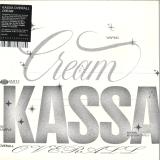
Der Grammy-nominierte Schlagzeuger, Produzent, MC und Sänger KASSA OVERALL definiert die Grenzen zwischen Jazz und Hip-Hop neu. Verehrt von lebenden Ikonen und Underground-Trendsettern, begann er seine Karriere hinter dem Schlagzeug. Seine bahnbrechenden Soloprojekte haben ihn zu einer treibenden Kraft in der US-Jazzszene und darüber hinaus gemacht und ihn mit Unterstützung von Visionären wie Thom Yorke, Iggy Pop, Virgil Abloh, u.a. belohnt. Mit dem renommierten Doris Duke Artist Award 2025 hat Kassa seinen Status als führende Stimme des zeitgenössischen Jazz gefestigt.
Auf CREAM, seinem vierten Solo-Studioalbum, zollt Kassa seinen beiden Leidenschaften seiner Jugend Tribut – Hip-Hop und Jazz-Schlagzeug. Mit diesen Instrumentals verwandelt der visionäre Schlagzeuger und Produzent klassische Rap-Songs in zeitlose Standards, indem er das Kontinuum zwischen Jazz und Hip-Hop aus jedem Blickwinkel und ohne Abkürzungen erkundet und eine neue Interpretation des "Great American Songbook" bietet – eine Hommage an das reiche Erbe der afroamerikanischen Musik.
CREAM unterstreicht Kassas künstlerisches Können durch meisterhafte Arrangements, eine durchdachte Songauswahl und einen Sound, der seine Entwicklung nachzeichnet. Unterstützt von einer herausragenden Band mit generationsübergreifender Jazztradition verkörpert das Projekt seinen genreübergreifenden Ansatz und sein Engagement, den Jazz voranzutreiben.
Von Newport bis North Sea hat seine Band für ihre Live-Auftritte, die Gilles Peterson als "völlig surreal" bezeichnete, große Anerkennung erhalten. Er trat in der Tiny Desk Concert-Reihe von NPR auf und veröffentlichte mehrere von der Kritik gefeierte Mixtapes, die von der New York Times, NPR Music, The Guardian, Afropunk und anderen gelobt wurden.
Conoley Ospovat delivers again with another missive on his mostly solo platform, Continental Drift. With supporters like Move D, Daniel Bell, Snad, Gavin Hardkiss, & DJ 1985, he always seems to find himself in the record bag of underground tastemakers & adventurous selectors. On the Tokyo Techno Girl 12" he continues to refine his sound - ranging from the B-side dusty dub roller Culture Lag to the playful shimmer of the lead tune: Stars.
In between, the wistful title track is a shuffling ode to a faithful furry studio companion. Then classical house roots shine through on Jam bij de Vrij Paleis, catapulting a buoyant bassline groove to the fore with a deep spirit sure to grab fans of Smallville or Giegling. Do not miss this.
East Kilbride’s Scott Fraser finally comes good on a 25 year promise to his younger self with his debut solo album on his own label DX Recordings out of London. This record represents the closing of this chapter and the opening of a new one.
A truly international and collaborative project pulling together the help and talent of friends around the world with mastering by Radioactive man Keith Tenniswood, cut by Frank Merritt at The Carvery and world class US visual art and design legends, Tim Saccenti and Nick Martin on photography, artwork and design.
Limited to 300 solid red heavyweight vinyl copies, brown kraft sleeves; individually hand stencilled and numbered by the artist, printed inserts feature a collection of moments and images from the last 25 years - the studio, the equipment, the people and the places that came together to make this release. Japanese rice paper inner sleeves.
Limited edition hand printed screen print by Niall Greaves at Newbridge Print Studios in Newcastle on the first 30 copies exclusively available via the DX Recordings Bandcamp page.
Musically diverse, crossing styles, flavours and moods, threaded meticulously with razor sharp Roland TR606 programming and glued together with a Space Echo, Expanded opens with the sub aquatic funk of ‘Eden And After’. Side one takes you through banging electro on ‘Energy In Constitution’, the dark dub techno of ‘To The Letter Of My Oath’, leaves you disappearing through a black hole on ‘The Path Of Helium Rain’ and the sound of aliens talking through FM synthesis on ‘Collected Stills’. On side two: a slice of dark, heavy instrumental hip hop gets things started with ‘Where Is That Perception? ‘. Next we get into some straight 4/4 club techno with cut up drums and bumping baseline in ‘Mi Dominante’ before moving through some blissed out Detroit vibes on ‘Earth Looking Inwards’, a rough as you like TR606 driven experimental electro groover ‘Object of Life’ and finally closing out with the Ectomorph inspired stark electro of ‘Steel (NB_BLOOD cut)’.
Mastered by: Keith Tenniswood at Curve Pusher, Hastings
Cut By: Frank Merritt at The Carvery, London
Distributed by: Rubadub, Glasgow
Artwork by: Timothy Saccenti, Nicholas Martin, Scott Fraser
Photography by: Kate Green, Javier Gonzalez, Scott Fraser, Timothy Saccenti
Solid red vinyl (300 copies), 30 coming with a limited edition screen print designed by Timothy Saccenti, Nicholas Martin and Scott Fraser, hand screen printed by Niall Greaves at Newbridge Print studios in Newcastle.
Despite immense challenges, SOYUZ have delivered a career-defining album in KROK.
“Krok” means “step” in Belarusian - and for Alex Chumak and his band this word comes with a lot of meaning. It’s the title and theme that ran throughout СОЮЗ (SOYUZ)'s fourth album, reflecting the journeys the band has navigated in recent years, having moved to Warsaw due to political unrest in their homeland of Belarus and the outbreak of war in Ukraine. Embracing the uncertainty became both the inspiration and main lyrical theme for Alex Chumak, SOYUZ’ composer and arranger, who also decided to go a step further and change the language in which he writes songs from Russian, which is used as lingua franca in many post-Soviet countries, to his native Belarusian. The result is nine songs about dreams and outer space, ordinary miracles, things very close and very distant at the same time.
In early 2022, Chumak and original members, Mikita Arlou and Anton Nemahai, joined tens of thousands of Belarusians seeking safety abroad. Resettling in Warsaw, the band released Force of the Wind in October 2022, garnering widespread acclaim, a string of major European gigs, and led to Polish musicians Albert Karch and Igor Wiśniewski joining the band.
Deeper and more melancholic than previous works, KROK is quintessentially SOYUZ, laced with hope, dreams and a celebration of life. Given the difficulties with finding rehearsal and recording spaces in Warsaw and the departure of the drummer Anton Nemahai from the band, Chumak explored alternative options. He reached out to friend and fellow musical collaborator, Sessa, about the possibility of recording the new album in his recently finished studio in São Paulo, with Sessa and Biel Basile coming onboard as recording engineers.
At the tail end of 2024, Chumak and SOYUZ’ new drummer, Albert Karch, made the trip to São Paulo to record the first sessions for KROK. Laid down directly to tape, these sessions featured prominent Brazilian musicians Sessa, Biel Basile, and Marcelo Cabral, with a guest vocal feature by Tim Bernardes recorded at a later date. The final touches were then added back in Europe. Lush string and woodwind arrangements written by Chumak and Karch were recorded at the Polish Radio studio in Warsaw, and Rhodes parts were added by Chumak at Sven Wunder’s studio in Stockholm.
Though primarily recorded in Brazil, KROK is not a Brazilian or MPB album. It blends the band’s Eastern European roots with jazz, folk and global influences. The genre of the music is hardly identifiable: there are folk ballads and jazz-driven pop compositions covered in lush and often dissonant string and woodwind arrangements where each note is placed with care and meaning behind it.
The title track was the first song Chumak wrote in Belarusian as an adult, making for a fitting opener and one of the band’s finest tracks. Darker than most of SOYUZ’ songs, the tensions lift and lighten as the track progresses. The cinematic library jazz of 'Voo Livre', with ghostly vocals sung by Ciça Góes and Ina, feels like a modern twist on the Italian library composer Alessandro Alessandroni through its sublime choir and woodwind orchestration. Elsewhere, the heartfelt 'Lingua Do Mundo', composed, written, and sung by Chumak and the incredible Tim Bernardes, features one of the standout string arrangements from Chumak and Karch. 'Cichi Karahod' is an instant SOYUZ classic, almost Pat Metheny-esque as it opens, with the acoustic guitar and bass riff transitioning into jazzy AOR / pop-folk territory. The record closes with 'Smak žyćcia', a gentle, dreamy spoken-word poetry piece in Japanese by singer-songwriter Manami Kakudo.
- A1: Alton Ellis - Tumbling Tears (2.25)
- A2: Winston Francis - Turn Back The Hands Of Time (2.24)
- A3: Sound Dimension - Sing A Simple Song (2.59)
- A4: The Gladiators - Fling It Gimme (3.00)
- B1: Jackie Mittoo - Soul Finger (2.19)
- B2: Winston | Francis - Groovy Situation (2 53)
- B3: Calvin Marshall - La La 69 (2.22)
- B4: Soul Defenders - Way Back Home (3 55)
- C1: The Heptones - Young, Gifted And Black (2.34)
- C2: Im And David - Up Fully (2.42)
- C3: Slim Smith - Keep That Light (2.52)
- C4: Sound Dimension - Give It Away (2.44)
- D1: Zoot Simms - Real Gone Loser (2.28)
- D2: Sound Dimension - Soul Bowl (3.13)
- D3: Peter Tosh - Can’t You See (2.22)
- D4: Joy Roberts - Someday We’ll Be Together (2.44)
- D5: The Freedom Singers - Give Peace A Chance (2.23)
Soul Jazz Records’ new Soul Jamaica brings together a wicked selection of
reggae funk and soul tracks from the legendary Studio One stable, featuring
a stellar line-up of artists including Jackie Mittoo, The Heptones, The
Gladiators, Sim Smith, Peter Tosh and The Wailers, Cedric ‘Im’ Brooks and
many more.
For a short period of time at the end of the 1960s and early 1970s, nestled
between the end of rocksteady and the arrival of roots reggae, Studio One
released a small stream of superb soul and funk reggae tunes – covering
everyone from Sly and The Family Stone, Diana Ross and The Supremes,
Nina Simone, Gene Chandler, Tyrone Davis and more.
Most of the tracks featured on Soul Jamaica were only ever released on
Studio One’s UK-subsidiary label Bamboo in small-run pressings and are
now consequently extremely hard to find.
The cover photograph features images of Air Jamaica, the new airline
created by the Jamaican government at the end of the 1960s, showing how
in the years following independence the
country assumed its place on the world
stage, with reggae music playing a key
role in creating the island’s new
cultural identity.