In contrast to their previous EP’s, ‘Xenolith’ ups the intensity focusing on rugged breakbeats and destructive low end pressure. Across four tracks the duo experiment at different tempos, unearthing a myriad of themes inspired by forensic analysis and autonomous technological forces. Like alloys mysteriously grown from ore, fragmented artifacts of familiar origin take on new meaning. ‘Xenolith’ is bound together by complex and dystopian atmospheres, forging perhaps Tracing Xircles most intriguing record so far. A1 Xenolith A2 Surface Level B1 Blindspot B2 Closed Circuit All tracks written & produced by Simon Pilkington & Luke Standing Mastered by Helmut Erler | Cut @ Dubplates & Mastering Berlin Artwork by Hayden Martin / Haxan Studio
Cerca:studio pressure
2x180g vinyl plus download code!
We are very happy to present our first album on Ilian Tape. At the beginning of 2014 we moved our two separate bedroom studios into one and soon after started working on the album. All the tracks were made in about 6 months in our new Ilian Tape Space Studio in Munich. The time felt right to focus on this adventure, but without any pressure. Therefore the process became very natural and we felt free to go wherever the vibe led us. Our intention was to create a very personal and honest sound without any limitations or guidelines. It's a reflection of all the years we've been growing up, working, traveling and playing together and it means a lot to us. But enough said music is not supposed to be described with words, so sit back, close your eyes, light one up and turn up the speakers!
Steve O’Sullivan returns under his Bluetrain alias, channeling the essence of dub into groovy,
endlessly cycling patterns shaped by submerged chords and tectonic low-end pressure. The influence of Mike Ink’s monolithic Studio One era is unmistakable, where reduction becomes
propulsion and each delay-trail etches its own pulse into the haze. Limited colourec vinyl.
With the Hormesis EP, Alric Aerial explores the delicate threshold between pressure and growth. The title a reference to the biological phenomenon where stress triggers a positive adaptation serves as the conceptual foundation for a sound born from deep introspection.
It is a testament to the idea that resilience is not just about enduring, but about evolving through the friction.
In his productions, Alric Aerial weaves together personal and cultural fragments, bridging the echoes of his heritage (Tales From The Desert Part II) with a conscious departure from familiar scenes and habits (Good To Be Gone). This work marks a natural evolution a shift from the noise of the outside world toward a more refined, intentional focus in the studio.
The tracks strike a balance between "dirty" authenticity and infectious, groovy basslines. From driving, straight-forward rhythms to melodic leads, the work shifts between cinematic tension and uncompromising momentum. Especially in the title track, Hormesis, Alric’s vision culminates in the transformation of fragmentation into energy. The music invites the listener to find a new kind of presence within the act of disappearing to get lost in the pulse, only to emerge more resilient.
Born from the dialogue between two distinct yet complementary visions of techno — Orbe’s futuristic and immersive atmospheres, and Psyk’s hypnotic depth, stripped-back minimalism — the record unfolds as a carefully sculpted sonic journey. Tension, space, and texture take center stage, shaping an evolving narrative that progresses seamlessly from track to track.
More than a collection of individual cuts, the album embodies a cohesive and mature concept: a shared identity refined through countless hours of studio experimentation, critical listening, and synthesis. Here, the core essence of the project crystallizes — a point of convergence between atmosphere and impact, abstraction and functionality, introspection and raw dancefloor energy.
This release not only marks the culmination of an intensive creative cycle, but also signals the beginning of a new phase in their ongoing exploration of techno’s expressive potential.
Grace Under Pressure, das zehnte Studioalbum von Rush, wurde ursprünglich im April 1984 veröffentlicht
und enthält einige wichtige Änderungen am Klangbild, die aus der Entscheidung der Band resultierten,
ihren Sound weiterzuentwickeln, indem sie nach einem erfolgreichen Jahrzehnt der Zusammenarbeit mit
Terry Brown hinter dem Mischpult einen neuen Produzenten engagierte.
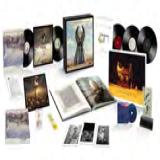
Die GUP-CD-Box enthält 4 CDs und eine Blu-ray. CD1 enthält den neu gemasterten Stereo-Mix von
1984. CD2 enthält Terry Browns brandneuen Stereo-Mix des Albums. Das Album „Grace Under Pressure
Tour: Live in Toronto 1984“ befindet sich auf den CDs 3 und 4. Die Blu-ray enthält außerdem das Konzertvideo, das GUP-Studioalbum, neu abgemischt in Atmos & 5.1, Terry Browns neuen Album-Mix und 4
Musikvideos. Geddy Lee verfasste die Liner Notes und Hugh Symes brillante neue Illustrationen sind im
Buch abgebildet.
Die GUP-LP-Box enthält 5 LPs und eine Blu-ray. LP1 enthält den neu gemasterten Stereo-Mix von 1984.
LP2 enthält Terry Browns brandneuen Stereo-Mix des Albums. Das Album „Grace Under Pressure Tour:
Live in Toronto 1984“ ist auf den LPs 3, 4 und 5 sowie als Konzertvideo auf Blu-ray enthalten. Die Blu-ray
enthält außerdem das GUP-Studioalbum, neu abgemischt in Atmos & 5.1, Terry Browns neuen Album-Mix
und 4 Musikvideos. Geddy Lee verfasste die Liner Notes und Hugh Symes brillante neue Illustrationen sind
im Buch abgebildet.
- 1: Channeling Elements
- 2: 300 Percent Density
- 3: Signs Of Discontent
- 4: Advancing Positions
- 5: Without Water
- 6: The Obvious Destination
- 7: Mass
- 8: Contents Under Pressure
- 9: Opposing Meter
- 10: Constant Velocity Is As Natural As Being At Rest
- 11: Words From The Lexicon
Violet Vinyl[24,33 €]
Candiria’s classic album 300 Percent Density reissued on vinyl in February Hailing from Brooklyn, New York, Candiria is one of the precursors of the mathcore genre. Formed in 1992 by vocalist Carley Coma, guitarists Chris Puma and Eric Matthews, and drummer/bassist/keyboardist/trumpeter Kenneth Schalk, the band was part of the second wave of New York hardcore, but subsequently expanded its performance to also play jazz, hip hop and progressive rock. 300 Percent Density is Candiria’s fourth studio album, originally released by Century Media in 2001. Critically praised for its experimental mix of metal, jazz, hip-hop, and hardcore, the album’s intricate arrangements and adventurous sound have made it a classic, stated by fans and critics as the band’s best work to date. The 25-year-old album is available on wax again in February 2026 via Svart Records. “Candiria have always been—and remain—a favorite among the group’s peers, because musicians already possess the vocabulary to understand the intricacy of the band’s arrangements and the tireless care and craft that went into perfecting them. Like the Dillinger Escape Plan and Converge, Candiria pressed hard to break through the monoculture of metal’s awkward transitional years and pave the way for similarly experimental bands.” -Decibel Magazine
- 1: Channeling Elements
- 2: 300 Percent Density
- 3: Signs Of Discontent
- 4: Advancing Positions
- 5: Without Water
- 6: The Obvious Destination
- 7: Mass
- 8: Contents Under Pressure
- 9: Opposing Meter
- 10: Constant Velocity Is As Natural As Being At Rest
- 11: Words From The Lexicon
Black Vinyl[23,49 €]
Candiria’s classic album 300 Percent Density reissued on vinyl in February Hailing from Brooklyn, New York, Candiria is one of the precursors of the mathcore genre. Formed in 1992 by vocalist Carley Coma, guitarists Chris Puma and Eric Matthews, and drummer/bassist/keyboardist/trumpeter Kenneth Schalk, the band was part of the second wave of New York hardcore, but subsequently expanded its performance to also play jazz, hip hop and progressive rock. 300 Percent Density is Candiria’s fourth studio album, originally released by Century Media in 2001. Critically praised for its experimental mix of metal, jazz, hip-hop, and hardcore, the album’s intricate arrangements and adventurous sound have made it a classic, stated by fans and critics as the band’s best work to date. The 25-year-old album is available on wax again in February 2026 via Svart Records. “Candiria have always been—and remain—a favorite among the group’s peers, because musicians already possess the vocabulary to understand the intricacy of the band’s arrangements and the tireless care and craft that went into perfecting them. Like the Dillinger Escape Plan and Converge, Candiria pressed hard to break through the monoculture of metal’s awkward transitional years and pave the way for similarly experimental bands.” -Decibel Magazine
Rough Signal Records steps into 2026 with a fresh release, featuring Bristol’s young lion KaiDub, following their link-up on last year’s “Osaka to Bristol” release.
Built together in Kai Dub’s Bristol studio, this record is a straight-up expression of their shared love forUK Dub. Militant UK stepper drums and powered by Dub Kazman’s signature synth lines, forming a heavy, sound system–minded steppers tune.
Every track comes, Dub Mixed by Dub Kazman, including the ruf and tuf cut he dropped as the final tune at NO LOGO FESTIVAL last year. No frills, just heavyweight, pressure, and sound system vibes
Melbourne / Naarm strongholdButter Sessionsclock 15 years in the game with a trilogy of 12"s, sustaining their uncompromising streak of peak-form electronics. The family-style V/A binds friends, collaborators, former studio neighbours and DJ booth allies, capturing a label that exists as community as much as catalogue.
A new chapter in Butter Sessions' ongoing Japanese exchange sees Sapporo sound sculptor Kuniyukire-opening a 2015 tour collaboration with label heads Sleep D- a deep, spatial beatdown powered by dub pressure and percussive hypnosis. Shadow-lurking prodigy Mosam Howiesondrops in with his trademark scatterbrain techno, while Hasvat Informantlocks into joint-consciousness big-room radioactivity.
Opening the B-side, Fader Capfuses Balearic psy-ence with Mike Dunn-esque utilitarian jack, hovering somewhere between '80s memory and future vision. Tokyo's Mayurashkafollows with Survival Guide, big beat colliding with drug chug, before Albrecht La'Brooyreunite for a divine chill-out tent slowdown, magnifying sample detail with exacting flow. We're adrift until Sunju Hargunlights the beacon with スカイサーファ(Sky Surfer), Thailand's emissary of ritualistic minimal trance.
Whether taken alone or folded into the three-disc triptych, each instalment stands as a bag-ready constant, charged with Butter Sessions' curatorial finesse.
Stoop Kid is the jangly indie rock project of Diest-born Jens Rubens. After Camp Careful (2021) and Mount Cope (2023), Stoop Kid returns with his third full-length album Office Overdue, a ten-song collection that captures the quiet fatigue, flickering humor, and
fragile hope of keeping it together in a world that won't slow down.
'Office Overdue' is a collection of songs Jens made at home in his modest home studio. For this album, he wanted to let go of pressure and expectations more than ever, and only work on music when he genuinely felt like it.No fancy studio, no producer, just walking upstairs and messing around. The result doesn't always sound perfectly polished: the drums are sometimes clumsily programmed and more than a few wrong notes made it onto the record. The guitars were allowed to hit a bit harder this time, with the '90s slacker vibes coming through more prominently. The result is a record that feels raw and honest, and above all, was made purely out of enthusiasm.
Office Overdue explores the attempt to keep functioning in everyday life while the world around us feels on the verge of collapse. The songs move between mental exhaustion and self-reflection, carried by a dry, sometimes bitter humour that helps lighten the weight. The album focuses on repetition and routine, and on the tension between wanting to care for others and being trapped inside one's own head. Themes of anxiety, guilt and dissociation recur throughout, but are always accompanied by small moments of connection, gentle resistance and acceptance. Office Overdue embraces the mess, the doubt and the false notes, without drawing grand conclusions. Not everything is resolved, but the persistence remains.
- Elegia
- Voce In Xy
- Canti Delle Sfere
- Frammenti Di Sonno
- Movimenti E Silenzi Per Spazi Bianchi
- Antico Adagio
- Ondulazione Melodica
- Motus
- Frammenti Di Suono
- Vocis
- E Echi Armonici Part 1
- F Echi Armonici Part 2
For the first time, all the 1978 recording sessions of Lino Capra Vaccina's legendary Antico Adagio - including Frammenti da Antico Adagio and Echi Armonici da Antico Adagio - collected in one definitive deluxe edition. Minimalism, and so much more. Sheets of resonance, stunning harmonic interplay, intricate rhythms rising as one. Sidelong works of pulsing, hypnotic, ritualistic drone built from vibraphones, marimbas, gongs, bells, and cymbals, threaded by the sustained vocal tones of Juri Camisasca and Dana Matus. A trance-inducing, meditative, cosmic world of sonic interplay - the world beyond, joined with that which lays within.
Before an aberrant idea of progress ludicrously sped up our daily lives, even in hectic Milan it was possible to "play slowly" - with no pressure, simply following the path your art was showing you. This music moves between modal fascinations, ritual evocations, and states of hypnotic trance, evoking the acoustic environment of Tibetan and Zen Buddhist ceremonies and the temporal structures of Noh theatre, from which Vaccina took the name of his original label, Nō. Now, fittingly, this complete collection appears on Ubi Kū, the label of the Italian Buddhist Union.
Lino Vaccina (1953) first gained note as a member of Aktuala, creating a hybrid of rock, avant-garde, and ancient musics while incorporating sonic traditions from across the globe. After leaving in 1974, he studied at Milano's Civica Scuola di Musica, collaborating with Franco Battiato and Juri Camisasca, and forming Telaio Magnetico in 1975. In 1978 he self-released Antico Adagio in a tiny edition and wouldn't be heard from again until 1992. From 1979 to 1985 he was percussionist with the Orchestra of Teatro alla Scala under maestros such as Abbado and Ozawa. His career has been marked by an incredibly high bar of quality and a tragically slim recorded output - a rigorous and sensual language fusing Oriental, Mediterranean, and African influences with ritual elements and a cosmic sense of time.
As Massimo Torrigiani writes: "Lino Vaccina's music captivates through its internal coherence and its ability to generate states of suspension and deep listening - through undulations, small melodic fragments, dialogues between acoustic instruments and resonances that seem to evoke a phantom orchestra. An example of personal exploration, discipline and openness that speaks across time to anyone willing to be drawn into its sound."
Frammenti da Antico Adagio and Echi Armonici da Antico Adagio contain material from the original sessions, restored and issued by Die Schachtel in 2014 and 2017. The new masters, prepared by Giuseppe Ielasi, are based on those restorations and the original material. The package includes previously unpublished photographs from the May 1978 sessions and liner notes by Mauro Radice in Italian, English, and French. Cover art by Dana Matus. Printed by Legno, Milano & Mother Tongue, Verona.
Personnel: Lino Capra Vaccina (vibraphone, marimba, tablas, wooden drums, darbuka, cymbals, gong, metal sheets, bells, bass drum, tom, snare drum, piano, voice), Dana Matus (voice, percussion, cetra), Juri Camisasca (voice), Mario Garuti (violin), Roberto Mazza (oboe). Original production by Massimo Villa & Lino Vaccina with Piero Cannizzaro. Recorded May 1978 at Circle Studios, Milano.
The heights of the Italian avant-garde, at their very best.
Finnish dub-techno craftsman TM Shuffle, head of Vuo Records, resurfaces with a deep and distilled EP that goes straight for the late-night heart of the dancefloor. Rooted in Tampere’s raw, analog dub sound, his productions have long balanced weight and warmth, smoked-out chords, rolling low-end and subtle shuffle that keeps the groove in constant motion.
The lead track “Kellari” dives into basement mode: pressure-cooker drums, slow-burning stabs and a humid, lived-in atmosphere that feels equally at home on a huge system or in headphones at 4 a.m. On the second original cut, TM Shuffle links up once again with long-time collaborator Monoder, the alias of Jussi-Pekka Parikka, known for his dubbed-out explorations on labels like Statik Entertainment and Pakkas-Levyt since the early 2000s. Their joint track stretches time, letting echo, tape hiss and distant melodic fragments float around a rock-solid groove, channelling years of shared studio language into one focused, hypnotic flow.
On the flip, Anton Kubikov (SCSI-9) steps in with a lush reinterpretation of Kellari. A true Russian techno veteran with a catalog that spans Kompakt, Force Tracks, Mayak and beyond, Kubikov melts the original into a widescreen, dream-state trip, soft-focus pads, gentle yet insistent percussion and that unmistakable rolling pulse that made his work so enduring. The remix doesn’t just extend the track; it opens a new dimension, turning the basement pressure into a slow-rising, celestial drift.
Pressed on limited coloured vinyl, this EP is built for selectors who like their dub techno deep, human and timeless, a record that will quietly live in bags for years and keep resurfacing whenever the room calls for true late-night elevation.
Força Maior combines the vital saxophone explorations of Pedro Alves Sousa with the infinitely subtle electronic processing of Pedro Tavares. Sousa (aka Má Estrela) is known for manipulating his woodwind through guitar pedalboards & amplifiers, creating far-from-ordinary sonics rooted in unceasing curiosity. For his part, Tavares (aka funcionário) conjoins video & sound work to create space for the pensive wanderings where memory and imagination interlace.
The album Morte Lilás was recorded over a week in June 2023 in Pedro Alves Sousa's family farm, located in the village of Ferreirim, near Lamego, in Portugal. The partly abandoned farm served as the residency, studio, and inspiration for the album: it is a 400-year-old granite farm that belonged to a member of the "40 conspirators"—a group that led the revolution for Portugal's independence from Spain in the 17th century.
Morte Lilás is a remarkable album of committed meditation. Each day on the farm was a recording day for the two Pedros: Sousa on sax & electronics, Tavares on sampler & processing. Apart from slight sonic incursions from the surrounds—the birds on 'Quinta à tarde'—and the sporadic use of sine tones, the source sounds all start from the saxophone. It is then processed both by Sousa & Tavares. The album unfolds as a saxophonic tapestry that breathes with quiet intensity. Each piece invites close listening, revealing fine gestures and tonal shifts that shape a contemplative, ambient space. Força Maior move with calm precision.
The album opens with the unhurried overture 'Quinta à Tarde' a Portuguese pun on Eno's Thursday Afternoon that announces the textures at play. Sousa's breathy entrance is paired with a soft, delicately shifting, backdrop. As the track progresses, time seems to stretch. The arrangement resists urgency, favouring subtle evolution over dramatic turns. Pensive layers shift & drift, creating a sense of suspended motion that brings the listener into the environs of Morte Lilás. 'Quinta à Tarde' is a long-form fade, shifting emphasis from Sousa to Tavares.
'Cubos' continues the gauzy feel, but with a more up-tempo tilt. Rhythmic clicks & pings setup a swung time for the sax to interpose melodic lines that are fed back & bent with cascading delays. Força Maior in distilled form.
Força Maior is in top form on the title track 'Morte Lilás', a sprawling centrepiece that showcases their command of atmosphere & emotional pacing. By turning up the reverberation & leaning into a continuous format, they dissolve the gap between hypnotic trance & articulate reverie. Then, a moment of stillness. The track pauses, not abruptly but like a tide pulling back, revealing the contours beneath. What follows is a return to the album's more relaxed architecture: understated rhythms, softened textures, and a sense of spaciousness that opens space for reflection. It is a transition that feels organic, as if the song itself needed to exhale before settling back into its contemplative groove.
'Menta' is another short-form miniature of the band's signature contours: beautiful loops of air pressure gradients that carry an emotive weight & light.
The album closes with 'Cascata do Inferno'. The title suggests violence, but the music whispers instead—an atmospheric cascade of breath & tone that emerges in slow, deliberate waves. Short melodic cycles are matched by shimmering electronic chords. It's a piece that rewards patience, draws the listener in to drift downstream, eyes closed, into the serene turbulence of its current.
Originally released in 2005, this standout EP returns as part of the much-anticipated reissue campaign from cult New York imprint Drugsex — a label that quickly became a treasured name among heads who lived and breathed the underground. Born from the creative partnership between UK producers Rob Pearson and Simon Copleston, Drugsex carved out its own raw, hypnotic corner of the international tech house movement.
For the second instalment in the reissue series, label head Rob Pearson teams up with Daniel Poli under their Distant Strangers moniker — a project that, even back then, was whispered about among selectors for its deep, rolling grooves and stripped-back intensity. Both artists had already made their mark with releases on some of the most respected labels of the era — from Rekids and Swag Records to Evasive Records, Rescue Recordings, and beyond.
The pair’s first collaboration, the Lost Souls EP, became a highly limited, in-demand underground gem, pressed in small quantities and played by those in the know. This follow-up, crafted at Online Studios in Croydon, took their sound to the next level — two original tracks built for dancefloors that like things hypnotic, physical and uncompromising.
On the A-side, Virtual Morality is a slick and driving slice of tech house pressure. Crisp percussion, rolling low-end and a subtle but addictive hook make it a peak-time weapon that never goes out of style. Flip it over for Take Us In Deeper — a track that lives up to its name with a shadowy groove, atmospheric layers and a perfectly balanced push and pull that draws dancers further into the late-night haze.
Adding even more weight to the release, Adam Collins — known for his work with Omni AM and Euphoria Records — steps in with a remix of Virtual Morality on B2. His version injects an unmistakable acid edge, elevating the original into a tripped-out, floor-focused burner that fits as comfortably in a basement sweatbox as it does on a sunrise terrace.
Nearly two decades later, these tracks still carry the same raw power and effortless groove that made them cult favourites in the first place. This reissue isn’t just a nod to the past — it’s a reminder of why this sound endures.
Checking back into Token with his unmistakable sound, Nørbak's 'Chuva' delivers four relentless slices of modern techno. Stretching textures and grilling circuits, the EP presents itself as a statement expressing a high pressure dancefloor experience.
Signing off for this latest contribution to Token records, Nørbak's flare in the studio reasserts his position as one of techno's most anticipated creators of recent years.
Yesterday it started to rain…
The smell of damp tarmac rising up through open windows, a smell which is uniquely evocative for us all depending on our individual histories: a suburban pavement, a school playground, a basketball court.
The rain cut through a band of low pressure that had been lying over the city for days, pinging rhythmically off metal, causing rolling tyres to hiss and spit.
The music that soundtracked this meteorological shift was the debut full length from Rain Text (Giuseppe Ielasi & Giovanni Civitenga), simply titled III. Scattered throughout the nameless eight tracks there are moments of low-end pressure relieved by the fizz and clatter of metallic rhythms; there is static, there is discord, there is release.
The individuals comprising Rain Text have a long history of manipulating sounds for evocative ends, Giuseppe Ielasi has been making music as one half of Bellows for many years, each album stretching and destroying their sound in beautiful increments. He has also released reliably inspirational music either solo or in collaboration for the likes of Editions Mego, Shelter Press and Faitiche. His sensitive ears are also in high demand as a mastering engineer. It is worth perusing the 800+ releases he has technical credits for on Discogs: from classics of the avant-garde to the freshest faces of the Swedish underground, the chances are some of your favourite albums are included.
Giovanni Civitenga helms the SKYAPNEA long-running NTS show. Joining him, you can enjoy the fruits of a lifetime of deep listening through shows that flit between the industrial and the devotional, a space that is fully explored on III.
The album was recorded quickly over three fertile days in Ielasi’s studio in Monza, but of course results like this can only be achieved at such a pace by spending a lifetime obsessing over the mechanics and possibilities of sound.
Those who are enamoured by the rain—who are returned by it to the surfaces, smells and sounds of a lost and idealised youth; who feel themselves restored—are known as ‘pluviophiles’. Their response to rain may well have a biological explanation: when rain hits tarmac negative ions are released into the air, which are thought to result in feelings of wellbeing and positivity. All the more reason, then, to return to the vivid ecosystem that Rain Text has so carefully cultivated for III."
Words by The Dengie Hundred – August 2024
- 1: Crocodile Clock
- 2: Babe Pig In The City
- 3: The Summer That I Hit The Wall
- 4: Easterly
- 5: The Gates
- 6: Neck
- 7: Crows 03:0
- 8: Deansgate
- 9: Billy
- 10: Split The Difference
- 11: Goodnight Zoo
“Innovative, hooky and full of depth” - Far Out Magazine
“Songs that lodge into your brain in the opening ten seconds” - Brooklyn Vegan
“Breezy, melodic… a clear ear for a hook” - UNCUT
“Playful and unexpected, emotional but not overstated” - CLUNK
‘Crows’ is the new single from Bristol’s Langkamer and the first to be revealed from their new album ‘No’, which is due for release on 22nd January 2026. Their fourth album in as many years, ‘No’ saw the prolific band taking to the mountains at the invitation of veteran producer Remko Schouten (Pavement, Personal Trainer, Bull). The much loved Bristol band holed up for a week in the wilds of Southern Spain at his brand new Zarzalico studio. Over a week, under the Murcian heat, they laid down the perfectly formed eleven tracks that make up ‘No’.
Since the band’s conception, Langkamer have worked out of anywhere affordable and available, whether it be the basements of renowned venues (‘West Country’, ‘Red Thread Route’, ‘Langzamer’) or secluded cottages (‘The Noon And Midnight Manual’). Over the years, their frenetic pace and quality of writing has earned them fans across the world, plaudits at UK media, and built an ever-growing musical community around them - not least via Breakfast Records - the independent label that is home to Getdown Services - formed by Langkamer’s Dan Anthony and Josh Jarman in 2006 alongside acclaimed singer-songwriter Jasmine 4.T.
To call Langkamer ‘your mid-level indie bands favourite mid-level indie band” sells them short. They have always scraped by on irregular incomes, plagued both by daily financial pressures and the occasional cash sinkhole so well known to any musician in the current impossible climate. Once Schouten offered to host them at his new studio (Zarzalico), they couldn’t refuse. A relentless recording schedule found the group only breaking for the daily long lunch and to occasionally fire an airgun across the hills. If the last half a decade had been a pressure cooker of constant touring and recording, their brief time in the remote Zarzalico could not have been more symbolic. Lead single ‘Crows’ perfectly captures this nervy balance and is a wiry slice of atmospheric proto-punk, drawing from the shadows of the late-70s UK landscapeit also defies these conventions, striking an anthemic chord from beginning to end. From the scaling chromatic guitars at the breakdown, to the final chants of ‘suffer’ and ‘struggle’, there’s a loud desperation and defiance to ‘Crows’ that lends it an unparalleled urgency. As singer/drummer Josh Jarman states:
“Crows is a song about the crazy shapes we contort ourselves into trying to create art in the era of late-stage capitalism. Working a thousand jobs. Writing songs with the left hand while writing emails with the right hand. Your day is already doomed the moment you open your eyes. Everything’s a bad omen.”.
With ‘No’ arriving early next year, ‘Crows’ is the perfect introduction to Langkamer, a band that has only taken new bold steps with each release, always hiding a keen experimentalism behind a charming hook. It is also the surest sign yet that they are ready to step up, and take on the road once again vision unclouded.
Before he turned 20, Lô Borges released one of the most captivating albums to come out of Brazil's rich musical landscape - a record that somehow flew under the radar at the time but has since become a cult favorite for listeners around the world. Recorded in the same whirlwind year as the legendary "Clube da Esquina" - the groundbreaking collaboration with Milton Nascimento and Beto Guedes - this self-titled solo debut finds Lô Borges in full creative flight. Pressured by Odeon Records to deliver a solo project, Borges responded with a burst of youthful brilliance, sometimes writing a song in the morning and laying it down in the studio that very night. The result? An album that's spontaneous, heartfelt, and sonically stunning. From the shimmering guitars of 'Você Fica Melhor Assim' to the dreamy melodies of 'Cançao Postal' and the jazz-infused groove of 'Calibre,' the album blends Brazilian popular music with rock, soul, and subtle psychedelic touches. It's got the intimate spirit of a bedroom recording, but with the musical sophistication of legends - with collaborators like Toninho Horta, Tenorio Jr., Nelson Angelo, and of course, Beto Guedes helping bring Borges' vision to life. Fans of Caetano Veloso, Gilberto Gil, or early Nascimento will feel right at home here - but Lô Borges brings his own voice, at once tender and electrifying, to every track. The guitars are fuzzy, the harmonies rich, and the songwriting nothing short of magical. Though it didn't make a splash in 1972, "Lô Borges" has only grown in stature over the years. It's the kind of album you discover once, then return to again and again - a timeless treasure from a young artist who helped redefine Brazilian music from the ground up. If you're into warm, soulful songwriting with a touch of experimental edge, this record is waiting for you. Give it a listen - and see why "Lô Borges" is considered one of Brazil's most underrated masterpieces. Reissue on 180g vinyl.
- A1: Mauri & Dark Vektor - Somos Incomprendidos
- A2: Uranio Empobrecido - Sawtooth Rain
- A3: Spectrums Data Forces - Future Is Here
- B1: Spammerheads - Cold Dead Hands
- B2: Cuentoscuro - Escalextric
- C1: Siarem - Vectors
- C2: Uhf - Those Dark Whims
- D1: Promisingyoungster - Deep In My Soul
- D2: Robot City - Sos L'horta Sud
- D3: The Bandit - Feelings
We Are The Robots Vol. 01 – Hypnotica Colectiva 25
Hypnotica Colectiva drops a fresh wax cut: We Are The Robots Vol. 01 — a heavyweight double vinyl release that channels the raw energy of the crew’s legendary club nights and distills 15 years of sonic exploration across electro, broken beats, and IDM textures.
Marking catalogue number HCR025, the Valencia-based imprint doubles down on its underground ethos, curating a ten-track lineup from artists deeply connected to the collective’s orbit. Each contributor brings a distinct flavor of robotic sound design.
Every track has been handpicked for its club impact, conceptual depth, and ability to resonate with the aesthetic of We Are The Robots — a party series that’s been pushing uncompromising electro since 2010. Expect a full-spectrum journey: from cerebral synth workouts to gritty analog pressure, industrial atmospheres, shadowy breaks, and raw minimalism.
Artwork come courtesy of Dani Requeni, keeping the HC Records design language sharp and functional. Steve Voidloss handles mastering duties, ensuring each groove hits with precision.
Mastered by Voidloss at Black Monolith Studio, London.
Artwork, Label art & Designs by Dani Requeni.
All rights reserved.
HC RECORDS
València, 2025.