With roots cemented in jungle, breaks and hardcore, Unglued injects his signature bassline badness into each tearout track, topped with euphoric classic house samples in the title track ‘Total XTC’, to hair-raising vocals from Truthos Mufasa in ‘War Dance’ featuring Whiney.
Total XTC fires us through a prism of late 80s nostalgia with pitched-up soulful vocal samples from Charvoni’s feel-good classic house groover ‘Always There’. Dreamy pads and playful vintage notes set the scene. Soothingly sustained vocals swim over raw, metallic, jungle-infused drums that introduce the subdestroying drop. A certified rave anthem that will have all the heads entranced.
‘War Dance’ raises adrenaline as Manchester-based Truthos Mufasa lays down slick and weighty bars that ricochet off skippy old skool-style drums right in the eye of the storm. Together, Unglued and Whiney conjure up bass-rumbling chaos as we’re pushed ‘right off the tracks’ with double-barrelled artillery in the heat of battle.
Charging in with twisted swagger, ‘Got 2 Have’ is a squelchy bass-ridden stepper that screams Unglued all over. While ‘Pigeon Funk’ swoops in and stares you down with electrically-charged squarks and funk-fuelled flare.
Introduced to jungle at an early age by his influential uncle Stoppy, Unglued demonstrates his ability to simultaneously stick and unpick these roots in his powerfully dynamic ‘Total XTC’ EP by fusing the old-skool style with his unique, forward-thinking flair.
Unglued’s rise since his anthemic ‘If We Ever’ remix, has brought in over a hundred intercontinental shows since 2019, and regular support from some of the biggest players in the game, including Andy C, Noisia and Randall.
Unglued is no stranger to spins on national airwaves, with BBC Radio 1’s Annie Mac awarding him Hottest Record In The World for ‘Born In 94’, as well as regular support from Rene LaVice and Charlie Tee on Kiss Fresh. Everyone’s got their eyes stuck to Unglued!
quête:style of eye
This is the 1973 solo album by Ghanaian percussionist Anthony Kwaku Bah, who was given the nickname „Reebop“ by American
jazz legend Dizzie Gillespie. He passed away early at the age of 39 in Stockholm in 1983, but before made himself a name for his
works with UK 70s rock heroes TRAFFIC and German Krautrockers CAN, amongst others. If you might expect here the prototypical
Afro Beat and Afro Rock you mostly know from British bands, you will be surprised that this is only one part of the deal. Yes, there
are African elements to be found, buried somewhere in this boiling cauldron where polyrhythmic grooves are the base for jazz
improvisations by the brass section, that range from naughty swing and bebop, to freaked out free jazz and enchanting soul jazz
the way it was popular in the late 60s. The arrangements are utterly lush with so much going on here in every aspect that you
would get lost if there was no trace of melody to be discovered, but there they are and they tell you fantastic stories of exotic
places that only exist in your wildest dreams. Kwaku Bah’s rhythm patterns grab you by the horns and pull you into a world of
their own. Hypnotical, irresistible, hot and vivid. The tunes combine jazz, soul, funk and each one is constructed like a self –
contained story. One could imagine these tunes being used as library music for 70s movies from action to romance. All pieces
though are characterized by the constantly pulsating rhythm. To avoid drifting into the field of insubstantial disco dance music,
the performances witnessed here were executed with the highest possible emotional intensity and dedication. Lay back, close
your eyes and float away on a raft of sound upon the wild river of grooves and melodies. Some haunting Exotica jazz passages
with a typical „jungle“ feel get thrown in for the good measure. There are even vocals in an African language hard to identify,
which create and even more mysterious atmosphere. This is just an introduction part of another powerful speed funk groover but
the vocals stay and make this a clear standout track. Saxophone and guitars seem to have a duel here. You will not sit still while
having this tune „Iphonohimine“ coming down on you like a thunderstorm. Blues, Afro Beat, Psychedelic Rock, Funk, it can all be
found in here and the band goes wild into an everlasting improvisation that deprives you of your breath. Can this record get even better? Do not ask, just enjoy what comes next. If you think that some melodies by the giant brass section sound a bit too catchy
just reach out beyond these harmony lines and find yourself in a thicket of grooves, pulsations, bits and pieces of melody with a
dense, sultry atmosphere. Some smaller parts might make you think of cruise ship big bands and white suits, but everybody will
soon drop these and dance in their underwear for the hot blooded power funk base of the tune called „Africa“, which will take
over one’s soul and set it on fire. So clean, so nice and so filthy and dangerous at the same time, this album is a masterpiece of it’s
style. The exciting and very sensual funk rock of „Lovin‘ you baby“ with crazy fuzz guitars and a dark and haunting approach is
another reason to kneel down when you put this record onto your turntable. Great clean lead guitars give it a latin garage rock
edge Carlos Santana would commit serious crimes for. If you love bands like OSIBISA, Eric Burden & WAR, GINGER BAKER
AIRFORCE, SANTANA, Miles Davis, all around 1969 to 1973, this is what you always wanted to listen to. Grab your copy now.
When your roots have a broad geographical diversity, it’s very likely this will resonate in the music you make. This is certainly the case with Alma Negra and their new release on Heist. It seems they have embraced all their cultural influences more than ever in their new ‘Dakar Disco EP’. The whole record oozes class and musicality and feels like a carefree collage of the rich musical lives they live. The three originals on this EP vary in tempo and energy, giving you something for each moment of the day or night. They are accompanied by a remix from none other than the Japanese master of cosmic funk: Kuniyuki.
The EP kicks off with the title track ‘Dakar Disco’; an island style mid-tempo burner, rich with filtered guitars, bells and bleeps. Soothing chords and synth melodies are introduced for a lovely build up, but it’s the live horn section that takes centre stage. Here, the track really comes to full fruition, with a squeaky lead accompanying the horns for an electronic twist to what is above all a lovely summer jam.
‘Contra’ ups the pace and moves more into dance floor territory with loose claps, spacey pads and faraway chants. This track really gets to you with the live percussion and extremely catchy lead running throughout the track. This is afro house just the way we like it.
We’re very proud to have Kuniyuki remixing ‘Dakar disco’. This master of his craft has done an outstanding job with his cosmic take on ‘Dakar disco’. He lays down a great riff on bass guitar, while playing around with all the live elements and adds a serious bit of reverb for a stunning effect. This track is a perfect example of Kuniyuki’s musical skills and we can almost see him jamming this out, eyes closed and directed towards a distant point in space only he can see.
The EP’s closing track ‘Back in town’, is perhaps the clubbiest track of the set. A friendly acid line squeaks over tribal drums & chants and you immediately get pulled in by a great balafon hook. You can really hear how the guys feel at ease combining these worldly elements with modern electronics and ‘Back in town’ is a great example on how to blend these sonic worlds.
So there we are. A taste of the Alma Negra summer with a healthy dose of Japanese funk. Enjoy!
Yours sincerely,
Maarten & Lars
Sublime, unique, sexy and peculiar unreleased scores by electronic and jazz pioneer Ron Geesin, made for the sublime, unique, sexy and peculiar films by maverick director Stephen Dwoskin. There. we’ve said it. And if you have not heard of one or either of these two dudes it doesn’t really matter. Geesin made great music and worked with Pink Floyd. Dwoskin made odd films, most of them are in the BFI permanent collection. They are great and a bit strange.
These superb unreleased soundtracks come from a fascinating, progressive and important period in British film history. They represent an intriguing collaboration between the lively Ron Geesin from Scotland and the American Stephen Dwoskin, who both met in London.
Musically they are minimal, charismatic and quite groundbreaking. Here is the story…
HISTORY:
Steve Dwoskin arrived in London in 1964, aged 25, with several 16mm films in his trunk, shot in the cold-water flats of Greenwich Village. He had been on the fringe of the Factory scene, and some of his films starred Beverly Grant, ‘the queen of the underground’. But they had scarcely been seen, and they didn’t have soundtracks. For almost a year they stayed in the trunk, and stayed silent. Then he met Ron Geesin, somewhere around Portobello Road.
‘Slept last night, completely dressed after working over 12 hours on sound tracks at Ron’s,’ wrote Dwoskin in his diary for 29 July 1965. ‘My films are not anywhere near being anything. I need more energy, more concise and positive ideas and less inhibition. And of course space, money and people.’ Dwoskin, who taught and practised graphic design by day, had recently decided to stay in London beyond the term of the Fulbright scholarship that had brought him there.
Ron, living with Frankie in a basement flat in Elgin Crescent – they would marry the next year, with Dwoskin as best man – was about to leave the Original Downtown Syncopators, the trad jazz band he had joined aged seventeen-and-a-half, and was trying to go solo. On stage he would make vigorous use of piano and banjo; at home Frankie had bought him a new kind of instrument – a tape recorder. ‘Soon I had one tape recorder, two tape recorders, three tape recorders.’
Ron, wrote Dwoskin in his unpublished autobiography, ‘loved to record, and to cut and splice the quarter-inch recording tape to make new sounds. This triggered in me the idea of getting back to my films and finishing them’. Soon he was living in a dank basement in Denbigh Road, a few minutes’ walk from Elgin Crescent. Ron’s soundtracks for Dwoskin’ films, recorded in the Geesins’ flat, encompassed Ron’s very eclectic range of styles – madcap piano and fretted banjo as well as tape manipulation.
Aside from Ron’s soundtracks, some of which belong to films that no longer exist (including Pot Boiler), Frankie would act in one of the films that Dwoskin either lost or never finished during these years. He was disabled, having contracted polio as a child, and Ron and Frankie were both carers and collaborators; Ron had met him when he was struggling into his car.
There was no London equivalent to the underground film scene that Dwoskin had known in New York, and his films remained unseen until such a scene began to come into being, in the autumn of 1966. Some of them made their debut at the Mercury Theatre, near Notting Hill Gate, that September. Dwoskin wrote that Alone, starring Zelda Nelson (from Ron Rice’s Chumlum), and Chinese Checkers, with Beverly Grant and Dwoskin’s friend Joan Adler, went over best.
Soon both Dwoskin and Geesin became involved in the nascent London Film-Makers’ Co-op, which put on screenings in Better Books on Charing Cross Road – ‘if you can call them screenings,’ Ron recalls; ‘I’d call it fifteen blokes in various stages of disarray, peering through the smoke’. One or more of the films had been ‘striped’ with magnetic audiotape; with others ‘we had no means of direct syncing to the picture, so he started the film and I started the tape recorder’.
In the same autumn, Dwoskin moved into a flat almost opposite the Geesins on Elgin Crescent. More collaborations followed, including Naissant, on which Gavin Bryars, whom Geesin had met during a stint on the northern club circuit with novelty act Dr Crock and His Crackpots, played double bass.
Around the end of 1967 Geesin released his first solo LP, A Raise of Eyebrows, and Dwoskin won recognition the Fourth Experimental Film Competition, aka EXPRMNTL 4, an occasional film festival staged at Knokke-le-Zoute in Belgium. By now the films had optical soundtracks.
It was only after this that Dwoskin completed his first ‘British’ films, including Me Myself and I, with Barbara Gladstone, an American dancer who had appeared in Barbara Rubin’s Christmas on Earth, and with whom Dwoskin and Geesin had at one point devised a stage show, never produced. For Moment, a single-shot film, Geesin provided his most experimental score yet. At the time of its debut in 1970, Dwoskin and the Geesins were sharing a house in Ladbroke Grove.
By then, Ron was working with Pink Floyd, and soon afterwards he and Frankie moved out to the country, to be replaced by Bryars both in the house and as Dwoskin’s principal collaborator.
Until now these scores have remained part of the Geesin Archive and have never been issued.
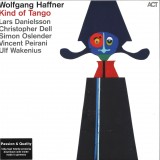
‘Kind of Tango’ is a kaleidoscope of shifting emotions. Wolfgang Haffner’s conception of tango has drama and propulsion in it but also melancholy and longing, with room for frenetic outbursts too. All this is unified by his inimitable groove and feel that commentators have called “an absolute dream,” “magical” and “profoundly relaxed.” Alongside trusted co-protagonists Christopher Dell and Lars Danielsson, he has two guests with him who defy all the clichés associated with tango: guitarist Ulf Wakenius cut his teeth musically in Oscar Peterson’s band and his Swedish heritage always shines through in his playing; Vincent Peirani is one of the leading innovators on the accordion and he finds new ways to define the instrument’s role in the tango. Also, young pianist Simon Oslender makes a first appearance with the band. Jazz and tango find a natural yet constantly shifting equilibrium - to be heard particularly effectively on ‘Close Your Eyes And Listen’ by Astor Piazzolla. In addition to compositions by Haffner himself and by his band members, pieces by the celebrated Argentinian bandoneon player and composer are the focal point of the album. Piazzolla’s innovations with the tango, such as bringing jazz into it, date from around 1955. Haffner and the tango
seem perfectly matched to each other. Tango is no longer a fixed style nowadays, it is above all an attitude to playing and an attitude to life. Wolfgang Haffner’s approach to tango is both authentic and new. It is his and his alone and it is irresistible.
Italian producer Clap! Clap! returns to Bristol's Black Acre with his third album, ‘Liquid Portraits’. Born and bred in Florence, Cristiano
Crisci’s musical career extends back to the mid-90s where he started out as a rapper, before picking up a saxophone and exploring
both jazz and jazz/punk fusion with Trio Cane, and then returning to his electronic roots with A Smile For Timbuctu project - a
collaborative effort that released four albums and performed across Europe. By 2008, Crisci decided to strike it out on his own as Digi
G’Alessio, channeling the same hip-hop meets electronic music energies as those animating the nascent Los Angeles beat scene for a
string of EPs and albums. Soon Crisci hit upon a new formula when he started combining samples from the African continent with
energetic drum programming. The results led to the birth of Clap! Clap! in 2013, which has since been recognised and supported by the
likes of Paul Simon and Gilles Peterson. The stripped-back, high-energy yet inventive sound caught the attention of Black Acre with
whom Crisci has been working with ever since, including his first and second albums ‘Tayi Bebba’ and ‘A Thousand Skies’. Returning
to Black Acre, Clap! Clap!’s third album once again deploys his inimitable technique in fine style, however with new eyes as this new
project signifies a definite shift in his work having spent the last few years learning the art of mixing which has lead to some
breakthroughs: “In recent years I’ve spent a lot of time studying essential mixing techniques. I then built an acoustic-treated room and
set up my new studio. I started to convert digital into analogue and vice versa with good converters and achieved sounds that I’ve
never heard before from my speakers. This had a huge positive impact on my mixes and result on my music.” Entitled ‘Liquid Portraits’, the album - as the name suggests - is a collection of sonic paintings, an attempt at capturing furtive, subconscious memories through sound. The tracks reference trips Crisci took and people he met – from southern Italy to Hokkaido via the Kif Mountains of Morocco – as well as more abstract ideas of loss, calmness, and childhood. Having been approached by Paul Simon to work on his 2016 album ‘Stranger To Stranger’ after Simon discovered ‘Tayi Bebba’ through his son, Clap! Clap! is no stranger to collaborations and this album features a small cast of talents, such as south Italy percussionist Domenico Candellori (‘Southern Dub’), Belgian artist Martha Da’ro (‘Moving On’) and harpist Kety Fusco (‘Rising Fire’)
Interdimensional Transmissions' techno sublabel Eye Teeth relaunches with a fresh series of releases featuring the solo and related works of Israel Vines -- a fresh KGIV 12", an EP of remixes, and his debut LP. The triptych begins with the stellar "Regulatory Capture EP" -- a collaborative effort from Vines and Chicago artist Kit Geary presenting their third release under the KGIV guise. Here we find them exploring new ways to own and expand the current style of techno and breakbeat fusion in the title track "Regulatory Capture", while the chthonic "Morgan" twists distorted vocals and synth lines over a bass heavy foundation built to put the sound systems through their paces. "Blue Octavo" extends their evolving ideas into melodic territory, closing the EP out in a deep and refreshing fashion. Don't sleep -- this release is pure power.
On his new record "Companionship", London-based Soft-Rock, Soul and Disco artist Joel Sarakula keeps the mood easy and the grooves deep. Ten new songs see Sarakula develop a deeper, more introspective lyrical style from his previous works as he celebrates and laments friendships, love and loneliness. Interspersed with a few standout up-tempo tracks to keep the ship sailing, "Companionship" is a chill-out album and listening experience of the highest order.
"Companionship" opens with "Midnight Driver", a driving soft-rock fantasy where the narrator laments his partner's nocturnal habits: 'When she's coming up, it gets me down'. The Californian sun-kissed guitars, vocal stylings and percussion all help to set a cinematic mood which unsurprisingly also makes it a great driving song. On the introspective "King Of Clowns", Sarakula creates a pop song that calls to mind the craftmanship of Hall & Oates and Elvis Costello. Both an admission of guilt and an unapologetic statement of intent, his low vocal careens in the dangerous divide between self-pity and self-parody: "My bad decisions worked out for a while, I'd do my dance tried to make you smile, I'll never wise up it's just the way I am". These confessions all occur over a down-tempo funk groove complete with some vintage synthesizer musings that makes the track ready to be sampled for a hip-hop record.
"Sunshine Makes Me" steps straight out of its mid-1970s swimming pool, heavily dripping in jazz fusion to dry off in the cold light of today's sunshine. The chorus is a mantra of desire, needs and reality that sees Sarakula sing 'Sunshine makes me lose my mind, thirty degrees and my eyes get so wide. Dreaming big and living slow, don't you know that time is on our side". On "Companionship", Joel Sarakula, prolific writer, producer, performer and multi-instrumentalist finally unleashes his chill-out pretensions. In this follow up to the critically acclaimed "Love Club" (2018) he develops a deeper and more mature compositions and production style. His love of all things vintage extends to a devotion to analog synthesizers and on "Companionship" you can hear a genuine love of synthesis that at moments is reminiscent of 70s synth production pioneers Todd Rundgren and George Duke.
Joel Sarakula will tour "Companionship" through Europe and the UK this Spring and Summer 2020 with his musical companions. Born in Sydney, based in London and a true internationalist, Sarakula tours with pickup bands sourced from each territory he plays in: a Barcelona band for Spain, a Berlin band for Germany and so forth. This cross-cultural exchange is a sly nod to the golden era of the 1960s and 1970s when travelling US pop, soul and blues artists would do the same.
In October 2018 DJ Rocca and Almunia member Leo Ceccanti joined forces to deliver “Rhythm Collision”, a three-track EP of jangling, sun-kissed grooves, psychedelic dub disco and Afro-Cosmic flavours on Really Swing. 18 months on, one of that set’s standout cuts has been given a new lease of life courtesy of fellow Italian producer Alessandro Pasini AKA Deep 88. Since making his debut a decade ago, Pasini has earned a reputation as one of house music’s understated heroes – an artist whose hardware driven, retro-futurist take on deep house tends towards the timeless, melodic and atmospheric. With a deep love of turn-of-the-90s dream house, Larry Heard productions and sun-baked chords, his dancefloor-focused productions have often been called Balearic.
It’s perhaps fitting then that his reworks of Rocca and Cecanti’s “Ever Changing Bubbles” are as Balearic as they come. His “Balearic Mix” sets the tone, with Pasini layering trippy, dubbed-out and ear-catching elements – Ceccanti’s eyes-closed electric guitar solos, jangling acoustic guitar chords, warm dub disco bass, echoing spoken word samples, fluttering flute solos, drowsy organ motifs and the pair’s delay-heavy vocals – atop a crunchy, head-nodding, live style beat. While it deviates from the duo’s original version, it inhabits a similar sonic space – albeit in a more dancefloor-friendly way. Pasini excels himself on the accompanying “Balearic Dub”, stripping the cut back to its raw essentials – drums, metronomic bass –while toughening up the percussion and adding delay-laden instrumental snippets. It’s warm, woozy and otherworldly, with echoing voices, tactile musical motifs and restless delay trails combining to create a suitably hazy and intoxicating mood. By the time the touchy-feely flute and acoustic guitars begin to dance across the sound space, you’ll be lost in the groove and too happy to notice.
Ohm Resistance founder Submerged returns to pure drum & bass, bringing the most cutting edge producers in the game to the forefront on his new EP. “The Eradication of Untruth" charges at the dance floor and covers it from all angles - epic, hardcore, modern, and the punk as f*@# style that Ohm Resistance has trademarked since 1999. 'Transformation' is an epic duet with Estonia’s Ajamari, a melodic journey, with the classic Submerged reese making your eyes roll into the back of your head. 'Cell' is a serious bruiser, with hardcore 4/4 action courtesy of Hungary’s Savage. The B side places you into Surrealistic Dystopian Nightmares, with the distinctive strings of Masamune paired against the crushing weight of Submerged amens. Finally, you reach the Abyss - a punk tribute to Prodigy created with Latvia’s Molecular at the time of Keith Flint’s passing - shouted vocals over a searing halftime ending keep this record memorable to the last drop.
Container is the project of American noise veteran Ren Schofield, originally from Providence, Rhode Island, and now based in London. Container first appeared at the turn of the decade with a slew of freakish tapes for various small labels. In wake of thesereleases, Editions Mego offshoot Spectrum Spools –run by old friend John Elliott of the band Emeralds –took the punt to release his debut LP, a collection of mutated Techno tracks simply titled ‘LP’.
The record gained attention quickly in the Electronicmusic scene largely thanks to Schofield’s unique production style that separates him from forms of conventional dance music. Whilst the music of Container sits perfectly fine within the genre and is functional enough to blow apart the walls of any club, years on the US noise circuit have given Schofield’s brand of techno a rawness and direct intensity that stands out in the club and crosses over into other sub-sections of the underground.
His modest set up of Roland MC-909, a four-track porta studio and anarray of pedals allowed him to hone his scuzzy and bewildering beat music over the years, leading to three more well received, and literally titled, LP’s. Over this time period Container also released some EPs on Morphine, Liberation Technologies and Diagonal, did a variety of remixes for acts likeFour Tet, The Body, Panda Bear and Fucked Up plus maintained a healthy touring schedule that reached over every continent.
His exhilarating live show has hit pretty much every major electronic music festival andclub in Europe, as well as tours and gigs with a diverse range of acts such as Wolf Eyes, Zola Jesus, Daughters, Pharmakon and Ryley Walker.Almost a decade since his debut, Container arrives on ALTER with his first non-”LP” titled album called ‘Scramblers’. The title taken from both a Baltimore street drug and a Rhode Island Diner he used to eat at with his father.
Schofield elaborates: “The juxtaposition between these two Scramblers is a great one. I wanted to pay homage to a nice name that lends itself to both depraved and wholesome contexts and do my part to carry on the tradition.” The eight tracks have their origins in live performance and a more high-octane delivery is noticeable when compared with previous Container albums.
‘Mottle’ sits in a mysterious zone between the productions of EVOL and early Ruff Sqwad. Fierce electro cuts like ‘Trench’ and ‘Nozzle’ work alongside the nauseous slink of ‘Duster’, which in typical Container fashion morphs into a frenzy in no time.
A frenzy which may be linkedcosmically to the fact that ‘Scramblers’ was recorded, mixed and mastered in one day, reinforcing further his unorthodox and fun approach to club music.
Syrian wedding singer turned global dance icon Omar Souleyman releases his 4th studio album Shlon via Mad Decent / Because Music.
On Shlon (Arabic for “how,” or literally “which color”), Omar Souleyman presents 6 new techno-meets-dabke songs of romance and love — singing poetry of a woman’s lips as sweet as Hillah’s dates on “Layle”; an intriguing woman he watches from afar whose kiss would be worth 10 million other kisses on “Shlon”; a lover ready to offer his beloved anything she wishes under the sun on “Shi Tridin” (“What Do You Wish For?”); a man in admiration of a woman with green eyes and blonde hair on “Abou Zlilif” (“Her Face is Like The Moon”); a song about love that will last forever on “Mawwal”, a traditional — all superimposed on complex techno arrangements by Hasan Alo, and based on the hi-speed Kurdish and Arabic dabke and baladi styles with the exception of “Mawwal” being presented in its traditionally slower pace. Shlon features double keyboard work from Hasan Alo, a fellow native of the Hasaka region in Northeastern Syria who has recently been active in the vibrant nightlife scene of Dubai. Azad Salih, a young Syrian man currently living in Mardin, Turkey, accompanies on saz, with the lyrics and love poetry written on the spot during the album’s recording session by longtime Omar collaborator Moussa Al Mardood - also currently based in Turkey.
Omar Souleyman, who has collaborated with Björk and Four Tet, began his career as a prolific wedding singer, releasing nearly 500 live albums before civil war broke out in his native Syria in 2011. He then moved to Turkey and in 2013 released his Four Tet-produced debut studio album Wenu Wenu via Ribbon/Domino, which NPR called, "...a jam so visceral, thrilling and intense as to make the mysterious matter of earthly borders seem hardly worth the time to contemplate." His 2015 sophomore album Bahdeni Nami (various producers including Four Tet, Gilles Peterson and Modeselektor) garnered widespread critical praise including The Guardian, who proclaimed "It's so fast that the only appropriate way to engage with it is to wriggle your limbs. Melodies are both abrasive and ebullient, chattering endlessly like raucous birdsong," and 2017’s To Syria, With Love via Mad Decent placing Omar firmly in the canon of global electronic music.
Souleyman has bolstered his growing status as a world and electronic music icon establishing an extensive international following after touring widely and performing at major festivals including Glastonbury, Bonnaroo, Pitchfork Paris and Roskilde. Since its founding in 2013, Souleyman has been an advocate for the charity "Our Heart Aches for Syria," which operates in collaboration with Doctors Without Borders. In that same year, he performed at the Nobel Peace Prize Concert in Norway.
Pacific Express emerged from Cape Town, South Africa in the 1970s. The band were from the so called "Coloured" community and were ground breakers in both musical and political arenas. The founder members Paul Abrahams (Bass), Jack Momple (Drums) and Issy Ariefdien (Guitar) were joined by Chris Schilder (Piano), Vic Higgins (Pecussion), Barney Rachabane (Alto Sax), Stompie Manana (Trumpet) and Zayn Adams & Kitty Tshikana on vocals for their second album "On Time" in 1978.
On several occasions the group fell foul of Apartheid laws and discrimination by the state broadcaster, SABC. On one occasion they were asked to leave the stage of an international tour by Australian act John Paul Young, because the law forbade racially mixed performers on the same stage. The promoter, management and band members all resisted and once he incident made the Australian newspapers the authorities had little choice and turned a blind eye.
And so to the music. The most important thing. The LP opens up with the slick jazz-boogie funk of "We Got A Good Thing Going On", a perfect vehicle for the vocals of Zayn and the statement-of-intent, on-point musicianship of the band.
"I Hear Music" is the first of three smooth sweet string-laden ballads to feature on the LP. The majority of the songs on the LP were written by keyboard player Chris Schilder. As well as high-craft songwriting Chris also contributes layers of effortless musicality with his Rhodes and piano. "Good Old Days" (the only cover on the LP) is next and its smooth-rock grooves swing effortlessly to the fore. The A-Side of the vinyl closes with the instrumental jazz funk of "Saturday Night".
The flip side of the album opens with the bands biggest commercial success. A sweet soul ballad penned "Give a Little Love". Stepping outside their usual sound. This hit however was not without controversy as the video was removed from the TV airways after the South Africa Broadcasting Corp realised that the group were of mixed race, which was against rules for so called local artists in public performance at the time.
"Dream" follows on with the driving jazz rock and travelling keyboard solos. "Reaching Out For Love" is a power-pop boogie groover powered by guest vocalists Erica Lundy and Kitty.
"Say The Last Goodbye" is the last of the trio of ballads. A smooth style moment sounding all the bit like a 70's US TV drama closing theme. The LP features with a funky workout where the band show off their chops and slick level of musicianship.
Besides the success in southern Africa this album became a regional hit as a pirated music cassette in Nigeria. It was also released in France and Japan.
The band would go on to record one further LP in 1979 and a single in 1981. They carried on performing however well pass that. Throughout their years together the band acted as central hub for Jazz musicians within the Cape Town area. Players as Tony Cedras, Jonathan Butler and Alvin Dyers gaining experience alongside established names such as trumpeter Stompie Manana and alto saxman Barney Rachabane.
Here at World Seven we are ever so pleased to be re-releasing what we consider the bands finest album moment.
After taking time out to search for the right blend of carefully curated tracks, Bristol-based dancefloor futurists Innate return with a third multi-artist EP - shot through with melody, warmth and soul.
A quartet of timeless-sounding tracks full of stargazing sounds, undulating acid lines, far-sighted electronics and crackling beats, the A side kicks off with Perseus Traxx's "Drifting In Space": a loose-limbed exercise in analogue house deepness that wraps slowly shifting pads, meandering melodies and pulsating TB-303 motifs around broken house drums.
Welcoming Australian scene stalwart Ewan Jansen to the fray with "Sinders", he effortlessly blurs the boundaries between far-sighted, Motor City style techno and the kind of head-in-the-clouds analogue sounds that have always been his forte.
On the flip, Reedale Rise adds his touch with "Coral". In keeping with the brilliance of his 2018 debut album "Luminous Air", he drops a colourful, picturesque voyage into deep electro territory rich in ear-catching melodies, engaging chord sequences and crunchy machine percussion. To round, label co-founder Owain K returns with "Teifi", another ultra-deep treat: an enveloping, dancefloor excursion rich in fluttering lead lines, slowly expanding chords, vintage bass and punchy drums. A fitting conclusion to Innate's latest immaculate, eyes-closed voyage."
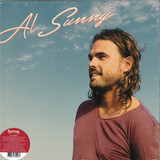
Two years after an acclaimed first album, Al Sunny and Favorite Recordings proudly present Planets, carrying on their collaboration and bringing it to another level.
Al Sunny is a young and talented singer/musician/composer emerging from the French soul music scene. During his conservatory studies, he refined his knowledge and confirmed his desire to write and compose. He quickly matured the music that he truly loves, inspired by artists such as Tim Maia, America, Al Green, and Al Jarreau. Giving birth to the majority of his compositions through his guitar, he always seeks to bring his songs’ melody to the forefront. During his studies he kept experiencing live performing on different scenes and confirmed his choice for a musical career, while also meeting many brilliant musicians, including Florian Pellissier, who later introduced him to Pascal Rioux and Favorite Recordings.
It resulted in 2017 in Time to Decide release, a dazzling first album establishing Al Sunny’s music and writing style, looking towards the 70s and 80s Westcoast movement, infused with Blue-Eyed-Soul, Pop and Folk flavors. Built on the same influences, Planets is made of 8 new compositions (including a CD and digital bonus), and is clearly a continuation of its cadet, asserting Al Sunny’s talent and singing skills.
Fully recorded live and analogic in Paris, this new album also stands out by an impressive level of production, faithful to some classics of the genre. Mixing catchy melodies, soulful vocals, warm and heavy bass, strong beat and beautiful guitars and keyboards harmonies, Planets just perfectly meets the AOR and Modern-Soul golden era standards.
Radio Slave and Bushwacka! remix ‘Eye Of The Storm’ featuring vocalist and
drum ’n bass royalty Onallee, with label boss Archie Hamilton serving up a fresh VIP mix.
Taken from Hamilton’s debut album ‘Archive Fiction’, which dropped earlier this year on Moscow Records, ‘Eye Of The Storm’ featuring Reprazent artist Onallee, gets the remix treatment from two renowned producers with a reimagined garage inspired mix from the boss himself. Two acclaimed British artists, Rekids boss and esteemed remixer Radio Slave leads the release with Hamilton’s VIP mix alongside Olmeto and Plank Records owner and artist Bushwacka!
Radio Slave’s remix of ‘Eye Of The Storm feat. Onallee’ opens with a thundering kick, haunting effects, rolling vox-cuts and rattling hats with an ecstasy inducing breakdown. Archie Hamilton’s VIP mix then goes down a classic bubbling bassline route, featuring crunchy cymbals and phasing synths when Bushwacka! then goes on to close the release with break styled drum programming, rumbling toms, zapping flute like samples and jungle shakers on his remix.
Two of Russias finest drum & bass producers have combined forces for an exciting new project. St Petersburgs Microfunk mastermind Bop, and Moscows minimalistic groove guru Subwave, unite for their debut collaborative release Love & Other Drugs. With their elegant approach to drum & bass, this four-track EP fuses futuristic indie-electronica, 2-step UK garage, glitchy beats and 80s inspired vocal stylings.
Progressive euphoria is the name of the game in Teardrops as Bop x Subwave pick apart the structure of D+B in this warm, delicate and hypnotic glitch number. Following suit is Space Warp - darker with eerie undertones, packaged as a sub-heavy stepper. The second half of Love & Other Drugs sees the duo branch out beyond the realms of traditional D+B. The bittersweet ballad Dont Wake Me Up is kitted out with a definitive 80s style. Seeing the EP home is The Touch with the syncopated beatwork of 2-step UK Garage, complete with skippy breaks and snappy vocal sampling. In the decade since the release of Hospital Records Future Sound Of Russia LP, Bop and Subwave have produced an impressive array of tracks across Hospital Records, Med School, Liquicity, Shogun Audio, Metalheadz and Microfunk, cementing their reputations for going beyond the boundaries of D+B.
Keep your eyes peeled for more collaborative musings from Bop x Subwave in 2020.
Reissue of this 1976 LP from Zambia. Deep minimal African music, lovely compositions over scarce drum machines and (fuzzy) guitars.. Beautiful music with a deeper message in the lyrics which is explained better in the long review below. Some words from the label. There is music that falls right into place, a perfectly articulated expression of a few distinct influences. Then, there is another kind of median music, something more mysterious, the result of time, place, technology, and alchemy. Zambian writer and musician Smokey Haangala’s Aunka Ma Kwacha (The Money is Gone) released in 1976 is an example of this more mystical metallurgy, falling somewhere between psychedelic Zamrock, US folk, Kalindula, and Sundown Beat (music played after dark) from Tongaland. The unique mix of languages on the album (Bemba, Tonga, Lozi, and English) also suggest this complex cultural crossroads. Underlying the whole album is the insistent beat of a simple drum machine, which was totally unheard of in Zambia at the time, and parallels pioneering experiments by Francis Bebey, Sly Stone, and Shuggie Otis, utilizing a technology which would later come to define dance music. Then there’s the album’s original artwork by Peter Kependa, done in style similar to the infamous Jamaican dancehall illustrator Wilfred Limonious, interpreting the album’s title and primary theme; the burden of financial inequality.
In this sense the album is political, but the theme is extrapolated and explored through its impact on personal life; love, marriage, social status, and diet. The album is full of cautionary tales, folklore and references to magic, aspects of Zambian culture simultaneously mystifying and alluring to outsiders, part of what attracted Western readers to Nigerian writer Amos Tutuola’s hallucinatory Yoruba folktales. After becoming a household name in Zambia for his music, writing, and television appearances, Smokey Haangala died at the age of 38, the very week his book The Black Eye was published, abruptly ending his brilliant and ascending career. We are lucky to have his inimitable work to remember him by, Aunka Ma Kwacha resting comfortably in the pantheon of re-visionary works by Rodriguez, Kissoon Ramasar, TJ Hustler, and William Onyeabor.
Sam went into an almost psychotic state when making music. He wasn’t himself. He was immersed in the creativity to such an extent that it was almost like a psychotic trance. Here’s an example. He found all this giant kelp down at Western Port bay and he would bathe himself in it for weeks. He would replenish the water and put salt in the bath, but leave the kelp in there. I used to ask Julie, his partner and wife, “How’s everything going?” and she’d say, “Just go and have a look at the bath.” - Tony Rogers
Sam Mallet could have pursued a career as a French literature professor in Paris, but decided his true calling was to remain in Australia, dedicate himself to his music and find the plateau; a word he used to describe the sensory worlds residing in music. Under the influence of Eno, Jon Hassell, Arvo Pärt, John Coltrane and Robert Fripp, Sam explored a wide variety of musical styles and put them to service soundtracking the time based works of his peers. He crafted spatial ambience, somber jazz, and drum computer driven rockers for short films and experimental video works, television shows (including the original Australian Wilfred series), feature films and live theatre. The avant garde Anthill Theatre, known for its departure from conventional staging practices and having a keen eye for talent, enlisted Mallet to provide soundtracks for approximately 40 productions throughout the 1980s and early 1990s.
Sadly, Sam passed away in 2014. A crucial piece of his legacy is undoubtedly the body of work he produced during his life, and the archive of recorded works is vast and deep. Sam seemingly saved everything, from fragments to finished pieces; and often repurposed previously released tracks by collaging them into new pieces. He self released a small number of cassettes and CDs from the mid 1980s onward, the contents of which were culled from soundtrack work and original pieces, but the majority of his music was experienced only within the ephemeral live performances.
Wetlands is the product of countless hours spent with this archive by Rowan Mason (Sanpo Disco/Recurring Dream) and Tony Remple (Musique Plastique), offering a dynamic survey of Sam’s work, and housed in a jacket evoking the minimal design and colour palette of his earliest cassette releases. Two selections of Sam Mallet’s music were featured on the compilation Midday Moon (also produced by Rowan), released last year by Bedroom Suck Records. Along with Left Ear Records’ Antipodean Anomalies, Midday Moon has served to highlight outlier musics and scenes from Australia and New Zealand, and Wetlands plunges deeper into the catalog of this obscure yet groundbreaking artist.
Kerrie makes her debut for DBA with four tracks devised originally for her high impact live sets. Other than a cut on highly regarded London label I Love Acid's 10th anniversary comp Kerrie is a relative newcomer but the ten years she has put in honing her style immediately shine through in her music. The EP ranges from Before Calm's bug-eyed, angular swagger replete with a hair raising distorted hook, to Orb Weaver's peak time techno roll via Acid8 Slider which is one of the most original 303 tracks to come out of the UK in some time and Curveball, a bolshy electro leaning stepper.
Her influences range from current UK artists like Blawan to Japanese artists such as NHK yx Koyxen & Hiroaki Iizuka and pioneers like X101, Joey Beltram and Surgeon. The running thread in her taste is a penchant for high energy, raw banging grooves with a machine funk flavour, and a love of analog sound both as a producer and DJ. No doubt this stems from her time spent working at legendary Manchester shop Eastern Bloc Records where she joined in 2013 and has worked ever since. Honing her skills through her DJ residency for EBloc Kerrie has gone on to become a regularly booked act for the UKs most prestigious underground club nights. As a live performer she has also toured the UK since 2017 with the live show being met with high acclaim. Her live set for Freerotation 2019 has been one of the festival's most talked about debuts.