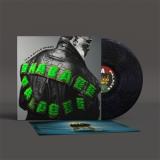
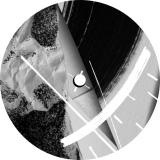
Mit Selbstbewusstsein und Präzision kehrt der sich ständig weiterentwickelnde Musiker, Produzent und Rapper Ishmael Butler als Shabazz Palaces mit It's a Style Sport zurück. It's a Style Sport bleibt dem Stil von Shabazz Palaces treu - mit seiner gewagten Mischung aus experimentellem Hip-Hop und freier Poesie - und offenbart gleichzeitig eine nachdenklichere und direktere Seite des Musikers aus Seattle. ,It's a Style Sport" zeigt, wie Butler das, was er in seiner legendären Karriere gelernt hat, zu einem verspielten, schillernden Portal zusammenfügt und sich damit erneut als Künstler mit chamäleonartigem Ehrgeiz beweist, angetrieben von Neugier, Mut und grenzenloser Fantasie. Das Album ist das Ergebnis einer gemeinschaftlichen Zusammenarbeit mit vielen Mitgliedern von Butlers Tourband: Evan Flory-Barnes am Kontrabass und E-Bass; Thaddeus Turner an Gitarre, Keyboards und Gesang; Kassa Overall am Schlagzeug; Gerald Turner am Bass und Gesang; Marquetta Miller am Gesang; und Carlos Overall am Saxophon. Butlers langjähriger Freund und Mitstreiter Erik Blood übernahm Instrumentierung, Produktion und Abmischung. Auf It's a Style Sport wird ein Bild von Butlers früheren Leben als Rapper und Performer seiner heutigen Persönlichkeit gegenübergestellt - provokativ und aufschlussreich zugleich. Im Kern ist It's a Style Sport eine Ode an die Rap-Szene vergangener Jahre, als der spielerisch-wettbewerbsorientierte Ehrgeiz das Genre dazu trieb, seine Kollegen stets zu übertrumpfen, zu überholen und an Raffinesse zu übertreffen.
Muss sich alles ständig so schwer anfühlen? Claud Mintz ringt ständig mit dieser Frage. Und zwar nicht in Form von höflichen kleinen Wortgefechten, sondern in Form von großen, langwierigen, existenziellen Kämpfen - von der Art, die einen letztendlich dazu bringen könnte, den Kurs des gesamten Lebens zu ändern. Die 10 Songs auf seinem facettenreichen und glanzvollen dritten Album ,Me and the Music" zeigen den 27-jährigen Singer-Songwriter und Produzenten aus Brooklyn, wie er sich mit dieser Frage auseinandersetzt und schließlich triumphierend zu etwas gelangt, das einer Antwort nahekommt: Die Dinge können schwer sein, aber das bedeutet nicht, dass man keinen Spaß haben kann. Das Leben kann schwer sein, aber das Bier in Ihrer Hand ist es nicht - warum sollten Sie es nicht für einen Moment in die Höhe recken, mit den Freunden um Sie herum mitsingen und Ihre Sorgen für die Dauer eines perfekten Indie-Pop- Songs vergessen? ,Me and the Music" ist Clauds erstes Album seit drei Jahren, seit dem 2023 erschienenen, hochgelobten ,Supermodels". Sowohl ,Supermodels" als auch ,Super Monster" aus dem Jahr 2021 waren weitgehend inspiriert von ,dieser einen unklaren Beziehung", von der er irgendwann während des Schreibens von ,Me and the Music" erkannte, dass sie ,eigentlich nie wirklich etwas war". ,Supermodels" war ein so ernstes Album, und ,ich habe einfach so lange in meinen Gefühlen geschwelgt", sagt Claud. ,Es gibt einen Unterschied zwischen Aufrichtigkeit gegenüber dem Leben und dem Leben zu ernst zu nehmen." Diese Erkenntnis veränderte alles: Im Titelsong von ,Me and the Music" singen sie: ,Das ist der letzte Song, den ich von dir ruinieren lasse", und das meinten sie auch so. Nachdem Claud diesen Song geschrieben hatte - in den berühmten Electric Lady Studios zusammen mit ihren Freunden Hank Heaven und Annie DiRusso -, begannen sie, sich völlig befreit zu fühlen. ,Dadurch wurde viel Bedauern losgelassen, das ich mit mir herumgetragen hatte, und es ermöglichte mir, zu denken _ das macht so viel Spaß", sagen sie. ,Musik zu machen macht so viel Spaß." Das Markenzeichen von Me and the Music sind also Songs, die die Komplexität des Erwachsenwerdens und des Lebens in der Welt einfangen, ohne dabei den Sinn für Verspieltheit oder Spaß zu verlieren. Es ist ein typisches ,Slice-of-Life"-Album , das neue Romanzen, Insider-Witze, Gap-Werbespots, die Band ,America" und das Land Amerika thematisiert und all diese Dinge mit Sorgfalt und Rücksicht behandelt. Die Lead-Single ,She Doesn't Love Me" von ,Me and the Music" ist in vielerlei Hinsicht der Kern des Albums - ein leichtfühliges Lied darüber, wie es ist, in den 2020er Jahren in Amerika queer und trans zu sein. (Es ist eine kraftvolle, mitreißende Hymne, die vor Schmerz nicht zurückschreckt - und trotzdem Lust macht, wie Claud in dem Titel singt, die ,Biere in die Luft zu recken".) Als Claud den Song gemeinsam mit Heaven und DiRusso schrieb, waren sie fest davon überzeugt, dass es ein Yacht-Rock-Song werden sollte; das Demo klang letztendlich dennoch ,Lo-Fi und Indie". ,Me and the Music" wurde von Claud und John Congleton (Alvvays, St. Vincent) produziert und bedeutet für Claud, dass sich der Kreis schließt: Mit diesem Album hatte Claud endlich das Gefühl, als Produzent selbstbewusst genug zu sein, um die Rolle des Co-Produzenten zu übernehmen (und hat seitdem eine Reihe viraler Singles von Romy Mars produziert). Die Zusammenarbeit ist natürlich ein wesentlicher Bestandteil von Clauds Arbeit - wer wären wir ohne unsere Freunde? Neben Claud gehört er zu einem Viertel zu Shelly, einer Band, die er gemeinsam mit Clairo, Noa Getzug und Josh Mehling gegründet hat. Auf ,Me and the Music" arbeitet Claud bei dem Titel ,The Legend" erneut mit ihrem langjährigen Kollaborateur Dan Nigro (Olivia Rodrigo, Chappell Roan) zusammen. Der Song thematisiert das Gefühl, tief in jemanden verliebt zu sein, der nicht mit einem gesehen werden möchte, sagt Claud: ,Es geht gewissermaßen um eine beschissene Beziehung und den Wunsch, die Liebe zur Schau zu stellen, ohne jedoch dazu in der Lage zu sein ", erklären sie. Doch wenn es auf ,Me and the Music" ein echtes Liebeslied gibt, dann ist es ,I Owe You", ein Dream-Pop-Road-Song, der hingebungsvoll und facettenreich ist. Er fängt den Geist von ,Me and the Music" als Ganzes ein: die Dinge Tag für Tag zu nehmen, Bilanz über das zu ziehen, was einen umgibt, und die schönen Dinge anzunehmen, wenn sie sich bieten. Das fühlt sich gar nicht so schwer an.
No Home is the new album by Lane Hartley, releasing October 23rd 2026 on Royal Oakie Records. Produced in collaboration with David Hartley of The War On Drugs & Adam McDaniel (Animal Collective, Angel Olsen, Geologist), the album was recorded at Drop of Sun Studios in Asheville and features contributions from North Carolina’s tight knit music community–including Mary Lattimore, Seth Kaufman of Floating Action & Dream Sitch, David Hartley, Jack Victor Johnson, and more.
After recording his debut album Naming Horses, Lane left Los Angeles and returned home to the Carolinas, eventually landing in Asheville. It wasn’t too long until the songs started flowing and Lane found himself reaching out to Adam McDaniel at Drop of Sun Studios–a vaunted space that’s been at the heart of indie-rock the past few years, bringing to life recent albums from MJ Lenderman, Wednesday, Fust, and more. McDaniel introduced Lane to David Hartley, and what originally started with discussions to record one song quickly turned into a plan to track a whole album live with a six piece band. Once in the studio, co-producer McDaniel encouraged the group to lean on intuition–“All of the players on this record really brought it to life in such a cosmic way. They instilled so much childlike wonder and fun into the making of the album. It inspired me to keep going” says Lane.
Lyrically the album is a collection of vignettes about people who’ve become alienated from their deepest desires of connection, belonging, intimacy, and autonomy–inspired both by Lane’s own life and the lives of people he’s loved. The unique character of the album emerged when Lane made the decision to pair the dark lyrical content with bright & lush arrangements, inspired by Gene Clark’s No Other, Neil Young’s After the Gold Rush, and Amen Dunes’ Love. In Lane’s words, “The content of the songs got way darker, and my reaction was to make the songs catchier, and to lean harder into the music that influenced me. I wanted each song to feel like a room in a haunted house, with a beautiful garden growing outside”.
Album opener “I Am Not Ashamed” was inspired by the anti-memoir of actress Barbara Peyton, a 1950’s Hollywood starlet who met an untimely end; “It’s about knowing that whatever you’ve done to survive, you still deserve love” says Lane. “Mother” pairs lyrics about ancestral trauma with the sunshine-pop influence of Colin Blunstone, featuring backing vocals from Lane’s sister Barrett Hartley. “It's about coming to terms with the fact that the people meant to protect us are dealing with their own trauma…”
Meanwhile, “All Of This Is Yours” and “Tone Poem” form the spiritual center of the album, an attempt to transmute anger & pain to bittersweet acceptance in the wake of a breakup. “I feel like on the surface this is essentially a breakup album, a lot of these songs are about mourning the end of a relationship and reflecting on what went down. I was falling in love and getting my heart broken, then waking up and driving across the country and doing it all over again.” “Love Is Not A Song” was inspired by Margo Guryan’s Love Songs, pairing bright piano with playful lyrics about an old man who’s been beaten down by life but still believes his greatest love is yet to come. Last but not least, title track “No Home” sums up the album’s key theme of alienation, “It all goes back to this feeling of wanting to belong to someone or somewhere, wanting to belong in your own body.”
Layne & Chang might not be household names to everyone, but in the underground they’re long-established fixtures. Chang—who’s released music under a string of aliases over the years—was tipped by Urb magazine as one to watch back in the mid-’90s and has been embedded in dancefloor culture ever since. Alongside him, Layne Fox (formerly San Francisco, now back in Florida) brings deep disco credentials, having helmed the cult-loved Disco Dimensions label and recording as 40 Thieves—best known for the underground anthem Don’t Turn It Off. In short, the boogie lineage on this record runs deep.
And that’s before you even get to Dan Tyler. As one half of the Idjut Boys and co-founder of Noid Recordings, Tyler helped lay the groundwork for London’s edit culture long before it became a global phenomenon. His involvement here only strengthens the package.
“Shake Your Body” opens the release with a locked-in, funk-driven groove—swirling melodic lines, subtly acidic textures, warm vocoder touches, and tight, punchy drums all dialed for peak-time movement. On the A2, “In The Desert” shifts the mood into something more transportive: a hazy, late-night burner equally suited to open-air parties, after-hours sessions, or home listening with the lights low.
Flip to the B-side and Dan Tyler delivers two cosmic reworks that push things further out. Psychedelic, elastic, and built for serious systems, both cuts hit that sweet spot between heady and physical—already circulating among a handful of tastemaker DJs and primed for heavy rotation as festival season ramps up.
A strong, floor-ready release that sits comfortably in the Whiskey Disco catalogue—rooted in disco, but reaching well beyond it.
KKYV10 is a four-track EP by Bulgarian producer Loopdeville, currently based in Spain. The release explores a flexible space between minimal, breakbeat and house, shaped by groove-led structures, textured sampling and a slightly twisted, off-centre energy. Built to move through different moments — daytime light, peak pressure, late fade. The EP opens with "The Bizz", a track built around jazzy elements, vocal cuts and a jackin low-end. Its warm, rolling groove sets a natural tone for the record, balancing playfulness with reflections. "Shmuck Norris" follows with a heavier, more direct approach. Driven by raw drums and a rolling bassline, the track leans into a big-beat aesthetic while maintaining a stripped structure. On "Rashford", the EP shifts into a breakbeat framework. The track carries a deeper, more introspective mood, with subtle background movement adding acid tension beneath it’s surface. The closing track, "Septimo", draws from UK-influenced minimal with garage elements. Focused on sub frequencies it is designed for systems that favour depth and clarity in low parts. Together, the four tracks form a cohesive yet varied release, reflecting Loopdeville’s recognisable sense of tension and detail while staying totally aligned with Kooky’s sonic direction.
WRWTFWW Records proudly announces the release of sfs/in vain (selected tracks) by UK jungle heavyweight and Future Retro London founder Tim Reaper, a limited-edition 3LP bringing together selected tracks from two previously digital-only albums, sfs and in vain.
An insane collection of slower 140 BPM wonders, sfs/in vain explores jungle, dubstep, UK garage, R'n'B, grime, liquid D&B and broken beats through Tim Reaper's fresh and informed approach. Deconstructed and reconstructed club music, rooted in tradition but looking forward, these tracks reveal another side of one of the key figures in the modern jungle revival.
The selection comes from 2 albums. sfs collects a body of slower material Tim Reaper worked on throughout 2025, stretching across various genres of UK electronic music. in vain comes from a much more personal place. Written during a period of instability, heartbreak, financial and professional uncertainty, the album became a way for Tim Reaper to process what was happening around him and find some kind of escape. The tracks were made at a point when the effort he had put into rebuilding his life felt as though it had all been "in vain" - hence the title. The result is warm, melancholic, soulful, simply very human.
Together, these selected tracks highlight the incredible range of Tim Reaper's production, proving that his understanding of jungle extends far beyond the traditional boundaries of the genre. From heavyweight bass music to delicate melodic passages, sfs/in vain (selected tracks) is a beautifully varied snapshot of an artist constantly pushing UK club music into new territories.
Tim Reaper has been leading the resurgence of jungle for years, with releases on AKO, Skeleton Recordings, 7th Storey Projects, Green Bay Wax, Dalston Chillies, Parallax, Myor Massiv, V Recordings, Deep Jungle and many more. He is also the founder of Future Retro London, one of the most respected labels and platforms in the contemporary jungle scene.
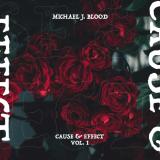
Crash landing onto the scene in 2017 with his now legendary NTS broadcast of 2 hours of unheard music, the ultra-mysterious and enigmatic Michael J. Blood has gone on to release a series of sought after, lush and rugged future classics on his own imprints Blood Inc. and BodyTronixxx. Allegedly hailing from Manchester in the North of England, Blood’s sound is hard to pin down but instantly recognisable. Rooted in the twin foundations of modern dance music—Detroit and Chicago—while schooled in the sweaty basements of Manchester’s fêted club scene, his music feels both original and familiar, timeless yet unplaceable.
Weaving together a hypnotic narrative that feels both archival and futuristic, Cause & Effect Vol. 1 brings together some of Blood's rare and hard to find bangers from a variety of his early sold out projects. The collection mixes the pulse of Chicago with the grit and cosmic dreams of Detroit, while never losing sight of the North of England’s sophisticated late-night sleaze. Blood’s dance-floor eclecticism and raw, infectious mutant beats drive a soulful, jazz-louche energy into every track. The result is a collection of atmospheric grooves that weave together hypnotic rhythm and smoky texture, blurring house, techno, broken beat, and jazz-soaked electronics into a heady trip. Cause & Effect Vol. 1 maps out the restless evolution of Blood’s sound, a testament to his instinct for rhythm, atmosphere and dance-floor alchemy. House for the heart, techno for the mind, both built for the body. It’s in the Blood.
Nine-time GRAMMY® winner Anderson .Paak and GRAMMY®-nominated rapper Cordae have been operating on the same wavelength for years. What started as pure chemical reaction on 2019’s “RNP” slowly turned into one of hip-hop’s most natural, low-ego partnerships, fueled by back-and-forth gems like “Two Tens” and “Summer Drop” and a series of dynamic TV performances that felt more like two best friends hanging out than a polished routine. On their debut collaborative album, Heavy Is The Crown, that organic bond gets the full-length treatment it’s always deserved.
At its core, the project is a tightrope walk between serious real-life stakes and uncompromising fun. The title isn't just bravado—it speaks directly to the shared weight both artists carry as the primary providers and anchors for their families. But instead of letting that pressure crush the vibe, .Paak and Cordae lean into each other. Meeting as total equals, .Paak’s elastic, soul-drenched musicality anchors Cordae’s razor-sharp lyricism, allowing both to unpack the heavy reality of success and family responsibility without ever losing their spark.
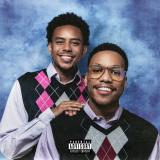
That balance is what makes the album tick. To drive the point home, the album art pays homage to the cult comedy Step Brothers—a nod to the silly, irreverent friendship that birthed the music in the first place. Heavy Is The Crown doesn't feel like a forced corporate crossover or a calculated career move. It’s a record about brotherhood, family, and what happens when two masters of their craft step into the studio simply because nobody makes them laugh, rap, or create quite like the other.
Nine-time GRAMMY® winner Anderson .Paak and GRAMMY®-nominated rapper Cordae have been operating on the same wavelength for years. What started as pure chemical reaction on 2019’s “RNP” slowly turned into one of hip-hop’s most natural, low-ego partnerships, fueled by back-and-forth gems like “Two Tens” and “Summer Drop” and a series of dynamic TV performances that felt more like two best friends hanging out than a polished routine. On their debut collaborative album, Heavy Is The Crown, that organic bond gets the full-length treatment it’s always deserved.
At its core, the project is a tightrope walk between serious real-life stakes and uncompromising fun. The title isn't just bravado—it speaks directly to the shared weight both artists carry as the primary providers and anchors for their families. But instead of letting that pressure crush the vibe, .Paak and Cordae lean into each other. Meeting as total equals, .Paak’s elastic, soul-drenched musicality anchors Cordae’s razor-sharp lyricism, allowing both to unpack the heavy reality of success and family responsibility without ever losing their spark.
That balance is what makes the album tick. To drive the point home, the album art pays homage to the cult comedy Step Brothers—a nod to the silly, irreverent friendship that birthed the music in the first place. Heavy Is The Crown doesn't feel like a forced corporate crossover or a calculated career move. It’s a record about brotherhood, family, and what happens when two masters of their craft step into the studio simply because nobody makes them laugh, rap, or create quite like the other.
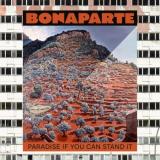
If you dig deep enough into the internet's lower depths, you'll find a shaky video shot on a camcorder. In 43 seconds, we see a makeshift drum kit built out of backyard Ostbahnhof trash, hear distorted vocals, and feel the anarchic energy of band and ravers dissolving into each other. It's now been twenty years since Bonaparte played their very first show at the legendary Bar25 on Berlin's Spree river. The ringmaster of this unhinged musical theater was Tobias Jundt then, and it's Jundt again now bringing the Bonaparte extravaganza back to the stage. New and nostalgic sit close together when the party's been going this long. Or, as they put it: "PARADISE IF YOU CAN STAND IT."
From late October through mid-November, Bonaparte will tour Germany, Austria, and Jundt's native Switzerland at full intensity, the full lineup - band to burlesque. Since their 2006 debut through their supposed farewell in 2019, Bonaparte played over 800 shows in 28 countries. Bottom line: "Too Much" isn't enough to properly celebrate a body of work like this. And the new songs from "PARADISE IF YOU CAN STAND IT" are far too significant not to bring to the stage. The lo-fi trash-punk of Bonaparte's earliest records has been built out with added layers, in production (largely alongside British avant-garde electronic artist HELiX) and in the songwriting itself.
The world certainly hasn't gotten any simpler since 2006. Tracks like "EVERYBODY PRESiDENT," loosely riffing on Zoe Leonard's poem "I Want A Dyke For President," and the corrosive "BRAiN ROT" mirror the social chaos we find ourselves in 2026. "OBEY (THERE iS STiLL A RiOT GOiNG ON)" is just as furious, though here the principle of hope still holds, as a multigenerational choir concludes "everything will be okay." Jundt speaks across generations again on "i LOVE YOU (MORE LATER)," dedicated in equal measure to his parents and his daughters: "Let the echo chamber bleed - from here into eternity."
The reconciliation and hope Bonaparte allows for and tends to, amid violence and all that noise, make "PARADISE IF YOU CAN STAND IT" a singular document of an artist grown wiser. Separation and grief don't cancel out love and vitality - they depend on each other. Ultimately, the album is a record of searching for and finding a home. To arrive, you have to let go.
And what better place to let go than in step with Bonaparte's wild, hedonistic party circus, finally back to gently terrorize our cities?
Not only has the Montreal native cemented his place as one of the most talented producers in the dubstep scene, but his incredible work ethic, energy, and passion—matched by his undeniable talent—mean his ascension is quite simply inevitable.
DDD has been proud to play our part in his career journey, and things are taking another step forward with the phenomenal album Rites.
A tour de force of audio sorcery, savagery, and sacrilege, Rites subjects the listener to Wraz.’ trademark mix of filthy 140 dubstep, thumping trap flavours, and industrial grittiness.
This is expertly melded with stunning, captivating, suspense-filled interludes that provide counterpoints to the bass punishment in ways that are both tension-inducing, yet beautiful.
Featuring collaborations with label bossmen Truth and DDD favourite Hypho, Wraz.’ sonic understanding of his craft feels unparalleled throughout. Each track brings its own unique flavour, while sitting together as a body of work with remarkable cohesion.
Keep a lookout for this as the first DDD vinyl drop of 2026—alongside its full digital release—Rites marks a seismic moment for both Wraz. and the 140 scene.
Wraz. is putting the world to Rites, while we’re living in his universe.
,Altarpiece H. af K." ist das neue Album von Eric Wubbels bei Kou Records - Komponist, Pianist, Co-Direktor des New Yorker Wet Ink Ensembles und Preisträger des Ernst von Siemens-Komponistenpreises 2023, einer der renommiertesten Auszeichnungen in der zeitgenössischen Musik. ,Altarpiece H. af K." hat seinen Namen und seinen inspirierenden Geist den Gemälden ,For the Temple" von Hilma af Klint entlehnt - monumentale Werke, die für einen Raum konzipiert wurden, der noch gar nicht existierte, gerichtet an einen zukünftigen Zuhörer. Wubbels begegnete ihnen 2018 im Guggenheim und ließ diese Begegnung in ein Stück einfließen, dessen vollständige Umsetzung sieben Jahre in Anspruch nehmen sollte: von einer E-Mail aus der Pandemiezeit an die Fagottistin Dana Jessen, in der er etwas Einfaches vorschlug - Multiphonik, Überlagerungen, vielleicht einen Kanon -, über Live-Auftritte in der Fairchild Chapel, bei Elastic Arts und in einer existentialistischen Kirche in Atlanta bis hin zu einer Aufnahmesession im Dezember 2025 im Power Station Studios in Midtown Manhattan, dem Raum, in dem ,Like a Virgin" und ,Let's Dance" entstanden sind. Die Besetzung - drei Fagotte, gespielt von Dana Jessen, Ben Roidl-Ward und Katherine Young - ist rein akustisch: keine Live-Bearbeitung, keine Elektronik. Was du hörst , ist das Instrument selbst, bis an seine Grenzen getrieben. Wubbels' Komposition nutzt die Fähigkeit des Fagotts zu Multiphonik und mikrotonaler Modulation, um sich überlappende Spektren aufzubauen, die voll und ganz aus den grundlegenden akustischen Eigenschaften der Instrumente entstehen - Obertöne, Differenztöne und Schwebungsfrequenzen, die den drei Musikern im selben Raum entlockt werden und einen seltenen Raum zwischen den spektralen Welten von Scelsi und Dumitrescu und dem anhaltenden physischen Gewicht von Sunn O))) einnehmen. Über zwei lange Sätze (Reh. A und Reh. C) hinweg häufen sich diese dichten, vibrierenden Spektren zu etwas an, das sich zwischen Stillstand und Vorwärtsdrang bewegt und an der Schwelle zwischen Tonhöhe und Rauschen schwebt. Das Stück gipfelt nicht in einer Auflösung, sondern in einer Transformation durch anhaltende Aufmerksamkeit. Aufgenommen, abgemischt und produziert von Randall Dunn. Gemastert von Ben Greenberg. Dolby Atmos-Mischungen von Ben Greenberg. Lackpressung von Paul Gold bei Salt Mastering. Cover-Artwork von Thomas Hooper; Porträt auf der Rückseite von Julie Bell.
Tresor Records announces GODSPEED, a new EP from NVST, out on October 23, 2026. From its origins in the Motor City and through to the themes of interstellar travel, techno has always been a genre focussed on forward movement, a tradition that GODSPEED continues boththrough music and title.
The EP is a collection that brings to mind the spirit of early, non-conformist releases on Tresor, full of hypnotic synth loops, spacious FX, and breakbeats, yet with a crisp and modern sonic palette. Side A embarks with two tracks that combine a low, buzzing bassline with trippy melodies and percussion that ventures close to breaks and electro, while the B-side moves intothe fast lane with driving acid and more regimented drums. Digital bonus track "Firliner" combines both approaches across its seven-and-a-half minutes, as a buzzy bassline and spluttering beat ignite into a steady trance-induction.
The EP title arrived the way the best ones do: not so much chosen as absorbed from the aether, the word kept popping up during the creative process until it became the ideal name for this collection, given its connotation with setting out on a journey.
"You remember the nights where you've been on the floor for hours without realising how much time has passed, the conversations you can't fully recall, or how unexpectedly open you've been to everything around you. The music speaks the language of substance not as a statement, but as a way of describing perception. It's about experimenting with yourself, your body, your hearing, your emotions. About reaching a point where things that once felt permanent suddenly lose their grip, even if only for a moment. These recordings come from that place. They capture moments where movement replaces thought, memories blur into feeling, and vulnerability becomes part of the process. They're documents of a very
specific time, but also of something much more familiar: trying to lose yourself just enough to find a different version of who you are." NVST
This fast-paced forward travel is implicit in the word speed, but once this word indicated power or prosperity so that godspeed is a wish for success, forming an appropriate double meaning for this first full release of NVST on Tresor.
Tokyo-based producer aus debuts on Squama with his new album Mere Meer.
Grounded in the question of how a specific environment can emerge through voice and memory, rather than through recording of an objective reality, the album stands in the tradition of modern Japanese Ambient and Kankyo Ongaku.
aus is the solo project of composer, producer, and curator Yasuhiko Fukuzono. His music is characterized by a precise combination of cinematic strings, acoustic instrumentation, and concrete sound design derived from everyday life.
In recent years, he released music on EM Records, WRWTFWW and his own flau imprint. As a remixer, he put his touch on tracks by Matthew Herbert, Tenniscoats and Craig Armstrong, among others.
His sonic research also extends beyond traditional formats into spatial sound installations and site-specific works, collaborating with experimental figures like Ulla, Li Yilei, and Hinako Omori for institutions such as the Tokyo National Museum.
Much of the album consists of sketches made with synthesizer and voice. Sampled from social media clips, field recordings or a heavily processed version of Fukuzono's own vocals, the voice became a central element of the record. "I have long been interested in the relationship between words and melody.", aus says. In his former work as a speech therapist, he witnessed patients with severe dementia or aphasia, who all of a sudden could recall lyrics when they were sung with familiar melodies. An experience that left a deep impression on him.
During the Covid years, when hearing voices of friends and family sometimes was the only way to feel connected to the outside world, aus began reflecting on the connection between voice and environment. "Every voice represents an encounter with a person, but it's also an encounter with a place."
Unable to travel as freely as before, that limitation became part of his method: rather than just recording actual field material capturing the real world, he would write and perform melodies that simulate a sense of place - an imagined room, an imagined street.
"My interest lies not in the dichotomy between artificial and environmental sounds, but in how they collectively shape a single perceptual field."
By observing and mapping our world, aus creates his own and his new record is a prime example of that process.
After some years of (non)hiatus, Contagious are back with a new album that
furthers the evolution of their uncompromising sound. The album features the high
caliber talents of guests: Valentina Magaletti, Sofia Jernberg and Andrea Belfi.
“Being” is conceived around the different activities pursued by the band since the
release of their first (self-titled) album. Members: Sabine Erklenz, Andrea
Neumann and Mieko Suzuki have been concentrating on performing, composing
and organizing their own event series “Partners in Crime” at Morphine Raum,
Berlin.
This series is an ongoing process of inviting musicians to collaborate, share
and record new material - unrestricted by genre or anything else. It was during
these sessions, “Being" was conceived and recorded. Inspired by the wide range
of lifeforms found in nature, the track titles are once again dedicated to species
that challenge binary notions of sex.
The album conveys the band’s brutal approach to improvised processing - tense
buildups, powerful grooves and delicate release. Contagious’ signature sound
very much suits the wild vocal extensions by Sofia Jernberg, obsessive drum
patterns by Valentina Magaletti and the Moondog-esque, hypnotic percussion of
Andrea Belfi, all of whom offer powerful contributions to a tracks on the LP.
The overall result is a blissful and loving punch in the stomach
"ABYSSUS stand as one of the most significant forces within the Greek Death Metal scene, having forged their path since 2011. Drawing profound inspiration from genre-defining pioneers such as DEATH, OBITUARY and BOLT THROWER, the band preserves the unadulterated spirit of old school death metal while imprinting their own distinct identity.
From the very outset, ABYSSUS placed equal emphasis on studio output and live performance. A steady stream of EPs and split releases established their presence within the international Underground metal community. Their debut full-length, „Into the Abyss“ (2015), garnered widespread acclaim and marked a pivotal moment in the band’s evolution - leading to increasingly frequent appearances both in Greece and across Europe, often sharing the stage with renowned acts, like POSSESSED, SINISTER, SUICIDAL ANGELS and ROTTING CHRIST.
With renewed creative vigour and greater maturity, ABYSSUS unveiled their sophomore album „Death Revival“ in 2022 via Transcending Obscurity Records. Adorned with an arresting cover by the legendary Andreas Marschall (KREATOR, BLIND GUARDIAN, IN FLAMES a.o.), the album was met with universal praise, further cementing the band’s reputation for delivering unrelenting, yet masterfully crafted, death metal. More shows with a.o. ASPHYX, TANKARD, GRAVE DIGGER and THE CROWN followed.
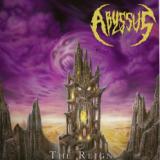
Now in 2026, ABYSSUS return with their third full-length opus, “The Reign” - a ferocious testament to their artistic evolution. The album encapsulates all the core elements that have defined death metal through the decades: raw aggression, blistering riff-work, and a suffocating, commanding atmosphere. Once again, the visual narrative is entrusted to Andreas Marschall, whose artwork enhances the band’s sonic vision with striking intensity.
Relentlessly evolving, ABYSSUS remain true to their roots while continuing to push the boundaries of the genre. With a prolific discography and an ever-growing presence on the live circuit, they have rightfully earned their place as a formidable name within the global death metal landscape."
“Kjorstad is an intriguing musician. He’s fascinated by the world, its history and future, nature and sound.”
Songlines
“Routinely blurs lines between folk, jazz, free improvisation, experimental, and contemporary music. Impressive, elusive, superb. I’m never less than spellbound.”
the Quietus
“Just as likely to appeal to followers of classical, folk and improvised music as to the jazz fraternity…A deep listening experience. Enchanting.”
Jazz Journal
Norwegian multi-instrumentalist Hans P. Kjorstad debuts on Phantom Limb (following works with Sam Gendel and Ernst Reijseger) with new album Inn, a nuanced, lower case, orchestra-in-miniature full of curiosity, charm, and sensitive mastery of its form."
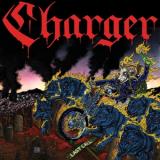
The East Bay's mighty Charger has returned with five new songs on 12" vinyl... Last Call is on its way from Pirates Press Records just in time for your motorcycle trip to hell! Charger members hail from legendary punk bands such as UK Subs, Rancid, and Jello Biafra & The Guantanamo School of Medicine, just to name a few, but make no mistake, this band is its own entity with its own sound forged together! The band laid down these tracks in July 2025 at Studio 2200 in Sausalito, CA - formerly known as the Bay Area's legendary Record Plant - with Chris Dugan at the helm