Terrestrial Funk presents a piece of Detroit history. Born and raised in Motor City, Karl Fultz knew at the age of twelve that he wanted to be the most talented and successful DJ in the world. In 1999 he released on Juan Atkins’ Metroplex under the alias People Mover and in 2000 he released as Black Electric on Puzzlebox. Inspired by British synth-pop duo Eurythmics, Fultz says Black Electric was a way to get more women involved in the techno movement. Together alongside vocalists Tiffany Elliott, Kim Glover & Talena Fultz, Black Electric brought sex appeal to the scene. Their first and only release stays in demand and has become inaccessible until now. Terrestrial Funk’s reissue provides two fresh cuts on the new 12”. ‘Purple’ a chugging Detroit acid track describing soul modification to enhance intimacy and a proper bassed out club mix of the nasty electro sex song ‘Work That’, which was only featured as an acapella on the original release. Black Electric stands as a testament to turn of the century Detroit and the city’s undying devotion to expand our connection to music.
quête:su na
- A1: The Bird
- A2: Heart Don't Stand A Chance
- A3: The Waters (Feat. Bj The Chicago Kid)
- A4: The Season / Carry Me
- B1: Put Me Thru
- B2: Am I Wrong (Feat. Schoolboy Q)
- B3: Without You (Feat. Rapsody)
- B4: Parking Lot
- C1: Lite Weight (Feat. The Free Nationals United Fellowship Choir)
- C2: Room In Here (Feat. The Game & Sonyae Elise)
- C3: Water Fall (Interlude)
- C4: Your Prime
- D1: Come Down
- D2: Silicon Valley
- D3: Celebrate
- D4: The Dreamer (Feat. Talib Kweli & Timan Family Choir)
Ten years ago, Anderson .Paak didn't just release an album; he staged a full-scale takeover of the soul and hip-hop landscape. Released on January 15, 2016, Malibu served as the definitive arrival of an artist who had spent years grinding in the underground before a star-making turn on Dr. Dre’s Compton. While his previous work hinted at his potential, Malibu was the moment the world met the "Cheeky Andy" persona in full—a virtuosic drummer, a raspy-voiced crooner, and a sharp-witted rapper all rolled into one. The album is a sprawling, sun-drenched journey through the Southern California coast, blending 1970s funk, church-reared gospel, and gritty boom-bap into something that feels both nostalgic and entirely futuristic. With a heavyweight production lineup including 9th Wonder, Madlib, Kaytranada, and Hi-Tek, the record maintains a warm, analog texture that was a breath of fresh air in an increasingly digital era. It’s an album that breathes, full of intentional imperfections and the kind of "in-the-pocket" groove that can only come from a seasoned live performer. Beyond the infectious, dance-floor-ready energy of tracks like "Am I Wrong" and "Come Down," the album is a deeply autobiographical masterwork. .Paak uses the 65-minute runtime to unpack his life story with startling clarity, touching on his mother’s gambling addiction, his father’s incarceration, and his own brushes with homelessness with a sense of resilience that never feels heavy-handed. He weaves these heavy themes through a lens of triumph, grounded by vintage surfing documentary samples that give the project its cinematic, coastal atmosphere. It’s a celebratory record born out of struggle, anchored by his impeccable technicality on the drums and a guest list—featuring ScHoolboy Q, Rapsody, and The Game—that feels hand-picked to complement his specific brand of West Coast swagger. A decade later, Malibu stands as a modern classic and the blueprint for the soulful revivalism that would eventually lead .Paak to global superstardom and Grammy-winning heights. It remains a testament to the idea that the most profound music often comes from the most personal places, proving ten years on that the best way to move forward is to stay rooted in the groove.
- A1: The Bird
- A2: Heart Don't Stand A Chance
- A3: The Waters (Feat. Bj The Chicago Kid)
- A4: The Season / Carry Me
- B1: Put Me Thru
- B2: Am I Wrong (Feat. Schoolboy Q)
- B3: Without You (Feat. Rapsody)
- B4: Parking Lot
- C1: Lite Weight (Feat. The Free Nationals United Fellowship Choir)
- C2: Room In Here (Feat. The Game & Sonyae Elise)
- C3: Water Fall (Interlude)
- C4: Your Prime
- D1: Come Down
- D2: Silicon Valley
- D3: Celebrate
- D4: The Dreamer (Feat. Talib Kweli & Timan Family Choir)
Ten years ago, Anderson .Paak didn't just release an album; he staged a full-scale takeover of the soul and hip-hop landscape. Released on January 15, 2016, Malibu served as the definitive arrival of an artist who had spent years grinding in the underground before a star-making turn on Dr. Dre’s Compton. While his previous work hinted at his potential, Malibu was the moment the world met the "Cheeky Andy" persona in full—a virtuosic drummer, a raspy-voiced crooner, and a sharp-witted rapper all rolled into one. The album is a sprawling, sun-drenched journey through the Southern California coast, blending 1970s funk, church-reared gospel, and gritty boom-bap into something that feels both nostalgic and entirely futuristic. With a heavyweight production lineup including 9th Wonder, Madlib, Kaytranada, and Hi-Tek, the record maintains a warm, analog texture that was a breath of fresh air in an increasingly digital era. It’s an album that breathes, full of intentional imperfections and the kind of "in-the-pocket" groove that can only come from a seasoned live performer. Beyond the infectious, dance-floor-ready energy of tracks like "Am I Wrong" and "Come Down," the album is a deeply autobiographical masterwork. .Paak uses the 65-minute runtime to unpack his life story with startling clarity, touching on his mother’s gambling addiction, his father’s incarceration, and his own brushes with homelessness with a sense of resilience that never feels heavy-handed. He weaves these heavy themes through a lens of triumph, grounded by vintage surfing documentary samples that give the project its cinematic, coastal atmosphere. It’s a celebratory record born out of struggle, anchored by his impeccable technicality on the drums and a guest list—featuring ScHoolboy Q, Rapsody, and The Game—that feels hand-picked to complement his specific brand of West Coast swagger. A decade later, Malibu stands as a modern classic and the blueprint for the soulful revivalism that would eventually lead .Paak to global superstardom and Grammy-winning heights. It remains a testament to the idea that the most profound music often comes from the most personal places, proving ten years on that the best way to move forward is to stay rooted in the groove.
- A1: The Bird
- A2: Heart Don't Stand A Chance
- A3: The Waters (Feat. Bj The Chicago Kid)
- A4: The Season / Carry Me
- B1: Put Me Thru
- B2: Am I Wrong (Feat. Schoolboy Q)
- B3: Without You (Feat. Rapsody)
- B4: Parking Lot
- C1: Lite Weight (Feat. The Free Nationals United Fellowship Choir)
- C2: Room In Here (Feat. The Game & Sonyae Elise)
- C3: Water Fall (Interlude)
- C4: Your Prime
- D1: Come Down
- D2: Silicon Valley
- D3: Celebrate
- D4: The Dreamer (Feat. Talib Kweli & Timan Family Choir)
Ten years ago, Anderson .Paak didn't just release an album; he staged a full-scale takeover of the soul and hip-hop landscape. Released on January 15, 2016, Malibu served as the definitive arrival of an artist who had spent years grinding in the underground before a star-making turn on Dr. Dre’s Compton. While his previous work hinted at his potential, Malibu was the moment the world met the "Cheeky Andy" persona in full—a virtuosic drummer, a raspy-voiced crooner, and a sharp-witted rapper all rolled into one. The album is a sprawling, sun-drenched journey through the Southern California coast, blending 1970s funk, church-reared gospel, and gritty boom-bap into something that feels both nostalgic and entirely futuristic. With a heavyweight production lineup including 9th Wonder, Madlib, Kaytranada, and Hi-Tek, the record maintains a warm, analog texture that was a breath of fresh air in an increasingly digital era. It’s an album that breathes, full of intentional imperfections and the kind of "in-the-pocket" groove that can only come from a seasoned live performer. Beyond the infectious, dance-floor-ready energy of tracks like "Am I Wrong" and "Come Down," the album is a deeply autobiographical masterwork. .Paak uses the 65-minute runtime to unpack his life story with startling clarity, touching on his mother’s gambling addiction, his father’s incarceration, and his own brushes with homelessness with a sense of resilience that never feels heavy-handed. He weaves these heavy themes through a lens of triumph, grounded by vintage surfing documentary samples that give the project its cinematic, coastal atmosphere. It’s a celebratory record born out of struggle, anchored by his impeccable technicality on the drums and a guest list—featuring ScHoolboy Q, Rapsody, and The Game—that feels hand-picked to complement his specific brand of West Coast swagger. A decade later, Malibu stands as a modern classic and the blueprint for the soulful revivalism that would eventually lead .Paak to global superstardom and Grammy-winning heights. It remains a testament to the idea that the most profound music often comes from the most personal places, proving ten years on that the best way to move forward is to stay rooted in the groove.
FreedomB Delivers Timeless Groove on 'Essence Of Soul EP'. FreedomB is an artist defined by groove and movement rather than place. Drawing influence from jazz, funk, soul, and the earliest house and electronic rhythms, his sound is rooted in timeless dance music traditions and built for long, immersive nights on the floor. Focused on rhythm, flow, and emotional energy, FreedomB's productions exist to make people dance without compromise. With releases on labels such as Knee Deep In Sound, Roush, Toolroom, Sola, ElRow Music, and Flashmob Records, FreedomB has earned support from leading names including Hot Since 82, Supernova, Hector Couto, Solardo, and Flashmob. Now joining the Definitive Recordings catalogue, FreedomB presents 'Essence Of Soul EP', a two-track release that captures his deep-rooted love for classic house, disco, and soulful dancefloor energy. On 'Mi House Es Tu House', FreedomB delivers pure house nostalgia. A groovy beat and subtle bassline form the foundation, joined by classic piano chords that immediately set the tone. As the track unfolds, disco samples, a 90s-style synth melody, and a soulful female vocal sample build toward a powerful breakdown before dropping back into full groove, introducing a second timeless house synth theme. It's uplifting, energetic, and perfectly designed for any house music dancefloor. The title track 'Essence Of Soul' shifts into a deeper, more disco-infused direction. A straighter, nu-disco- inspired rhythm sets the pace while layered synths evolve throughout the arrangement. An 80s-style bassline anchors the groove, accompanied by filtered vocal chants, disco effects, and a spoken-word vocal reflecting on the meaning of music and the dancefloor. As the track progresses, rich piano chords and classic high house strings lift the energy into an emotional, late-night crescendo. 'Essence Of Soul EP' is a celebration of groove, soul, and timeless house energy. A release that lets the music speak and invites you to dance.
Petter Eldh's explosive ensemble Koma Saxo continues their adventures with a new album "Koma West", out on We Jazz Records, 18 March 2022. The album sees Koma Saxo expand on their previous sound with the addition of vocalist Sofia Jernberg and a strong cast of featured artists, including cellist Lucy Railton, violinist Maria Reich, pianist Kit Downes and accordionist Kiki Eldh (Petter's mom!). The hard-hitting key quintet remains, including Eldh on bass and assorted instruments, Christian Lillinger on drums, plus saxophonists Otis Sandsjö (of Y-OTIS), Jonas Kullhammar and Mikko Innanen bringing the SAXO to the KOMA operation.
At 14 tracks, "Koma West" is a full menu of monumental compositional ideas that could spawn entire albums. True to his chop & go production style, Eldh relies on continuous movement while presenting another all killer no filler program taking Koma Saxo on a sonic outing not quite like anything that had previously appeared under the band's name. That being said, there's very much the Petter Eldh touch here, one which might be hard to pinpoint and verbalise, but nevertheless a recognisable style of composing, producing and arranging.
Thematically, the album is rooted in the West Coast of Sweden, where Eldh grew up – he's from a tiny town called Lysekil. There's a thread of Swedish folk song tradition that has been part of the Koma Saxo DNA from the get-go and you can hear that here as well, especially on cuts such as "Närhet", beautifully sung by Sofia Jernberg.
Petter Eldh says:
"In a way, it's a concept album and a celebration of the Swedish West Coast. The first single is called 'Koma Kaprifol', and kaprifol is the landscape flower of Bohuslän on the West coast, where I grew up. I'm not too wild about attaching strong narratives to my music but there's no way around it this time. The oysters, a common snack around the coast, are a strong conceptual presence here. Anyway, they seem to pop up here and there quite often already thus far in the Koma Saxo narrative, even though it's not always so obvious. Koma Vocals! Koma Strings! I love the presence of Sofia Jernberg here and I love writing string arrangements, too, although I never thought I would do it for Koma, but of course, Koma should have some strings, why not?. Koma Saxo should and can become anything."
Niagara return to Discrepant with Buxtehude, a new work bending the legacy of Dietrich Buxtehude into their own fractured, electro-organic language.
Rather than a tribute, Buxtehude feels like an abstract dialogue with the Baroque composer’s sense of structure and flow—reimagined through Niagara’s raw synth work, off-grid rhythms and subtly warped melodic cycles. The trio let the music grow from the inside out: patterns expand and contract, harmonies tilt slightly off their axis, and small details accumulate until each piece reveals its own internal gravity.
There’s a clarity to Buxtehude that feels carved rather than composed. Tracks move with a quiet insistence, like mechanical organisms finding coherence through repetition and drift. Melodic fragments surface briefly, disappear, then return transformed, lending the album a strange balance between austerity and warmth.
With Buxtehude, Niagara continue to refine their unmistakable approach—playful yet rigorous, minimal yet full of life— remaining entirely their own.
- Other World
- World Of Pain
- Angelfire
- Wherever You Are Tonight
- Calcium
- Safeword
- This Is Not Your Life (Static)
- Dogbite
- Sunshine
- Blood (Magnetic)
- Lightning
Accessory ist das Soloprojekt von Jason Balla (von Dehd), einem in Chicago lebenden Songwriter und multidisziplinären Künstler. Ihre Arbeit dreht sich um den Konflikt zwischen Optimismus und Melancholie, wobei sie ihr scheinbar unendliches Gewicht mit gleicher Perspektive und Anmut halten und auf ihre Entsprechung durch neugierige und komplexe melodische Erfahrungen hinweisen, die die Spannung der natürlichen und digitalen Welt nachahmen. Ihr Debütalbum ,Dust" ist der Ort, an dem das Himmlische auf das Molekulare trifft. Engel, Sternschnuppen und Blitze unterhalten sich mit Blut, Serotonin und Kalzium. In einer Zeit von live gestreamtem Schmerz und überwältigender Apathie komponierte Balla diese Songs, um seine Welt in Ordnung zu bringen, um zum menschlichen Kern von allem vorzudringen und den Verfall für sich selbst und für alle anderen zu verarbeiten, die den Schmerz des Pessimismus und der Hoffnungslosigkeit spüren. Das Album ist eine Reise durch die Welt der Musik, die sich durch ihre Vielseitigkeit und ihre Fähigkeit auszeichnet, den Zuhörer in eine andere Dimension zu versetzen. Die Musik von Accessory ist eine Mischung aus Rock, Pop, Folk und elektronischen Klängen, die sich durch ihre Vielseitigkeit und ihre Fähigkeit auszeichnet, den Zuhörer in eine andere Dimension zu versetzen.
2026 Repress
Deadbeat & Tikiman's occasional collaborative performances have since blown the minds of many audiences
Deadbeat. Tikiman. Infinity. Dub. A quadrangle of such obvious statement and perfect musical inference may very well never have been uttered for those of the wholly weeded out persuasion. Indeed, when the great book of Dub music is written the names Scott Monteith and Paul St Hilaire will undoubtedly figure highly in its chapters devoted to recent years. Monteith, the last great prodigal son of the doctrine handed down from the Blue Mount of Lord Scratch and King Tubby, St Hilaire the undisputed voice of a generation, those fanatical warrior monks, followers of the most Holy House of Ernestus and Von Oswald incarnate.
Having developed a fast friendship from their very first meeting in Montreal at the premier Micro Mutek event a decade ago, Deadbeat and Tikiman's occasional collaborative performances have since blown the minds of audiences from Berlin to Tokyo and many points in between. No great surprise then that their first album length venture is a Tour de Force of Dub music of the highest order.
Nearly a year in the making, the genetic code of Deadbeat's Infinity Dubs series gets shot through with a Dreader than Dread Kingstonian logic, hi hats dropping back from the three to the one, Tikiman at his most militant, poetic, fierce, and flowing. These are the recordings of two lions uncaged, and none who bare witness shall escape their fiery judgement.
If music is truly eternal, here be two voices which shall echo in infinity with all the weight, reverence, and dire power unleashed with every tectonic bass hit, and every whimsical turn of phrase. And if these eight burnt offerings are any indication of what happens when these two sit down for a session of smoke and reasoning, here's hoping they choose to do it frequently. Dub without end. Ad Infinitum.
Bosconi Records proudly introduces Neon Cyberwave, the first solo EP on the label by Italian electronic visionary Miguel Herrnandez, marking a milestone in the evolution of an artist who has consistently bridged Detroit-rooted aesthetics with the experimental pulse of the European underground.
Based in the Val d’Elsa region between Florence and Siena, Miguel has forged a unique sonic identity shaped by his devotion to vinyl, his deep connection to the techno capital the “Motor City”, and his passion for deeply rooted yet still futuristic electronic culture.
His productions and DJ sets—built on a seamless fusion of raw electro, deep house attitudes, new beat flavors, and timeless grooves—have appeared on respected labels such as Bosconi, Rawax, and Norm Talley’s Upstairs Asylum. With Neon Cyberwave, he now delivers his most complete and personal statement to date.
The EP opens with “Neon Cyberwave”, a powerful acid-driven stomper built around a rolling 303 bassline, warm melodies, and an emotional breakout moment that captures both the effectiveness and the sensitivity of Miguel’s approach. It flows naturally into “Italo FM”, a track infused with Italo disco spirit—choir-like harmonies, a punchy bassline, and a groovy, ecstatic progression that turns into a genuine dancefloor trigger.
The journey deepens on the flip, where “VHS Direct Drive” introduces a dystopian atmosphere characterized by constantly shifting, unusually toned bass movements—unpredictable yet catchy, fresh yet rooted in classic electro DNA. This is followed by “Electric Soul Stranger”, where Miguel navigates Drexciyan undercurrents and subtle Gigolo-era references, balancing between straight rhythmic propulsion and broken-beat twists to create a cold, mental, transportive electro experience.
The record closes with the epic “Punky Shift”, a dramatic and powerful finale echoing the spirit of artists like The Hacker. Dramatic strings, an intense acid bassline, and a massive groove come together to shape a timeless closing track—one designed for peak emotional moments, sunrise sets, and long-lasting memories.
With Neon Cyberwave, Miguel Herrnandez has crafted a work that feels fresh yet nostalgic, classic yet forward-facing, and deeply personal. It stands as a versatile DJ weapon, a tribute to electro’s past and future, and a defining chapter in the artistic evolution of one of Tuscany’s most intriguing electronic voices.
In the Summer of 2023, Dans Dans were nearing the end of a two-and-a-half-year-long period of intense creativity, during which they had released two celebrated albums, Zink and 6, and had toured extensively in Belgium and abroad. Feeling it was time for a well-deserved break in activity, they decided to play three final, intimate concerts before going into hiding: two consecutive nights at Trix in Antwerp (hometown of drummer Steven Cassiers and guitarist Bert Dockx) and one at Botanique in Brussels (hometown of bassist Frederic Jacques). 'LIVE!', Dans Dans' first ever full length live record, features highlights from these memorable nights, offering excitingversions of several of the group's most beloved compositions from across their back catalogue. While the band is, at the time of writing, getting ready to start working on new material, these recordings from 2023 are a good reminder of the magic Dans Dans are able to conjur when they get together and play. Here is one of the most original instrumental trios of the last two decades in their natural habitat, on stage, performing for a live audience, speaking through their intensely personal music. Here is Dans Dans at full flight, effortlessly blending different musical genres and painting fascinating sonic landscapes full of energy, mystery and contrast.
- A1: The Gathering
- A2: She Wants Me
- A3: Pants On Fire
- A4: War & Peace
- B1: Luva Changer
- B2: Samba
- B3: After Hours (Extended Euro Mix)
In the vibrant, post-millennial landscape of independent hip-hop, few collective names commanded as much respect as the Living Legends. A monumental alliance of some of the West Coast's most respected solo artists—including Murs, The Grouch, Eligh, Aesop, Bicasso, Luckyiam, Sunspot Jonz, and Arata—the crew's 2008 album, The Gathering, served as a powerful declaration of their unity and enduring relevance.
The Gathering was a snapshot of a legendary crew working at the peak of their collaborative power. The project masterfully weaves together the diverse styles of its eight members, moving effortlessly from the conscious storytelling of Murs to the soulful, introspective flow of The Grouch and Eligh, and the abstract lyrical dexterity of Aesop. The production, handled largely within the collective, provides a lush, sample-heavy, and distinctly West Coast soundscape that perfectly complements the lyrical fireworks. Tracks like the anthemic title track "The Gathering" and the legendary posse cut "After Hours" showcase the organic chemistry that made the Living Legends a seminal force in underground music.
For the first time ever, this pivotal album is being officially pressed on vinyl. This highly anticipated Record Store Day 2026 release finally delivers The Gathering to the format its rich, soulful production has always deserved. This limited edition pressing is presented on striking Coke Bottle Clear Vinyl, a perfect visual complement to the album's crisp, refreshing sound.
A crucial artifact of independent hip-hop history, The Gathering on vinyl is an essential addition for fans who have supported the Living Legends for decades and a must-have for vinyl collectors looking to own a tangible piece of the era's best crew collaborations. Don't miss the chance to own this definitive, first-ever vinyl pressing of a true underground classic.
DJ Support: Phil Mison (Cantoma/Ambala), Charlie Bones (Do!You!!!), Frank Booker, Trujillo, Alice Palace, CIAN, DJ Aficionado, No Plastic, Jad & The, Leon D, Moe, Sadeedo, Longboss (Strangelove), Tom Kutsche, Marian Tone, Andy Pye (Balearic Social), Soft Rocks, Wrekin Havoc, Alfresco Disco, Manuel Darquart, Tom Bolas, Danny Russell, Craig Christon (Passport to/Beyond Paradise)
Many Hands - Basement Versionz #2, continuing from #1 with further excursions into Basement Balearica. From Bunker to Beach: Wiggy Dread Italo, Rebel Disco Reggae, Thai Boogie Funk and freshly creased 80s Steppers to help clever selectors get out of, or into trouble.
Bright morning. To noon and into afternoon. To dusk and the inky night.
A major new exhibition of Mammo’s music spread across a triple disc, twelve track album. Call it a compendium or summary, a network of sparking neurons and painted landscapes in techno.
It folds in all the aspects of his other identities (self-)released over the last few years into an ultimate package ~ Heaven Smile, A∞x, CoA-A, E35, Puddlerunner; really any other project Fabiano has assumed an identity under. It all finds its way into the code and format of Lateral in some way or another.
Here the ground is given for the listener to hear just how much range and individual language there is in the music he’s been making. Fully immersive, inventive and detailed while also elegant and light of touch. It’s quite a package from one of the most talented techno producers right now, gesturing towards different genres and novel ideas in beautiful and intuitive fashion.
Break the pack down for your preferred disc of the day if you like. It’s designed with that modularity in mind. Disc one sparkles with vitality and a buoyancy. The middle disc has more drive and harder bites that you may want to amplify and split out to slot in a DJ bag. Sides five and six move into deeper, dreamier and more emotional techno in twilight. Each one is a little distinct and has its own orbit.
But give it your full attention on the turntable platter too. A listen from beginning to end. There’s lovely dynamics and interplays in the narrative, and its a remarkable new body of work to let your time dilate to.
Mastered and cut by Rashad Becker.
Art by Mammo.Works.
Guests is the home recording project of Jessica Higgins and Matthew Walkerdine. Vaguely named as such to avoid any problems with the poster if they pull out of a gig (which has only happened once, about a year and half before any songs were actually written to be fair) but also to capture a sense of reverse hospitality. That is, arriving at your door with a bottle of good wine (can’t turn up empty handed) or a fist full of savoury or sweet snacks (time of day dependant); oversharing at the afters (and then passing out on your couch); reading to your toddler while you make their lunch or put everything back where it was meant to go (only to get torn apart again). So, something about what happens when private worlds meet each other, making or having been made a space for. But at times, it’s a different kind of intimacy, a temporal or material one, like the feeling of crisp fresh sheets, and abundant and soft, body-part appropriate towels in a hotel in a city you’ve been to before and love to go back to.
Their debut record, “I wish I was special”, was variously described as “a collage of concrète experiments and outerzone pop gestures, music that sounds as if it’s been written from the depths of a dream”; “music for people who love music but also hate it too”; “something like chasing ghosts or befriending a wild animal”; “pulling apart nervous sensations with haphazard ease and requisite humour”; and “a melody of refusal, of being all-in (…) finding the exact right WRONG sound to express the discontent”. Common Domestic Bird continues in this vein, layering synthesiser, keyboards and samples over rudimentary drum rhythms and field recordings, which are in turn sung or spoken with to create nine new songs.
Written and recorded between autumn 2024 and summer 2025 in Reading, Berkshire, the music has matured since its last outing, in a way, leaning less into collage and more toward structured composition and melodic depth, yet retains a healthy dose of indeterminacy and off-kilter rhythms for the forever-amateur. The songs on Common Domestic Bird hint at some “about”-ness through a series of discrete vignettes which sound a bit like architecture or end of year lists, gossip or over-thinking subjectivity, like disappearances and impressions, the support structure of the spine, letters and signs offs, things you could really do without and where they should go, hoping you’ll see something that isn’t there, pretences and performance. At times they feel kind of funny, others kind of sad or a bit angry and annoyed, a bit like you really.
“One foot out the door, another in the otherworld…”
So begins Hannah Lew’s debut, self-titled solo record, soaked in imperious, wide-eyed pop songwriting and a girl-group/post punk aesthetic that belies the artist’s history in the U.S. underground. A towering, hook-laden album, it’s infused with an optimism and surrealism that conversely deals with the times we find ourselves in.
Recorded at home in Richmond, CA and in The Best House studio with Maryam Qudus in Oakland CA, with the assistance of a crack team of West Coast musicians, this album sees Hannah Lew stepping out from behind the legacy of her two groups Grass Widow and Cold Beat. While musically bearing similarities with her previous work, “Hannah Lew” is a bold leap into direct pop territory, making ample use of a vocal style that teases out the inherent melancholy in her melodies. Mastered by Sarah Register, each song is a perfectly honed nugget that frequently pulls the heart in two directions at once.
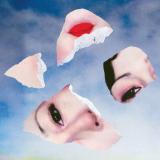
Themes of change, breaking up, shattering old ways of being are shot through the record. For the front cover, a photograph of the artist’s face was printed, ripped up and re-assembled, resembling the creative process embarked upon by Lew for her first “solo” material. The album feels instinctual, almost dream-like in its assemblage of sweeping synths and pulsating, propulsive drum machine beat patterns with Lew’s vocal performances sensitive and caressing over the top. Increasingly relying on the subconscious and dreams to guide her creative process, Hannah Lew frequently abandons literal interpretations or linear narratives, the songs seeming to exist in a swooning, effortless flow-state while remaining emotionally hard hitting.
On an album where every song could be a single, there are kaleidoscopic shades and varying emotional tones in abundance. First single Another Twilight is carried along a pumping, Italo-disco-style 4/4 beat and mono-synth bass line, the low end pulling at the heart and body. Lew’s vocal melody teases the track before swan-diving into a gorgeous chorus as she sings “it’s all over baby and I don’t mind… in decline, I take my time…” The album is suffused with moments like this. On slow builder Damaged Melody, an arpeggiated synth elongates the verse before a cascading synth showers down melodic glitter. The stunning Replica uses dual swirling synth patterns before a driving, synthpop chorus for the ages carries Hannah Lew’s vocal into the stereo field, sailing in on a high register singed with the embers of a break up.
In a departure from previous groups, her solo songs are guided by dreams and free association inspired by Dada and the Surrealist movement and sculpted afterwards. As such, the songs reveal themselves on repeated listens, revealing traces of heartbreak inspired by both personal and global elements - Hannah Lew regards the album “a wartime album.” On Move In Silence, Lew intones “there’s a war outside, just out of view,” revealing the dichotomy at play throughout. With the songs evolving naturally and in a flow state, the pressures and sadnesses of the modern age bleed through, mixed in with Lew’s inherent love, sensitivity and fractured-but-intact optimism. On the swooning, sublime Sunday layers of Numanoid synths open up for the commanding vocal performance pontificating on grief, love, pain as she “feels the ache on Sunday…” As the chorus builds and Lew’s call-and-response vocal adds to the emotional tension, it almost feels like too much to take.
Elsewhere, there are echoes of Hannah Lew’s previous work. On Time Wasted a bass guitar comes in with a heavy, punk attack before the synths and vocal harmonies reminiscent of later Cold Beat elevate everything. The glassy, sweetly resigned closer The Clock sounds like so classic it could be cover, a sweetened Jesus & Mary Chain tune perhaps, before it erupts into volcanic chorus that could only come from Hannah Lew in 2026.
- A1: The Bird
- A2: Heart Don't Stand A Chance
- A3: The Waters (Feat. Bj The Chicago Kid)
- A4: The Season / Carry Me
- B1: Put Me Thru
- B2: Am I Wrong (Feat. Schoolboy Q)
- B3: Without You (Feat. Rapsody)
- B4: Parking Lot
- C1: Lite Weight (Feat. The Free Nationals United Fellowship Choir)
- C2: Room In Here (Feat. The Game & Sonyae Elise)
- C3: Water Fall (Interlude)
- C4: Your Prime
- D1: Come Down
- D2: Silicon Valley
- D3: Celebrate
- D4: The Dreamer (Feat. Talib Kweli & Timan Family Choir)
Ten years ago, Anderson .Paak didn't just release an album; he staged a full-scale takeover of the soul and hip-hop landscape. Released on January 15, 2016, Malibu served as the definitive arrival of an artist who had spent years grinding in the underground before a star-making turn on Dr. Dre’s Compton. While his previous work hinted at his potential, Malibu was the moment the world met the "Cheeky Andy" persona in full—a virtuosic drummer, a raspy-voiced crooner, and a sharp-witted rapper all rolled into one. The album is a sprawling, sun-drenched journey through the Southern California coast, blending 1970s funk, church-reared gospel, and gritty boom-bap into something that feels both nostalgic and entirely futuristic. With a heavyweight production lineup including 9th Wonder, Madlib, Kaytranada, and Hi-Tek, the record maintains a warm, analog texture that was a breath of fresh air in an increasingly digital era. It’s an album that breathes, full of intentional imperfections and the kind of "in-the-pocket" groove that can only come from a seasoned live performer. Beyond the infectious, dance-floor-ready energy of tracks like "Am I Wrong" and "Come Down," the album is a deeply autobiographical masterwork. .Paak uses the 65-minute runtime to unpack his life story with startling clarity, touching on his mother’s gambling addiction, his father’s incarceration, and his own brushes with homelessness with a sense of resilience that never feels heavy-handed. He weaves these heavy themes through a lens of triumph, grounded by vintage surfing documentary samples that give the project its cinematic, coastal atmosphere. It’s a celebratory record born out of struggle, anchored by his impeccable technicality on the drums and a guest list—featuring ScHoolboy Q, Rapsody, and The Game—that feels hand-picked to complement his specific brand of West Coast swagger. A decade later, Malibu stands as a modern classic and the blueprint for the soulful revivalism that would eventually lead .Paak to global superstardom and Grammy-winning heights. It remains a testament to the idea that the most profound music often comes from the most personal places, proving ten years on that the best way to move forward is to stay rooted in the groove.
- 01: The Ark
- 02: The Masai
- 03: Dream Dance
- 04: Belize
- 05: As You Are
- 06: Danakil Warrior
Our latest Holy Grail reissue is this private press spiritual jazz gem out of California from Rickey Kelly and his vibes & marimba. Features Diane Reeves (vocals) & Adele Sebastian (flute)!
Heavyweight 180g LP with tip-on sleeve, individually numbered 1-1000, card enclosed for liner notes & audio download
"Rickey, I know these are your friends, the guys you went to school with, but if you wanna record an album, you record with musicians who have been playing their whole life; whatever you write, they'll put their whole life into it. You play with your friends; they may not even play in tune."
These are the words of Slave guitarist Kevin Johnson, and they were to change the course of young Rickey Kelly's life.
It was 1978, and music student Kelly had approached Johnson with a tape of rough demos of some songs he'd written. A San Francisco native, Kelly had recently moved the short distance south to study music at LA City College in East Hollywood. He was a member of E.W. Wainwright Jr.'s African Roots of Jazz, and was spending up to 10 hours a day in practice on both vibes and marimba. He also played with Horace Tapscott, and had his own band made up of fellow students, but it was his ambition to make an album that led to the conversation with Johnson. It was a turning point in his education, and a decision was looming.
The next thing Johnson said was "You call the best jazz musicians. How'd you like to play with Billy Higgins?", a line that would seal it for anyone; for a youngster like Rickey just starting out in the business, you just don't turn down the opportunity to play with the likes of highly accomplished musicians, especially those of the calibre of legendary jazz drummer Billy Higgins.
Some calls were made and the date was set to record at Studio Masters on Beverly Blvd, a studio set up just a few years previous in 1973, owned and operated by Dot Records founder Randy Wood with his son John. Some of the other music professionals set to record with Kelley that day were flautist Adele Sebastian, bass player Tony Dumas, saxophonist Charles Owens and vocalist Diane Reeves, none of whom had previously played with Kelly before.
Kelly was impressed with the studio, with the gold records displayed on the walls and the famous musicians hanging out. 'It took a lot of humility for me to record with them, I mean I was nobody, nothing, and for not a lot of money either' remembers Rickey in a later interview with Calvin Lincoln, 'It taught me a lot, to practice hard, and study for the rest of your life, to give your all, and there's a lot of all to give'.
As the recording session took place, John Wood was listening in. He was impressed. Kelly didn't have the funds to manufacture and release the album himself, so Wood suggested it was pressed up on his in-house studio label, Los Angeles Phonograph Records, and thus the LP 'My Kind of Music' was released early in 1979. The album also saw a subsequent pressing soon afterwards on Dennis Sullivan's New Note label.
Kelly remains humble and proud of his debut album to this day. 'I was still a beginner' he says, 'These masters walked in, smiling, and gave me something worth gold'.
- Eastern Wizard - Chant Of The Blue Wolf
- Maziri - Mi Silencio
- Idin Gorji / Mahdis Soltani - Sarv
- Nato (Fr) - Lonely
- Tamer Elderini - Mawlay
- Majnoon - Mektep
- Christos Fourkis - Aegean Myst
- Glender - Canto De Xisto
- Berk Ocal - Artsunkneri Gisher
- A X L - Awaly
- Marsey / Chris Bell - Reload
- Marco Tegui - Huayna Cocha
- The Saint - Mozanda
- Pablo Denuit - Timon
- Safar / Hind Ennaira - Janguariye
- Ravin / D-Compost - Champagne After Midnight
Mit Buddha-Bar XXVIII öffnet sich erneut das Tor zu einer Welt voller Eleganz, Sinnlichkeit und globaler Klangfarben. Die legendäre Compilation-Reihe, die längst zu einem internationalen Lifestyle-Phänomen geworden ist, präsentiert mit diesem Kapitel erneut einen Mix, der die Balance zwischen elektronischer Finesse, weltumspannenden Melodien und tiefen Chill- und House-Vibes meisterhaft hält. DJ Ravin, seit Jahren prägende Sound-Signatur des Buddha-Bar-Universums, führt Hörer:innen mit sicherer Hand durch eine Reise voller Atmosphäre und subtiler Spannung. Jeder Track reiht sich wie ein Mosaikstein in ein großes Ganzes ein - perfekt geeignet für entspannte Abende, stilvolle Lounges oder Momente der Entschleunigung. "Buddha-Bar XXVIII" steht exemplarisch für die besondere Kunst dieser Serie: Musik als Erlebnis, als Raum, als Stimmung. Eine Einladung, abzuschalten, einzutauchen und die Welt für einen Augenblick in warmen Farben zu hören.
DJ Support: &ME, Adam Port, Oliver El-Khatib (OVO Sounds), Moblack, Antdot, Maxi Meraki, Sam Divine, Shimza, Benji B (BBC), SARZ, Kilimanjaro, Boddhi Satva, Jeremiah Asiamah (BBC), The Pete Tong (BBC), Méle, Kid Fonque, Black Coffee, DJEFF, Kitty Amor, Enoo Napa, Fiona Kraft
Sondela Recordings returns with Sondela Selects Vol. 2, a special 12” showcasing four of the label’s most defining moments. From FKA Mash & Sio’s soulful ‘Bumblebee’ to Thakzin’s groundbreaking ‘The Magnificent Dance’, which birthed the global 3Step movement, this package is steeped in history. Henrik Schwarz’s remix of Mike Steva & Stevo Atambire’s ‘Destiny Song’ and Sammi Ferrer & Chaleee’s peak-time cut ‘Champagne’ round off a collection that cements Sondela’s role in shaping Afro-inspired electronic music.
KITCHEN. LABEL is proud to present AGATE, the latest album by Japanese artist MEITEI, marking a deepening of the world he first shaped through his Kofū trilogy released between 2020 - 2023.
Named after the mineral agate, a stone formed through slow accumulation, pressure, and time, the album reflects MEITEI’s patient approach to sound. AGATE brings together extended and newly rearranged works from across the Kofū cycle alongside new compositions and passages, refining material developed through years of performance and sustained practice.
The album presents seven tracks:
HAŌ (Previously unreleased track)
SHIN-OIRAN (Remodeled from Oiran I, Kofū 2020)
SHIN-SADAYAKKO (Remodeled from Sadayakko, Kofū 2020)
SHIN-WAROSOKU (Remodeled from Wa-rōsoku, Kofū III 2023)
KYŪGEKI (Remodeled from Shinobi and Akira Kurosawa, Kofū II 2021)
SHIN-OIRAN II (Remodeled from Oiran II, Kofū 2020)
SHIN-EDOGAWARANPO (Remodeled from Edogawa Ranpo, Kofū III 2023)
Across these works, MEITEI expands the musical vocabulary first introduced in Kofū, a sound he once described as “lost Japanese mood.” While Kofū drew from fragments of folklore, theatre, ghost stories, and forgotten urban memory, it was never an act of historical reconstruction. Rather, it reflected a sensibility of the past observed from the present. With AGATE, this worldview is clarified as Shinpu, a process of discovery in which historical awareness becomes a foundation for contemporary creation rather than a constraint.
During five years of Kofū tours across Japan, Europe, and Asia, MEITEI performed this material in a wide range of spaces, from underground live houses and listening rooms to culturally significant sites. These environments influenced pacing, dynamics, and structure, shaping how the material evolved over time. AGATE is therefore not only a studio album, but the result of material refined through repeated performance.
If the Kofū albums were windows into forgotten eras, AGATE explores what lies beneath, sediment and strata formed through time and pressure. MEITEI’s approach to sound mirrors the nature of agate itself. Grains become texture. Texture becomes narrative. Voices drift through decaying layers of sound, while ancient instruments are used in non-traditional ways, forming distinctive percussive rhythms and melodies that appear and vanish without fixed resolution.
The album’s visual materials were developed under MEITEI’s direction through physical art-making processes. The cover artwork originates from a letterpress print created by Kamisoe, a Karakami atelier in Nishijin, Kyoto, using Kyo-karakami paper. The original artwork, produced through traditional woodblock techniques on handmade washi, was subsequently reproduced on print for the album edition. Kamisoe continues to reinterpret this historical Kyoto craft with a contemporary sensibility.
The title calligraphy was created by Bio Xie, whom MEITEI personally invited to participate in the project. During his performances abroad, MEITEI encountered in Taiwan a lingering atmosphere reminiscent of “Shitsunihon” — a sense of old Japanese memory that quietly endures beyond time. He was deeply drawn to Bio Xie’s distinctive use of Chinese characters, which resonated with this experience, and asked him to contribute to the visual expression of AGATE.
In parallel, MEITEI continues to reinterpret Japanese sensibility through his concept of “Shitsunihon,” presenting it as a contemporary musical language. The refined Kyoto motifs envisioned by Kamisoe and the distinctive calligraphic expression by Bio Xie intersect with MEITEI’s singular artistic direction, weaving together a newly articulated worldview.
The accompanying visual imagery, including the liner photographs, was created by photographer Hiroshi Okamoto, who was also responsible for the visual direction of MEITEI’s previous work, “Sen'nyū.” It draws from MEITEI’s lived experiences of winter seas, solitary cliffs, and breaking waves. These scenes symbolize the inner conflicts of the ten years he spent living in Hiroshima, and his confrontation with solitude and the sounds he creates.
AGATE will be released on 17 April 2025 via KITCHEN. LABEL on 180g vinyl, CD, and digital formats. The album is mastered by Kelly Hibbert, known for his work with Flying Lotus, Madlib, and J Dilla.
With AGATE, MEITEI returns to the material of Kofū with greater focus and discipline, continuing an ongoing process of working forward with inherited material.
2026 Repress
Laurie Torres is a Canadian musician and composer raised in Montréal, Québec by Haitian parents. Since 2008, she has been a trusted stage and studio performer for Julia Jacklin, Pomme, and Land of Talk, as well as being a founding member of Folly & The Hunter, with whom she recorded four studio albums and toured Canada, Europe and the UK.
In 2023, Laurie shifted focus to work on her own creations, a process of making time - the will and the need becoming omnipresent. Drawing creative inspiration from contemporary artists like Tirzah, Gia Margaret, Valentina Magaletti, Tara Clerkin Trio and ML Buch, 'Après coup' finds Torres intersecting at a pivotal moment where artists whose marginalized identities are at the forefront in creating a beautiful array of "other options".
"Being othered and tokenized as a woman who plays music, as well as a queer and black person, takes a toll, while also positively feeding a strong urge to push and be seen."
Centering around piano, drums and synthesizer with interweaving field recordings, 'Après coup' follows the precursor ep 'Correspondances' in the form of a sprawling 11-track album. Translating directly from French - afterwards, after the event - its title subliminally points at something deeper between the lines. Recorded in 2023 between tours in a small window of time where 'normal' life hadn't quite recommenced, Torres meticulously crafted her debut solo material in view of surrounding nature, all providing the perfect nourishment for long streams of improvisation. Built right up to the edge of a lake, Studio Wild in St-Zénon, Québec offered an unparalleled location and set up for her freeform creativity.
Instrumental music seemed like a natural response and evolution for Torres who had long basked in the world of "pop music" as she elaborates: "I had an urge to use creativity as a sort of resting place, a place where things can unfold slowly and take time to reveal themselves. In other worlds words, I felt the need to make something slower, more elusive"
The immediacy of Torres' recorded takes doubled with minimal overdubs create a fiercely direct, intimate and unpolished lo-fi beauty. 'Après coup' then is self-reflective, open and inclusive with Torres allowing herself to be fully seen. An album to be felt at close distance with unrivalled authenticity. This album stands as a testament to Laurie's artistic evolution and serves as a beacon, inspiring her to continue nurturing her own creative pursuits and finding exhilarating freedom.
- 1: Kellen
- 2: Owerri Disco
- 3: Tourist
- 4: Okra Bilalli (Feat. Bilalli)
- 5: Oluwasam
- 6: Stutter
- 7: Daughters Always Listening I
- 8: Niger River
- 9: Daughter's Always Listening Ii
- 10: Struggle For Kasawa
- 11: Realised
- 12: Yellow Trumpet
A fiery blend of cinematic soul, psychedelia, and Afrobeat exploring the in-betweens of identity, music, and culture in the 21st century—Owelu Dreamhouse’s debut LP is a deeply orchestrated journey through memory and imagination, led by ex-Saskwatch bandmates Nkechi Anele and Nic Ryan-Glenie, and produced by Henry Jenkins (Surprise Chef).
The band's namesake is a play on Nkechi’s grandmother's village—Owaelu—in Nigeria. Growing up as a woman of color in a predominantly white Australia, Nkechi had fear and hesitation around expressing her Africanness and Nigerianess, and this album is about her journey. Both archival and contemporary, the album’s DNA is laced with musical and historic references as well as a cohesive vision of the present.
From Wisdom Teeth’s recent compilation nagoyaka na kaze / 和やかな風 (quiet wind)—which cast a spotlight on the Japanese city of Nagoya—emerges “2++”, a new label launched by abentis, who curated the compilation alongside Facta and K-LONE as a central figure in the scene. Conceived as a series introducing facets of Nagoya’s underground electronic music to the world on vinyl, its inaugural release is abentis’ debut album, Dim Grow.
Across the album, intricately designed electronic mallet sounds—created using Ableton Live’s physical-modeling synthesizer—take center stage. Fresh and percussive like marimba or kalimba, yet simultaneously carrying an otherworldly, unreal quality, these tones form the core of the record’s sonic identity. In moments of near-silence, a crystalline resonance poised between glass and metal shimmers with subtle shifts in temperature, giving the album its distinctive texture.
While resonating with the sonic sensibilities of fellow Wisdom Teeth affiliates such as K-LONE, Tristan Arp, and Salamanda, abentis’ uniquely strange palette can be traced back to one of his strongest influences: Haruomi Hosono. In particular, Hosono’s mid-’70s tropical-infused solo albums — Tropical Dandy (1975), Bon Voyage Co. (1976), and Paraiso (1978) — serve as a key reference point. Symbolically reflected in Hosono’s marimba and vocal performance at a 1976 live show in Yokohama Chinatown, the marimba functioned as a central instrument for constructing imagined exotic landscapes inspired by Martin Denny and Hawaiian music.
For abentis—who worked at a local jazz bar before becoming active as a hip-hop beatmaker—the language of “tension chords,” a harmonic vocabulary rooted in jazz and R&B that hovers ambiguously between brightness and darkness, forms a consistent grammar throughout Dim Grow.
Behind the album’s core theme of “mallets + tension chords” lies a broad musical lineage: the harmonic sensibility of Claude Debussy, who anticipated the tensions of jazz; the proto-minimalist spirit of Erik Satie; the marimba-centered structures of Steve Reich; their continuation in Japan through Mkwaju Ensemble (with Midori Takada and production by Joe Hisaishi); and the subsequent branches into post-rock, electronica, and ambient music.
Growing up in Nagoya—an industrial city where creative independence is deeply valued—and being rooted in punk and hip-hop counterculture scenes naturally fostered abentis’ affinity with these predecessors. His practice between genres, combined with an encounter with the highly cross-pollinated musical perspective cultivated around Wisdom Teeth, provided the framework through which his own musical language crystallized. Dim Grow stands as the natural culmination of that journey.
On 27 March, fabric Originals presents Shō, a five track EP of introspective, transcendent electronics from Japanese techno icon DJ Nobu. Inspired by the Buddhist Brahmavihāras - joy, compassion, loving-kindness and equanimity - Shō unfolds as a meditative, emotional journey rooted in Nobu’s experiences of Tokyo, mindfulness and inner clarity. From kinetic renewal to serene minimalism, the EP channels presence, acceptance and the simple truth that breathing itself is living.
Each track on ‘Shō’ marks a step in an emotional and spiritual journey, channelling the foundational virtues of the Brahmavihāras, which are the four ‘Sublime States’ of Buddhist practice: ‘Muditā’ (joy), ‘Karuṇā’ (compassion), ‘Mettā’ (loving-kindness), and ‘Upekkhā’ (equanimity). Together these principles form a path towards an open, boundless heart, which is mirrored in the EP’s unfolding sonic narrative.
“In recent years I became overly sensitive to my surroundings and society, finding myself strongly affected by every daily occurrence. It was during this time that I discovered meditation. And beyond that lay Buddhism. Through this, my sensibilities became able to express themselves more naturally. I decided to portray my feelings, and the scenery in Tokyo, conveying what I was experiencing in real-time, as music.
The EP title ‘Shō’ denotes views, thoughts, and actions aligned with Buddhist truth, and encapsulates my striving for presence, clarity, and acceptance. It also represents the conscious, mindful understanding that simply breathing is living.” DJ Nobu
- 1: Hurricane Girl
- 2: Just Say No!
- 3: Everybody Talks
- 4: Mountain Sized
- 5: The Great Plains
- 6: English Tea
- 7: Ropeburn
- 8: La
- 9: Daisy Chain Reaction
- 10: Summer Rolls
Im April 2026 bringt Eaves Wilder ihr heiß erwartetes Debütalbum ,Little Miss Sunshine" raus. Die Platte ist ein krasser Entwicklungssprung für die Singer-Songwriterin aus Nord-London, die 2020 mit 16 Jahren mit ihrem selbst aufgenommenen Lockdown-Release ,Won't You Be Happy" zum ersten Mal auf sich aufmerksam gemacht hat. Eaves begann mit der Arbeit an ,Little Miss Sunshine" nach einer Phase des Nachdenkens, in der sie sich fragte, ob sie der Musik in ihrem Kopf letztlich gerecht werden könnte. Wer sich mit dem Album beschäftigt, entdeckt zehn Songs, die sich an den Zyklen der Natur orientieren, um die emotionalen Stimmungen zu erklären und zu feiern, die uns zu Menschen machen. ,Als ich am Boden war", erinnert sich Eaves, die an einer Stelle sogar lacht, als sie sich daran erinnert, wie sie beschloss, die Musik ganz aufzugeben, um in ein Kloster einzutreten: ,Ich wollte einfach nur unmenschlich, gefühllos und unbewegt sein. Wie ein Berg oder ein Baum. Oder der Himmel. Das sind alles Dinge, die einen Zweck haben, aber ich wusste nicht, was mein Zweck war. Und so musste ich es herausfinden, Song für Song." Auf Little Miss Sunshine wird diese Geschichte in spannenden Episoden erzählt, angefangen mit den ersten Sekunden des Albums und der Lead-Single Hurricane Girl, einer sensationellen Synergie aus durchscheinenden Shoegaze-Harmonien und elementaren Rockgitarren, inspiriert durch Dokumentarfilme über Sturmjäger, wobei die Metapher verwendet wird, um ein Licht auf Freunde zu werfen, die gezwungen waren, stürmische Beziehungen zu suchen. ,Ich habe das Gefühl, dass dies mein Pearl-Jam-Song ist", erklärt sie. ,Das erste Mal, als ich Pearl Jam hörte, war ich auf einem riesigen Berg in Wales. In derselben Woche hörte ich auch zum ersten Mal Jagged Little Pill von Alanis Morissette." Von hier aus, bis hin zu seinem schmerzlich bewegenden Requiem an die Kindheit Summer Rolls fungiert jeder Song auf Little Miss Sunshine als leuchtender Koordinatenpunkt in einem Bogen der Selbstfindung. Da ist der hochfliegende Klangrausch Everybody Talks, mit seinem ansteigenden Crescendo aus aufdringlichen Stimmen, der auf beiden Seiten des Atlantiks große Unterstützung im Radio fand. Für Mountain Sized bezog sie sich auf Lily Allens Single The Fear aus dem Jahr 2009 - ,weil da diese eine Frau ist, die ganz beiläufig all die schlimmsten Dinge über sich selbst aufzählt, Dinge, die man sich eigentlich nicht trauen würde zuzugeben". In Eaves' Song wird diese aufkommende Angst jedoch durch einen panoramischen Refrain ausgelöscht, in dem sie die Grenzen ihrer realen Welt durchbricht, um zu verkünden: ,But in my mind/But in my mind/I am taller than the highest mountain sides." In dem schmerzlich melodiösen ,The Great Plains" hinterfragt Eaves ihre frühesten Erinnerungen, in denen sie ihre ältere Schwester Dora vergötterte. ,Sie war so zurückhaltend und wie eine Meerjungfrau", erinnert sich Eaves, ,und ich wurde von meinen Emotionen beherrscht - und je mehr ich versuchte, das nicht zu sein, desto mehr wurde mir klar, dass ich niemals wie sie sein könnte." In dem Song findet Eaves eine Art Selbstakzeptanz, indem sie auf die Natur schaut, um zu erfahren, dass es okay ist, so zu sein, wie sie ist: "As I erupt into a blaze / It's ok the sky will do the same/Let no-one bat an eye when / Every year I'll hibernate till May / Because no-one blames the clouds for rain / So take me as I am, tears down my face." Als die Sessions an Fahrt gewannen, fand Eaves Inspiration in zeitgenössischen Veröffentlichungen. Beispiele dafür waren Wolf Alice (,die einzige Band, die die Balance gefunden hat, die ich immer suche - die Kombination aus schweren Gitarren und hohen, ätherischen Vocals"), Mannequin Pussy (,sie gaben mir etwas von dem, was ich in der Ära von Riot Grrrl vermisst habe, als L7 und Babes In Toyland auf Tour waren") und CMATs ,geradlinig brillantes Songwriting". Weitere Highlights auf einem Album, das von ihnen geprägt ist, sind Daisy Chain Reaction, dessen glitzernder Power-Pop-Glanz einen Text über die Kultur des Wettbewerbs rund um Essstörungen verbirgt, und der unangenehme, mechanisierte Angriff von Just Say No, ein Song, der auf den brutalen Wahrheiten basiert, die Eaves und ihre Freundinnen in ihren Auseinandersetzungen mit missbräuchlichen Männern gesammelt haben. Zwei Jahre lang hat Eaves unermüdlich daran gearbeitet, jeden einzelnen Vers, Refrain, Pre-Chorus und Middle Eight auf Little Miss Sunshine zu verfeinern, bevor sie mit dem Co-Produzenten des Albums, Andy Savours (My Bloody Valentine, The Killers, The Horrors), ins Studio ging. Dies ist ein Album, auf dem jedes einzelne Detail seinen Platz verdient hat und das Zeugnis ablegt von der einzigartigen musikalischen Vision seiner Schöpferin.
“Música Para Caminar” is the new album by 80%Baul, and the record that confirms his definitive leap from revelation to legend. Following the critically acclaimed debut Ayer y Ahora, this release positions 80%Baul alongside the great names of Spanish post-punk, standing shoulder to shoulder with seminal acts such as Décima Víctima and Parálisis Permanente. Rooted in a dark, introspective sensibility, Música Para Caminar also connects seamlessly with the vitality of today’s Spanish underground, aligning with the current wave of forward-thinking artists, including labelmates like Yvgoslavia. But this album is not defined by sound alone. Once again, 80%Baul surprises with songs that function as poems—bleak, incisive reflections on a decaying, dystopian present. More than music, Música Para Caminar is a statement: music with intention, depth, and meaning—an artistic vision that transcends genre and cements 80%Baul as one of the essential voices of contemporary Spanish post-punk. Presented in ONE-OFF truly limited edition of 300 copies lacquered pressed on 180 gr. high quality solid BLACK vinyl tracks have been specially remastered and mastered for vinyl by Daniel Hallhuber at Young and Cold Studios (Germany).
In just five years, The Spy has gone from underground newcomer to one of the most talked-about names in the European electro and EBM dark electro scene. Early releases on Osáre Editions and Mechatronica quickly placed him on the radar of forward-thinking clubs and selectors across Europe. Now landing on Oráculo Records, he presents his most wave-driven and club-oriented material to date: pure, physical electro built for dark rooms and late hours. Driving basslines and sharp machine rhythms—infused with subtle, classic post-punk tension—define a sound that connects the dancefloor with the shadows, drawing clear parallels to artists like L.F.T, Credit 00 or Gesloten Cirkel. This is music made to move bodies without sacrificing attitude—raw, confrontational, and far removed from formulaic club clichés. Five years in, the message is clear: this is not hype, but momentum—an artist fully in command of a modern electro language built for the underground. Presented in ONE-OFF truly limited edition of 300 copies lacquered pressed on 180 gr. high quality solid BLACK vinyl. All tracks have been specially remastered and mastered for vinyl by Daniel Hallhuber at Young and Cold Studios (Germany).
- A1: No Problem
- A2: Dangerous Bees
- A3: Pas Contente Feat Roger Damawuzan
- A4: Meva
- A5: Happiness
- B1: Ata Calling
- B2: Wrong Road
- B3: No Way To Go
- B4: Djin Ku Djin
- B5: Think Positive
Repress of the 1 st album of the fresh Afro funk sensation ! Recorded on analog equipment in Lyon in 2014 !
Peter Solo is a singer and composer born in Aného-Glidji, Togo, the birthplace of the Guin tribe and a major site of the Voodoo culture. He was raised with this tradition’s values of respect for all forms of life and the environment. With his new band, Vaudou Game, Peter Solo claims, and spreads this spiritual and musical heritage. Chants are at the heart of the Voodoo practice, but for times immemorial, harmonic instruments have never accompanied them. No balafon, no kora - only the “skins” support the singers. However, in 2012, Peter, along with his band based in Lyon, France, decided to explore and codify the musical scales that are found in sacred or profane songs of Beninese and Togolese Voodoo so they can be played easily on modern instruments. Peter composed the album Apiafo, using the two main musical scales of this tradition. The first musical scale on Apiafo leans towards raw Funk with a sound similar to the famous 70’s bands, L’Orchestre Poly Rythmo De Cotonou and El Rego. Funk, is the skeletal structure of this record, and provided the opportunity for Peter to invite his uncle, Roger Damawuzan - the famous pioneer of the 70s Soul scene - on two tracks. Their collaboration on “Pas Contente” is a highlight on this 100% analog album. Apiafo was entirely recorded, mixed and mastered with old tapes and vintage instruments. The second scale, which had never before been transposed for instruments, evokes deeper feelings and a sacred ambiance. The moving song Ata, an invocation to a supreme divinity is another highlight of this record. Even if some can recognize similarities between this scale and Ethiopian scales, they are in fact different. Peter, the only African band member, introduced the other musicians to the universal values of Voodoo and he taught them his native language. On the recording of Apiafo and during their live performances, the musicians all sing and answer Peter in the Mina language. The strive for authenticity, the analog sound and vintage looks don’t mean that Vaudou Game is looking backwards. This is Togolese funk, born in the post-colonial era but that never before explored its ancient roots so deeply and proudly.
Antoine RAJON
- A1: Miami
- A2: Lullaby
- A3: Dryer
- A4: Dazzle
- A5: Green Eyes
- B1: Born Again
- B2: Did A Dj Ever Save Your Life
- B3: It Stopped Raining
- B4: The Walk
- B5: Seq24
- B6: Summers Almost Gone
- C1: Intro
- C2: St. Nazaire
- C3: Open Window
- C4: Cemetary
- C5: Hot Day
- C6: Rome
- C7 5: Am
- D1: Too Tired To Sleep (Awake)
- D2 12: Hours
- D3: Peace
- D4: Wildly Oscillating
- D5: Sugar Plums
- D6: Still
- D7: My Lovely
Once I Was Young and The Airplane Album find the producer taking yet another sonic right turn. "These records were made in the same year with a very similar creative process. I moved almost completely away from sampling, experimented more than ever with ambient and techno elements and used the album format as a way to tell a story about moments in my life." Once I Was Young is a storytelling work that journeys through analogue synth-pop, modulated techno and raw, dusty drums with otherworldly melodies. Moments of beauty come through escapist, naturalistic ambient tracks and fusions of Kraftwerkian sequencing with more classical piano, while stark, clubready grooves keep things moving. Airplane contrasts similar shades of light and dark, synthetic and organic, rough and smooth. Glitchy, imperfect analogue sounds, knackered drum machine grooves and eerie synth phrasing evoke a post-human world with icy atmospheres. Elsewhere, warmth comes from bittersweet melodies and loose, funky drums that ooze retro-future charm.
Once I Was Young and The Airplane Album show a diff erent side to Escobar, one that embraces introspection and experimentation while exploring a whole other world of meaningful machine soul
With Dispersion, Loom & Thread return to the volatile architecture of the expanded piano trio - and quietly fracture it from within.
Daniel Klein (drums), Tobias Fröhlich (double bass) and Tom Schneider (keys, sampler) remain the sole agents on stage and in the final recording. The triangle holds. And yet, the field has expanded. For their second studio album, the trio fed their improvisations with the timbral signatures of guest saxophone and vibraphone players - not just as additional voices to be featured, but also as material to be absorbed, atomized and redistributed. The result is not augmentation but thorough refraction.
Where the debut album explored the recursive labyrinth of Schneider's live sampling of his own piano, Dispersion introduces an external grain into the feedback system. Breath and metal. Reed turbulence and struck resonance. The trio sampled extended improvisations by saxophone and vibes players: Victor Fox, Asger Nissen, Volker Heuken, and L&T's own Daniel Klein; dissected their attacks, overtones and decay curves, and integrated these fragments into the trio's internal circuitry. What emerges is a play of presences without bodies - instrumental ghosts circulating through the dense weave of rhythm and keys.
At first, one might hear the familiar relational tension: Klein's polyrhythmic elasticity interlocking with Fröhlich's tensile double bass figurations, Schneider poised at the hinge between tonal field and percussive impulse. But soon, the surface splinters - again. A vibraphone shimmer appears, yet no mallets are visible. A reed multiphonic surges through the texture, bending space between bass and drums. These events are neither quotations nor overlays; they are redistributed energies, dispersed across the trio's grammar. A digital multidimensional interplay ensues.
If the first album unfolded as a two-tiered game - live phrase and sampled reflection - Dispersion adds a further axis. The sampled materials from other improvisers are stripped of their erstwhile two-way interaction and reconstituted as malleable particles. Signifier detached from origin, resonance detached from gesture. The trio navigates a constantly shifting topology in which acoustic memory and electronic manipulation are indistinguishable.
Crucially, the album never abandons the physical urgency of three musicians reacting in real time. The additional timbral layers do not thicken the texture into opacity; rather, they introduce stark points and arrows of diffraction. Density opens into prismatic clarity. Lines splinter and regroup. What seems like a quartet or quintet collapses back into three bodies negotiating an expanded field.
Dispersion is not about addition but about distribution - of agency, of timbre, of temporal perspective. It is an album in which the trio setting becomes a site of multiplicity without surrendering its immediacy. A dissolution not only of the divide between present experience and memory, but between inside and outside, self and other.
Three musicians. Countless vectors. A music that fractures in order to cohere.
CREDITS:
Tom Schneider: piano & sampler
Tobi Fröhlich: double bass
Daniel Klein: drums & percussion
sample sources:
Victor Fox: tenor saxophone
Asger Nissen: alto saxophone
Volker Heuken: vibes
Daniel Klein: vibes
Recorded by Martin Dressler at Bauer Studios, Ludwigsburg.
Mixed & mastered by Martin Ruch.
Artwork by Viet Hoa Le.
Blue Vinyl
After a three year hiatus, the rap trident known as Death At The Derby is back with another full LP, this time entirely produced by Toronto based producer Finn. An 11 track project, “Capitano” is themed behind some of the games most respected & legendary captains to rock the honorary armband.
Inspired by their previous 2020 release “Ballon D’Or”, this latest LP is both the first official drop, yet second installment to their newest series entitled Club & Country. With the third & final season of their celebrates derby series around the way, this record is the next phase in their wave of worldwide work.
Cuts provided by their resident DJ, DJ Dubplates, the project is both a rare & raw blend of potent underground production, cultured sound bites, top flight lyricism & love for the beautiful game. Whether El Salvador, Romania, North Ireland or Argentina, the roster is monster. Centered around a tracklist aligned by the player’s actual jersey numbers, this collection of stars shine bright as any constellation.
BLUE & WHITE COLOUR IN COLOUR VINYL
In the culinary arts, it’s easy to overcomplicate the final product. Theme, presentation, texture…they’re important but should work to complement the raison d'etre of any food. At the end of cooking a dish, it should taste good and feed people. Some dishes, like barbeque or provoleta, resist the tendency towards hollow showmanship. One of their expressions can be more or less aesthetic, but the first purpose is to be simple and tasteful. Argentinian provoleta goes so far as to blur the line between ingredient and dish. It relies on the inherent flavor of provolone being heated at the right speed for the perfect amount of time. You can add garlic or chives or red pepper to the slice, but ultimately they serve to bring out an essence that’s already there.
Los Angeles’ Cousin Feo has developed his rapping acumen in the five years since releasing Provoleta, but returning to the project today shows that he always had the penmanship, grit and delivery that christens an emcee worthy of remembrance. Like the bubbles rising up in the appetizer that is the album’s namesake, Feo showed that true profundity is found in the simple gestures.
Since dropping the project in 2019, Cousin Feo has expanded his vision of a world where hip-hop and football, two proletarian art forms, mingle in creative and compelling ways. He has collaborated across multiple continents, chronicled football histories, aided in canonizing legends, kept the flames high in age-old rivalries and constantly forced his audience to search for the last time they heard bars this hard. In anyone else’s hands it would be too great a task.
The maturity he showed on Provoleta wasn’t nascent, it was an inherent quality forcing itself to the surface. The songs refract his experience as a working class Angeleno through the archetypes of Argentinian football legends. The kernel that unites the two worlds is hustle. When Feo was coming up, missteps had greater consequences than crashing out in the group stage and street deals had the weight of a Boca-River Plate match.
Each track uses slightly different ingredients to let Feo’s underlying talent shine. “Maradona” feels salvific, fitting for a football legend canonized from the Andes to the Alps and a Los Angeles rapper looking to inspire similar hope in the neighborhoods that raised him. On “Di Stefano” Feo massages the instrumental with the same composure of the late forward, until he pierces through the headphones like one of Di Stefano’s arrows. It’s also refreshing to hear a song celebrating Messi before his meme-ification, focusing on the universal truths contained in his footballing talent instead of using number 10 as a stand-in to make a point in a fruitless argument. And he still finds space to show deference to Batistuta, Kempes and other members of the Argentinian pantheon who’ve been erased from the popular imagination by the national team's contemporary success.
Real ones know that true players, true rappers, and true artists will always stand the attacks of time and consensus. In Provoleta’s first verse, Cousin Feo says he moves with the hand of God. Maybe one day he’ll tell the whole truth and let us know how he was able to wrestle the pen away too. Limited edition of 300 hand-numbered copies.
- 1: Mojo Jam (Special Guest Dennis Gruenling)
- 2: Baby Hold Tight
- 3: House Full Of Love
- 4: That Smile (Special Guest Sue Foley)
- 5: The Man I Used To Be
- 6: Faith
- 7: Tooth And Nail (Special Guest Rick Vito)
- 8: Fate Is A Train
- 9: This Road (Special Guest Rick Vito)
- 10: What Has Happened Here?
- 11: Without You (Special Guests John Ginty And Mark Johnson
Peter Karp gehört zu den unverwechselbaren Stimmen der amerikanischen Americana-, Blues- und Roots-Szene. Seine Musik verbindet kraftvolle Emotionen, feines Storytelling und eine tiefe Verwurzelung in den Klangtraditionen des amerikanischen Südens. Aufgewachsen zwischen New Jersey, New York City und Alabama, entwickelte er früh ein Gespür für die Energie urbaner Songkultur ebenso wie für die Ursprünglichkeit des Blues. Künstler wie Robert Johnson, Muddy Waters oder Howlin" Wolf prägten ihn ebenso wie die poetische Kraft von John Prine und die erdige Direktheit von Joe Ely. Karp schreibt Songs, die das Leben so zeigen, wie es ist: ehrlich, rau, humorvoll und voller beobachteter Details. Seine markante Stimme, sein expressives Gitarren- und Pianospiel und sein Gespür für melodische Hooks machen ihn zu einem der respektiertesten Songwriter seines Genres. Kritiker loben seine Fähigkeit, Blues, Folk, R&B und Americana zu einem eigenen, zeitlosen Stil zu verbinden. Peter Karp steht für authentische amerikanische Musik - tiefgründig, mitreißend und voller Charakter. Ein Künstler, der die große Tradition des Songwritings fortführt und gleichzeitig seine ganz eigene Handschrift setzt.
Last year, following the special vinyl 45 release of Samba De Flora - the Romero Bros from Argentina presented a full LP of Latin and Brazilian club flavours to be exclusively distributed worldwide on vinyl by Echo Chamber Recordings.
It received brilliant feedback from a wide range of DJs across the planet and the full version of Samba De Flora was licensed to Acid Jazz Records for their legendary Totally Wired Compilation LP - so it was a natural idea for a couple of those people to be involved in this next release on a vinyl 45 - with the two tracks that gained the biggest feedback
Side A - “Cravo E Canela” with the Romero’s great take on the classic Brazilian anthem from Milton Nascimento originally on their LP from last year which gained a lot of airplay at the time. This 45 release this has been given an extra special remix / update from the legendary Chris Bangs. He adds more bass bounce to the ounce and a funky shuffle to make it even more club friendly
Side B - “Gabriel” - their Latinized version of Roy Davis Jr’s 90s club smash. LA based DJ Greg Belson was such a fan after he got the LP, that he immediately made an exclusive edit to put on a 45 dubplate - to pack on his 2025 UK Tour - dropping it to devastating effect in place like Glastonbury and club dates across the country. So it was a natural choice to include this version on the flip of the 45 - under his Preacher monicker to align with his other releases on the sister label - Echo Edits
- 1: Through Darkened Glass
- 2: Very Heavy Greening
- 3: Wet Skull
- 4: The Magus
- 5: Exodus
- 6: Music For Mandrax
- 7: Return To Earth
- 8: The Middle Way
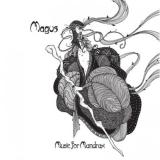
A magus is a wizard…a sorcerer. Magus, the band, is certainly interested in such things (who isn’t), but the name is especially apt due to the band’s approach to alchemy, the blending of rock, gothic, proto metal, and psychedelic styles to create a sound that is, ultimately, unique. Part of that uniqueness comes from the instrumentation. While guitar is often a dominant instrument of the rock oeuvre, the Fender Rhodes generally plays a supportive role. Not so here, where Jessica Weeks’ deft use of the keyboard dovetails with Greg Weeks’ more standard six-string approach. Not standard is the band’s sound. Doomy yet inspirational, dour yet vibrant, the duo’s tunes map sinister realms whose subjects span metaphysical creatures to enigmatic portals. You know, the typical stuff that rubs elbows with a magus.
Formed in late 2024, Magus sprung from a desire by both artists to experiment with darker, heavier sounds. Long enamored of artists like Flower Travelling Band,, Black Sabbath, and Deep Purple, the duo delved deeply into trance like riffs and euphoric solos to create the backbone of what has become their debut album, Music for Mandrax. This thirteenth Language of Stone offering features grounded, metronomic grooves, organic, lugubrious synth lines, and tandem vocals (supplied by both Weekses) that, in total, weave a heavy, trancelike spell sure to entice fans of bands as disparate as Sabbath is to Pink Floyd. Recorded at Weeks’ Hexham Head studio (to analog tape, of course), the band enlisted long-time counterparts Jesse Sparhawk (bass) and Ben McConnell (drums) to round out their sound and lock down the grooves that propel the album.
Mixed by Brian McTear and Amy Morrisey at Miner Street in Philadelphia, the band’s fully realized vision came to fruition, which left only the album art to contemplate. The band, wishing to further the gothic aesthetic of their sound, enlisted fashion designer and artist extraordinaire Hogan McLaughlin (Game of Thrones) to create the starkly beautiful line drawings of the front and back covers. The duo travelled to Salem, MA to complete the package with Courtney Brooke Hall, who shot the moody and evocative photographs that grace the gatefold release’s inner panels.
“An irresistibly narcotic sonic palette… Low-lit sounds for blissed-out ravers.” FACT LA electronic artist Holodec debuts on Phantom Limb with hypnotic new album TRU FOLK, a subtle and environmentally sensitive documentation of everyday life for distant synthesis, interwoven field recordings, and urban haze. Described as “both a folk record and an audio document” by Holodec - aka West Coast producer Jieh - TRU FOLK draws from 15 years of field recordings that capture a range of environments from city life to the domestic everyday. These audio narratives form the foundation of the considerately textured representation of the same spaces that make up the record - full of earthen, grounding synthesis, semipresent melodies, and smogged-out tonal palettes. It occupies a zone somewhere between tangible and dreamlike, treating sound as evidence of living rather than an escape from it.
- A1: El Balajú / Serenata Huasteca
- A2: Mexicana Hermosa
- A3: Veracruz
- B1: Una Vida
- B2: Hasta La Raíz
- B3: Ya No Vivo Por Vivir
- C1: Mi Religión
- C2: Para Qué Sufrir
- C3: Nunca Es Suficiente
- C4: Sembrando Flores
- D1: Lo Que Construimos
- D2: Un Derecho De Nacimiento
- D3: Mi Tierra Veracruzana
VOL. 1 black vinyl[31,51 €]
Un Canto por México, Vol. 1 is the eighth studio album by Natalia Lafourcade. The album was part of a project destined for the reconstruction of the Centro de Documentatión del Son Jarocho at Jáltipan de Morelos, a cultural building that was damaged after 2017 Puebla earthquake on 19 September 2017.
The album was a great success and gave Lafourcade three Latin Grammy Awards and the album also won the Best Regional Mexican Music Album at the 63rd Annual Grammy Awards.
Un Canto por México, Vol. 1 is available as a limited edition of 2000 individually numbered copies on yellow vinyl, packaged in a gatefold sleeve, with printed inner sleeves
Un Canto por México, Vol. 2 is Natalia Lafourcade's second album dedicated to the reconstruction of the Centro de Docementación del Son Jarocho, a cultural building that was damaged after the 2017 Puebla earthquake. The album features unique new interpretations of her earlier songs, as well as collaborations with artists such as Caetano Veloso and Silvana Estrada. This album really showcases the enduring strength of her songs, which remain powerful in any form.
The album was very positively received by fans and critics. It even got nominated for multiple Latin Grammy Awards (Album of the Year, Best Engineered Album) and Grammy Awards (Best Regional Mexican Music Album).
Un Canto por México, Vol. 2 is available as a limited edition of 2000 individually numbered copies on smokey marble vinyl, packaged in a gatefold sleeve, with printed inner sleeves.