Ebo Taylor is a legendary guitarist, composer, arranger and producer from Accra, Ghana. A leading light of Ghanaian music since the 1960's, Taylor is still touring and recording, and at the age of 80 will be releasing a brand new studio album on Mr Bongo in 2018.
For this album, Ebo joined forces with 12-piece band 'The Pelikans' — from the Cape Coast region of Ghana — led by Bessa Simmona, with rhythm guitarist Fifi Orleans Lindsay. A genuine 'holy-grail' of Ghanaian music and one of Ebo's most saught-after.
The album was released on the small Abookyi label. Named after a nightclub they played in called PELIKANS, and sung in English and Fante, this was the first album where Ebo sang on tracks, such as the classic 'Come Along', on which he also plays keyboard. This song clearly defined a new direction in highlife and has become a Ghanaian funk anthem. 'Come Along' formed the basis of Sadat X's 'Remember That' hip hop jam from 2011.
This official Mr Bongo re-issue is packaged in our new & improved heavyweight 'tip-on' sleeves, printed in Japan, pressed on high quality vinyl, with label designs and artwork as per the original release. Ebo's forthcoming new studio album, 'MIND YOUR OWN BUSINESS' is set for release in spring 2018, on Mr Bongo.
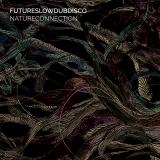
Nearly two years after "Superpaesaggio," Futureslowdubdisco rematerializes with a new album rooted in deconstructed rhythms, suspended atmospheres, minimalism, emotional tension, and ethnic echoes. Simone Ticconi and Francesco Colagrande, true explorers of sound, first delve into dark and shadowy ravines ("Shaman"), then descend into ocean depths ("Wendigo"), and make their way through impenetrable forests ("Natureconnection"), finally reaching the slopes of an active volcano ("Manitou").
The adventurous journey is rounded out with two more danceable remixes by Virtual Reality and Adelmo.
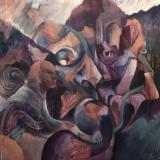
The crowning achievement is the artwork created by Awer, which pairs with the previous work by Flavia Mastrella.
Postmodern library music of great pathos. Giosue' Impellizzeri.
FUTURESLOWDUBDISCO is a project born from the meeting of producers Simone Ticconi and Francesco Colagrande. The duo explores sonic territories that combine downtempo, minimal techno, and dub. A blend of deep and hypnotic atmospheres, capable of moving between the contemplative dimension of listening and the pulsating energy of club culture, for an unforgettable rhythmic, ethereal, and psychedelic journey.
Dina Summer is the Berlin-based collaborative project of Greek-German dark-disco couple Local Suicide and Bavarian electronic producer Kalipo. The supergroup began working together in 2019 and have since been refining their combined sound. It is a unique blend of their influences, drawing from 80s italo disco, new wave, EBM and early 00s electroclash for a dark retro-futuristic synth/wave pop sound that stands out with club-ready basslines, epic melodic hooks, and lyrics ranging from dadaist abstractions to empowering, thought-provoking themes.
The trio will return with their new mini album, “Children Of The Night”, bringing together all the elements that have defined their sound so far. From the disco infused synth pop of “Burning Heart” and “Bats In Paris,” recalling their debut album Rimini (2022), to the dark club driven tracks “Fuel”, “Komodo 3000”. and the title track “Children Of The Night,” which echo the atmosphere of Hide & Seek (2024), and the dark wave influenced indie songs “Rat Race” and “On The Road”, which would have felt right at home on “Girls Gang” (2025), the release showcases the full spectrum of the band's musical identity. The nine track record takes its title from and pays homage to Bela Lugosi's iconic line in Dracula (1931): “Listen to them. Children of the night… what music they make”.
Format: Ltd transparent clear vinyl
Dina Summer ist das in Berlin ansässige Gemeinschaftsprojekt des griechisch deutschen Dark Disco Duos Local Suicide und des bayerischen Elektronikproduzenten Kalipo. Die Supergroup begann 2019 gemeinsam zu arbeiten und hat seitdem ihren gemeinsamen Sound kontinuierlich weiterentwickelt. Dieser verbindet auf einzigartige Weise ihre Einflüsse und schöpft aus Italo Disco der 1980er Jahre, New Wave, EBM und Electroclash der frühen 2000er. Das Ergebnis ist ein dunkler, retro futuristischer Synth Wave Pop Sound, der sich durch clubtaugliche Basslines, epische melodische Hooks und Texte auszeichnet, die von dadaistischen Abstraktionen bis hin zu empowernden und zum Nachdenken anregenden Themen reichen.
Das Trio kehrt nun mit seinem neuen Mini Album „Children Of The Night“ zurück, das alle Elemente vereint, die ihren Sound bisher geprägt haben. Von dem Disco geprägten Synth Pop von „Burning Heart“ und „Bats In Paris“, der an ihr Debütalbum „Rimini“ (2022) erinnert, über die düsteren, cluborientierten Tracks „Fuel“, „Komodo 3000“ und den Titelsong „Children Of The Night“, die die Atmosphäre von „Hide & Seek“ (2024) aufgreifen, bis hin zu den von Dark Wave beeinflussten Indie Songs „Rat Race“ und „On The Road“, die ebenso gut auf „Girls Gang“ (2025) hätten erscheinen können, zeigt die Veröffentlichung die gesamte Bandbreite der musikalischen Identität der Band.
Das Album mit seinen neun Tracks trägt seinen Titel in Hommage an Bela Lugosis ikonische Zeile aus dem Film Dracula (1931): „Listen to them. Children of the night… what music they make.“
Spiritual Jazz 19" besteht aus zwei Doppel-LP-Sets, die den Einfluss und die Ausdrucksformen jenes Underground-Jazz beleuchten, der sich in der zweiten Hälfte des 20. Jahrhunderts in Kalifornien und den angrenzenden Bundesstaaten entwickelte. Die insgesamt 24 Titel erscheinen in Gatefolds und enthalten Liner Notes, Fotos und Download-Codes.
Die US-Westküste wird oft mit dem Boom des Cool Jazz in den 1950er Jahren in Verbindung gebracht; doch überall dort, wo Jazz gespielt wurde, florierten auch modale, afrozentrische und spirituell geprägte Strömungen – und die Westküste bildete da keine Ausnahme. In der Nachkriegszeit rangierte die Central Avenue in L.A. als bedeutendstes Jazz-Viertel Amerikas direkt hinter Manhattan. Auch wenn Manhattan in jenen Jahren das faktische Zentrum des Jazz-Universums war, übte Kalifornien eine stärkere Anziehungskraft auf die Kultur im Allgemeinen aus und zog Menschen aus dem ganzen Land in den Bann seiner aufkeimenden Gegenkultur der 1960er Jahre.
Hier untersuchen wir die Auswirkungen dieser Gegenkultur auf den Jazz. Wir beleuchten den Einfluss der Black Panthers – der prägendsten Kraft innerhalb der schwarzen politischen Bewegung nach der Ära der Bürgerrechte – und widmen uns den neuartigen spirituellen Praktiken und Religionen des aufkommenden New Age. In Kalifornien waren zahlreiche eigenwillige Independent-Labels wie Arhoolie, Theresa und Nimbus sowie viele weitere private Unternehmungen ansässig; wir präsentieren die Ergebnisse ihres Strebens nach musikalischer Freiheit. All diese Faktoren beeinflussten die Entwicklung und Blütezeit des Jazz und der Jazzmusiker an der Westküste – und die Evolution des Spiritual Jazz in dieser Region wird hier eingehend betrachtet.
Omasta step into their own voice with “Hits Different”, marking a new stage in their evolution as musicians and storytellers.
Following their debut “Jazz Report From The Hood", which proved a major success and brought attention to Omasta as one of the most distinctive groups emerging from the contemporary jazz scene, the musicians return with their second album, “Hits Different”. The record develops the language established on their debut, pushing it into new territory and shifting the perspective from that of the protagonists themselves to that of a narrator telling the story.
While the debut album was a story about the lives and emotions of the band’s members, “Hits Different” adopts the perspective of a narrator, giving the album a more cinematic structure. As on the first record, the story is never told explicitly. The track titles merely point the way, leaving space for listeners to bring their own emotions, imagination, and experiences to the music. Each track becomes another scene in a story that moves through a broad spectrum of emotions, from happiness and excitement to anxiety, tension, and disorientation. It is a story that allows everyone to create their own interpretation, but its ending leaves no room for doubt. There is no happy ending here.
From the fires and floods of the Australian bush on her debut, Soon, which Phil Elverum reissued via his label, P.W. Elverum & Sun, tiarn now takes us to the shores of the Pacific Ocean where classical and electronic arrangements move with an ever-present longing for connection and nature. Stretton has weaved a new world, set on the brink of night, when the world is soft and suspended in blue. Living in isolation near the ocean, overlooking the winter migration of whales, Stretton would regularly swim during the brief 20-minute period known as the blue hour. Ideas would come to her in the icy salt water, and walking home in the dark, she would carry melodies back to record that night. At its heart, tiarn reflects ecological grief and the search for connection in a changing world. tiarn is also inspired by a piece of home camera footage Stretton found of her family in Japan where they lived in the ‘90s before she was born.
It shows the distant mountains, and Stretton’s young family looking over the valley in the soft static of one summer evening. Decades later, using the untouched synth her parents had bought in Tokyo in 1991, Stretton began recording music directly to that footage, letting the images dictate the melody. Voices, insects, weather, movement, and the ambient sounds of the valley are woven throughout the record itself, blurring the line between documentation and composition. The result is an album that feels less created than uncovered — something remembered rather than made. Stretton’s work continues to carve a singular path in contemporary music, balancing environmental awareness, experimental composition, and deeply personal storytelling.
For the 10 year anniversary of La Luna, we are excited to share with you this special 007 from Akasha Chronicles, an alias of Silat Beksi.
Akasha Chronicles released his first EP on the Wex sub-label, AHAAD, back in 2018.
After 8 years, he returns with this sentimental mini LP dedicated to his home country, Ukraine.
This release holds a special place in his heart, as he transformed his pain and dealings with the ongoing war into these six tracks which make up History of Great People.
He also wrote a manifesto about the album, his feelings, and the process behind the creation of the album.
Berlin-based artist Memo, who also did the artwork on the first La Luna, returns after 10 years to gift us with another one of his trippy and complex paintings, filled with different worlds the more you observe.
A portion of the sales will be donated to the Ukrainian NGO Repair Together, which focuses on dancing and raving to electronic music while they repair houses destroyed by the war in Ukraine.
Written and produced by: Anatolii Antipin Artwork by Memo Mastered & Cut by Analogcut, Berlin
Limited 200 copy press.
This latest project by Groovedesign Kollective is rooted in movement, thoughtful tension, joyful repetition and dreamy release.
United Tribes
The Groovedesign factor shapes itself in the opening track 'United Tribes' by repositioning intimacy over chaos, a life affirming sound that belongs to those magic early morning hours that really shape experiences. And generations. A unique blend of Afro, Funky beat and Disco Clubby grooves merging with visionary House piano's themes within a rich, deep electronic tapestry and dubby effects.
Supremes
This track perfectly complements the previous yet it is its own groove and carries great dancefloor weight. Further developing the concept of exquisite fusion and fine contamination between already blurred genre's lines, where feelings and emotions meet their sonic counterparts.
Feeling the dancefloor comes as a second nature to Groovedesign: unrelenting yet subtle, innovative yet grounded. Their music carries experience and innovation without announcing itself, guided by an intuitive sense of energy rather than formulas.
Repress 2026
The Visions EP is the debut release from London based DJ/Producer duo Suburban Architecture. Drawing heavily on influences from one of Drum & Bass' most innovative and rapidly changing eras, the mid to late 90s, the duo's productions place a contemporary spin on sounds rooted in this golden era of dance music.
This 4 track EP explores a selection of sounds that meet at the intersection of nostalgia and modern production: "Visions '96" fuses atmospheric jazz samples and haunting horns with fractured drums in a manner reminiscent of Source Direct, Photek et al. "Equilibrium" meanwhile gives a modern take on the classic roller, complete with lush synth pads and rolling Amens. On the flip are a pair of jazzy steppers: "Cubic Nature" delivers more lush pads, this time paired with subtle vocals and deep atmospherics whilst "Pulses" brings some bounce to proceedings fusing 80s soul style keys and jazzy horn licks giving stylistic reference to material by the likes of Alex Reece.
Celebrating ten years of independent music, Nerang Recordings returns with its sixteenth vinyl release, A Decade of Nerang Recordings - Mix Selections. Bringing together six artists from across the label’s history and extended community, the compilation showcases the diverse sounds that have shaped Nerang over the last decade. Featuring DJ Swagger, Nasty King Kurl, Subjoi, DOS, Low Tape and Moody McIvor, the release moves effortlessly between UK Garage, House, Tech House, Lo-Fi House, Electro and Synthwave while maintaining a clear identity throughout. Since its inception, Nerang Recordings has never been interested in following a single genre, scene or trend. Instead, the label has always focused on releasing music based on quality, individuality and atmosphere. Over the years that philosophy has resulted in a catalogue that crosses stylistic boundaries while remaining connected by a shared spirit. A Decade of Nerang Recordings - Mix Selections serves as both a celebration of the label’s first ten years and a statement of intent for the future. Each track represents a different corner of the Nerang universe, reflecting the sounds, influences and artists that have helped shape the label’s journey so far.
From rolling UK Garage rhythms and club-focused house cuts through to hazy lo-fi textures, cinematic synth work and darker electronic excursions, the compilation highlights the freedom that has always sat at the heart of the label. Rather than being confined by genre expectations, Nerang continues to embrace music on its own terms, allowing each release to find its own identity and audience. While thisrelease reflects on the past decade, it is equally focused on what comes next. The goal remains the same as it was on day one: support great artists, release music without limitations and continue exploring new territory wherever it may lead. Ten years in, Nerang Recordings remains committed to doing things its own way
Charlotte de Witte now unleashes her slamming three-track EP ‘The Resistance’, featuring Theo Nasa and XSALT, out on KNTXT. It follows the astonishing summer tour of her new audiovisual show ‘The Resistance’, including a spectacular ‘XXL’ version at Belgium’s Rock Werchter in July, for a 40,000 audience watching from inside and outside the tent.
World #1 techno artist Charlotte de Witte’s new show continues a standout year of experimental ventures and celebrations, global pop-up shows, monster street parties, incredible new music (EPs and Deluxe LP)… and most recently ‘The Resistance’ AV show world premier at UNVRS Ibiza and the EU tour. The new ‘The Resistance’ EP is hard, fast, and uncompromising. It features Theo Nasa, whose raw, deep techno EP ‘Lifeline’ was released on her KNTXT label; vocal artist / longtime collaborator XSALT, (previously on ‘No Division’, ‘Overdrive’, ‘Roar’, ‘How You Move’); and Charlotte’s own vocals on a personal track ten years in the making.
‘The Resistance’ EP title track feat. Theo Nasa is urgent, demanding, unapologetic. Juddering main theme, rattling hyperspeed beat, spacey hoover swoops form a matrix for the deep, amused authoritative voice of Nasa – ‘we are unity, we are techno’. The brief ‘The Resistance (Intro Version)’ opens with futuristic FX and Nasa’s voice to the fore introducing the techno credo.
‘Never have I ever teased a track this much as I teased ‘The Resistance’. From the moment the track was being made in the studio, I knew this was going to be a special one. Theo Nasa captures the spirit of the underground and guides you through the essence of club culture like no one did before. An entire A/V show grew out of this feeling, this philosophy. It’s one of the biggest tracks I’ve ever made.’ Charlotte de Witte
‘See Through The Lies’ feat. XSALT: futuristic FX, fast stabby synth theme, and XSALT intoning ‘see through the lies. It’s time to take control’. A message of defiance. ‘XSALT delivers again on ‘See Through The Lies’, offering his own take on the EP's theme. Open your eyes. Break the illusion, see through the lies. Release the pressure. It’s time to take control!’ de Witte says.
‘Another Place’ has relentless pace, twanging pizzicato synth, and de Witte’s whispered phrases becoming full voice. ‘’Another Place’ has been in the making for over a decade. It saw the light of day in Brussels, where the lyrics took shape together with my friend One Track Brain. The track was forgotten and resurfaced years later, leading to an entirely new track created around that magical vocal from all those years ago. This is an EP very close to my heart.’
At the heart of ‘The Resistance’ EP and AV show is a message central to de Witte’s work: Protect Club Culture and the communities that sustain it. That’s why de Witte is donating all proceeds from The Resistance EP to The Nighttime Foundation, a global nonprofit dedicated to safeguarding and shaping the future of nightlife, empowering grassroots communities and promoting nightlife as a vital form of culture worldwide.
Emerging from the dark Olympic forests with a new album and a full bag of chanterelles, fish narc's Ben Funkhouser has shifted the damp melancholy characteristic of his earlier work towards the sun. Uncle is at once a cry of resignation ("say uncle!") and a declaration of seniority, a set of observations steeped in the blues of youth, delivered with Westerbergian inclination. Recorded and produced by Alex Farrar, the album's 11 tracks bear the hallmarks of his style: textured rock `n' roll somehow both raw and polished. Neither waxing pathetic nor sugarcoating, fish narc and the band are at peak form on Uncle, strumming out the complexities of aging with the conviction of a group that's fully found its footing in well-crafted rock and powerpop. Uncle KLP313, is a culmination of the punk rock musical work fish narc has done in his native Northwest environs. Says Funkhouser, "I feel like Uncle is the best record I've ever made. The songs grew without changing, the textures are spot on, and Alex [Farrar] and I saw eye to eye about almost everything. The album represents what I want for my band and songwriting and is the touchstone on which all my future work will be based." fish narc is a rocker and producer from the Pacific Northwest, recently relocated to Los Angeles. As a member of GothBoiClique, his innovative guitar playing became iconic of the group and helped shape the style of the movement that they pioneered. As a songwriter, fish narc leans more on influences from SST, K and the diy scene he grew up in. Catch him with a full band for the true intended experience. Previous records include WiLDFiRE in 2020, Camouflage in 2022, fruiting body [KLP295] in 2023 and frog song [KLP298] in 2025. This autumn fish narc will tour the United States with his punk horde.
There’s this feeling that House Music is sometimes diluted into a pleasant, non-offensive and conformist formula. Well, Jackie Gritness - you may have heard of her big bro Gary - is bringin’ all the sweat, the attitude and the filth down - take it or leave it.
Jackie introduces herself from both sides on this well-strapped debut 12” - the slick swingin’ & sangin’
on the bass-heavy A side, and the raw clave trax and cunty snarls of the acid-laced B side.
No trace of over-production or tired sampling here: this is just Jackie, her mic and her lil’ groovebox -
gettin’ raw in the studio just like she does onstage. Only thing added is some wall-shaking mastering by New York OG Dietrich Schoenemann.
This is the kinda House that’s supposed to make regular folks wanna turn it off. This ain’t rated E for Everyone, it’s rated F for Freaks.
It’s music from the underground, for the underground - as it was first revealed on the runway of Glastonbury’s infamous NYC Downlow last summer.
And if that’s more than you can take - it’s alright. It’s not like Jackie will hold it against you.
Jackie Gritness
“Gary’s little sister.” His studio session resume reads like a House music who’s who - from David Morales to Fred P. He’s also been rockin’ clubs with the Playin’ 4 The City and MLIU crews - but she’s also been seen on Gideon’s fierce Homo-Centric Records. See, this bitch’s true feelings about House are stripped-down, bare-bones, and unapologetically sexual. With a radical ‘live’ attitude, she’s serving the realness with an irresistibly acidic zing.
Komatssu se ha encargado de cocinar el primer lanzamiento de su sello Dramalax: cinco cortes con sonidos que recorren desde el electro afilado y potente hasta los breaks ácidos, pasando por sonidos que recuerdan al electroclash más pistero.
Paradoxia abre la referencia con un primer corte implacable, construido sobre kicks profundos y una cadencia mecánica que recuerda al pulso constante de una fábrica en funcionamiento. Un mundo robótico donde todo encaja como parte de una inmensa cadena de montaje.
Nanobot trae un ritmo electro bien marcado, una sensación de avance constante a través de un túnel donde atmósferas cálidas nos acompañan liberando la tensión, un tema perfecto para cambiar el color del set.
Recovering Faith, una herramienta perfecta para el club. Arpegios envolventes, sintetizadores de sabor noventero y una energía marcadamente eléctrica construyen una atmósfera perfecta para sumergirse en la pista de baile.
Alligator viene después, con un pulso firme marcado por una percusión potente, donde lásers y hits vocales se entrelazan con un bajo eléctrico y punzante, creando un ritmo macarra y pistero. Un track con mucho carácter.
Etainen le pone el lazo a este primer lanzamiento. Aquí, el sonido sintético y robótico del electro que hemos visto en ‘Nanobot’ y ‘Alligator’ se da la mano con un break de batería clásico, generando atmósferas tensas y ácidas. Un track divertido y pistero, perfecto para crear momentos de tensión en tus sets.
En conclusión, Komatssu presenta con esta referencia una declaración sonora de lo que Dramalax quiere traer a vuestras maletas: sonidos potentes y versátiles para los aficionados al electro y los breaks con sabor clásico, sin perder de vista el sonido de hoy.
Teen of Denial: Joe’s Story is a freshly reimagined take on Car Seat Headrest’s beloved breakout, Teens of Denial, now celebrating its 10th anniversary.
On the original album, Toledo often used the name “Joe” as a pseudonym – a sly homage to Daniel Johnston. Revisiting Teens in the run-up to its 10th birthday, he felt called to give Joe a unique backstory and began tweaking the album to tell that tale. The group returned to the studio with Teens producer Steve Fisk to update accordingly – tweaking lyrics, revising arrangements, and recording new songs in the “Denial-style,” including ‘Optimistic Son” and the anthemic ‘Joe Drives Again’. The result retains Teens’ dark edge and youthful cynicism, but allows a bit of hard-won compassion into the mix.
From Will Toledo:
Sometime last year, it was suggested to me that we do something for the ten-year anniversary of ‘Teens of Denial,’ so I started looking back on the album to see what we might do. In spite of some of its songs being a regular part of my life for the past decade, it wasn’t a record I’d thought much about as a whole since it came out. Most of the songs I’d come up with over a two-year period at the end of my college days, when I was struggling a lot with cynicism and misplaced aggression. But by the time the songs were done, I was living in Washington, Car Seat Headrest was a full band with a record label, and in spite of the turmoil of the writing process, the final album was pretty enjoyable for everyone to work on.
This time, looking back at the songs, I started to feel like there was a story being told through the album, though I’d never imagined it as being a narrative work. On ‘Hi, How Are You?’ Daniel Johnston had used the name “Joe” in the titles of a few tracks –“No More Pushing Joe Around,” “Keep Punching Joe” – as a sort of joke, a stand-in for himself. I borrowed the idea, and the name, for titling songs on ‘Denial.’ This time, I started thinking - who is Joe? And how do the songs, in the way they’re sequenced on the album, reflect what he’s going through? As I started asking this question, a story emerged with startling wholeness and clarity, like finding the foundations of an ancient city while digging in my backyard. As I kept digging, certain songs from the original album fell by the wayside, as they seemed misplaced in this new context; others asked for new lyrics, to fully give birth to the story contained in the music.
The resulting work feels more like the album ‘Teens of Denial’ was meant to be. When you’re writing from a dark space, it’s hard to have perspective on where you’re at. This time, I could pull from memories of that darkness, and use the distance and additional perspective of ten years of life to shed a fuller light on the experience. Joe is a character going through some of what I experienced, and some of his own problems. Telling his story, and not just my own impressions of life at the end of the teen years, brought a new level of compassion and wholeness to the album. It gave us the opportunity to write new material in “Denial style”, embracing a snappy and simple(ish) rock aesthetic, and in an additional blessing, we were able to team up once with Steve Fisk, a joy and inspiration to get back into the studio with after ten years. We mixed the material at his house in Tacoma, and were constantly amazed at the lack of divide between past and present, as we’d punch in vocal overdubs ten years later into the same gear, hearing my voice now running alongside a 2015 Will. For someone coming across this album or this band for the first time, this is how they’d hear the record, not as a relic of the past but as a new piece. It was immensely rewarding to experience that on our side.
For anyone familiar with ‘Teens,’ comparisons with the original will be inevitable, but I do hope that as much as possible, people can come to this album on its own terms, approaching it as a teen, hearing the music and story for the first time. I believe music is an ongoing story, and albums don’t always do justice to its dynamic, ongoing nature. What gives it life is the new ears that hear it, and the new hearts that engage with it. I’m so grateful that this is a work that people have kept coming to, and I hope that this presentation does them honor with a fresh offering to the conversation. We’ve known that “it doesn’t have to be like this”; now we can wonder - “what it if were like this?”
Step into a journey through time with Lapa Dula's debut album "Agua", proudly presented by the Early Sounds team. “Agua” is a sonic and aesthetic collage, a tribute to the sounds and memories of Naples and its surroundings in the vibrant cultural and social scene of the mid 1980s, not just a reflection of producer’s Alessandro La Padula childhood memories, but also a nod to the myths and legends of Partenope. Written between Rome and Naples and co-produced by label head Pellegrino, "Agua" is the latest addition to the imprint’s distinctive "Mediterranean sound" blending funk, Latin, world music, and disco, with songs like the balearic title track "Agua" and the nostalgic ode to rural life "Sibilla", also inspired by the myth of the Sibyl of Cumae, this album takes you on a journey of emotions and experiences.
From vernacular "Scemanfu", a fun play on the French expression "je m'en fous" (I don't care), to the contemplative "Navigante", dedicated to those who have found solace in the sea or in the virtual world, and the final track "Baibai", inspired by the adventurous and licentious affairs of English nobleman Sir Nathaniel Thorold, who lived on the island of Capri, each song tells a story and adds a piece to this mosaic of sounds, images, and places.
johnny's disk record is an independent jazz label run by the owner of jazz cafe kaiunbashi no johnny located in rikuzentakata city in iwate prefecture, japan.
the legendary label released a string of albums of high quality but down-to-earth music, spanning from modern jazz, avant-garde jazz to left-field pop. albums such as 'farewell my johnny / left alone' and 'aya's samba' has reached cult status among fans as some of the best works to come out of the japanese jazz scene.
another japanese jazz classic, aya's samba was a debut effort by bassist eiji nakayama, who played as part of elvin jones' jazz machine and toured with don friedman.
this album is an important release in the johnny's disk catalogue, not only because it is the first ever release, but also because the owner hearing the band play was the reason why the label came to be.
'aya's samba' is a mellow jazz samba in minor key that's considered a japanese jazz classic. slow ballad 'yellow living' is drenched in melancholy with emotive keys and sax notes, while the dreamy 'sea sea town' impresses with a captivating, expressive sax solo. the 4 tracker ends with 'far-away road,' an uptempo tune with rhythmic keys.
Welcome Tori Kudo back to A Colourful Storm with a new edition of Maher Shalal Hash Baz's Faux Départ, a document of a stateside tour that culminated in a recording session at the legendary Dub Narcotic Studio with a one-time ensemble of Greg Saunier and Chris Cohen (Deerhoof), Andrew Maxwell, McCloud Zicmuse, Arrington de Dionyso, Takashi Ueno, Saya Ueno, Naoki Otani, Akiko Hotaka, Masaaki Endo and Naoki Otani. Always spontaneous, never rehearsed. Music in and of this world, seemingly teetering on the verge of collapse.
"We flew to the US for a show with Red Crayola in Los Angeles and initially stayed at Rick Potts' house. There, I met up with The Curtains and hit the road in their car. We headed north, writing down every melody that came to mind. I slept in the gap between the wall and the sofa and got interrupted by a herd of cows along the way, but I finally arrived in Olympia and recorded all the melodies I'd written down, which became Faux Depart. There, I found McCloud, a noble beggar who was sleeping in the studio and playing the bassoon on the street." - Tori Kudo, 2026
"Chris Cohen, who played in Deerhoof from 2001-2006 or so, was an obsessive Maher fan. When our other band, The Curtains, was given a chance to support Maher on a West Coast tour, we got to see up close how Tori leads - often by not leading. He is an unpredictable, wild musical genius and card-carrying eccentric." - Greg Saunier, 2026
There is a hush most of us only knew as children, the warm drift between familiar household sounds and being carried to bed, a place that belongs to you and to some self you have not met yet. June McDoom’s debut full-length, Follow the Light, lives in that dream space and then keeps walking, slipping out of time and waking somewhere new, barely familiar enough to feel like home yet wholly your own. She came up in a Jamaican household on the edge of the Florida Everglades, an existence built of extended family, communal care, bass and harmonics. Her father, a carpenter and a student of sound, built his own speakers and kept three sound systems going across as many rooms. His low end would rise through her bedroom floor like some wayward cat while she lay above it with folk records, finding harmonies that were new and hers alone. Two musics in one room. Lushness as past and premonition. She found folk on her own, somewhere between the cast recording of The Sound of Music and Simon and Garfunkel, while everyone around her called it sleepy music. She did not mind being the only one. The solitude let her fall for harmony first, before words, before anything else, and harmony is still the thing she reaches for. Generationally speaking, the music was already in the air. Her grandfather, Colin Smith, is a distinguished mento man who played banjo and guitar and built his own rumba boxes, worked to keep Jamaica’s oldest acoustic folk form alive. Mento is the root of all of it: ska, rock steady, reggae, dub and everything after. He is the one who put a guitar in her hands. An inheritance, a gift and a map. Even her name is part of it, though she will tell you she landed on it more by feel than reason. She records as June McDoom, born Alyssa, June being a nickname one of her grandmothers, Joan, went by, a name she thought was cool to carry and simply liked the sound of. An etheric channel that reverberates all the same. A dub all its own.
Made slowly and by hand with her longtime partner Evan Wright, Follow the Light lays the harmony of folk over the rhythm of dub, with Dionne Warwick, Minnie Riperton, Pentangle and the washed guitars of Cocteau Twins haunting its outer edges. Voice and guitar seeking each other out first, then everything else stacked across long days in the studio they keep at home, restraint kept on purpose. The lead single “Without You” is the whole method surfacing, split open and sparkling like a geode in a creek bed. Angelic heroics, and nothing less.
At the heart is family. Her grandmother Aggie, the light behind “Memory,” guiding still. And underneath, the quieter truth the record keeps: none of us are only one person, but a continuum of selves, the ones who shaped us and the ones we have yet to meet. Future you is an ancestor your current self gets to greet. Press play and the same invitation is yours: A few minutes out of time, a place that turns familiar the longer you stay until you surface somewhere new and find it was yours all along
There is a hush most of us only knew as children, the warm drift between familiar household sounds and being carried to bed, a place that belongs to you and to some self you have not met yet. June McDoom’s debut full-length, Follow the Light, lives in that dream space and then keeps walking, slipping out of time and waking somewhere new, barely familiar enough to feel like home yet wholly your own. She came up in a Jamaican household on the edge of the Florida Everglades, an existence built of extended family, communal care, bass and harmonics. Her father, a carpenter and a student of sound, built his own speakers and kept three sound systems going across as many rooms. His low end would rise through her bedroom floor like some wayward cat while she lay above it with folk records, finding harmonies that were new and hers alone. Two musics in one room. Lushness as past and premonition. She found folk on her own, somewhere between the cast recording of The Sound of Music and Simon and Garfunkel, while everyone around her called it sleepy music. She did not mind being the only one. The solitude let her fall for harmony first, before words, before anything else, and harmony is still the thing she reaches for. Generationally speaking, the music was already in the air. Her grandfather, Colin Smith, is a distinguished mento man who played banjo and guitar and built his own rumba boxes, worked to keep Jamaica’s oldest acoustic folk form alive. Mento is the root of all of it: ska, rock steady, reggae, dub and everything after. He is the one who put a guitar in her hands. An inheritance, a gift and a map. Even her name is part of it, though she will tell you she landed on it more by feel than reason. She records as June McDoom, born Alyssa, June being a nickname one of her grandmothers, Joan, went by, a name she thought was cool to carry and simply liked the sound of. An etheric channel that reverberates all the same. A dub all its own.
Made slowly and by hand with her longtime partner Evan Wright, Follow the Light lays the harmony of folk over the rhythm of dub, with Dionne Warwick, Minnie Riperton, Pentangle and the washed guitars of Cocteau Twins haunting its outer edges. Voice and guitar seeking each other out first, then everything else stacked across long days in the studio they keep at home, restraint kept on purpose. The lead single “Without You” is the whole method surfacing, split open and sparkling like a geode in a creek bed. Angelic heroics, and nothing less.
At the heart is family. Her grandmother Aggie, the light behind “Memory,” guiding still. And underneath, the quieter truth the record keeps: none of us are only one person, but a continuum of selves, the ones who shaped us and the ones we have yet to meet. Future you is an ancestor your current self gets to greet. Press play and the same invitation is yours: A few minutes out of time, a place that turns familiar the longer you stay until you surface somewhere new and find it was yours all along














![Maher Shalal Hash Baz - Faux Départ [LP]](https://www.deejay.de/images/l/6/9/1252969.jpg)

