A year after their impressive last album Burn It Down, Detroit techno legends Octave One are back with a nine track double EP that again shows they are masters of big hypnotic grooves.
Entitled Love by Machine, the album's name is a nod to the fact that the Burden brothers are such revered masters of their hardware. Both in the studio, where they cook up atmospheric house and techno with soaring synths and vocals and also in the live arena, where they are celebrated as one of the most accomplished and forward thinking performers in the game today. That is all the more impressive when you bear in mind they have been active since the '80s, most often releasing on their own 430 West label, which is where they appear again here.
Say Lenny: We've been exploring the theme of connection with this project. How technology gives us the illusion that we are closer to each other more than ever. At some point humanity crossed a line where the devices that we created to bring us together are the same devices that are blocking us from organic experiences.'
Technology is only a tool, which we also had in mind during the recording process.' Adds Lawrence. We decided to go back to how we used to make our records, when we didn't have so many 'sophisticated' audio devices. Back to when we interacted in the studio together as musicians.'
Things open up with the loose metallic percussive line that is In Mono, which sets the machine made tone and is filled with promise. Locator then immediately gets to action with a gallivanting techno kick and various synth lines wrapping round each other as you get sucked into the groove. Just Don't Speak (Midnight Sun Redub) is a more deep and house leaning track with big feel good piano keys and slithering synths that will get hands in the air. Proving they have real range, 7 B4 Dawn is a moody and reserved cut with subtle acid pricks, hip swinging claps and a spaced out dead of night feel.
The second half of the album offers peak time business in the form of the spectacular Bad Love II, the whirring and cosmic Sounds of Jericho and the big loops and fluid grooves of (Where) Time Collides. Pain Pressure is a wonky number with big bassline and a focus on percussive patterns as well as some vocals with real attitude and last cut 8 B4 Dawn ends things in a downbeat and sombre way with sad chords and emotive strings. It is pure Detroit, much like the whole album, and rounds out another fine release from these most revered veterans.
Cerca:sub focus
For the latest instalment in the Apollonia story we look to Argentina and the talented producer Federico Molinari. Having been based in Germany for the last couple of decades, Federico has refined his sound, developing a strong signature through his DJ sets and his studio productions, most of which he has released via his label OSLO. Federico's ability to craft effortless grooves and timeless rhythms is evident here on this killer new three-tracker. Side A is the eight-minute long roller 'Congo Toys'. The focus here is on a crisp 4x4 beat, which keeps things simple - under this lies a sturdy bassline. All the while, the low end is accompanied by a series of bleeps, which could almost be the chatter between two archaic computers, modulated and weaving in and out of the beats and bass. On the flip, we have two more dance floor-ready joints. Like ' Congo Toys, 'Tres Cuartos' is focused around a simple foundation, with layers of unusual effects - an overriding sense of playfulness comes through in Molinari's production, perfect for the boogie down crew. Last up, 'Joyfex' takes us further into leftfield, hypnotic, hazy atmospherics draw us into their web and we're tangled up in a mesh of vibrating whirrs and echoing, distorted voices. Sublime business from an Apollonia favorite
The Spinning Plates imprint returns this October with Club Winston’s ‘Guzzle’ EP, comprised of four gritty club workouts from the London artist.
The UK’s Club Winston has been steadily unveiling a series of tripped-out club ready cuts via his own UKGEORGE label over the past few years along with remixes from the likes of D.Tiffany and Tim Reaper. Here though we see him join the roster of Spinning Plates with his latest collection of works, an imprint that’s played host to material from the likes of SHKN, Neksha, Andy Rantzen, DJ Spider and Bruno Schmidt since its inception in 2015.
Title-track ‘Guzzle’ leads, laid out across five minutes with a menacing arpeggio bass lead, howling atmospherics and crunchy analogue drums. ‘Hell’ follows and tips the focus over to heavy doses of sub bass, intricately dynamic, modulating drums and intense swells of processed synths throughout.
Opening the flip-side is ‘Chart’, upping the energy levels with a pacey 4/4 drum groove while twitchy resonant synth lines, low-end pulsations and cavernous reverberations ebb and flow throughout. ‘Partook’ then rounds out the release, a cinematic ambient composition which lays focus on swirling, textural pads, glitched out resonant bleeps and fluttering low end hits.
Blue Hour distills over a decade of artistry into his debut album Selva, unearthing eight tracks inspired by ancient wisdom and forgotten worlds.
Blue Hour is the moniker of Luke Standing, a multifaceted artist, producer, and label owner navigating between past and present electronic dance music. Over more than a decade, Standing has built a career balancing transformative craft with a sharp curatorial approach, earning him respect across the global scene. After years of sonic experimentation, he now releases his debut LP Selva. “I never set out to make an LP – it just wrote itself,” he says. “I followed my intuition, and the music found its own path.”
Born and raised in the UK, Standing grew up in parallel with club culture, moving between Brighton, Bristol and Berlin while running club nights and establishing himself under former aliases Furesshu and Esoteric.
He launched his Blue Hour project in late 2013, shortly after relocating to Berlin. Initially a platform for his own music, Blue Hour quickly became a collaborative hub, blurring the lines between personal output and curation. Over time, Standing has cultivated an international ecosystem of like-minded artists while continuously expanding his own sonic horizons.
Selva marks his first full-length studio album, weaving a lifetime of influences into a cohesive narrative inspired by ancient wisdom and forgotten worlds. The eight-track double LP transforms his inner dialogue into a subconscious story pulling inspiration from a labyrinthine network of influence and experience. “I followed the music obsessively, reflecting and refining until the story revealed itself,” Standing explains.
“To me, the LP evokes Amazonian or Mayan jungles, themes of exploration, the mysteries of the natural world, wisdom passed down through generations. I didn't set out to write about these things consciously,
they just emerged on their own.” he adds.The album was shaped through intensive work in his studio and periods spent in subtropical locations.
Listening closely, Selva unfolds like a modern ceremony: the opening tracks channel his early UK dance influences, shifting into blends of traditional and contemporary techno, then expanding into melodic soundscapes before concluding with transcendental textures and atmospheres. The result is an introspective journey where functionality and emotive storytelling coexist, revealing a depth in Blue Hour we haven’t heard before.
Whether performing, curating, or producing, Standing operates with a deep commitment to sound, culture, and collaboration. More than an artist, he is an architectural thinker of what electronic music could become. “Every release is my own metamorphosis,” he says. “This LP reflects my current form, and I’m curious to see what the next chapter brings.” Few artists can unify a lifetime of genre-spanning influences into a sound as sharp and focused. On Selva, Blue Hour does exactly that, opening a new era of deeper
immersion from his Berlin-based label.
Suicide AFTR 7 moves deeper into the shadows on this release, stripping things back while letting the groove hit harder. Built on pumping 808s, restless synth lines, and a subtle acid pulse, the project blends electro, cold wave, and leftfield instincts into something leaner and more focused than earlier records. There’s a proto-80s spirit running through it: raw, tactile, and slightly unpolished, where tension lives in the negative space and repetition becomes hypnotic rather than obvious.
For the first time, real bass guitar and drums enter the picture, adding human weight beneath the electronics without diluting Suicide AFTR 7’s core identity. The result feels rawer, more intimate, and quietly confrontational. Music for late nights, dim rooms, and inward motion. Still unmistakably SA7, but closer to the bone.
Istanbul-based producers Grup Ses and Gökalp K present their collaborative album on SOUK Records, showcasing a distinctive fusion of musical styles such as hip hop, grime, dubstep, and jungle. Two years in the making, their self-titled album features contributions from Cologne-based multi- instrumentalist Elektro Hafız, Marseille-based DJ Syr from Scratch Bandits Duo and Ethnique Punch, a Turkish MC & producer now based in Bremen.
Grup Ses project began in 2007, initially focusing on edits and breakcore mash-ups. By 2008, it evolved into a beatmaking project incorporating elements of humor and local materials such as records, tapes, and radio broadcasts, which have become the signature Grup Ses sound. Grup Ses has previously collaborated with sub-labels of Discrepant, releasing two albums on SOUK and three mixtapes on Sucata Tapes.
Gökalp K, the alias of composer and sound designer Gökalp Kanatsız, has been releasing music since 2011. Under this name, he has released two albums and performed as a DJ. Alongside his beat production, he also composes electro-acoustic music and collaborates with creative studios as a sound artist on various interdisciplinary projects.
Electro as its best! SS001 marks the first transmission from Serpiente Sounds, a debut 12" split that keeps it lean, direct, and floor-focused. Viewtiful Joe handles the A-side with two cuts that balance Electro snap and Detroit discipline: clean drum architecture, crisp low-end, and synth lines that feel both futuristic and functional. On the flip, Subversive brings two late-night weapons with a colder edge and a deeper swing. SS001 is a debut statement with zero filler, a compact toolkit of Electro/Detroit tools for the booth.
Musically, the album represents a range of compositional approaches. Murky, densely textured depths of sound are explored with subtle pulses and pings woven within, contrasted with composed or improvised moments of acoustic instrumentation making a move into the foreground. Certain tracks on Sea Island such as album opener Ahull make rhythm their focus by exploring subtle polyrhythms and investigating colliding moments of repetition and variation.
Though staunchly electronic at its core, instruments such as vibraphone and piano make appearances, and layers of live musicality, improvisation and detail appear in the looped and layered beds of manipulated sound recordings.
A varied cast of players appear in the loscil “ensemble”, some familiar collaborators from the past such as Jason Zumpano on rhodes and Josh Lindstrom on vibraphone, and others new to the mix such as Fieldheadʼs Elaine Reynolds who provides layered violin on Catalina 1943, and Ashley Pitre contributing vocals on Bleeding Ink. Seattle pianist Kelly Wyse, who collaborated with loscil on his 2013 edition of piano-centric reworks Intervalo, performs on the tracks Sea Island Murders and En Masse.
- A1: _Etude No. 1 (Edit) - 04:36
- A2: _Etude No. 2 (Edit) - 03:37
- A3: _Etude No. 3 (Edit) - 02:28
- A4: _Etude No. 5 (Edit) - 05:08
- A5: _Etude No. 6 (Edit) - 03:27
- B1: _Etude No. 8 (Edit) - 03:45
- B2: _Etude No. 10 (Edit) - 03:27
- B3: _Etude No. 16 (Edit) - 03:41
- B4: _Etude No. 17 (Edit) - 05:23
- B5: _Etude No. 18 (Edit) - 03:19
With Figures of Glass (Piano Etudes – Edits), Vanessa Wagner offers a new listening perspective on Philip Glass’s Piano Études, shaping a curated selection of edited versions drawn from her acclaimed recording of the complete cycle. These edits do not alter the substance of the works; rather, they refine their temporal focus, revealing their emotional force with renewed clarity.
Conceived in parallel with Figures of Glass, a hybrid project developed with visual arts collective Scale, the release extends a dialogue between piano and light, sound and space. Between piano and light, Vanessa Wagner interprets Glass’s Études at the heart of a scenographic installation, exploring the visual imagination embedded in the composer’s music. Minimal structures become spatial gestures; repetition opens onto perception, colour, and resonance. Taken together, these edits form a coherent arc through Glass’s language: from tension and propulsion to suspension and introspection, from rhythmic urgency to contemplative stillness. Wagner’s approach is marked by precision, restraint, and a deep attention to resonance, allowing each piece to unfold with an assumed expressive sobriety.
Figures of Glass also exists as a live creation, presented for the first time in Paris at the Théâtre du Châtelet on April 7, 2026. In both recorded and staged forms, the project invites contemporary listening contexts — from focused headphone listening to immersive visual environments — while reaffirming the Piano Études as a major landmark of 21st-century repertoire. Bridging modern classical piano, minimalist writing, and spatial listening formats, Figures of Glass (Piano Etudes – Edits) speaks equally to traditional classical audiences and new listeners discovering Philip Glass through curated, editorial-driven experiences.
- 2: Brittle Bond
- 3: Sweet Spot
- 4: Forgive (Feat. Joe Taylor)
- 5: Paradox Man
- 6: Synchronize
- 7: Out Of Touch
- 8: Good Times
- 9: Youthfully Naive
- 10: Phantom Pain
Shoreline’s new album Is This The Low Point Or The Moment After? is built around an unanswerable question: when you hit rock bottom, can you tell where things begin to turn? Meant to be heard front to back, the record starts in a subdued, reflective place, grows progressively heavier, and ultimately lands on a more hopeful note. Drawing from the current wave of emo and hardcore while reflecting the collision of Germany’s alternative scenes, the album shows a band with a clear musical vision focused on big melodies, heavy riffs, and an honest DIY punk foundation.
- A1: First Instrument
- A2: Mona Lisa Left Eye
- A3: Bebe Kids
- A4: Push Me Around Ft. Zack Fox
- A5: Hypnagogia
- A6: Nda Ft. Paris Texas
- A7: Fuck Cigarettes
- A8: Broke Ass Hoes
- B1: Opposite Sex
- B2: Describe
- B3: I Mac
- B4: Shrooms
- B5: Take Me Im Drugs
- B6: Lebanon James
- B7: Art Of Seduction
- B8: Play W Your Pride
Emerging from the vivid chaos of Detroit’s underground, ZelooperZ returns with Dali Ain’t Dead — a surreal yet deeply grounded statement from one of rap’s most singular voices. Following his recent collaborative exploration Dear Psilocybin (with Real Bad Man) — which found him moving through a “stream of psychosis” just before sobriety. (Pitchfork) — ZelooperZ enters this new chapter not simply as the same intricate-flows rapper, but as a rising cult-figure in underground hip-hop who’s forged an identity both enigmatic and quietly unstoppable.
On Dali Ain’t Dead, ZelooperZ channels the spirit of the surreal — the album’s title a nod to the iconic surrealist artist Salvador Dalí — as he reframes his world post-substance, post-chaos, yet still dripping with vivid imagination. Reviews highlight that the album finds him in a more focused mode: one critic writes that “ZelooperZ seems to have adopted a similar outlook to Dalí… embracing sobriety and allowing his art to exist as the psychotropic fuel for his mind.” (Album of the Year) Production (courtesy of Dilip) is inventive and cohesive, blending experimental hip-hop, trap, cloud-rap and drumless textures to mirror Ze’s newly clear-eyed vantage point and trademark eccentricity. (Legends Will Never Die)
Tracks like “Mona Lisa Left Eye” and “Push Me Around” (featuring Zack Fox) carry Z’s jagged humor and restless energy, while deeper cuts like “Shrooms” and “Take Me I’m Drugs” trace his evolving relationship with psychedelia and the legacy of his past. (Legends Will Never Die) In doing so, the record positions itself as the sound of a freak-icon in transition — still wild, still weird, but sharpened, matured, operating with a purpose and increasingly commanding the attention of fans who relish the underground unusual.
ZelooperZ’s trajectory continues to rise. From his roots in the Bruiser Brigade collective in Detroit to the present moment as a cult figure whose every release feels like a mission statement, Dali Ain’t Dead confirms that he’s no longer just the oddball off-to-the-side: he’s the weirdo that others are quietly watching. This album isn’t just for the longtime disciples of his left-field aesthetic — it’s an invitation to anyone curious about hip-hop bending, breaking, and rebuilding itself from the fringes inward.
2026 Repress
Turbotito and Ragz's electrifying Naya Beat label has curated a cultured list of remixers to add their spin to the work of legendary Indian vocalist Asha Puthli. This essential remix album features Yuksek, Maurice Fulton, Psychemagik, Kraak & Smaak, Jitwam, and Turbotito & Ragz.
Naya Beat, which translates from Hindi as 'new beat', is focused on uncovering foundational electronic sounds from the subcontinent and South Asian diaspora through reissues, remixes and compilations. It found quick success with its first release, 'Naya Beat Volume 1: South Asian Dance and Electronic Music 1983 - 1992', followed by a rare 1985 Hindi New Wave album by Pinky Ann Rihal and more recently a ground-breaking compilation ‘Awaaz’ uncovering Bollywood electro and leftfield 80s original soundtrack recordings.
Hot off their highly sought after EP of Dimitri From Paris’ seminal remixes of Asha Puthli’s iconic track ‘Space Talk’, the label now offers up the first of two full-length releases based around her music. Cosmic disco pioneer, Studio 54 icon and jazz improviser Asha Puthli has recorded, sung or shared the stage with the likes of Roy Ayers, Alice Coltrane, Grace Jones, Barry White, Andy Warhol and many more. From David Mancuso's The Loft, to Giorgio Moroder's early work with Donna Summer, to hip-hop where she has been sampled extensively, Asha's musical influence and impact is profound. She was the first artist of South Asian descent to successfully crossover and make a mark on dance, jazz and pop culture in the West.
For this LP, Naya Beat tracked down the long mythologised original stems and recordings of Puthli's most seminal albums, including ‘The Devil is Loose’, and working closely with Asha, they have tasked a series of producers inspired by her work to remix her music.
Yuksek opens up with a pumping disco remix of 'I Am Song (Sing Me)' awash with uplifting synths and big claps next to the original vocals, which soar to the heavens. The seminal 'Space Talk' is remixed by Maurice Fulton into super steamy and late-night territory. The live drums and jumbled percussion are lit up with soulful chords as Puthli's carefully delivered vocals seduce up top. 'Lies' (Kraak & Smaak Remix) rides on fat-bottomed drums and bass that unfold with a dub swagger beneath a nebulous eco-system of cosmic synths and dramatic vocals. Label heads Turbotito & Ragz flip 'One Night Affair' into a leggy disco celebration with sweeping synths and bright effects, and Psychemagik's 'Right Down Here' is a pulsating mix of dark, snaking bass and drums with deep space ambience and raw hits making for a turbulent and tense atmosphere. Lastly, Jitwam closes out with a smooth disco sound laced with dynamic drums and cruising chords next to another sensuous top line from Asha Puthli.
Nous'klaer Audio presents Nikos: A central figure and driving force of the Rotterdam nightlife, behind the scenes as well as on stage with powerful, ever-evolving live performances. Four tracks to make your body move, cut loud and going deep. The release marks the start of a new series on the label dubbed Spine. Supporting the head, connecting the brain to the body, a base for movement. The Spine series will focus on flow, while remaining energetic and driving. The sound design is bending and twisting, the solid sub bass will keep you grounded. The release comes in a special sleeve designed by Alice Vink aka Dirtydms.
Tartelet is pleased to kick off 2026 with a display of warm-hearted tech funk from Italian house maestro Paffetti. Having made his name with a strong run of sample-rooted deep house as Black Loops, Riccardo Paffetti unveils a new alias to explore a more club-focused, trippy sound.
Even with the shift in sonic focus, Paffetti maintains a razor-sharp instinct for low-downgrooving deep house dynamics that course through every inch of the UTOPIA EP. It's plain to hear in the rolling bassline and shuffling drums that mark out 'B.Y.M. ' and the disco-licked strut of 'Escucha Me'. The difference is the decoration on top, where mind-massaging zips and pings and artful samples add a subtle touch of psychedelia to the sophisticated house music blend.
Across five cuts, UTOPIA unfolds with a strong sense of momentum and melodic intent, marking a confident new phase in Paffetti’s ongoing exploration of deep, hypnotic club sounds.
tINI’s label returns with its second Various Artists release, continuing to expand the collective spirit that defines the project. VA02 brings together four artists with distinct sonic identities, connected through a shared club-driven vision. Moving between groove, texture and atmosphere, the release explores different shades of contemporary electronic music while keeping a clear focus on the dancefloor.
Opening the EP is tINI’s contribution, a stripped and groove-led track built around subtle progression and hypnotic movement. Minimal in structure yet effective in impact, it sets the tone for the record with a balance of tension and flow that reflects her unmistakable dancefloor approach.
Stefano Andriezzi follows with a solid and energetic cut shaped by his hybrid influences. The Venezuelan producer, based in Barcelona, blends techno, house, new beat, synth-pop and EBM elements into a driving and direct club track, combining nostalgic textures with a modern edge.
Next is Stckman, bringing a more melodic and expressive dimension to the EP. Based in London with roots in Lisbon, his contribution moves between Electronica and Pop sensibilities, delivering an atmospheric piece that balances emotion and rhythm without losing dancefloor focus.
Closing the record is GRD Diego, the Italian DJ and producer known for his eclectic and expressive sound. Drawing from new wave, electro and house influences, his track combines hypnotic rhythms with romantic undertones, providing a focused and immersive ending to the release.
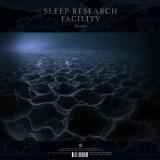
- 1: Sleep Research Facility - Sargo (20:32) (Side A) (Cd Track )
- 2: Llyn Y Cwn - Dale Dawn (:35) (Side B)
- 3: Llyn Y Cwn - Pebble (5:18) (Side B)
- 4: Llyn Y Cwn - Doppler Current Profiler (7:9) (Side B)
The ultimate deep listening experience from two masters of dark ambient. A slow descent into the blackened watery abyss, where light cannot reach. The first release from Sleep Research Facility since 2012's "Stealth" (Cold Spring) is inspired by the deep sea ocean floor. The Canadian-based composer explores notions of awareness and perception in the sub/unconscious listener. Focusing primarily on sound bereft of rhythm based energies, SRF provides an environments wherein the music adds texture to the silence. Using form without structure and concentrating on space as opposed to narrative, SRF entertains the idea that music can reside in the very fabric of sound itself. The brand new material here was created specifically for this split release.Taking inspiration from the beautiful, but often harsh landscapes and environments of his home on Anglesey, North Wales, Llyn Y Cwn has built on the nautical theme of "Du Y Moroedd" (Cold Spring). These tracks are based on field recordings relating to the ocean, and could be seen as a companion piece to the album. 'Dale Dawn' features a recording of the dawn chorus made from the floating pontoon at Dale, Pembrokeshire. 'Pebble' includes the sound of waves crashing on a Dorset cobble beach, thousands of rocks colliding in chorus. 'Doppler Current Profiler' is based on the sound of an ADCP, an acoustic sonar instrument used to measure water currents - a 600Khz ping slowed to a heartbeat. CD in mini-LP sleeve, replicating the vinyl design. The artwork features a separate front cover design with individual art for each side, making this a true split release.
Miles Borghese’s Direct Styles, up next on Jupiter’s Depth, explores a meditative dub techno palette that sits somewhere between dub, tech-house, and minimalist club music. Following a run of standout releases on 9FINITY and Squid Recordings, among others, we’re thrilled to welcome that alien modern club sound to the label.
The floor-focused Direct Styles opens with the title track, driven by a hyperactive bassline and layered with delay-drenched synth chords, galloping through time with restless momentum. On A2, a more tempestuous techno side of Miles Borghese reveals itself on “Dark Plan,” charging the release with a mind-bending looped groove, pulling everything on earth into a hypnotic, blitzed state.
“Climber” — a storm of immaculately constructed, phase-shifting textures that drags us deep into the B-side; a real dub-techno delight made for outer space. Closing the EP, Miles joins forces with Pipo Renault on the lush “Parapluie”: warm and groove-focused, a captivating, house-leaning masterclass built to keep you moving.
A Bandcamp-only digital bonus, Substance, awaits those willing to dig a little deeper.
Aedis debuts on Dzungla, pushing his sound forward while staying grounded in rhythm and movement.
The 4-tracker moves from percussive, driving techno into deeper, groove-led territory, centred around basslines and tightly structured patterns. Across the EP, impact gives way to flow, with tracks built around momentum, space, and subtle variation rather than peak intensity.
The closing track shifts the focus toward harmony and arrangement, opening the spectrum while maintaining a steady, dancefloor-oriented framework.
- A1: Infinite Nuggets
- A2: Fun Is Always Brilliant
- A3: Employee
- A4: Springfield Library Haunting
- A5: Drumming On A Tree With Fm
- A6: Potatoes In The Basement Bin
- A7: Fungal Free 2023
- A8: Green Stuff
- B1: Architecture Days
- B2: Munchies And A Pen
- B3: Guildford Awkward
- B4: No Pavement Story
- B5: Worst Jobs In History
- B6: Unfinished Rock ‘N’ Roll Tattoo
- B7: A Bit Of Paper
- B8: So Inspired, So Done In
8-page lyric / drawing booklet, glossy poster, download card (inc. mp3s), white inner paper bags, sticker on cover.
After 7 strange years of relative silence, and 13 years of being a band, Dog Chocolate have returned with ‘So Inspired, So Done In’. Their fourth album is their most focused, cohesive and song-y yet. They still sound like a bin full of wasps, but now the bin has double-cream or a Viennetta or something at the bottom. While many of the 16 songs on here barely make it past the 3-minute mark, each one is bursting with all the textures and colours of an office cupboard: full of old sweets, fluorescent markers, and multiple ways to fix paper together.
Thematically, a lot of ground is covered, with songs tackling subject matter as diverse as overheard conversations, healing fungal toenails, the Rogerian concept of the Actualising Tendency, bronze age living conditions, dreaming songs into being and human-plant relations. Work (and anti-work) is a recurring theme, as is artistic inspiration and burnout. Dog Chocolate revel in the mundane and incidental, to explore bigger, existential questions. Recorded and mixed by POZI’s Toby Burroughs and mastered by Sofia Lopes, ‘So Inspired, So Done In’ charts a long and confusing period in the band’s collective life, marked by major life changes, losses and shifts, colouring the band’s trademark frantic, daft and anxious energy with a contemplative glaze. Dog Chocolate continue to investigate their internal and external landscapes with playful curiosity, frustration, silliness and empathy.
Pre/history of the band: In the early 2000’s Andrew (vocals), Rob (guitar, vocals) and Matthew (guitar, vocals) played together as teenagers in South-East London-based maximalist, costumed surrealist punk band Yeborobo. They met drummer Jonathan playing with his instrument-swapping masked band Limn at art space Utrophia in Deptford. Later, when both bands had split, Dog Chocolate formed with a shared desire to make a band that was simpler than their theatrical past: small amps and light guitars, no more than 2 drums at any one time, a keyboard no longer than a ruler and a shared ethos… “it’s about giving a shit, but at the same time not giving a shit, but not ‘whatever’, not giving up never!”. The band floated the term “pencilcase punk” to describe their jumbled, colourful, dense and instant music.
Dog Chocolate built on this early scrappiness, bedding into their sound over several albums. Their first “Or” (2014) was a split with Ravioli Me Away, soon followed by “Snack Fans” (2016) and “Moody Balloon Baby” (2018). Along the way they played gigs with bands as wide ranging as Deerhoof, No Age, Dry Cleaning, Palm, Daniel Wakeford, Shopping and Pozi.
With a tendency to converse with each other both lyrically and musically cultivated over many years, the members of Dog Chocolate bounce off each other, respectfully disagree, try to make each other laugh and share some of their most vulnerable feelings with each other. ‘So Inspired, So Done In’ is their own unique offering during these unsteady times: a language of friendship translated into songs.
Vitamin Of The Moon launches as the new label and artistic platform of Toulouse-born, Berlin-based producer Lenny Mailleau, also known as one half of Zendid. The Question marks both its inaugural statement and Lenny’s first release under the new imprint. It is a focused, groove-driven record that moves between house, dub, techno, minimal, and space-disco. The tracks are delivered with quiet confidence, sophistication, and clear dancefloor intent.
The opener, “The Question,” establishes a taut, hypnotic framework. It features crisp 707 drums, syncopated movement, disco-tinged basslines, and a subtle, paranoid tension that relentlessly draws the floor in. “Saturday Déboch” stretches the energy further. It is built for late-night or early-morning moments when time dissolves into rhythm, using dub-inflected textures, highly detailed spatial echoes, and a patient, locomotive four-to-the-floor drive. On the flip, “Schönleinstrasse Caval” sharpens the architecture with stripped-back techno percussion and a rolling, functional pulse, clearly shaped by Mailleau’s time on Berlin floors. Closing the EP, “La Femme” (ft. Ariachi) adds a warmer, more playful and emotive layer by weaving vocal fragments and melodic accents around a minimal-tech core.
With The Question, Lenny Mailleau introduces Vitamin Of The Moon through restraint and clarity — positioning it as an extension of his personal language and refined club sensibility. A first chapter that honours minimalism’s roots while quietly pushing it forward, proving once more that focus, rhythm and atmosphere remain central to imagining contemporary club music.
Synthpop, minimal wave, post-punk, goth, new romantic - fans and critics alike have dug deeply into their vintage thesauruses to describe the beguiling work of Nation of Language. And if you can't precisely define the band, that's the point. Frontman Ian Richard Devaney has become prodigious in expanding what synthesizer-driven music can evoke, such that his output is as much an extrasensory journey as it is an all-too-human destination. With that experience in mind, he wrote the band's fourth album - the spectral, spacious Dance Called Memory - in the most humble of ways: chipping away at melancholia by sitting around and strumming his guitar. Nation of Language's first two albums, Introduction, Presence (2020), and A Way Forward (2021), came as pandemic godsends: gorgeous, relatable soundtracks to our collective doldrums. But it was their last LP, Strange Disciple (2023), that catapulted the group from cultural standouts to critical darlings, with the album being named Rough Trade's Album of the Year. With that release, Pitchfork wrote that the band "are learning what it means to get bigger and better." This is Devaney's calling: soulfully translating individual despair into a comforting, collective mourning. The single "Now That You're Gone," which radiates and reverberates with a devastating wistfulness, was inspired by witnessing his godfather's tragic death from ALS, and his parents' role as caretakers for this ailing friend. At its heart, the song is a reflection of how friends can be there for each other, and also highlights a theme throughout the record: the pain and lost promise of friendships that fall apart. On Dance Called Memory, the band once again collaborated with friend and Strange Disciple producer Nick Millhiser (LCD Soundsystem, Holy Ghost!). "What's so great about Nick is his ability to make us feel like we don't need to do what might be expected of us," says synth player Aidan Noell, who, along with bassist Alex MacKay, rounds out the Nation of Language lineup. They imbued Dance Called Memory with a shifted palette - sampling chopped-up drum breaks on "I'm Not Ready for the Change" for a touch of Loveless-era My Bloody Valentine or smashing all of the percussion of "In Another Life" through a synthesizer to cast a shade of early-2000s electronic music. Ultimately, the hope was to weave raw vulnerability and humanity into a synth-heavy album. "There is a dichotomy between the Kraftwerk school of thought and the Brian Eno school of thought, each of which I've been drawn to at different points. I've read about how Kraftwerk wanted to remove all the humanity from their music, but Eno often spoke about wanting to make synthesized music that felt distinctly human," Devaney says. "As much as Kraftwerk is a sonically foundational influence, with this record I leaned much more towards the Eno school of thought. In this era quickly being defined by the rise of AI supplanting human creators I'm focusing more on the human condition, and I need the underlying music to support that_ Instead of hopelessness, I want to leave the listener with a feeling of us really seeing one another, that our individual struggles can actually unite us in empathy."
2025 Repress
DJ Support: Kerri Chandler, Chris Stussy, Archie Hamilton, Fabe, Groovesh, Vlad Caia, Andrey P Ush Krav, Thor, Masimillano Pagliara, Dubtil, Reboot, East End Dubs, IULY.B, Josh Wink
Chris Stussy ‘A Glimmer Of Hope’ EP in now being re-issued due to demand on LTD edition transparent red vinyl.
Amsterdam based producer and DJ Chris Stussy has become one of the most eminent figures in the contemporary house scene of the Netherlands and across the globe over the past 10 years, racking up releases on the likes of Eastenderz, Moscow, PIV, Contstant Sound and most recently his own Up The Stuss imprint.
Leading the release is ‘Central Frenzy’, laid out across six and a half minutes with skippy percussion, a snaking bass groove, intricate synth sequences and sweeping vocal chants. ‘Riva De Biasio’ follows and tips the focus over to airy atmospherics a jazz-tinged bass groove and squelchy acid licks atop swinging drums.
‘Deviant Shadow’ opens the flip-side and merges an amalgamation of expansive dub chords and bouncy sub bass tones with a robust 4/4 rhythm. Lastly to round things out is title-cut ‘A Glimmer Of Hope’, wrapping up the release on a deeper tip courtesy of ethereal pad swells, metallic synth licks and shuffled drums.
The 14th release on Tooman Records is a Berlin-crafted record from Tanja, one half of the duo Quadrakey, stepping forward with an EP that reflects her personal musical language. Issued as a hand-stamped white label, it features four tracks of beautiful, emotional and groovy deep house. Warm atmospheres, subtle melodies and fluid yet driving rhythms define a sound that is both floor-focused and deeply rooted in the underground. House music with a deep passion.
"Chuck Roth’s music wanders. The New York-based guitarist’s inquisitive style builds from rippling patterns that center the physicality of his instrument, roaming wherever they take him. watergh0st songs, his Palilalia debut, collects songs from the past half-decade, presenting an intimate snapshot of his music that draws from an eclectic background in classical guitar, electronic music, and improvisation." "The mark of watergh0st songs is its exploratory nature. Roth began his musical journey as a classical guitarist studying the canon works for the instrument, but he was never interested in playing fast or flashy. Instead, he wanted to roam down musical paths and see where they led him. He eventually became more interested in electronic music, where he found inspiration in subtractive properties and patterning. The music of watergh0st songs translates that electronic music to the guitar: many of the songs began as synth tones and later branched out through the physicality of his instrument." "When writing music, Roth wants melodies to feel comfortable in the body, focused less on setting a structure and more on letting music unfold how it happens in any given moment. His songs are fluid and his melodies are clear, plucked with careful attention but never too deterministically. His is the music of a traveler, floating around the strings of the guitar. It is about embracing the banal, or the everyday moments that shape a life." "Though Roth’s music often feels quite direct, there is a dreaminess that lives inside of it. His lyrics don’t feel too hot or cold, instead they have a wistfulness and melancholy of what it feels like to live through every passing day. His exploratory style bolsters these lyrics, giving the music its sense of ennui, as does his focus on texture. Each track takes on a different structure: 'Bunny Hop' unfolds like a squirrel jumping from branch to branch of a tree, while 'Private Boy' has a slower approach, growing from delayed harmonics that almost sound like bowed strings. His textures range from metallic and bristling to soft and feathery, evolving with gentleness. It is about ending up somewhere different than where it started, and watching the notes that fall in-between." The embrace of the routine colors Roth’s music. In it, there is a sense of presence, of admiring the smallest details and moments. Roth loves to take walks and look around, observing the beauty of his surroundings. Similarly, watergh0st songs feels like moving through the world at the pace of a comfortable trot and soaking in every sound as it emerges. It is a quiet evolution—but one that stays."—Vanessa Ague
- 1: Fire The Choir 0:5
- 2: Twin Scissors 0:0
- 3: Plainclothes Man 02:29
- 4: Career Blonde 02:12
- 5: Pontaria 01:39
- 6: The Gold Standard In Dumpster Diving 01:28
- 7: Caught Again 04:02
- 8: That's Not My Skin You're Eating 01:13
- 9: Husband And Bribe 02:24
- 10: Wire Lashes 02:07
- 11: Buckteeth 01:48
- 12: Community Gun 02:13
- 13: Triple Tracy 04:33
Conjuring a faithful following, quite rare in these days of ADHD, by sheer force of their celebratory and fiery live shows, Montijo's most celebrated outfit reflects these past couple years of camaraderie and life on the road on their debut album, after a self-released EP and a 4 way split on Zegema Beach Records. Sublimating all the inherent potential of post-hardcore at its most sweeping into a forceful and focused delivery, 'Acetate' captures all their urgency through 13 memorable and sharpened tracks. Recorded patiently and mastered by the gifted know how of Jack Shirley - Deafheaven, Joyce Manor or Gouge Away -, the songs on 'Acetate' open sprawling vistas upon the band's recognizable sound between chaos and order, cutting back on everything that might be redundant or overly technical. Alex Domingos' vocals reach new means of expressiveness through harrowing screams and hints of melody, João Pires' sinewy guitar pulling out riffs and skewed lines that echo for posterity and the rhythmic section of Simão Simões - bass - and João Portalegre - drums - driving all this turmoil with kinetic precision and flexibility. Never before did Hetta sound as relentless, chill and melodic, tracking down life at its own pulse.
With Coalescence, The Third Room brings together artists from distinct yet interconnected techno lineages, united by a shared understanding of the music as both physical and introspective. Rather than staging contrasts, the EP focuses on convergence, where propulsion, atmosphere and restraint fold into a coherent whole. Rene Wise & Ignez open the release with Anjos, pairing Wise's tactile, percussive pressure with Ignez's expansive, oceanic pads. The result sits at the intersection of functional drive and elevated, almost devotional space, reflecting a new generation's approach to techno as both tool and inner landscape. Norbak's remix draws the track further inward, deepening its hypnotic pull and extending its energy into a more meditative, slow-burning form. On the B-side, Claudio PRC & Luigi Tozzi present Onirica, a deeply restrained and immersive composition rooted in atmosphere, spatial detail and subtle psychedelia. Unfolding with patience, it rewards attentive listening and long-form dancefloor contexts. Markus Suckut closes the EP by reducing Onirica to its bare essentials, applying his signature economy and precision to heighten tension and focus. Coalescence reflects The Third Room's vision of techno as a shared terrain, where different voices and generations meet, align and quietly reinforce one another.
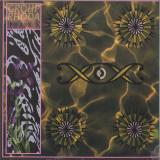
Group Rhoda returns to Dark Entries with Phase 5, a new LP of synthesizer-driven art-pop. An integral member of the West Coast electronic music scene, Mara Barenbaum has been writing, performing, and plunging into oneiric depths as Group Rhoda since 2009. Barenbaum’s songcraft is at once stylistically diffuse and laser-focused, a synesthetic approach that allows her to effortlessly glide between genres and soundworlds while centering her singular poetics. On Phase 5, her fifth LP as Group Rhoda, we find Barenbaum waxing nondualistic. Lines between fairytale and fact, between nature and art, between subject and object all dissolve under contemplation.
The songs on Phase 5 are perpetually in-between states, deftly shifting form at the blink of an eye. With sleight of hand, “Field Tone” transmutes from brooding John Carpenter-esque electro into vocoder-driven space disco. “Dragon Pine” darts from cosmic dub to cybernetic dancehall and back again. The uptempo darkwave-leaning number “Aeolian Crossing” dissolves into the void, like sand falling through one’s fingers, like a retreating wave. The cover artwork for Phase 5 is by Shawn Reed, and features purple lilies and light refracted through water. All songs on this album were mastered by Ruud Lekx. The digital version of Phase 5 will be released via Katabatik, a label and sound system that Barenbaum has had close ties to for the past decade.
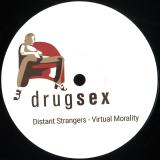
Originally released in 2005, this standout EP returns as part of the much-anticipated reissue campaign from cult New York imprint Drugsex — a label that quickly became a treasured name among heads who lived and breathed the underground. Born from the creative partnership between UK producers Rob Pearson and Simon Copleston, Drugsex carved out its own raw, hypnotic corner of the international tech house movement.
For the second instalment in the reissue series, label head Rob Pearson teams up with Daniel Poli under their Distant Strangers moniker — a project that, even back then, was whispered about among selectors for its deep, rolling grooves and stripped-back intensity. Both artists had already made their mark with releases on some of the most respected labels of the era — from Rekids and Swag Records to Evasive Records, Rescue Recordings, and beyond.
The pair’s first collaboration, the Lost Souls EP, became a highly limited, in-demand underground gem, pressed in small quantities and played by those in the know. This follow-up, crafted at Online Studios in Croydon, took their sound to the next level — two original tracks built for dancefloors that like things hypnotic, physical and uncompromising.
On the A-side, Virtual Morality is a slick and driving slice of tech house pressure. Crisp percussion, rolling low-end and a subtle but addictive hook make it a peak-time weapon that never goes out of style. Flip it over for Take Us In Deeper — a track that lives up to its name with a shadowy groove, atmospheric layers and a perfectly balanced push and pull that draws dancers further into the late-night haze.
Adding even more weight to the release, Adam Collins — known for his work with Omni AM and Euphoria Records — steps in with a remix of Virtual Morality on B2. His version injects an unmistakable acid edge, elevating the original into a tripped-out, floor-focused burner that fits as comfortably in a basement sweatbox as it does on a sunrise terrace.
Nearly two decades later, these tracks still carry the same raw power and effortless groove that made them cult favourites in the first place. This reissue isn’t just a nod to the past — it’s a reminder of why this sound endures.
NRV010 welcomes back Jay Tripwire with a focused, four-track EP that leans into what he does best: groove-led, understated club tools built for long blends and sound systems.
The release is anchored by Tripwire’s signature restraint and flow, alongside a Sublee remix that strips the material back even further, emphasizing hypnosis, reduction, and low-swing momentum.
This is functional, confident material — no excess, no forced moments — designed for selectors who value flow, patience, and control over obvious drops.
For DJs who play: minimal / microhouse / deep tech-influenced selectors who prioritize groove, tension, and longevity over peak-time theatrics.
- White Horses
- I Can Wait
- All Night
- Disappearing
- Hey
- Days Like These
- There's A Comma After
- Still
- Don't Walk Away
- More
- The Price You Pay (It Must Be Wearing Off)
Focusing on their craft, staying out of the fray and
holding fast their faith to find new ways to express the
discord and delight of being alive, to turn the duality of
existence into hymns we can share, Low present ‘HEY
WHAT’.
These ten pieces - each built around their own
instantaneous, undeniable hook - are turbocharged by
the vivid textures that surround them. The ineffable,
familiar harmonies of Alan Sparhawk and Mimi Parker
break through the chaos like a life raft.
Layers of distorted sound accrete with each new verse
- building, breaking, colossal then restrained, a solemn
vow only whispered. There will be time to unravel and
attribute meaning to the music and art of these times
but the creative moment looks forward, with teeth.
‘HEY WHAT’ is Low's thirteenth full-length release in
twenty-seven years, and their third with producer BJ
Burton.
Low’s 2018 album ‘Double Negative’ was a critical and
commercial success (including 8.7 / Best New Music
at Pitchfork), introducing new noise / experimentalbased textures and pop elements to their sound and
revitalizing their fanbase.
Founded in 1993, Low are influential pioneers of
minimalist, artful indie-rock.
Low’s track ‘Congregation’ was recently featured in an
episode of FX’s Devs.
- A1: The Whip Hand
- A2: Aegis
- A3: Dyslexicon
- B1: Empty Vessels Make The Loudest Sound
- B2: The Malkin Jewel
- B3: Lapochka
- C1: In Absentia
- C2: Imago
- C3: Molochwalker
- C4: Trinkets Pale Of Moon
- D1: Vedamalady
- D2: Noctourniquet
- D3: Zed And Two Naughts
Noctourniquet And then everything went black, at least for a while, at least for The Mars Volta. In the months and years following their fifth full-length, Octahedron, Omar kept on at his usual fearsome creative pace. In fact, he ramped up his output considerably, starting up his own Rodriguez Lopez Productions label and releasing a slew of solo albums. It was a practice he’d begun shortly after De-Loused’s release, with his solo debut A Manual Dexterity: Soundtrack Volume One, but as the decade reached its close, Omar grew to rely upon his solo recordings as an outlet for his prolific creativity, these albums often exploring musical pastures far beyond even The Mars Volta’s wide-ranging parameters. Before choosing to release music under his own name, Omar would always play it to Cedric first, to see if the frontman thought it had potential to become Mars Volta music. Shortly after Octahedron’s completion, Cedric flagged one batch of tracks Omar had cut with Deantoni Parks, a brilliant drummer and composer who’d briefly occupied the Mars Volta drumstool in-between Jon Theodore and Thomas Pridgen’s tenures, and whose volcanic creativity and unique, unpredictable approach to rhythm and composition had quickly made him one of Omar’s favourite artistic foils.
As with the music that made up Octahedron, the new tracks Cedric had optioned for The Mars Volta often veered far from the riotous, Grand Guignol visions of their earlier releases. It possessed the punchy, song-based focus of Octahedron, though this was a considerably darker, more menacing strain of pop, with synthesisers figuring heavily in the productions. Cedric took the tracks in 2009 and set about writing songs to the music. But no more new Mars Volta music would be heard until 2012. The years that passed in-between were nonetheless momentous, and busy, witnessing an unexpected reunion of the members of At The Drive-In, and Cedric joining his own side-project, Anywhere. But there wasn’t any sign of life within the Mars Volta until Omar, Cedric and their bandmates took to the road for a series of live shows in the spring of 2011, billed as The Omar Rodriguez-Lopez Group, debuting the songs that would become Noctourniquet. The album followed the next year, and it remains one of The Mars Volta’s finest, its electronic textures staking out unfamiliar but fertile new ground.
An unsettling, subtly turbulent listen, Noctourniquet found Cedric sketching out a story about “some sort of device that stops the darkness from bleeding”, drawing influence variously from the nursery rhyme Solomon Grundy, the Greek myth of Hyacinthus and the song Birth, School, Work, Death by British underground rockers The Godfathers. It was an album of dystopian futurism, signalled by the paranoid cyber-rock of opener The Whip Hand and its unnerving chorus, “That’s when I disconnect from you”. But it was also an album of inspired, unexpected moves and uncanny invention, like how Dyslexicon seemed to eerily evoke Blondie’s Rapture, before rushing headlong into its bruising chorus, tempos shifting restlessly throughout like quaking earth beneath the listener’s feet, or how Aegis put a brave new spin on The Mars Volta’s trademark rewiring of salsa’s overdriven passions, or how Cedric had never sounded as scary as he did on The Malkin Jewel’s mutant burlesque shuffle. Tracks like Molochwalker were sleek and concise in a way The Mars Volta had never really attempted before – which was all part of Omar’s plan.
“It had all been guitar, guitar, guitar, overdubs, everything fighting for space in the same frequency,” he explains. “So for Noctourniquet, it was all about subtracting elements, of sticking to how I made demos.” Deantoni’s presence helped revivify the group, playing against cliché and expectation, and taking each song in unexpected directions. “I’d beatbox a rhythm for him to play, to go with my guitar part, and he’d come back with three or four alternate options. It was so great.” Similarly, Cedric had never sung better than on Noctourniquet, staking out a fearsome spectrum from the chilling Tom Waitsian growl of The Malkin Jewel to the keening, beautiful vocalisation on Vedamalady, rising to match some of Omar’s most deft, most immediately effective and melodic songs yet. Indeed, Noctourniquet is the sound of a band discovering new ways to do familiar things, renewing their commitment to their mission, finding fresh inspiration a decade in, and shaking off any complacency that might have come with ten years of acclaim and success.
- Johnny
- World Keeps Turning
- Electravision Mantra
- Dial Om
- Wonderful Life
- El Salvador (Former Cd Only Track)
- Sean O'farrell
- Belfast
- Cycle
- They're Killing Us All (To Make The World Safe)
- O Salvation
- Fish And Trees (Former Cd Only Track)
This remastered vinyl reissue of Blind Ear reintroduces The Celibate Rifles' urgent, socially aware punk-rock energy, cementing its place as a cornerstone of Australian alternative rock. 1989 is where The Celibate Rifles take their punk instincts to the next level-garage muscle, surgical precision, and a rock'n'roll pulse that sounds more urgent than ever today. Formed in Sydney ten years ago, the band appears here in full flight: two guitars in constant dialogue, a rhythm section with newfound dynamic range, and a razor-edged vocal that bites without losing melody. The remaster opens up the stereo image, sharpens the six-string detail, and restores to the turntable the physical punch this record demanded from day one; it's the definitive way to (re)discover a key title from the Australian school. The tracklist is pure traction: "Some Kind of Feeling" hits the ground running with speed and focus; "Wonderful Life '88" nails an instant hook and a clear-eyed critique of yuppie culture; and the closer, "O Salvation," lands as an expansive, cathartic statement of intent. Two tracks unusual in Australian rock for their subject matter-"Sean O'Farrell" and "Belfast"-tackle the Northern Ireland conflict head-on and underscore the band's social gaze, while the rest of the album maintains a no-filler intensity. This edition preserves the original LP sequence (the two bonus tracks existed only on the period CD) and stands as an essential piece for collectors and front racks alike: ideal for in-stores, listening bars, and classic alternative rock playlists. If your audience connects with BORED!, Radio Birdman, The New Christs, or The Saints, Blind Ear is an unequivocal yes.
Aedis, hailing from Barcelona and currently based in Amsterdam, presents his debut EP on Animalia. In his unique interpretation of the label, we find the artist diving deeper into a sound he's been shaping over time, refining its identity through subtle evolution and focus. The EP leans into an off-centre dance sound -- deep, dub-tinged, and anchored in groove and movement. It builds on techno's pulse and minimal structure, keeping the rhythm upfront while letting small shifts and textures do the talking.
Are you Looking for Love? Advice? Good Luck? Then you’ve come to the right place. Fortune Three, the third release in the Psychic Readings catalog, Peach continues to explore her sound bringing 4 tracks dedicated to the dance.
It starts with In Ur Dreams, an ode to the dreamers and lovers in your fantasies. Peach gives some subtle organ hits a whirl with deeper basslines and punchy drums. Next, a track inspired by and sampling an old Christina Aguilera interview, What U Got is a warm, beachy roller which is reminiscent of hotter temperatures. Pretty pads, shiny stabs, and a weighty bassline create an endlessly playful groove – a Peach signature.
On the flip, we see Brady’s Song mixed two ways – the first being the deeper cut of the two, Brady’s Song slowly unravels melody after melody, playing with sassy stabs and a bassline on the subbier side. The Afters Edit takes a more upfront and jacking approach, focusing on the ability of the bass to roll through the whole track – shimmering percussion and the same stabs from the B1 carry us through until the last second.
All the tracks are a testament to her many moods as a DJ. From club use to home listening, this is an EP dedicated to the dance.
Kontakt Records presents KNT-47 “Chromatic Noise”, a deep exploration of dub techno and dub-infused house from Canadian producer Matt Thibideau. Across three extended cuts, Thibideau sculpts spacious, analogue-leaning grooves where every element has room to breathe. Subtle saturation, soft tape hiss and finely tuned low-end weight create that unmistakable sense of depth, while shimmering chords and carefully placed delays drift in and out of the stereo field. The result is music that feels both hypnotic and alive, built for long blends, late sessions and sound systems that reward detail. “Chromatic Noise” sits comfortably in the Kontakt Records tradition: timeless dub aesthetics, modern production values and a focus on atmosphere over obvious peaks. It’s the kind of 12" that works just as well as a DJ tool as it does for attentive home listening – patient, understated and endlessly playable. Tiny shifts in texture, filter movement and echo tails keep the tension moving forward without ever breaking the spell.
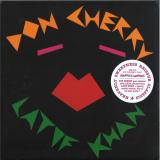
Don Cherry, armed with a voracious musical appetite and boundless imagination, first made a name for himself - though not always fully understood - alongside Ornette Coleman, playing trumpet or cornet. In Los Angeles and then New York, he stood at the heart of a revolutionary approach to improvisation based on melody rather than harmony, later baptized "Free Jazz," the final structural development of American jazz. Over time, he became a champion of improbable fusions - gradually integrating into his style a whole array of "exotic" instruments, and more importantly, the cultures from which they originated. Among them: India, Brazil, Africa, Indonesia, and even China. The time had come for the emergence of "world music": in hindsight, a patchwork rich in imagination and seduction, but once the novelty wore off, often lacking in substance.
In Don Cherry's case, however, the commitment ran deep - tied to his personal engagement with a global vision of art and the human condition. Ustad Ahmed Latif Khan, from the Delhi gharana (a musical lineage), was part of a new generation of accompanists - percussionists, sarangi players, flutists, etc. - who had extended both the technical and conceptual possibilities of their predecessors to gain recognition as soloists and soon to venture onto the international scene. Among them, Latif stood out for his taste for irregular, highly syncopated rhythmic patterns - rich in variety and originality. Don and Latif had never met before the recording session, but the two quickly recognised one another as kindred spirits - calm, focused... and full of laughter. Don clearly knew what he wanted to create, and nothing seemed to pose a challenge for Latif, who grasped the American's intentions immediately, warmed up his fingers at astonishing speed, and with his perfect pitch, naturally took on the role of tuning Don's diverse instrument collection to match whatever was found in the studio - from concert piano and Hammond B3 organ to chromatic orchestral timpani.
- 01: La Clave En Medio De La Nada
- 02: R-4
- 03: Niosą
- 04: Phillip Jeffries
- 05: Zawsze Coś
- 06: Linoleum (Shining)
Limited edition (numbered 100 copies) 180g black vinyl with insert.
"BEN BEKELE does not exist. At least not the one I'm thinking of.
It's a mix of memories and fantasies from the mid-80s when it was my father who visited Ethiopia, returning with two small drums, a couple of pictures and tons of tales.
One of them was a story of a boy named Bekele, who taught him a traditional Ethiopian song.
Father passed this song on to us, as best as he could - now I'm having doubts as to what the message is actually about - but back then I was fascinated. Many years later, when I was preparing a song for a compilation "Portrety" at U Know Me Records, I realized that the bass line that I created resembled a fragment of that exact song. Apparently the melody buried itself somewhere deep in my subconscious and unexpectedly revealed itself at that moment. Therefore I decided to honor the memory of my deceased of 30 years dad (whose friends called him Ben) naming the composition: "The Life and Death of Ben Bekele". The song turned out to be very happy to me - its success definitely exceeded expectations, while in my head an idea to go further after Ben Bekele began to form.
This time I didn't want to work alone. I invited Kamil Piotrowicz and Igor Wiśniewski to cooperate with me. Incredibly creative, sensitive artists and wonderful companions on stage as well as off it. The music on this album is similar to a small extent to the "founding" piece.
It has however a couple of common features, with focus on the rhythm as the form-forming factor at the forefront. It's also organic, emotional, at times trance-like and illustrative.
I sincerely hope that when listening to this record, for these tens of minutes you'll escape from the surrounding us not-so-pleasant everyday life."
Kontakt Records presents KNT-47 “Chromatic Noise”, a deep exploration of dub techno and dub-infused house from Canadian producer Matt Thibideau. Across three extended cuts, Thibideau sculpts spacious, analogue-leaning grooves where every element has room to breathe. Subtle saturation, soft tape hiss and finely tuned low-end weight create that unmistakable sense of depth, while shimmering chords and carefully placed delays drift in and out of the stereo field. The result is music that feels both hypnotic and alive, built for long blends, late sessions and sound systems that reward detail. “Chromatic Noise” sits comfortably in the Kontakt Records tradition: timeless dub aesthetics, modern production values and a focus on atmosphere over obvious peaks. It’s the kind of 12" that works just as well as a DJ tool as it does for attentive home listening – patient, understated and endlessly playable. Tiny shifts in texture, filter movement and echo tails keep the tension moving forward without ever breaking the spell.
Album Sampler[22,27 €]
Metalheadz and Quartz present Interloper, a body of work years in the making that captures the evolution and persistence of a truly singular producer. Sparked by an invitation from Goldie in 2018, the project developed organically into a statement piece, shaped by shifting environments and a relentless drive to refine his craft. Quartz, also known as Elliot Garvey, has long stood apart from the noise. A Welsh producer with little interest in visibility or self-promotion, he has built a reputation on substance alone. Interloper reflects that focus: textured, brooding, and meticulously detailed, balancing grit and clarity while maintaining the looming tension that defines his sound. The album’s title hints at Garvey’s place within the culture - present but never fully belonging - and the music carries that same sense of quiet defiance. Intense without theatrics and deeply personal without pretence, Interloper is a record that doesn’t ask to be seen, only to be felt.
e B3. One Last Word ft. Selena Jones (Posthumous) Outro
[e] B3. One Last Word [ft. Selena Jones] (Posthumous) [Outro]
[e] B3. One Last Word [ft. Selena Jones] (Posthumous) [Outro]
[e] B3. One Last Word [ft. Selena Jones] (Posthumous) [Outro]
[e] B3. One Last Word [ft. Selena Jones] (Posthumous) [Outro]
[ft. Selena Jones] (Posthumous) [Outro]
[ft. Selena Jones] (Posthumous) [Outro]