Kerri Chandler’s Kaoz Theory kicks off 2022 with Mr. ID’s Language Of Jazz EP, featuring two remixes from the label boss himself alongside two original cuts.
2021 saw Kerri Chandler’s Kaoz Theory continue to move from strength to strength, unveiling material from the likes of Dutch rising star Chris Stussy and of course Kerri himself, here we see the imprint wrap things up with a new addition to the roster, Casablanca, Morocco-based artist Mr. ID.
Up first on the release is ‘Track ID1’, a collaboration between Mr. ID and Youssef Grirane featuring Rita Mdn. It’s a unique six-minute journey through jazzy pianos and organ licks, intricate organic percussion and mesmeric, textural atmospheres. Kerri gives it the remix treatment in style extracting all of the jazziness of the original and retwisting things with the classic Chandler authentic house feel. Next, Chandler employs his revered 623 alias for the ‘623 Again Mix’ version which strips things back to low-slung drums, bumpy stabs and emotive piano lines.
The flip side houses ‘Track ID1’ in all its original glory before ‘Track ID2’ closes out proceedings seeing Mr. ID join forces with Younes Akhraz, rhythmically shifting to a jazzy 4/4 drum groove while wandering keys and warm subs fuel the mystical vibe.
DJ Feedback:
Sasha – Tasty
Laurent Garnier – Love the whole EP
Jimpster – Jazzed up piano house heaven! Love It!
Lea Lisa – Lovely remix by Kerri
Mr. V – Kerri delivers the goods once again!!!
Anja Schneider – Great. Love It.
Archie Hamilton – Nice
Andrew Treagust - Man that's some crazy production – really like it!
Mike W - absolutely classic release. how on earth could you go wrong? the world needs more piano!
Fish Go Deep - All tracks sounding great here. ID1 is a lovely warm groove and Kerri's remixes inject a little dancefloor bump to proceedings.
Daniel Troberg – incredible music
Kiki Navarro – excellent single, loving all the mixes special ID1 and the Kerri Chandler Main Remix
Ben Lovett – Remix mastery from Chandler – wonderful meeting of piano and drum – fire.
Sergio – Excellent example of classic house with personality
Hector Samper – Amazing EP!!!
Search:sub love
"Même Soleil" is the result of a dialog between the French photographer Gaël Bonnefon and the French musician Frédéric D. Oberland initiated by IIKKI, between December 2019 and June 2021.
Self-taught multi-instrumentalist & photographer, Frédéric D. Oberland finds himself at the crossroads of image and sound, favoring a synesthetic approach. He articulates different modes of narration, combining the raw character of the documentary form with the transfigured reality of myth and poetry, allowing him to question notions such as the sacred, the monstrous, the fraternity, while at the same time returning to the political news of the present. Attentive to the pulse of the body, his work is willingly itinerant, modulating between the ripples of dreams, watching the points of incandescence and the bursts of electricity that act as revelations of our presence in the world, here and now. He’s the co-founder of leading bands such as Oiseaux-Tempête, FOUDRE!, Le Réveil des Tropiques, FareWell Poetry and is co-curating the label NAHAL Recordings.
"Fueled by travels and their emanations, Frédéric D. Oberland’s music had to build new horizons this year, outlined by the curves of semi-modular synthesizers, the avalanches of effect pedals and the zigzagging paths of electric circuits. Même Soleil, his third solo album, manages to merge mystical visions of the unconscious and the absurdity of an apocalyptic present in a sensory whirlwind, operating an astonishing mutation with tones still unexplored in his previous releases. A visual as well as a musical journey that takes shape in a book and a record of the same title, Même Soleil is the result of a collaboration with the photographer Gaël Bonnefon. Seeking the tension between the blinding light of day and the glittering visions of saturated night skies, the two pieces in dialogue transcend reality to deliver their own truth, as bright as the first light of the sought-after morning." (Alice Butterlin)
Gaël Bonnefon graduated with highest honours from the Fine Arts School of Toulouse (Isdat) in 2008. He has exhibited at Villa Pérochon, at the Eté photographique in Lectoure, at the 104 in Paris during Jeune Création 2012, at Rencontres Internationales de la Photographie d’Arles and at PhotoEspaña, at the Abattoirs Museum in Toulouse in 2014, at the Château d’Eau Gallery in 2012 and 2019 and in the Vitrine of Frac Île-de-France in 2020. His work is part of the collections of Frac Midi-Pyrénées, Château d'Eau gallery, Kulturamt in Dusseldorf and Kiyosato Museum in Japan ; he participated in Temps Zero projects Berlin, Braga, Rome, Bucarest, Groningen and Thessaloniki. He has also been granted artist’s residencies in Germany, France and Israel. His first book Elegy for the Mundane was published by La Main Donne in 2019. He continues his intimate and dense journey and presents his second publishing, Même Soleil with photographic works from 2009 to 2021.
"At first brutal and declining, the substance of Gaël Bonnefon's photography is just like a gaze that fears being one day extinguished and that is always looking to be born again. In photography as in love, recoil and desire, tension and easement, repetition, wandering and rest, flight and pursuit. Here photography allows itself to be traversed by flashes of life, renewed forces, echoes of far-off kindnesses and lost joys. It sings silently, lover of a thousand faces from which the thread of a single and same image is born, followed without relent, from the snowy peaks of childhood to the lost worlds of the present." (Michaël Soyez)
Spread across 4-tracks, the producer offers fanciful instrumentation and production while conveying a narrative of preservation for mother nature.
The theme of Mother Land is inspired by one of Nohan’s main interests: nature. In response to ongoing climate change and global environmental degradation, he opted to craft a project that captured the planet's beauty - with a message of sustainability.
The EP is a faithful representation of Nohan the producer - packed with his love for the piano, ipnothic synths, and suspended ambient compositions. The project opens with the title track - kickstarting the subtle, yet palpable production rooted in tangible instrumentation. “The world’s on fire… It’s calling out for you and me” are the opening lines from the vocalist, reminding listeners that earth’s fate revolves around us.
“Heavenly Sing” presents a more upstart offering, with loose shakers and scintillating keys leading. This more tropical take provides optimism in sound, serving as prose for uplifting introspection in headphones as well as the ADID dancefloor. “The Sun in December” reflects its title - somber piano leads the way through a serene, melancholy soundscape. The EP also includes an ambient take on “Mother Land,” which strips its electronic backing in the intro to draw focus to the words and theme of the project.
Noahn makes a perfect fit with this emblematic imprint.
'Remember the Silver' is the debut studio album by New York by-way-of Pennsylvania musician Emily Yacina. Written over the span of two years and recorded / co-producer with Eric Littmann (Julie Byrne, GABI, Yohuna) 'Remember the Silver' represents a fundamental shift in Yacina's approach and method to bringing her songs into the world. Across it's 12 songs 'Silver' weaves an intimate and prismatic picture of the spark of new love, the way grief clings to the spirit and the small moments where magical things still feel possible. Gone is the lo-fi home-recorded feel that long-typified Yacina's previous work, confidently making way for a welcomed clarity that allows every corner of her first-rate songwriting to shine through. The title 'Remember the Silver' is lifted from a book by Dana Redfield about alien abduction where the subject uses the line as a private mantra to remind herself of how her experiences are real, despite the disbelievers around her. Similarly the songs on 'Silver' exist as reminders of experiences throughout a life cloaked in the kind of emotional subjectivity that, when looking back, can feel almost unreal in their beauty or loneliness. They're monuments to the complexity and the realness of love, and the beauty or isolation that can be amplified. Emily Yacina has toured and performed w/ Frankie Cosmos, Alex G, Girlpool, & Soccer Mommy.
Eve Adams offers solace within life's shadows. Un-numbing senses with anthems of surrender and tender-hearted tales that tingle with Californian folk-noir, her album Metal Bird takes flight with the turbulence and romance of Hollywood’s golden age, and meditates on the mysteries of love, death, insecurity and loneliness.
Like a match struck in a cobwebbed attic, Adams voice is a fiery detective, unafraid to explore the unseen; the liminal spaces between mourning and rapture, between the coldness of a corpse and the heat of cremation. Imagery of flight and the denial of gravity floats slyly through the ten songs on Metal Bird by the California-born musician and hints at the experience of being caught in purgatory, like a passenger on a plane ride from Hell to Heaven.
Combining airy folk with haunting soundscapes the album takes listeners on an auditory voyage from sonorous lullabies, to dreamy ambience, skeletal jazz, 1930s torch songs and 1940s film noir. Metal Bird has a distinct, genuine tone, with orchestral arrangements, ambient hallucinations and high fidelity vocals that are unafraid to be heard loud and clear.
For those who are hopelessly enamoured with a by-gone time, there is solace in these songs and sounds. Flickering back and forth between dread and hope, the unrelenting march towards a spiritual transformation and the realization that each of us are driven by our own dreams and as much as we want to hold it in our hands, often it is intangible. The sublime remains elusive, existing somewhere in the heart, and it sounds like Eve Adams knows this best.
Repress
After being in the game for 10 years the Bukez' sound has become a fundamental part of the dubstep scene. His unique approach on the sound has gained him the support of the scenes biggest artists and turned him into one of the scenes most loveable DJ's.
Be prepared for an album that will make you bounce, chill, mosh and skank your feet off because you are not ready for this!
South London genre-blending story tellers Alabama 3 are set to further add to their rich musical heritage with a new single ‘Whacked’, available April 30th via Submarine Cat Records, with an album to follow later inAugust.
‘Whacked’ is the first taste of fresh Alabama 3 material since the tragic passing of their beloved and unconventional frontman and songwriter Jake Black, aka The Very Reverend D. Wayne Love, in May of 2019. Jake had Addison’s disease and passed away several days after falling ill during a show at the HighestPoint Festival in Lancashire at only 59 years old.
Then, with the Covid-19 pandemic and lockdown upon the world, the band got creative and submerged themselves in their music, teaming up with producer Cam Blackwood(George Ezra, Jack Savoretti, Tom Walker, Frank Carter and the Rattlesnakes…) to focus their minds on something vital, new and fresh. This can clearly be heard in ‘Whacked’, a song which pays respect to the late co-writer of the song, Pete Dunne.
"A product of old skool Brixton, the legendary Seven Kevin’s Pete Dunne threatened us with this song prior to his untimely death,” explains founding member Larry Love. “Despite the heavy manners we are proud to declare we rose to the challenge."
“Whacked was made in the early weeks of the first UK lockdown in March 2020,” remembers producer Cam Blackwood. “I think the hedonistic spirit of the song was amplified a million times by the fact we were making the record remotely - with the musicians in the band recording their parts at home, sending them all to me to collate and arrange - then I would send the instrumental track to Larry to record vocals on. The energy was pretty insane - we were like caged animals desperate to get out.
“We managed to find time three months later (when the first lockdown ended in July 2020) to get together and put the finishing touches to the song,” continues Cam. “Being in the studio with a few beers seemed like a fitting way to finalise the tune and put the last 1% of energy into the recording. This song feels like classic Alabama 3 to me. It’s a banger!”
Indeed it is. A low-slung groove propelled by frontman Larry Love’s infamous throat rattle, with the addictive chorus refrain ‘everybody’s getting whacked on something, something that makes them feel good,’ ‘Whacked’ will loop around your brain like a recurring dream you can’t wake from. These are hedonistic conscious unconscious times.
“You can praise the Lord, you can pass the ammunition, you can be woke you can be wicked you can have the wisdom of Solomon but unless you are ready to get whacked with Alabama 3 there’s no point in dreaming,” states Larry. “Rearrange the rubble, paint your bomb shelters and make sure everybody in the neighbourhood feels good cos we feel like getting stooped and you need to get whacked.”
Alabama 3 are very much back. Time to get whacked.
- 1: Charmed Life
- 2: National Express
- 3: Norman And Norma
- 4: Something For The Weekend
- 5: Songs Of Love
- 6: The Best Mistakes
- 7: At The Indie Disco
- 8: Bad Ambassador
- 9: A Lady Of A Certain Age
- 10: Becoming More Like Alfie
- 11: Come Home Billy Bird
- 12: Have You Ever Been In Love
- 13: Our Mutual Friend
- 14: Generation Sex
- 15: How Can You Leave Me On My Own
- 16: Perfect Lovesong
- 17: Your Daddy’s Car
- 18: You'll Never Work In This Town Again
- 19: Absent Friends
- 20: Everybody Knows (Except You)
- 21: The Certainty Of Chance
- 22: Sunrise
- 23: To The Rescue
- 24: Tonight We Fly
‘Charmed Life - The Best Of The Divine Comedy’ is a career-spanning
24 track collection of hit singles and fan favourites, including ‘National
Express’, ‘Something For The Weekend’, ‘Songs Of Love’, ‘Our Mutual
Friend’, ‘A Lady Of A Certain Age’, ‘To The Rescue’ and ‘Norman And
Norma’. It also includes a brand-new track, ‘The Best Mistakes’.
Remastered at Abbey Road, the new ‘Best Of’ offers a comprehensive
guide to The Divine Comedy as curated by Neil Hannon himself and is
released on his own Divine Comedy Records.
‘Charmed Life’ follows 2019’s Top Five album ‘Office Politics’ and 2020’s
extensive ‘Venus, Cupid, Folly and Time’ reissues project.
The album is released as a 24-track standard 2CD, coloured
heavyweight double vinyl in a gatefold sleeve, black heavyweight double
vinyl in a gatefold sleeve, and as a deluxe 3CD edition containing the 24-
track ‘Best Of’ plus ‘Super Extra Bonus Album’, a bonus disc of new and
unreleased recordings.
The album cover is taken from a new shoot by acclaimed music
photographer Kevin Westenberg.
The Divine Comedy will play a 19 date UK and Ireland tour in April and
May 2022, including a show at the London Palladium.
The release will be supported by an extensive promo campaign,
including play and appearances on radio and TV plus interviews and
features in music magazines, broadsheet titles and online.
Marketing to support the album will encompass a full cross section of
digital advertising, a substantial outdoor campaign and press advertising
in key titles, plus a fan-driven social media and email database
campaign.
- 1: Charmed Life
- 2: National Express
- 3: Norman And Norma
- 4: Something For The Weekend
- 5: Songs Of Love
- 6: The Best Mistakes
- 7: At The Indie Disco
- 8: Bad Ambassador
- 9: A Lady Of A Certain Age
- 10: Becoming More Like Alfie
- 11: Come Home Billy Bird
- 12: Have You Ever Been In Love
- 13: Our Mutual Friend
- 14: Generation Sex
- 15: How Can You Leave Me On My Own
- 16: Perfect Lovesong
- 17: Your Daddy’s Car
- 18: You'll Never Work In This Town Again
- 19: Absent Friends
- 20: Everybody Knows (Except You)
- 21: The Certainty Of Chance
- 22: Sunrise
- 23: To The Rescue
- 24: Tonight We Fly
‘Charmed Life - The Best Of The Divine Comedy’ is a career-spanning
24 track collection of hit singles and fan favourites, including ‘National
Express’, ‘Something For The Weekend’, ‘Songs Of Love’, ‘Our Mutual
Friend’, ‘A Lady Of A Certain Age’, ‘To The Rescue’ and ‘Norman And
Norma’. It also includes a brand-new track, ‘The Best Mistakes’.
Remastered at Abbey Road, the new ‘Best Of’ offers a comprehensive
guide to The Divine Comedy as curated by Neil Hannon himself and is
released on his own Divine Comedy Records.
‘Charmed Life’ follows 2019’s Top Five album ‘Office Politics’ and 2020’s
extensive ‘Venus, Cupid, Folly and Time’ reissues project.
The album is released as a 24-track standard 2CD, coloured
heavyweight double vinyl in a gatefold sleeve, black heavyweight double
vinyl in a gatefold sleeve, and as a deluxe 3CD edition containing the 24-
track ‘Best Of’ plus ‘Super Extra Bonus Album’, a bonus disc of new and
unreleased recordings.
The album cover is taken from a new shoot by acclaimed music
photographer Kevin Westenberg.
The Divine Comedy will play a 19 date UK and Ireland tour in April and
May 2022, including a show at the London Palladium.
The release will be supported by an extensive promo campaign,
including play and appearances on radio and TV plus interviews and
features in music magazines, broadsheet titles and online.
Marketing to support the album will encompass a full cross section of
digital advertising, a substantial outdoor campaign and press advertising
in key titles, plus a fan-driven social media and email database
campaign.
The Slow Show release their fourth studio album, their first for three years, entitled ‘Still Life’,
via PIAS. The four-piece, who first formed in Manchester, will support the release with a
European tour in February and March 2022, culminating in an already sold-out hometown show
at Manchester’s Hallé St Peters on 4th March.
Lead track ‘Blinking’ is a perfect taster to the new direction ‘Still Life’ offers. Same but different
again. “An ode to love and loyalty. The song is a defiant pledge to never giving up on the
people you love. Musically we wanted the song to have impact, a directness and powerful
punch that we’d previously shied away from.” - Robert Goodwin (vocals)
The making of ‘Still Life’ has been quite the ride. Following their breakthrough album, ‘White
Water’, it was clear The Slow Show were not just ‘another band from Manchester’. The legacy
of The Smiths, Joy Division and all those other great predecessors is not something to be trifled
with, but The Slow Show didn't need to wear their address on their sleeve: this was something
else, fully formed, with a mesmerising sound, rich in atmosphere and melody.
With the band’s desire to push each other outside of their respective comfort zones during the
recording process, ‘Still Life’ subsequently offers a more diverse, rich and interesting sound
than previous albums.
“We did develop our sound,” says Rob Goodwin. “We had to try something else. We felt we
owed that to ourselves, and to the people that come and enjoy the music. We explored a lot of
stuff: different sounds, different feelings, different ideas, different processes as well. Some of
them didn’t work at all, but some did. It was difficult and challenging, but it felt good in the end.”
This experimental side to the creative process allowed the band to introduce new elements to
their work. “Some new approaches and sounds crept in,” keyboardist Frederik ‘T Kindt admits.
“Some were far from our older work. For instance: after some initial encouragement from me,
Rob was keen to sing a bit higher on this record. Chris was encouraged to make his drums a
bit more present; some things almost sound like a breakbeat to my ears.”
Recorded remotely over the course of the past year, with Goodwin recording vocals from
Dusseldorf in Germany and the rest of band recording in the UK, ‘Still Life’, as a concept, takes
inspiration from the experiences of lockdown: “Before the virus arrived, I had a busy life;
spending two weeks in Germany with my girlfriend, and then flying to Manchester to work with
Fred or to a gig.” Goodwin remarks: “And then all of a sudden, life came to a halt. It took a little
getting used to, but I actually had a really nice realisation during that time. I understood that the
slower life got, the more I saw. I spent a lot of time in nature, seeing things in a different
perspective. And that's what you need when you're trying to create. You have to really look,
and then you see things happening everywhere.”
The tracks themselves are brimming with emotion and reverence towards the significant
relationships we encounter in life. Stand-out anthem ‘Blinking’ is a defiant pledge to never
giving up on the people you love. Musically the band wanted the song to have impact, a
directness and powerful punch that they’d previously shied away from. Whilst ‘Woven Blue’
deals with the aftermath of uncoupling. The idea that meaningful relationships are very often
woven and complex, making resolve difficult.
These very personal tracks are counterbalanced with the more topical, ‘Breathe’, which
documents some of the unjust and heart-breaking scenes of 2020 with spoken word references
to John Boyega’s emotional rallying cry in support of Black Lives Matter movement in London’s
Hyde Park.
In all, Still Life marks another evolution of a band that have never tried to fit in any particular
box but have inhabited their own unique universe.
LP pressed on white viny
Summer at Land’s End is not an interlude or tangent for The Reds, Pinks & Purples but rather a perfect fourth movement following the albums Anxiety Art, You Might Be Happy Someday, and Uncommon Weather. As with these self-recorded records (the primary work of songwriter Glenn Donaldson), the songs on Summer at Land’s End were crafted slowly and then drawn together to make a unified statement. But here, and more than before, Summer at Land’s End combines Donaldson’s rueful pop sensibility with a parallel musical universe, one composed of pictures, dreams, and feelings without words. Even if the underlying theme of this collection is one of conflict or unhappiness, the vision of the music presents an escape to a new world, always fading in and out of sight.
For listeners who may not be familiar with Donaldson’s corner of San Francisco––the Richmond district––or the current wave of hazy, melodic DIY pop groups performing in the city, Summer at Land’s End pulls in images and scenes that feel like a collision of the mundane and the sublime of this present landscape. But settings such as these are the backdrop for personal narratives, expressed as a struggle with love, with companionship and the conflicts of home. With this record, The Reds, Pinks & Purples give less focus to the vanities of a subculture and more to the challenge of connecting with someone, to the ordinary goals of being human and finding harmony with others.
This deliberate saturation in drama and ambiance, along with some of Donaldson’s best songwriting to date, is what gives Summer at Land’s End its special class in the project’s discography. Of the album’s cinematic mood, Donaldson refers to films like Summer of ‘42 and the influence of the classic 4AD catalogue of the 1990s. This style informs much of Donaldson’s prior and current ventures of course (The Ivytree, Vacant Gardens, and a dozen projects in between) but now The Reds, Pinks & Purples have taken the mantle, embracing this instinct for instrumental or dreamier modes of pop songwriting. It’s a pleasure to experience Summer at Land’s End, as this record finds a thrilling balance between songs and sounds, instruments and voices, and the ironic twin poles of art and life.
Mimsy describes himself as someone with many interests and few skills, and sure, you can put it that way. But more precisely, he is a seeker and finder who has always felt more at home in the intermediary spaces. Since his first releases on Karaoke Kalk under the names Saucer, Motel and Wunder in 1997, he has mostly been active as Wechsel Garland, working with samples beyond recognition and thus blurring the lines between his own songwriting and the musical material he uses.
In 2011, he ended the project with the album »Dreams Become Things« and is now opening a new chapter as Mimsy with »Ormeology.« The album was ten years in the making and saw the producer work with sounds, voices and text fragments that were gathered over time. The twelve pieces—based on guitar pickings, looped textural sounds, rhythm boxes and shimmering organ sounds—install themselves in the unconscious through sound, melody and subtle rhythmic shifts to send the listener’s perception on a journey into the unknown.
The name Mimsy is a nonce word coined by Lewis Carroll in his famous nonsense poem »Jabberwocky,« a combination of »miserable« and »flimsy,« while the term »Ormeology« refers to the Italian film »Le Orme« (»Footprints on the Moon«), in which the main character is haunted by memories of a fictional film of the same name. While this alone creates a rich thematic frame of references for the album, it does not at all define its themes. Instead, the references are reflected in the methods with which the pieces on »Ormeology« were designed—sound and language orbit freely around one another, images within images are being layered, following their path unconsciously. In »Sans mobile apparent,« the lyrics get to the heart of this: »die Widersprüche aushalten / die Folien übereinanderlegen« (»enduring the contradictions / laying the foils on top of each other.«) Creative frictions emerge not out of binary decision-making patterns, but from additive layering.
Mimsy followed traces forth and back through time and space, collaborating for a few tracks with set designer and musician Lydia Schmidt and letting Wolfram Wire record various lyrics based on automatic writing that were gathered by Mimsy. Furthermore, he asked the photo blogger Lilia Katherine from Brazil and the Canada-based Andrea Hernandez to translate and record his lyrics in their own respective languages. Human global coincidences resulted in collaborations which are presented as discrete and thus make the album as a whole and even more complex meditation on the interplay of the concrete and the abstract. This is best exemplified by the song »Ginster,« throughout which Schmidt and Mimsy’s voices overlap more and more until they enter a sort of call and response pattern, although they never seem to address each other directly.
»Ormeology« is an album that whirrs and flickers, seeking to mediate between the tangible world and the intangible by blurring the boundaries between words and sounds and space. It is an archipelago that is in many ways connected to what surrounds it, while at the same time opening up a space of its own.
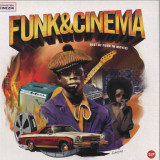
- A1: Isaac Hayes - The End Theme "Shaft
- A2: The Blackbyrds - The One-Eyed Two-Step
- A3: The Meters - Tippi-Toes
- A4: Melvin Van Peebles - Hoppin John
- A5: Joe Simon - Theme From "Cleopatra Jones" (Feat The Mainstreeters)
- B1: Lalo Schifrin - Bullitt (Main Title)
- B2: Don Julian - Lay It On Your Head
- B3: Isaac Hayes - Main Title "Truck Turner
- B4: Dyke & The Blazers - Let A Woman Be A Woman (& A Man Be A Man) (& A Man Be A Man)
- B5: Jerry Butler & Jerry Peters - Speak The Truth To The People (Frankie's Theme)
- C1: Dyke & The Blazers - We Got More Soul
- C2: Gil Scott Heron - Home Is Where The Hatred Is
- C3: Don Julian & The Larks - Shorty The Pimp
- C4: The Quantic Soul Orchestra - Pushin On (Feat Alice Russell)
- C5: George Benson - On Broadway
- D1: New Paradise - I Love Video
- D2: First Choice - Let No Man Put Asunder
- D3: Frankie Smith - Double Dutch Bus
- D4: The Sugarhill Gang - Rapper's Delight
- D5: Grandmaster Caz - South Bronx Subway Rap
As the sweary, confrontational title suggests, this four-tracker from Detroit hero Omar-S is like a musical expansion pack for his much-discussed recent album, F*ck Resident Advisor. The no-nonsense Detroiter starts in fine fashion with 'Gonna Love You', a jaunty, piano-sporting peak-time loop jam crafted from old school vocal samples and snippets from a killer disco record, before reaching for cosmic synth sounds, lilting melodies and a melancholic mood on the starry deep house jam 'Bread Over Bed'. He subtly doffs a cap to Dance Mania style ghetto-house on the quirky, club-ready cheekiness of 'Shut Up', before smothering a classic house groove with heady hand percussion and snaking synth lines on dense and energetic closing cut 'Sloppy Joe'.
Acclaimed UK electronic musician Kevin Richard Martin (The Bug, King Midas Sound) releases a stunningly powerful rescore of Andrei Tarkovsky’s seminal 1972 movie Solaris on Phantom Limb.
In May 2020, British musician Kevin Martin was invited by the Vooruit arts centre in Gent, Belgium to compose a new score for a film of his choice. Having been long inspired by pioneering Soviet filmmaker Andrei Tarkovsky, Martin tells us that his 1972 masterpiece Solaris was the “natural choice”. The film is an unattested giant, not only of science fiction and Soviet film, but also in the annals cinematic history. And its original score, composed by regular Tarkovsky collaborator and early Soviet electronic musician Eduard Artemyev, is a magnificent work of haunting majesty, a key element to the film’s brilliance. Martin’s challenge was great: “it was with a certain amount of trepidation I stepped into such large footprints,” he writes.
The results - an all new score entitled Return to Solaris - are breathtaking. The film is intense, psychologically devastating and bleakly compelling. Interweaving themes of love, horror, sorrow, nostalgia, memory and dystopia, Martin’s score expertly mirrors this expansive breadth of psychic weight, from existential dread to heartbreaking poignancy, with immense emotional gravity. Drawn to its “narrative struggle between organic, pastoral memories of a lost past, and the harsh, dystopian realities of a futuristic hell,” Martin employs atonal noise, simmering waves of distorted synthesis, undulating drones and otherworldly, astronomic sound-design to crushing effect. Subtly submerged recurring motifs - reflections of individual characters - rise and fall amidst the fog, occasionally illuminating the doom like motes of starlight, before settling back into the density of space.
- A1: Black Slate - "Sticks Man
- A2: Dee Sharp - "Rising To The Top
- A3: Asher Senator - "One Bible
- A4: Cymande - "Fug
- B1: Digital Mystikz - "Misty Winter
- B2: Winston Curtis - "Be Thankful For What You've Got
- B3: Trevor Hartley - "It Must Be Love
- B4: Shut Up & Dance - "Java Bass
- C1: Brown Sugar - "Black Pride
- C2: The Terrorist - "Rk1
- C3: Black Harmony - "Don't Let It Go To Your Head
- D1: Pebbles - "Positive Vibrations
- D2: Ragga Twins - "Ragga Trip
- D3: Janet Kay & Alton Ellis - "Still In Love
- E1: Funk Masters - "Love Money
- E2: Cosmic Idren - "Compelled
- E3: Harry Beckett - "No Time For Hello
- F1: Sandra Reid - "Ooh Boy
- F2: Tabby Cat Kelly - "Don't Call Us Immigrants
- F3: Brown Sugar - "I'm In Love With A Dreadlocks
Soul Jazz Records new ‘Life Between Islands’ collection coincides with the launch of Tate Britain’s exhibition of the same name. This landmark exhibition explores the links between Caribbean and British art and culture from the 1950s to now.
Soul Jazz Records album, sub-titled “Soundsystem Culture – Black Musical Expression 1973-2006,” focuses on the most important Black British musical styles to emerge out of the distinctly Caribbean world of sound systems. The album features an all-star line-up including Dennis Bovell, Shut Up and Dance, Cymande, Digital Mystikz, Brown Sugar, Funk Masters, Janet Kay, Ragga Twins and more.
The album is a lightning-rod journey across Roots Reggae, Jungle/Drum & Bass, Jazz-Funk, Lovers Rock, Jazz, Dubstep and more. Much of Soul Jazz Records’ catalogue comes out of these genres and this album is partly an overview of some of Soul Jazz’s earlier releases (including Digital Mystikz’ long-deleted groundbreaking and now highly-collectible single, ‘Misty Winter’) alongside some choice rare and classic tunes that span over 30 years of sound system culture.
Many of the tracks represent how Black British artists defined their own identity with songs such as Brown Sugar’s righteous ‘Black Pride’, ‘I’m In Love with A Dreadlocks’ and Tabby Cat Kelly’s powerful ‘Don’t Call Us Immigrants’. Aside from being musically rooted in the distinctly Jamaican-born phenomenon of the sound system, much of this identity is also shaped by the triangular relationship of being British-born, of Caribbean heritage, and with an equal love of African-American Jazz, Funk and Soul, as evidenced with many Lovers Rock tunes reggae covers of American soul tunes (such as those of Jean Carn, William de Vaughan and Rose Royce featured here). This stateside influence can also be heard in groups such as the Funk Masters, a group formed by reggae radio DJ Tony Williams, whose jazz-funk music successfully crossed over into New York’s clubland, as well as the great Cymande, whose unique street-funk became staple material for numerous US hip-hop artists in the years that followed.
In the early 1990s, jungle and drum and bass artists took the essence of reggae’s soundsystem culture – MCs, dubplates, crews – and applied them to their own music, applying heavy reggae bass lines to intense double-speed drum breakbeats. At the forefront of this new movement were the duo Shut Up and Dance, working closely with The Ragga Twins, aka Deman Rocker and Flinty Badman, both MCs for North London’s infamous Unity reggae soundsytem. In the early 2000s, dubstep, spearheaded by Digital Mystikz, became the latest instalment in this ever-evolving soundsystem culture.
- A1: Lamparilla
- A2: Suplica
- A3: Tormentos
- A4: Lindos Ojos
- A5: Quimera
- A6: Corazon Que No Olvida
- B1: Las Tres Marias
- B2: Dicha
- B3: Mi Panecillo Querido
- B4: Sombras
- B5: Amor De Mi Linda Guambra
- C1: Vestida De Azul
- C2: Amor En Tus Ojos
- C3: Arbol Frondoso
- C4: Carnaval De Guaranda
- C5: Plegaria
- D1: Tus Ojeras
- D2: Limosna
- D3: Invocacion Sentimental
- D4: Nocturno
- D5: Desesperacion
- D6: Imploracion Indigena
Gonzalo Benitez and Luis Alberto Valencia were kingpins of the musica nacional movement in Ecuador. Check them out on the cover, on a rooftop in Quito’s Old Town, surveying their dominion. In 1970, when Valencia collapsed onstage during a performance of the yaravi Desesperacion — ‘My heart is already in ashes’ — and died four days later, aged 52, his coffin was carried through those city streets on the shoulders of his fans.
They began singing as a duo in their mid-teens. During twenty-eight years together they recorded more than six hundred songs, for Discos Ecuador, Nacional, Granja, Ortiz, Rondador, Onix, Fuente, Real, Tropical, Fadisa, RCA Victor — and of course CAIFE.
Their exquisitely romantic harmonising is a sublime blend of collected forbearance and abject self-annihilation, underpinned and elaborated by the heart-piercing, improvisatory guitar-playing of Bolivar Ortiz. Effectively the third member of the group. ‘El Pollo’ sets the tone and intensity for everything that follows: listen to his soloing at the start of our opener, Lamparilla.
Musically a pasillo — a cross between a Viennese waltz and the indigenous yaravi rhythm — Lamparilla draws its verses from a poem by Luz Martinez from Riobamba, written in 1918 when she was 15, under the influence of Baudelaire and Mallarme. Another pasillo here, Sombras is one of the best-loved songs in the musica nacional canon, setting lines about undercover sex and loss by the Mexican poet Maria Pren, which were considered pornographic on publication in 1911.
And Benitez & Valencia looked back still further, to the indigenous roots of Ecuadorian music, as the key to its future. Carnaval de Guaranda is their take on a song dating back to the era of the Mitimaes, a broad group of Bolivian tribes conquered by the Incas and displaced to Ecuador. ‘Impossible love of mine / I love you for being impossible / Who loves what is impossible / Is the truest lover.’
Lovingly presented in a gatefold sleeve with spot-gloss, and printed inners, with stunning photos and expert notes. Excellent sound, drawn from original tapes, by way of Abbey Road, D&M and Pallas.
Deluxe LP features 140g virgin vinyl; heavy-duty board jacket, artwork by Art Rosenbaum + DL. RIYL: Bob Dylan, John Prine, Townes Van Zandt, Ry Cooder, Michael Chapman, Michael Hurley, The Youngbloods & Bonnie “Prince” Billy. Jake Xerxes Fussell’s 4th album finds the acclaimed folksong interpreter, guitarist, and singer navigating fresh sonic and compositional landscapes on the most conceptually focused, breathtakingly rendered, and enigmatically poignant record of his wondrous catalog. Produced by James Elkington and featuring formidable players both familiar (Casey Toll, Libby Rodenbough) and new (Joe Westerlund, Bonnie “Prince” Billy), it includes Jake’s first original compositions; atmospheric arrangements with pedal steel, horns, and strings. One of the most striking and strangely moving moments on Jake Xerxes Fussell’s gorgeous Good and Green Again an album, his fourth and most recent, replete with such dazzling moments arrives at its very end, with the brief words to the final song “Washington.” “General Washington/Noblest of men/His house, his horse, his cherry tree, and him,” Fussell sings, after a hushed introductory passage in which his trademark percussively fingerpicked Telecaster converses lacily with James Elkington’s parlor piano. That’s the entire lyrical content of the song, which proceeds to float away on orchestral clouds of French horn, trumpet, and strings, until it simply stops, suddenly evaporating, vanishing with no fade or trace, no resolution to its sorrowful minor-key chord progression, just silence and stillness and stark presidential absence. It feels like the end of a film, or the cold departure of a ghost, and is unlike anything else Jake has recorded. In all his work Jake humanizes his material with his own profound curatorial and interpretive gifts, unmooring stories and melodies from their specific eras and origins and setting them adrift in our own waterways. The robust burr of his voice, which periodically melts and catches at a particularly tender turn of phrase, and the swung rhythmic undertow of exquisite, seemingly effortless guitar-playing here he plays more acoustic than ever before pull new valences of meaning from ostensibly antique songs and subjects. On Good and Green Again, Jake not only ventures beyond his established mastery of songcatching and songmaking into songwriting, but likewise navigates fresh sonic and compositional landscapes, going green with lusher, more atmospheric and ambitious arrangements. The result is the most conceptually focused, breathtakingly rendered, and enigmatically poignant record of his wondrous catalog. It’s also his most deliberately premeditated album, representing his fruitful return to a producer partnership after two self-produced projects, What in the Natural World (2017) and Out of Sight (2019) (William Tyler produced his friend’s self-titled 2015 debut.) This time James Elkington produced and played a panoply of instruments, bringing to Jake’s arcane song choices his own peerless sense of harmony and orchestration, balance and dramatic tension. The pair enlisted a group of formidable players including regular bandmembers Casey Toll (Mt. Moriah, Nathan Bowles) on upright bass, Libby Rodenbough (Mipso) on strings, and Nathan Golub on pedal steel. They were joined by welcome newcomers Joe Westerlund (Megafaun, Califone) on drums, Joseph Decosimo on fiddle, Anna Jacobson on brass, and veteran collaborator and avowed Fussell fan Bonnie “Prince” Billy, who contributes additional vocals. Album opener “Love Farewell” (featuring some beautiful singing by Bonnie “Prince” Billy), an elliptical tale of the folly of war, set to the world’s most heartbreaking goodbye march for a lover left behind. “Carriebelle” and “Breast of Glass” each similarly concerns, in its own way, romantic love and leavings. All three songs highlight Jacobson’s diaphanous, understated brass parts, tying them together in a true lover’s knot. “Rolling Mills Are Burning Down,” with its distant keening strings and capacious sense of space, observes and mourns the loss of work and community in the wake of elemental disaster. Nine-minute tour de force “The Golden Willow Tree,” the sole explicitly narrative song herein, is a hypnotic, minimalist rendering of a tragic maritime ballad about scuttling an enemy ship in exchange for wealth and glory and a captain’s inevitable betrayal. “Fussell is creating his own legacy within the long lineage of traditional folk musicians and storytellers that have come before him.” The New York Times // “So elegant … It’s relaxing in the way that pondering a Zen koan is relaxing, and sweet in the way that the wounded, honey-voiced blues of Mississippi John Hurt are sweet.” Pitchfork // “Music that resides at the seams of Appalachia and the cosmos.”
One concerned with illness (no, not that one) and recovery. Inside to outside. Darkness into light. A way through the woods. The Doozer aka Simon Loynes is now seven LPs into a subterranean solo voyage begun in 2007, and to those of us who have followed it, the songs that make up Convalescence could be seen to embody a kind of late style - ultra-lucid, pared-down, precise; seemingly simple in form, richly complex in effect. Where The Doozer’s last outing, 2018’s Figurines (FTR360), showcased his songs at their most propulsive and and electrified, Convalescence is a more hushed, hermitic, even claustrophobic affair - dispensing with percussion almost entirely, the focus is tight on Loynes’ voice and plangent acoustic guitar, with occasional daubings and interludes of wheezing keyboard, all recorded to Tascam 246 4-track cassette in Edinburgh, Summer 2019. For a considerable chunk of time, health issues had left Loynes unable to sing. On this record you can hear him rediscovering his voice: its unique grain, its responsiveness, its capacity for creating and sustaining emotional ambiguity, for oscillating elegantly between whimsy and woundedness. As with previous Doozer albums, there’s an arcadian impulse at the heart of Convalescence: a sense of exile, or withdrawal, from ‘The Garden’ - and the need to return. The idea that, in your lowest ebb, you might recover your sense of self somewhere in the pastoral landscape of your memories. We're told the shadow of Malcolm Lowry looms large over the record – Lowry the void-chaser, the great misadventurer. Does Convalescence report from the abyss? If so then it's with a coolness and control, a lightness of touch, that conceals as much as it reveals. But beyond the neurosis, the ironic deflections, the flashes of matter-of-fact bleakness (“there isn’t time / there isn’t love”), there lies a deep, Lowry-ish romanticism, and a rejection of pessimism: even at its lowest ebb, Convalescence gestures towards an immense and loving truth – and knows that the possibility of that truth is far more interesting than the numerous ways in which it might be denied. A co-release with Feeding Tube Records USA.