7" Originally released in 1987 on Australian label Big Home Productions both tracks were later re-released in 1990 on Sarah Records together with the Goes so Slow single as a five track 7 inch EP titled Nothing Ever Happens.
This is the first time that the single has been released in the UK in it’s original format.
Even As We Speak is an indie band from Sydney, Australia. Formed in the mid 1980s, founding members Matthew Love (guitar, banjo, vocals) and Mary Wyer (vocals, guitar) were later joined by Rob Irwin (bass) Anita Rayner (drums, banjo, mandolin), Julian Knowles (guitar, keyboards, production), and Paul Clarke (guitar, vocals).
After a series of vinyl releases on Australian independent labels including Phantom Records, and success on the Australian indie scene, they came to the attention of BBC Radio 1 DJ John Peel who started to play the band’s ‘Goes So Slow’ Phantom Records release on his show. This brought them to the attention of UK audiences and began a relationship with UK indie label Sarah Records. The band released several singles and an album on Sarah Records, three of which reached the Top 5 of the Melody Maker and New Musical Express UK independent music charts in 1992 and 1993.
Cerca:sub love
Riding high on the success of his recent Soul Flip project, Del Gazeebo busts loose here with a pair of Rootsy, rigorously road-tested, certified party starters on his own brand new Art Surgery imprint.
First for a 2020 freshen-up is Barbara & The Browns' sassy, soulful rendition of the Rhythm & Blues and Reggae classic, "You Don't Love Me" - taking the already energetic 1971 recording, stretching it out, and giving it a little something extra in all the right places. Already touted as "one to watch in 2020" on the BBC's Craig Charles Funk & Soul Show & getting support from The Allergies, Smoove & Jalapeno Sound System.
On the flip, Pluto Shervington's 1976 uplifting Reggae smash "Dat" gets a subtle yet crucial lift to make it even more infectious. This sunny, irresistible ear-worm has long been a staple of Del's DJ sets, yet somehow as yet unreleased. Until now; re-refreshed for 2020.
The first release under Richard Wilson's Rognvald alias kickstarts the new WIFE series with four solid punches of breakfueled rave mania. The pitch black title track "R.O.G.N.V.A.L.D" serves as a fierce introduction to his fresh material with its epic scale combination of relentless drum work and meticulous arrangement. Up next is the hefty chunk of "Whistle Posse", all rude basslines and rave whistles finely tuned for maximum dancefloor damage.
"Lowcol Junglist" opens the B-side with it's masterfully slick drum control and enormous bass drops followed by the subterranean drum hypnosis of closer "Asbiorn". This is bass charged jungle warfare apparatus with a modern ruffneck flex from a man who knows how to murder the dance with precision.
- A1: Concrete & Glass
- A2: Back To Your Heart (Feat Kate Nv)
- A3: We Forgot To Love (Feat Kadhja Bonet)
- A4: What Makes Me Think About You
- A5: Time On My Hands (Feat Kirin J Callinan)
- B1: The Foundation (Feat Cola Boyy)
- B2: Catch Yourself Falling (Feat Alexis Taylor)
- B3: The Border
- B4: Turn Right, Turn Left
- B5: Cite Radieuse
- C1: Concrete & Glass
- C2: Back To Your Heart (Feat Kate Nv)
- C3: We Forgot To Love (Feat Kadhja Bonet)
- C4: What Makes Me Think About You
- C5: Time On My Hands (Feat Kirin J Callinan)
- C6: The Foundation (Feat Cola Boyy)
- C7: Catch Yourself Falling (Feat Alexis Taylor)
- C8: The Border
- C9: Turn Right, Turn Left
- C10: Cite Radieuse
When Air’s Nicolas Godin released his debut solo album, Contrepoint (2015), he channelled the influence of Bach into a rich, resonant and hugely rewarding spread of musical explorations. One soundtrack (A Very Secret Service) later, Godin builds on equally fertile conceptual foundations for the follow-up. Released through Because Music on 24th January, Concrete and Glass is an exquisitely crafted set of variations on architectural reference points: mounted with minimalist precision and delivered with an abundance of pop warmth, it finds Godin in his element, working seductive wonders with poise and style to spare.
For Godin, the album circles back to his formative work as half of ground-breaking French electronic group Air. Revered modern architect Le Corbusier was an influence on the young architecture graduate’s music, notably on his 1997 debut “Modular Mix”. Twenty-plus years later, Le Corbusier featured on a list of modernist architects Godin was invited to compose tributes for, tributes intended to be heard as the soundtrack to site-specific installations around the world.
In its soft ambient pulse and melting minimalism, lead track “The Border” is a perfect entry-point to Godin’s hymns to buildings, arranged and co-produced with Pierre Rousseau. Its levitating synths, vocoder vocals and scudding bass hove into view with understated elegance, all the better to accommodate the discreet slow-build of delicate details within. As with Air, Godin makes gorgeously light work of every angle: this is music that seems entirely unperturbed by gravity, occupying an elevated atmosphere of its own.
Elsewhere, the title-track’s clean synth lines, crisply apportioned arrangements and tender timpani offer another inviting entry-point, sculpted with architectural clarity. While Godin’s vocoder vocals also hark back to Air’s early work, the album accommodates a diverse spread of guest vocalists elsewhere. Hot Chip’s Alexis Taylor guests on the falsetto-soul dream-pop of “Catch Yourself Falling”, one of Godin’s sweetest melodies yet. Oxnard singer/activist Cola Boyy brings soul to the righteously engaged “The Foundation”; the squelchy synths and buoyant grooves burn slow, allowing the stealthy arrangements and message room to resonate. Psychedelic soul singer Kadhja Bonet sings with measured serenity over tremulous synths on “We Forgot Love”, while Russian experi-pop artist Kate NV brings a gracefully aching romanticism to the blissful swoon-pop of “Back to Your Heart”.
Additionally, Australian conceptual provocateur Kirin J Callinan contributes a vocal of restrained drama to “Time on My Hands”, a midnight-drift soft-pop ballad with a silky allure. One of the quickest tracks to record for the album, it emerged in collaborations between Los Angeles (”During some lively sessions in Mac DeMarco’s studio,” notes Godin) and Paris. After he missed his flight home, Callinan stayed in France for a day as the guitar solos were recorded, complementing the song's air of sleek luxuriousness.
Between its title-track and the sultry, smoky jazz stylings of closer “Cité Radieuse”, Concrete and Glass is an album that truly travels, in tune with its global pitch. For Godin, it marks another milestone in a musical journey that began when Air’s 1998 debut album, Moon Safari, became the sublimely weightless soundtrack of its time. For Concrete and Glass, Godin builds on his storied past with tremendous finesse, charm and fluency, opening fresh windows of perspective at every lovingly executed turn.
A record to be enjoyed to its very last second AM Jazz is set to place this songwriter where he just might, finally, receive the recognition he deserves; from unsung hero to a truly worthy candidate for being called up to join the City of Manchester’s ranks of great musical icons. Whether you prefer to know him as Mr. Roberts or simply call him Al, it’s time to become acquainted with the real Jim Noir.
Tossing his bowler onto the hat stand and sliding on his slippers, AM Jazz sees ‘Jim’ putting his feet up whilst Alan Roberts takes the lead. A creative masterpiece for the record player and the mantlepiece, it’s a multi-layered album that features close friends including those dearly departed, and is his truest record to date, by a songwriter painting his own hypnotic Portrait of the Artist as a Young Man.
“I haven’t 'felt' like Jim Noir for a long time. I’m not sure I ever did; it was a construct of other people’s imaginations,” reveals Al. “AM Jazz is definitely the kind of music I make generally. It harks back to when I started making music years ago and didn’t worry about capturing a particular style. It will be nice to show people more of that.
It's the best album I've written; real hypnotic minimalism, the good stuff!” 15 years since he recorded the first ever 'Jim Noir' EP, AM
Jazz is the record all Noirheads won’t be surprised Al had inside him.
Letting the Beatlesesque stylings of his most recent album Finnish Line be (5 years ago no less), AM Jazz suits the Noir repertoire of his catalogue so far and is another homegrown offering which sees the Daveyhulme composer tinkering in his suburban Manchester studio once more, with the magic of his computer work sorcery, analog and tape recordings.
“For this I went back to the slightly more haphazard way I wrote my first album, Tower Of Love, wherein I’d use things in front of me, or a bit wrong like headphones for a microphone, to make the most Hi-Fi Lo-fi album ever.”
Whilst a brief disappearance of Jim’s online persona may have provoked bleak theories as to his whereabouts, Al had little time for digital distraction. Whilst writing and creating with friends, he has worked on electronic pet project, FAX with former Alfie guitarist, Ian Smith, and the vintage analogue house meets electro sound of his own solo EP Granada Personnel Recovery, as well as producing local band, Shaking Chainsor, and helping long-time musical colleague, Aidan Smith with his long-awaited 'The Planets' project; “I’ve been writing in dribs and drabs when I feel like it,” Al says. “I used to write all day everyday but it’s a lot harder now I’m (feeling) over 100 years old.” Never not sonically exploring or being inspired by the sounds around him, there was even a red-carpet moment when he appeared as a film premier guest after a couple of his songs were selected for the OST of director Jason Wingard’s film Eaten By Lions.
Performing all AM Jazz’s instrumental parts himself but also, at the right moment, bringing in present and past pals along the way, sexy lounge song, ‘Hexagons’ features 'Phil Anderson' and Mark Williamson singing and playing “legendary OTT guitar solo” respectively. Meanwhile the orchestration of ‘Peppergone’ waltzes like a beautifully romantic ode to Beethoven’s Moonlight Sonata – a tribute to dearly departed best friend 'Batfinks' who originally wrote the chords in his song 'Peppercorn.' “I hope he doesn’t think it’s shit,” Al jests. Listen closely and you may even find a few unsuspecting celebrity guest appearances as, perhaps, it could be the very first album to feature soundbites of podcasts sneaking onto the recordings. “I will have a podcast on if I’m recording; Adam Buxton, Athletico Mince, Frank Skinner or Richard Herring… I’m sure some mics will have picked them up, like in the old Tower of Love days,” he says referring to his breakout debut.
Culled from around 50 tunes AM Jazz moves like the time of the day, from dawn to night, stirring from the pop of ‘Good Mood’ and ‘Upside Down’s Beta Band groove. “As the album was playing, I imagined this smoky backstreet with all those neon signs outside clubs at about 4am,” Al says. Mellow ‘TOL Circle’ is like Percy Faith’s Theme From A Summer Place synthesized, capturing the style of TV library music or movie soundtrack obscurity that has always stirred Al’s curiosity, and the album plunges into a vast chasm of instrumental exploration with ‘Mystermoods,’ visiting Japan’s funky synth whiz duo Testpattern and Hakabashi Sakamoto. Darkening and deepening in intensity, ‘Eggshell’ is like an undiscovered gem from Angelo Badalamenti’s cutting room floor, the Panda Bear shimmer of ‘Lander’ is where blissful positivity and sadness meet, about another of his friends who left the world too young. “By the album’s close, its nearly time to let go and enter the ether,” he says of the album’s story. “Like one would do when they take their final sigh on this earth.”
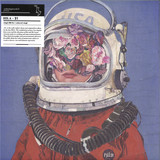
"21" is the well-crafted, sharp and original first album by the duo HILA, composed by American cellist Artyom Manukyan (who already worked with Kamasi Washington, Daedalus, Flying Lotus, Run DMC, Gretchen Parlato, Raphael Saadiq, Clive Lowe Mark...) and french producer Dawatile.
The combination of jazz, Los Angeles beat-scene and the vibrations of 80s and 90s Soviet Armenia make it a striking and unprecedented fusion. These kind of nostalgic and unconventional references forcefully shake the codes of mainstream culture to create a sincere, raw and intimate expression.
"HILA" was born from a spontaneous and intense creative impulse between Artyom Manukyan, a Los Angeles-based Armenian celloist and his partner in crime, David Kiledjian aka Dawatile, a French multi-instrumentist of Armenian descent. This project is proving to be a true master stroke given that it only took 21 days for the duo to make it a reality.
"HILA" was made in less a moon cycle but captivates and electrifies audiences upon its first outings. "H.I.L.A" colors the warmth of the Californian "High" with Armenian vibes. The artists chose this name for their creation since both have a close and valuable connection to these locales. This journey began in 2007, on the day Dawatile went to Yerevan, the capital of this small country in the Caucasus mountain to realize a first fusion project centered around local folkloric music genres.
There he was introduced to local musicians including the Armenian Navy Band, one of the country's foremost groups in which Artyom played the bass and cello. In this context, he also met many musicians such as Tigran Hamasyan and Norayr Kartashyan. This will be the beginning of connections between Lyon, Yerevan and Los Angeles. The following year, the two artists will be be seen performing next to Taylor Mc Ferrin at the Jazz à Vienne festival. More recently, they partnered up again when the cellist, who had freshly relocated in California, invited Dawatile to produce his album. As soon as the studio’s threshold was crossed, they decided to postpone this record and create a joint project: Hay (as the Armenians call themselves) / High In Los Angeles. HILA was born at the end of these 21 days of intense creation. The association of Artyom Manukyan and Dawatile is the combination of two visions, two versions of Armenia, two personalities, the reunion of the Eastern and Western blocs.
One grew up nurtured by the sounds of hip-hop and jazz in Europe and the other by art music and Russian-influenced 1980s Armenian folkloric music before moving to L. A., Ca. The cornerstone of it all, the glue that unites everything : Armenia and music. They generate a new identity synthesizing two perceptions, their complicity transcending these cultural discrepencies. To achieve this, they will scour through images of Artyom’s childhood, within the popular culture of Soviet Armenia. Together, they revisit this decidedly retro vibe, based on the work of Caucasian groups inspired by African American music. This background is rehashed and fused with ancestral Armenian sounds. The DNA of the album "21" is molded by these dear influences.
We can also hear the ancestral sounds of Armenia, a country at the edges of both Europe and Asia. The presence on two tracks of Armenian music Master Norayr Kartashyan, infuses the languor of past melodies and traditions. These purposeful anachronistic sounds offer a fantastic depth to this powerful opus. Listening to the album, one can appreciate the successful fusion of styles and influences. Those combinations, however, manage to preserve individual identities only to enhance the art through an adamant musical dialogue.
Being driven by the urge to transpose Armenian musical traditions into a unique universe, the daring artists, offer an innovative combination by blending, for the first time, these ancestral sounds with the world of Los Angeles beat-scene and jazz. An invention largely fueled by the magic strings of Artyom and maestro Miguel Atwood-Ferguson, a pillar of the genre in Los Angeles combined. These associations resonate with a triumphant equilibrium. HILA is musical uncharted territory in which Artyom's cello strings intertwine to ignite the harmonies of keyboards, the machines, the vocals and electronic layers Dawatile pieced together. HILA plays the soundtrack of an adventure set between Armenia around the end of the Soviet era and a mysterious near future.
Artyom Manukyan grew up in Armenia in the 90s. At the time, he studied Russian classical music while learning jazz with assistance by his father, a music journalist. Being an unconditional music lover, he went on to sharpen his skills at the prestigious Berkelee College of Music. Subsequently, he’s been lucky enough to travel the world touring with numerous acts and mainly with the Armenian Navy Band. The group has fostered alacritous success honored by a BBC Award as a crowning achievement. He moved on 10 years ago and made his way to L.A. with his cello on his back. In the City of Angels, he quickly became a popular figure of the jazz and hip-hop scenes thanks to his first album "Citizen". He’s accompanied prestigious musicians such as Kamasi Washington, Melody Gardot, Daedalus, Flying Lotus, Run DMC, Gretchen Parlato, Raphael Saadiq, Clive Lowe Mark, or Vulfpeck. He released his solo album on the cello, "Alone" in October 2019.
Dawatile is a bold producer and multi-instrumentist as well as a passionate and resolute musician molded by jazz. As a versatile artist, he handles and juggles the saxophone, the keys, the bass and composition. Simultaneously, Dawatile produces cross-over projects and soundtracks for the movie industry. He, as well, has had the opportunity to be a part of many tours, including with his electro hip-hop band, Fowatile and more recently with the "Future Kreyol" trio, Dowdelin. Being the ever workaholic, he has under his belt a string of prestigious collaborations with the likes of Talib Kweli, Foreign Beggars, Roy Ayers, Tigran Hamasyan, Mathieu Boogaerts, Voodoo Game and Piers Faccini. His taste for developing new musical recipes and his know-how in production make him a much sought-after album producer. In concert, the HILA duo offers a sober, precise and rhythmic performance. "21" is an aerial and lively album taking the audience on an at times joyous and sometimes melancholic dreamlike journey. The magic of "HILA" operates at the speed of light and positions it already as an avoidable group.
Edinburgh born Chris Braun, otherwise known as Duellist, is set to drop a hard-hitting new release on the immersive Wunderblock’s sub label Folgsamkeitfaktor, in partnership with Berlin-based Ready Made Distribution. Duellist has already surpassed a dedicated following with his forward-thinking industrial sound.
Known for breaking boundaries within the techno sphere, the primarily industrial and EBM influenced Folgsamkeitfaktor choose wisely with Duellist as the deliverer on their third release, a swarming industrial 7" EP titled Hereditary.
The Original Mix ‘Hereditary’ is energetic from the start, real industrial techno to sink your teeth into, the producer clearly pulling some unique textures from his love of grunge and metal. Truly powerful, the track takes you into another dimension from it's smoky beginning until locking you into a frenzy of kick drums and pounding bass.
The track is given an atmospheric remix by fellow friend and producer Swarm Intelligence, lowering the BPM and increasing the distortion on this dark and tense banger of a remix.
Not to be missed among the industrial underworld, the handle-with-care EP will be delivered on 27th of January; via Folgsamkeitfaktor.
Wah Wah 45's are proud to present "Cages", the third album from southern soul boys The Milk. Having released "Favourite Worry", their critically acclaimed sophomore album and first for independent label Wah Wah 45's, in 2015, the band are able to trace the seeds of the latest LP back to their recording sessions with producer Paul Butler (Andrew Bird, Michael Kiwanuka, Nick Waterhouse) almost five years ago, blending elements of soul, funk and rock together to create their own unique sound, inspired by some of their favourite artists such as Bill Withers, Traffic and the Isley Brothers.
"I can't wait to hear you write songs that look outward" - these words from Paul subconsciously had a lasting impression on the band. To atone for more inward-looking sentiments on "Favourite Worry", there had to be a shift in perspective. During the formative stages of the new album The Milk started pursuing a Nichiren Buddhist practice. The values and principles they discovered during this have informed every aspect of the record.
"We wanted to write an album that looked outside of the walls, to people, society and the environment - embracing real freedom in musical expression by utilising more complex rhythmic structures, extended harmony and dissonance to paint an original and authentic-sounding record" explains If their debut, "Tales from the Thames Delta", was inspired by hedonism and "Favourite Worry" by introspection, "Cages" is an impassioned conversation with the world. Racism and division are all on the rise. British society is being pulled apart by forces that seek to divide us and rip the compassion and empathy from our minds and hearts. We have become distracted from the more urgent challenges of boundless consumerism, climate change, and the mental health emergency reeking havoc on our streets.
We are the birds in the cage, tied by cheap thrills and fake news to a limited world vision that is no longer fit for purpose. The good news? We can all choose to challenge this view. "Cages" is equal parts the dark black shadow of how far we've fallen and the blazing sunlight whose rays of hope can still change the world. Four life-long friends, Ricky Nunn (vocals), Mitch Ayling (drums) Luke Ayling (bass) and Dan Le Gresley (guitar) formed their first band when they were still at school in Essex, playing countless working men's clubs, and finally became The Milk.
The band have built up a following of dedicated fans around the UK, which has resulted in them selling out venues such as Scala, Koko and Shepherds Bush Empire. Keen to get back on the road where they feel most at home and where the guys really shine, the band offer up a compelling set of diverse styles, matched with an ability to effortlessly intertwine songs together, gives their music a continuous feel to it. Since signing to Wah Wah 45's, the band released their second album "Favourite Worry", which became one of BBC 6 Music's albums of the year, sold out London's Union Chapel, toured with the Fun Lovin' Criminals and completed a sell-out UK tour climaxing at London's KOKO in Camden town. ... More live dates coming very soon!
As electronic musician Lorenz Brunner sketched his vision for the first Recondite full-length on Ghostly in five years he took a step back to assess who and where he was as an artist. 2013’s Hinterland accelerated a progression — he’s since been touring around the world and releasing music with labels such as Hotflush and his own Plangent Records — yet, for him, the album cast a shadow of pressure that widened over time. As with most art forms, perhaps especially music, there is an expectation to change, to creatively pivot elsewhere with each project. After careful consideration, Brunner rejects this notion with his new work, opting alternately to use the icy Hinterland as an aesthetic and tonal template for a like-minded map of evocative compositions aptly titled after the German word “stillstand,” now presented as Dwell.
“I am coherent with what I do, even if I’m not reinventing myself,” Brunner says contentedly. In regards to the album title, he adds, “It’s like when you’re on a hike and you stop and look at the scenery; you may know which path you want to go next but right now you are dwelling.” The title also doubles as a reference to everyday domestic life, a restorative haven for Brunner between tours. Like Hinterland, he incorporates a subtle range of field recordings to intensify the textural atmosphere. While he worked at home on “Mirror Games,” Brunner noticed the buzz coming from across the room, where his wife was using an electric toothbrush, naturally harmonized with the track. He decided to push that frequency further and record the device directly, syncing vibrations for added urgency across the propulsive piece as well as parts of the ambient “Interlude 2.”
Windswept, moody, and melodic, moments on Dwell linger with emotional resonance. The title track sends an eerie synth loop through a field of techno kicks. The beats recede for a breather four minutes in as if to survey the surroundings. If Brunner pivots anywhere — possibly just a new perspective afforded by being confidently stationary in his craft — it’s by leaning more into hip-hop structures. He’s an avid rap fan and his love for those production techniques is notably present on “Nobilia,” a queasy shuffler (titled in reference to the Super Nintendo game Secret of Evermore), “Interlude 1,” which skitters in lockstep with contemplative synth chords, and “Surface,” an isolatory, ruminative sequence. The closer “Moon Pearl” soothes and shimmers like its namesake, a cherished gem in The Legend of Zelda series that allows carriers of the gem to retain their shape and essence in the Dark World.
In an era where constant reinvention and highly self-reflexive brand awareness reigns supreme in the music industry, Brunner as Recondite does something many artists try to avoid, he dwells in his own established identity, one that has garnered him a devoted fanbase. His murky electronic productions, built around mirage-like pads and clipped drum programming, have proven to be highly functional and spectrally enveloping; Dwell is not a return to form, it is a further study of the shapes, it is the modes, and the structures Brunner has trademarked.
As electronic musician Lorenz Brunner sketched his vision for the first Recondite full-length on Ghostly in five years he took a step back to assess who and where he was as an artist. 2013’s Hinterland accelerated a progression — he’s since been touring around the world and releasing music with labels such as Hotflush and his own Plangent Records — yet, for him, the album cast a shadow of pressure that widened over time. As with most art forms, perhaps especially music, there is an expectation to change, to creatively pivot elsewhere with each project. After careful consideration, Brunner rejects this notion with his new work, opting alternately to use the icy Hinterland as an aesthetic and tonal template for a like-minded map of evocative compositions aptly titled after the German word “stillstand,” now presented as Dwell.
“I am coherent with what I do, even if I’m not reinventing myself,” Brunner says contentedly. In regards to the album title, he adds, “It’s like when you’re on a hike and you stop and look at the scenery; you may know which path you want to go next but right now you are dwelling.” The title also doubles as a reference to everyday domestic life, a restorative haven for Brunner between tours. Like Hinterland, he incorporates a subtle range of field recordings to intensify the textural atmosphere. While he worked at home on “Mirror Games,” Brunner noticed the buzz coming from across the room, where his wife was using an electric toothbrush, naturally harmonized with the track. He decided to push that frequency further and record the device directly, syncing vibrations for added urgency across the propulsive piece as well as parts of the ambient “Interlude 2.”
Windswept, moody, and melodic, moments on Dwell linger with emotional resonance. The title track sends an eerie synth loop through a field of techno kicks. The beats recede for a breather four minutes in as if to survey the surroundings. If Brunner pivots anywhere — possibly just a new perspective afforded by being confidently stationary in his craft — it’s by leaning more into hip-hop structures. He’s an avid rap fan and his love for those production techniques is notably present on “Nobilia,” a queasy shuffler (titled in reference to the Super Nintendo game Secret of Evermore), “Interlude 1,” which skitters in lockstep with contemplative synth chords, and “Surface,” an isolatory, ruminative sequence. The closer “Moon Pearl” soothes and shimmers like its namesake, a cherished gem in The Legend of Zelda series that allows carriers of the gem to retain their shape and essence in the Dark World.
In an era where constant reinvention and highly self-reflexive brand awareness reigns supreme in the music industry, Brunner as Recondite does something many artists try to avoid, he dwells in his own established identity, one that has garnered him a devoted fanbase. His murky electronic productions, built around mirage-like pads and clipped drum programming, have proven to be highly functional and spectrally enveloping; Dwell is not a return to form, it is a further study of the shapes, it is the modes, and the structures Brunner has trademarked.
- non-gatefold sleeve without 7"
Rush Hour announces their second artist compilation Patchwork, curated by one of the label’s most loved family members, Sassy J. The Swiss DJ is the very embodiment of passion and long-standing dedication to the craft of the DJing, but also to the community surrounding the music that she lives and breathes. For the past fourteen years Sassy J has run the Patchwork night in her native Bern and in London, with guests ranging from Theo Parrish and Little Dragon to Floating Points and MF Doom invited to share their respective musical visions. Her collaborative approach stands out in a DJ world that is too often weighted in favour of promoting the individual. This compilation grows out that unique sensitivity, foregrounding a theory of curation that centres on long-term bonds, articulated through Sassy J’s personal relationships with the contributing artists.
Patchwork speaks to the grass roots values that Sassy J espouses, showcasing music by many of the artists that have joined her throughout the years in clubs, on the radio, and at home. It is an expression of Sassy J’s individual musical path that casts its gaze firmly in the future: Patchwork is made up almost entirely of new and unreleased songs that are exclusive to this collection. Patchwork captures a sound that has continued to evolve in its restless search for new musical directions. Across thirteen tracks we find forward thinking electronic music rubbing elbows with cosmic jazz and deep percussion workouts from Brazil and beyond.
There are irresistible calls to the dancefloor: 2000 Black’s UK boogie and the syncopated rhythms of WaH-chU-kU nod to the West London sound, whilst the early rave of Nu Era and Aardvarck’s sub-rattling techno channel the grittier edges of the club experience. We find machine music imbued with humanity in Larry Heard’s deep house classic “Survivor” and in Ron Trent’s WARM project, whose gentle breeze points to a different side of the legendary producer. Patchwork also opens a more immersive listening space in which the radical indie soul of Georgia Anne Muldrow, the ambient spiritual jazz of bandleader Carlos Niño & Friends, and the lament for the Amazon rainforest by Azymuth’s drummer Ivan Conti can channel the overall spirit of group interplay and solidarity. Patchwork also includes Sassy J’s collaboration with veteran producer Alex Attias, marking her own place in a universe that is held together by her singular thread.
"This is the compilation of the year!" - DJ Spinna
'All We Are' & 'Alex Kapranos' Both Have History With Speedy Wunderground. Label Boss 'Dan Carey' Produced Awa's Shimmering Self-titled Debut Album & Also Franz Ferdinand's Third Long-player Tonight: Franz Ferdinand. For The Latter Carey Also Created A Dub Remix Version Of The Entire Album Called Blood, Tapping Into His Love Of Dub And Earlier Work With Artists Like Lee Scratch Perry And Mad Professor.
In True Speedy Style This New Collaboration Came About Completely Off The Cuff. Kapranos Came To The Speedy Wunderground Stage At London's Label Mates Festival At Moth Club In Late Jan To See An Artist He Had Been Working With Play. All We Are Were Also On The Bill, And After Chatting With The Band And Dan They Invited Alex To Come To The Speedy Session They Had Planned With The Band Two Days Later At Dan's Studio In Streatham.
Once In A Room Together The Music Came Fast. The Remainder Of The Day Was Spent Forming Lyrical Ideas. All Present Including Carey Contributed, Jotting Down Ideas, Excerpts Of The Days Phrases And Conversations And Putting Them Together In True William Burroughs Cut-ups Style. 'It Was A Way To Detach From Conventional Song Subject-matter' Says Kapranos. All We Are Agreed, 'The Writing Process Was A Lot Of Fun And For Us A Completely Fresh Way Of Looking At It.'
... The Resulting Track 'Heart Attack' Is A Skittering Disco-post-punk Jam. Equal Parts Of All Their Day Jobs Form Something Fresh, With Echoes Of Talking Heads And Alex's Unmistakable Vocal Delivery Over The Top. 'The Speedy Tracks Are Always Such A Good Vibe And The Studio Is Such A Special Place' Say All We Are. Kapranos Adds, 'as I Think Is Typical For The Label, Nothing Existed In The Morning When We Got Together, And Then Suddenly Everything Was Completed And Recorded By The Time We Went For A Pizza In The Evening.'
- Get Out Of The K-hole. Get On To The Beach.
'Agartha Stories' is a record we were looking forward to release for quite some time. Hailing from the Venice area in Italy, Bruscagin & Visnadi are representing a specific sound from that region, a certain type of melodic techno but with its very own sound design we have rarely heard before. Hear the interesting story behind it. As half forgotten legends from ancient civilisations like Celts, Aztecs, Vikings and Incas say, there is a mythical place located in the centre of our planet. This enchanted place is called Agartha and only accessible through hidden gateways under different places on our Earth's surface, like the Pyramid of Giza, Mato Grosso or Mount Epomeo. Agartha is populated by an ancient civilization that survived Atlantis. What diversifies these inhabitants from our society is the respect and the love they feel for the nature and the fundamental elements that are substantial for the progress of human beings. Following their 'Indian Stories' release on Lost & Found, Bruscagin & Visnadi dedicate their second episode of the saga to the mysterious civilization of Agartha
´
- A1: Canaveral Scape (2 45)
- A2: Source Of Energy (2 36)
- A3: Sequence Of Events (3 14)
- A4: Nuplex (3 58)
- A5: Low Profile (4 53)
- A6: Tension And Release (3 38)
- B1: Keeping Pace (3 36)
- B2: Jaguar (2 41)
- B3: Giant’s Causeway (2 59)
- B4: Fugitive (3 08)
- B5: Rock Climb (2 33)
- B6: Heavy Load (2 26)
- B7: Flight Of The Phoenix (2 50)
They Say: “Descriptive scores for scenes of visual impact”.
We say: Arguably the single greatest album in KPM history. An ensemble piece of staggeringly heavy works from none other than Brian Bennett, John Scott, Steve Gray, Jim Lawless and Johnny Pearson.
For our immense pleasure, Visual Impact includes the insanely ace “Nuplex” by Brian Bennett, a nagging, sweeping, punchy funk piece that exists in a world of its own. If you don’t know, get to know - the record’s worth getting for this track alone. The same goes for the beautifully paced, string-drenched, horn-fed LP opener “Canaveral Scape”, courtesy of John Scott. Truly sublime. Other highlights on the A-side include Bennett’s easy, bass-heavy jazz groover “Sequence Of Events” and the spare, building, undercover funk of Steve Gray’s aptly-named “Low Profile”.
The B-side is straight-up fantastic. The percussive, vibey exotica of Jim Lawless’s “Keeping Pace” is followed by five tracks of slick, weighty funk breaks from Johnny Pearson. Check the pure groove of “Jaguar” with its head-nod drum break intro, the creeping piano-strings combo and… er… giant neck-snapping breaks of “Giant’s Causeway”, the speaker-smashing progressive bass groove of “Fugitive”, the tense "Rock Climb" and the sheer heft of "Heavy Load". Library largeness. If that isn’t enough, John Scott’s incessant “Flight Of The Phoenix” ends the session, brilliantly pilfered by M.O.P. for their much-loved “We Run New York”.
Originally released in 1976 but wonderfully timeless, Visual Impact is a rare example of a library record that’s genuinely great listen from start to finish. Just too good…
As with all of our KPM re-issues, the audio for Visual Impact comes from the original analogue tapes and has been remastered for vinyl by Be With regular Simon Francis. We’ve taken the same care with the sleeves, handing the reproduction duties over to Richard Robinson, the current custodian of KPM’s brand identity.
And don’t worry! Those KPM stickers aren’t stuck directly on the sleeves!
The On Board Music imprint returns with its third release this October, a five- track various artist package featuring material from Lanoche, Yugen, Serena Butler, Estrato Aurora and Vera Logdanidi.
Laura BCR’s On Board Music delivers its third release here, following two mini LP projects from Healing Force Project and Mesak. The ‘Point A’ project marks the beginning of a series of VA’s coming on the imprint focusing on both established and up and coming talents from different origins, stylistically ranging from ambient to techno and all meeting together on the dance floor. French painter Natacha Mankowski provided the artwork once again, and mastering was taken care of by Carsten Dämbkes.
Taking the lead is Lanoche’s ‘Love Fall’, an ethereal opener fuelled by hypnotic pads, wandering bass tones and heavily reverberated, shuffled percussion before Yugen’s ‘Phantom’ lays focus on pulsating arpeggios, choppy bass stabs and swirling atmospherics. Serena Butler’s ‘Fertile Fancy’ follows next, a cinematic four minute ambient cut employing subtly nuanced pads and bright voice like tones throughout.
Estrato Aurora’s ‘Icnita’ opens the flips side with murky, oscillating bass tones, gritty, off-kilter drums and an ever-present underlying tension before Vera Logdanini’s ‘VPlanet’ rounds out the package perfectly, delivering a reduced Techno cut fuelled by cavernous atmospherics, arpeggio bleeps and swirling low-end pulses.
Following January’s acclaimed vinyl debut from Exterior and summer’s much-loved Kota Motomura EP, Edinburgh’s Hobbes Music label ends 2019 with its first album release, also a debut, from GAMING, a fresh new braindance electronica project straight outta Glasgow.
GAMING is a new solo outing that brings together a lifelong love of music and technology and creating left field, rhythmic electronica. It’s the sound of IDM, nineties techno and mensch maschine computer music that is as spontaneous as it is programmed. It's a bit of a grower and may take time to get under your skin....
“Scenes From A Deserted City is a collection of tracks that started as a set of riffs, loops, rhythms and grooves and unfurled around a sense of growing unease about the future of the urban environment around me.
It’s an album that started out as sound…and ended up as a way of telling stories about the age of anxiety we live in, how our world is changing, and how we find a way through that.
This is DIY electronica from Glasgow – it was made on a growing collection of digital and analogue synths and FX units, including a bunch of modular racks, each with its own idiosyncrasies and character that belies the assumption of the binary.
The studio where it was recorded – an abandoned, and often very cold, school building reclaimed by the community some twenty years ago – offered up stories of resilience, even when all seems lost. (I’m not sure what the mice contributed but they definitely climbed in and out of some synths).
This album is ultimately about my changing relationship with Glasgow, a city I’ve lived in for more than 25 years. It’s about how I feel now about the increasing sense of urban decay and how the city can be a very isolating place. It’s about how I reflect on my younger creative self trying to find a direction but mainly feeling a sense of dislocation and not fitting in. And it’s about the questions I have about how that relationship is changing, how it will be forced to move forward.
The result is a soundtrack for walking home on your own, in that headphone bubble when it’s just you focusing on that music that makes sense to you alone. It’s for early in the morning, after the night before, or going to work with the memories of that slipping and sliding inside your head. It’s about how it feels to be both elated and lonely, to be lost in the familiar, despairingly hopeful.”
We wanted to make a promo text for this release, but then this message by Alphabets Heaven came thru:
Subtitles is my love letter to salsa. A torn, scribbled, badly translated love letter to an old address that the resident left years ago. But fuck it, it's still a love letter.
Every since I heard Larry Harlow's La Cartera about 12 years ago I've been trying to find out as much as I could about salsa. So much of it runs counter to everything I know about dance music, and yet it so clearly bangs. So on and off for the last 10 years I've been buying salsa, trying to work out how many imprints of Fania there were, trying to get my head round the horn arrangements, and generally having a great time with basically no contact with anyone who was actually a part of the culture in anyway. My Spanish is pretty bad as well, so all I really know is quite a few songs are about farmers.
Subtitles is my shot at salsa. My completely uneducated stab at something that's way too complex to just guess at. Not surprisingly, it sounds nothing like salsa. What's weird is that it sounds like pretty much everything else I listen to. I think in many ways it's the most honest thing I've ever made. By completely failing at making salsa I've managed to blend together all the club music, art music and everything else I've loved. You might hear some UK funky, or whatever the 2019 version of that is called. You might hear some minimalism. You might hear some psyched out shit. You also might hear a gigantic fucking mess. Subtitles is a translation to a film done so badly you find out more about the person who translated it than the film. I was trying to tell you about the film, but maybe you'll like the subtitles.
Shout to London Afrobeat Collective for the horns Memotone for the cello Deft for the Woos. Shout out to Scratcha DVA for being Scratcha DVA.
- A1: Love Is All We Have Left
- A2: Lights Of Home
- A3: You're The Best Thing About Me
- A4: Get Out Of Your Own Way
- A5: American Soul
- B1: Summer Of Love
- B2: Red Flag Day
- B3: The Showman (Little More Better)
- B4: The Little Things That Give You Away
- C1: Landlady
- C2: The Blackout
- C3: Love Is Bigger Than Anything In Its Way
- C4: 13 (There Is A Light)
- D1: Ordinary Love (Extraordinary Mix)
- D2: Book Of Your Heart
- D3: Lights Of Home (St Peter's String Version)
Deluxe Box Set[41,60 €]
Double cyan blue vinyl in a gatefold sleeve. Two printed inner sleeves and a six panel oversized booklet. Download card enclosed. The vinyl includes the Deluxe track listing - 17 tracks in total.
U2 return with their hotly anticipated new studio album 'Songs of Experience'. The Island Records priority release completes a stellar year for the Dublin band, following their return to stadiums with the critically acclaimed, sold out 'The Joshua Tree Tour 2017' playing to 2.4 million fans in just 51 shows across Europe and North and South America, as well as the successful 30th Anniversary re-issue of 'The Joshua Tree'.
Recorded in Dublin, New York and Los Angeles, Songs of Experience was completed earlier this year with its subject matter influenced by Brendan Kennelly's* advice to Bono, to ...write as if you're dead'. The result is a collection of songs in the form of intimate letters to places and people close to the singer's heart: family, friends, fans and indeed himself.
Songs Of Experience is the companion release to 2014's 'Songs Of Innocence', the two titles drawing inspiration from a collection of poems, Songs of Innocence and Experience, by the 18th century English mystic and poet William Blake.
Produced by Jacknife Lee and Ryan Tedder, with Steve Lillywhite, Andy Barlow and Jolyon Thomas, the album features a cover image by Anton Corbijn of band-members' teenage children Eli Hewson and Sian Evans.
'The Blackout' and 'You're The Best Thing About Me' were the first songs to be made available from the album. 'You're The Best Thing About Me' is the band's first UK Top 20 airplay record in a decade and has also been remixed by Norwegian superstar DJ and producer Kygo.
*Brendan Kennelly - Irish poet, novelist and Professor Emeritus at Trinity College, Dublin.
Two of Russias finest drum & bass producers have combined forces for an exciting new project. St Petersburgs Microfunk mastermind Bop, and Moscows minimalistic groove guru Subwave, unite for their debut collaborative release Love & Other Drugs. With their elegant approach to drum & bass, this four-track EP fuses futuristic indie-electronica, 2-step UK garage, glitchy beats and 80s inspired vocal stylings.
Progressive euphoria is the name of the game in Teardrops as Bop x Subwave pick apart the structure of D+B in this warm, delicate and hypnotic glitch number. Following suit is Space Warp - darker with eerie undertones, packaged as a sub-heavy stepper. The second half of Love & Other Drugs sees the duo branch out beyond the realms of traditional D+B. The bittersweet ballad Dont Wake Me Up is kitted out with a definitive 80s style. Seeing the EP home is The Touch with the syncopated beatwork of 2-step UK Garage, complete with skippy breaks and snappy vocal sampling. In the decade since the release of Hospital Records Future Sound Of Russia LP, Bop and Subwave have produced an impressive array of tracks across Hospital Records, Med School, Liquicity, Shogun Audio, Metalheadz and Microfunk, cementing their reputations for going beyond the boundaries of D+B.
Keep your eyes peeled for more collaborative musings from Bop x Subwave in 2020.
When acclaimed South African musician Guy Buttery first sought out Dr. Kanada Narahari in late 2016, it was as his patient.
“It was a dark time.” Buttery recalls, “I had been bedridden for months and had been suffering from debilitating bouts of fatigue which no diagnosis or medication could help me get to the bottom of. When I first met Kanada, I was at the stage where even picking up my guitar to make music had become a joyless and taxing exercise.”
As Buttery’s searched for a cure, a family member recommended he see Kanada an Ayurvedic doctor who had relocated to South Africa from India and set up a practice in Durban. It was during this consultation, that the musician first experienced how Narahari infused the healing properties of Indian Classical music into his practice. Rather than treating him with a smorgasbord of pharmaceuticals, Narahari played his sitar and set Buttery on a strict daily diet of Raga’s to fast track his recovery.
Buttery was not only struck by his doctor’s musical talents but by the powerful healing properties inherent in his sitar compositions. When he left Narahari’s doctors room that afternoon, he asserts he was feeling decidedly clearer, lighter and stronger.
“Diving into Kanada’s music was definitely one of the reasons I'm still here today.” he admits. “The consistent tonal centre at the heart of Indian Classical Music, literally became my support pillar over this period. A central core of sorts in which to fall back on, strengthen and discover.”
Narahari as it turned out, was not only a prominent music therapist (and one of the only Ayurvedic doctors practicing in South Africa) but like Buttery, a highly accomplished musician with a devoted following back in his homeland.
Born in a small village along the Western Ghats in Karnataka, India, Narahari, at the age of nine, had enrolled to study Carnatic classical vocal and developed an interest in Hindustani Classical music with a particular passion for the sitar. While Buttery had secured his reputation as one of South Africa’s musical treasures, a multi-instrumentalist who commands sold-out performances both locally and internationally and more recently had been awarded the prestigious 2018 Standard Bank Young Artist for Music.
From this consultation, a friendship developed between the two musicians with Buttery soon inviting Narahari to join him in his studio. But it wasn’t all plain sailing in the beginning. While Buttery and Narahari’s sensibilities were very much aligned, there were a range of cultural and musical influences, nuances and inflections that first needed to be navigated and understood.
“I suppose we had to find a common ground.” Buttery says, before adding, “Which in the end turned out to be pretty "uncommon ground" for the both of us.”
It was after a few intensive sessions together that something exhilarating began to emerge. What began as a few idle improvisations soon evolved into feverish and lengthier jams. Whenever time permitted, the musicians would meet, descending deeper into the emerging sounds, while reimagining the realms that existed between their African and Indian heritages.
Over the next few months, the duo would rack up over fifteen hours of recordings in studio, and it was up to Buttery to shape the material into an album which they collectively titled Nāḍī, which Narahari translates from the Sanskrit as "The Channel" or "An Internal River".
During this period, Narahari bestowed upon Buttery, the moniker Guruji while Guy would refer to him, in affectionate return, as Panditji. Each time the musicians would meet, the studio space would be cleared by an impromptu ritual, with Guruji burning African Imphepho while Panditji would chant a Sanskrit mantra dusting Indian Agarbatti clouds over their instruments.
Once the room had been made hazy with this aromatic alchemy (with the ancestors welcomed in) the musicians would pick up their instruments and plunge into shimmering tides of sound. Reflecting on these sessions, Narahari recalls the immense creative freedom he felt throughout: “Guy and I tried to wander as much as possible, without any speculative, preoccupied ideologies or limitations. Love remained at the forefront of our journey together.”
“Those evenings we spent together in the studio” adds Buttery, “felt incredibly rich with purpose and a profound sense of freedom. While improvising, anything could happen and mostly did.”
On a first listen, the tracks on Nāḍī emerge as salty, humid invocations to the inscrutable depths and misty myths of the Indian ocean-- that vast body of water that stretches between, and laps the shorelines, of the artists’ respective homelands.
When asked to describe the sound him and Narahari refined, Buttery prefers to relay a series of evocative images.
“For me” he explains, “Nāḍī is a lighthouse, a beacon that resides at the bottom of the ocean.” As Buttery envisions it, “what once offered light to guide ships to safety, has been submerged and re-purposed by marine life as a coral-reef temple. Similarly, this sunken lighthouse exists as a concealed cenotaph, memorializing the ancient sea-routes and passages that once connected the two distant lands.”
On paper this may sound obscure but listening to the songs, it serves as an apt metaphor.
Across each meditative movement, listeners are able to relive the journey, immersing themselves in a series of incantations, replete with high dynamics, delicate African-Indian inflections and virtuoso string playing of an entirely new order. Further complimenting the fusion of musical dialects are a range of guest artists including Shane Cooper on bass, Thandi Ntuli on vocals, Chris Letcher on organ, Ronan Skillen on tabla and percussion and Julian Redpath on guitar, synth and backing vocals.
Now like the submerged lighthouse, the recordings stand as a monument, a marker and snapshot of this fortuitous meeting, a tribute to the healing gifts of Guruji and Panditji in performance. It’s a process that already, both musicians look back on with reverence and nostalgia.
Buttery ruminates in closing, that when he first met Kanada his illness correlated with the biggest drought South Africa had experienced in many years “…for whatever reason, whenever we would connect and make music together, the sky would tend to open. Even if it was just a few drops. This went on for months, until finally the drought dissipated and my health had been restored.”
By the time the heavens did open across the East Coast, a deep friendship had been forged and with it abundant musical offerings poured down. A treasured sample of which we able to share in every time we press play and immerse ourselves in the sacrosanct musical universe that is Nāḍī.